50 Gorgeous Fruit Wedding Centerpieces


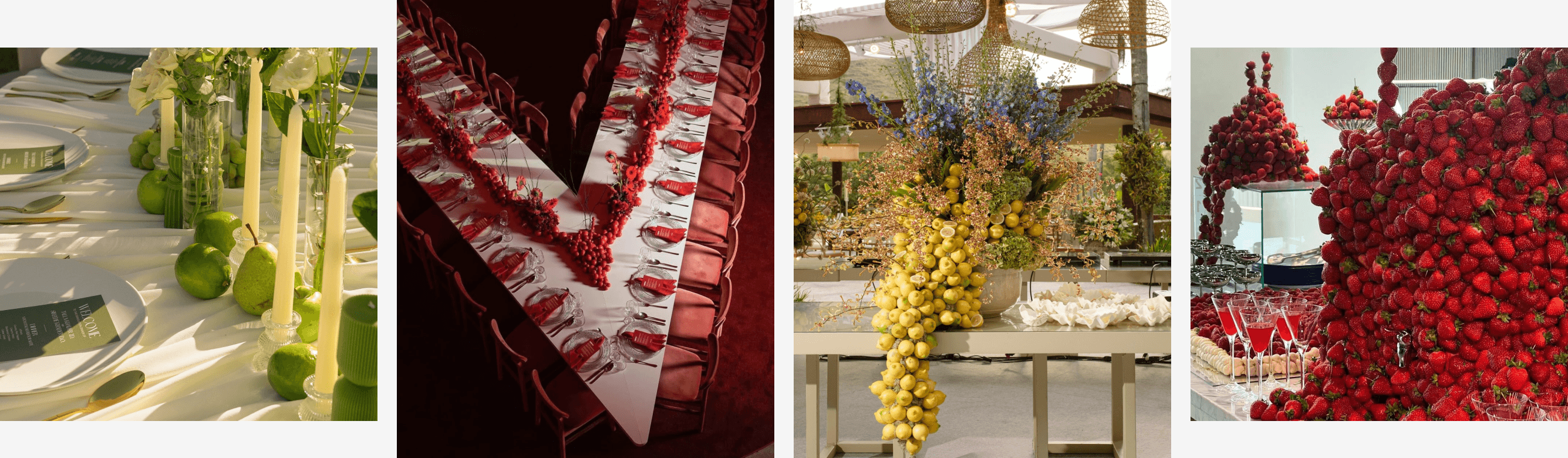
The centrepiece is often the pièce de résistance of any reception table. A stunning, eye-catching arrangement can transform a basic table setting into something that guests will actually remember. One of the most versatile options is the fruit wedding centrepiece, which adds colour and texture, as well as an element of surprise that flowers alone rarely achieve.
.jpg)
.jpg)
Fruit is such a compelling choice for a centrepiece because it moves naturally between casual and editorial. A cluster of grapes cascading down a pedestal looks high fashion, while the same fruit piled into a rustic bowl looks warm and informal. This guide showcases 50 fruit centrepieces for wedding tables, organised by mood rather than season, to help you find the perfect aesthetic for your celebration.
Here's a quick way to match the right fruit to the desired mood before you start planning:
| Mood | Signature Fruit | Best For |
|---|---|---|
| Citrus Charm | Lemons, oranges, grapefruits | Bright, Mediterranean-style receptions |
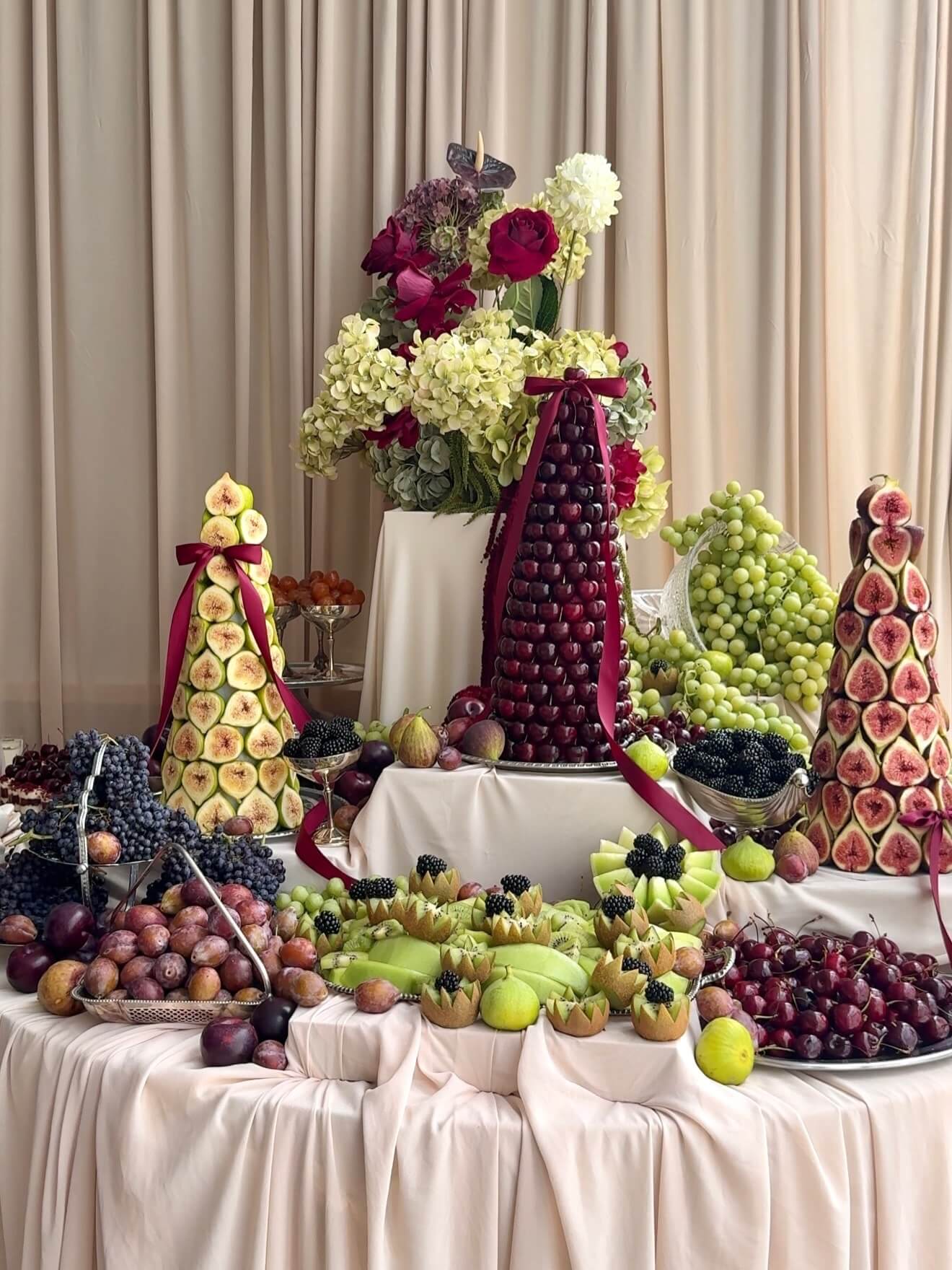
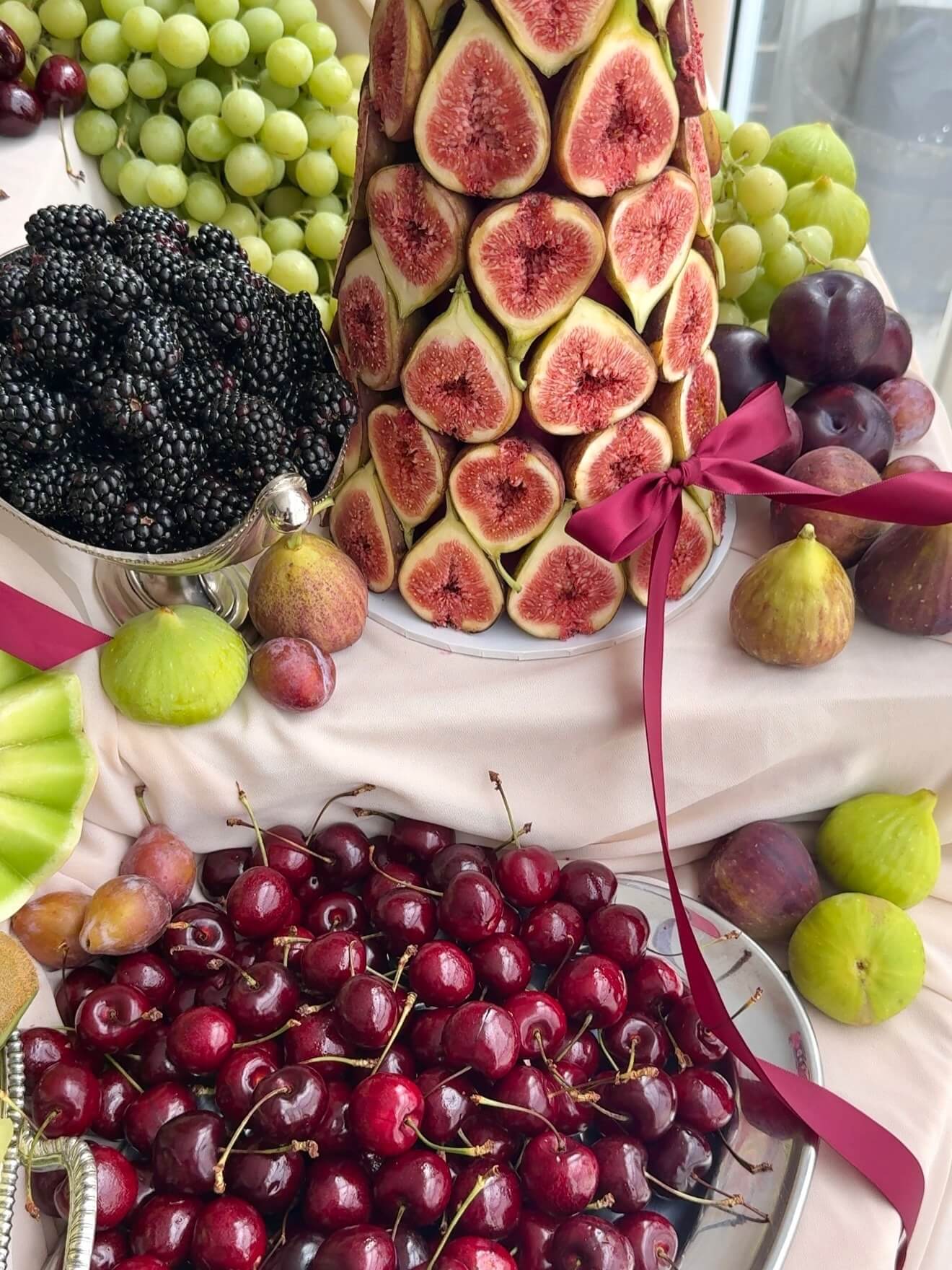
| Moody Romance | Dark grapes, figs, pomegranates | Formal evening celebrations |
| Fresh Orchard Romance | Apples, pears, peaches | Soft, garden-inspired tables |
| Vine and Berry Accents | Cherries, berries, small grapes | Delicate details within larger arrangements |
| Tropical Elegance | Papaya, melon, dragon fruit | Destination and warm-weather weddings |
Find Your Perfect Wedding Vendors



Citrus Charm: Fruit Wedding Centerpieces With Mediterranean Vibes
.jpg)
.jpg)
.jpg)
.jpg)
.jpg)
.jpg)
.jpg)
.jpg)
Citrus fruits bring a particular kind of energy to a tablescape, creating an atmosphere that feels sun-drenched and effortless, despite the fact that the arrangement itself required careful planning. These summer fruit wedding centrepieces make the most of lemons, oranges and grapefruits for both colour and texture, often paired with trailing greenery to create a Mediterranean feel.
One of the things that makes citrus so reliable is its versatility in terms of scale. A single hollowed-out lemon can anchor a place setting, while a full cascade of oranges can transform an entire welcome table into a focal point that guests will want to photograph before they've even found their seats. The colour palette also does a lot of the work on its own since yellows and warm oranges naturally appear cheerful and do not require much additional styling to look intentional.
Suspended Citrus Cascade
Suspending a cluster of lemons or small oranges from an overhead structure and trailing them down towards the table turns citrus into a genuine architectural feature rather than just a bowl filler. This works especially well above a welcome table or bar, where guests will actually look up.
Citrus and Wildflower Pedestal
Arranging citrus fruit around the base of a tall pedestal and finishing the top with loose, garden-style blooms gives the centrepiece real height without losing the fruit as the visual anchor. Lemons and small yellow blooms create a cohesive colour scheme rather than looking like two competing elements.
Citrus Symphony
Arranging lemons, limes, oranges and grapefruits together in a large glass vessel creates a visually layered effect by playing with contrast in both colour and size, eliminating the need for any additional décor.
Sunshine Citrus Stack
Stacking a variety of citrus fruits on a tiered stand adds genuine height to a tablescape, letting the natural gradient from yellow to orange do most of the visual work.
Grapefruit Vase Moment
Hollowing out a grapefruit and using it as a small vase for a few vibrant blooms transforms a piece of fruit into functional décor. This works particularly well as a place setting detail rather than a full centrepiece.
Citrus Candle Pairing
Hollowed lemons or oranges fitted with tapered candles provide both ambience and a genuine citrus aroma when the wax melts, adding scent to the tablescape in a way that flowers alone cannot.
Lemon and Lavender Jar
A large glass jar filled with lemons and finished with sprigs of lavender combines warm and cool tones to create an effortlessly Mediterranean look.
Citrus and Olive Branch Runner
Running citrus fruit down the centre of a long table alongside olive branches gives the entire tablescape a sense of place, evoking a specific region rather than a generic summer palette.
Grapefruit and Herb Cluster
Arranging halved grapefruits alongside fresh herbs such as rosemary or thyme adds a savoury note to the citrus palette, transforming the display into a curated still life rather than a simple fruit bowl.
Golden Citrus Tower
Stacking oranges tightly in a tower against a plain pedestal or plinth creates a striking silhouette, especially when paired with minimal additional décor.
Citrus and Greenery Base
Arrange sliced citrus fruit in a large vase and finish with a few sprigs of inexpensive greenery to maintain the Mediterranean colour scheme while keeping to a tighter floral budget.
Moody Romance: Dark Grapes, Figs, and Pomegranates
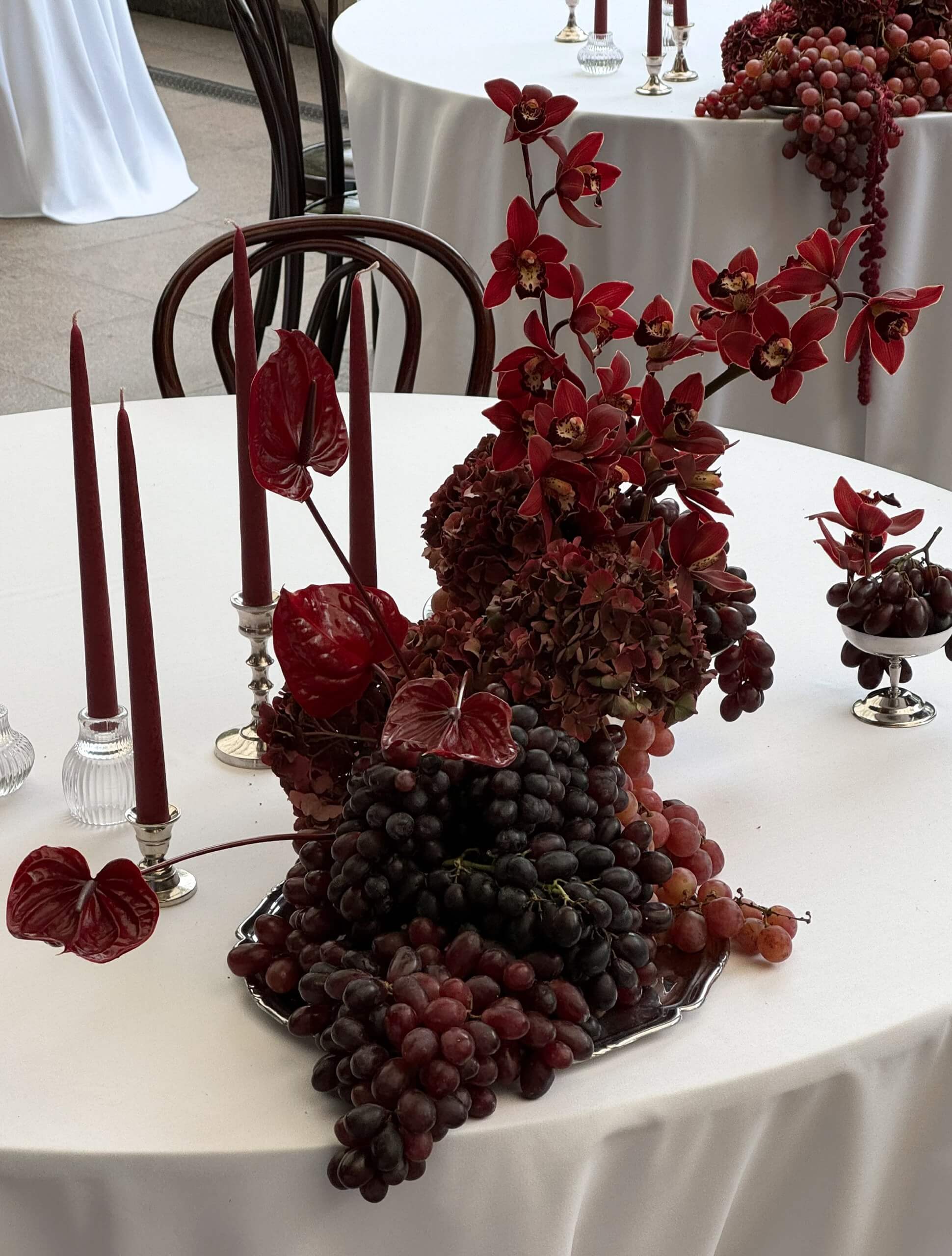
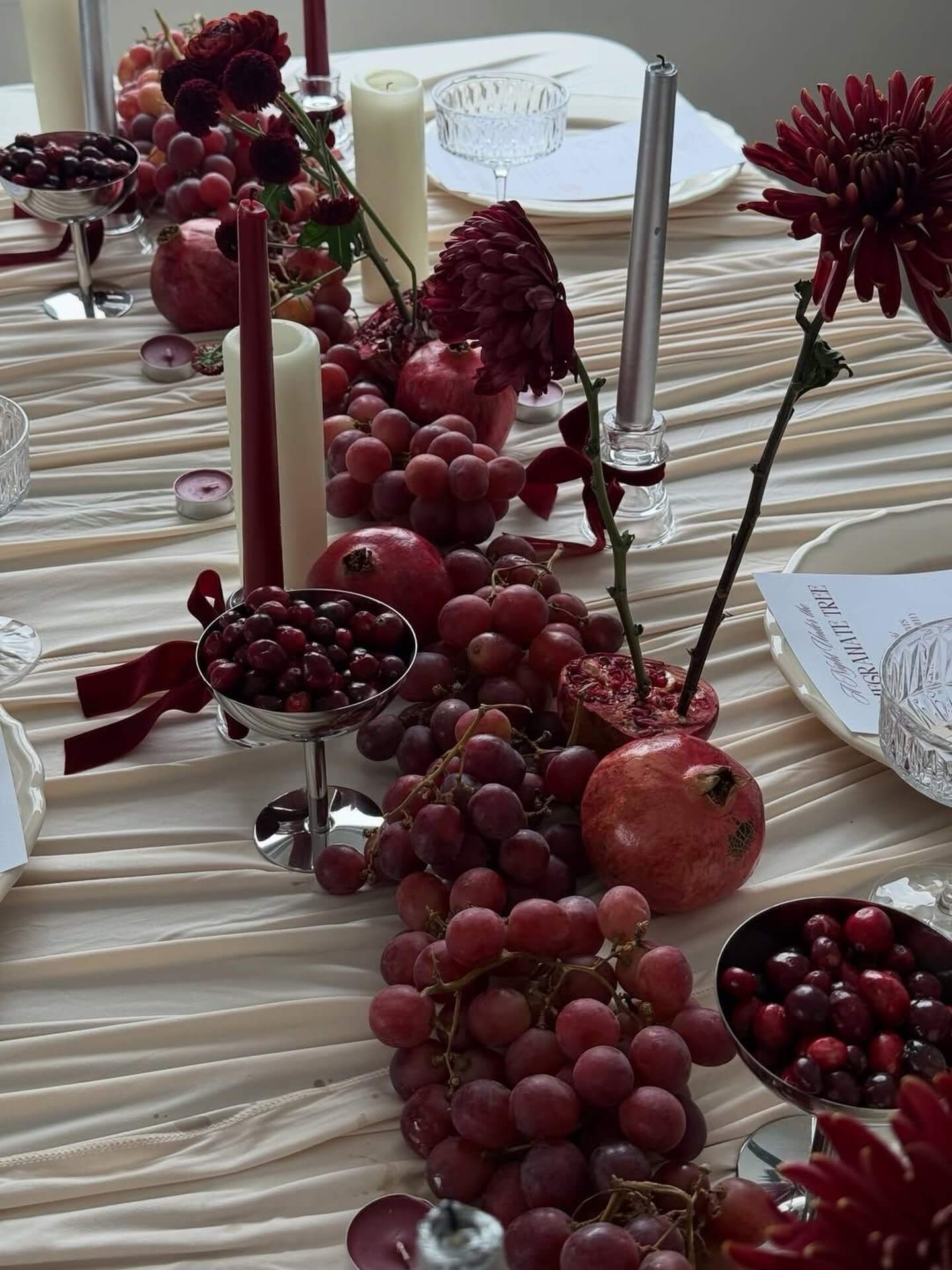
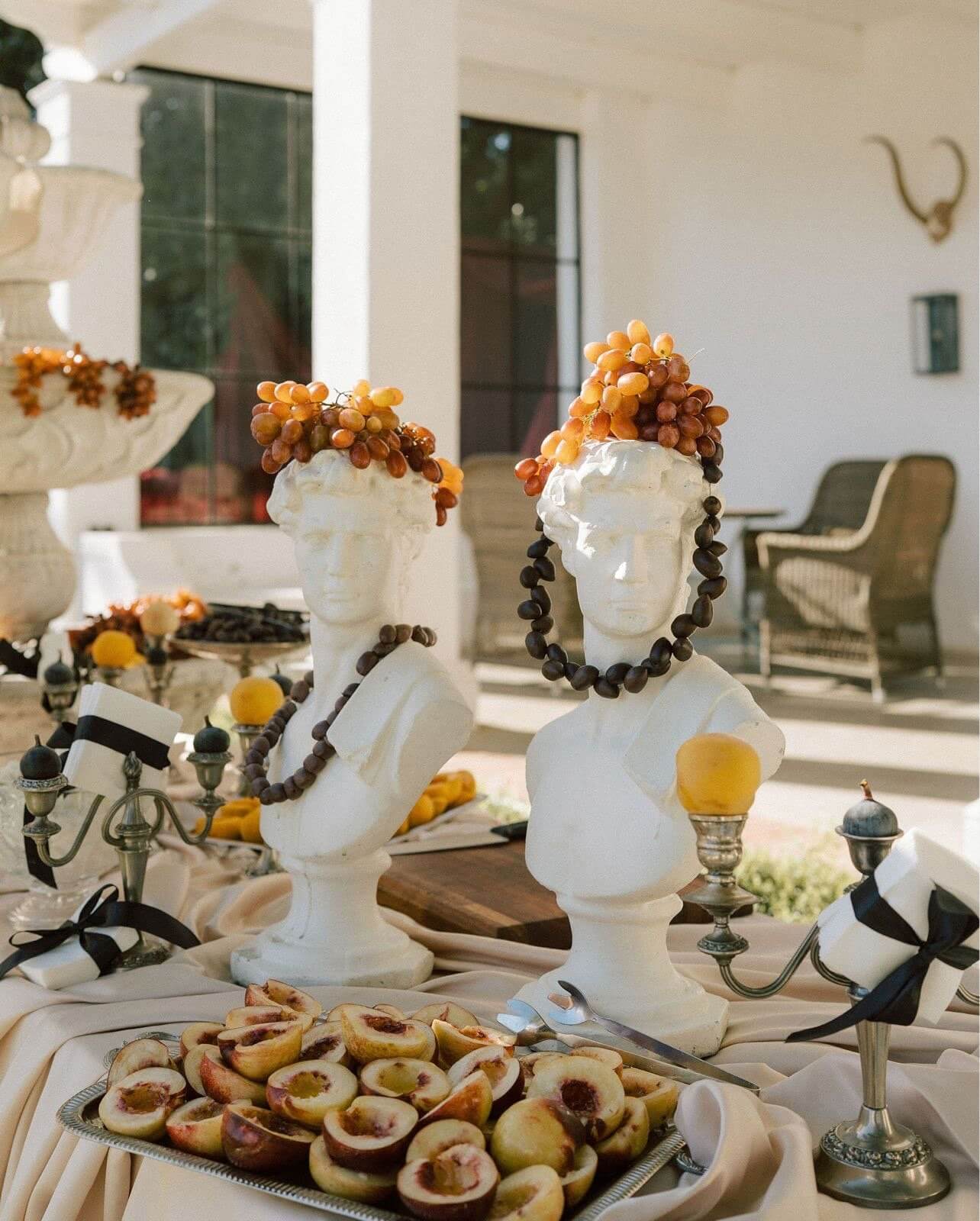
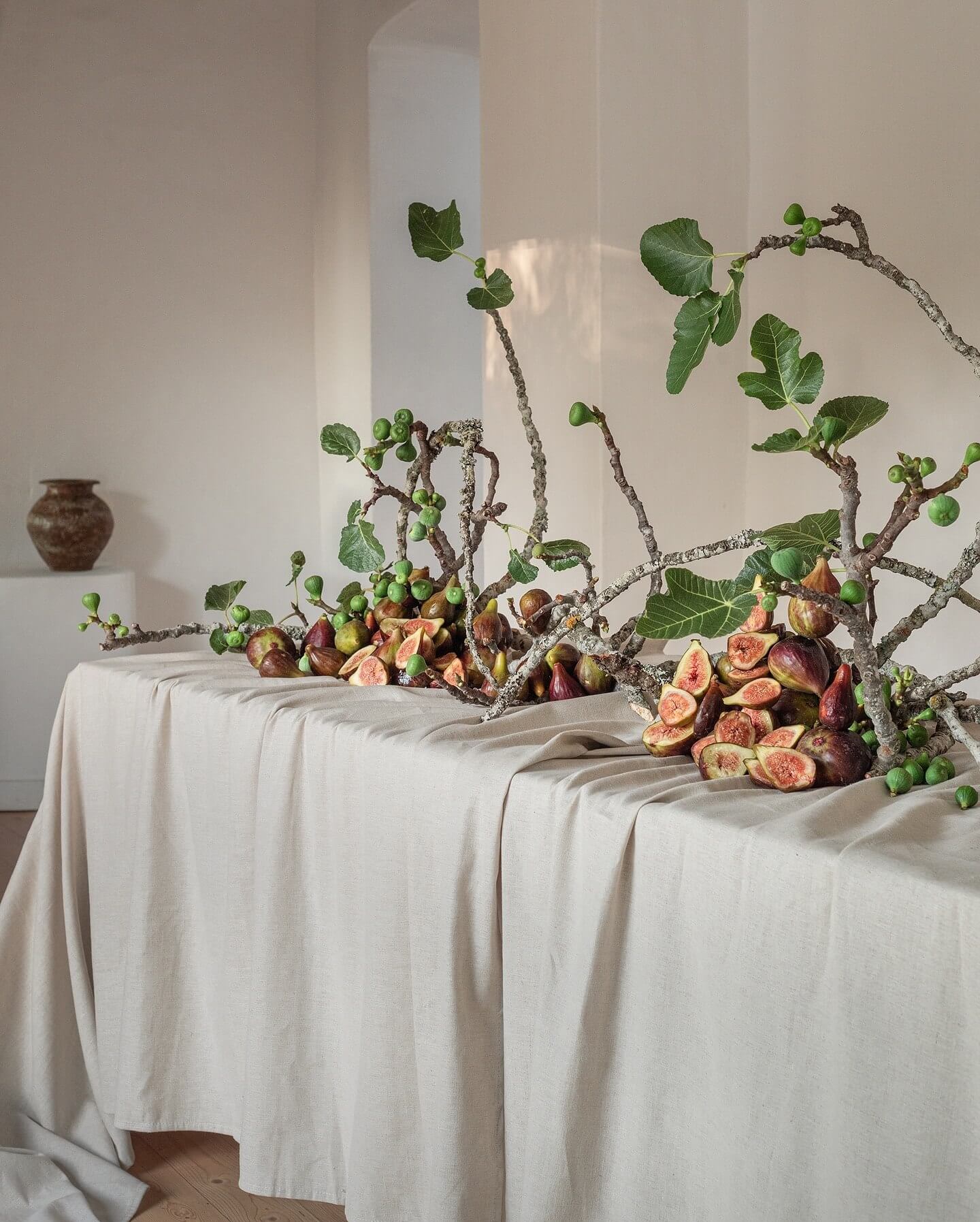
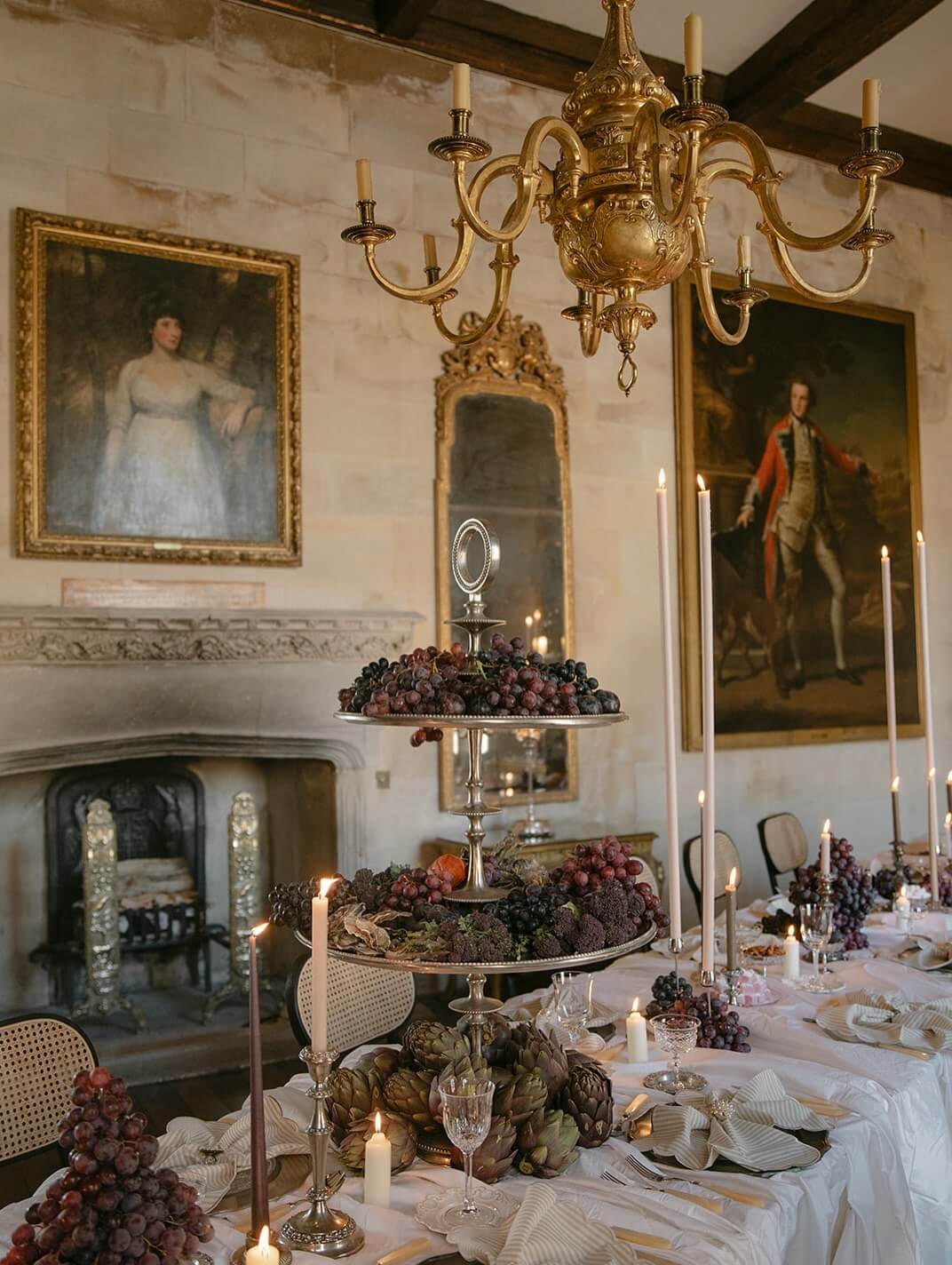
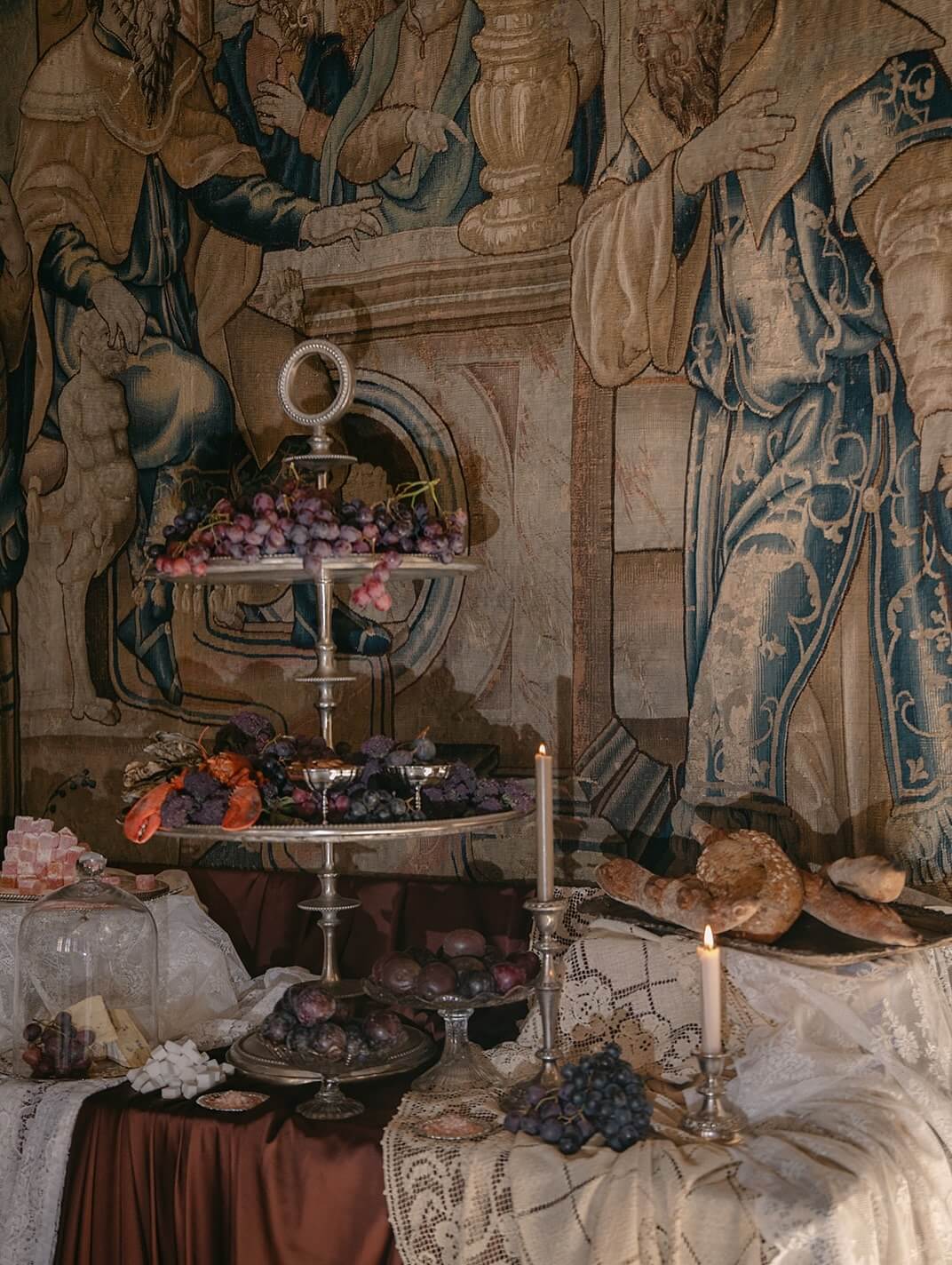
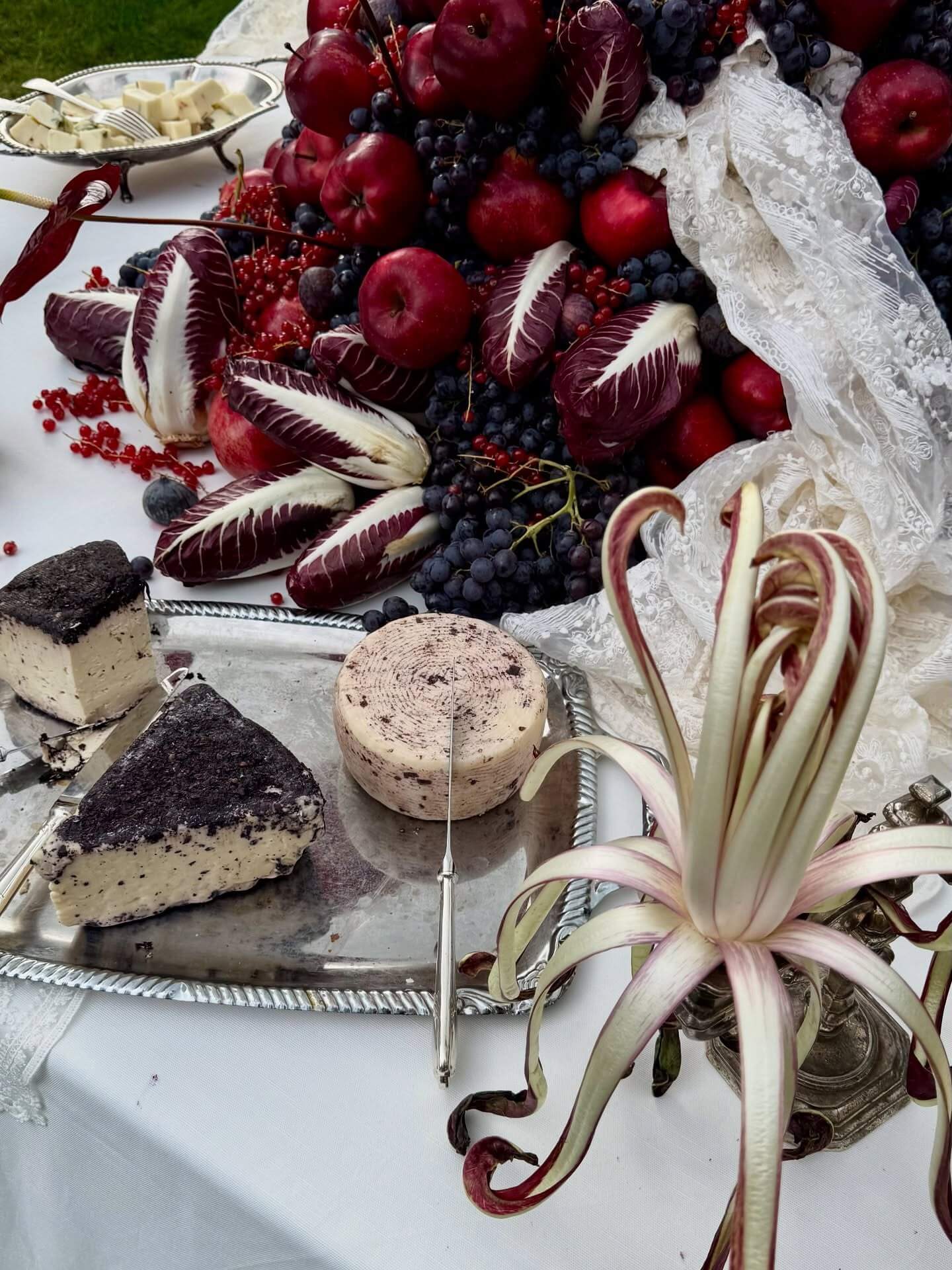
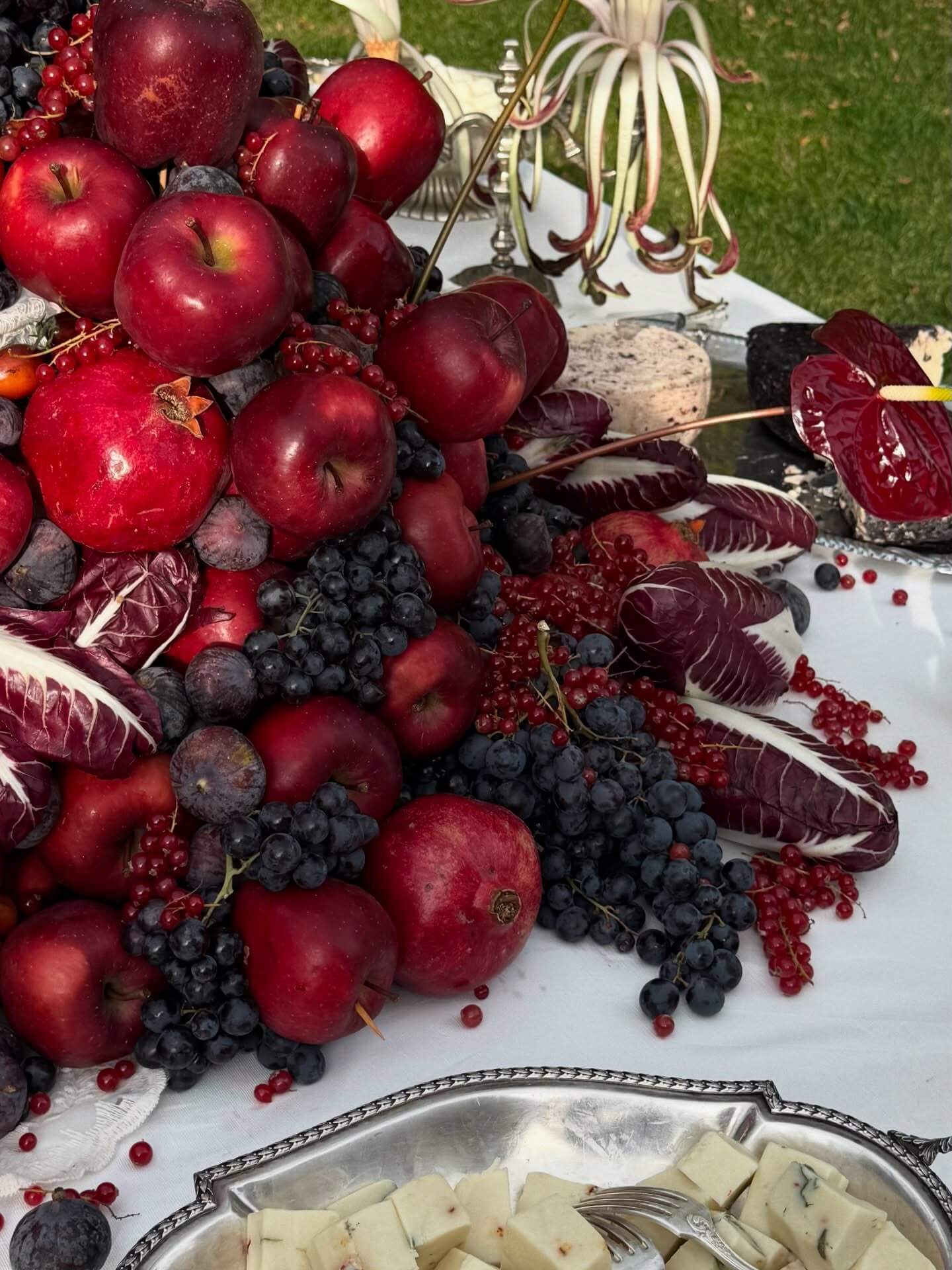
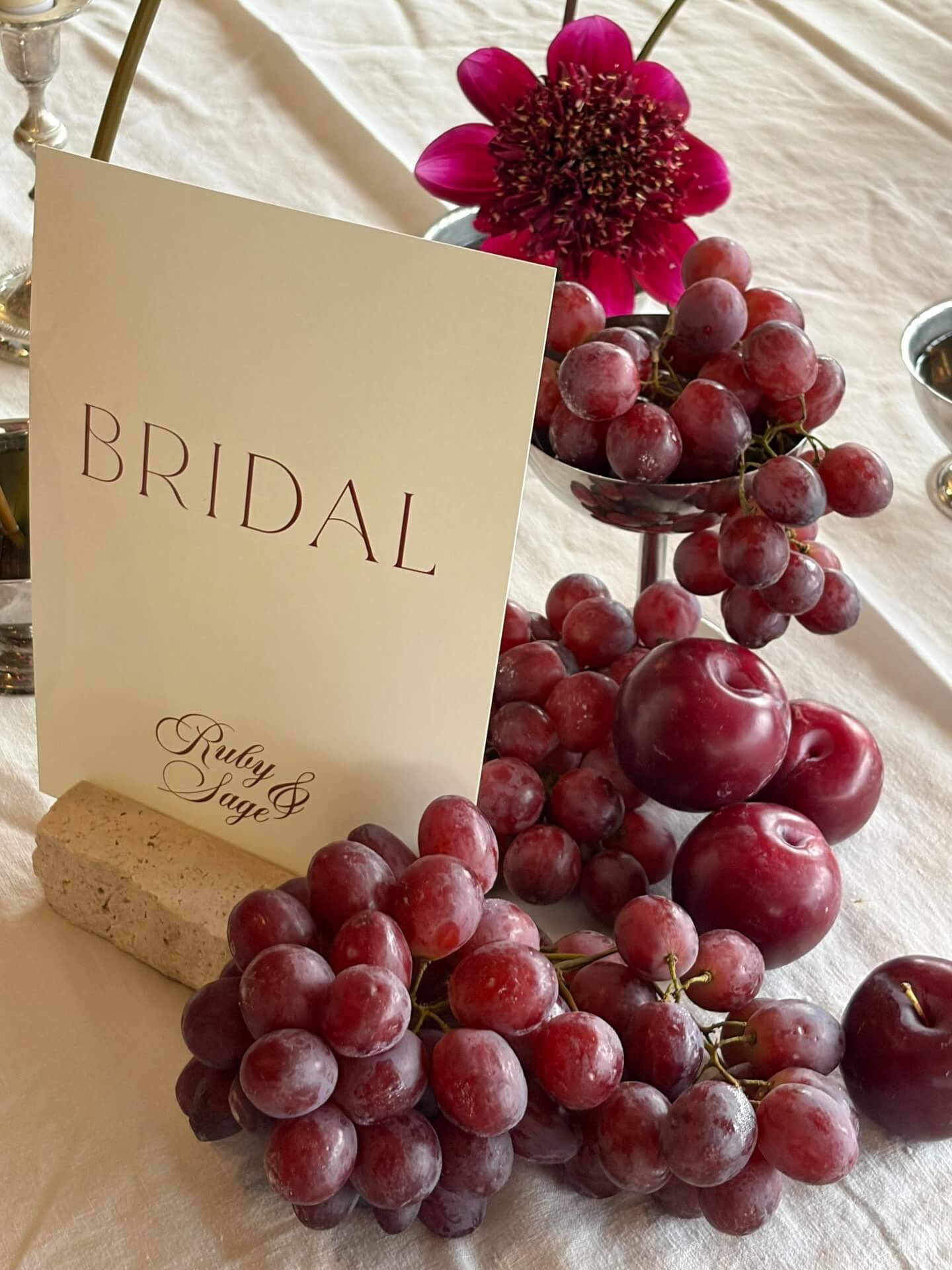
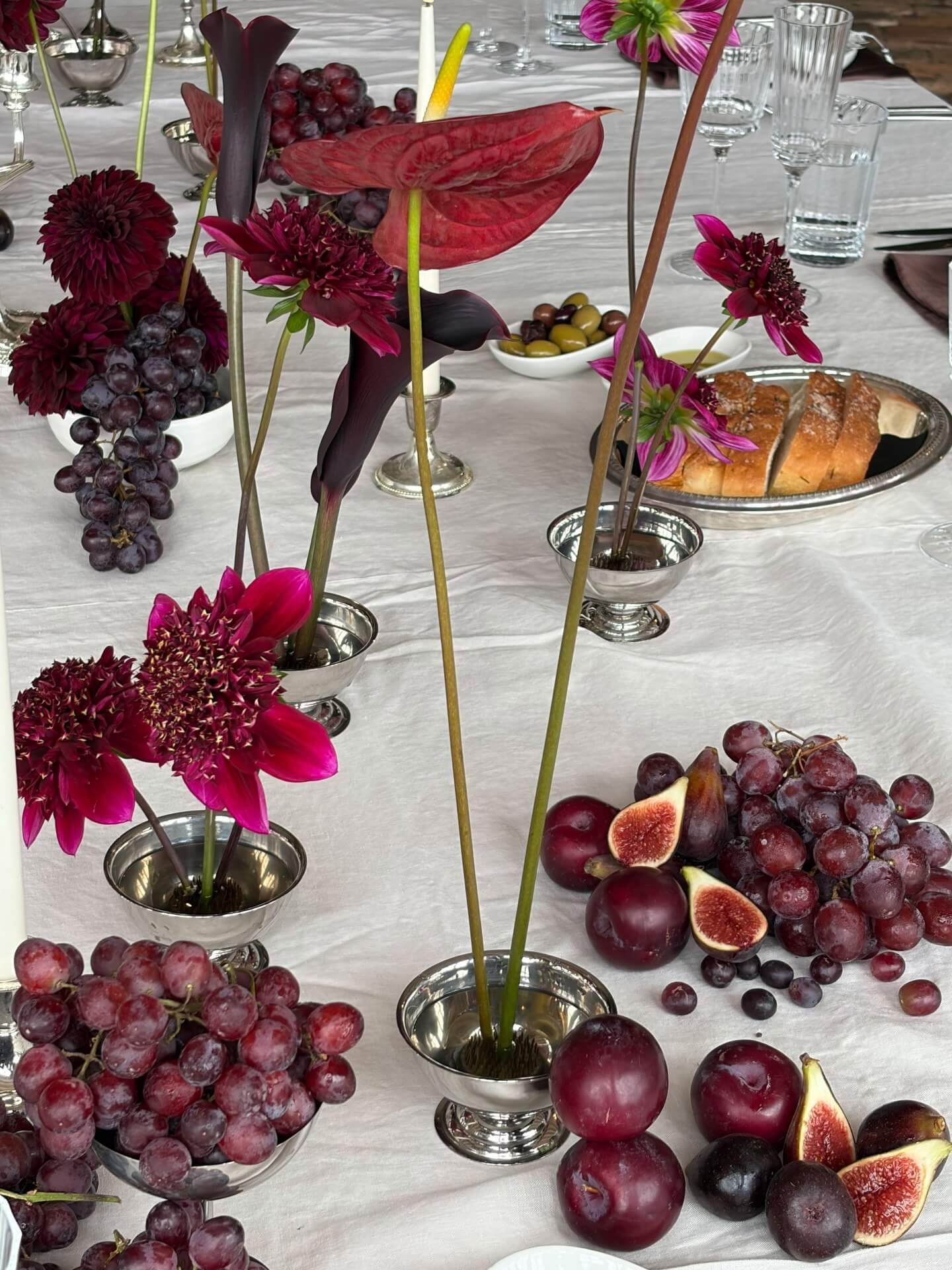
Dark, saturated fruit tones create an entirely different mood on a table, leaning towards the dramatic rather than the bright. These arrangements pair deep purples and reds with candlelight, making them ideal for evening receptions.
The appeal lies in how these fruits look under low light. Grapes catch a soft glow rather than a harsh reflection, and the exposed seeds of a halved pomegranate look almost like jewels when lit by candles. Couples drawn to a romantic dinner-party atmosphere often find that this colour scheme sets the tone of the evening more effectively than flowers alone ever could.
Cascading Dark Grape Runner
Draping clusters of dark grapes directly across a table runner and allowing them to spill slightly over the edge creates movement and drama without the need for any additional flowers.
Fig and Wine-Toned Floral Mix
Halved figs, with their deep purple skin and rich interior, pair naturally with wine-toned florals such as dahlias or burgundy roses. This creates a single, cohesive colour theme across the table.
Pomegranate and Candlelight Cluster
Whole and halved pomegranates arranged around a cluster of taper candles beautifully catch the candlelight, and their exposed seeds add texture that reads as rich rather than rustic.
Sugared Pomegranate Display
Coating pomegranates in sugar to mimic a light frost and pairing them with white or ivory blooms adds an unexpected touch of contrast to an otherwise dark, moody colour scheme.
Grapevine and Taper Candle Wrap
Wrapping grapevines around a cluster of candle holders and leaving a few grape clusters intact blends rustic texture with a more formal candlelit setting.
Gilded Pomegranate Accents
Spray-painting a few pomegranates or pears gold and placing them among their natural-coloured counterparts adds subtle glamour to the arrangement without overwhelming it.
Marble Bust Fruit Crown
Place a cluster of dark grapes and small florals on top of a marble or resin bust to create a genuinely editorial moment, more art installation than traditional centrepiece.
Fig, Leaf and Berry Cluster
Combining fresh figs with autumn leaves and a scattering of dark berries brings together rich purples and warm tones in a single, layered display.
Deep Plum and Grape Bowl
A simple bowl filled with dark plums and grape clusters with no additional décor lets the fruit's natural colour do all the visual work. This is ideal for couples who want a moody look without any ornamentation.
Pomegranate Seed Scatter
Scatter loose pomegranate seeds directly onto the table linen around a central arrangement to add a jewel-toned detail that will catch the light beautifully in photographs.

Fresh Orchard Romance: Apples, Pears, and Peaches
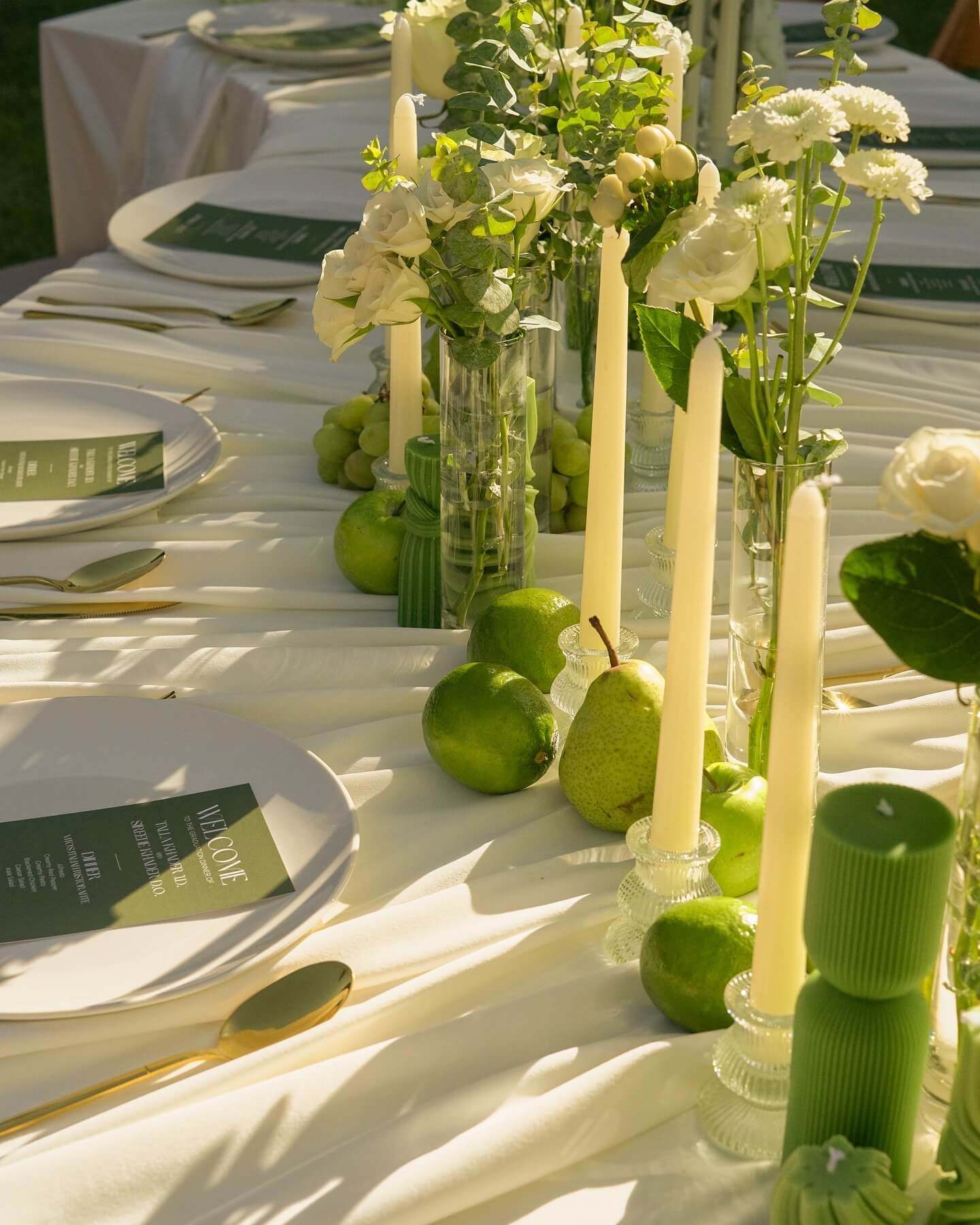
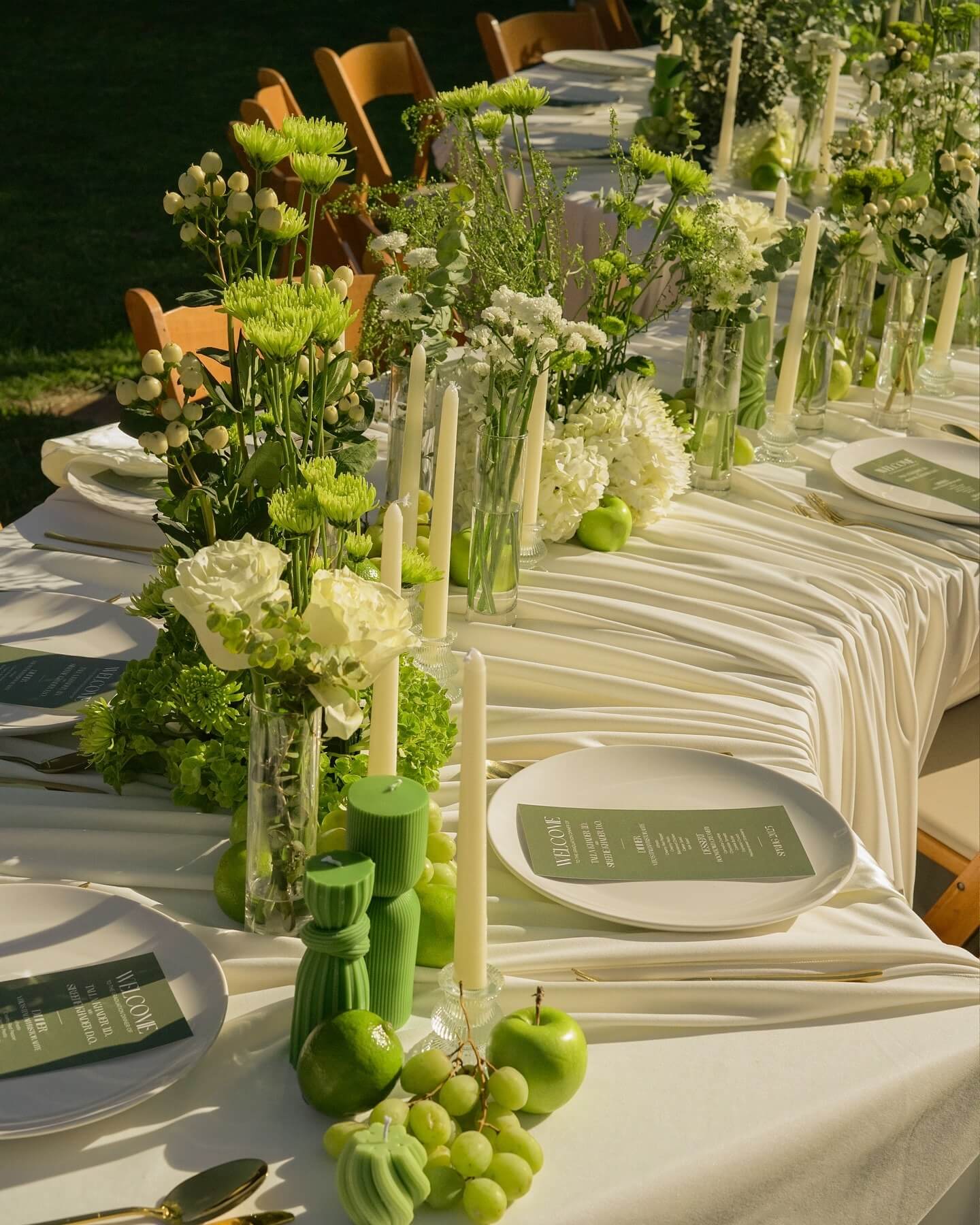
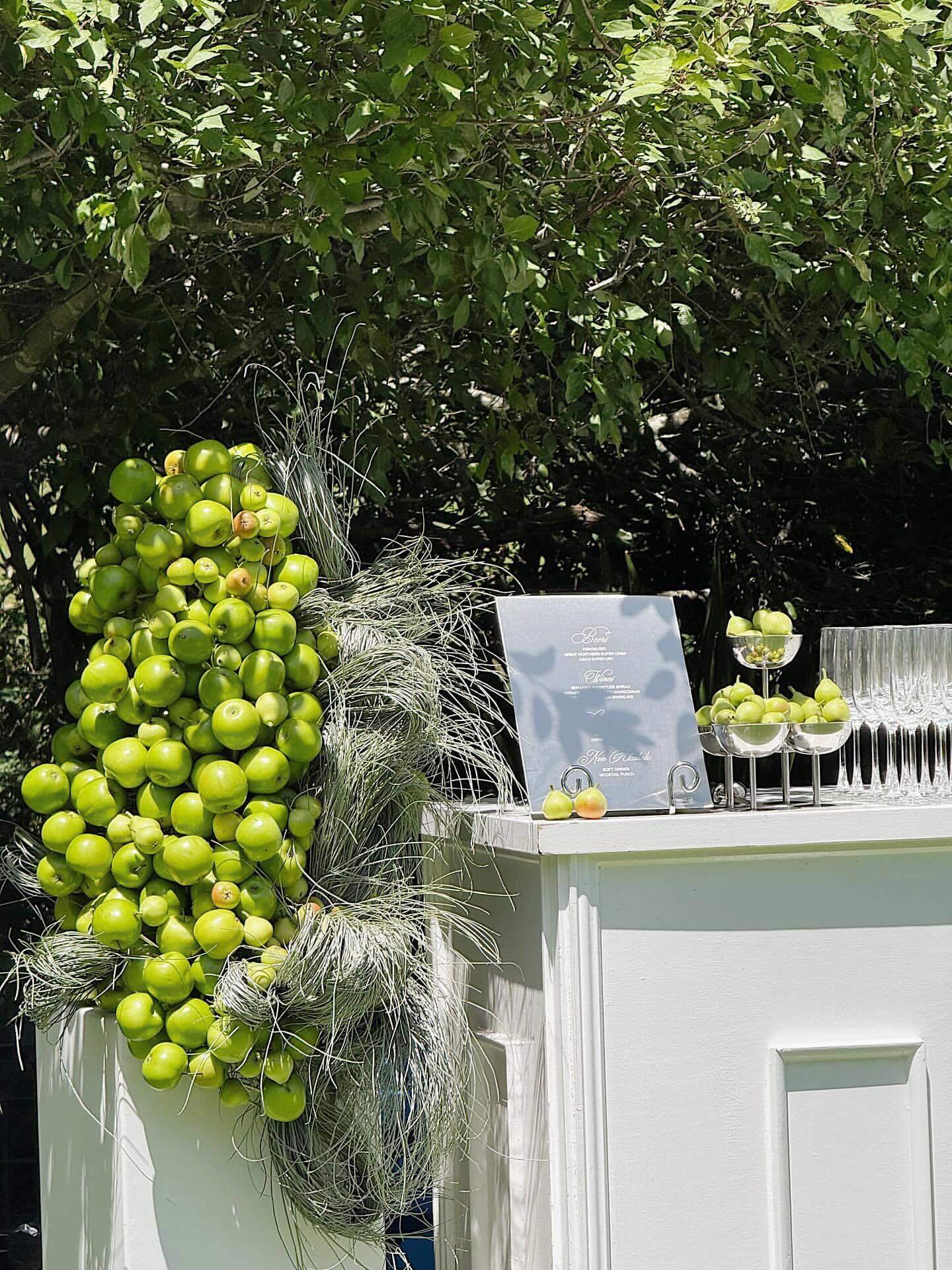
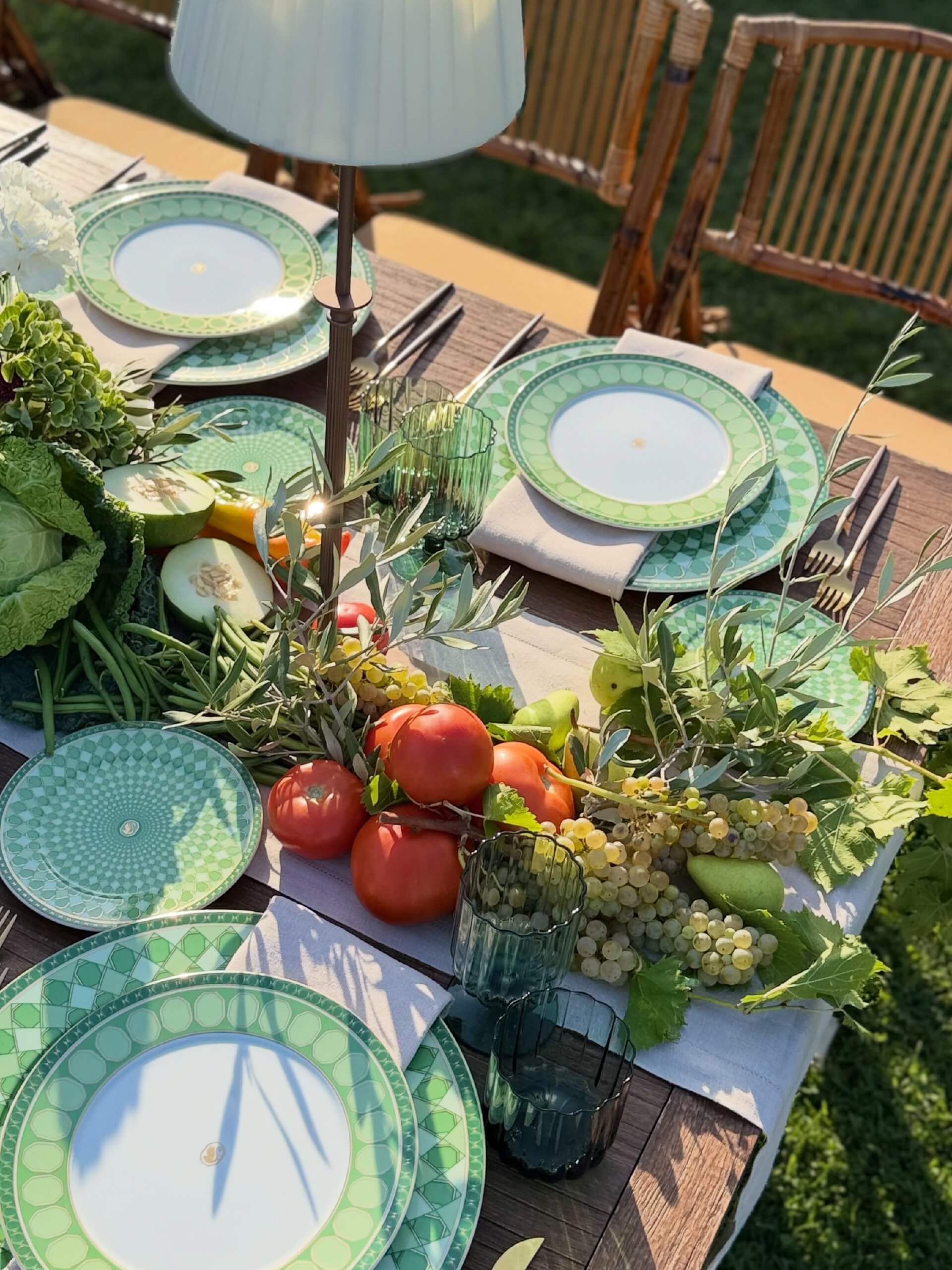
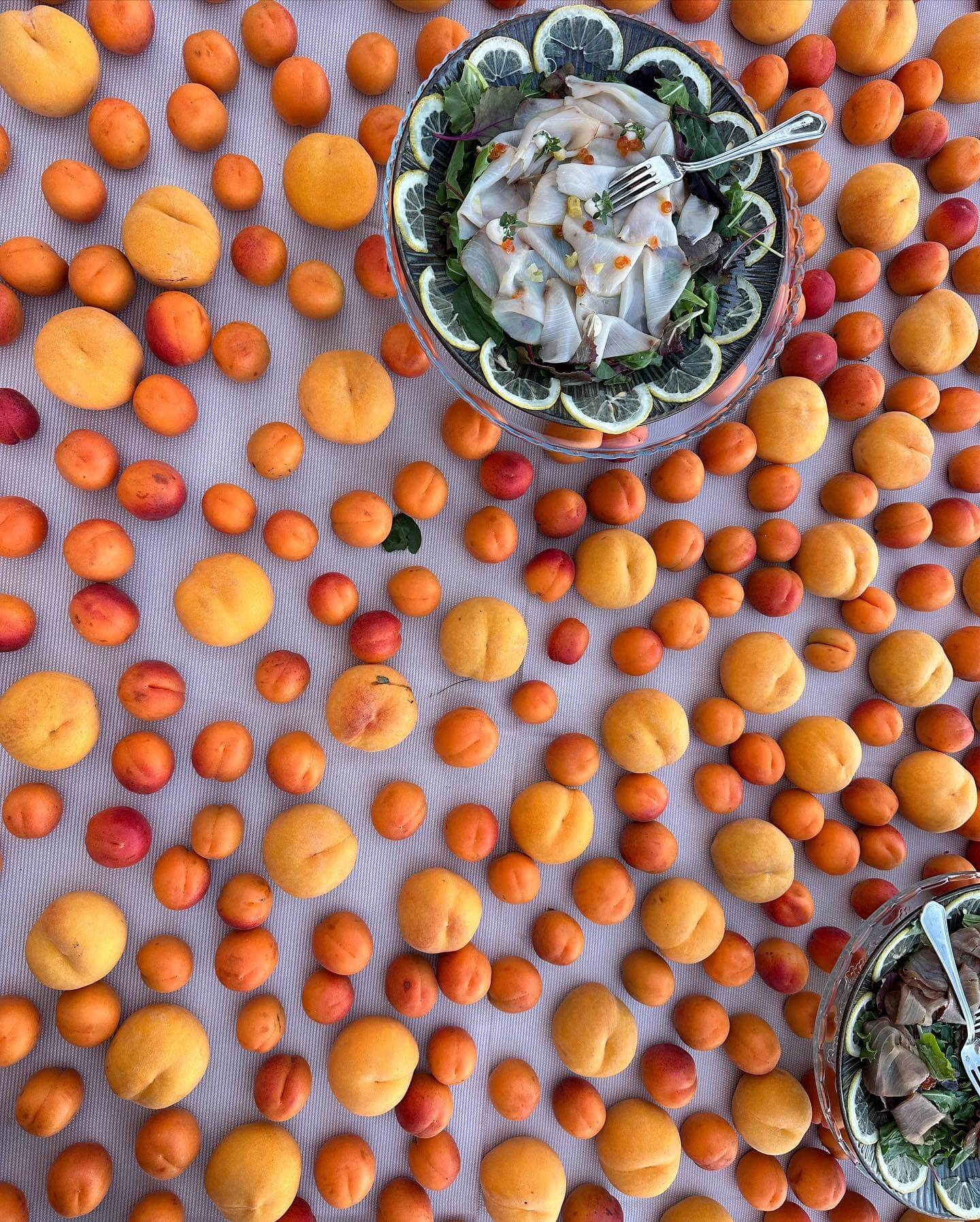
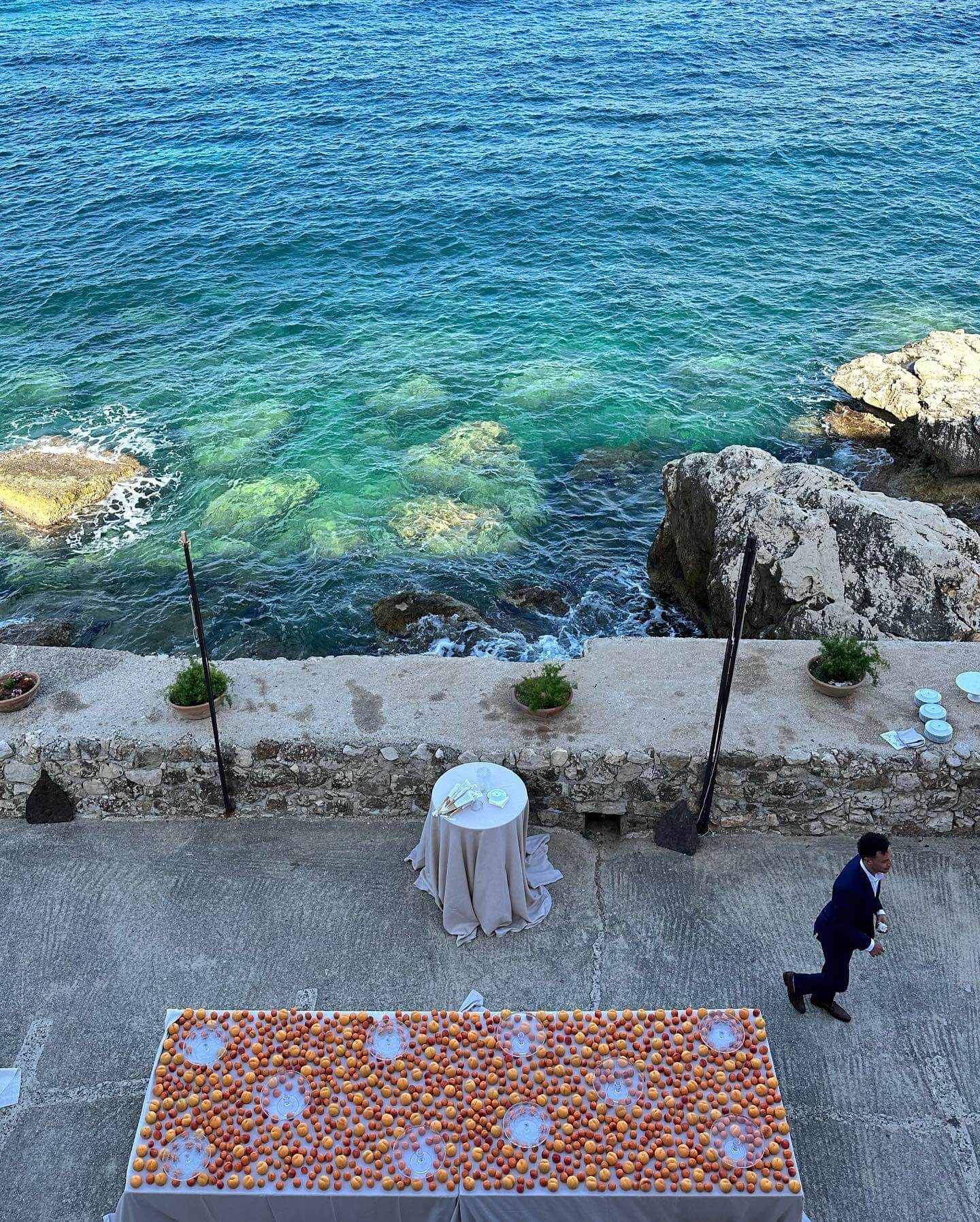
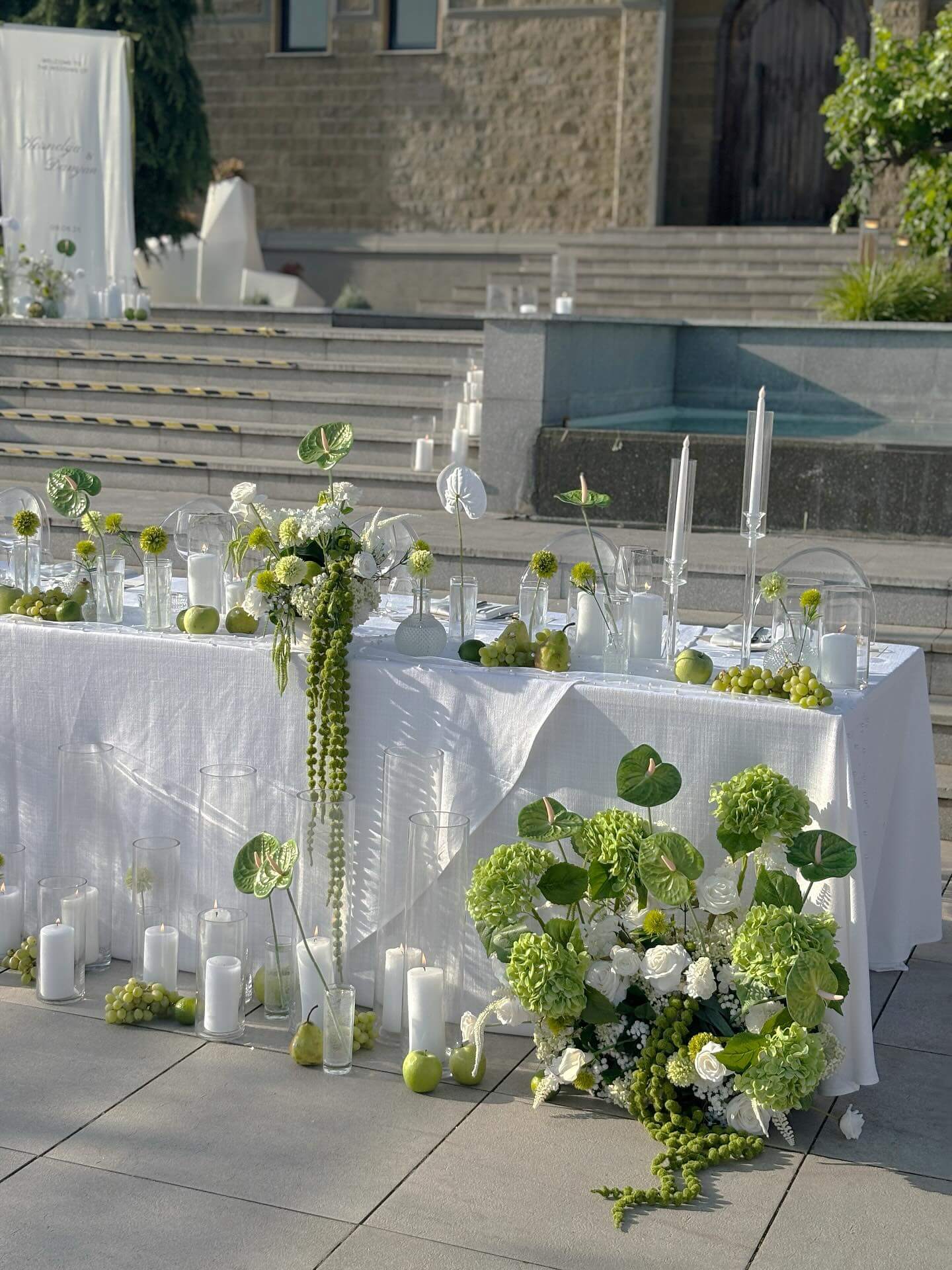
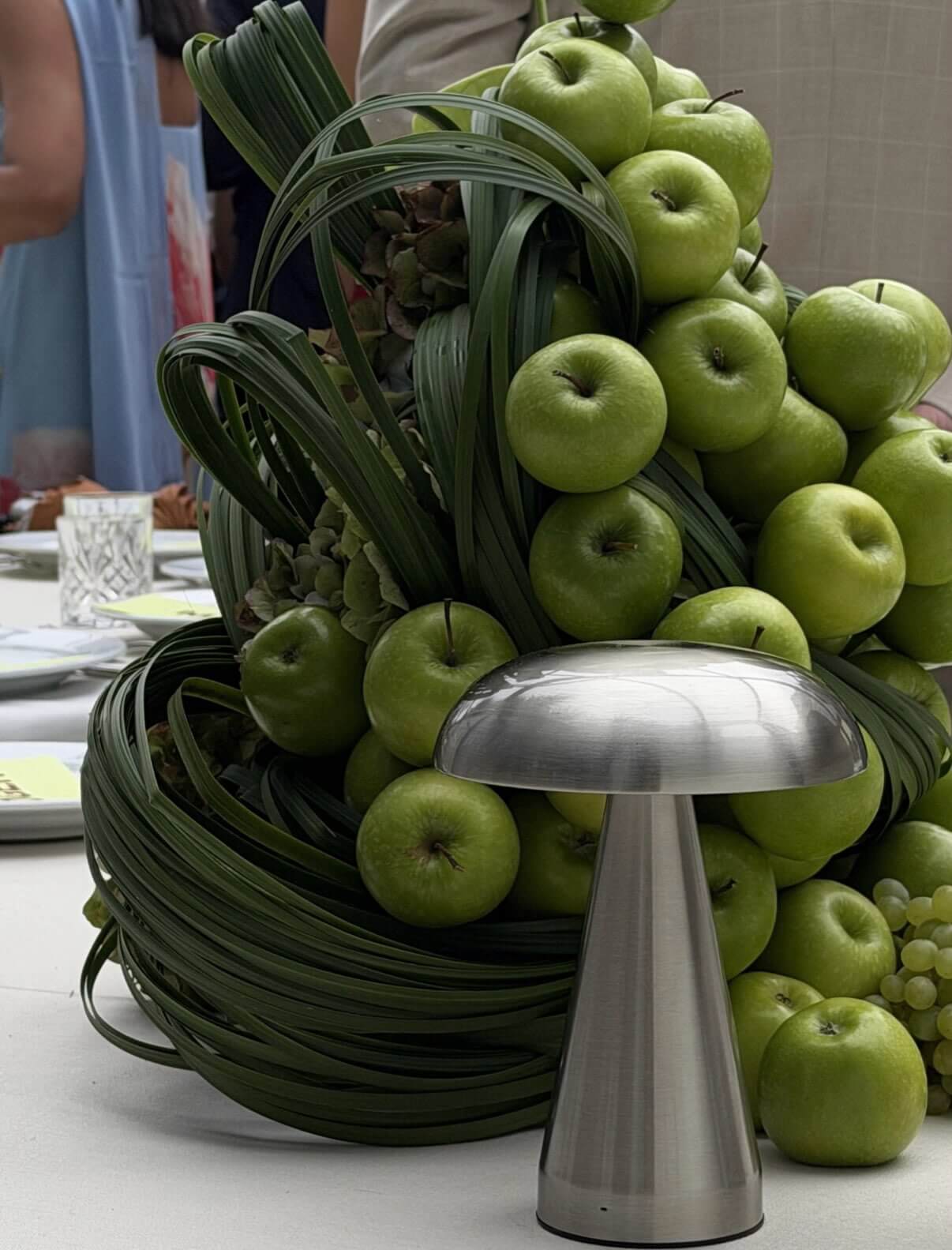
Orchard fruit has a softness that citrus and dark grapes don't quite capture. Green apples, pears and peaches evoke a fresh, almost garden-party atmosphere, particularly when combined with white or pale green florals.
Much of that softness comes from colour rather than shape. Pale greens and blush tones sit close together on the colour wheel, meaning orchard fruit rarely clashes with a couple's chosen floral scheme. This category also lends itself particularly well to daytime celebrations, since the lighter tones photograph beautifully in natural light, unlike darker fruit which often requires candles to add warmth.
Green Apple and Taper Candle Table
Scatter green apples along a table runner between tall, slim taper candles to create a clean, modern look that photographs beautifully against white linens.
Harvest Apple Bowl
Filling a wooden bowl or tray with a mix of red and green apples celebrates natural colour contrast without the need for additional styling.
Pear and Greenery Runner
Running pears down the centre of a table alongside loose greenery and a few white blooms keeps the palette soft and slightly overgrown in the best way.
Peach and Garden Rose Cluster
Peaches paired with garden roses in a similar blush tone create a centrepiece where the fruit and flowers appear to belong to the same colour family.
Apple Blossom and Fruit Base
Arranging branches of apple blossom in a tall vase and surrounding the base with whole apples ties the centrepiece directly back to the fruit it's named after.
Green Grape and Apple Bunch
Mixing green grapes with green apples in a single cluster plays with texture and shape while keeping the colour palette tightly controlled.
Pear, Pinecone and Ribbon Display
Arranging pears alongside pinecones and a length of ribbon on a platter adds a slightly rustic, autumnal touch to an otherwise fresh, orchard-style palette.
Apple and Cinnamon Stick Bowl
Arrange apples in a bowl with cinnamon sticks tucked between them to add a subtle scent to the table and create an extra sensory experience.
Stone Fruit and Herb Platter
Arranging peaches, apricots and fresh herbs on a platter creates a still-life effect that works particularly well for a long family-style table.
Apple and Twig Simplicity
Arrange apples alongside a few bare twigs on a plain platter to keep the look understated, letting the fruit's natural shine be the only real decoration.
Vine and Berry Accents: Delicate Details and Rich Textures
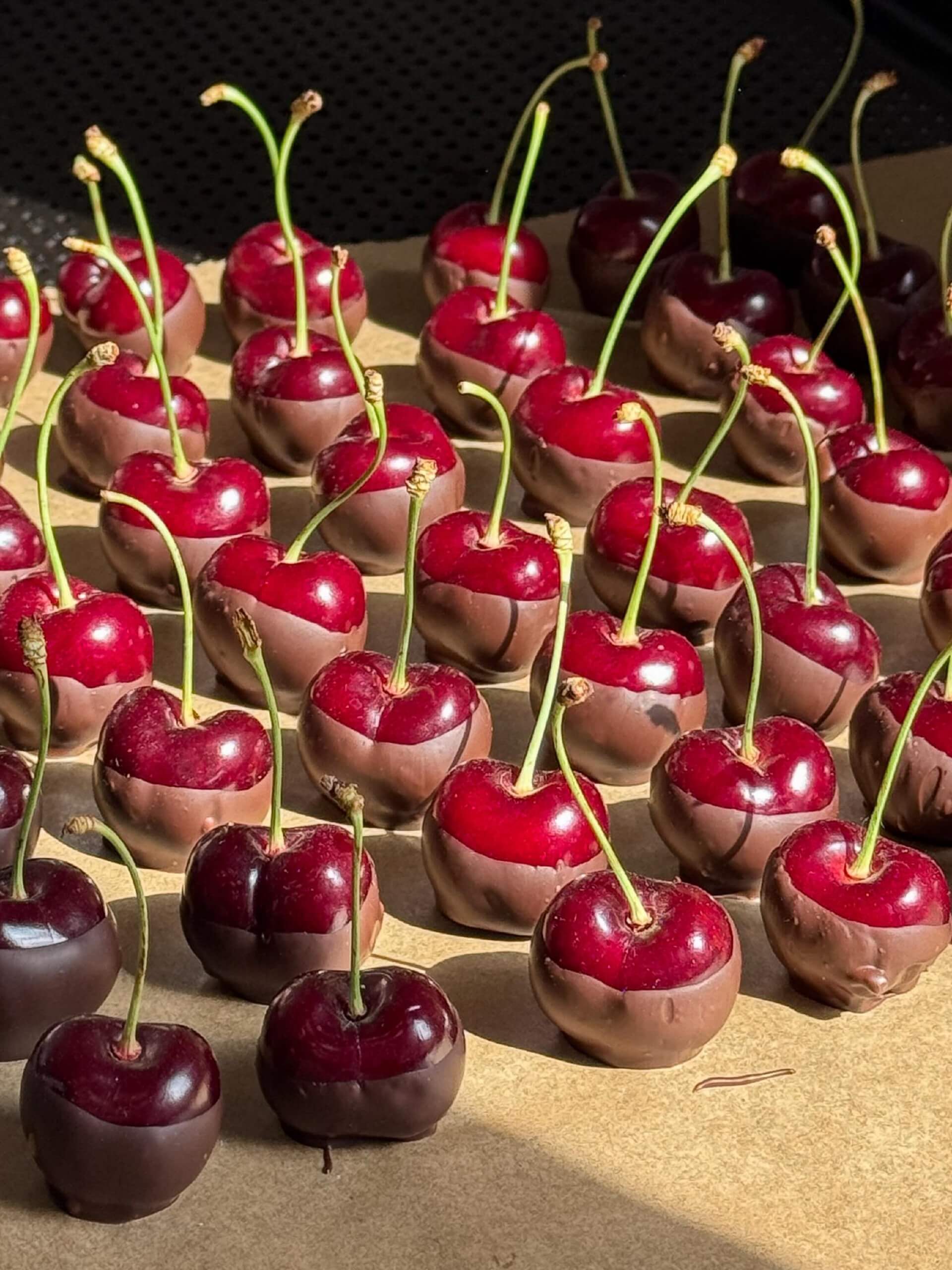
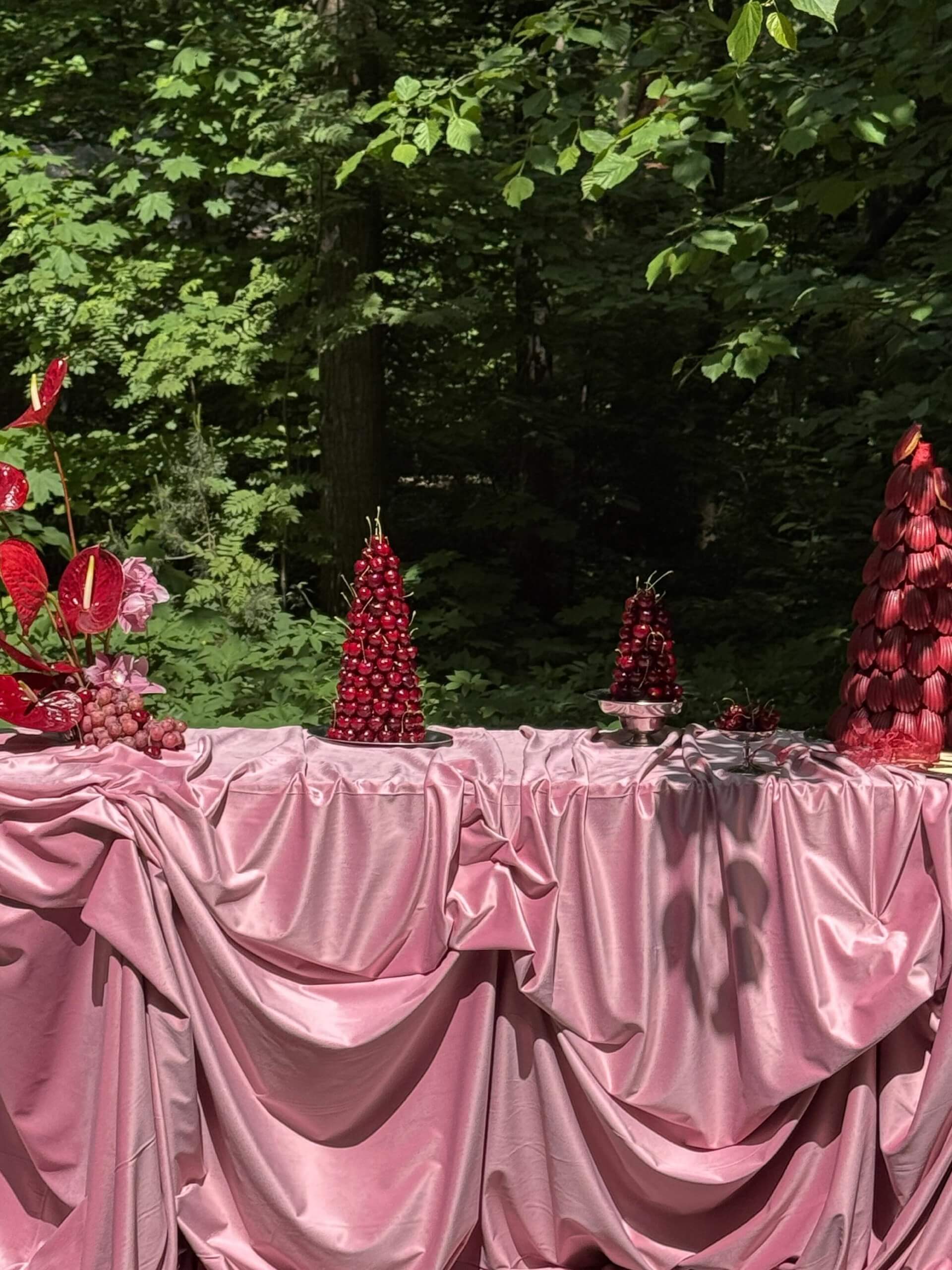
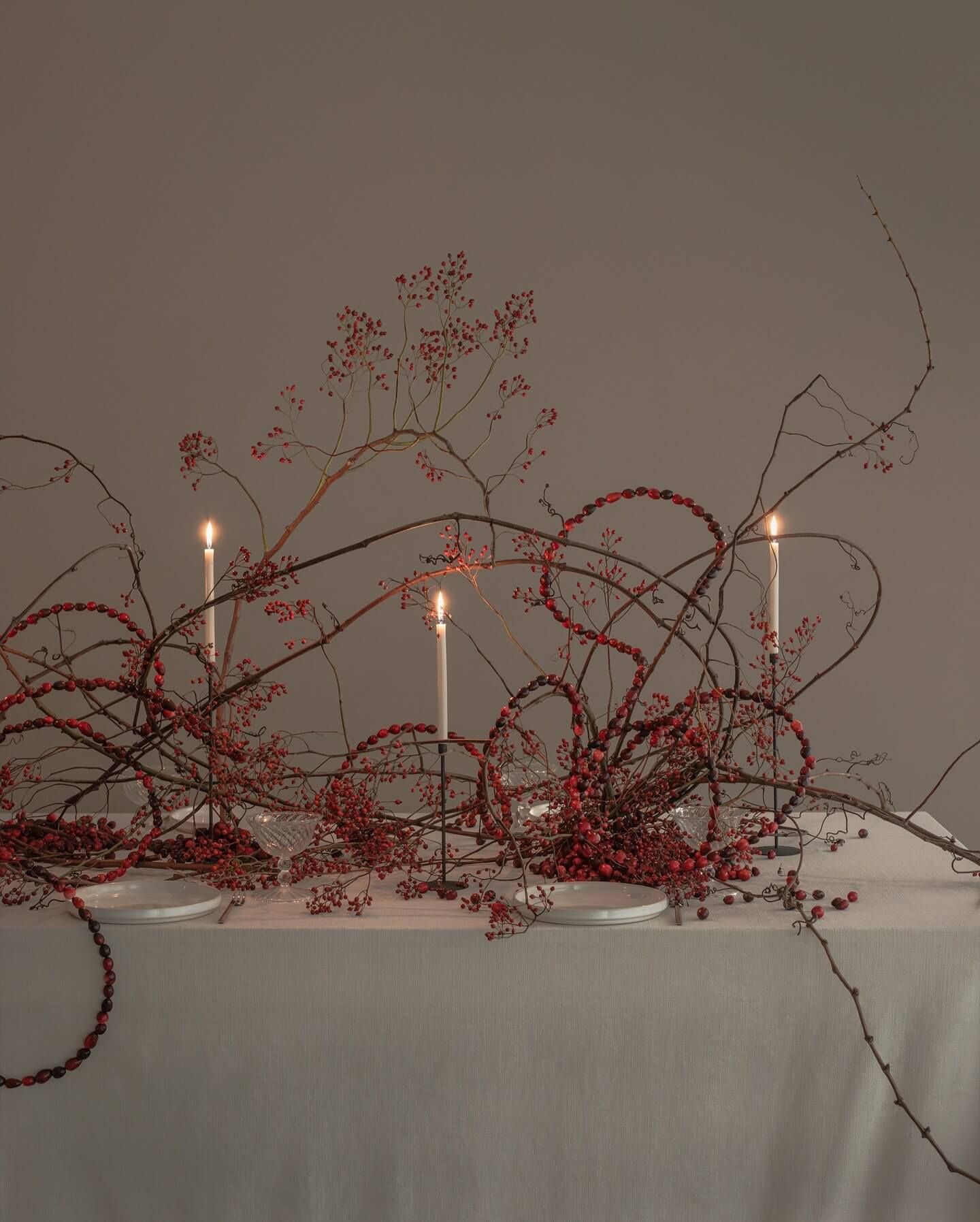
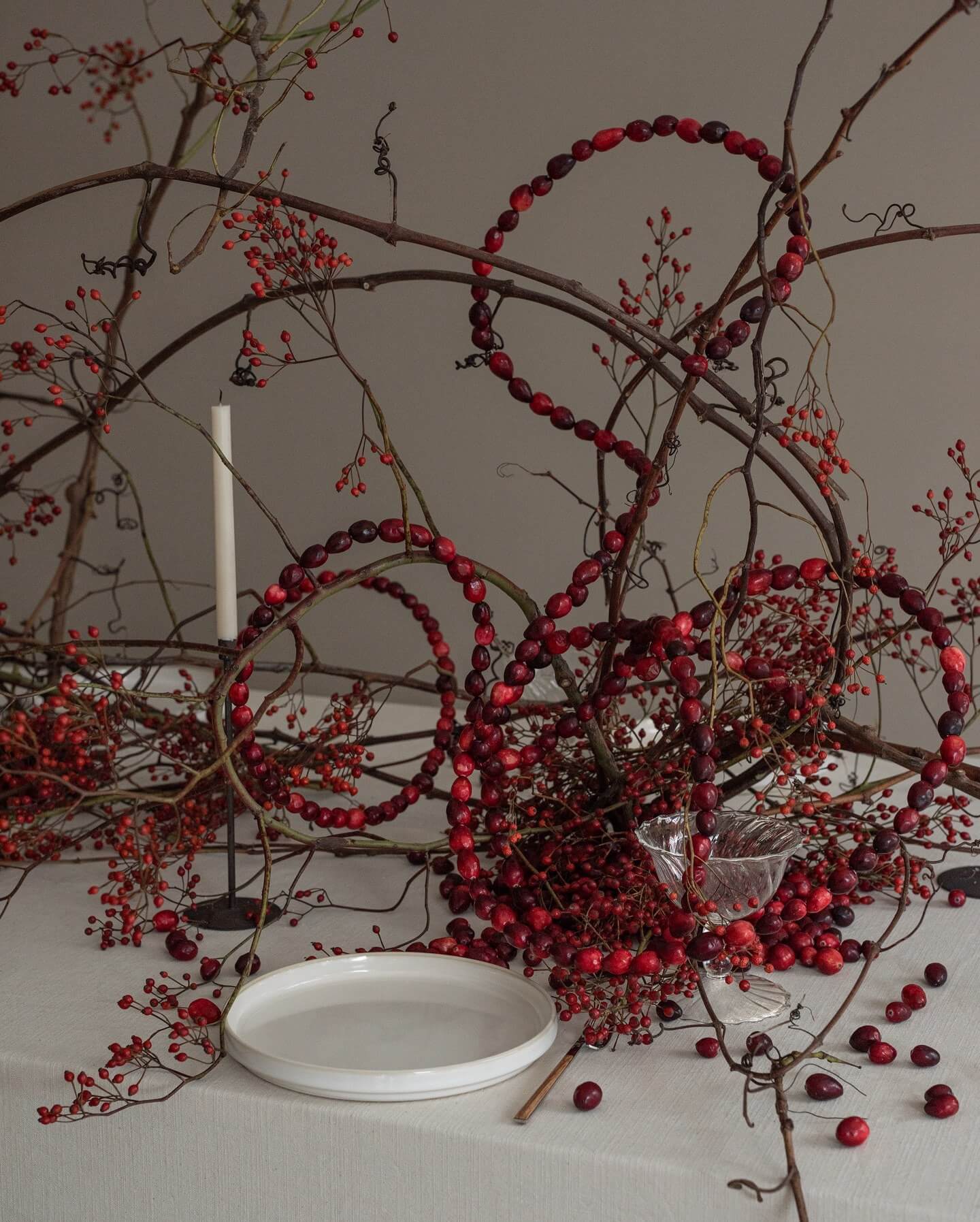
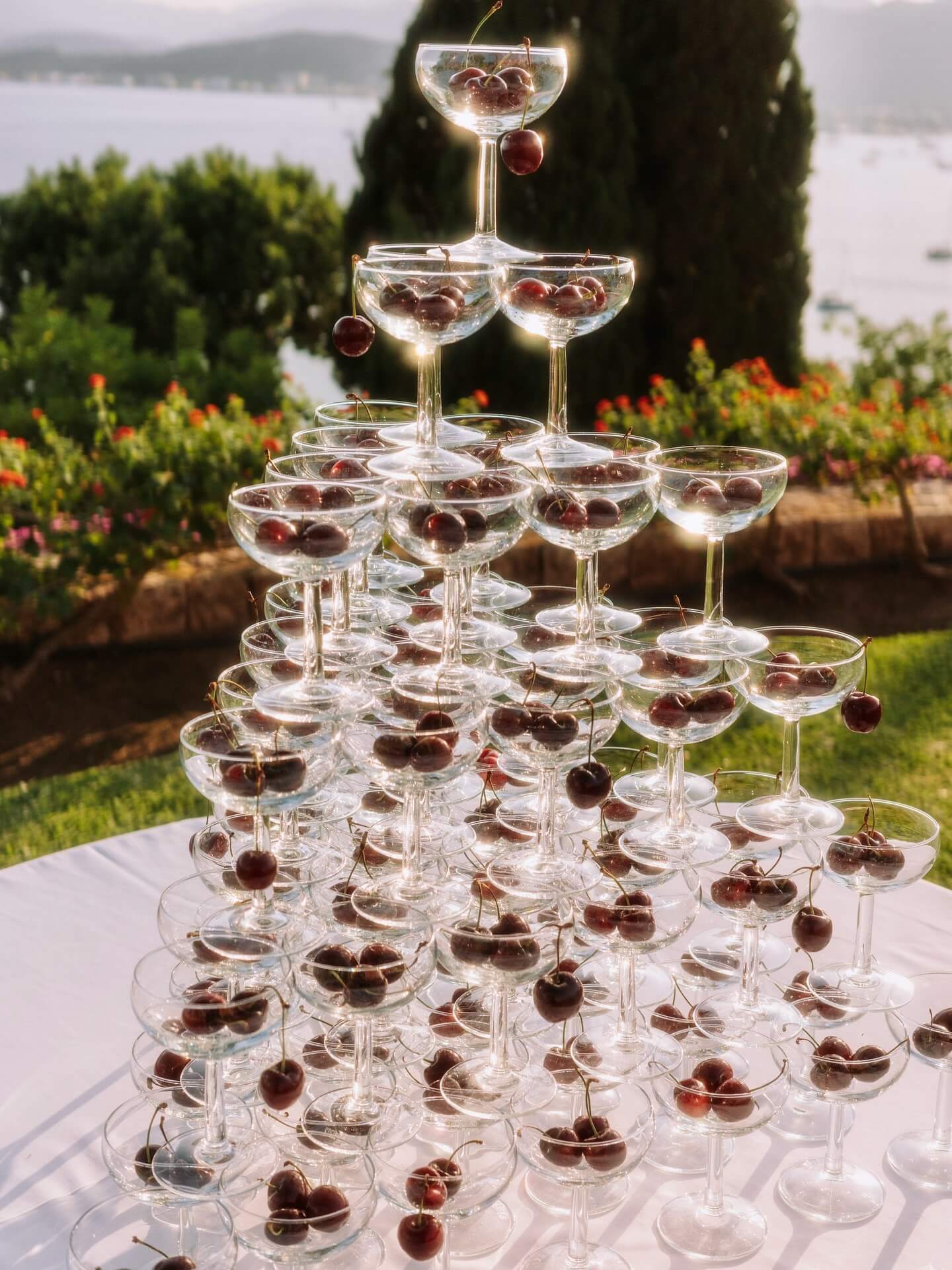
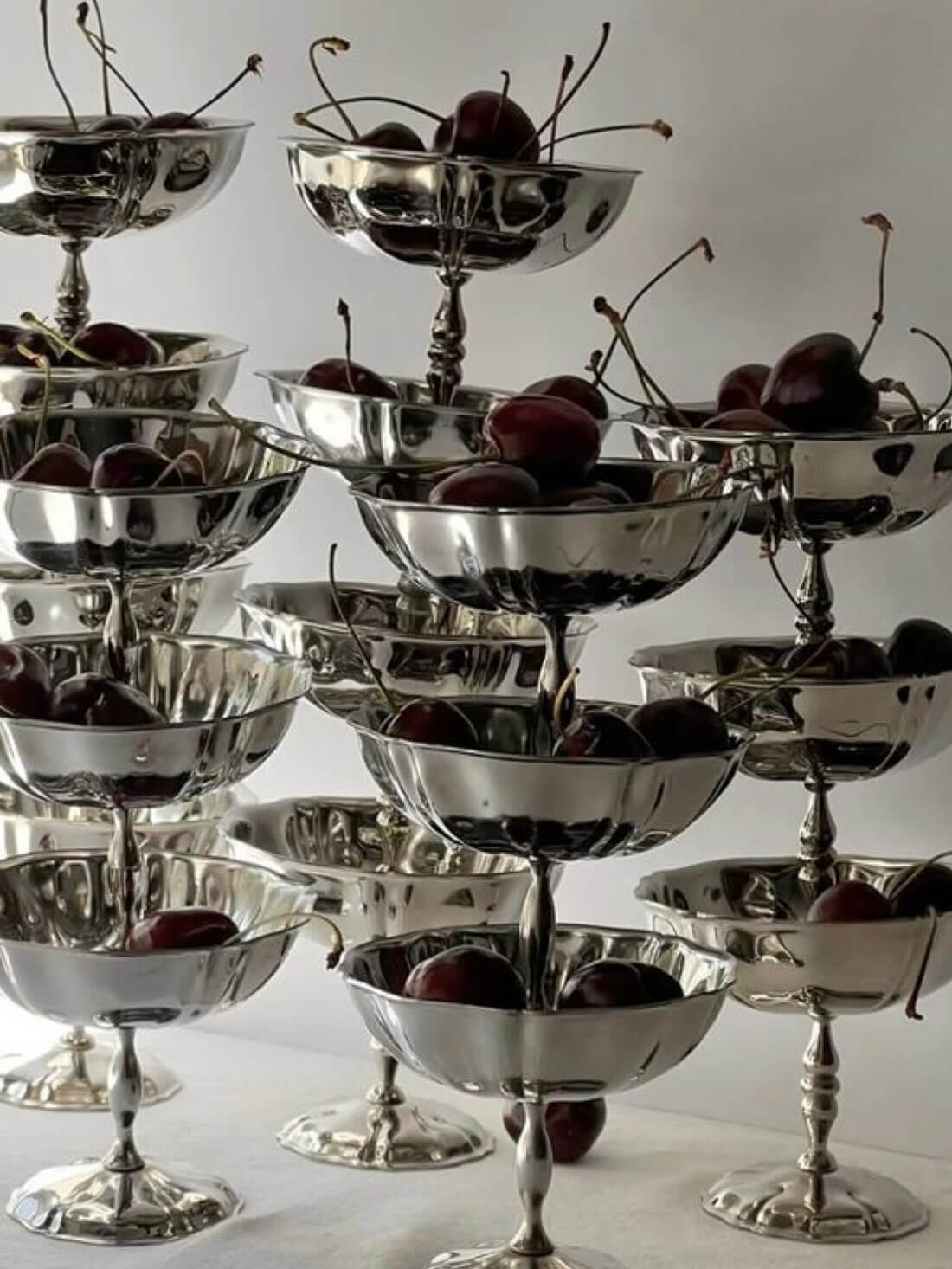
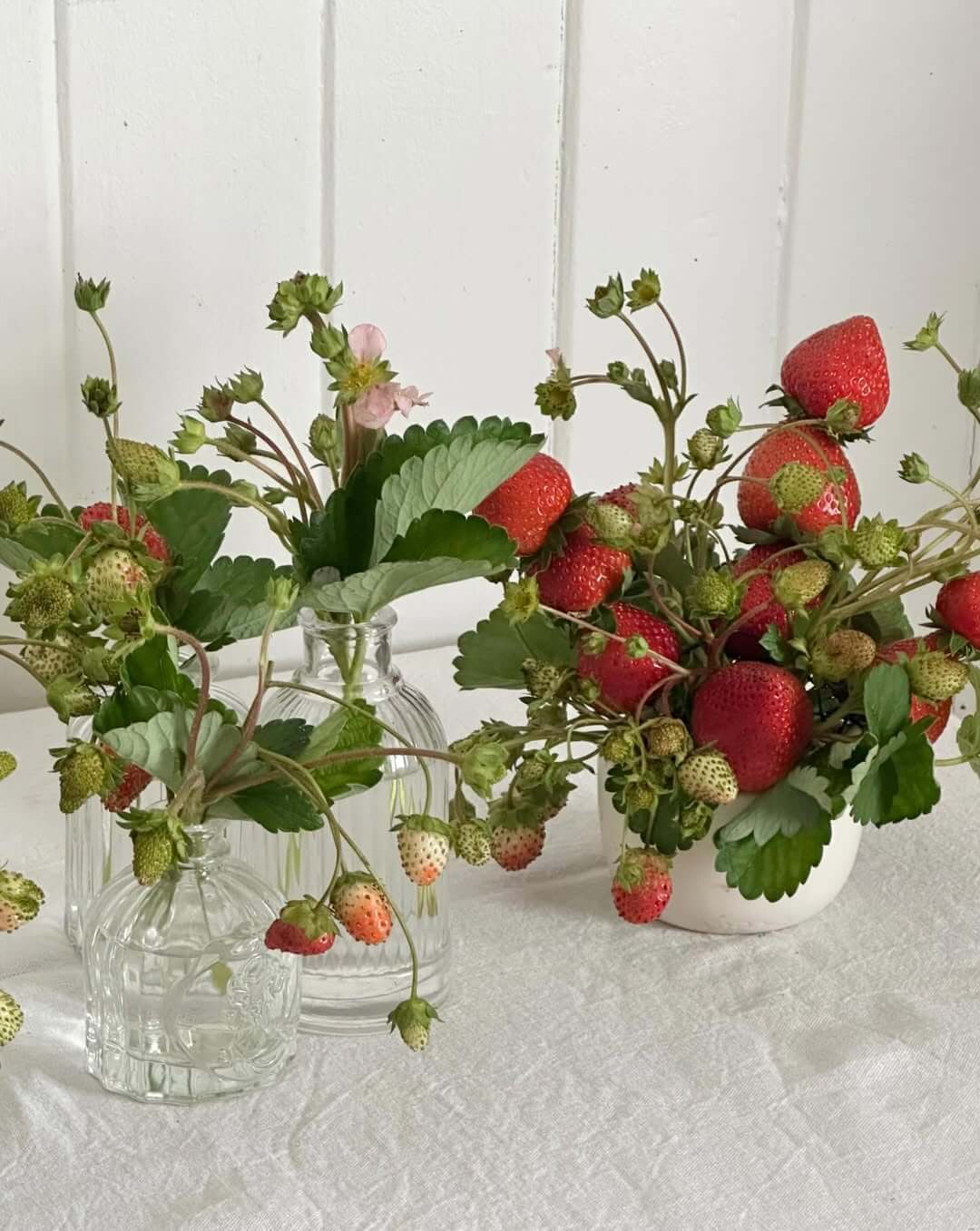
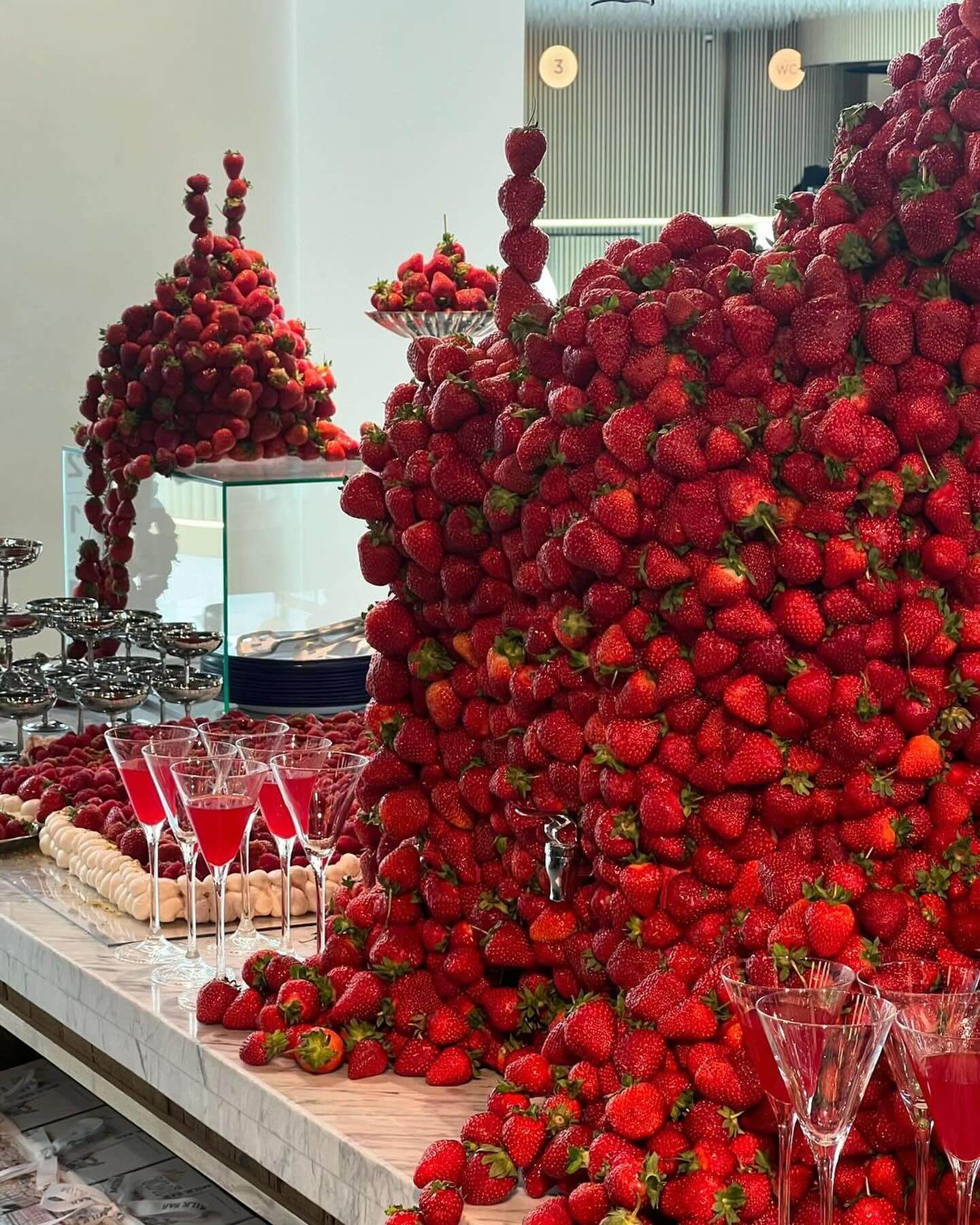
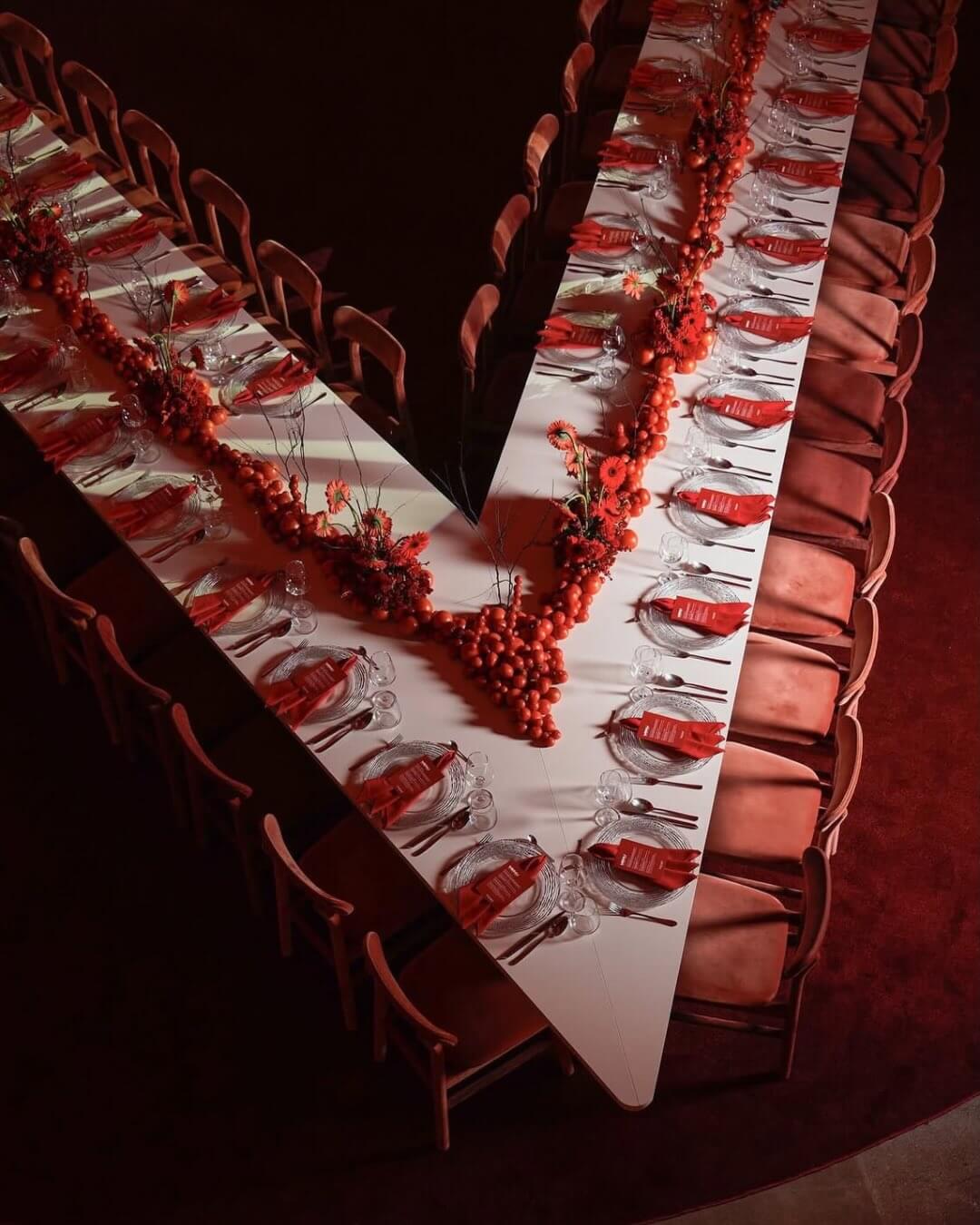
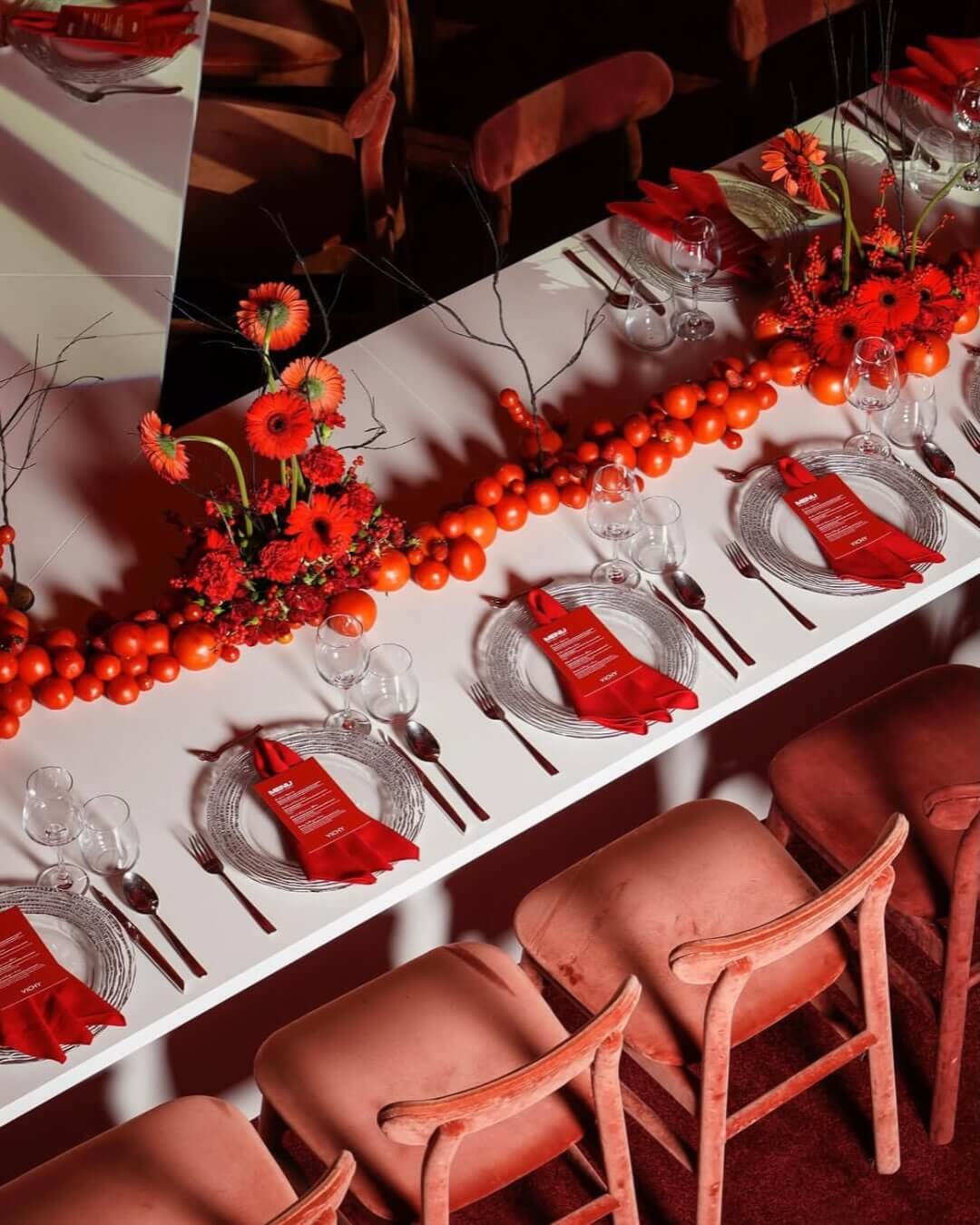
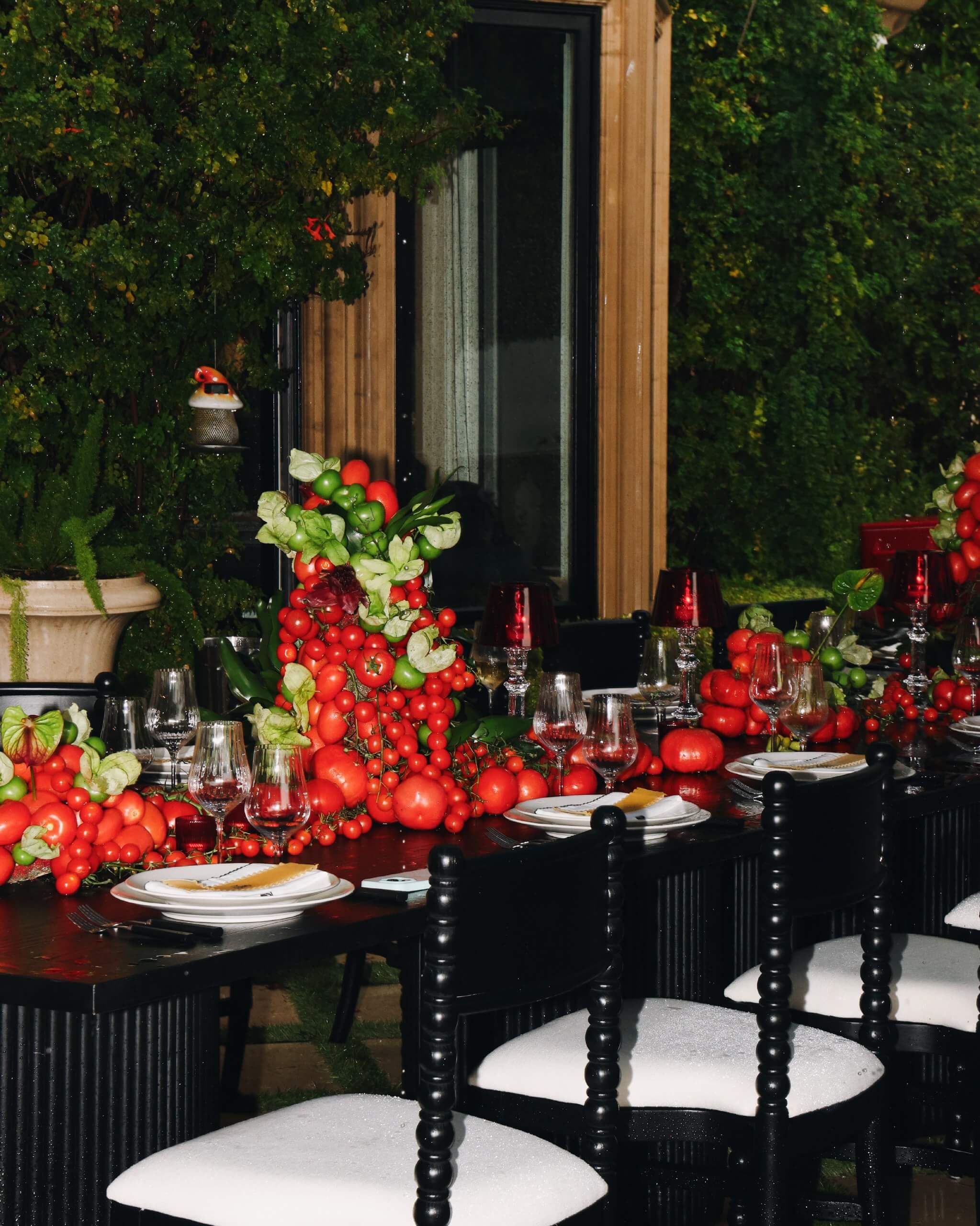
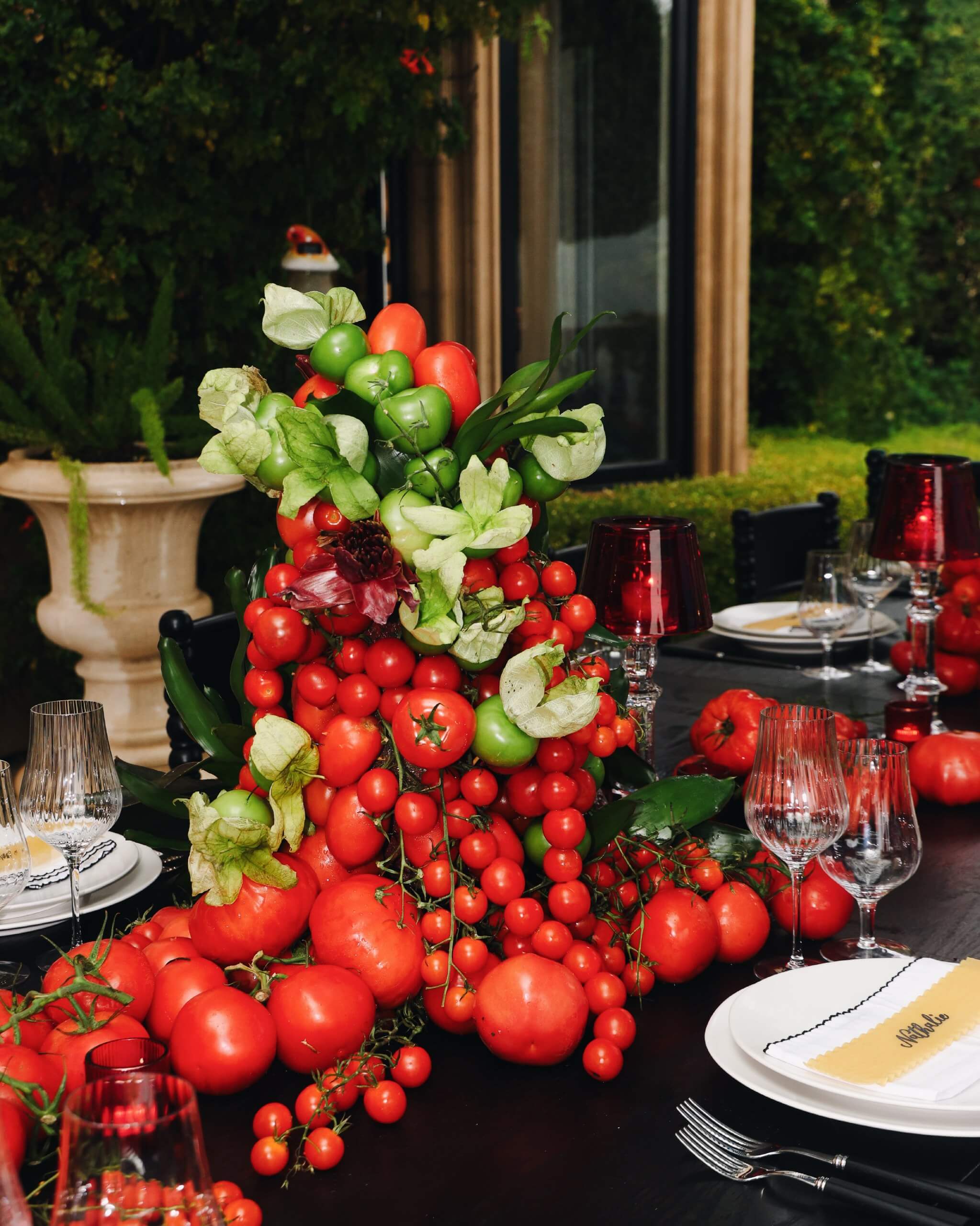
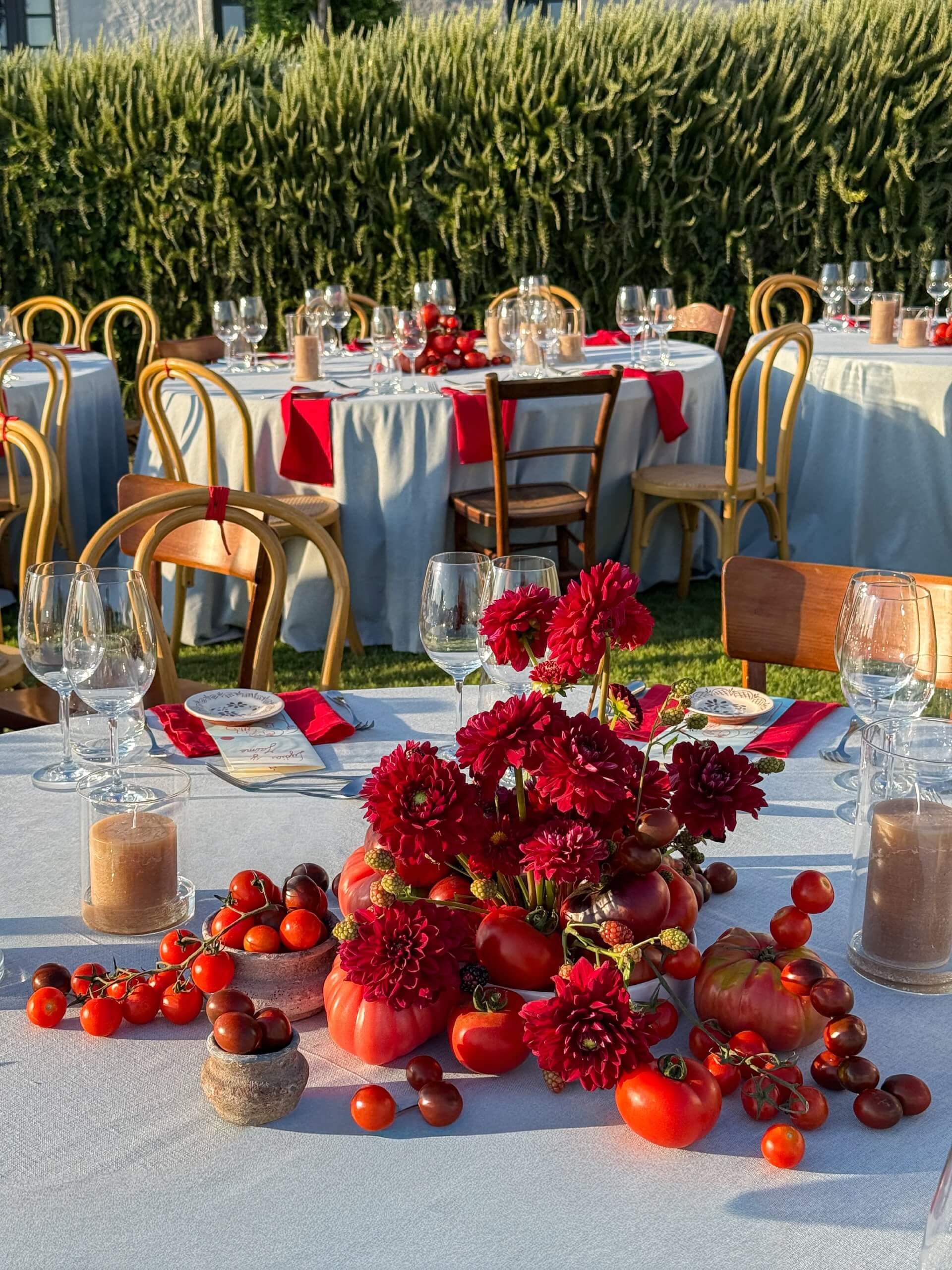
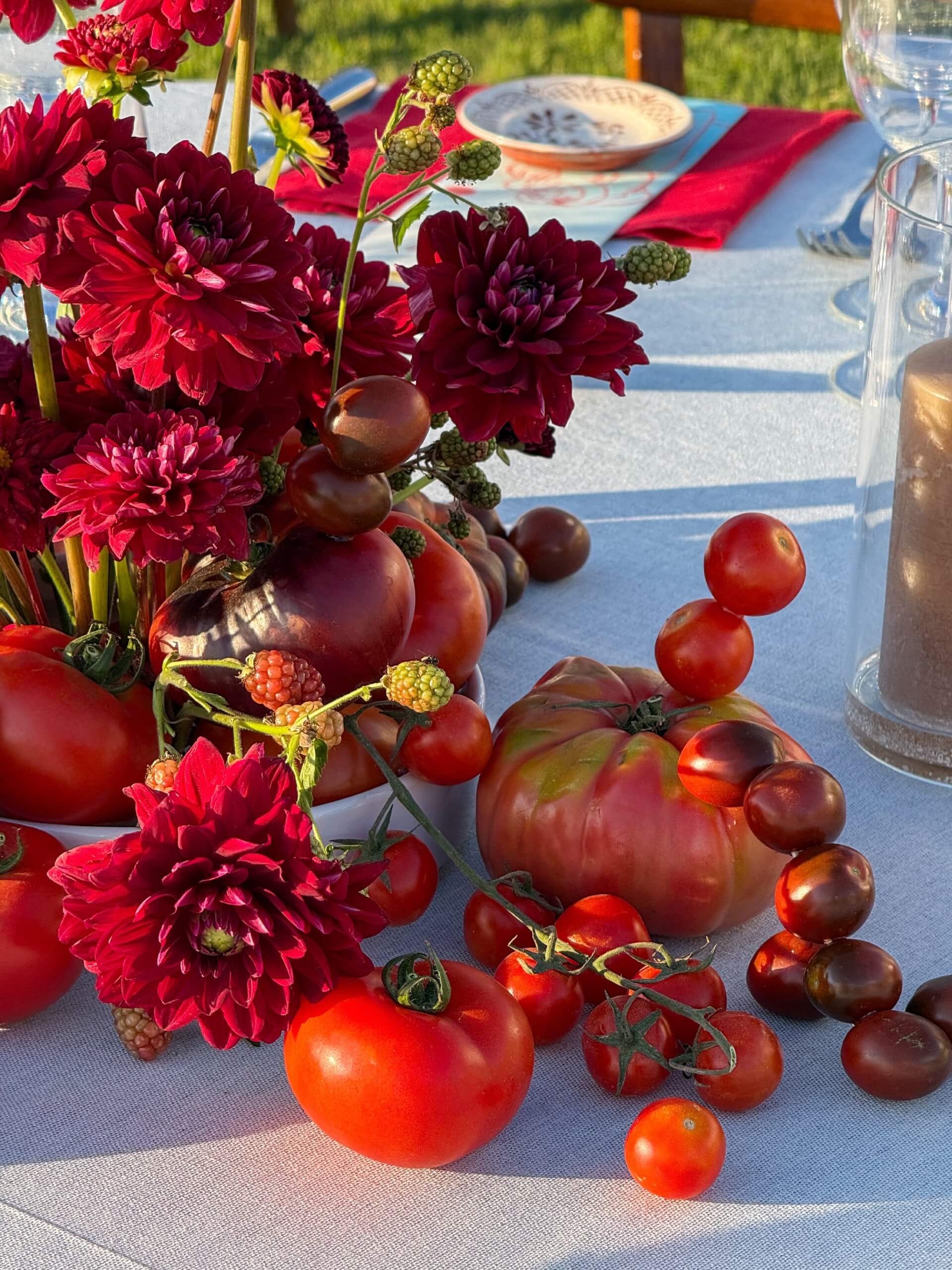
Berries and small clusters of fruit are used differently to larger centrepiece fruit, as they are often woven directly into floral arrangements rather than standing alone. These details add texture and depth to the main arrangement without overshadowing it.
Scale is the defining feature of this category. While a pomegranate or a stack of oranges demands attention on its own, a handful of berries tucked into a rose arrangement sits quietly in the background, adding depth without ever becoming the focal point. This makes these ideas especially useful for couples who already have a floral design they love and simply want to add a little more richness.
Chocolate-Dipped Cherry Cluster
Cherries dipped partway in dark chocolate and arranged in a small cluster near place settings double as a centrepiece detail and an edible favour that guests can actually enjoy.
Berry-Studded Rose Arrangement
Tucking small clusters of berries directly into a rose arrangement adds an unexpected texture and a deep colour contrast against the softer petals.
Cherry Blossom and Cherry Pairing
Branches of cherry blossom arranged in a tall vase with a small ring of fresh cherries around the base connect the flower and the fruit it's named after in one cohesive display.
Berry Bonanza Bowl
A clear glass bowl filled with strawberries, blueberries and raspberries creates a genuinely colourful centrepiece that looks fresh and playful.
Frosted Berry Branch
Frozen branches with berries still attached, displayed in a glass vase, provide an icy, dramatic texture that works particularly well for winter or evening receptions.
Snow-Dusted Grape Cluster
Lightly dusting grape clusters with powdered sugar creates a frosted look that pairs well with winter and romantic summer evening themes.
Berry and Wildflower Basket
A rustic basket filled with mixed berries and scattered with small wildflowers creates a relaxed, garden-inspired look rather than a formal one.
Mini Fruit Skewer Bouquet
Arrange small skewers of strawberries and melon into miniature bouquets inside individual vases to create a playful semi-edible centrepiece for smaller tables.
Bramble and Berry Branch
Incorporating branches still laden with berries into an arrangement blends a slightly wild, natural texture with the polished look of a styled centrepiece.
Vine-Wrapped Candle Cluster
Wrapping thin grapevines around a group of candle holders, with a few berries left attached, softens the look of an otherwise formal candlelit setup.
Tropical Elegance: Papaya, Melons, and Exotic Textures
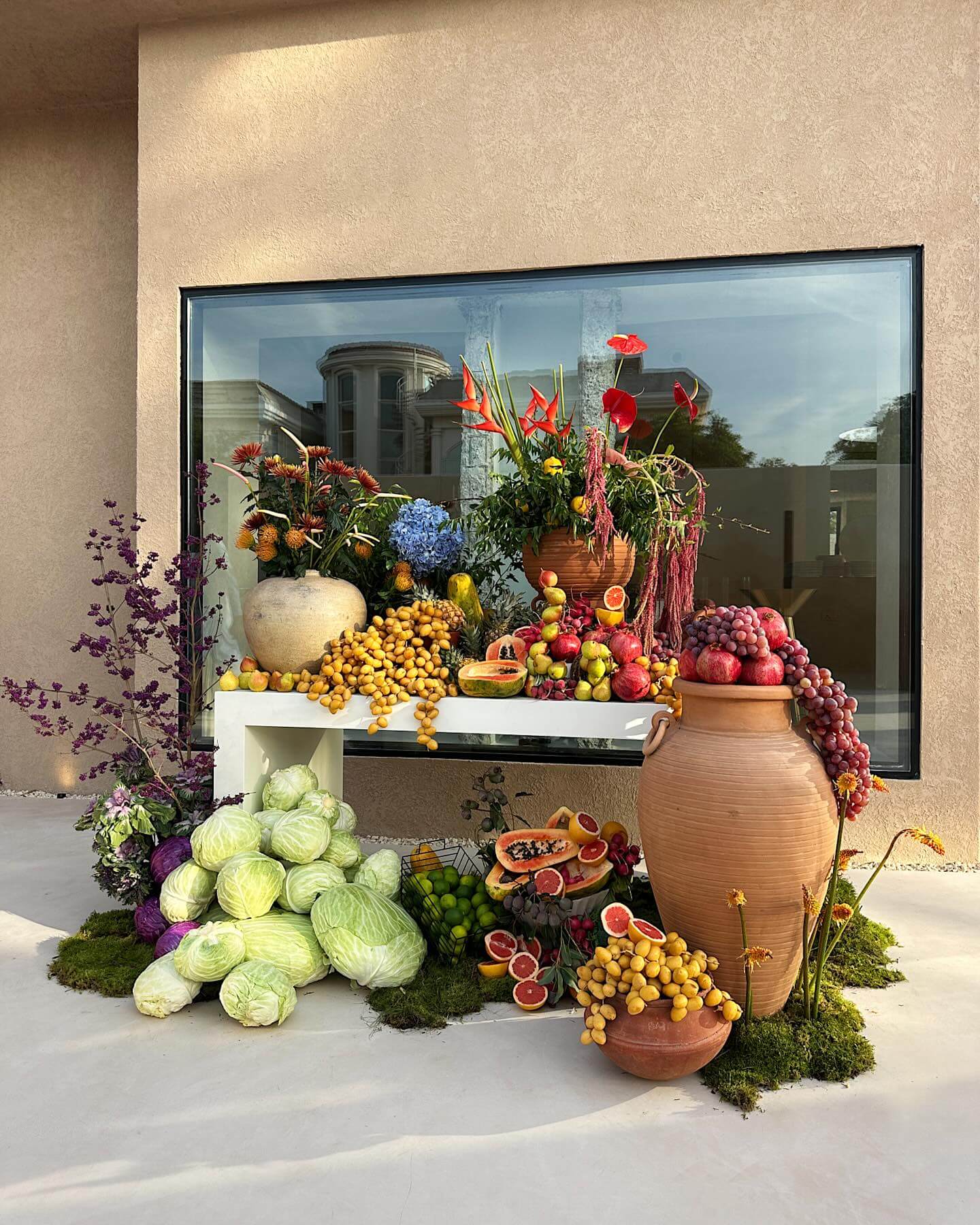
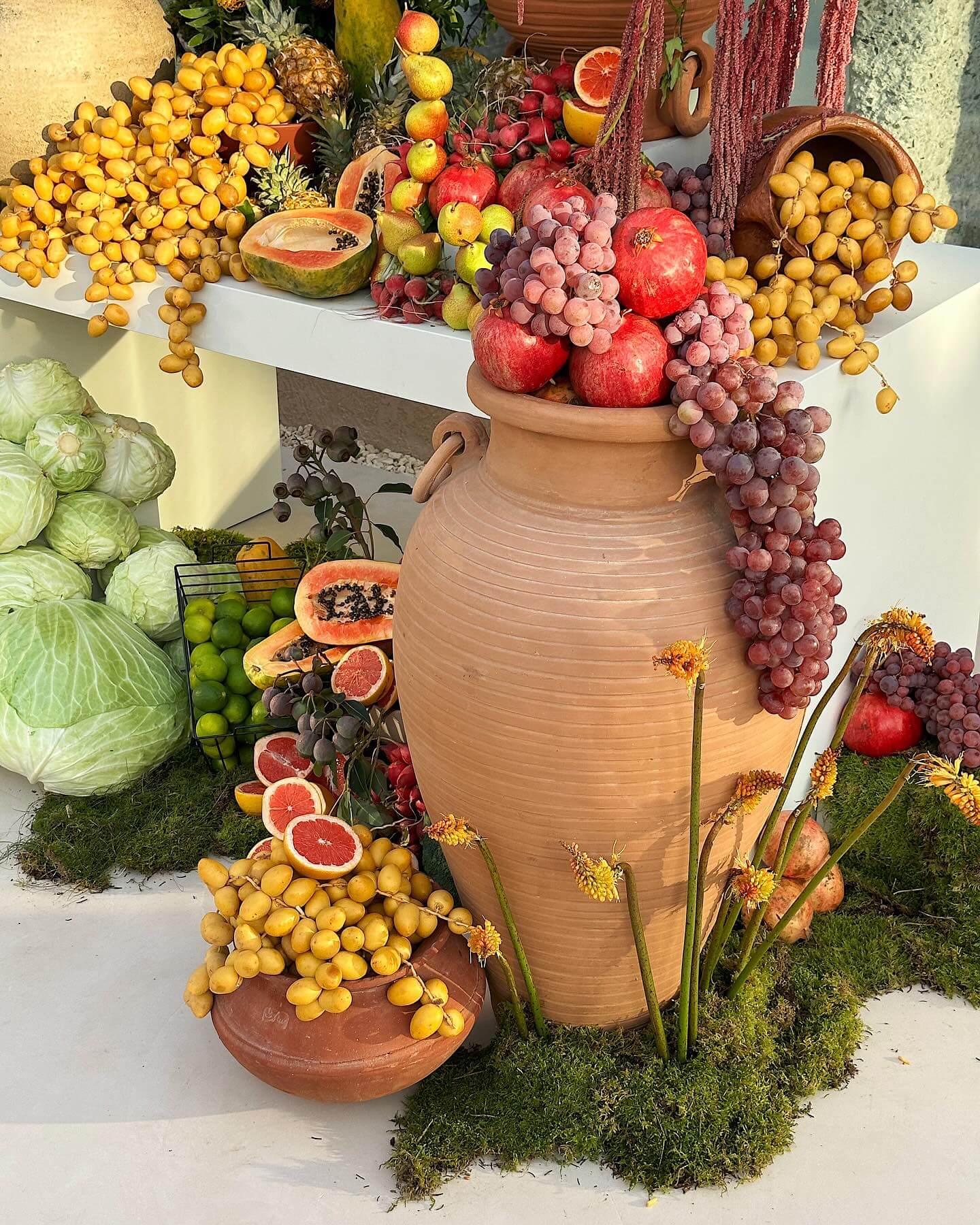
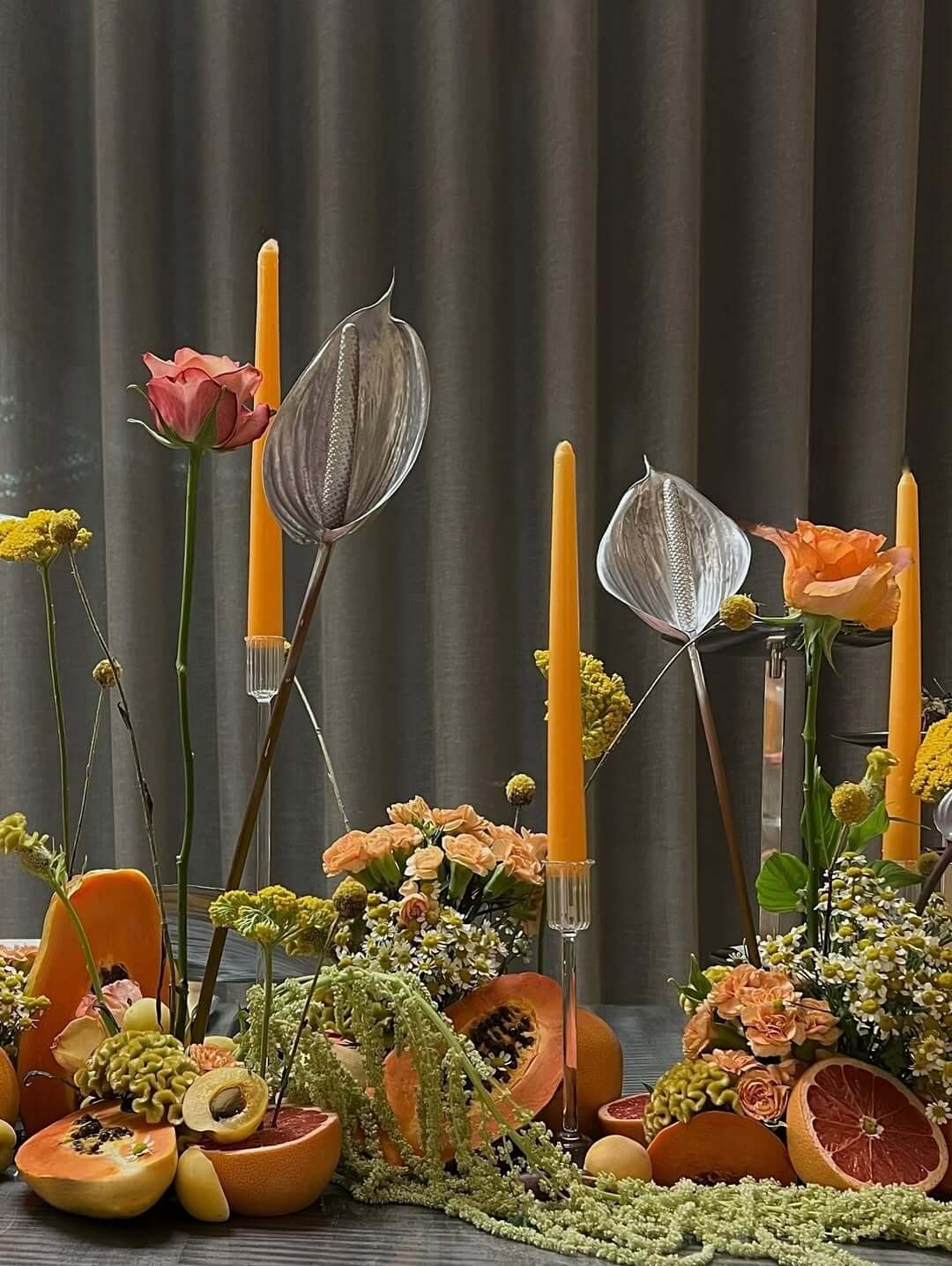
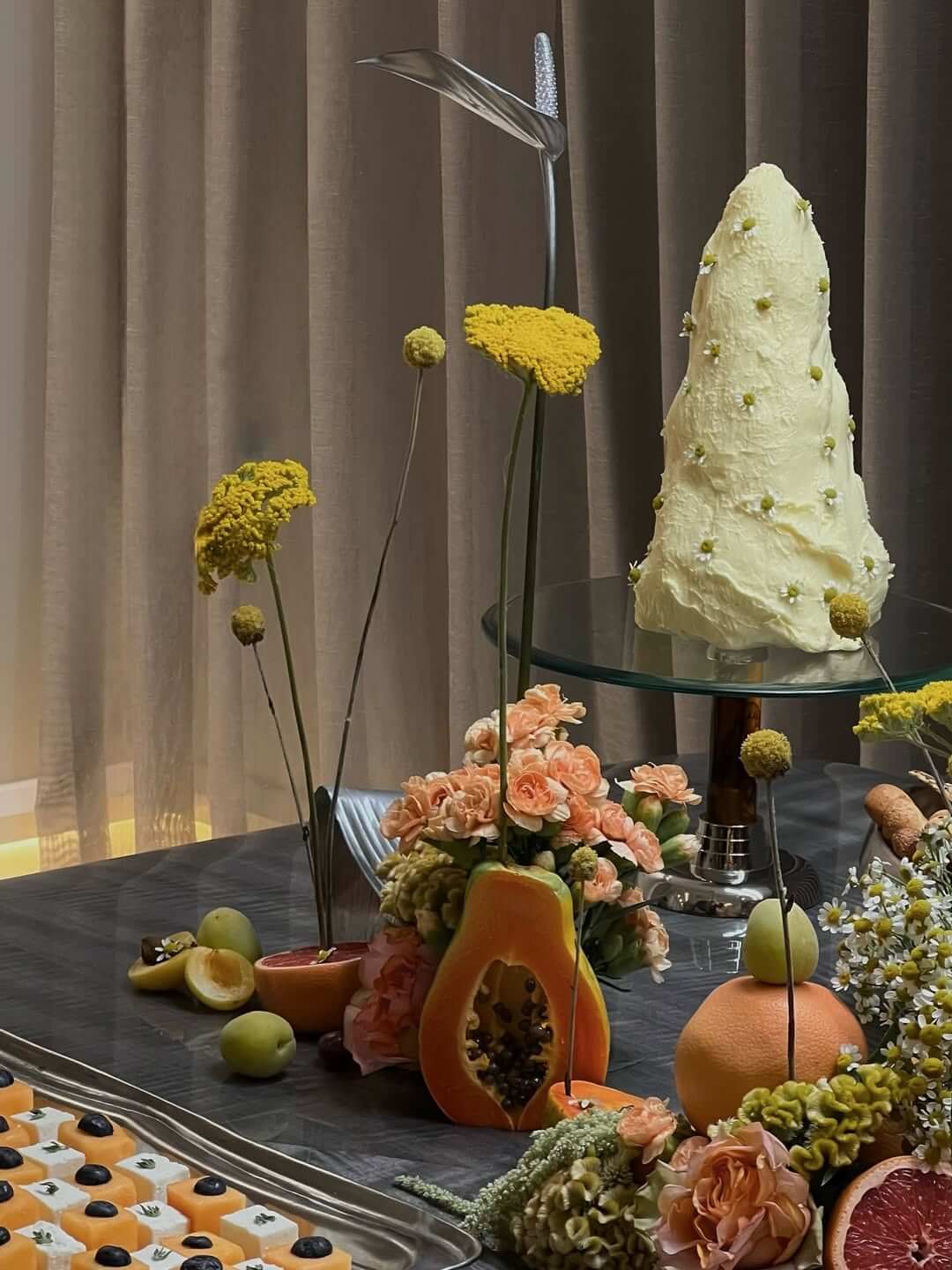
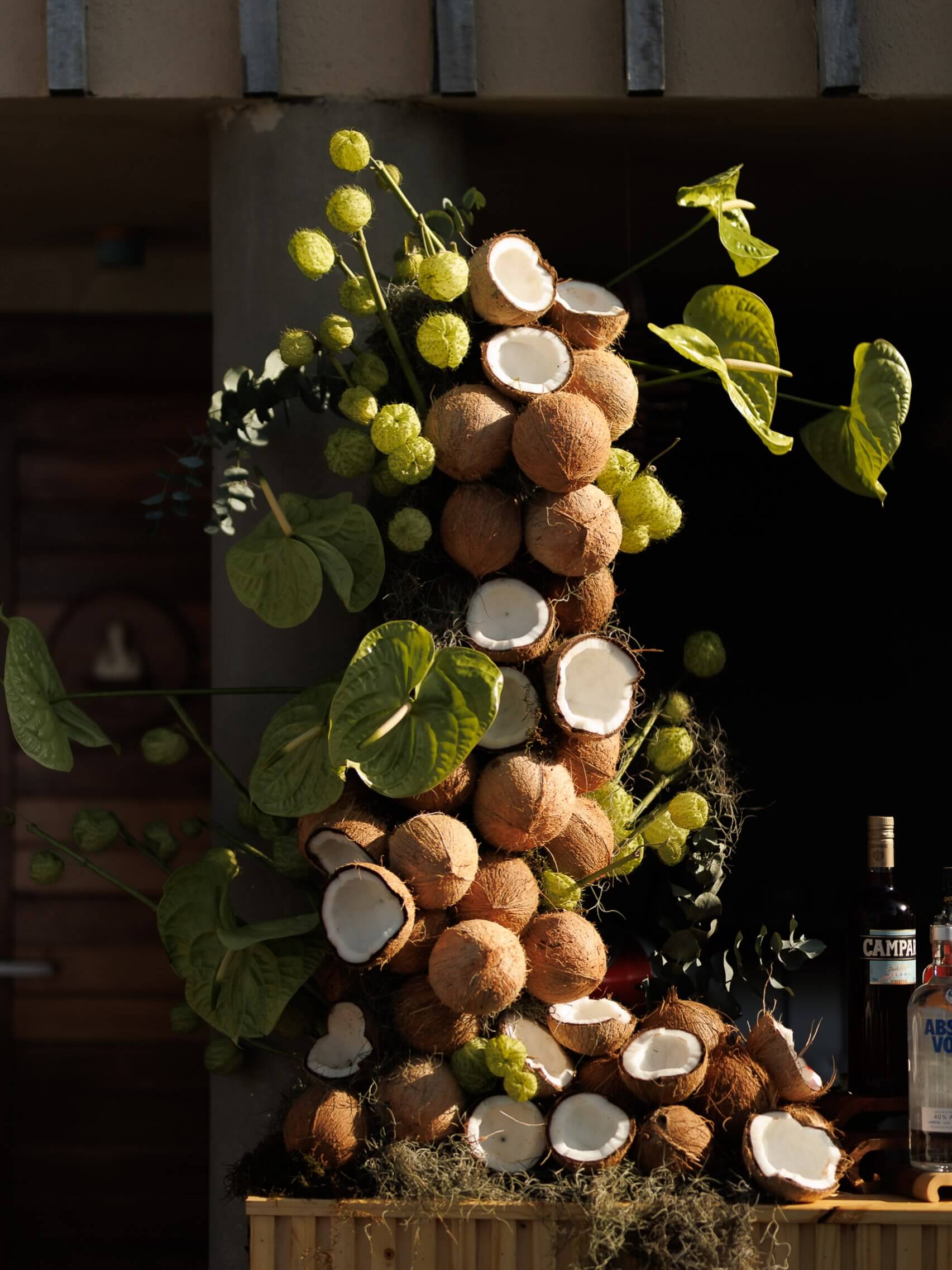
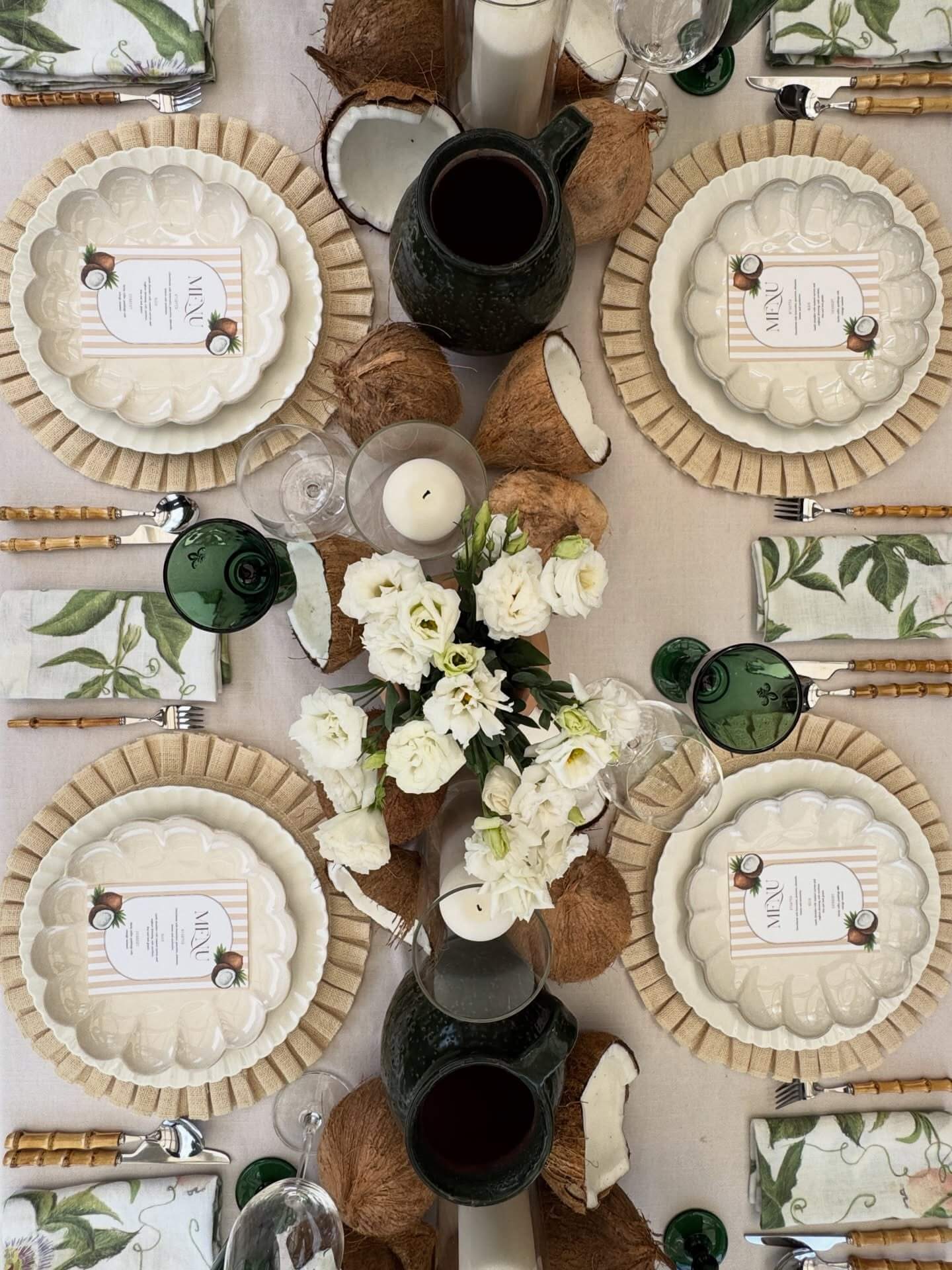
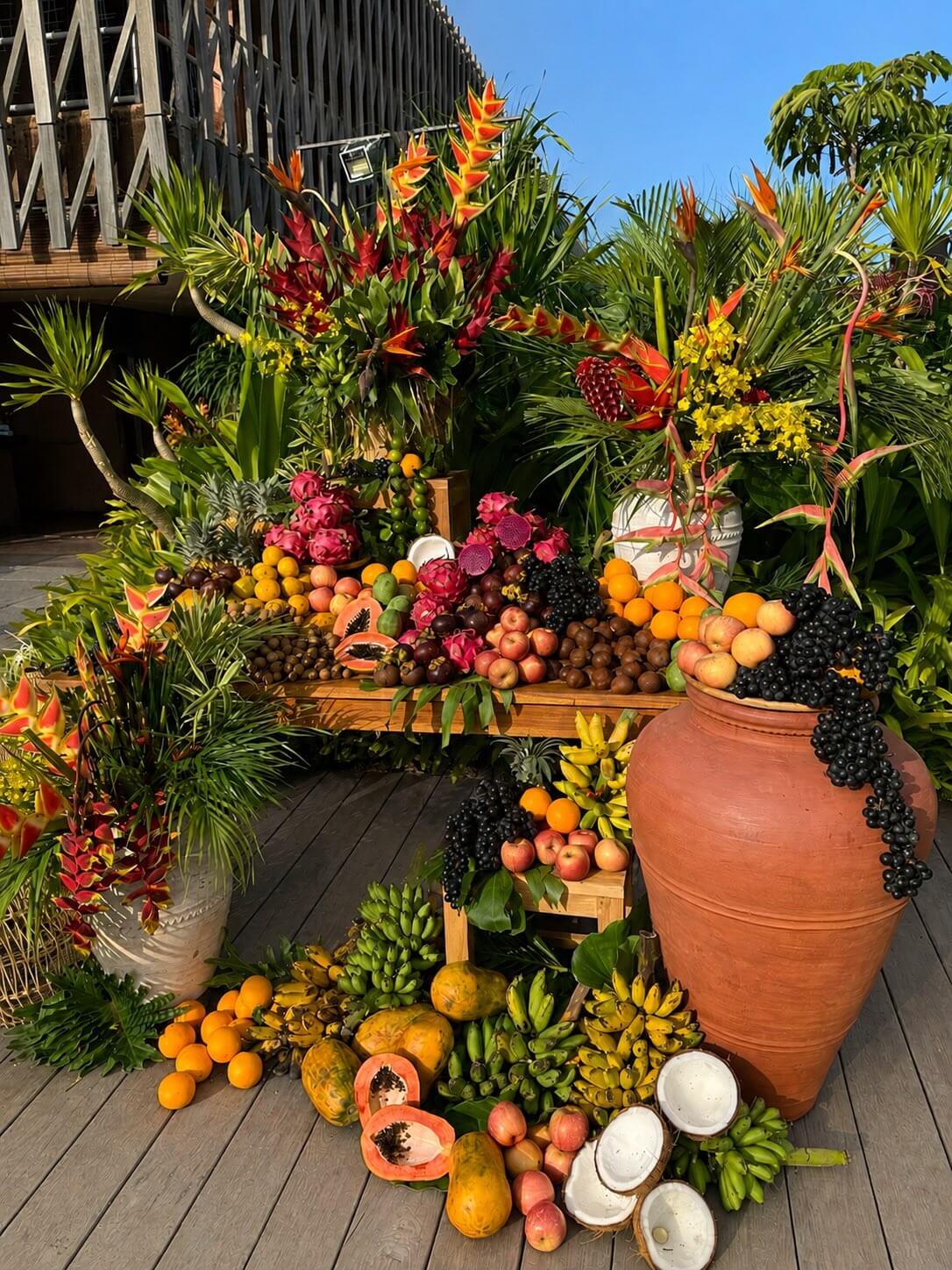
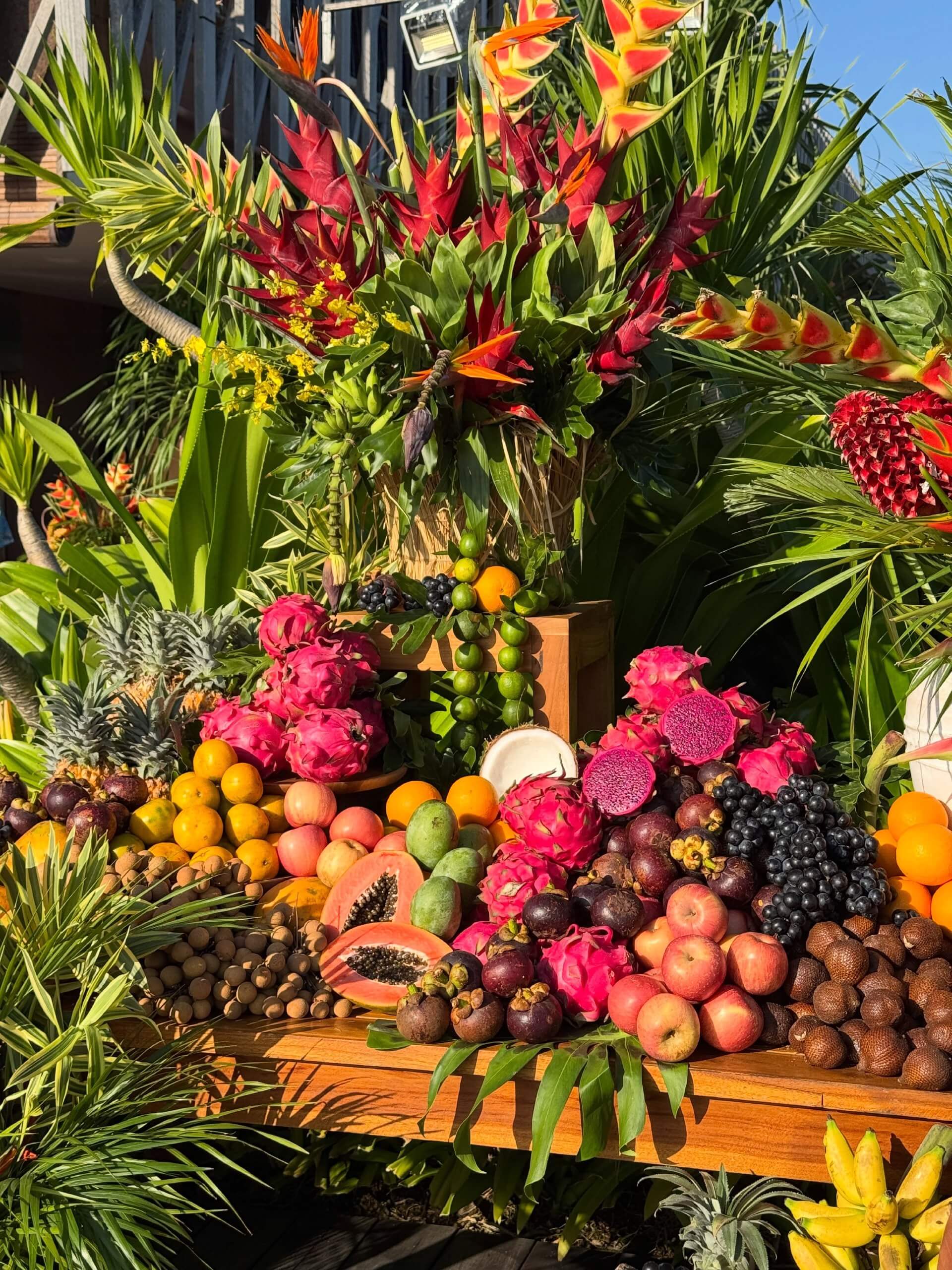
Tropical fruit brings a completely different texture and colour palette to the table: warm oranges, soft greens and genuinely exotic shapes. These centrepieces are particularly well-suited to destination weddings and warm-weather celebrations.
Texture is as important as colour in setting this category apart. Papayas, dragon fruits and passion fruits all have strikingly different interiors once cut open, giving a centrepiece visual layers that citrus or orchard fruits simply can't replicate. Pairing these with natural materials such as terracotta or palm greenery creates a sense of place, making the arrangement feel rooted in the destination rather than simply looking tropical.
Papaya and Terracotta Vessel Display
Arrange halved papayas around a large terracotta vessel and pair them with tropical greenery to create a warm, earthy backdrop that feels distinctly destination-inspired.
Exotic Fruit Curiosity Cluster
Dragon fruit, papaya and kiwi fruit arranged together spark genuine conversation at the table since their shapes and colours are unlike anything guests typically see in a centrepiece.
Melon and Mint Bowl
Colourful melon slices paired with fresh mint in a decorative bowl create a refreshing look that photographs beautifully in warm, sunlit venues.
Coconut Shell Fruit Bowl
Hollowed coconut shells filled with mixed tropical fruit bring a beach-inspired texture that works especially well for outdoor or waterfront receptions.
Kiwi and Orchid Vase
Sliced kiwi paired with orchid stems in a tall, clear vase contrasts vibrant green with delicate white or purple blooms.
Passion Fruit and Palm Accent
Halved passion fruit arranged among small palm fronds adds a genuinely tropical texture that suits a destination wedding without feeling costume-like.
Pineapple Pedestal Moment
Placing a single pineapple or a small cluster atop a pedestal or plinth creates a striking minimalist centrepiece that packs a real visual punch.
Tropical Fruit and Orchid Runner
Arranging a mixture of tropical fruit down the centre of the table, alongside a scattering of loose orchid blooms, maintains a vibrant colour scheme without the need for a full floral arrangement.
Fruit-Filled Glass Terrarium
Layer kiwi and citrus slices with moss inside a clear glass terrarium to create a sculptural centrepiece that will hold its shape all evening.
A few practical details can make any of these arrangements easier to pull off on the day:
- Choose fruit that's ripe but firm, since overripe fruit bruises during setup and won't keep its shape throughout the reception
- Ask your florist or caterer to order the fruit one or two days ahead rather than on the day, especially if you want out-of-season varieties
- Keep a small backup supply on hand in case any pieces get damaged during transport or setup
- Stick to one or two dominant fruits per arrangement rather than mixing too many varieties, to keep the look intentional rather than cluttered
Whatever mood you're going for, the right fruit centrepiece will say something about your wedding before a single course is served. If you're still shaping the rest of the tablescape around it,40 wedding table setting ideas is worth a look. Wezoree is full of real tablescapes and styling details like these, worth browsing for even more ideas before you settle on your own.

FAQ
Which fruit wedding centrepieces are the best to choose from?
The most suitable option depends on the mood you're going for: citrus fruits suit a bright, Mediterranean feel, dark grapes and pomegranates suit a moody evening reception, and apples and pears suit a soft, garden-inspired table. The strongest results are usually achieved by choosing fruit that matches your existing colour palette. Pairing fruit with a small amount of flowers or candles tends to enhance the arrangement without overwhelming the fruit itself.
How can fruit centrepieces be made to look elegant rather than casual?
Fruit centrepieces for wedding tables look elegant when the fruit is grouped intentionally, either by colour, height or a single dominant shape, rather than being mixed randomly. Using a pedestal, plinth or tiered stand adds height and visual weight that a flat bowl of fruit alone cannot achieve. Pairing fruit with a limited, cohesive colour palette in candles or flowers also creates a polished look.
Are fruit centrepieces a good, budget-friendly option for a wedding?
Yes, especially when built around seasonal, widely available fruit such as apples, oranges or grapes rather than imported or exotic varieties. A simple bowl of fruit with minimal added greenery often costs significantly less than a comparable all-floral arrangement. Buying fruit in bulk closer to the wedding date also helps to keep the overall cost down without compromising on visual impact.
Which summer fruits are best for wedding centrepieces?
Summer fruit centrepieces tend to feature citrus fruits, berries and stone fruits such as peaches, as these are widely available and do not wilt when left outdoors. Bright, sun-drenched colour schemes centred on lemons, oranges and berries suit warm-weather receptions particularly well. Pairing summer fruit with light, airy florals creates a fresh overall look rather than a heavy one.
Can fruit centrepieces be used for wedding receptions with a formal dress code?
Yes, they work well for formal receptions too, particularly when built around darker, richer fruit such as grapes, figs, and pomegranates, which look beautiful when paired with candlelight. A more architectural presentation, such as a display on a pedestal or a tightly clustered arrangement, looks considerably more formal than a casual bowl of mixed fruit. The right styling can make fruit feel just as elevated as a traditional floral centrepiece.