Wedding Food Trends 2027
- Author: Natali Grace Levine
- Reading time: 10 min 30 sec
- Publication date: 10/16/2026
- Updated: 10/22/2026


- Produce as Centerpiece: Fruit and Vegetables Built Into the Decor
- Geometry on the Plate: Canapés Cut Into Cubes, Blocks and Discs
- Guests Serve Themselves: Stations Replace the Plated Course
- Desserts Go Long: Sweet Tables Stretched and Stacked
- Bread Tables and Bread Bars as the New Wedding Centerpiece
- Savory Desserts: Vegetables, Pickles and Aspic on the Sweet Table
- Cheese and Fruit Tables as Sculptural Still Life
- 2027 Wedding Food and Beverage Trends From the Caterer’s Side
- From Inspiration to Menu: Planning With a Caterer
- FAQ
Imagine a reception where the thing you're most likely to photograph is the food. Asparagus rises in a candlelit tower, the canapés sit in crisp, sharp blocks on mirrored trays, and the bread table overflows with figs and grapes in a painterly arrangement. Guests are now asking caterers for menus they will see before they taste them, and that sits at the heart of current wedding food trends. Food now shares the job of styling the room with the florist and the lighting, so shape and color sit on the planning list next to flavor. Self-serve stations give guests a part to play in the evening, dessert tables grow long and elaborate, and the cheese board gets styled with care. The kitchens are also changing behind the scenes, with fermented flavors, zero-waste sourcing, and low-alcohol options becoming more common on wedding menus. This guide walks you through the ideas shaping 2027 wedding food trends, includes the caterer's view of what's coming to the plate, and flags the practicalities to sort before the first tasting.
Find Your Perfect Wedding Vendors




Produce as Centerpiece: Fruit and Vegetables Built Into the Decor
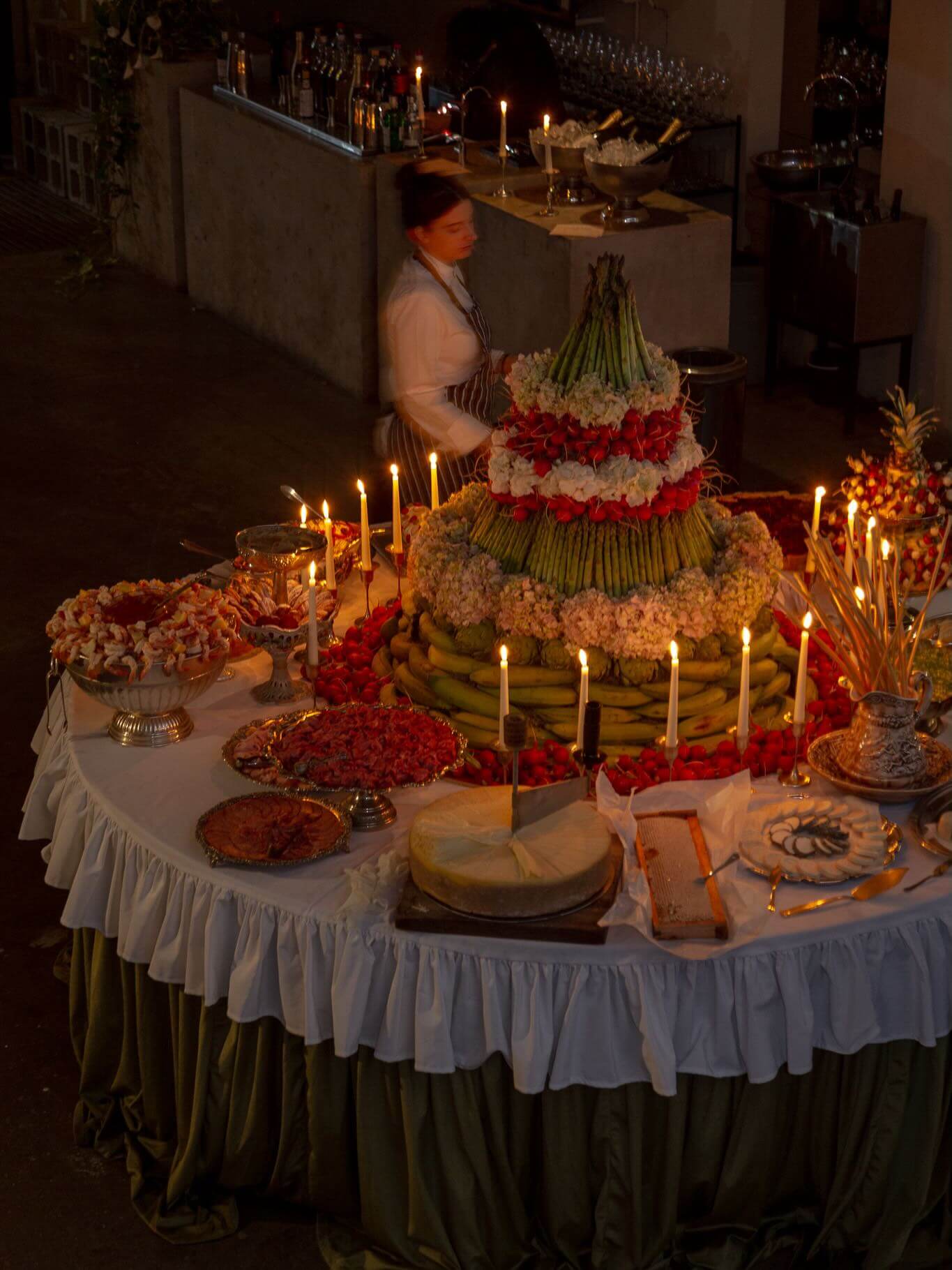
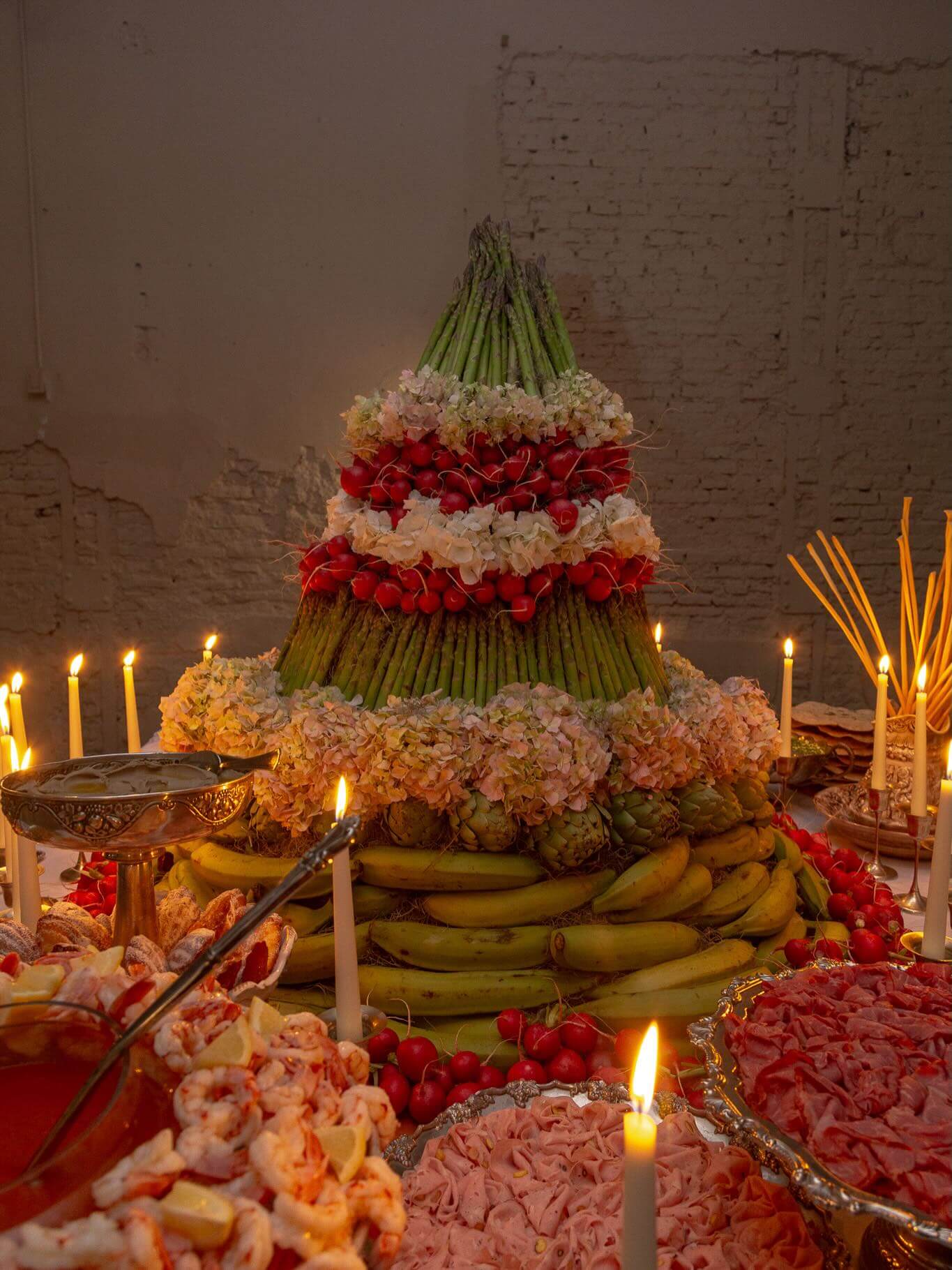
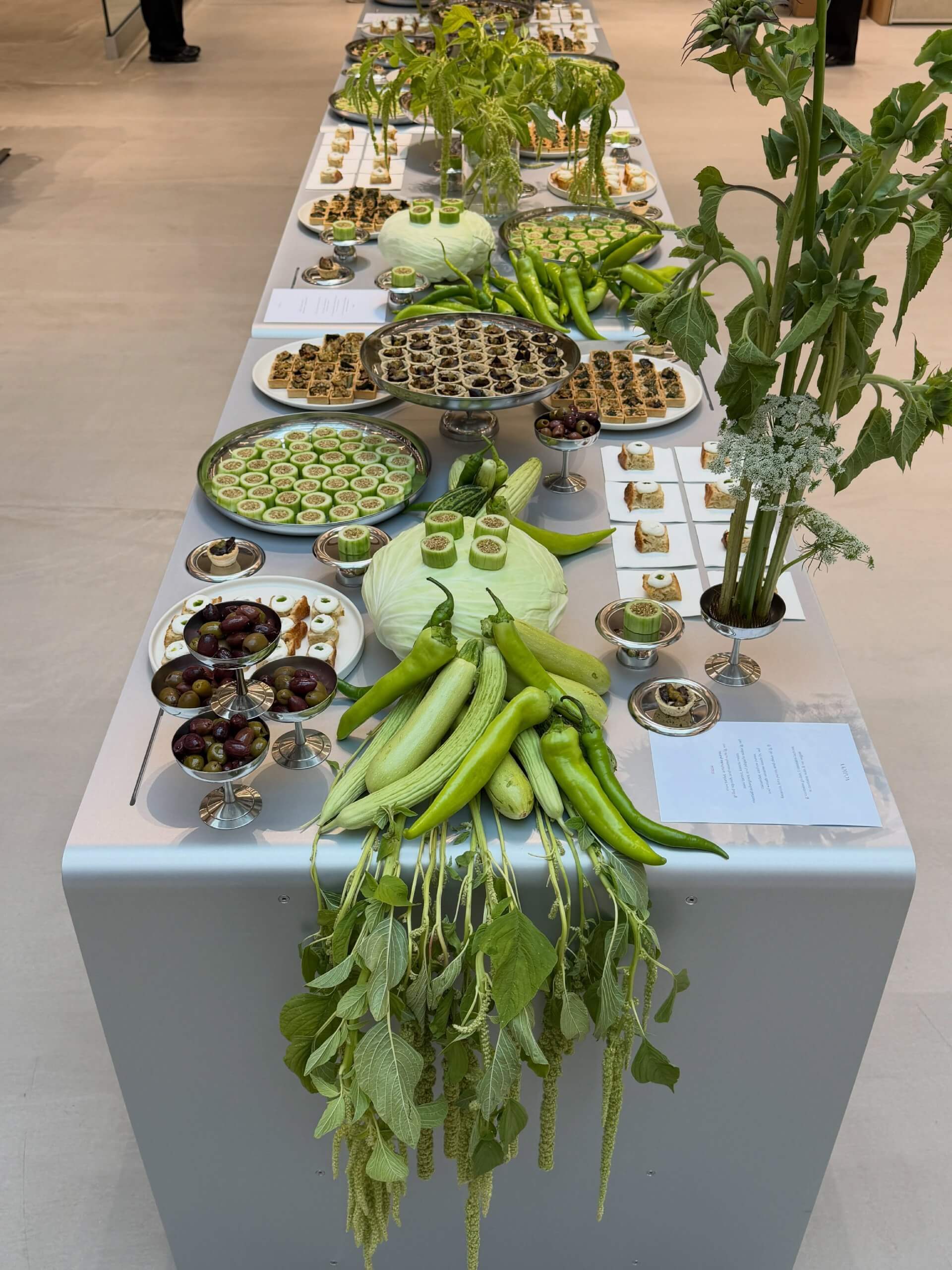
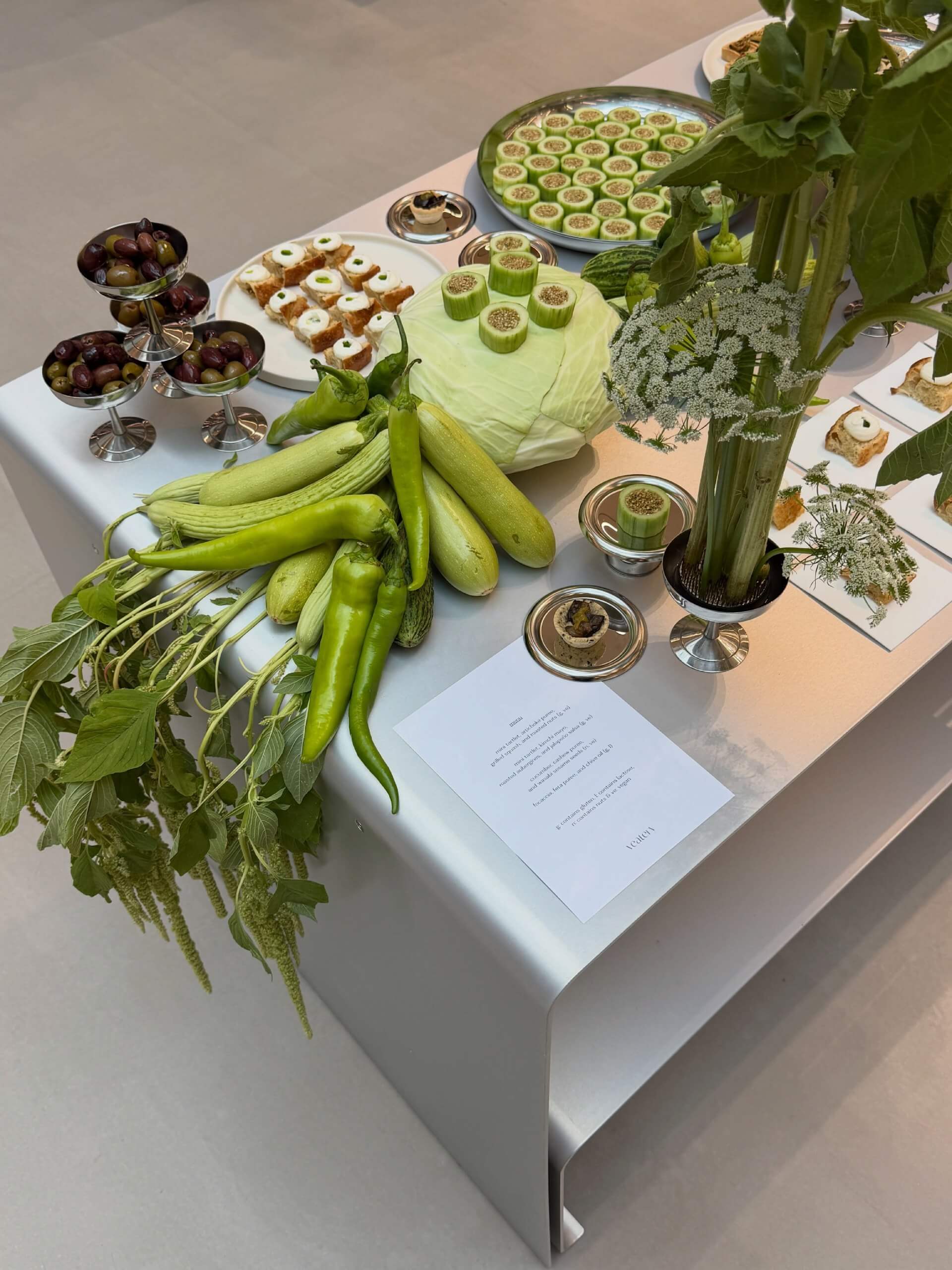
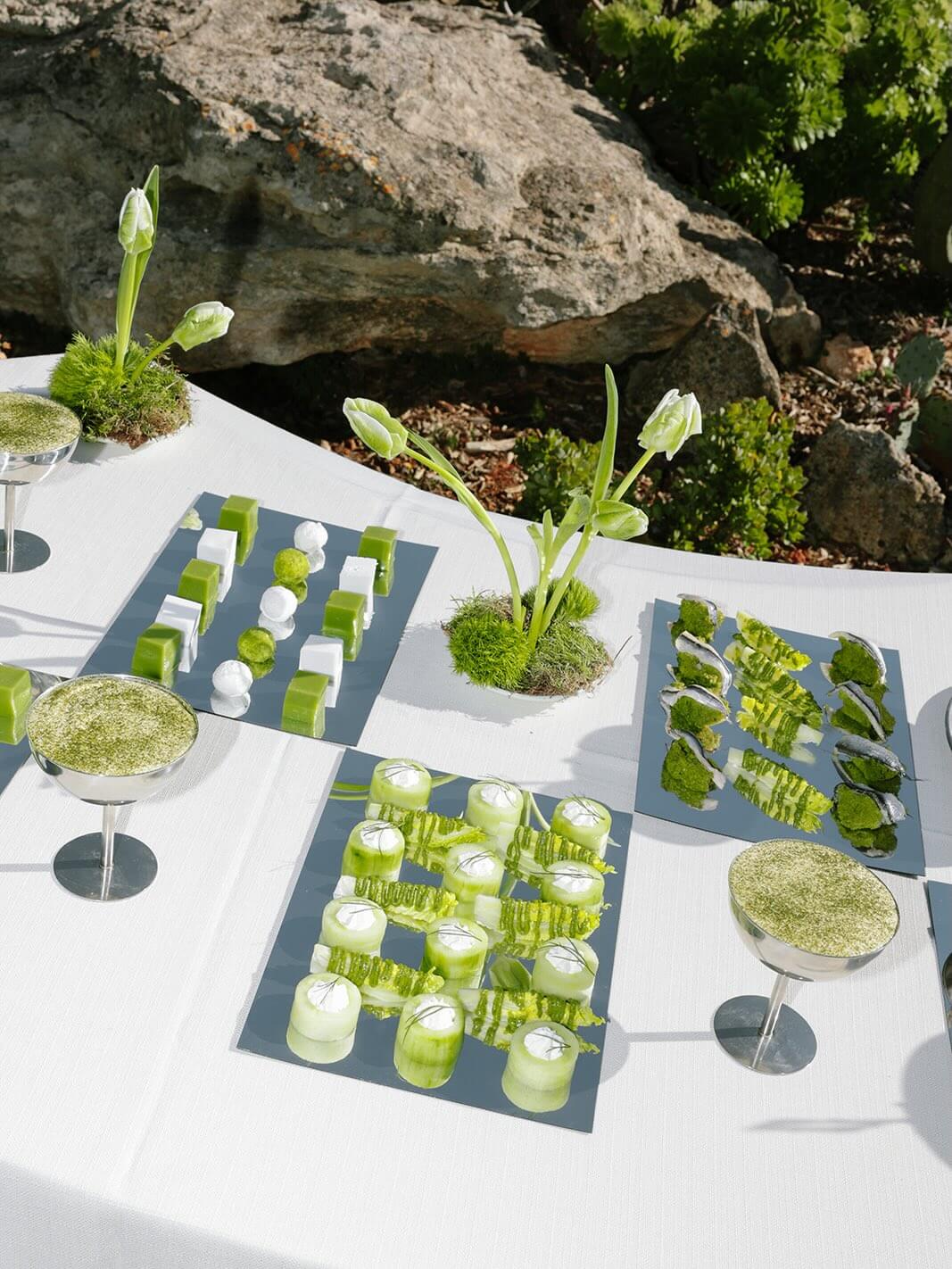
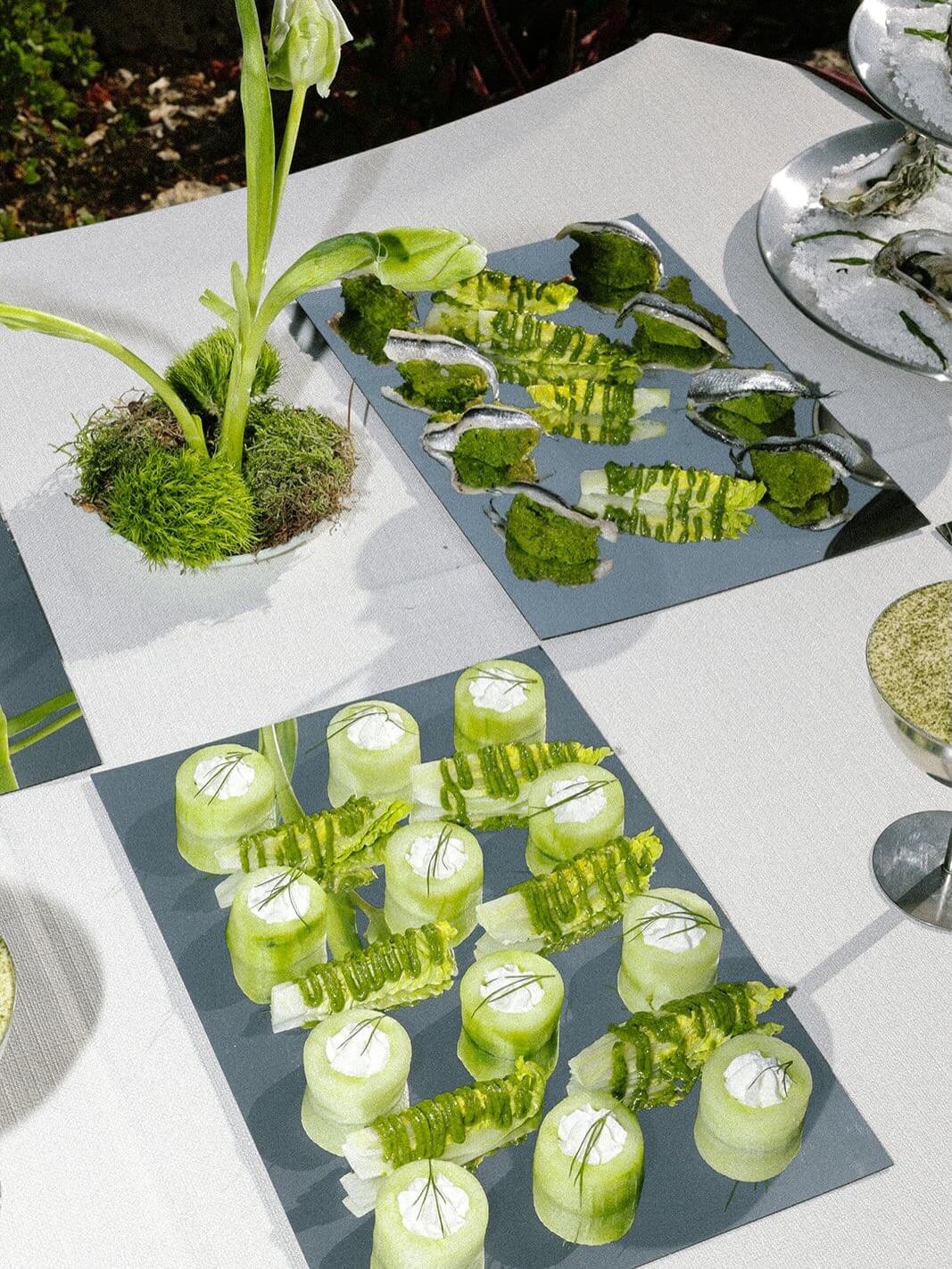
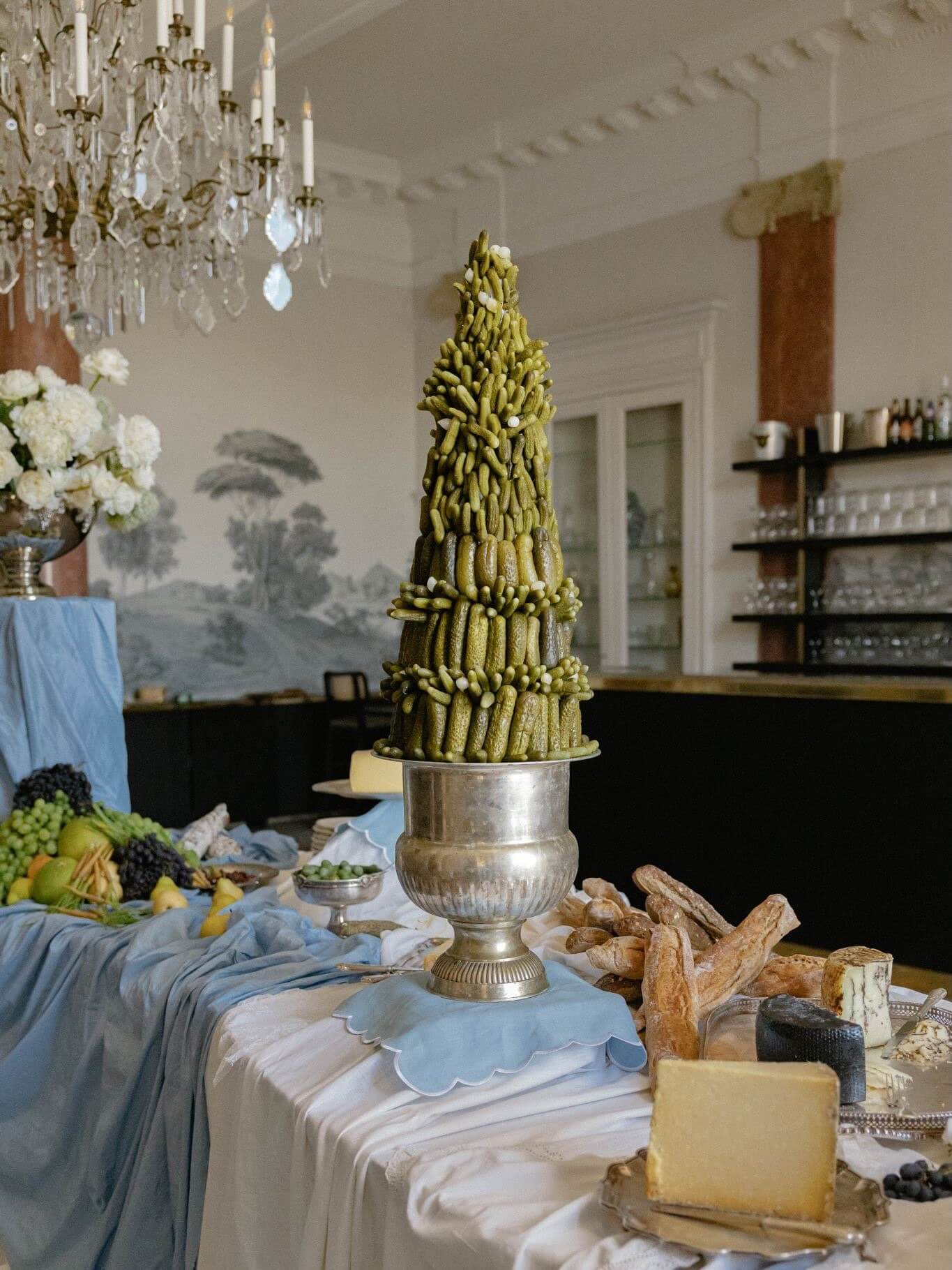
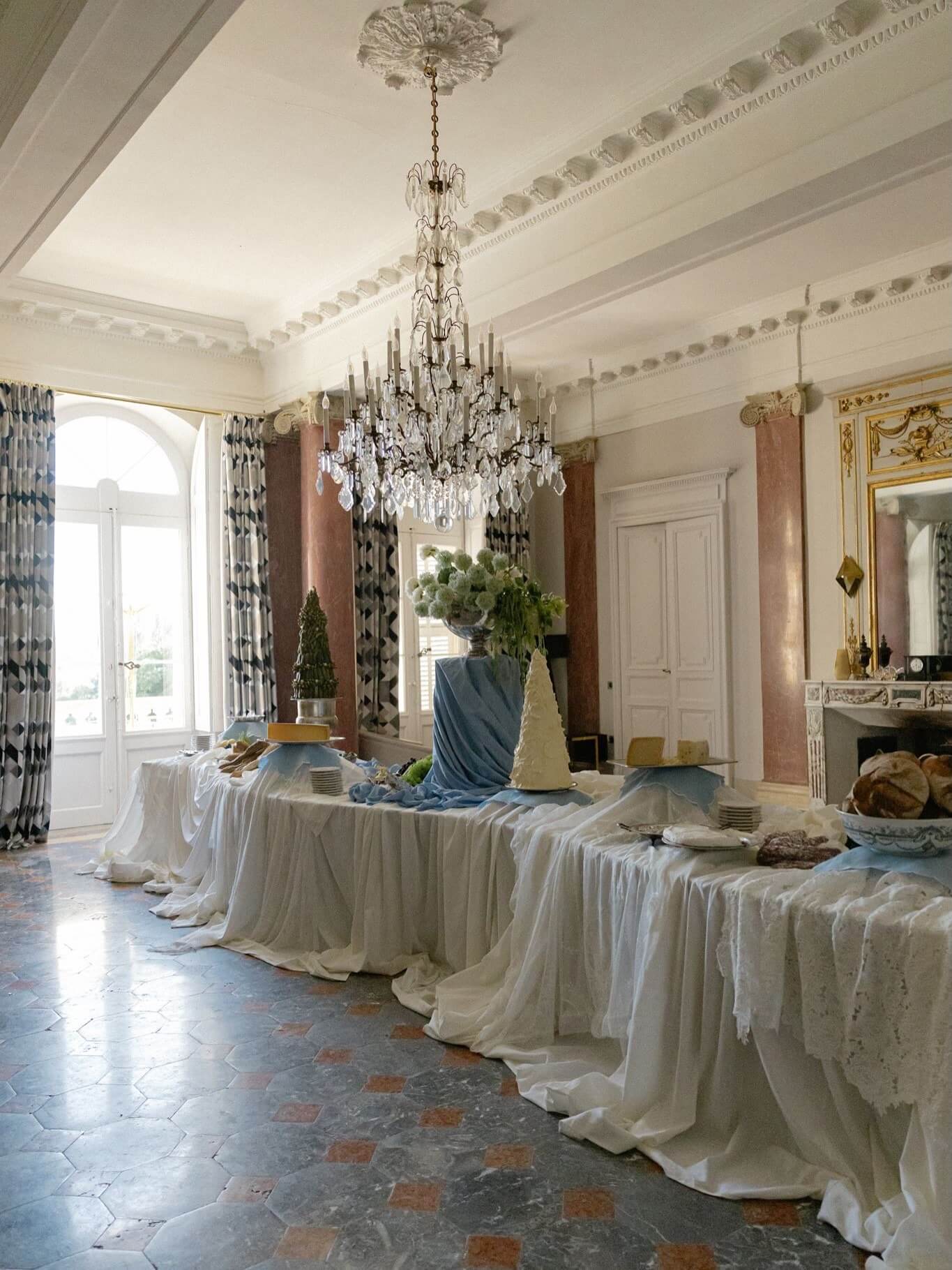
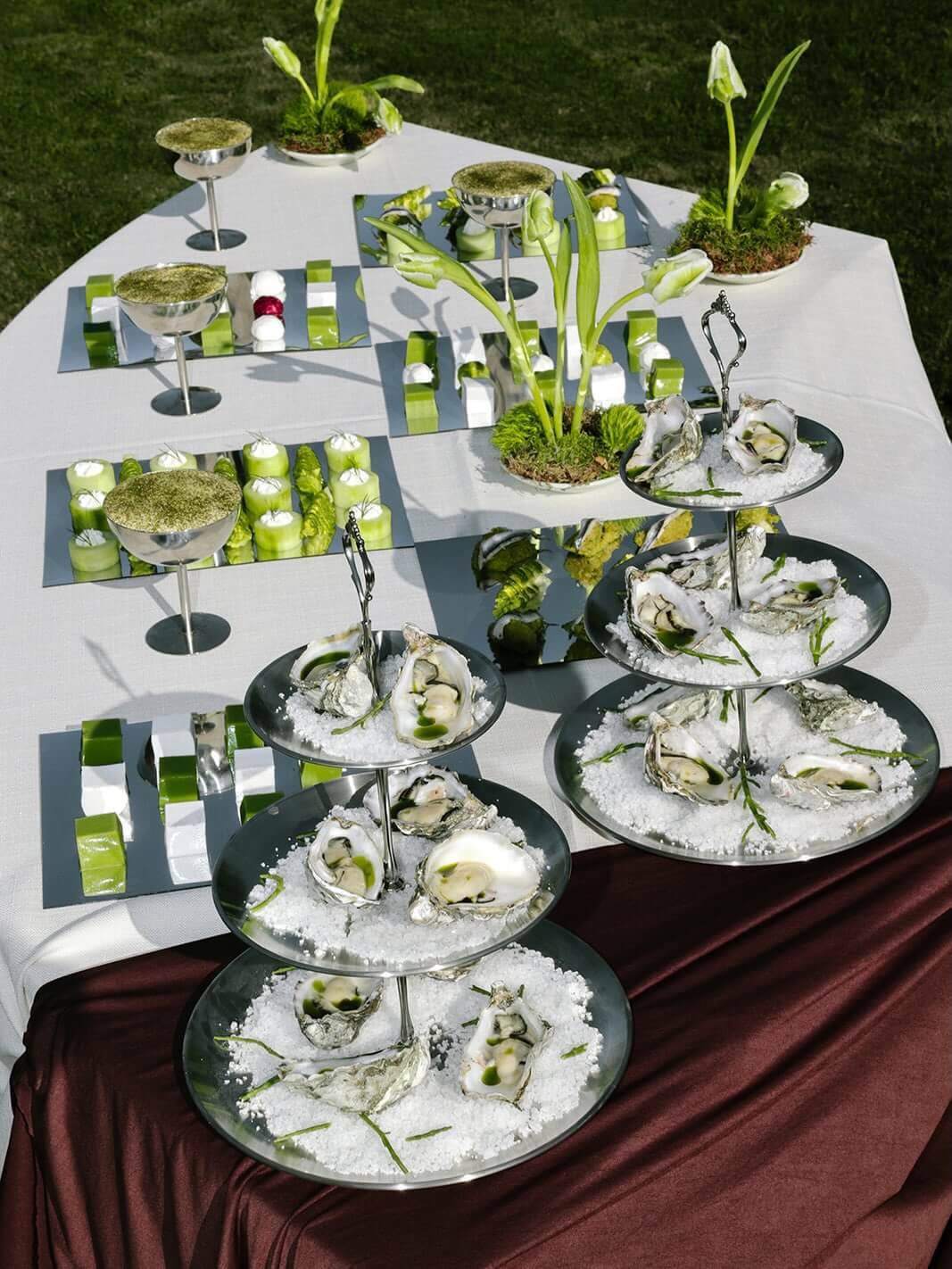
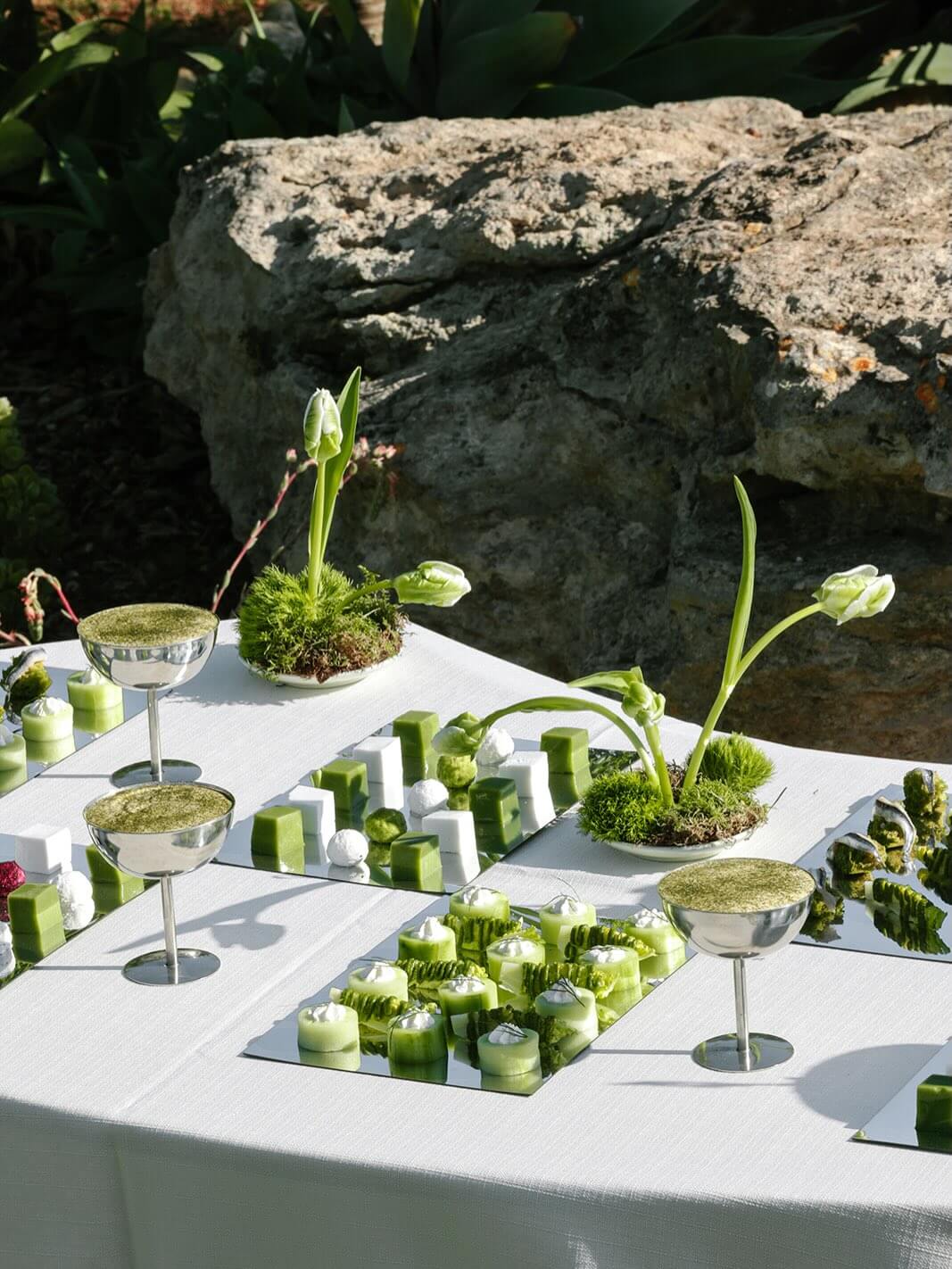
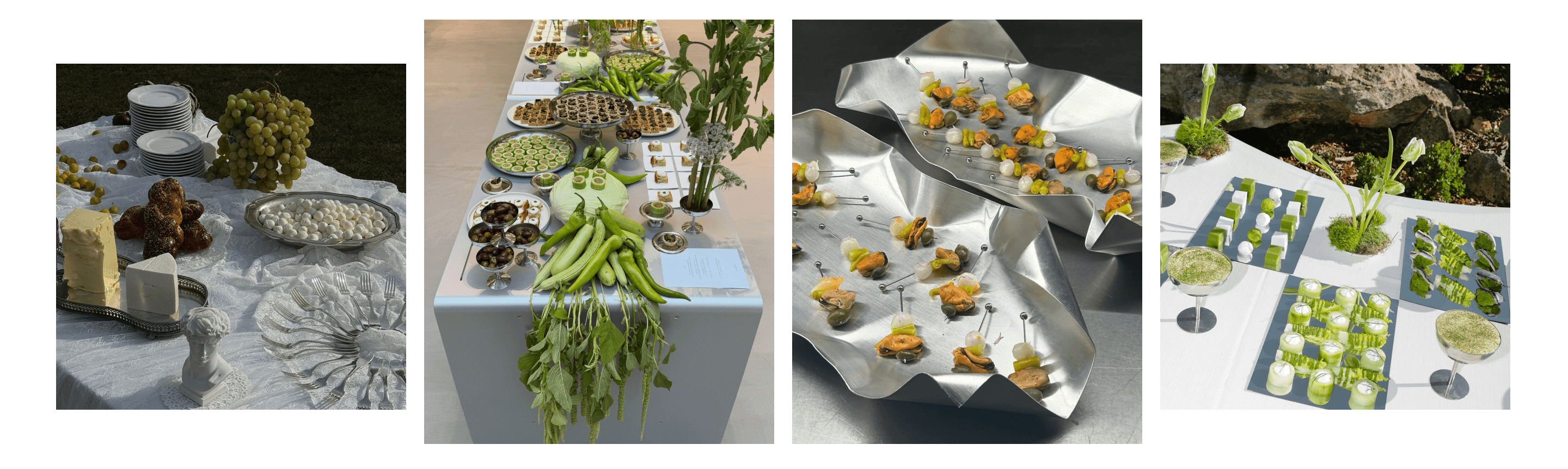
Flowers now share the central role with vegetables and fruit. A cone of asparagus wrapped in radishes, or a spread of cabbages, zucchini and peppers around silver bowls, brings color, height and a seasonal story to the table in one move. With produce bringing its own palette, the need for flowers is reduced, and the greens, reds, and whites can carry through from the arrangement to the plate. Moss and tulips against mirrored tiles take it in a cooler, more graphic direction, while candlelight does the opposite and warms the whole thing. A simple bowl of figs or pears can anchor a table if the scale and linen are right.
Decor and food follow different rules, so plan the display with the caterer. Heat and candles will affect the vegetables after a few hours. These points are worth settling before the day.
- Which items stay on display and which are served to guests
- How long the arrangement keeps its shape under candlelight or in warm rooms
- Who builds, refreshes and removes the display during the evening
- Which seasonal produce the supplier can deliver for the wedding date
Clear answers keep the display on schedule. A florist and a caterer can split the work, with flowers providing softness and produce providing structure. A reference photo would help both build the same thing.
Geometry on the Plate: Canapés Cut Into Cubes, Blocks and Discs
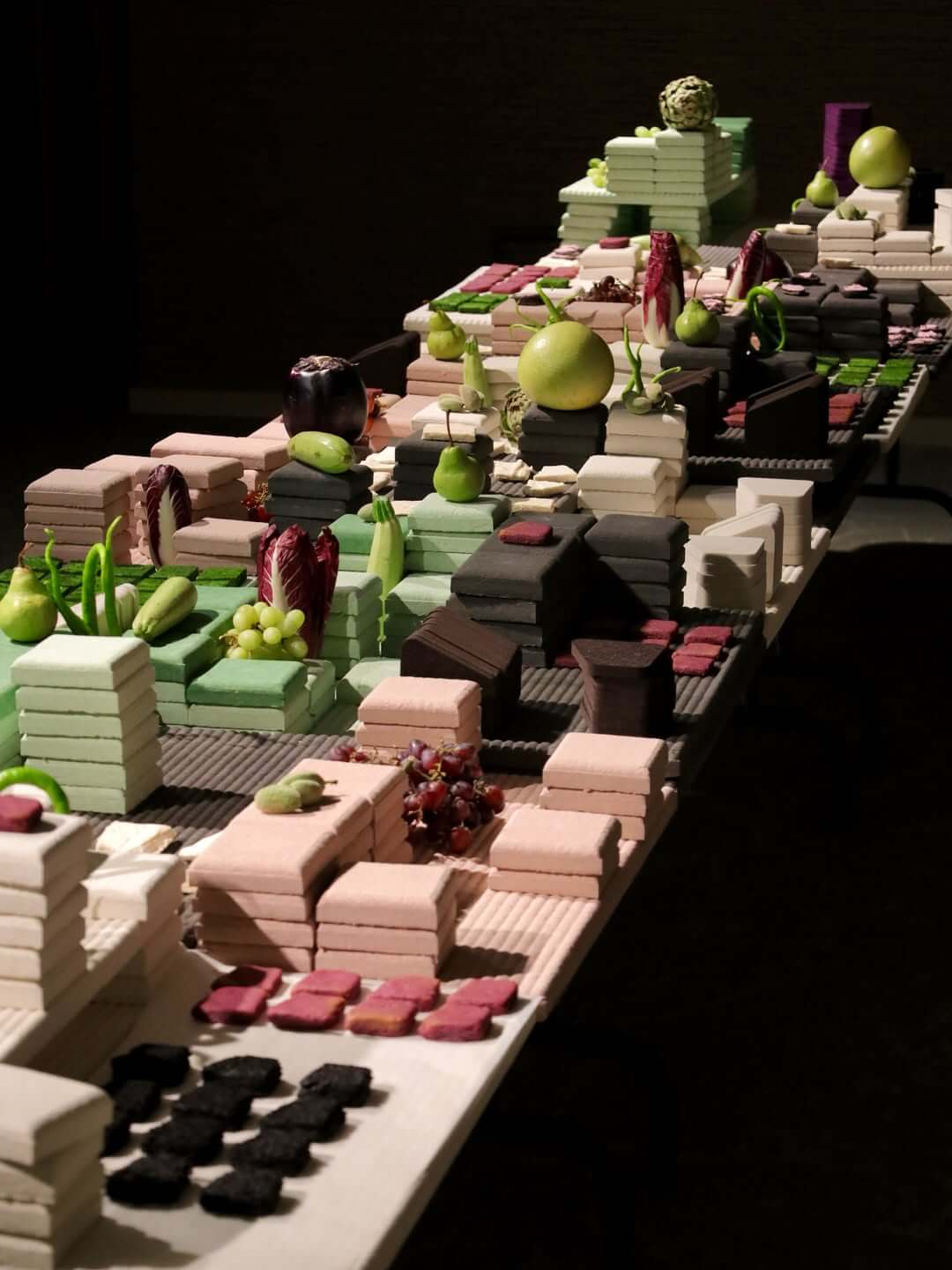
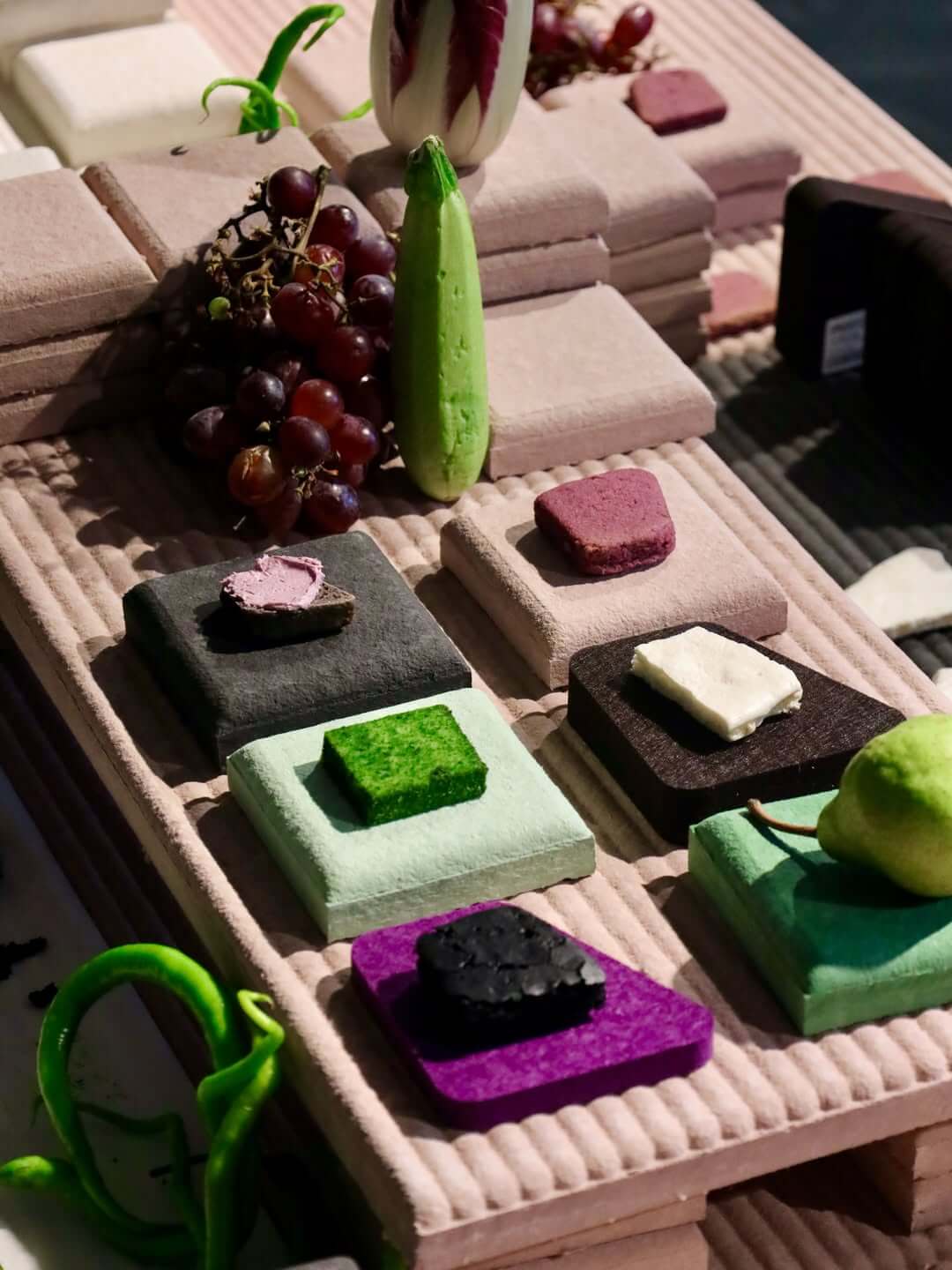
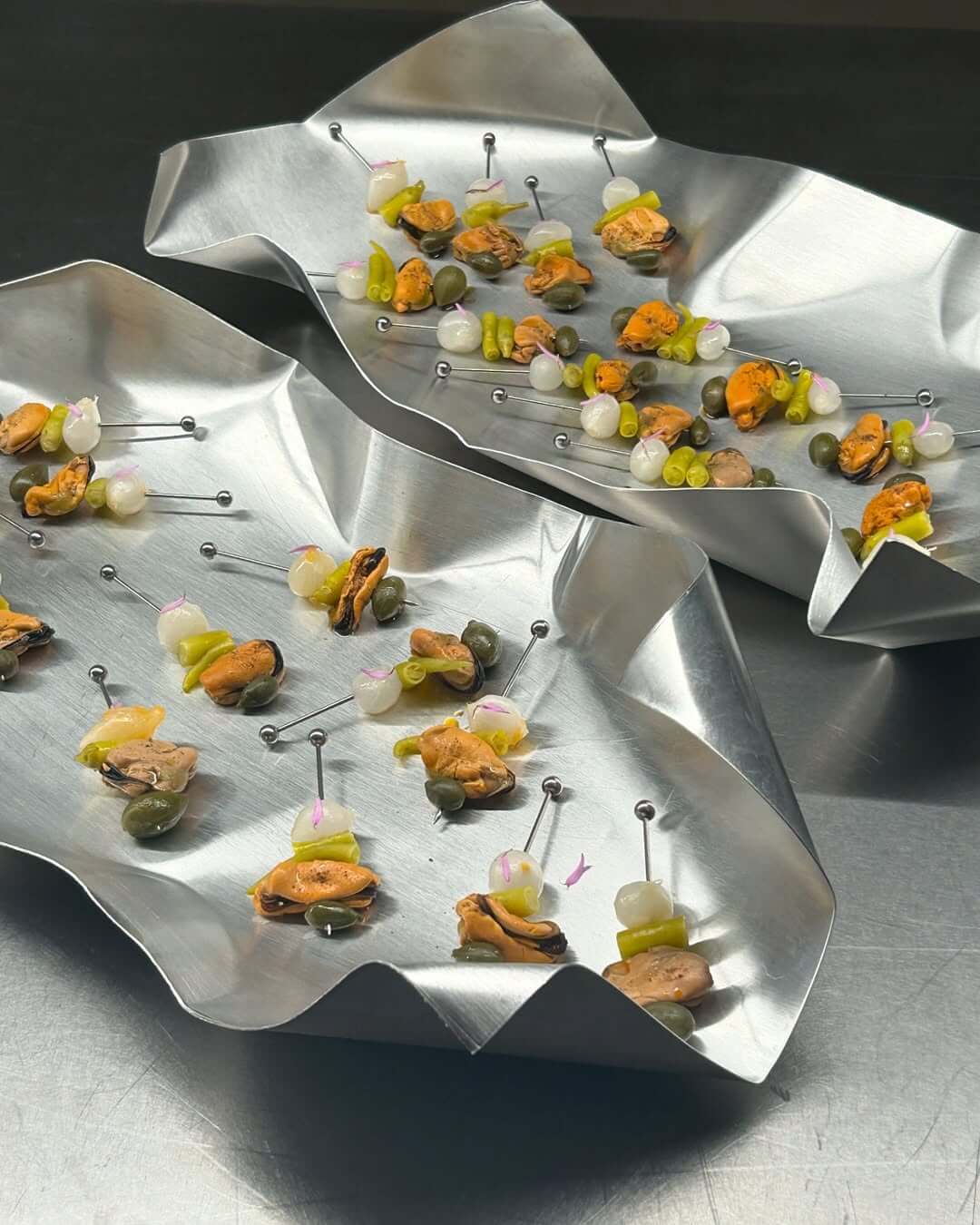
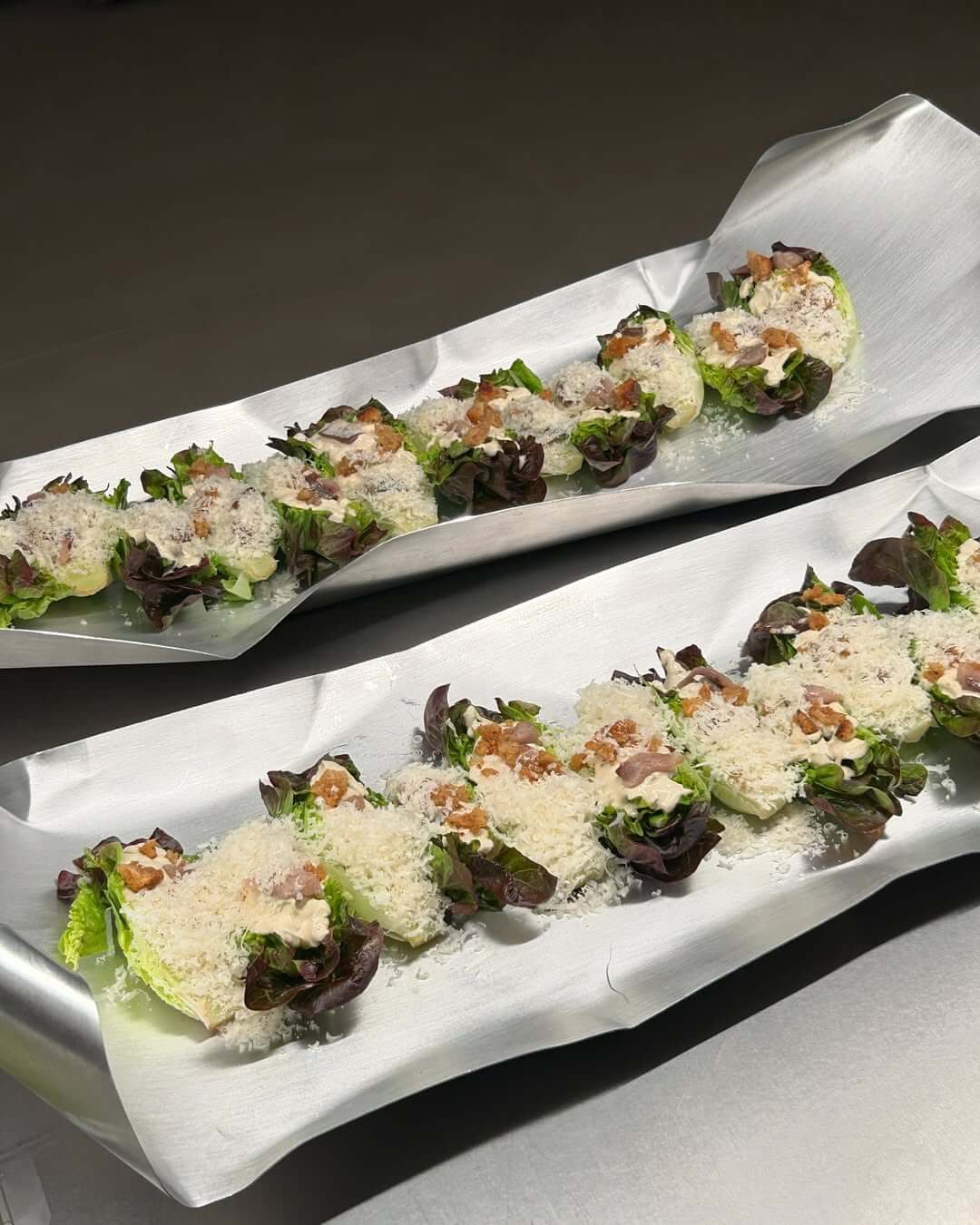
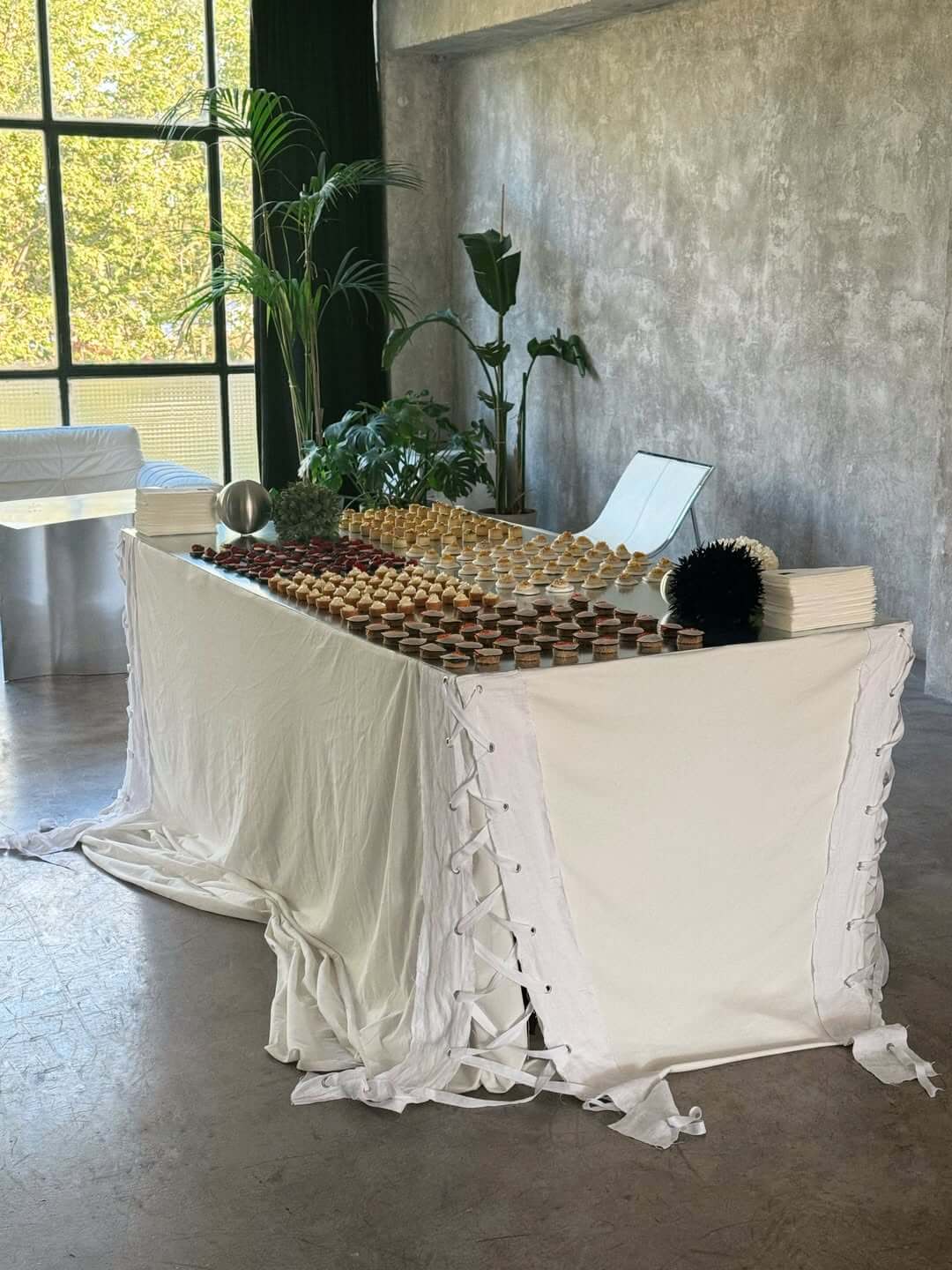
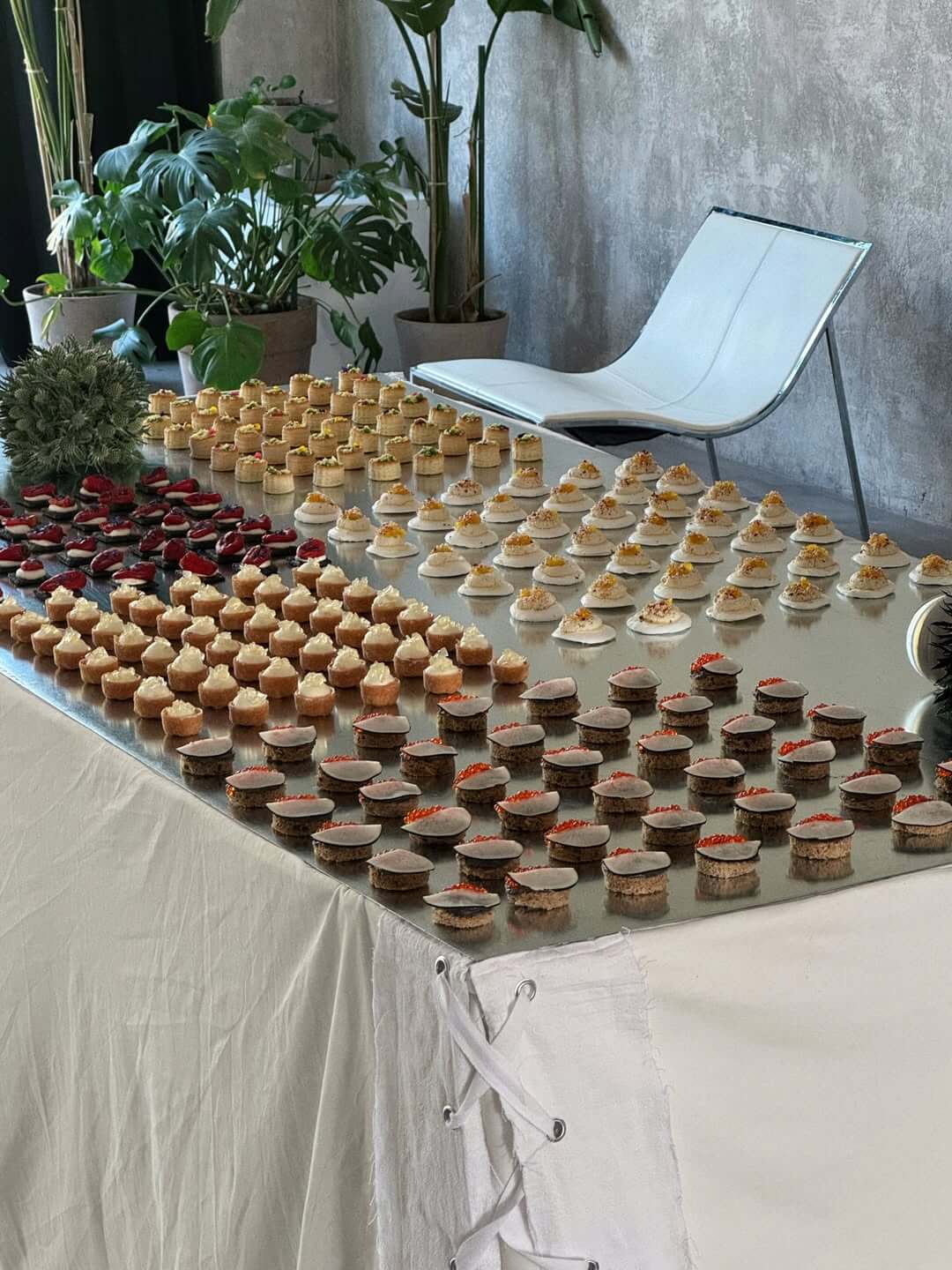
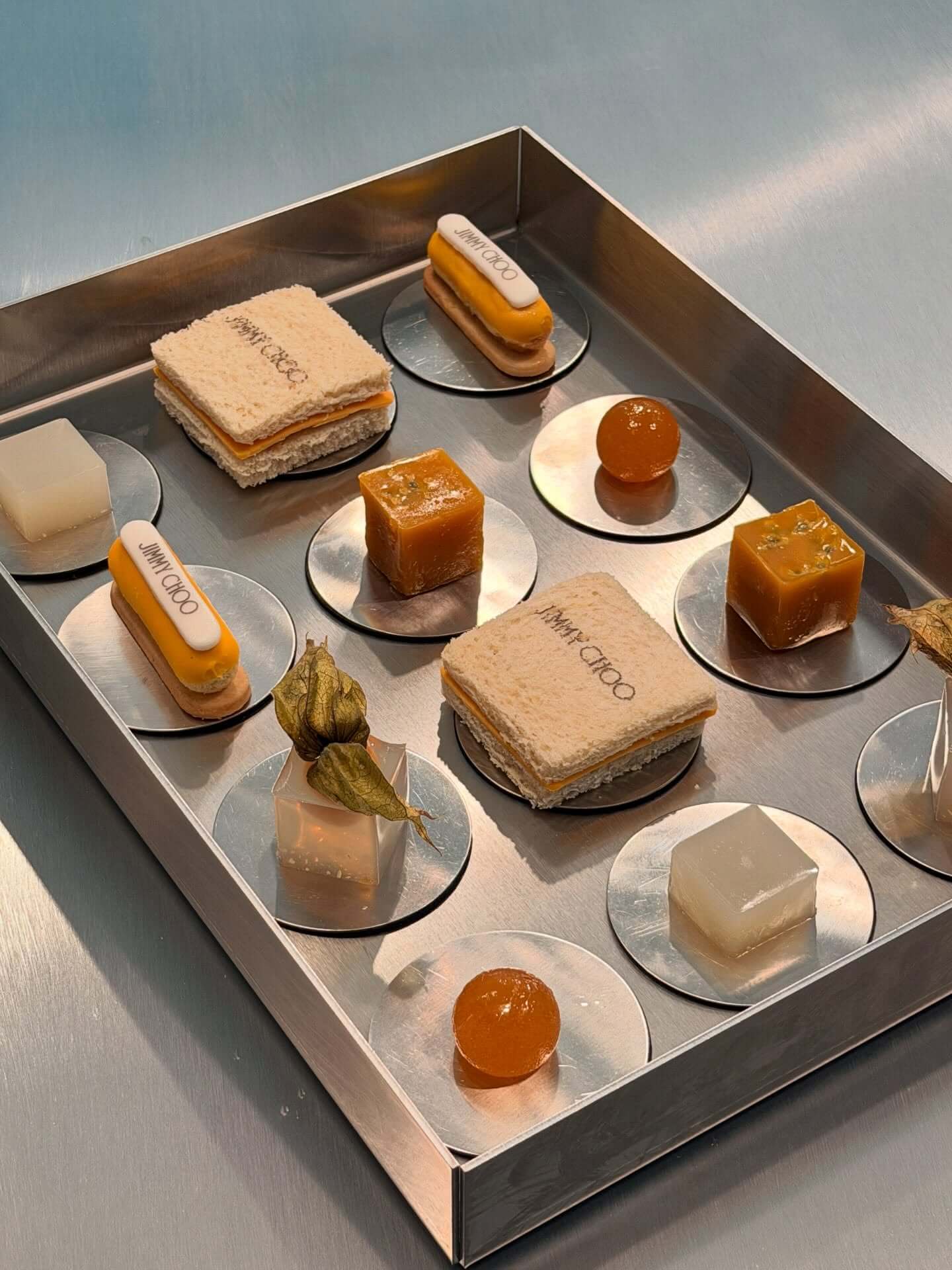
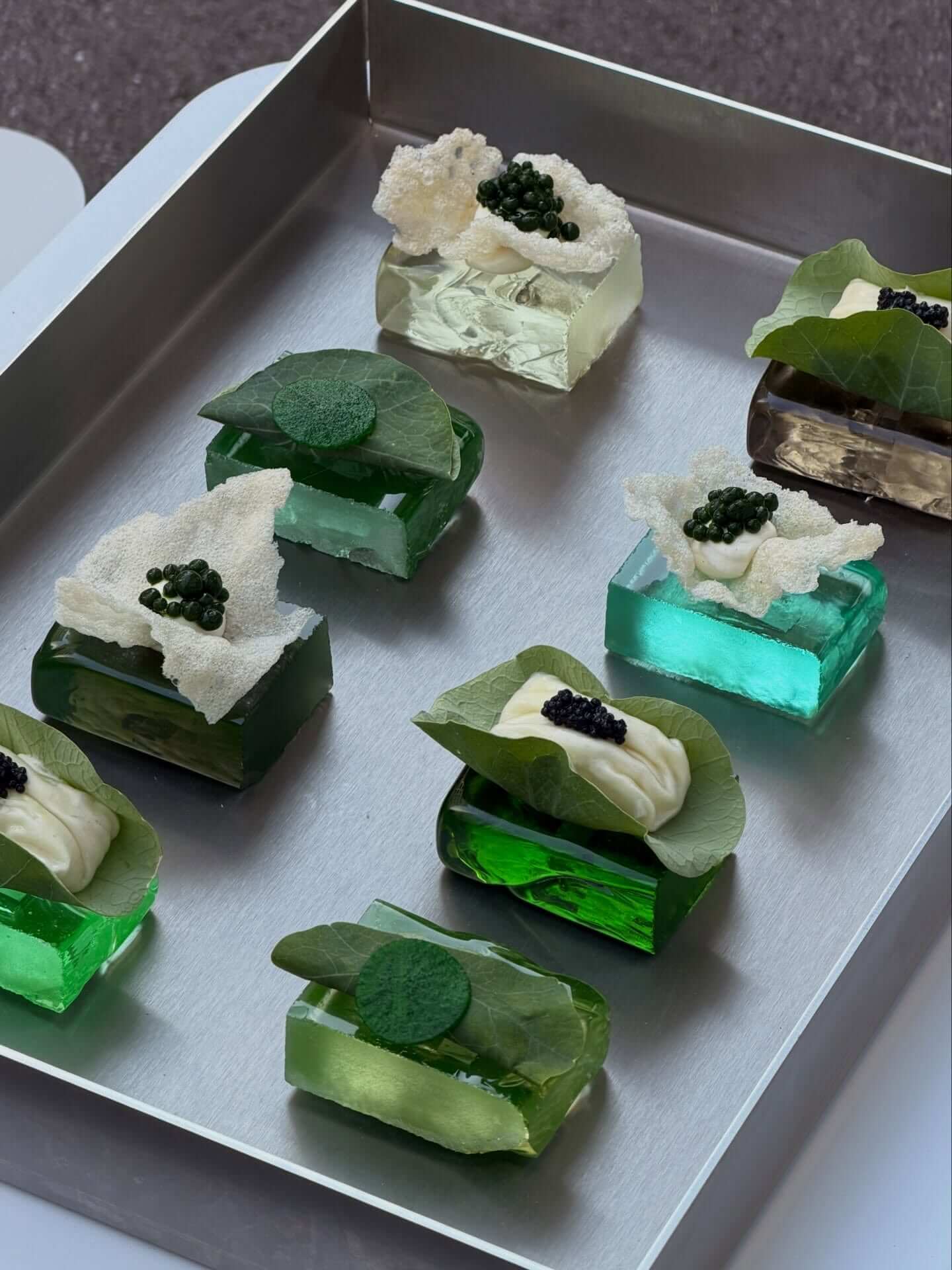
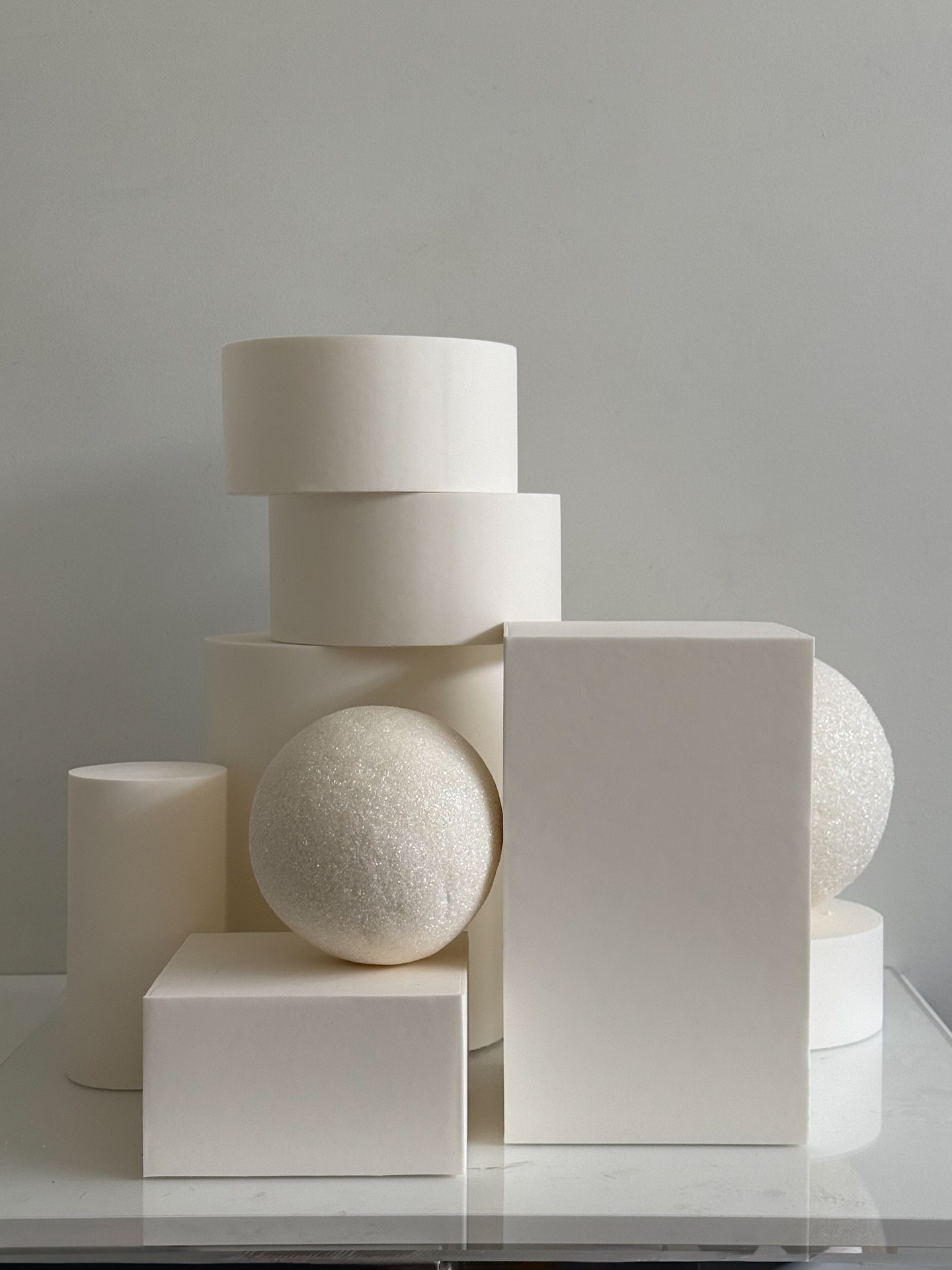
Chefs cut the canapés into cubes, slim blocks, and discs, then line them up so the tray looks drawn with a ruler. The result is a menu that matches the architecture of modern table styling. Chefs borrow graphic design principles here, selecting a few shapes and repeating them until the whole table looks edited. The uniformity of the shapes also makes prep easier and plating more consistent, so the kitchen can run on a very simple system.
Color softens the geometry. Pastel greens and pinks stacked against dark squares look like a miniature skyline, and a single grape or a curl of cucumber breaks the rigidity. The pieces are staged on metal trays, mirrored boards and crumpled steel. Repetition builds a pattern from identical bites, with long rows of tartlets or small eclairs laid out in a grid. The cold courses work on the same principle: jelly in clean blocks with a small garnish. Portion size remains the limiting factor, as every piece must be easy to pick up and finish in one or two bites. A good canapé will have a filling that will hold its shape through the cocktail hour. The menu cards can be as restrained as the food with very brief descriptions to match the clean lines. Vegetarian and gluten-free versions of each shape let every guest enjoy the same look.
Guests Serve Themselves: Stations Replace the Plated Course
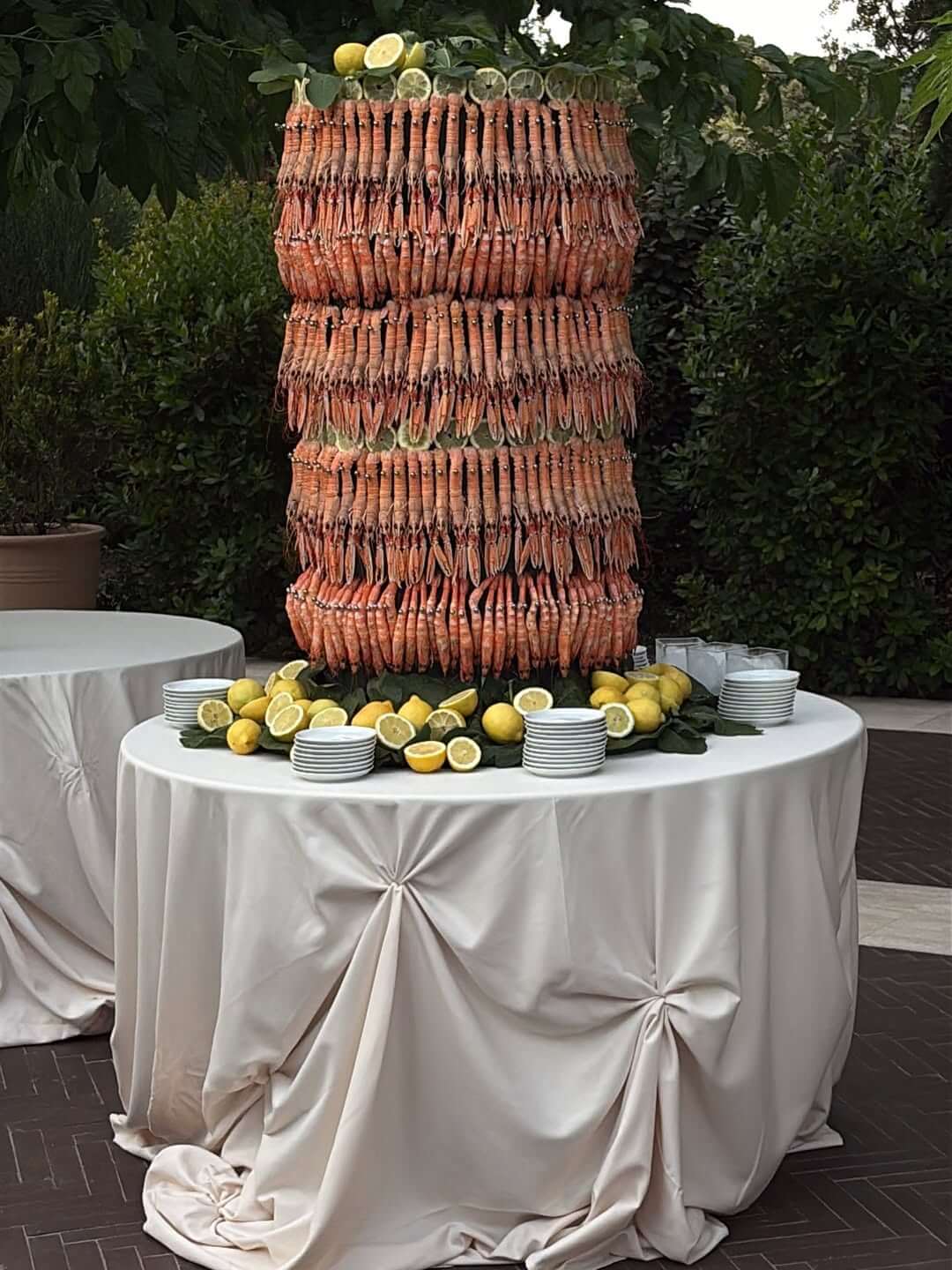
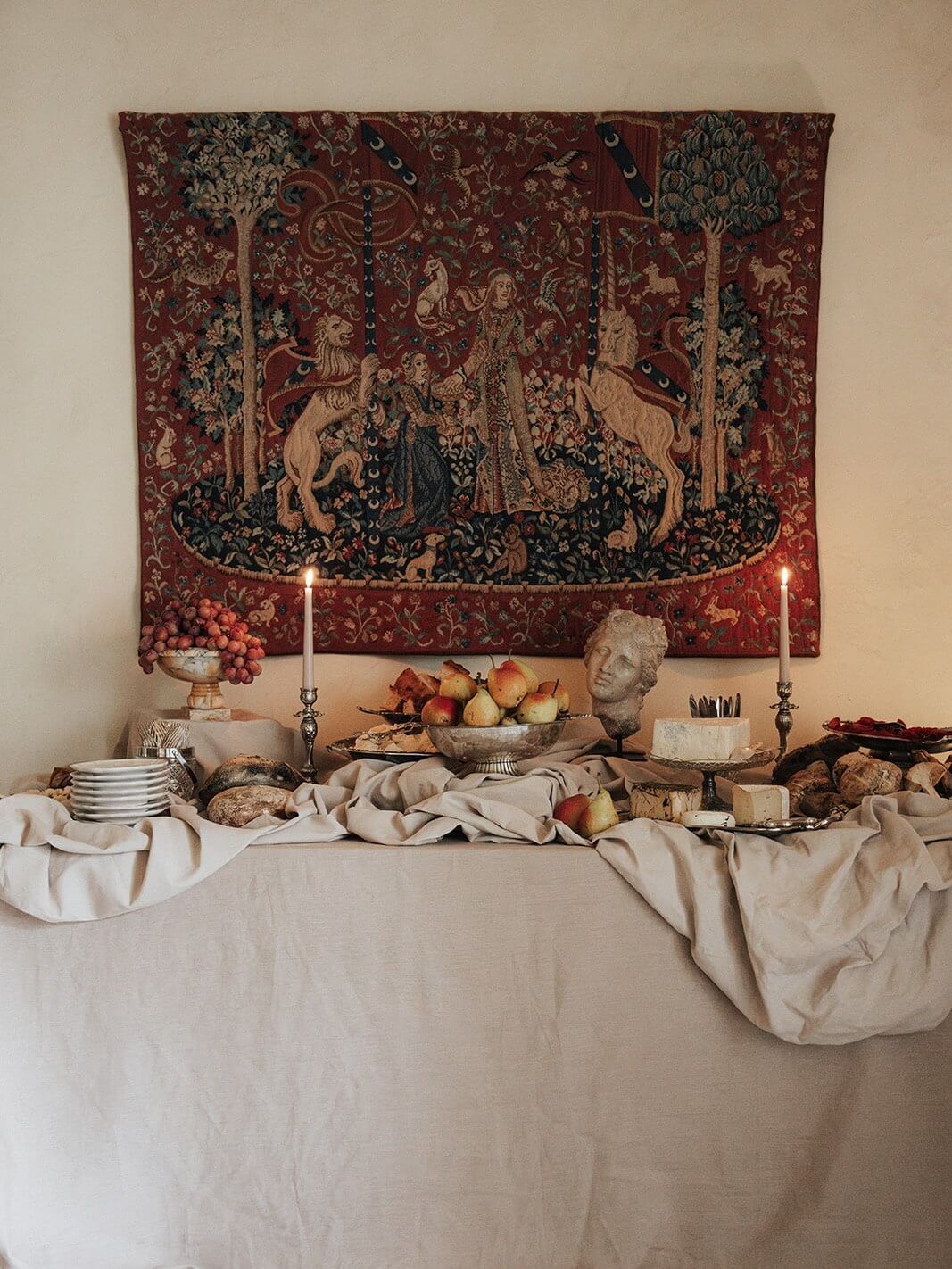
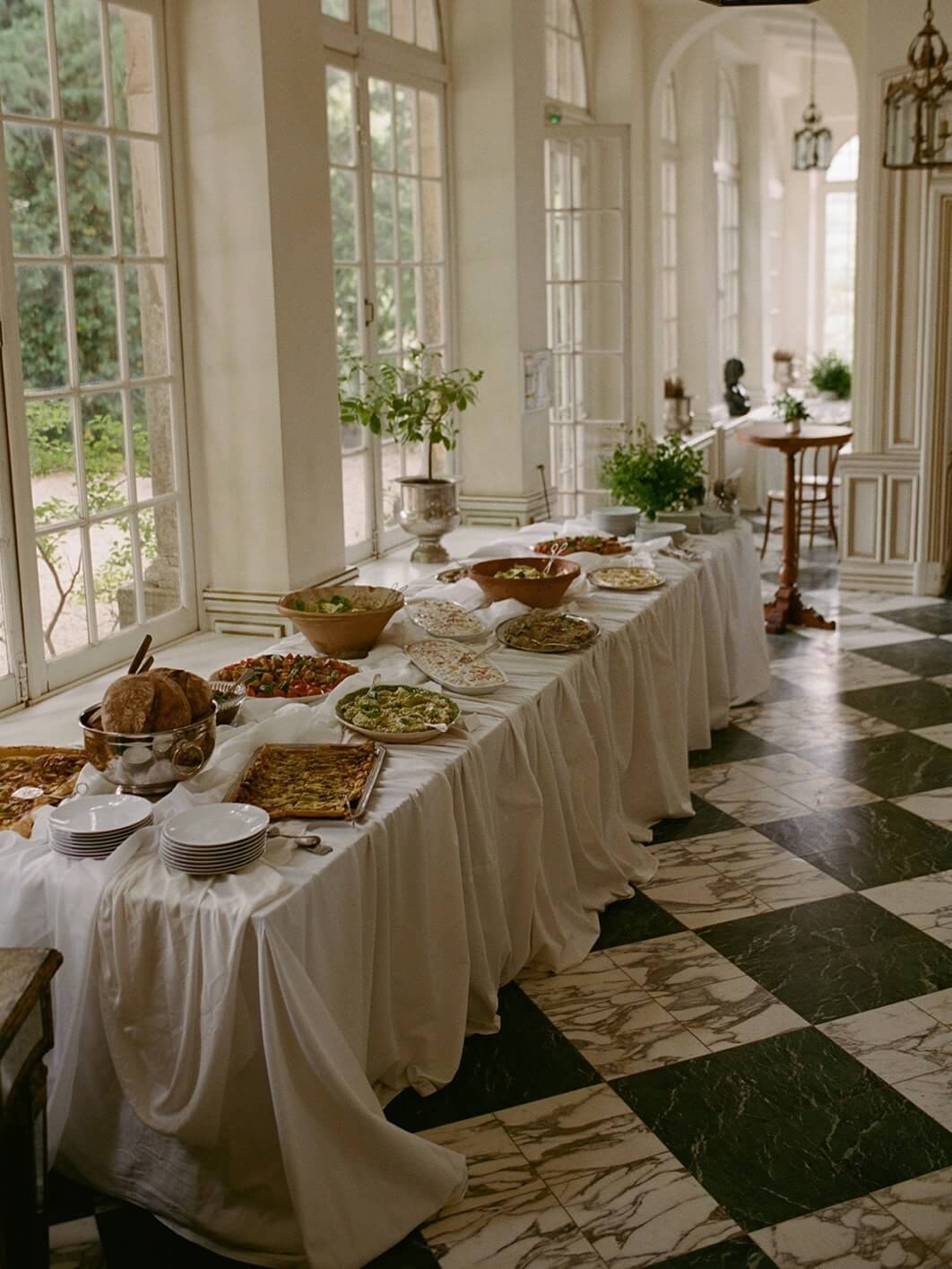
Stations change a reception's rhythm. Guests leave the table, move around the room, and build their own plate as they go. Dinner becomes a series of little interactions. A tall display of shrimp over lemons can anchor a lawn; a long conservatory table of bowls and platters can feed a large crowd without a plated course; and a fruit-and-candle table under a tapestry can serve as decoration. It's the ideal format for a reception with lots of mingling, since nobody is waiting for the whole room to be served before they can eat. The stations are laid out logically, with the cold bites at the entrance and the hot dishes progressively further in toward the seating so guests naturally move through the room. Guests also eat at different speeds, so a station dinner suits latecomers and long toasts. The way the stations are arranged will heavily influence the dinner's success, so each station needs its own space and a clear route to the next.
Eskisit Catering links the format to restaurant kitchens and describes “open-kitchen and omakase-style service translating into live-action food stations at weddings.” A chef in the open kitchen adds a little performance to the meal and provides a natural point for guests to ask questions about the ingredients. Staffing should match the format, with a cook or server at each station to keep plates moving and label every dish. A couple who like the concept but still want a formal moment can do a very brief plated course at the table, then invite guests to go to the stations.
Desserts Go Long: Sweet Tables Stretched and Stacked
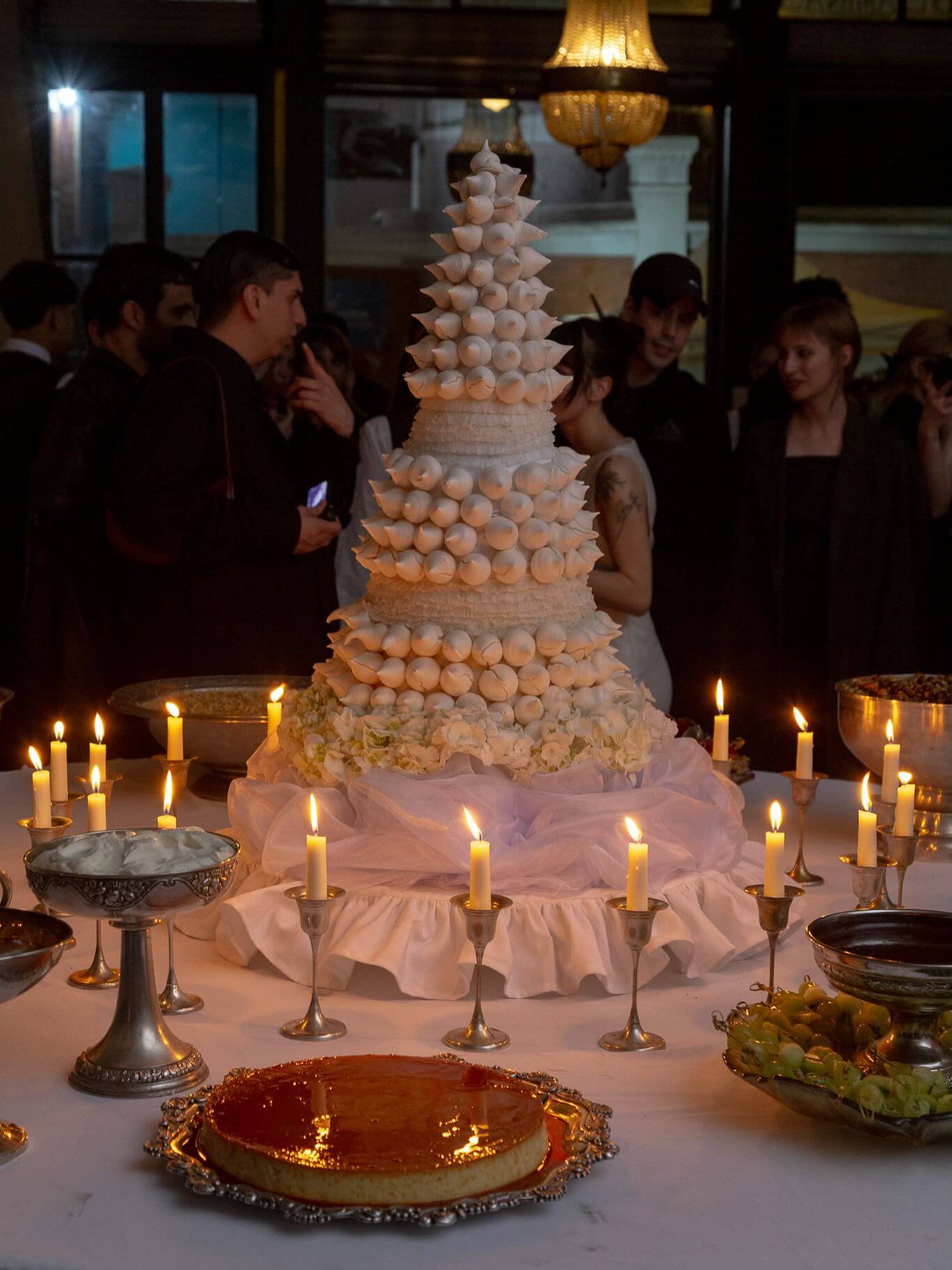
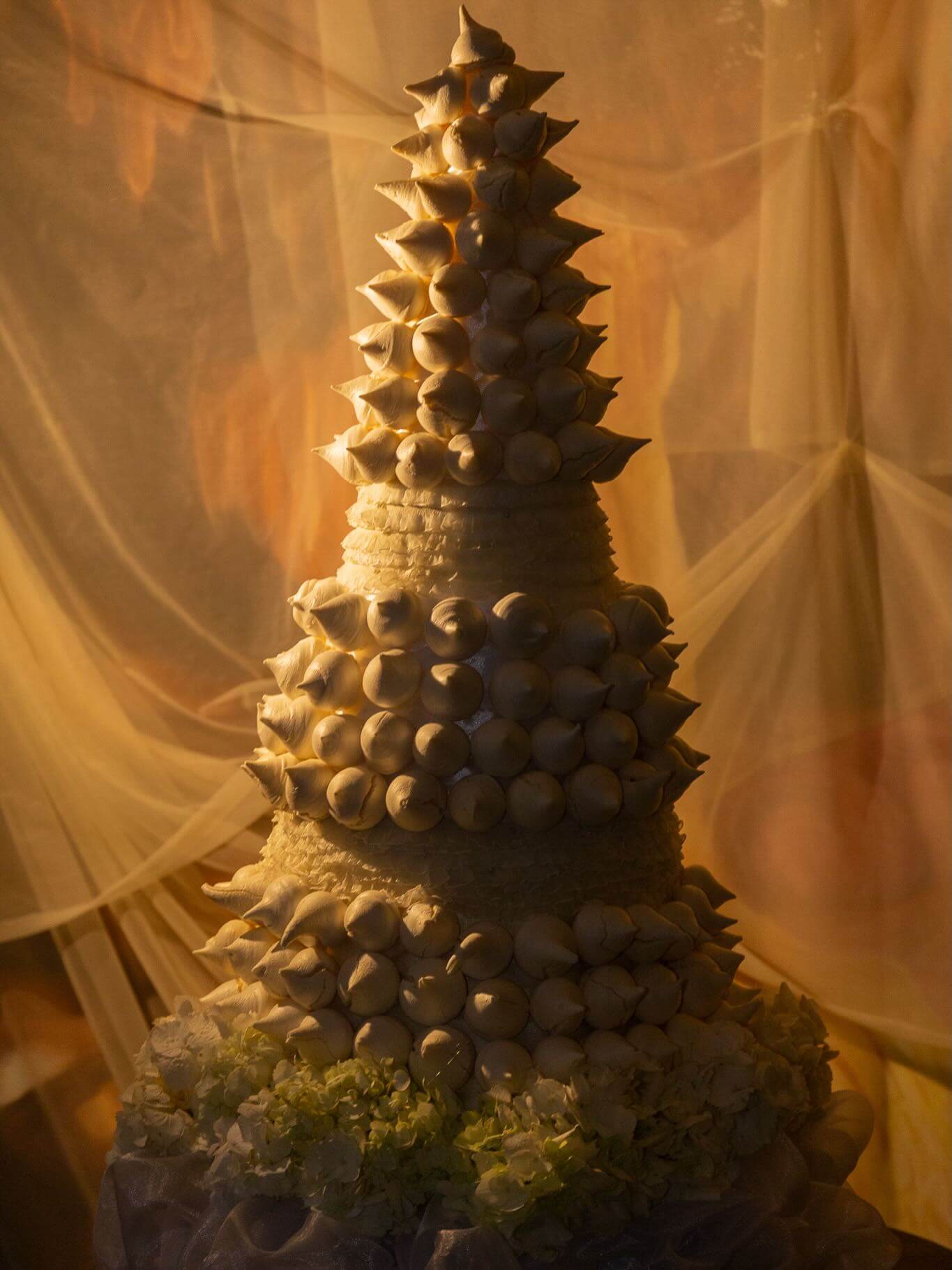

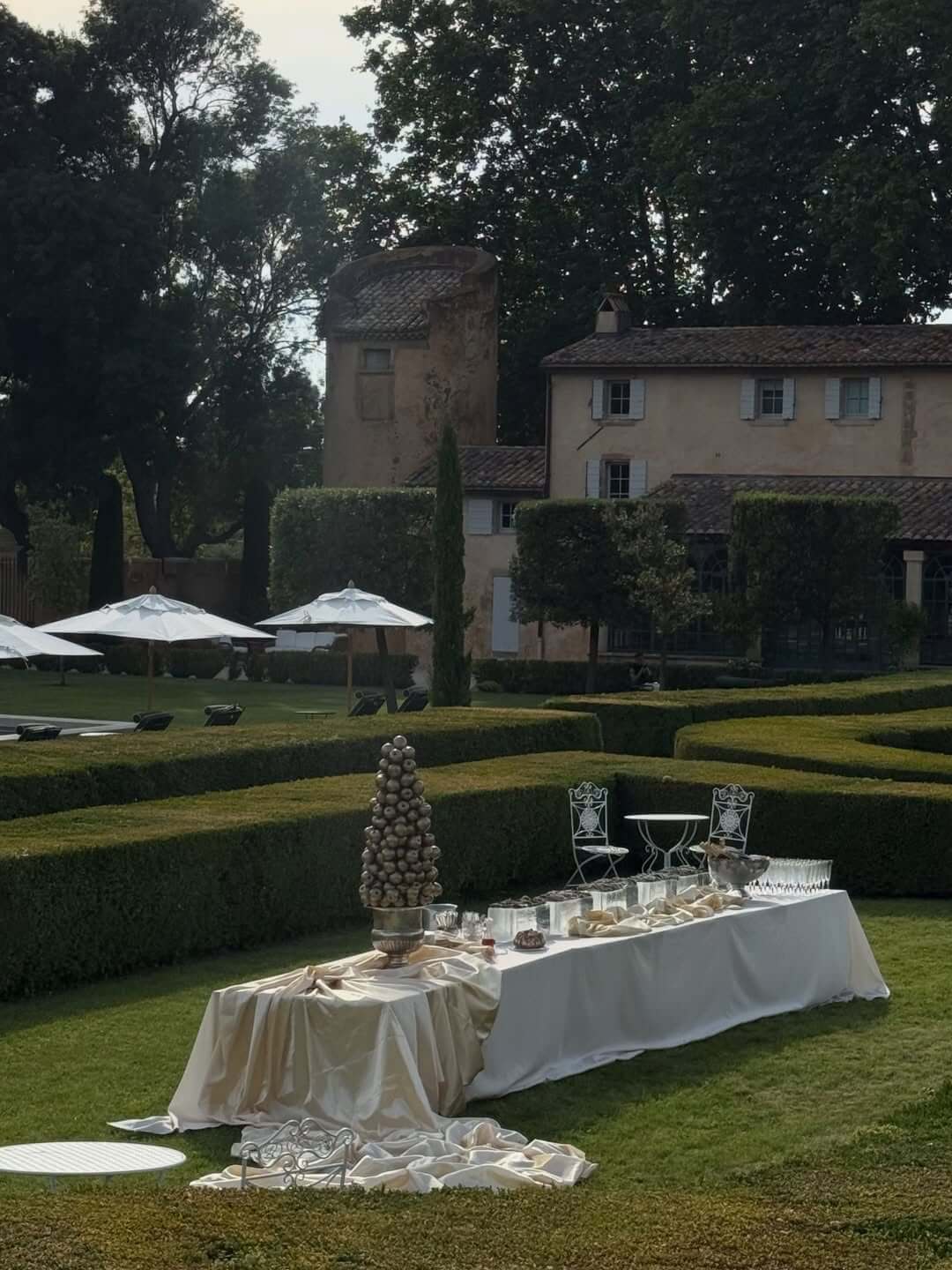
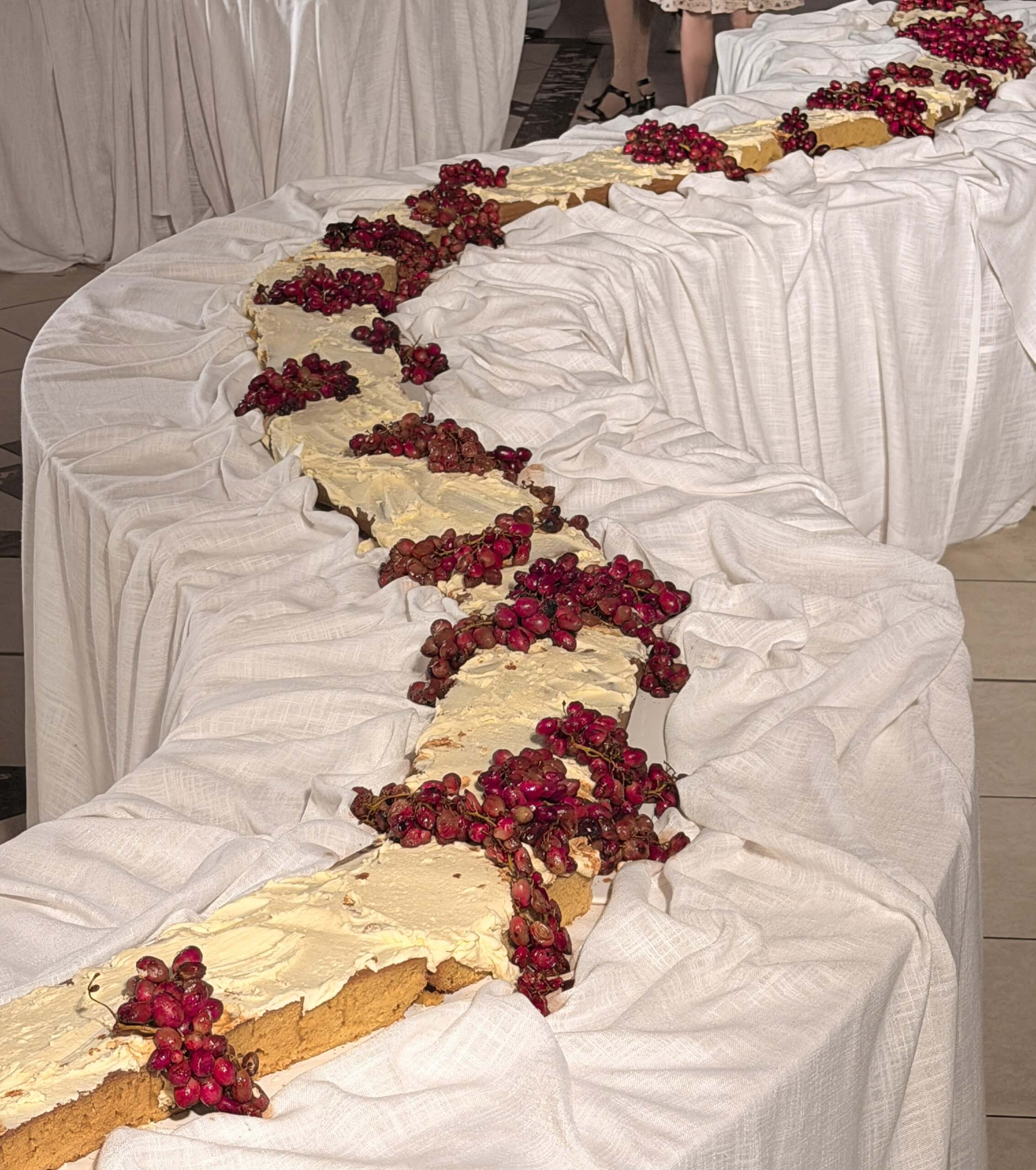
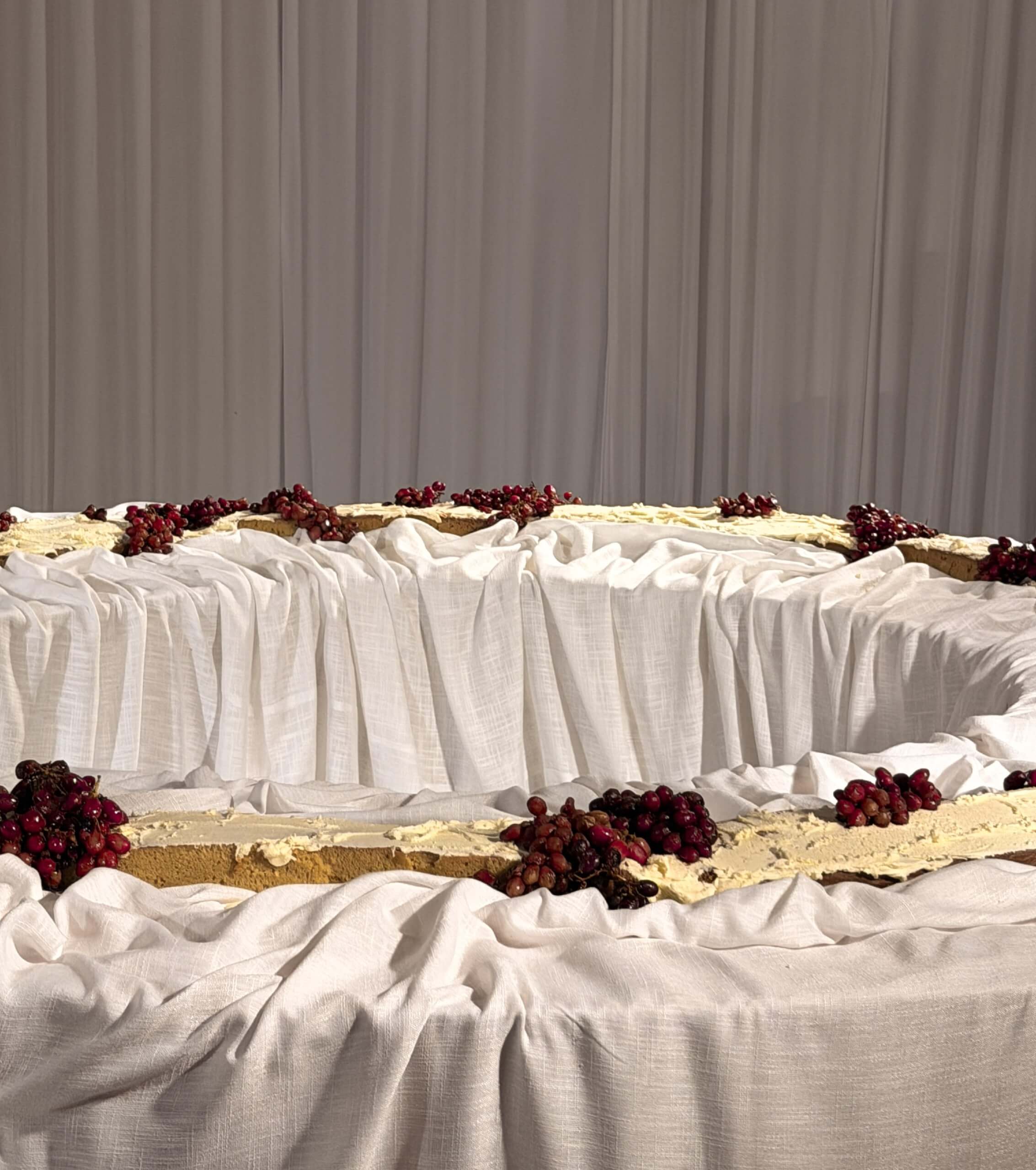
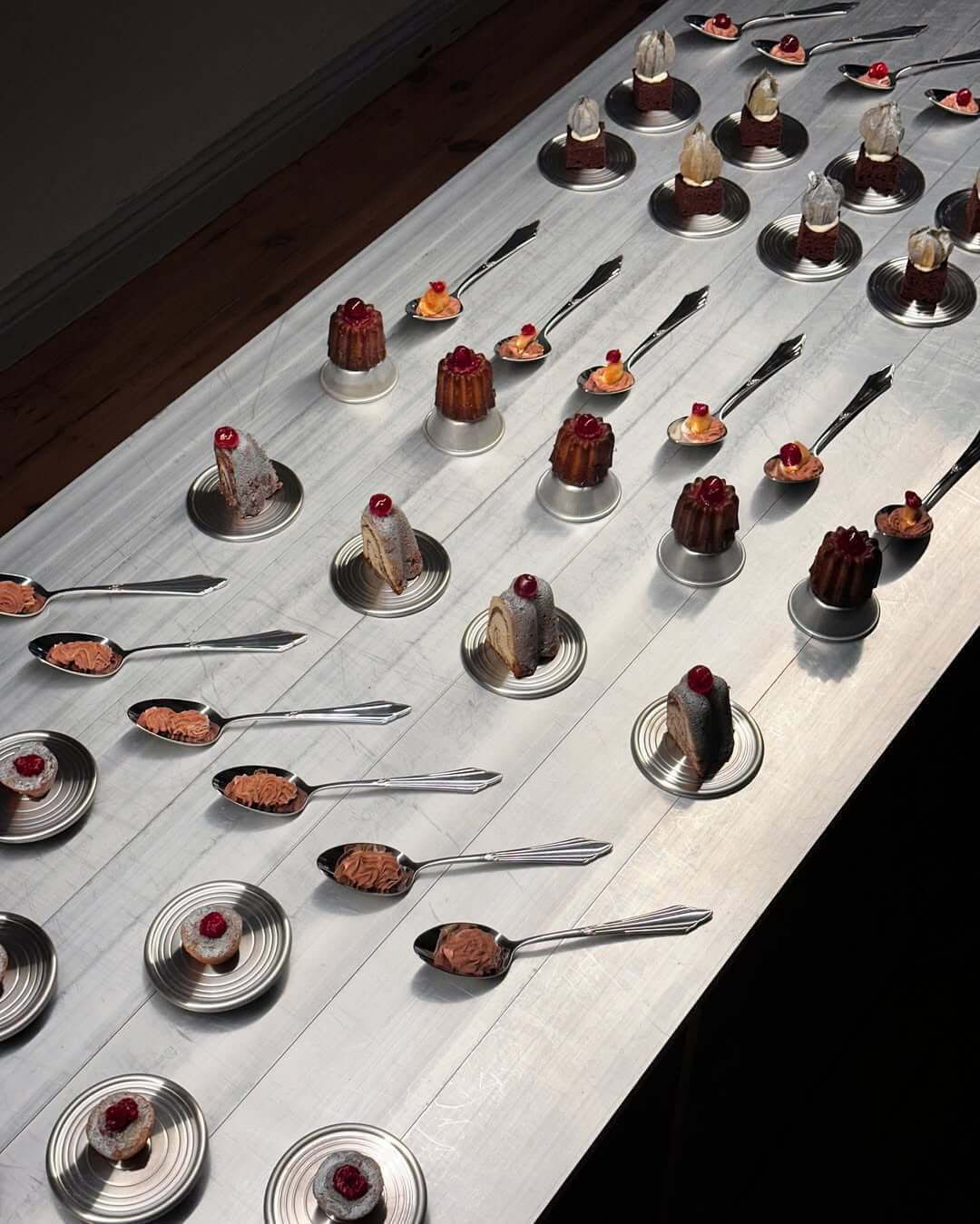
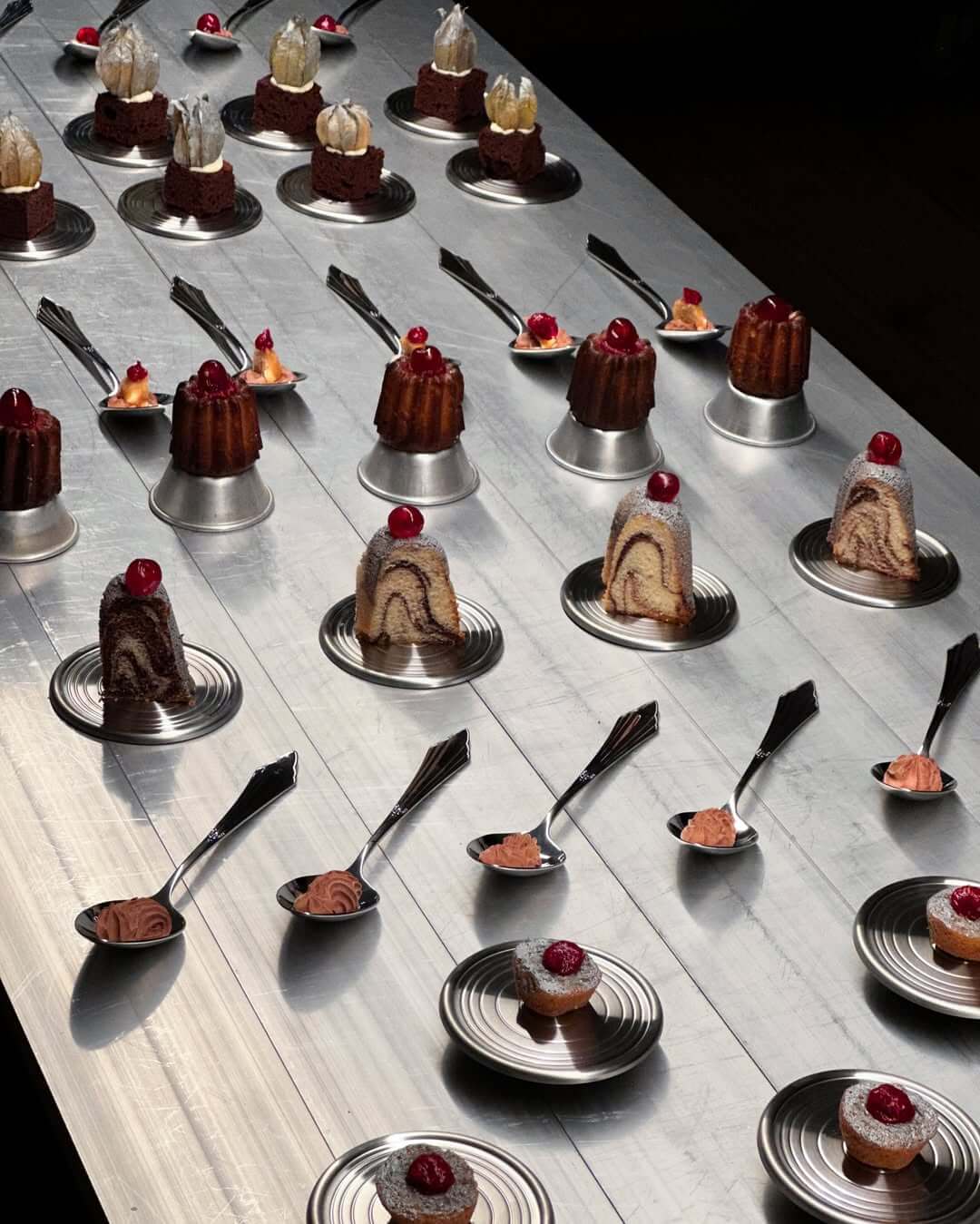
A dessert table used to be a side table with a cake and a couple of plates. These days it's often the longest table in the room, a ribbon of linen running through the venue with cream and fruit laid out along it like a landscape. Height works differently, and a single cone or a tower of little puffs can fill an entire corner without anything beside it. These pieces are designed to be seen from the doorway, so they need very little else around them.
Smaller formats follow the same principle, more subtly. Canelés and mini cakes on silver stands in neat rows read as a single pattern, and each guest still takes exactly the piece they want. A long table does need planning, with shade and refrigeration in warm weather and a restocking routine that keeps the front of the table full while the back refills. You can vary the flavors along the length of the table so each section is different. Labels in one consistent style keep guests with allergies at ease.

Bread Tables and Bread Bars as the New Wedding Centerpiece
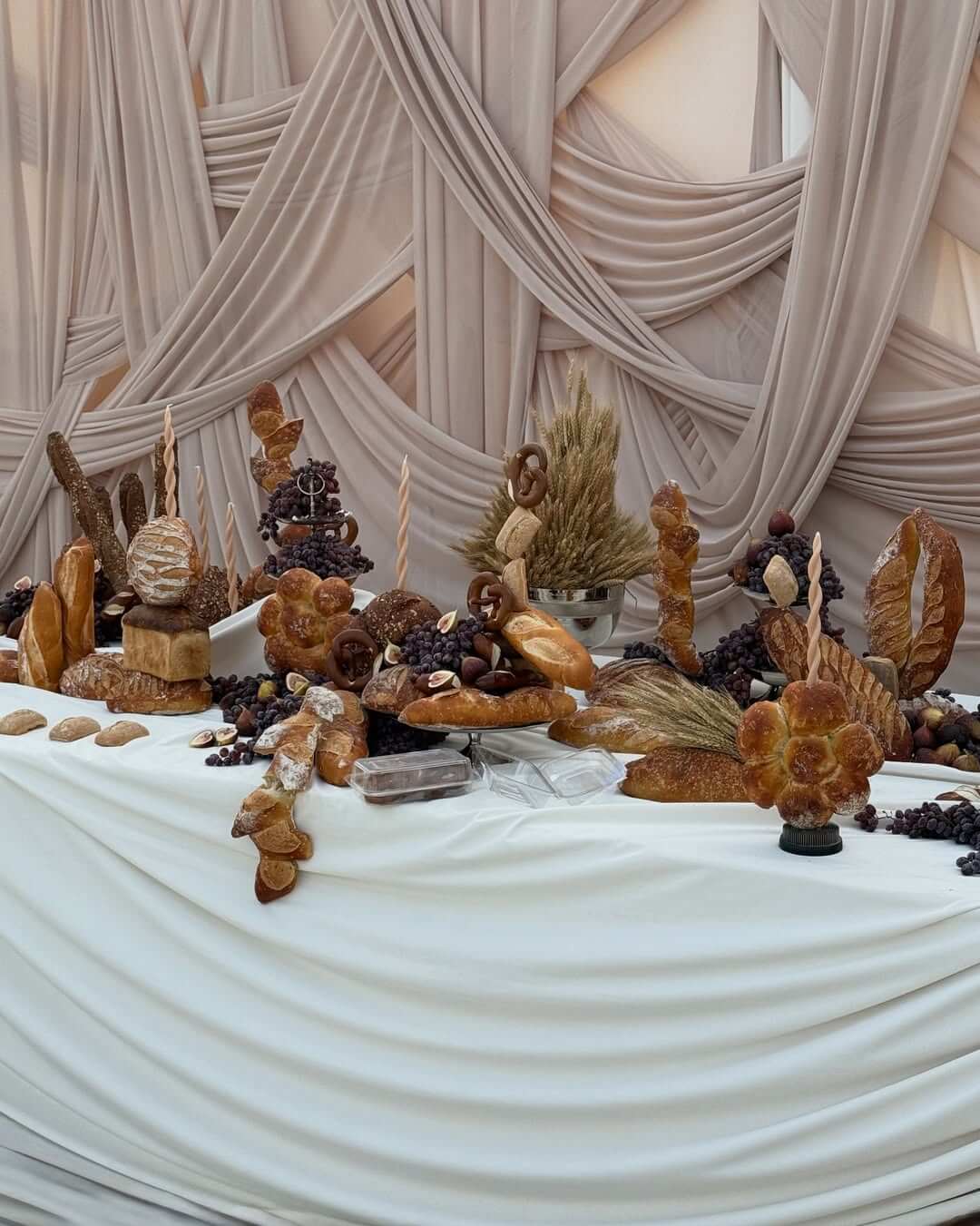
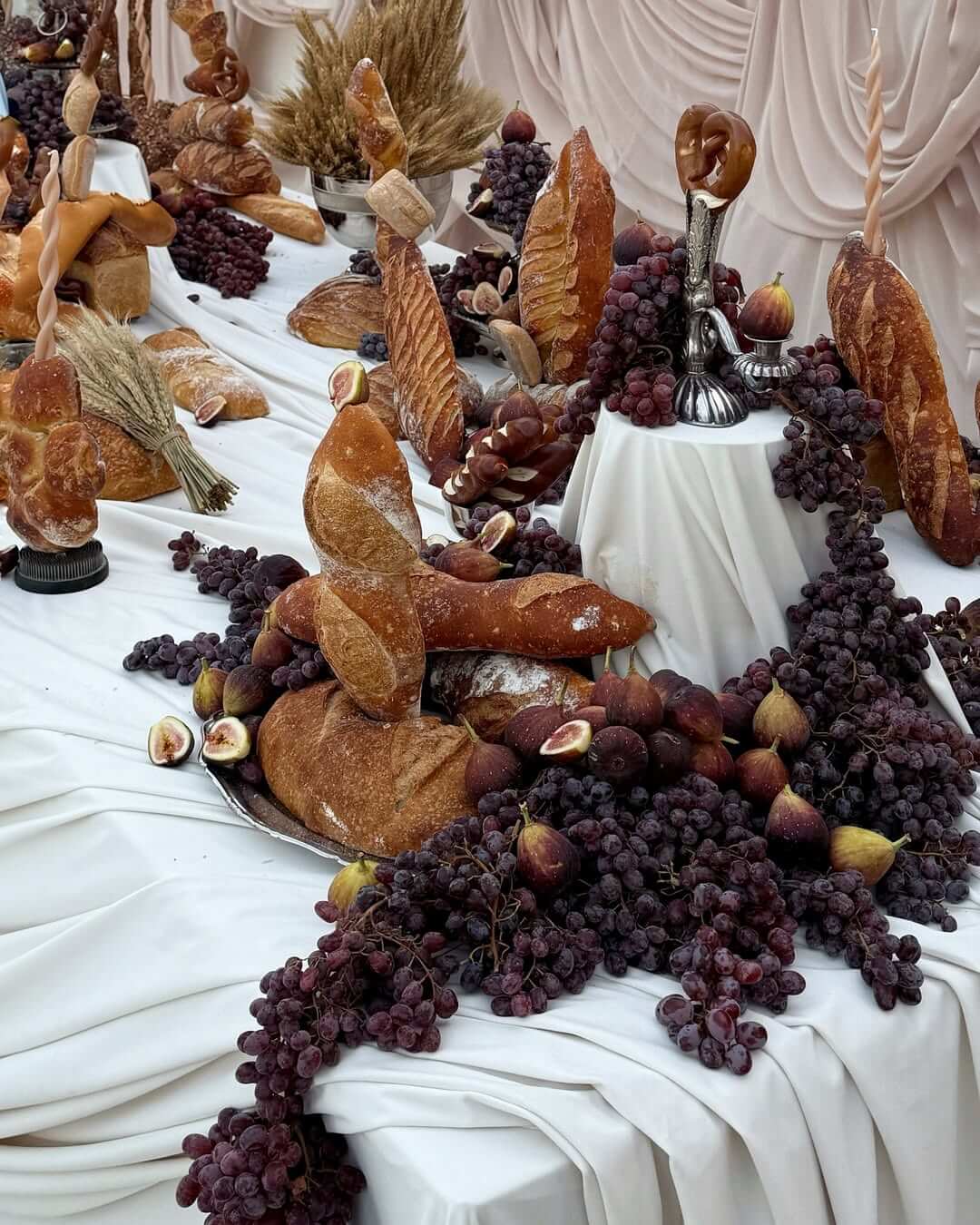
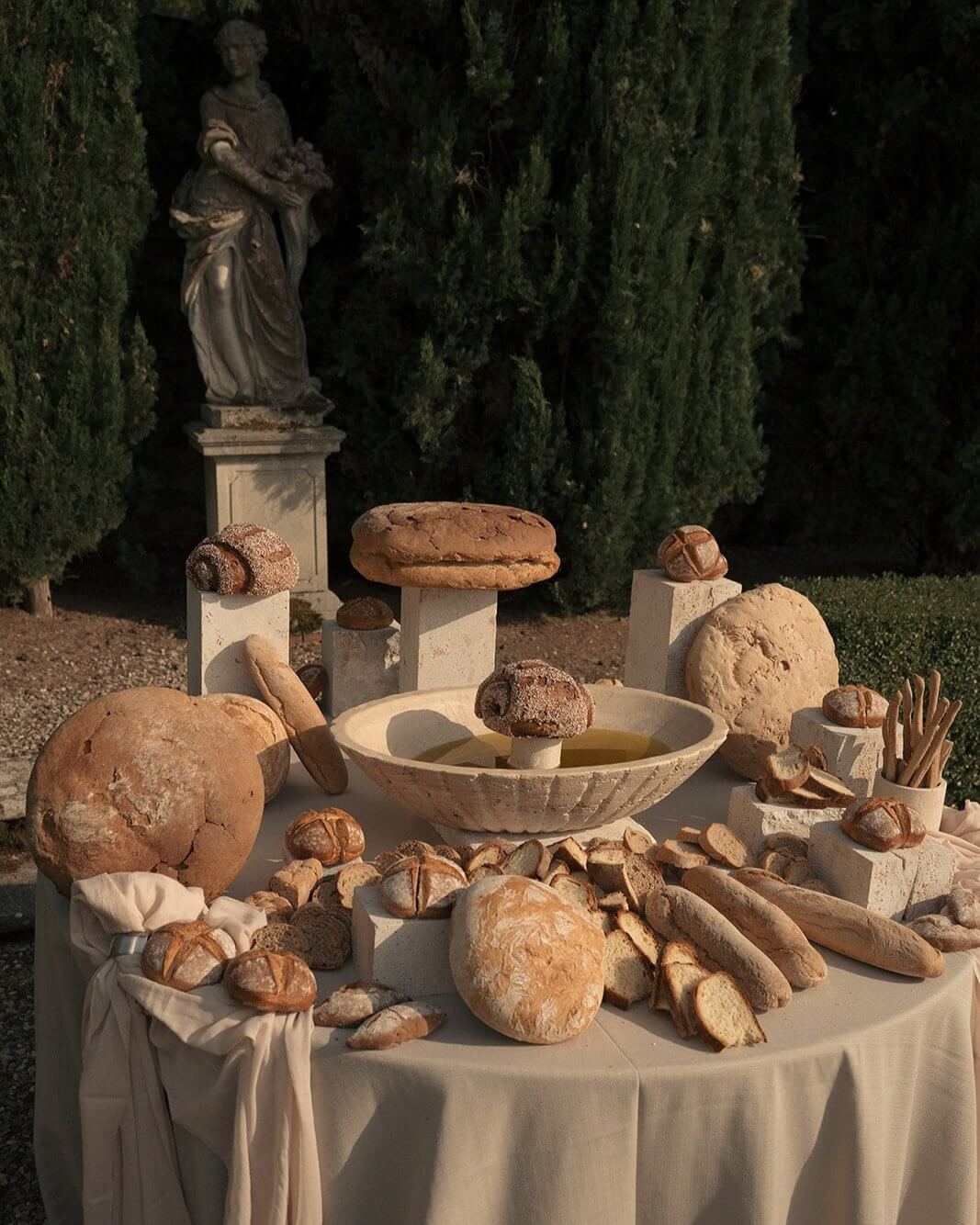
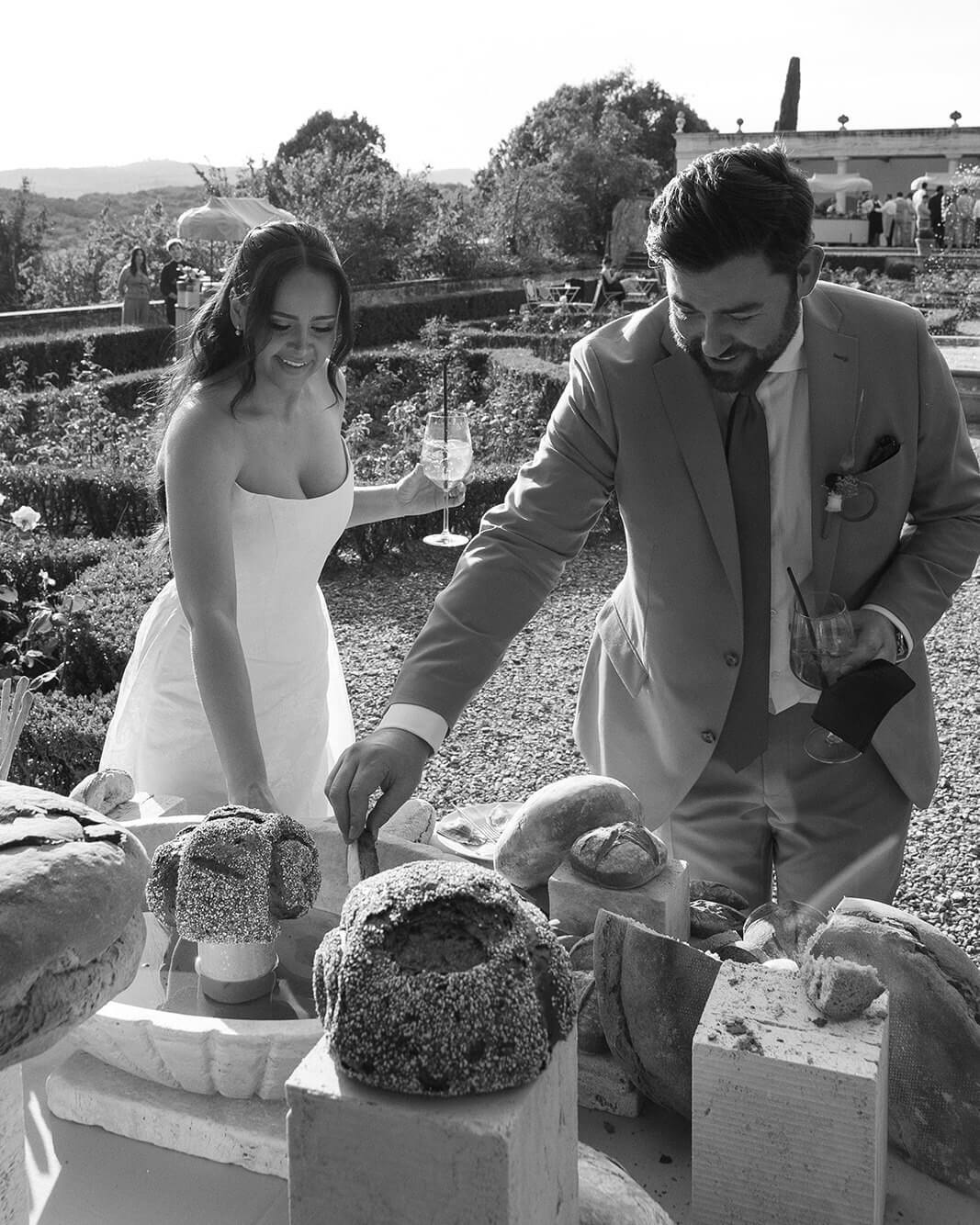
Bread has moved from the basket to center stage. The baguettes, braided loaves, and sheaves of wheat sit up front on white linen with grapes and figs, and the draping behind them completes the picture. The round country loaves, on their stone pedestals with a little dish of olive oil at their feet, look perfectly at home in the golden light of the late afternoon. It’s a generous, unhurried table, the kind that suggests the food has been made by hand. A few stalks of wheat, some herbs and a handful of flowers are tucked between the loaves to tie the table into the rest of the setting.
A bread bar also serves as a station guests can visit throughout the evening. They can build their own bite with butter, oil, spreads, and seasonal fruit, and a few dips can serve as a starter. Place gluten-free loaves on the same table in the same way, so guests with dietary requirements can join in without going to a separate counter. Baking near the event keeps everything fresh, and a baker or the caterer's kitchen can slice and refill throughout the evening.
Savory Desserts: Vegetables, Pickles and Aspic on the Sweet Table
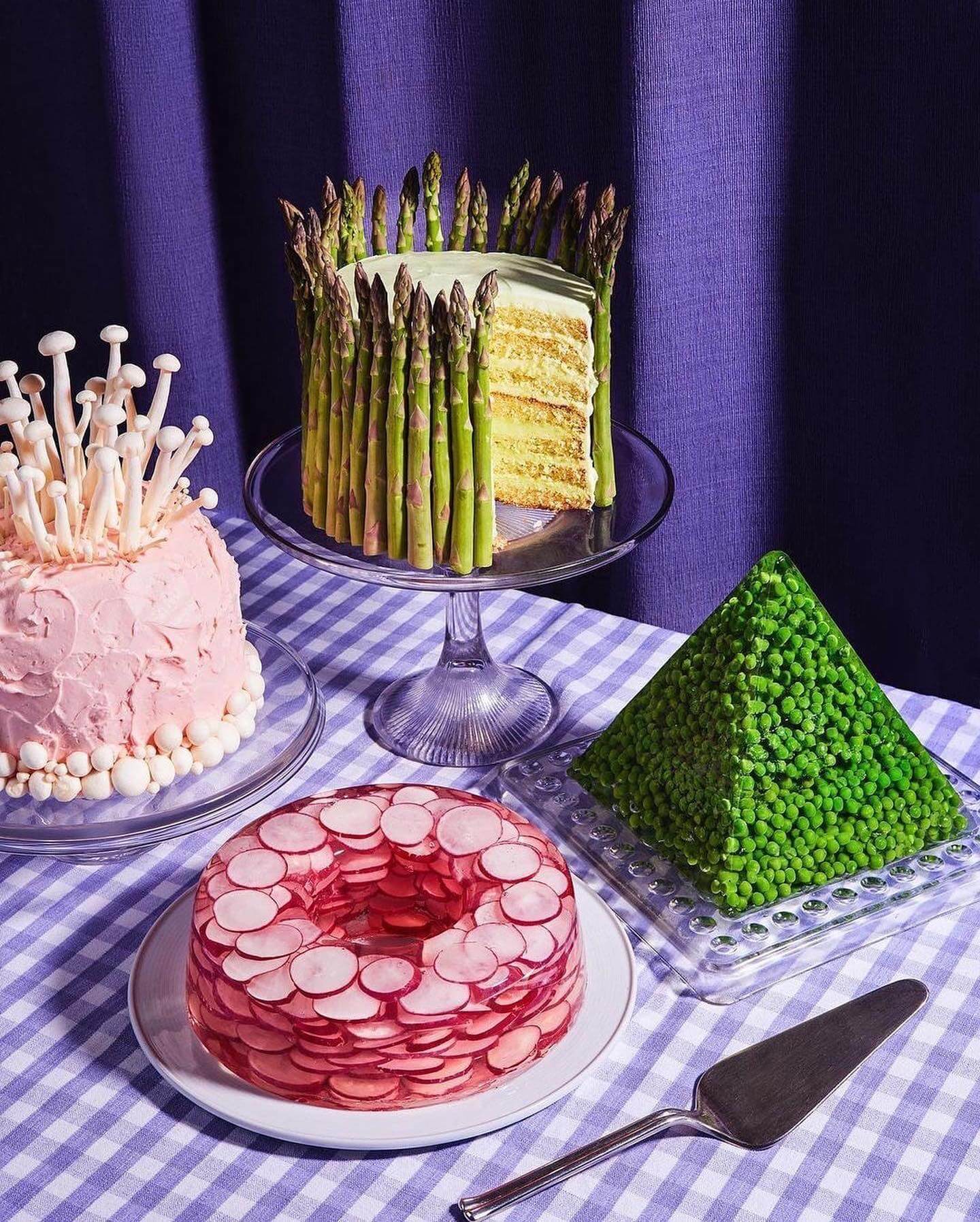
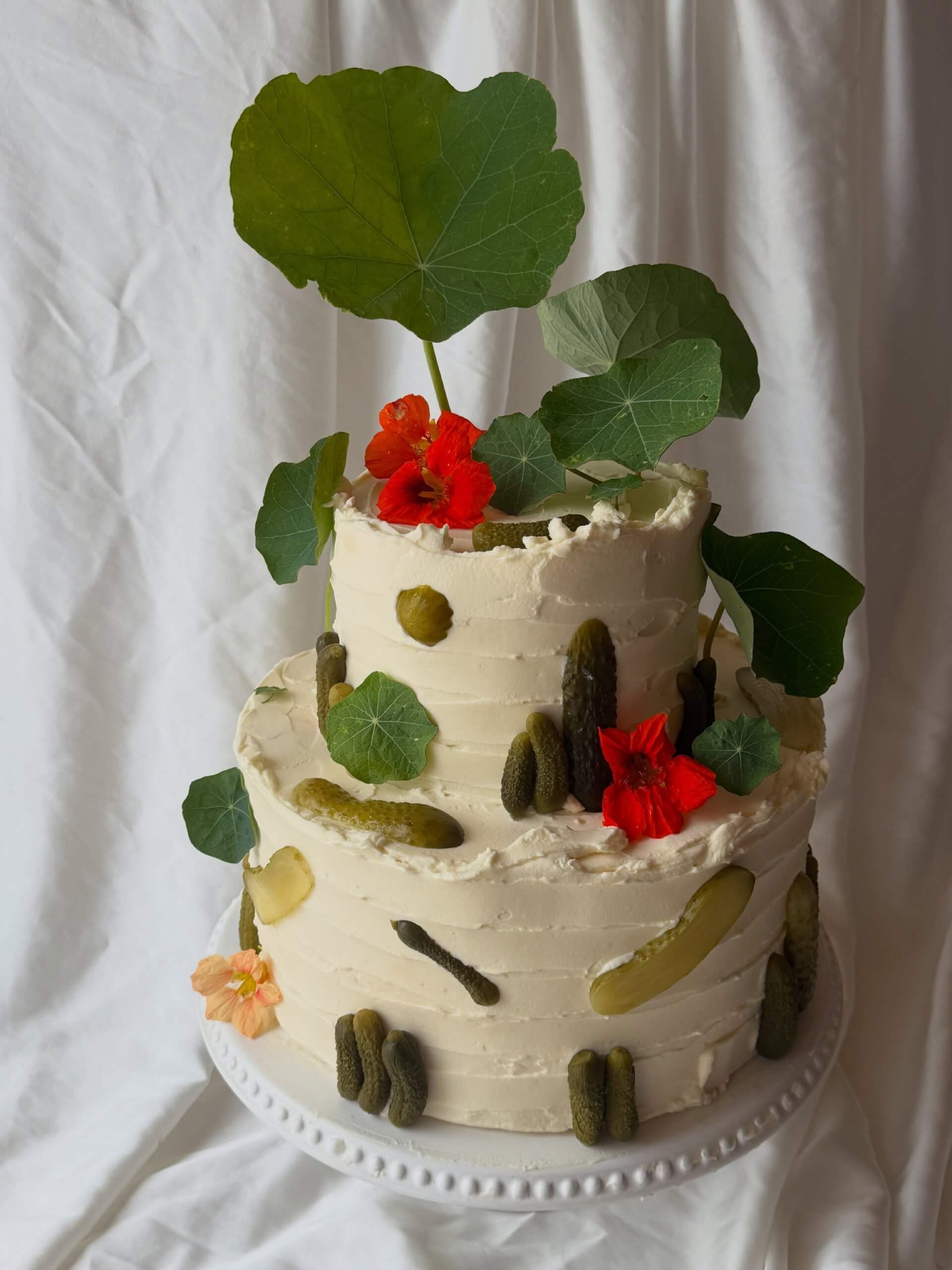
Cakes are increasingly decorated with savory elements. A layered cake wrapped in asparagus spears and finished with white mushrooms, pickles or nasturtium leaves keeps its shape as a cake, while the decoration comes entirely from the vegetable garden. The colors come from the vegetable world, such as deep green and the bright orange of nasturtium, and the palette is quite unlike that of a sugar flower cake.
Eskisit Catering sees potential for this on the menu and describes a savory dessert course as "underused but memorable," with "herb-infused ice creams served alongside sweets" as one idea. Pickles, vegetables, and aspic, a savory jelly, all fall into the same family because they provide a sharp, fresh counterpoint to the sweet. The approach suits couples who want to surprise guests at the end of the meal without adding more sugar.
A sweet table with a selection of savories also provides guests who avoid sugar with a full dessert course. A small tasting portion demonstrates how the concept looks on the plate before it's offered to the full guest list. Place savories adjacent to the classic sweets so guests can compare and mix as they please. For couples who still want a traditional cake, a single savory item alongside it is enough to introduce the concept.
Cheese and Fruit Tables as Sculptural Still Life
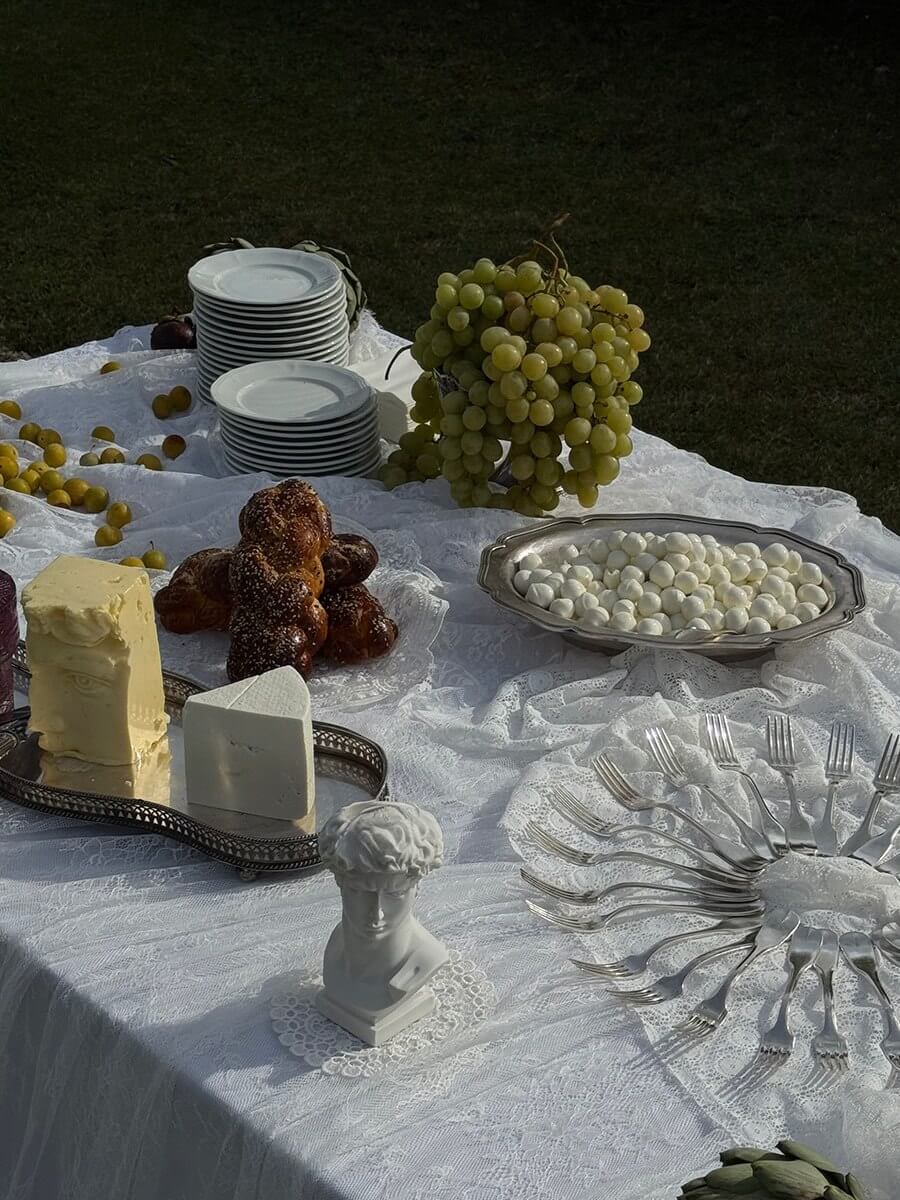
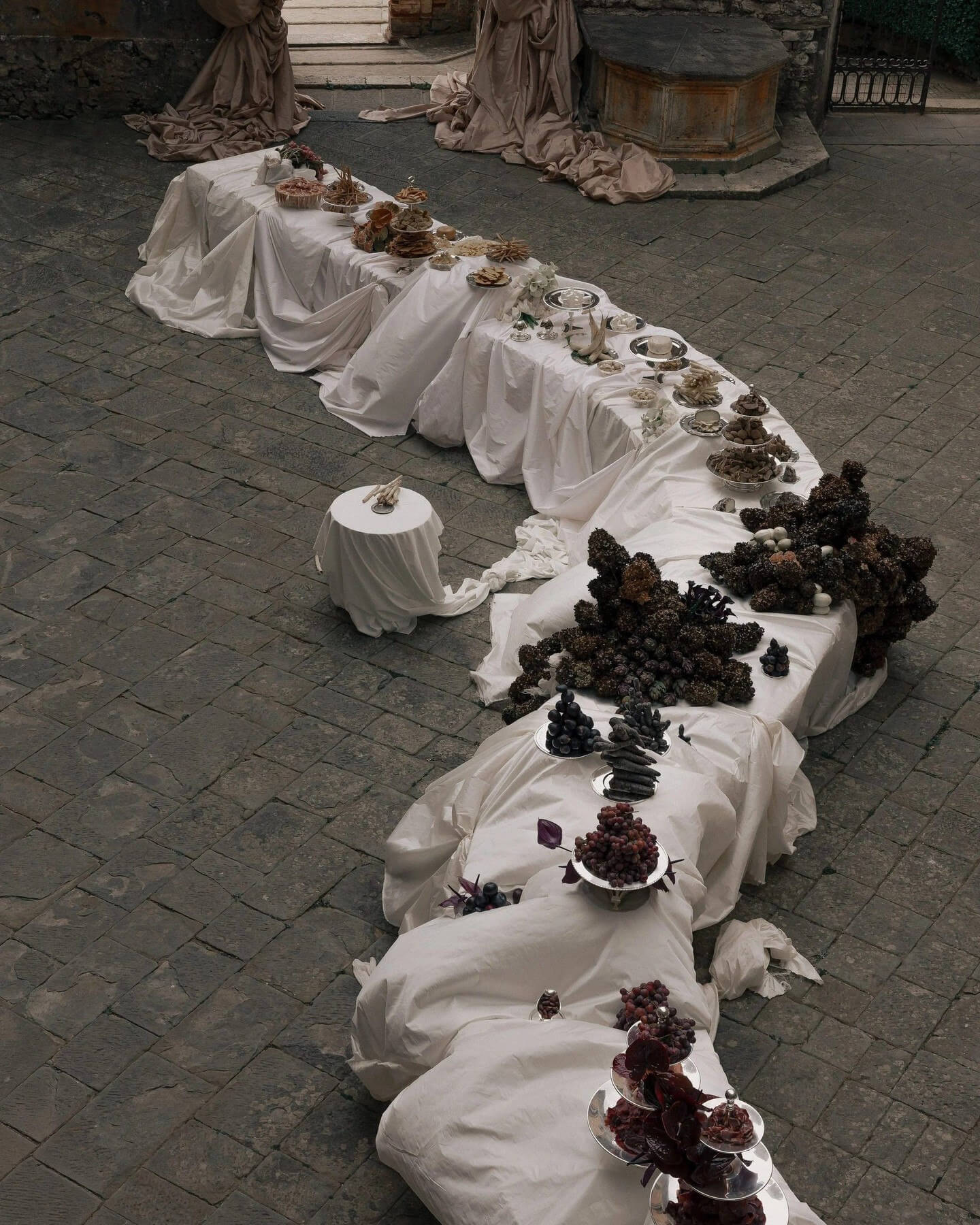
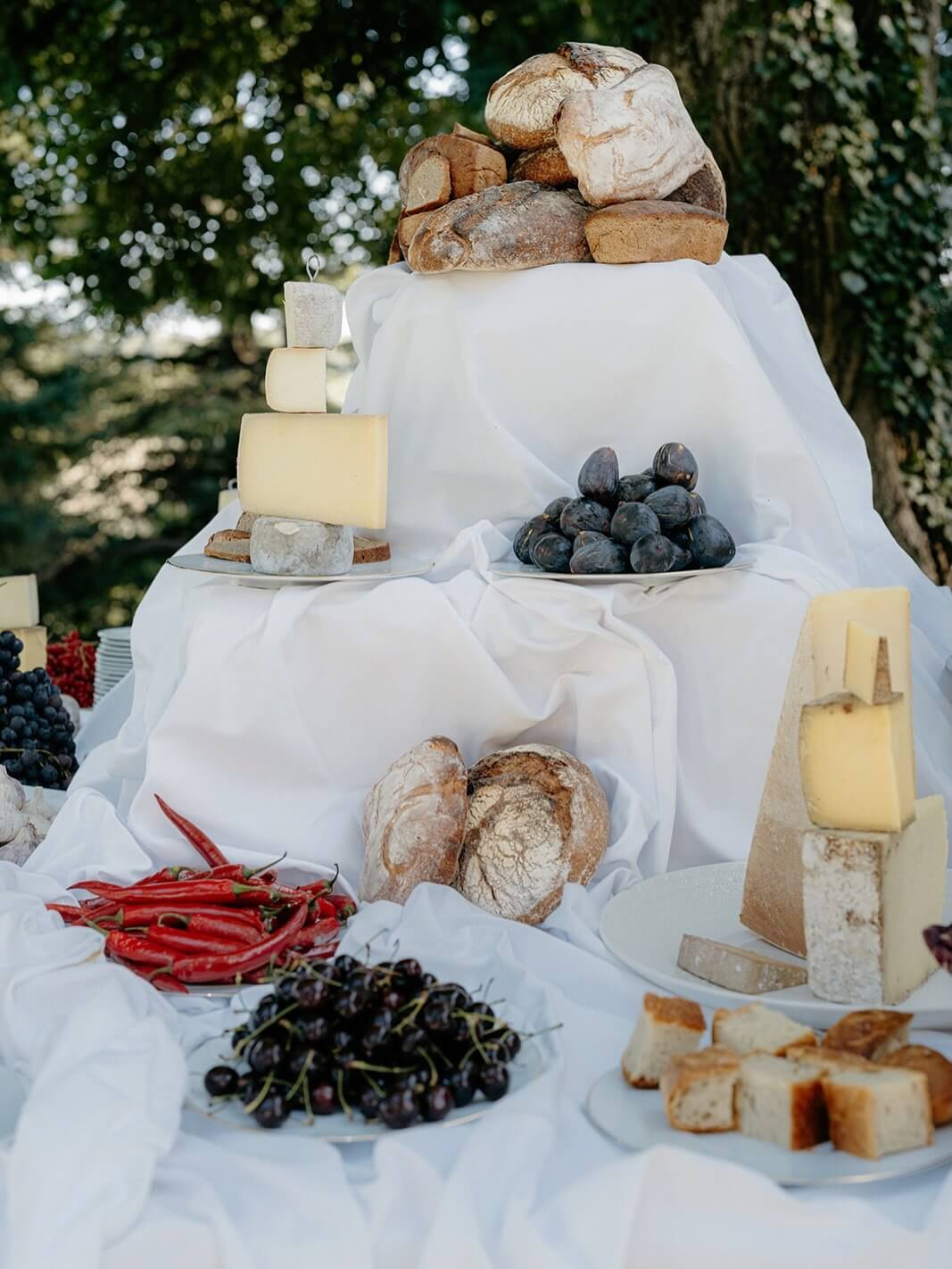
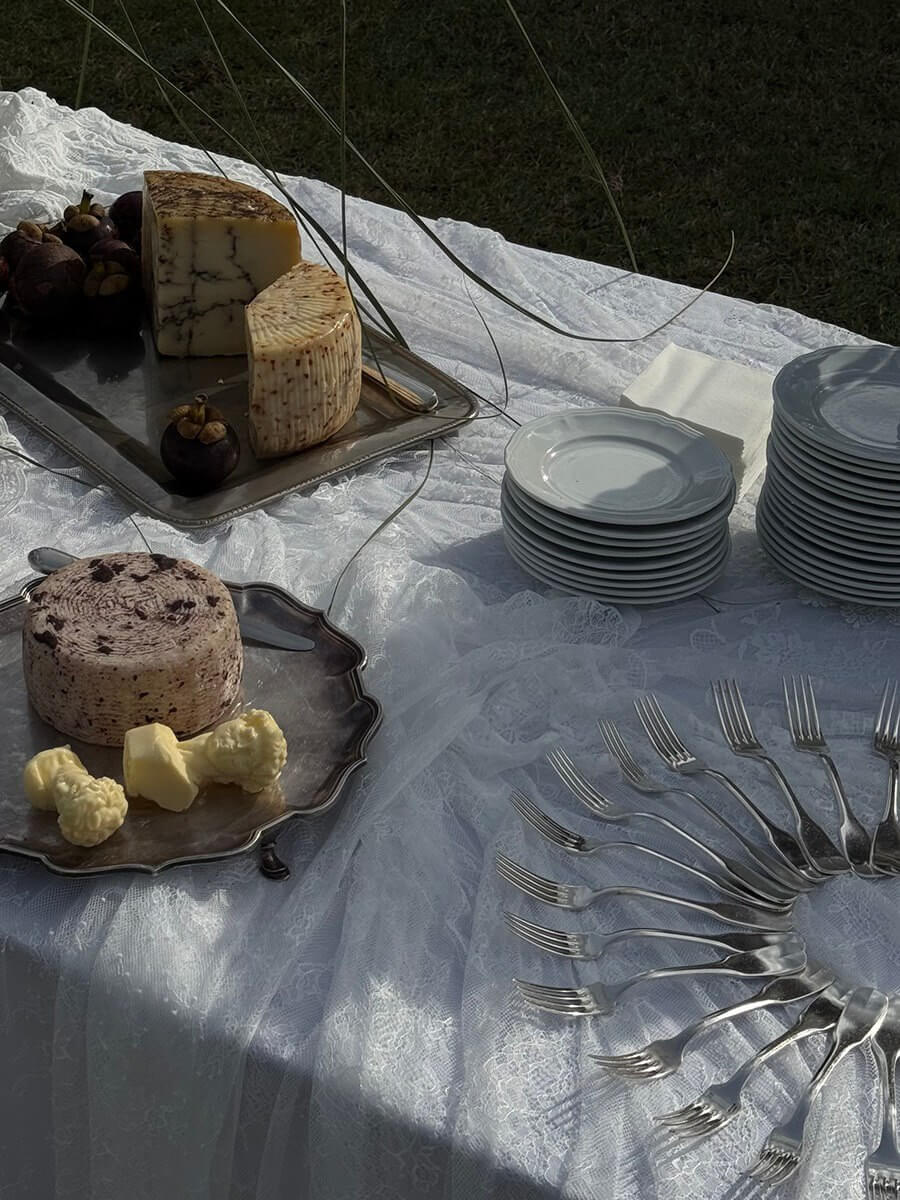
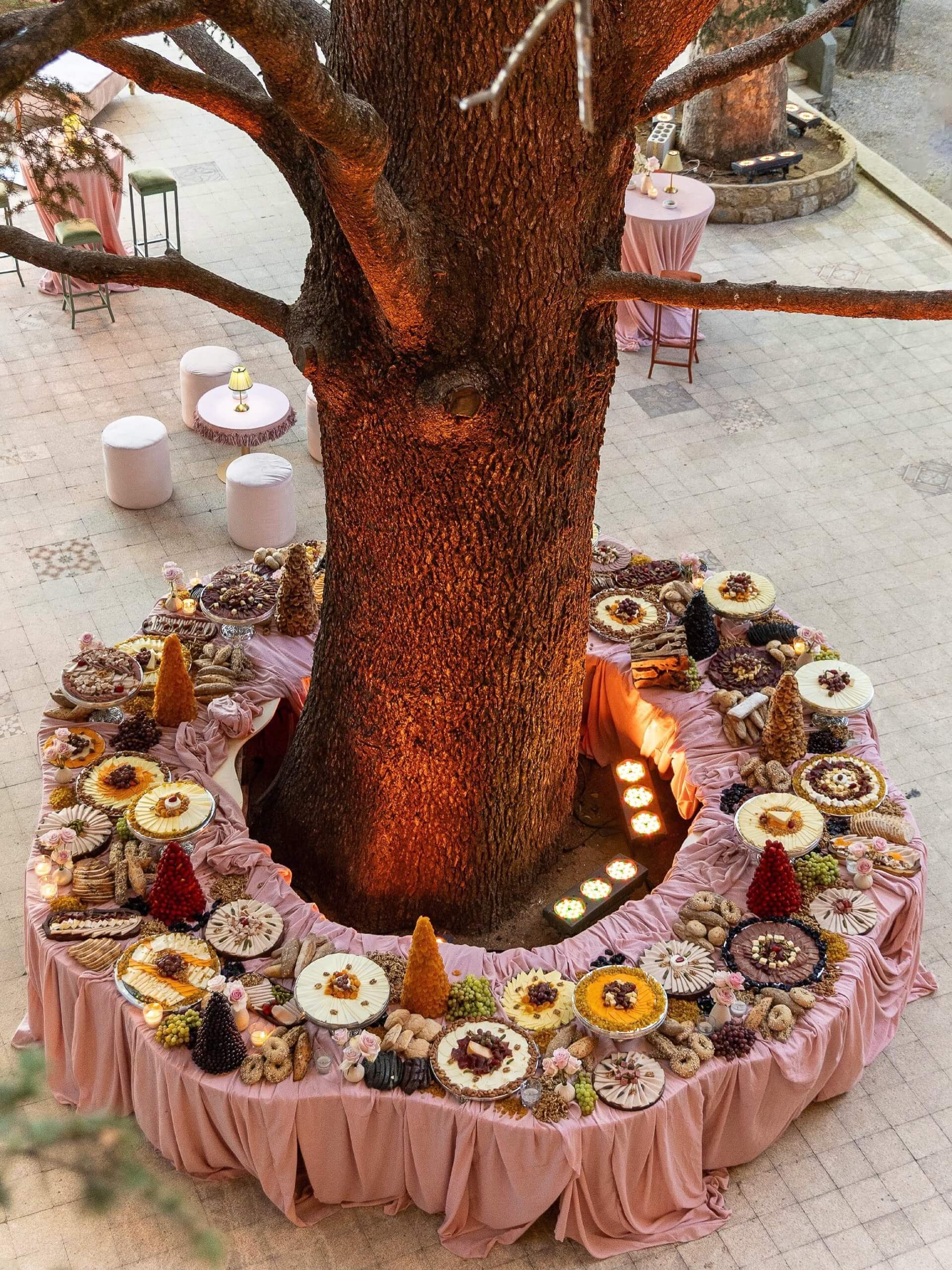
Cheese tables borrow from the language of painting. Wheels and wedges rise in steps on white linen, grapes cluster around them and figs sit on small plates, finishing the picture before anyone has cut a slice. On a bigger scale, a draped table curves through a stone courtyard with dark grapes spilling down it, while silver trays and linen folds add texture. Risers, stacked wheels, and cake stands add height, while the lower plates keep the table open and accessible. The selection can be seasonal, with distinct styles and perhaps one or two oddities for the more adventurous guest, and honey, nuts and preserves beside them suggest pairings.
Fruit does more than decorate; it cuts through the richness of the cheese and adds color to the table. Cheese looks and tastes best at the right temperature, so keep the table in the shade and bring it out just before guests arrive. Keep cutting tools, small plates, crackers, and slices of bread on hand so guests can build their own bites without overcrowding the display. Because cheese is familiar to almost everyone, the table also suits guests who prefer to skip the more adventurous stations.
2027 Wedding Food and Beverage Trends From the Caterer’s Side
The visual concepts above all require a menu behind them, and caterers will see the same shift from the kitchen. Eskisit Catering envisions dinner as a multi-course chef's table with a family-style feel, a format it describes as “culinary theater that still feels communal.” The chef plates dishes, and shared platters sit in the middle of the table for guests to pass around. The same caterer lists several flavors and formats couples will encounter on menus in 2027, all summarized below.
| Trend | What it looks like | Where it shows up |
|---|---|---|
| Fermented flavors | Miso, koji and black garlic | Dinner courses and tasting menus |
| Modern Levantine | Mezze-style spreads with saffron, pistachio and rosewater | Shared tables and upscale receptions |
| Low and no alcohol drinks | Mocktails and botanical infusions made with full bar care | Welcome drinks and the bar menu |
| Late-night bites | Truffle sliders and artisan ramen bowls | After dinner and on the dance floor |
| Zero-waste menus | Root-to-stem and nose-to-tail sourcing with local seasonal produce | Planning for the whole menu |
Fermentation and umami are the flavor drivers, with miso, koji, and black garlic moving from the tasting menu into regular event catering. Modern Levantine cuisine is bringing saffron, pistachio, and rosewater to high-end wedding menus, and zero-waste planning makes local, seasonal sourcing a selling point. Any of these can be brought into a menu via a single course.
The drinks and late-evening menu follow the same upgrade. The caterer expects “sophisticated mocktails and botanical infusions treated with the same care as a full bar program,” and describes late-night food as “gourmet mini versions of comfort food” in place of the classic pizza cart. Couples can ask the caterer which formats the kitchen already does well before adding them to the menu.
From Inspiration to Menu: Planning With a Caterer
Photographs set the mood for a menu, and the kitchen decides what reaches the table. The tasting is where a striking idea meets the reality of the venue, the season, and the guest list, and it is the best moment to adjust anything before it becomes final. Eskisit Catering advises couples to taste before committing and to plan the menu around their guests, since “a tasting session plus a mix of familiar and adventurous dishes keeps the menu both memorable and crowd-pleasing.” That mix fits this guide's ideas: one striking display and a handful of dishes everybody knows. Bringing saved photographs to the tasting lets the caterer judge what is realistic for the venue and the season, and it gives both sides the same picture to work from.
Choosing the person who will cook the wedding dinner deserves the same attention as choosing the venue. Wezoree brings together caterers whose profiles show their menus, style, and service format, so couples can compare approaches before booking a tasting. Browsing those profiles with a few saved ideas in mind makes the first conversation a creative one. The Wezoree inspiration section adds more material on tables, decor, and menus, helping the whole reception follow one visual direction.

FAQ
What are the main wedding food trends for 2027?
Wedding food trends 2027 focus on produce as decoration, geometric canapés, chef-led stations, long and sculptural sweet tables, bread displays, savory desserts, and cheese tables. On the menu front, caterers are talking about fermentation and umami, modern Levantine cuisine, low- and non-alcoholic drinks, and zero-waste planning. These elements can be combined to suit the venue and the season.
Can a produce centerpiece also be eaten?
It depends on how long the arrangement is out and what it's made of. An arrangement sitting under candlelight or in warm air for hours will often need to be kept separate from the food being served, so the caterer should indicate which arrangements are for display only. Prepare the items for guests separately and bring them out in smaller quantities.
How can guests move through stations without long lines?
Placement and repetition do most of the work. Spread the stations around the room, give each its own route, and offer your popular dishes at two points so people aren't all congregating in one area. Chef stations, in particular, need space for the chef and space for guests who come over to watch, so a caterer can plan how many stations you'll need based on your guest list.
What is a savory dessert course?
A savory dessert course offers cheese, vegetables, pickles or herb ice cream. It can be served as part of the sweet course or after the main course. It provides a satisfying conclusion for those who don't eat sugar and offers a nice contrast after a heavy meal. A small tasting portion shows how it works before it goes to the full guest list.
Are late-night snacks worth adding to the menu?
Late-night food gives guests a reason to stay until the very end of the party. These days, it's usually a small comfort dish, like truffle sliders or small bowls of ramen. It is a small part of wedding food trends, yet guests remember it because it is the last thing they eat.
What should couples ask a caterer at the tasting?
Start with the kitchen side, including heating and delivery to the venue. Ask which display items will be served and how the stations will be staffed, and mention dietary requirements early. Bring photos of the tables and the food you like to keep the conversation specific.