Wedding Decor Trends 2027


- Sculptural, Texture-Forward Greenery
- Fruit and Botanicals as Installation
- Lighting and Projection as the Décor Itself
- Flower Mounds and Sculptural Installations
- Decor Featuring Metallic Elements
- Soft and Cozy Draping
- How to Choose the Decor Style That's Actually Yours
- Can You Mix Multiple Decor Trends? (And Which Ones Actually Work Together)
- FAQ
There is one particular moment at a wedding when a guest in the middle of talking looks up and actually notices the room. The 2027 wedding decor trends are almost entirely based on aiming for that very moment - using decoration that has sufficient texture, atmosphere, and purpose so as to merit a second look rather than just occupying the space around the dance floor. This year's trend is moving away from anything that looks generally "pretty" in photographs and instead focuses on creating rooms guests remember in specific detail. The following explains what's driving this shift, walks through the current 2027 wedding decor styles, shows how to choose the right style for your wedding, and which combinations of ideas work well together.
Find Your Perfect Wedding Vendors

Sculptural, Texture-Forward Greenery
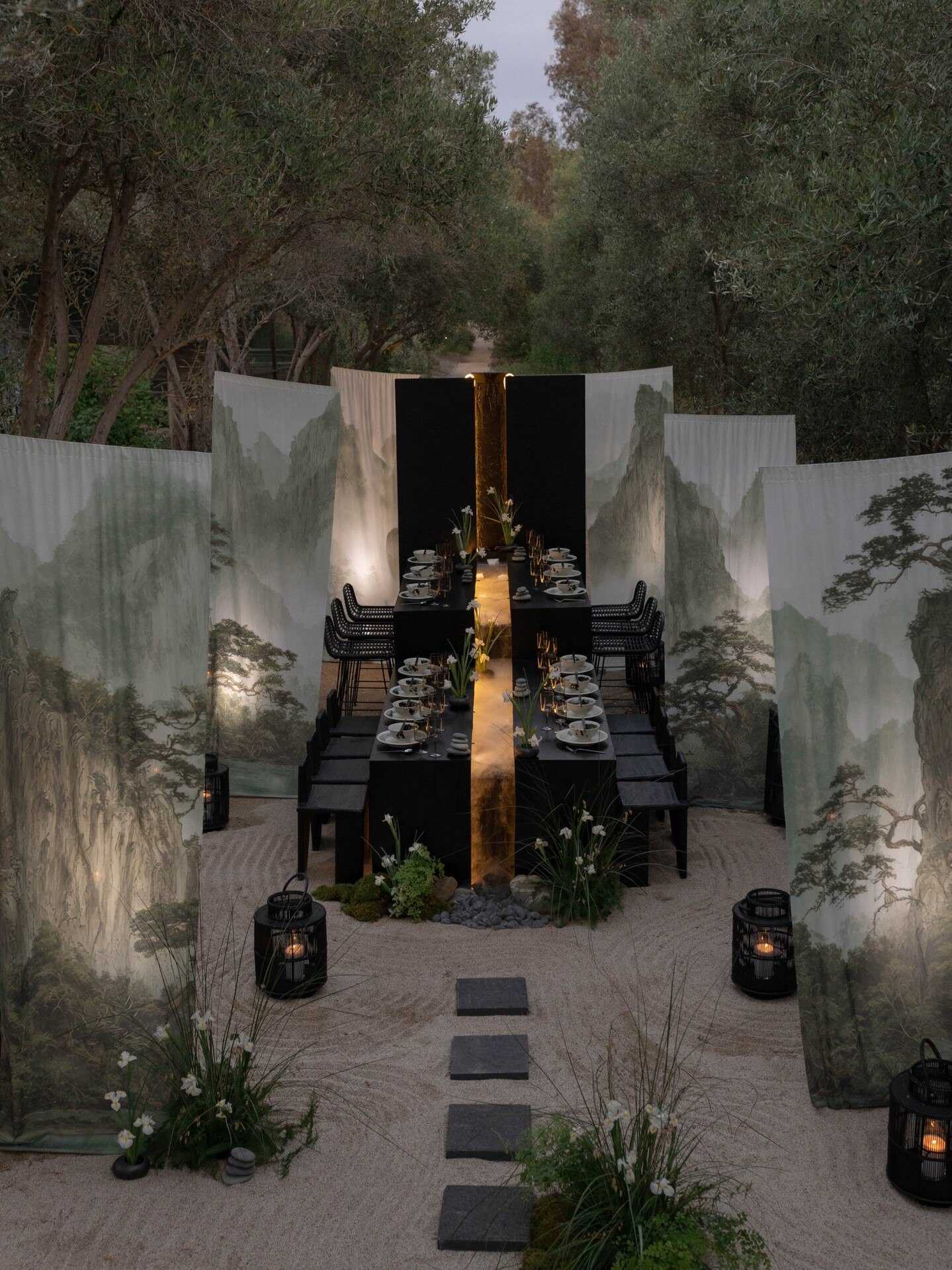
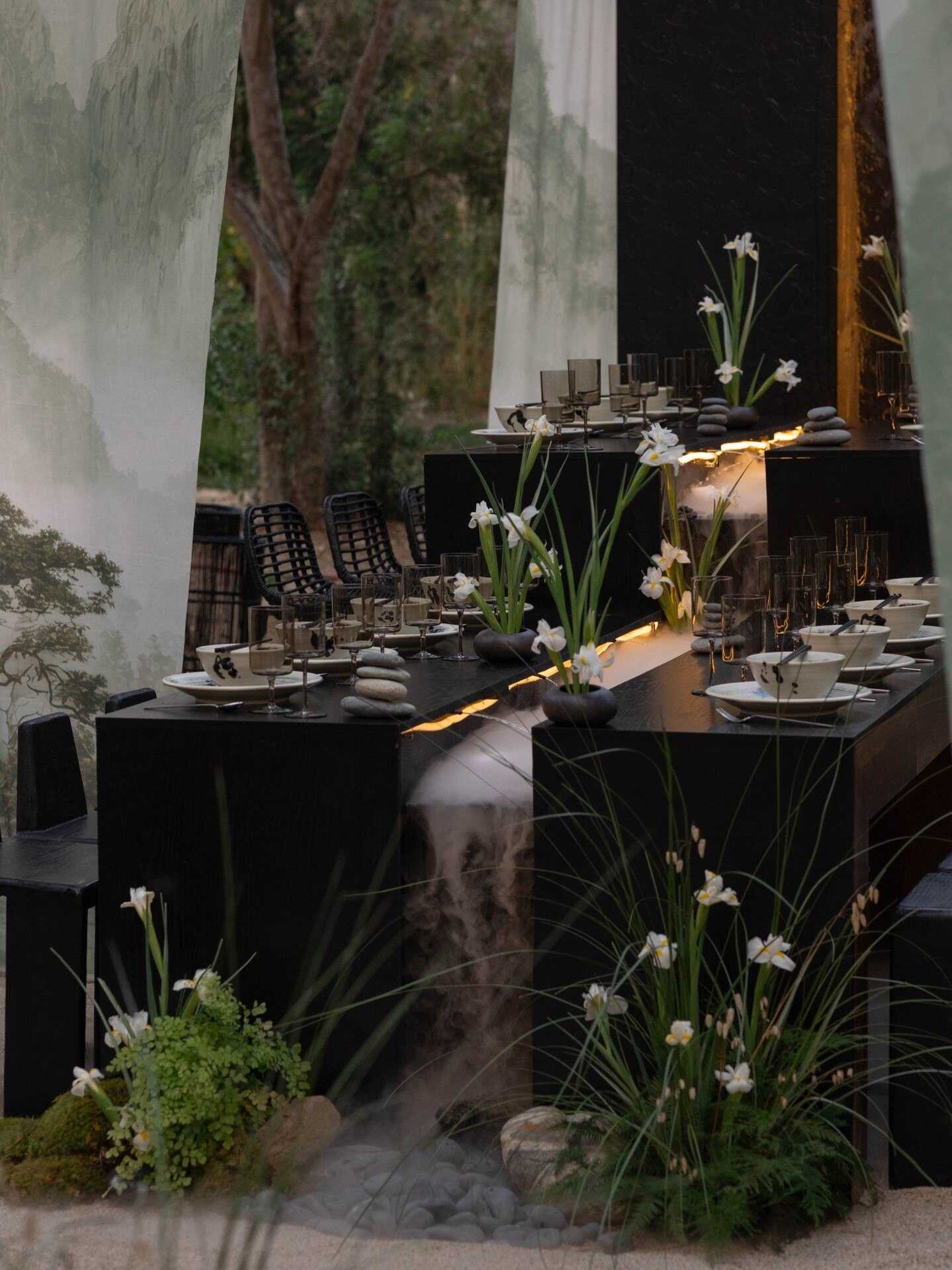
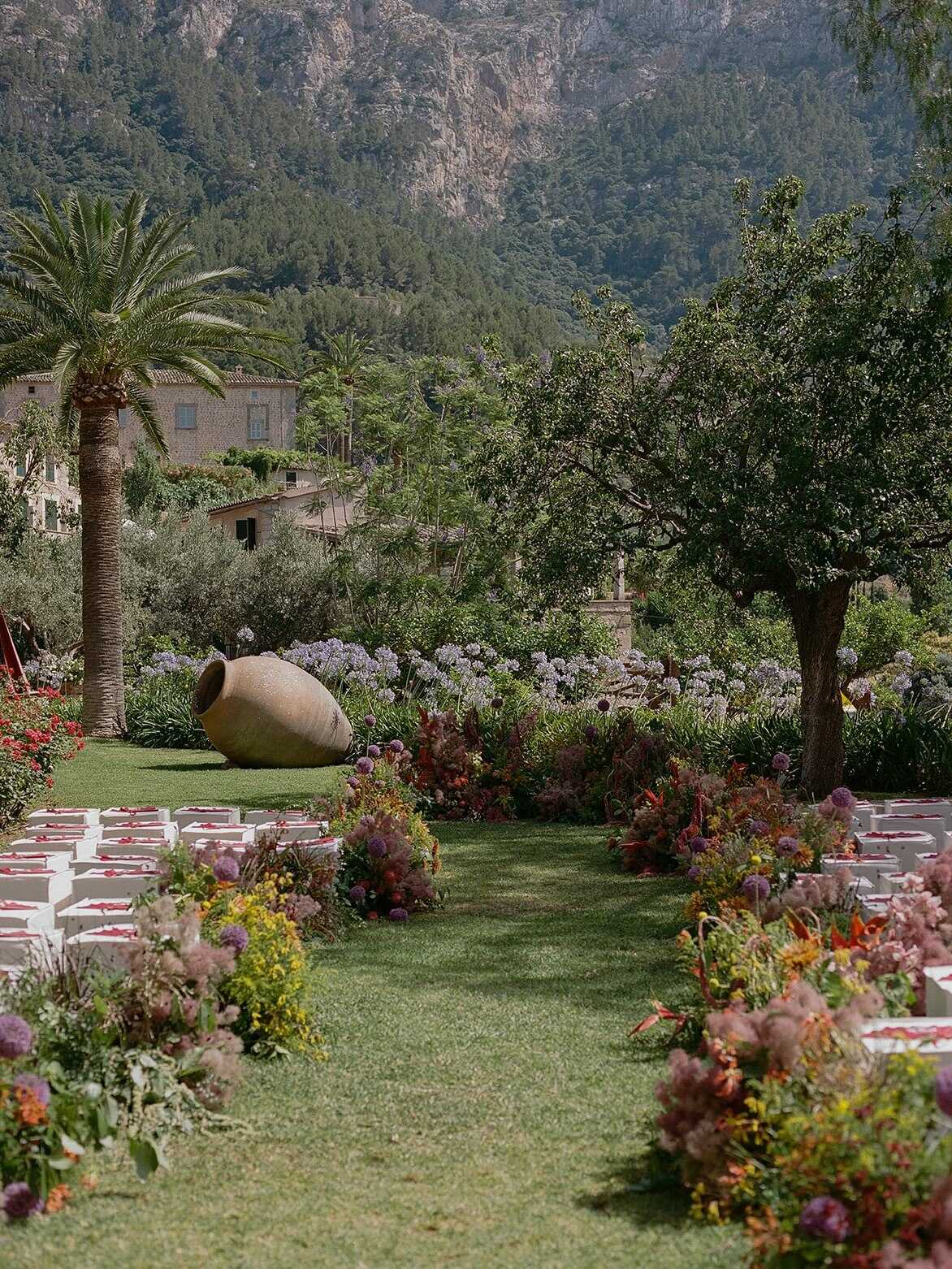
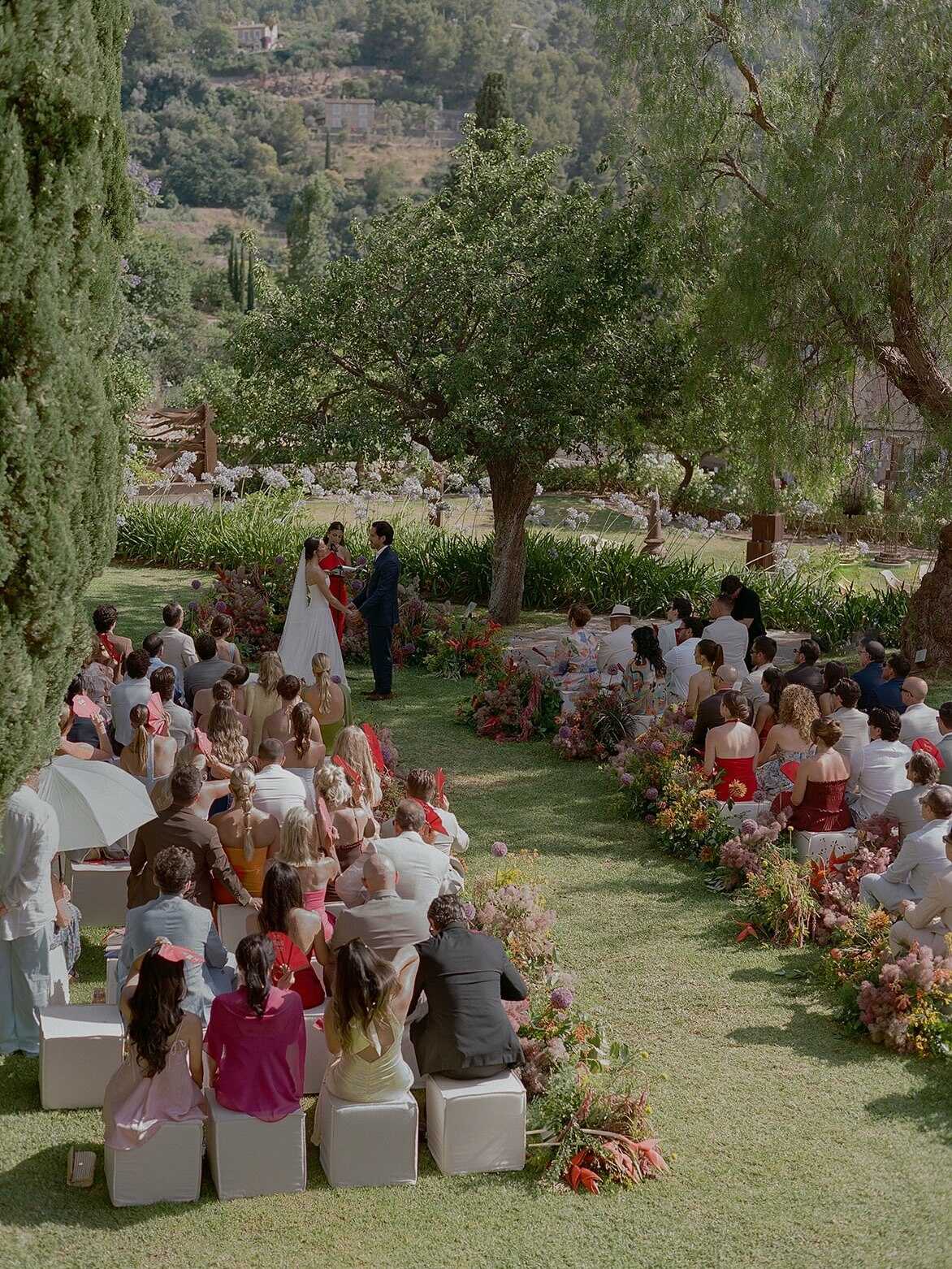
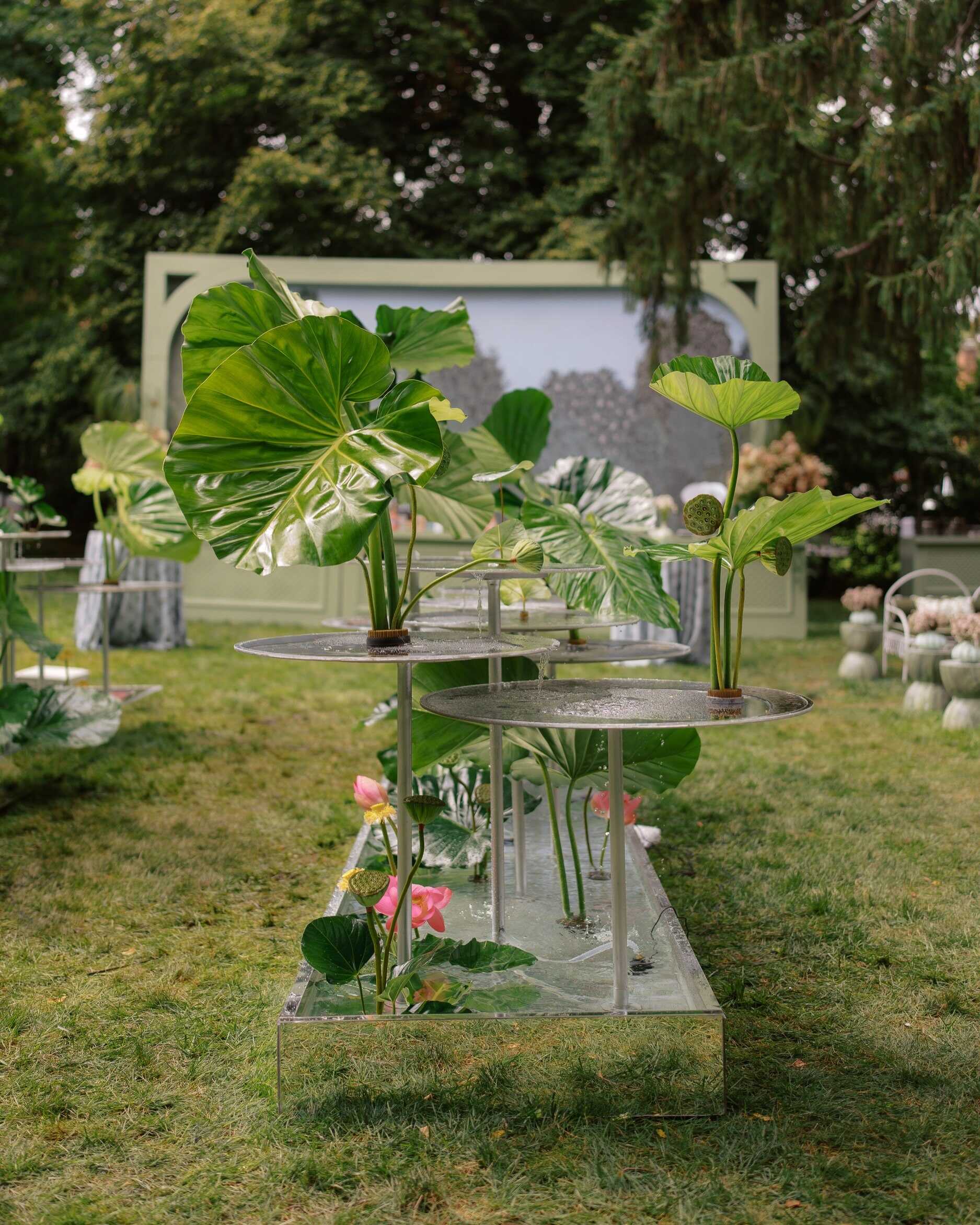
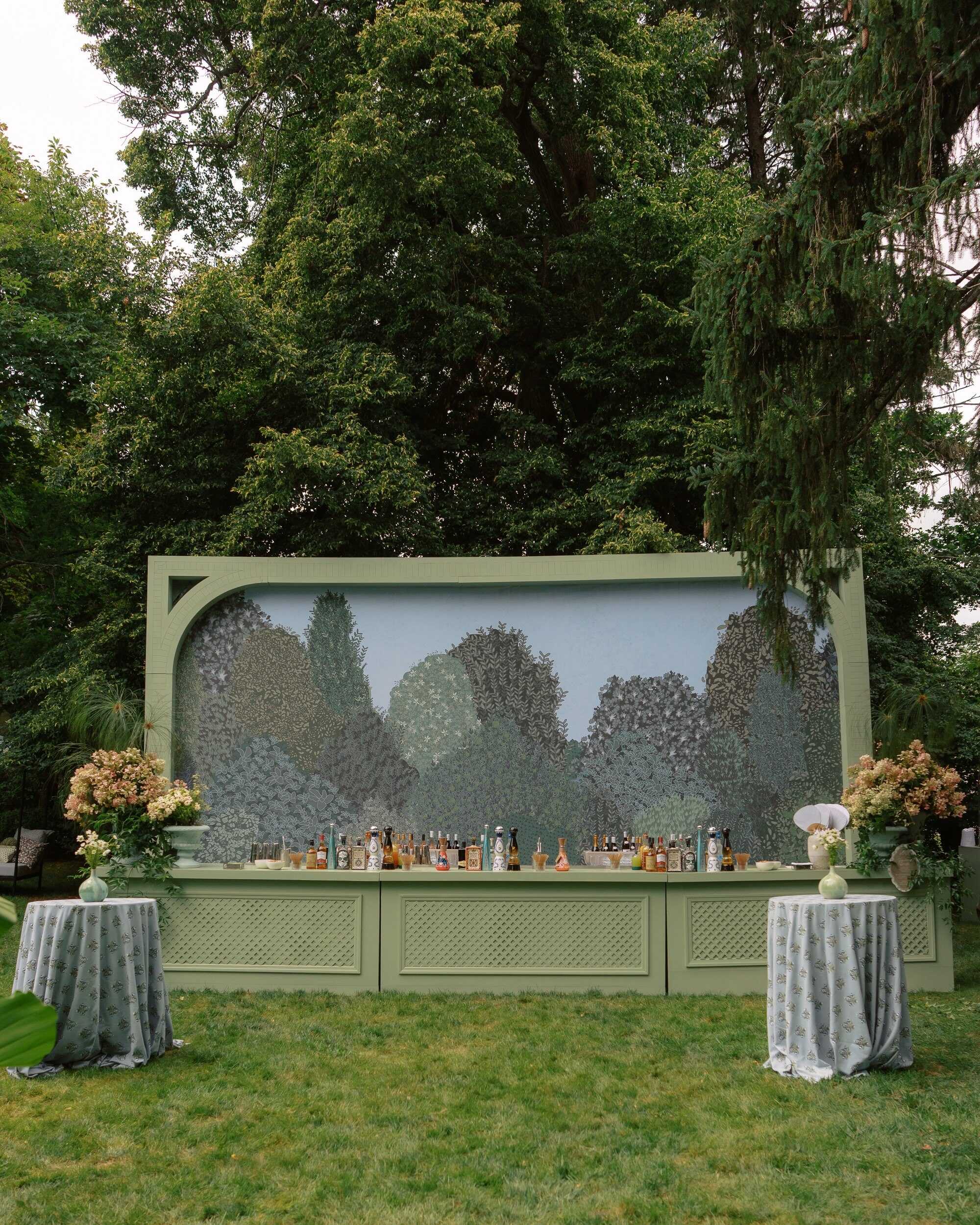
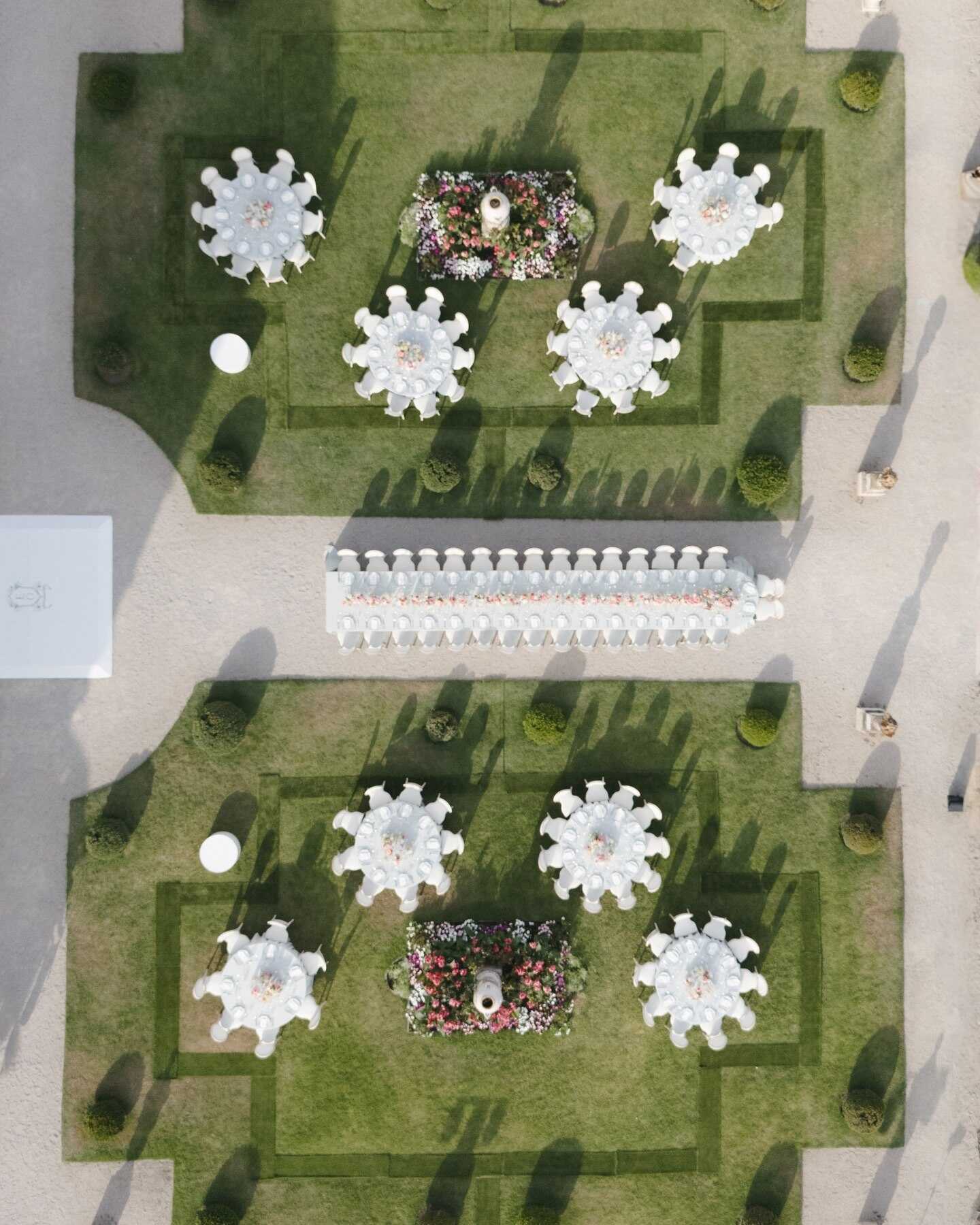
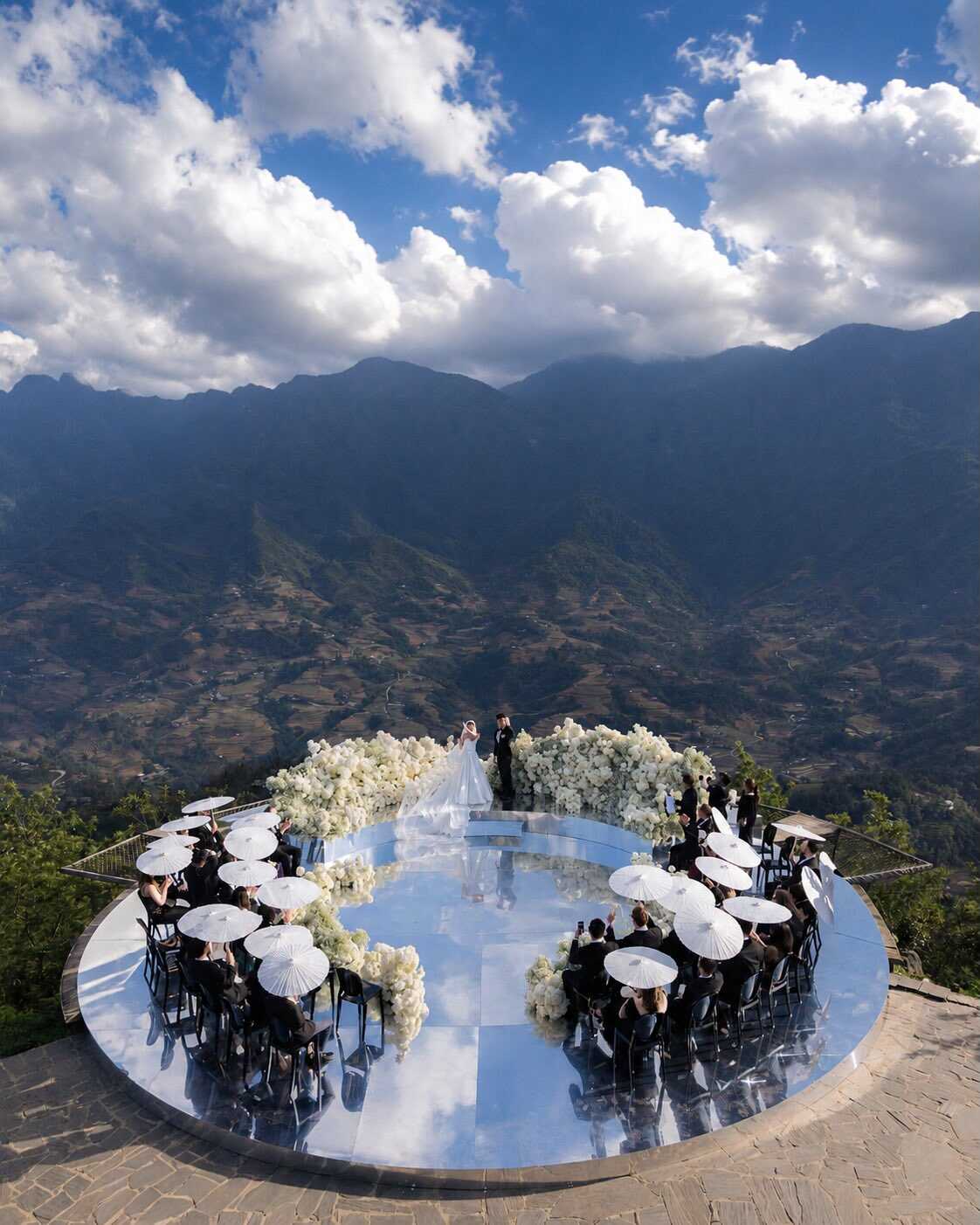
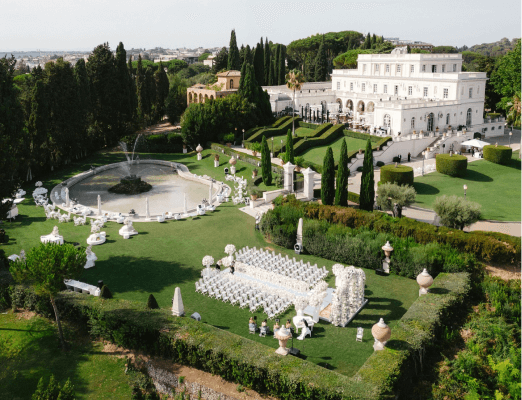
The garden-style look in 2027 isn't the overgrown, wild one most people imagine; it is much more restrained. Florists are now more often using the term 'sculptural' to describe this change than 'lush': rather than a tangle of vines, they have a single large leaf on a stand, and a branch or a few narcissus stems taking over what an entire arrangement had previously done, with texture being used to form the composition rather than just bulk. When a venue already has a garden, it's usually left almost completely undisturbed - with the palm trees, the cypress trees, the distant mountains, and the guests sitting right among the actual flowerbeds - since the setting requires styling rather than staging.
What makes this case different from a straightforward 'outdoor wedding' is the care taken in all other aspects. The stone garden, with its raked-gravel path and matte black tables, appears to have been thought out simply because nothing contradicts it - there is neither a thick floral wall nor layered greenery, just a few carefully chosen elements placed with real accuracy beside natural stone, wood, or fabric. The same principle applies indoors: a large leaf or a single branch on a minimalist stand is enough to cover the entire tablescape without any more elaborate arrangement nearby.
When done well, it seems less like decoration that has been added to a garden and more like something that actually grew there rather than having been delivered in a van - such a realistic effect is much more difficult to fake than a clearly 'wild' arrangement, since each element has to justify its place independently.
Fruit and Botanicals as Installation
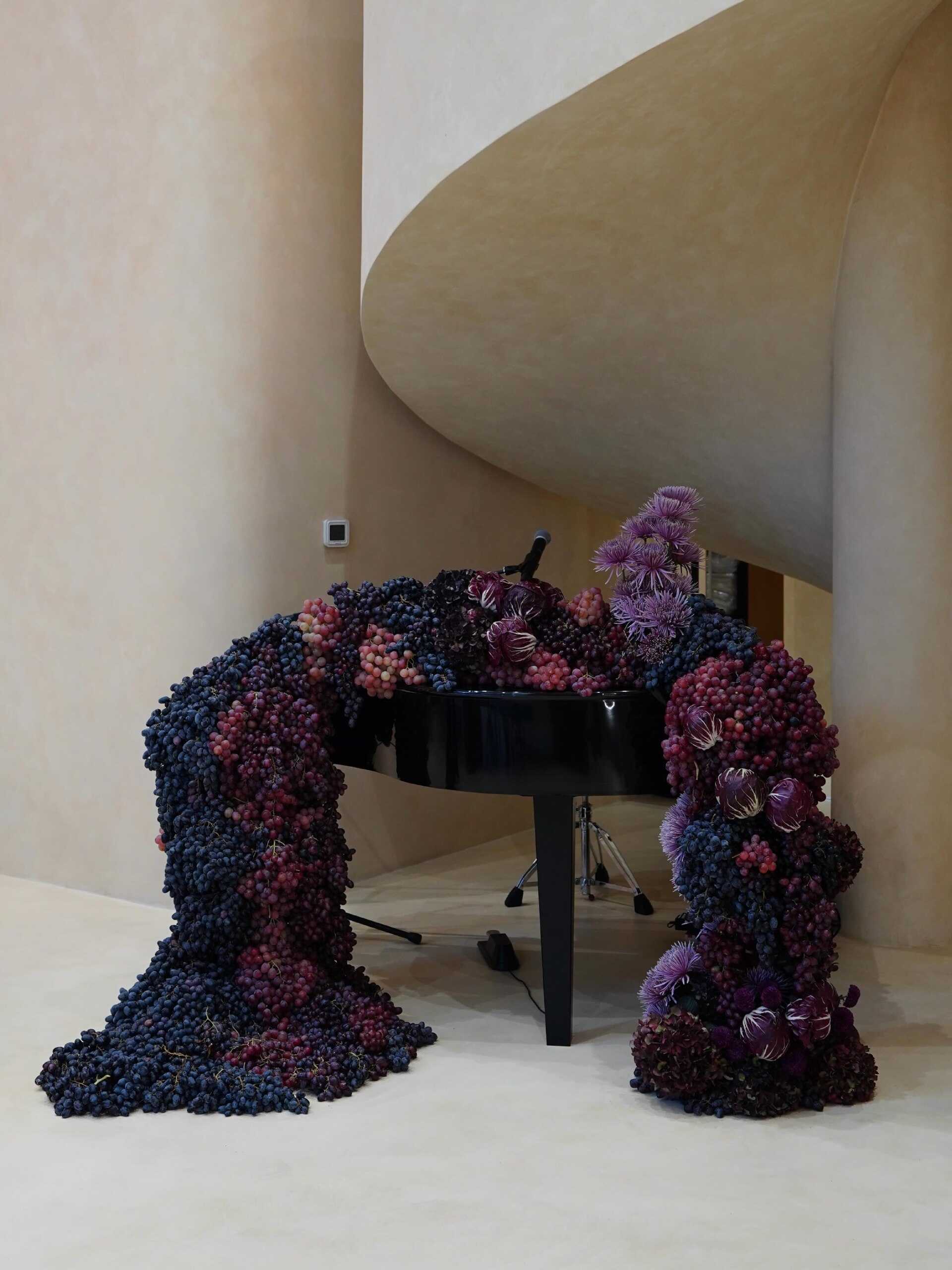
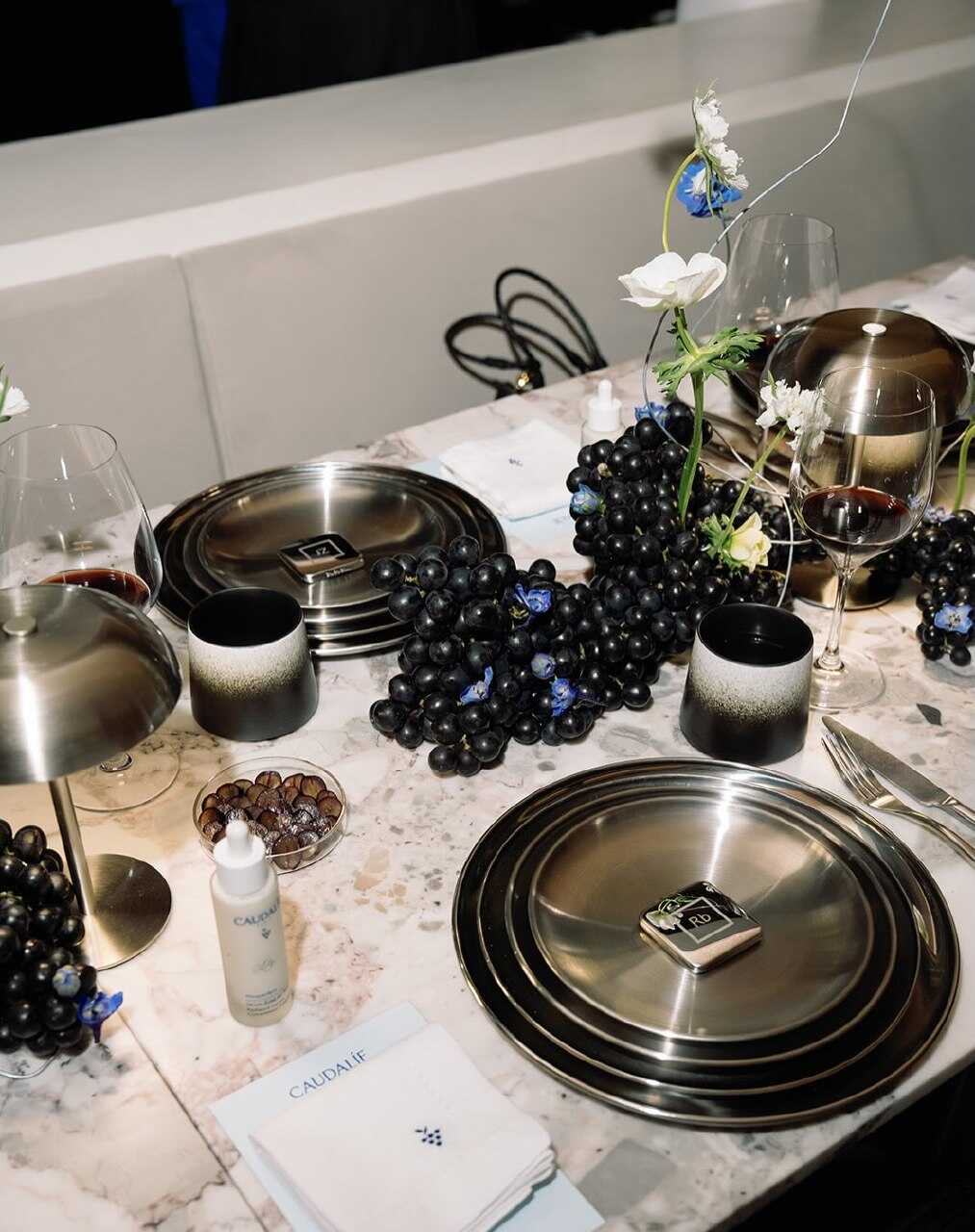
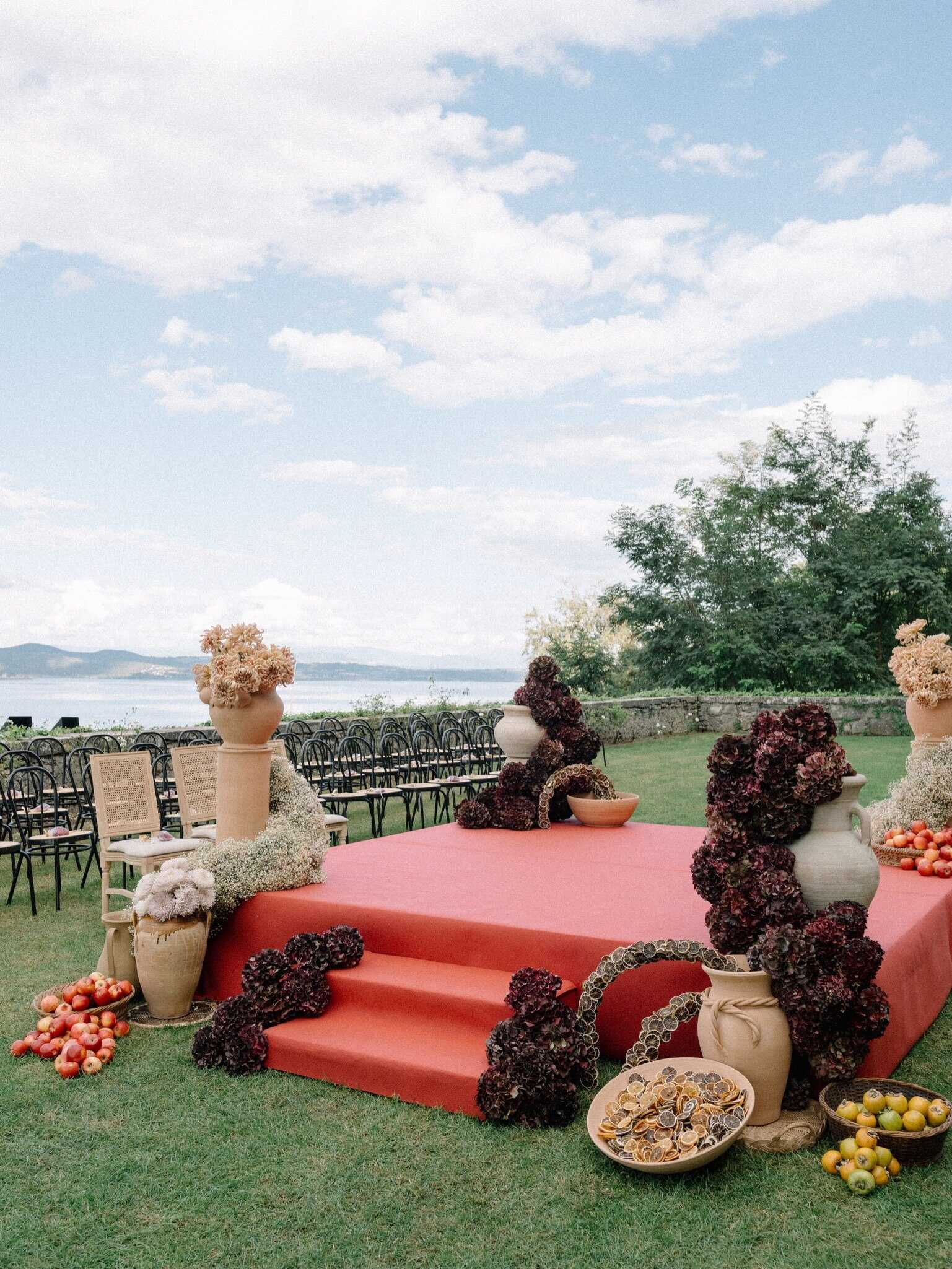
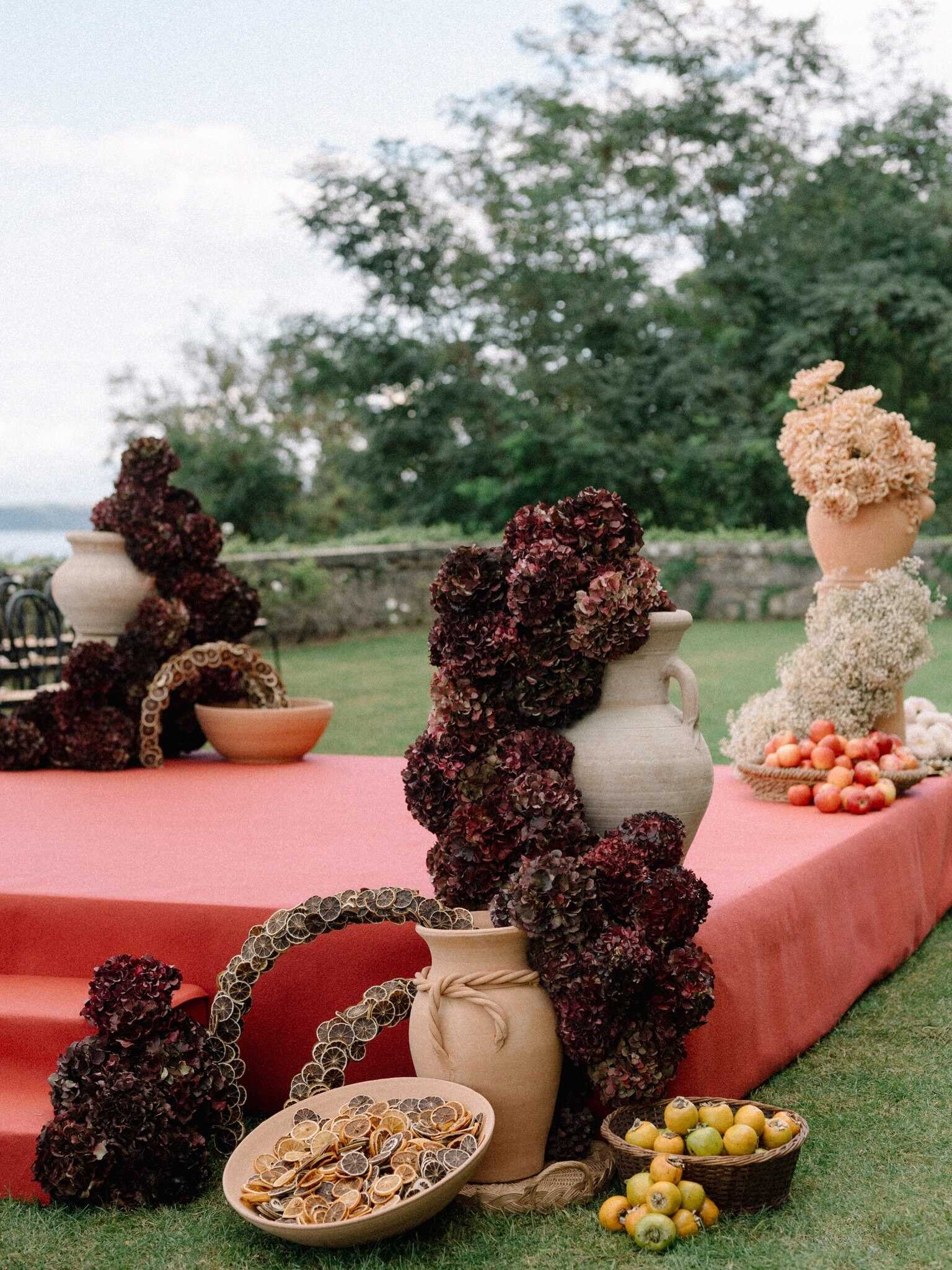
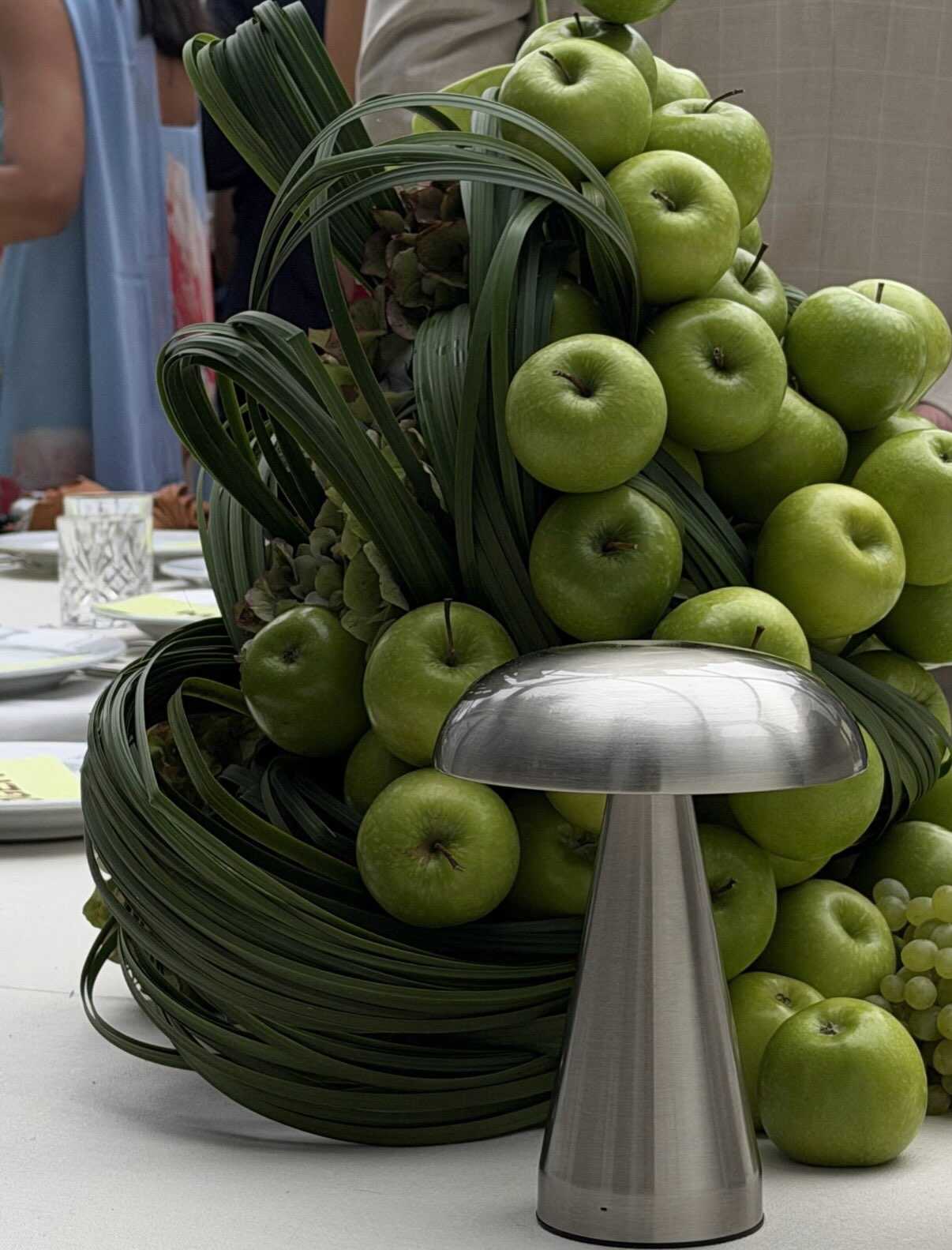
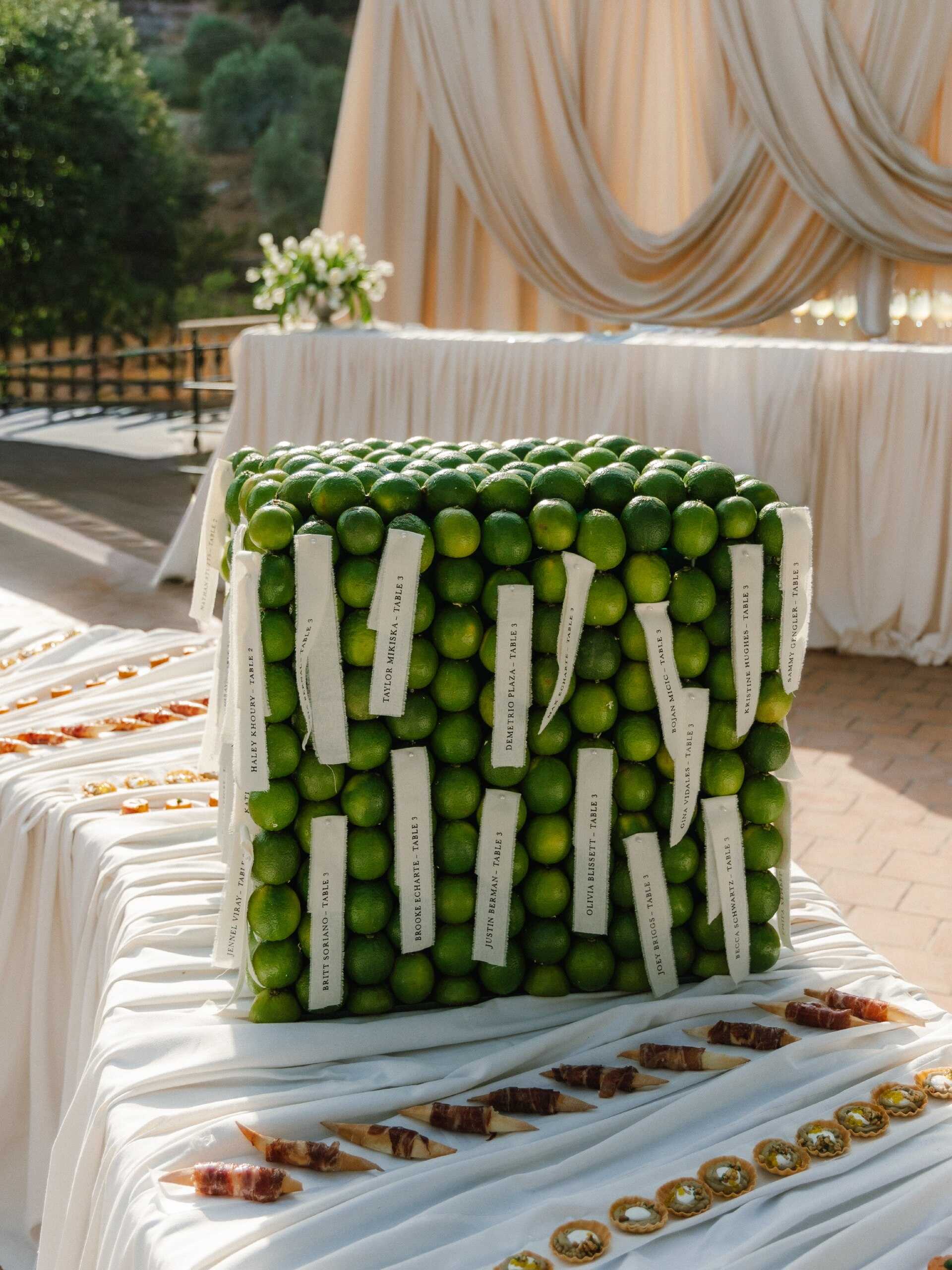
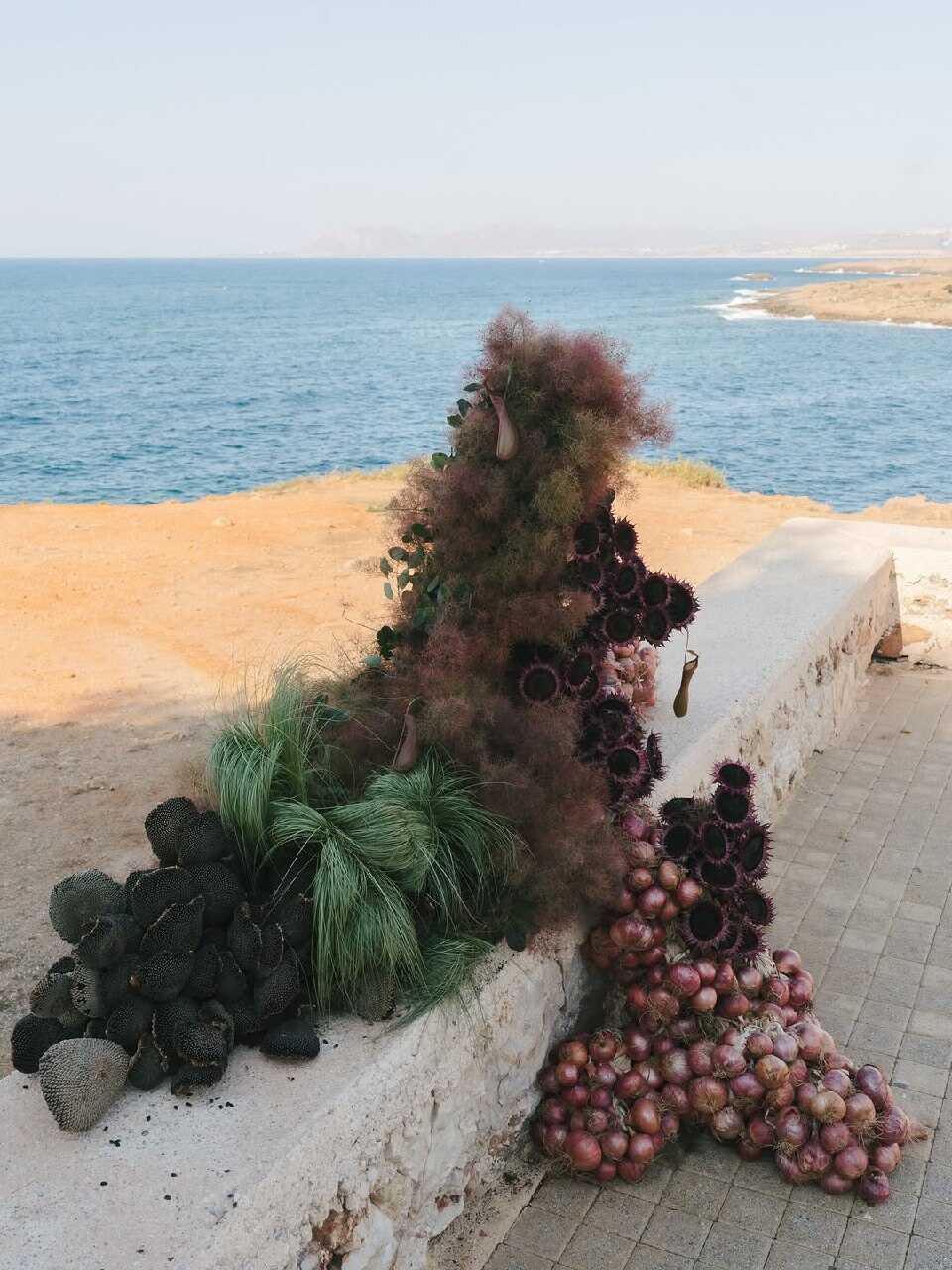
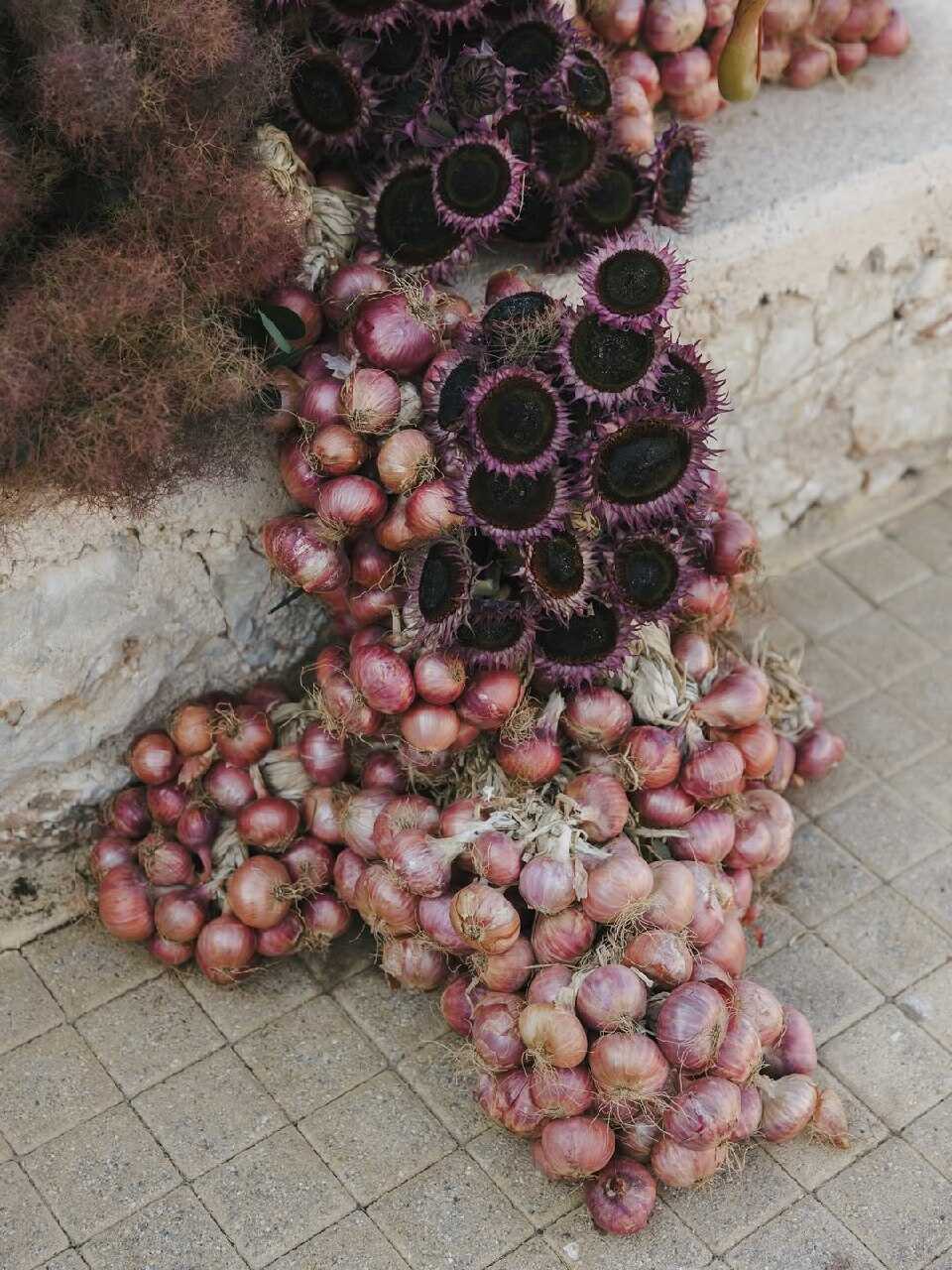
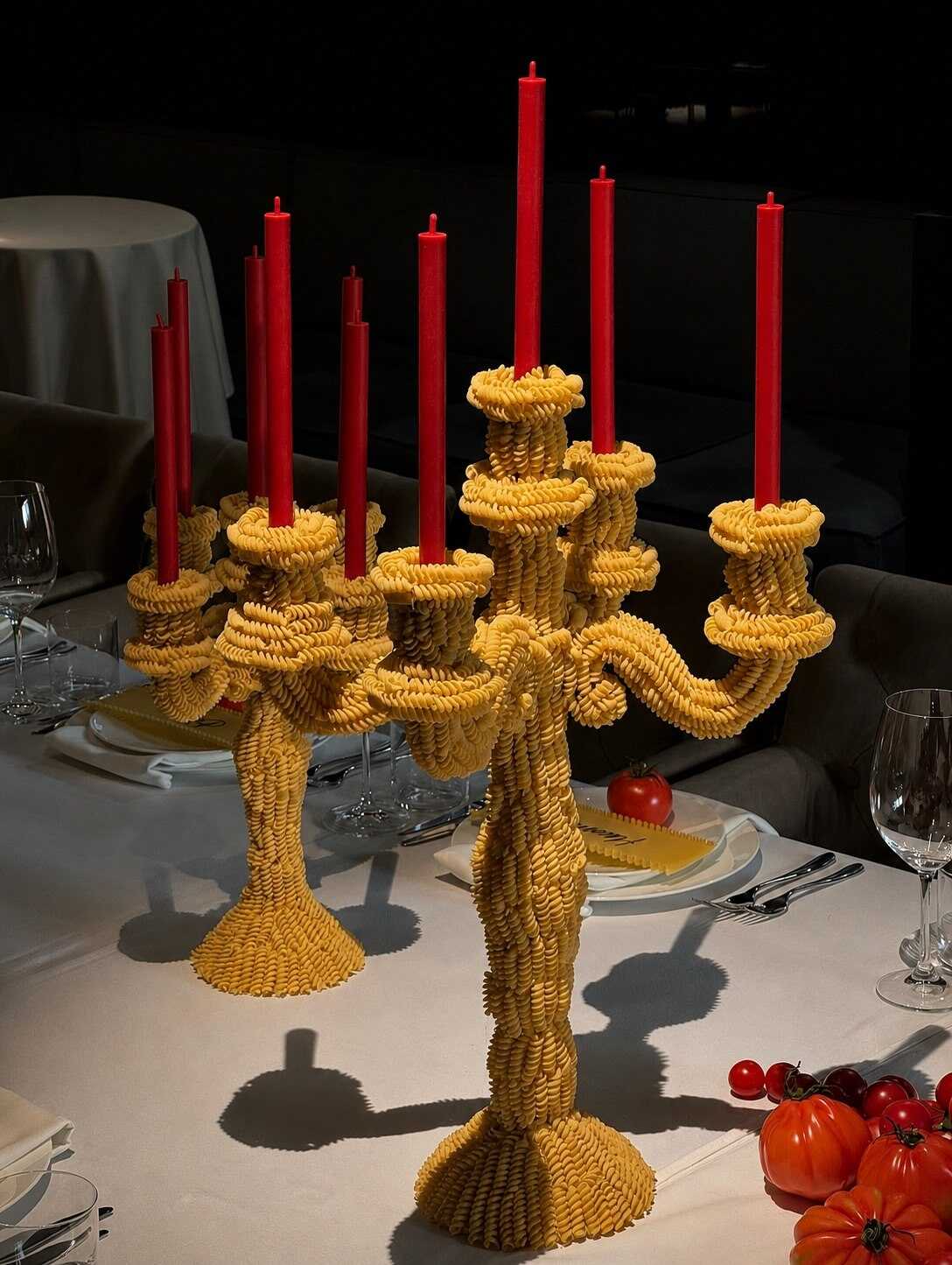
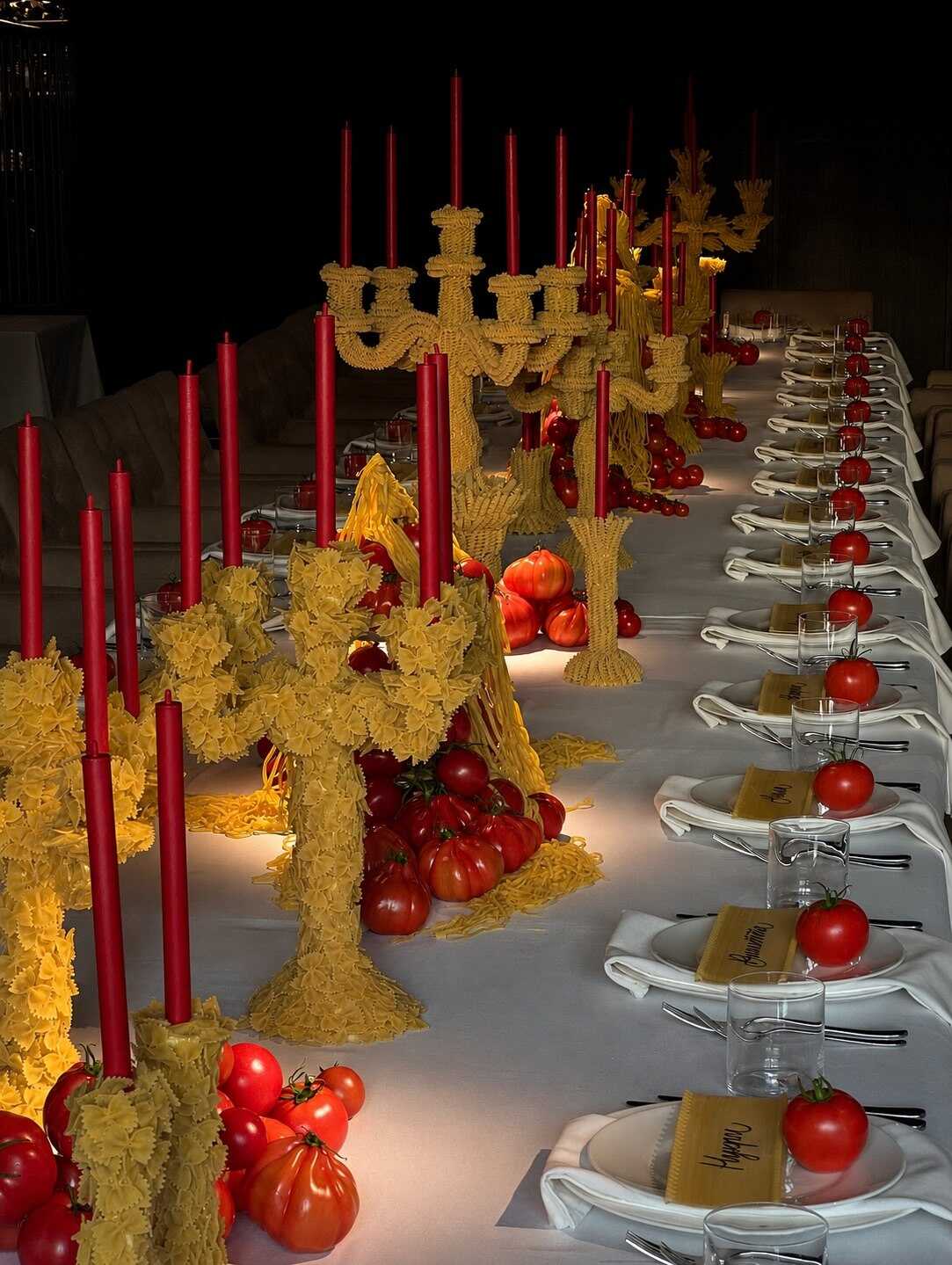
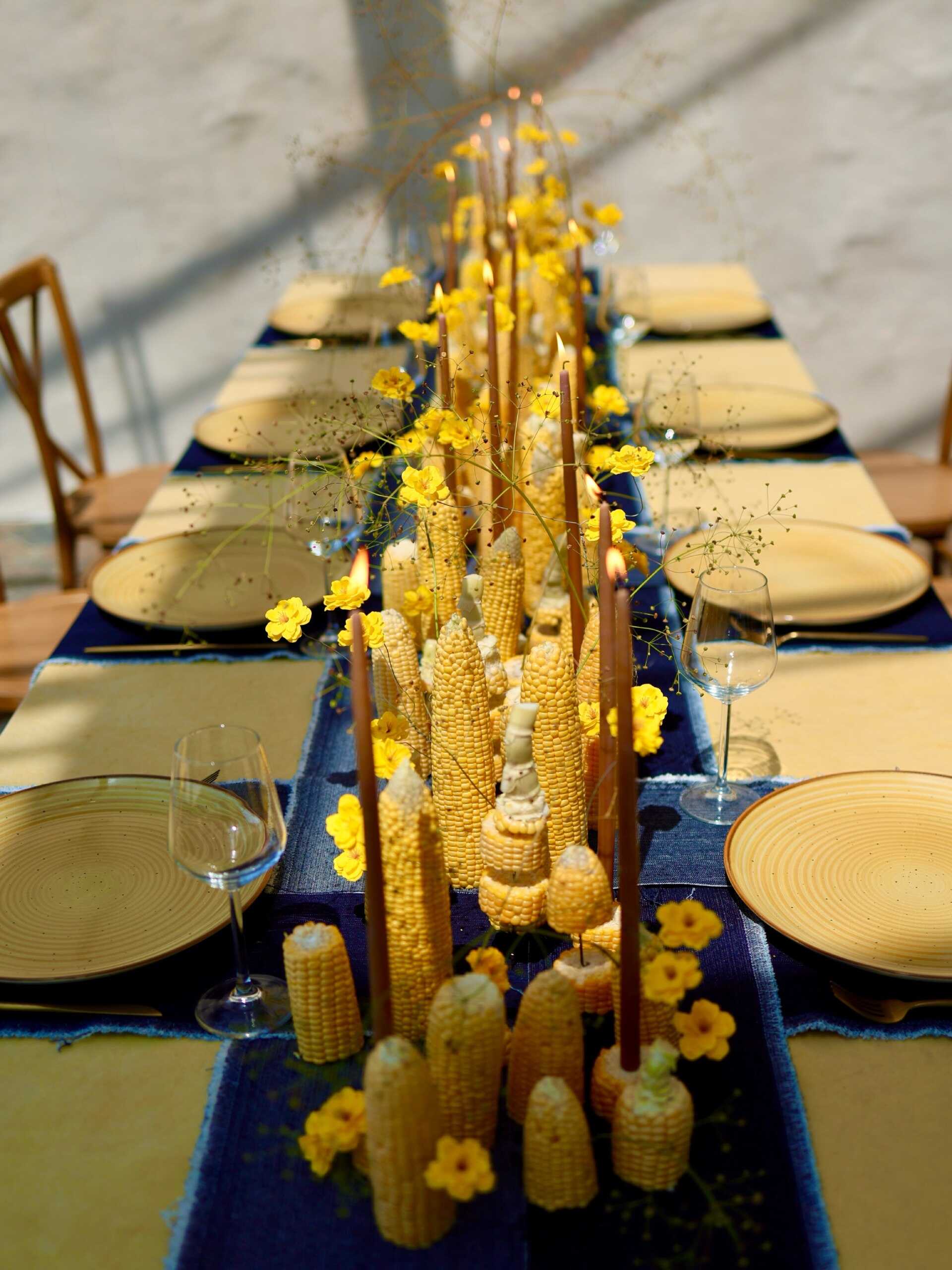
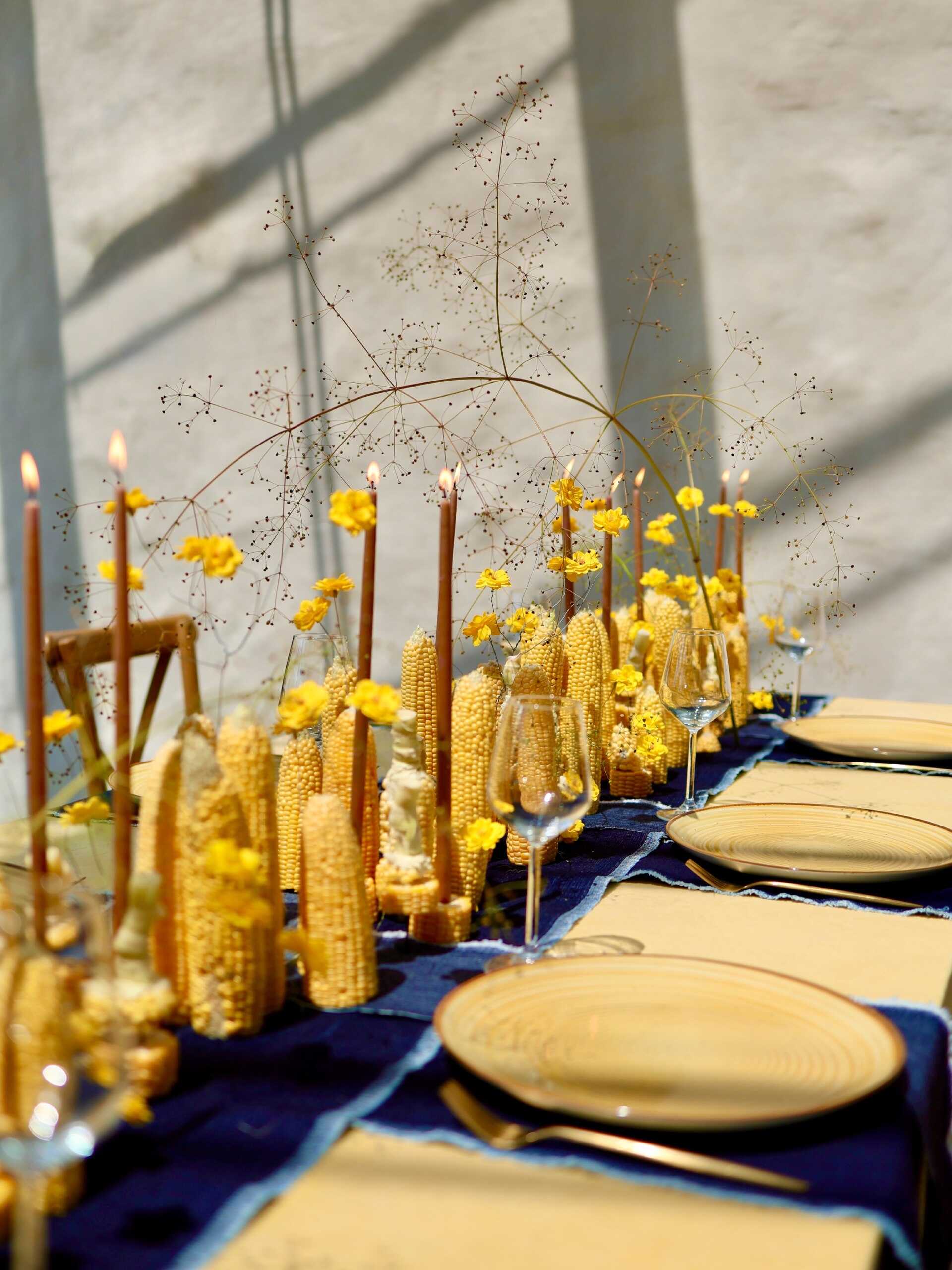
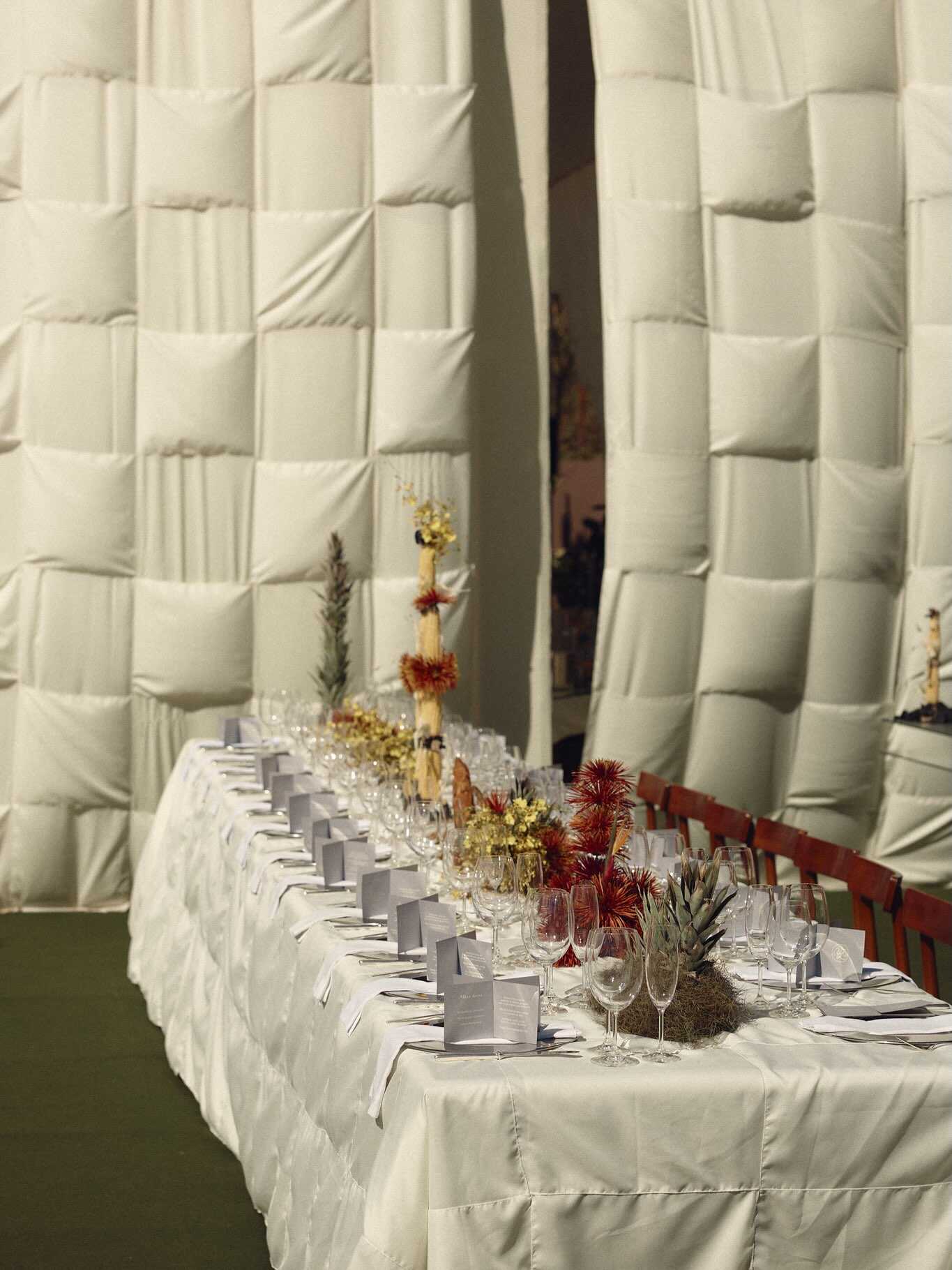
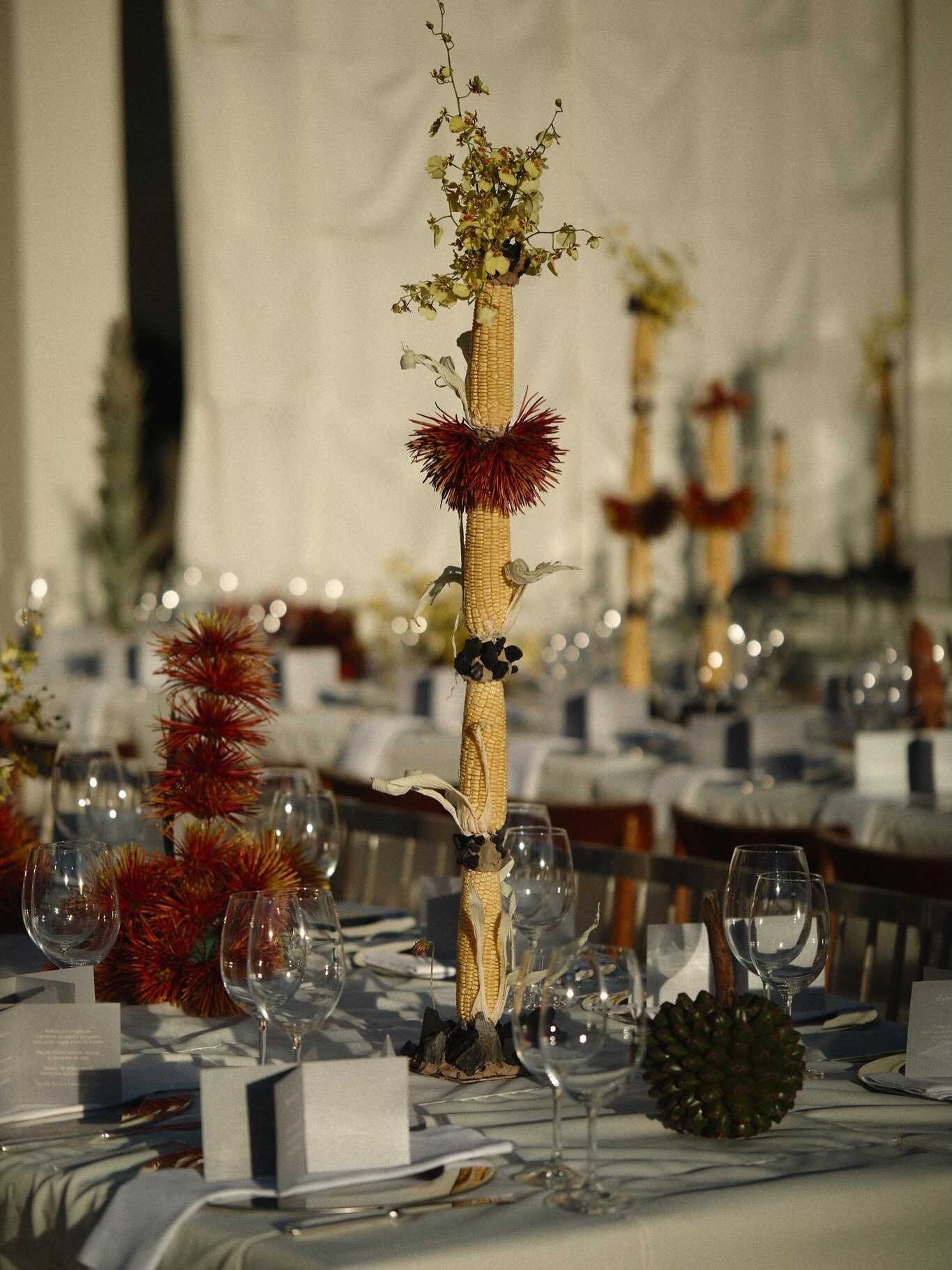
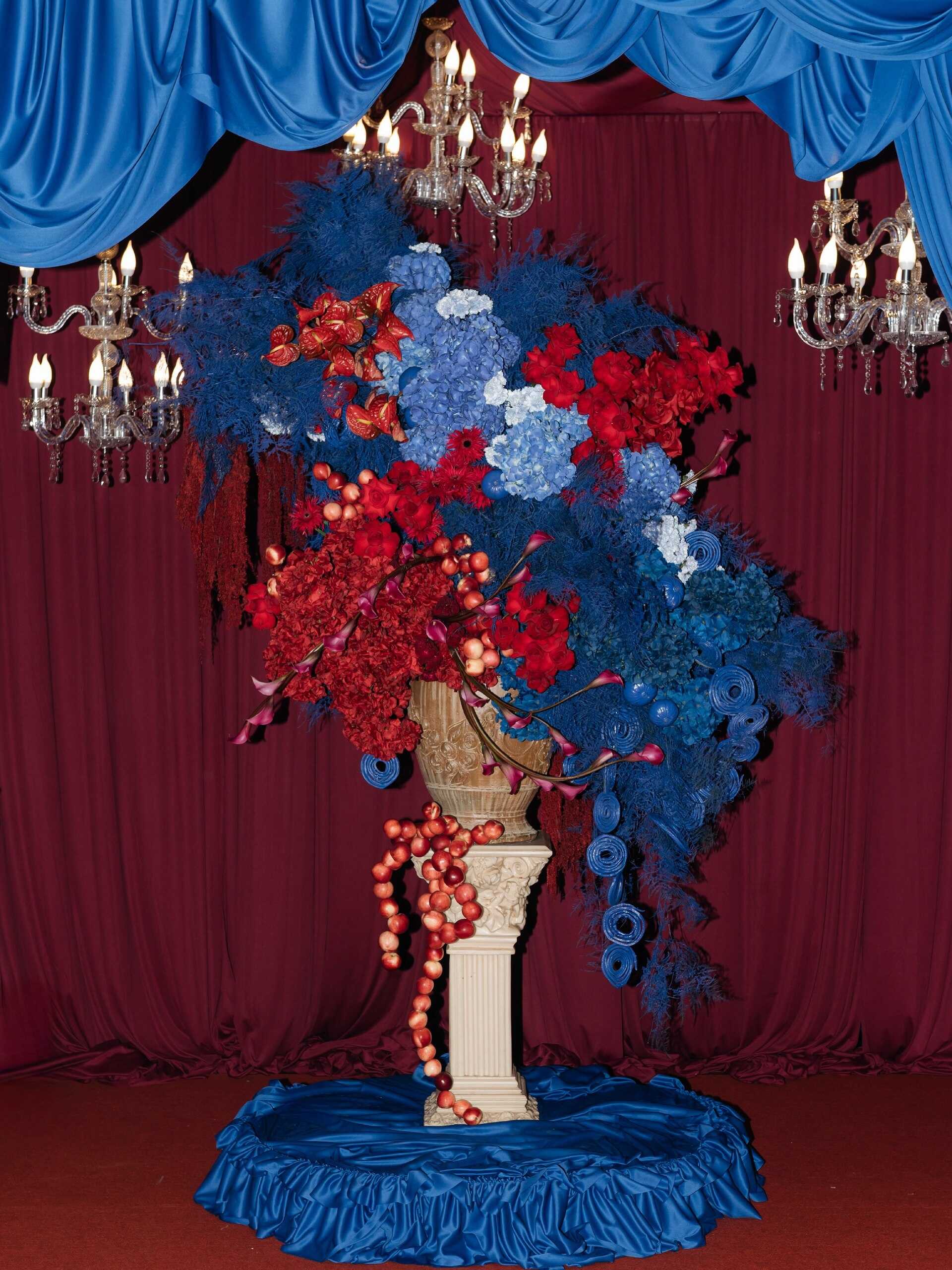
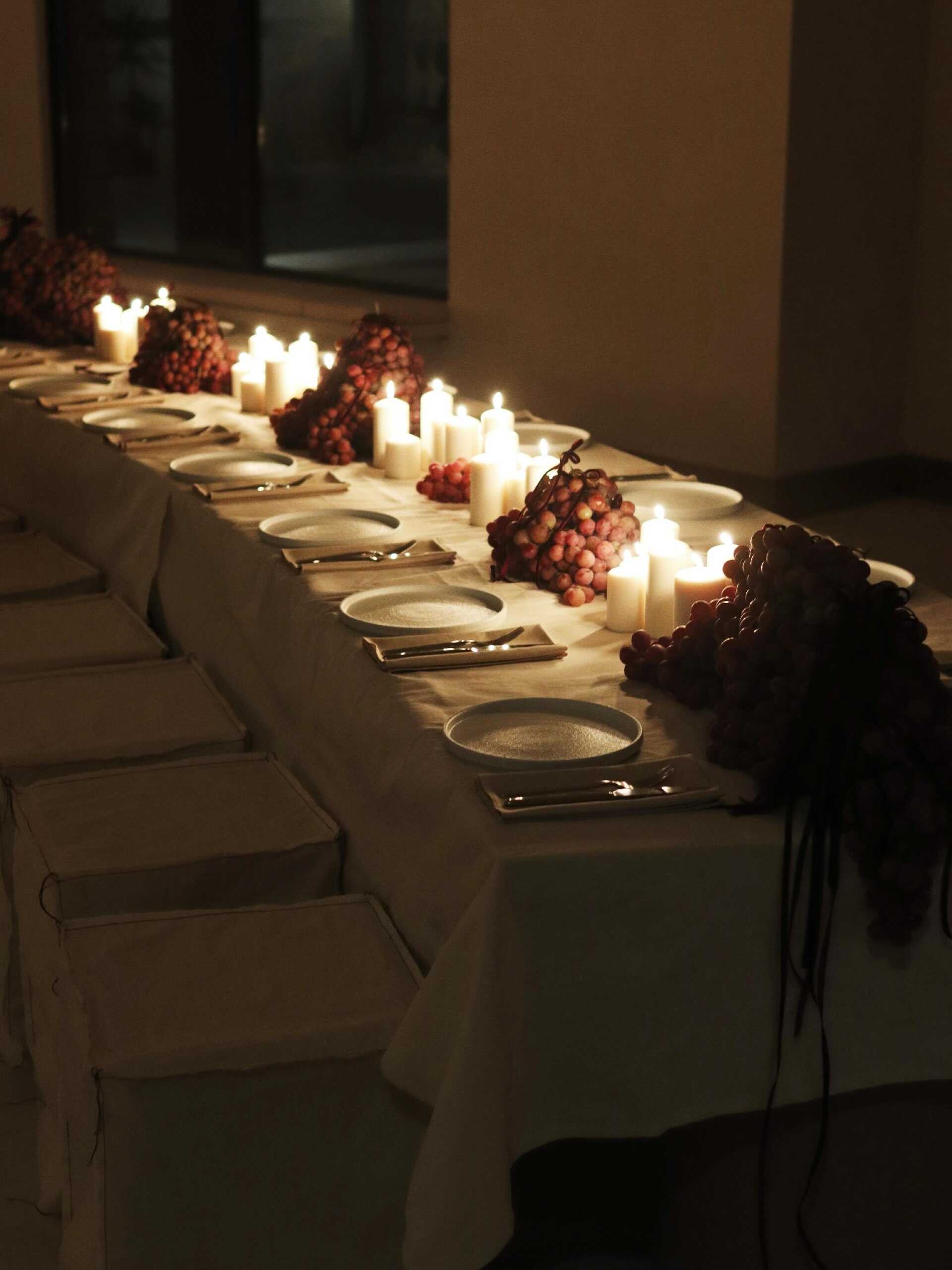
For many years there has been a tendency for dessert tables and grazing boards to reach this stage, and in 2027 the idea is taken a step further by making the food seem less like catering and more like a real feature - with the cake structures being extremely tall and built with clear architectural intent, the fruit piled in the same disciplined manner as in a still-life painting, and the charcuterie arranged in deliberate colour gradients rather than being scattered across the board.
It's not like catering providing a beautifully arranged dish; instead, the produce and fruit are being used merely as raw decorative items, just as the event design team would style flowers or fabric. The most common instructions include:
- Grape clusters as architecture - full arches, cascades, or draped installations built almost entirely from grapes, standing in for florals rather than sitting on a dessert table
- Green apples in bulk - piled into sculptural, gravity-defying centerpieces, or stacked densely enough to cover an entire escort card display
- Onions, garlic, and dried botanicals - used for their texture and muted color rather than as anything meant to be eaten, often mixed directly into a floral installation
- Whole fruit as tablescape - citrus, pomegranates, or stone fruit scattered along a runner or piled at the base of an arrangement, doing the job greenery usually does
It doesn't come across as a gimmick when it's handled with real restraint, and that is the key distinction between well-executed produce displayed as decoration and a table that just looks like the fruit bowl someone forgot to take away. A single, solid and carefully planned arrangement - such as one arch filled with grapes and one cube made completely out of apples - makes a stronger impression than simply spreading the fruit loosely over a number of different surfaces in the same room.
Lighting and Projection as the Décor Itself
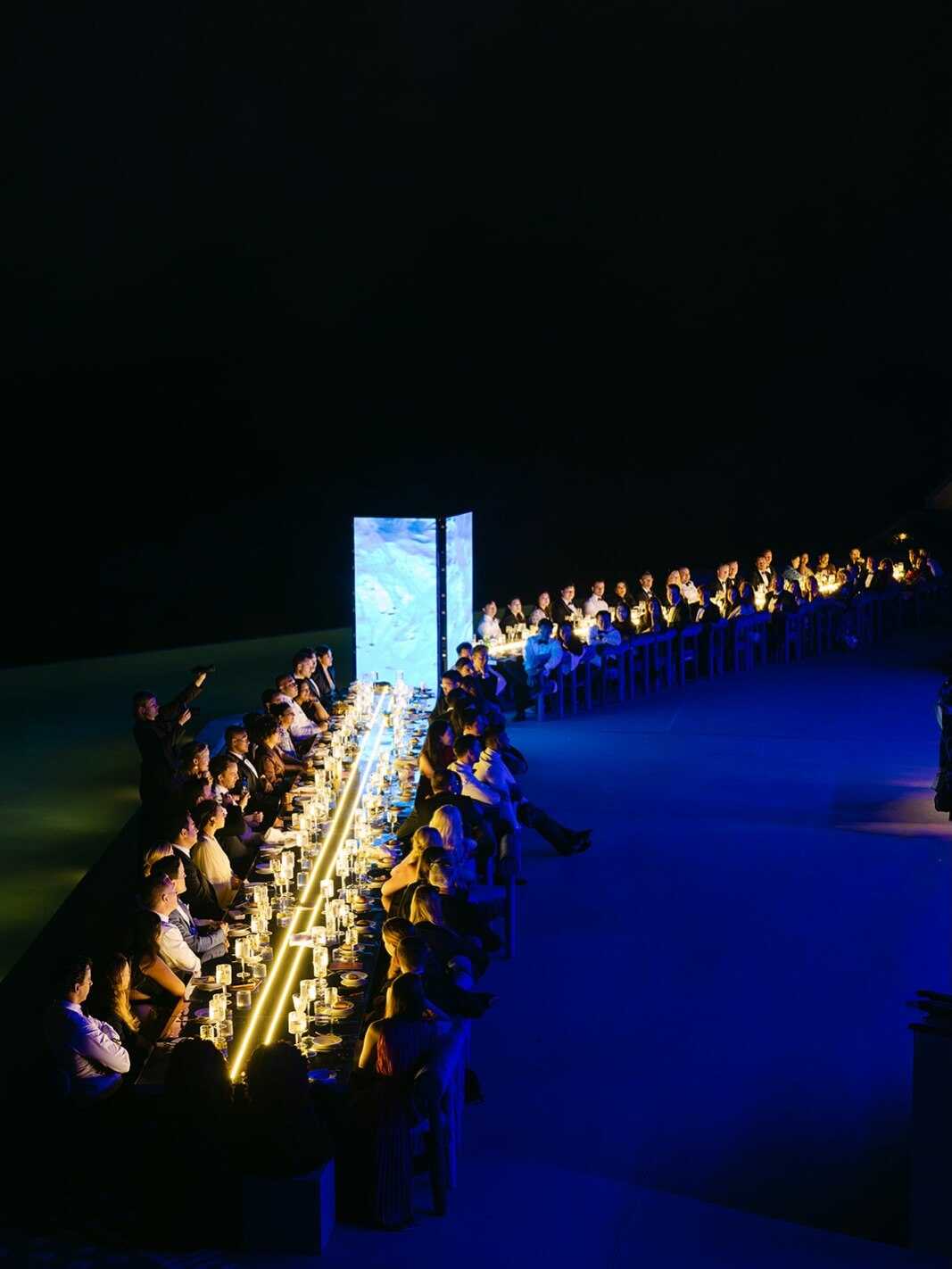
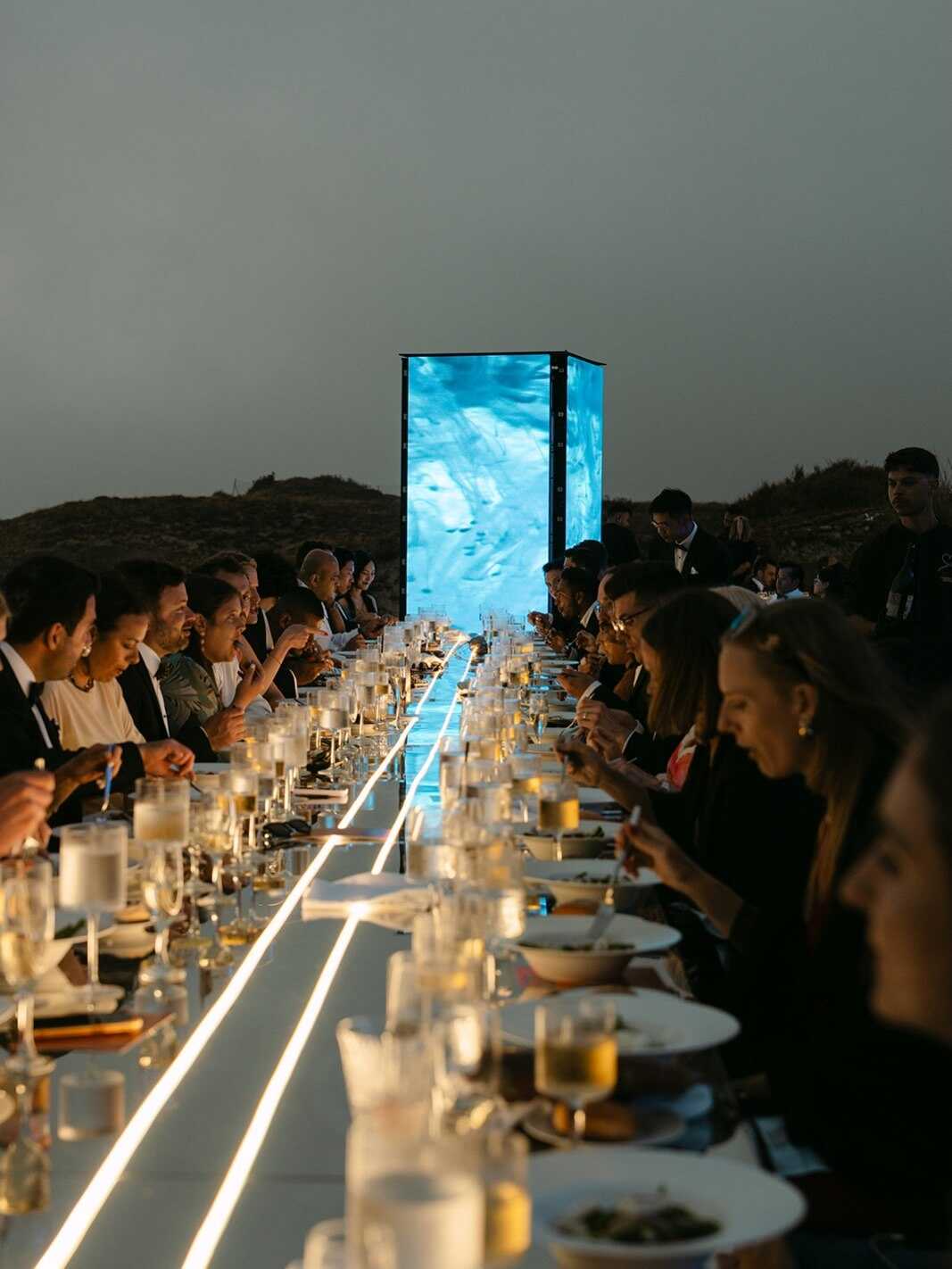
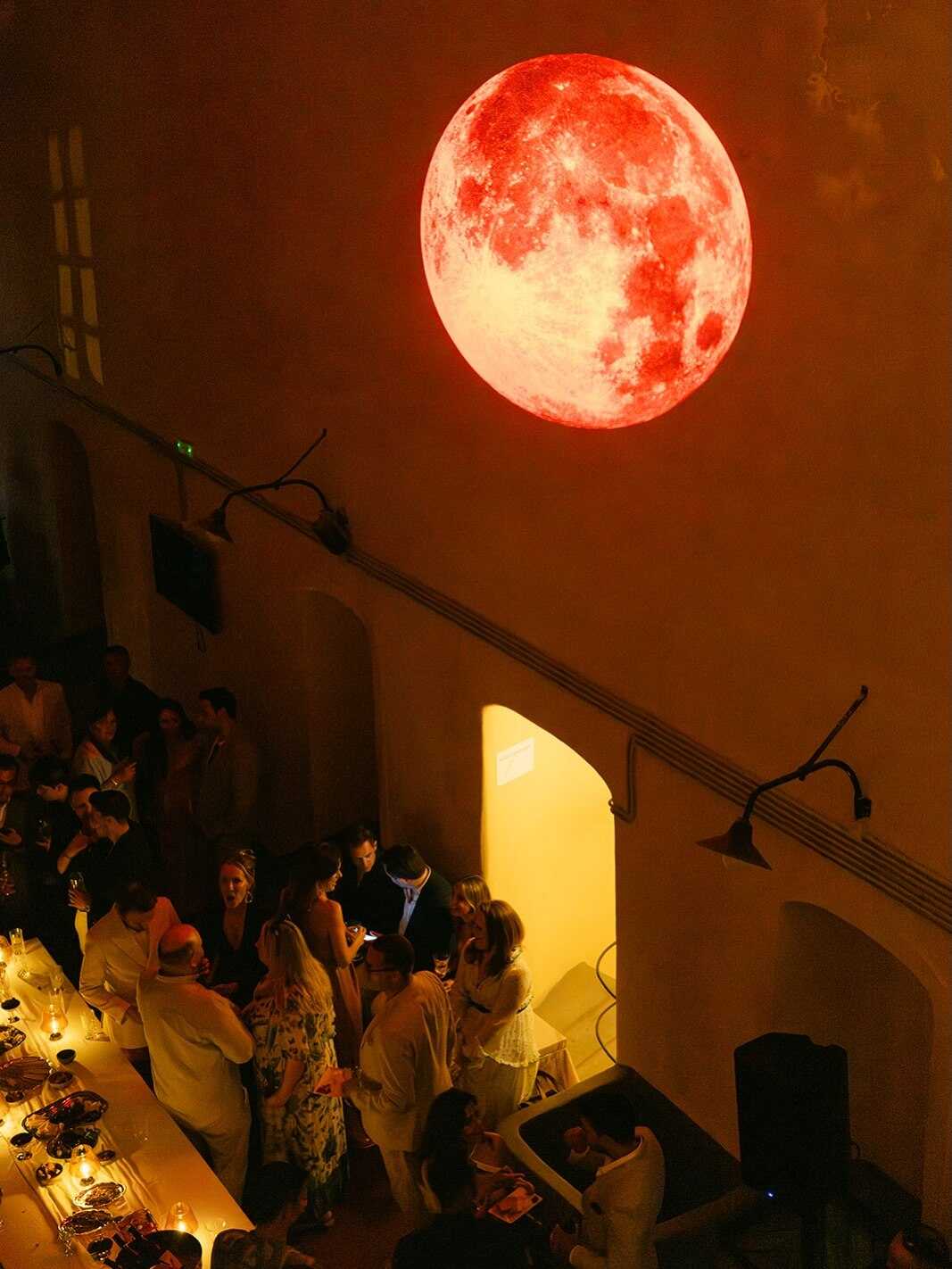
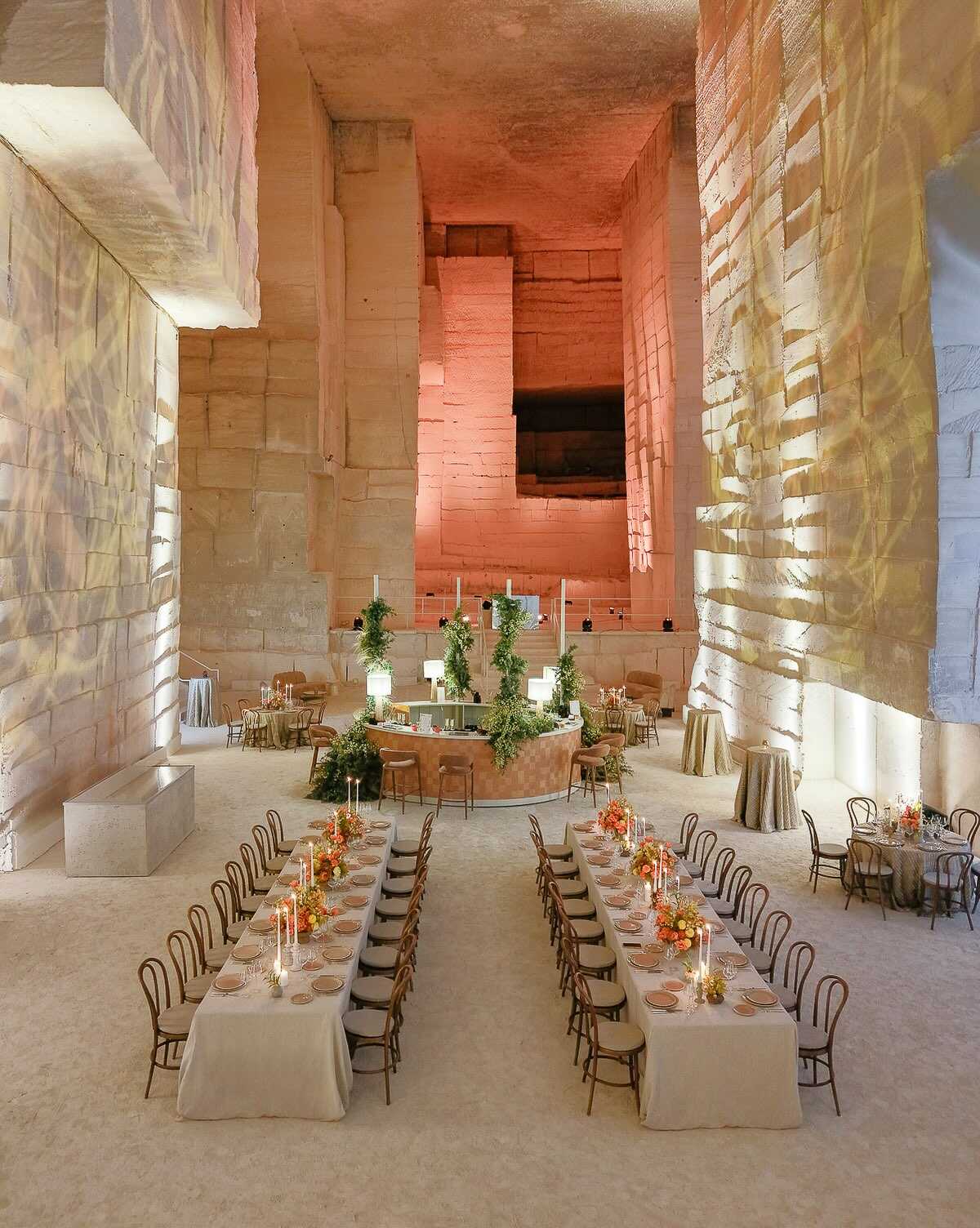
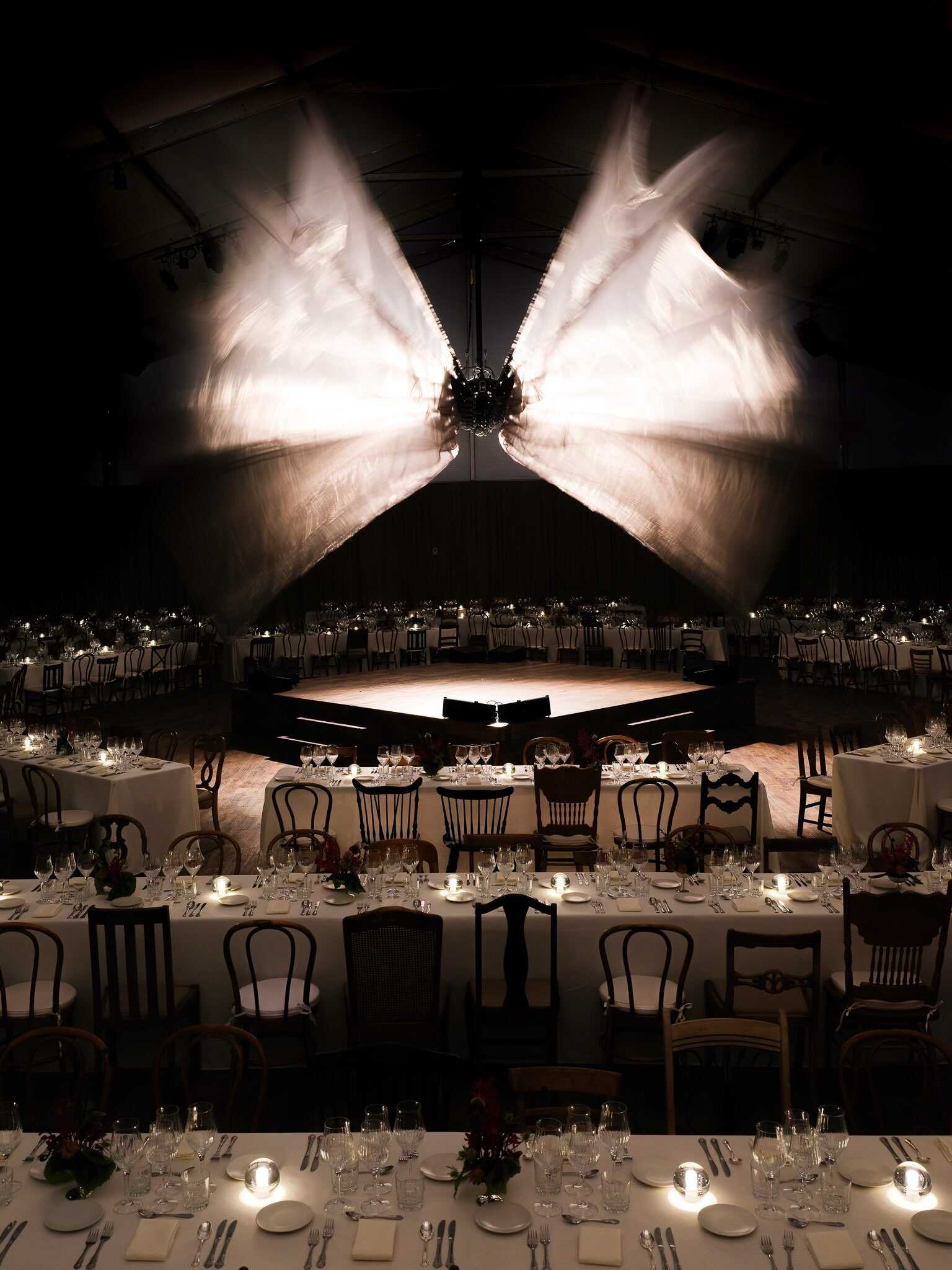
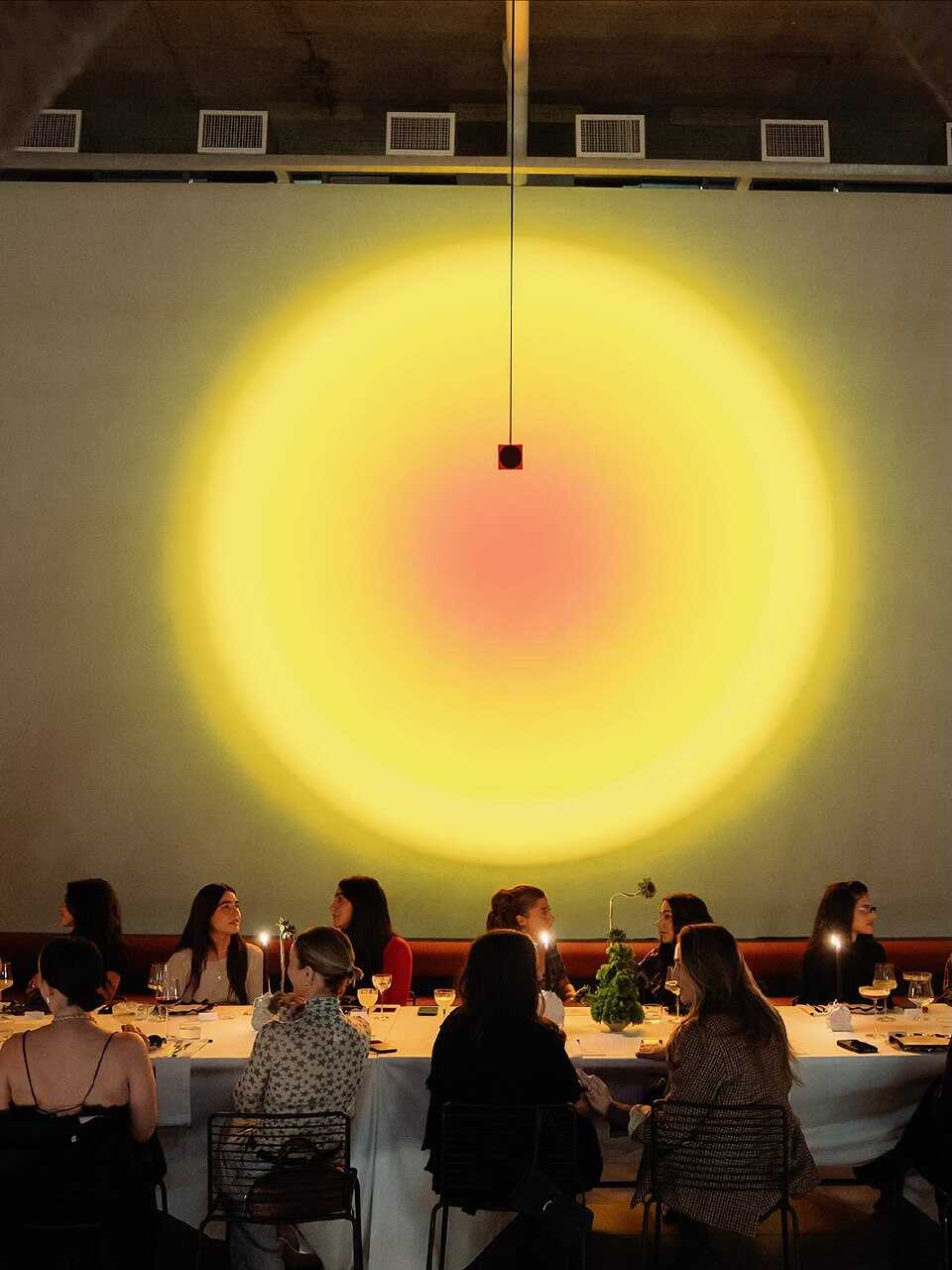
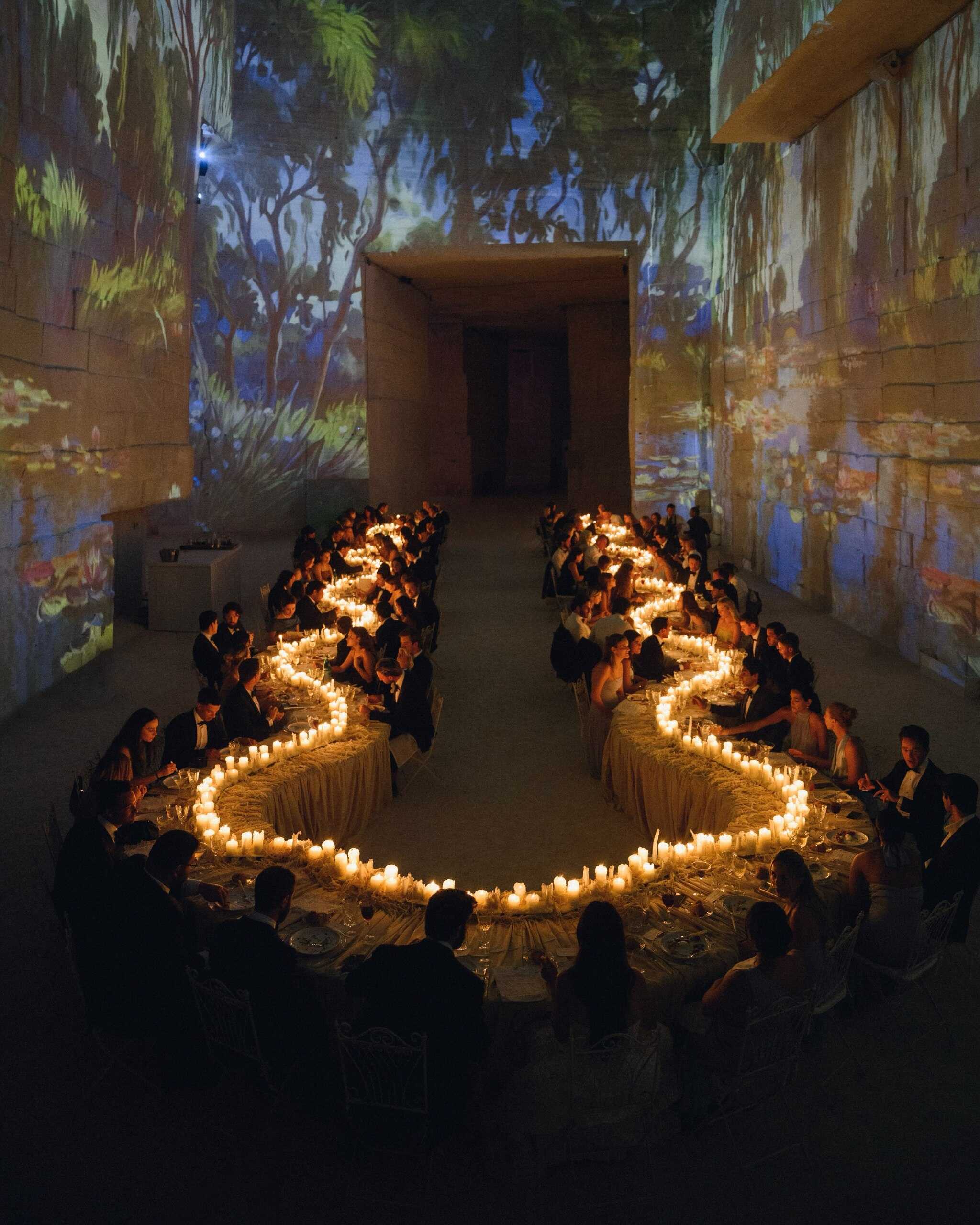
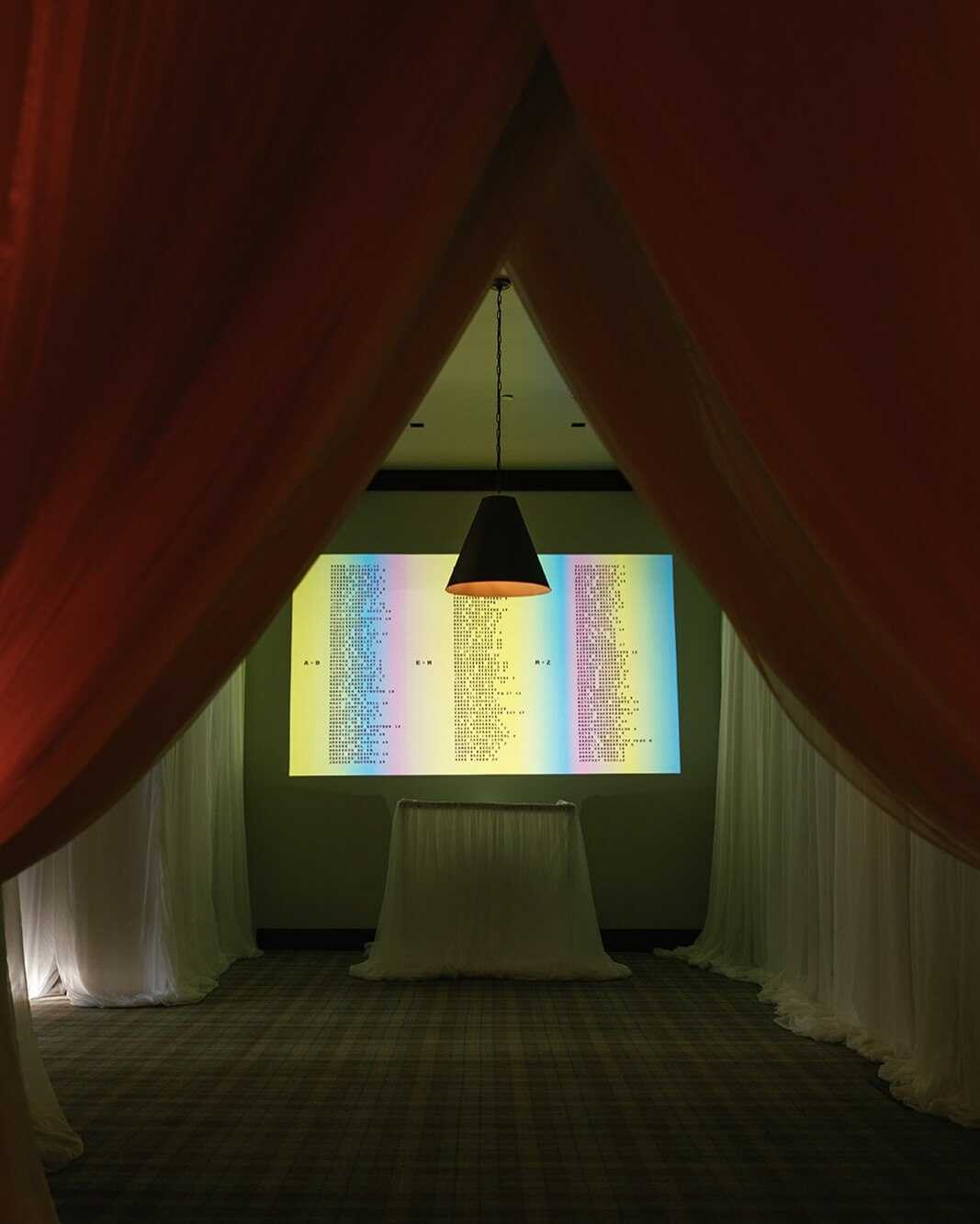
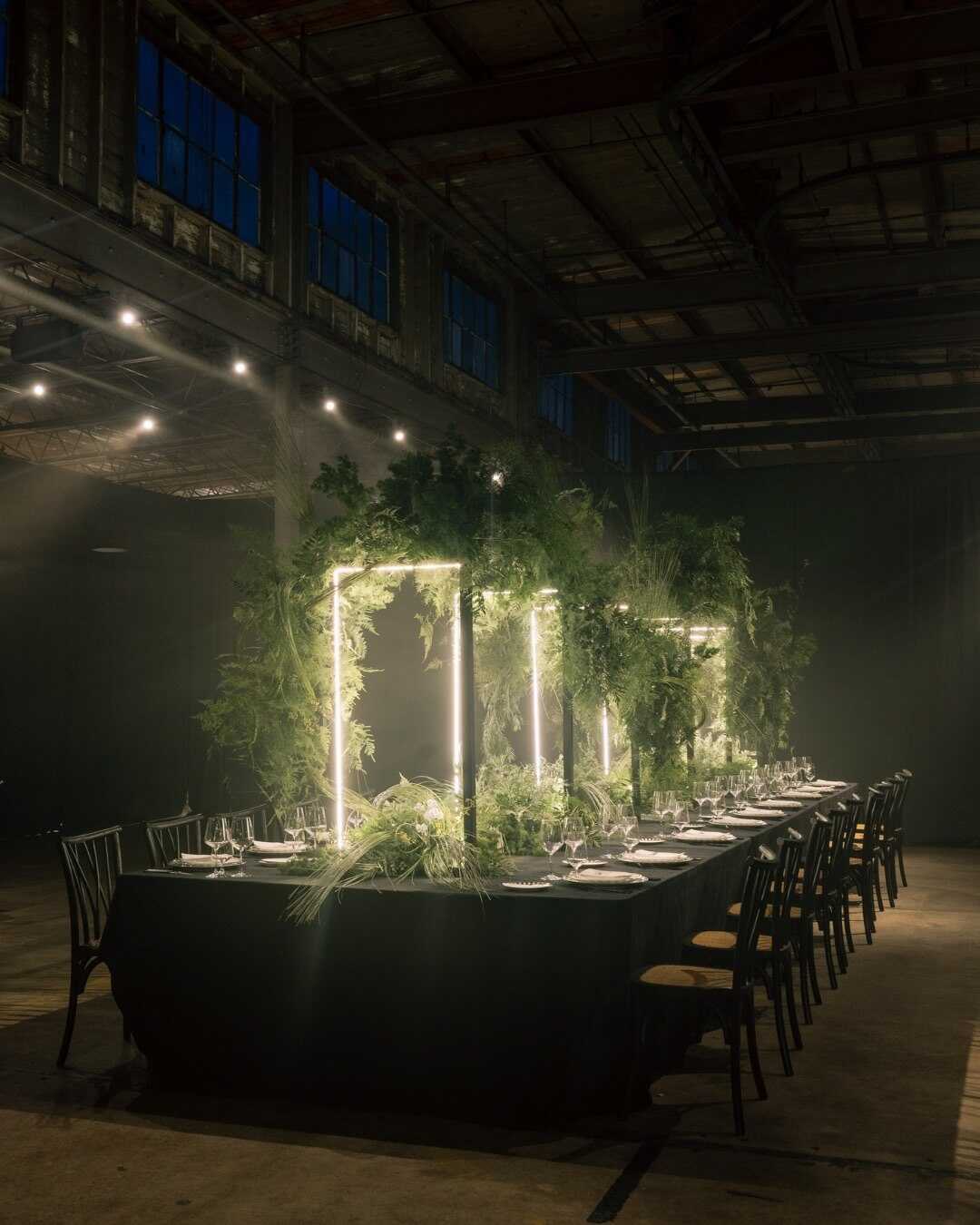
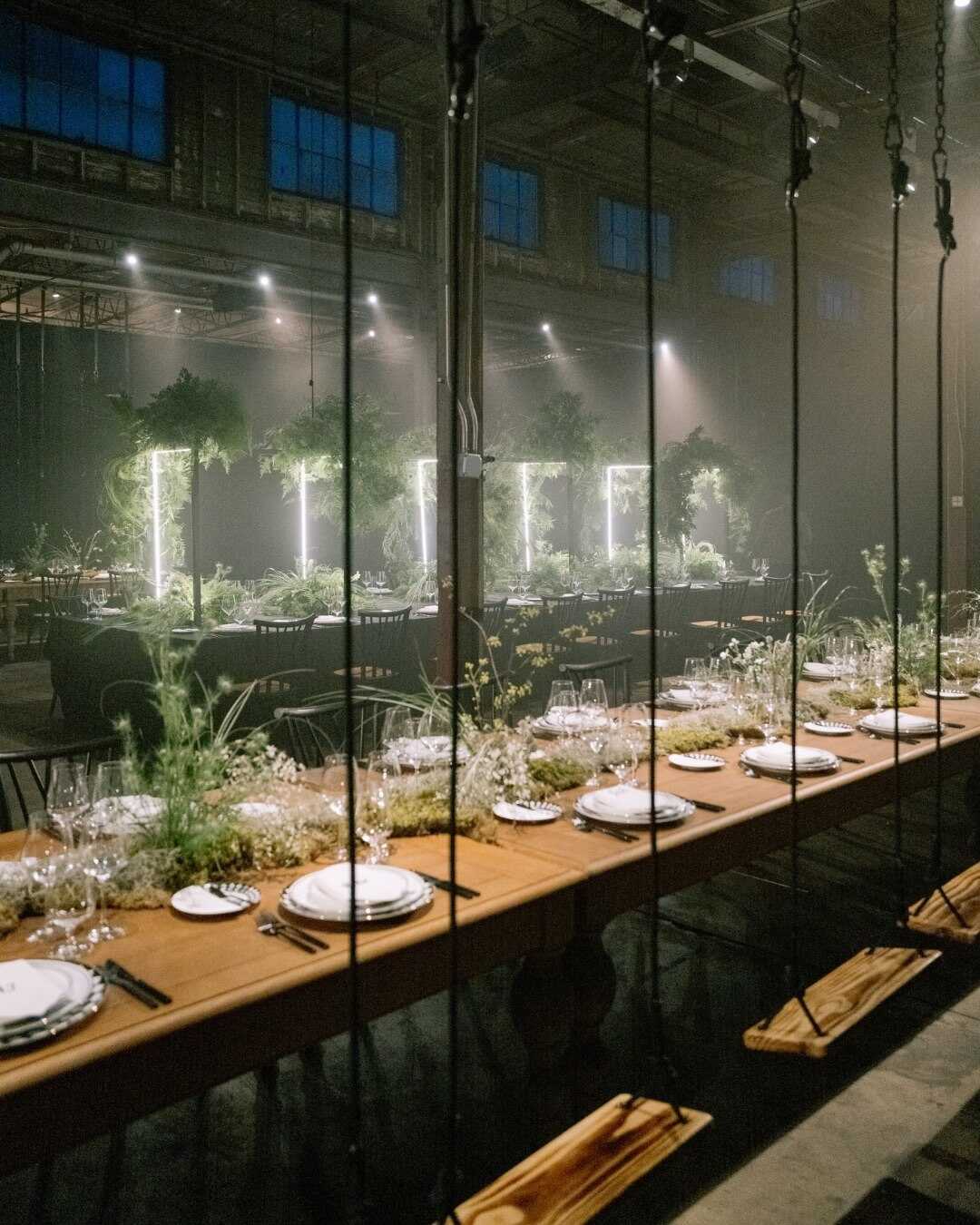
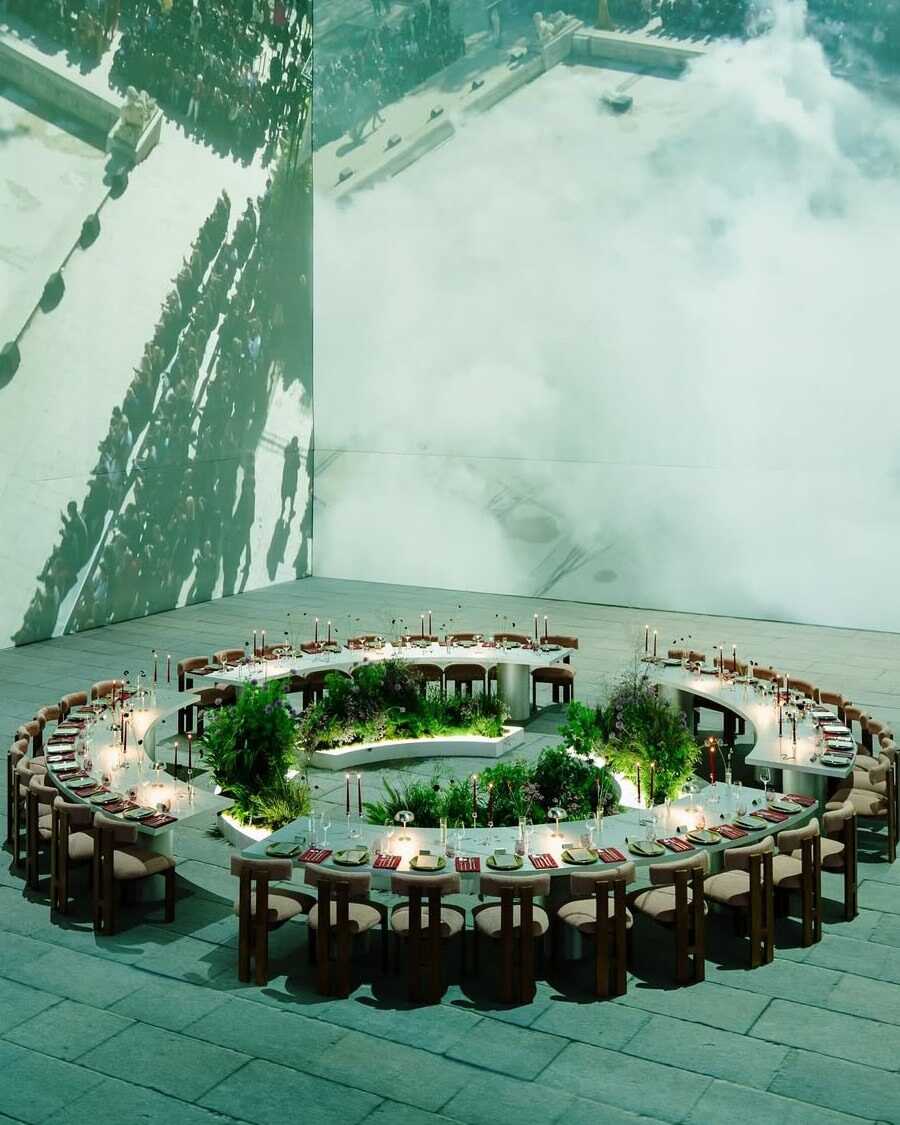
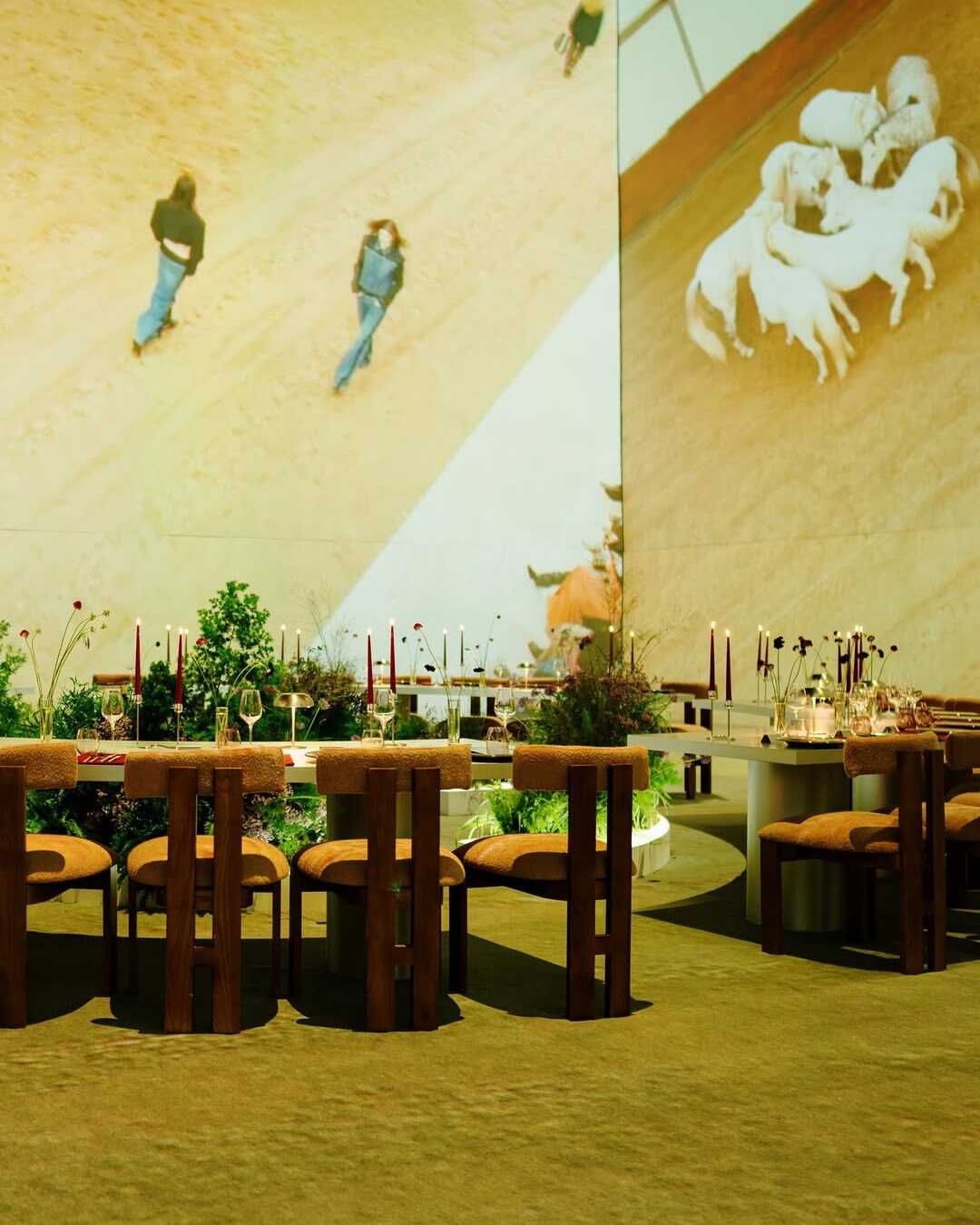
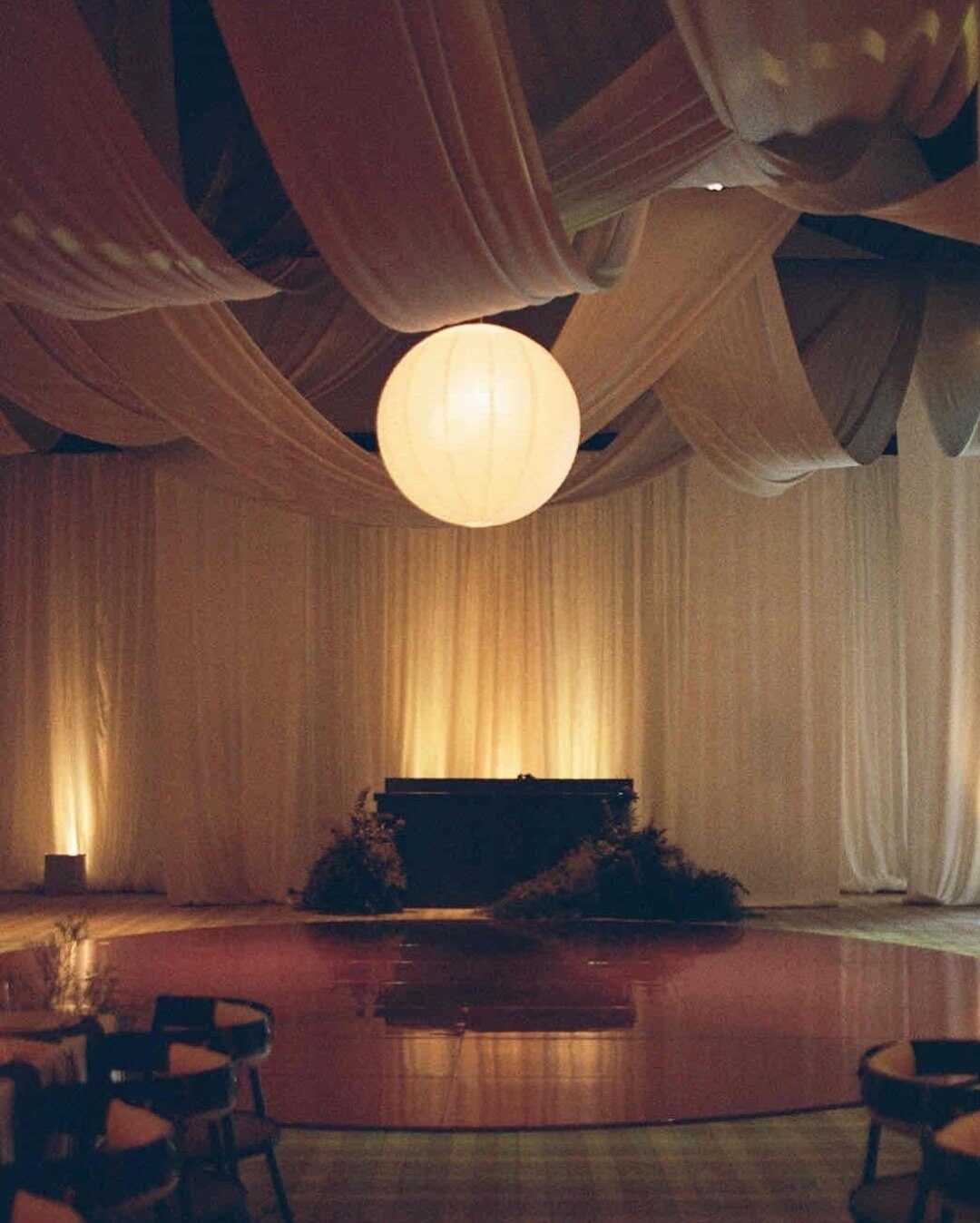
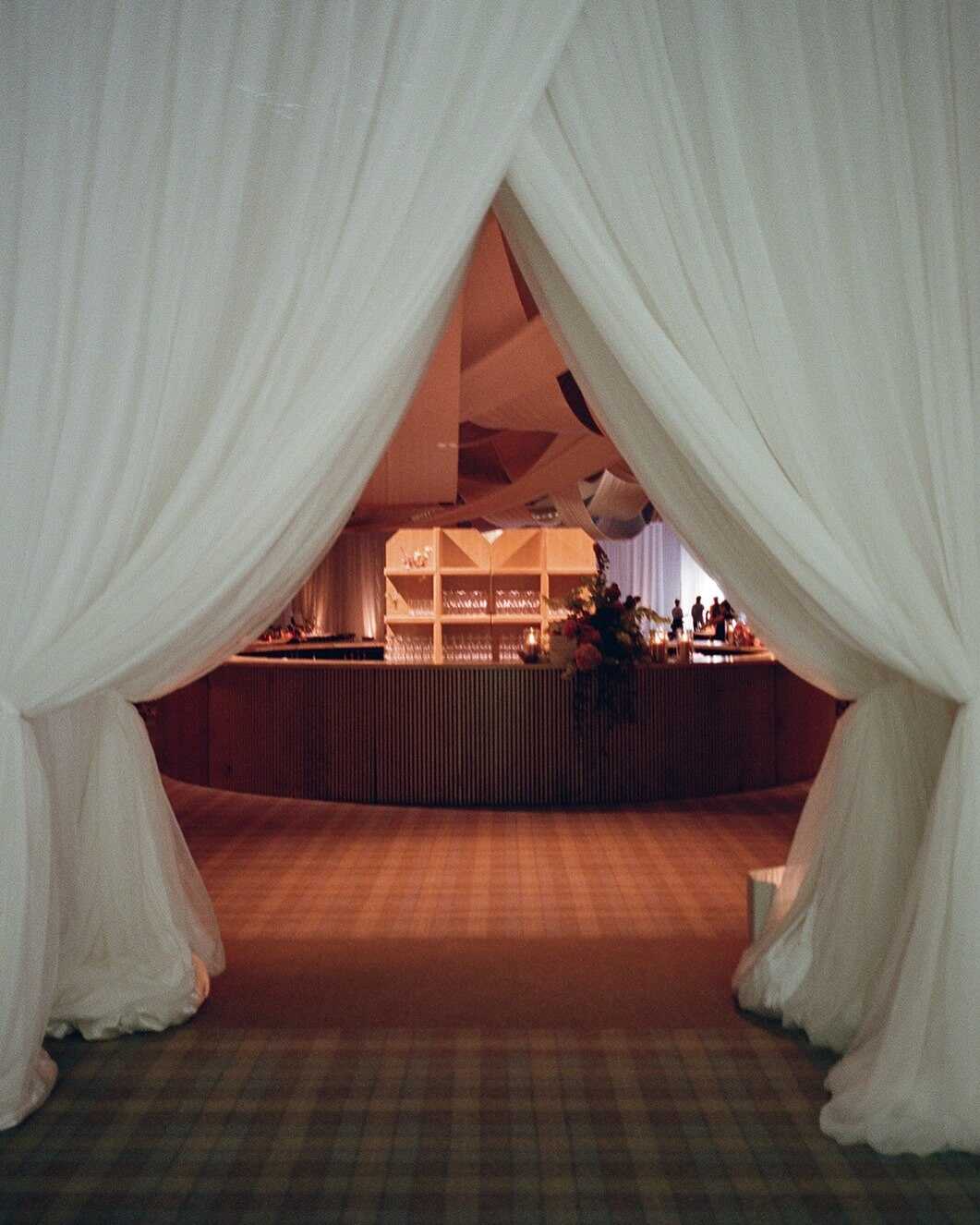
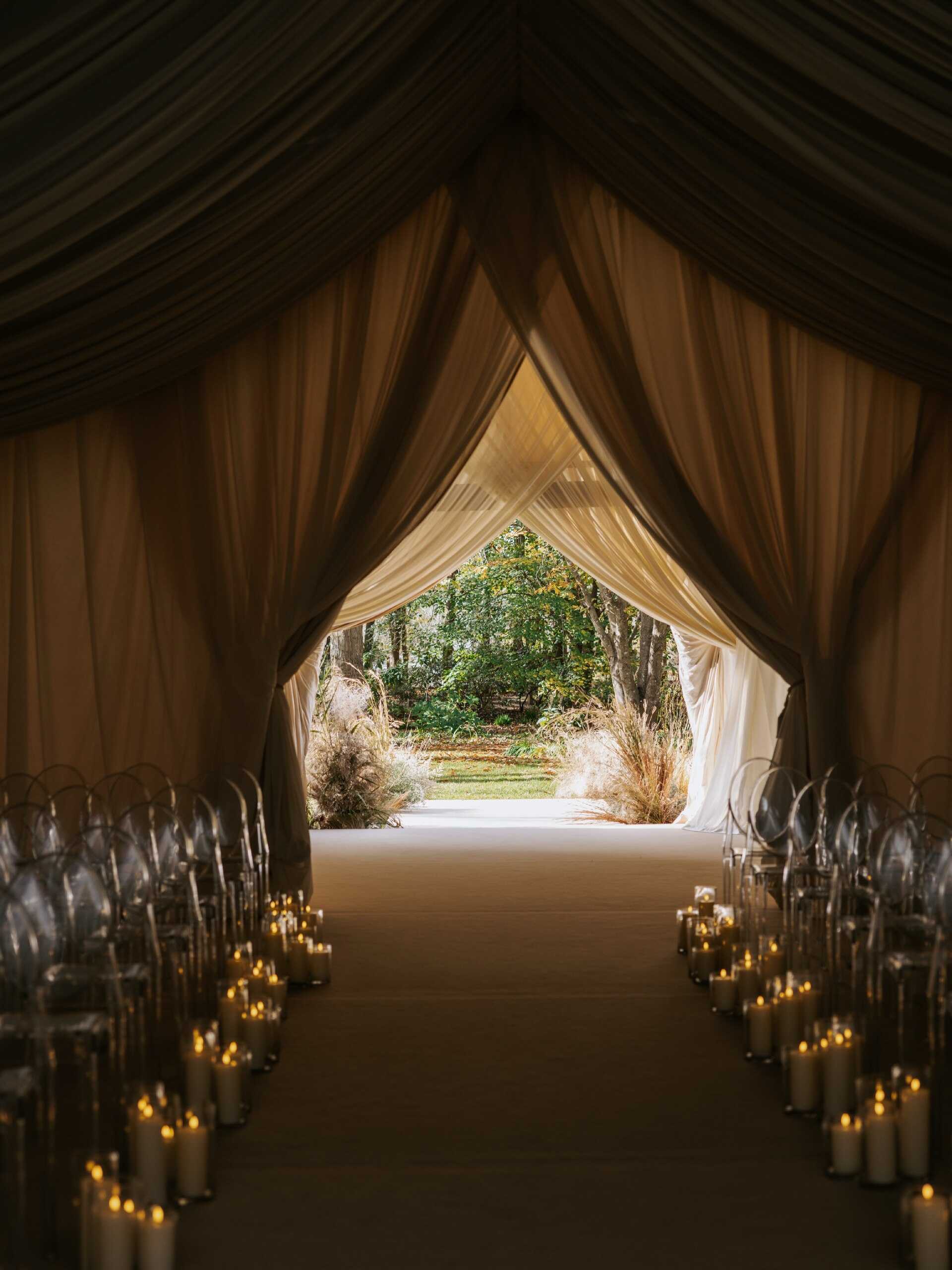
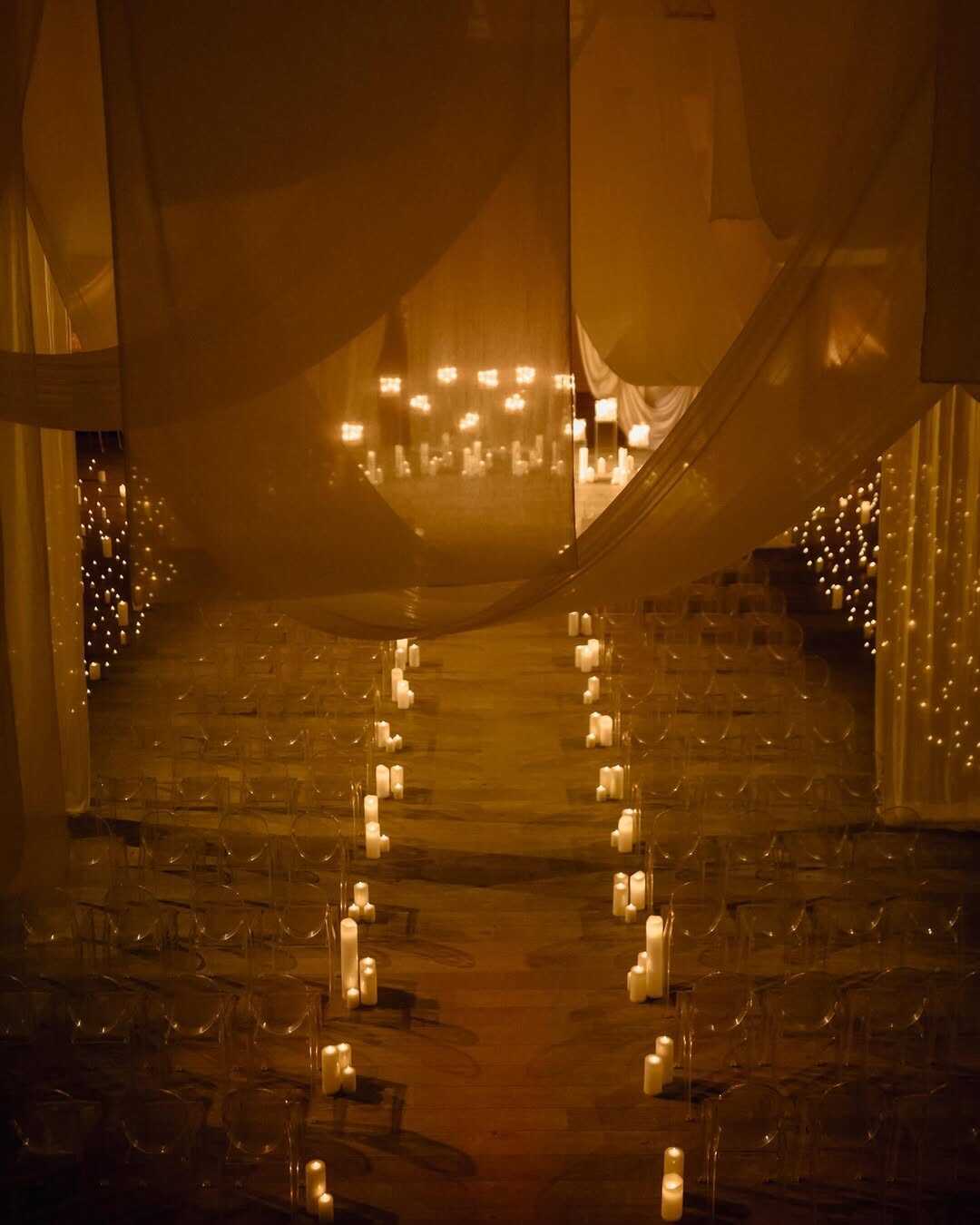
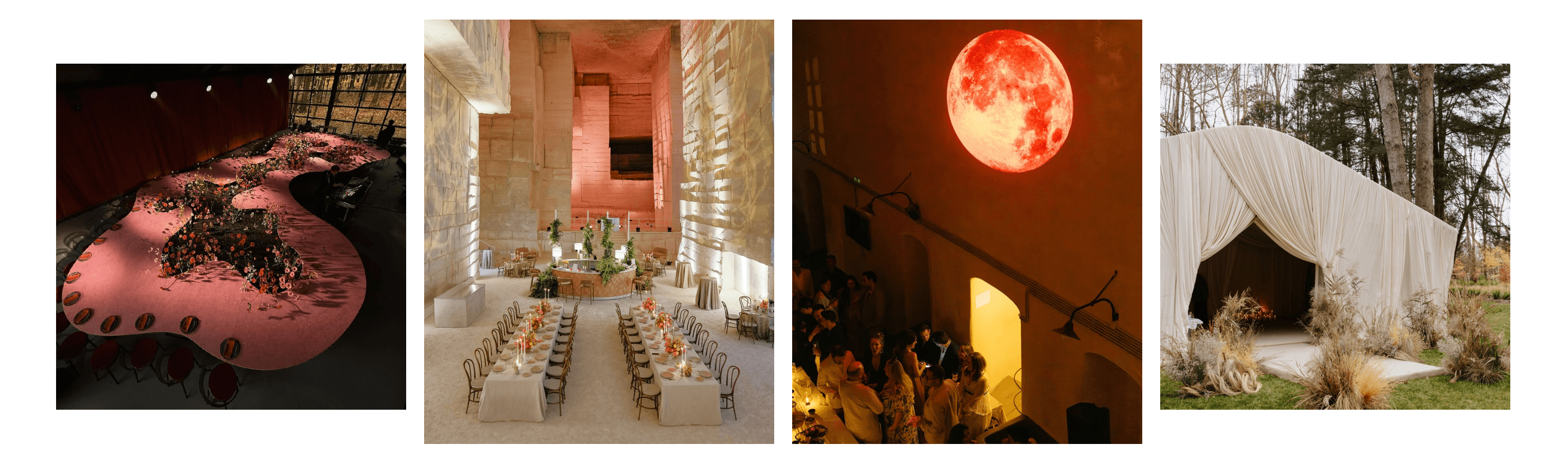
Forget about concealed uplighting hidden behind a floral arrangement - in 2027 light is going to do the exact opposite of being hidden. During a dinner there will be a blood-red moon projected across a courtyard, a single glowing disc mounted on a wall like a second sun with guests sitting under it as if the disc were the entire purpose of the room, and a whole table will be illuminated not by candles but by a single continuous line of light stretching the entire length of it, turning a plain dinner into something that appears to have been staged for a runway. That is light being used as the real decoration rather than just the thing that reveals the decoration.
This takes it even further and is the aspect that produces a genuinely strange effect in the most interesting way; walls vanish into moving video, such as Arctic ice, drifting clouds, and animated figures wandering across stone, so that the guests are no longer merely sitting in a room but are instead sitting within a scene that is slowly and continuously changing around them. A tent interior can change from forest green to golden desert and then to a rainbow-lit menu board without touching a single physical decoration.
- Projection-mapped walls and tents - full video or animated imagery replacing static backdrops entirely, changeable throughout the night
- Illuminated architectural centerpieces - a glowing disc, arch, or panel built as the room’s actual focal point, not a light source pointed at one
- Runway-style light lines - one continuous strip running the full length of a table, standing in for dozens of individual candles or fixtures
- Staged celestial effects - a projected moon, sky, or atmospheric glow used to set a dramatic tone the moment the sun goes down
All of this requires effort and is not easy to imitate. It is the most technically demanding of the latest wedding decor trends of 2027 to carry out - this calls for a production team that views light as a material to be shaped, rather than simply turning it on when the tables are laid, and for the venue to have been carefully planned in advance down to the smallest detail so that nothing fails or goes wrong when the room is filled with people and shadows.
Flower Mounds and Sculptural Installations
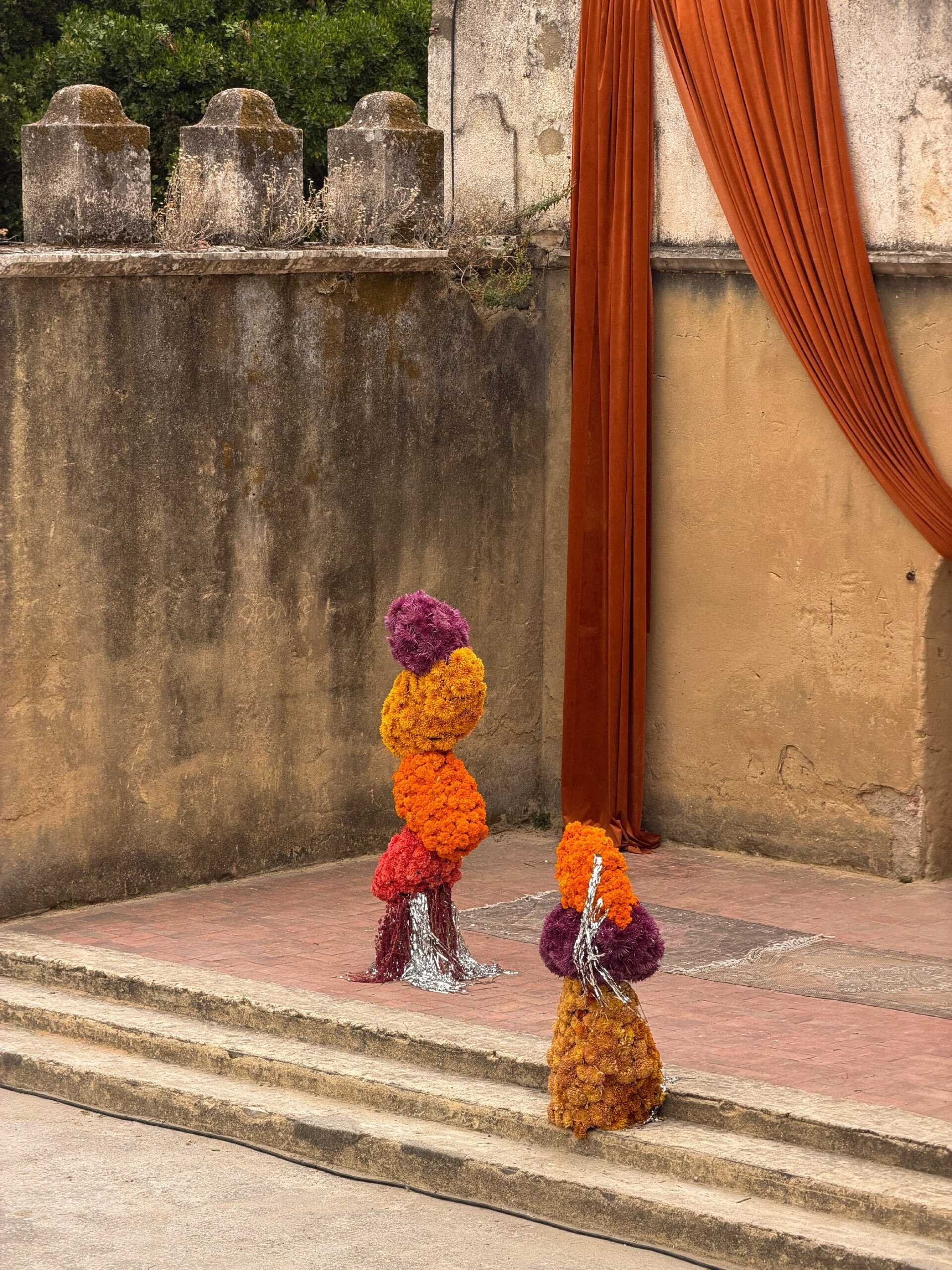
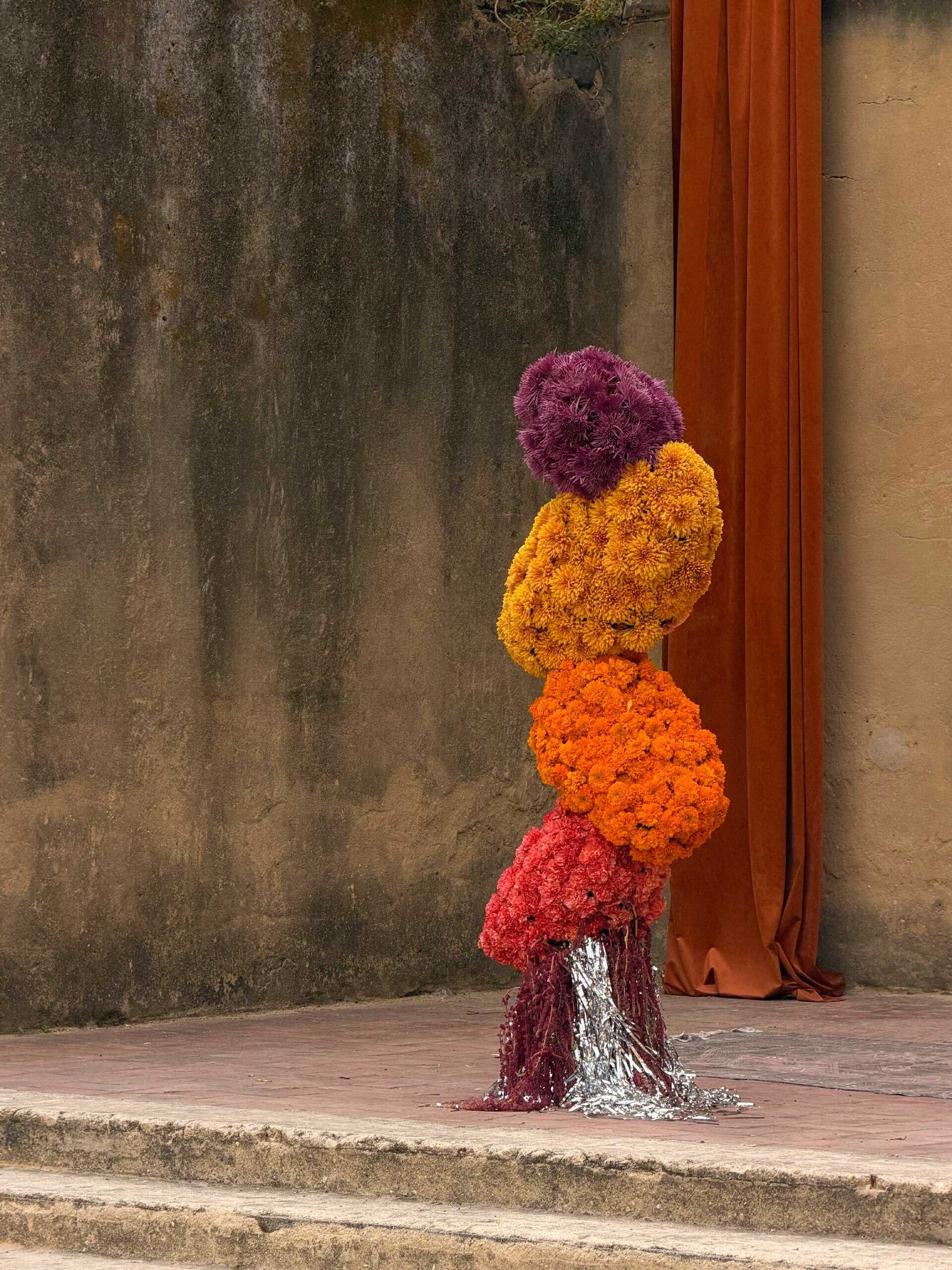
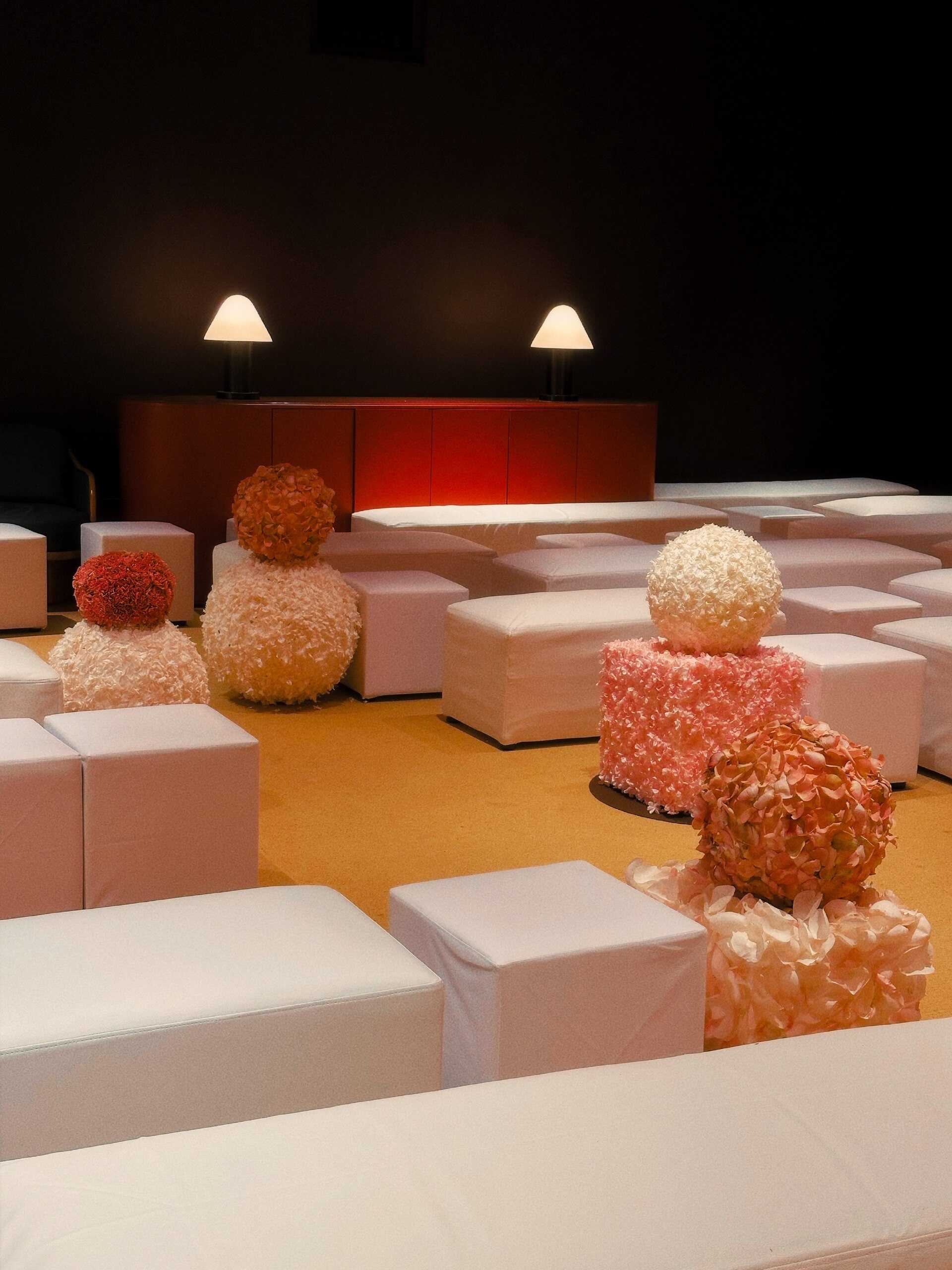
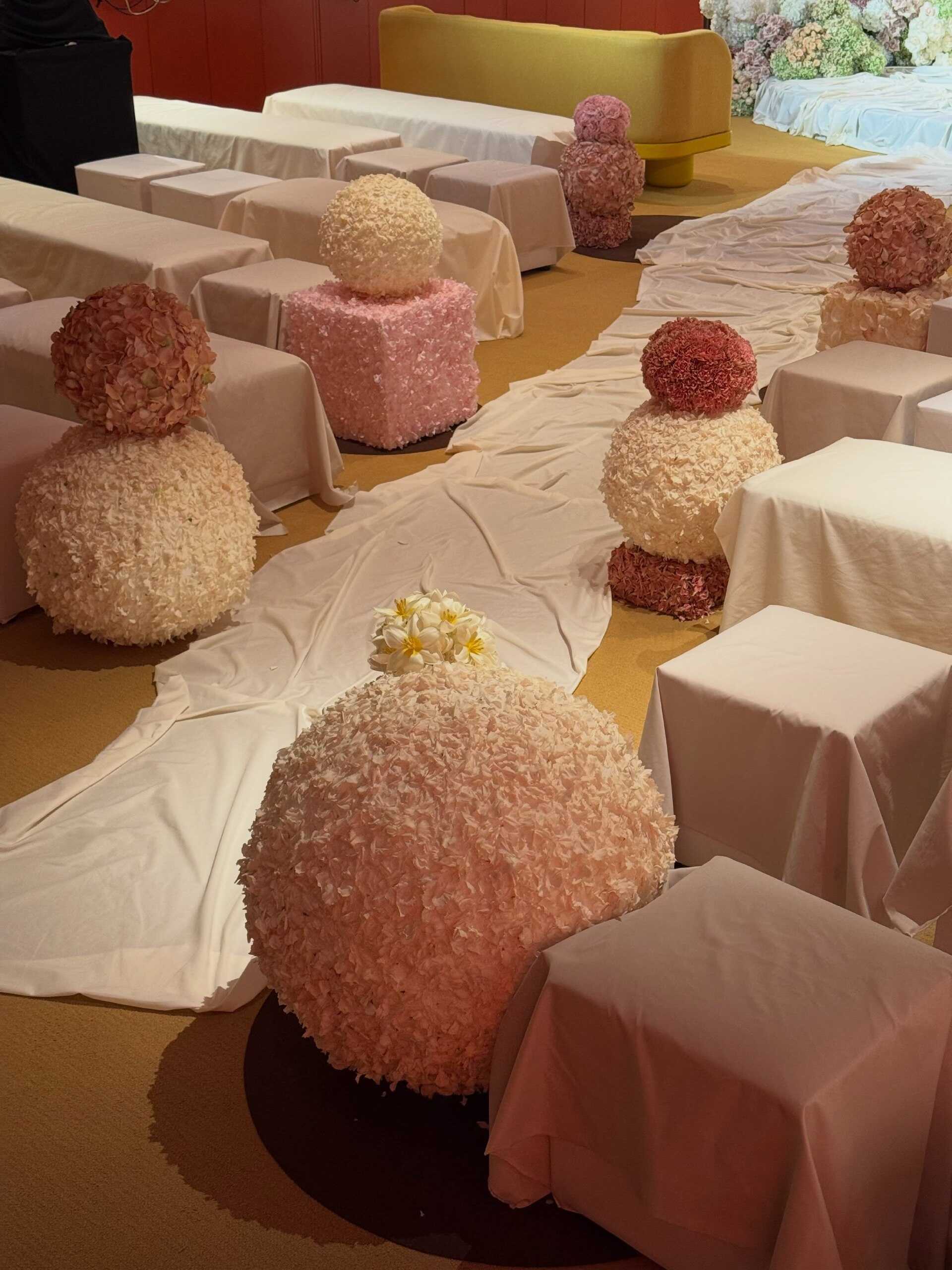
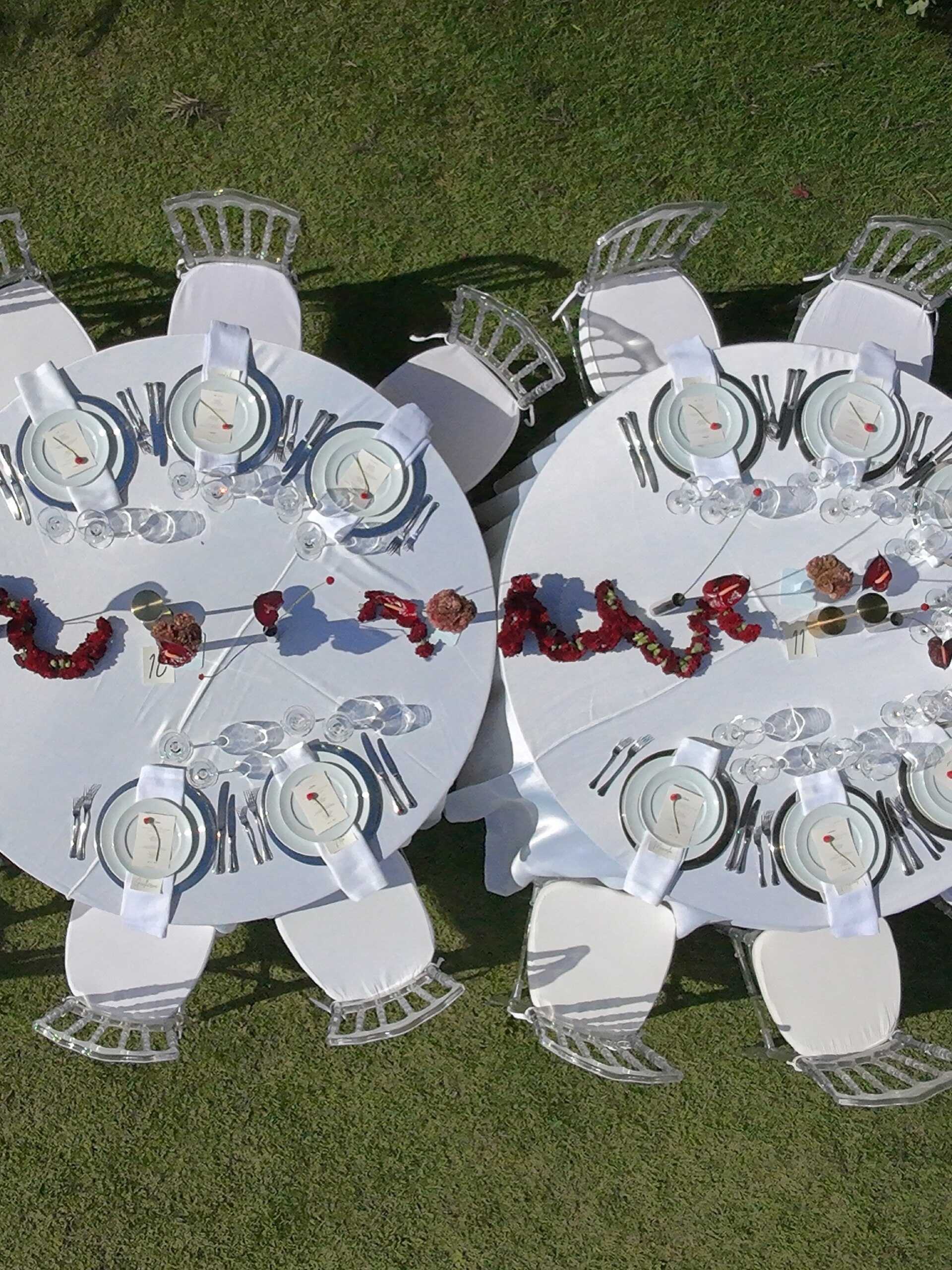
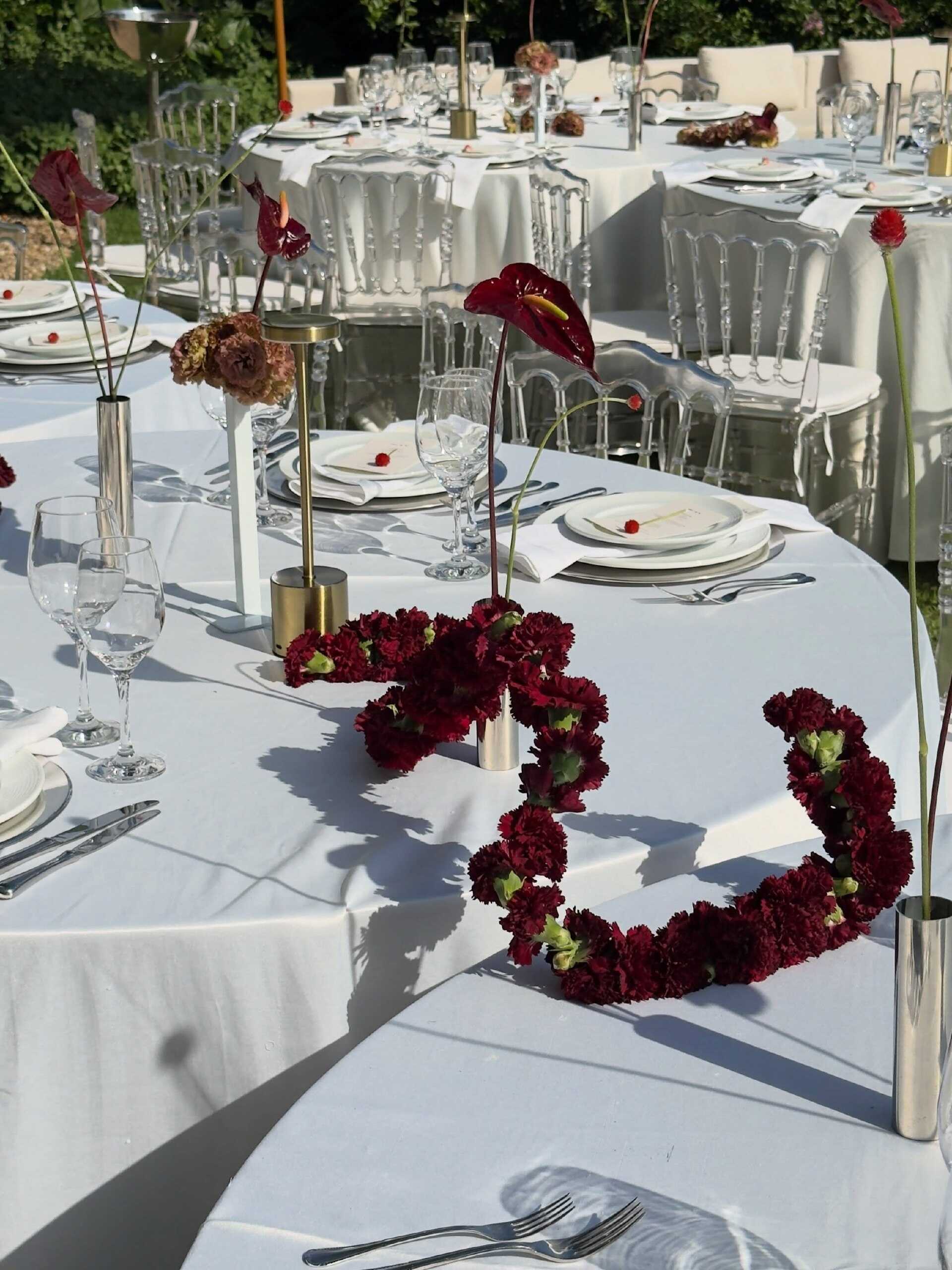
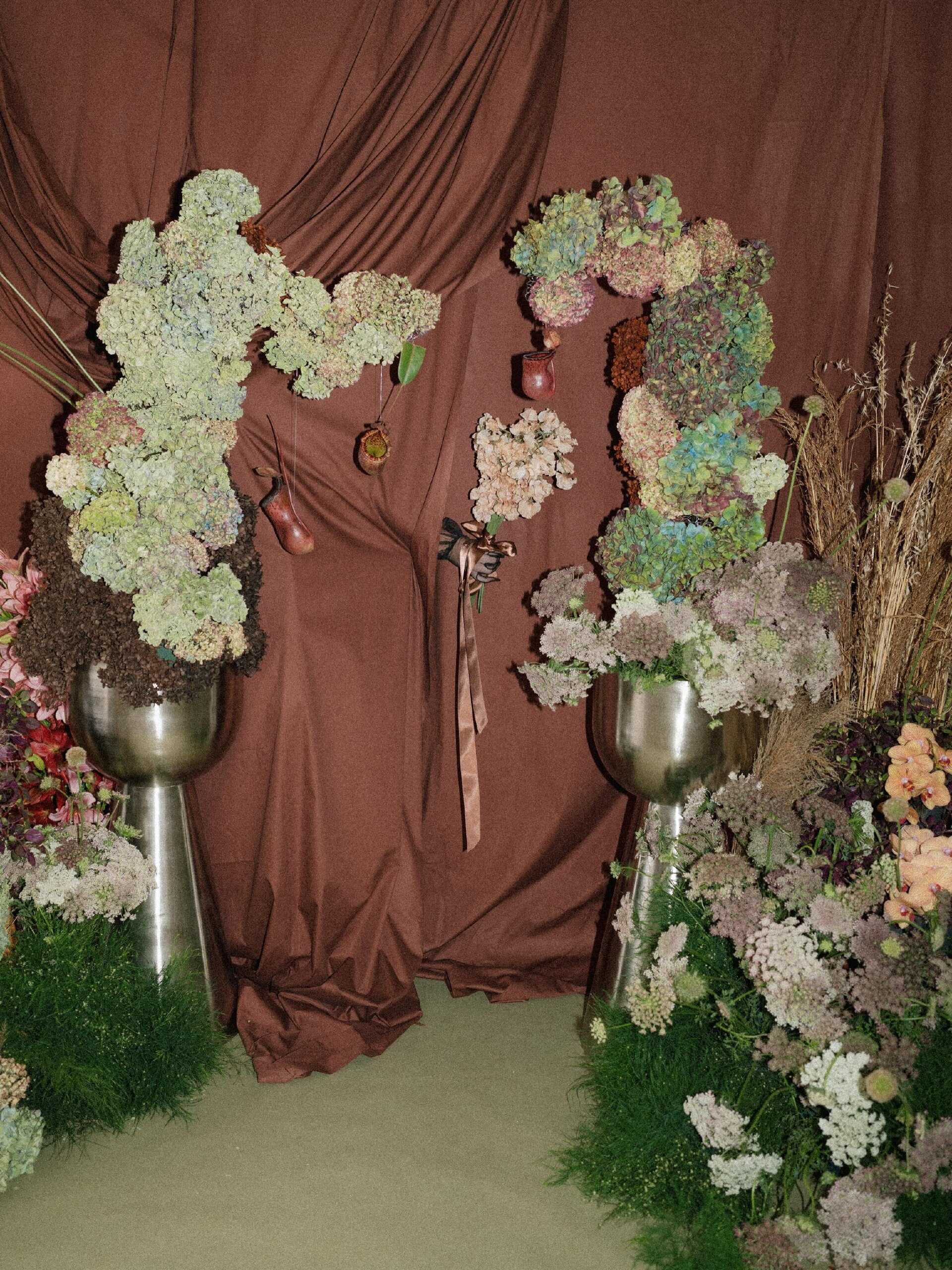
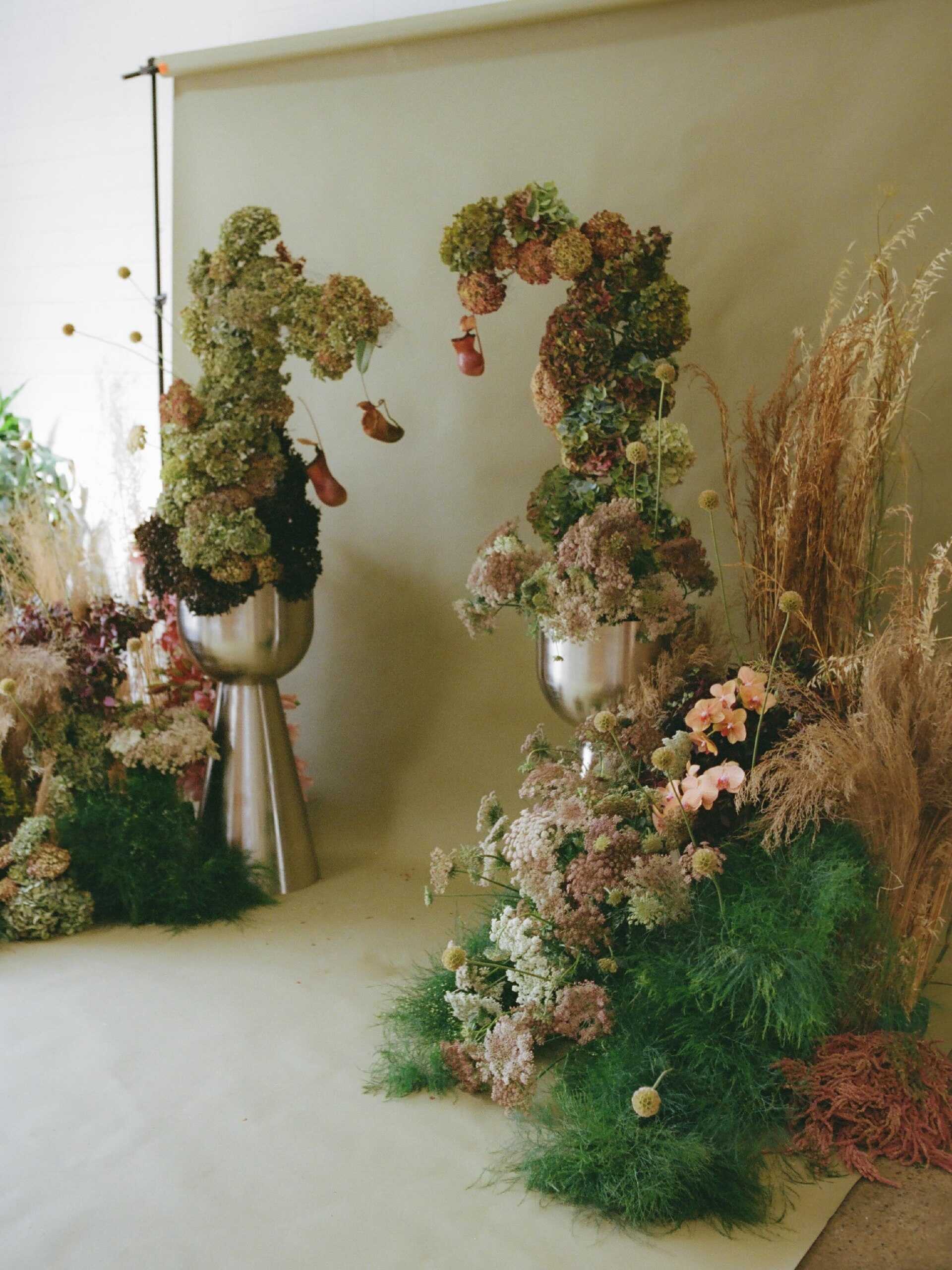
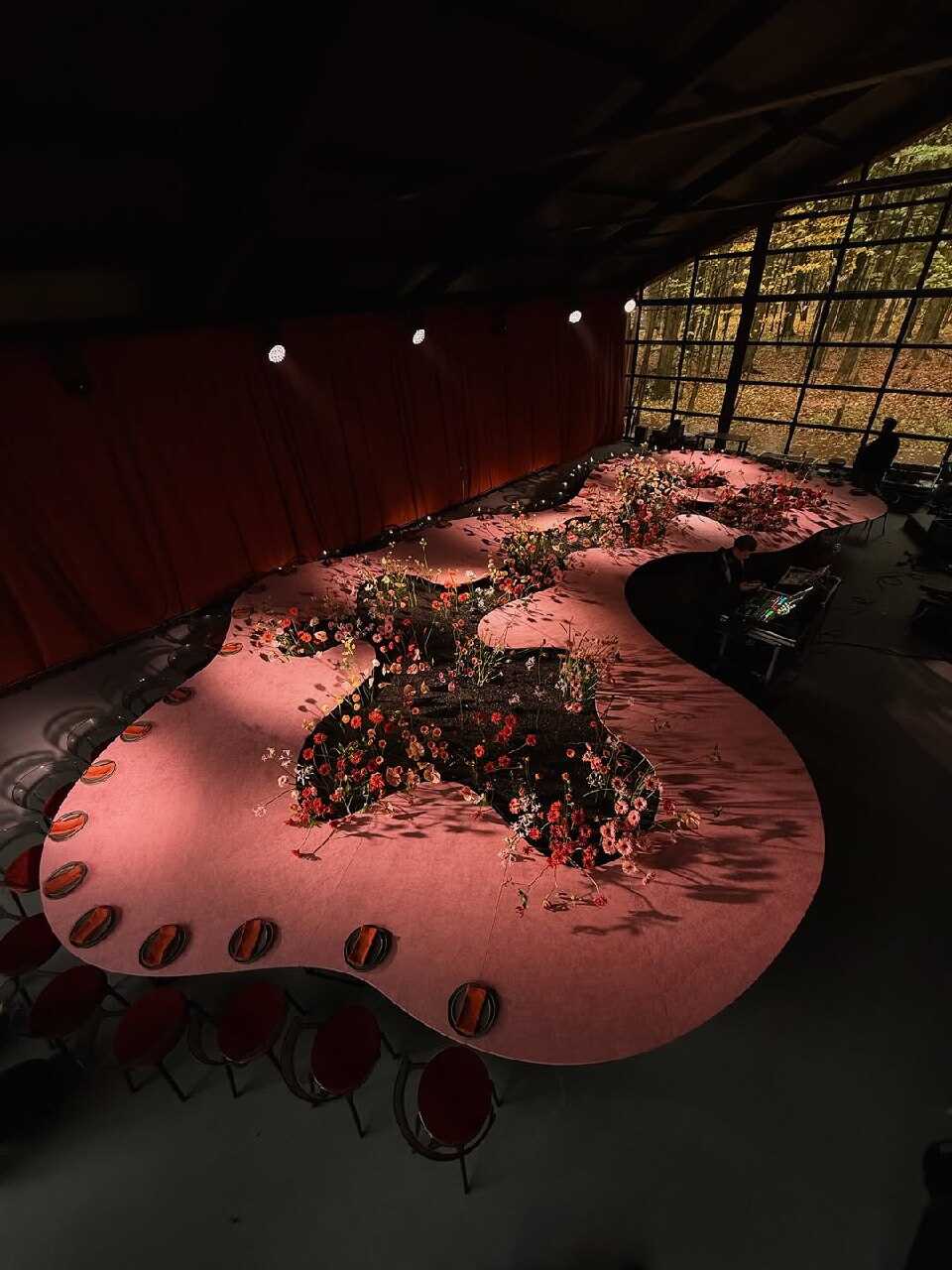
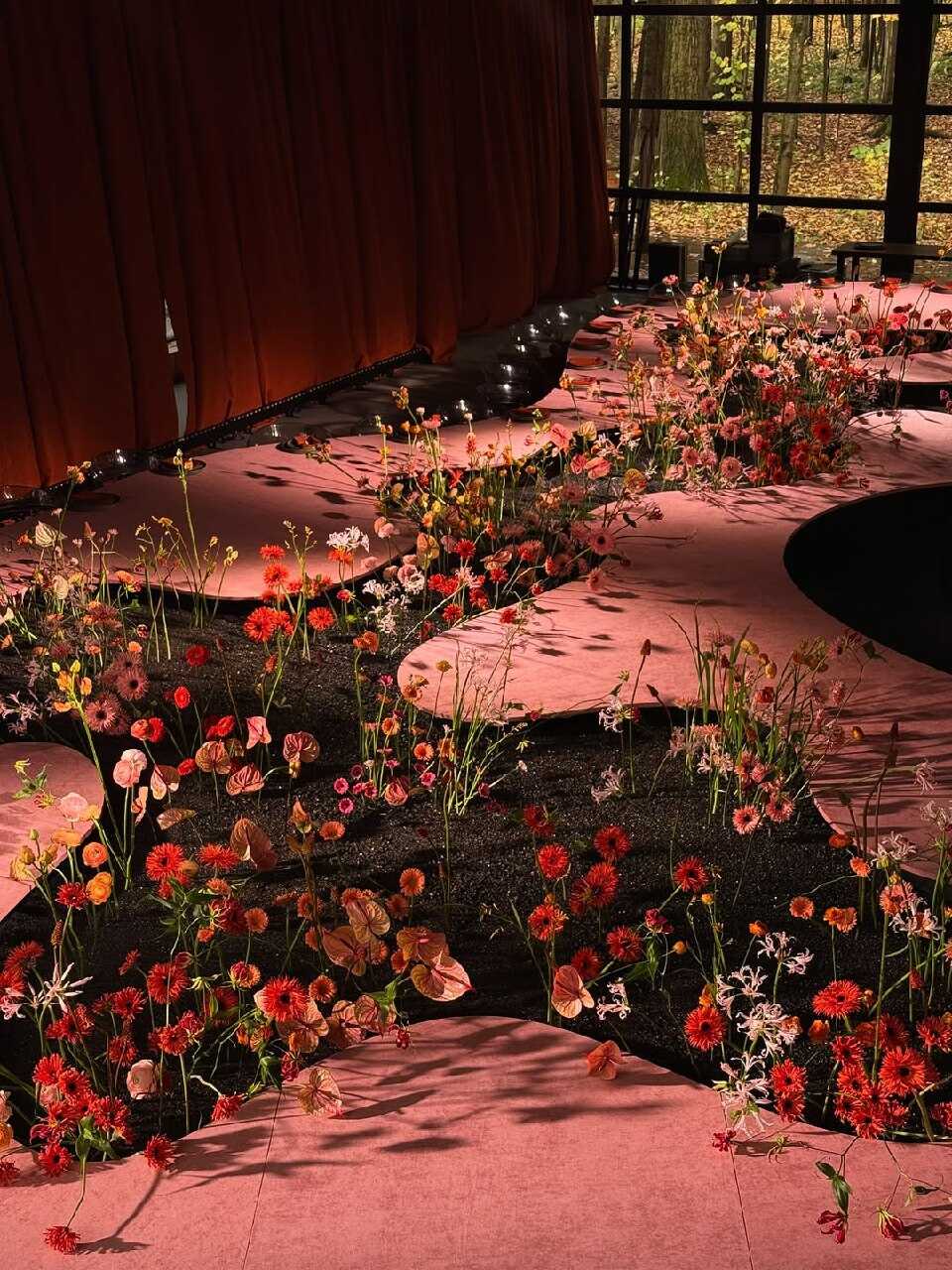
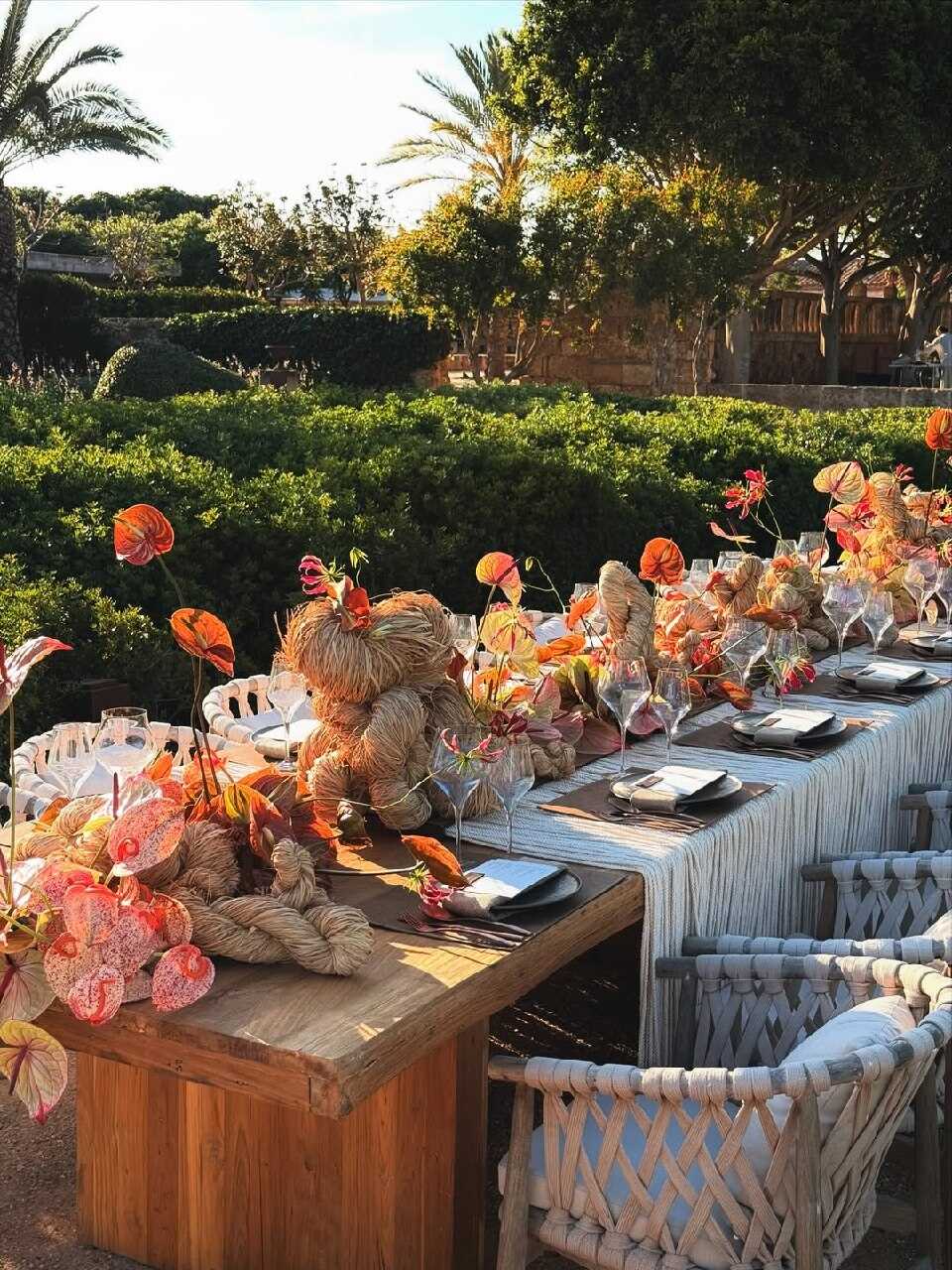
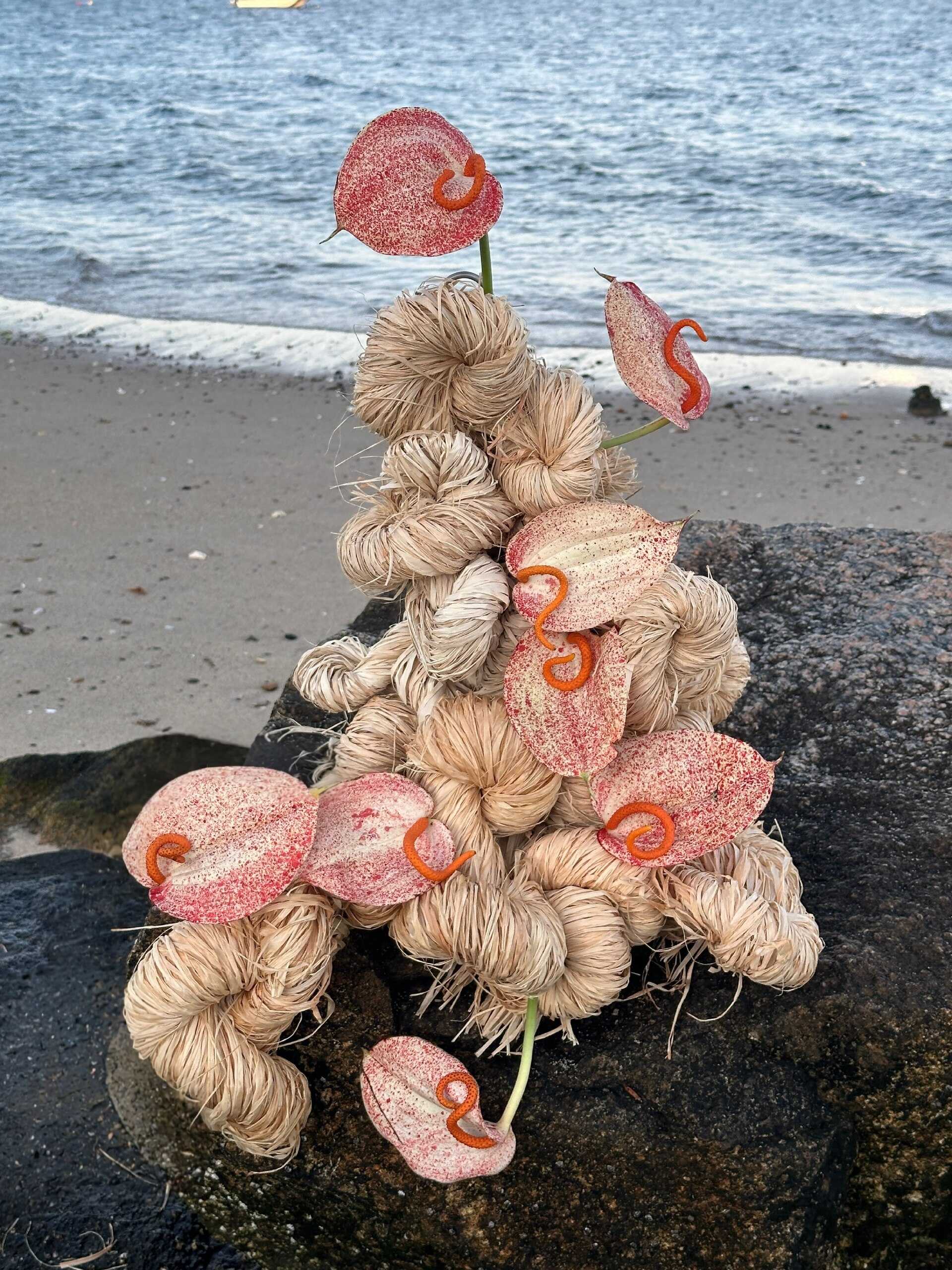
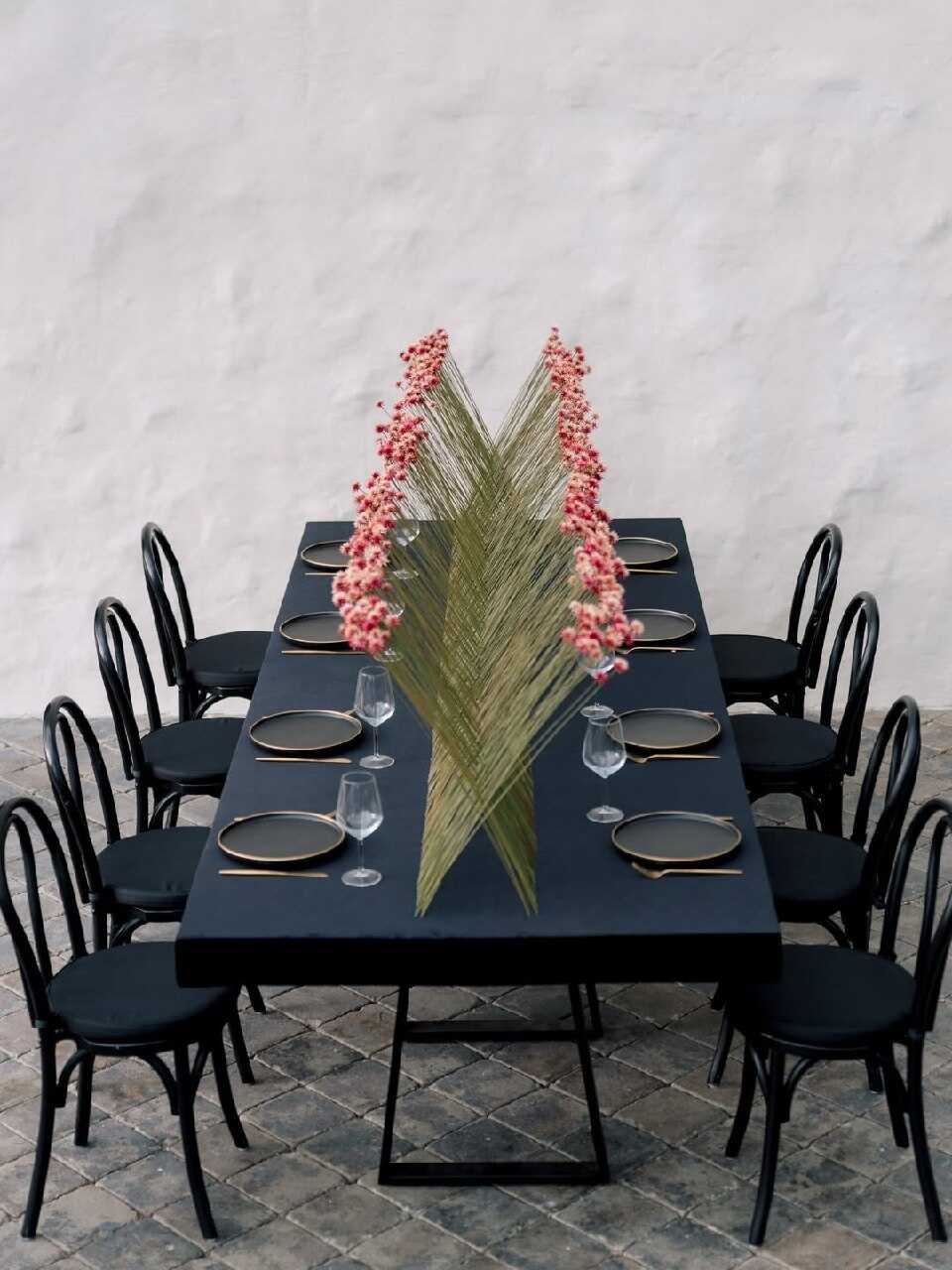
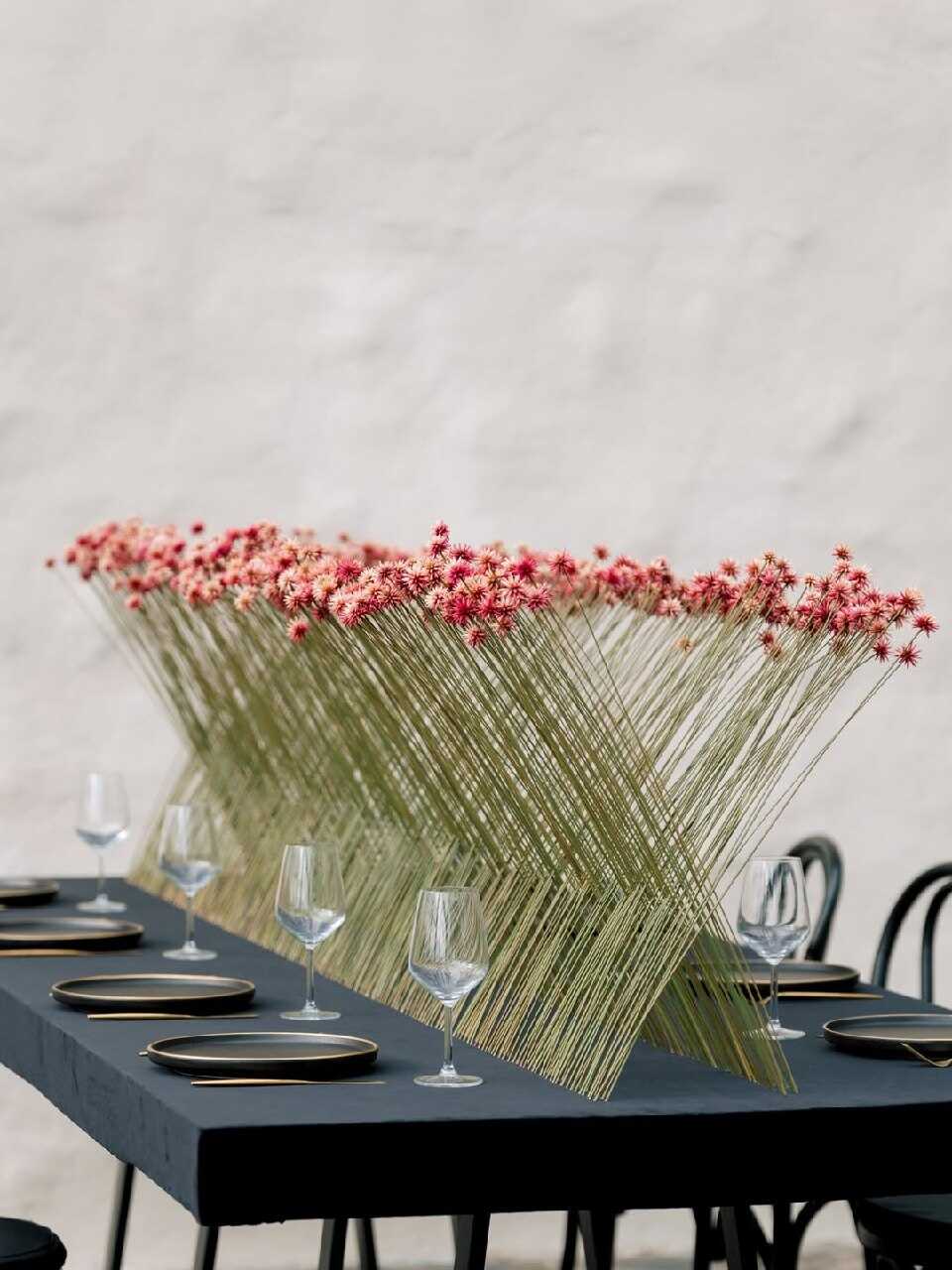
The classic centerpiece sat in a vase because it had to - cut stems need water, and water needs a container. 2027 wedding decor trends are quietly doing away with that assumption. Florists are building what the industry has started calling flower mounds: dense, rounded masses of blooms stacked directly onto a surface or the ground, with no vase in sight, looking less like an arrangement and more like something that simply grew there overnight.
The effect works at almost any scale. Stacked into tiered, totem-like columns - one color giving way to the next as it climbs - a flower mound becomes a freestanding sculpture, striking enough to anchor a lounge area or ceremony entrance entirely on its own, with nothing else needed nearby to justify its presence. At table level, the same instinct shows up as flowers seeming to erupt directly out of the tablescape itself - an S-curved table with blooms rooted straight into its surface, or a runner that dissolves into a miniature flowerbed running the table length, guests seated right alongside it rather than around some separate arrangement.
This only works with real structural discipline underneath it. A mound built from a single flower type, tightly packed and color-graded from top to bottom, reads as a deliberate sculpture; the same idea attempted with five different varieties, and no clear gradient, just reads as a very large, messy bouquet. The floral industry describes this broader shift as arrangements becoming more architectural and less like something you'd expect to hold in your hands - and a flower mound, more than almost any other format, makes that shift impossible to miss.
Decor Featuring Metallic Elements
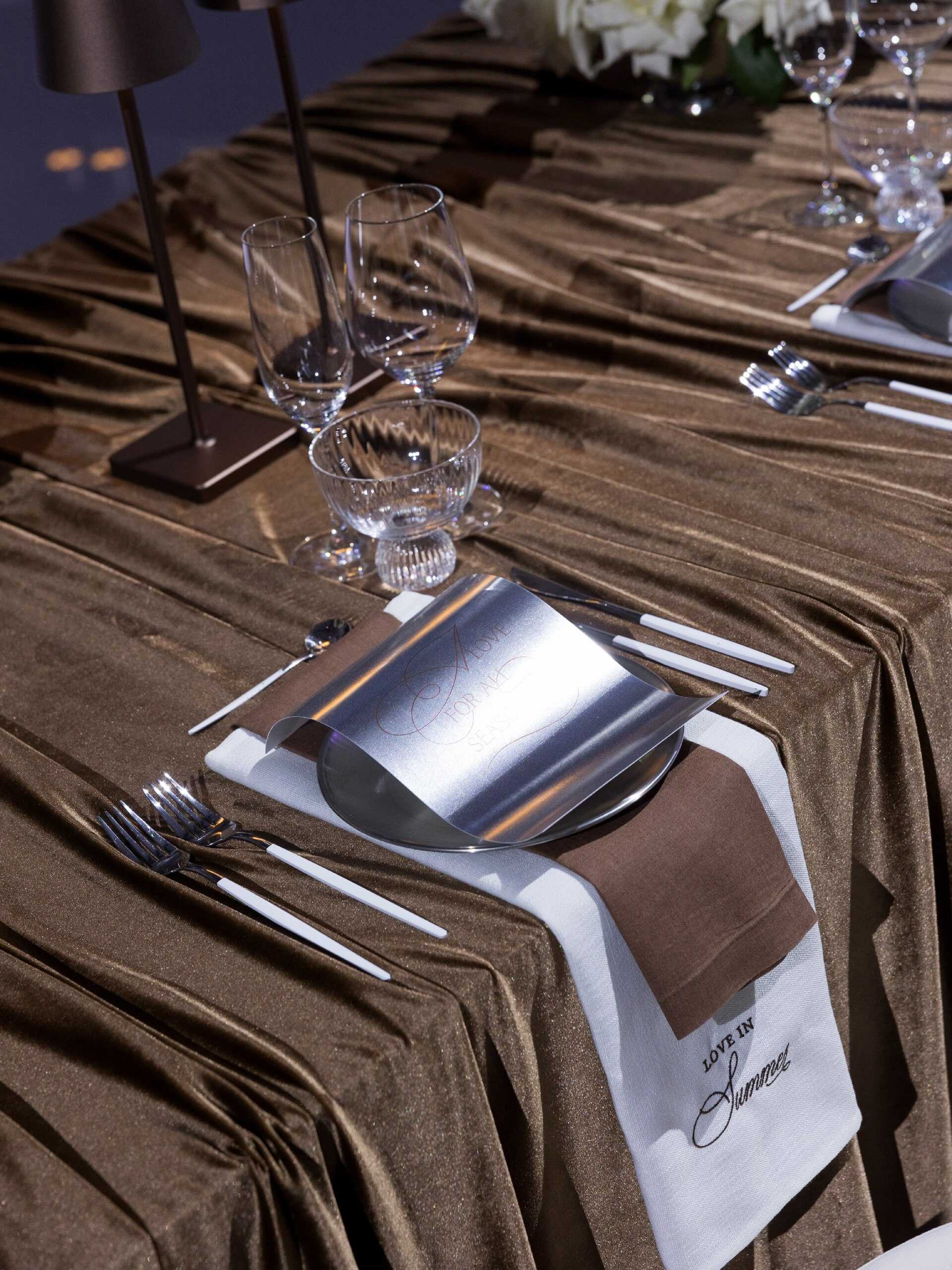
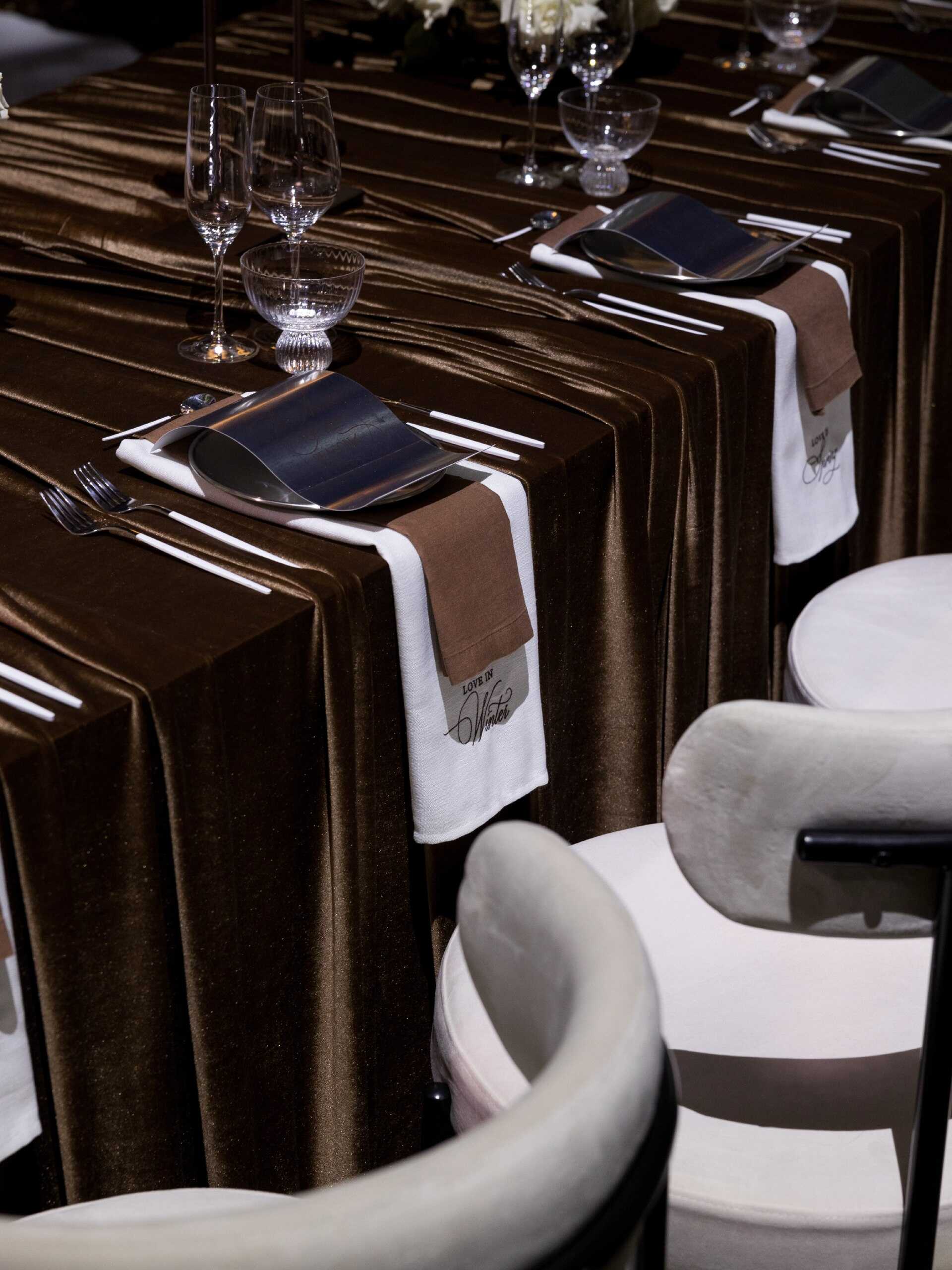
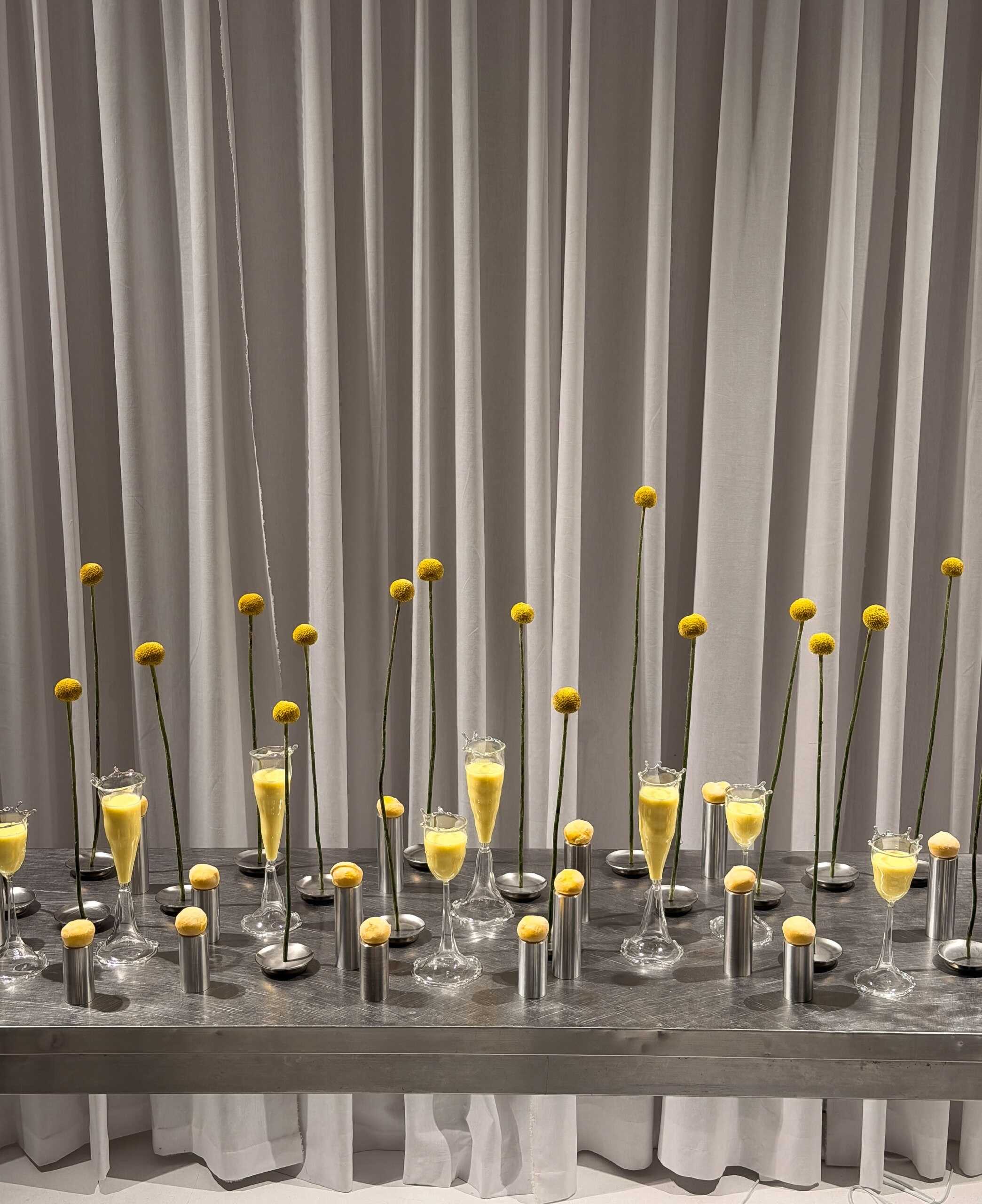
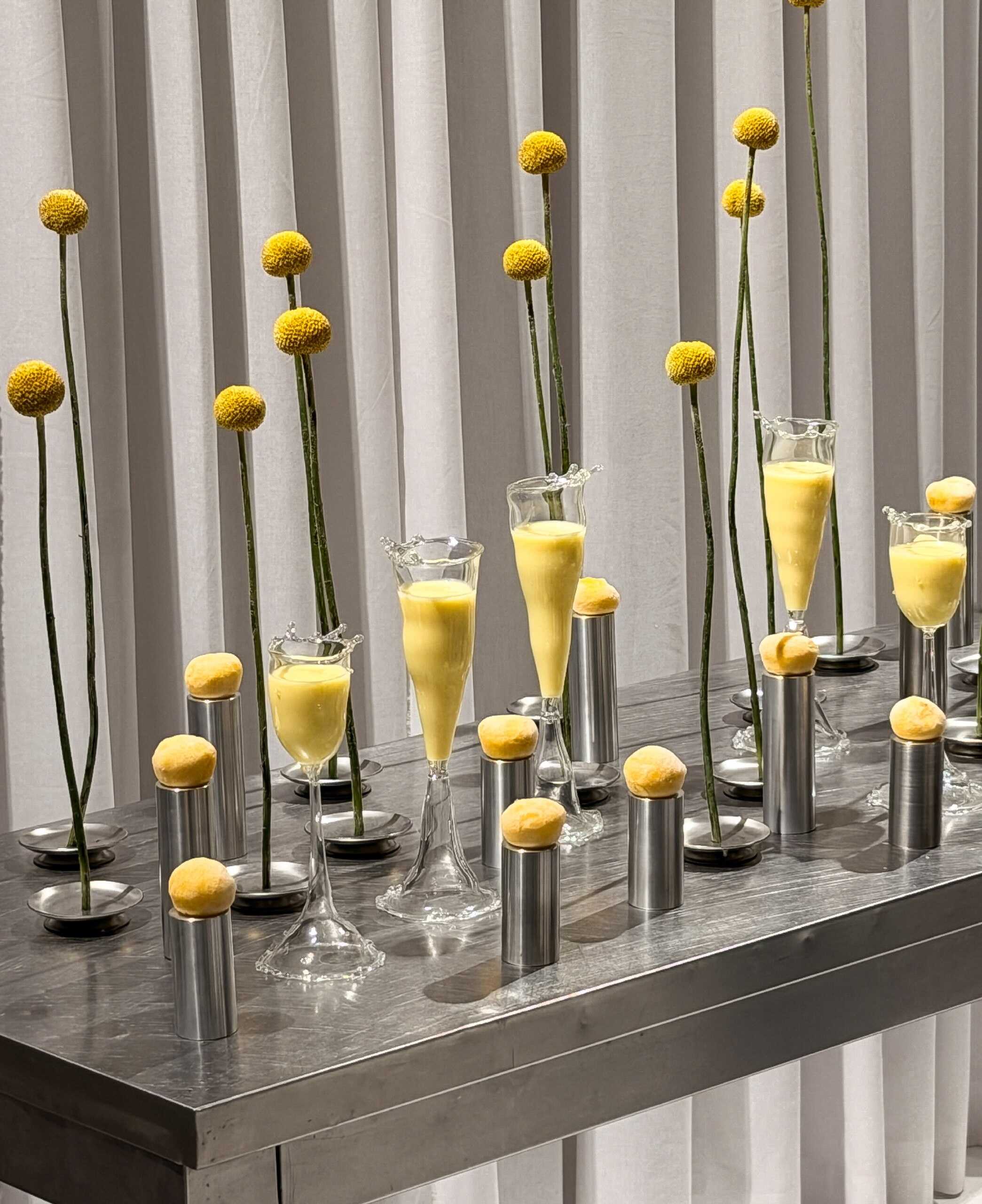
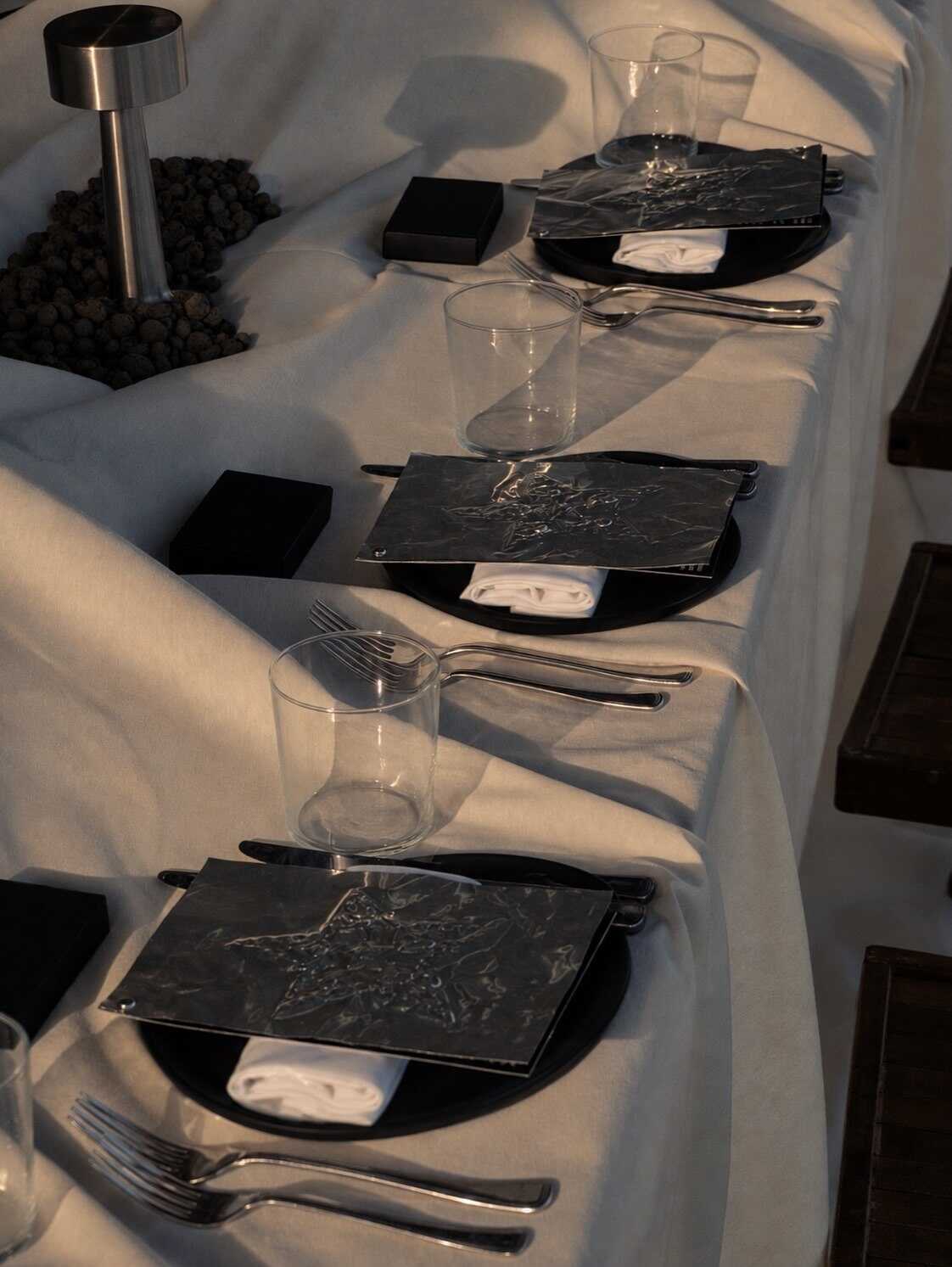
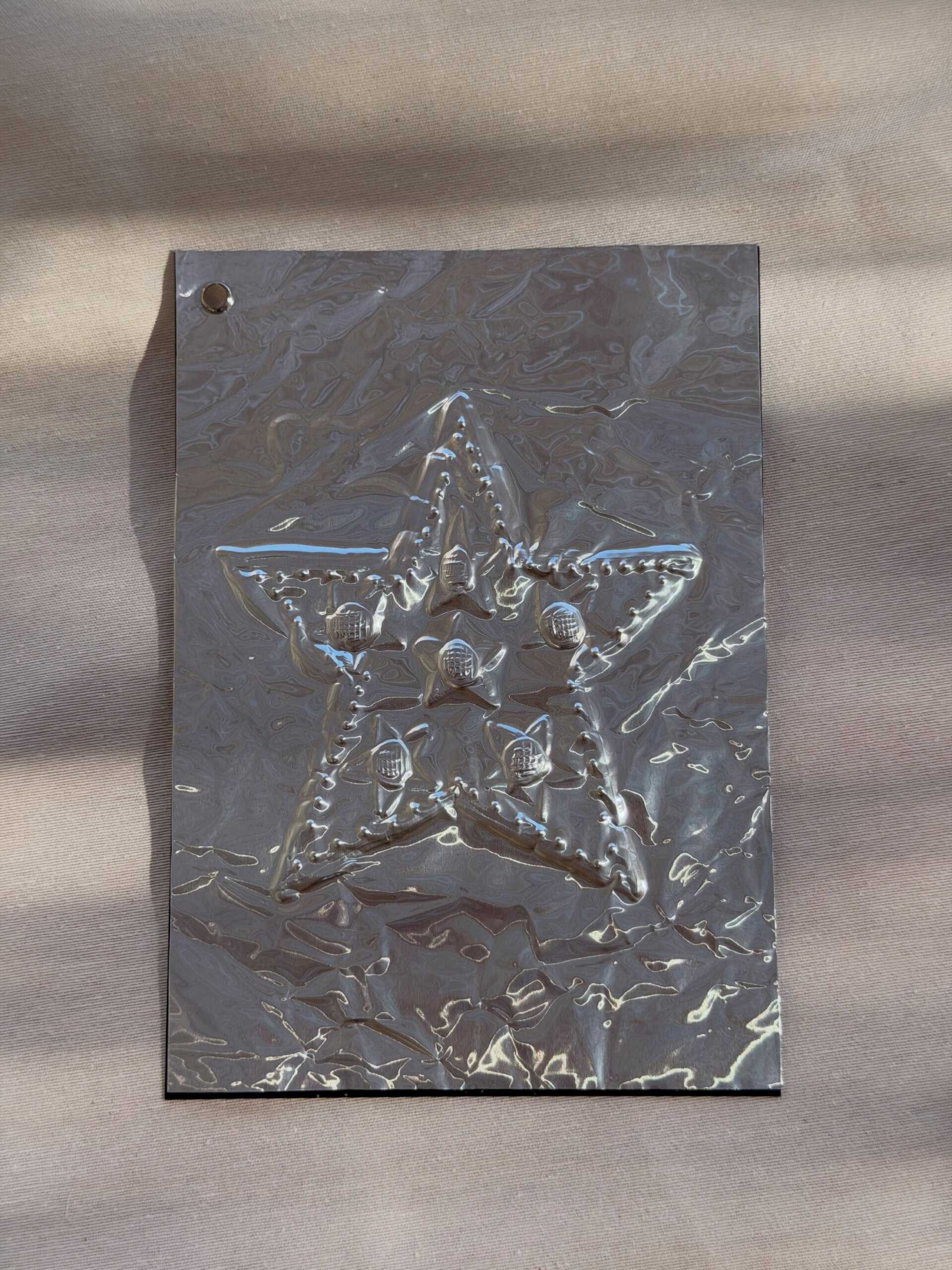
Metallic accents are showing up with more confidence and less restraint than in recent years, and 2027's version has a specific mood to it - not warm gold, but something cooler and darker. Gunmetal and brushed dark silver are doing the heavy lifting: place settings cut from sheet metal instead of ceramic, a star pressed into a steel panel like it was stamped rather than crafted, slim metal cylinders standing in for vases along an entire tablescape. It reads less like jewelry and more like hardware, in the best possible sense.
That cooler metal finds its match in fabric rather than in more metal. A deep, velvet-soft tablecloth in chocolate or espresso tones sets up the exact contrast the whole look depends on, soft against hard, matte against reflective, so a single metallic square plate catches light precisely because everything surrounding it refuses to. Take away that contrast and the same plate just looks like it forgot its dinnerware.
Metallics tend to succeed in exactly this kind of restraint: one tone, one finish, repeated with total consistency across chargers, cylinders, and small sculptural details, rather than gold and silver competing for the same table. Where they tend to backfire is obvious the moment a second metal enters the frame - a warm brass candlestick sitting next to a cool steel charger reads as unplanned, no matter how expensive either piece is on its own. The trend rewards a designer willing to pick one metal and stay loyal to it for the entire room.
Soft and Cozy Draping
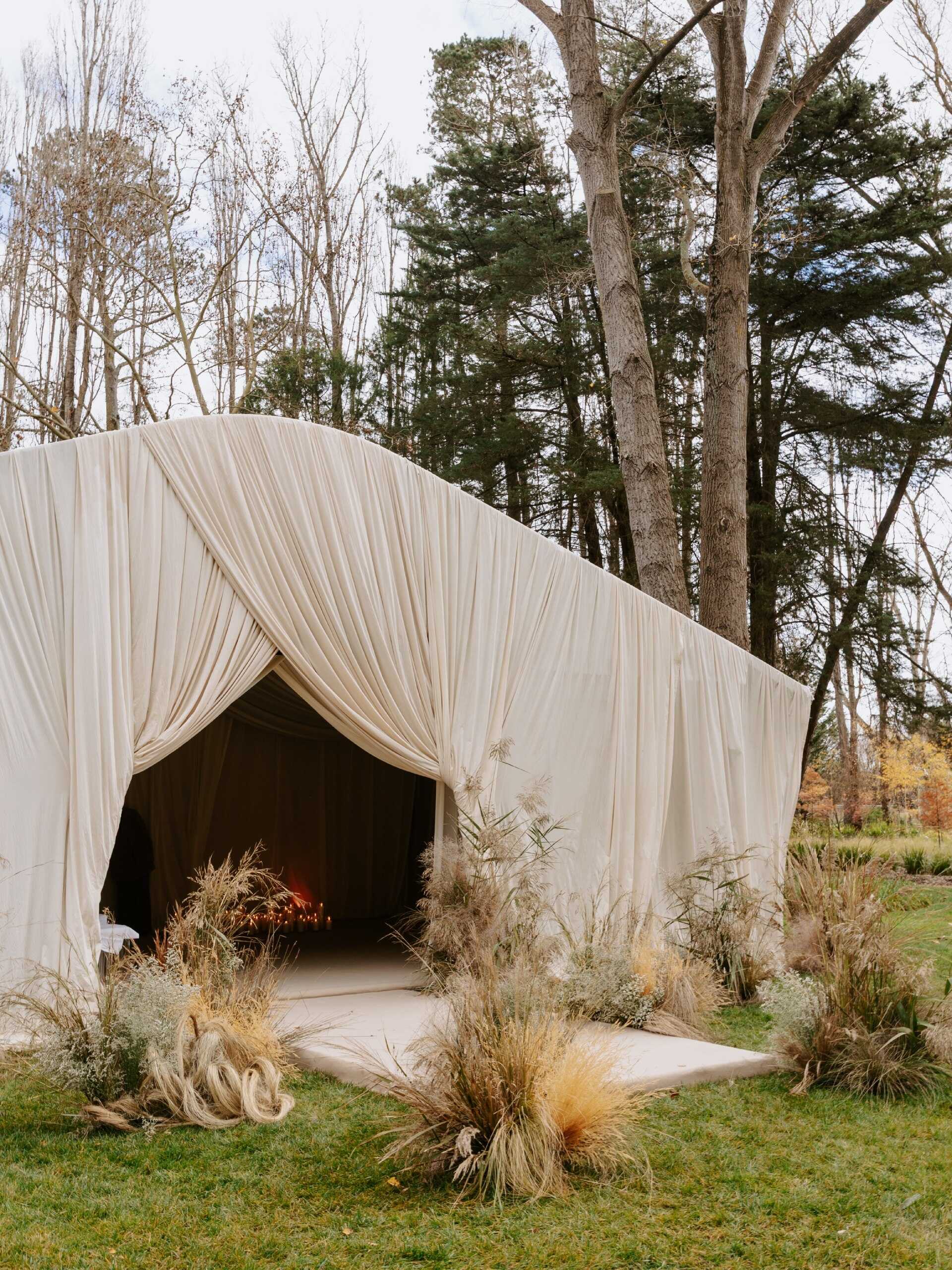
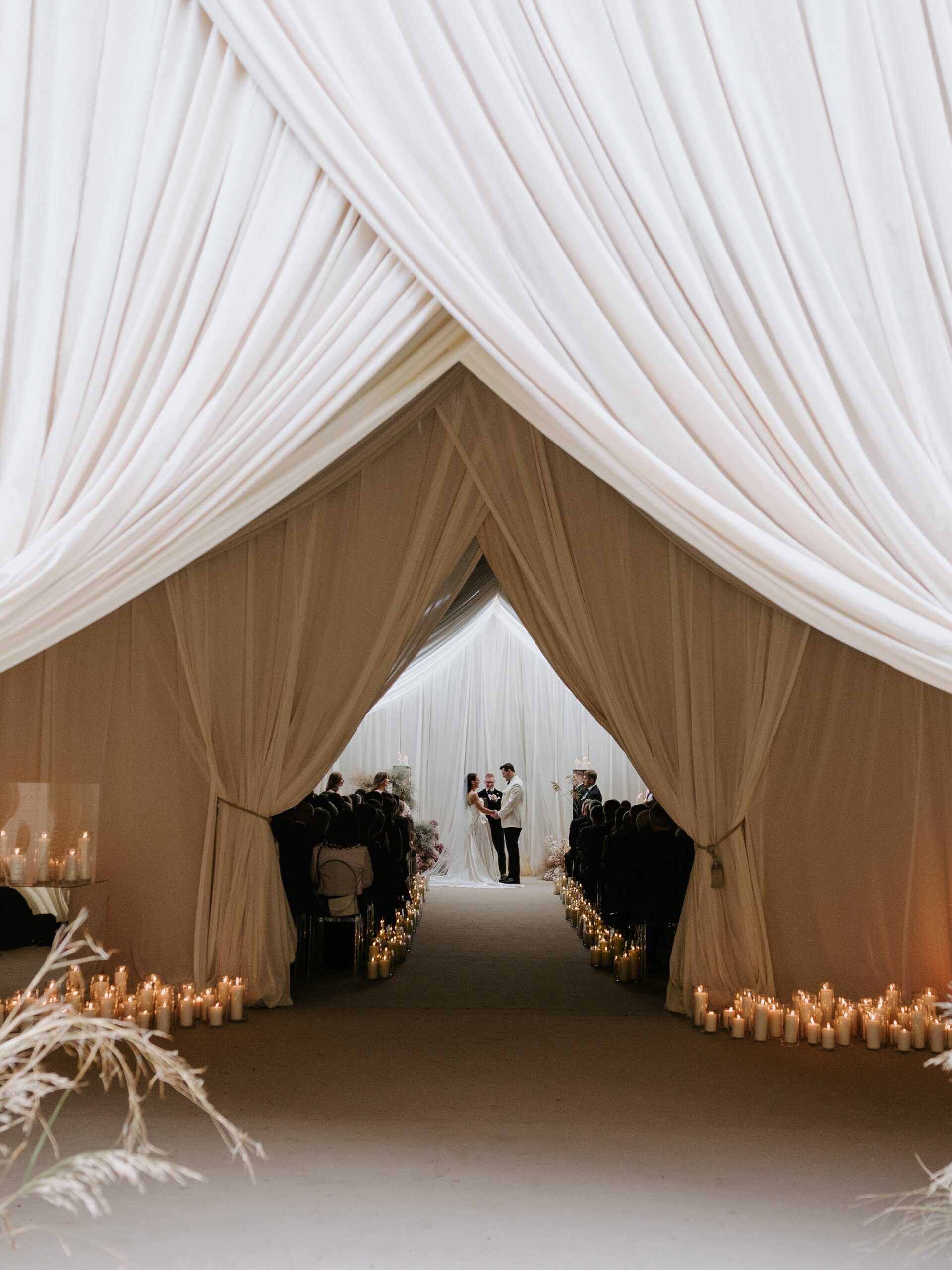
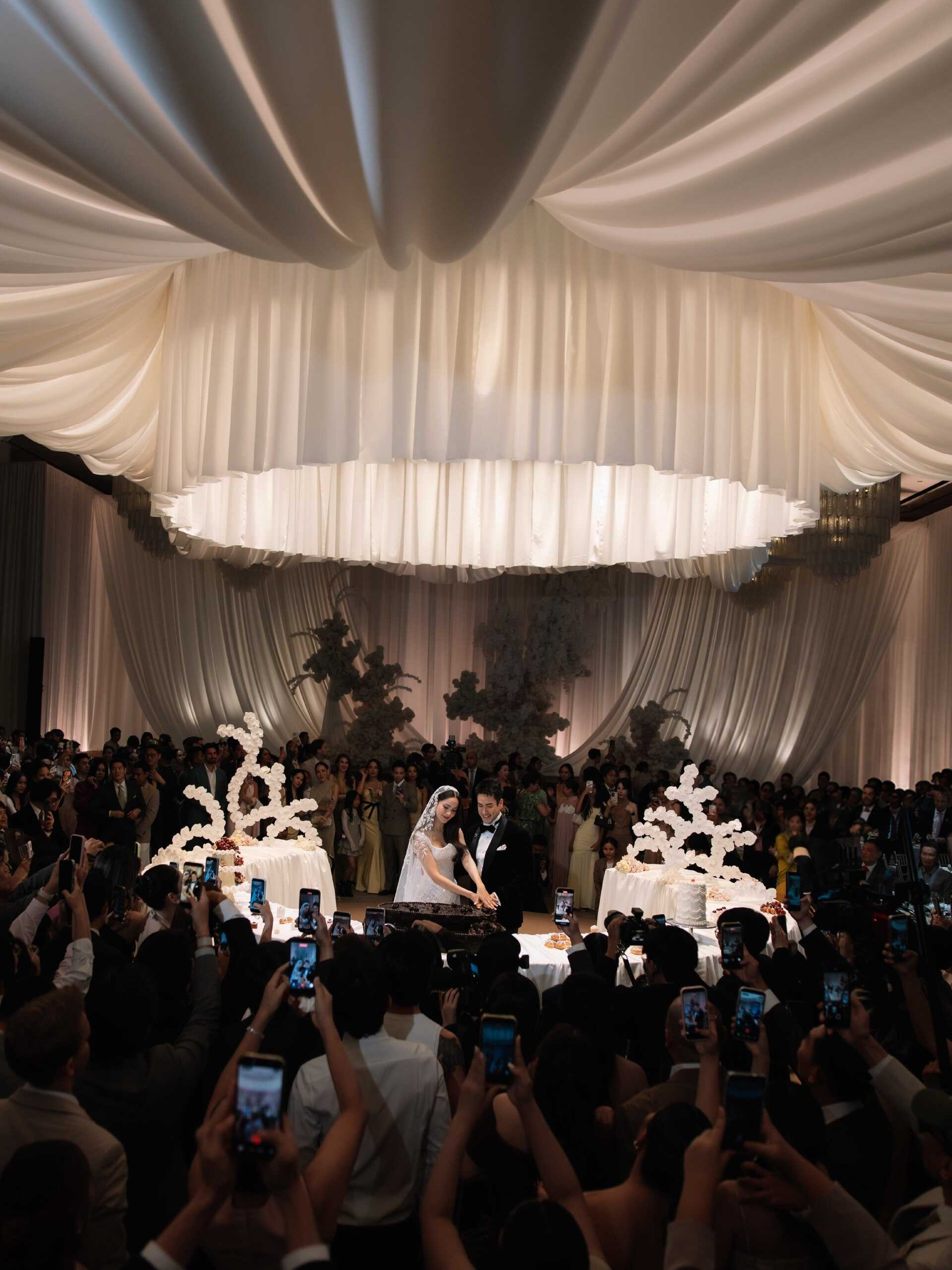
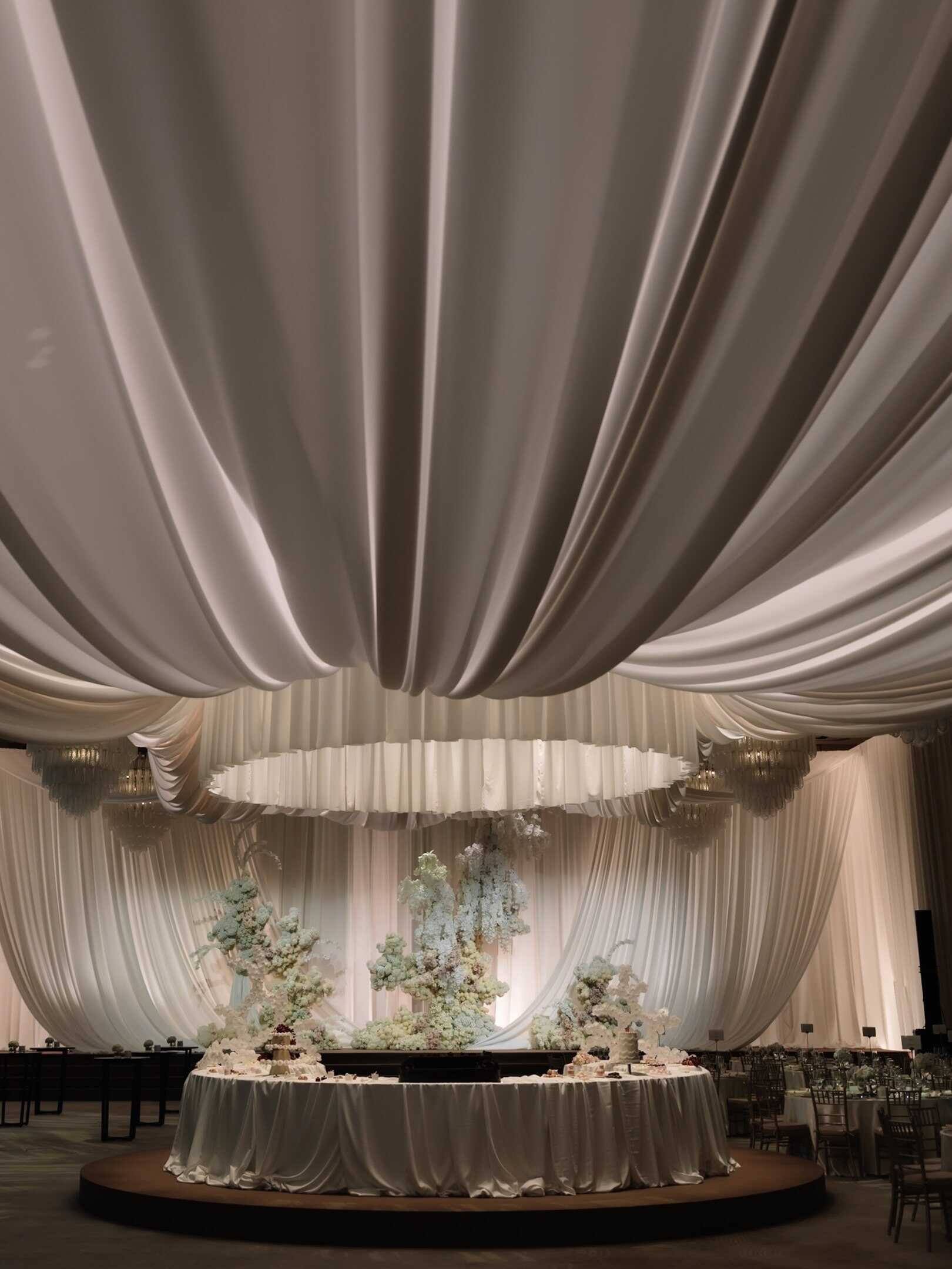
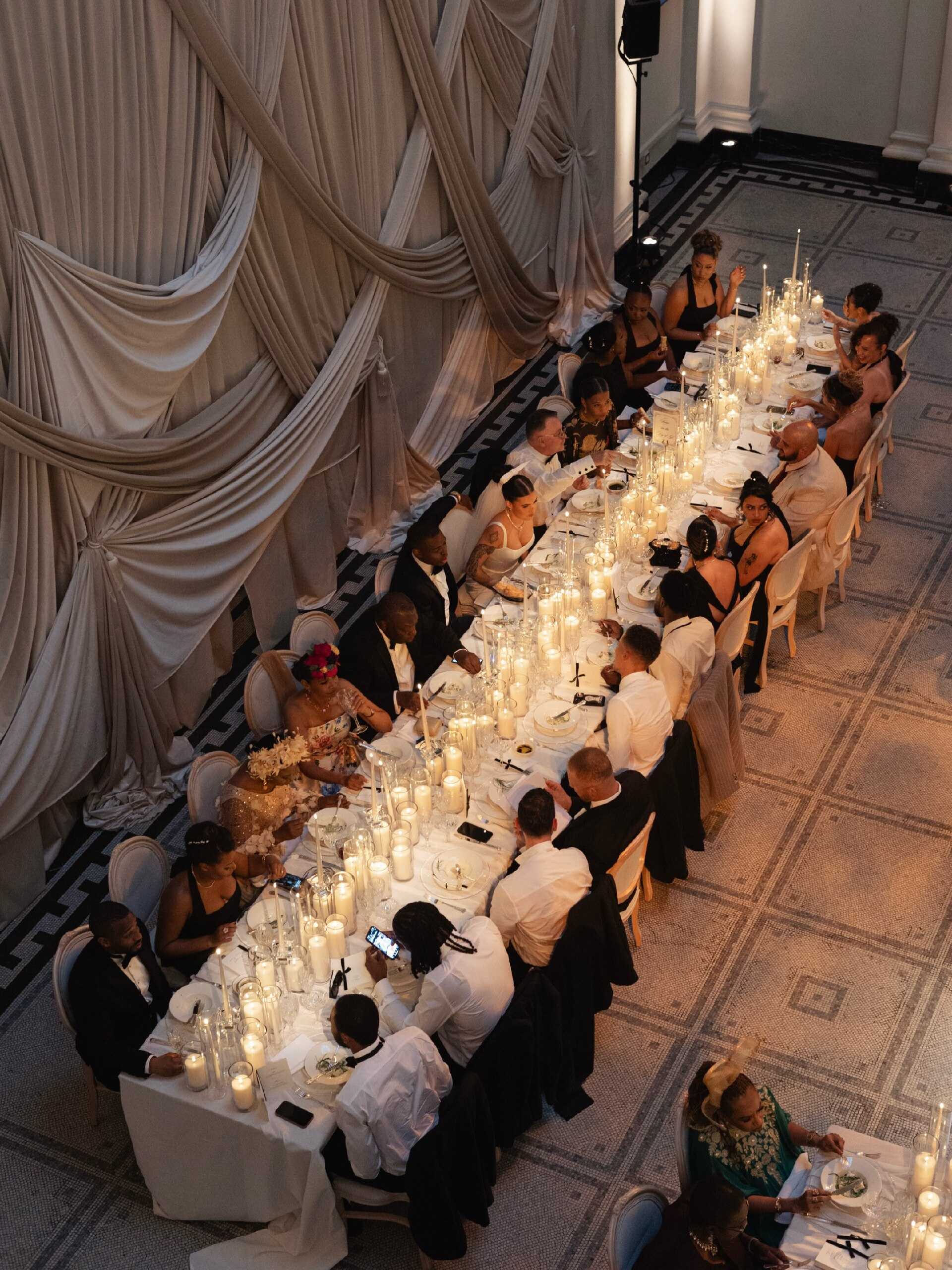
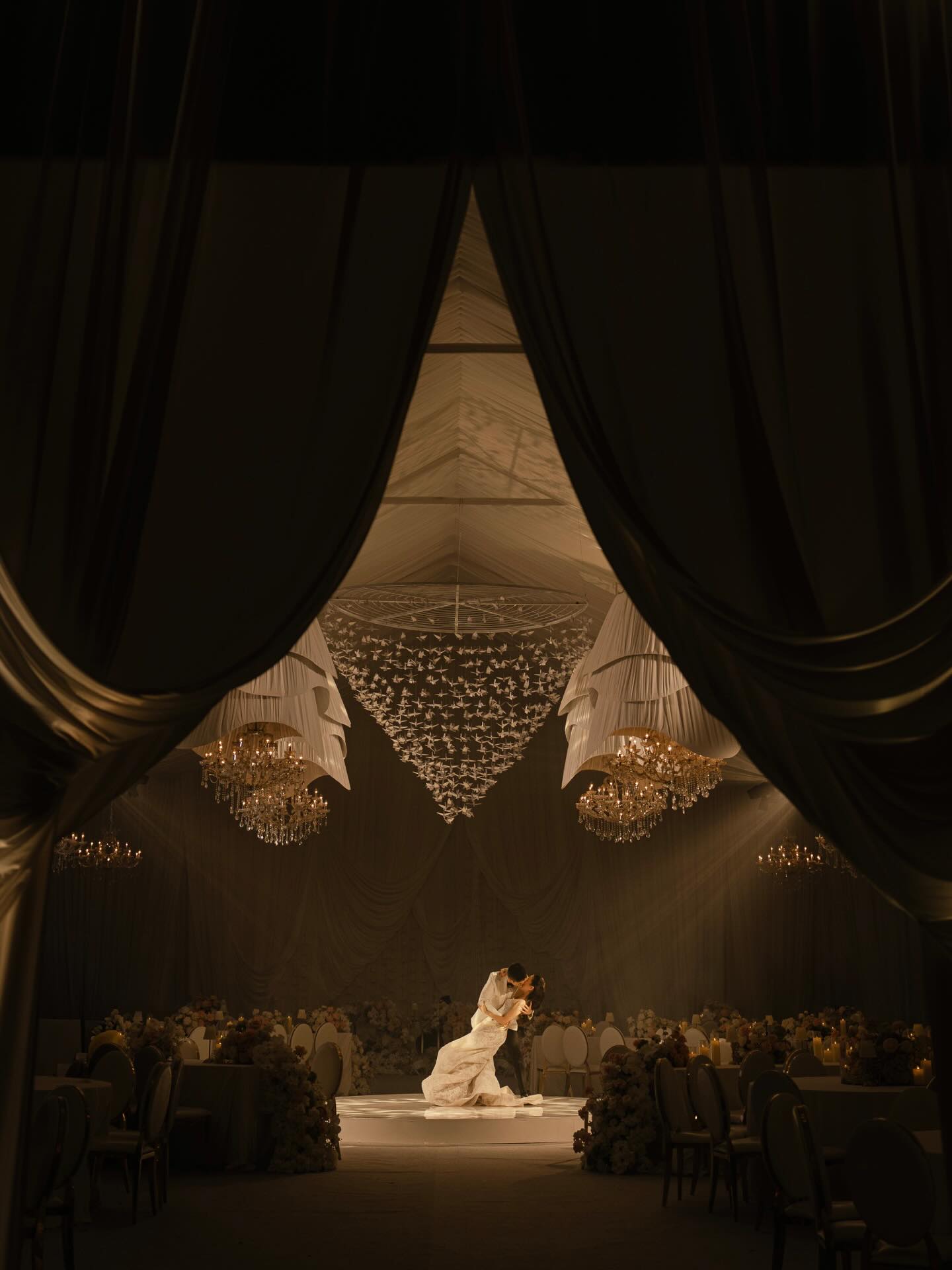
Fabric in 2027 isn't there to soften a room quietly in the background - it's built to be the architecture itself. Forget sheer, weightless curtains; the version showing up now is heavy, almost sculptural silk and satin, gathered into shapes with real structure: a full triangular tent built entirely from draped fabric standing alone in a forest clearing, a ceiling that gathers into one enormous round medallion directly over the cake table, walls of fabric pouring down in deep, deliberate folds instead of hanging flat. This is one of the more requested wedding decor 2027 trends for exactly that reason - it gives a space a shape it didn't have before, rather than just dressing the shape that was already there.
That structural ambition changes what draping does in a room. A drape gathered into a perfect circular rosette above a dance floor reads as an architectural centerpiece in its own right, not a soft touch added afterward - guests look up at it the same way they'd look up at a chandelier. The same logic built a literal tent out of nothing but fabric and a wooden frame, turning an empty patch of grass into a ceremony space with real walls, a real roofline, and a real sense of arrival through its draped entrance.
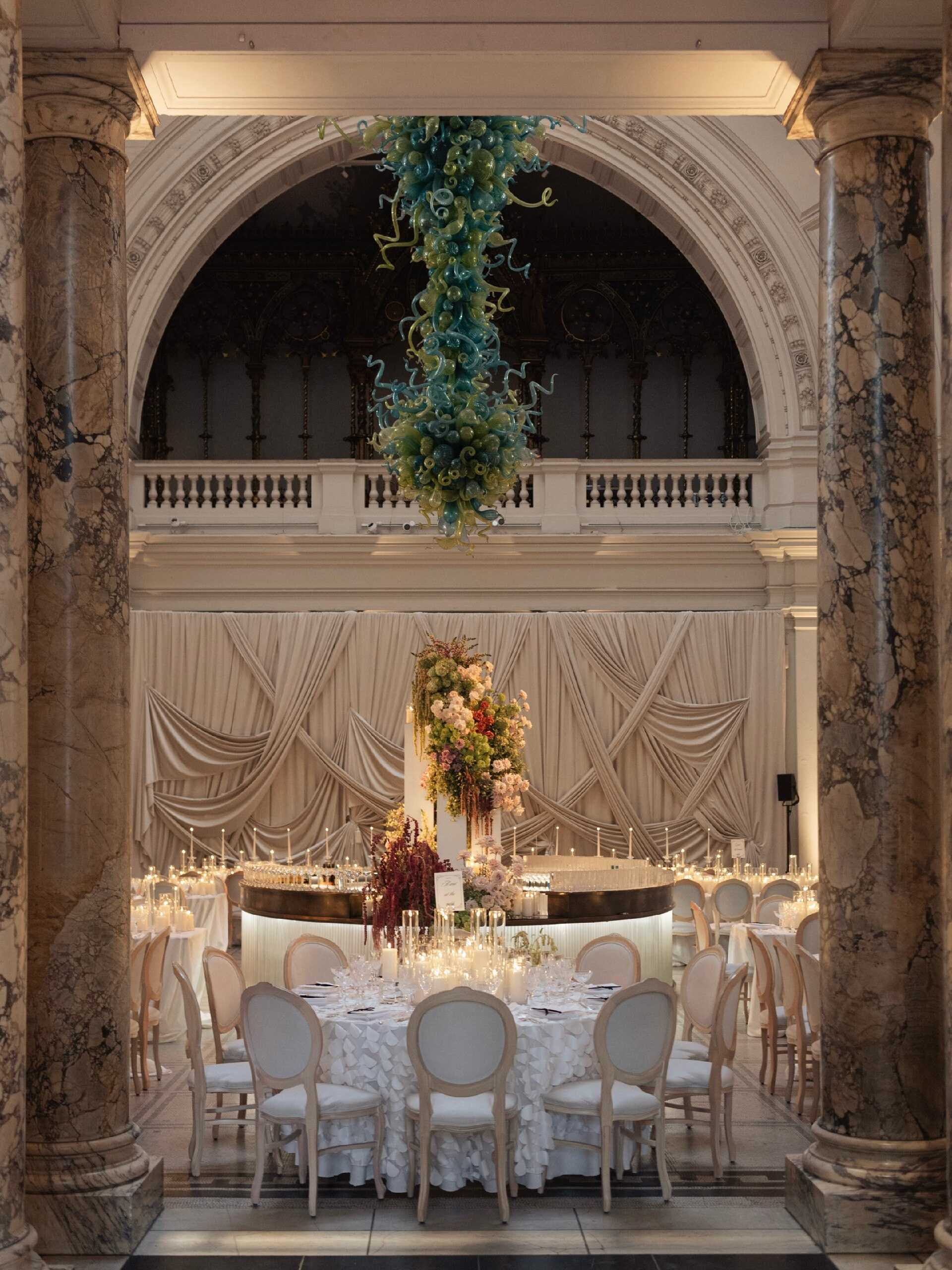
It works best where architecture is missing entirely - an open field, a bare industrial shell, a tent with nothing overhead but a flat ceiling. Among the latest trends in wedding decor, heavy draping is arguably the one most capable of replacing a room rather than merely decorating it, which is precisely why it tends to feel wasted in a venue that already has real architectural character of its own, like a stone hall with columns and a coffered ceiling that doesn't need fabric telling it what shape to be.

How to Choose the Decor Style That's Actually Yours
One wedding for six directions. The real issue isn't which style looks best in photographs - it's which one actually suits the venue you're facing, the season in which the wedding takes place, and the two people who are actually funding it. That is precisely the type of decision that wedding decor trends news often overlooks in favor of simply stating what's popular this month. A few straightforward questions are more effective than spending another hour scrolling through inspiration boards.
- What does the venue already have, and what is it missing?
A room possessing a natural texture and architectural character would require almost nothing to be added to it, whereas a space that is blank and has hard edges generally needs one clear idea, for example, heavy draping or a surface that has been projection-mapped, in order to acquire a form that it did not previously have.
- How many guests are actually in the room?
Fruit and botanical installations or metallic tablescapes read beautifully up close at a smaller scale, while lighting and projection tend to make more of an impact in a large, spread-out reception where a strong visual needs to carry across distance.
- What does the season actually offer?
Sculptural, texture-forward greenery depends on real, healthy foliage being available, which changes considerably depending on when and where the wedding happens.
- Which single element matters most?
Committing hardest to one, florals, lighting, or fabric, and letting the rest of the budget support it usually beats spreading the same money thin across all six trends at once.
None of these have a universal right answer. A couple standing in an empty barn is solving a completely different problem than a couple who booked a marble ballroom where the columns are already doing half the work for free. And the trend that looked flawless on someone else's feed can fall apart entirely once it meets a venue it was never actually built for - which is really the whole exercise here: matching the idea to the room, not the room to the idea.
Can You Mix Multiple Decor Trends? (And Which Ones Actually Work Together)
Yes. Almost always, in fact - and mixing is often what separates a room that feels genuinely curated from one that reads as a single Pinterest board copied wholesale onto a real venue. This is one of the most common wedding trends 2027 event decor questions couples bring to their own planner, and the answer really comes down to one trick: pick a pairing where one trend does the structural work and the other does the atmosphere, instead of stacking two equally loud ideas on top of each other.
| Sculptural Greenery + Lighting and Projection | A single restrained installation gets a dramatic backdrop without needing more florals to compete with it |
| Soft Draping + Metallic Elements | Fabric softens the room while metallics add a controlled, focused shine |
| Flower Mounds + Fruit and Botanicals as Installation | Both lean into intentional, sculptural presentation without visually competing |
| Metallic Elements + Lighting and Projection | Selective spotlighting on metallics avoids an overwhelming, all-over shine |
Certain pairings begin to clash the moment they are in the same room. For instance, if you have both a fully projection-mapped wall and a huge flower mound, two structurally bold features, each one wants to be the thing that guests take photographs of, and a room can only really have one real showstopper, or the entire evening begins to seem more like a competition than a celebration. Choose the main feature and let everything else serve it. This one choice matters more than any of the specific trends in this list when it comes to distinguishing a room with a deliberate feel from one that merely seems loud.
Six directions, an unlimited number of ways of combining them, but all of this amounts to little without the couple's own particular venue, story, and instincts guiding them in making the final choice. The best rooms featured in this list don't resemble trends at all when they're completed; instead, they look like one particular wedding, which is the whole idea. Wezoree's Inspiration section includes a much broader collection of trending decoration, styling, and design ideas worth borrowing from for anyone still figuring out how their own room should feel when the doors open.

FAQ
What are the biggest 2027 wedding decor trends?
The most prominent trends right now are sculptural, texture-emphasizing plants; the use of fruit and botanicals as standalone displays; lighting and projection being regarded as part of the decoration rather than as a concealed effect; the creation of dense flower bunches without the use of vases; the inclusion of strong metallic accents; and the use of thick, architectural fabric for draping. The unifying feature of the latest wedding decor trends is intentionality - each element succeeds because it is executed with genuine precision, not just because it is currently in fashion.
Are metallic decor accents still in style for weddings?
Right, metallics are still one of the most sought-after wedding decor trends in 2027, but the way they're executed has shifted to focusing on a single predominant tone instead of combining several metals in the same area. Having gold, silver, and rose gold all present in equal amounts usually looks unthought-out rather than purposeful.
Can I combine more than one decor trend at my wedding?
Yes, and this is usually the better approach - the key is to choose one trend to set the room's overall atmosphere and another to support it, not to stack two equally bold ideas that compete for attention. Combinations such as soft draping with metallic accents, or sculptural greenery with projection-mapped lighting, usually work very well together.
How do I know which wedding decor trend fits my venue?
Start by looking at what the venue currently has and what it lacks - since a warm, textured room generally requires only minor additions, a large industrial space, on the other hand, can often be made to feel more purposeful with heavy drapes or a full projection system. It is better to match a trend to the character of the venue than to choose a style first and then try to make the space fit it.
Are fruit and botanical installations practical for a large wedding?
Yes, though scale matters - a full grape-clad arch or a dense flower mound takes real production time to build and install, so larger weddings often use one or two anchor pieces rather than covering every table in the same treatment. Since fresh and dried botanicals aren't meant to be eaten in this context, the decor team generally treats them like any other design material rather than something the catering staff needs to manage.
Does projection and statement lighting cost more than traditional wedding lighting?
Generally, yes, and often considerably more - full wall or tent projection mapping requires specialized equipment, precise venue measurements, and a production team rather than a standard lighting package. It's worth it for couples chasing that fully immersive, room-transforming effect, though a simpler wedding can still make a strong visual statement with one illuminated centerpiece or a single continuous light line down a table.
What's a safe way to try a bold trend without overwhelming the whole wedding?
Applying a bold idea, like a large-scale flower mound or heavy metallics, to a single focal point rather than the entire room is the most common way designers scale these trends down. One dramatic installation or metallic-accented feature wall reads as a considered styling choice, while repeating the same idea everywhere in the room can quickly feel like too much.