Top 20 Best Wedding Venues in Europe


- Villa Balbiano, Lake Como, Italy
- Villa et Jardins Ephrussi de Rothschild, French Riviera, France
- Villa del Balbianello, Lake Como, Italy
- Fairmont Le Montreux Palace, Montreux, Switzerland
- Château de Santeny, Paris region, France
- Villa Cimbrone, Amalfi Coast, Italy
- Castell de Sant Marçal, Barcelona, Spain
- Villa D’Este, Lake Como, Italy
- Schloss Leopoldskron, Salzburg, Austria
- Palácio de Seteais, Sintra, Portugal
- Son Marroig, Mallorca, Spain
- Vaux Le Vicomte, Paris region, France
- Sea View by En Kipo, Crete, Greece
- Rocabella Santorini Hotel & Spa, Santorini, Greece
- Euridge Manor, Cotswolds, England
- Cliveden House and Spa, Buckinghamshire, England
- Mas de Sant Lleí, Barcelona, Spain
- Château de Chantilly, Chantilly, France
- Schlosshotel Kronberg, Frankfurt area, Germany
- Adare Manor Hotel, County Limerick, Ireland
- FAQ
On Lake Como a cardinal turned a monastery into a villa; on Lake Geneva a hotel suite still bears Freddie Mercury’s name. In Wiltshire, a manor has a grotto filled with paua-shell dolphins; in Salzburg, a rococo palace sits on its own lake; and in Santorini, a terrace faces a volcano. People built houses like these to be remembered, and the finest wedding venues in Europe let a couple borrow that desire for a day. The wedding ceremony can take place under a Gothic arch, inside a moated castle, or on the edge of a caldera, and the same guest list can end with a candlelit château dinner or a noisy party in a Catalan forest. The twenty European wedding venues listed below extend from Lake Como to the Cyclades and from a château near Paris to the cliffs of Mallorca. Each entry describes what the place looks like on the day and indicates the type of couple it suits, so the list functions as a collection of possible weddings and not as a directory.
Find Your Perfect Wedding Vendors

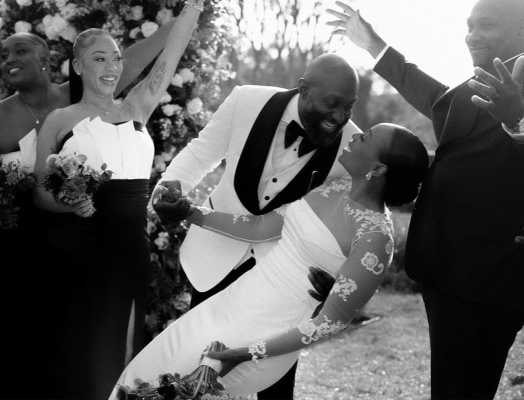

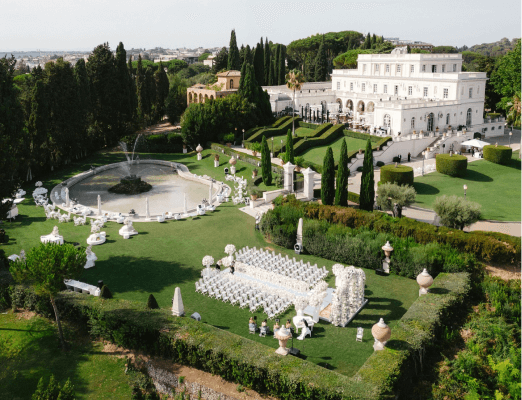
Villa Balbiano, Lake Como, Italy
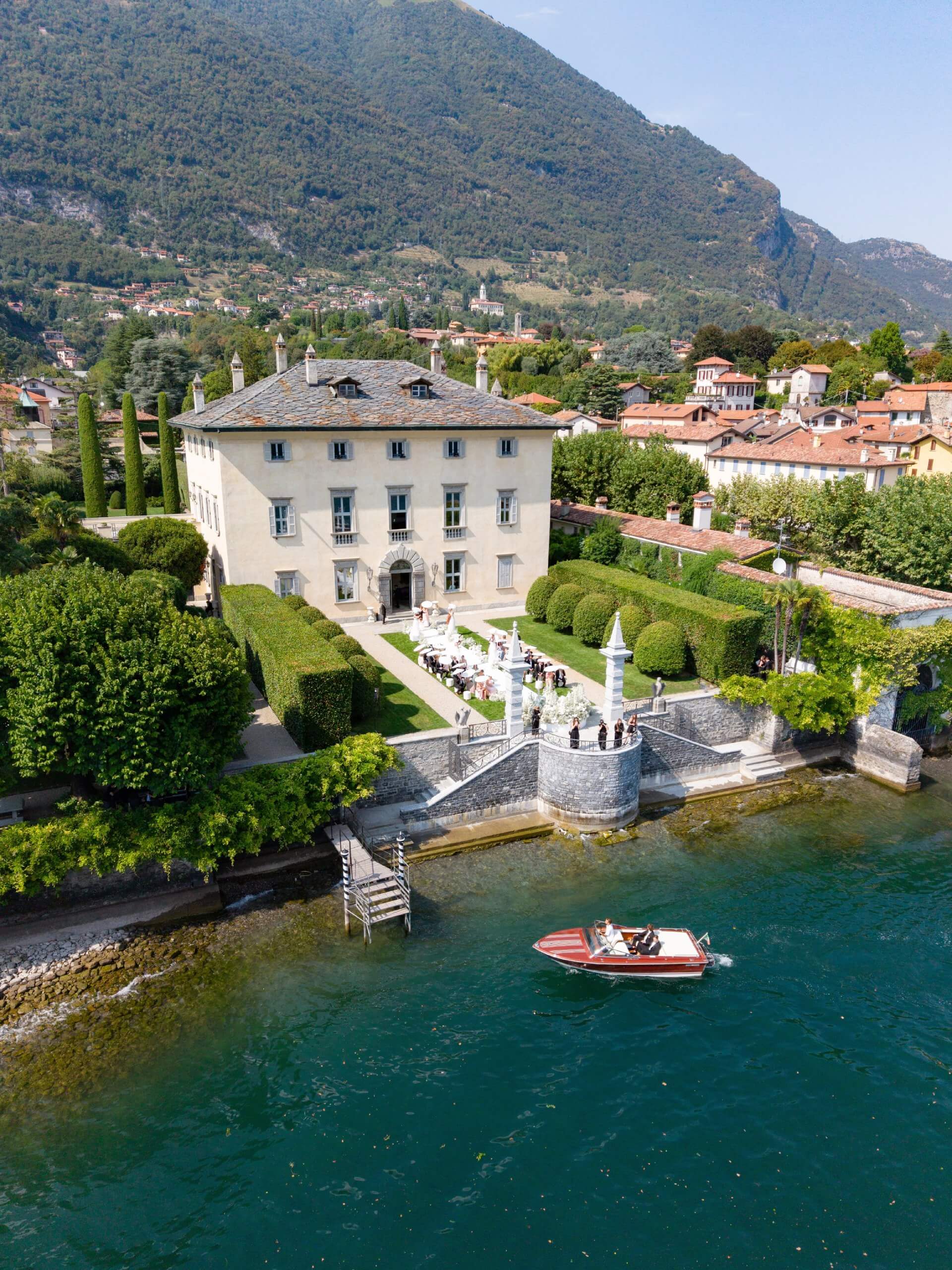
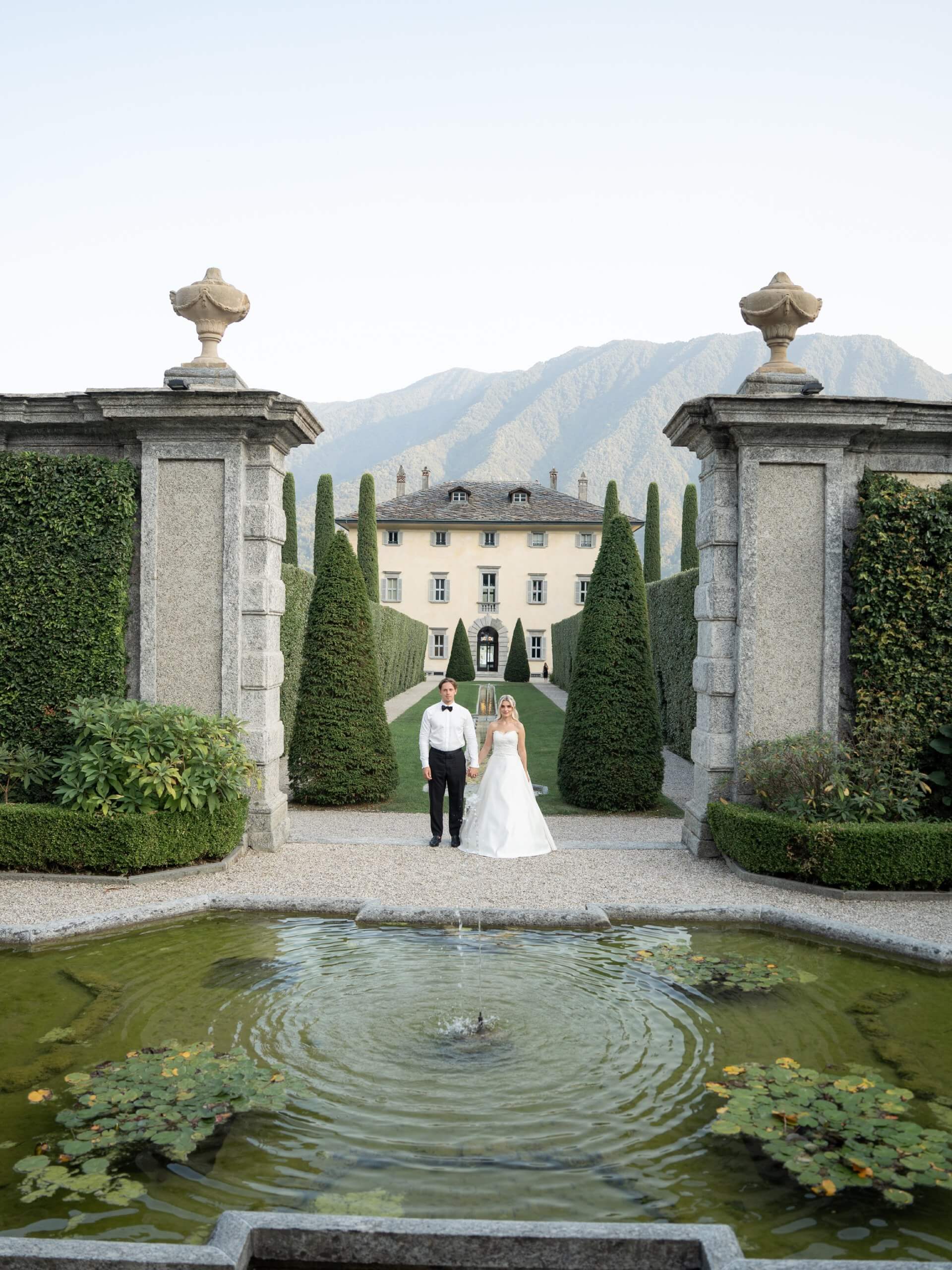
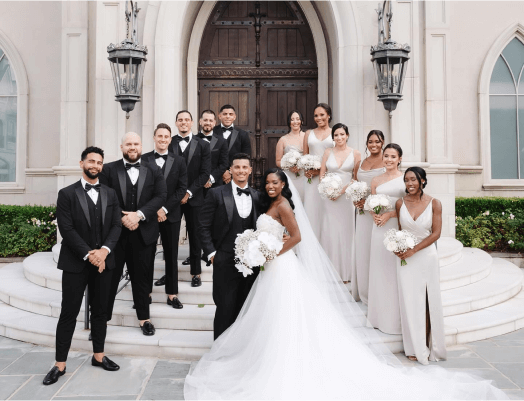
Ossuccio, on the western shore of Lake Como, has two famous villas within sight of each other, and people often mix Villa Balbiano up with Balbianello. It has earned a reputation as one of most beautiful wedding venues in Europe: the lakeside house dates to 1680, appeared in House of Gucci in 2021, and still feels like a home that has hosted centuries of parties. Cardinal Durini bought it in 1787 and added a small church and a lighthouse, which has since collapsed. A spinning mill moved in during 1872, and restorations followed through the twentieth century. The terrace runs right down to the water, so every photograph shows the lake and nothing else.
The ceremony and reception both happen on the property, and the villa offers exclusive use, plus a changing room for the bride. It sleeps a large wedding party, so family and close friends can stay under one roof, and guest lists range from a handful to around 200. That range suits an elopement as well as a full lakeside dinner with a long table on the terrace. Fireworks over the water are possible, which few lakeside houses can offer. A couple who prefers a house with a past to a polished hotel will feel at home.
Villa et Jardins Ephrussi de Rothschild, French Riviera, France
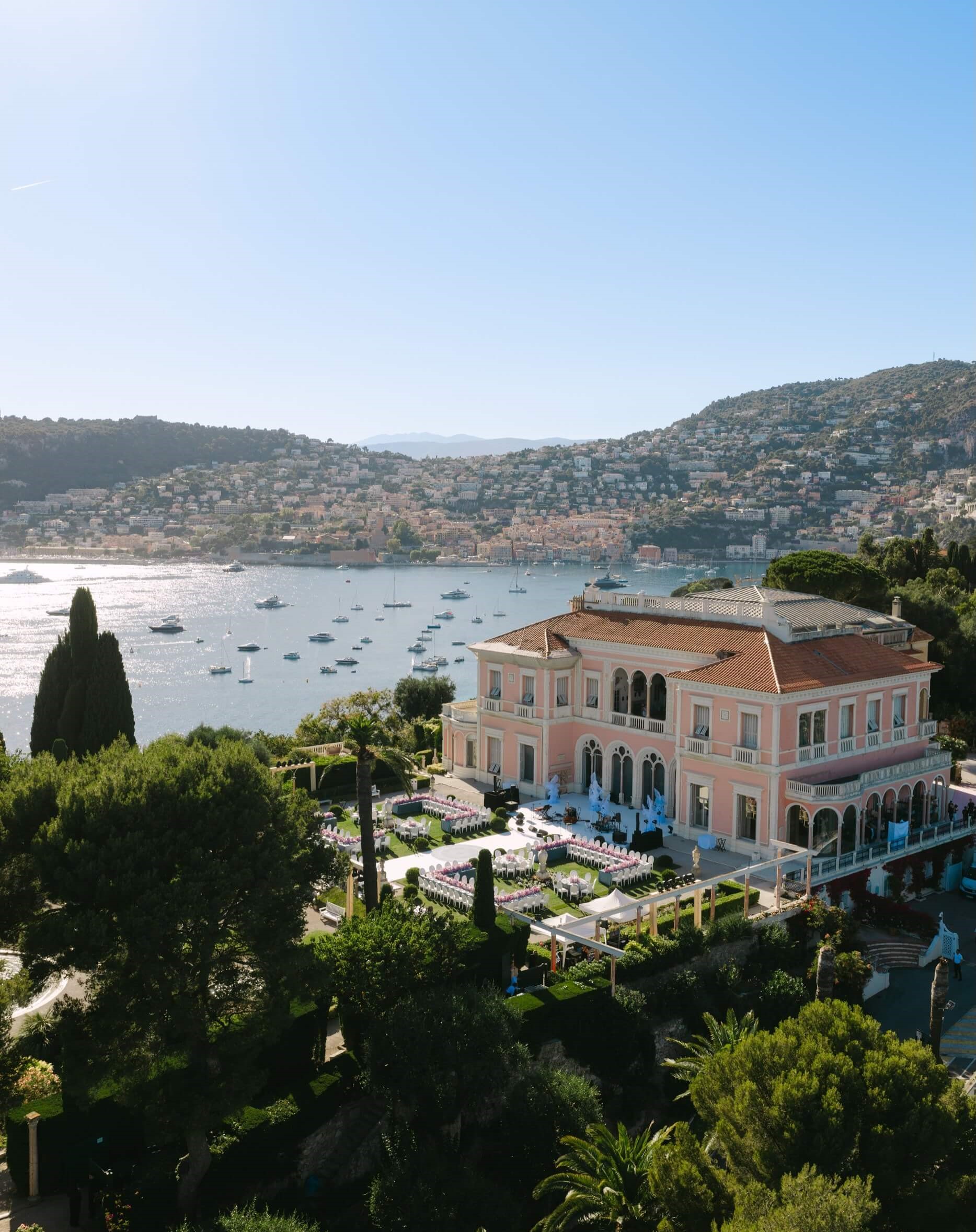
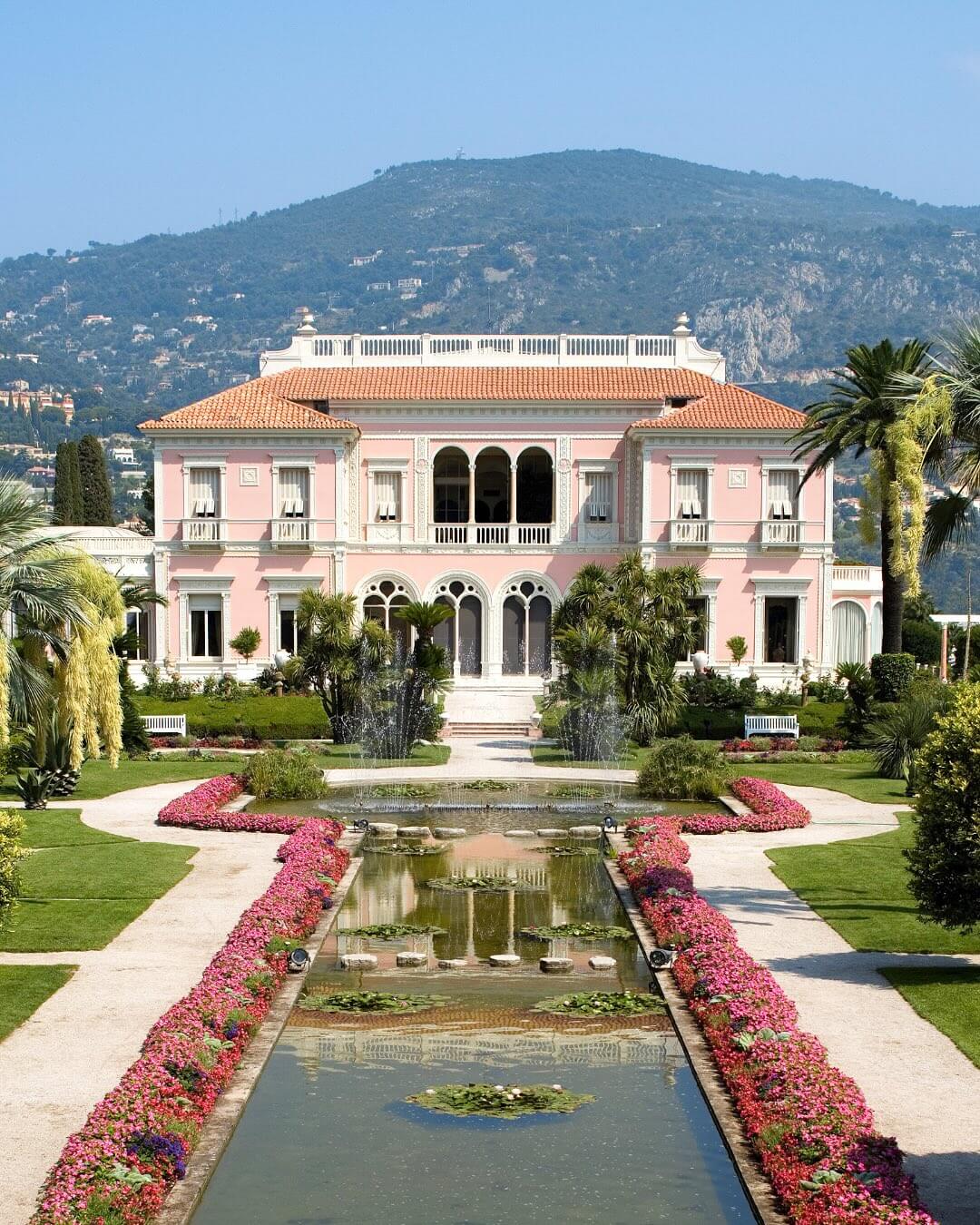
On Cap Ferrat, the Villa Ephrussi de Rothschild owes its pink walls to Béatrice Ephrussi de Rothschild, who built it between 1907 and 1912 and laid out the gardens in the shape of a ship, inspired by her voyage on the liner Île de France. Nine themed gardens surround the house, from French and Florentine to Japanese and rose, with the Mediterranean showing on both sides of the headland. Fountains run across the main garden, so the grounds always have something moving.
Weddings at the Villa et Jardins Ephrussi de Rothschild are Riviera garden parties at heart: vows among the roses, an aperitif by the fountains, and the sea glittering behind every guest. The pink facade is a ready-made backdrop, and the ship-shaped layout gives the camera long lines to work with. For a sunset celebration among outdoor wedding venues in Europe, it stays elegant without feeling stiff. Dinner starts just as the bay goes copper.
Villa del Balbianello, Lake Como, Italy
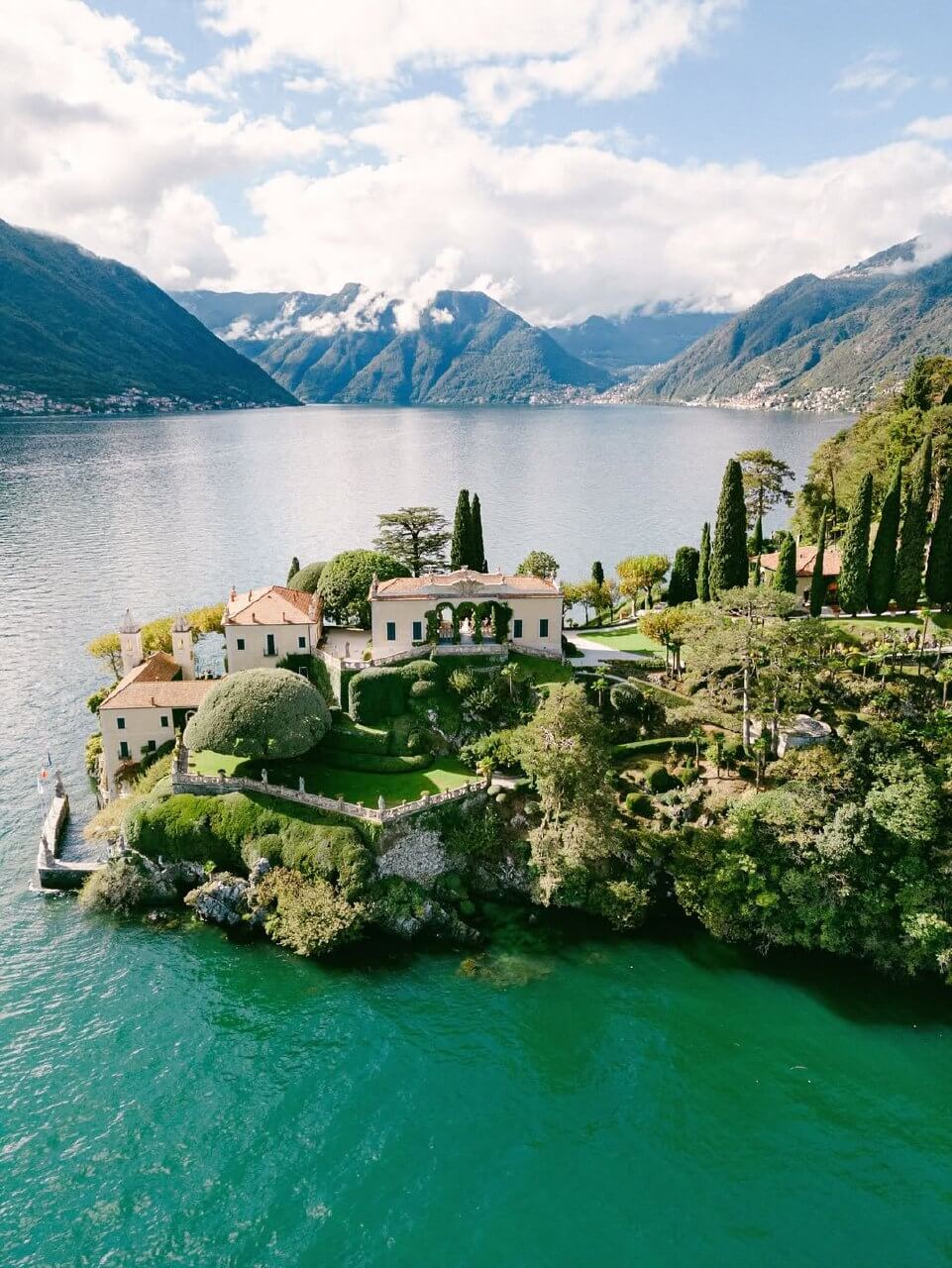
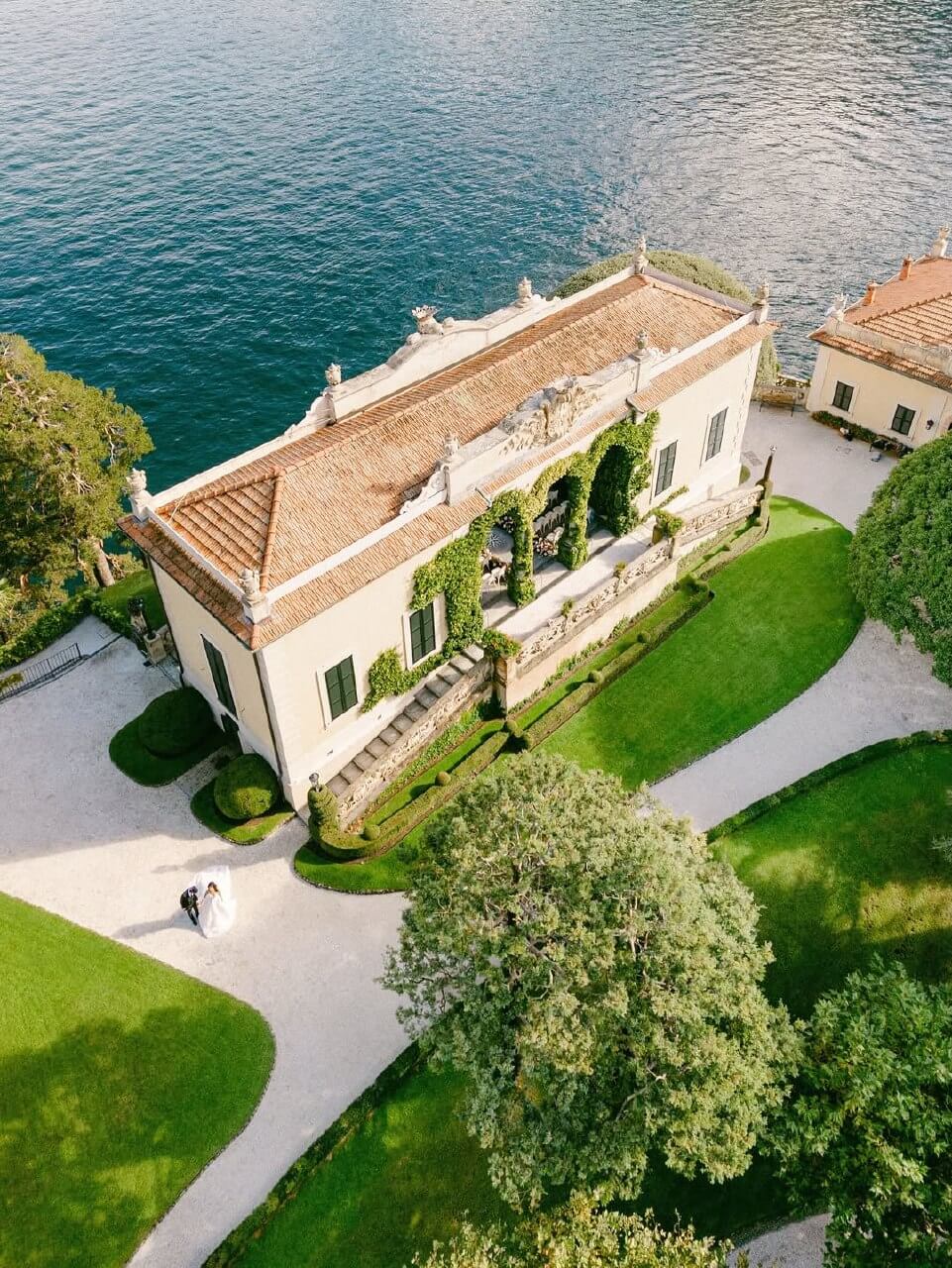
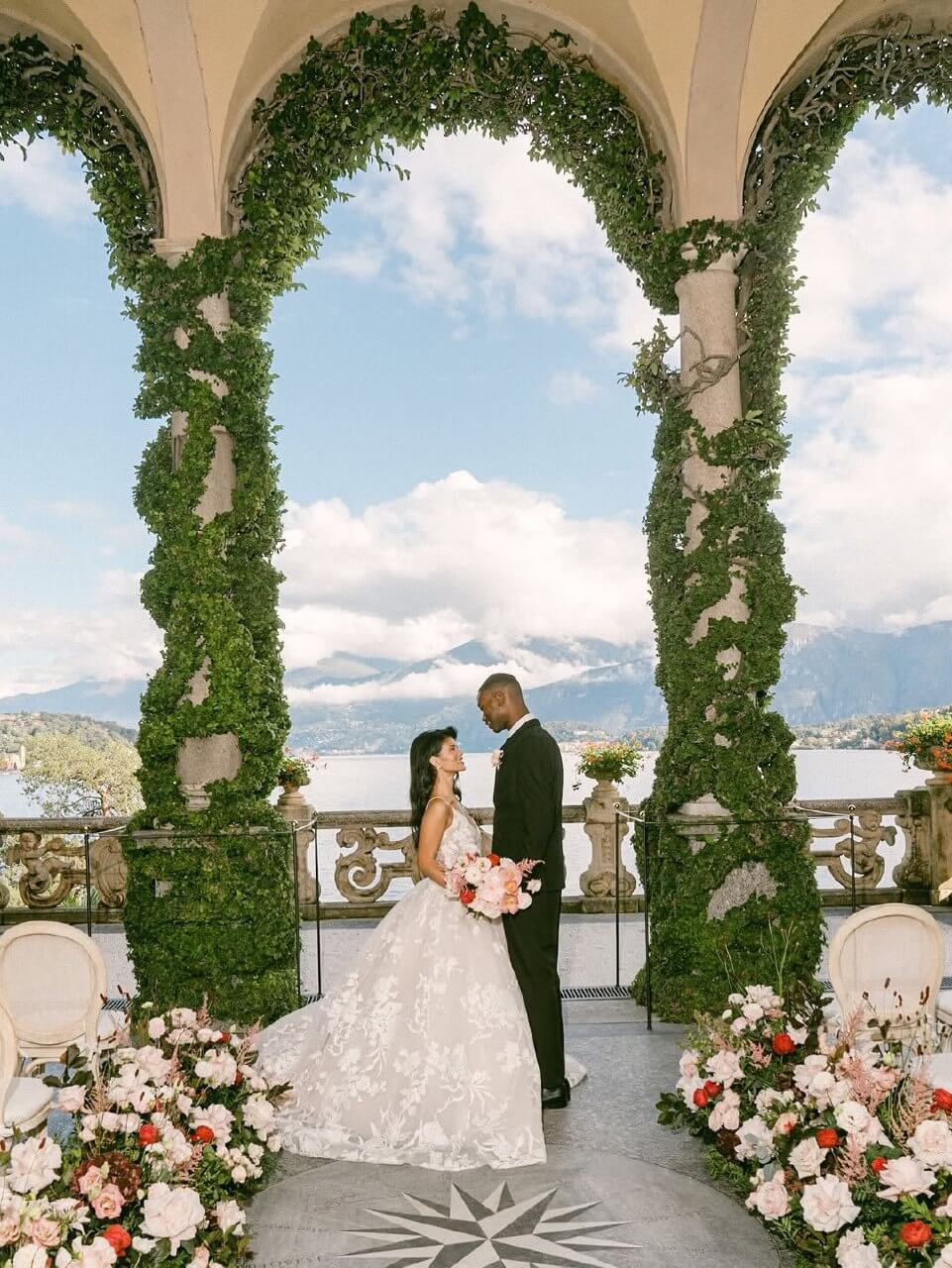
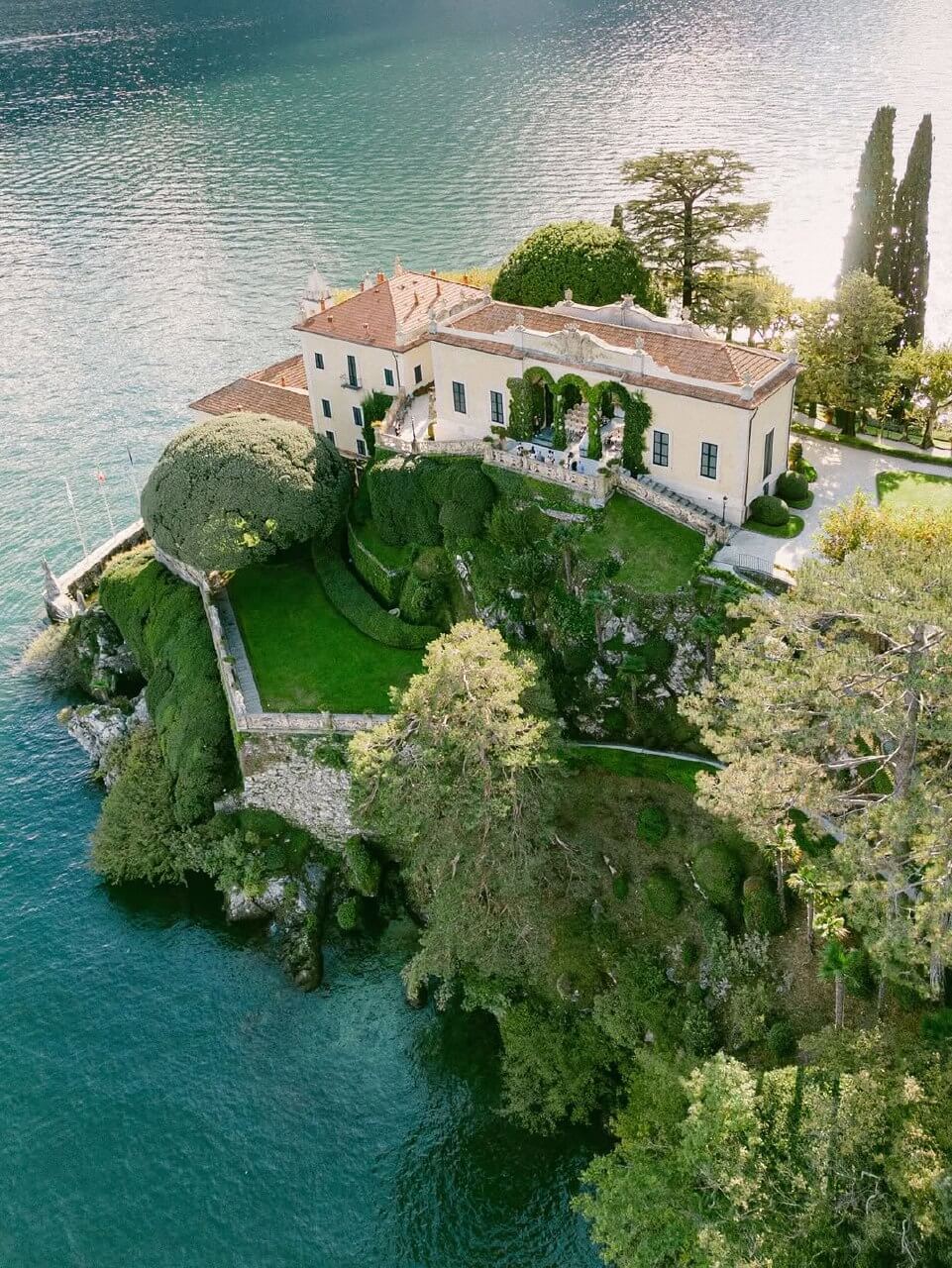
Villa del Balbianello rose on the Dosso d’Avedo peninsula in Lenno, where a Franciscan monastery had stood since the thirteenth century, and in 1785 Cardinal Angelo Maria Durini turned the site into a villa. Two years later, he added the loggia that still crowns the point. The explorer Count Guido Monzino left the property to FAI, the Italian National Trust, in 1988. Casino Royale and Star Wars: Episode II were filmed here, and Ranveer Singh and Deepika Padukone married on the grounds in 2018.
FAI rents the villa for events, and the capacity changes with the format:
| Space | Setting | Capacity |
|---|---|---|
| La Loggia Durini | Covered loggia on the point | Ceremony for 80 to 100, up to 60 seated |
| Terrazzo a lago | Lakeside terrace | Dinner for up to 130 |
| Loggia Segrè | Indoor and outdoor loggia | Dinner for up to 75, up to 100 combined |
| Terrazzo Canfora | Terrace | Buffet aperitif for up to 100 |
Civil and symbolic ceremonies take place at the villa, and the ceremony and reception both stay on site. There is no lodging, so guests sleep in nearby Lenno or across the lake. Opening seasons follow the visitor calendar, so the date is the first decision for anyone eyeing the top wedding venues in Europe. Few places repay early planning so well.
Fairmont Le Montreux Palace, Montreux, Switzerland
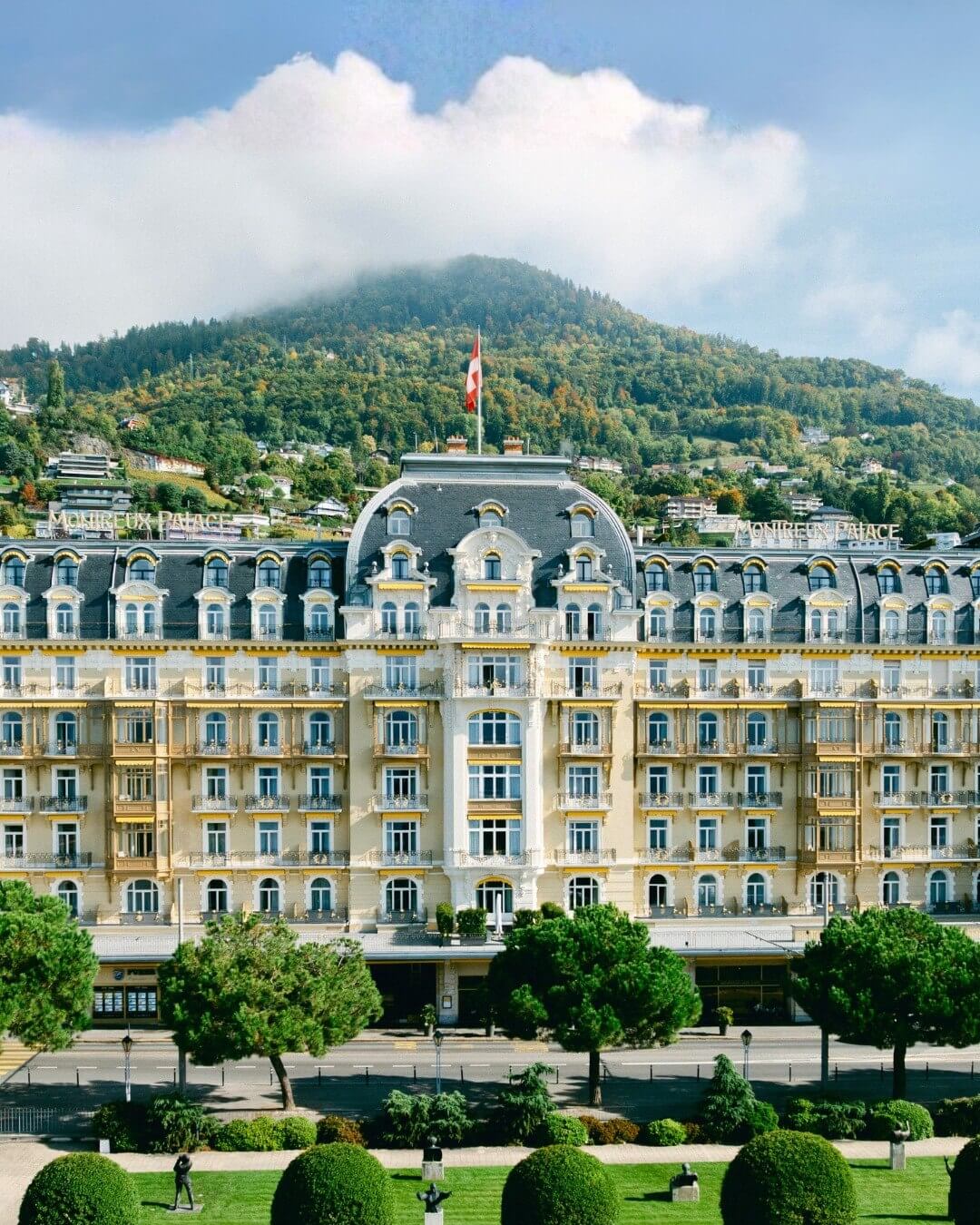
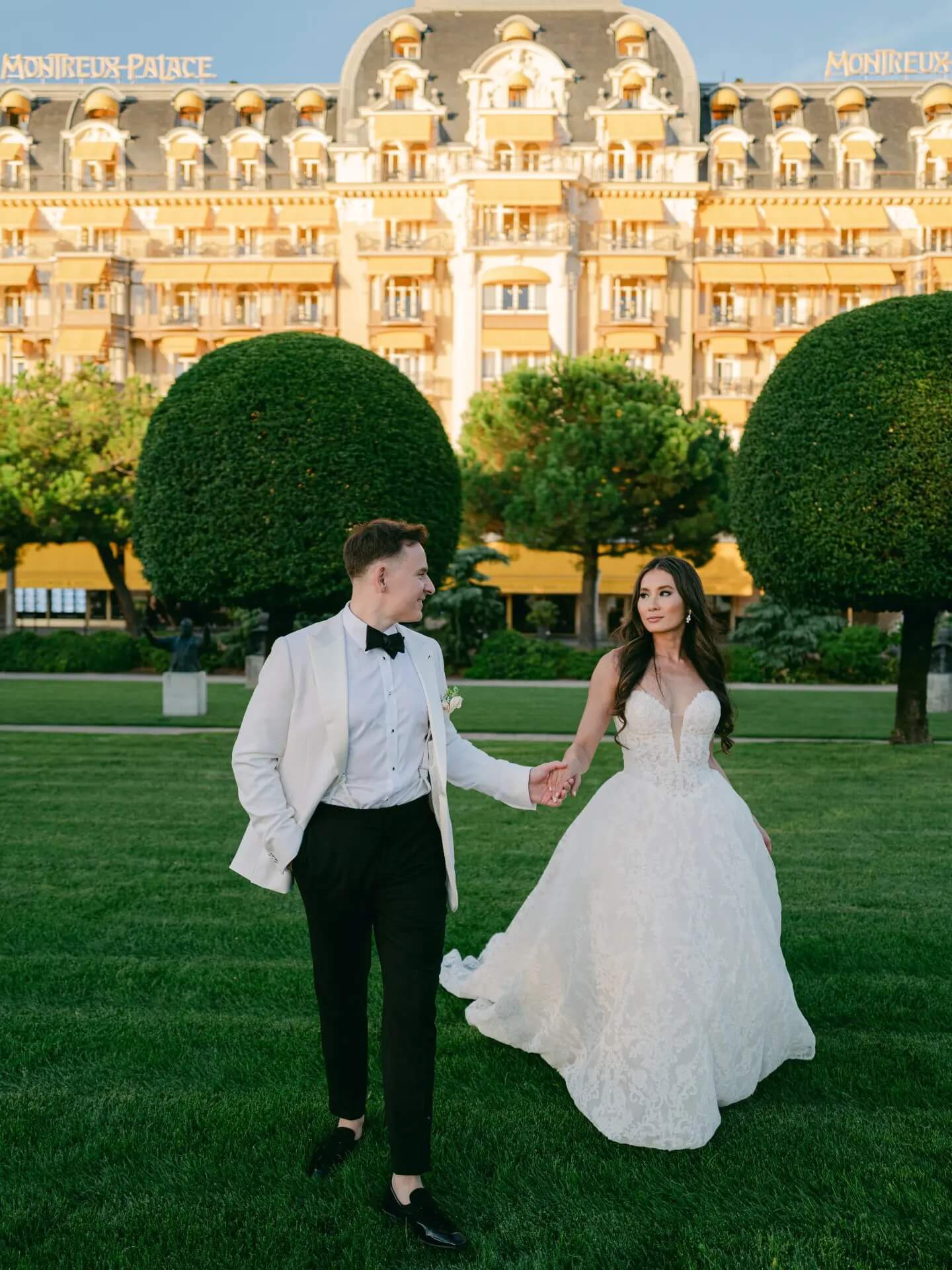
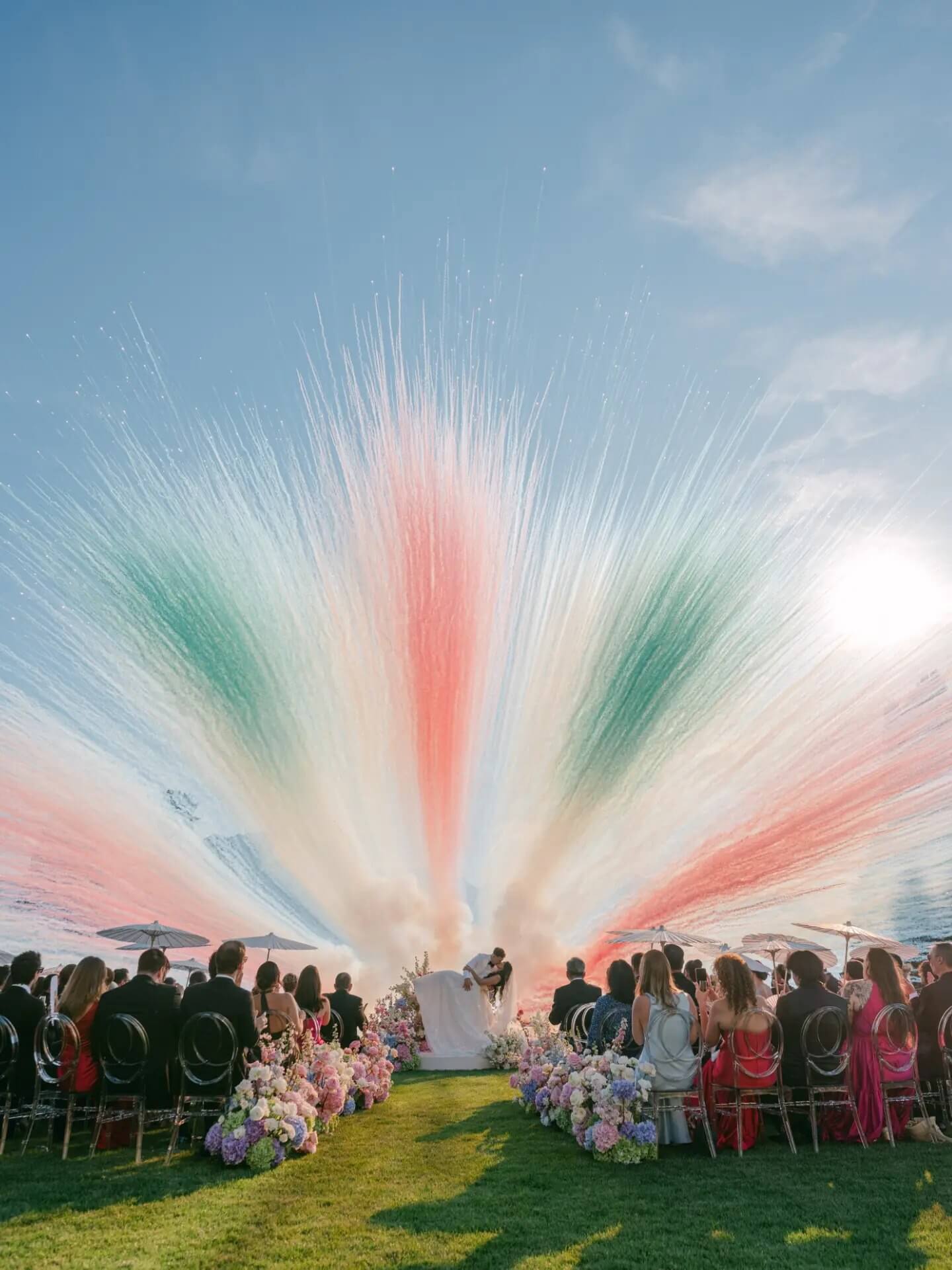
Vladimir Nabokov lived for about sixteen years in the Fairmont Le Montreux Palace, a Belle Époque hotel on Lake Geneva where the Montreux Convention was signed in 1936 and one suite is named after Freddie Mercury. It opened in 1906, designed by Eugène Jost, and was built in eighteen months. In the Salle des Fêtes, a crystal chandelier weighing nearly a ton and a half hangs beneath decor by Haberer. Couples browsing luxury wedding venues in Europe rarely find corridors with this much literature and rock history.
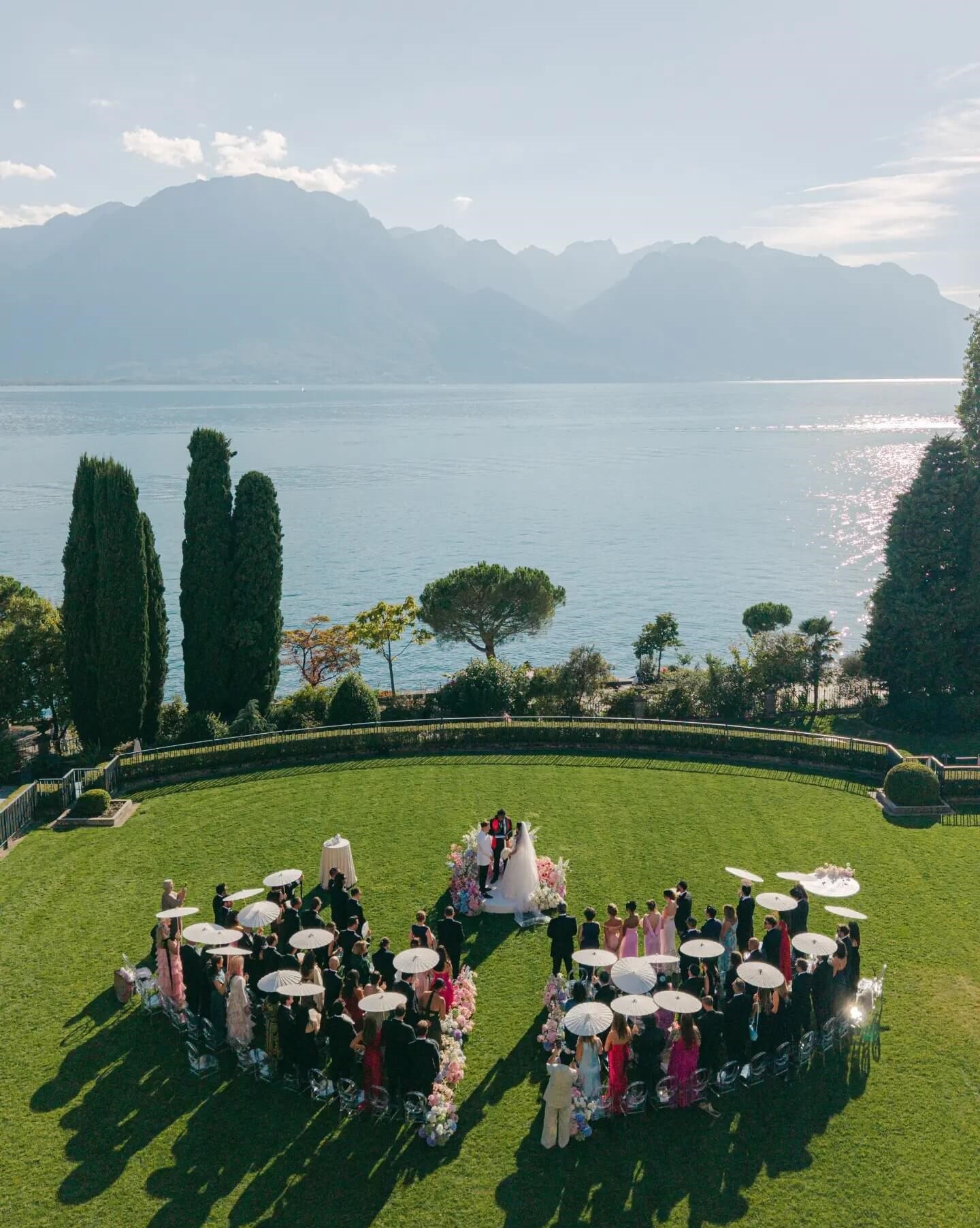
The hotel has 236 rooms and suites, so a wedding party stays in the building from the first toast to the last breakfast. Beyond the Salle des Fêtes, La Coupole, a lakefront terrace, and the Gardens of the Palace offer space for ceremonies and cocktails. Montreux’s festival crowd gives the town its own soundtrack, and a wedding here can lean into it. Grandeur with a bit of rock and roll is the brief this hotel answers best.
Château de Santeny, Paris region, France
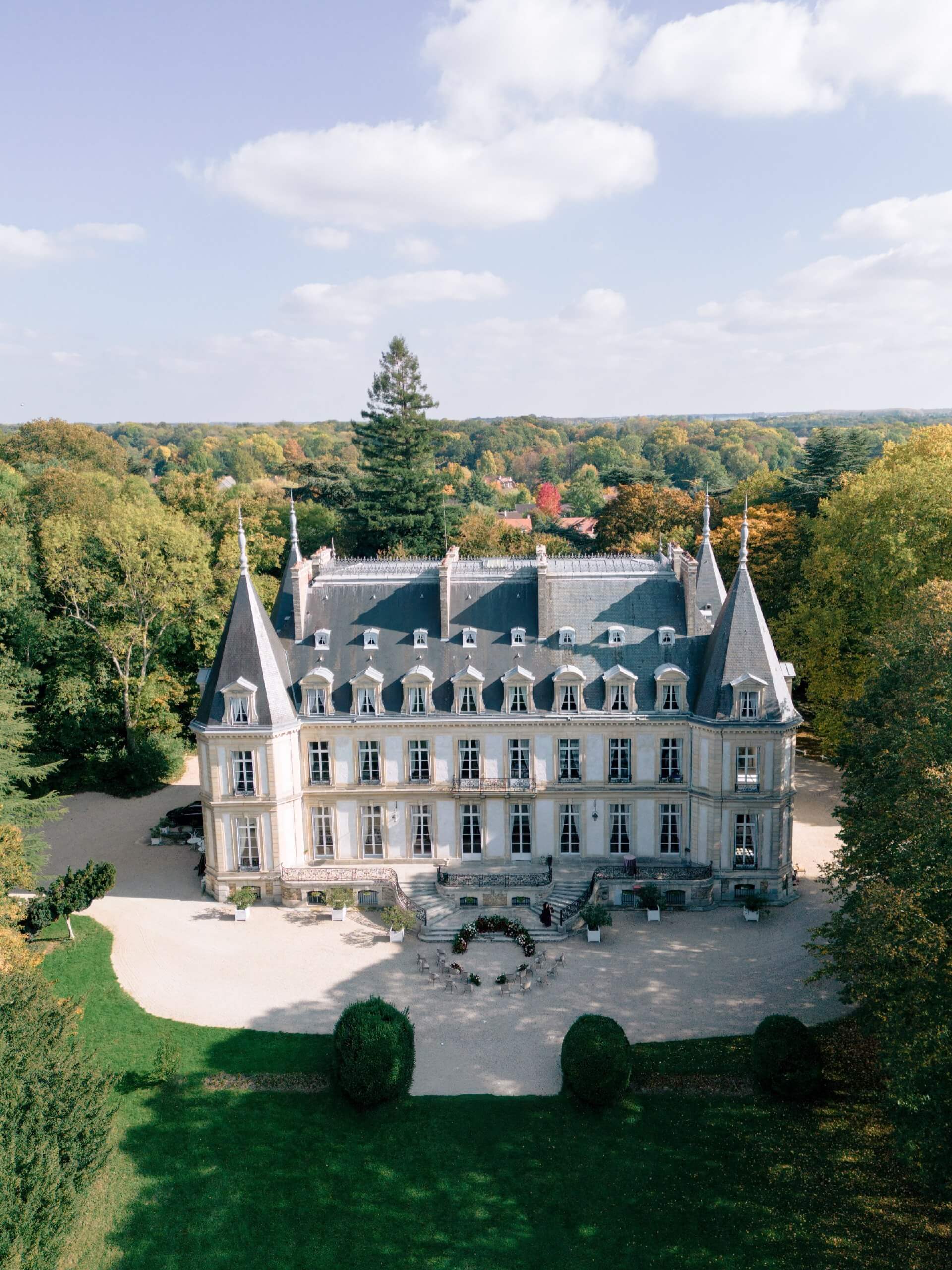
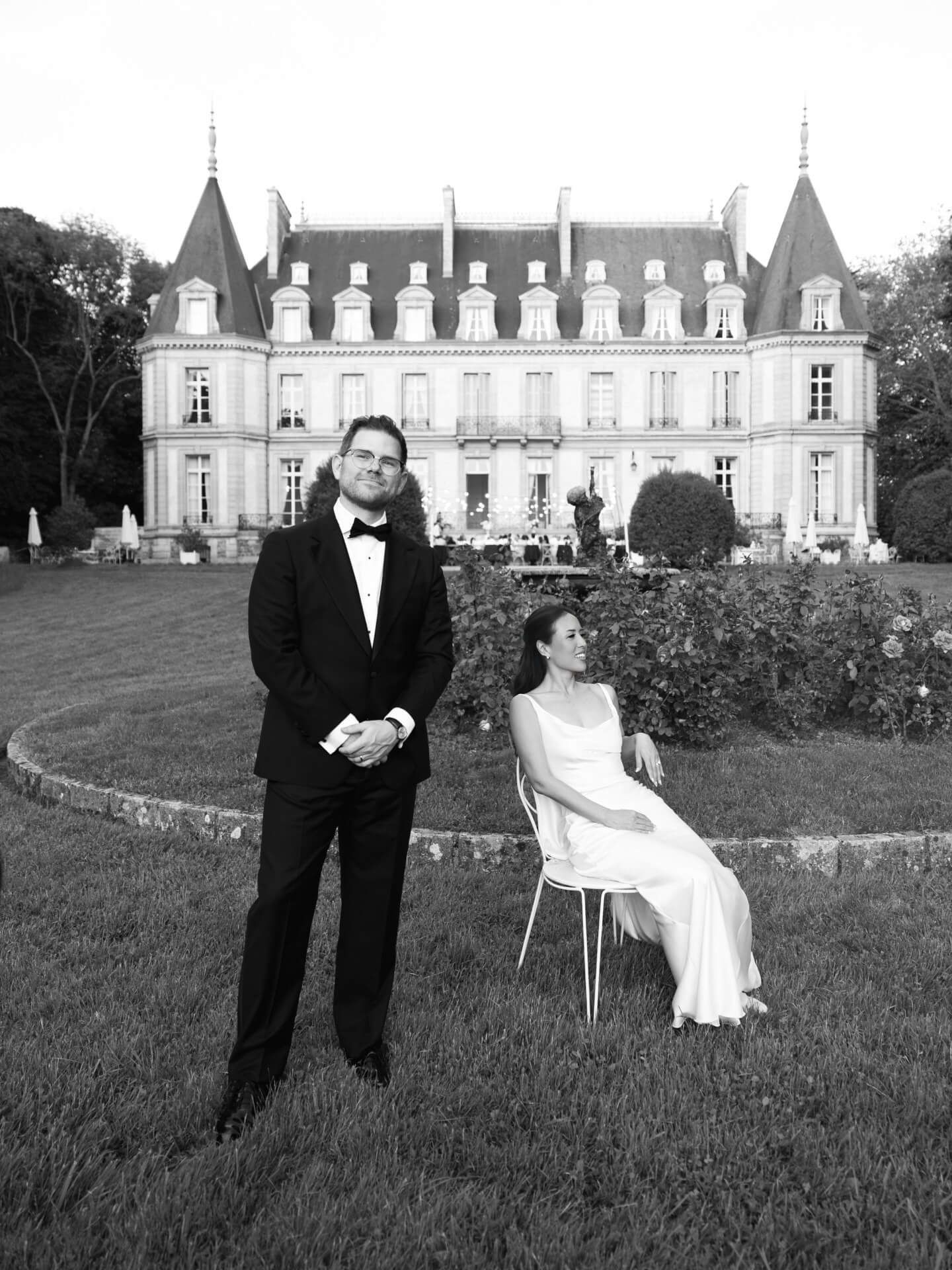
Half an hour from central Paris, Château de Santeny in the Val-de-Marne is a nineteenth-century house set in a roughly four-hectare English-style park. Its salons are named Victoria, Joséphine, Pompadour, Victor Hugo and Eugénie, and about 450 square meters of reception rooms open onto the lawns. As a castle wedding venue in Europe, this one is built for weddings first, and that shows in how the place is arranged. The château is hired privately for 20 to 200 guests for a seated dinner or cocktail reception.
Several salons give the day a choice of moods, so dinner and the party can use different rooms while the park stays open for air and photos. Outdoor ceremonies take place on the grounds, with a dedicated space for non-religious services, and the bride has a room of her own. These ceremonies are celebratory and not legal, since a civil marriage in France is signed at the town hall. Guests avoid a long transfer from the capital, and the park keeps the day flowing smoothly from the outdoor ceremony to the salon reception. It suits a couple who wants a classic French château wedding close to Paris, formal or relaxed as the guest list demands.
Villa Cimbrone, Amalfi Coast, Italy
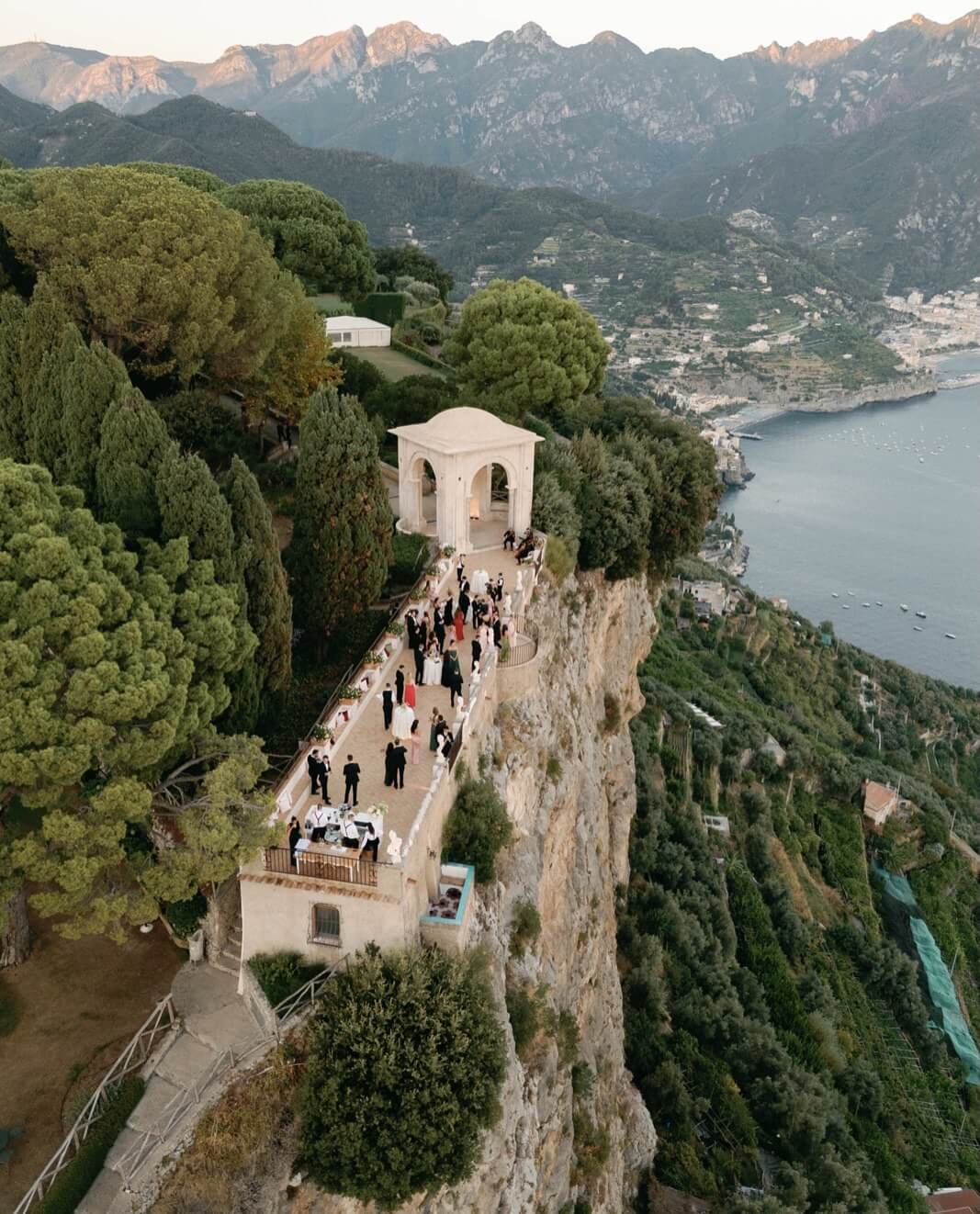
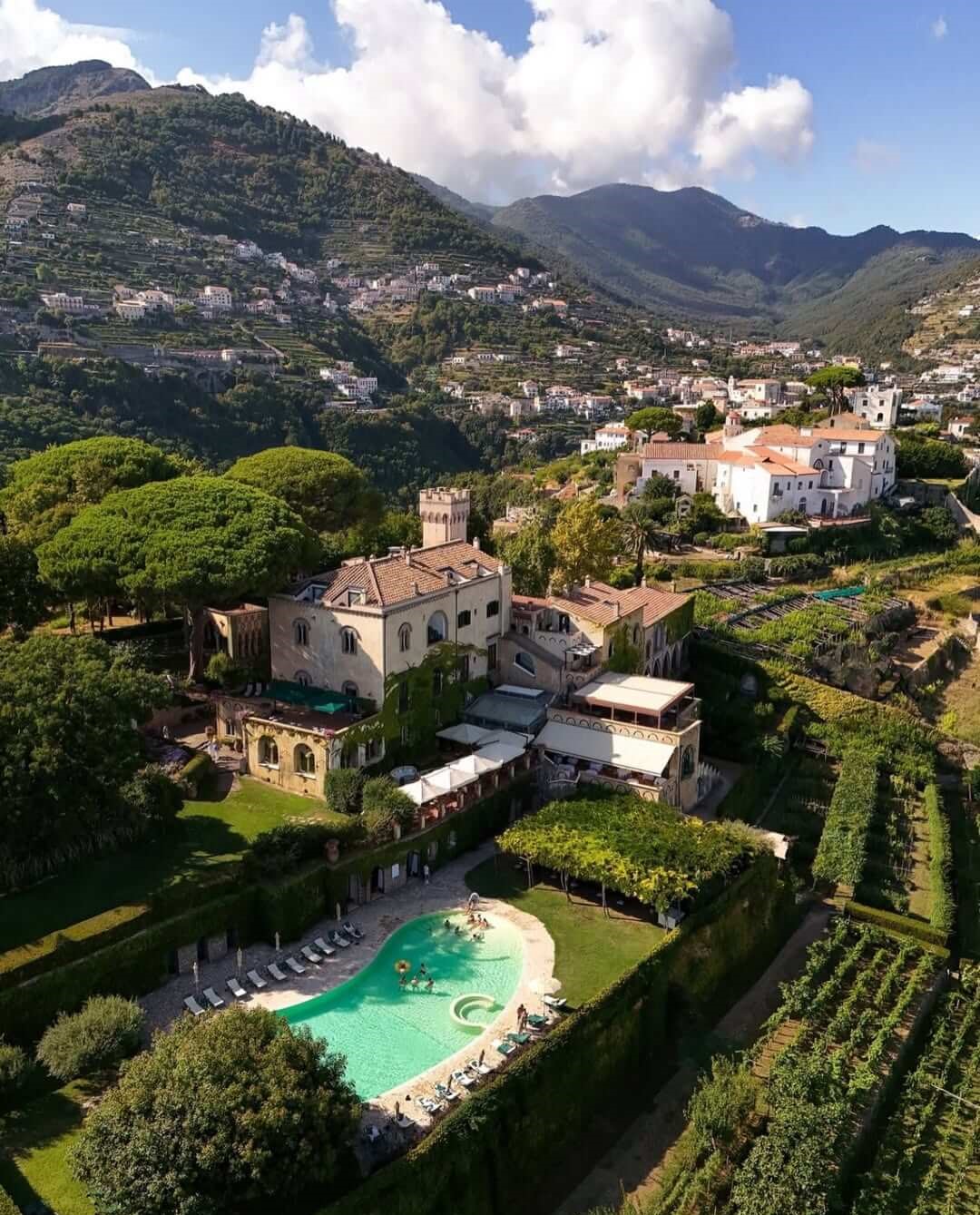
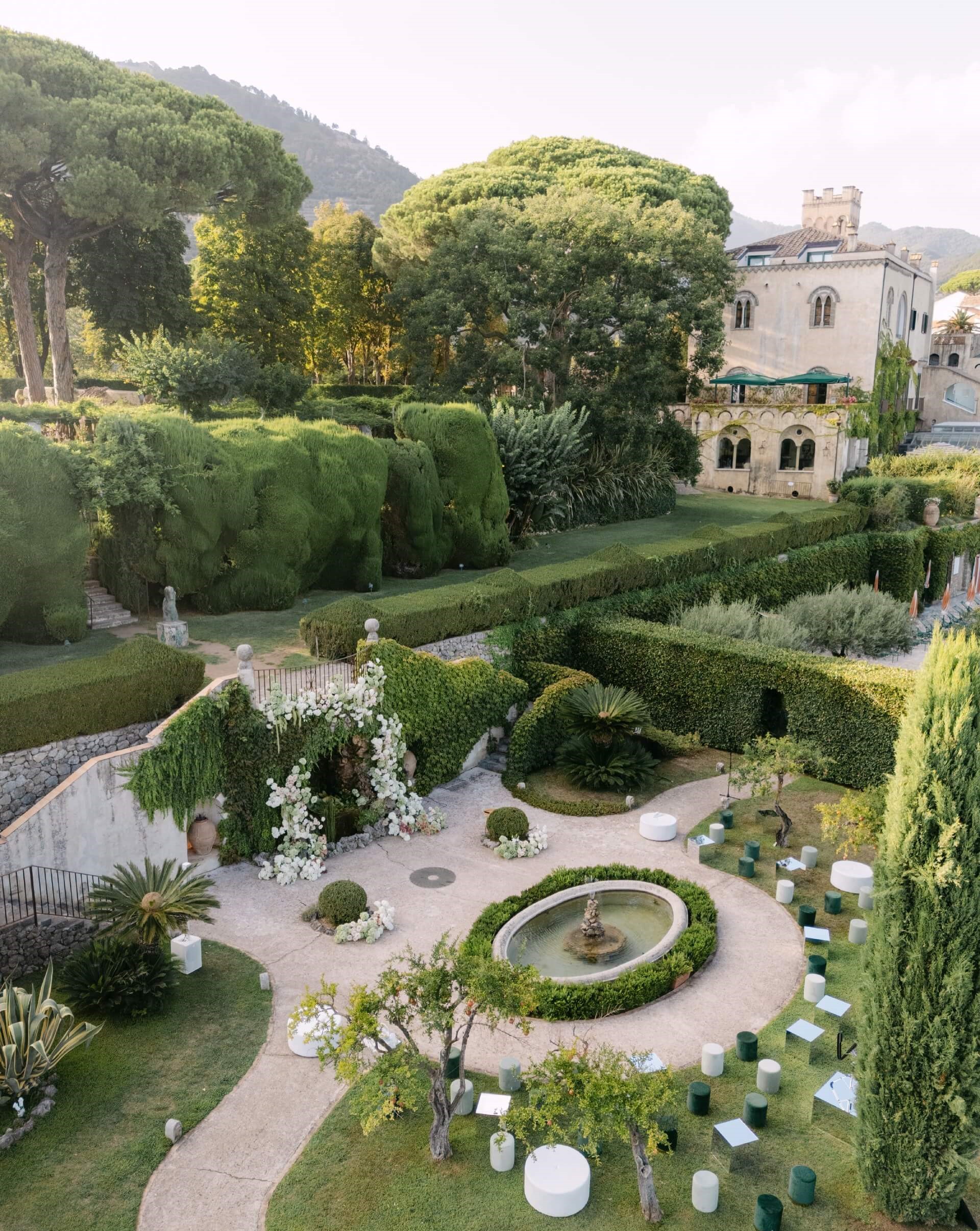
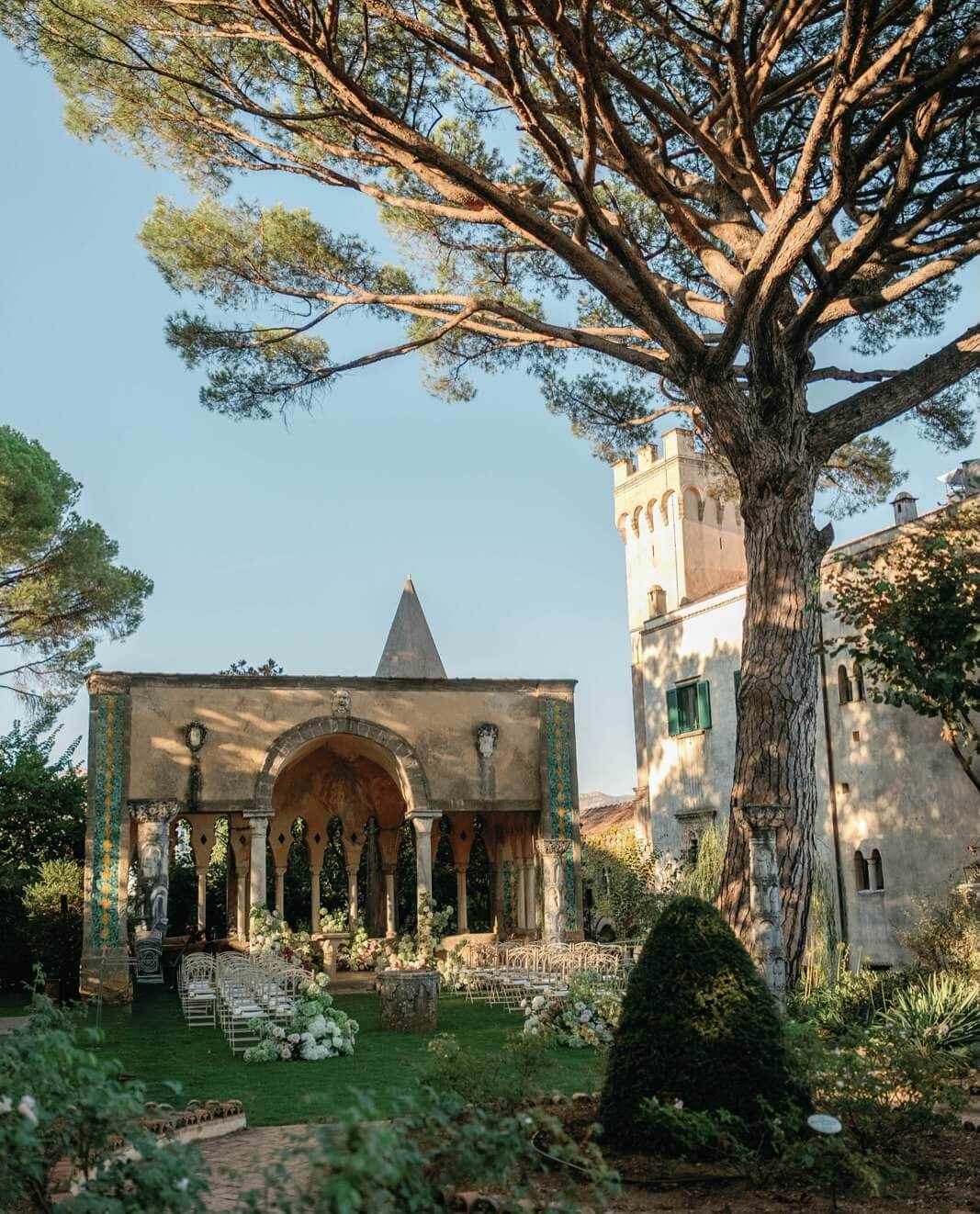
The Terrace of Infinity at Villa Cimbrone is a cliff-edge belvedere over the Amalfi Coast, and almost everyone who visits Ravello walks straight toward it. The terrace alone puts the villa on any list of beautiful wedding venues Europe has to offer. Ernest William Beckett, later Lord Grimthorpe, bought the villa in 1904 and enlarged it and its gardens with Gothic, Moorish and Venetian touches. The Bloomsbury circle came to stay, and Greta Garbo followed in 1938. The Vuilleumier family has owned the place since the 1970s.
Garden ceremonies suit Protestant, Jewish, non-denominational, and symbolic services, while civil and Catholic ceremonies take place in Ravello’s town center. Receptions use the panoramic terrace for cocktails and a Gothic-arched, colonnaded dining hall. The hotel has nineteen double rooms, so a smaller party can take the whole house. Plan the trip around a sunset on that terrace.
Castell de Sant Marçal, Barcelona, Spain
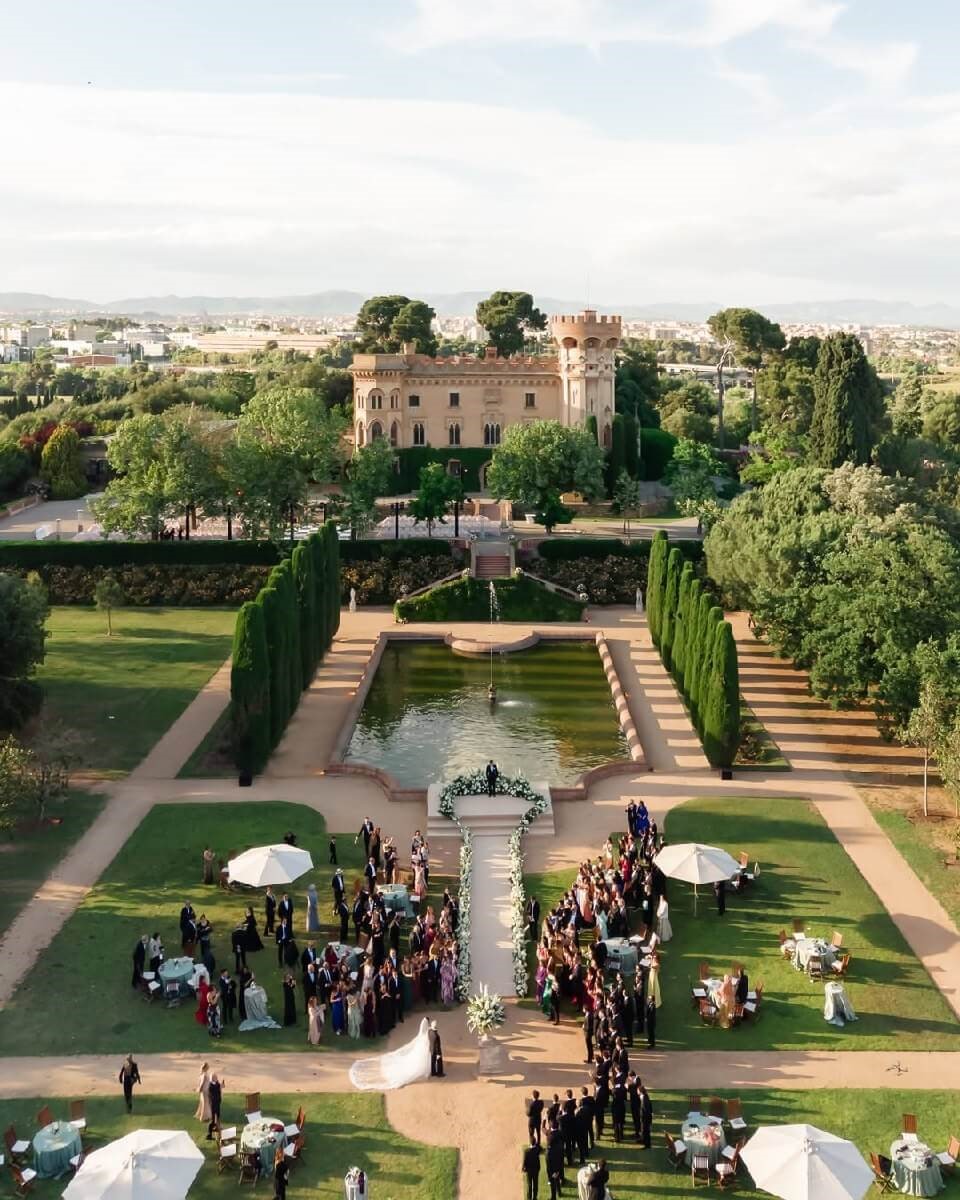
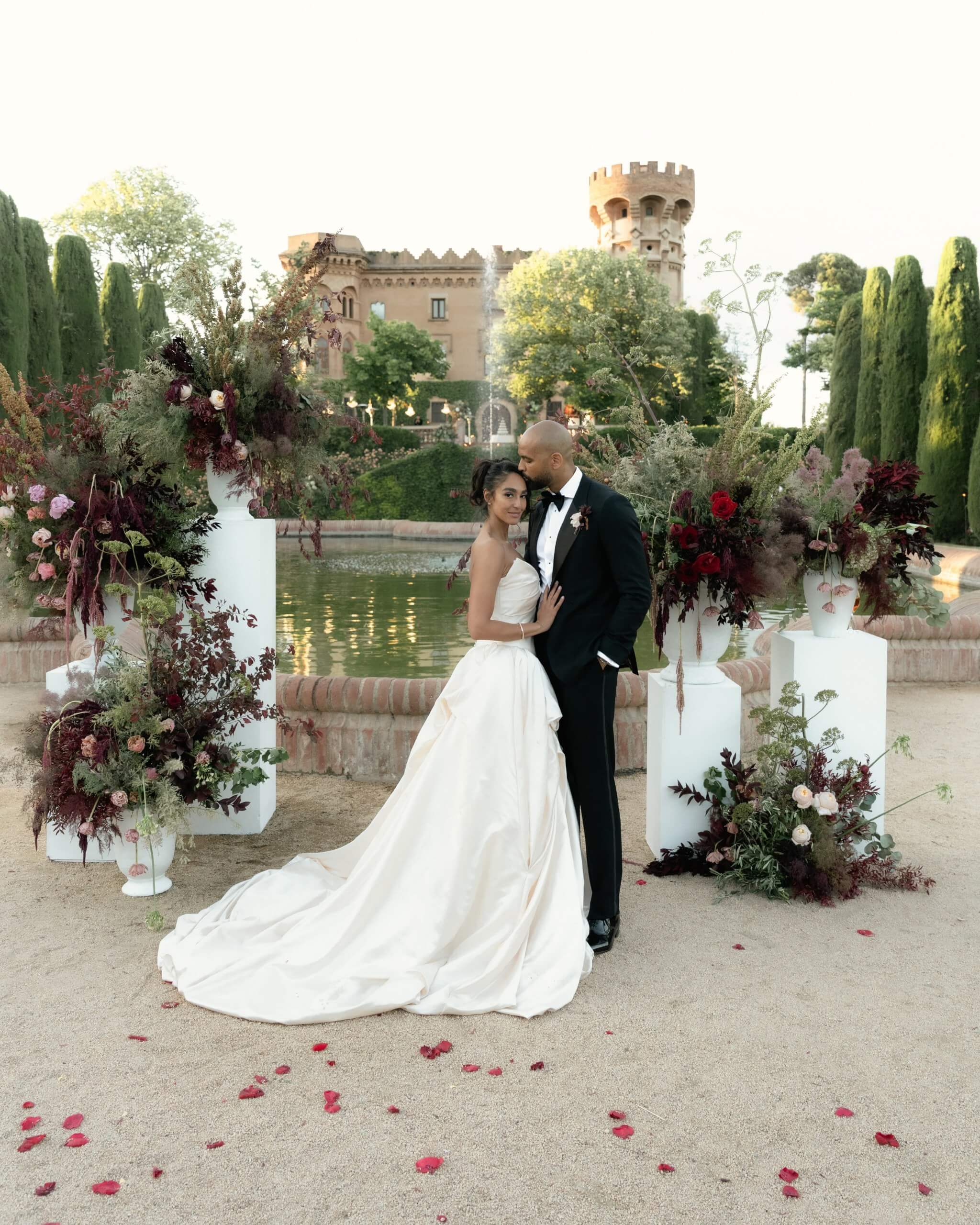
A moat still circles Castell de Sant Marçal, which stands in Cerdanyola del Vallès near Barcelona and takes its name from a church recorded in 1042. Peasants burned the castle in 1640 during the Reapers’ War, and in 1895 architect Gaietà Buïgas reworked it, keeping the square plan, central courtyard, and tower. That mix of a fortified past and nineteenth-century romance gives the courtyard its character, and it is rare for Gothic wedding venues in Europe to keep a moat and a courtyard this intact.
The castle sits just outside Barcelona, so guests can fly in, stay in the city, and drive to it. Weddings use the courtyard and Gothic chapel, which give the ceremony a medieval frame that needs little decoration. Think of it for a couple who wants a castle with scars, in a style that leans moody and romantic.
Villa D’Este, Lake Como, Italy
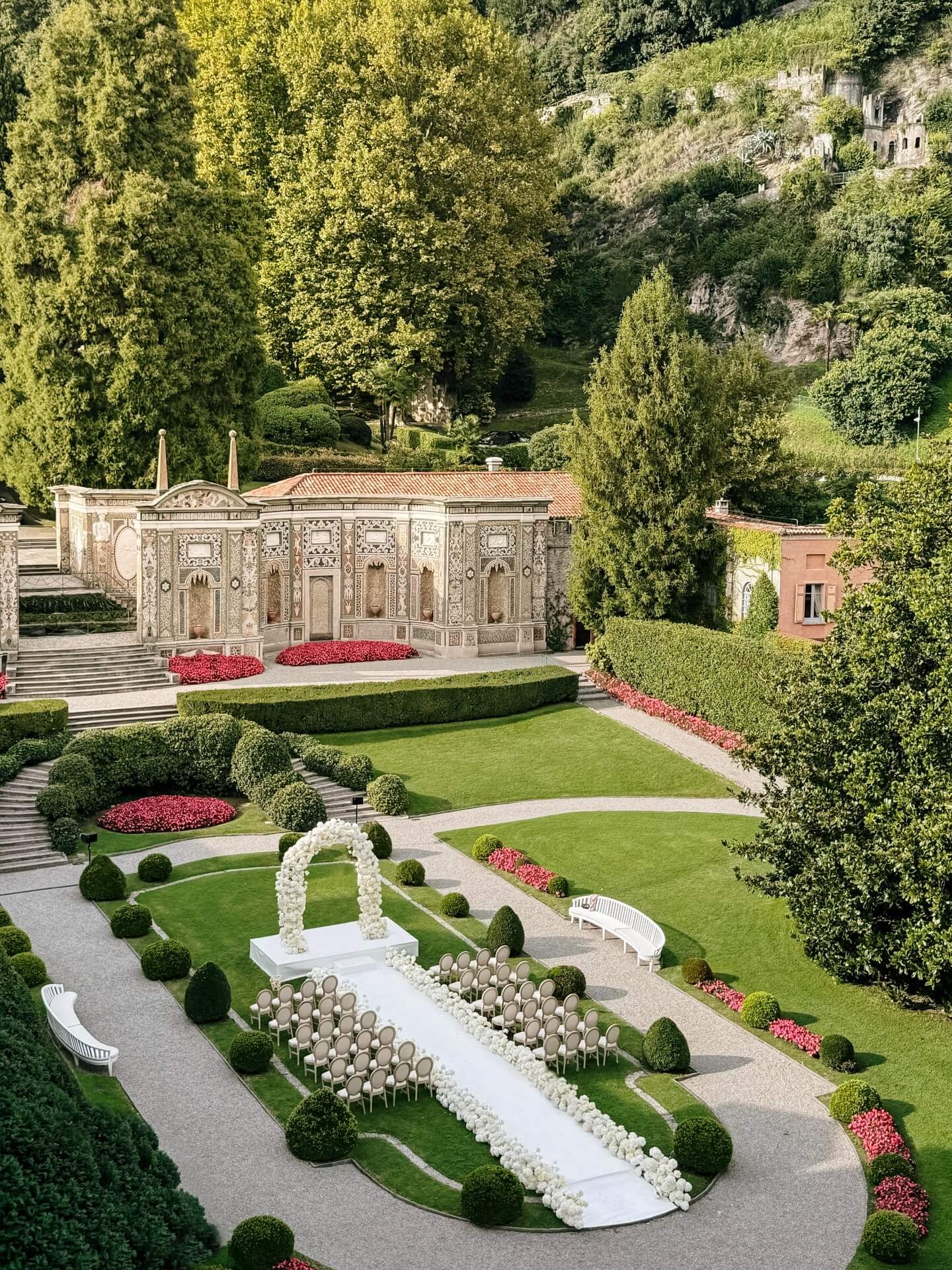
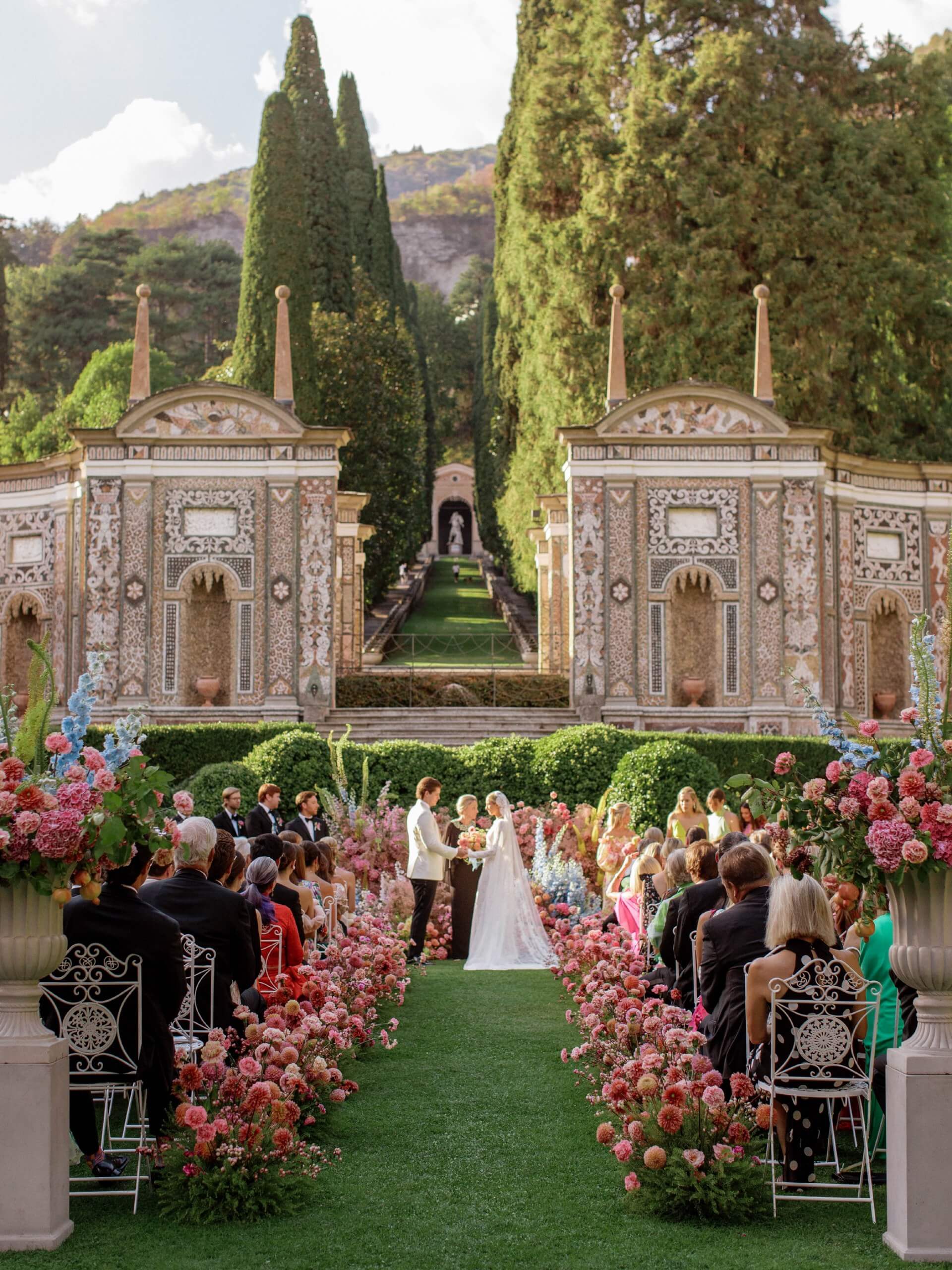
A heated pool floats on Lake Como at Villa d'Este, and that single image has made the hotel famous far beyond Italy, keeping it at the top of any list of luxury wedding venues Europe can offer. Cardinal Tolomeo Gallio commissioned the villa in 1568, and it became a hotel in 1873. The park covers roughly twenty-five acres of Baroque garden, with a Temple of Telemachus and a mosaic nymphaeum, and has hosted guests including Caroline of Brunswick, then Princess of Wales.
The hotel counts 151 rooms and suites, plus four private villas in the park, so a wedding party can sleep on the property and still have space to itself. Symbolic ceremonies take place in the Mosaic Garden, inside the same Baroque park that frames the lake. The Salone Impero seats up to 150 for dinner, and the Sala Colonne seats 60 for a smaller, more private evening. The wedding season runs from March to November, so the lake and the gardens are at their best for almost any date in that window. A couple who wants a grand lakeside wedding with old-world glamour and a guest list that fills a single ballroom will find everything on one site, and the water is in view from nearly every corner.
Schloss Leopoldskron, Salzburg, Austria
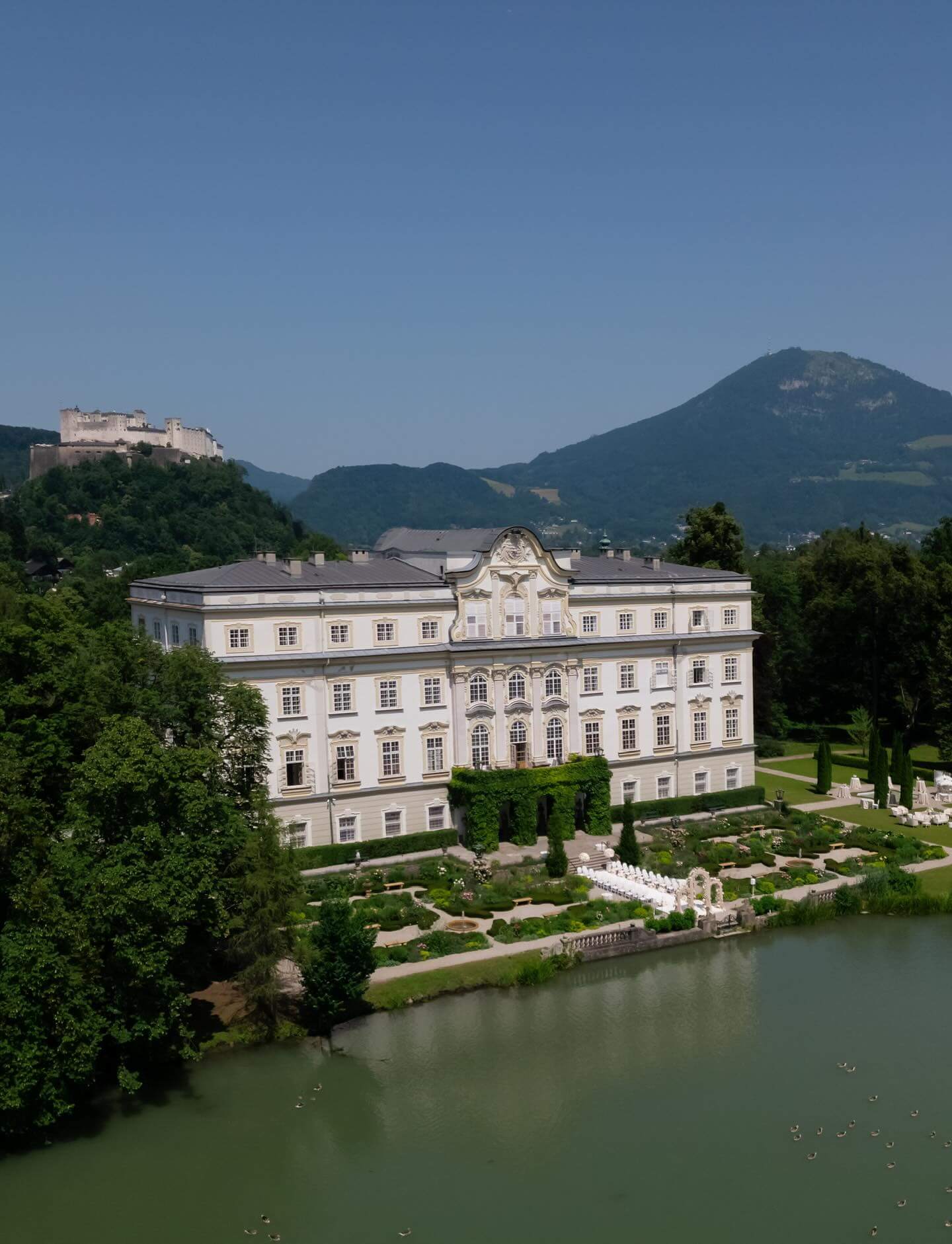
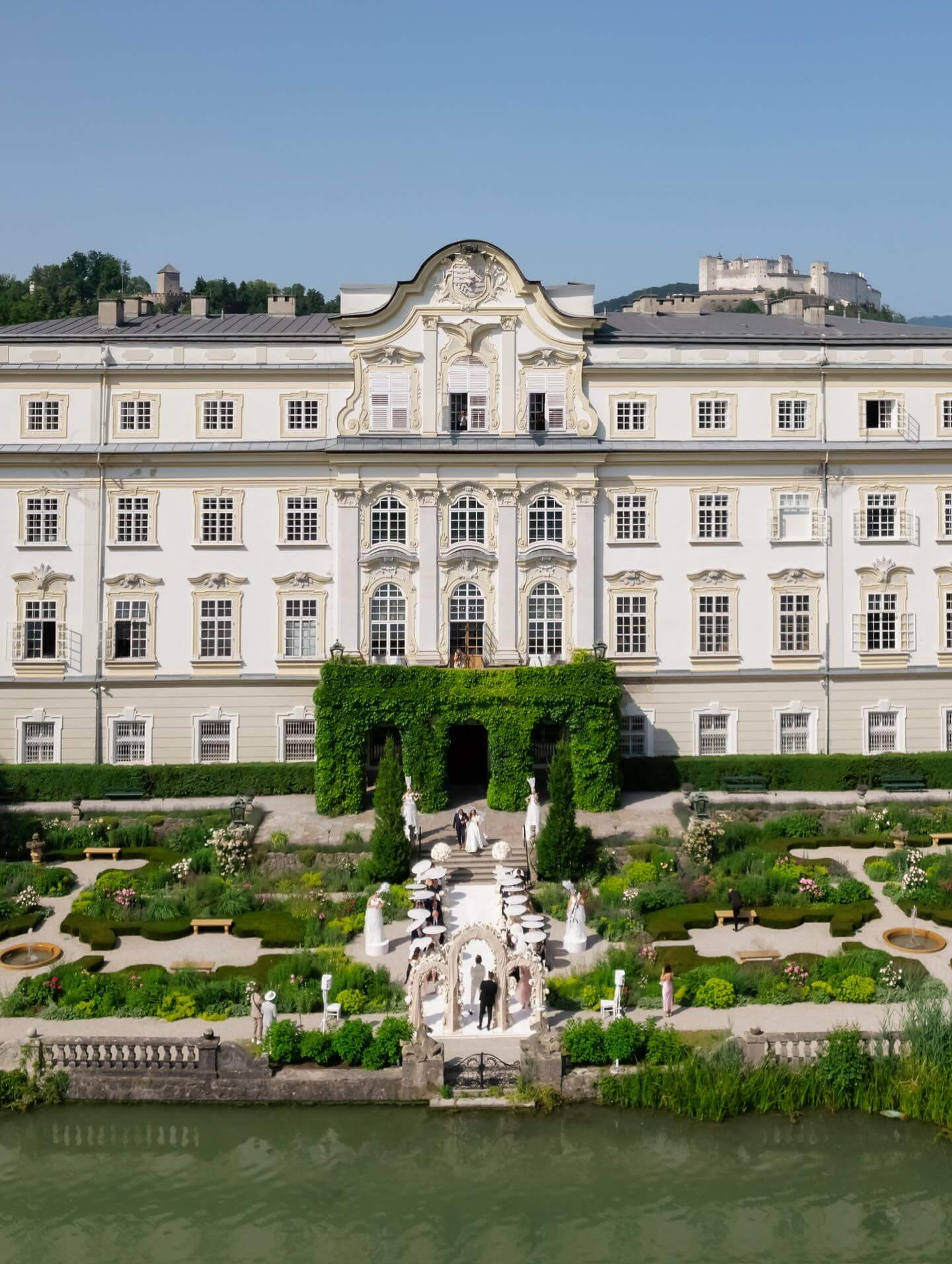
The Sound of Music legend is attached to Schloss Leopoldskron, but the palace never appears in the film; the scenes were shot on the neighboring Meierhof grounds. The truth is better, and more fitting for unique wedding venues in Europe than any film set: Prince-Archbishop Leopold Anton von Firmian commissioned the rococo palace in 1736, and Max Reinhardt restored it after 1918, adding the Library, the Venetian Room and a garden theatre. It became a birthplace of the Salzburg Festival, and the lake in front is the view couples remember.
Weddings use the Marmorsaal, which seats about 130 for a banquet, along with the Große Halle and the Venezianisches Zimmer. Outdoor ceremonies take place in the park by the lake, and the hotel offers exclusive use and bridal changing rooms. A wedding coordinator works on site. The real story, with Reinhardt and the festival, is the one to tell guests.
Palácio de Seteais, Sintra, Portugal
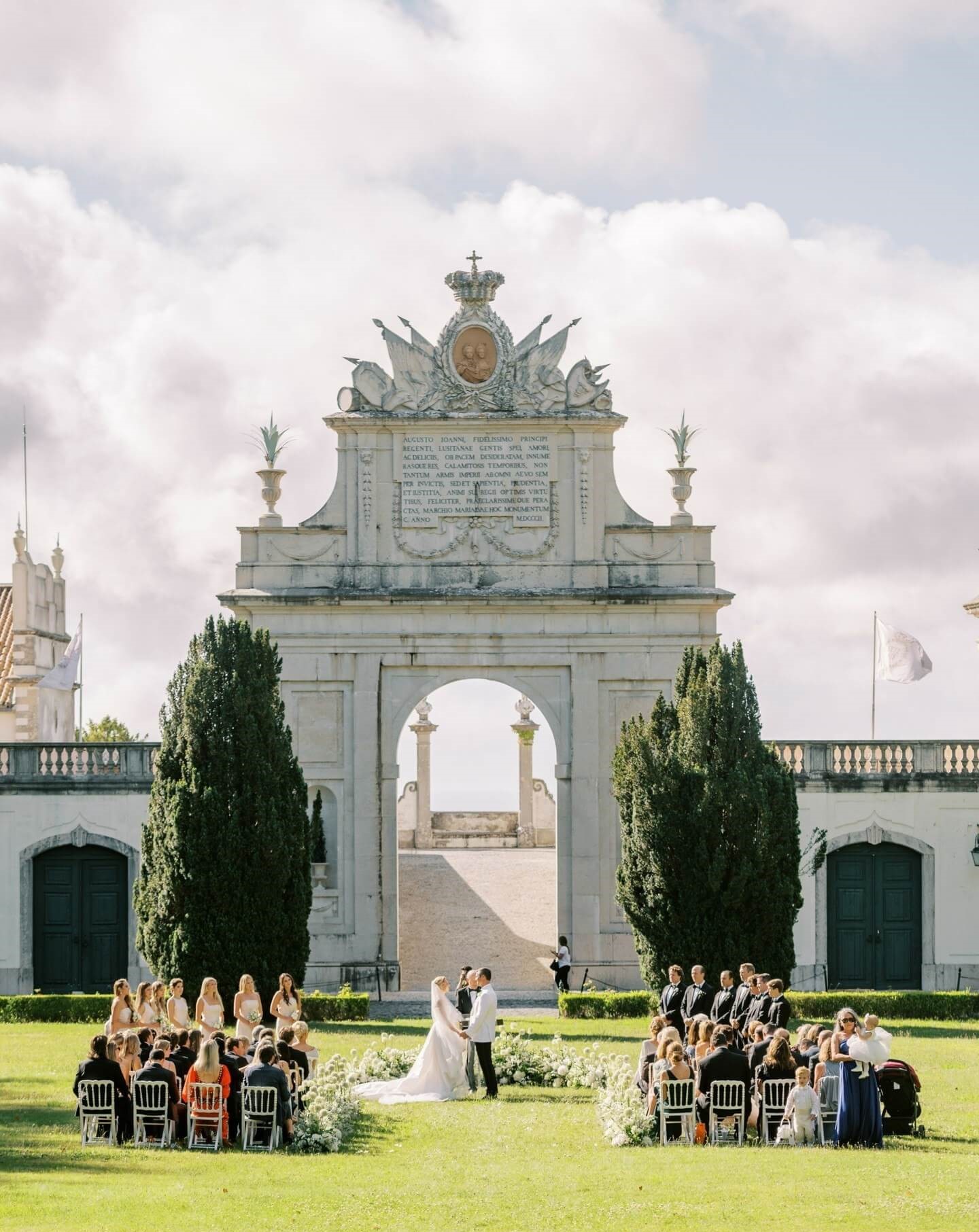
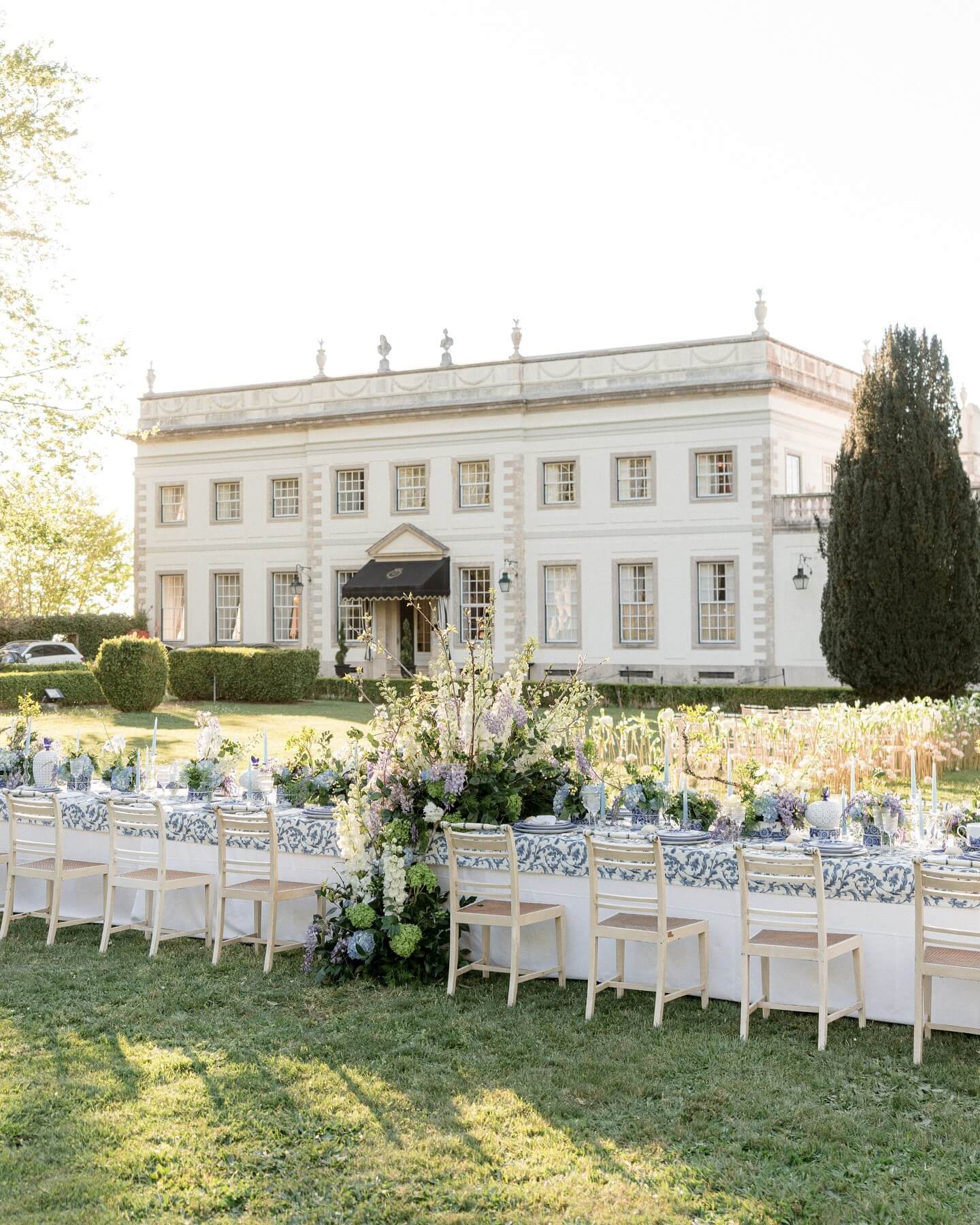
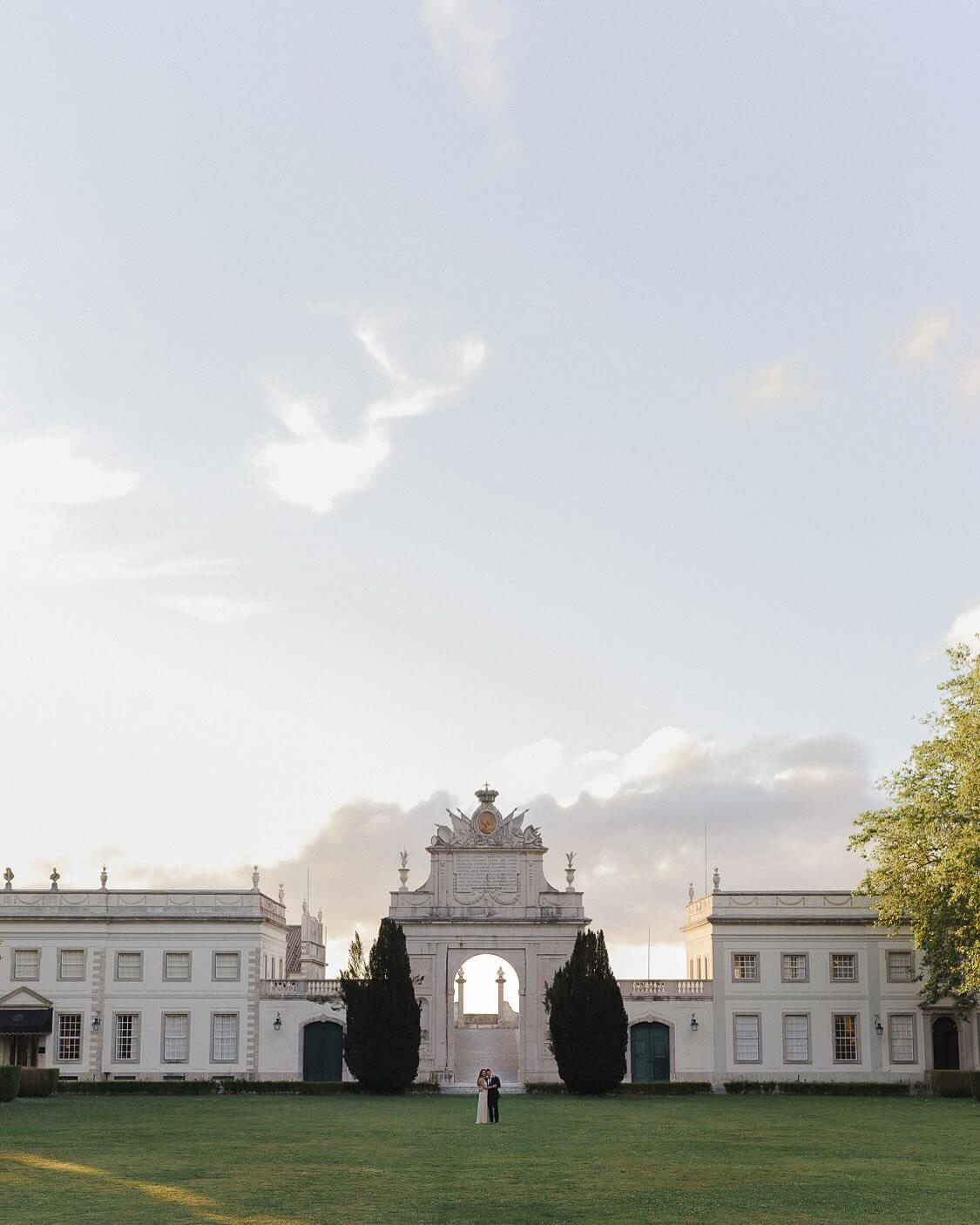
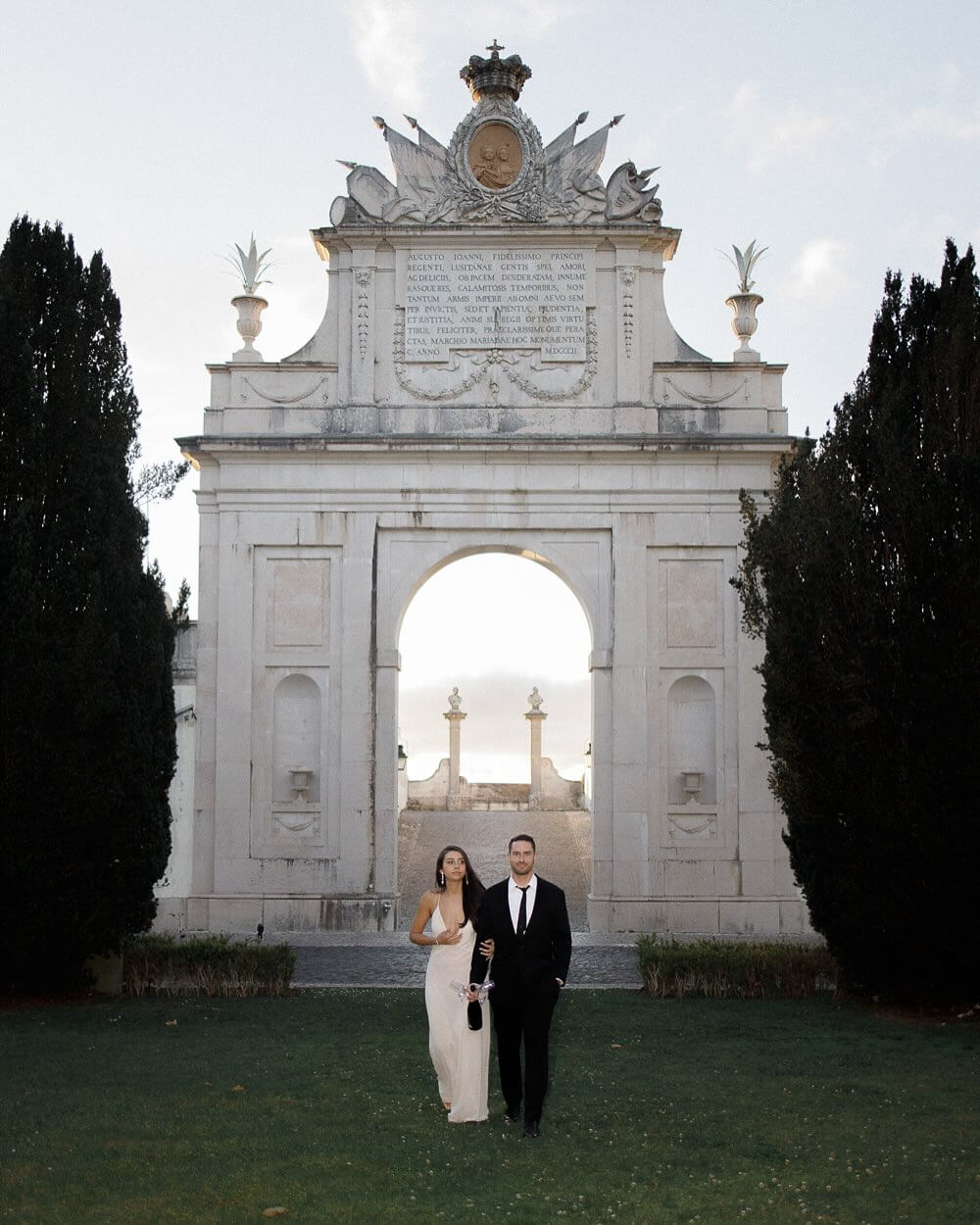
A triumphal arch joins the two wings of Valverde Sintra Palácio de Seteais, and a wedding photographer notices it first. The palace was built between 1783 and 1787 for the Dutch consul Daniel Gildemeester, and the Marquis of Marialva later doubled it into a symmetrical, U-shaped house with frescoes attributed to Jean-Baptiste Pillement's circle. The state bought it in 1946, and Raul Lino turned it into a hotel in the mid-1950s. The property now bears the name Valverde Palácio Seteais and sits on a hillside among Sintra’s forests and palaces.
Weddings here feel hushed and romantic, with the arch and the garden as the natural ceremony frame. Sintra’s forested hills give the garden a storybook backdrop, and the symmetry of the two wings provides built-in composition for photos. The frescoes add detail to indoor portraits. Picture a fairy-tale palace among the small wedding venues in Europee, with a guest list small enough to enjoy it and a classic, candlelit evening. It suits a couple who wants quiet elegance, with a long table, soft music, and the hills as the only neighbor.

Son Marroig, Mallorca, Spain
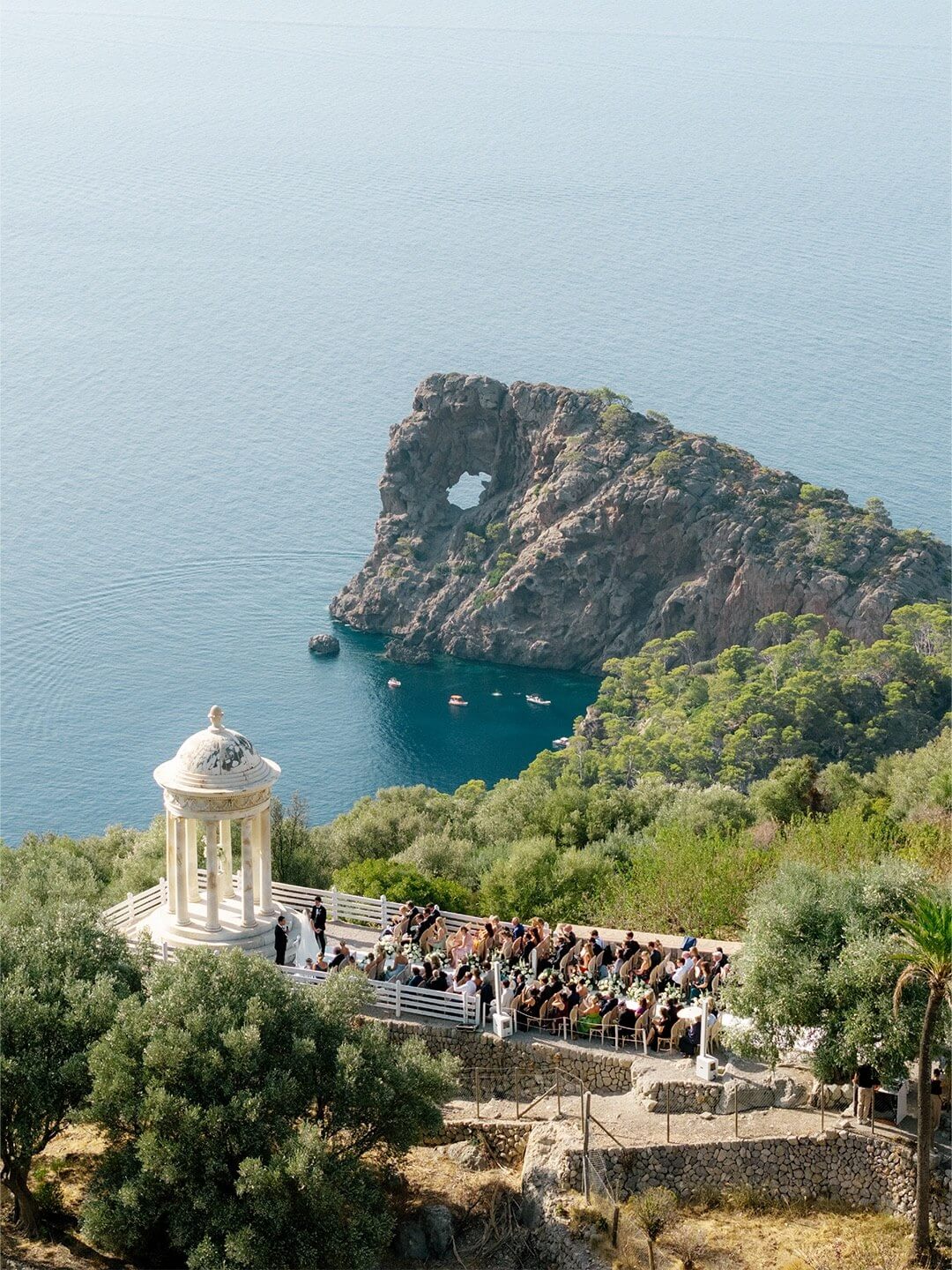
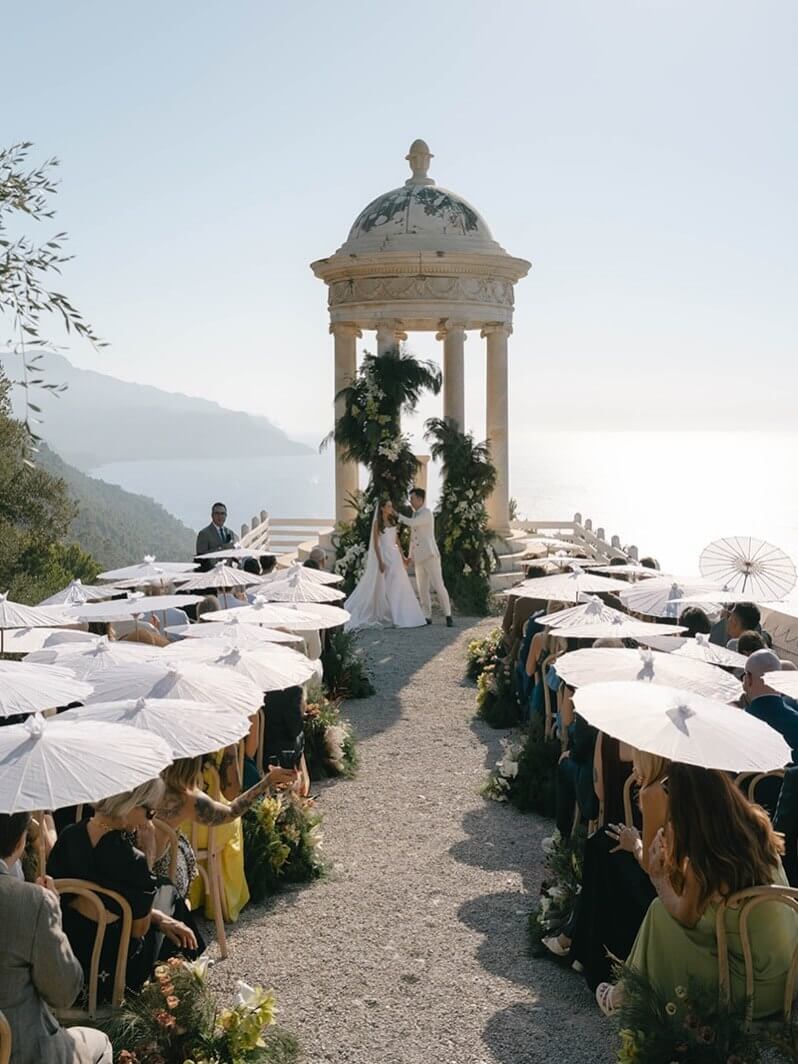
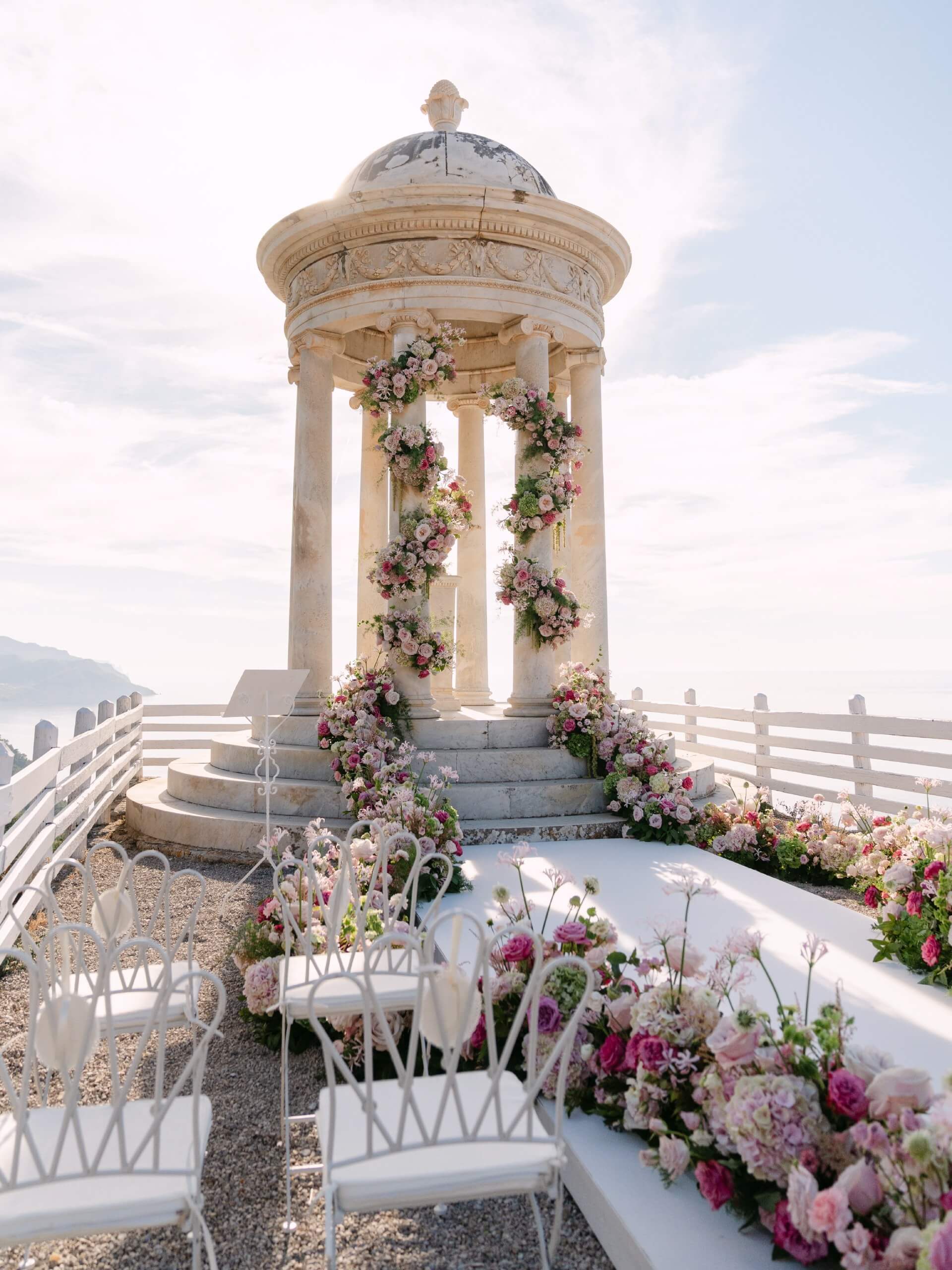
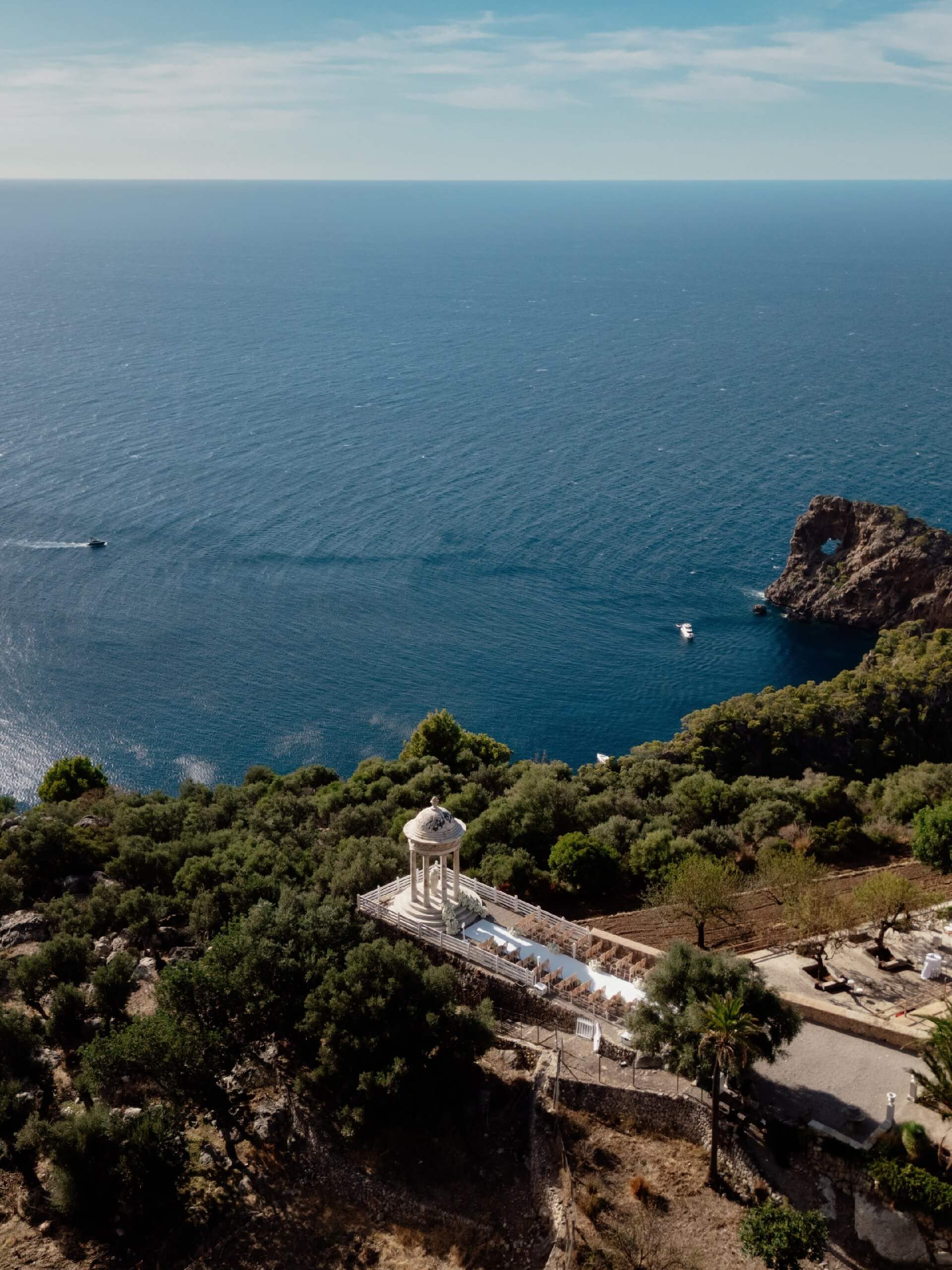
A marble temple viewpoint stands in the garden of Son Marroig in Deià, looking across to the La Foradada peninsula, modeled on one in Pegli near Genoa. Archduke Ludwig Salvator bought the estate in 1876 and used it as a base for exploring and documenting Mallorca. It has been a museum since 1927, and the fortified tower is thought to date from the sixteenth century.
Weddings here are all about that temple: a ceremony in front of the marble columns with the sea behind, then a celebration on the terraces as the light drops over the coast. The mood is Mediterranean and quietly artistic, with old stone, pines and sea air doing the decorating. A couple after a sunset wedding with some culture behind it will like this unusual wedding venue in Europe, with no ballroom in sight. A museum you can marry in is rare.
Vaux Le Vicomte, Paris region, France
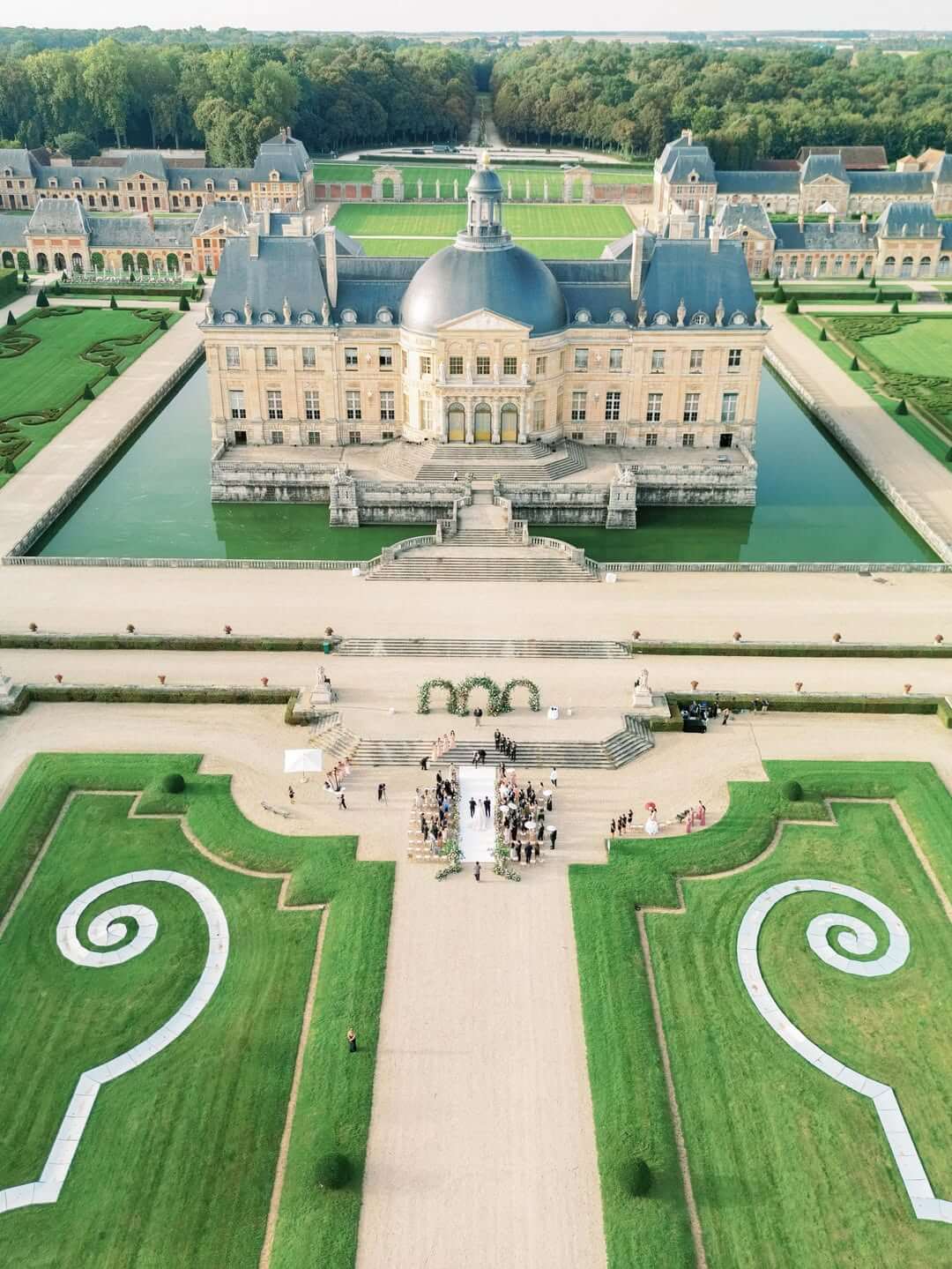
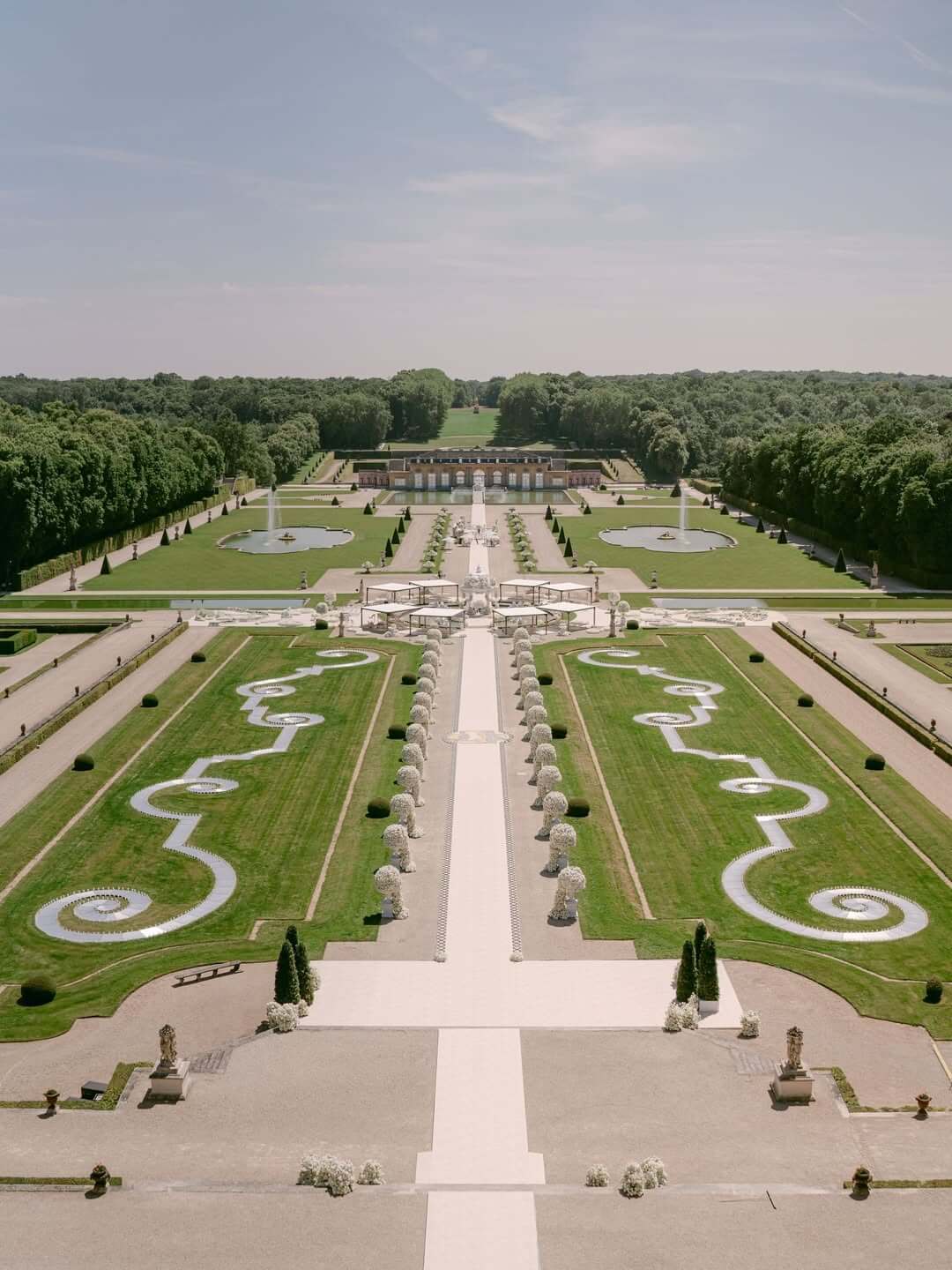
Nicolas Fouquet began building Château de Vaux-le-Vicomte in 1653 and was arrested in 1661, after Louis XIV saw what his finance minister had built. The château survived neglect, was restored after Alfred Sommier bought it at auction in 1875, and has stayed in one family ever since. Patrice de Vogüé received it as a wedding gift in 1967, and the estate opened to the public in 1968. André Le Nôtre’s gardens remain the centerpiece.
A wedding at Vaux-le-Vicomte unfolds on a seventeenth-century scale that few castle wedding venues in Europe can match: long garden perspectives, canals, and a château that glows at dusk. Guests step out of the château straight onto Le Nôtre’s perspectives, and the gardens do the work of a stage set long before the first toast. A reception timed to the last light turns the whole approach into part of the show. It suits couples who dream of a black-tie evening and a grand, formal style, where the setting does the talking and decor can stay restrained. The family has held the house for five generations, and the continuity shows in every clipped hedge.
Sea View by En Kipo, Crete, Greece
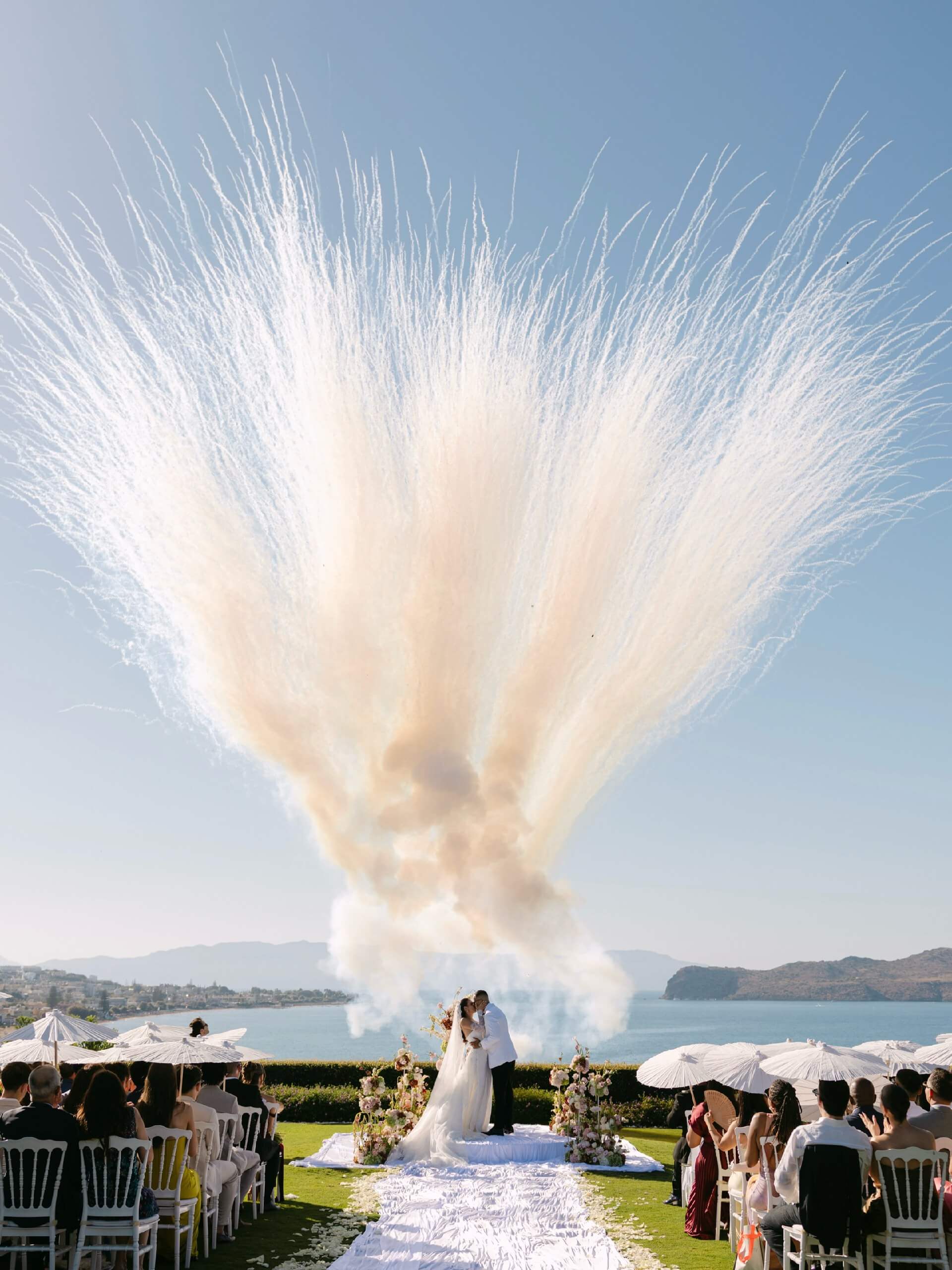
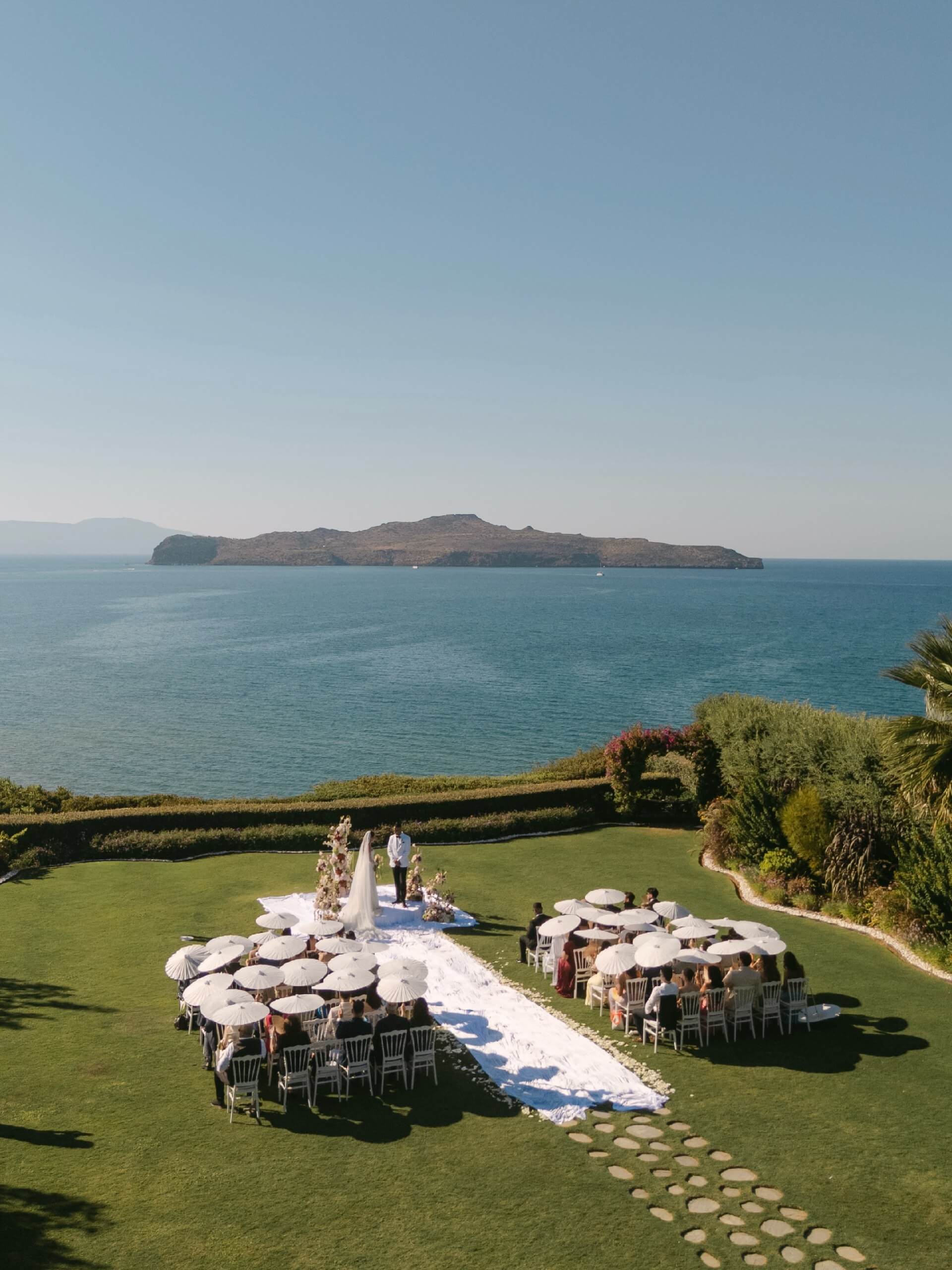
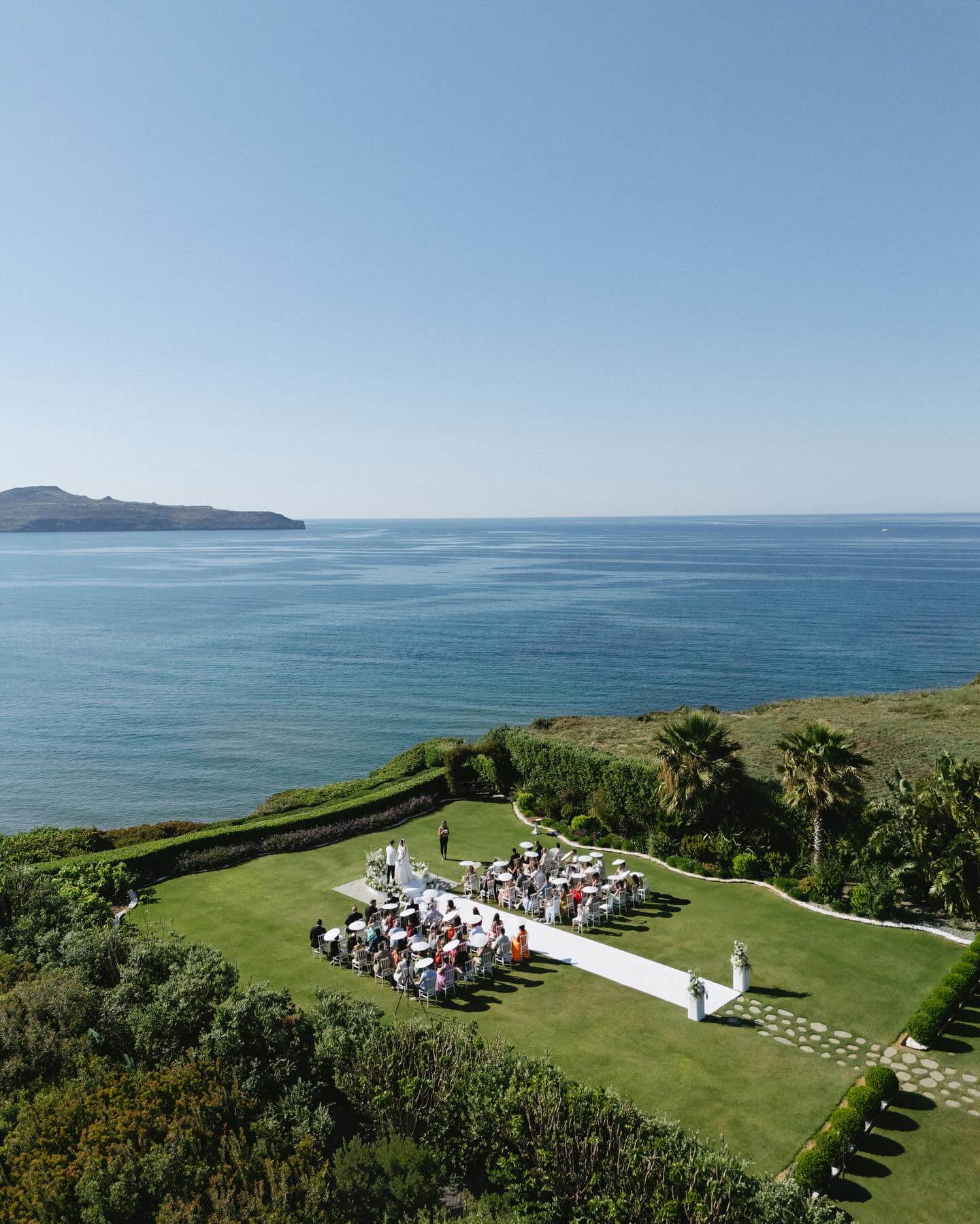
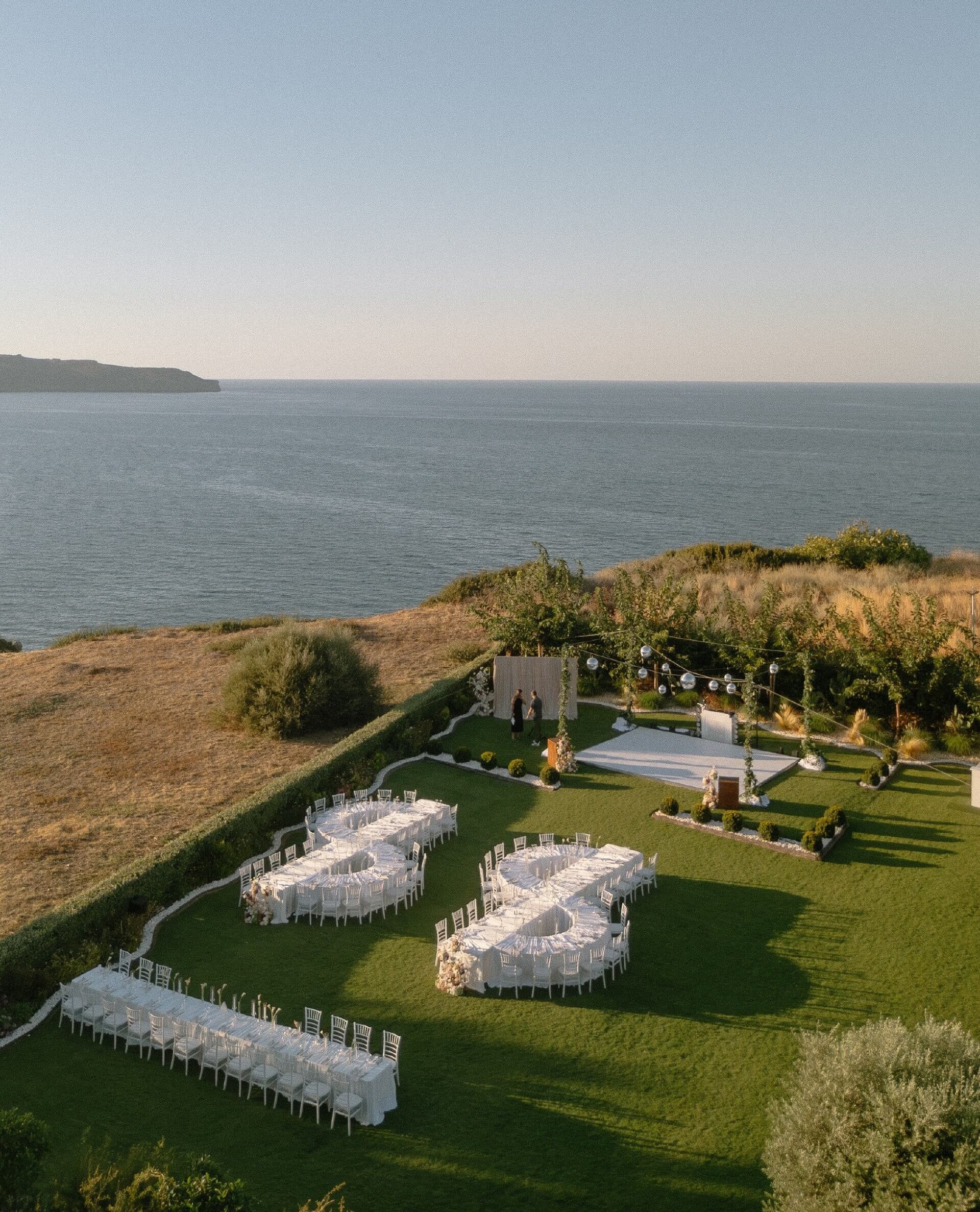
Sea View by En Kipo sits on a hilltop near Chania, in western Crete, where the horizon is the backdrop. It was designed around that idea, the promise behind most sea view wedding venues in Europe, and keeps it with a wedding arbor, a garden, and about 4,200 square meters of connected spaces. Only one celebration is held at a time, so the whole property belongs to the wedding. Guest lists range from two to 120, covering everything from an elopement to a full party.
The day can start as early as 10 a.m. and run to midnight, with an extension to 2 a.m. Couples may bring their own vendors, and En Kipo Flower Creations provides floral and decor services. A ceremony-only booking works for couples who plan to dine elsewhere. It suits couples who want a relaxed Cretan day, with the sea in every photograph and flexible logistics.
Rocabella Santorini Hotel & Spa, Santorini, Greece
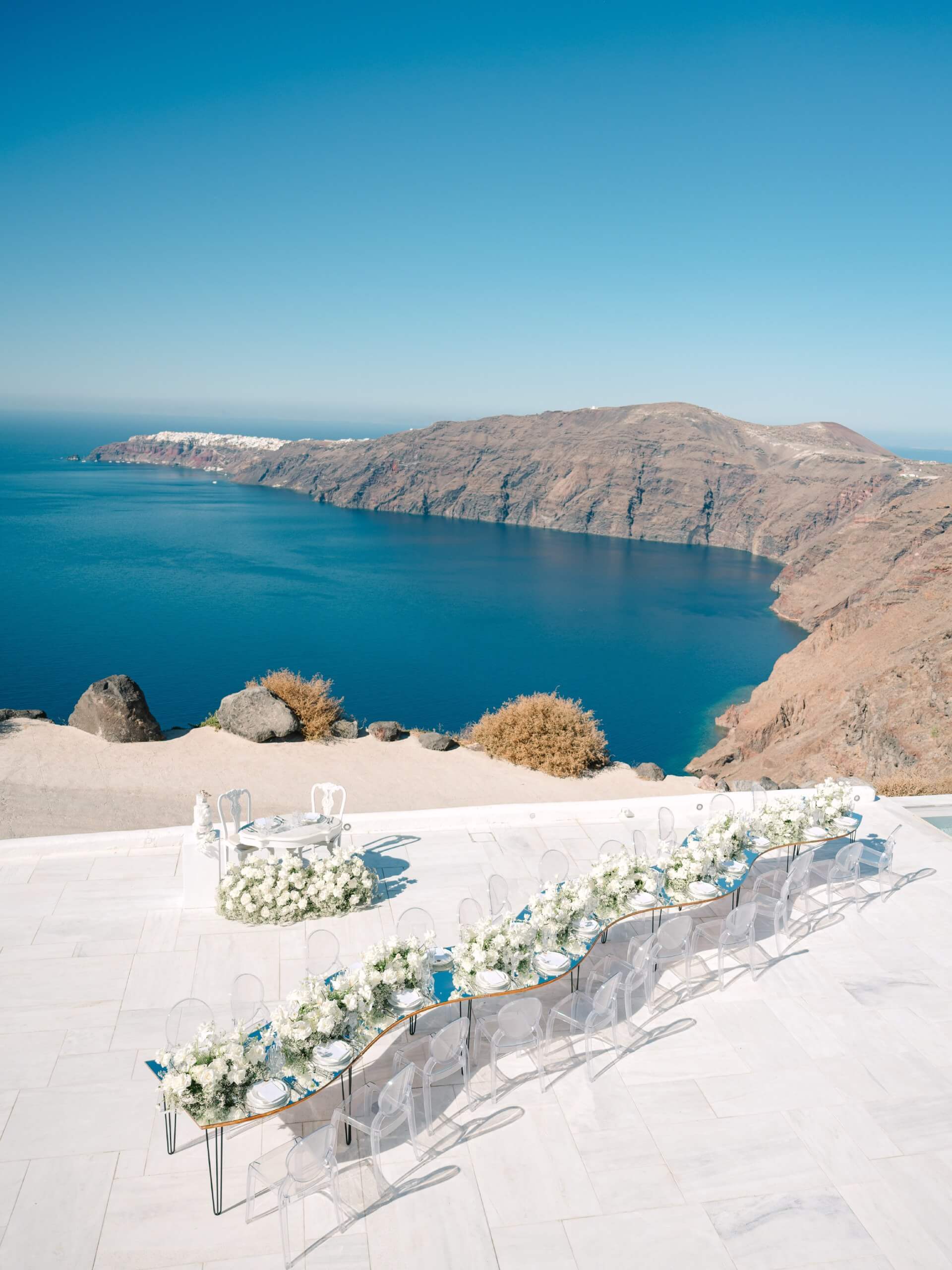
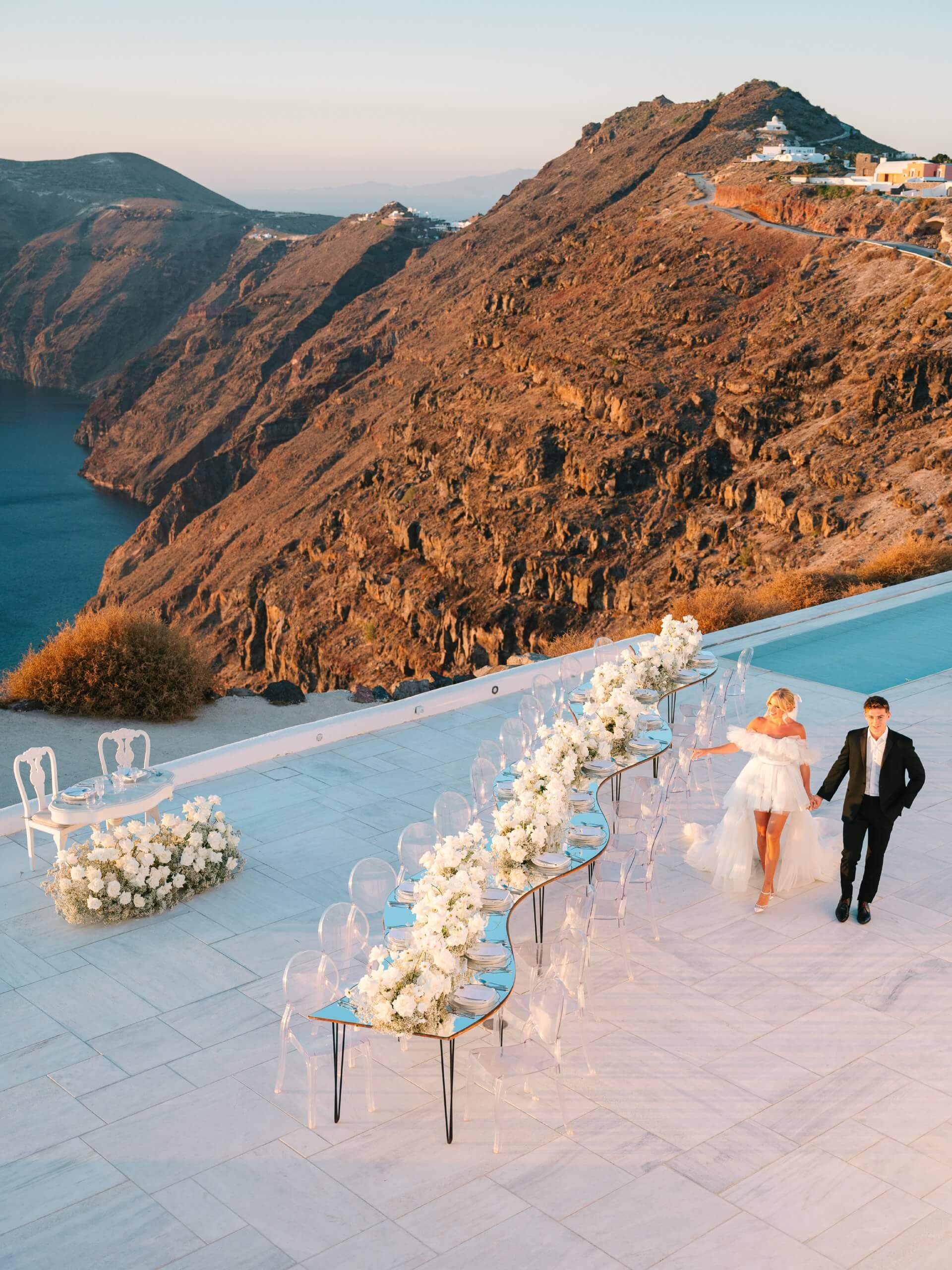
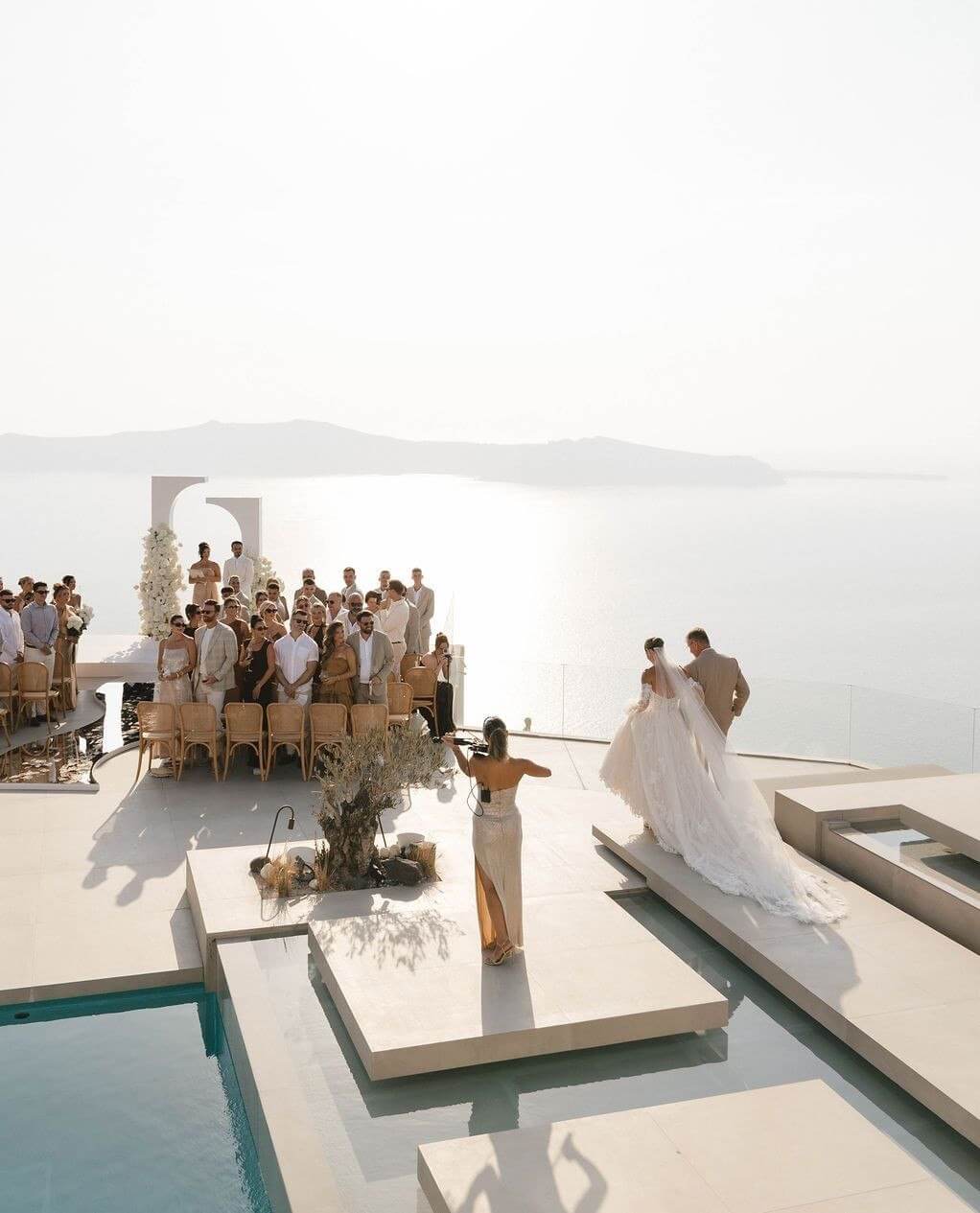
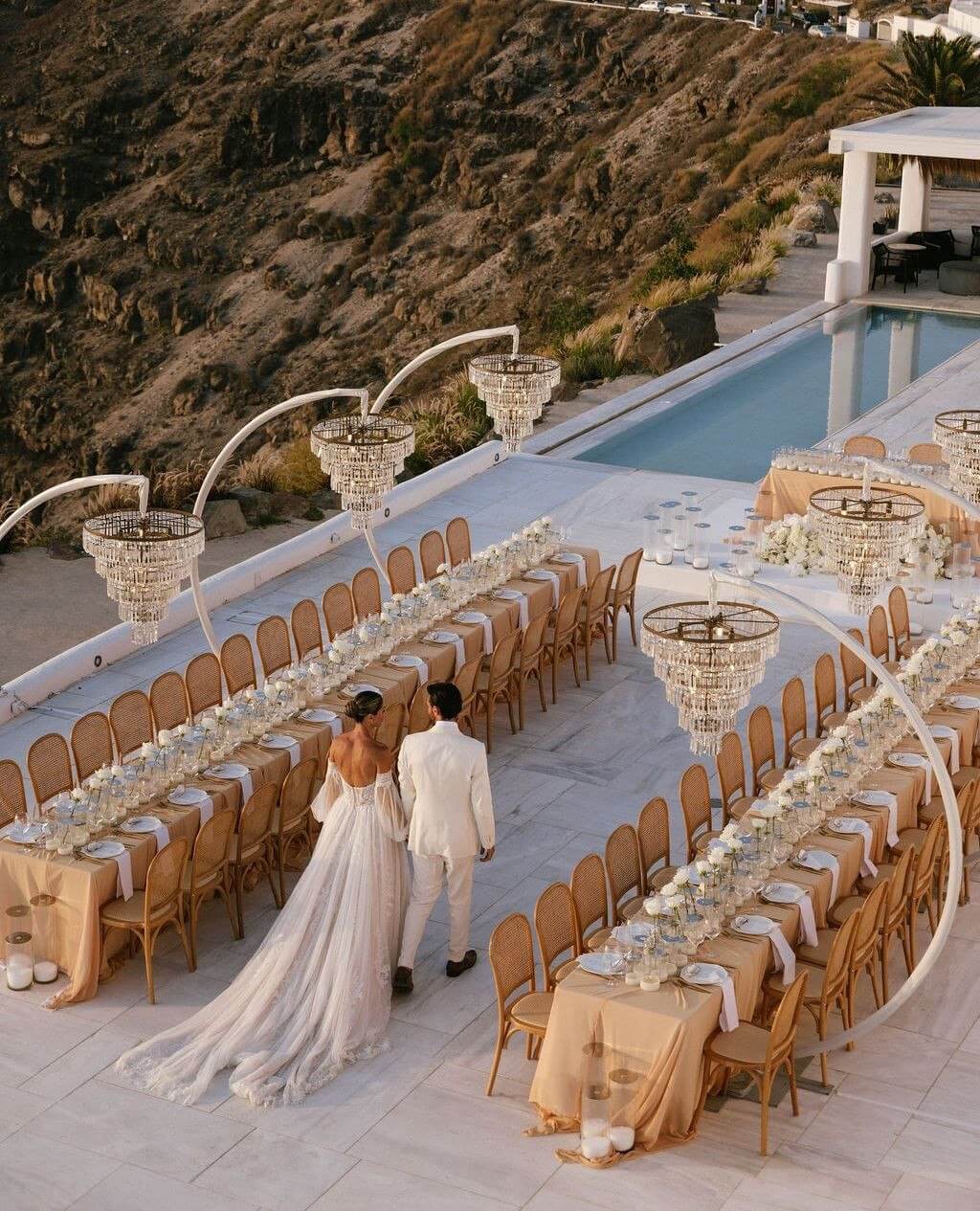
Rocabella Santorini Hotel & SPA answers the picture every Santorini couple wants: sunset over the volcano from a terrace on the caldera rim. From Imerovigli, the hotel offers 42 rooms and suites in a Cycladic style of natural stone, warm wood, and simple lines. The two infinity pools and terraces serve as ceremony and cocktail spaces, and the layout means no stage is needed. Guests look straight out over the caldera, so the view becomes part of the wedding and not a backdrop to arrange.
The hotel hosts weddings of up to 130 guests and is licensed for marriage, with full exclusivity, in-house catering, and a licensed bar. Exclusivity means the wedding party has the pools and terraces for the day, keeping the sunset hour private. A sister property at Ammoudi Beach adds more ceremony locations on the island, so a couple can choose between a clifftop terrace and a waterside setting. Natural stone, warm wood, and infinity pools create a quiet backdrop, and a golden-hour ceremony needs little more than a few flowers and the view.
A guest list well under the 130-guest limit keeps the evening intimate, which is rare among Europe's sea view wedding venues. It suits a couple who wants the postcard Santorini sunset in a calm Cycladic setting, with dinner on a terrace and a toast timed to the light. The island rewards early planning, since the light and the ferry schedules both shape the day.
Euridge Manor, Cotswolds, England
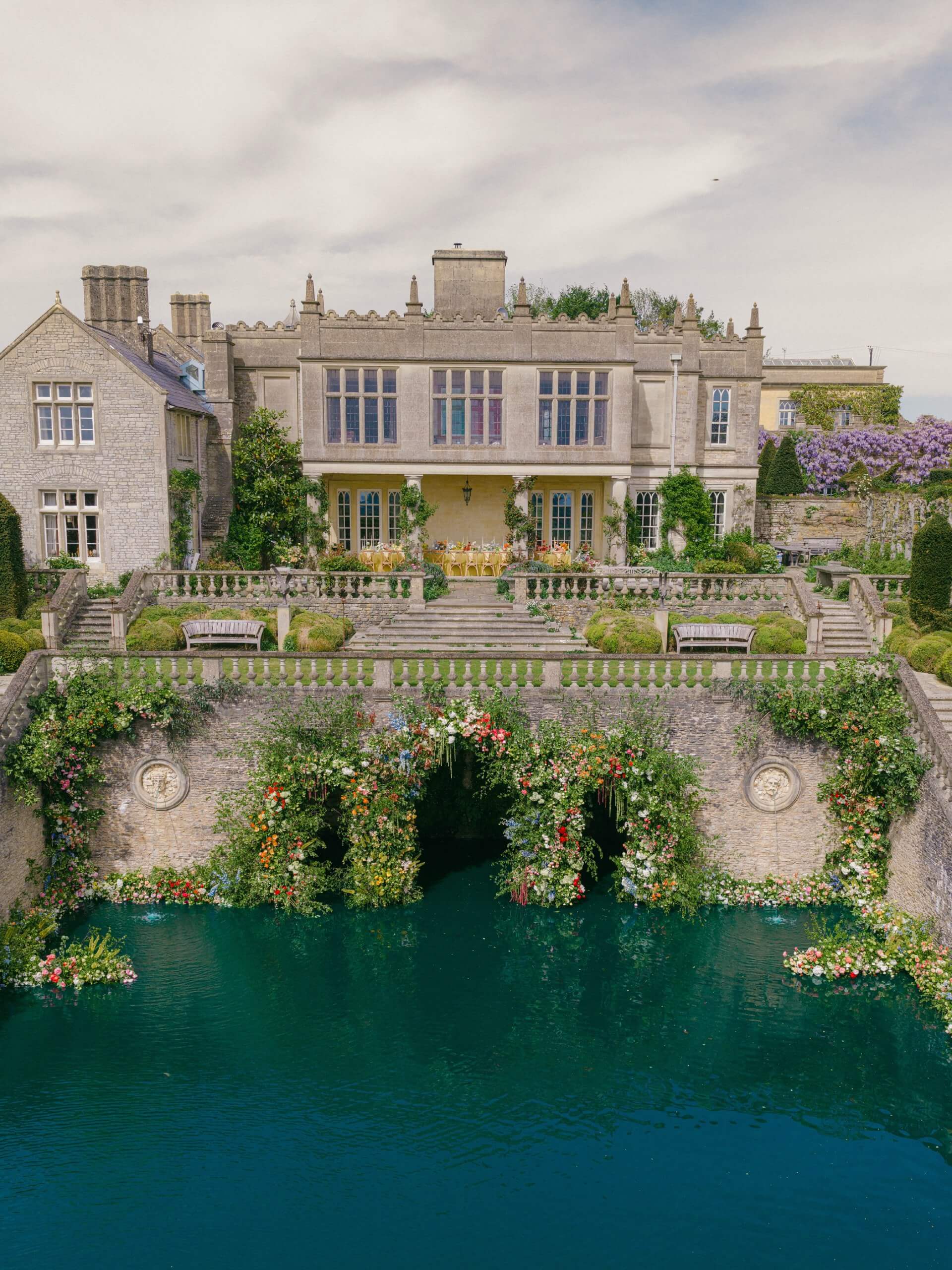
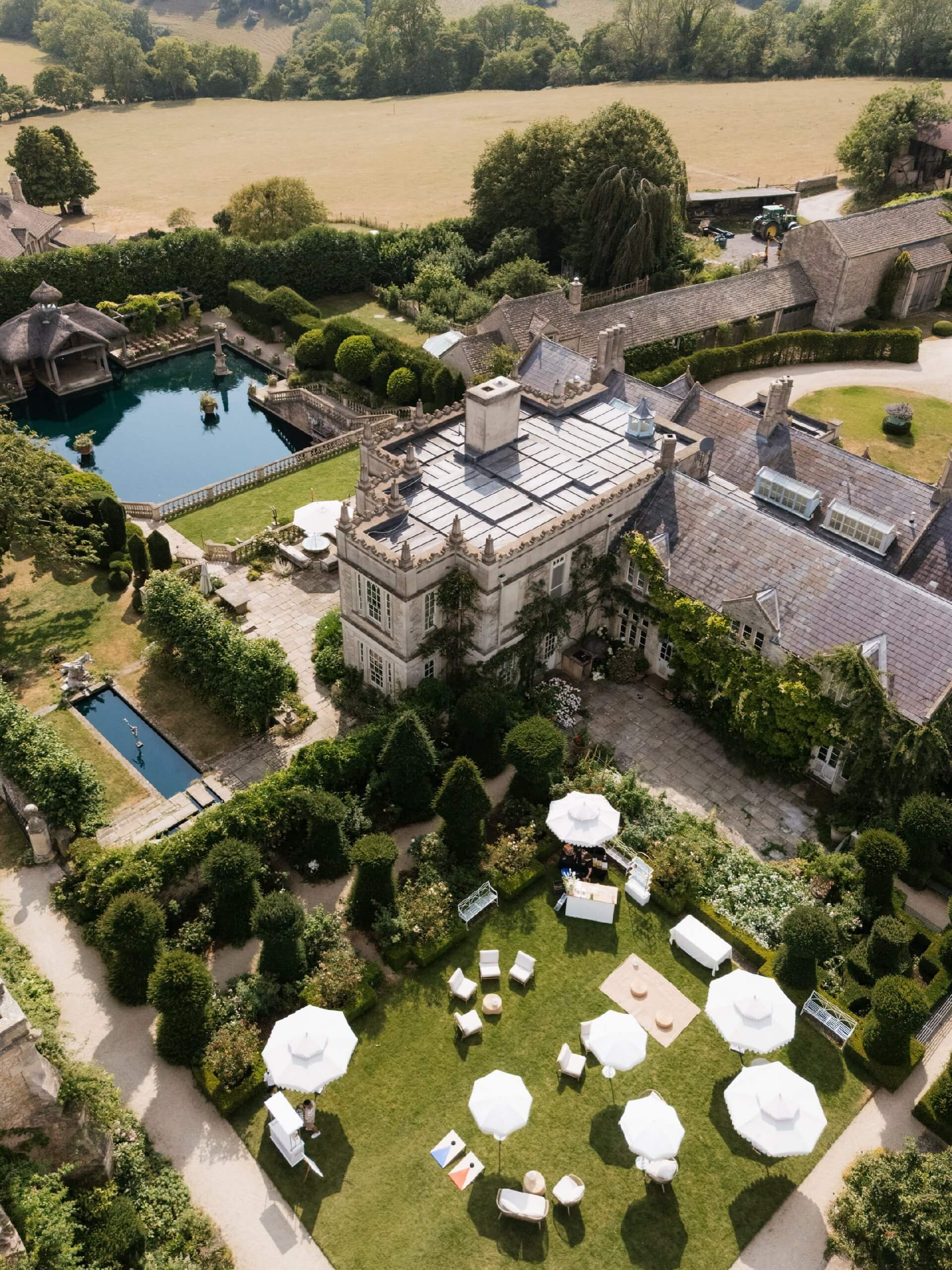
A grotto set with paua-shell dolphins is the detail guests remember at Euridge Manor, and it only hints at how eccentric the garden is. John Robinson, the founder of Jigsaw, bought the farmhouse and 300 acres near Colerne in 1980, and from 2001 Isabel and Julian Bannerman designed the gardens and extended the house over almost a decade. The result is a courtyard of faux-monastic and Georgian-adapted buildings, with a bath house, an orangery and a formal pool with a thatched boathouse.
Six spaces are licensed for civil ceremonies, including the boathouse, a castle arch, and a portico, so the vows can move around the grounds. An orangery and a ballroom offer covered options, and capacity ranges from about 20 to 150 guests. The estate hosts a limited number of weddings a year and is described as exclusive, which is how intimate wedding venues in Europe earn the word. It sits in Wiltshire, in the southern Cotswolds, and suits a couple who wants an English country wedding with a sense of humor.
Cliveden House and Spa, Buckinghamshire, England
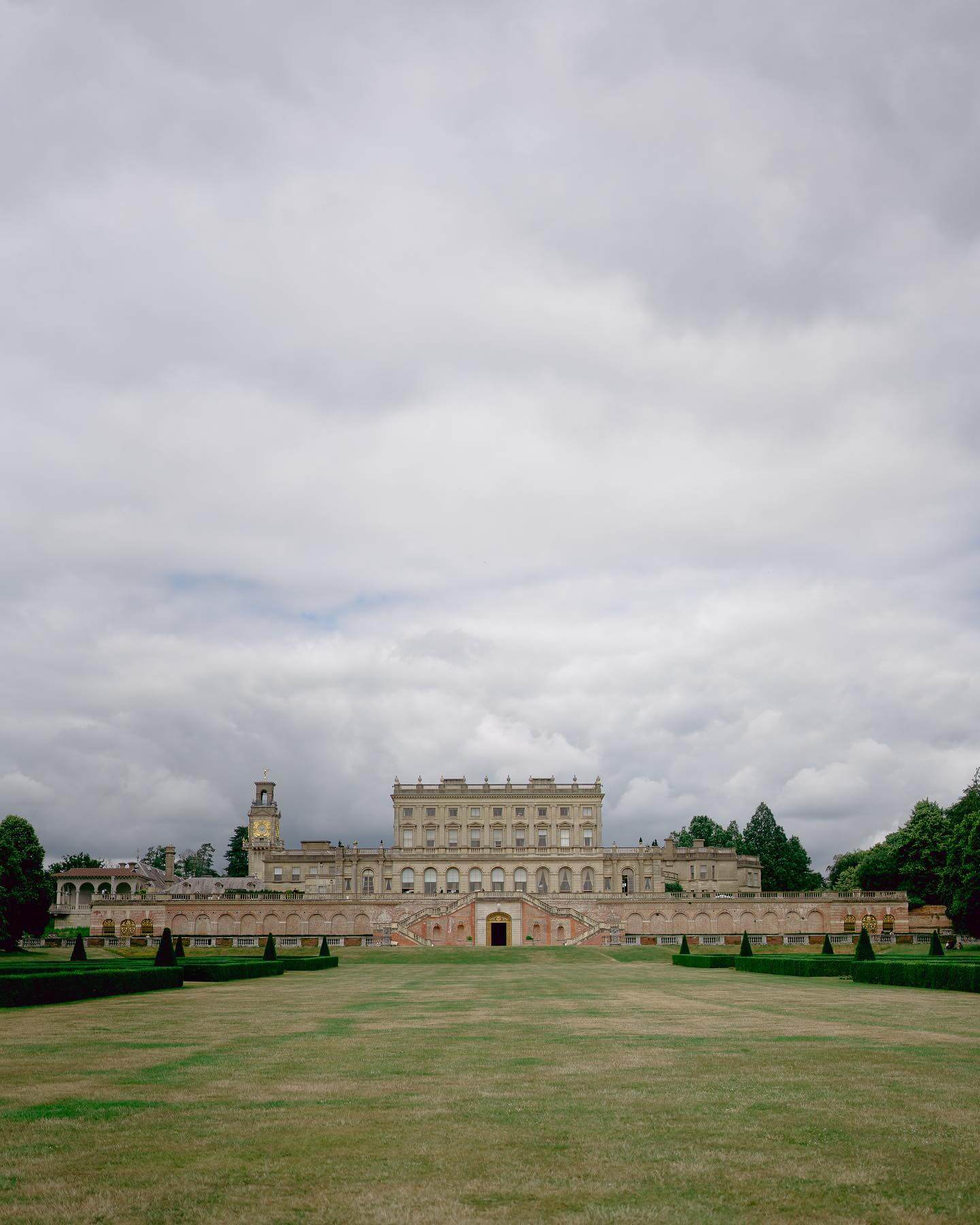
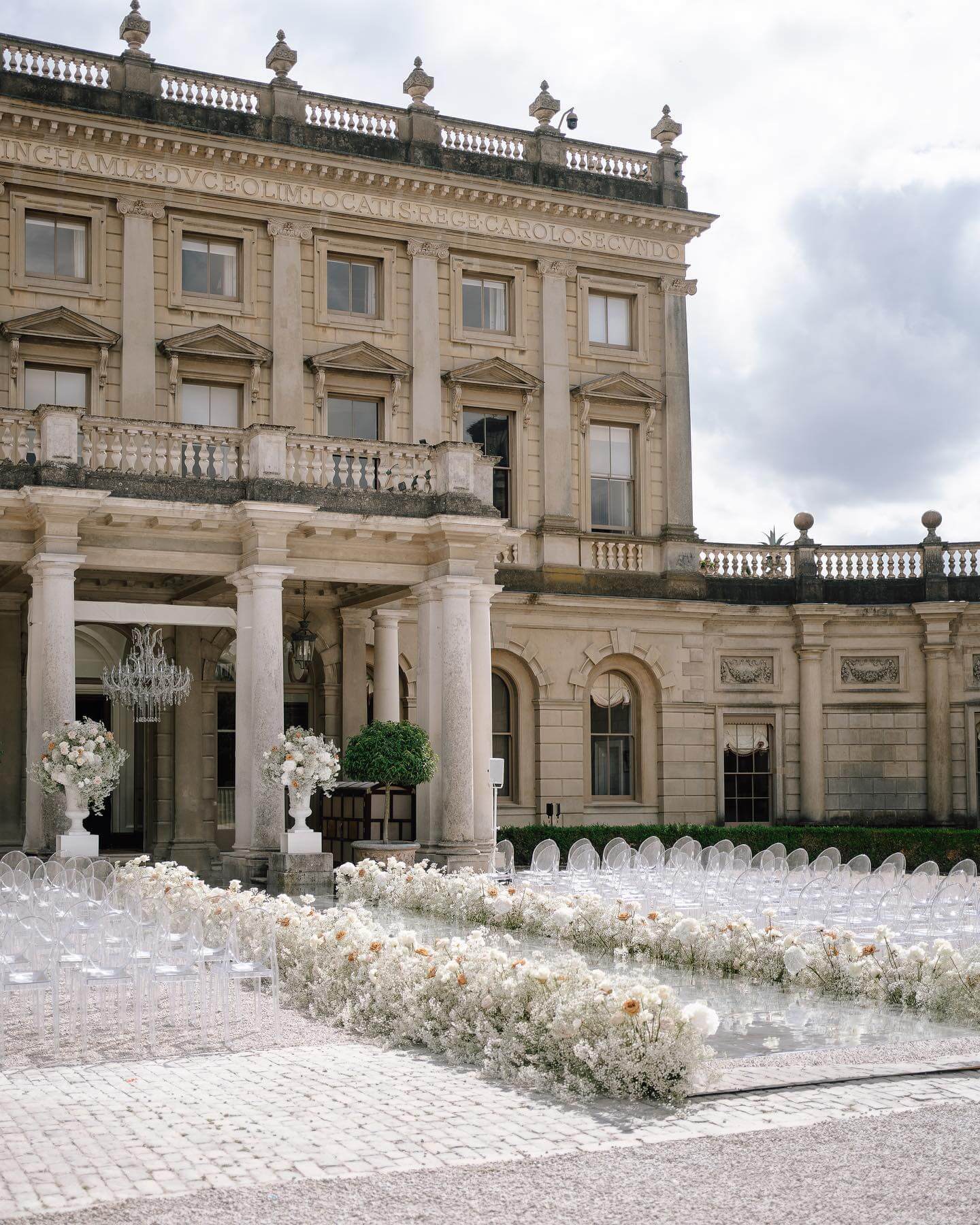
Above the Thames at Taplow, Cliveden House carries more gossip than most English houses. Nancy Astor held her weekend parties here, and the 1960s Profumo affair began on its grounds. The first house was built in 1666 for the 2nd Duke of Buckingham, and after two fires, Charles Barry, architect of the Houses of Parliament, built the Italianate house that stands today. The Astors gave it to the National Trust in 1942, and it has been a hotel since 1984.
The hotel’s wedding spaces break down as follows:
- The French Dining Room, for ceremonies of up to 80 with exclusive use
- The Cliveden Dining Room and the Great Hall, each for up to 120
- The Cockerel Pavilion, for ceremonies of up to 120
- A marquee for 130 to 250 seated guests
As one of the wedding venues with accommodation in Europe, Cliveden can be taken whole, with all 47 bedrooms and suites included for the day. Spring Cottage sleeps up to eight, and the grounds above the Thames host outdoor ceremonies when the weather allows. The spa and the river views keep the wedding party occupied between the ceremony and dinner.
Mas de Sant Lleí, Barcelona, Spain
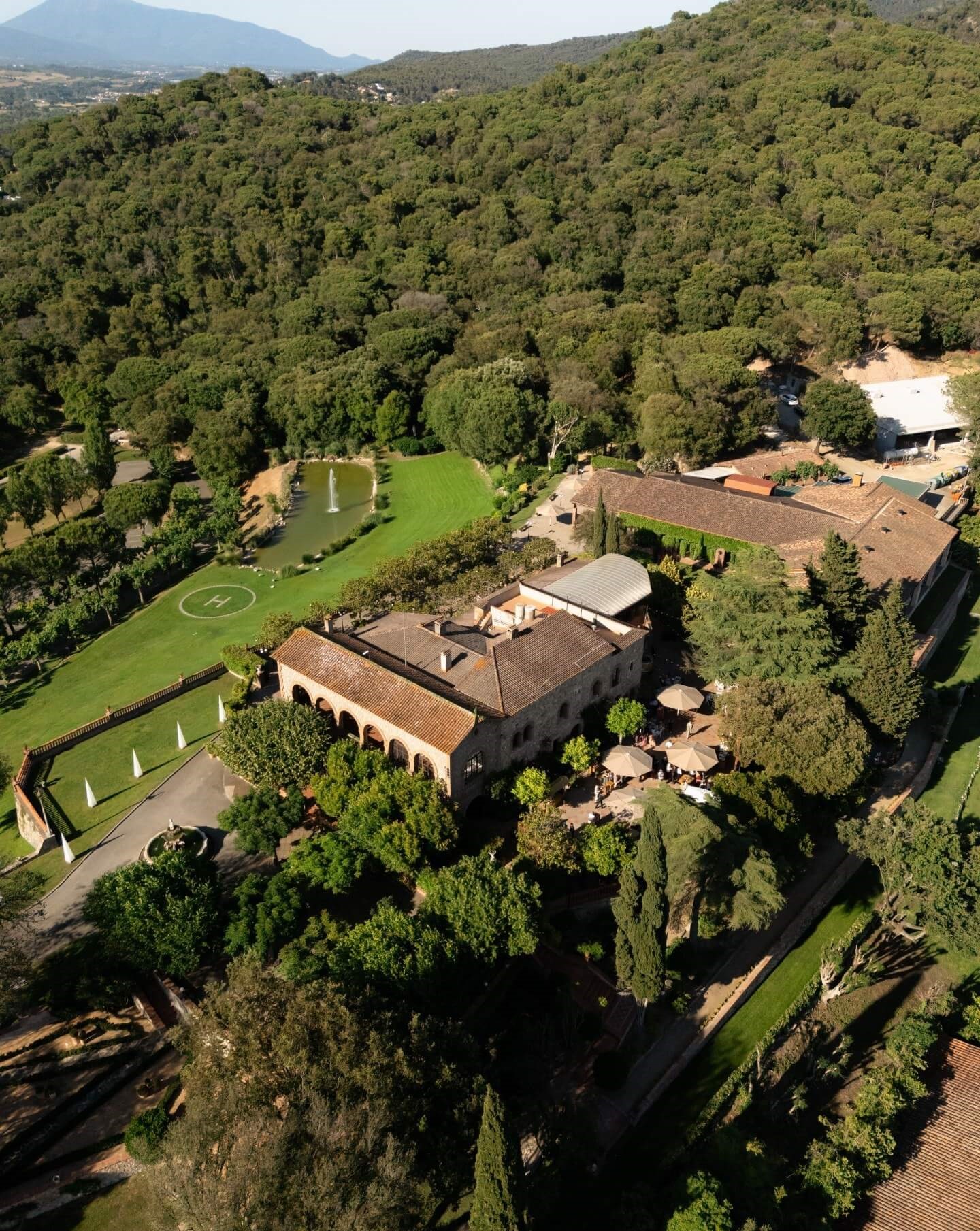
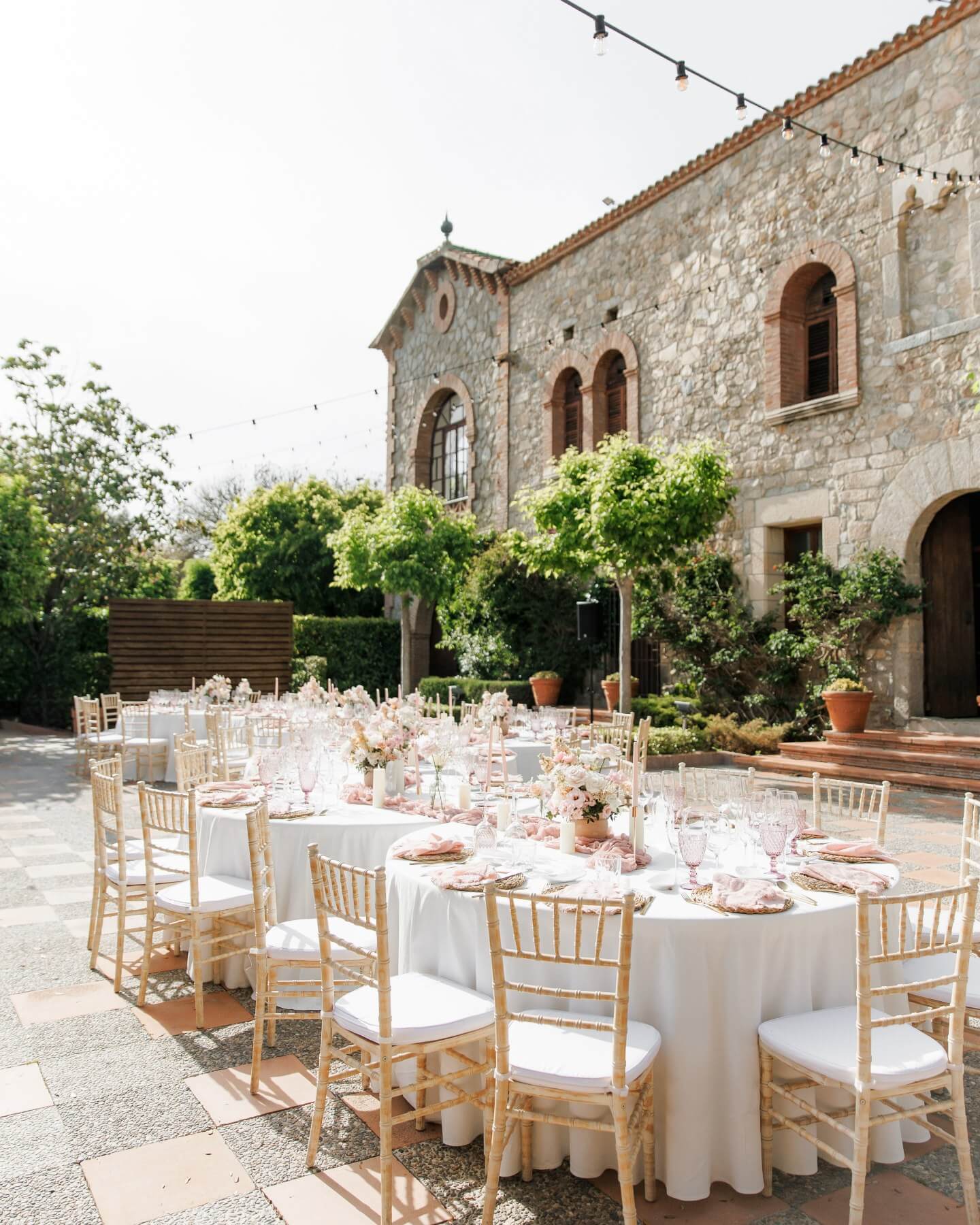
In the hills north of Barcelona, Mas de Sant Lleí offers a slice of Catalan countryside in Vilanova del Vallès. The masia sits on an estate of more than 40 hectares, with two large terraces, an inner patio, gardens, and a private forest, with stone, pines, and long views in every direction. Nothing about it feels staged, which is exactly why it photographs so well. The farmhouse itself holds up to 40 people, and a neighboring building adds two column-free halls with six-meter ceilings.
Weddings here feel relaxed and festive, with outdoor spaces for the ceremony and plenty of room to dance as the sun goes down. The terraces and the inner patio give guests places to drift between the ceremony, the toast and the party, and the forest gives photographers a backdrop no ballroom can match. Live bands, loud music and late events are all permitted, which matters on a continent where noise limits shape many receptions. Nothing needs to be dressed up, because stone, pines and the long views already do the decorating.
Couples after a rustic, warm celebration with a big party at its center, a farmhouse feel, and little formality will find a fresh answer among wedding venues Europe offers. It suits a wedding that starts in golden light on a terrace and ends on the dance floor, with the guests free to wander the grounds in between. Barcelona is within easy reach, so the estate keeps its countryside mood without a long journey for guests.
Château de Chantilly, Chantilly, France
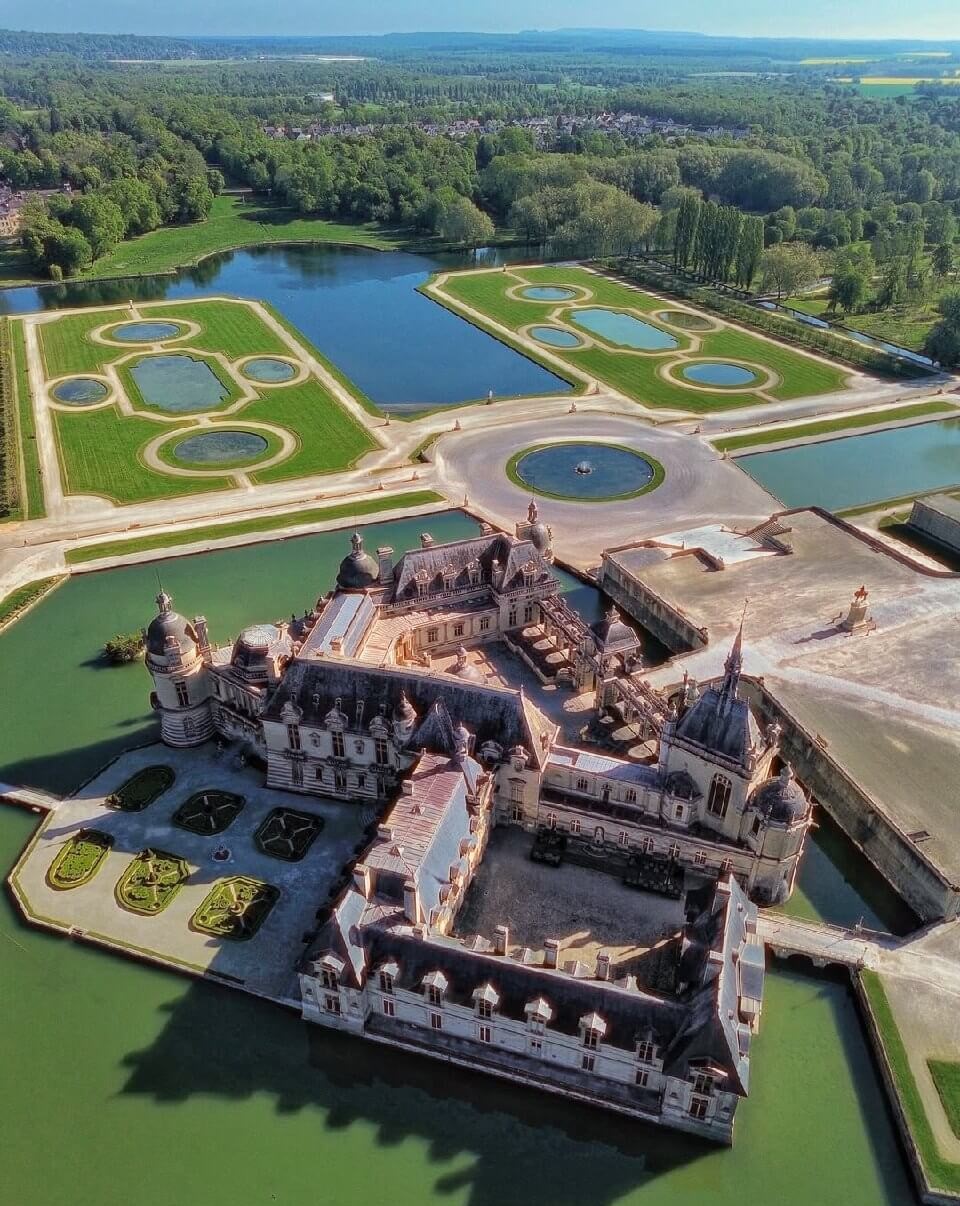
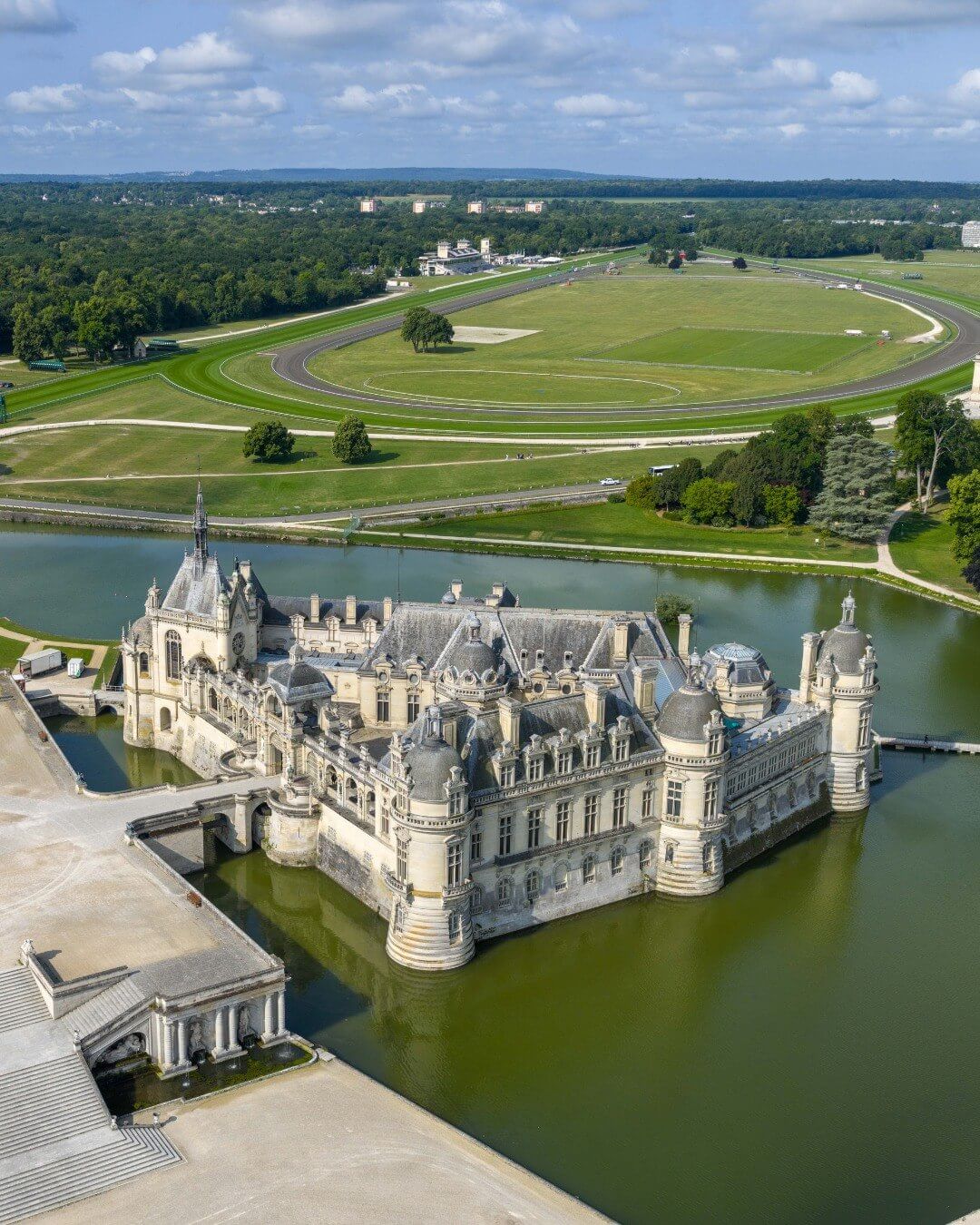
Château de Chantilly is really two buildings that look like one idea: the château, rebuilt in 1875 to 1882 by the Duke of Aumale, and the Grandes Écuries, a stable block from 1719 so grand it reads as a palace. Le Nôtre laid out the French garden for the Grand Condé, and the Aga Khan partly funded a restoration from 2005 to 2008. The estate covers about 115 acres of French, Anglo-Chinese and English gardens, and the Institut de France still owns it.
Weddings at Château de Chantilly happen on a palace scale, making it one of Europe's best wedding venues for a day that should feel like an event, and it's where footballer Ronaldo married in 2005. The horse stables and the château reflected in the lake give a celebration of an architectural drama few venues can match. A couple planning a grand, black-tie evening with a long guest list and a French-classic style will feel the scale straight away.
Schlosshotel Kronberg, Frankfurt area, Germany
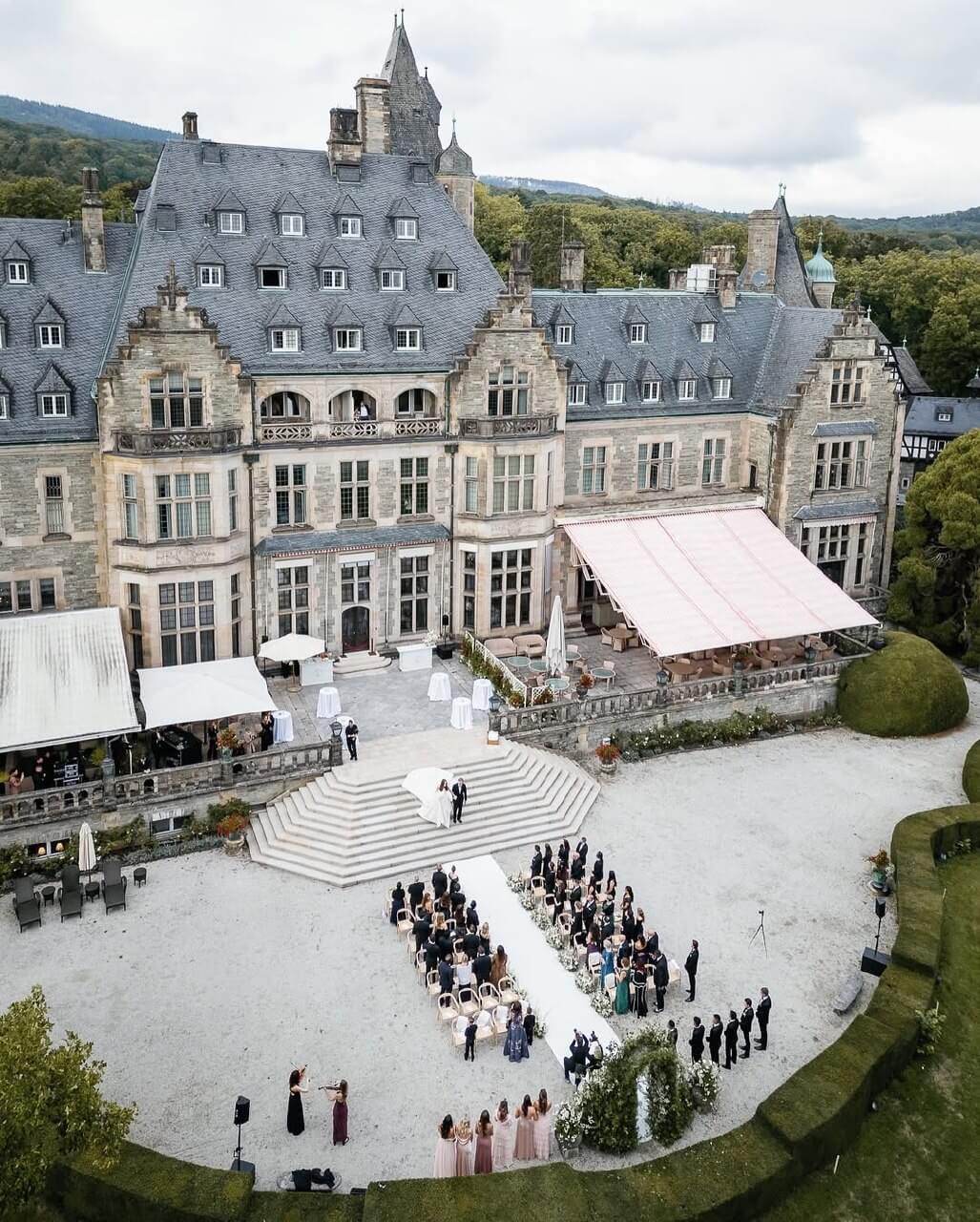
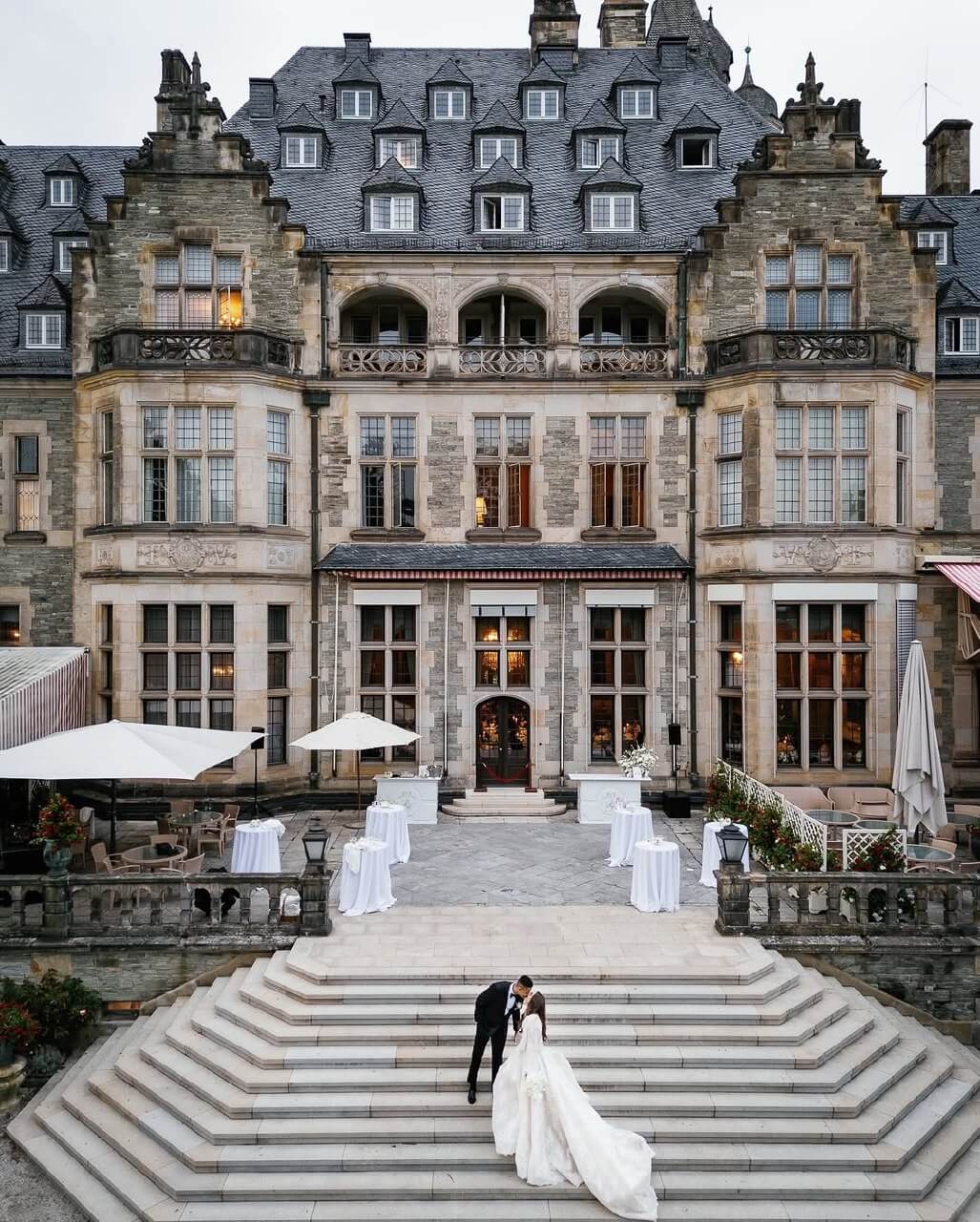
Paintings of an empress still hang on the walls of Schlosshotel Kronberg, and a golf course runs through the park with its first tee beside the hotel. Empress Victoria Friedrich, widow of Friedrich III, built the house as her widow’s seat and completed Schloss Friedrichshof in 1893. The House of Hesse returned it in 1953, and it opened as a hotel in 1954; the rooms are still furnished with antiques from the House of Hesse.
The Historische Bibliothek is described as the Kronberg registry-office wedding location, so a civil ceremony can take place on site, a real bonus among castle wedding venues in Europe. A free ceremony runs in the Rotunde in the Schlosspark, and the Schlossterrasse hosts the drinks reception. The Grüner Salon holds up to 96 guests, with the Roter and Blauer Salons for medium and small parties, and a ballroom for larger groups. The hotel lists exclusive use, and the house suits a couple who wants legal vows, a drinks reception and a formal dinner under one roof.
Adare Manor Hotel, County Limerick, Ireland
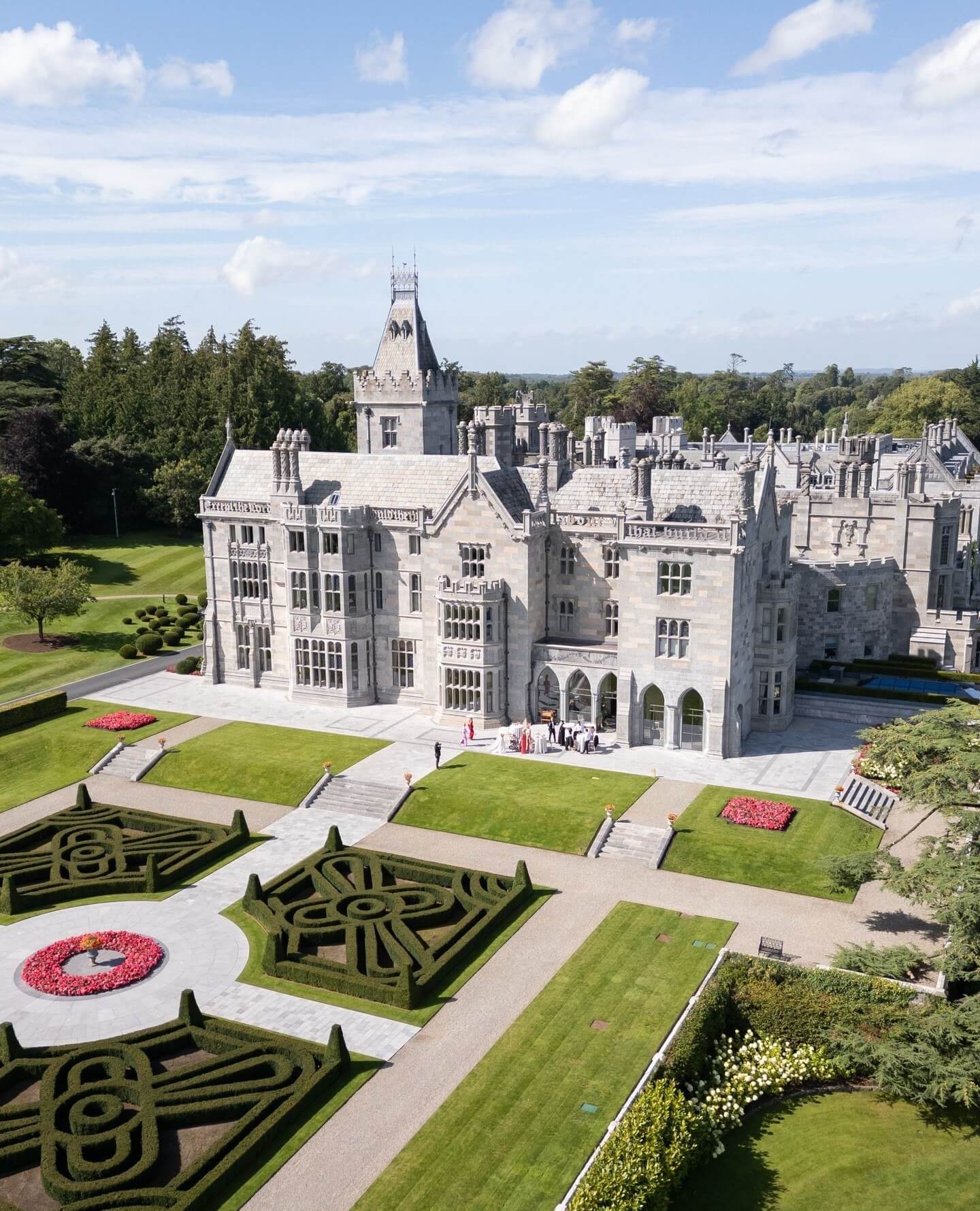
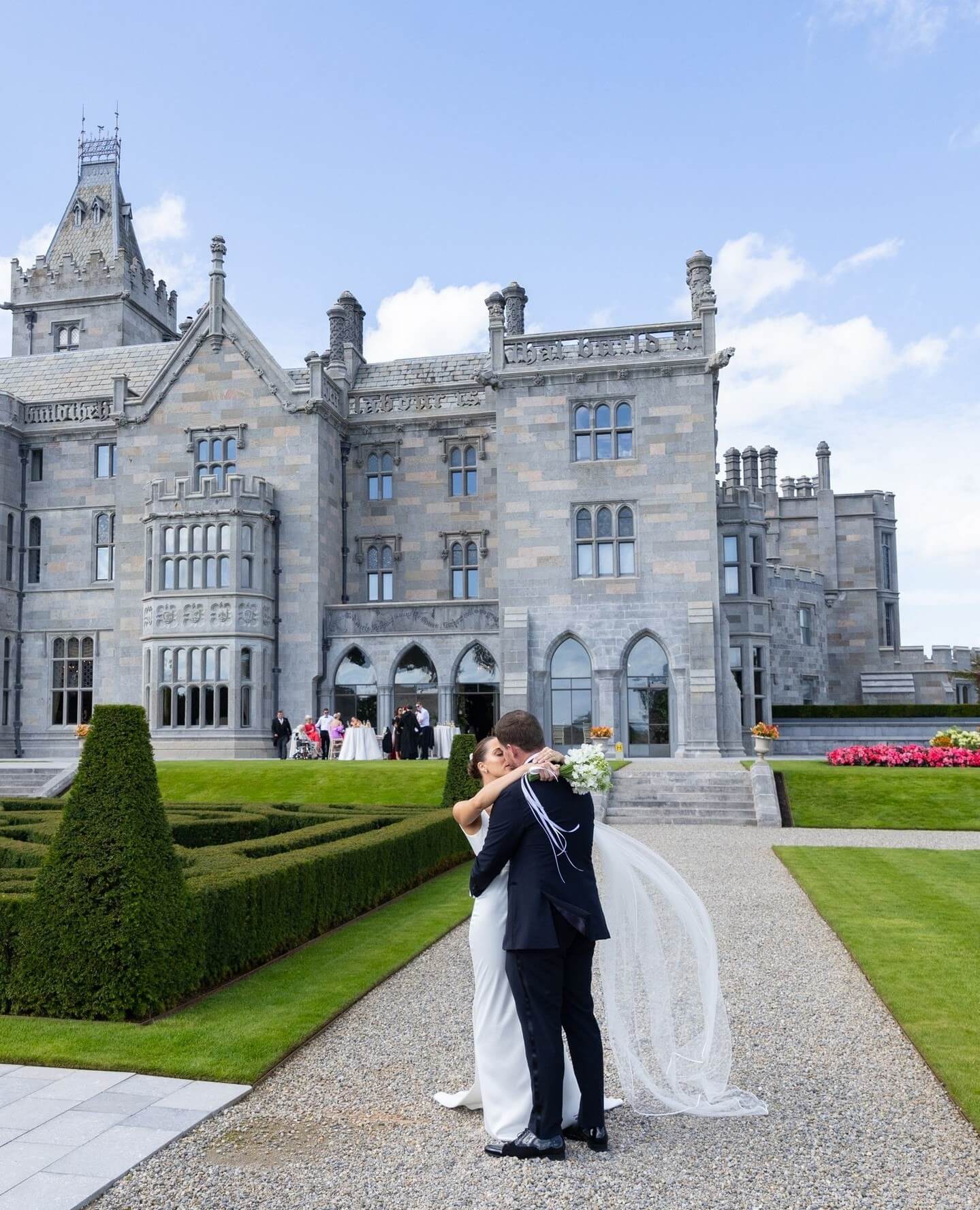
A 400-year-old Cedar of Lebanon and a scatter of ancient Ogham stones share the grounds of Adare Manor in County Limerick, details a Gothic manor cannot fake. The 2nd Earl of Dunraven began rebuilding the house in 1832, and it now sits on an 840-acre estate with formal and walled gardens, placing it among Europe's Gothic wedding venues. The golf course, redesigned by Tom Fazio, will host the Ryder Cup in 2027, so the estate is as well known to sports fans as to wedding planners.
Ceremonies can be civil, a blessing, or a union, and all take place on site, with Catholic and Church of Ireland churches nearby. The Grand Ballroom hosts ceremonies and dinners; the indoor ceremony suite holds up to 150; the Maigue Suite handles cocktails; and the Walled Garden is for summer ceremonies. The couple receives a Stateroom on the wedding night. It suits a couple who wants an Irish country-house wedding with a touch of drama.
Lake villas, French châteaux, Greek terraces, and Irish manors all appear above, showing how much the country shapes a wedding. Legal rules, light, guest travel, and the evening's rhythm change at every border. Comparing two or three venues in one region is far easier than weighing twenty at once, and Lake Como alone offers three villas with three different moods. The top wedding venues in Europe reward you with a clear idea of guest count and season before the first inquiry goes out. Before you start planning the big day, explore more of Europe in Wezoree’s destinations section and see which country suits your wedding best.

FAQ
What are the best wedding venues in Europe?
The twenty venues above cover the range, so the best one depends on the feel you want. Couples drawn to lakes often choose Villa Balbiano, Villa del Balbianello, and Villa D’Este, while those after castles consider Château de Santeny, Castell de Sant Marçal, and Schlosshotel Kronberg. Gardens suggest Villa Ephrussi de Rothschild or Cliveden House, and sea views point to Rocabella Santorini or the Seaview venue on Crete.
Which are the best small wedding venues in Europe?
Palácio de Seteais suits smaller parties, and Villa Cimbrone has nineteen double rooms, so a small group can take the whole house. Euridge Manor hosts weddings from about twenty guests, and Seaview in Crete welcomes from two to 120. Each lets an intimate guest list fill the space.
Which venues offer on-site accommodation?
Cliveden House has 47 bedrooms and suites, Fairmont Le Montreux Palace has 236 rooms and suites, and Villa D’Este has 151 rooms and suites plus four private villas. Rocabella Santorini has 42 rooms and suites, Schlosshotel Kronberg has about sixty rooms, and Villa Cimbrone has nineteen. Villa del Balbianello has no lodging.
Can we have a legal ceremony at these venues?
It depends on the country. Schlosshotel Kronberg’s library is described as the town’s registry-office wedding location, Adare Manor holds civil ceremonies on site, and Euridge Manor has six licensed spaces. At Villa Cimbrone, the civil ceremony takes place in Ravello town center; in France, a civil marriage is signed at the town hall, so ceremonies at Château de Santeny are celebratory.
Which are the best castle wedding venues in Europe?
Château de Santeny, Castell de Sant Marçal, Vaux-le-Vicomte, Château de Chantilly, Schlosshotel Kronberg and Adare Manor all offer a castle or château setting. Each belongs to a different period, from medieval to nineteenth-century Gothic. Castell de Sant Marçal is the most fortified, with its moat and tower.
Do we need a wedding planner for a wedding in Europe?
Several of these venues, including Adare Manor and Schloss Leopoldskron, have their own coordinators. A planner who knows the country brings local knowledge of legal requirements, vendors, and seasons. Before you start planning, explore more of Europe in Wezoree’s destinations section to compare countries.