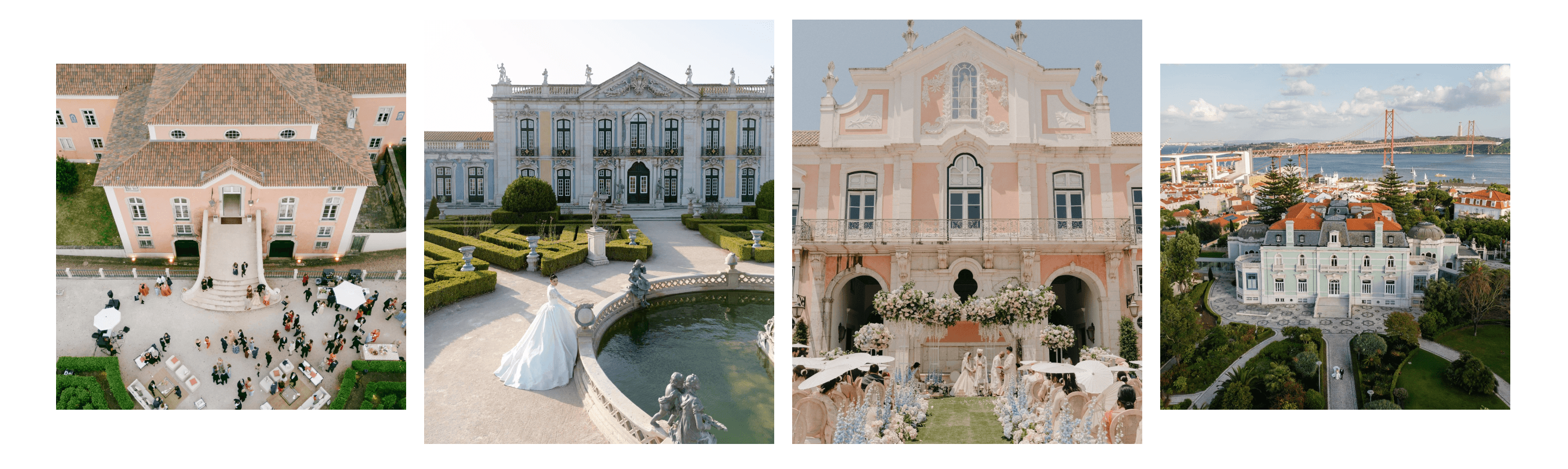
Top 5 Best Wedding Venues in Lisbon
- Author: Natali Grace Levine
- Reading time: 7 min 25 sec
- Publication date: 08/22/2026
- Updated: 09/17/2026


Lisbon doesn’t have to compete with Paris or Rome for palace weddings - it simply has a different kind of palace altogether, one still shaped by the specific Portuguese habit of covering every surface in hand-painted tile. Within a short drive of the city center sit royal summer residences, a former postmaster’s baroque estate, and a 19th-century manor slowly restored into a vineyard retreat. What ties them together isn’t grandeur alone but genuine continuity - several of these properties are still owned, or were until recently lived in, by the same families who built them centuries ago. The five venues below cover that range, from full royal spectacle to something considerably quieter and more personal.
Find Your Perfect Wedding Vendors



Palácio Nacional de Queluz
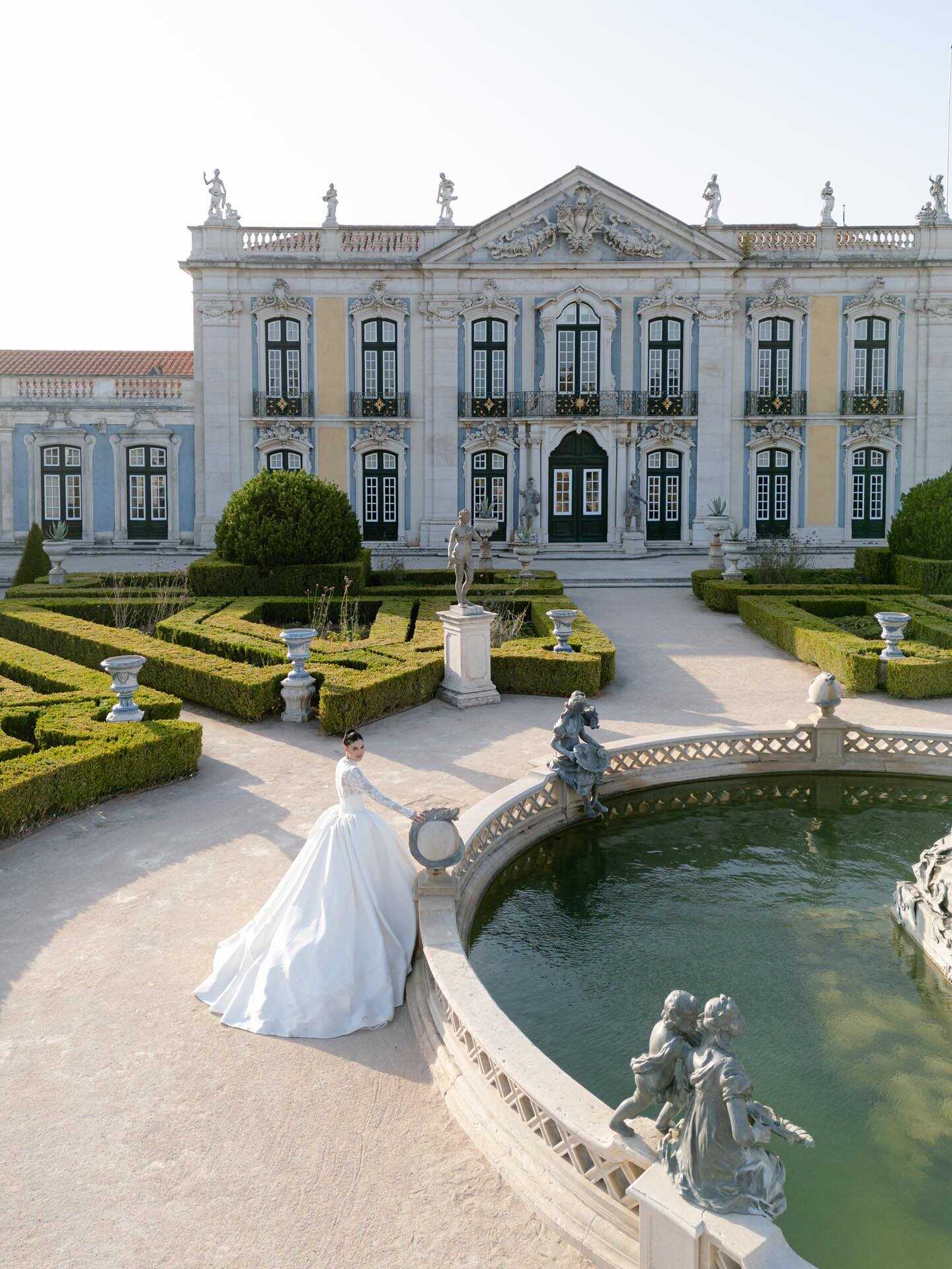
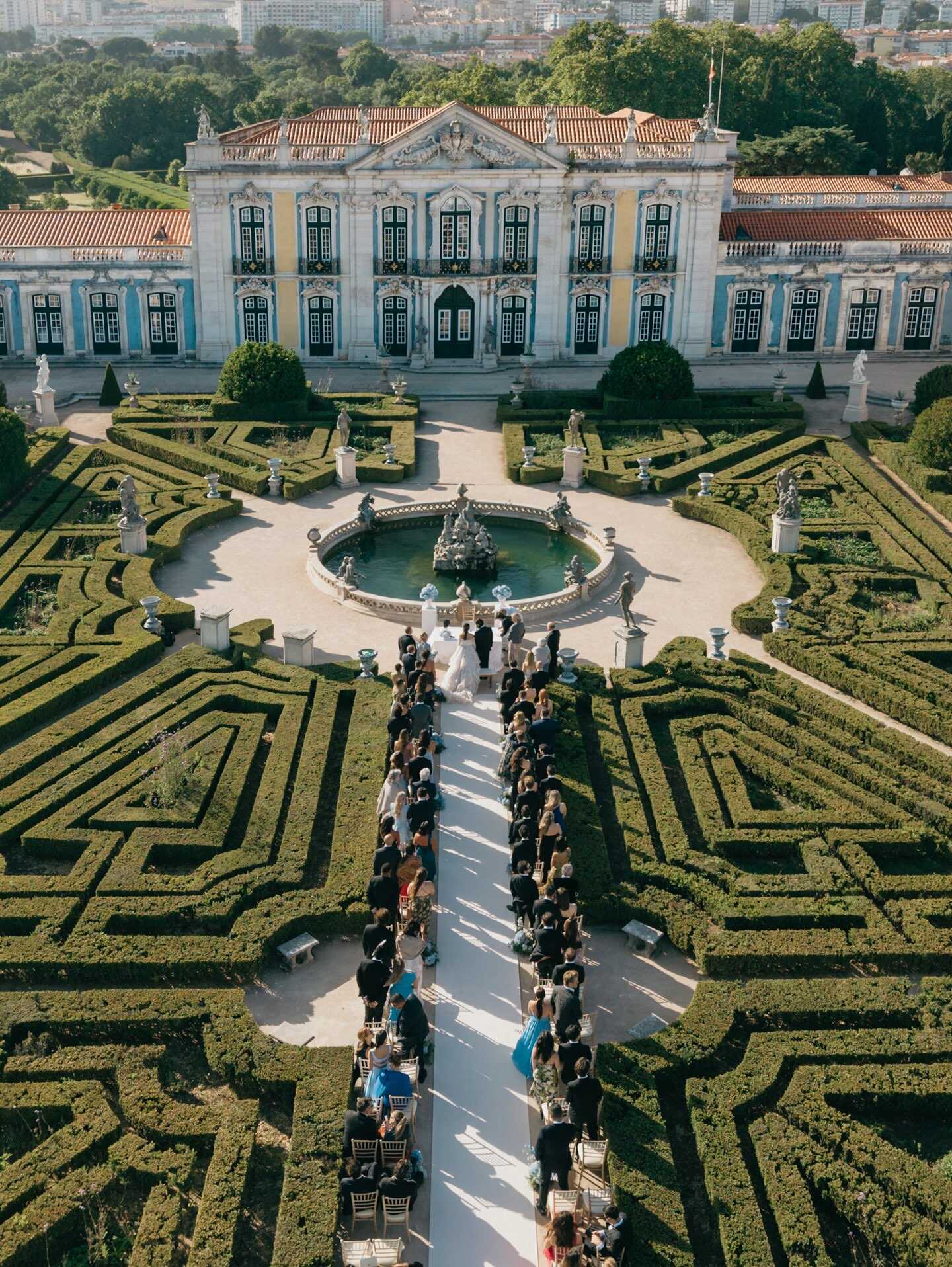
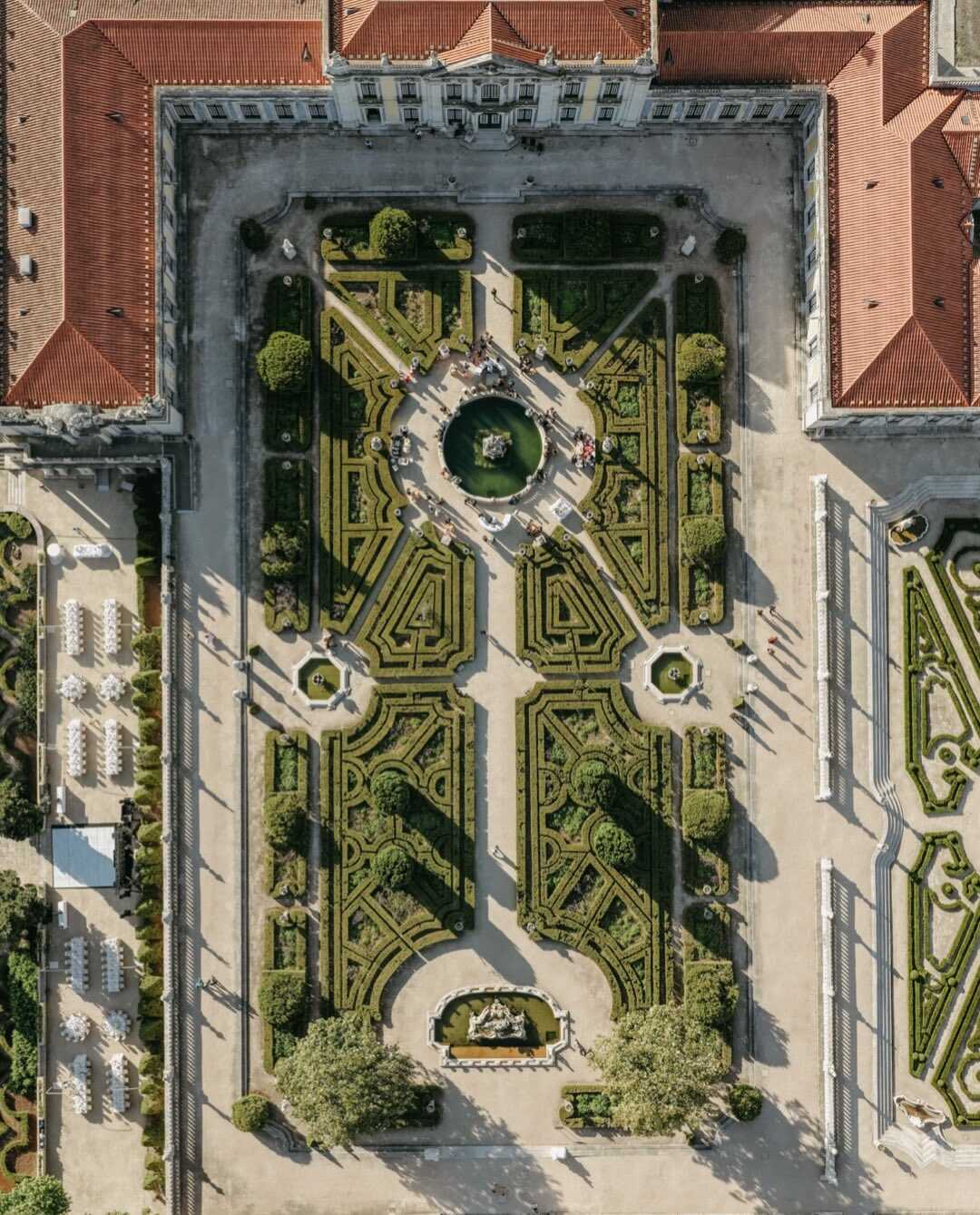
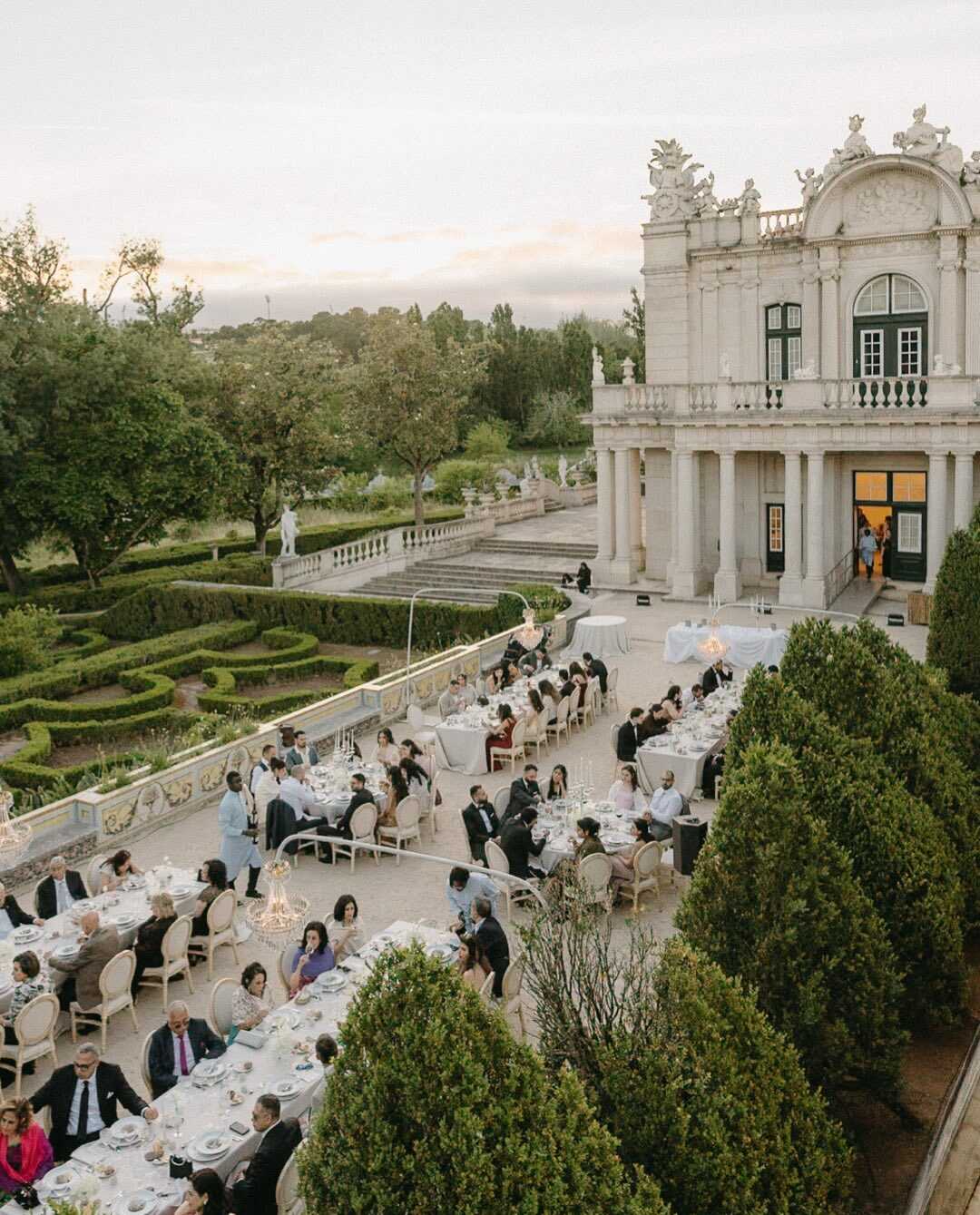
It is frequently known as the Portuguese Versailles, and for three generations of Portuguese royalty, the Palácio de Queluz served as a summer residence; the rooms there still show the precise way in which European tastes changed during that time, starting with the Baroque style and then moving on to the Rococo, which in turn gradually gave way to Neoclassicism. The Throne Room, with its gilding and mirrors, was originally built for royal birthdays and court concerts and remains the venue most frequently requested for ceremonies today.
Capacity shifts considerably depending on which of the palace’s rooms a couple chooses, and several can also be combined for a larger, multi-space celebration:
| Space | Character | Capacity |
|---|---|---|
| Throne Room | Gilded, mirrored, the palace’s grandest hall | Up to 200 seated / 230 standing |
| Music Room | Excellent acoustics, direct garden access | Up to 80 seated / 120 standing |
| Ambassadors’ Room | Used historically for royal audiences | Up to 60 seated / 80 standing |
| Robillion Terraces & Gardens | Outdoor, framed by fountains and canals | Up to 200 seated / 260 standing |
The gardens around the property have a royal atmosphere about them: there are canals which were previously used for gondola rides, fountains, and other water features that continue to be used to decorate the grounds at events, together with hedge mazes and statues which have hardly changed since the court held its masquerade balls in this place. The property has received a Wezoree Award, and couples can also arrange private performances by the Portuguese School of Equestrian Art, which turns cocktail hour into something more like a real 18th-century court entertainment than a typical modern reception.

Palácio do Correio Mor
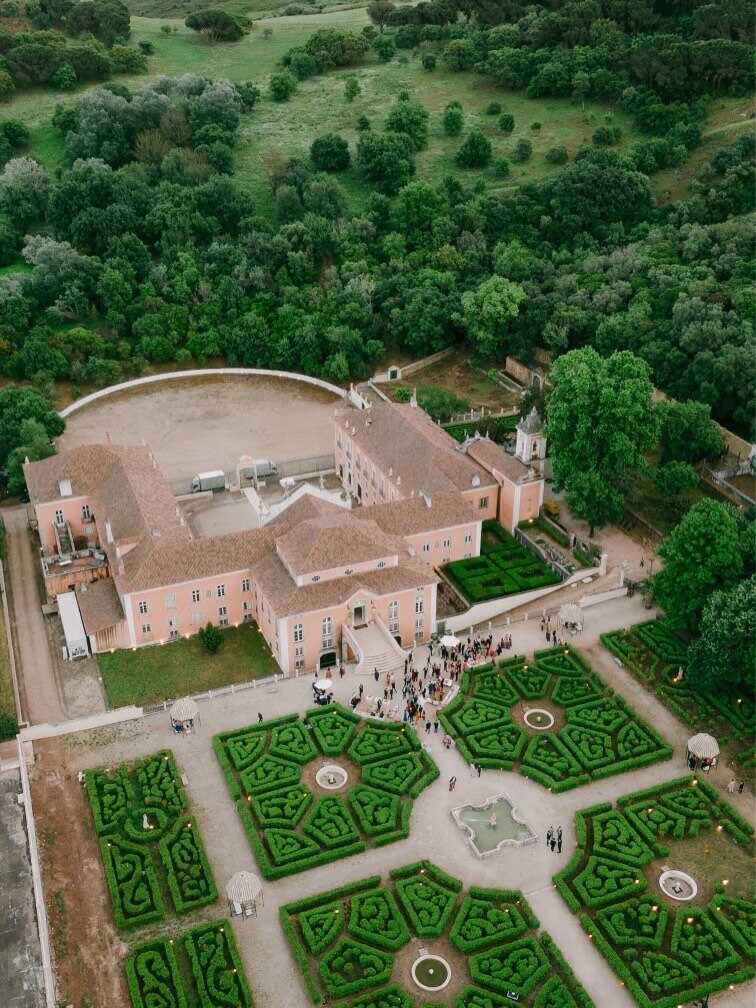
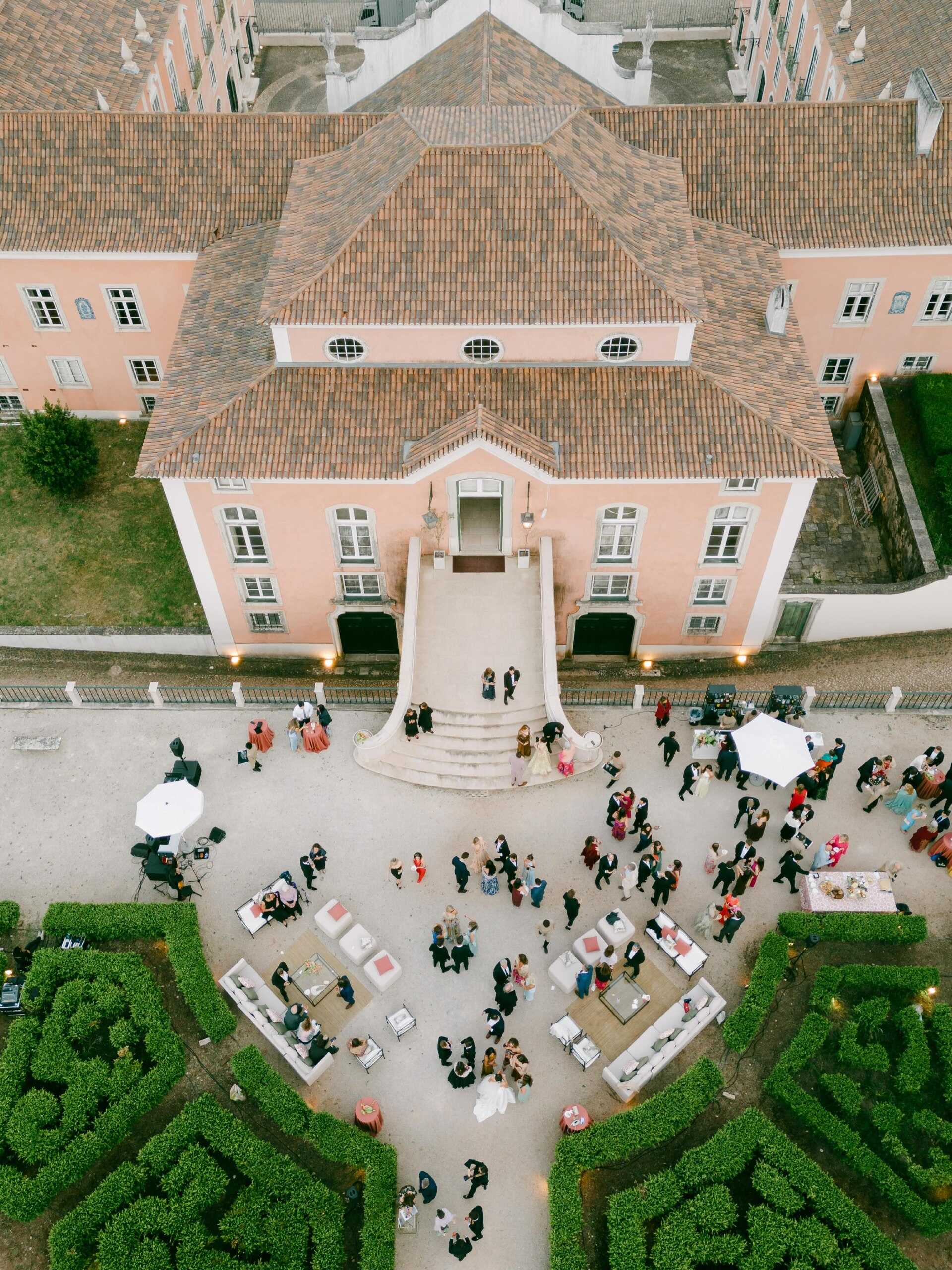
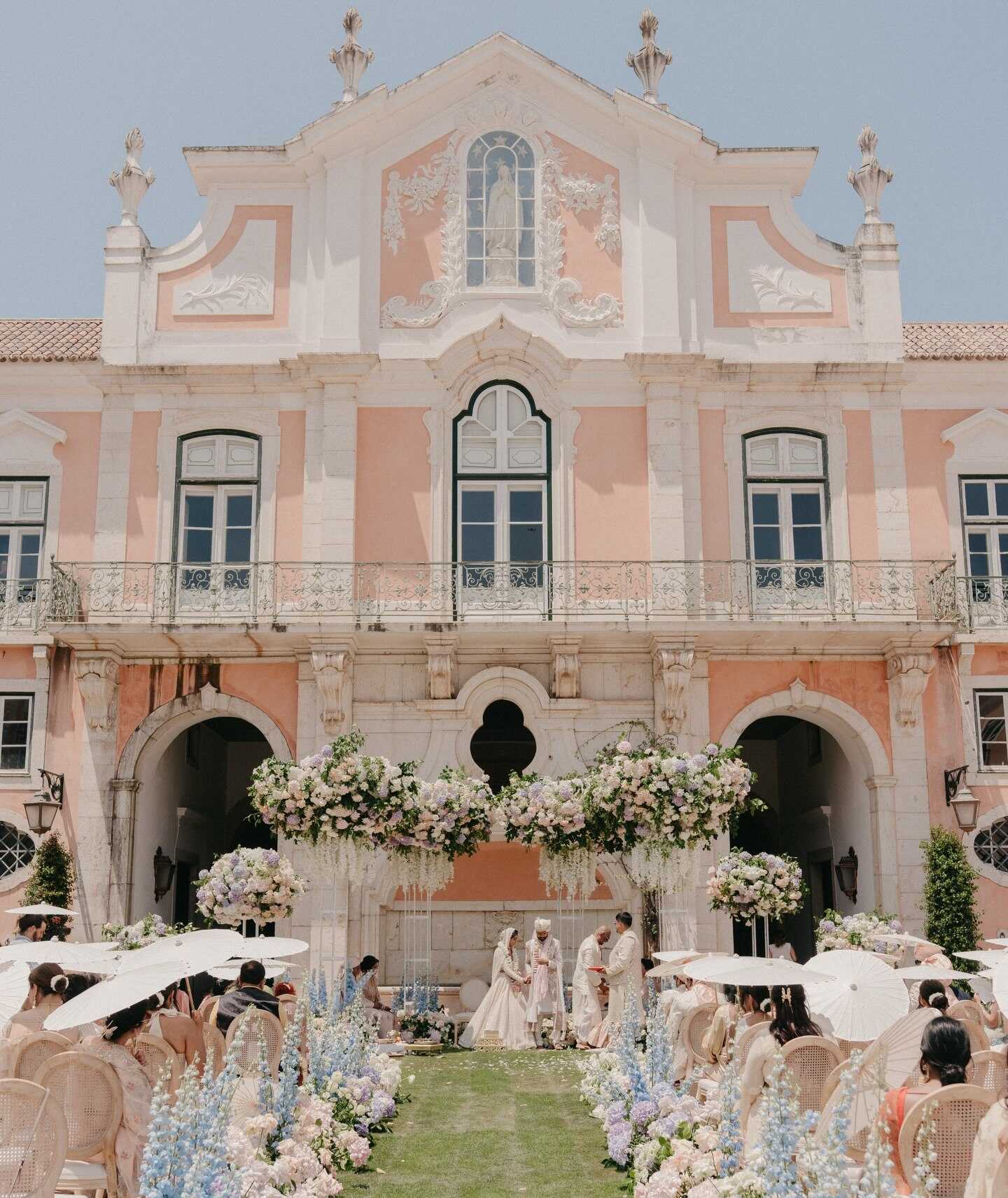
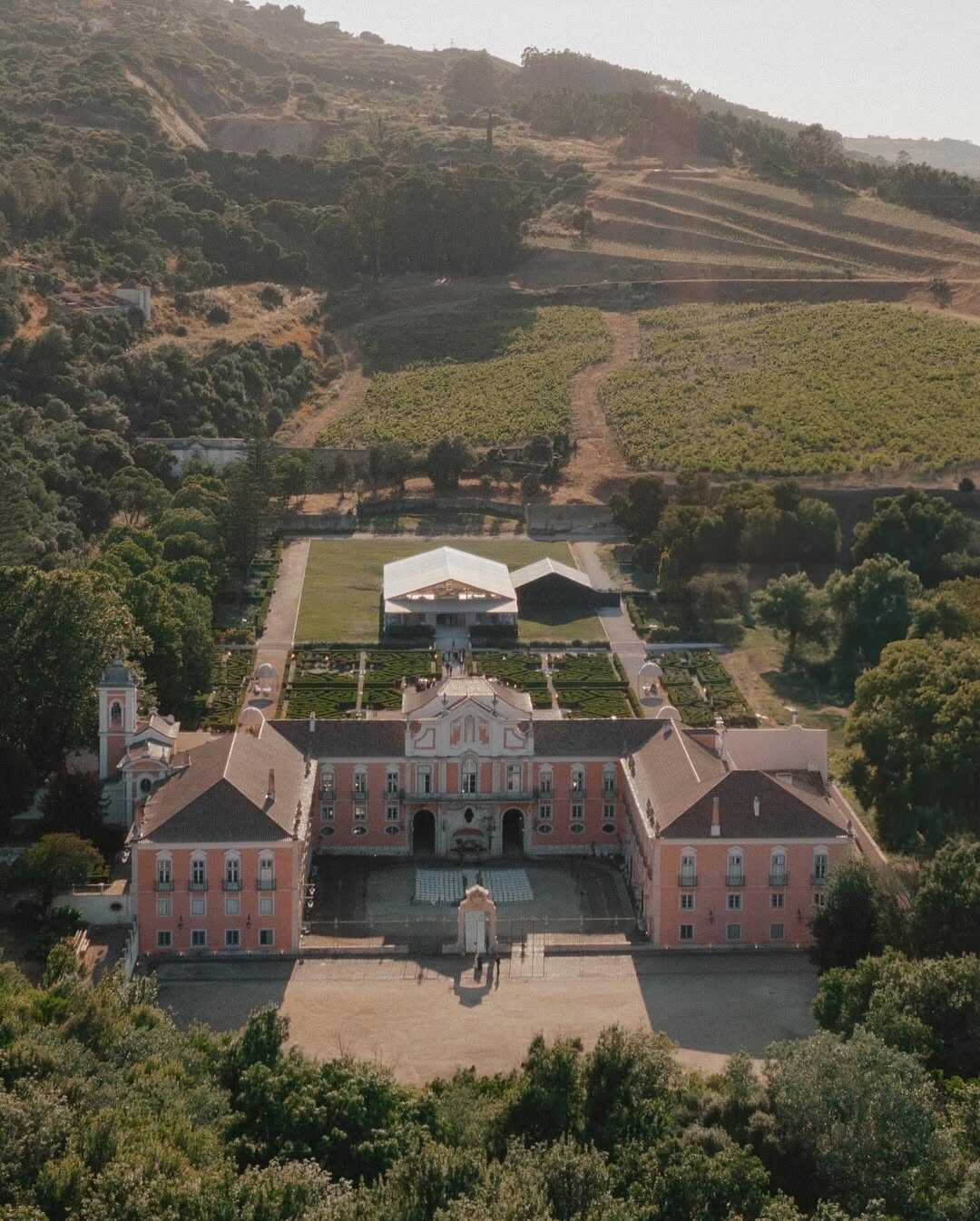
The Palácio do Correio Mor’s name comes directly from the Correio-Mor, or Chief Postmaster, a hereditary title held by the Gomes da Mata family for roughly two centuries, starting in the era of Philip II. Italian architect António Canevari designed the estate in the 18th century, and its interiors still carry stucco work by Giovanni Grossi alongside paintings by José da Costa Negreiros - a level of decorative detail formal enough to earn the palace status as a Heritage Site of Public Interest in 1967. Guided visits are still arranged by request, a rare offering among Lisbon’s working wedding venues, and one that lets couples build a bit of the estate’s own history into their wedding weekend for curious guests.
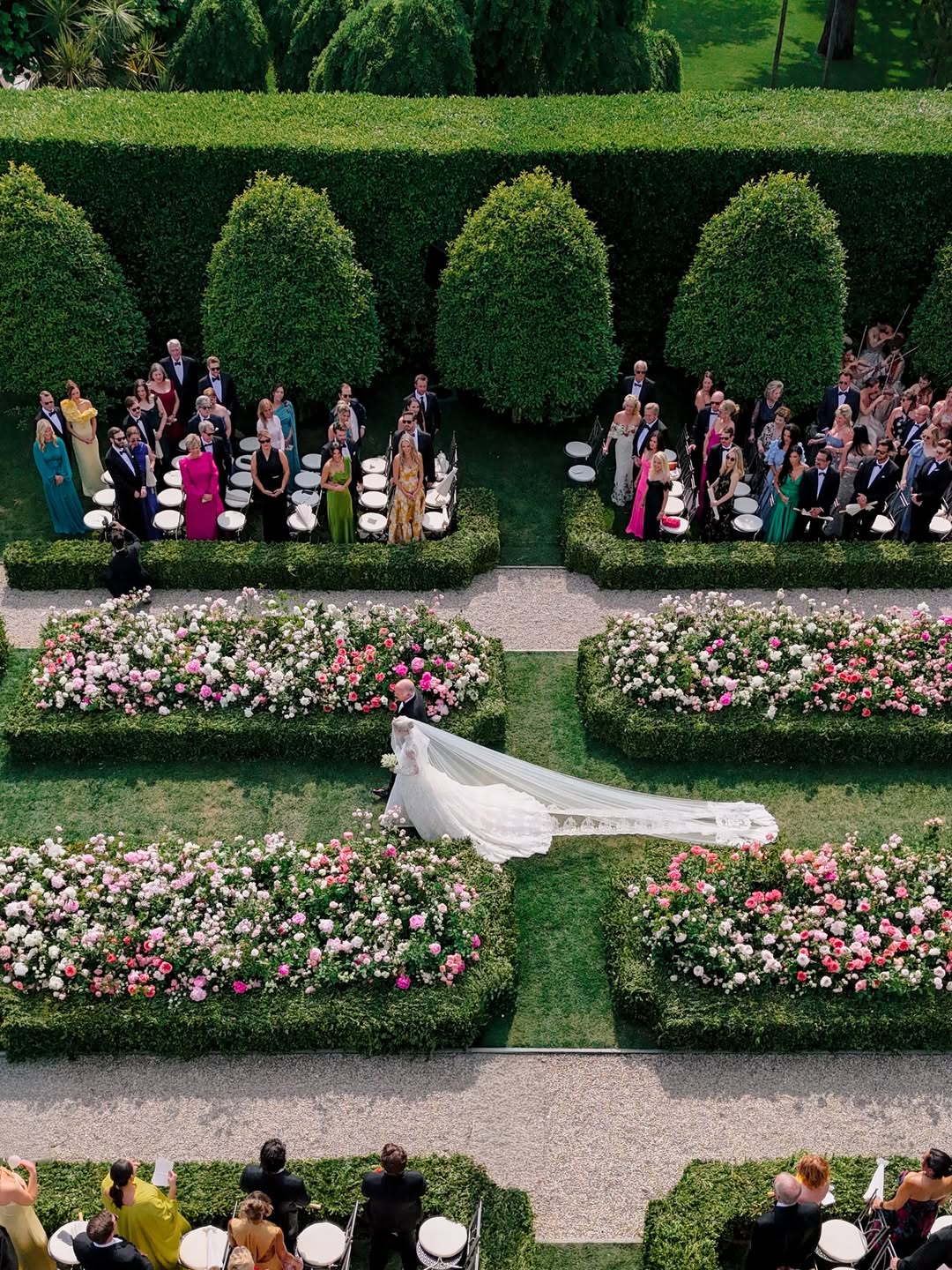
Located 15 minutes from Lisbon, in Loures, the property features French-style boxwood gardens, protected Mediterranean woodland, and waterfalls that flow down the hills, providing couples with a completely different setting from the city center palaces listed here. The number of people who can be accommodated varies greatly according to the arrangement, ranging from small indoor events to about 400 guests within the palace and a much higher figure – allegedly as many as 950 – when partner tents are set up across the grounds. The venue has, in fact, won its own Wezoree Award, an accolade alongside its two centuries of being owned by the same aristocratic family, and a photographer who has carried out numerous weddings at this venue has described it as one of the most romantic venues she has ever been in.
Pestana Palace Hotel
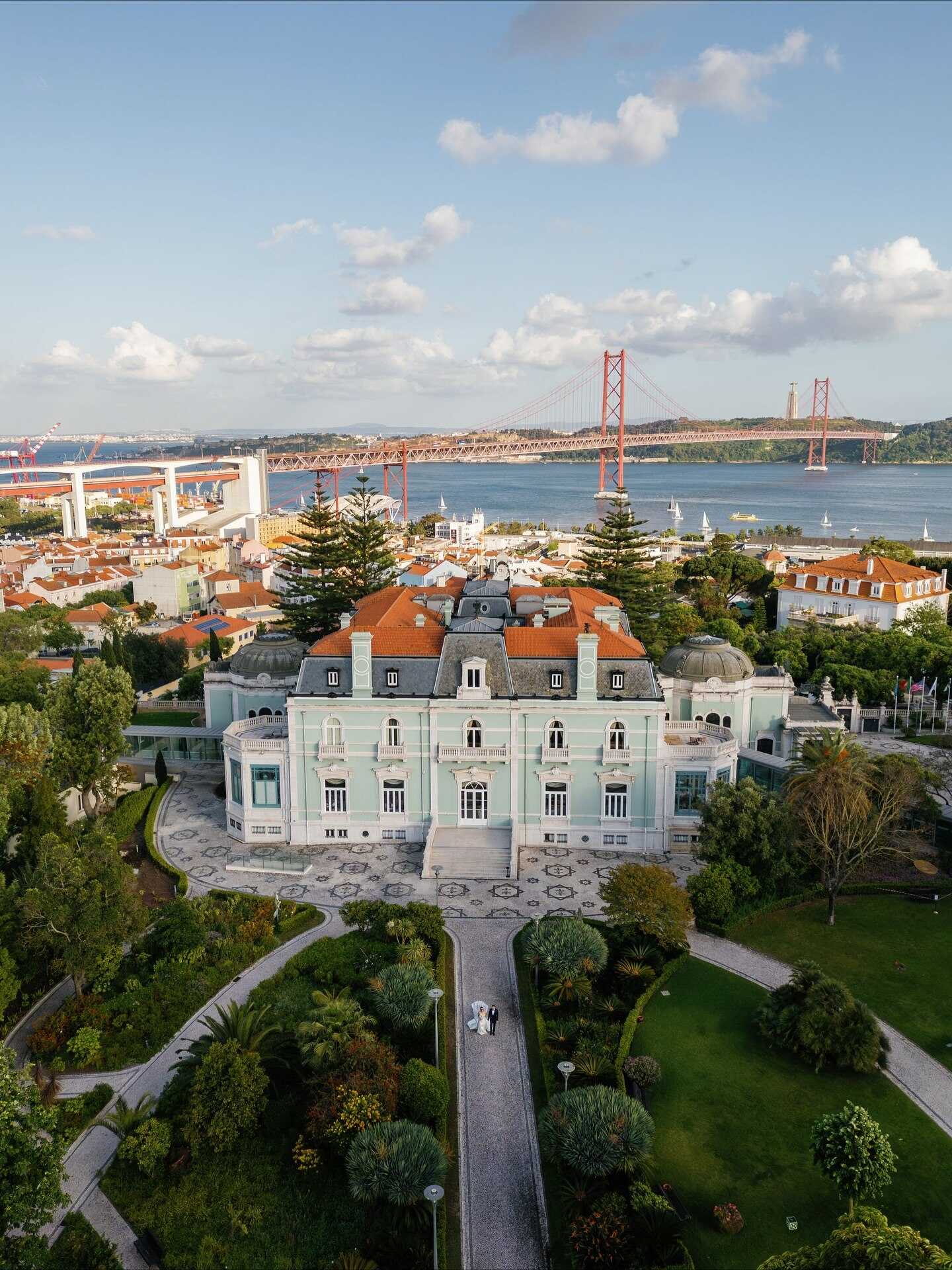
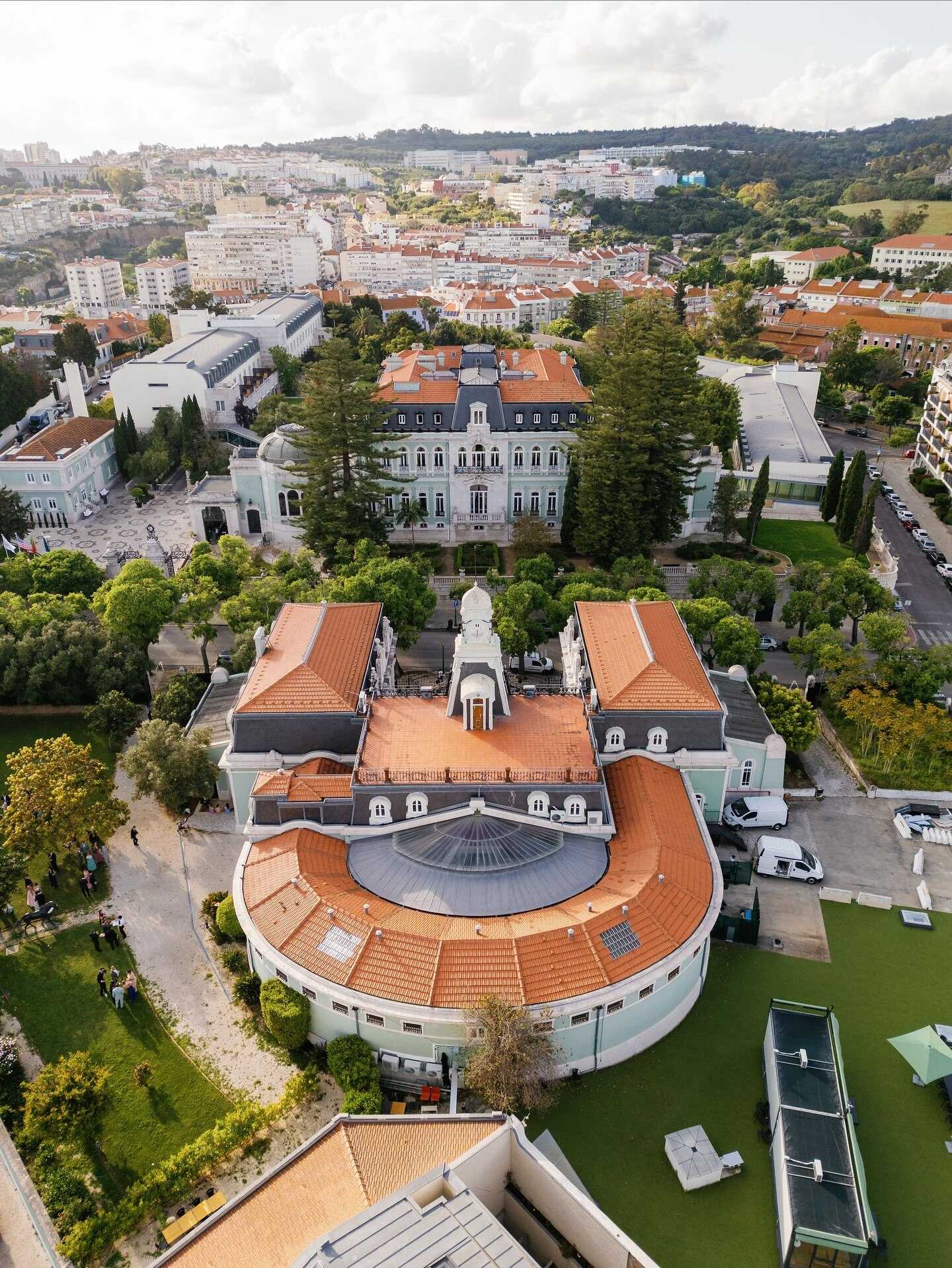
The Pestana Palace Hotel was built in 1890 by the Italian architect Achille Sponza and combines Neomanueline and Revivalist Moorish architectural styles to create a form different from the more traditionally European palaces in the area - its design is elaborate, multi-layered, and clearly Portuguese in its details. The four royal suites of the hotel have at times housed real marquesses, and a great deal of the garden surrounding the property has official "National Monument" status because of its rare and historic plantings, so wedding photographs taken there often include plants that are in fact part of Portugal's protected heritage.
- Full property spans 32 distinct event spaces, from a 6-person drawing room to the 380 m² Valle Flôr ballroom
- Capacity ranges from intimate gatherings up to roughly 500–630 guests, depending on configuration
- 194 rooms and suites let the entire wedding party stay on-site for the full weekend
- Two swimming pools, an on-site spa, and views over the Tagus River and Ponte 25 de Abril bridge
- A member of The Leading Hotels of the World, with recognition for sustainability practices as well
Couples who've married here often point to the same thing: the location. Minutes from the Tower of Belém and Jerónimos Monastery, the hotel offers destination guests a genuine city-break itinerary alongside the wedding weekend itself, which is a large part of why it's become a repeat favorite for couples flying in from outside Portugal.
Casa Sacoto
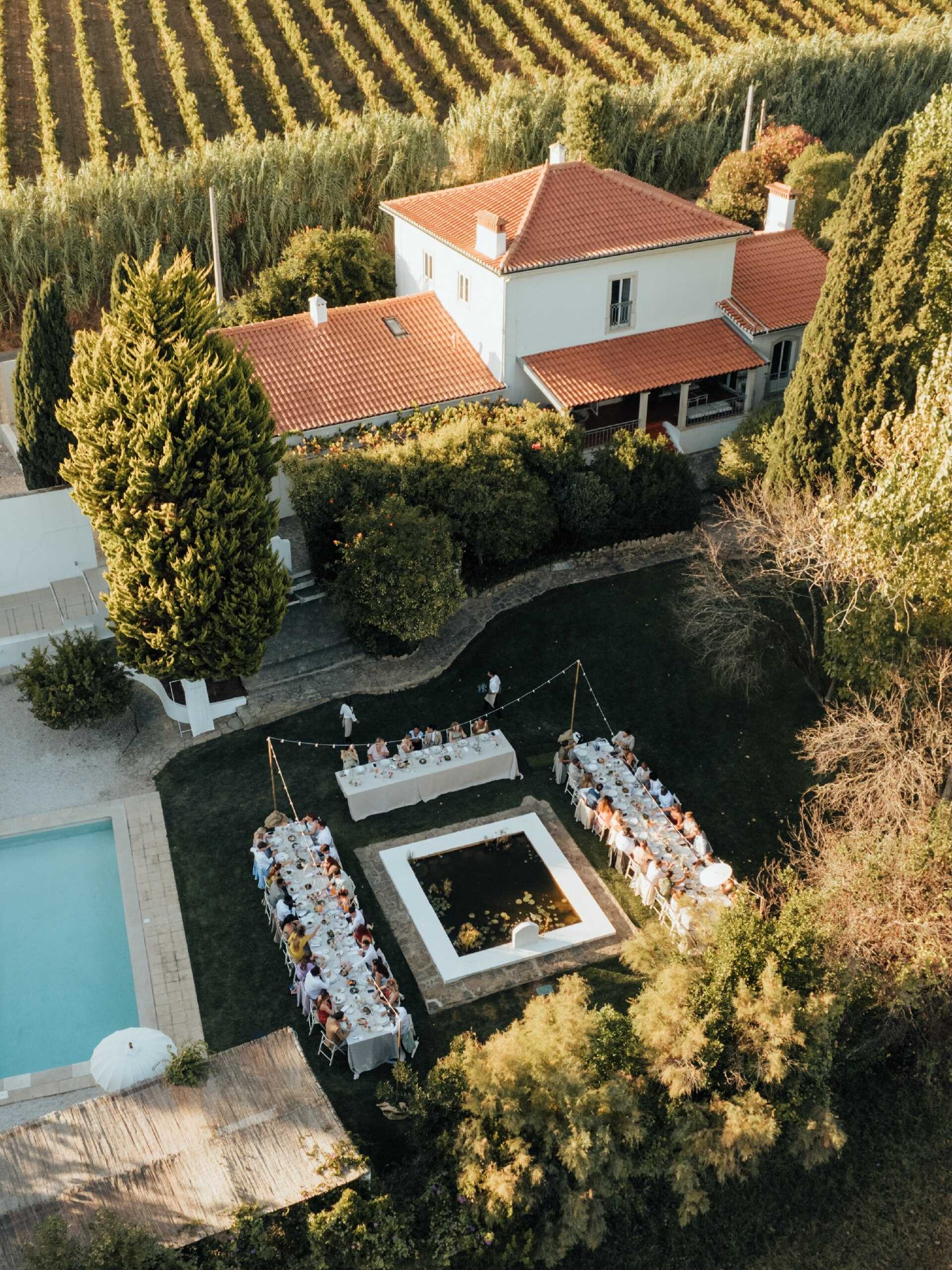
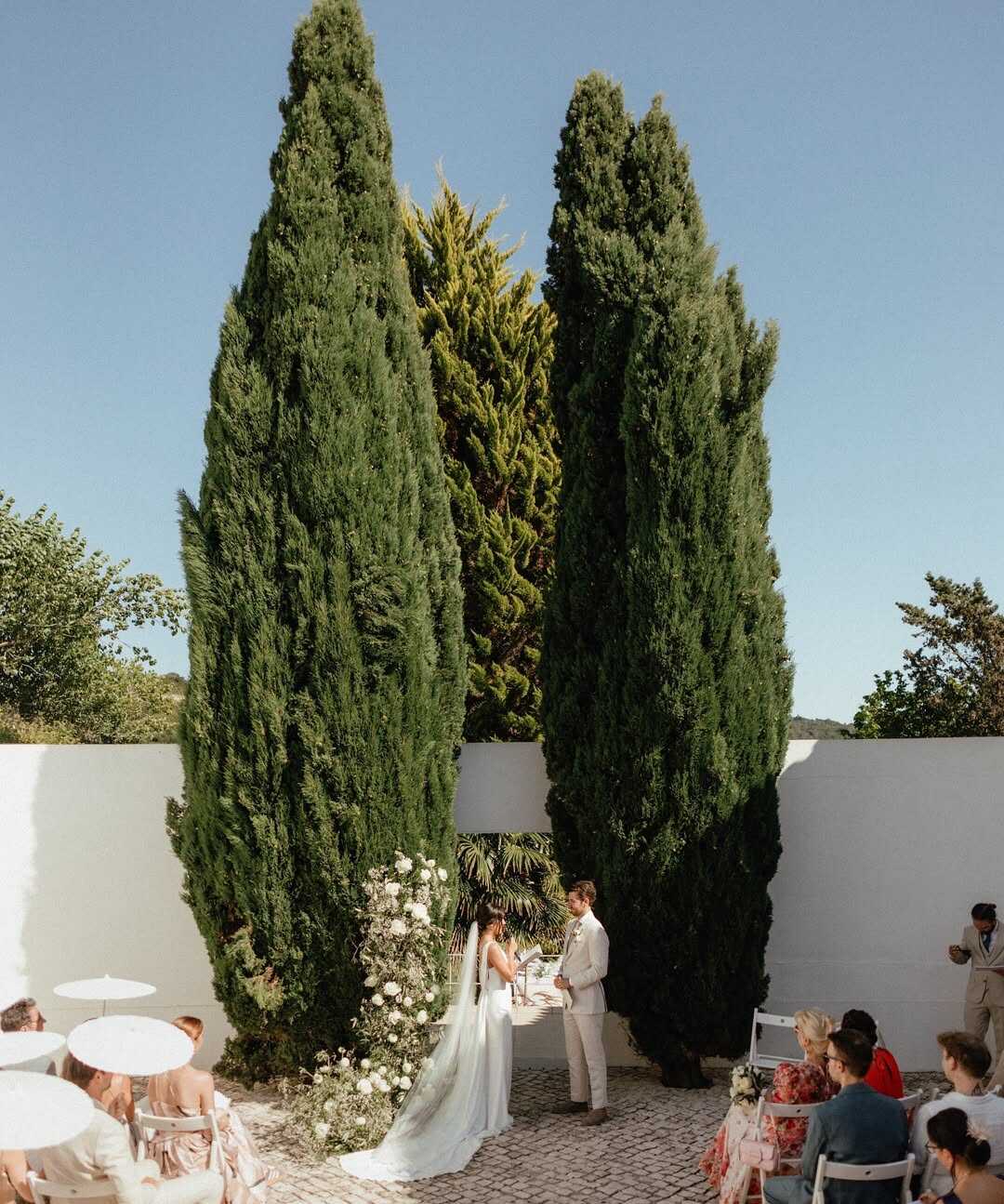
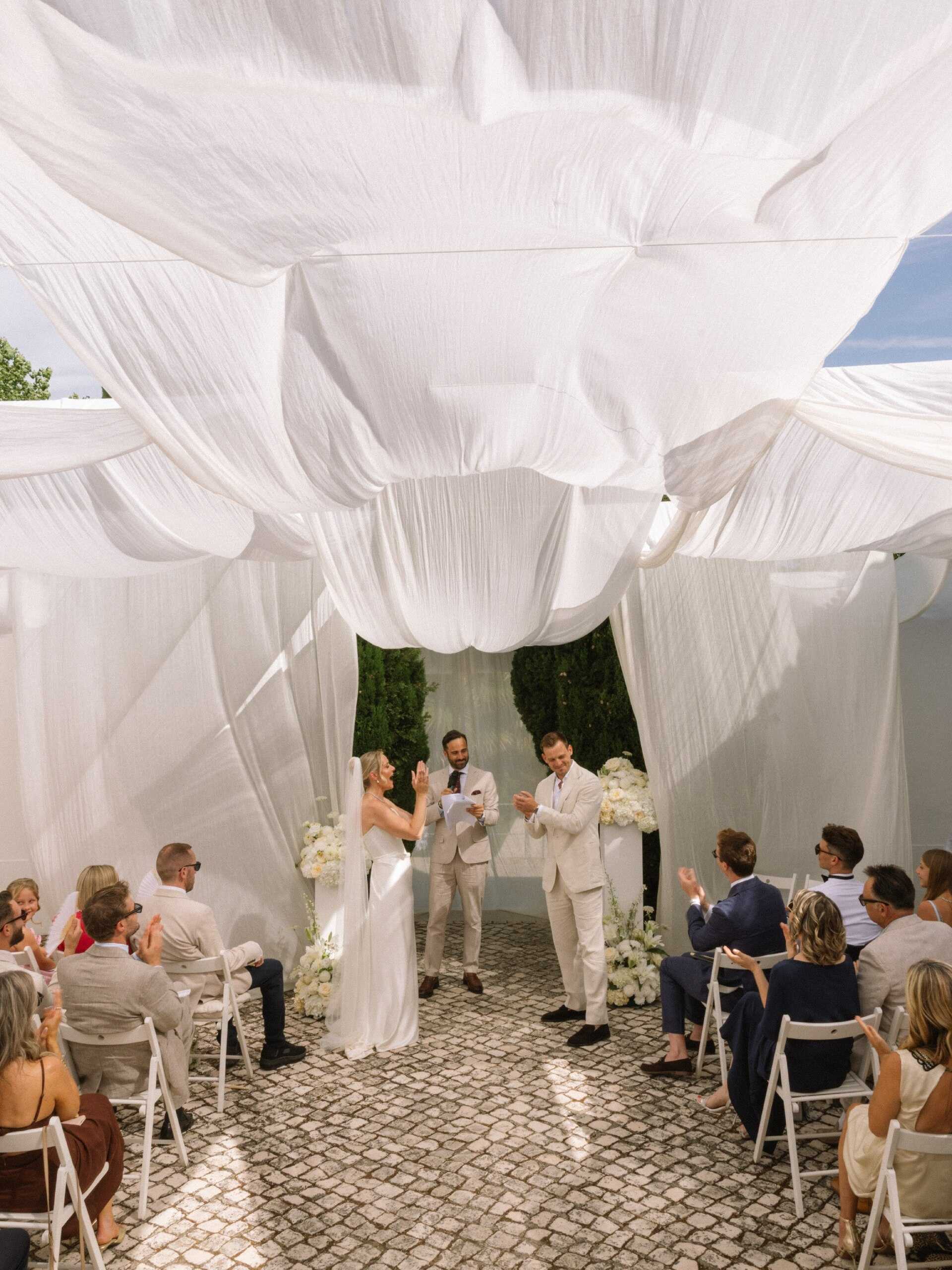
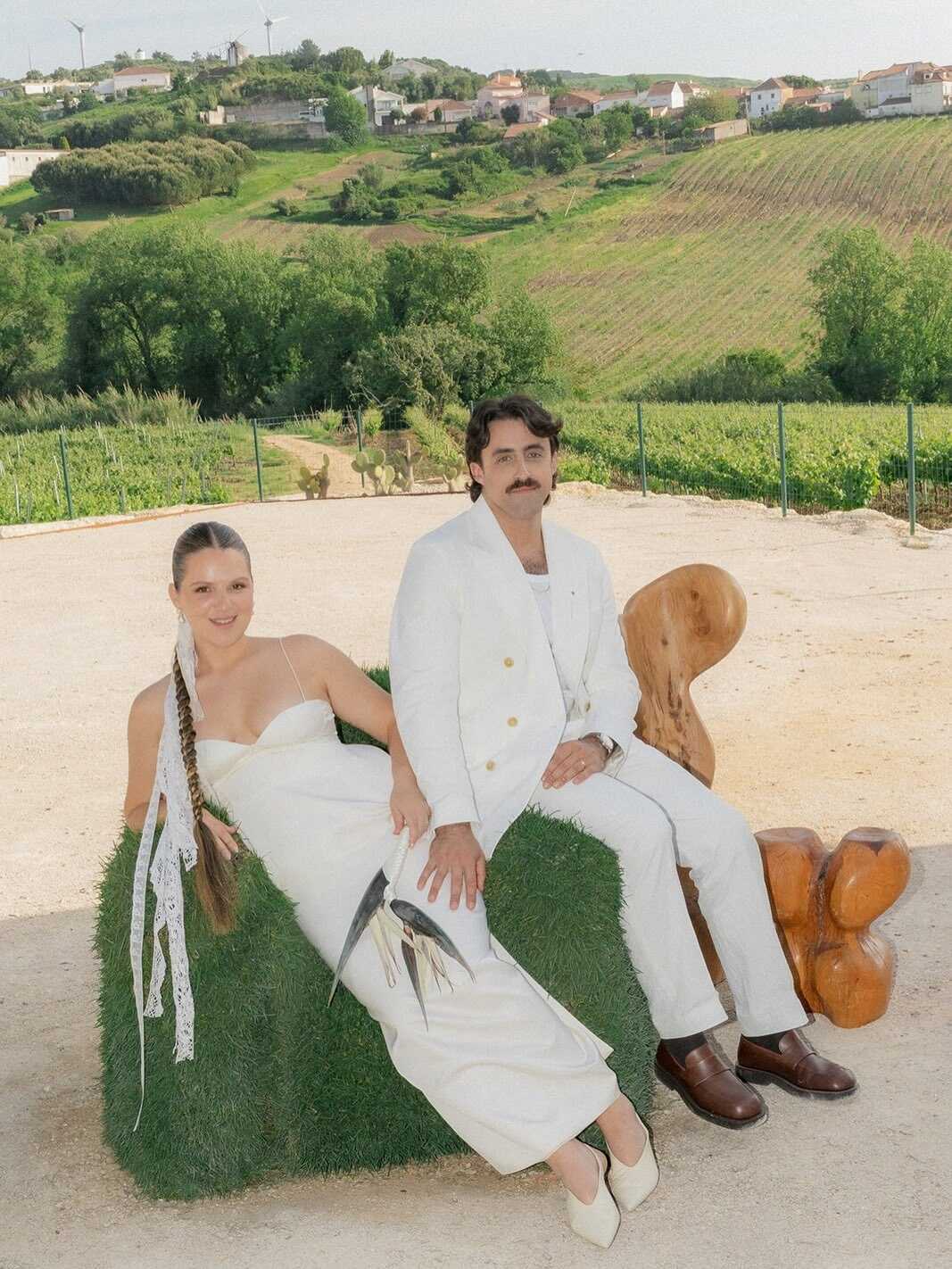
Restored from a forgotten 19th-century property by owners Liliana and Hugo, Casa Sacoto sits roughly 40 minutes north of Lisbon along the region’s wine route, in the small parish of Carmões - a part of Portugal shaped, according to the couple’s own account, by Lusitanian settlers, Roman traces, and Moorish influence stretching back over two centuries. Liliana’s background in event planning and Hugo’s in industrial design shaped the restoration directly: her instinct for effortless, personal hosting paired with his attention to authentic, careful craftsmanship in every rebuilt detail, from the whitewashed walls down to the reclaimed terracotta underfoot.
Unlike the grand palaces featured elsewhere on this list, Casa Sacoto has deliberately kept its size small - property buyouts altogether allow only about 80 to 90 guests, with on-site accommodation for around 10 people in the main house and two private studios. The estate limits itself to a small number of weddings each year, embracing what the owners call a "slow living" concept designed for multi-day celebrations rather than single-evening events. Surrounding the main hall and its mezzanine dance floor are buildings that have been whitewashed, along with working vineyards and olive groves, offering couples an intentionally quieter, more intimate alternative to a wedding on a palace scale, and, in exchange for sheer grandeur, providing a slower, more personal kind of hospitality.
Palácio Marquês de Fronteira e Alorna
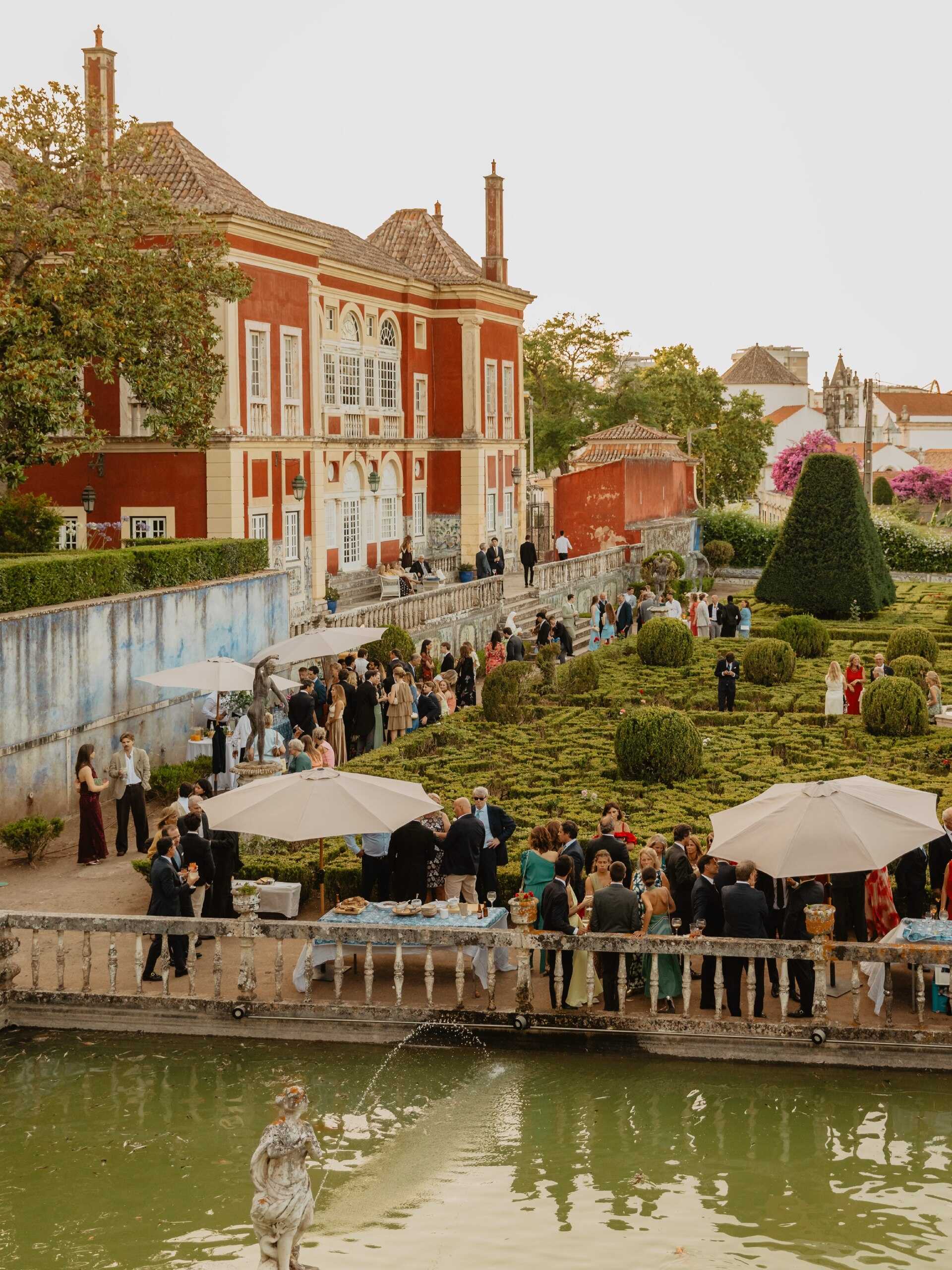
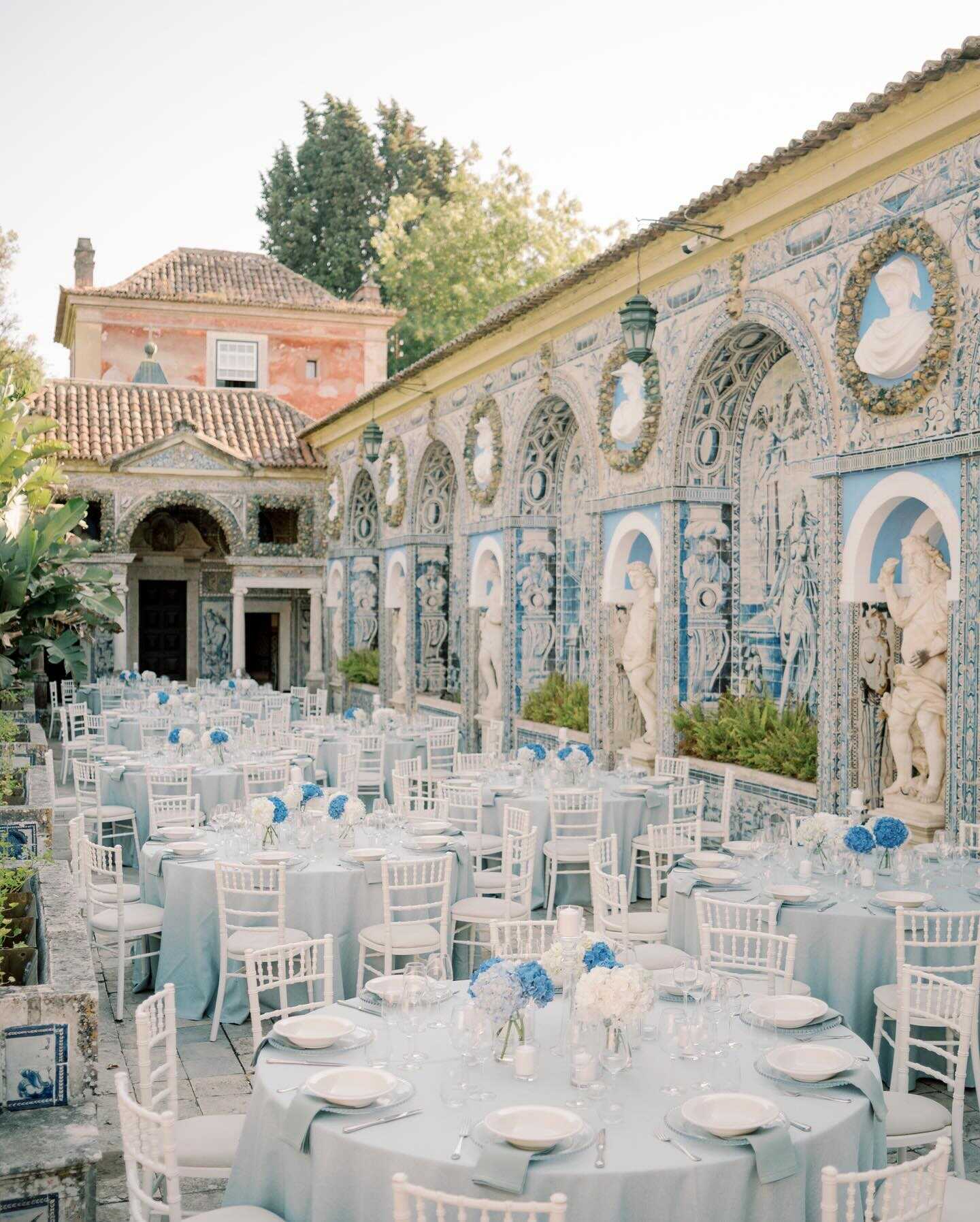
Fundação das Casas de Fronteira e Alorna was built about 1670 by Dom João de Mascarenhas, the first Marquis of Fronteira, and is still the private home of his direct descendants, making it one of the very few wedding venues on this list that is actually still inhabited by the family who founded it. It contains the largest collection of 17th-century azulejos preserved in their original locations anywhere in Portugal, most notably in the Sala das Batalhas, where the painted tilework depicts the Marquis's military history during the Portuguese Restoration War.
As the palace serves as both a national monument and a living family home, couples must work within certain heritage rules - specifically, celebrations can go on until 2 a.m., and any decorations must be arranged so as not to damage the historic tilework or the building structure. Capacity runs to roughly 156 guests for an outdoor garden dinner or around 100 for an indoor reception in the palace itself, with statue-lined gardens and a striking red facade providing photographers with an unusually dramatic setting. Because the property was not built with events in mind, most couples hire an experienced local wedding planner to look after the arrangements for furniture, catering, and decorations from outside vendors, and this small additional level of coordination is something that most people agree is well worth it when the gardens are lit up at night.
The range of wedding venues in Lisbon goes well beyond these five, with coastal estates along the Portuguese Riviera, historic quintas in Sintra, and a number of specialty venues across the capital, each offering a different take on a Portuguese wedding. You can browse Wezoree's carefully selected collection of venues in Lisbon, use filters for capacity, style, and region, and find the venue that precisely matches your plans.

FAQ
What is the best time of year to get married in Lisbon?
The best months for holding outdoor ceremonies are from May through October, since both the winter rain and the hottest period of summer are avoided in spring and early autumn. As July and August see the highest number of tourists in the city, this can affect availability and prices at popular venues, which is why many couples prefer May, June, or September.
How far in advance should we book a palace venue like Queluz or Pestana Palace?
For heritage properties with limited event calendars - Palácio Nacional de Queluz, Palácio Marquês de Fronteira e Alorna - 12 to 18 months' notice is realistic for peak-season dates, particularly since some of these palaces still function as museums or private residences, alongside hosting weddings. Larger hotel-based venues like Pestana Palace generally offer more flexibility given their scale and dedicated events team.
What venues are best suited for very large weddings?
The Palácio do Correio Mor can accommodate approximately 950 guests when partner tents are installed, and the combined areas of the Pestana Palace Hotel can accommodate between 500 and 630 guests, depending on the configuration. Likewise, the Throne Room and gardens at the Palácio Nacional de Queluz can comfortably accommodate groups of between 200 and 260.
Which venues suit smaller, more intimate destination weddings?
Casa Sacoto caps its full buyouts at about 80 to 90 guests and limits weddings to a small number each year, making it the most intimate choice on this list. Similarly, the indoor capacity of around 100 guests at Palácio Marquês De Fronteira e Alorna is suitable for a smaller, more personal celebration in the authentic 17th-century interiors.
Do I need a wedding planner for a palace venue in Lisbon?
In working-family homes and heritage sites such as the Palácio Marquês de Fronteira e Alorna, which was not designed as an event venue, it is necessary to have an experienced local planner to arrange the furniture, catering, and decorations with external vendors. Hotels with event facilities, such as Pestana Palace, have in-house event teams, but many international couples still hire an external planner to handle travel arrangements for guests from abroad.
What is the price range for weddings at these venues?
Costs vary significantly by property and scale. Casa Sacoto’s smaller, intimate format starts considerably lower than the grand palaces, while Pestana Palace Hotel’s venue rental and catering minimums typically start around €12,000 to €15,000 and scale up from there. Requesting an itemized quote directly from each venue is the most reliable way to budget accurately, since pricing shifts with season, guest count, and which spaces are booked.