Hanging Amaranthus Wedding Florals, From Bouquet to Ceremony Arch


- When Hanging Amaranthus Wedding Florals Turn Into Sculpture
- The New Drama of the Hanging Amaranthus Wedding Bouquet
- Hanging Amaranthus Wedding Flowers, in White and Green
- Florals That Fall from Above: The Hanging Amaranthus Wedding Arch
- Let It Spill Across the Table
- When the Hanging Amaranthus Wedding Bouquet Becomes an Accessory
- A Ceremony Framed in Amaranthus
- Which Arrangement Actually Fits Your Wedding?
- FAQ
Every few years, a single stem quietly takes over wedding floral design, and right now it’s amaranthus. It doesn’t sit upright like most flowers but hangs, cascades, and spills toward the floor as if gravity were part of the design. Some couples choose a pale, green-toned color instead of the deep burgundy most picture when amaranthus is mentioned. Still, color is a secondary decision here. What drives the hanging amaranthus wedding trend is movement - the one thing most floral arrangements, however beautiful, lack. A bouquet sits still. An arch sits still. Amaranthus, left to hang, never does.
Find Your Perfect Wedding Vendors

When Hanging Amaranthus Wedding Florals Turn Into Sculpture
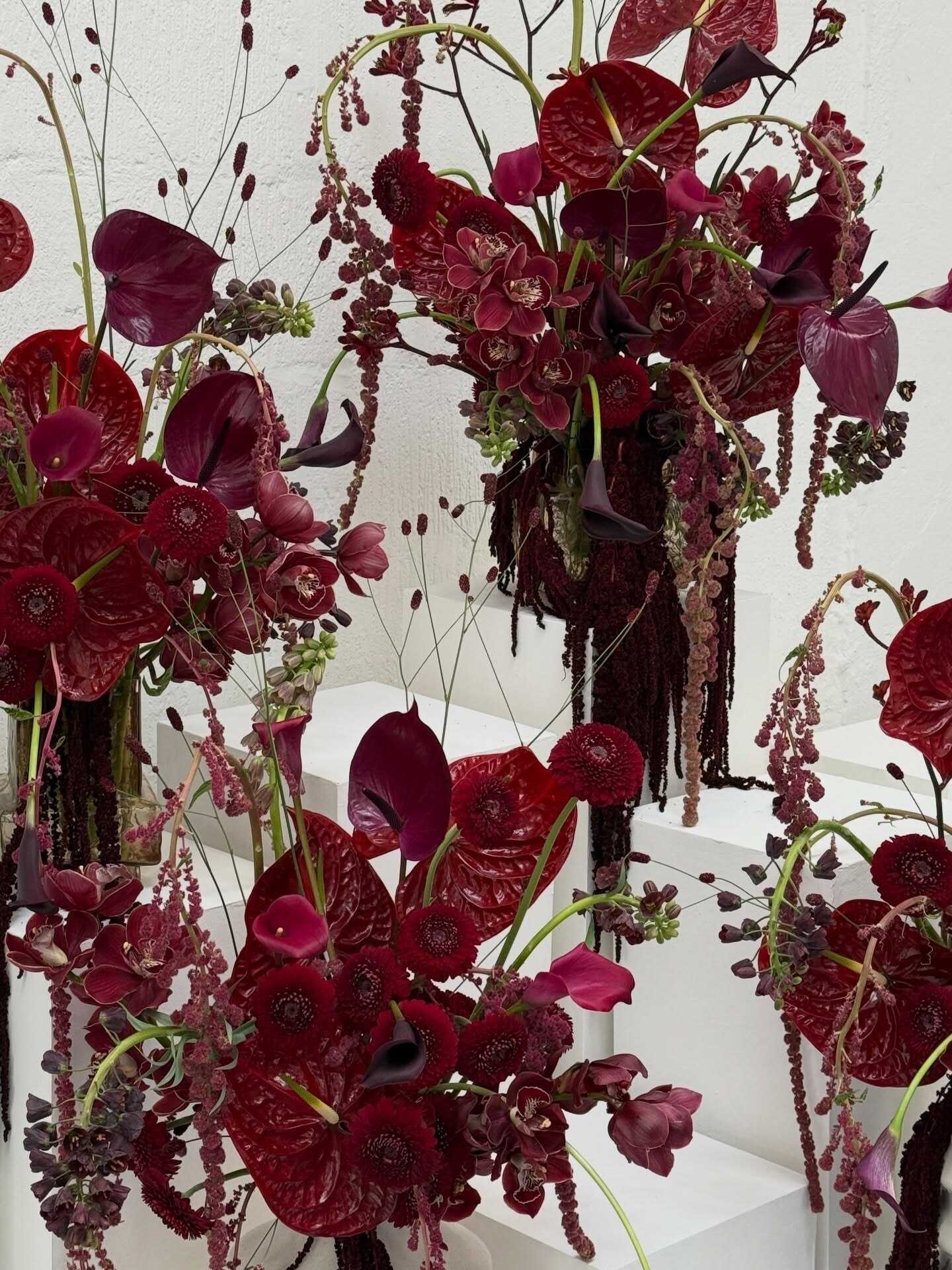
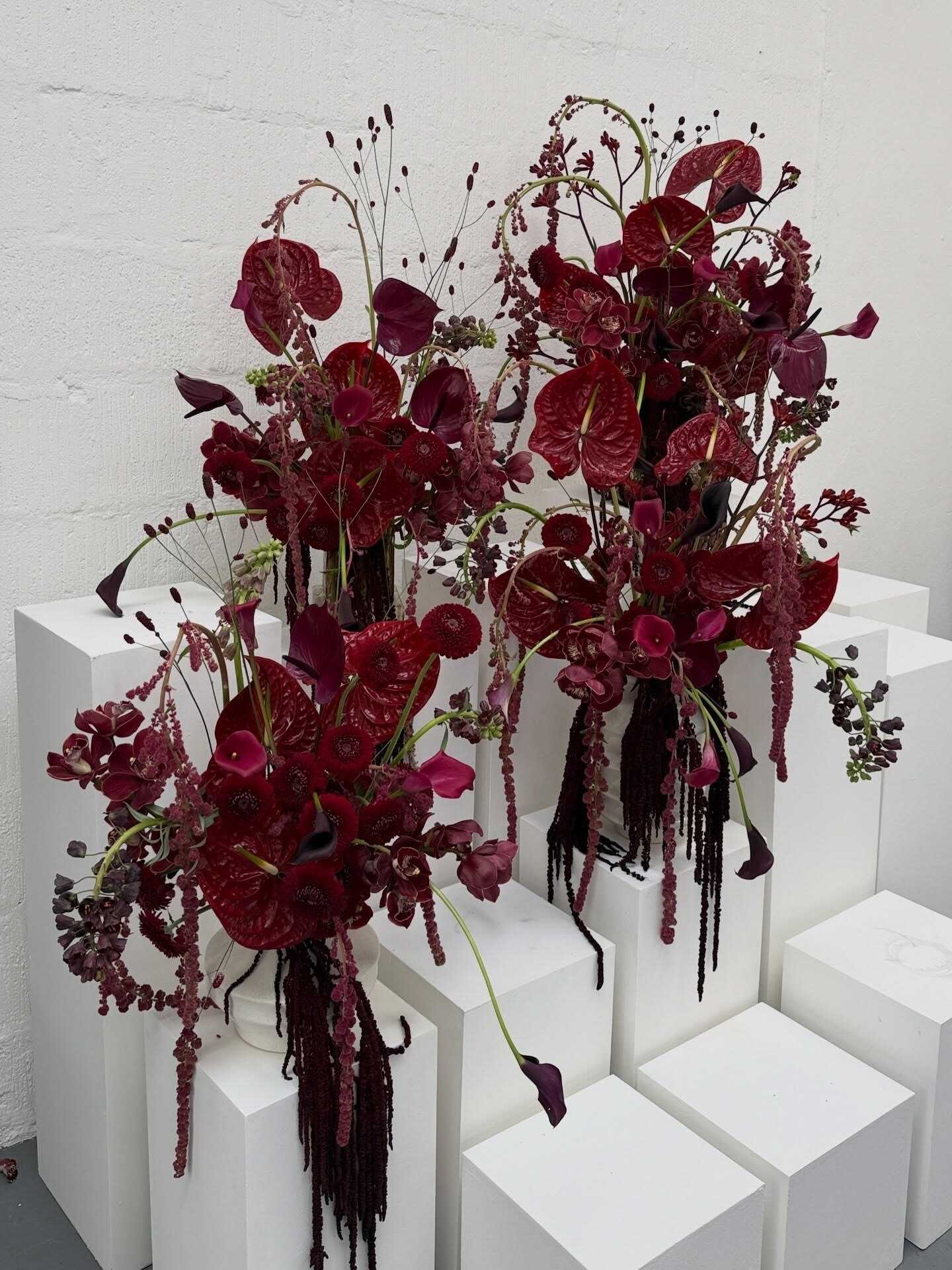
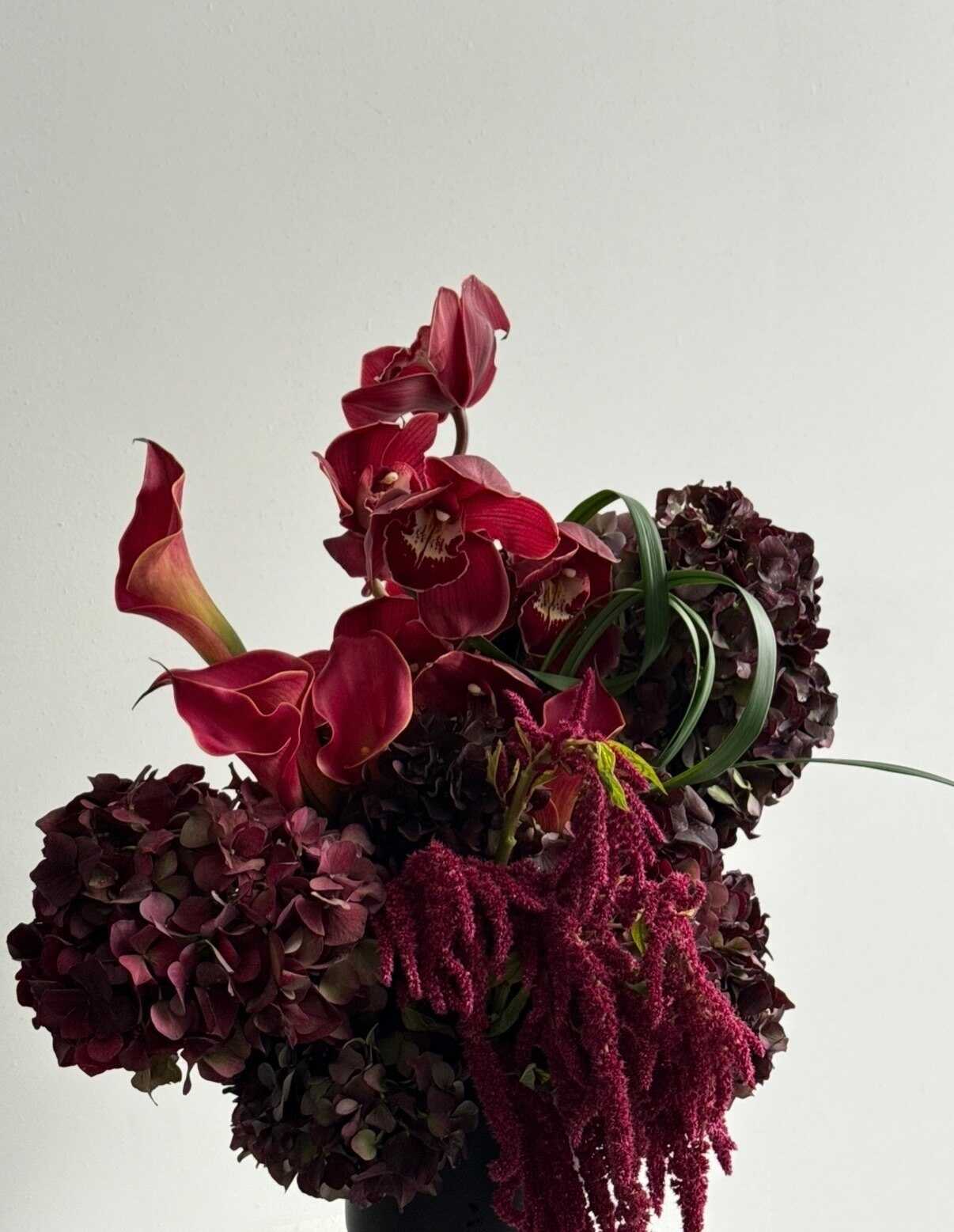
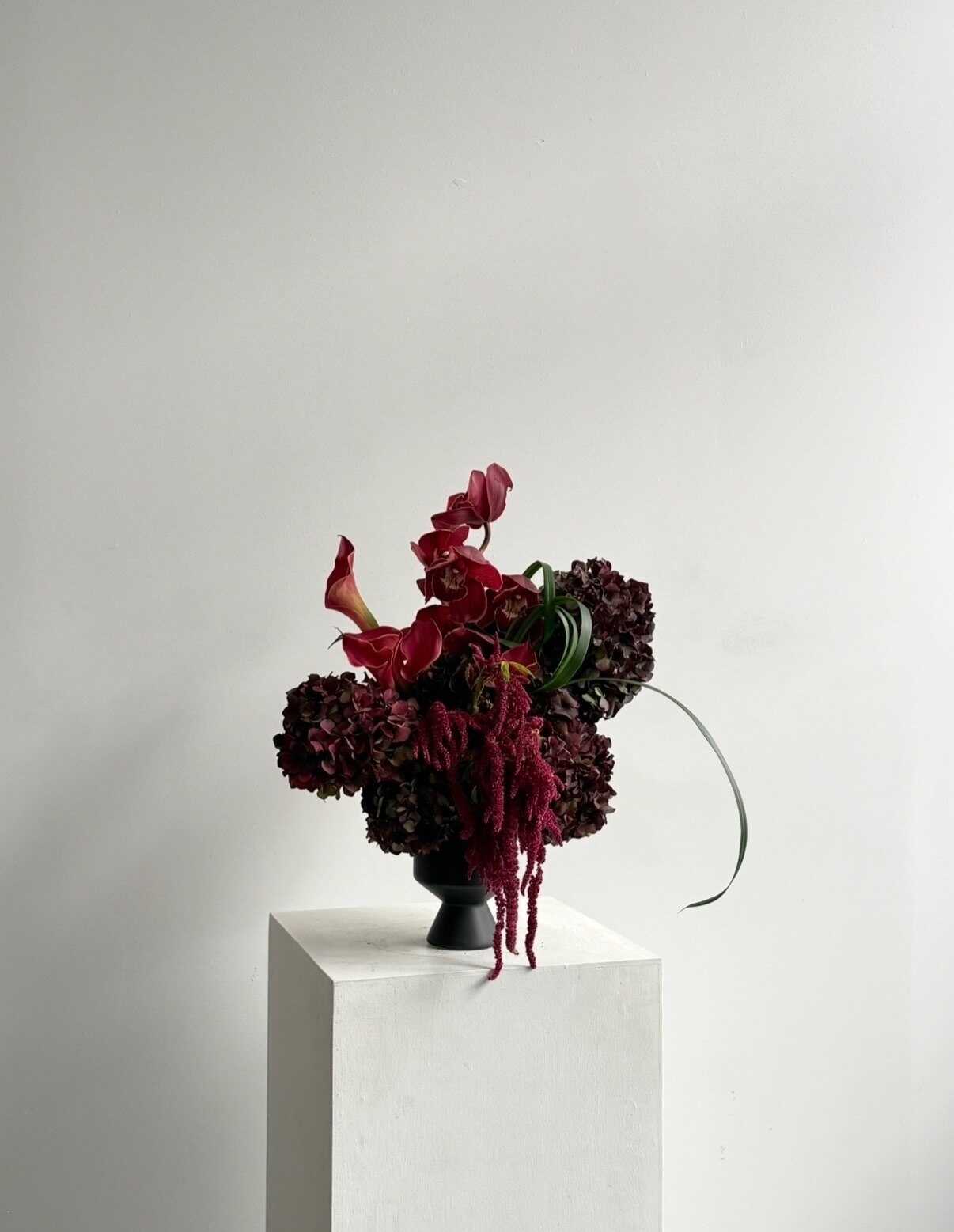
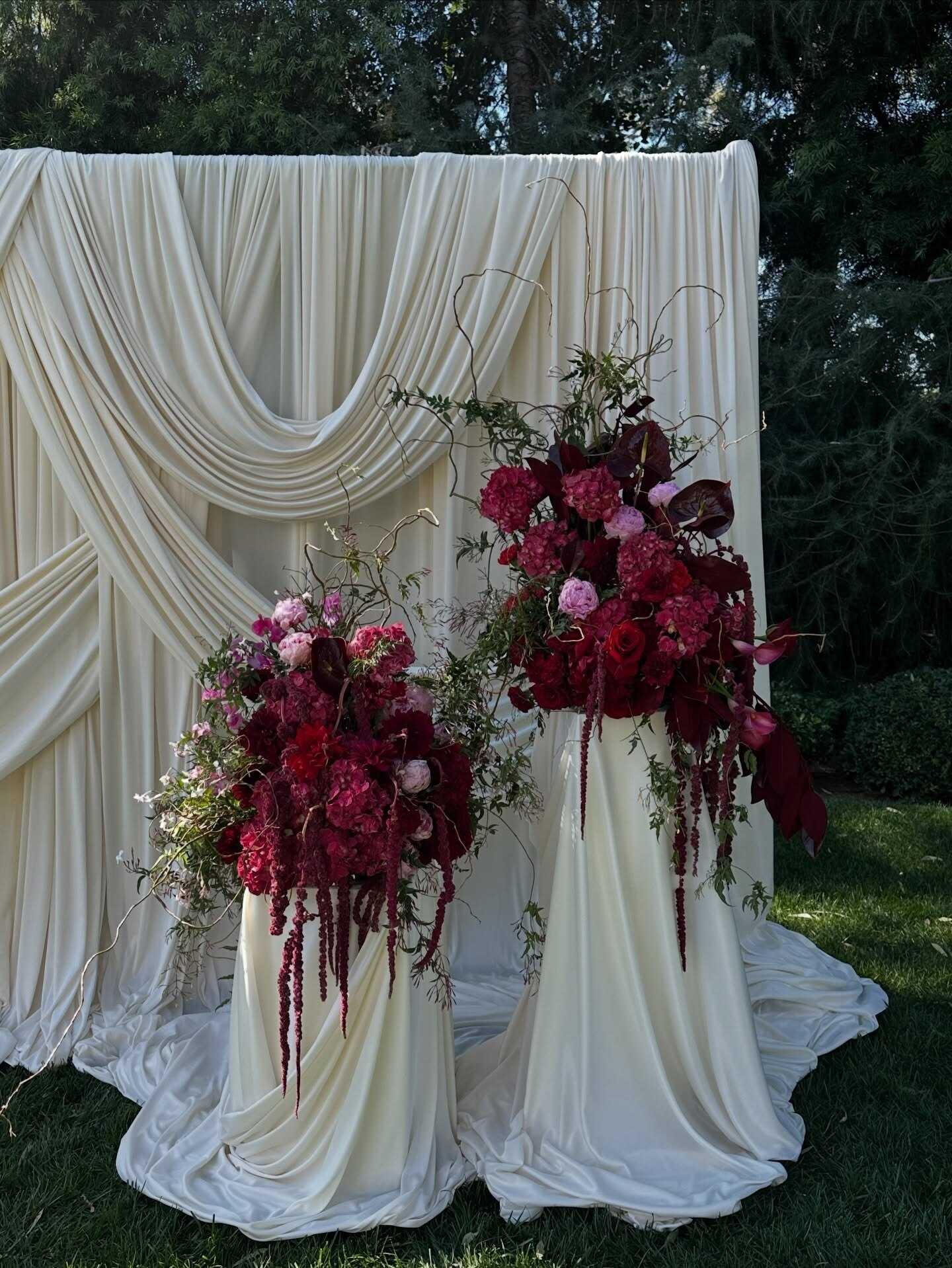
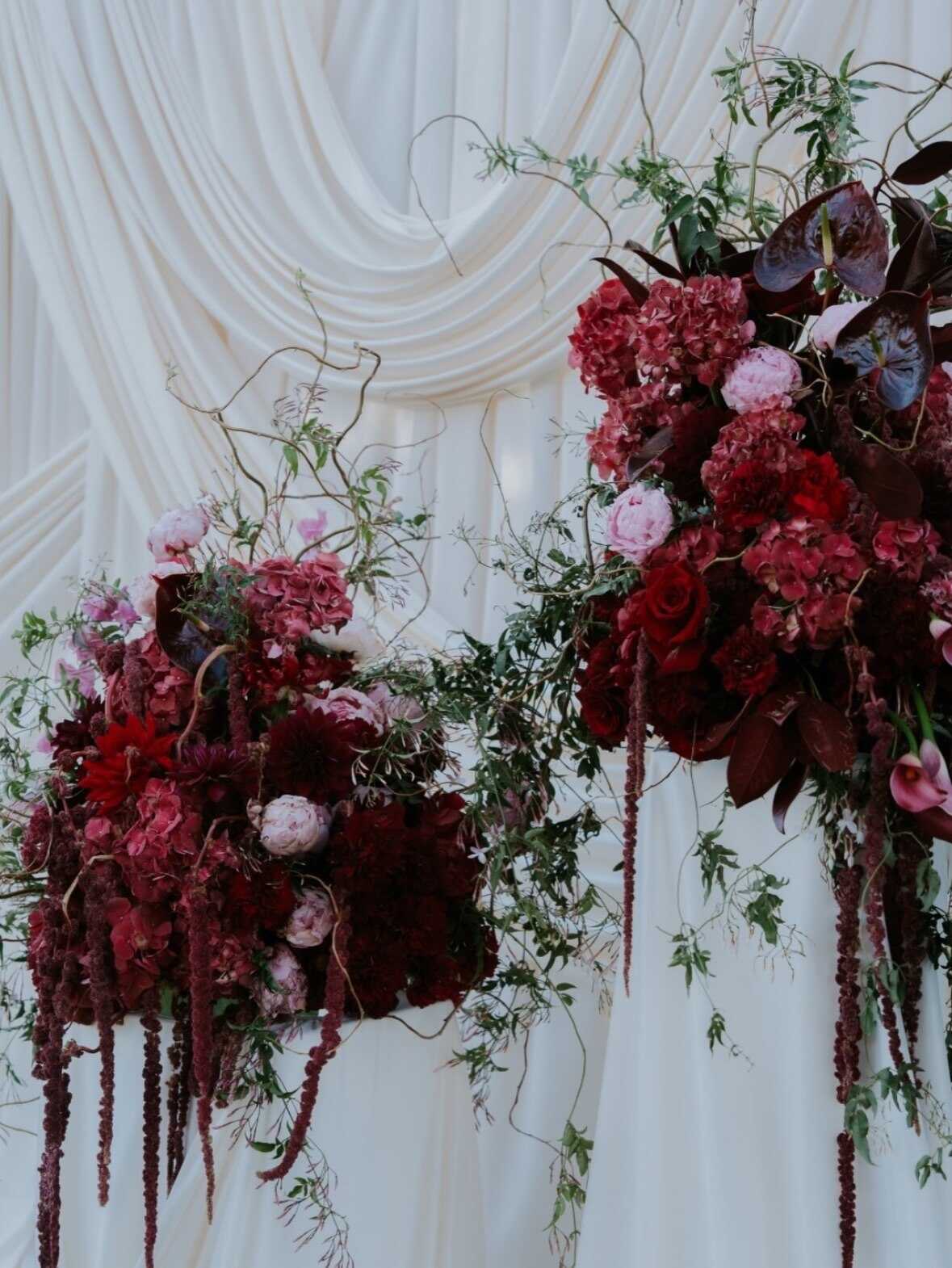
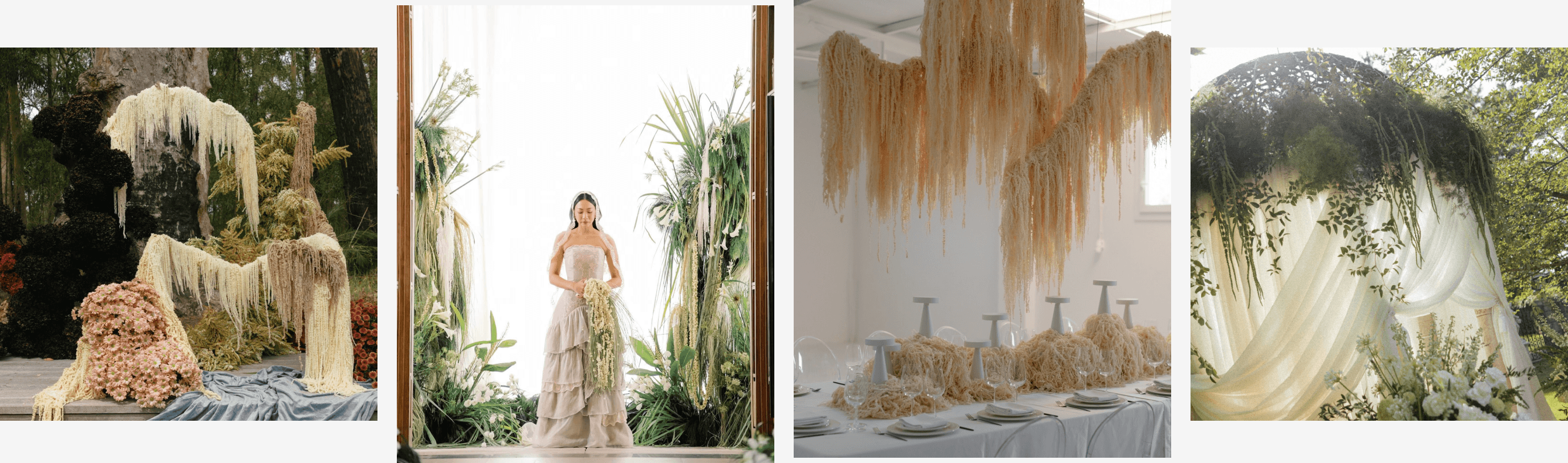
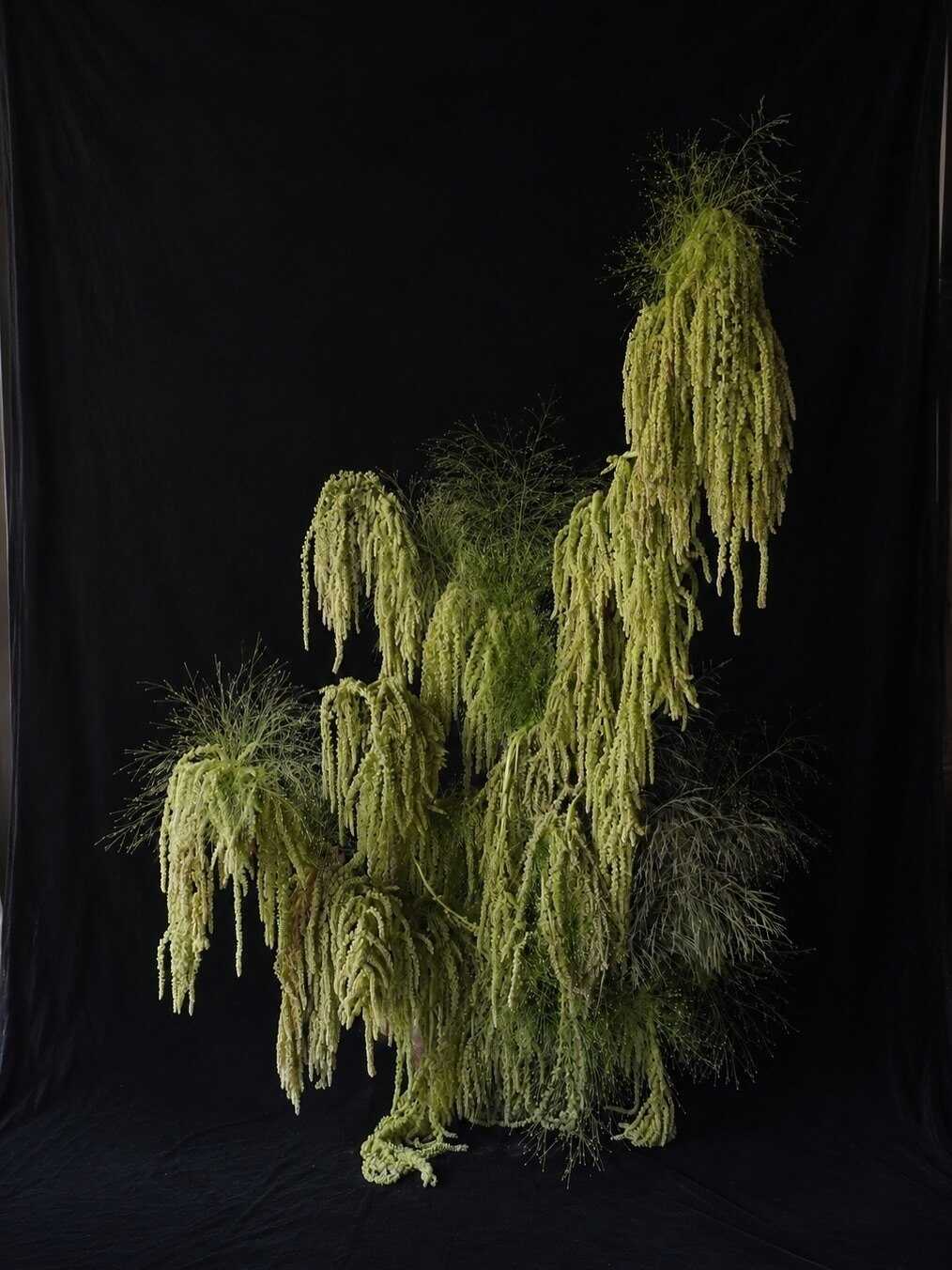
Nearly all wedding flowers are designed to be seen from one angle, remain stationary, and then be appreciated. Amaranthus does not accept this stillness; its long, rope-like tassels move with the air, reflect light differently depending on how they drape, and turn a fixed arrangement into something like a mobile. The piece continuously reorganizes itself throughout the evening without anyone having to touch it, so the same bouquet or display can look different in the ceremony photos than it does three hours later on the dance floor.
That is why florists are now seeing more value in treating it less as a flower and more as a form of sculpture. When a single flowing strand is woven into a bouquet or hung from an arch, the result looks purposeful and is almost architectural, whereas a group of upright flowers seldom achieves this effect. The scale makes a big difference: a few loose strands bring about a hint of movement without dominating the overall arrangement, while a more substantial cluster, made up of dozens of tassels fastened together at the base, begins to act like a real textile - something more like fringe or drapery than a flower.
It is soft in texture yet has a bold shape, which is one reason it is such an unusual material to use in design. Generally, trailing green plants are seen as filler - something included to soften sharp edges or to fill in empty spaces. Amaranthus works exactly the opposite: as soon as it is allowed to move, it becomes the main feature, which is the reason why photographers and videographers have now started asking for it specifically, since it is one of the rare wedding flowers that looks just as impressive when in motion as it does when it is stationary.
The New Drama of the Hanging Amaranthus Wedding Bouquet
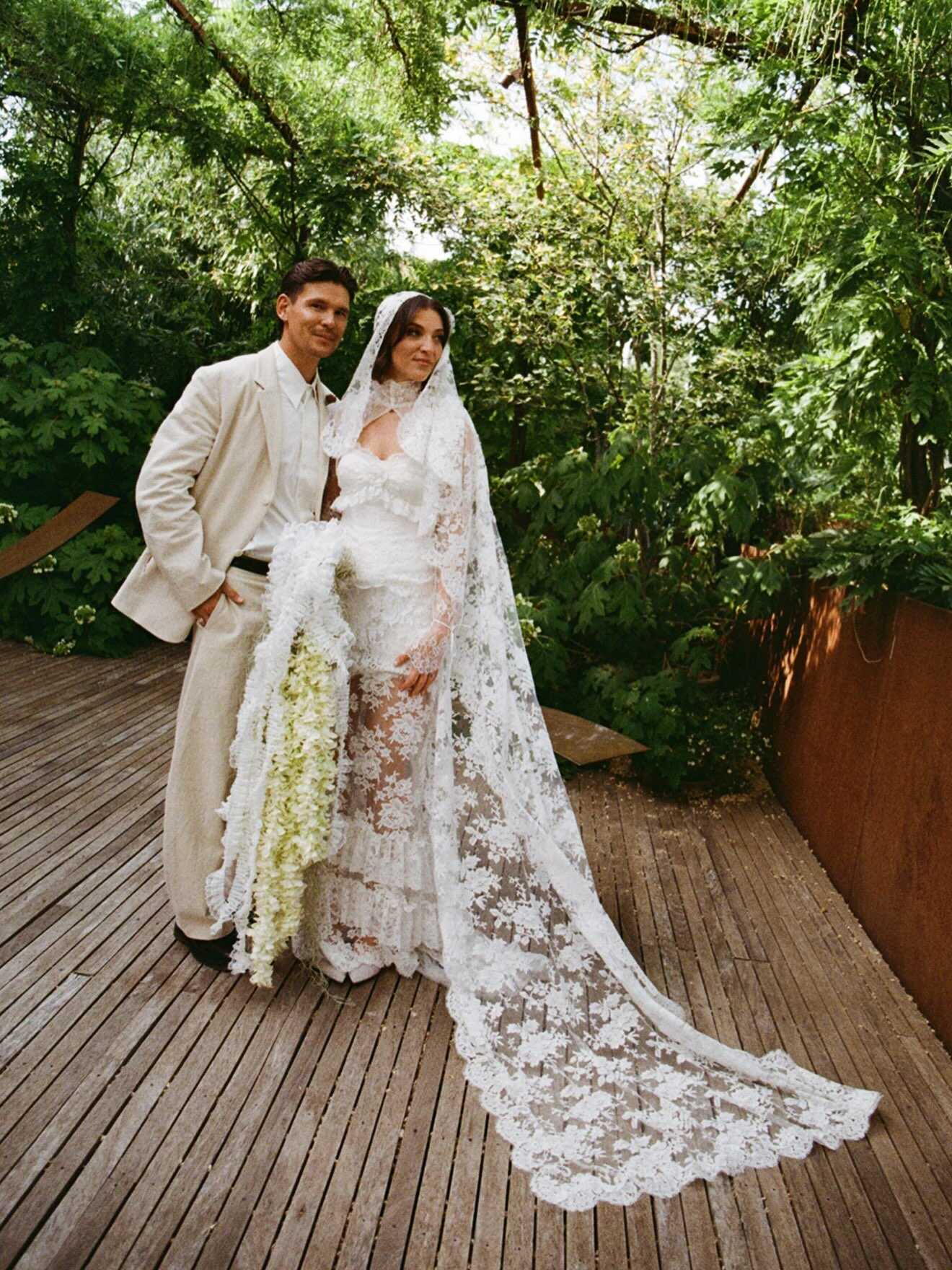
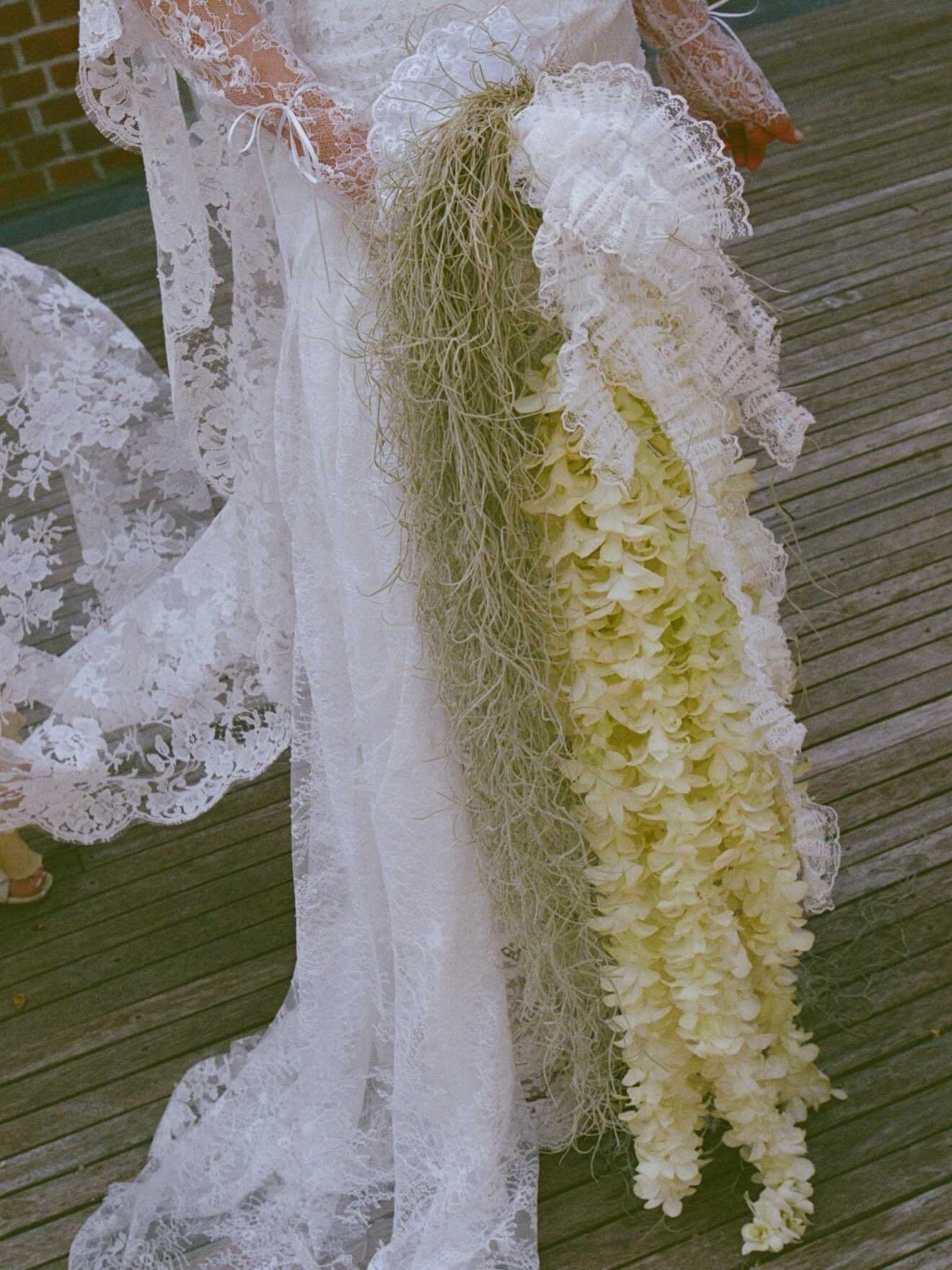
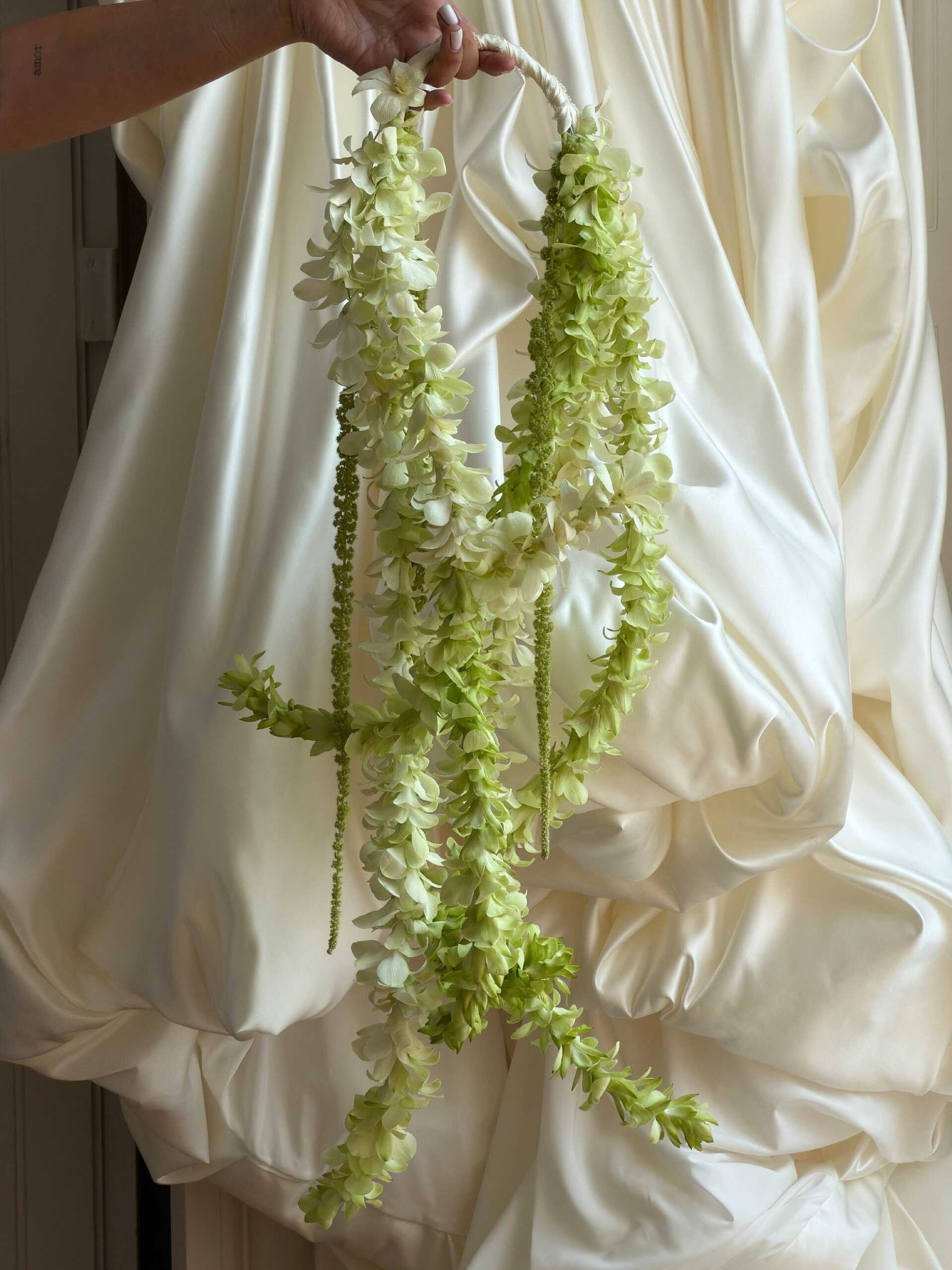
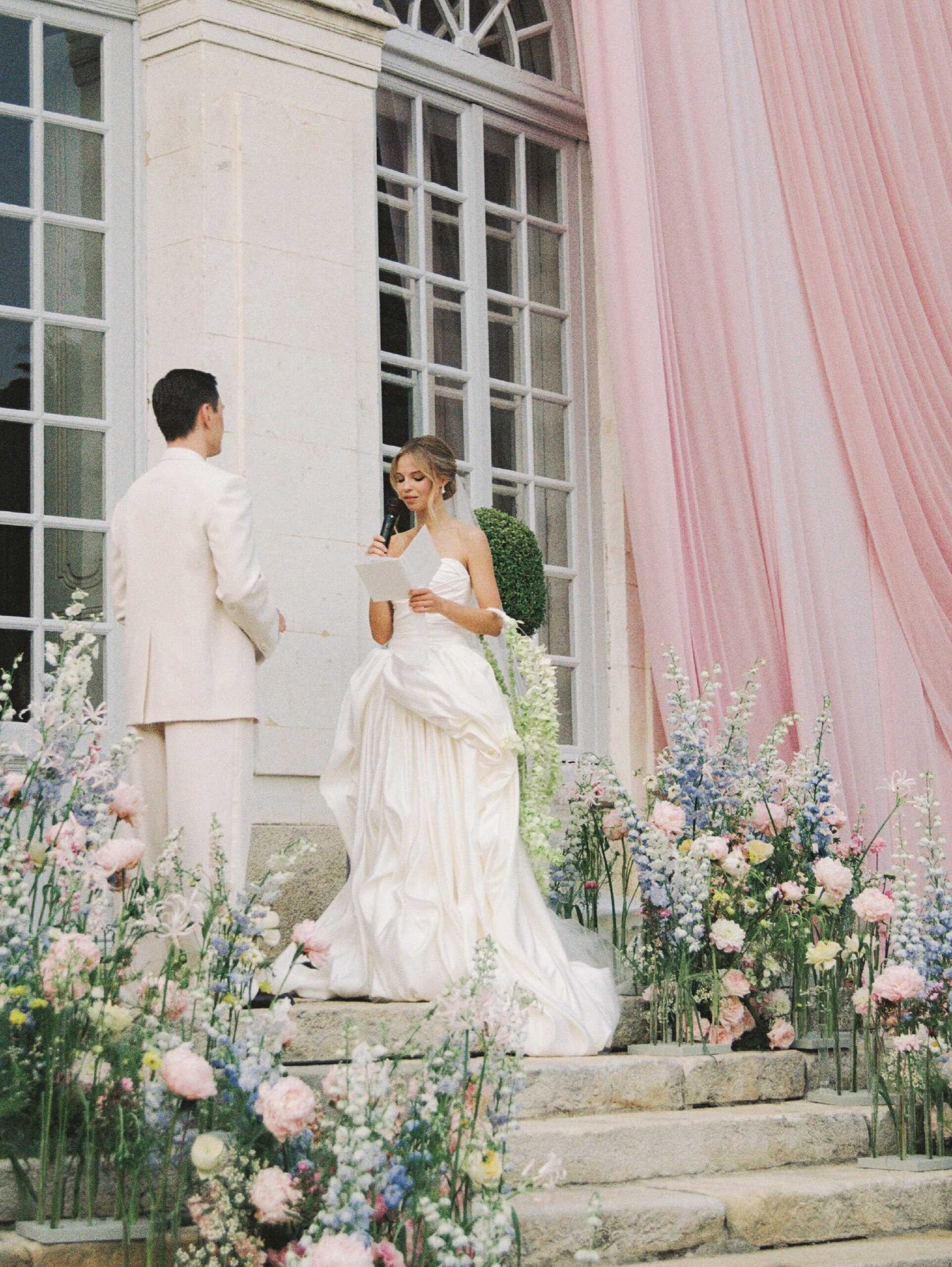
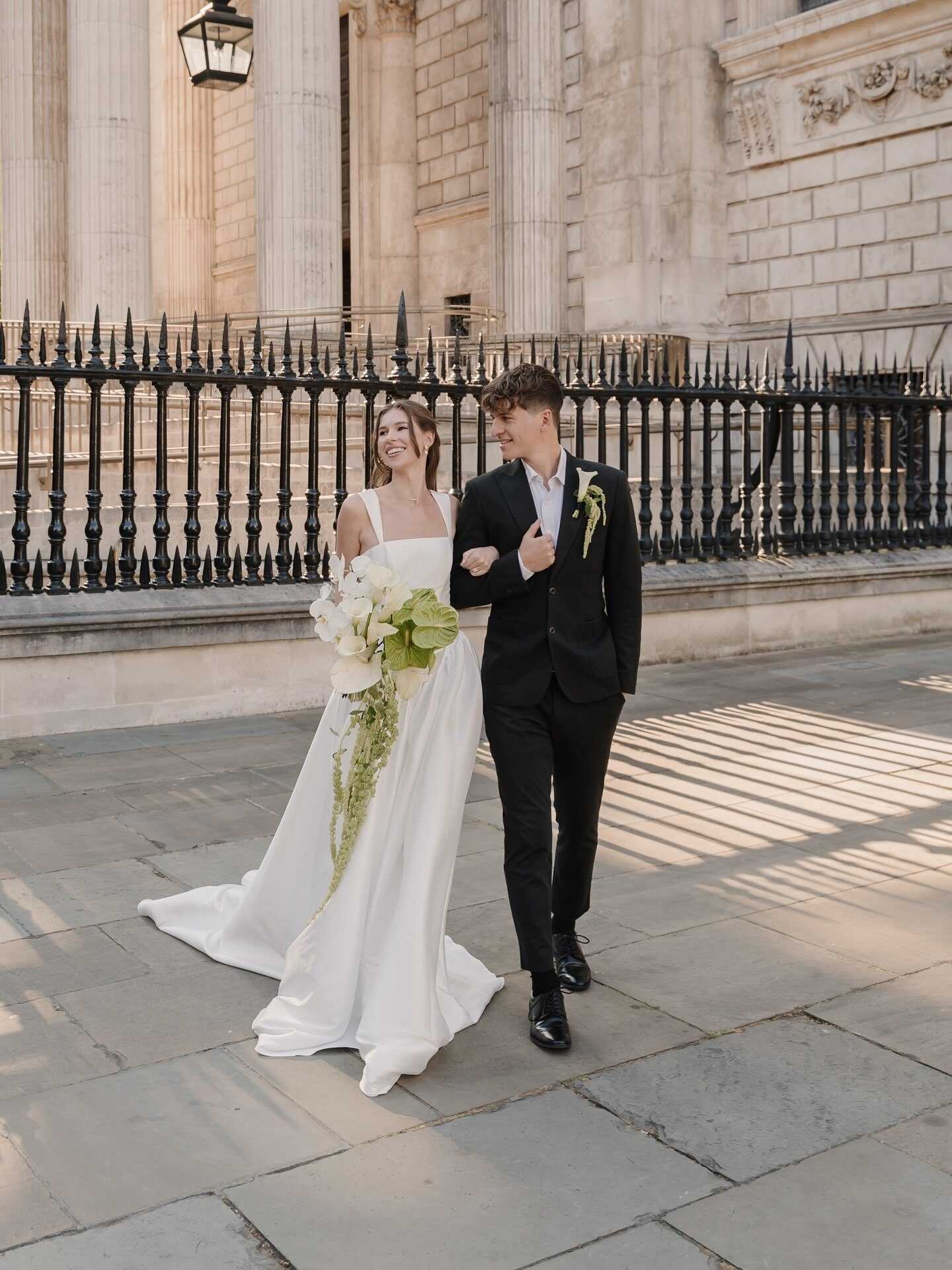
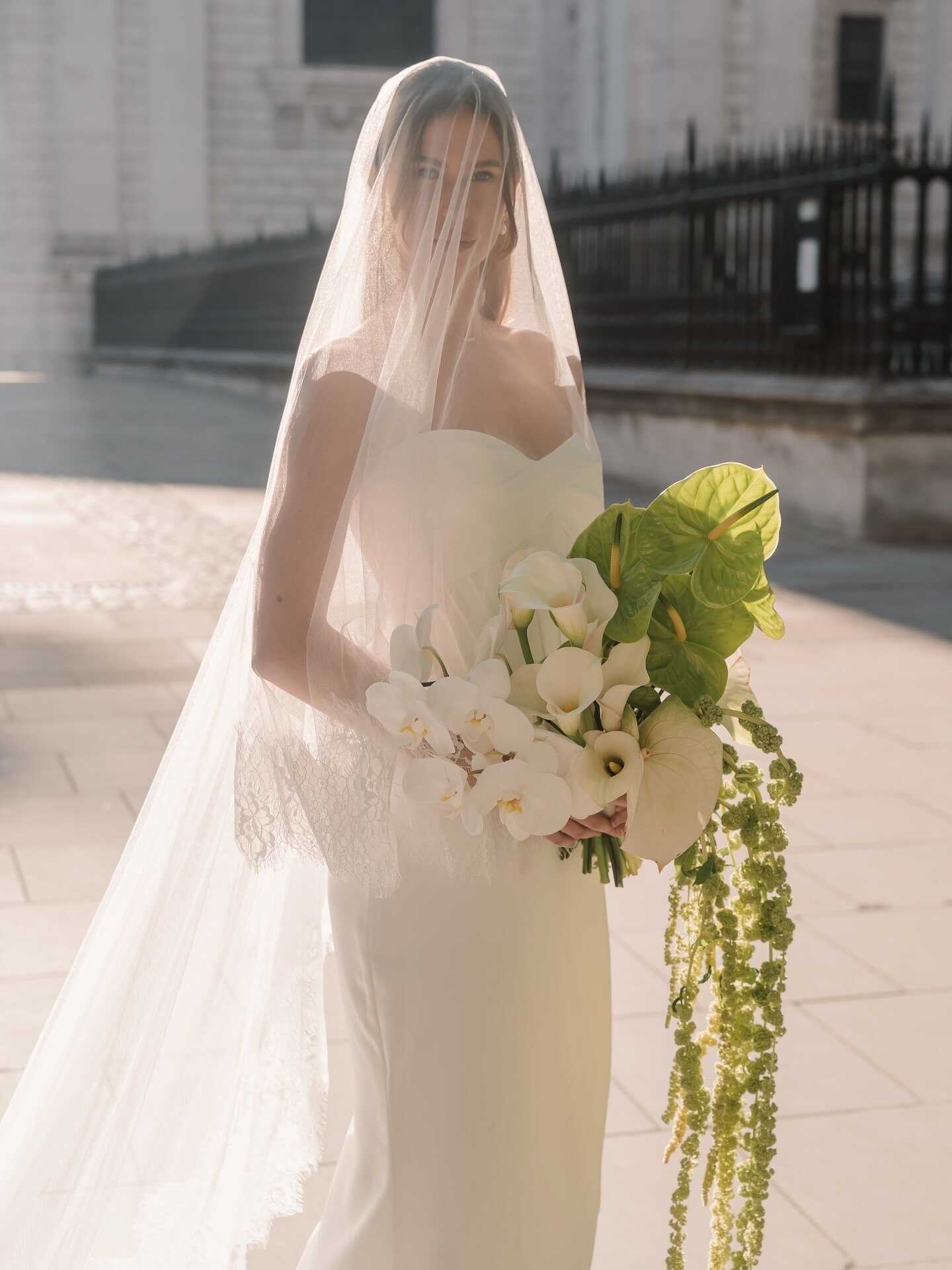
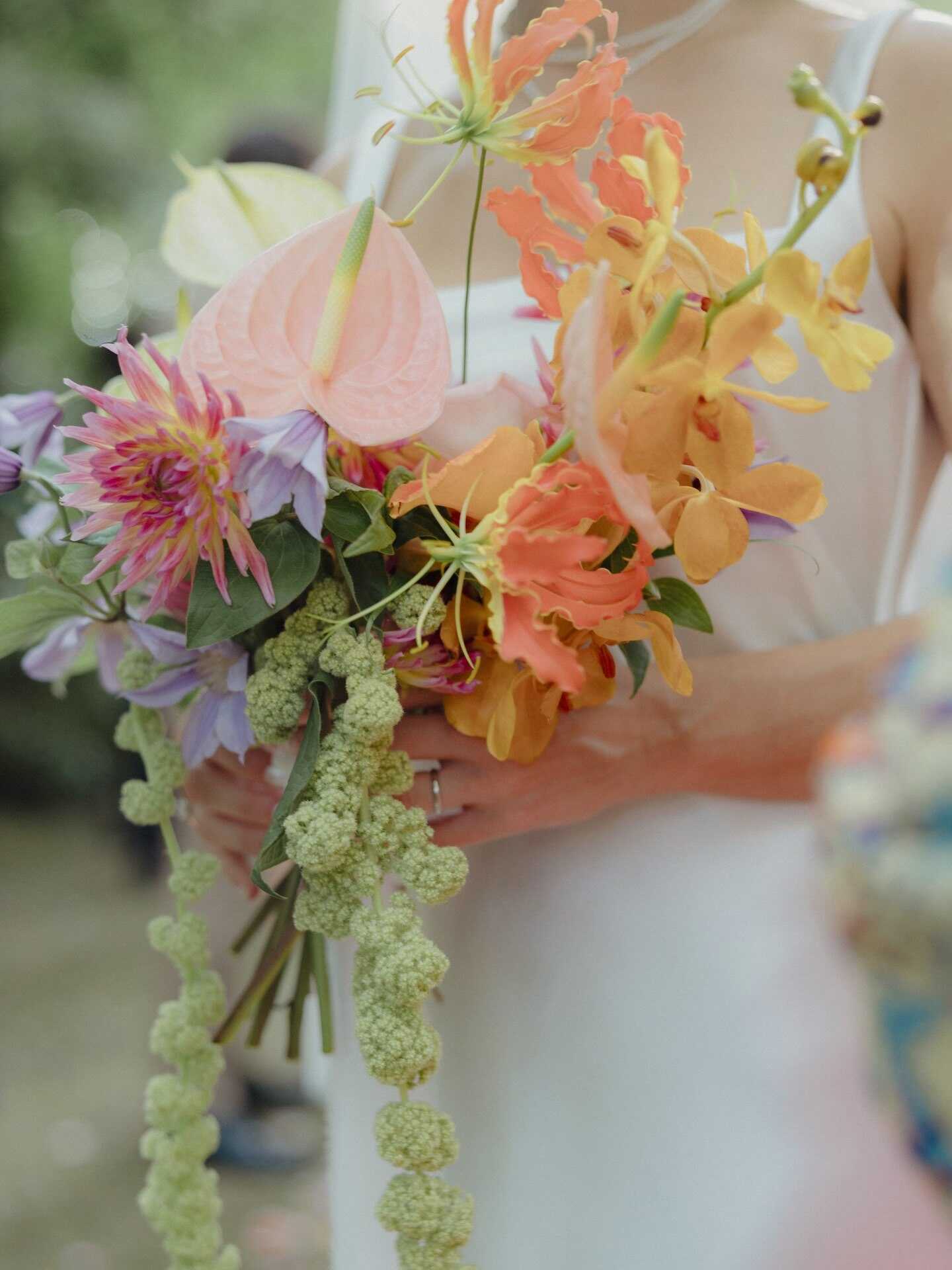
The classic round bouquet has a certain built-in symmetry - full, tidy, the same shape from every angle, designed to look identical whether it’s sitting on a table or being carried down the aisle. A hanging amaranthus wedding bouquet breaks that shape on purpose, letting long trailing strands fall well past the bride’s hands, sometimes brushing the hem of the dress itself. It’s less a bouquet in the traditional sense and more a single continuous gesture, running from the hands down toward the floor.
That length is the entire point. Where a traditional bouquet ends cleanly at the wrist, amaranthus keeps going, adding a second, moving silhouette to every photograph - one that shifts slightly with each step down the aisle rather than staying fixed. The bouquet effectively becomes part of the dress’s line instead of a separate object the bride happens to be holding, which changes how a photographer has to think about composition entirely: the eye now follows one continuous shape from shoulder to floor, rather than stopping at two disconnected elements.
In this case, construction is more important than in most types of bouquets. The trailing amaranthus contributes both length and weight, so florists usually attach each tassel individually to the base rather than just placing the loose stems beside the other flowers, since this prevents the cascade from twisting or getting tangled as the bride moves about during the day. When the roses, ranunculus, or orchids are grouped closely at the top to provide structure, the hanging tassels below take on the role that used to be fulfilled entirely by a longer veil or an elaborate train - giving both length and a dramatic effect without the need for extra fabric.
Hanging Amaranthus Wedding Flowers, in White and Green
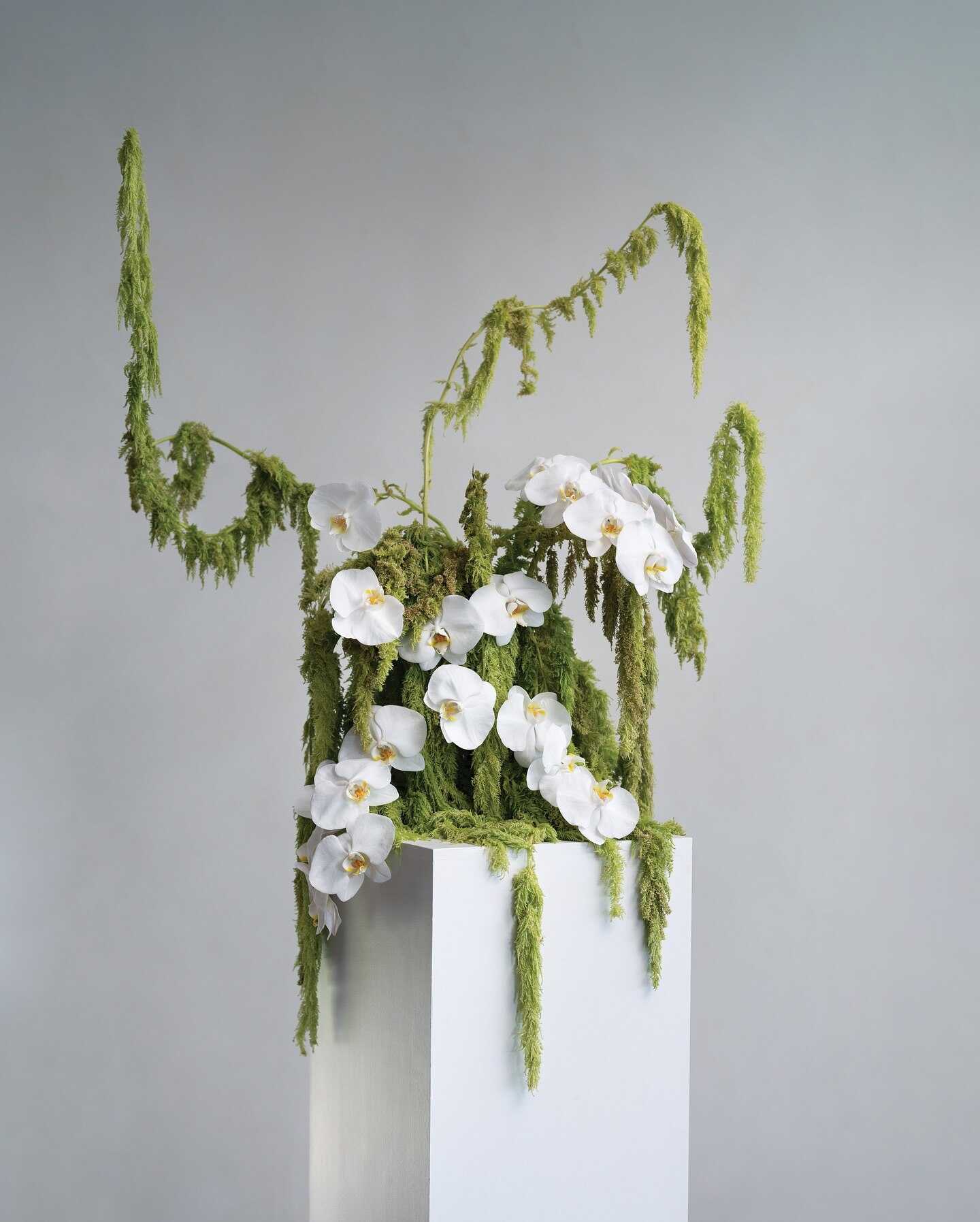
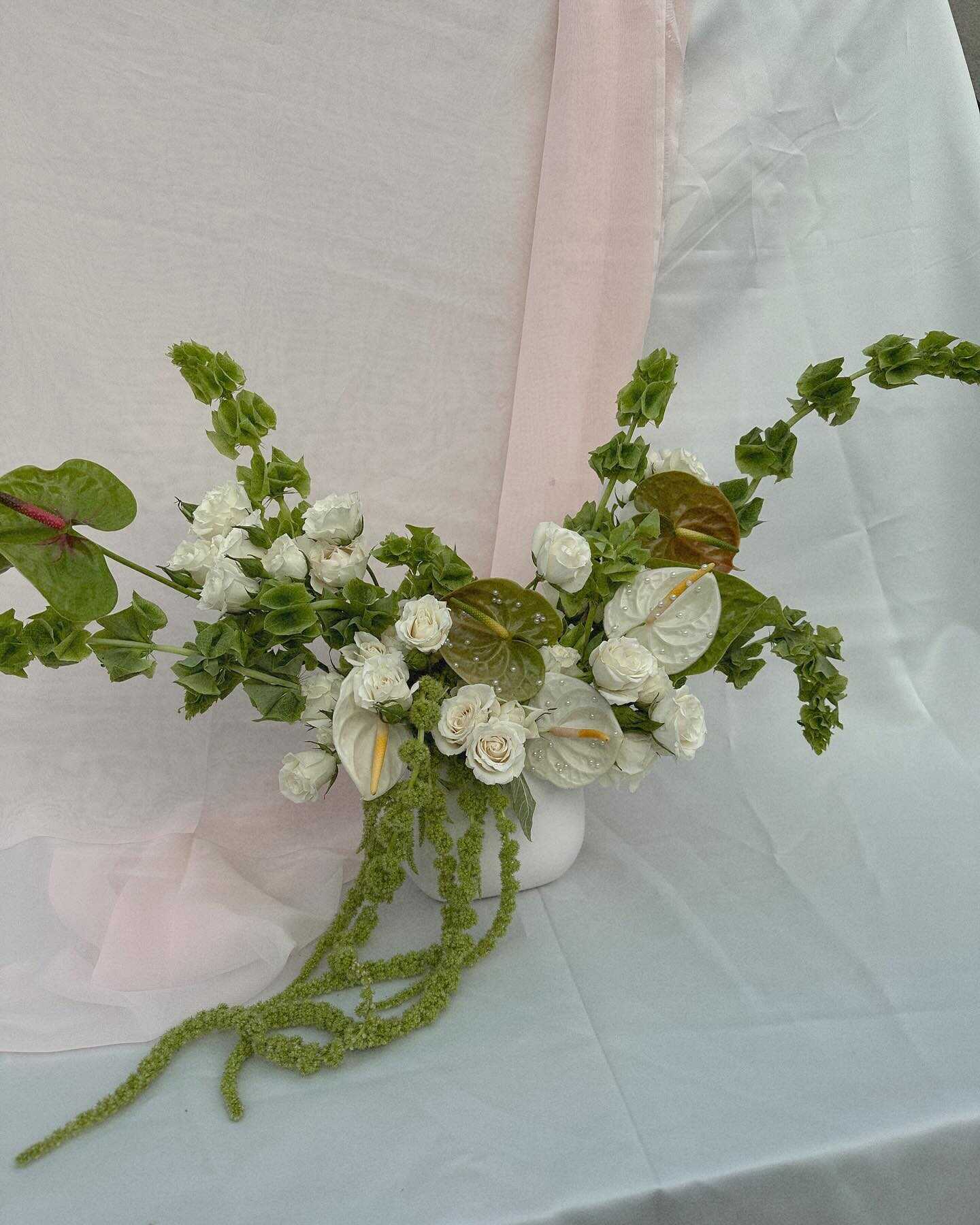
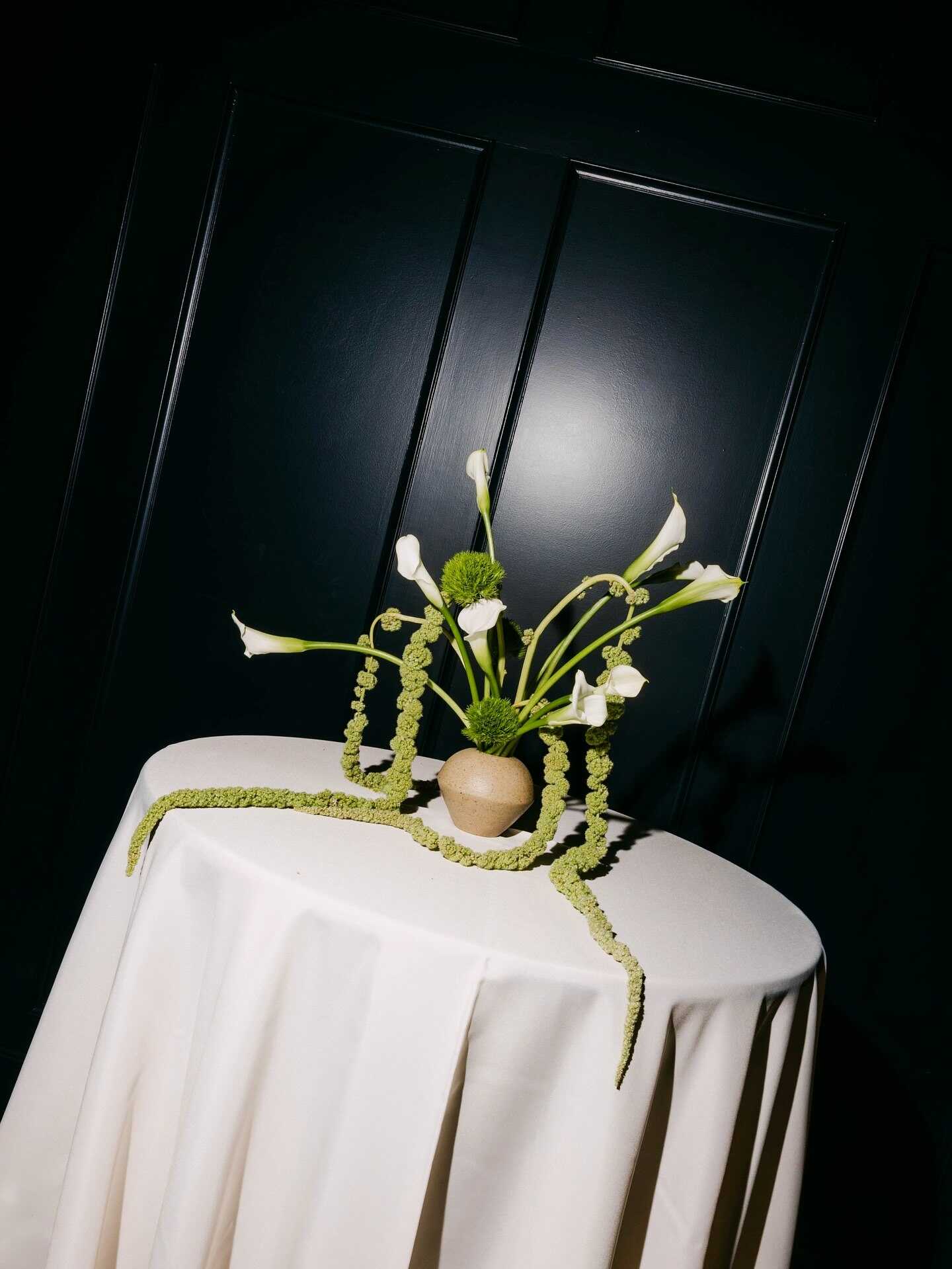
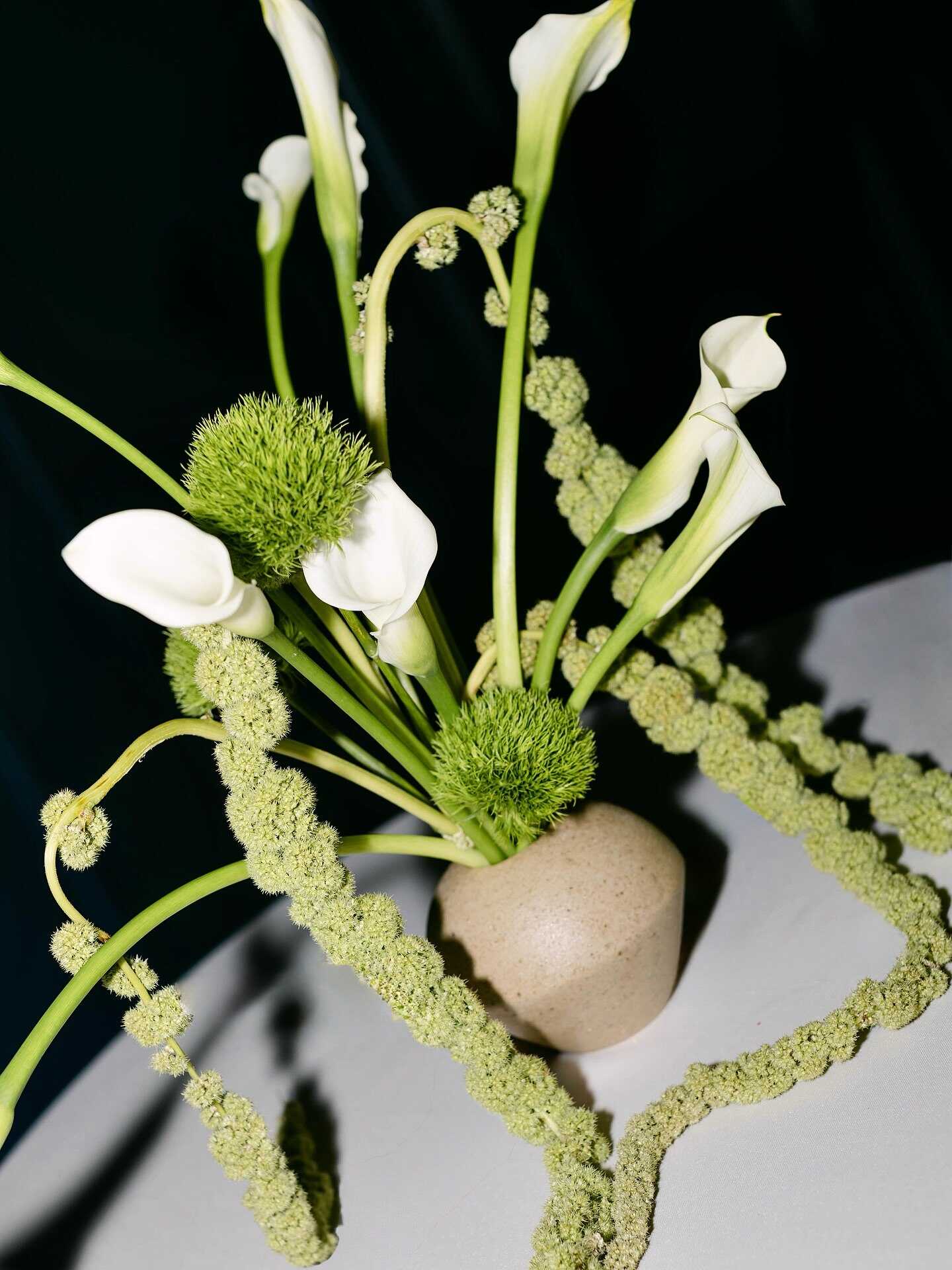
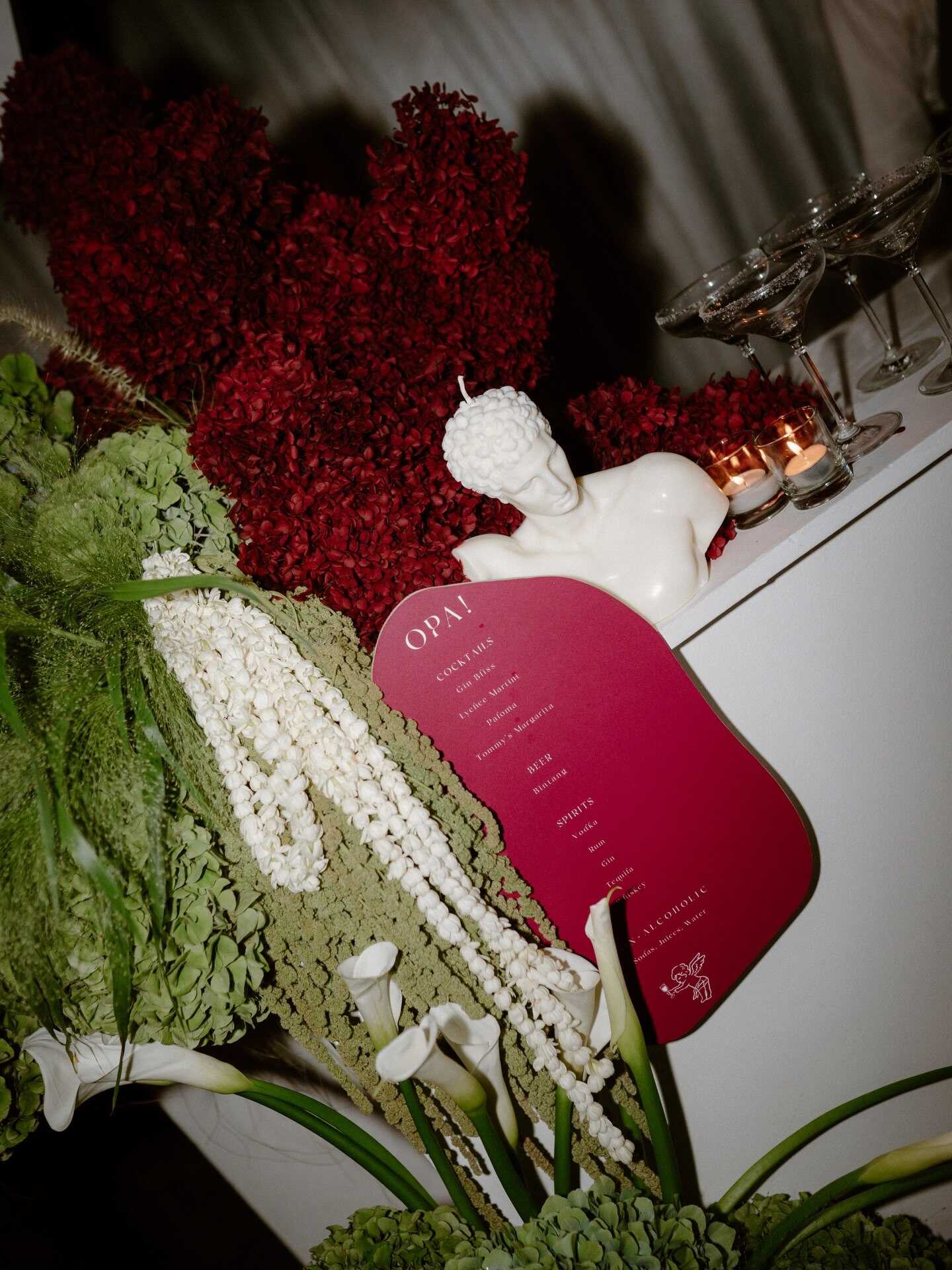
Amaranthus traditionally comes in a deep burgundy so dark it looks almost black in photographs - the color most people picture first and the one behind its slightly gothic, love-lies-bleeding reputation. But current demand runs in the opposite direction: white and green. A white hanging amaranthus wedding bouquet paired with the plant’s pale-green variety instead of classic red appears considerably softer and more contemporary than the moodier, jewel-toned arrangements traditionally associated with amaranthus.
Green hanging amaranthus wedding flowers have become a quiet alternative to standard cascading greenery like ivy, fern, or smilax - the same movement and drape but with texture and weight that feel more deliberate, less like an afterthought to fill space. Where ivy reads as decorative trim, a fuller cluster of green amaranthus reads as a genuine design choice, something a couple specifically requested rather than a florist added by default.
Combined with white flowers, such as garden roses, ranunculus, lisianthus, or simple stock, the arrangement stays neutral enough to suit almost any venue, from a stone chapel to a reception hall with glass walls, without drawing attention from the dress or surrounding architecture. This neutrality matters for couples who want a striking, sculptural floral feature without matching colors across linens, stationery, and the wedding party's clothing. In short, white and green amaranthus acts less as a bold statement and more as a subtle one that still looks dramatic in photos.
Florals That Fall from Above: The Hanging Amaranthus Wedding Arch
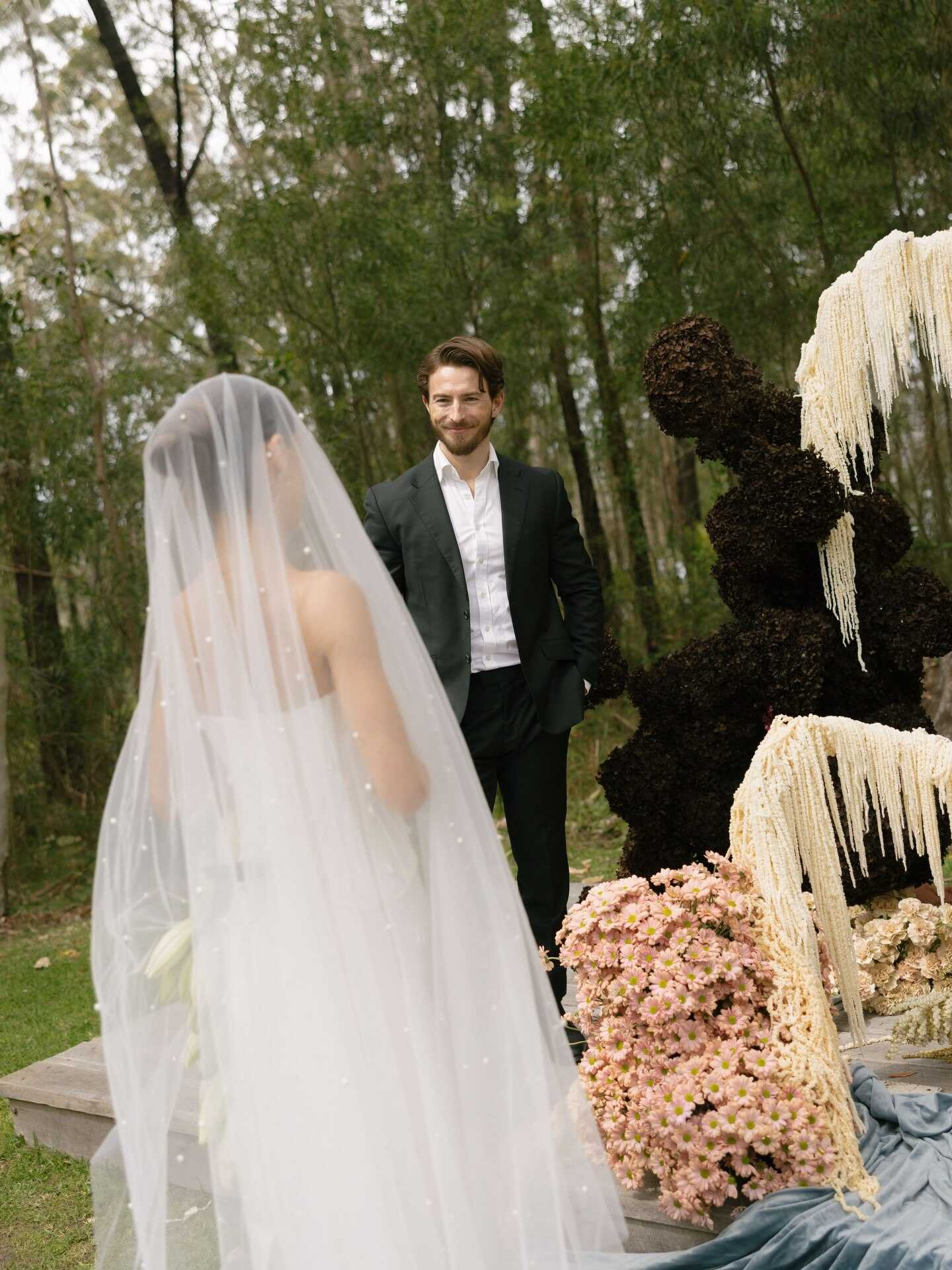
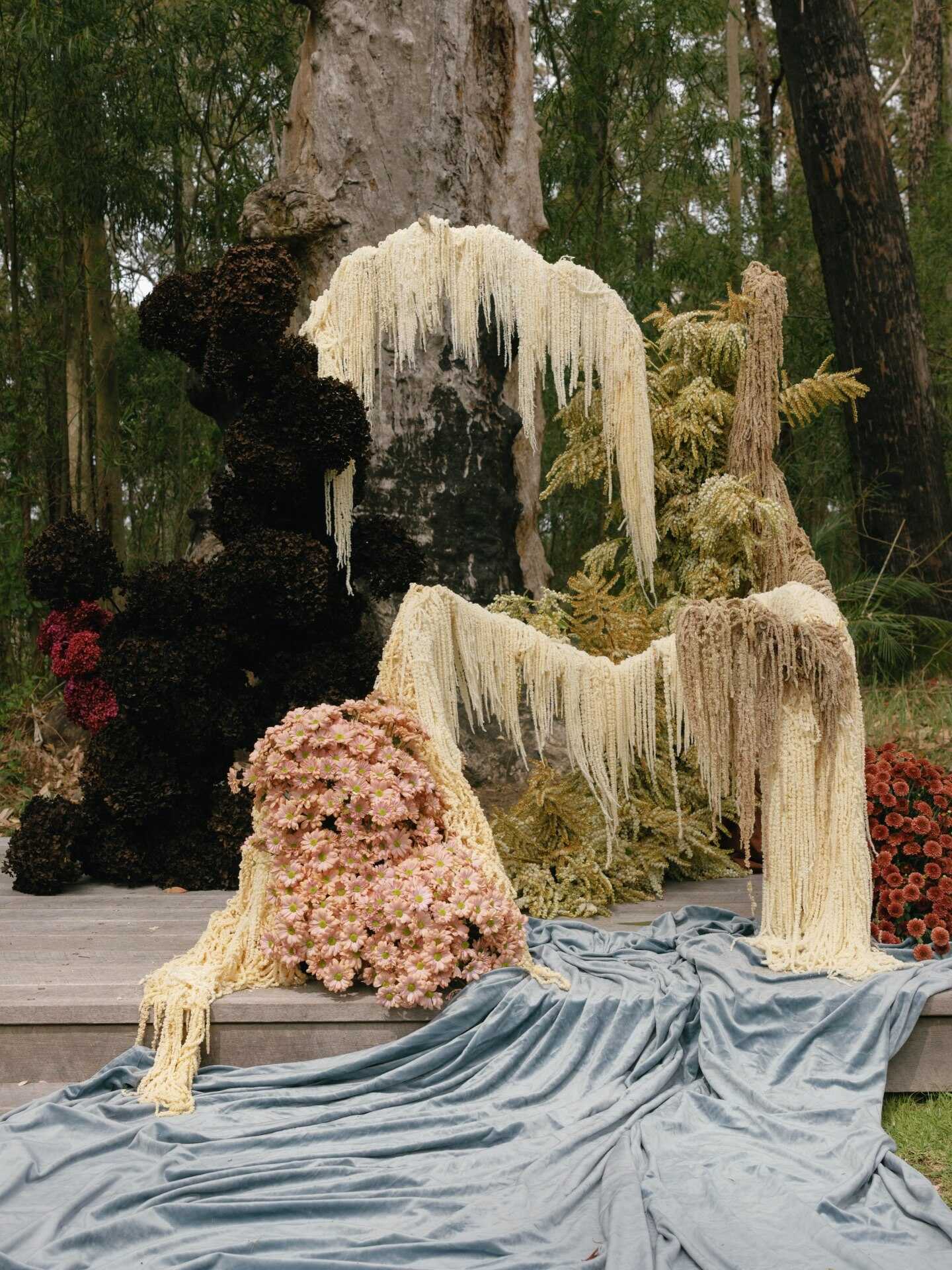
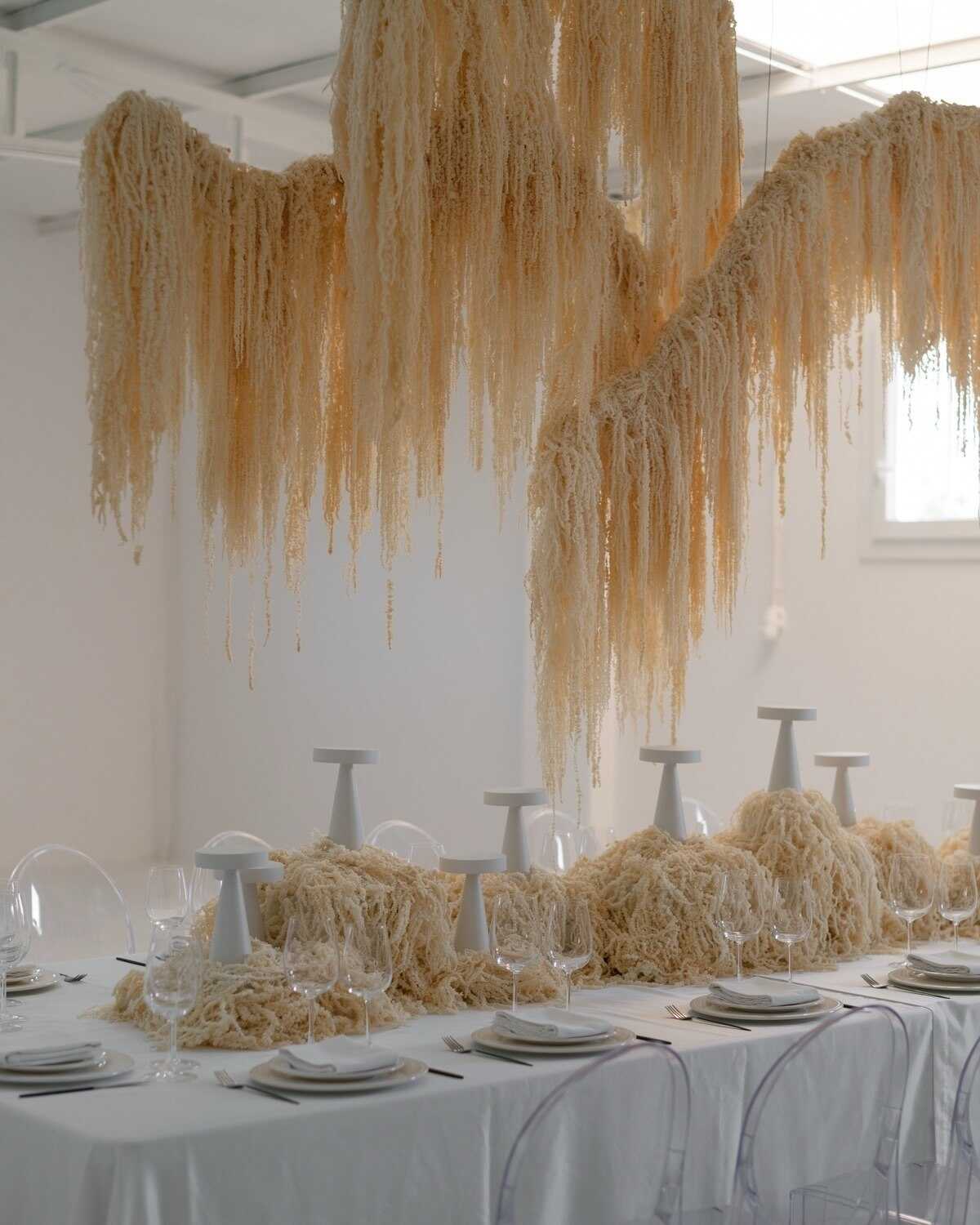
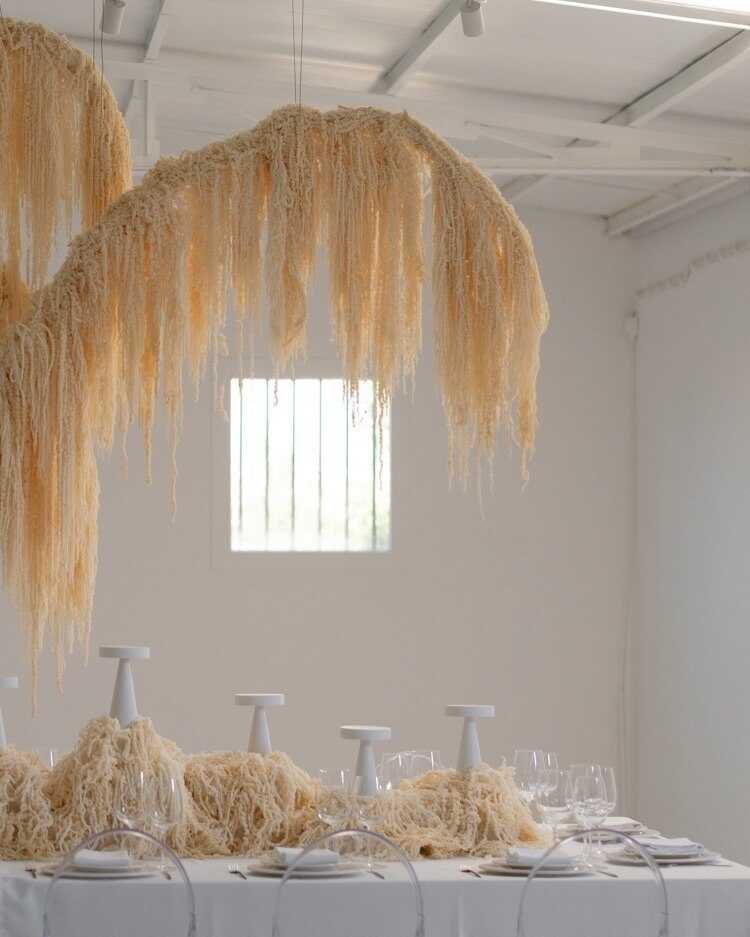
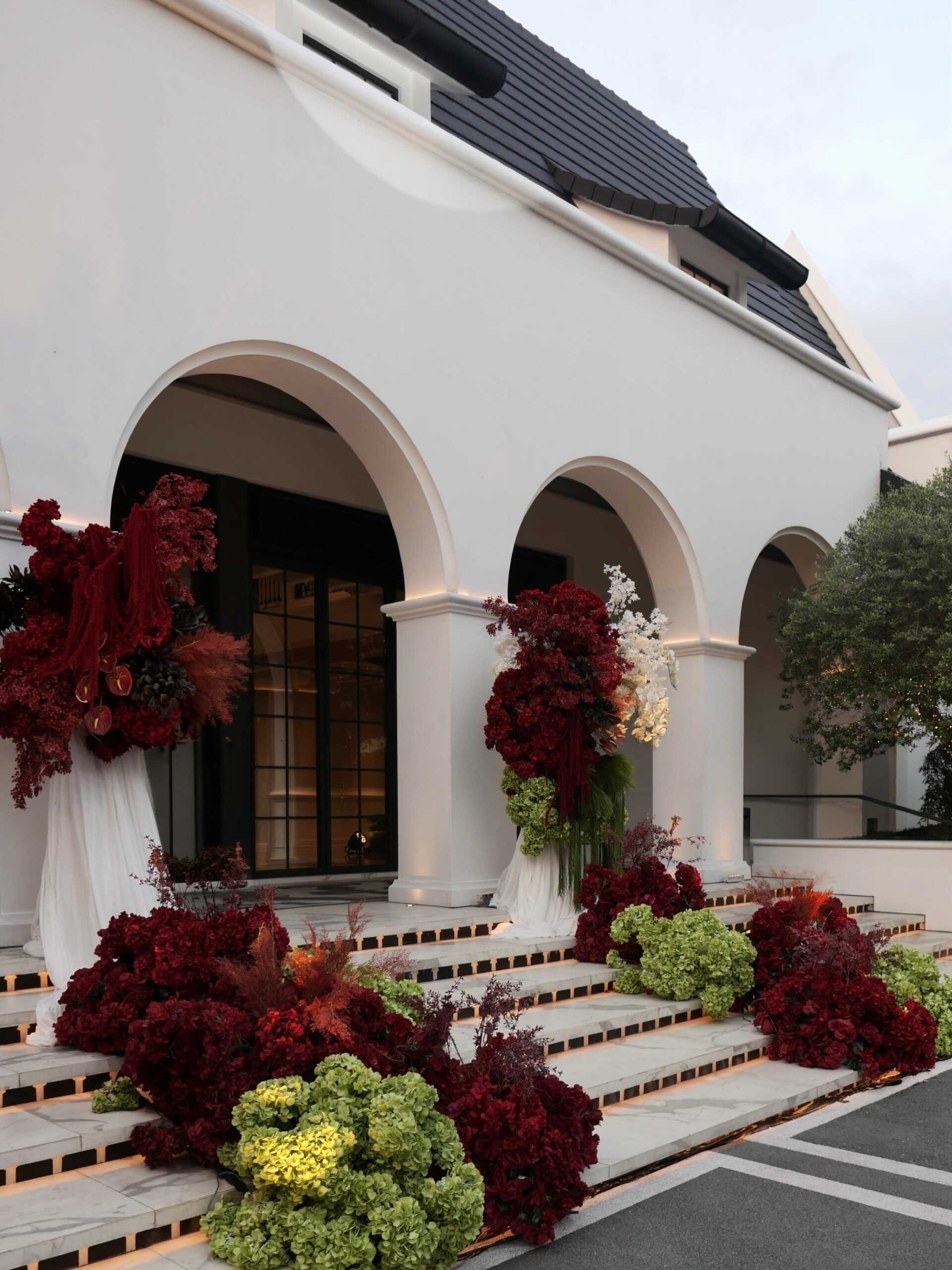
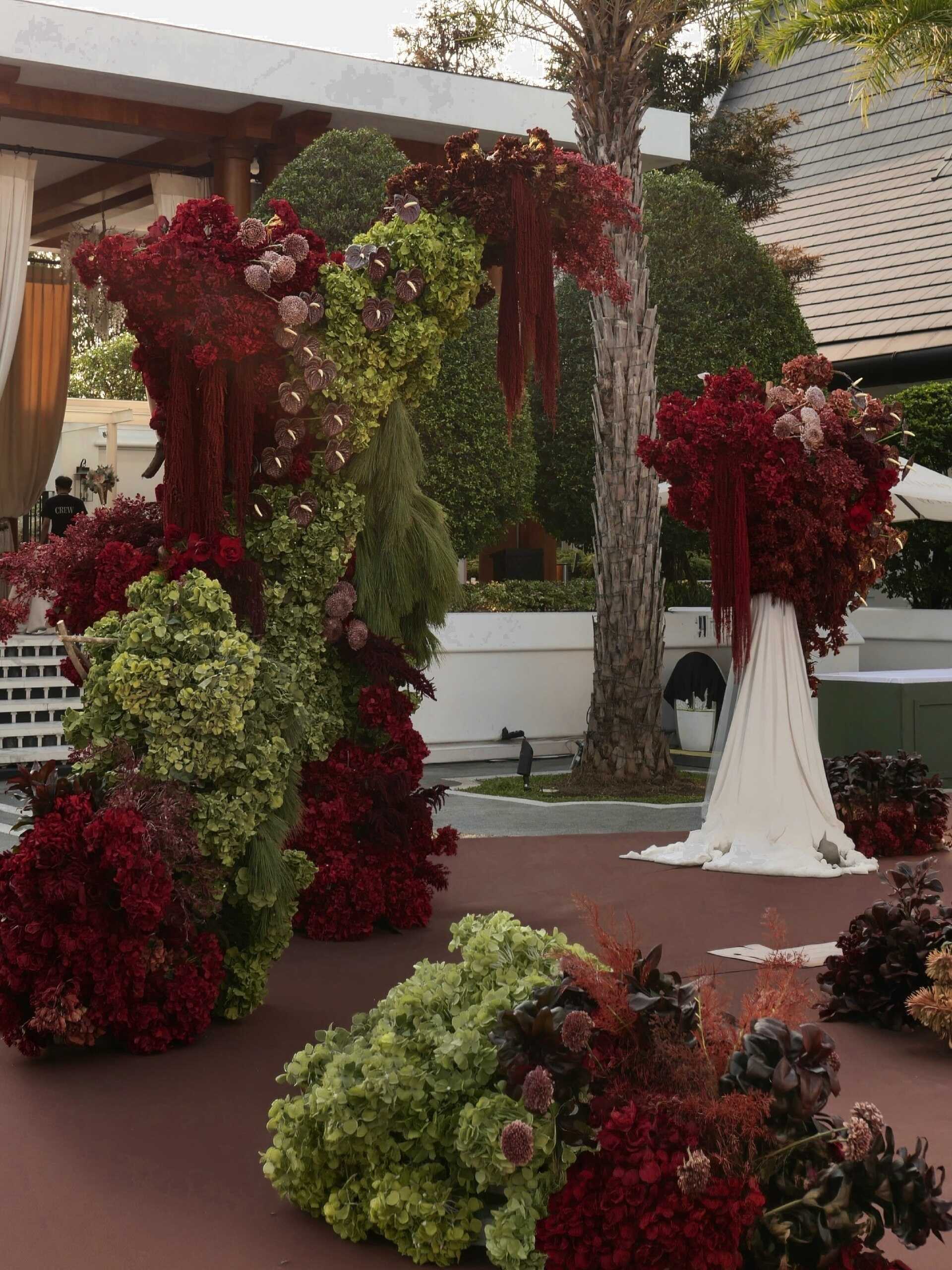
An arch is usually built up and out - flowers packed along the frame, climbing toward the top, with the structure doing most of the visual work. A hanging amaranthus wedding arch works in the opposite way, with long strands falling freely from the crossbeam toward the ground. The structure becomes a space the couple stands beneath rather than just a frame they stand in front of.
The effect varies greatly depending on the density. When only a few strands flow down along the top of the arch, the effect appears delicate and restrained - enough movement to attract the eye without dominating a smaller or more intimate wedding ceremony. But if the arch is fuller and has amaranthus layered thickly enough to almost completely curtain the entrance, the path ahead becomes more like a threshold the couple has to move aside from, rather than simply a background for photographs.
Installation logistics matter more here than with a standard floral arch, since amaranthus adds real weight when wired in volume. Florists typically build extra support at the crossbeam to handle a fuller cascade. Outdoor installations must account for wind - a lightly hung arch moves beautifully in a gentle breeze, but the same design in an exposed location can shift more than a couple might want during vows. Either way, the plant’s built-in movement means the arch never looks the same in two consecutive photos, a detail photographers and videographers notice and plan around before most guests do.
Let It Spill Across the Table
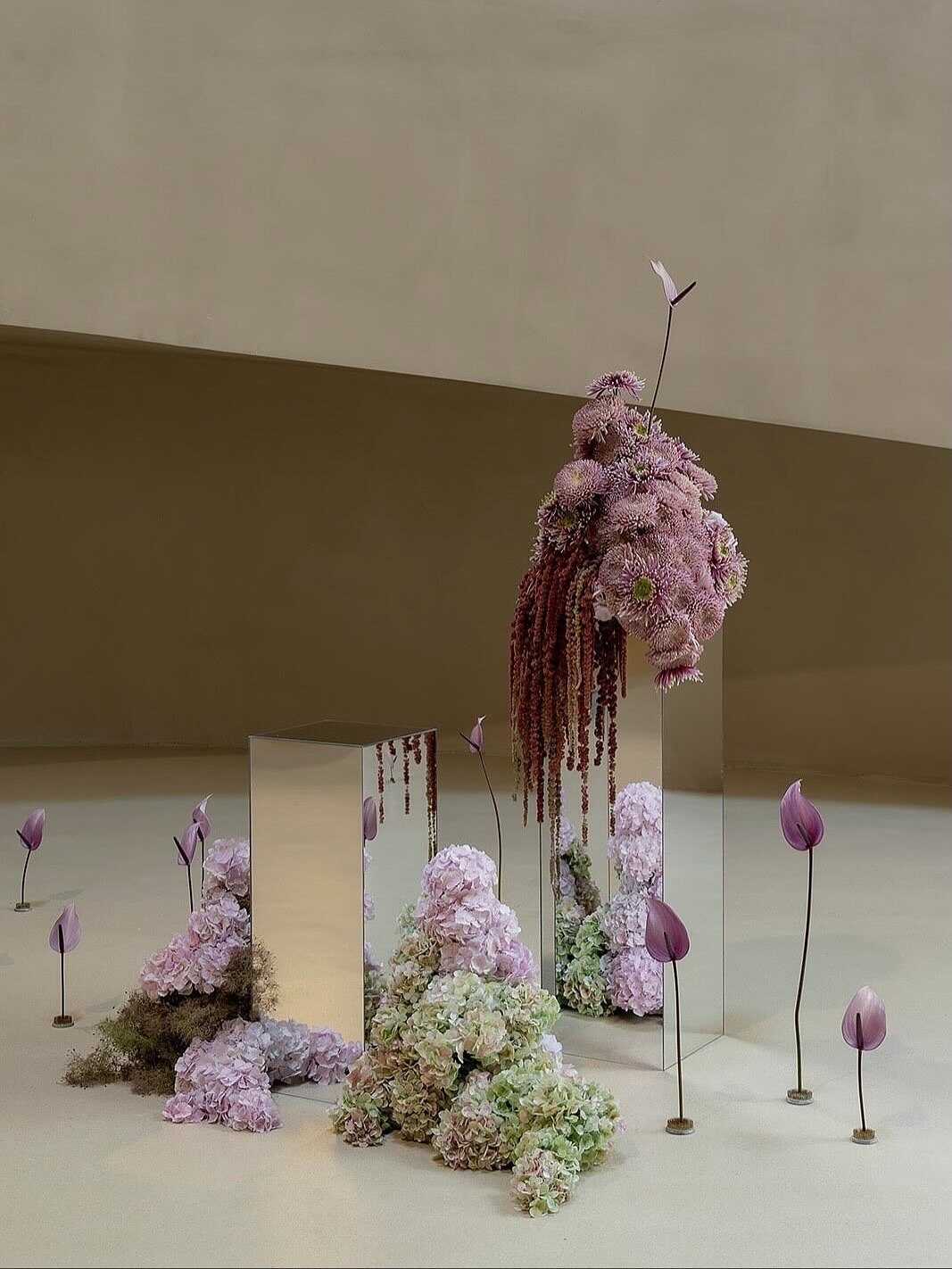
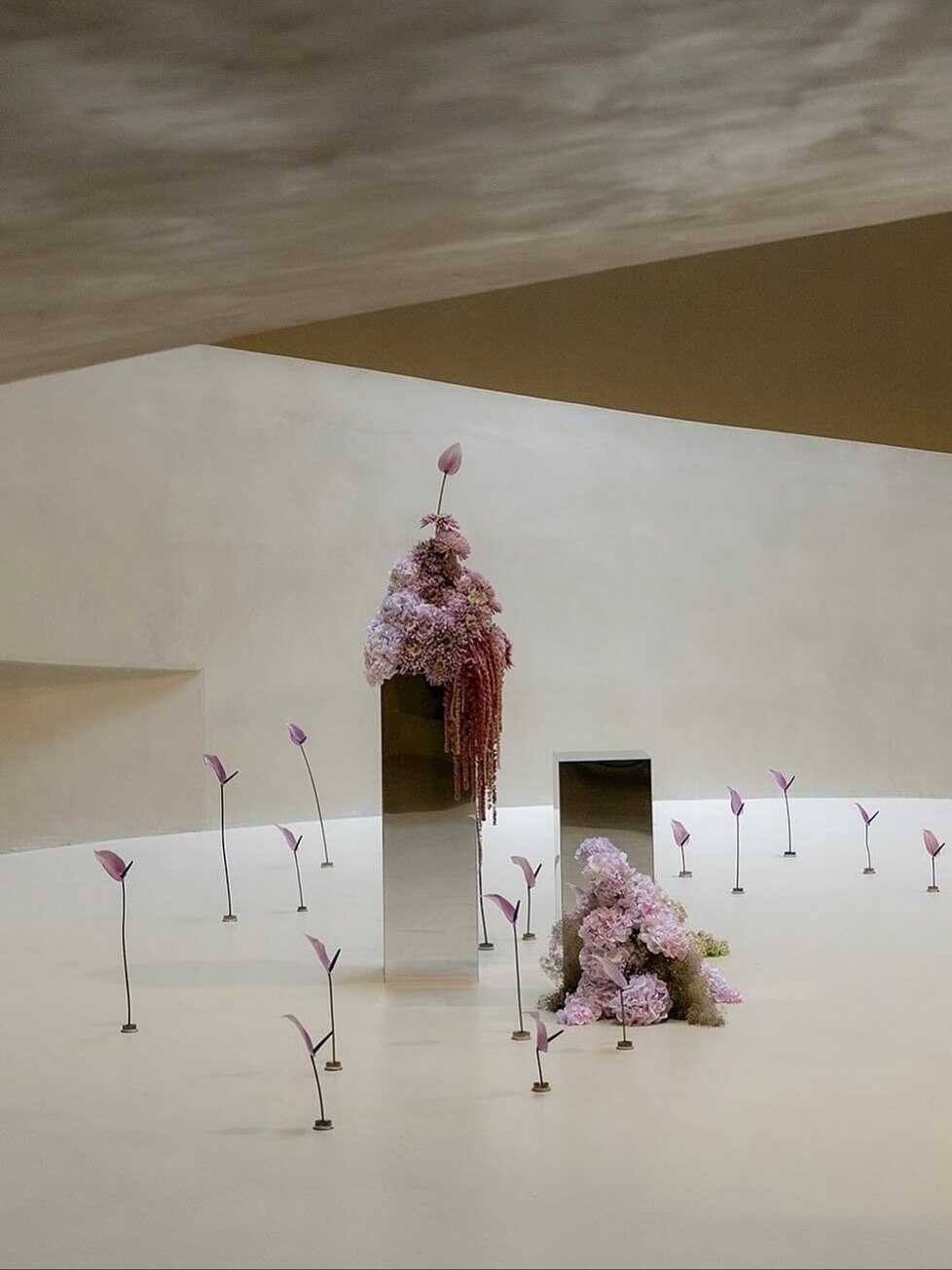
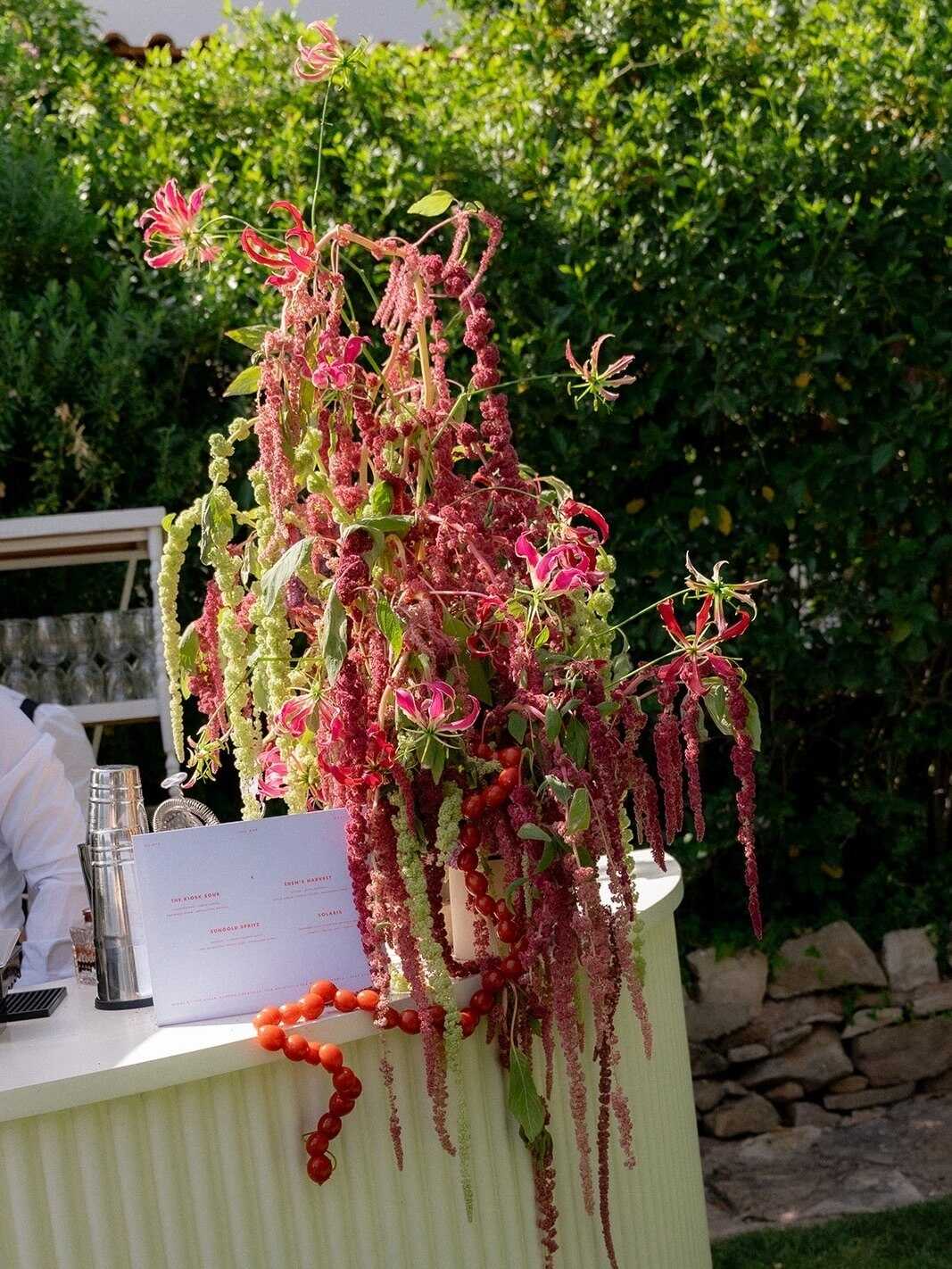
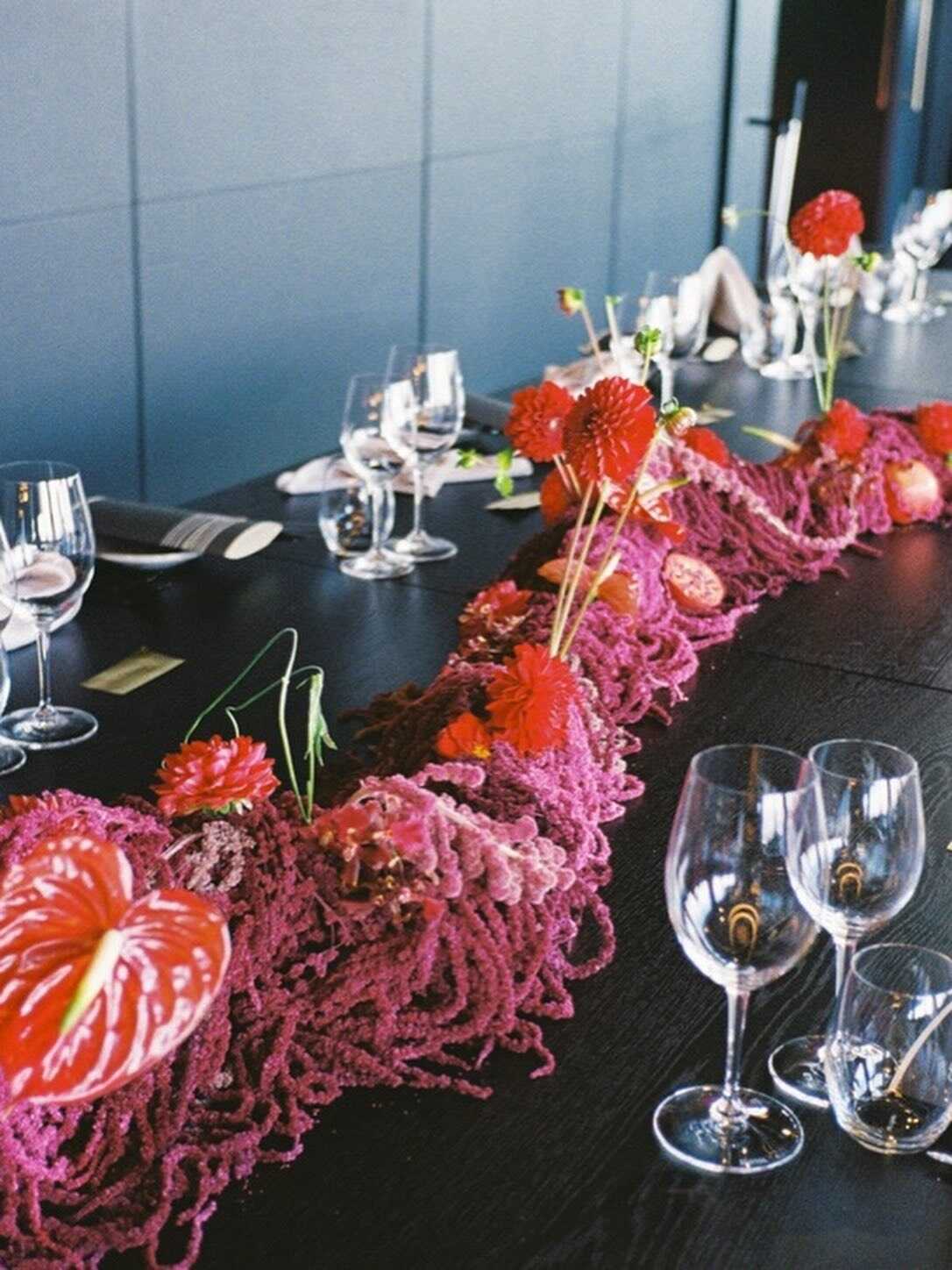
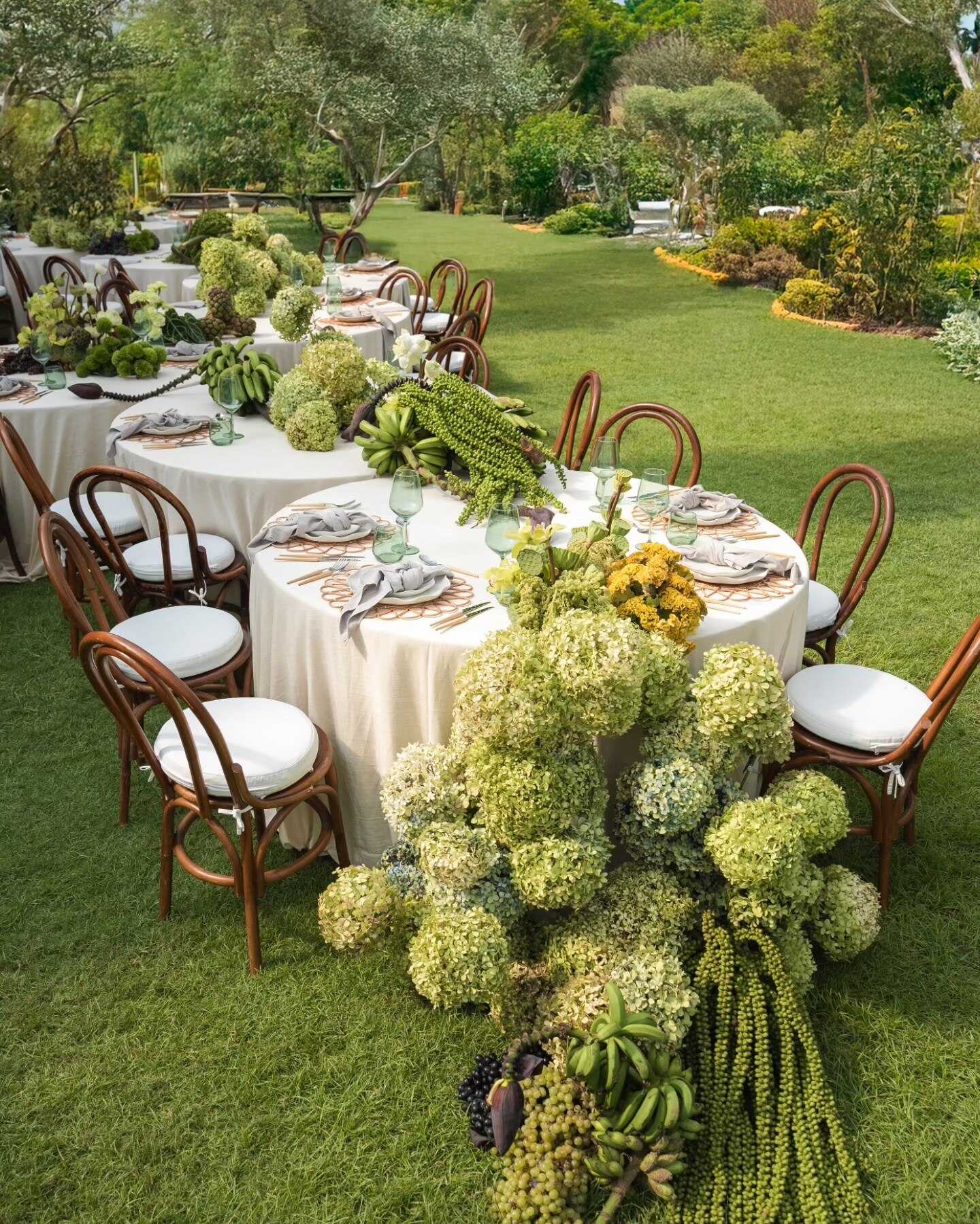
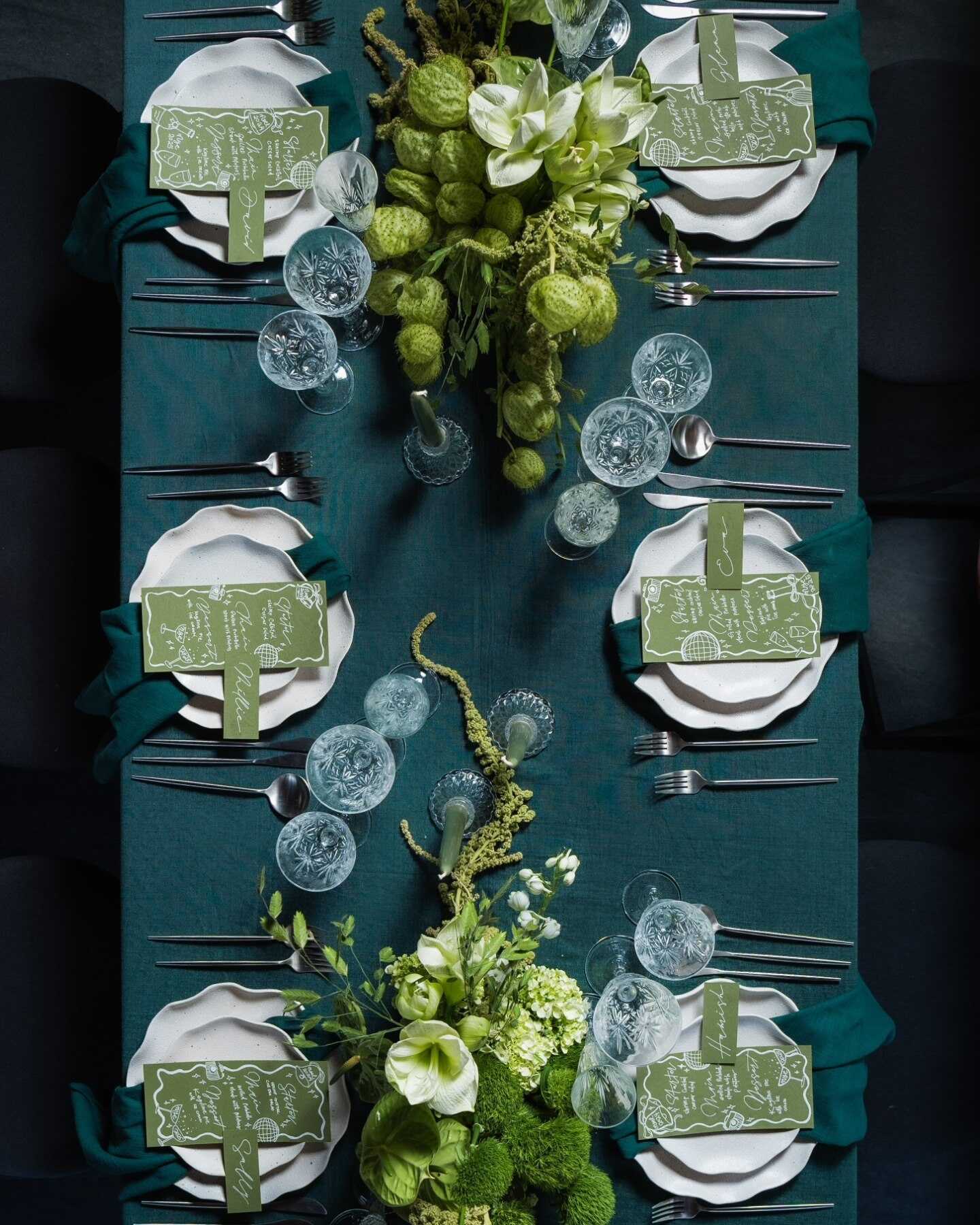
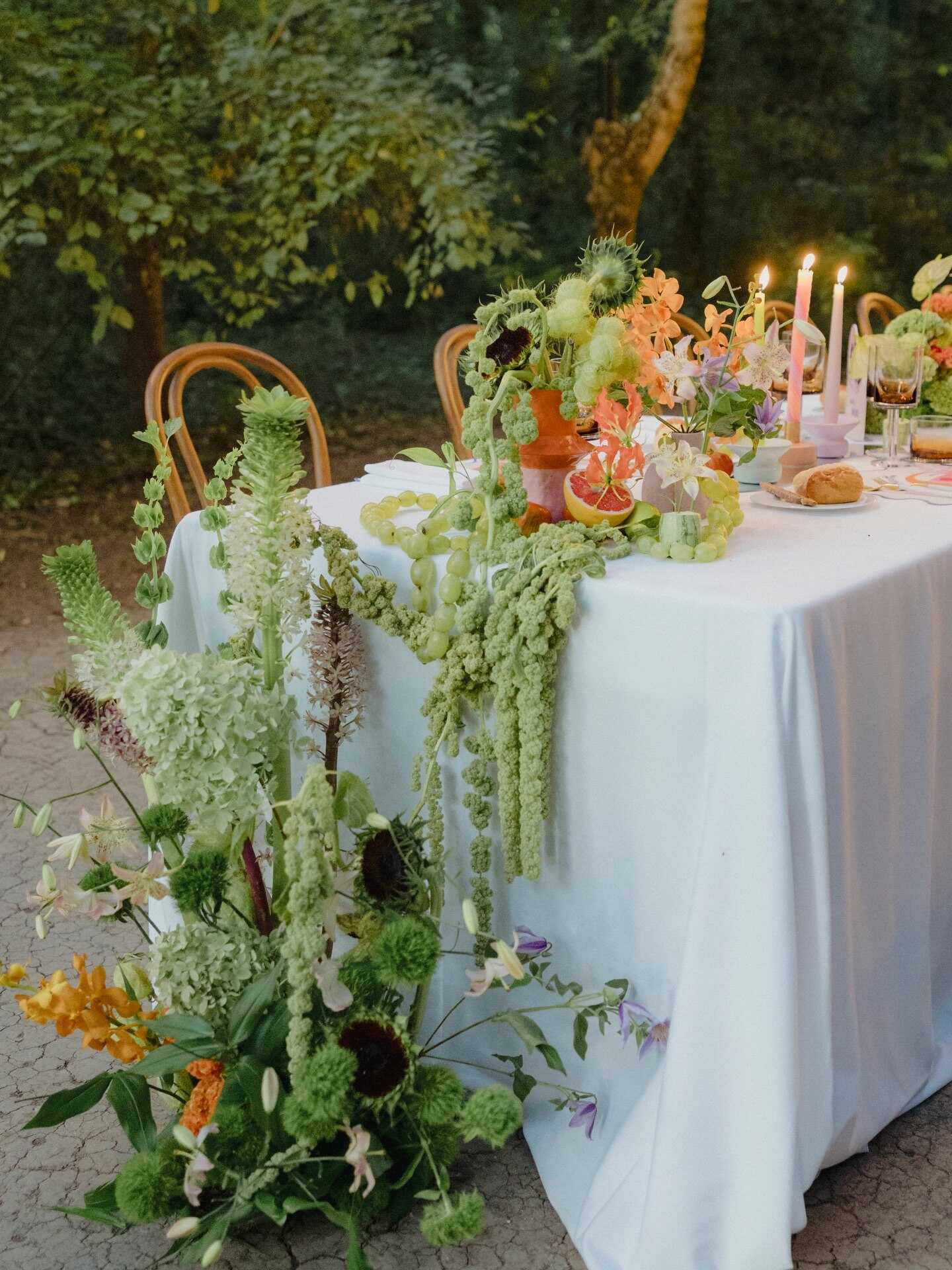
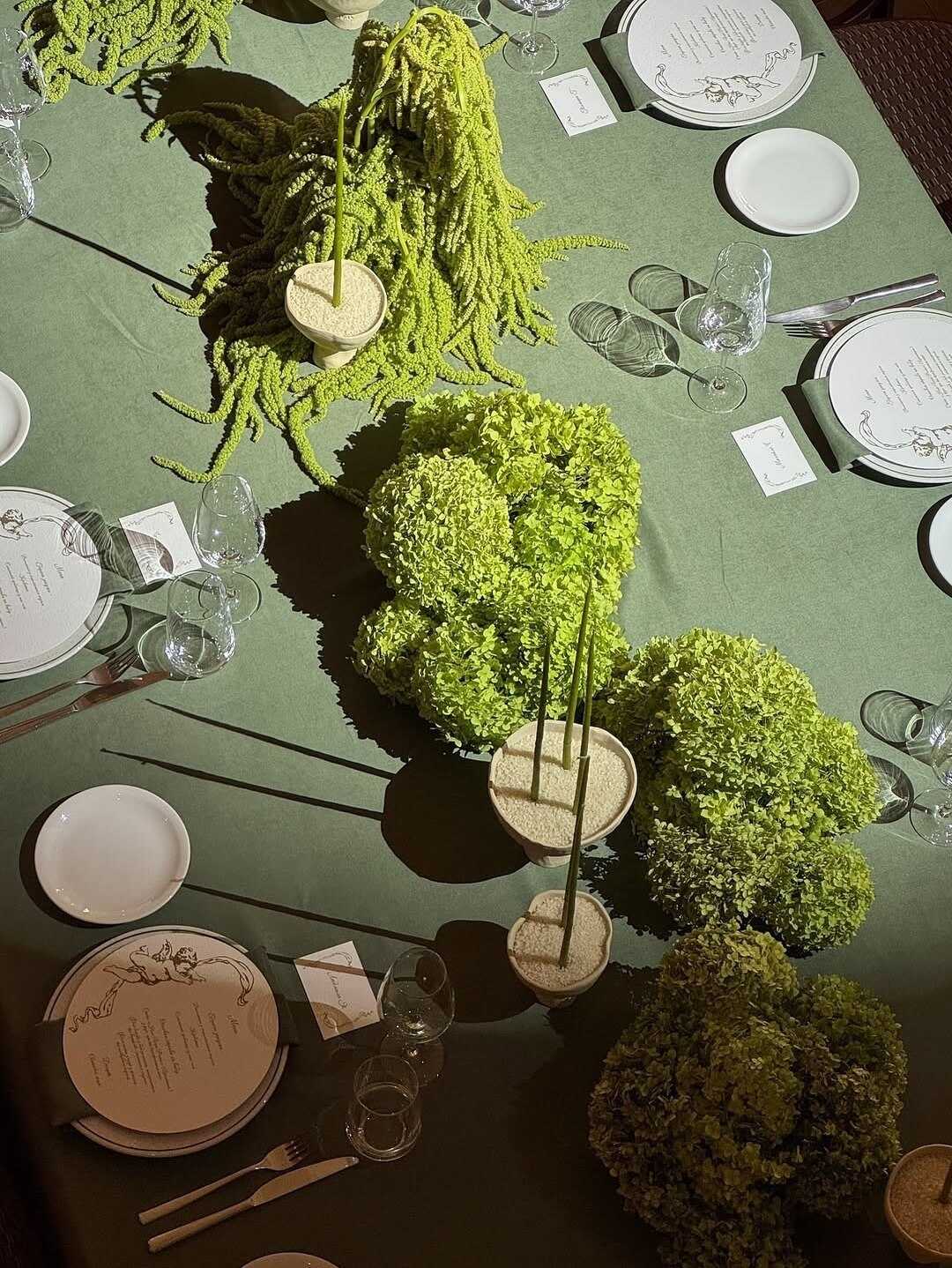
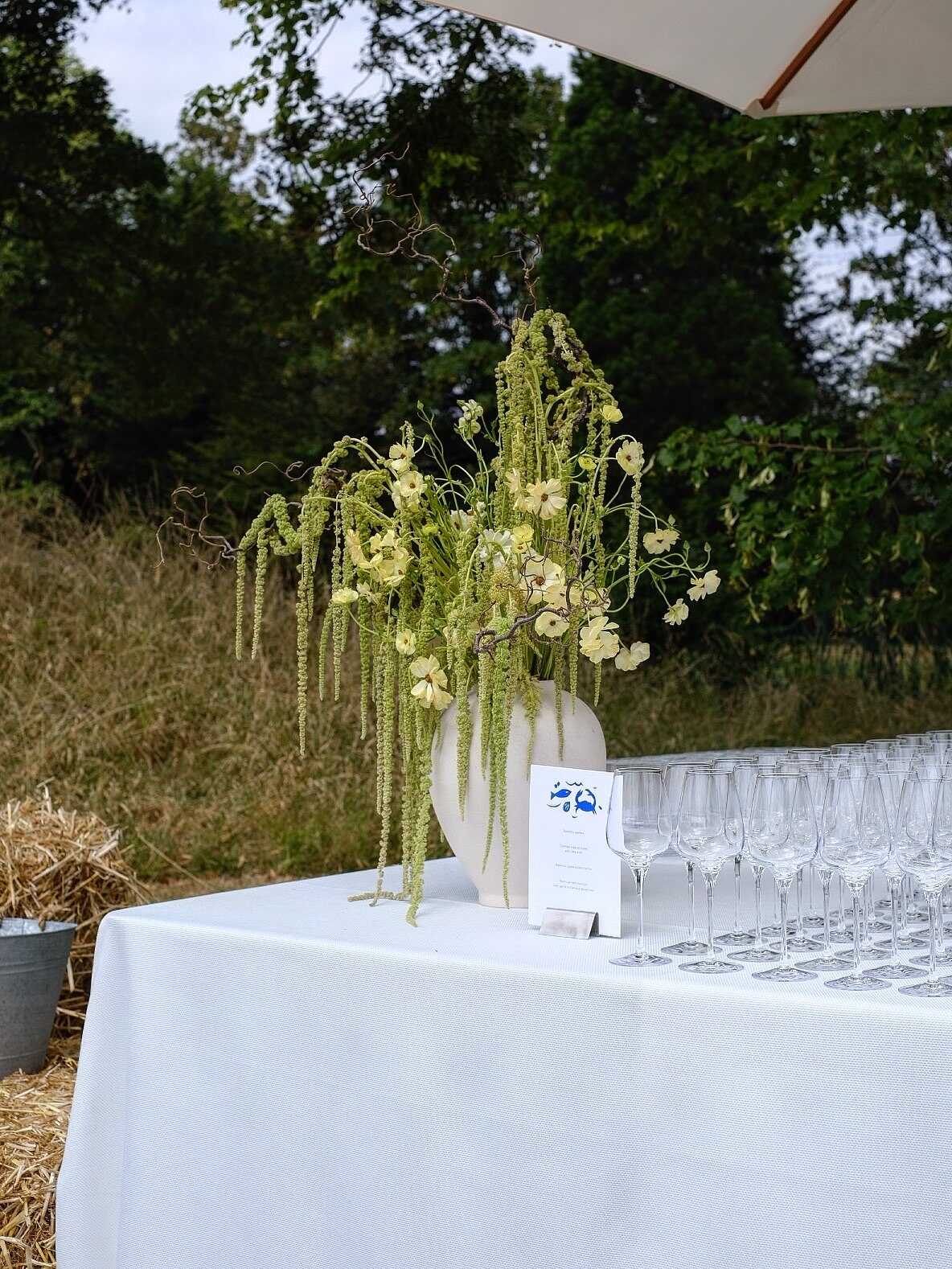
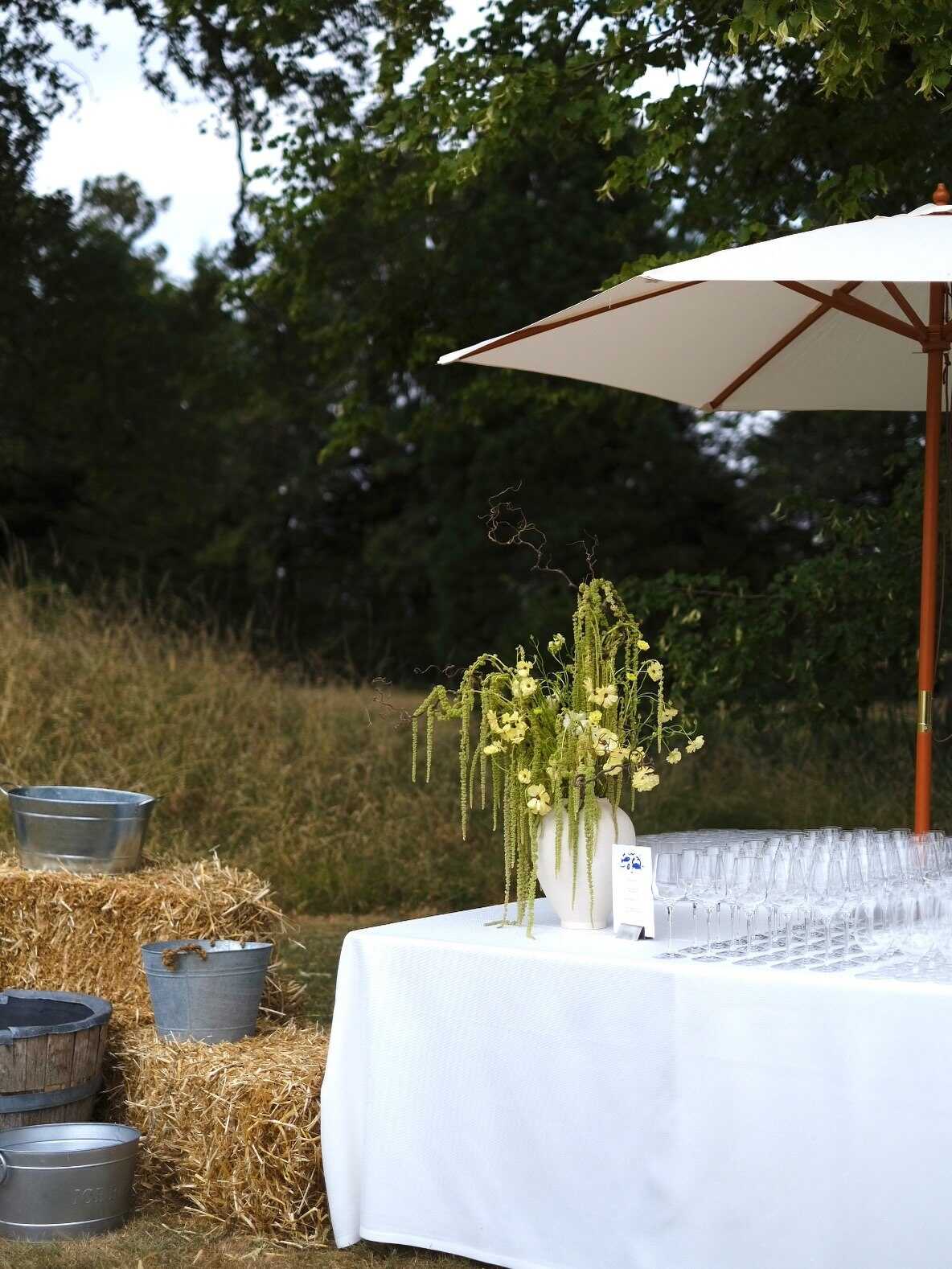
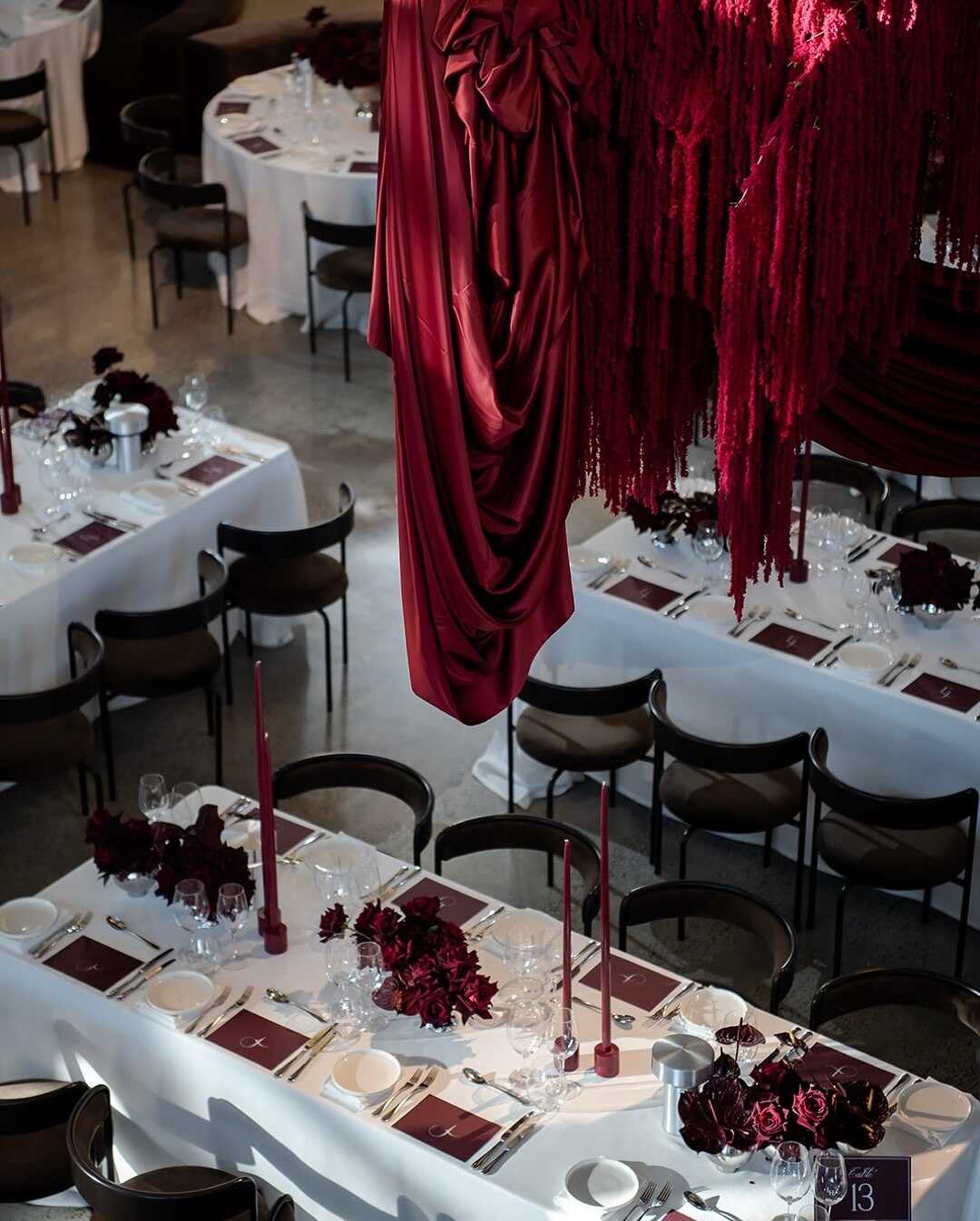
A centerpiece built around hanging amaranthus doesn’t stay contained to the vase like most tablescapes. Left to spill off the edge of a runner or drape down the side of a low compote, it visually connects one place setting to the next instead of sitting as an isolated object in the middle of the table. Guests on either side share the same trailing strand rather than having separate, self-contained arrangements to admire.
A well-built green hanging amaranthus wedding centerpiece works especially well on long harvest-style tables, where cascading strands run the full length instead of staying confined to one central cluster every few feet. It reads as one continuous gesture down the table rather than a repeated pattern of identical, disconnected vases. This distinction matters because repeated centerpieces can feel mass-produced even when each is handmade.
It’s also a look built for a slower kind of dinner, where guests notice detail up close rather than glance at a centerpiece from across the room. Because the strands sit low and close to the table surface, they don’t block sightlines like tall, structured arrangements sometimes do. This keeps conversation flowing across the table even with a dramatic amount of floral material.
When the Hanging Amaranthus Wedding Bouquet Becomes an Accessory
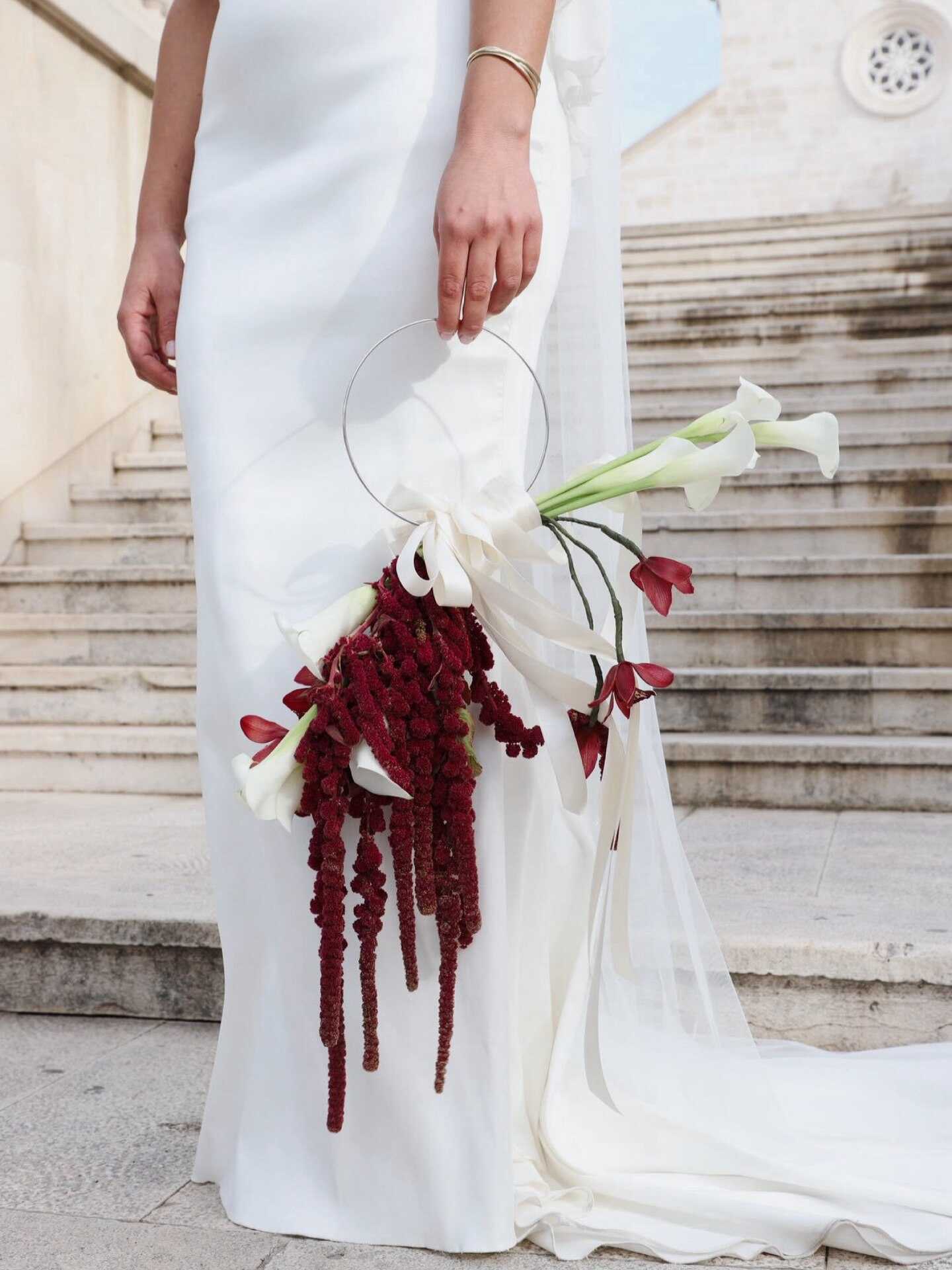
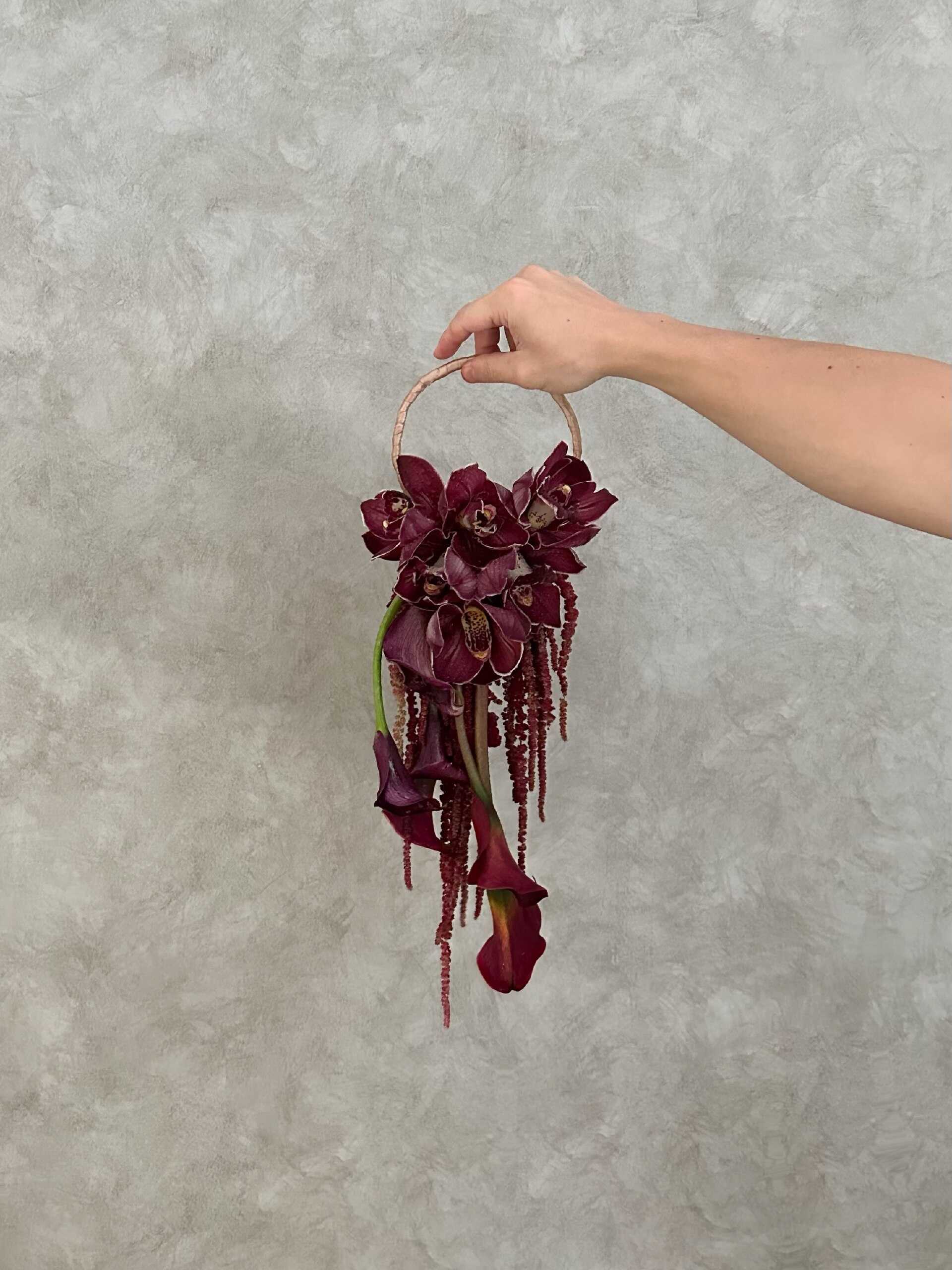
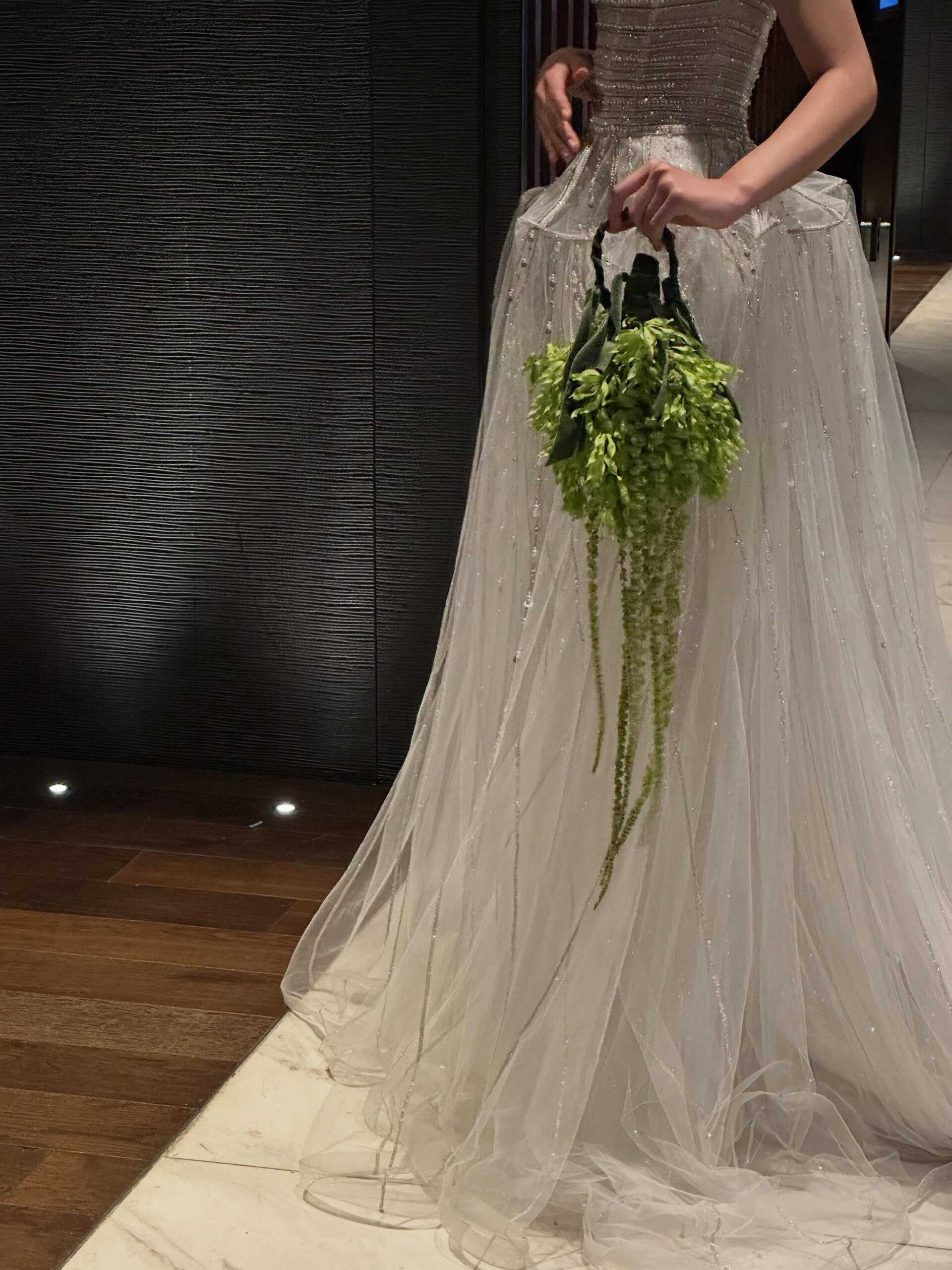
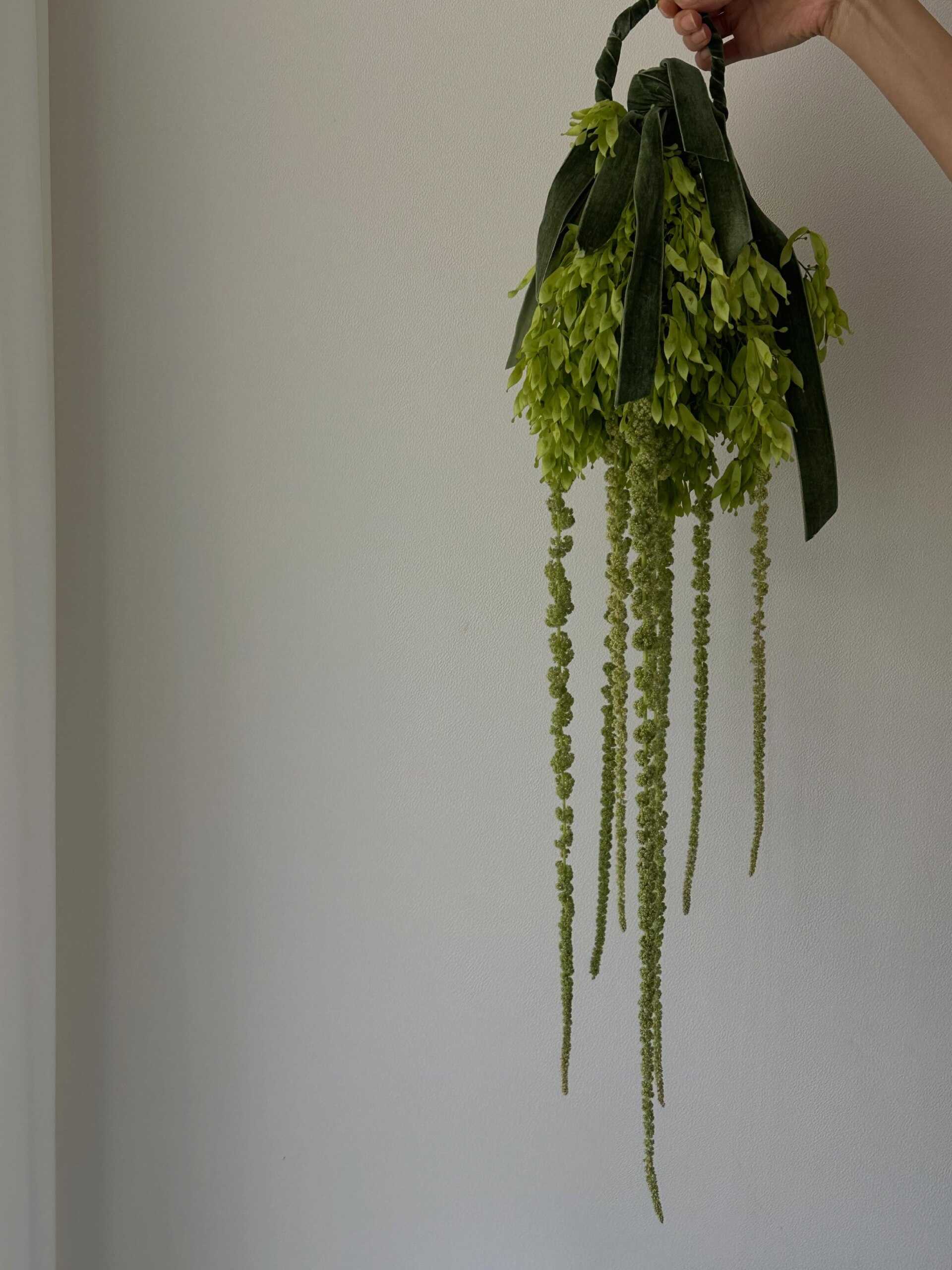
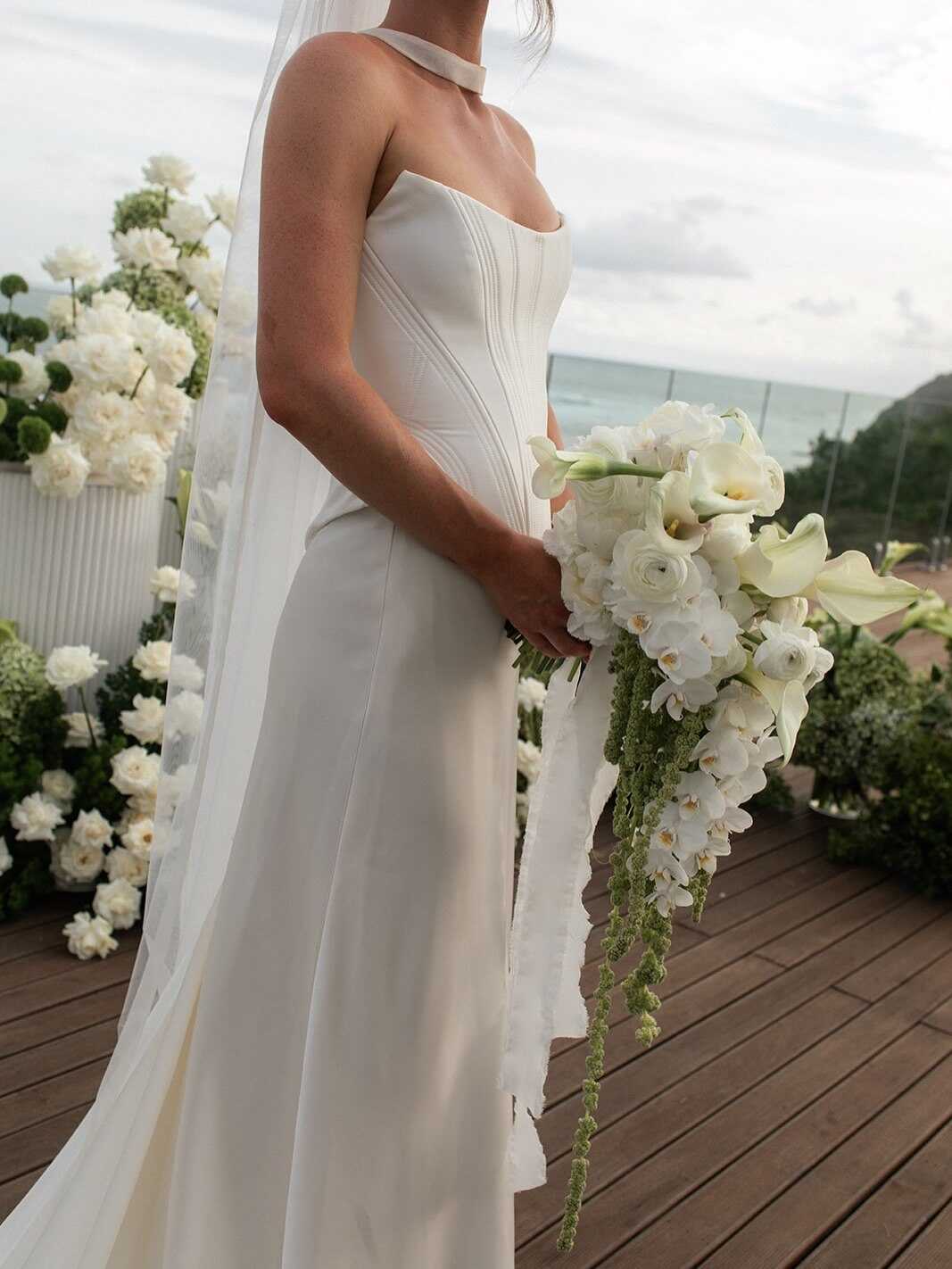
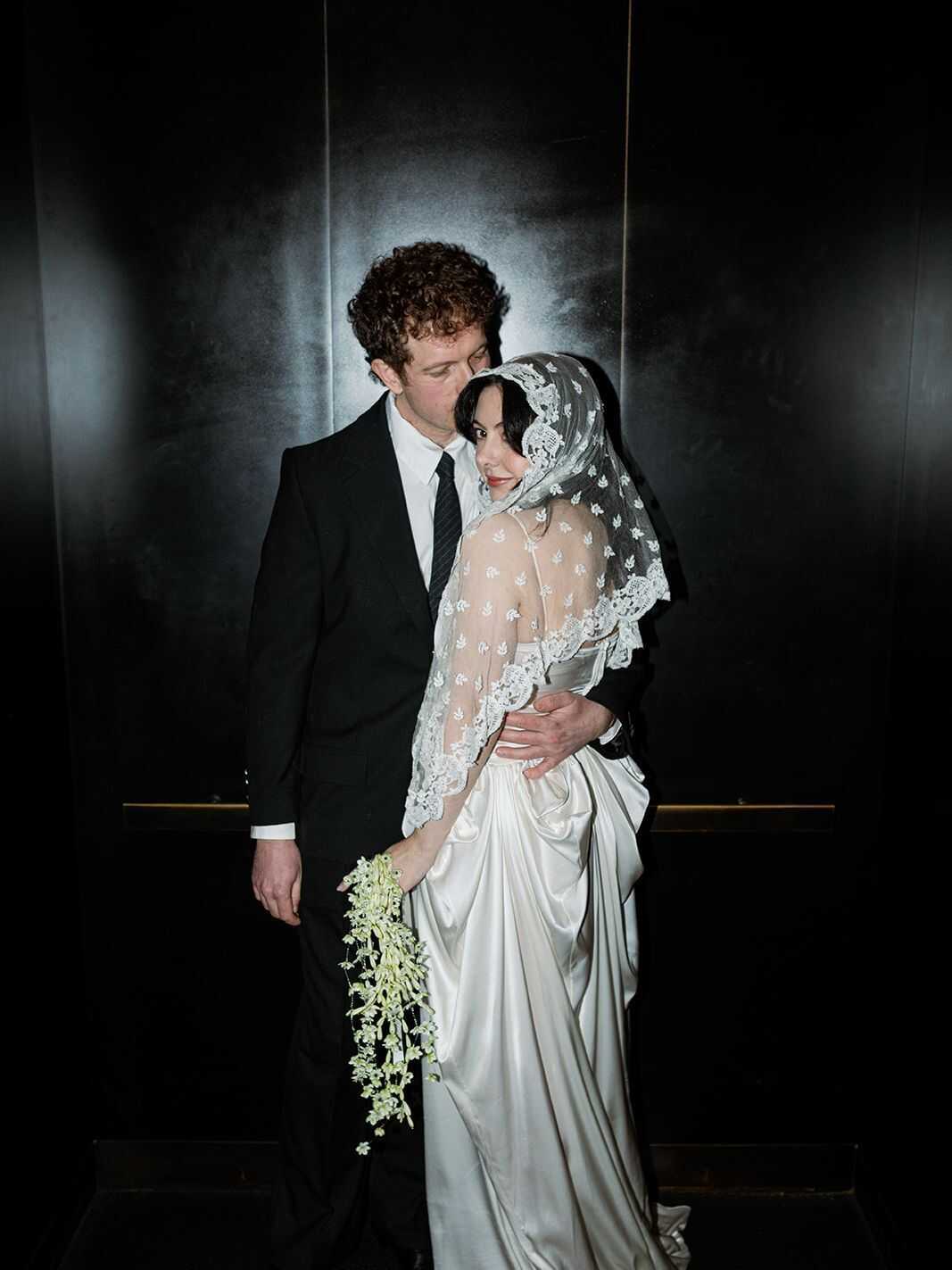
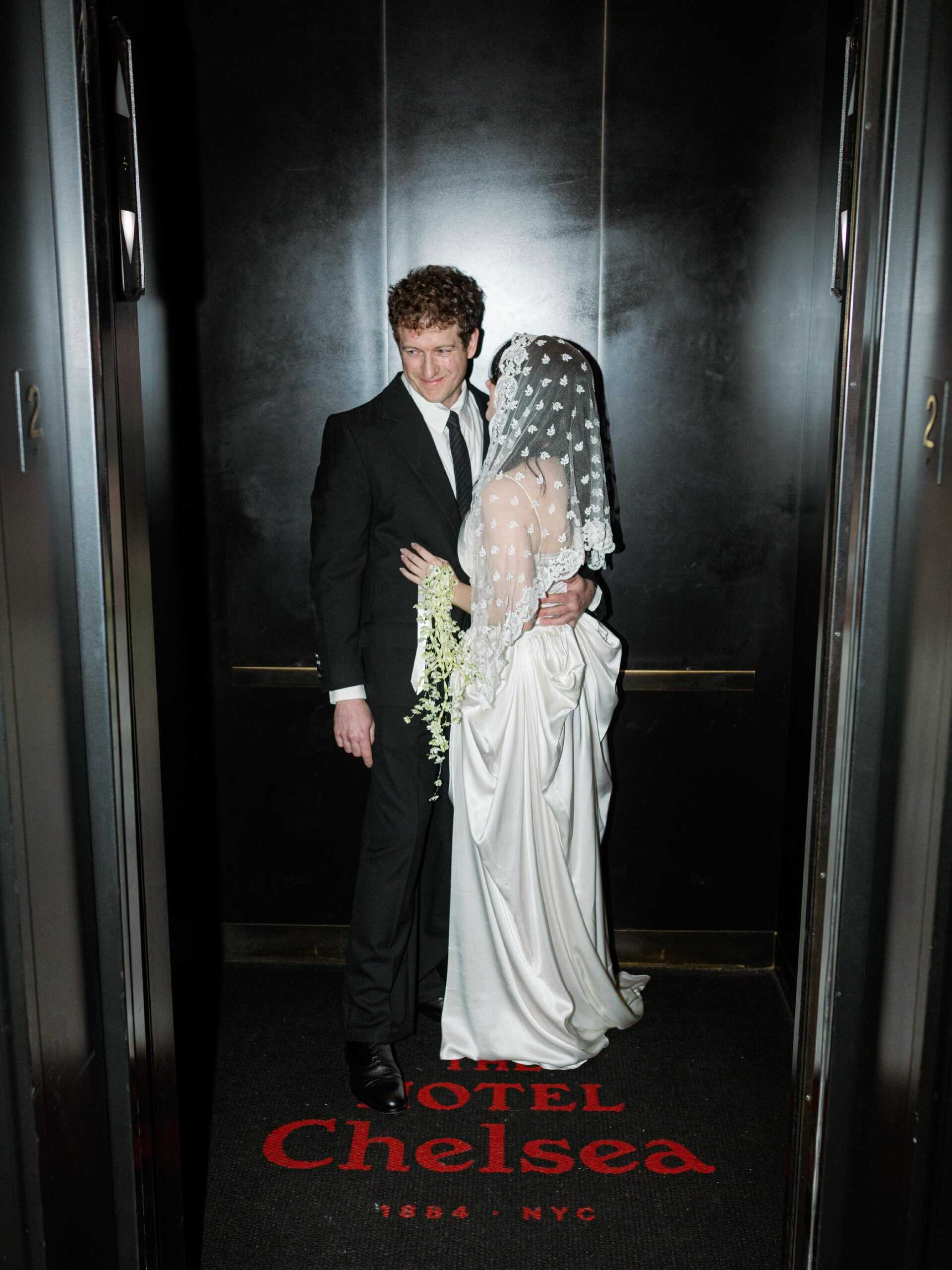
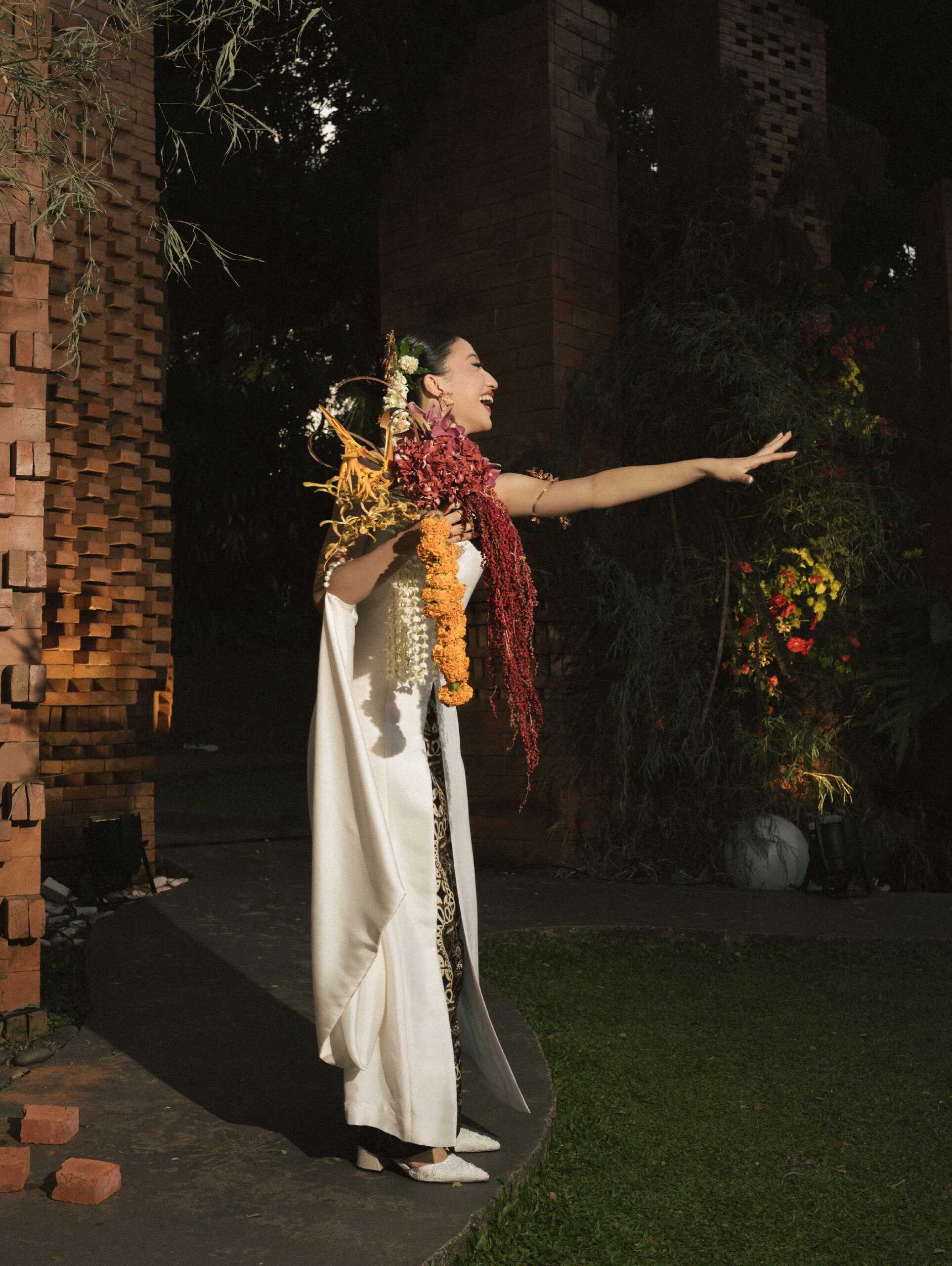
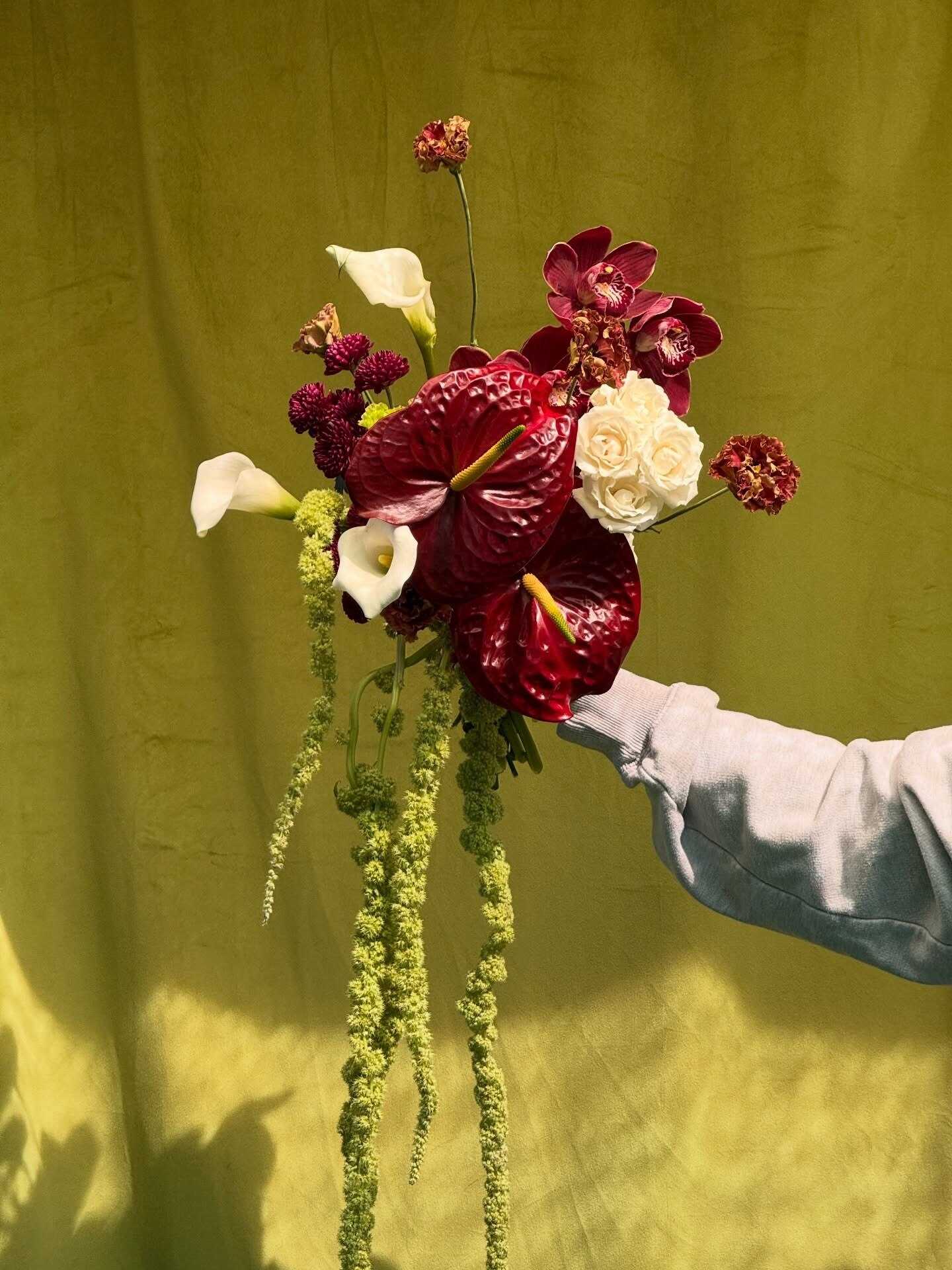
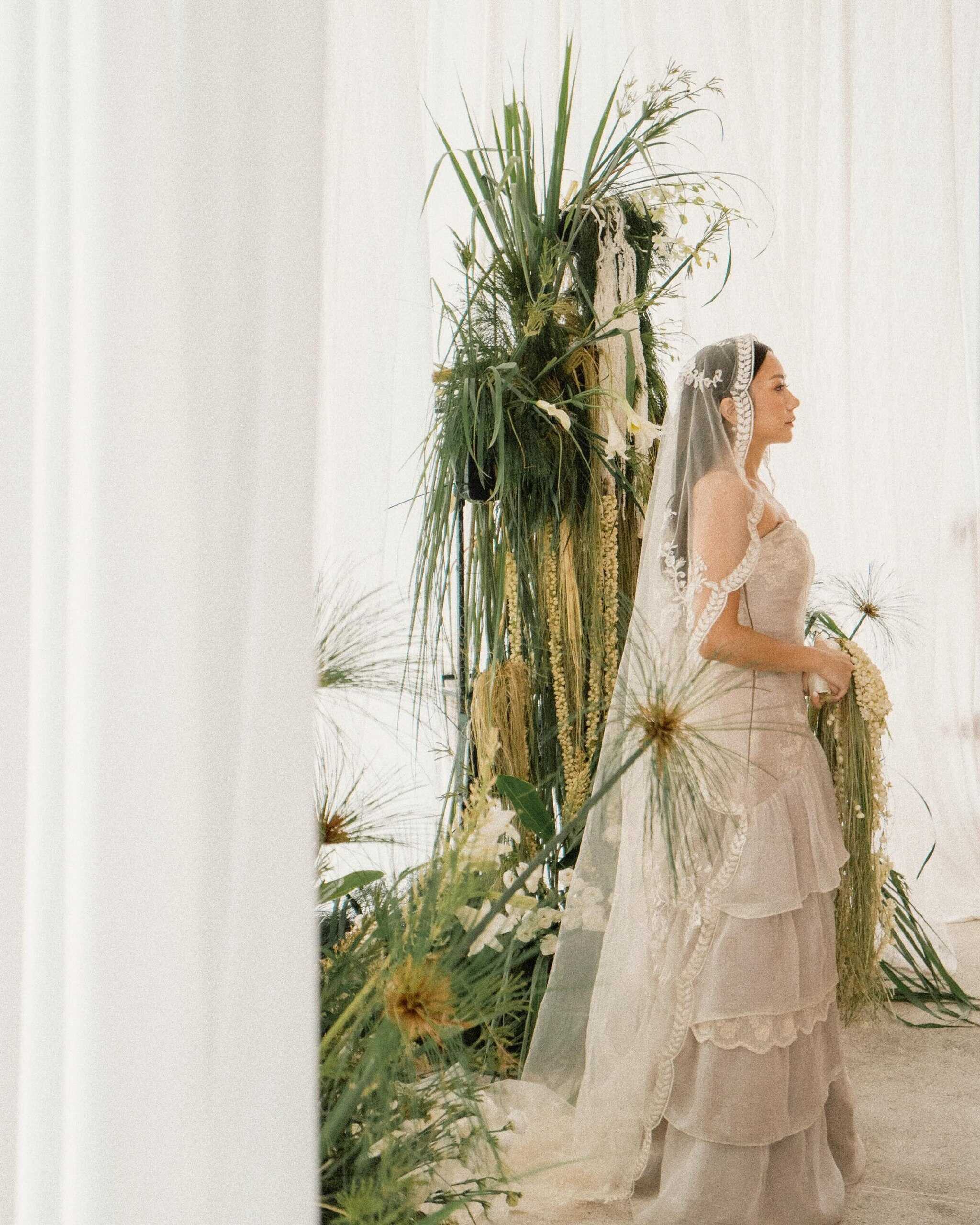
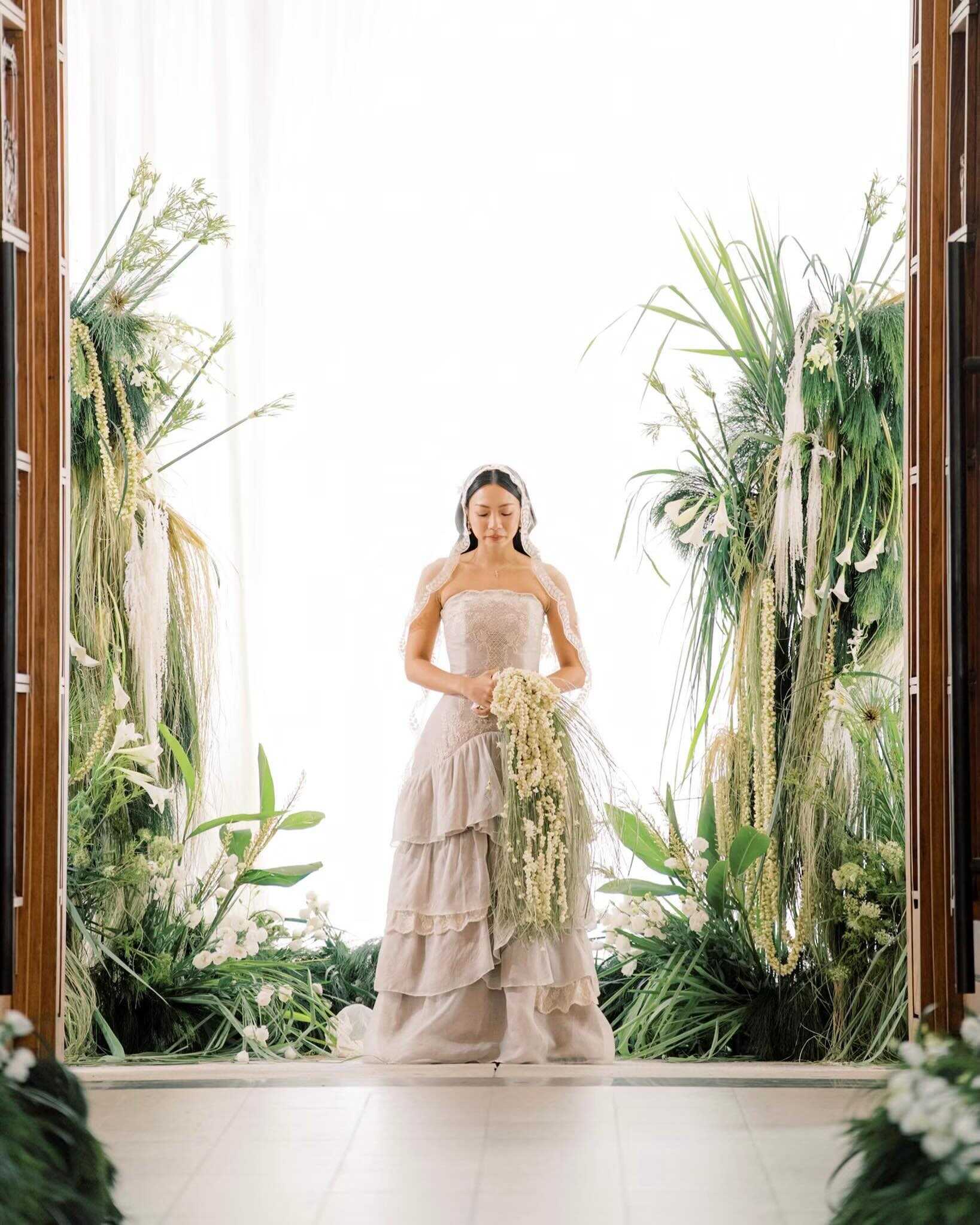
At a certain length, a bouquet stops behaving like an object a bride carries and starts behaving like a piece she wears. Long cascading amaranthus, draped over the wrist or falling against the side of a dress, functions less like a floral arrangement and more like an accessory chosen to complete the silhouette - closer in spirit to a long glove or draped sash than a traditional bouquet.
That’s especially true with a green hanging amaranthus wedding bouquet, where the cascading strands become a natural extension of the dress instead of a separate, contrasting object competing for attention. Some brides now request the amaranthus trail cut to a specific length before the wedding, matched precisely to where the dress falls. As a result, the two elements read as one continuous line in every photograph rather than two things captured side by side. It’s a small coordination step, but one that changes the entire visual effect of a full-length portrait.
This isn’t really a new idea so much as an old one reworked. Brides have long used a cathedral veil or an elaborate train to add length and movement to a silhouette that would otherwise end abruptly at the waist or the hem. Amaranthus offers a version of that same effect without the extra fabric to manage through the reception - no bustling required, no risk of stepping on a train mid-dance, just a floral element that does the same visual job and can be set down once the formal portraits are finished.
A Ceremony Framed in Amaranthus
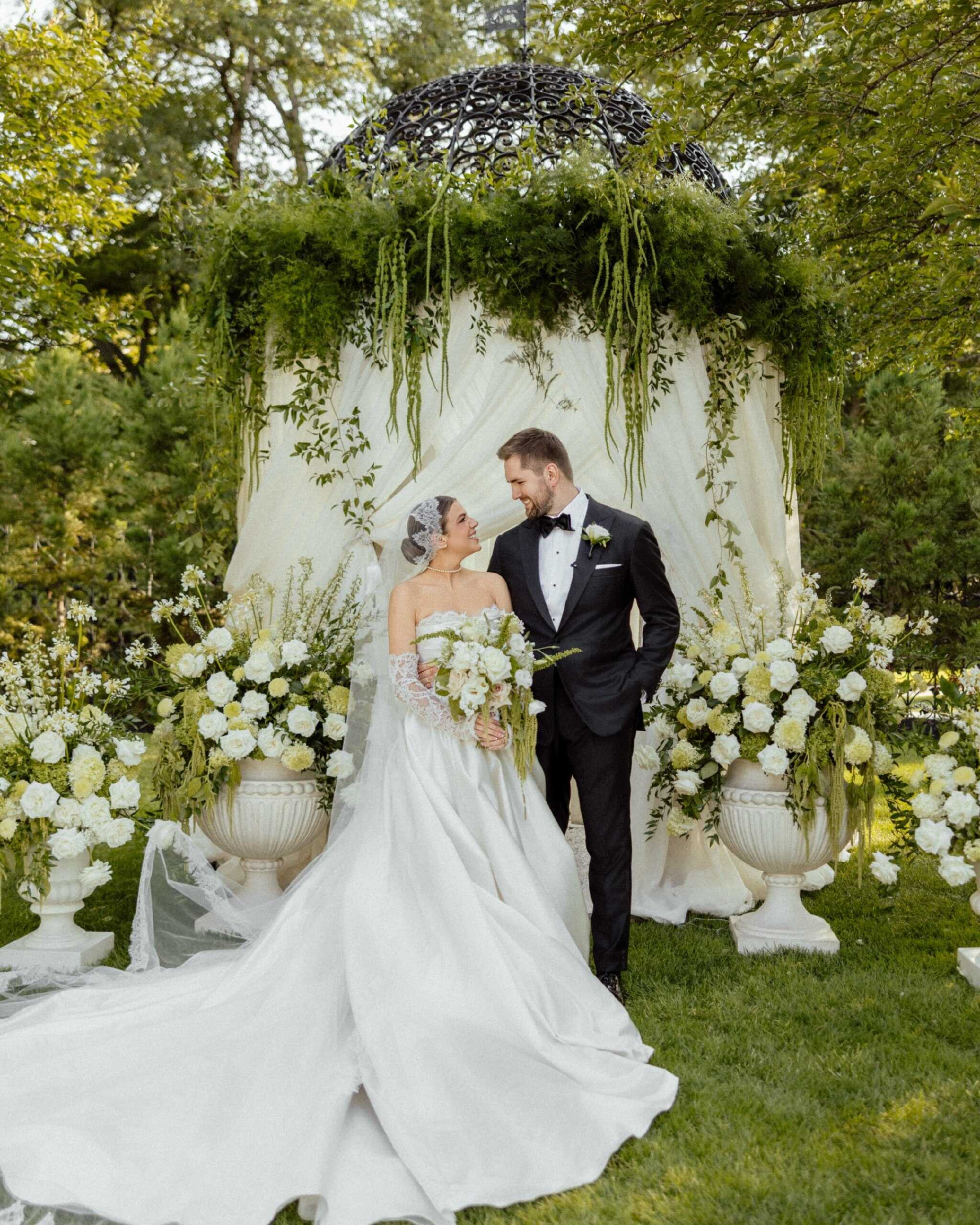
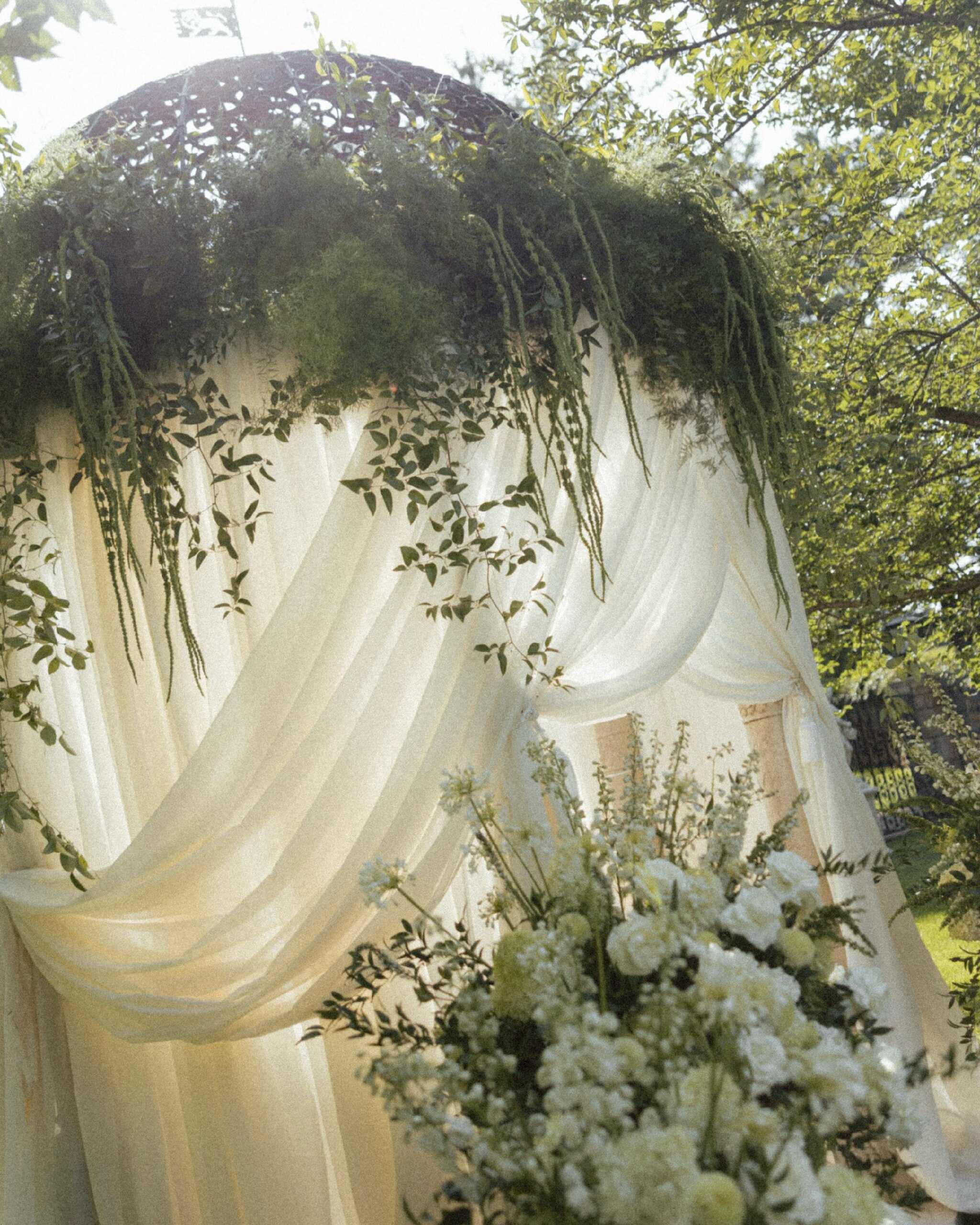
By the time a couple reaches the altar, amaranthus has usually already shown up earlier in the day - in the bouquet, the arch, or both - and carrying that same material to the ceremony’s focal point ties the whole day together visually. A green hanging amaranthus wedding arrangement placed at the aisle’s end doesn’t function as a new design element so much as a continuation of a thread the guests have already been watching all afternoon: first in the bridal portraits, then walking down the aisle, and finally here, framing the exact spot where the couple will stand.
Where that arrangement actually goes changes the feeling of the ceremony considerably, and most florists build toward one of a few standard placements depending on the venue and the scale of the wedding:
- Aisle-end arrangements, positioned to frame the couple directly from the guests’ sightline, so every seated guest sees roughly the same composed shot the photographer is capturing
- Pew or chair-end clusters, marking the aisle itself in shorter, repeated bursts rather than one large statement piece, which works especially well for a longer aisle that needs a rhythm of detail along its length
- A single oversized installation behind the couple, used in place of a full arch for venues where a freestanding structure isn’t practical or permitted
Regardless of which option the couple chooses, the ceremony ultimately takes on a true meaning, not just decoration. Amaranth plays a subtle role, directing the eye directly to the couple's location, without any verbal cues for those present - there's no celebrant to direct attention, no need for lighting cues, just a shape that naturally guides the eye to the two people it's destined to rest on. This is the common thread across all the examples on this list: amaranth doesn't simply decorate a wedding; it defines how the day is celebrated.

Which Arrangement Actually Fits Your Wedding?
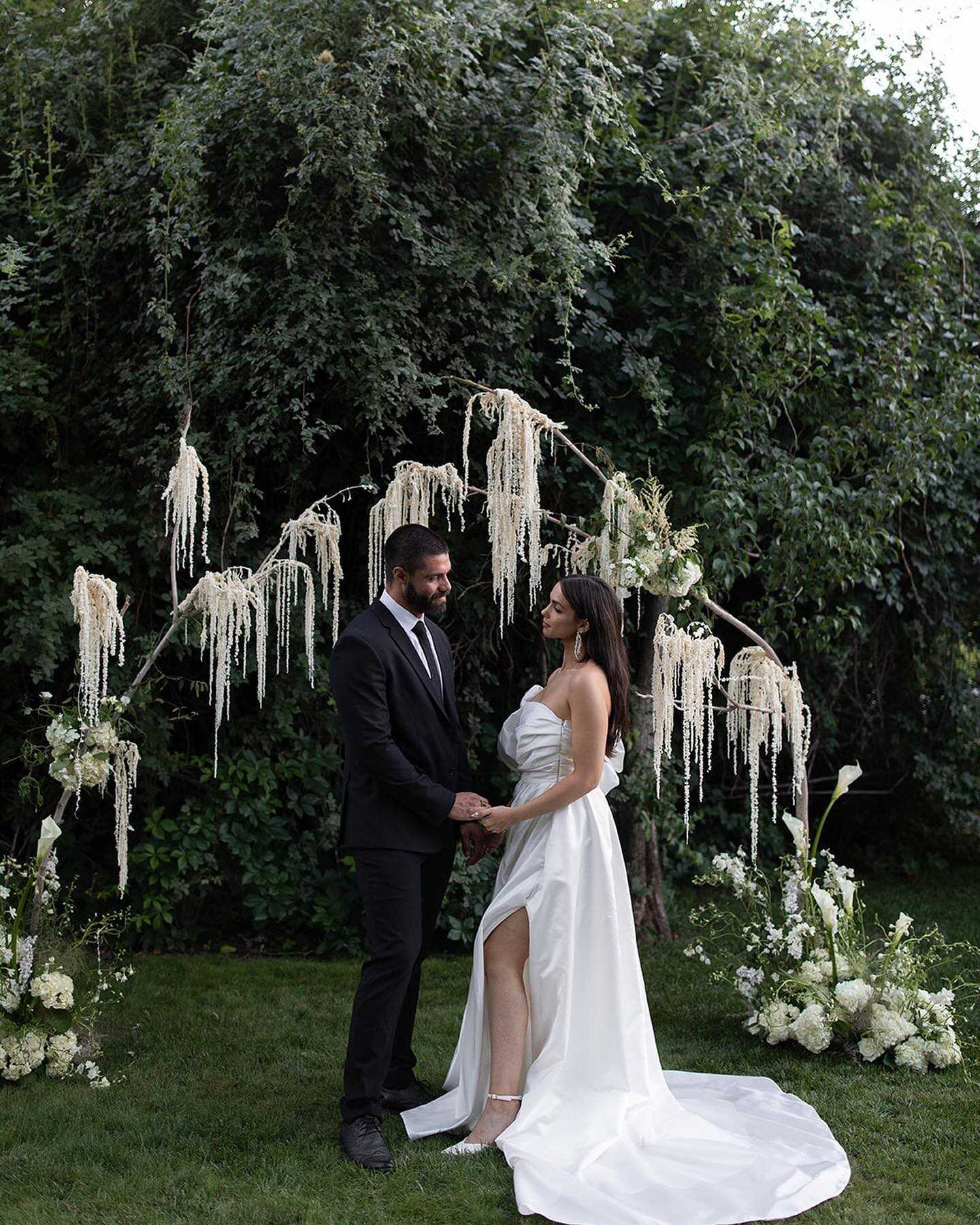
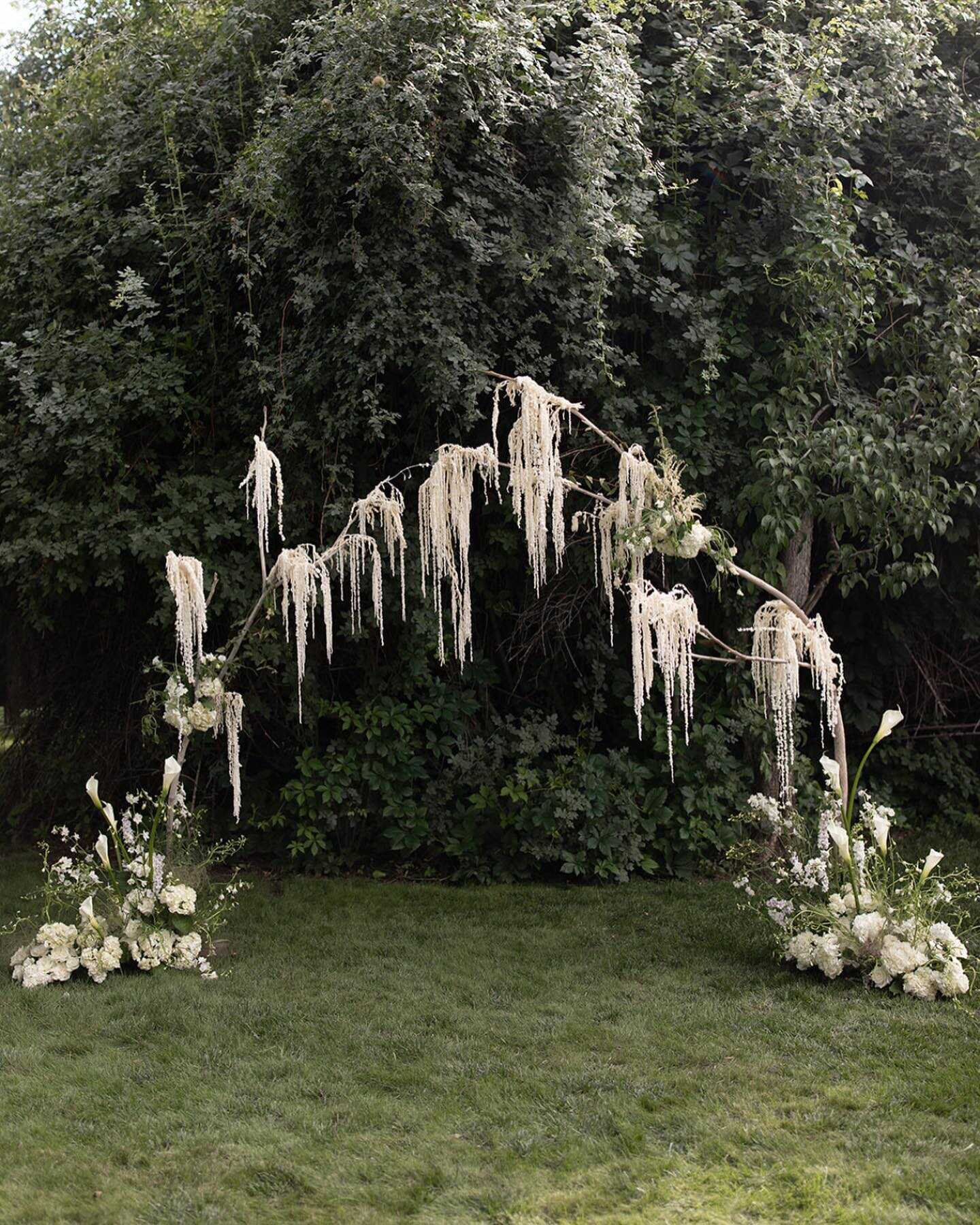
Depending on where it is used, amaranth can have different effects - from a delicate touch in a bouquet to a fully immersive installation that surrounds the whole ceremony. Looking at the main uses together makes it easier to choose what best suits a particular wedding, its budget, and the venue, rather than simply going for the version that appears most frequently in a saved-posts folder. Just as much as the type of application itself, scale and density become important, since the same concept can appear subtle or dramatic entirely according to how much material the florist actually uses.
| Application | Look | Best For | Density |
|---|---|---|---|
| Bouquet | Cascading, dress-length | Brides who want the bouquet to extend the dress’s line | Light to moderate |
| Ceremony arch | Curtain-like, falling from above | Outdoor or high-ceilinged ceremony spaces | Light for subtlety, full for drama |
| Centerpiece | Trailing across the table | Long, harvest-style reception tables | Moderate to heavy |
| Aisle or altar arrangement | Framing, directional | Drawing focus toward the couple | Moderate |
Amaranthus is by no means the only flower that can turn a wedding into a more thought-out decision rather than just a series of traditional choices, and those couples who are still working out the rest of the visual style for their day need not limit themselves to what has been presented here. The Wezoree’s Inspiration section offers a much wider variety of ideas worth borrowing from for couples still deciding what their own special day should look like.

FAQ
What is hanging amaranthus?
Amaranthus is a flowering plant that grows in a trailing manner and is most known for the long, rope-like tassels which can reach a height of several feet. It is used at weddings for the way it flows rather than as a single flower, which is the reason it appears much more frequently hung from an arch or spreading out of a bouquet than standing up in a vase.
Is amaranthus only found in one colour?
Not at all! Although the classic type is a deep burgundy red, a lighter green variety has become more popular among couples who want the same trailing effect without the more dramatic color statement. Like the classic type, both varieties can also be dried and preserved, thus allowing couples to keep some of their flowers well beyond the wedding day.
How long does hanging amaranthus last?
As long as it is properly hydrated, fresh amaranthus can last through the entire wedding day and into the next day or so, making it a good option for both the ceremony and the evening reception. It also dries naturally and retains most of its shape, which is one reason so many couples decide to preserve a portion of their bouquet.
Is hanging amaranthus expensive compared to other wedding flowers?
The prices depend on the florist and the region, but amaranthus is not generally a flower that carries a high price since the cost mostly arises from the labour required to properly wire and arrange the long trailing sections, not from the flower itself; a design that makes heavy use of amaranthus, such as a fully layered arch, will be more expensive simply because of the amount needed and the time it takes to install it.
Can hanging amaranthus work for an indoor wedding?
Yes, it works just as well indoors as it does outdoors; the effect, however, depends on ceiling height and lighting. In a room with a high ceiling, the hanging arrangement can be seen at full size, while in spaces with lower ceilings, trailing centerpieces or bouquets are more appropriate than a large suspended display.
What flowers pair well with hanging amaranthus?
Roses, ranunculus, orchids, and garden-style peonies all pair naturally with amaranthus, since their fuller, more structured shapes give the eye something to rest on before following the cascading strands downward. Pairing amaranthus with other cascading or delicate flowers usually competes for attention instead of complementing it.
Should the bouquet’s amaranthus length match the wedding dress?
Many brides do coordinate the length specifically, especially with a cascading bouquet, so the strands become an extension of the dress instead of a separate element competing with it. It’s worth discussing dress length with a florist well before the final fitting, since adjusting amaranthus length is far easier than altering a dress after the fact.