Top 5 Best Wedding Venues in Japan
- Author: Natali Grace Levine
- Reading time: 8 min 16 sec
- Publication date: 08/01/2026
- Updated: 08/04/2026


Japan doesn't offer one version of a dream wedding - it offers several, and they rarely resemble each other. A single country can hold a pond garden old enough to appear in classical literature, a mountaintop hall that spent decades as a police dojo before it ever hosted a ceremony, and a beachfront resort that opened its doors for the first time in 2025. The five venues below span Kyoto, Tokyo, and the Okinawan islands, and together they say more about what a Japanese wedding can look like than any single city could on its own.
Find Your Perfect Wedding Vendors


Seiryuden Temple, Kyoto
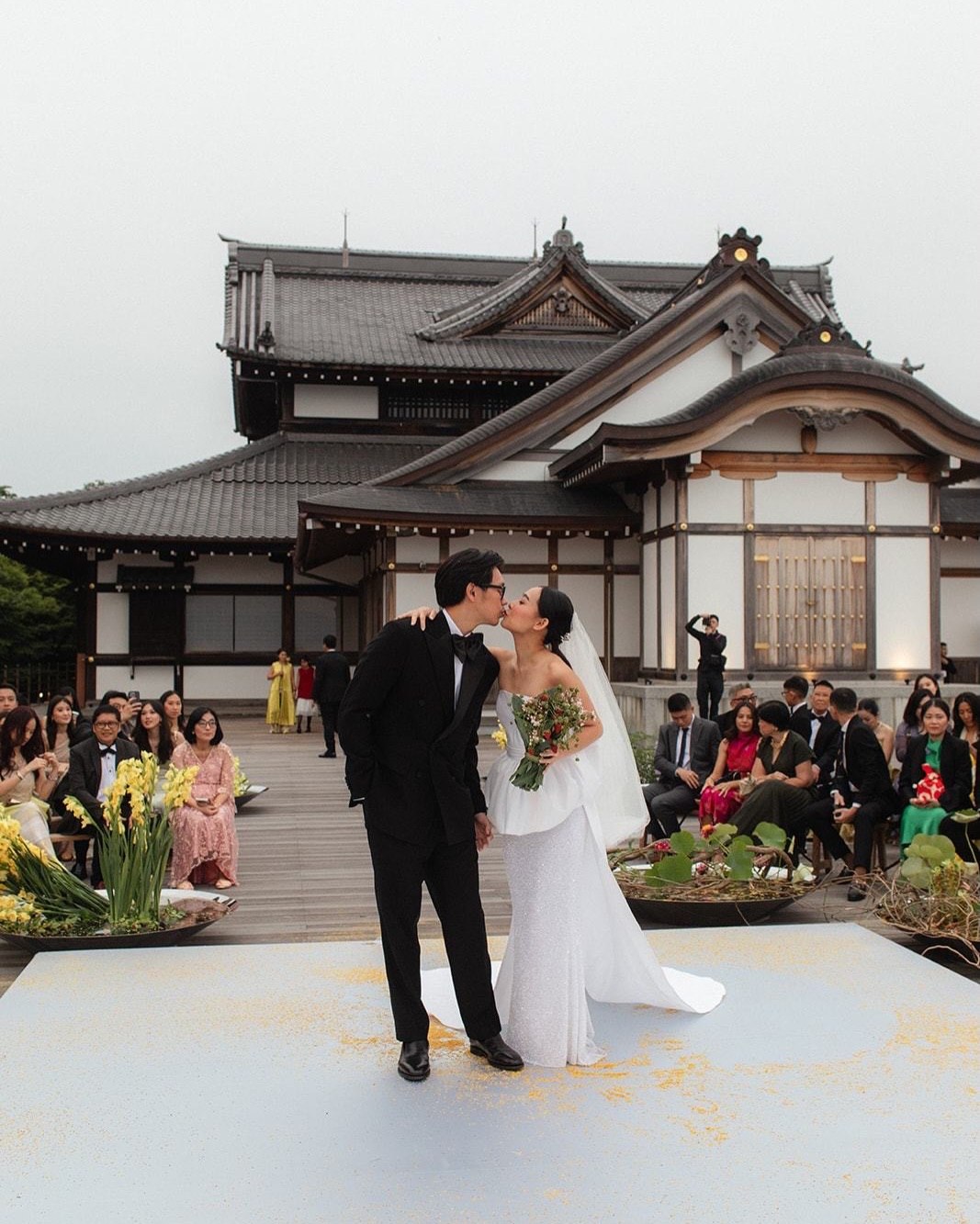
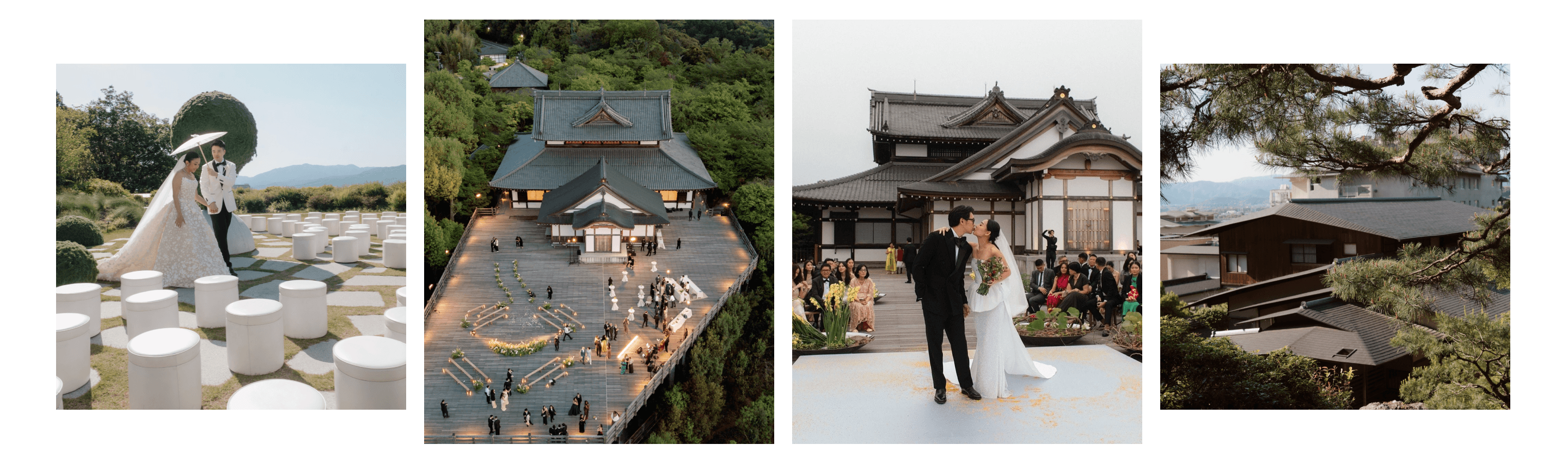
Legend says that Emperor Kammu stood right there on Mt. Higashiyama in the late 8th century, and decided to make that spot the site of his new capital - which is how Kyoto was built. Seiryuden shares that origin story, but the hall itself has a more unusual history than the legend suggests. It was built in 1915 to commemorate Emperor Taisho's enthronement, later used as a police dojo for kendo and judo, and eventually dismantled and carried piece by piece up the mountain to be rebuilt under its current name. By the time the wooden structure was finally put back together on the mountaintop, it had already been used three or four different ways - as a sacred site, an imperial commemoration, and a martial arts hall. None of these things had anything to do with weddings, but they made the place feel more permanent than it did before.
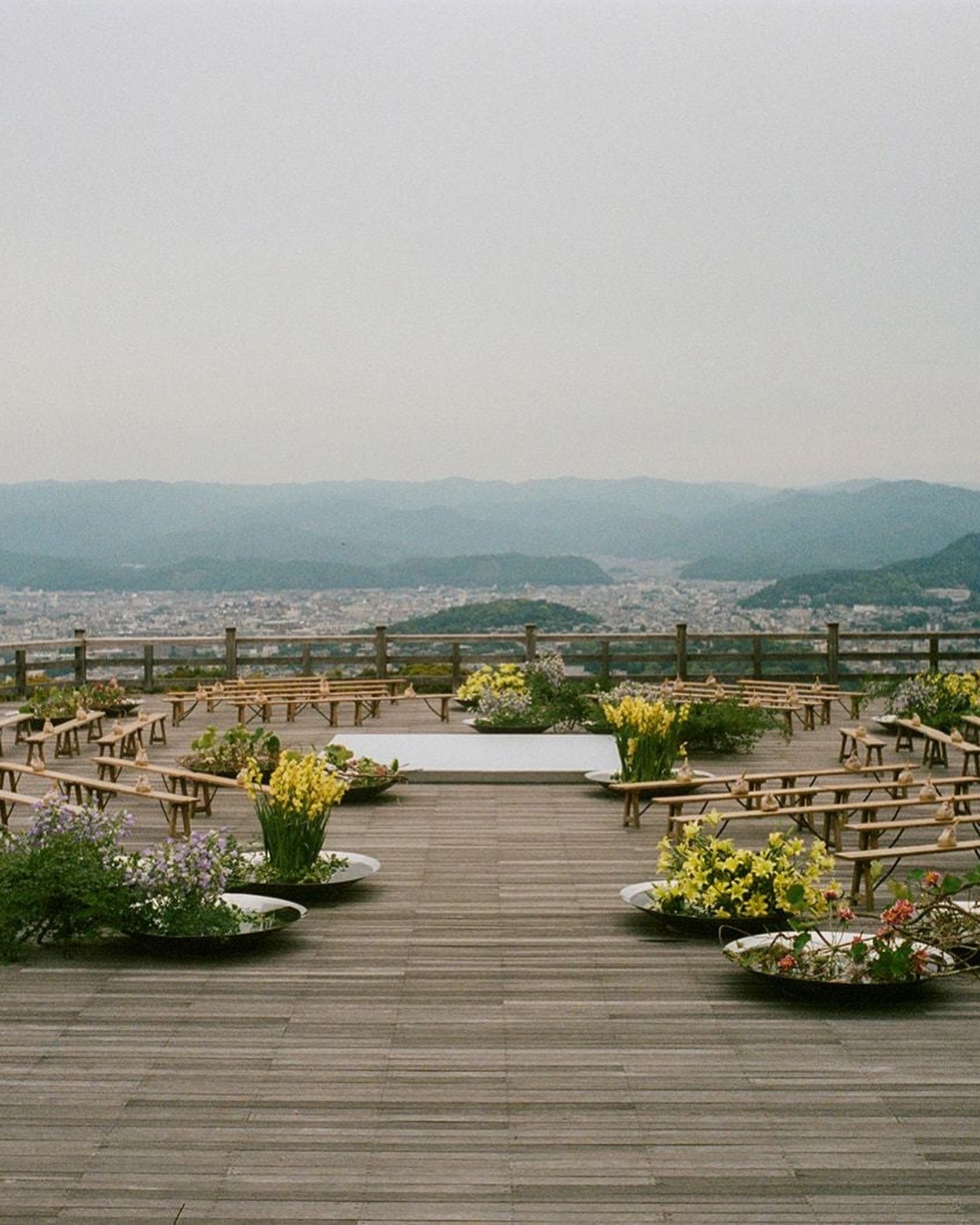
But on a wedding day, none of that history is visible. You can see the view from the Oobutai, the great stage beside the main hall. It runs clean past the rooftops of Kyoto and doesn't stop until the outskirts of Osaka. Not many venues in the country can claim that, and even fewer have a martial arts hall buried somewhere in their past. The temple is also located along the Higashiyama mountain range, where the seasonal color changes are dramatic enough that the same ceremony spot looks like four different locations depending on when a couple books it - cherry blossoms in spring, dense green through summer, red and gold by autumn, and snow settling over the stage in winter.
- Format: three-day wedding weekends — ceremony, cocktail dinner on-site, after-party at the adjoining club
- Capacity: 30–150 guests
- Signature feature: the Oobutai stage, with panoramic views reaching to the outskirts of Osaka
- Best for: couples who want the ceremony itself to feel like part of Kyoto's founding mythology
Seiryuden is tough to compare to anything else on this list because of how big the setting is compared to how few people actually experience it. Most of Kyoto's temple grounds have a steady flow of tourists all year, but this one, tucked up a mountain road and even hidden from most locals, offers a kind of privacy that has nothing to do with price and everything to do with location. Most visitors never bother to climb.
The Westin Miyako Kyoto
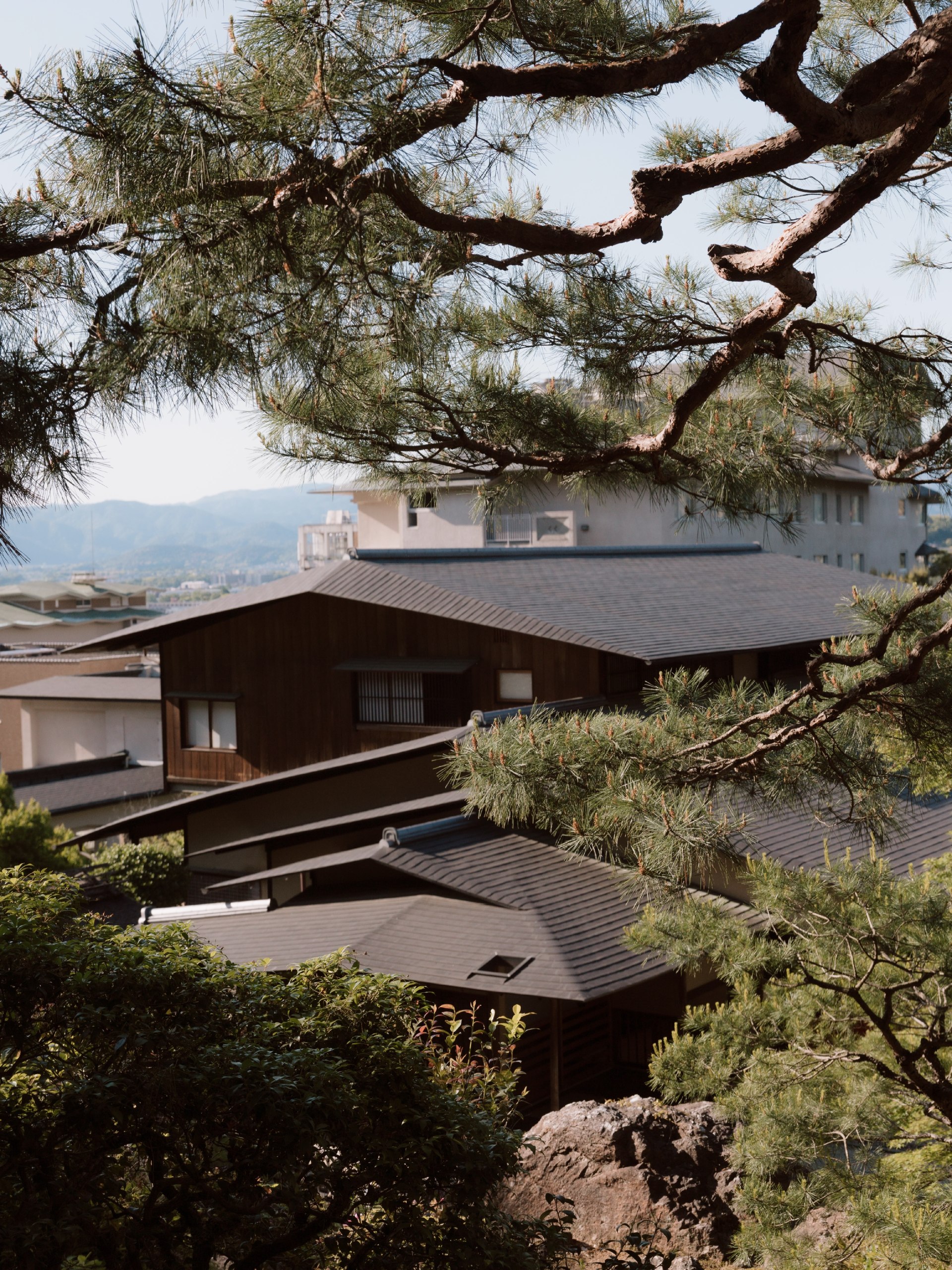
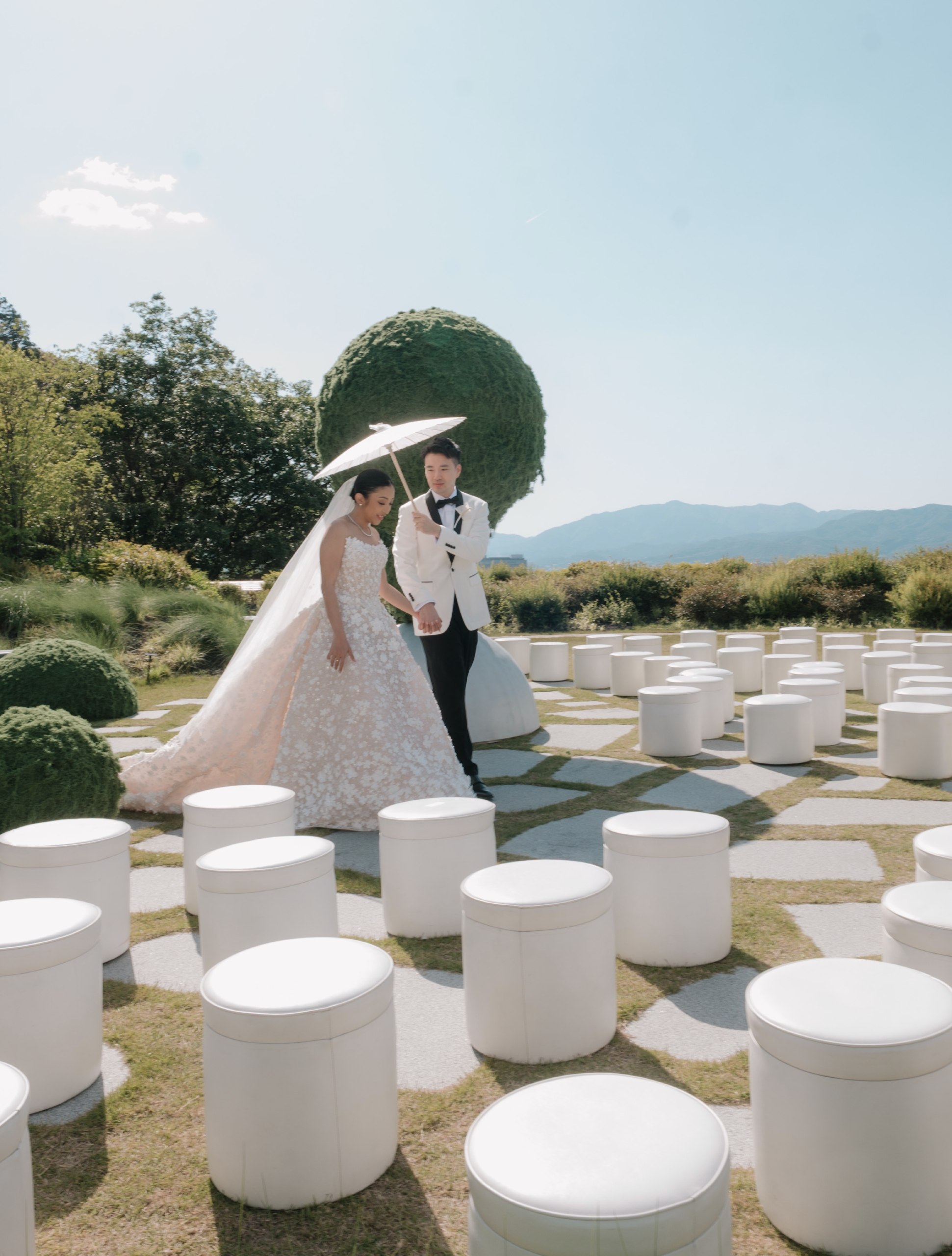
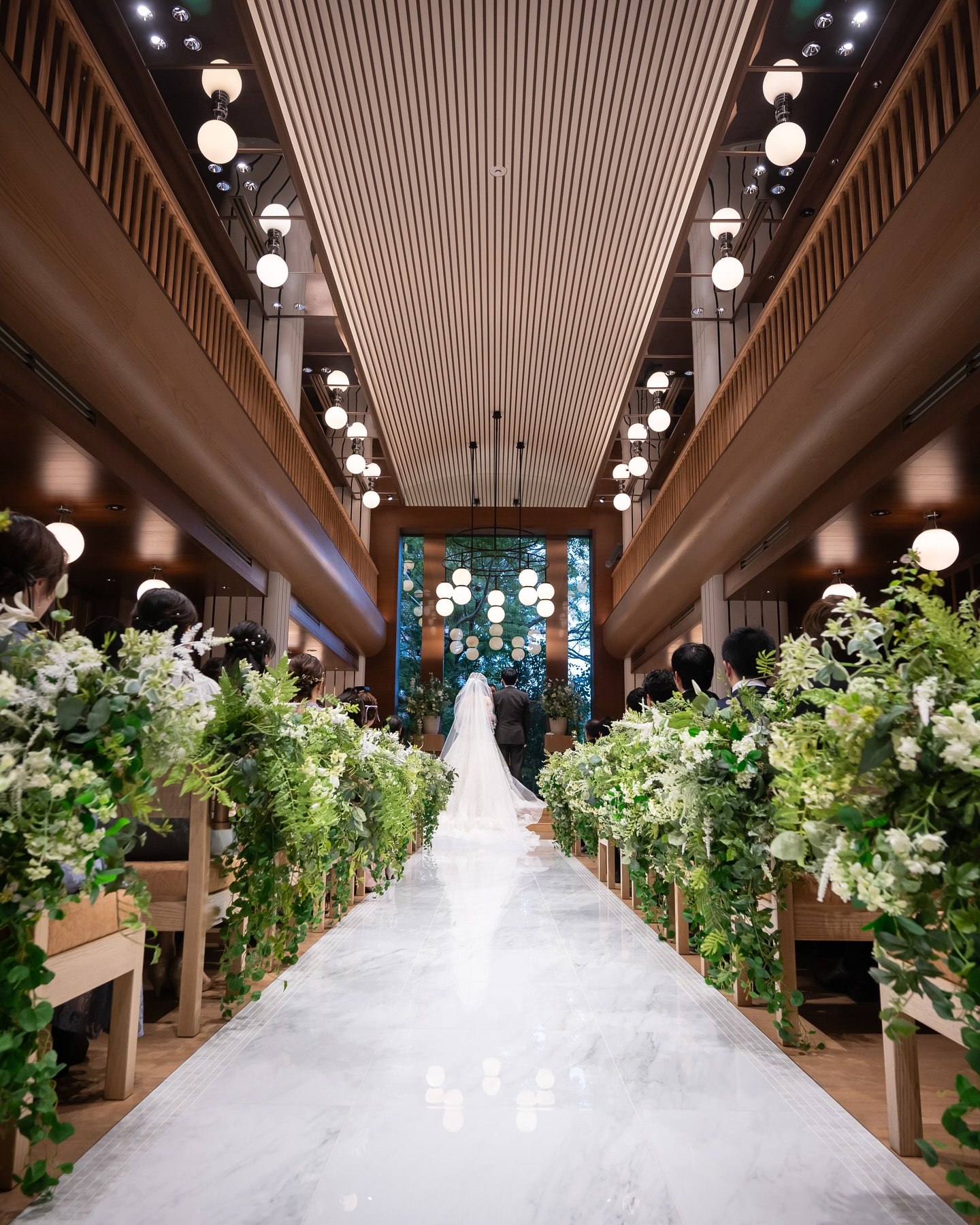
Since The Westin Miyako Kyoto opened at the foot of Higashiyama in 1890, the hotel has figured out how to keep hosting weddings without ever feeling like it's performing tradition for an audience. Kasuien is partly to blame, as the garden was laid out in 1925 by the son of the legendary landscape gardener Ogawa Jihei VII. That name means something specific to anyone who studies Japanese garden design. Kasuien piped water in from the Lake Biwa Canal and built a waterfall directly into the natural bedrock rather than around it. It's been designated a Kyoto City Cultural Property, which is basically bureaucrats saying, "Don't touch this. It's already perfect." If you're planning to tie the knot here, you've got a couple of options. You could choose a chapel that's part of the hotel and set in the forest, or you could go for the Aoi-den hall, where the ceiling is covered in stained glass that shows off Kyoto's three big annual festivals. It's a small detail, but it makes the ceiling pretty cool to look at during the ceremony.
| Space | Setting | Capacity |
|---|---|---|
| Forest chapel | Free-standing, wrapped in trees | Intimate ceremonies |
| Aoi-den | Stained-glass hall facing the garden | Mid-size receptions |
| Mizuho | Kyoto Prefecture's largest banquet hall | Up to 2,000, buffet-style |
With twenty banquet halls, the same hotel can host a ten-person elopement on a Tuesday and a 2,000-guest reception the following weekend. That's less a coincidence and more the whole point of a property built to outlast a century of changing tastes.
Hotel Chinzanso Tokyo
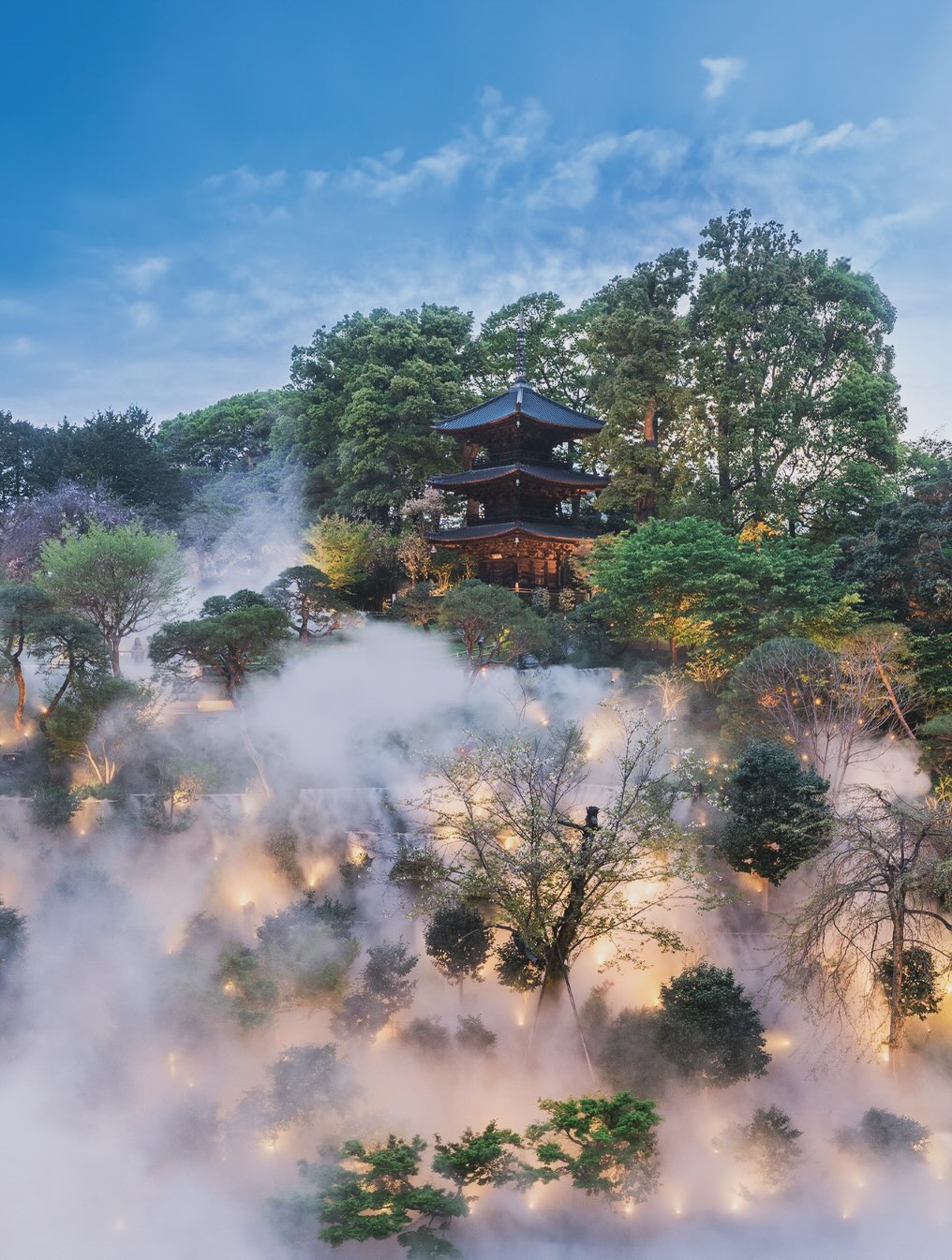
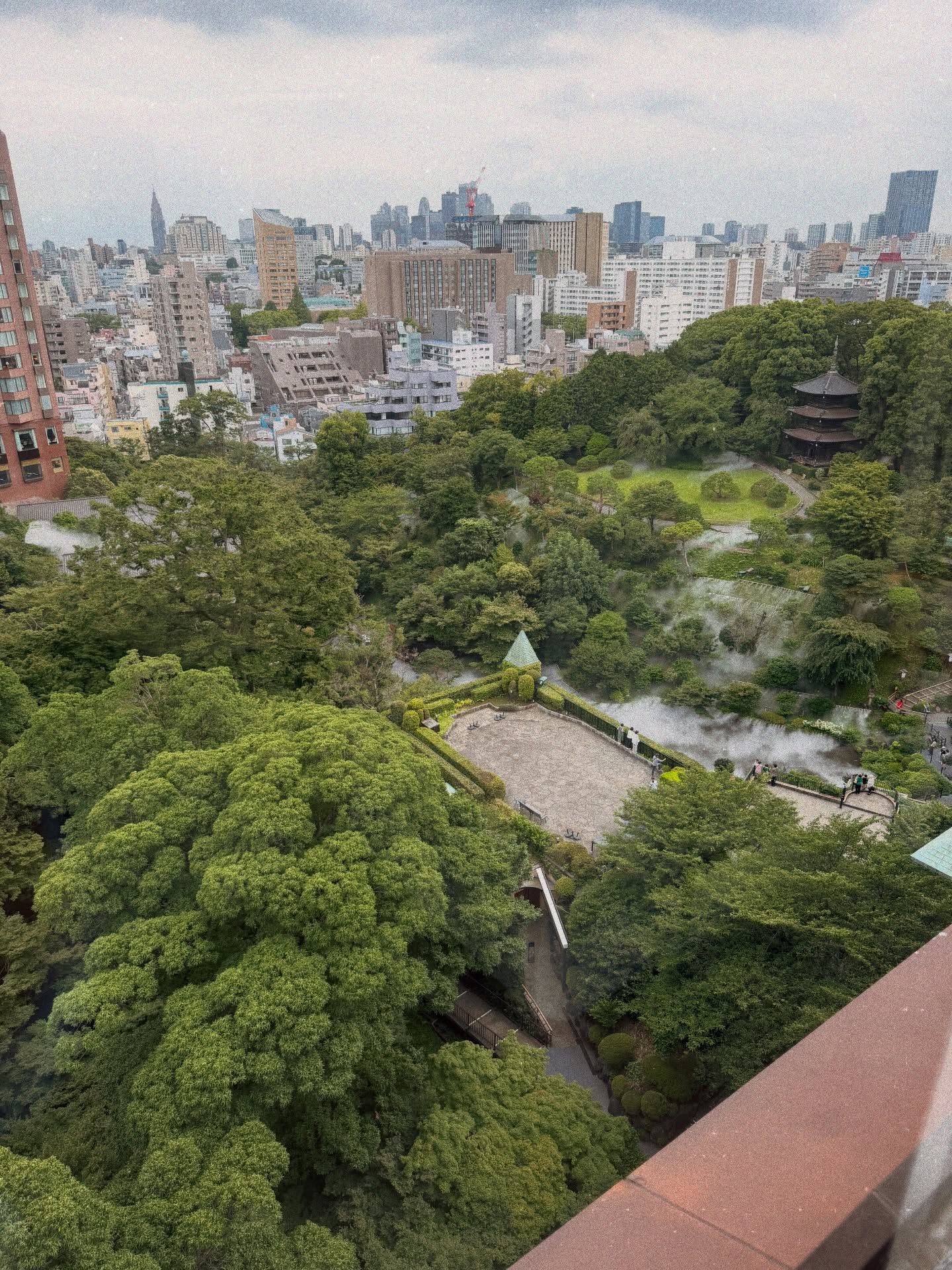
The garden was the first priority. Long before Hotel Chinzanso Tokyo existed, Meiji-era statesman and former prime minister Yamagata Aritomo bought this land in 1878 and built a residence. He eventually ranked this garden among the three finest he owned - the other two were in Kyoto and Odawara, which gives you an idea of the company this Tokyo plot was keeping. The site became a public garden restaurant in 1952, was turned into a Four Seasons hotel in 1992, and took on its current name in 2013. No matter who's running the place, the Entsūkaku pagoda has always been at the center of the grounds, framed by cherry blossoms every spring.
The garden itself still runs on an older clock than the one around it. Instead of the usual four seasons, Chinzanso follows the traditional Japanese calendar of twenty-four micro-seasons. So, a couple getting married here in early summer might catch the garden's fireflies released at dusk, while a winter wedding falls during camellia bloom — the same flowering hill that gave the property its name a century and a half ago.
- Scale: We've got 38 event venues in total
- The Grand Hall Tsubaki is 1,350 m² and can hold up to 2,000 guests in theater configuration
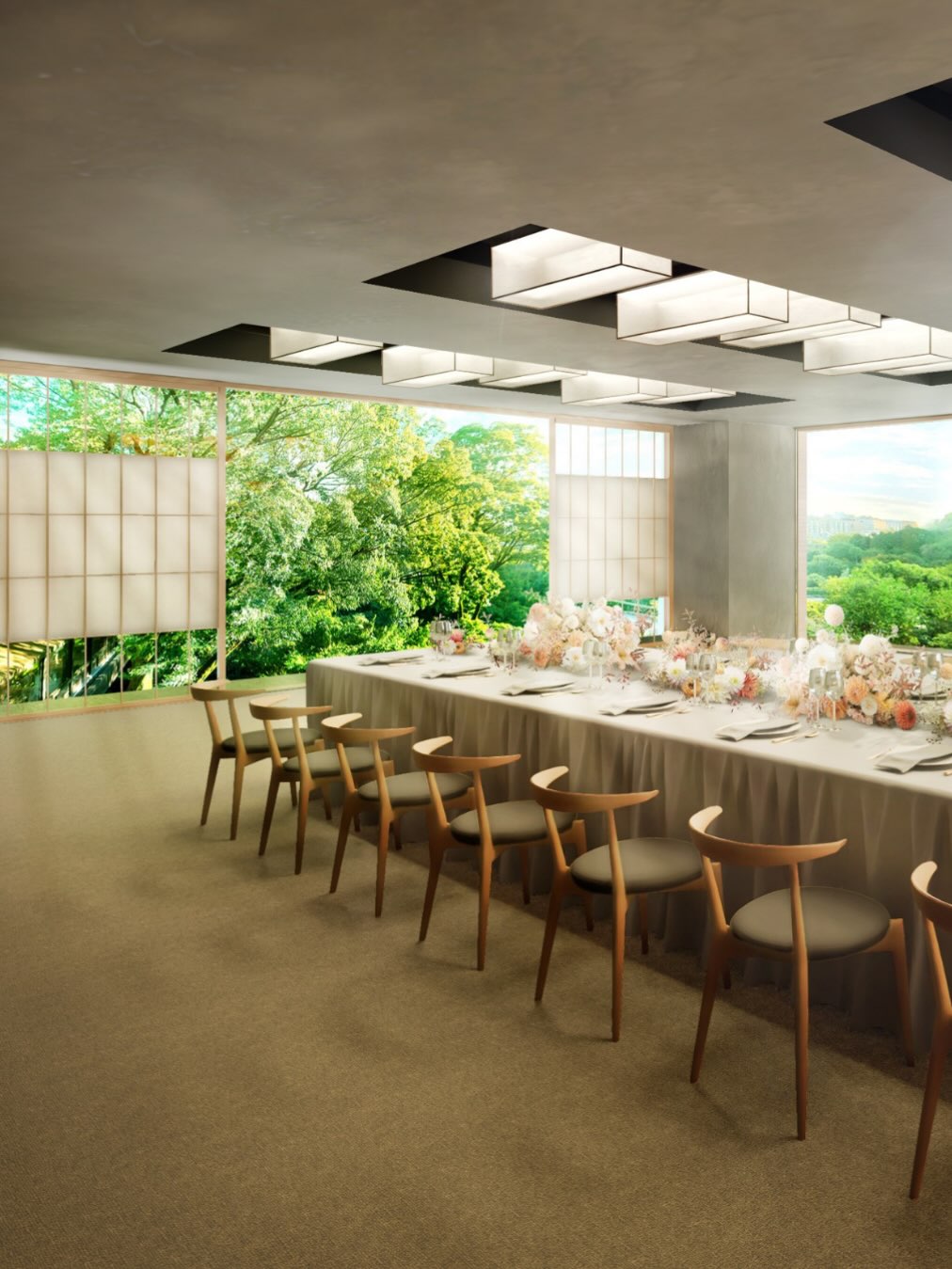
- The Mahogany Room is a more intimate space that can seat 30–50 guests
- The Kocho is 333 m² and opens directly onto a private view of the three-story pagoda
- Location: The Bunkyo district is about an hour from Haneda and 25 minutes from Tokyo Station
The best room in the building might not be the biggest. Kocho's pagoda view makes a 333-square-meter hall feel more spacious than Tsubaki's 2,000-guest capacity ever could. It's standard to have multilingual coordination throughout, which is important for a property that's become a popular choice for couples flying in from outside Japan.
Four Seasons Hotel Kyoto
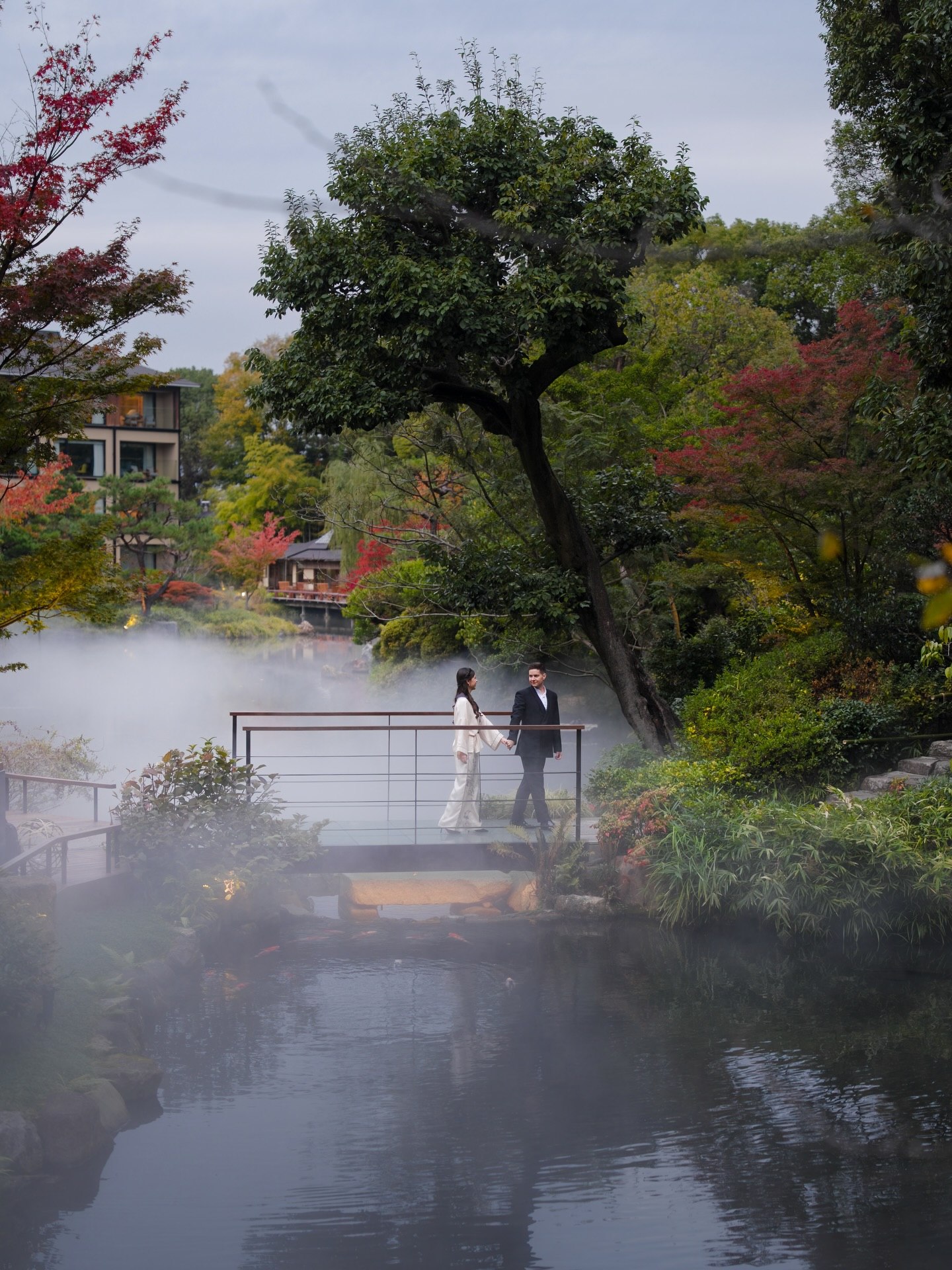
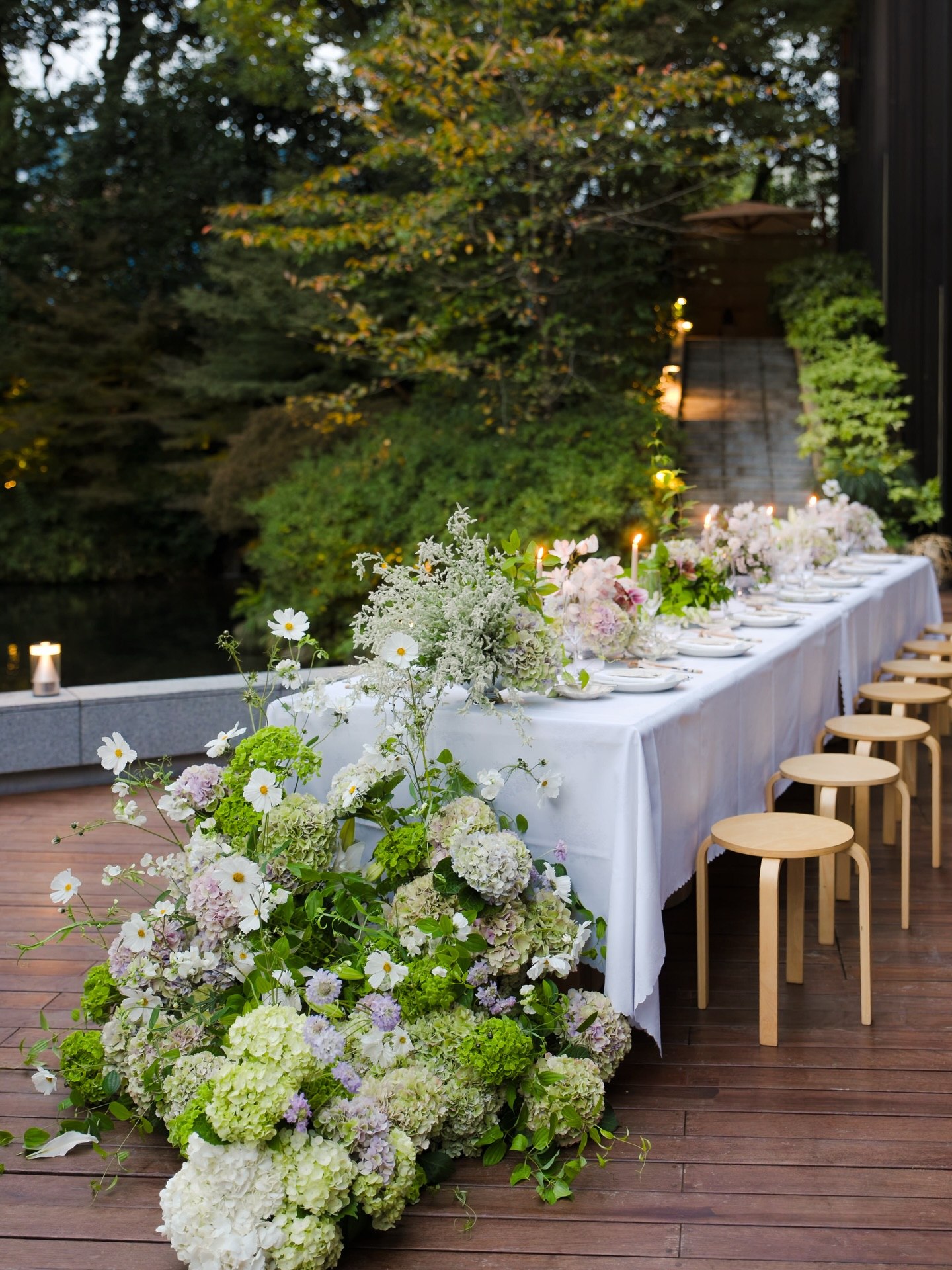
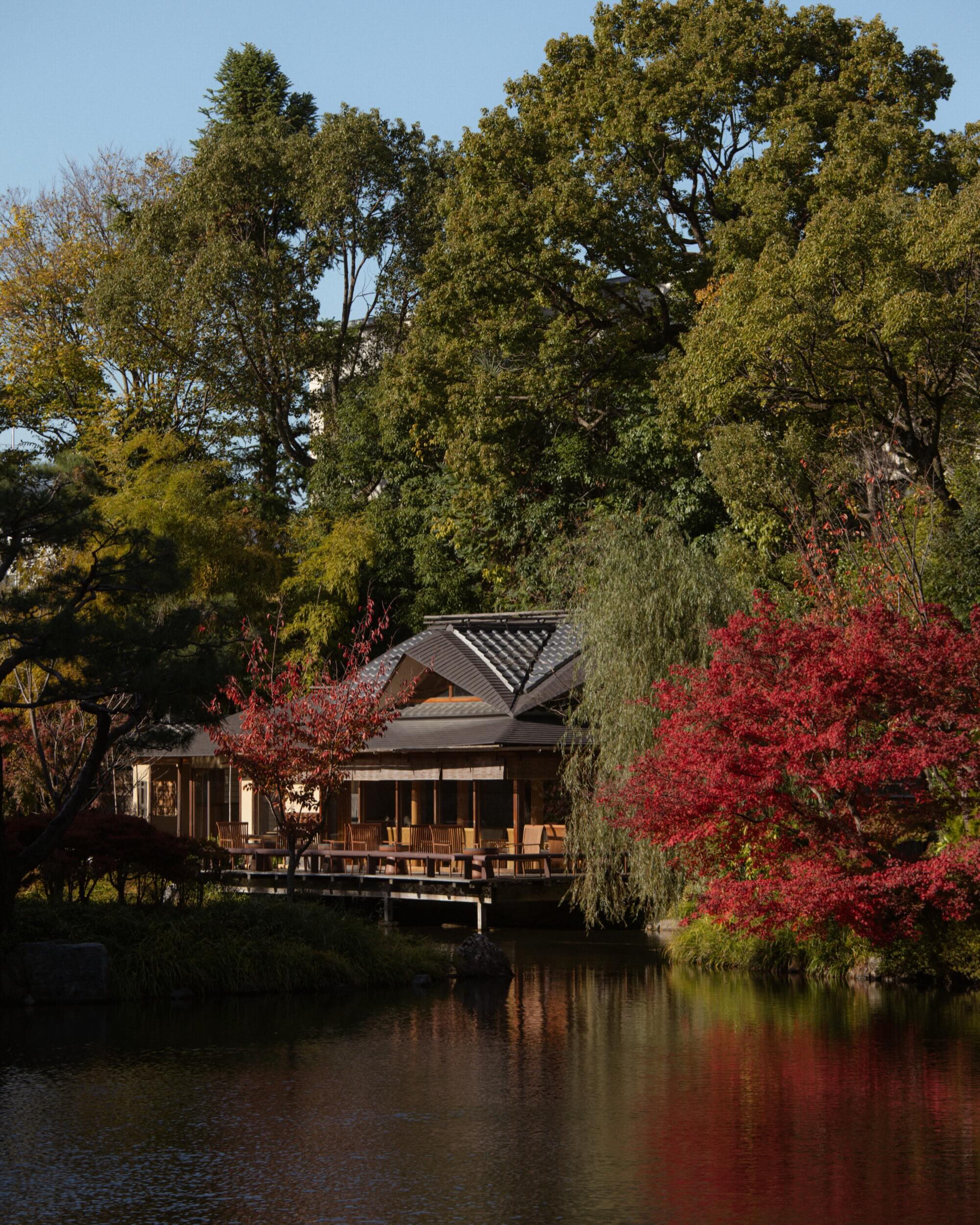
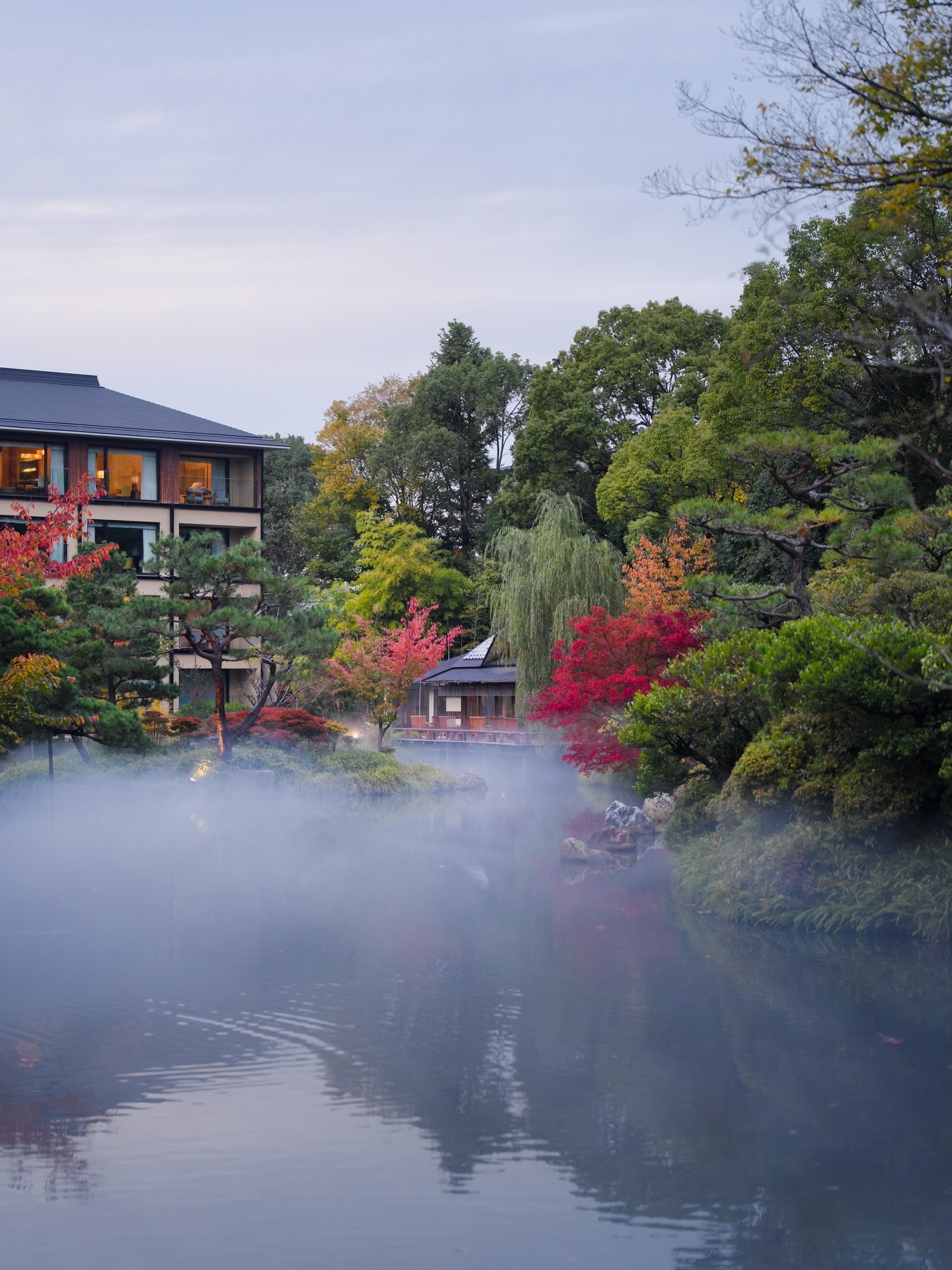
Shakusui-en, the pond garden at the center of Four Seasons Hotel Kyoto, is about 800 years old and appears in The Tale of the Heike. This means the garden was already a setting worth writing about centuries before anyone thought to hold a wedding beside it. The ceremony takes place in a bamboo chapel that's lit up by natural light, with bamboo stalks swaying all the way from the floor to the ceiling. Up to 100 guests can watch from inside, and then the party moves outside to the pond, which is lit up in a way that makes 800 years of history feel super close.
The reception area unfolds in a tea house–style ballroom with 569 square meters of flexible space, finished with Nishijin silk - a textile tradition Kyoto has been perfecting for a long time, even before this hotel was around. A one-hour chapel ceremony for up to 100 guests starts around $4,200, with additional hours priced on top. This makes it easier to understand what is otherwise one of the more abstractly beautiful ceremony settings in the city.
Shakusui-en stands out from Kyoto's other historic gardens because the hotel hasn't had to do much to maintain it. The pond hasn't been redesigned to suit modern weddings - the modern wedding has simply been built to suit the pond, chapel and ballroom. These buildings have been around for eight centuries, and they're oriented around water and stone rather than the other way around. It's a subtle difference, but it makes a big difference in how a garden is used. It's the difference between a garden that's just a backdrop and one that's still the heart of the property.

Rosewood Miyakojima
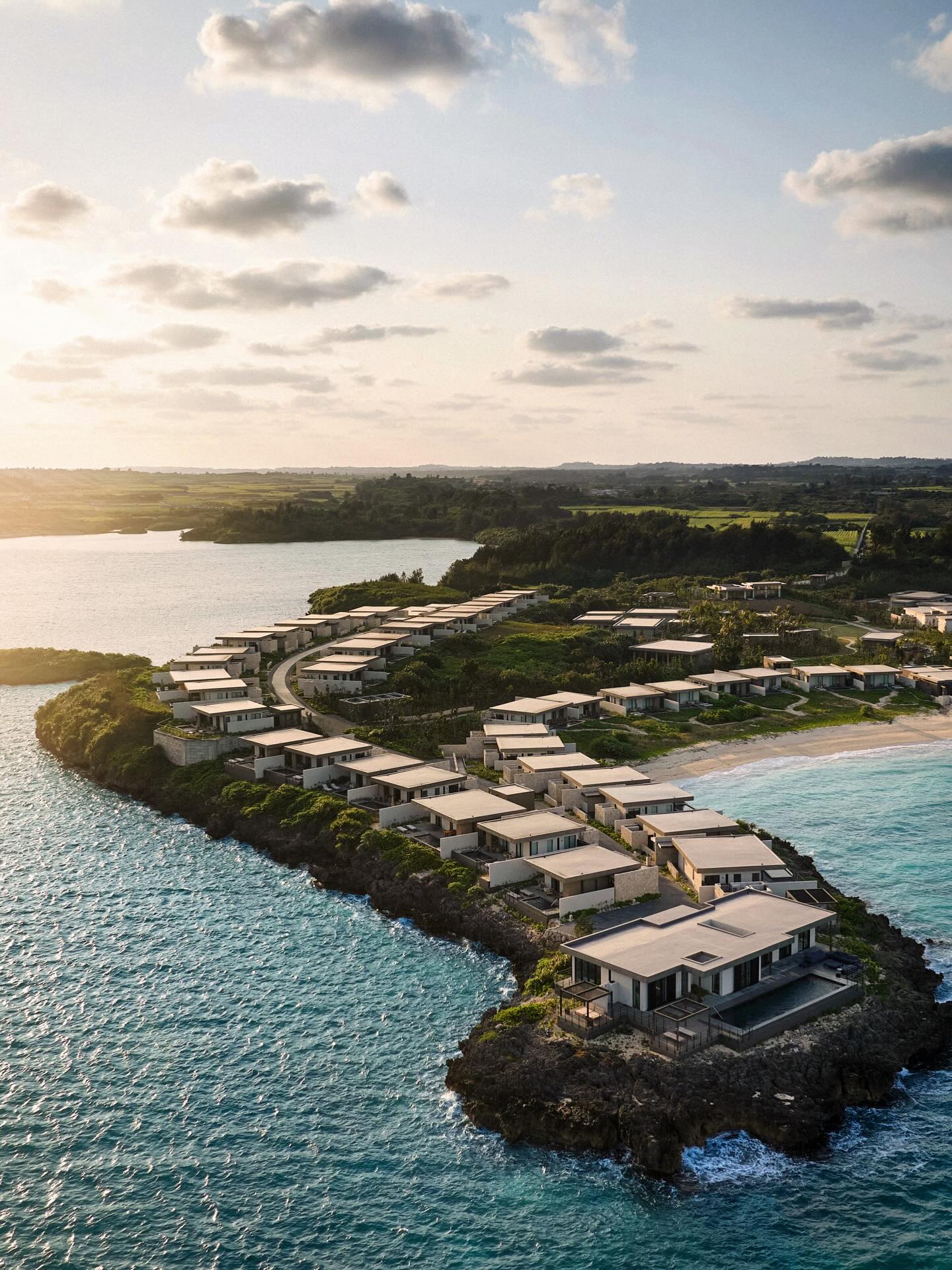
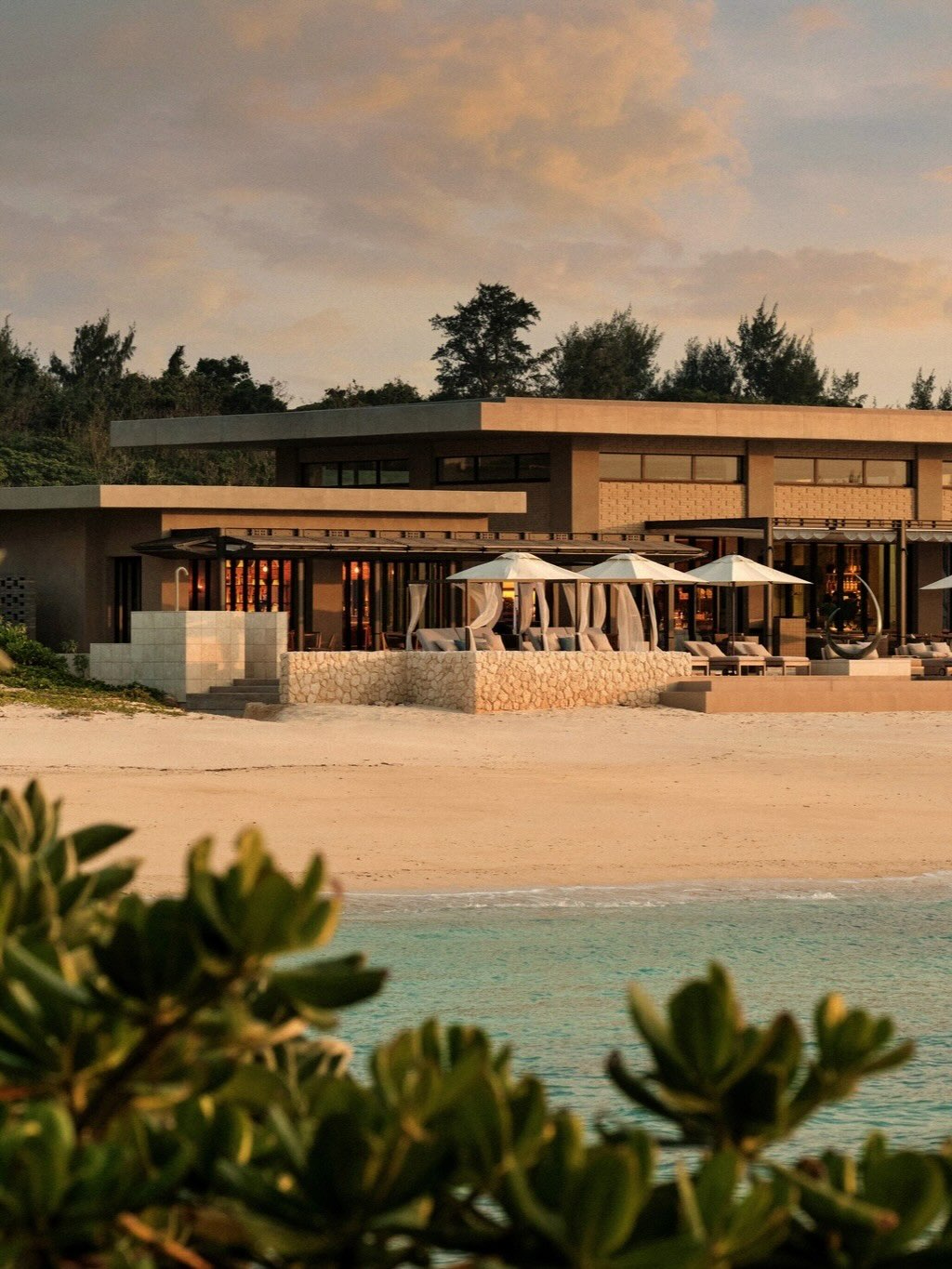
Every place on this list is in a city with a long wedding history, except for this one. Rosewood Miyakojima opened in March 2025 on Miyako Island. It was the first Rosewood property in Japan, built by the Dutch architecture firm Studio Piet Boon right into the island's sugarcane fields and along the coastline, overlooking Oura Bay. The buildings are low-key and blend in with the natural surroundings, which is perfect for an island that the local Ryukyu people have always called the "Island of Prayers." The resort's private oceanfront pavilion, the place set up for ceremonies and receptions, makes a quiet case for why that name still holds.
- Ceremony space: private pavilion right over the ocean
- Accommodations: 55 villas and houses, including three houses that are over 200 m²
- In-site amenities: infinity pool, an Asaya spa, and four restaurants serving Japanese and international cuisine
- Setting: on North Miyako Island, right by Oura Bay with direct beach access
There aren't any competing hotels of the same size anywhere near this part of the island, which gives a wedding here a kind of isolation that Kyoto and Tokyo simply can't offer. With the ocean as the only real audience, rather than a backdrop shared with centuries of other ceremonies held in the same room, this place is really something special. If you're a couple looking for a place that captures Japan's beauty without its historical weight, this is probably the best option in the country right now. It's unique in that it's still writing its own story instead of following someone else's.
Japan's got a ton of options for wedding venues - from countryside ryokans to smaller shrine-affiliated halls in Kyoto and Osaka, and properties that are just starting out, like Rosewood Miyakojima. Check out Wezoree's handpicked selection of venues all over Japan. Use the filters to narrow it down by region, capacity, and vibe. You'll be able to find the perfect place that actually matches your vision.

FAQ
What is the best time of year to get married in Japan?
Cherry blossom season, from late March to April, brings in the biggest crowds and the busiest calendars, especially around Kyoto. In second place is November, when maple leaves turn the same gardens red and gold and are easier to find. Summer brings heat and humidity, which make outdoor ceremonies harder to plan around in both Tokyo and Kyoto.
How far in advance should we book a wedding venue in Japan?
Well-known Kyoto properties like The Westin Miyako Kyoto and Four Seasons Hotel Kyoto tend to be fully booked 12 to 18 months in advance for cherry blossom or autumn dates. Rosewood Miyakojima is still pretty new on the market, and it's got more breathing room right now. But that's probably going to change as more couples find out about it.
Can foreign couples legally marry at these venues?
Not usually on-site. For foreign nationals, legal marriage is handled through a local ward office, separate from wherever the celebration is being hosted. Most international couples handle the paperwork at home and see the Japan ceremony as just a symbol. This doesn't change how the day actually looks. It's always best to confirm the exact legal status with each property directly.
Do we need a wedding planner for a venue in Japan?
None of these five require one, but couples planning from abroad tend to benefit from having someone local involved - language, vendor coordination, and getting between Kyoto's hillside venues are all easier with someone who already knows the layout.
Which of these venues suit smaller, more intimate weddings?
Four Seasons Hotel Kyoto's bamboo chapel tops out at 100 guests. Seiryuden Temple works comfortably from 30 guests up. And Rosewood Miyakojima's oceanfront pavilion, given the resort only has 55 villas total, naturally leans toward smaller guest lists rather than large receptions.
What is the price range for these venues?
It varies a lot by scale and season. Four Seasons Hotel Kyoto's chapel ceremony starts around $4,200 for up to 100 guests, with extra hours priced separately. Larger properties like Hotel Chinzanso Tokyo and The Westin Miyako Kyoto price per guest and by hall size, and costs climb fast once you're looking at their largest spaces. Rates shift with season and headcount, so it's worth confirming directly with each property rather than budgeting off a single number.