Muslim Groom Attire Guide


- The Sherwani - The Gold Standard of Muslim Groom Wedding Attire
- The Bisht - Royal Ceremony Cloaks and When to Wear One
- Kurta Pajama - The Elegant Alternative for Modern Grooms
- Regional Traditions - From South Asian to Arab to West African Muslim Groom Attire
- Colors, Fabrics, and Embroidery - Making the Right Choice
- Accessories That Complete the Look - Pagri, Kulla, Mojri, and More
- FAQ
The bride gets a mood board. The groom gets his uncle's opinion and a deadline for an answer. That's the imbalance. A Muslim groom's attire carries as much cultural significance as anything the bride will wear, but it's rarely treated that way. The Muslim groom's attire on his wedding day is a cultural statement, the result of family negotiations, and sometimes the outcome of an argument that began in a group chat three months ago. This guide exists to provide that argument with better material.
Find Your Perfect Wedding Vendors

The Sherwani - The Gold Standard of Muslim Groom Wedding Attire
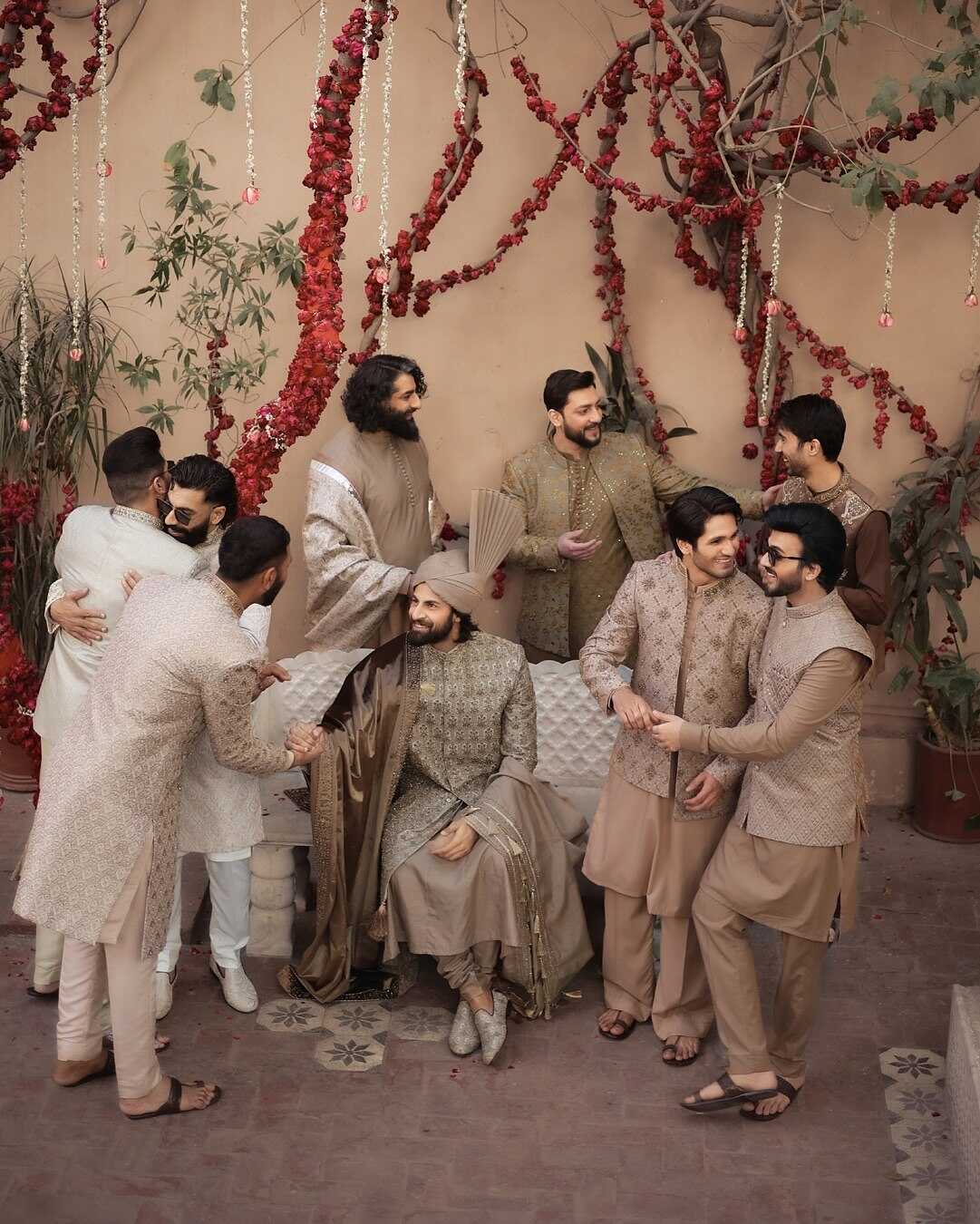
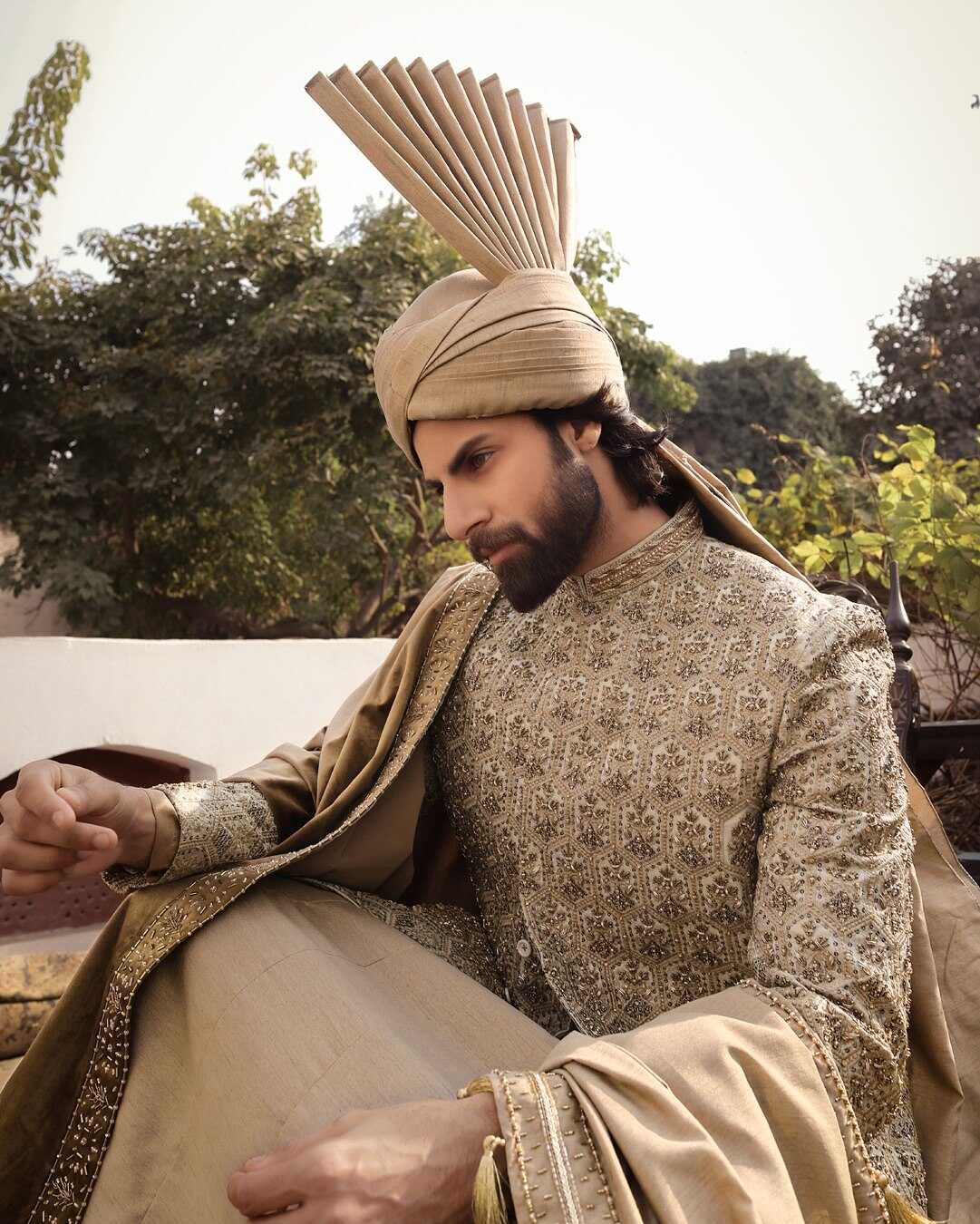
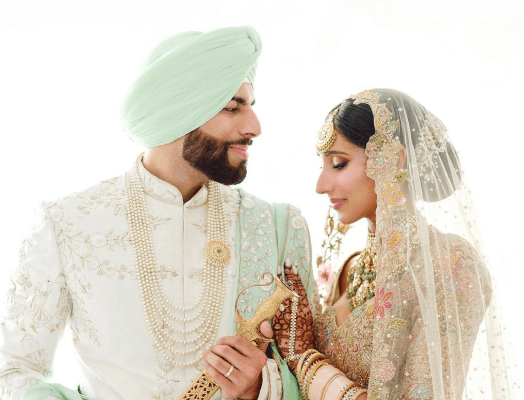
The collar buttons all the way down to the hem. Worn over churidars or salwars. Six hundred years of South Asian wedding history are folded into this single coat. The sherwani arrived with the Mughals and never left. This is not a testament to tradition for tradition's sake, but rather, a testament to the fact that nothing else in the Muslim wedding groom's wardrobe has managed to replace it. That's a different kind of staying power.
The category actually contains not one garment, but many. There's an ivory raw silk Nikah sherwani with embroidery only at the cuffs - restrained, formal, and correct. There's also a walima sherwani in deep gold zardozi across the chest and shoulders with a dupatta draped over one arm. This one is celebratory, grand, and intentional. Same garment name. Completely different registers. The occasion determines the embellishment, not the other way around.
What to consider when choosing:
- Fabric: silk and raw silk for formal occasions; cotton blends and linen for warmer climates or outdoor ceremonies; velvet for winter weddings - the material photographs beautifully in low light and reads as genuinely luxurious rather than trying to be
- Embroidery: zardozi (gold metallic thread) for maximum formality; resham (silk thread) for softer contemporary looks; minimal tone-on-tone when the goal is structure without ornamentation
- Color: ivory, cream, off-white - still the most consistently photographed choices. Deep burgundy, forest green, navy - for grooms who want contrast without abandoning formality. Black exists, works, reads as modern rather than rooted
- Silhouette: should skim, not pull. Hem below the knee is traditional. Mid-thigh is contemporary and reads younger - works well for receptions, less so for Nikah
The churidar is worn underneath. It's not an afterthought. It should be fitted, not baggy. It should either match exactly or contrast deliberately because a beautiful sherwani over a poorly fitting churidar is still an ill-fitting outfit from the knees down, and that shows in every photograph where the groom is seated.
The Bisht - Royal Ceremony Cloaks and When to Wear One
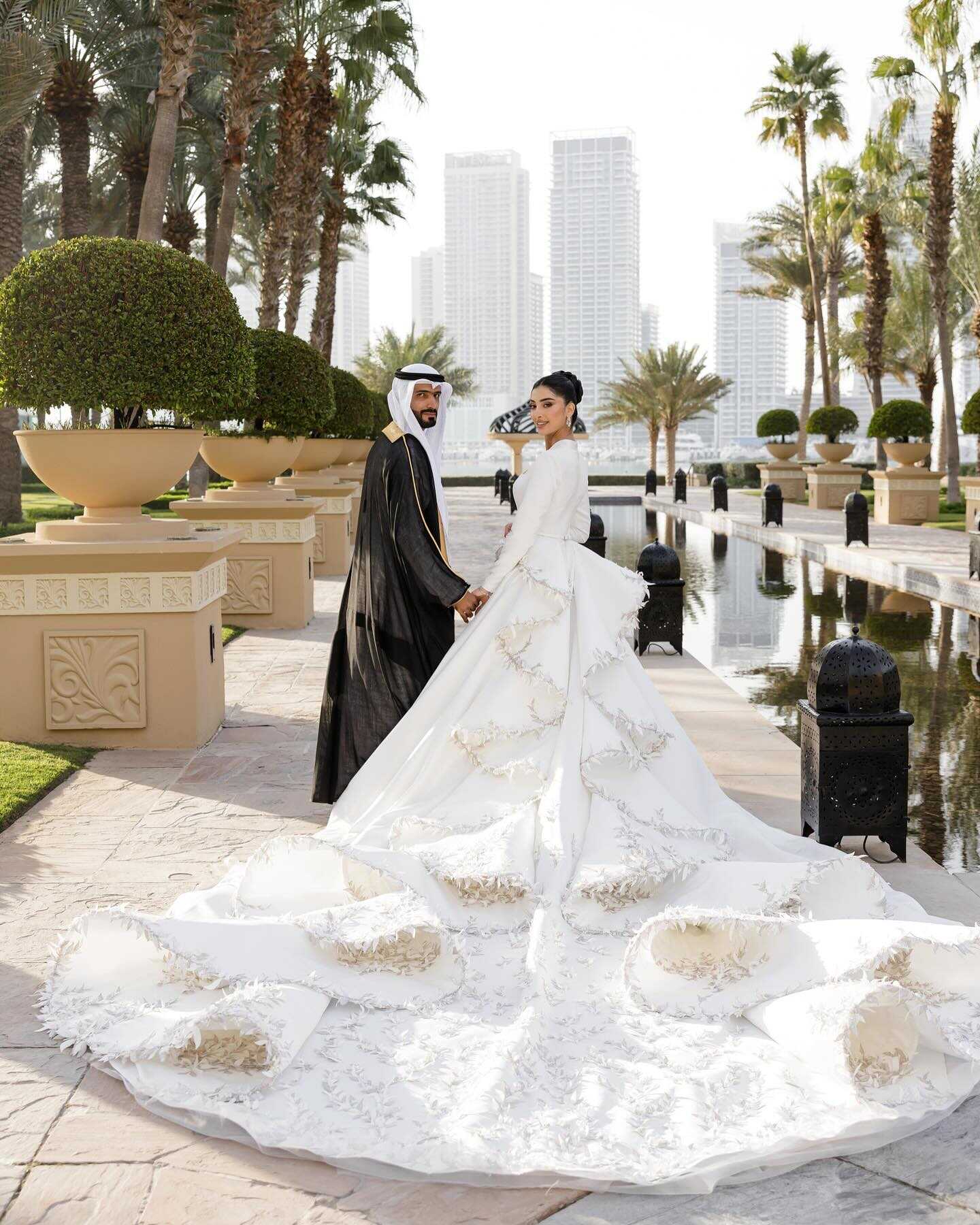
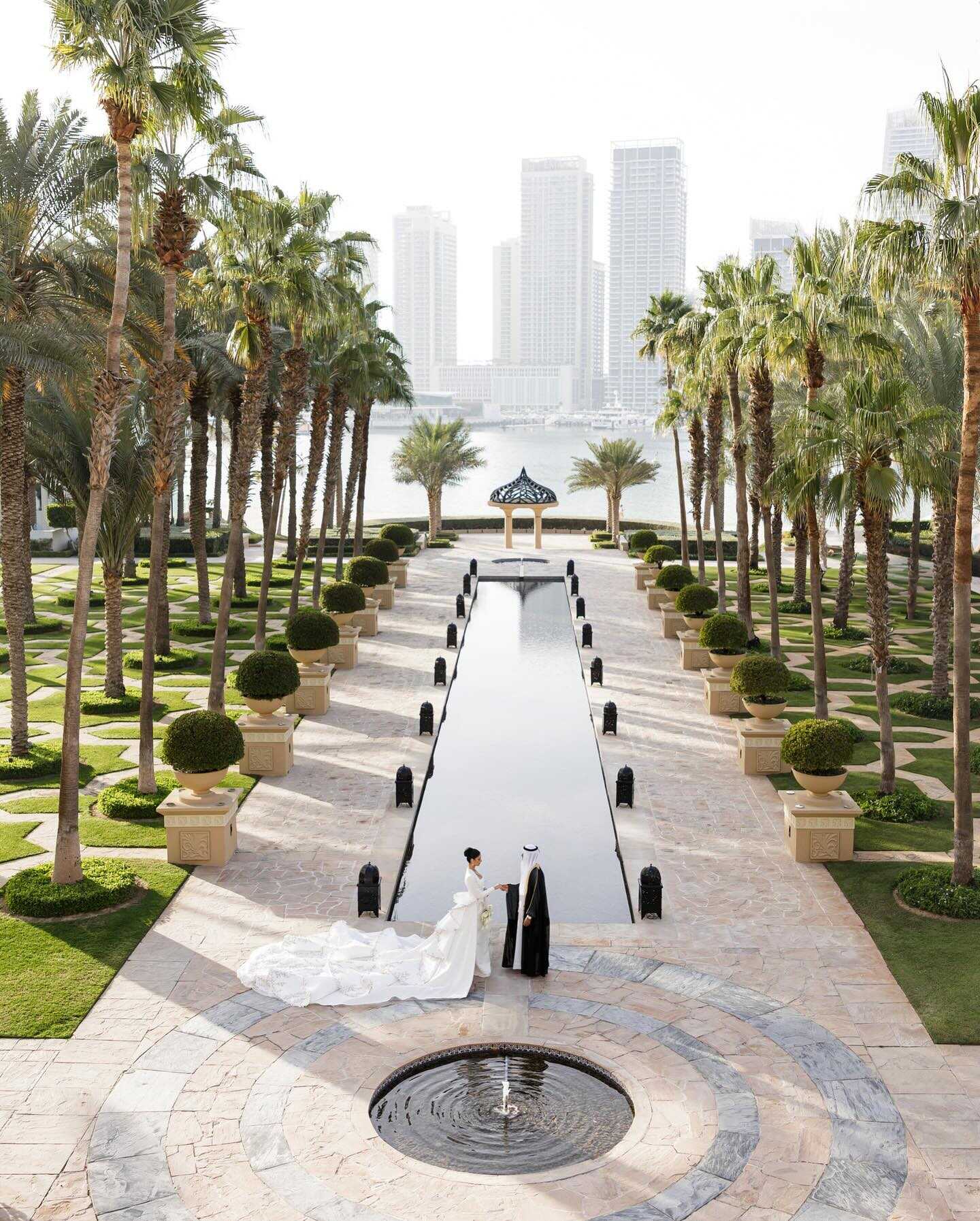
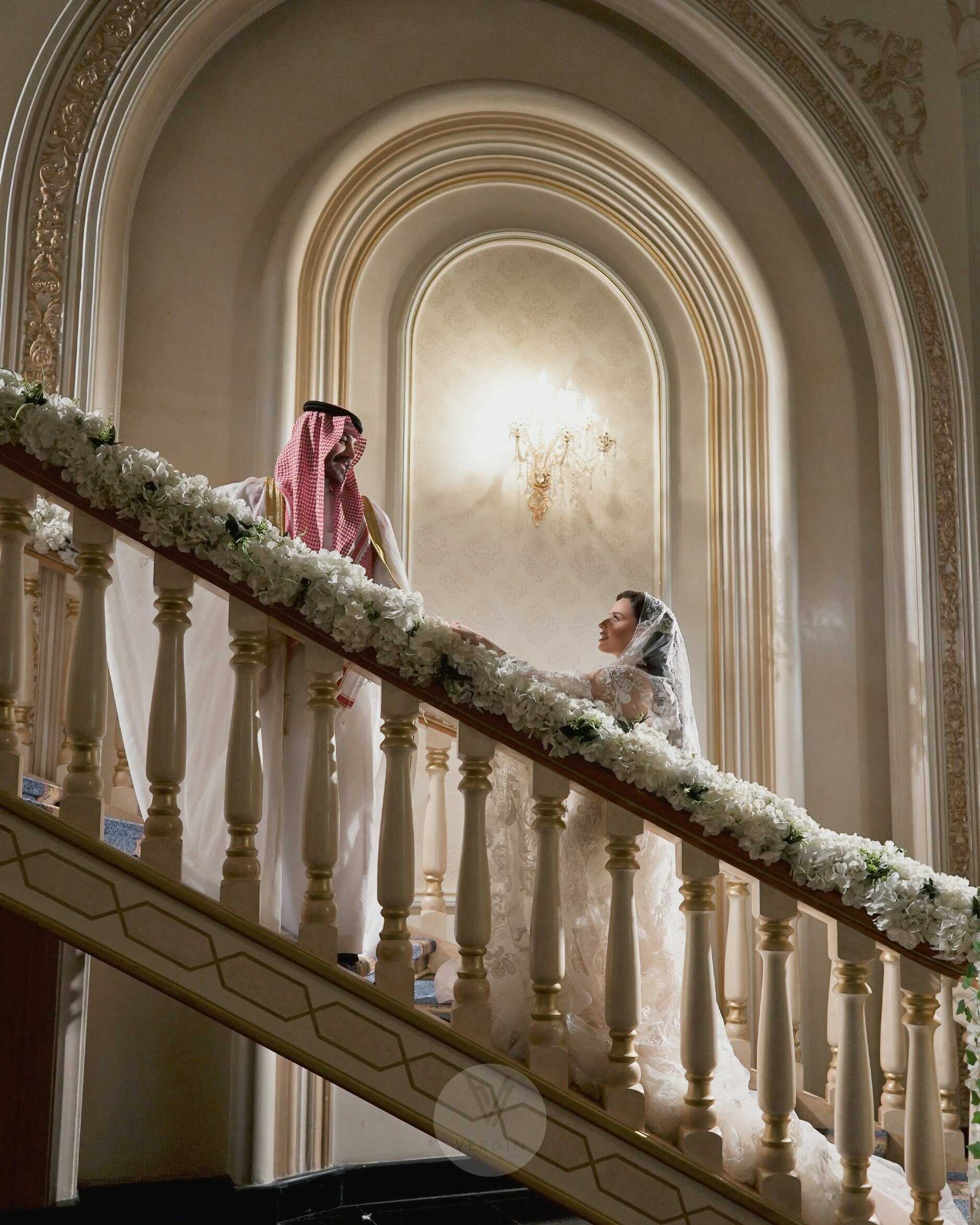
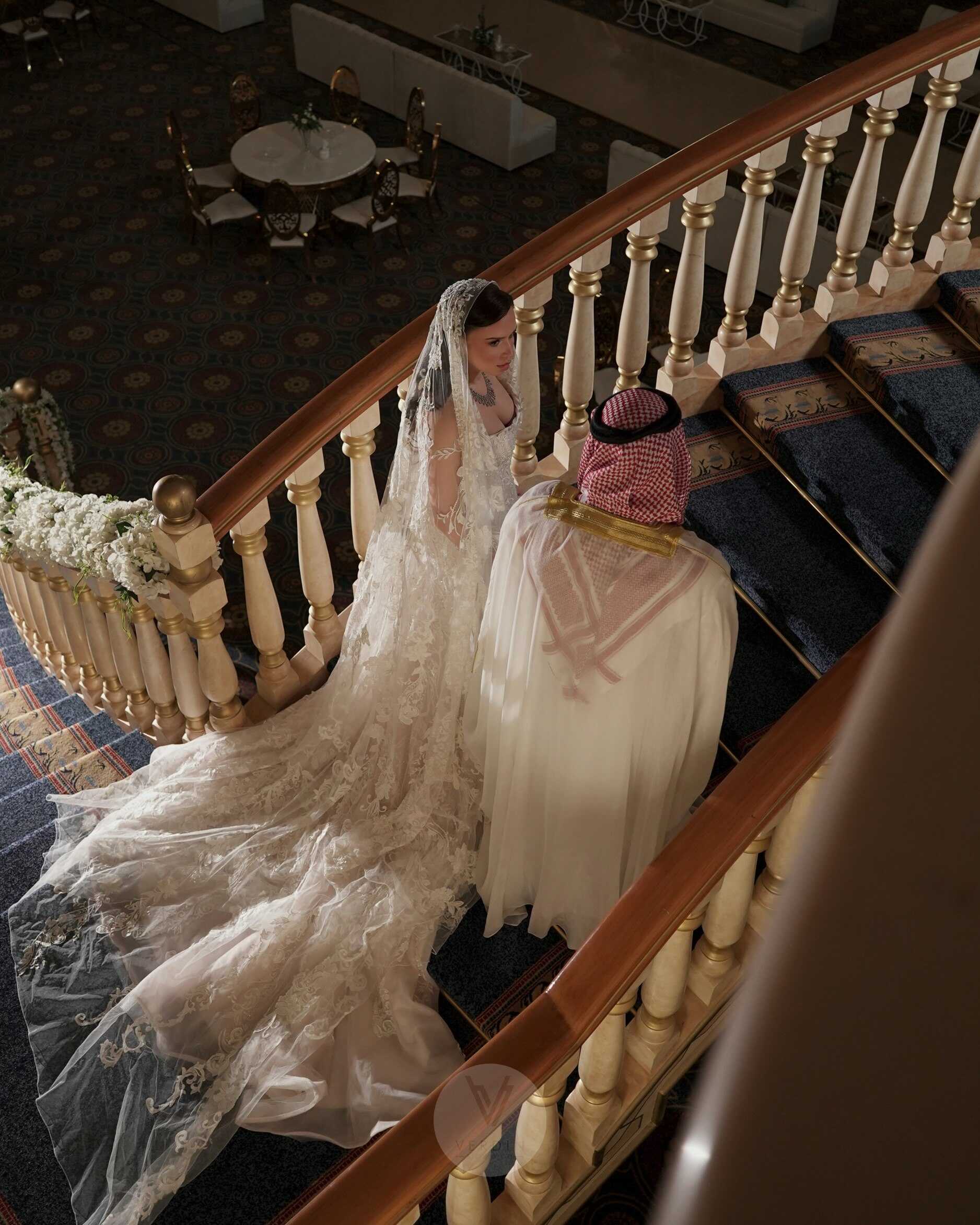
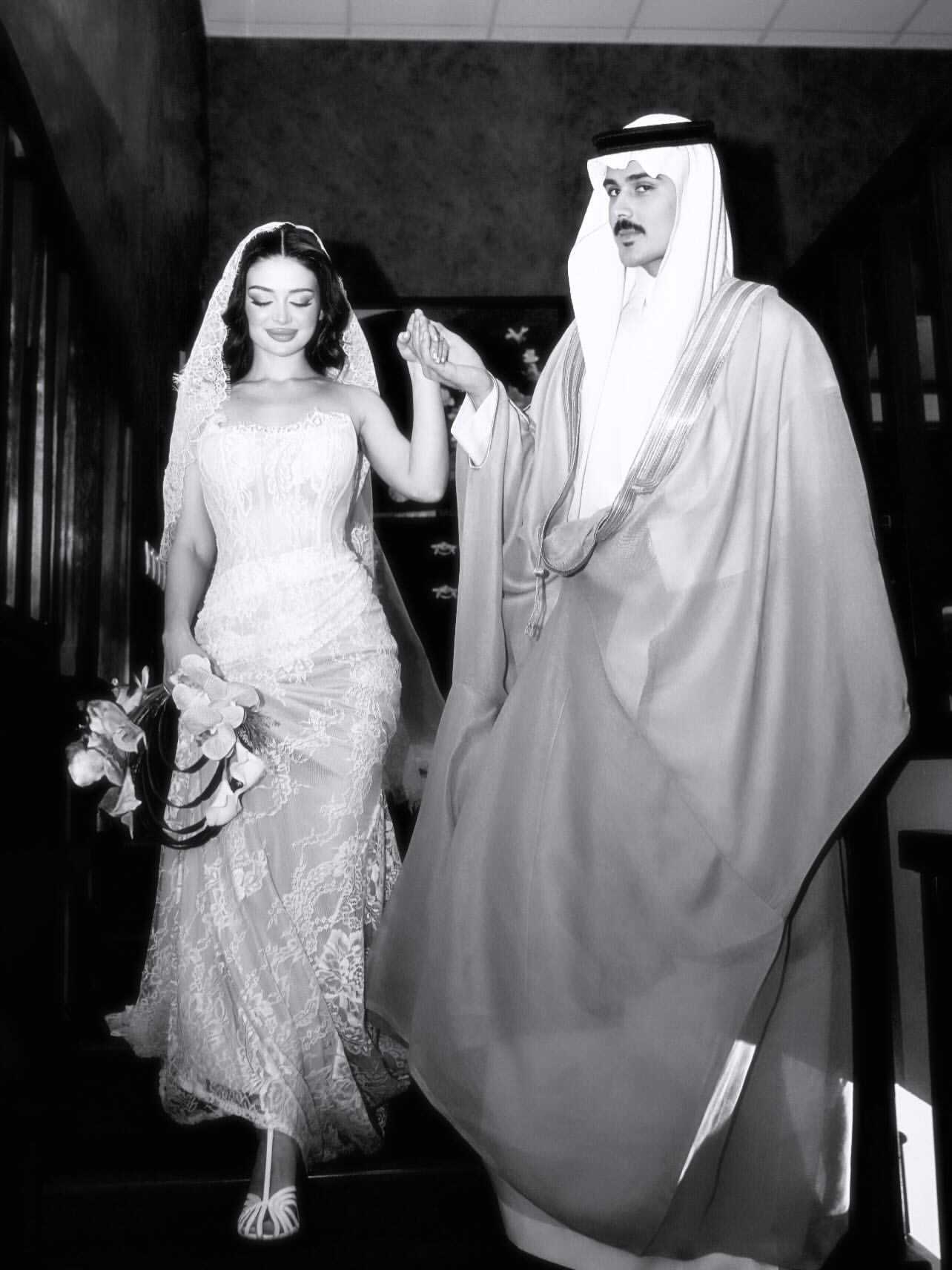
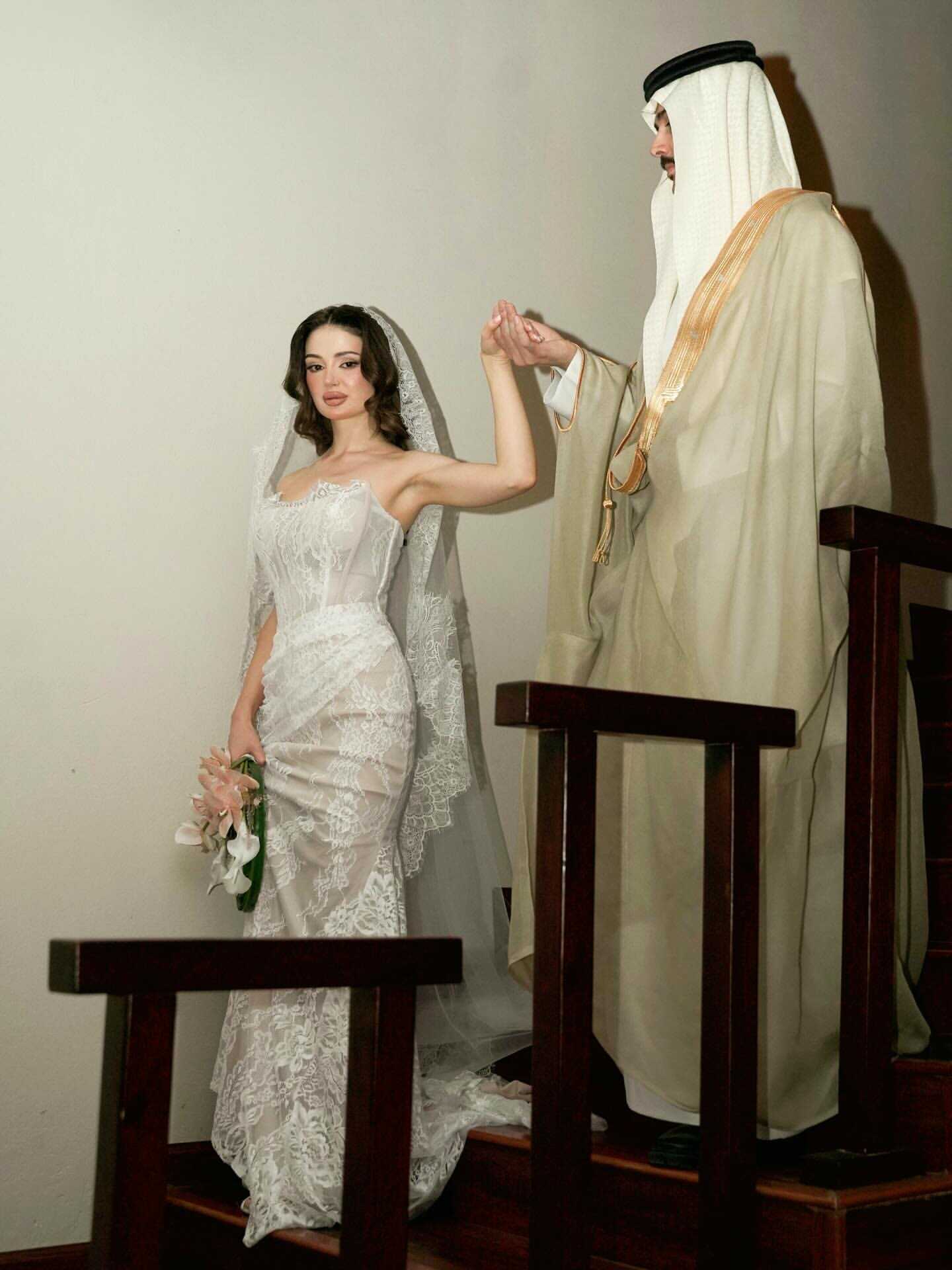
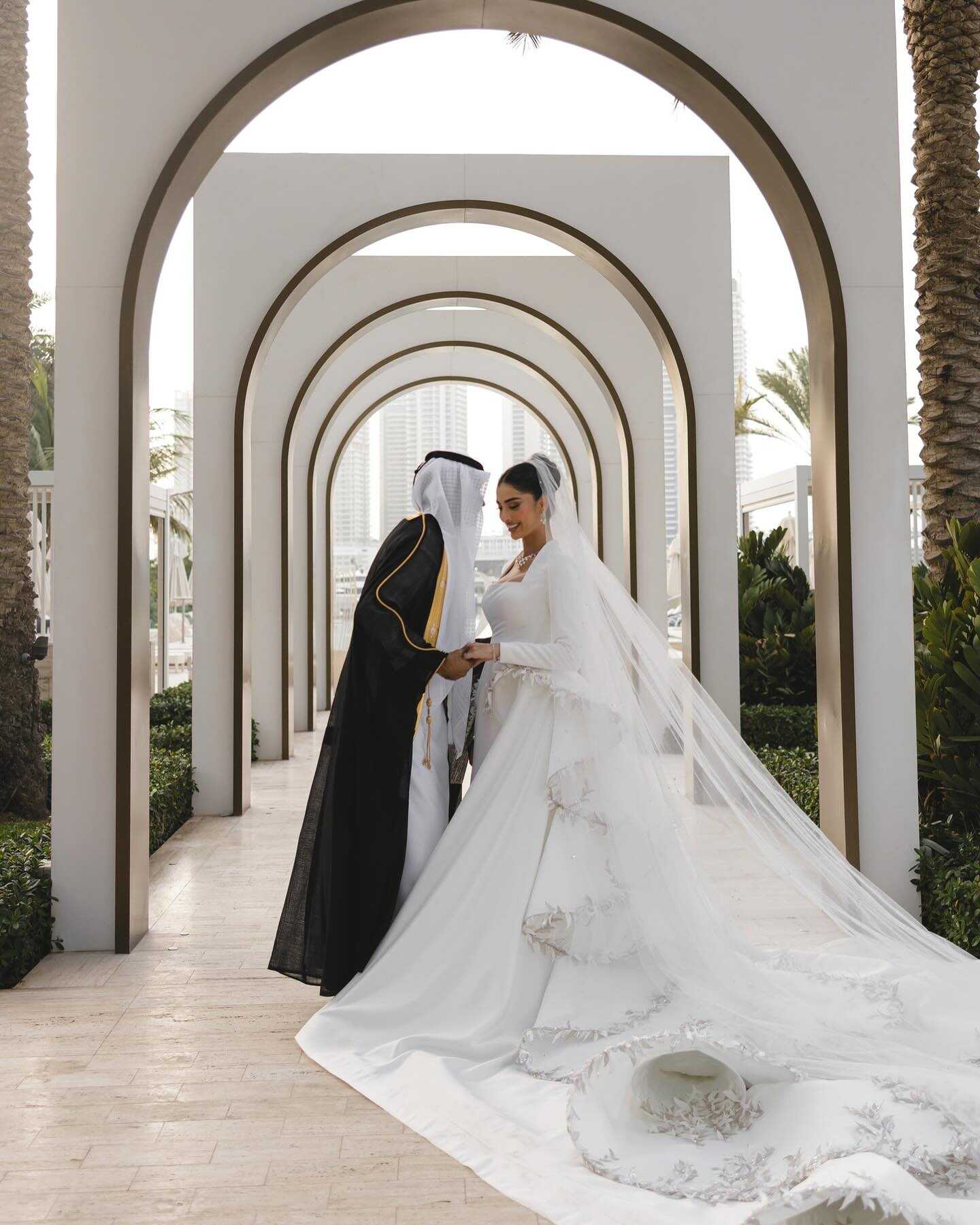
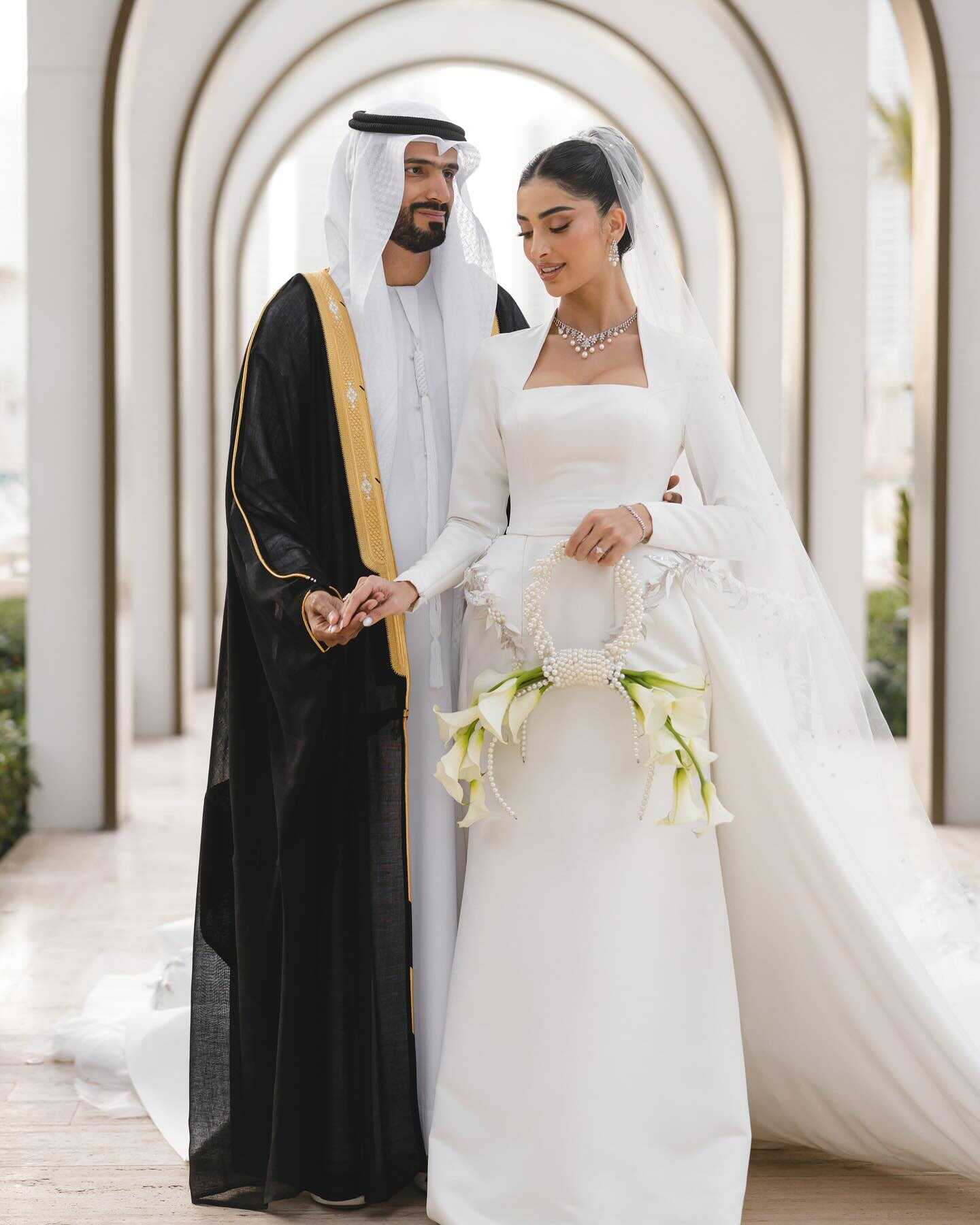
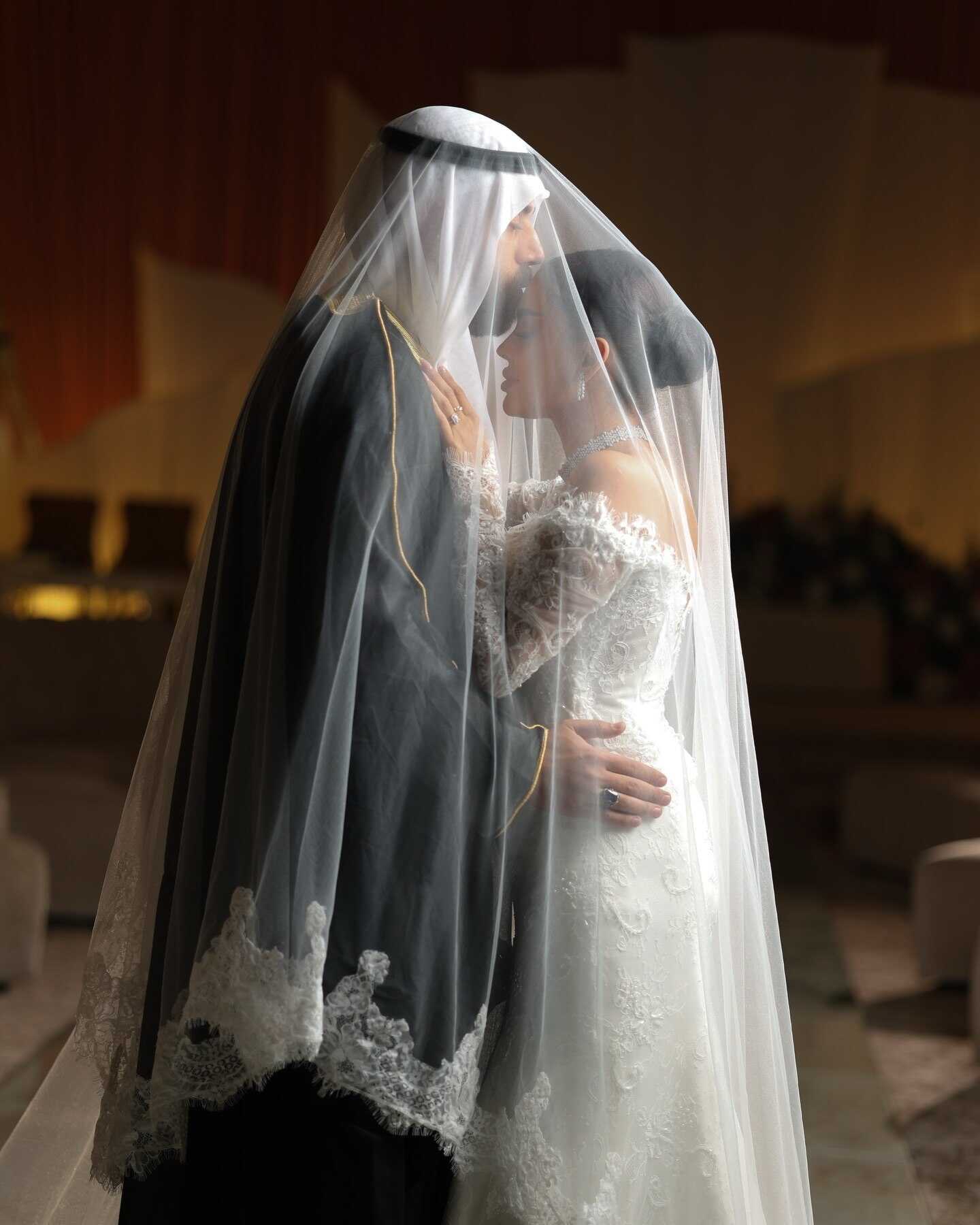
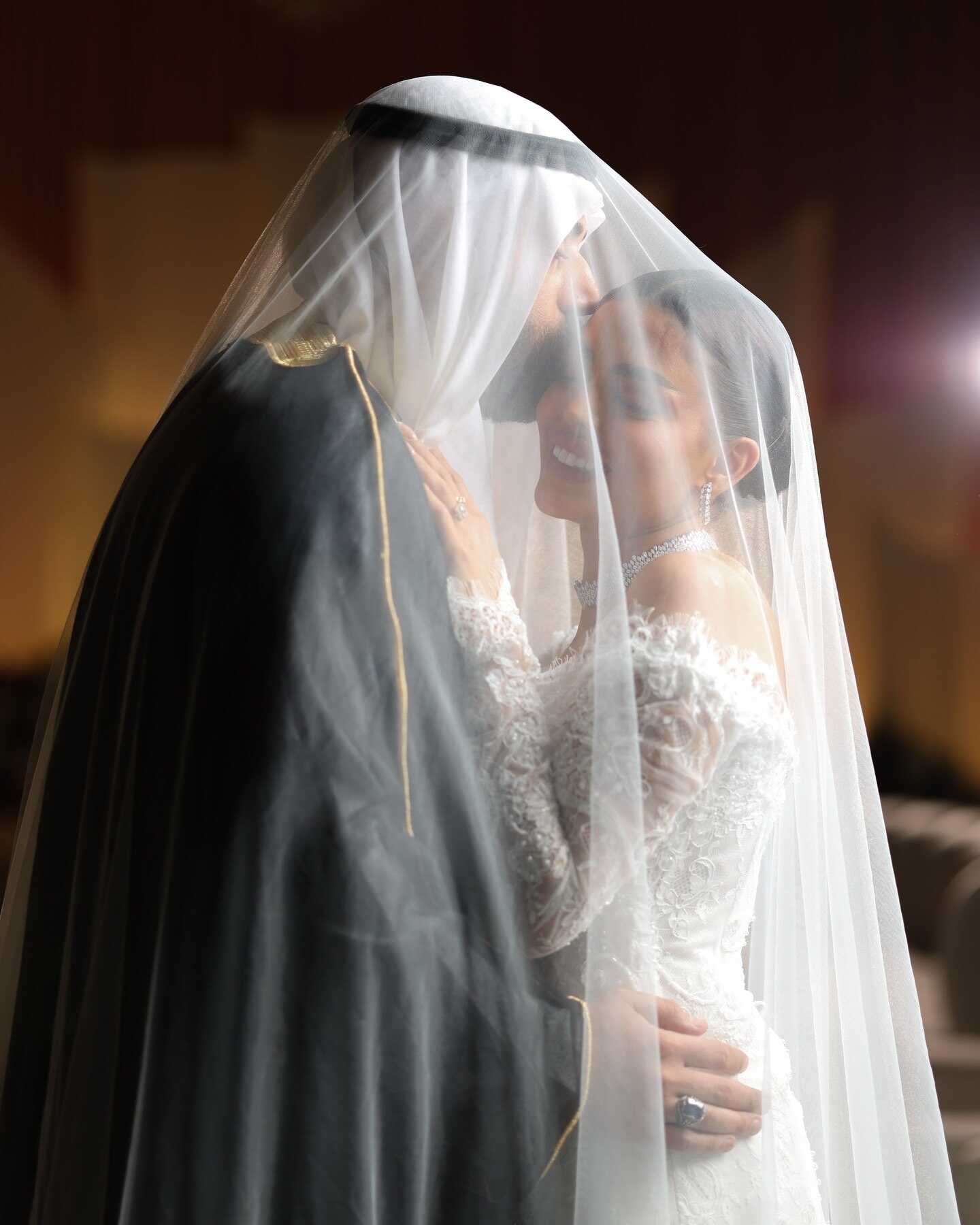
Nobody enters a room in a bisht quietly. That's the whole point.
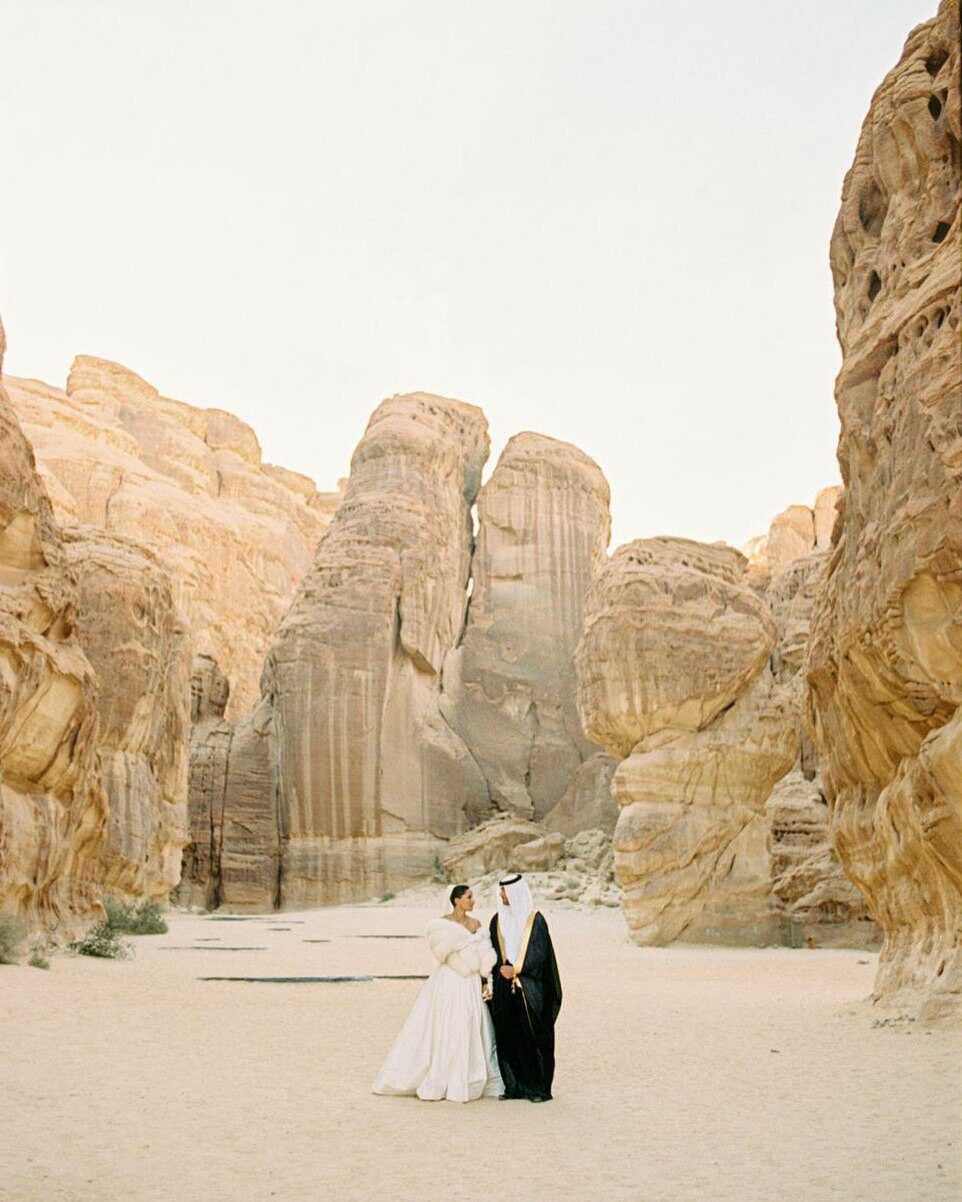
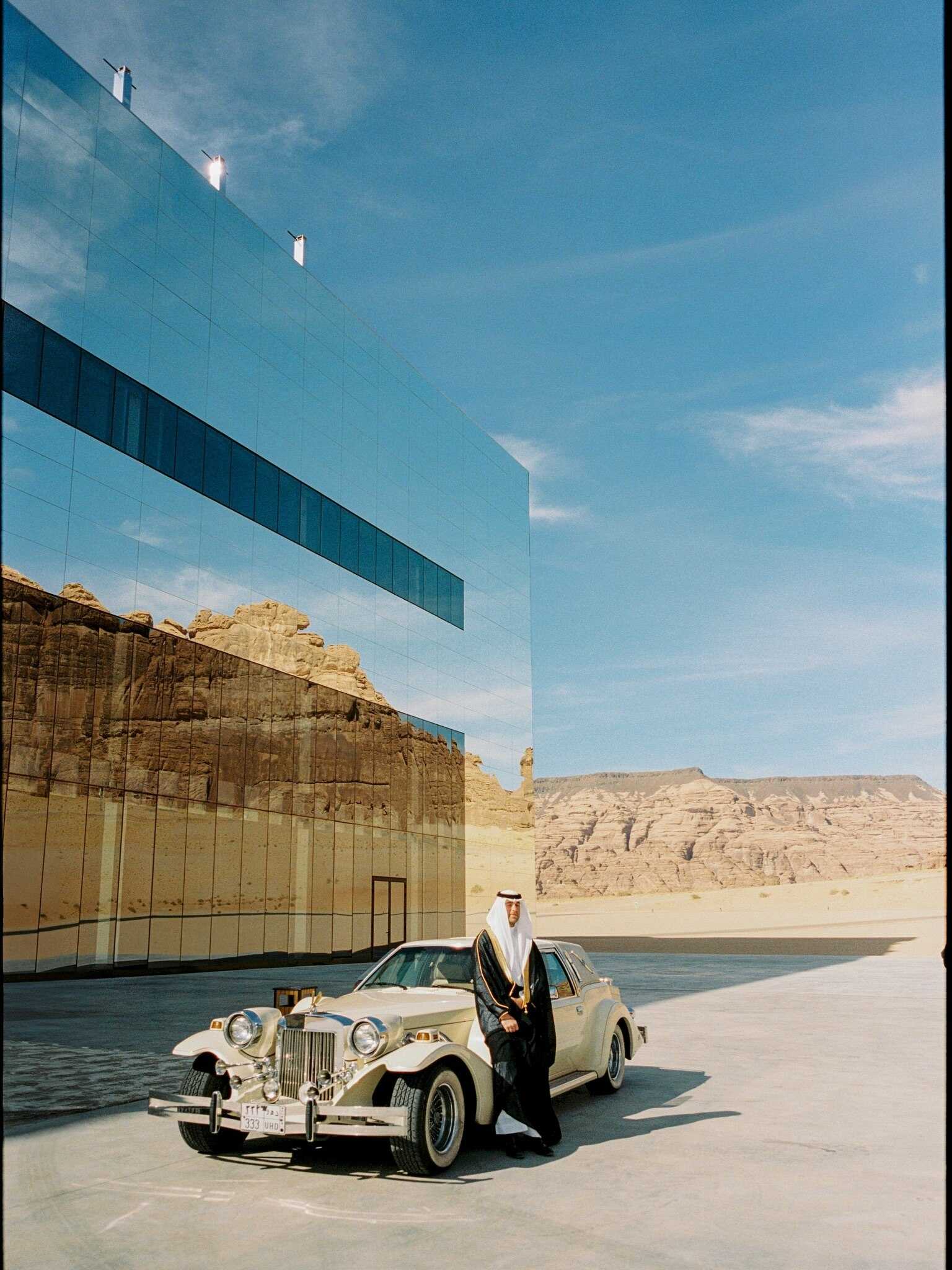
It's open-fronted. Flowing. It can be black or cream with gold along the edges. The bisht comes from a tradition where your clothing revealed your identity before you spoke - sheikhs, scholars, and men whose arrival changed the energy of a space wore it. None of that has changed. A groom walking into his wedding in a bisht doesn't need to explain the garment. The room already knows.
At Gulf Arab weddings, it is always worn over a white thobe. In places where South Asian and Arab traditions have mixed across generations, it is occasionally worn over a sherwani, which can look either considered or like a collision, depending on whether the embroidery levels of both garments are in conversation or competition. West African celebrations have the agbada's outer robe, which functions identically. It is ceremonial and voluminous and does not hide its presence.
Here's what needs to be said plainly: the bisht is not a universal option, and not every groom should wear one. A small, intimate wedding ceremony in a living room is not the right setting for it. It belongs at a wedding with two hundred guests, a formal entrance, and Gulf heritage in the lineage. If you're going to wear one, don't cut costs on the trim. Poorly finished gold edging does not read as ceremonial. It reads as a costume. This difference is apparent from across the room on the day of the event and in every photograph taken afterwards.
Kurta Pajama - The Elegant Alternative for Modern Grooms
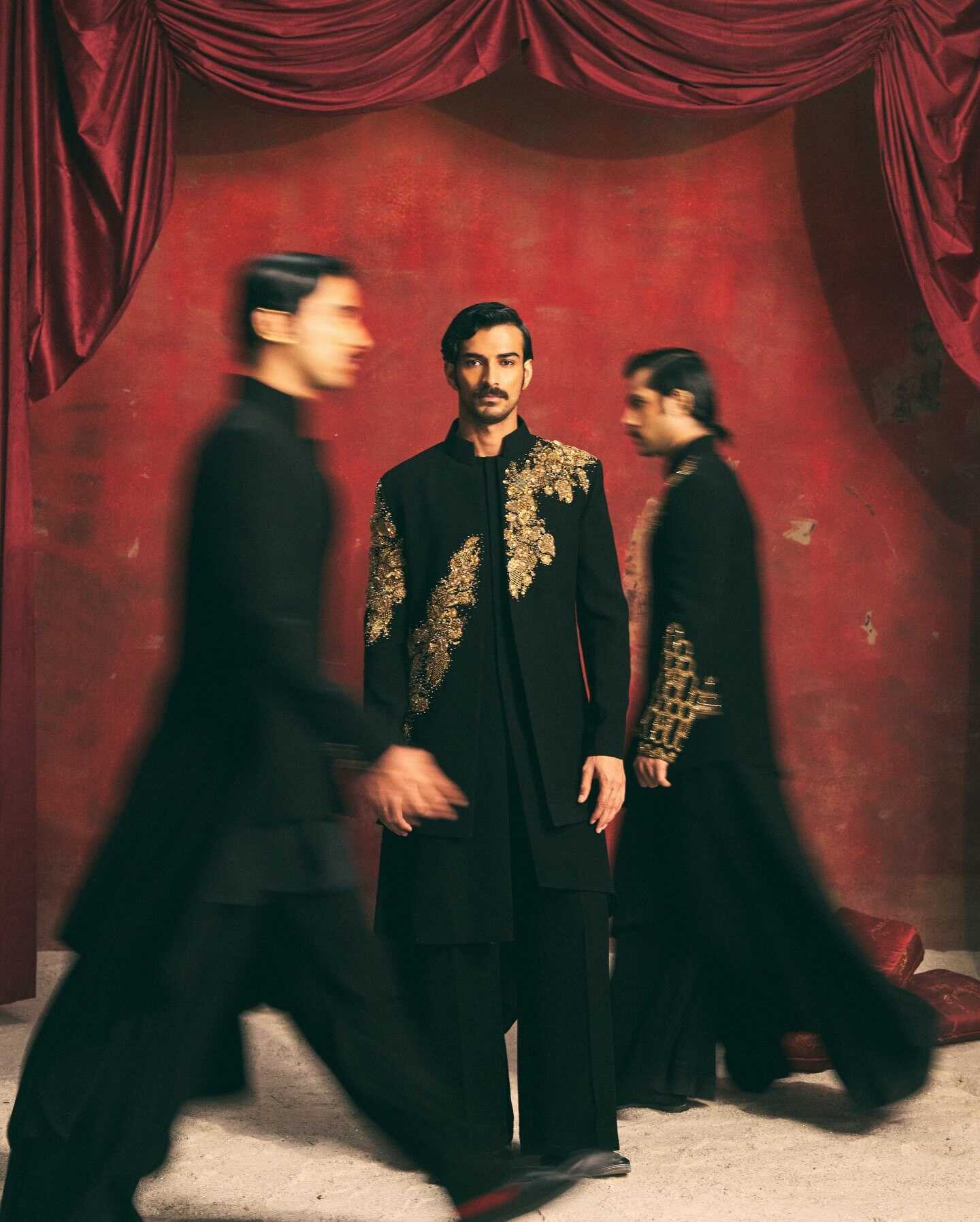
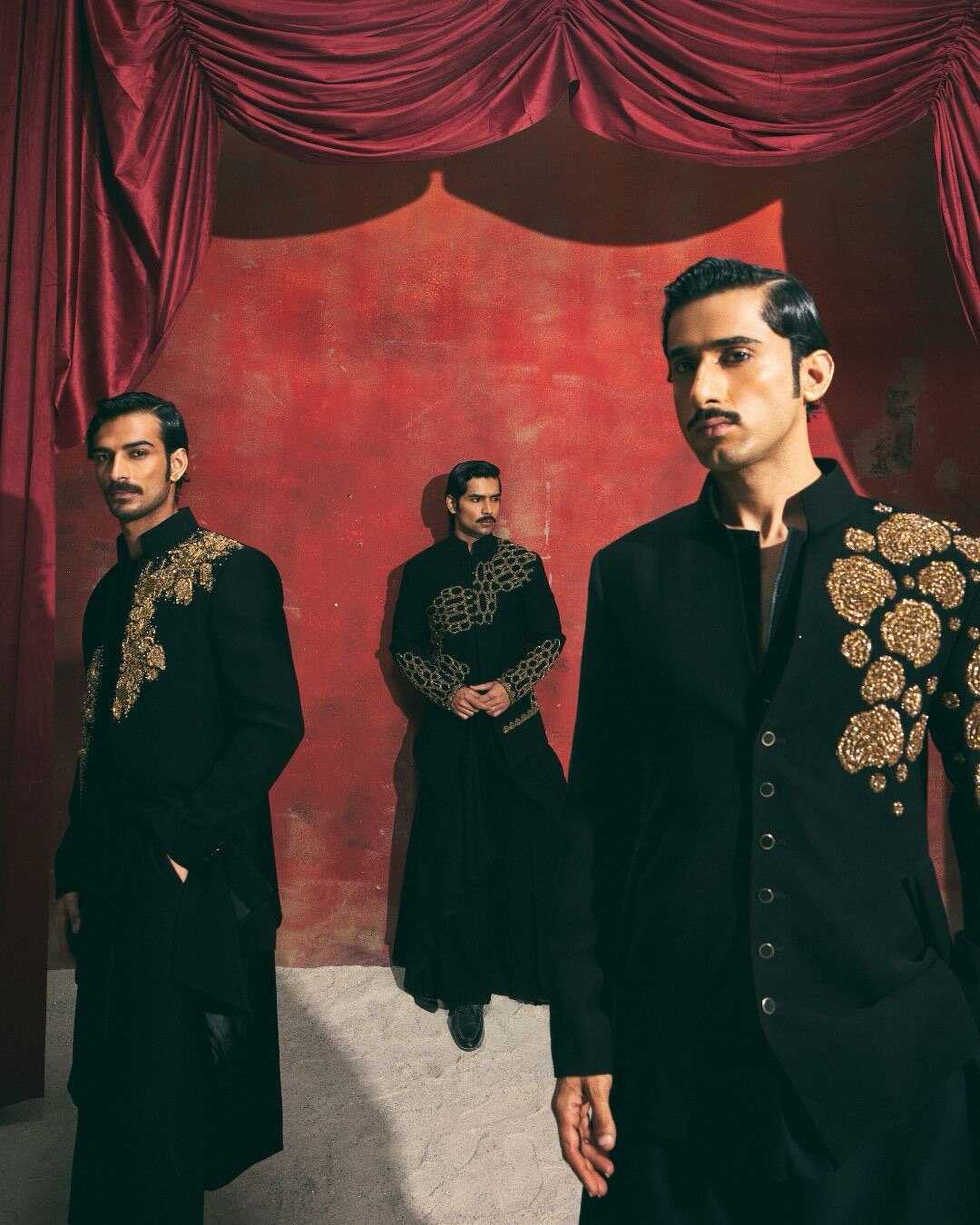
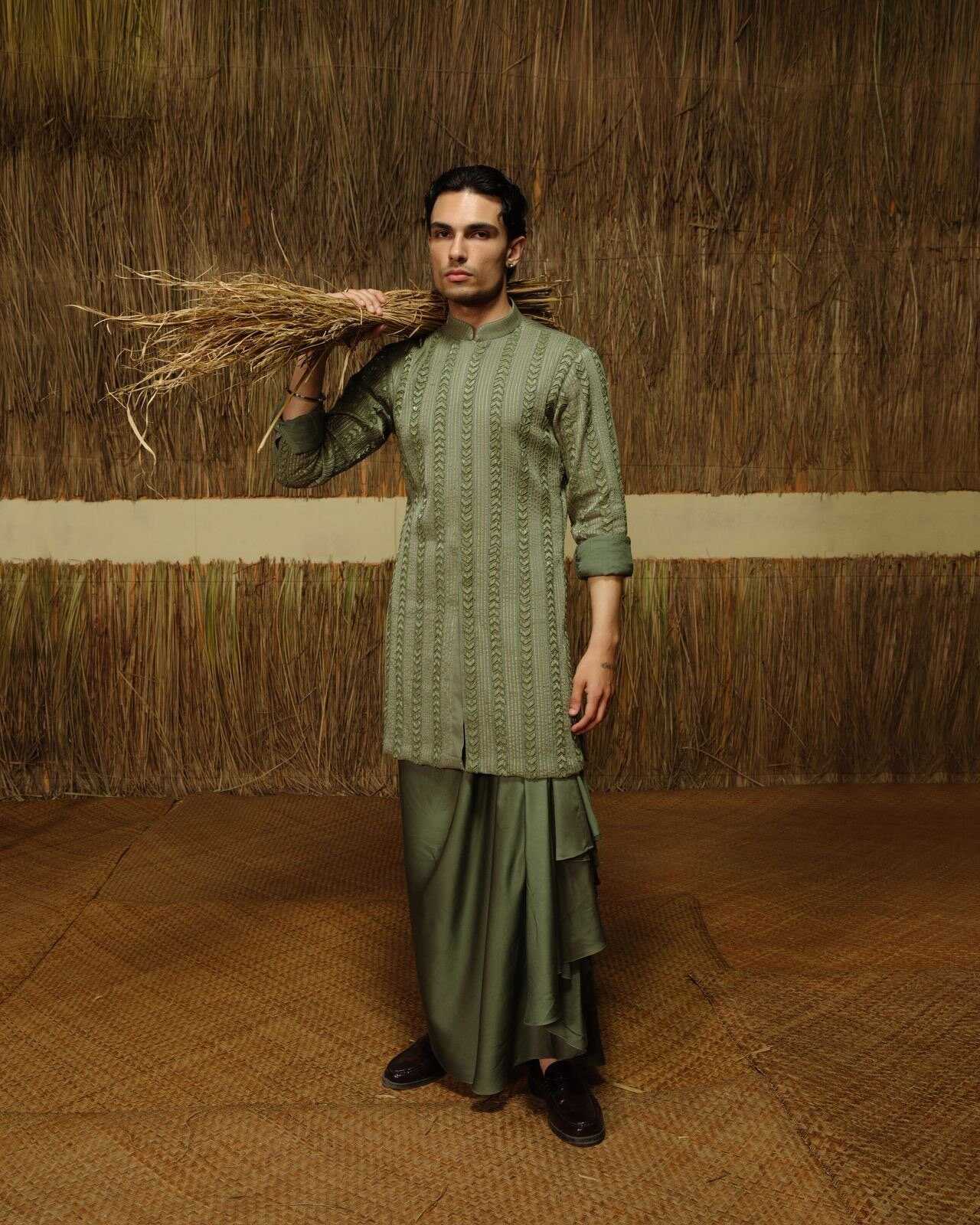
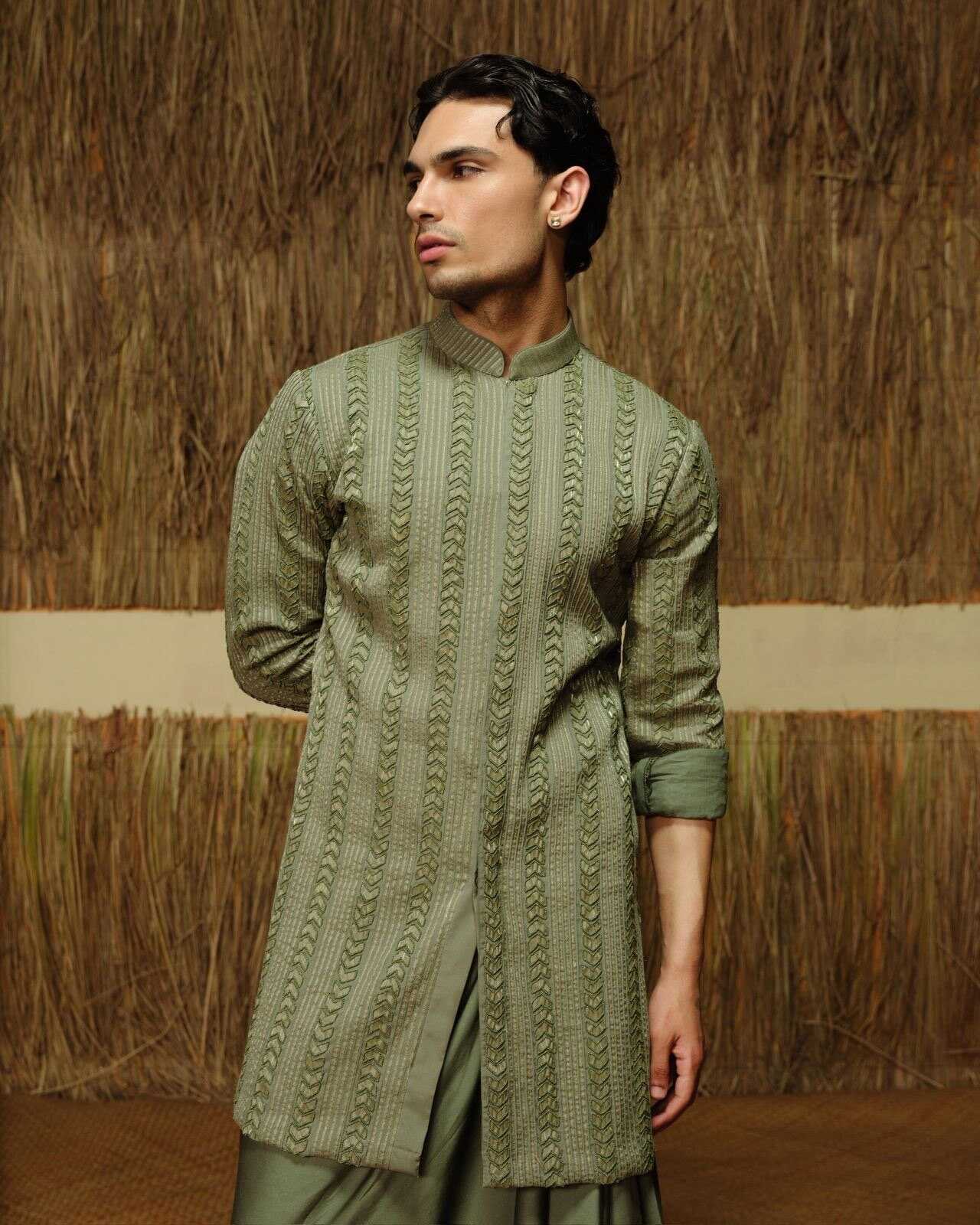
Sherwani isn't the only option. For some grooms, it's simply not the right choice. The kurta pajama, which consists of a long tunic and loose trousers and has considerably less ceremony attached to it, has its own formal register and is constantly underestimated.
A wedding kurta is not a festival kurta. This distinction matters, and photographs immediately expose it. For a Muslim groom, wedding attire at this level means chanderi silk, georgette, or fine cotton with an actual sheen - not flat cotton, which looks casual regardless of the occasion. It should fall below the knee. It should be tailored through the shoulders and chest. It should not be boxy. The fabric does half the work. The fit does the other half. Get either wrong, and nothing else about the outfit will recover.
| Sherwani | Kurta Pajama | |
|---|---|---|
| Formality | High to very high | Medium to high |
| Best occasion | Nikah, baraat, large walima | Intimate nikah, mehndi, reception |
| Fabric range | Silk, velvet, brocade | Cotton, chanderi, georgette |
| Embroidery | Often heavy | Minimal to moderate |
| Climate suitability | Better in cooler conditions | Works in heat |
| Modern appeal | Classic, traditional | Contemporary, relaxed |
A well-cut kurta made of rich fabric with minimal embroidery often looks more sophisticated than an overly embellished sherwani. Grooms who pull it off have usually made a clear decision and stuck with it. That clarity shows.
Regional Traditions - From South Asian to Arab to West African Muslim Groom Attire
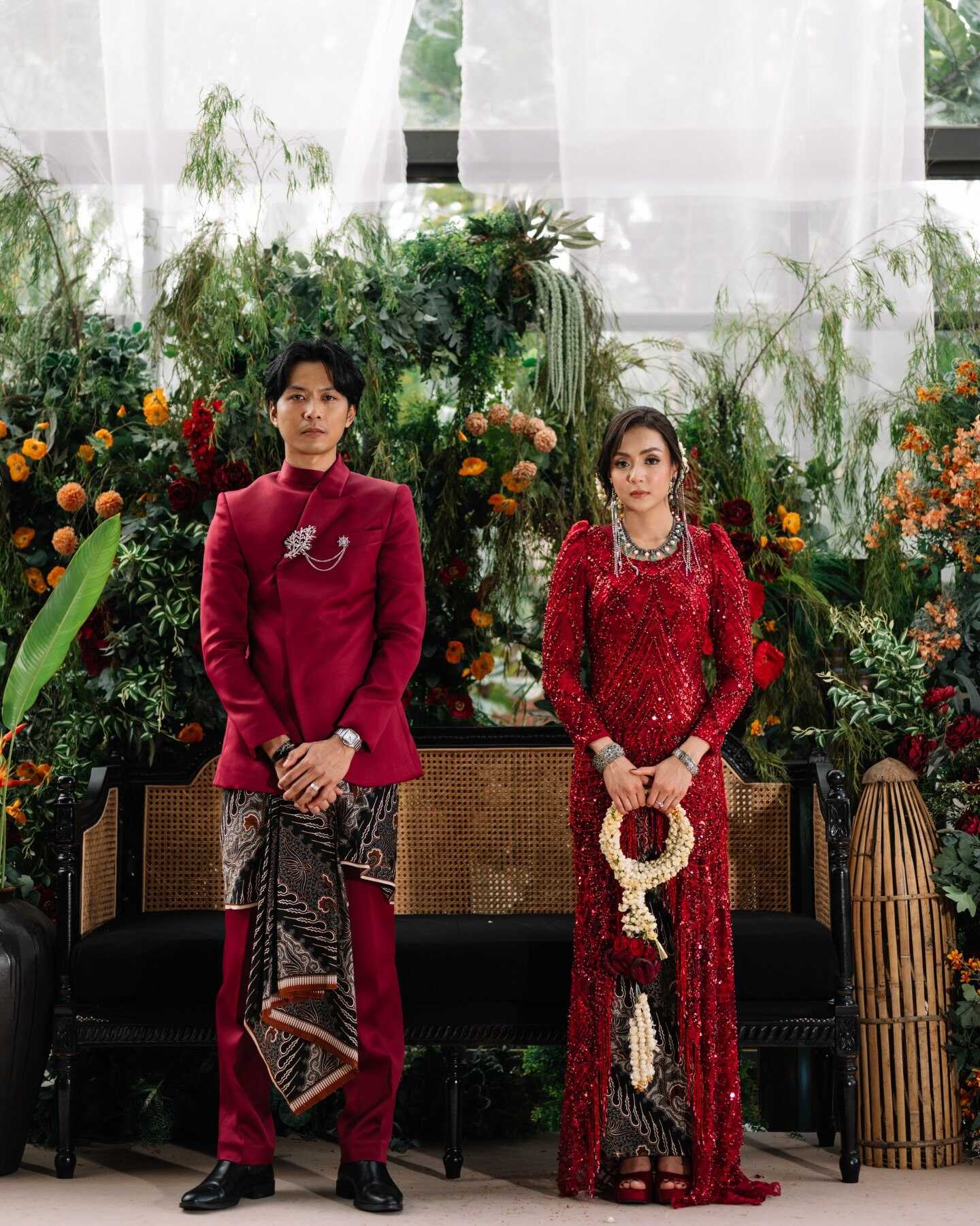
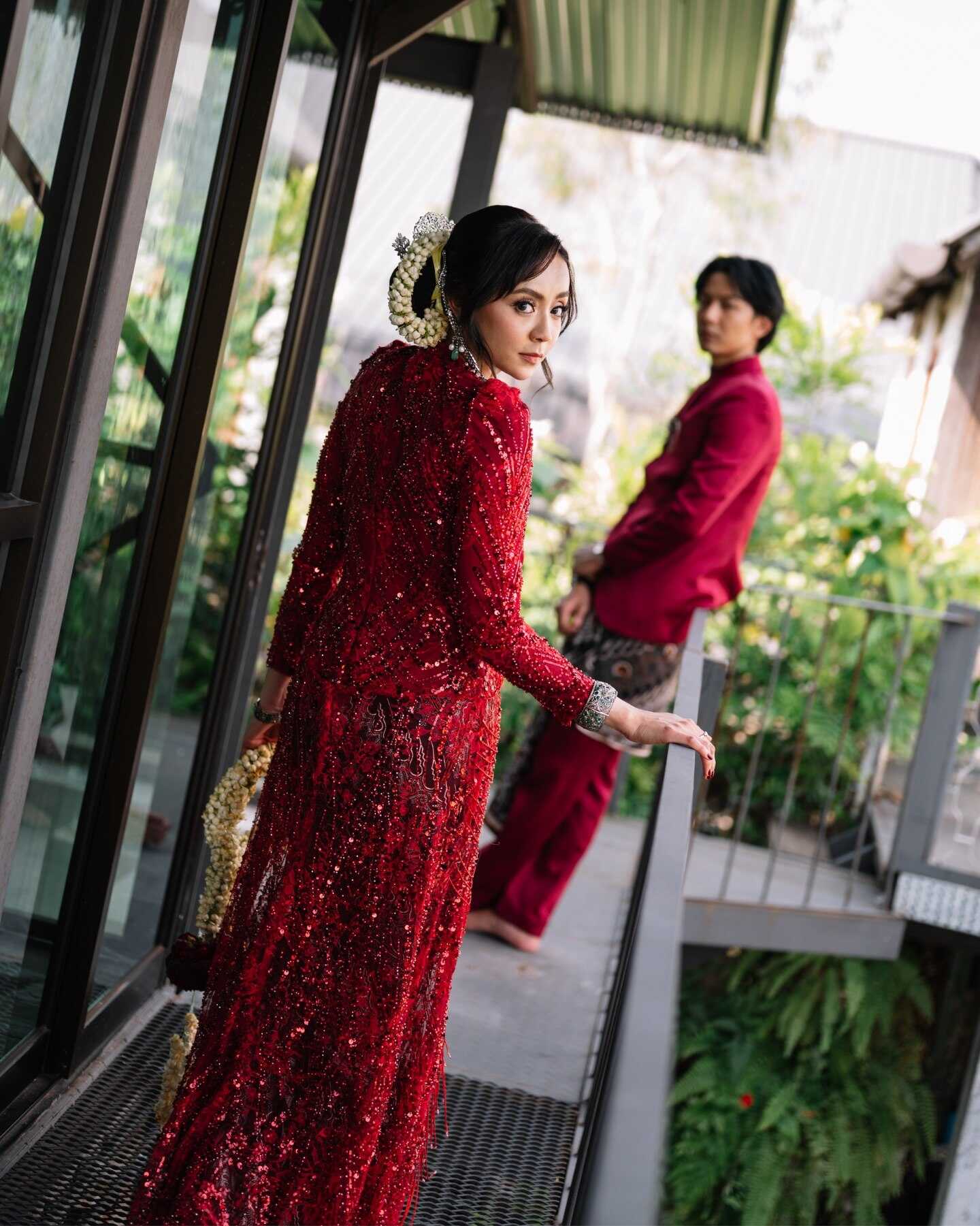
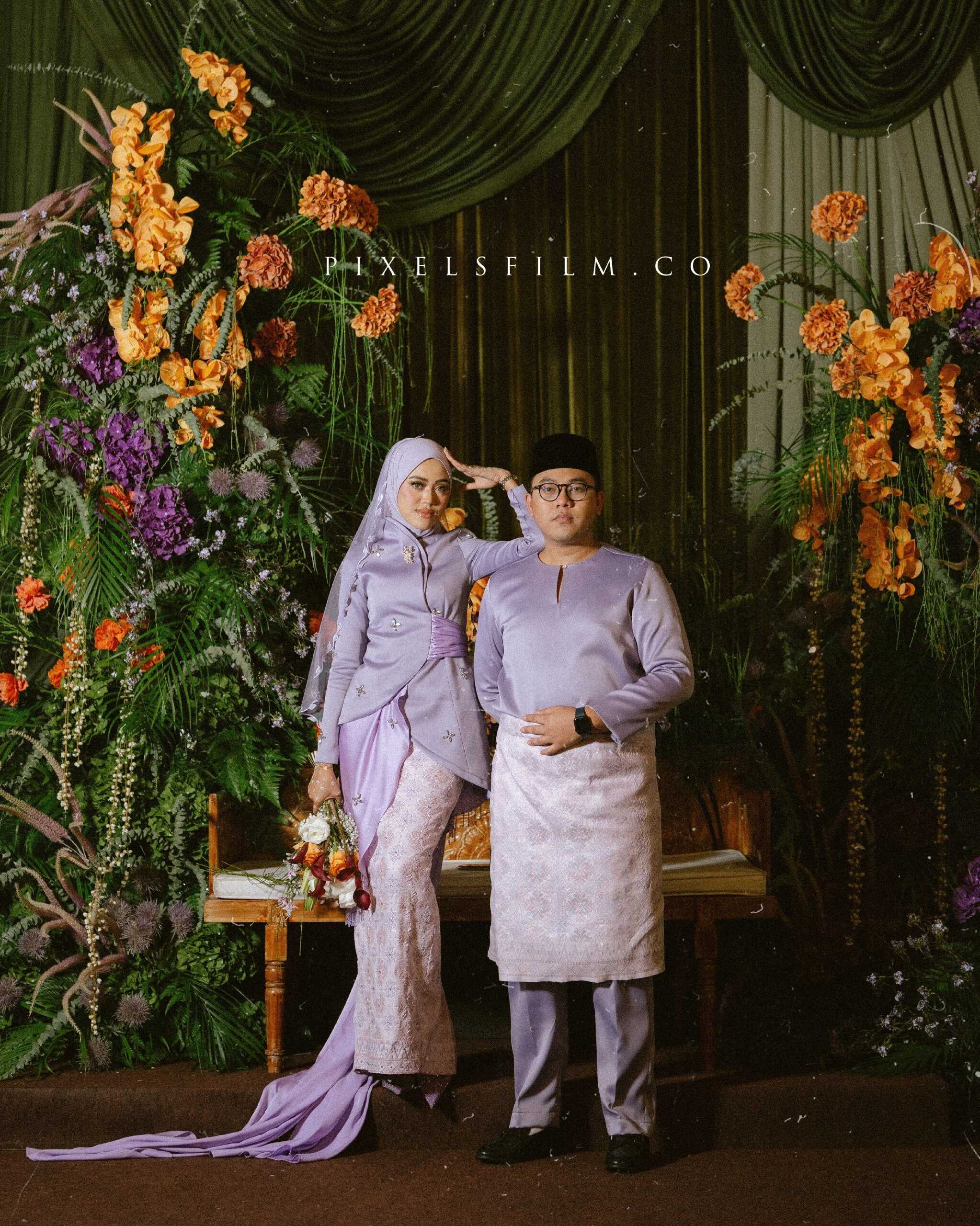
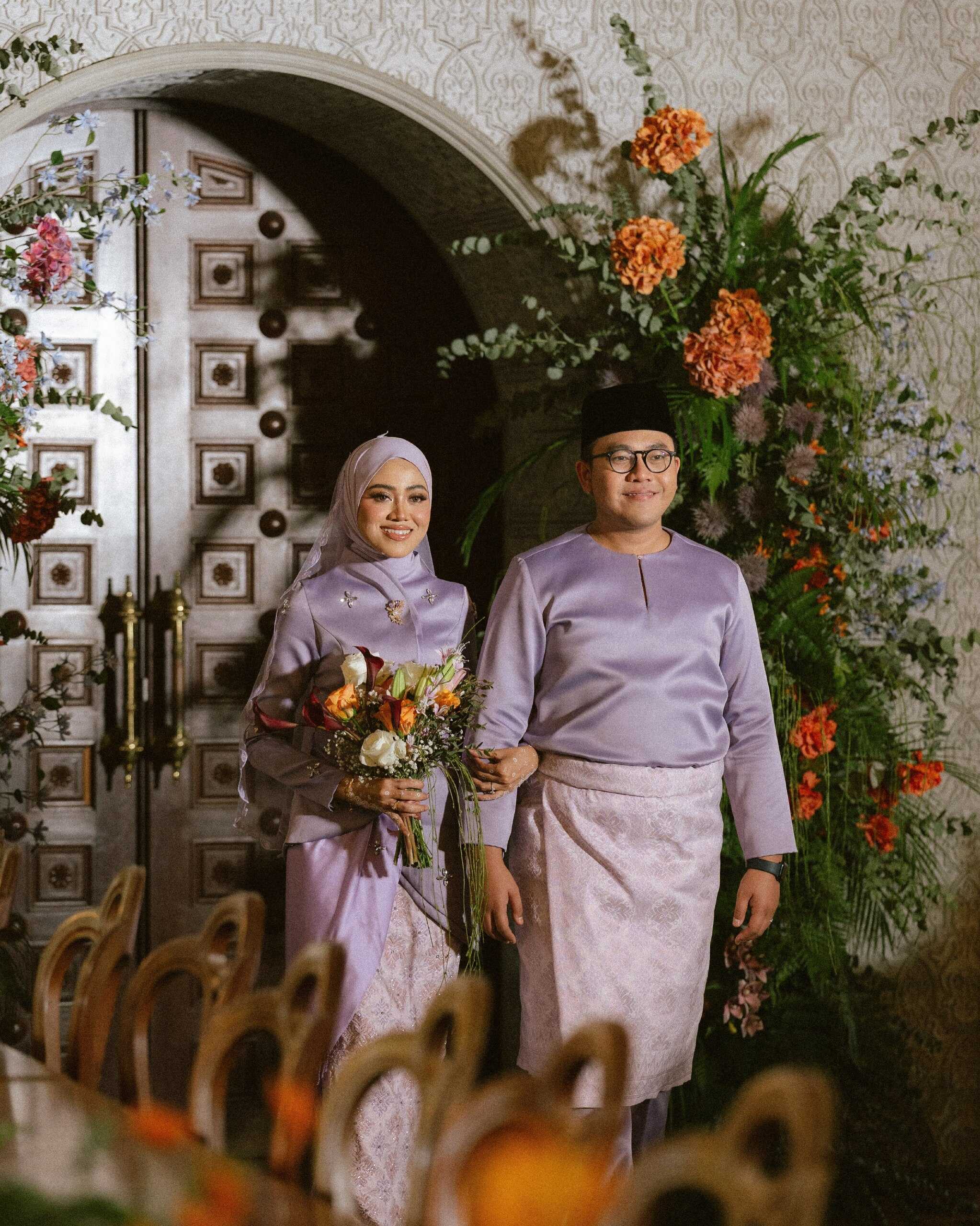
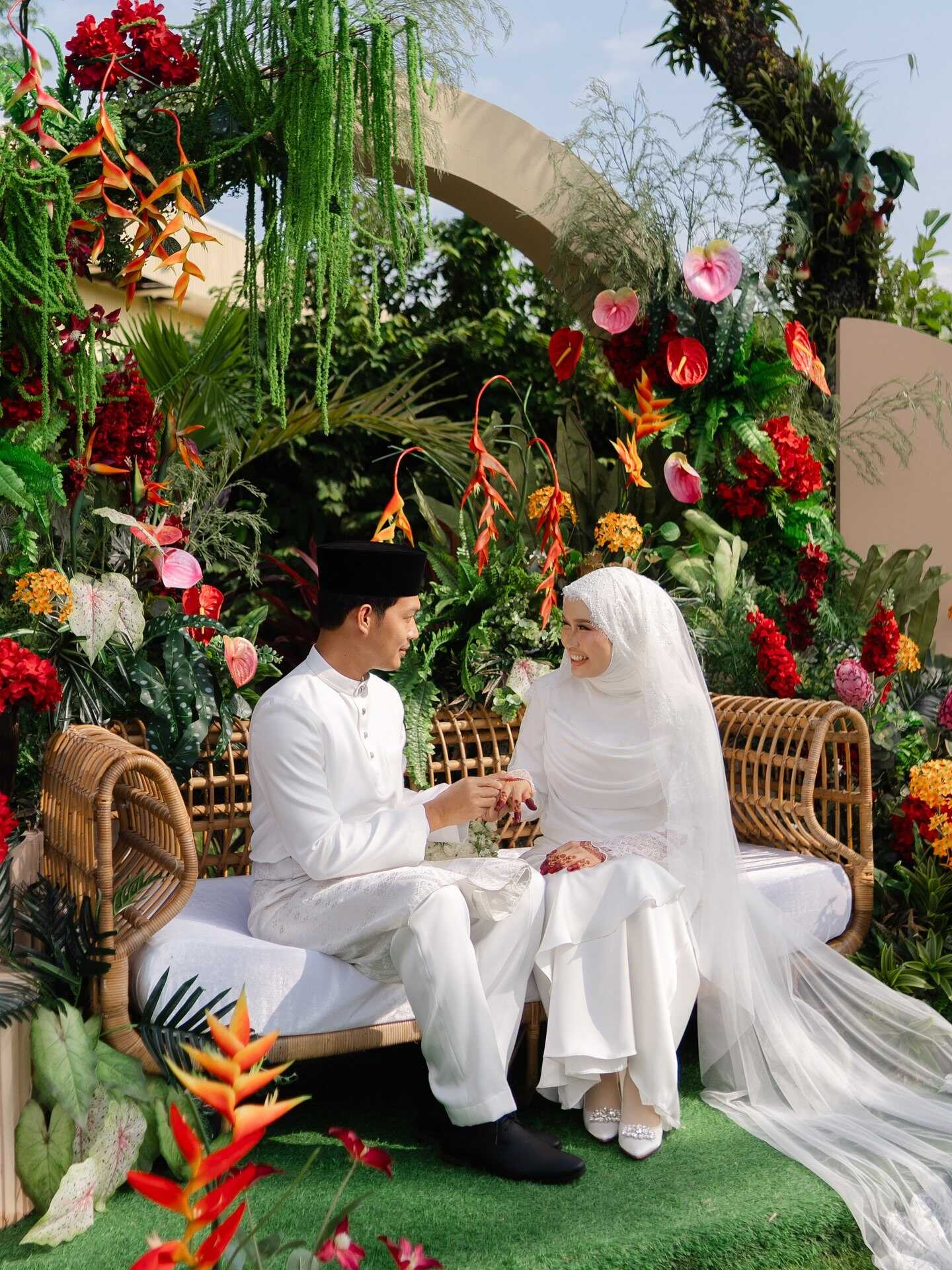
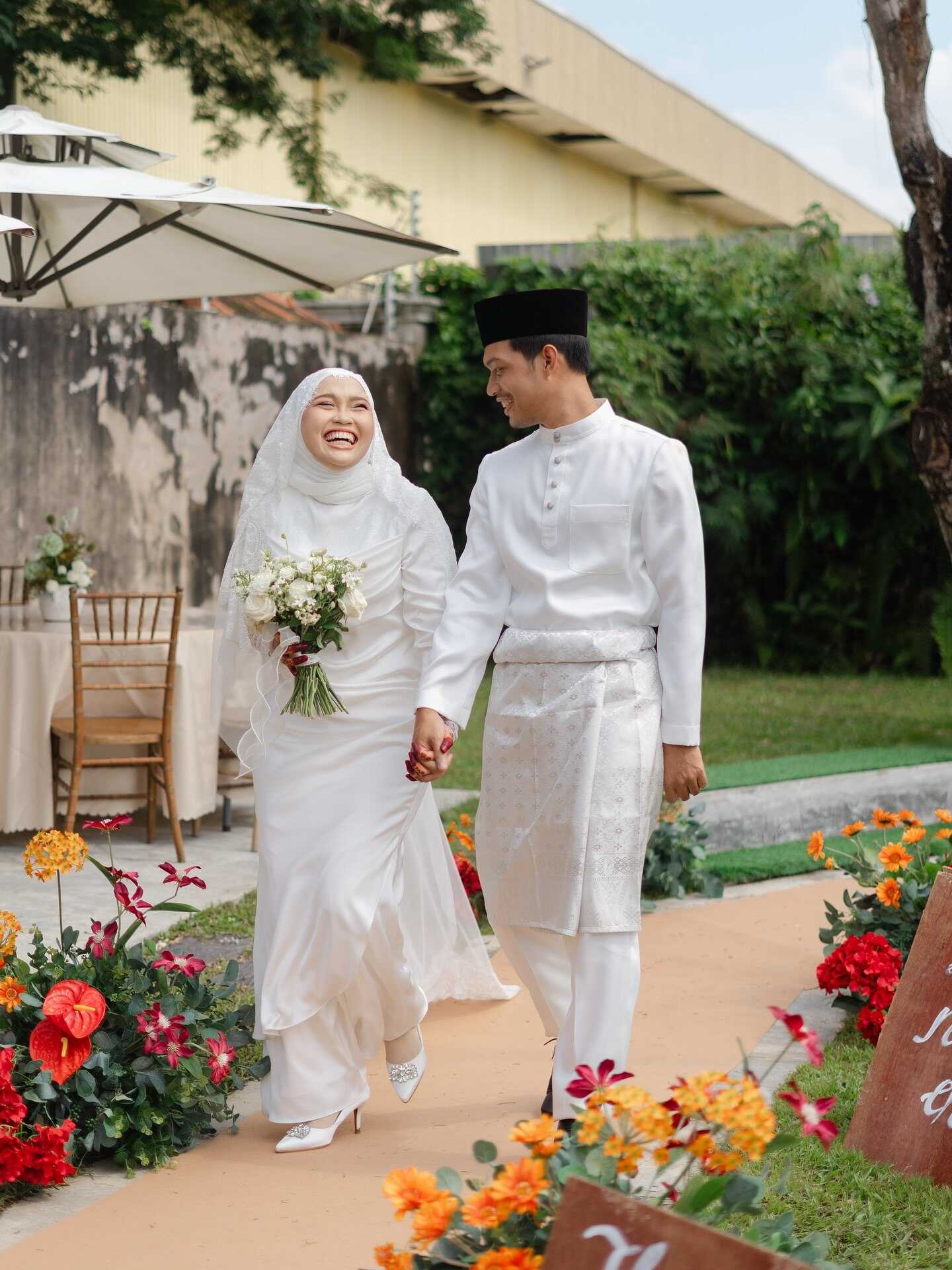
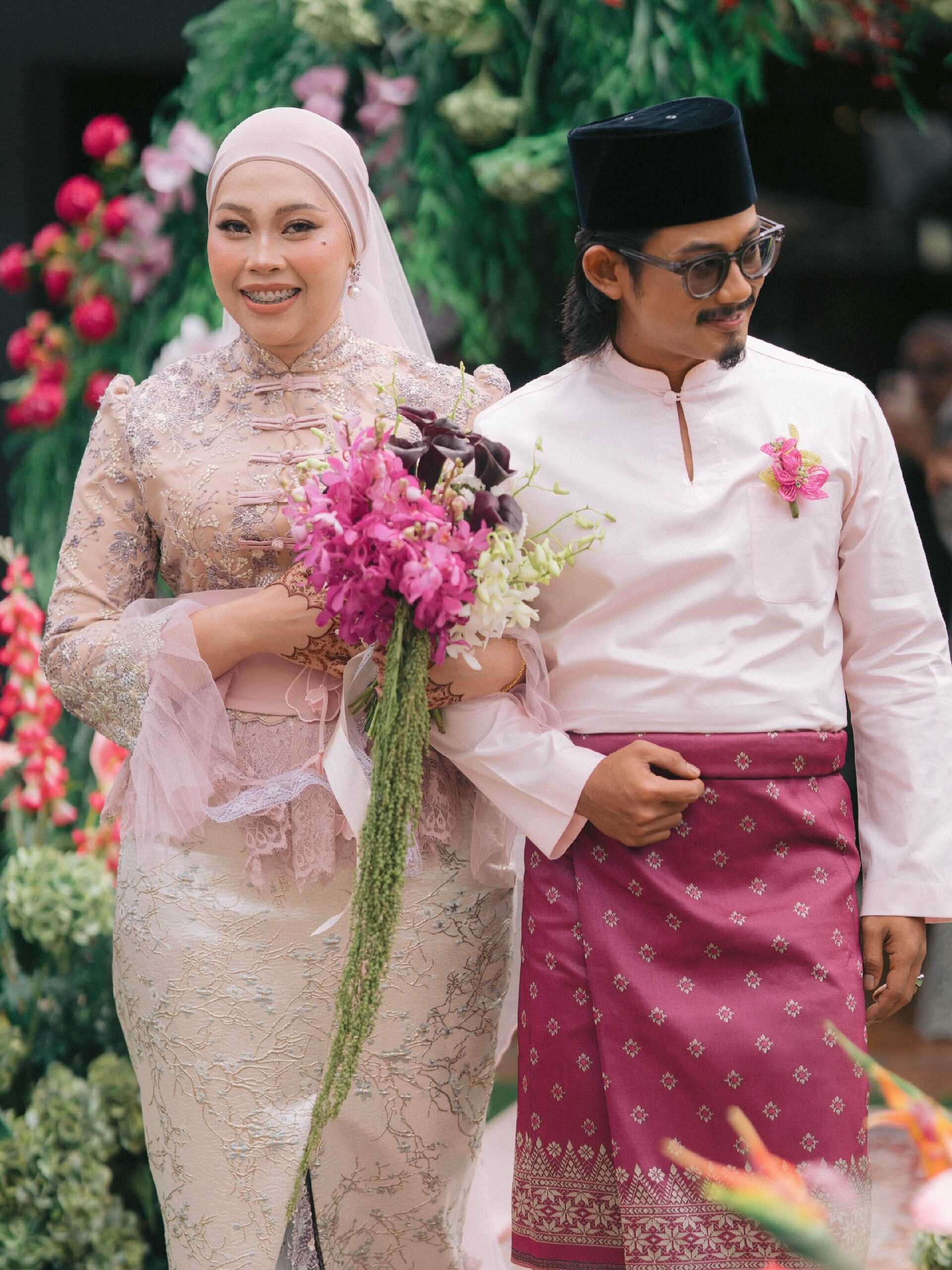
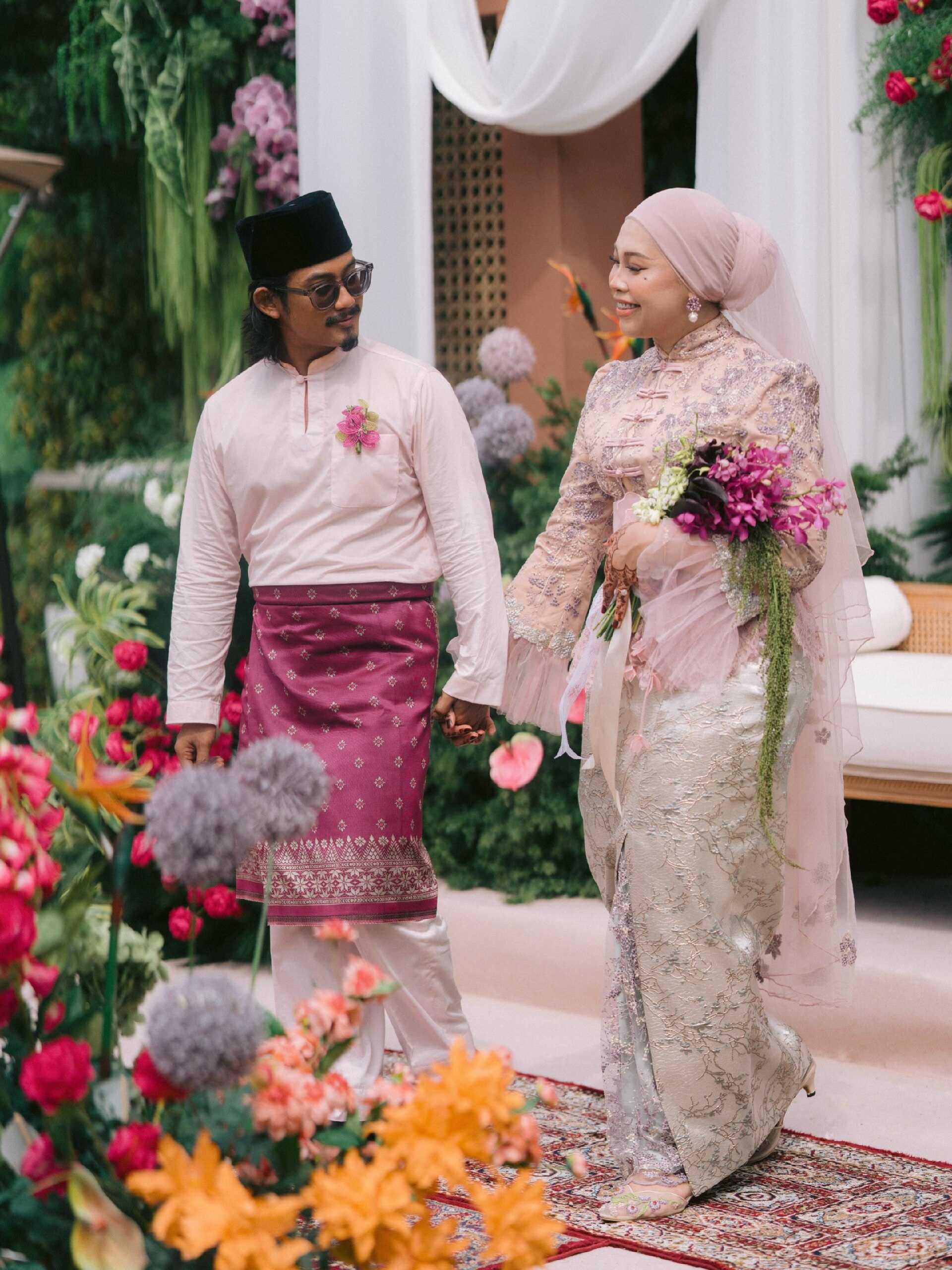
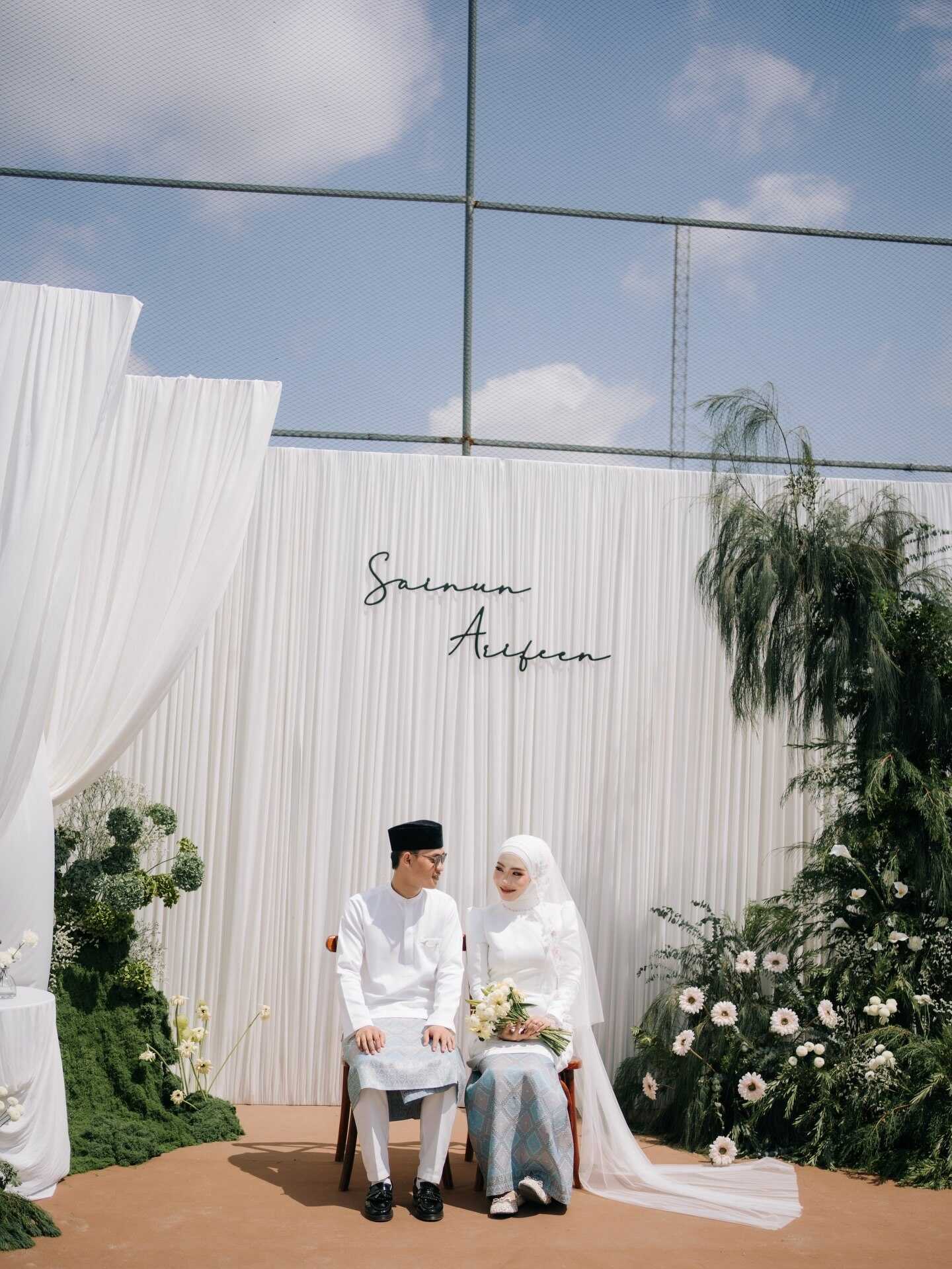
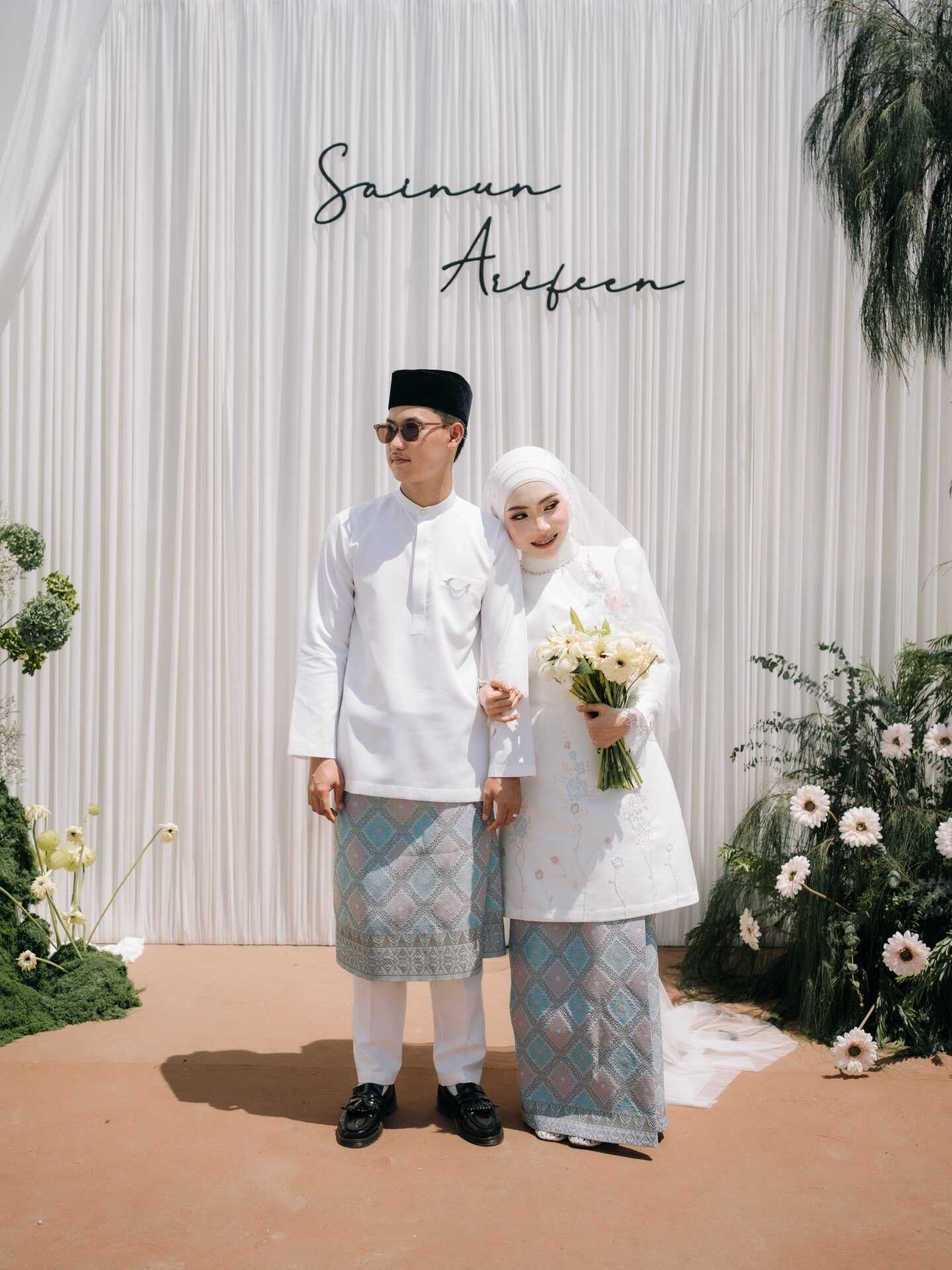
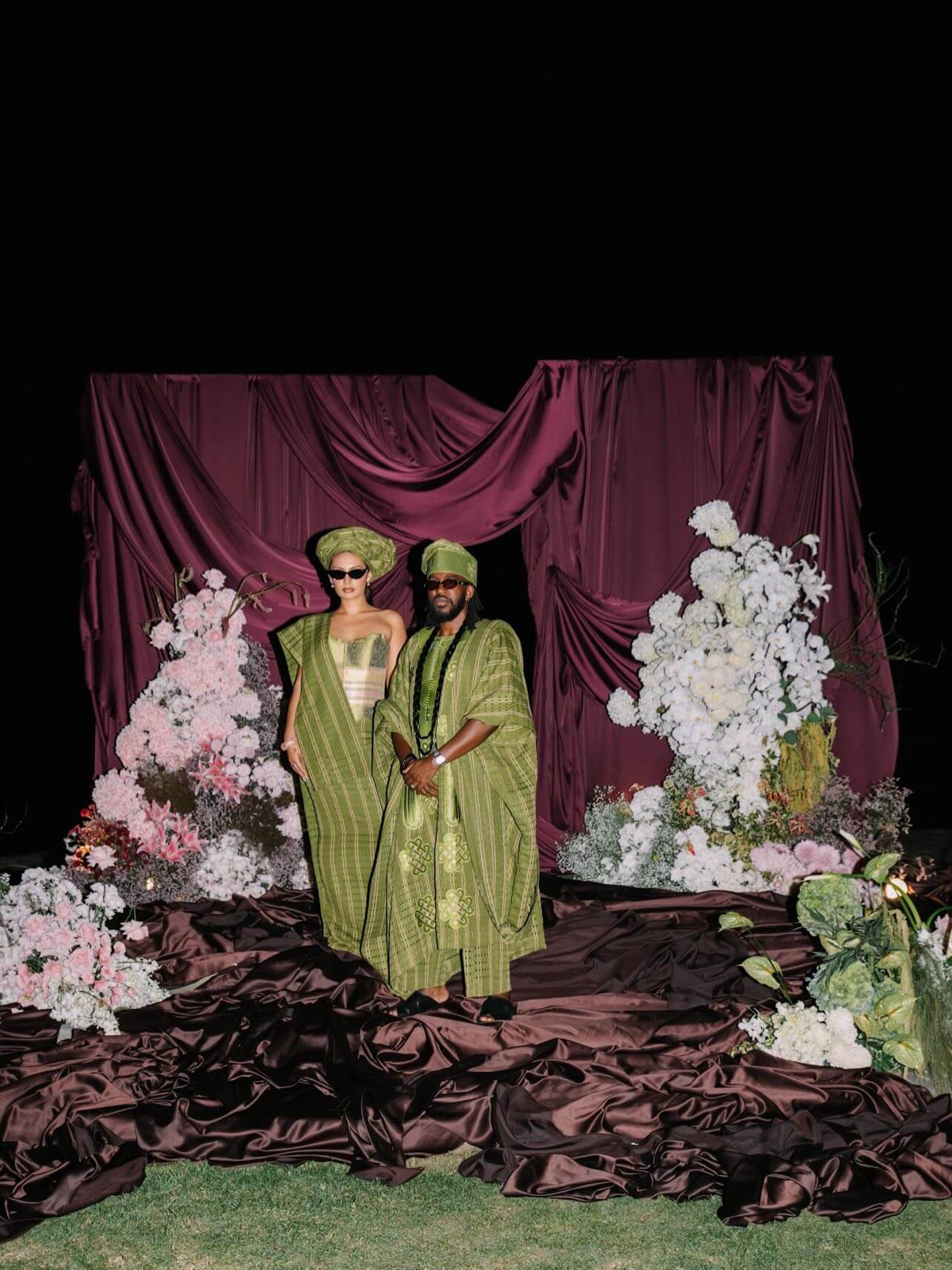
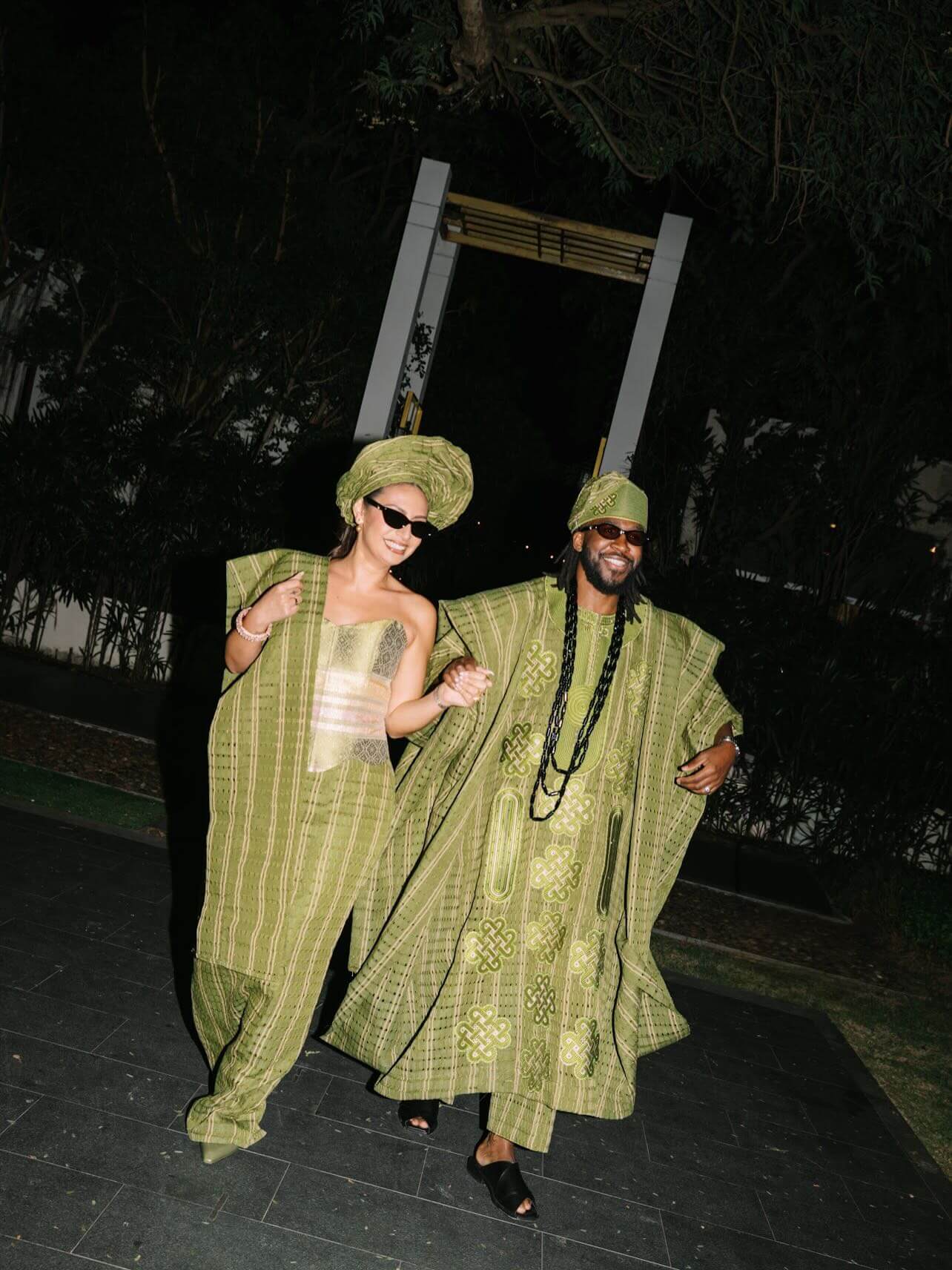
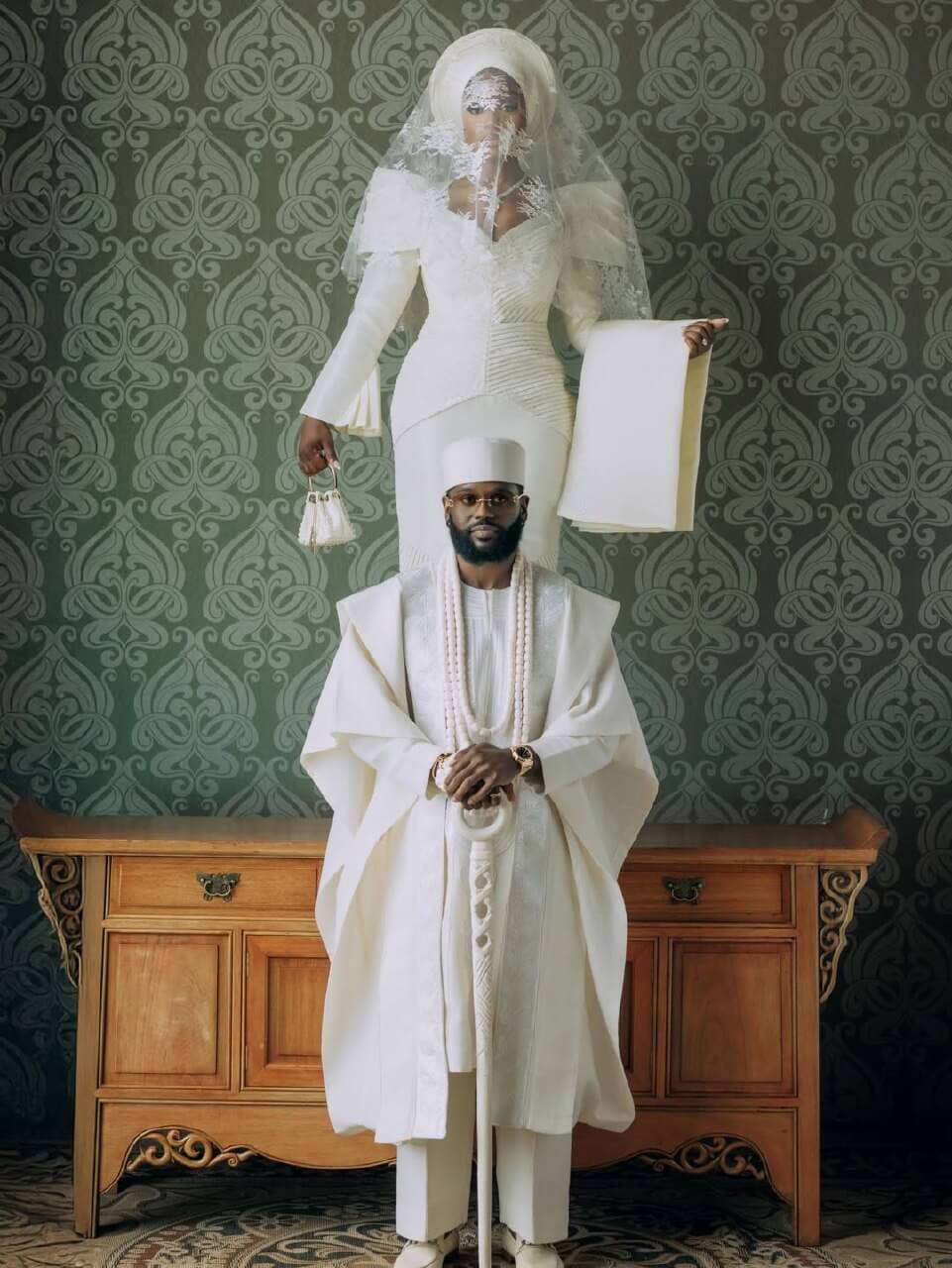
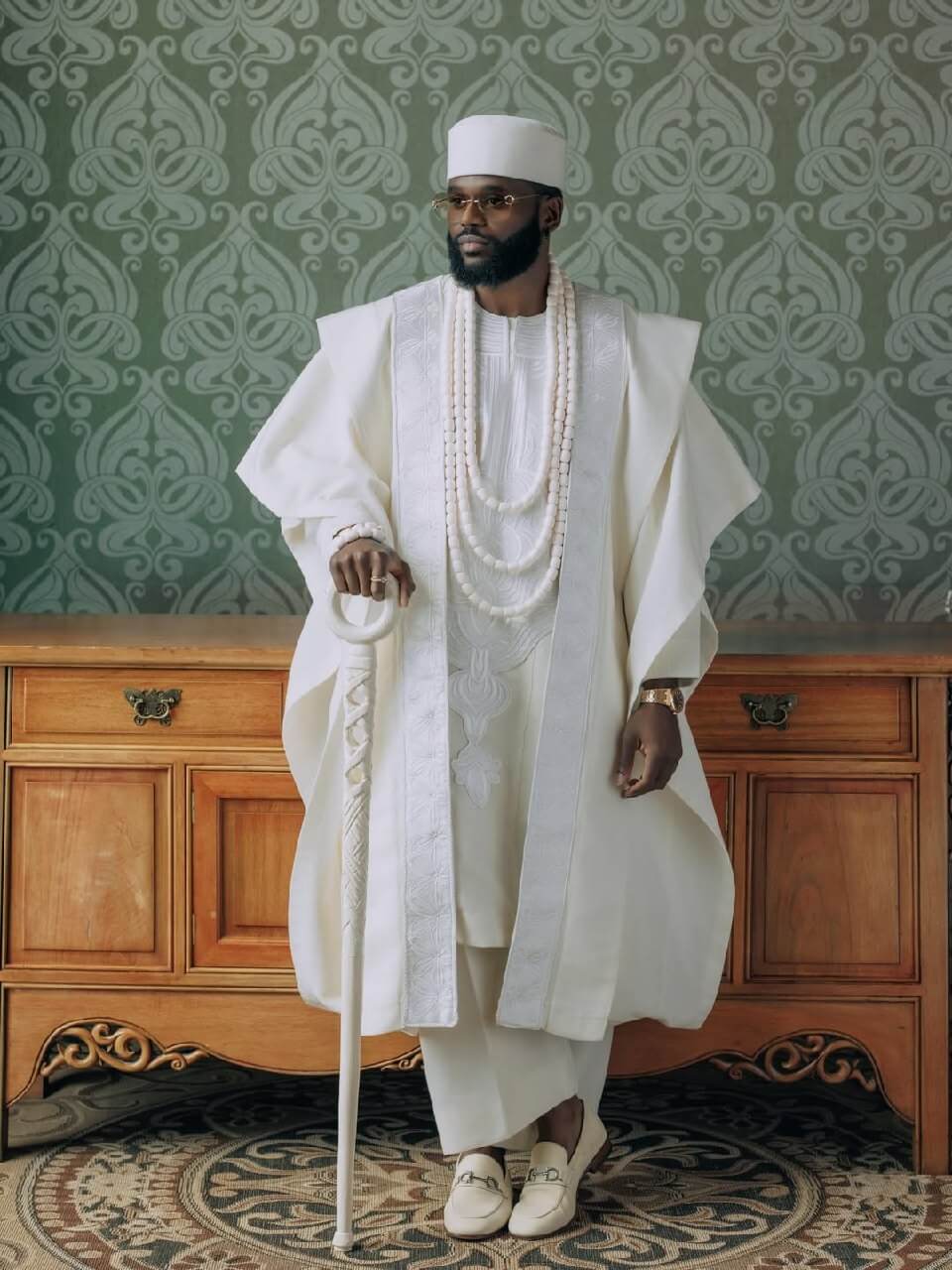
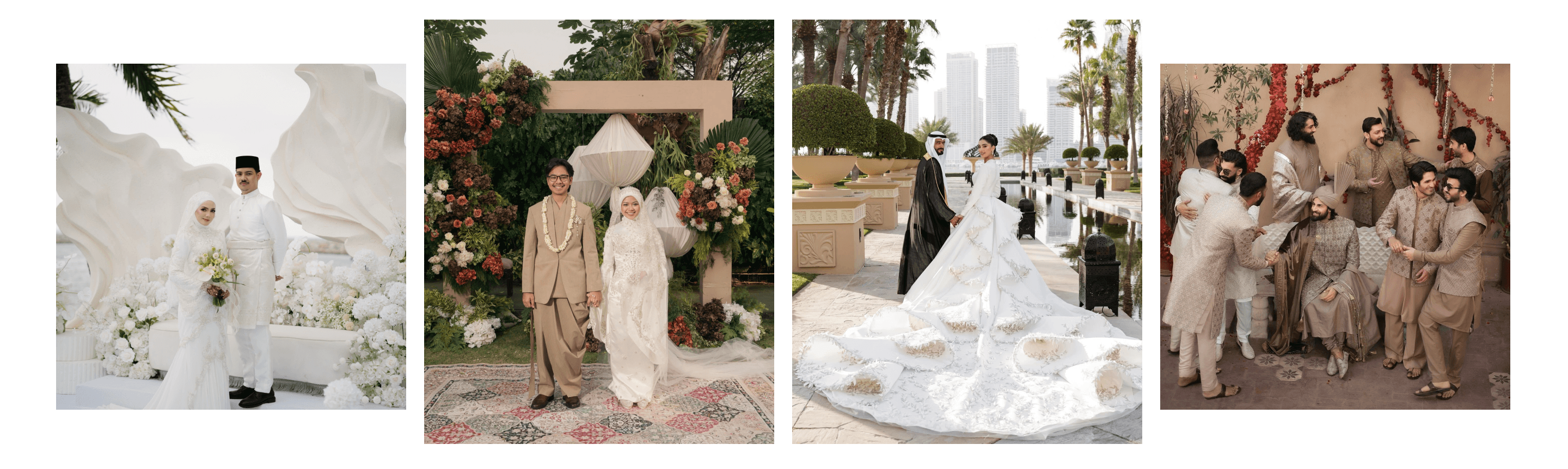
There's a Pakistani baraat, a Moroccan nikah, a Nigerian wedding, and a Malaysian akad nikah. These are not four versions of the same event. The Muslim wedding attire for the bride and groom in these traditions has almost nothing in common. The garments, silhouettes, and embroidery styles are all different, as is the concept of the most formal moment of the day. First, figure out which tradition you're dressing for. Then, decide if you're trying to blend two traditions. Everything else follows from that.
South Asian (Pakistani, Indian, Bangladeshi)
The sherwani is the dominant choice, usually made of rich fabrics with significant embroidery. The most formal look is called for in the baraat procession. The walima allows for a slightly lighter touch. Many grooms complete their look with a pagri or sehra, a flower garland headdress.
Arab (Gulf, Levantine, North African)
Gulf Arab grooms typically wear a white thobe and a bisht during the ceremony. Levantine grooms often opt for a well-tailored suit or a more Western-influenced formal look. North African grooms, particularly Moroccan ones, wear the jabador or gandoura: an embroidered tunic in rich jewel tones that comes with a matching hood.
West African (Nigerian, Senegalese, Ghanaian)
The agbada, a three-piece ensemble consisting of a wide-sleeved outer robe, an inner tunic, and trousers, is the standard ceremonial attire. In Senegalese tradition, the boubou serves a similar function. Embroidery on both garments is typically concentrated at the neckline and chest, and fabrics range from damask and brocade to hand-woven aso-oke.
Southeast Asian (Malaysian, Indonesian)
The Baju Melayu, consisting of a loose tunic, matching trousers, and a sampin (a folded piece of fabric worn around the waist), is traditional attire for Malay Muslim grooms. In Indonesia, the beskap, the regional equivalent, varies by island and ethnic group. Both traditions tend to have softer silhouettes and more subtle embellishments than their South Asian counterparts.

Colors, Fabrics, and Embroidery - Making the Right Choice
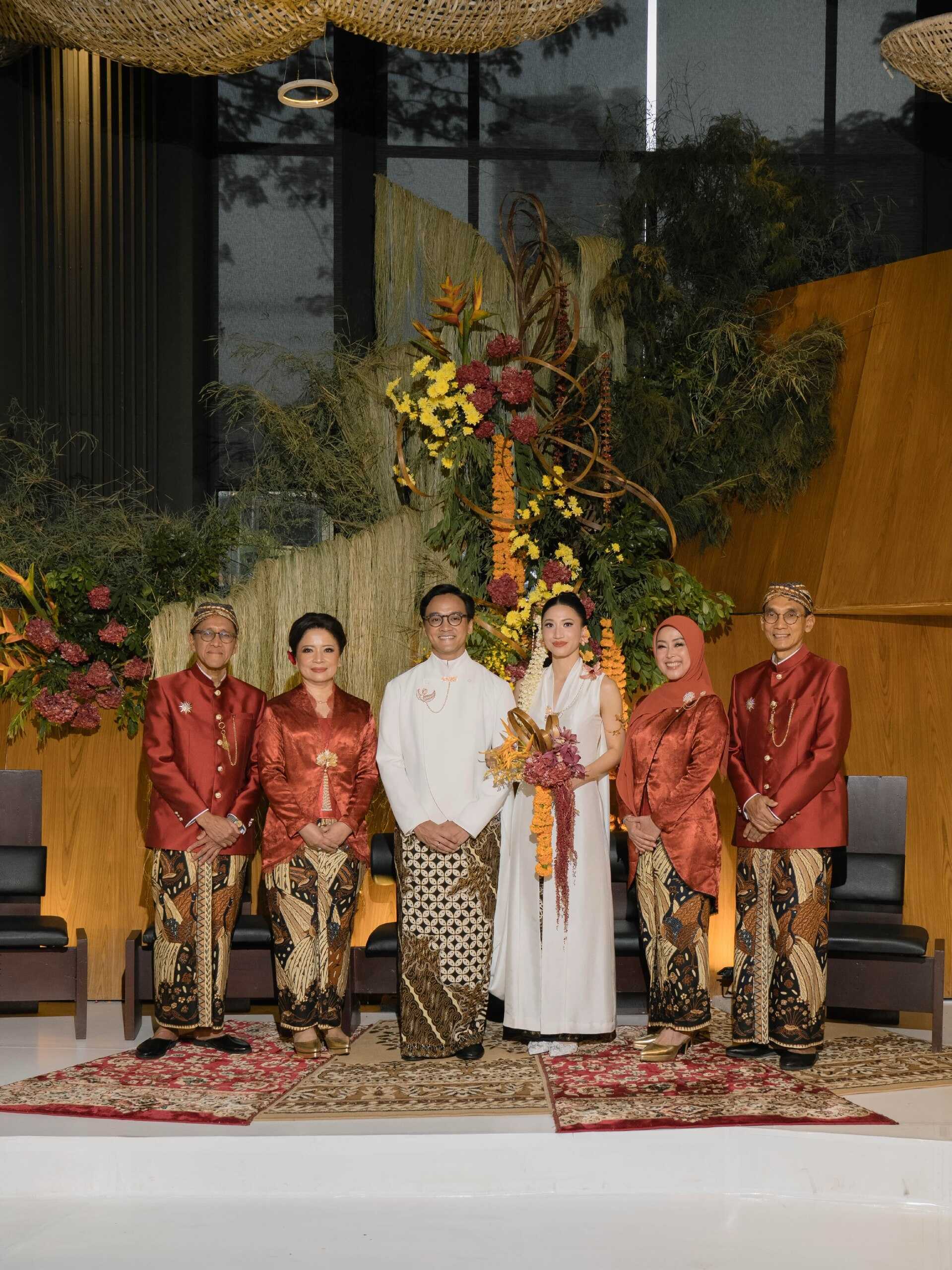
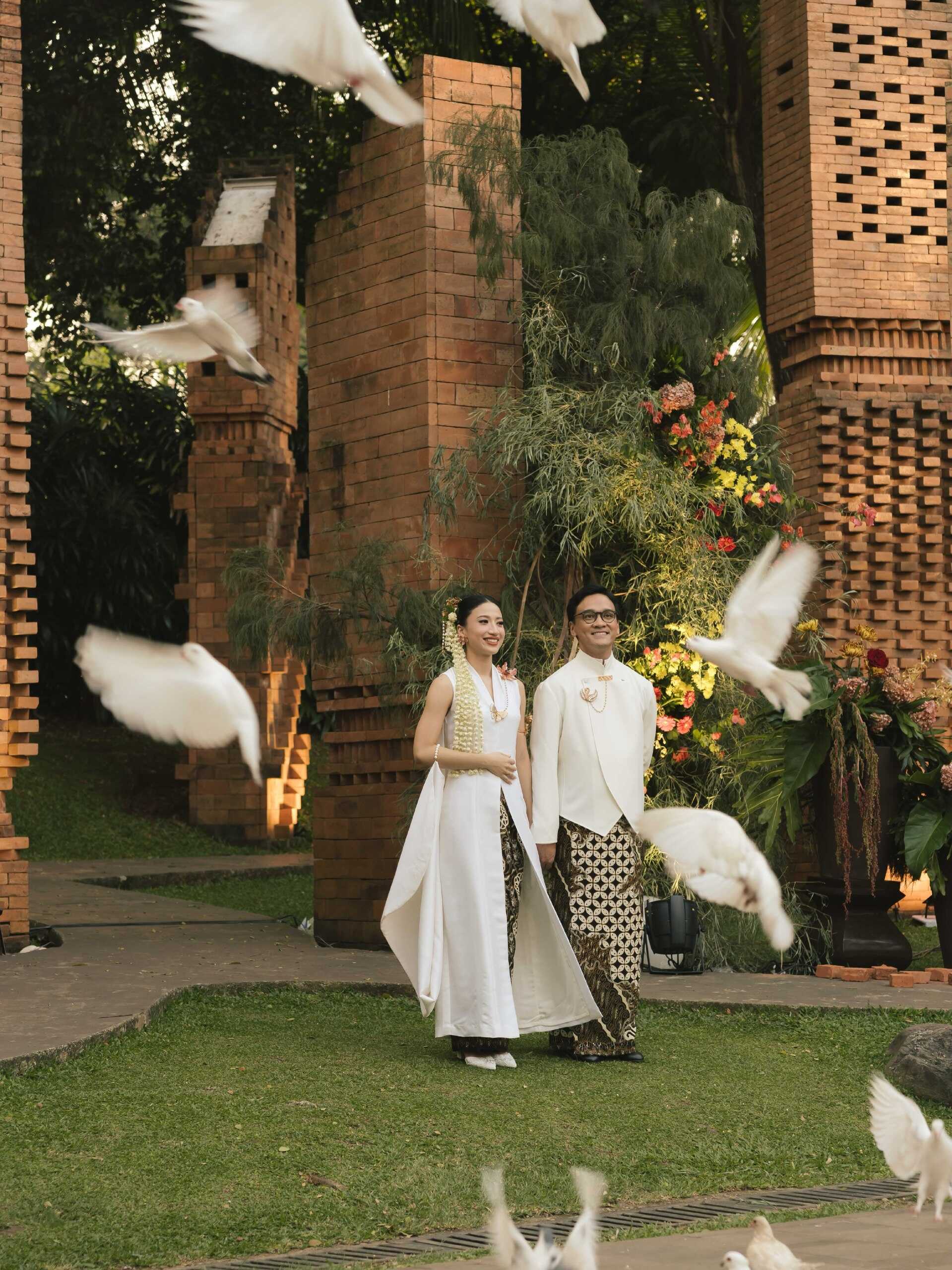
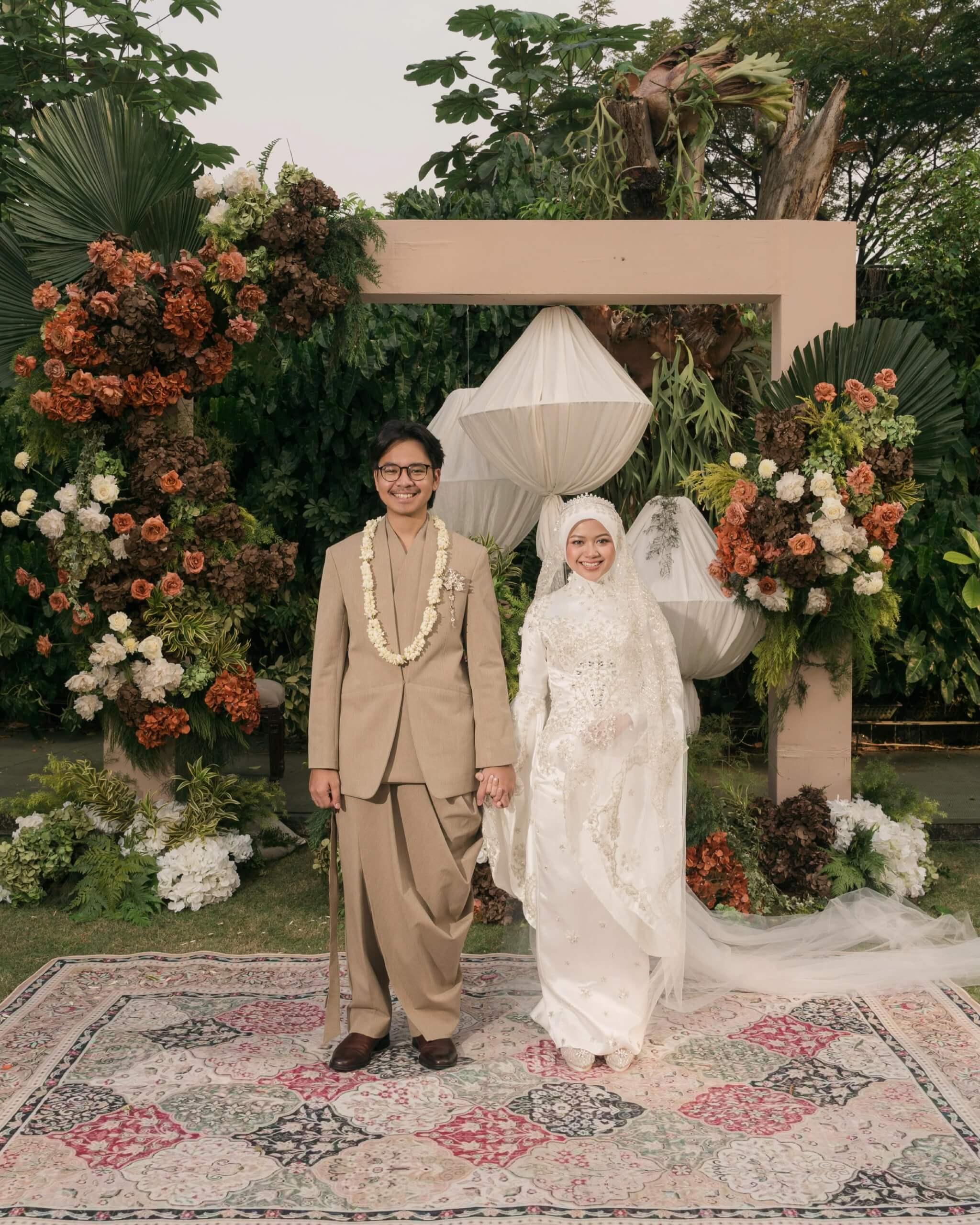
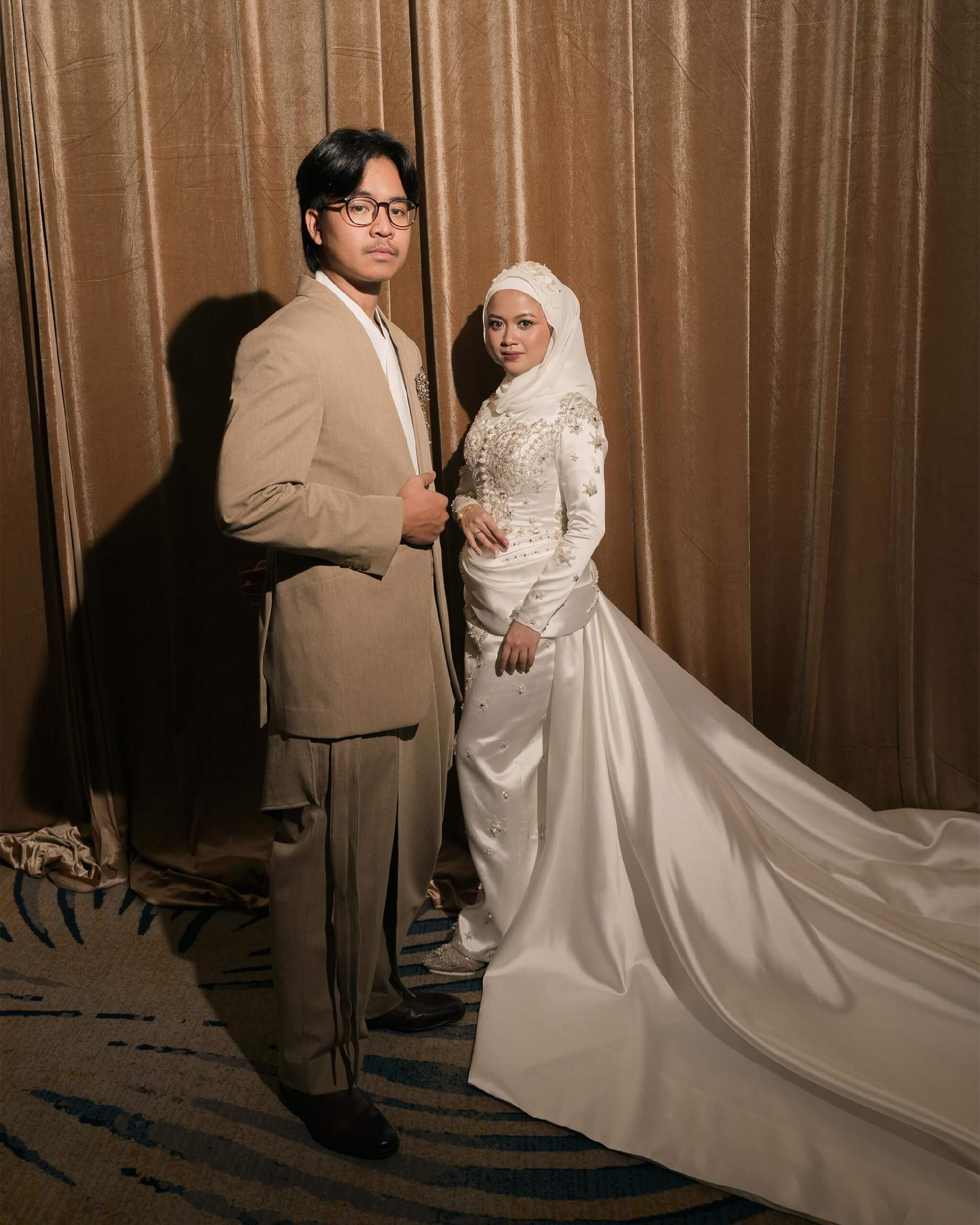
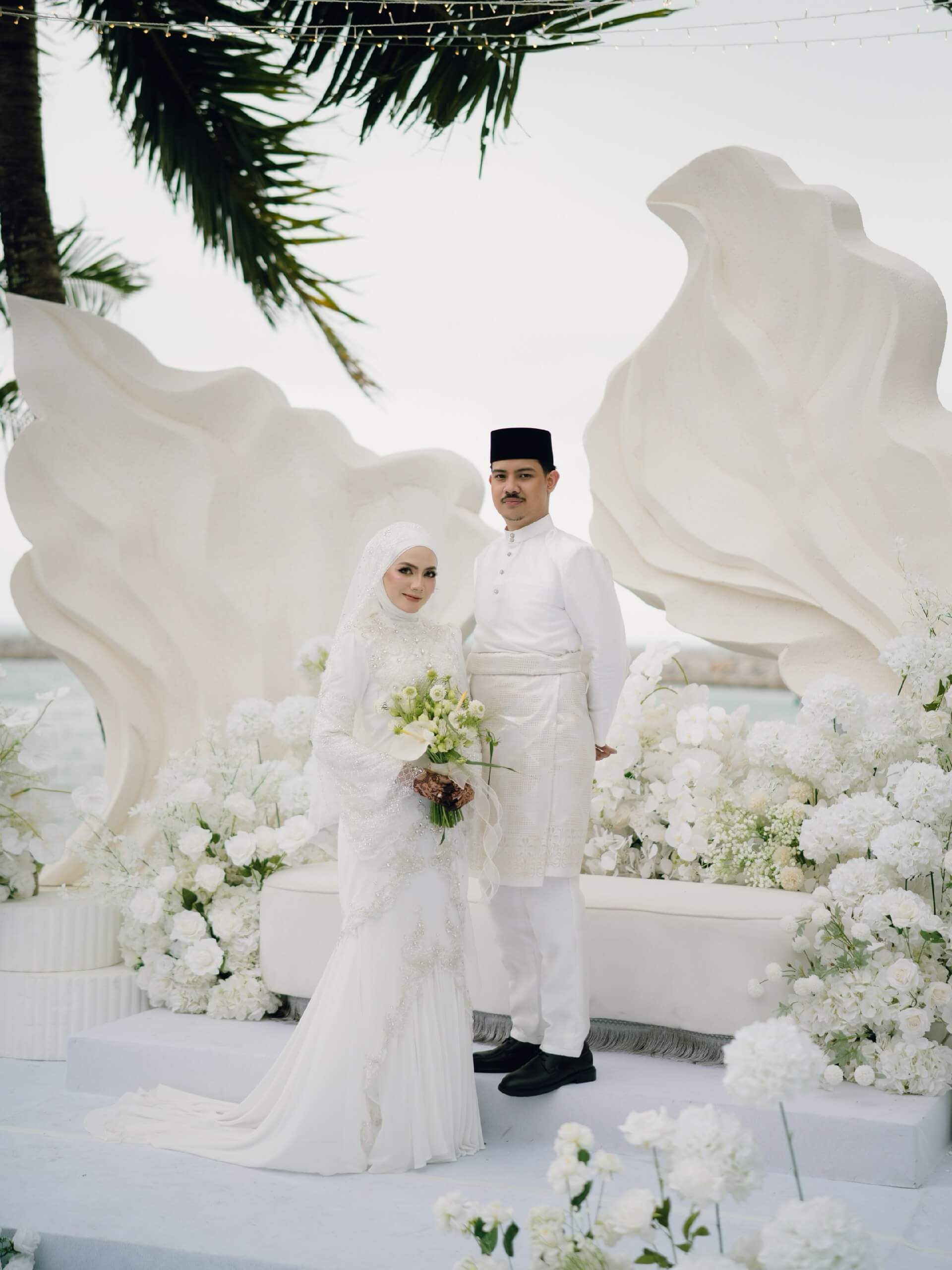
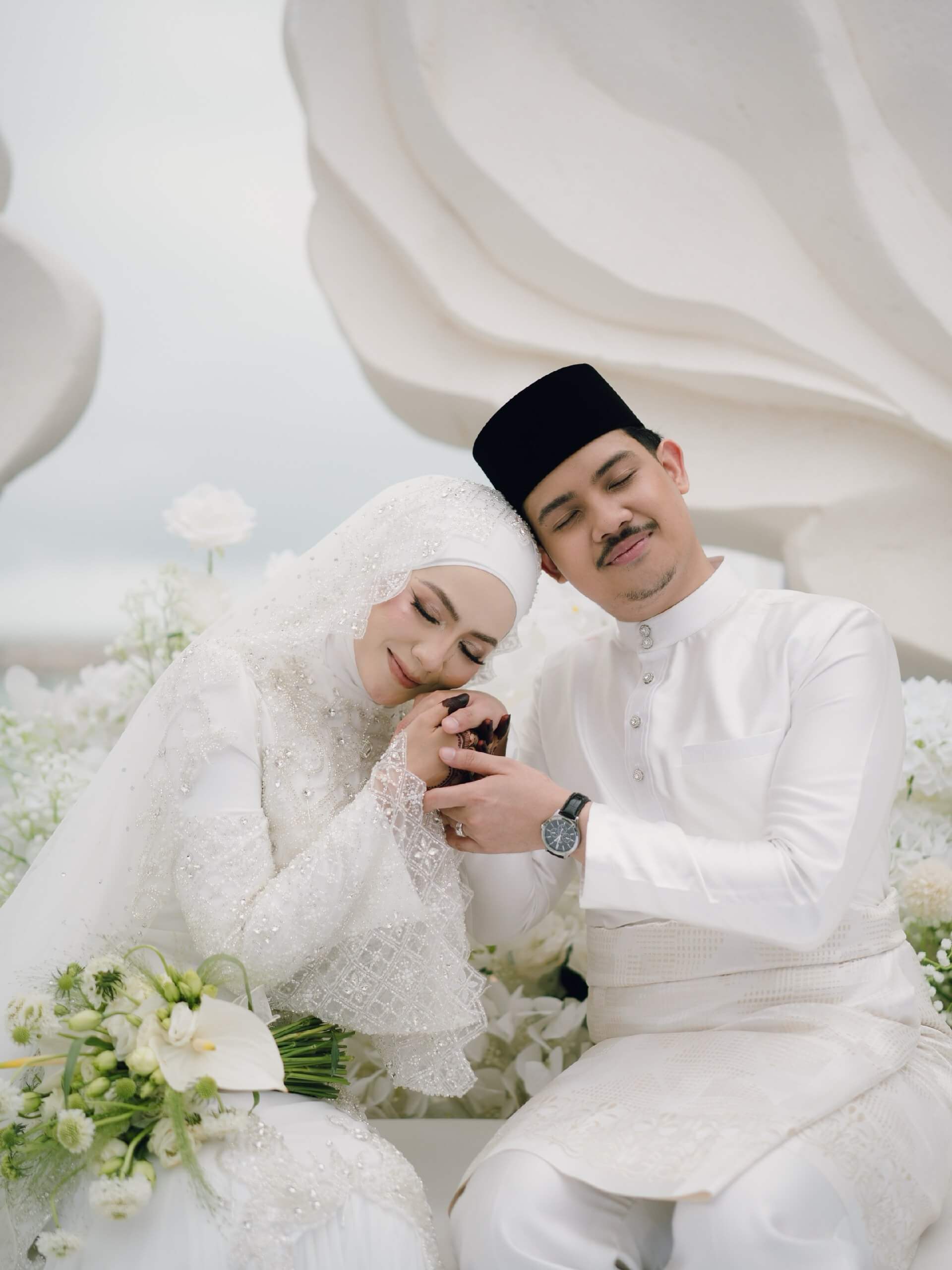
Ivory or cream. It's still what most grooms choose, and for good reason: it looks clean in photographs, it doesn't compete with the bride's dress, and it has the right neutrality for a religious occasion. However, the Muslim groom attire palette has moved well beyond that, and most grooms discover this six months too late.
The contemporary palette is considerably broader:
- Deep jewel tones - burgundy, emerald, midnight blue, aubergine - color without surrendering formality
- Earthy neutrals - camel, sand, taupe, warm grey - particularly strong outdoors, where the setting is already doing the dramatic work
- Contrast combinations - cream sherwani, deep wine churidar and dupatta - photographs better than matching and avoids the uniform problem entirely
Fabric and climate are also important considerations. More grooms get this wrong than will admit it. Wearing velvet in Dubai in July is a commitment you'll regret before the first hour is over. Raw silk in a British January, however, is exactly right. Chanderi and georgette travel well, handle body heat, and photograph with genuine depth, unlike heavier brocades.
Regarding embroidery, a tailor who tells you that more is better is trying to sell you more work. Precise zardozi embroidery on the collar and cuffs looks more expensive than uneven threadwork across the entire chest. Place the embellishments where they're visible: the collar, chest panel, and cuffs. Once the groom is seated, everything below the waist is hidden.
Accessories That Complete the Look - Pagri, Kulla, Mojri, and More
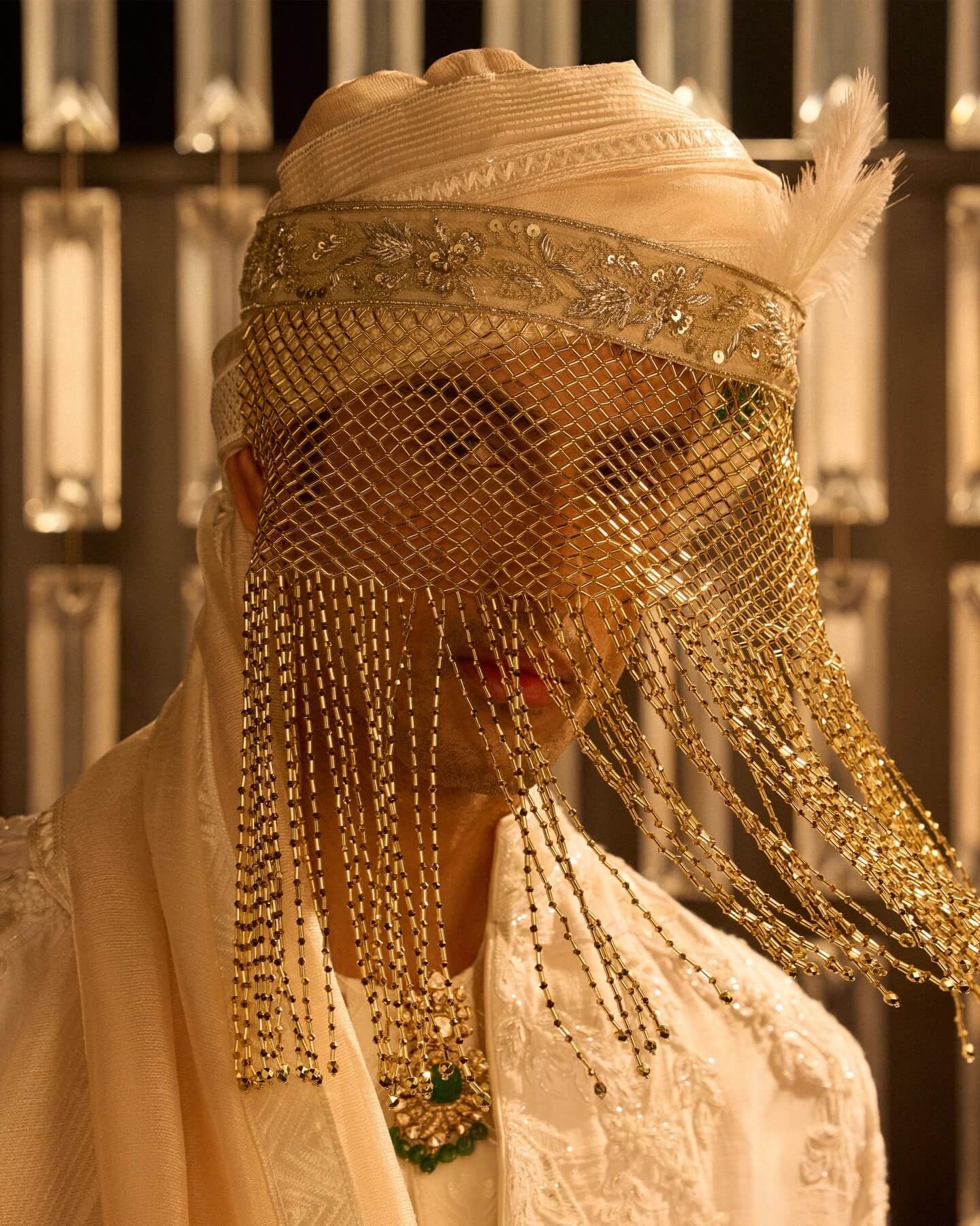
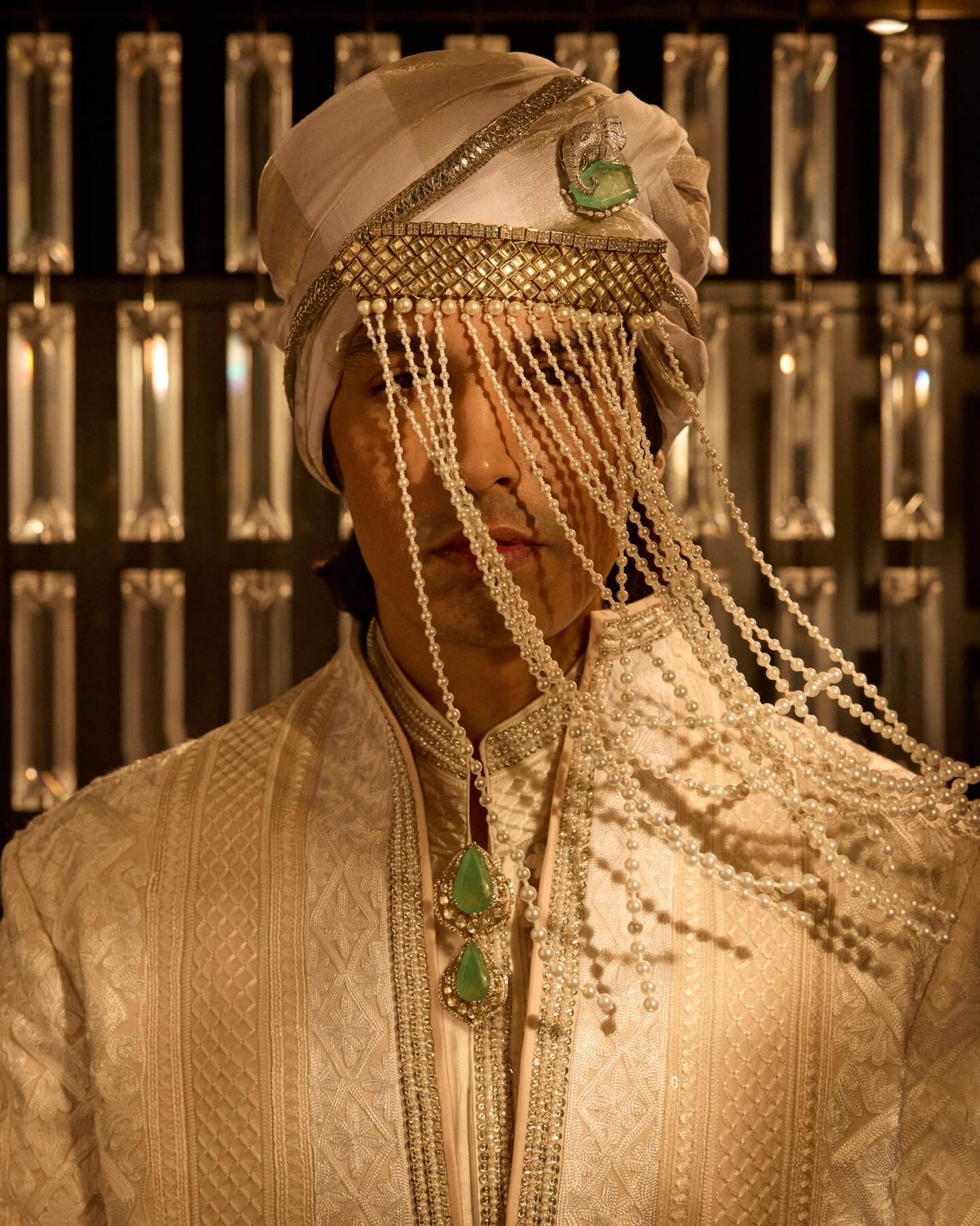
The shoes are forgotten. The headwear was borrowed from a cousin the morning of the event. The pocket square is skipped entirely. Then the photographs arrive, and the almost-complete look is obvious in every single one. A Muslim groom's wedding attire either comes together or falls apart with the right accessories.
Headwear
- Pagri (turban): the pagri is the most formal and most photographed option for South Asian grooms. The color should coordinate with, but not match, the sherwani. The tying style varies by region and family tradition
- Kulla/Topi: a small, embroidered cap best suited for Nikah and intimate occasions. It is more subtle than a Pagri, but holds its own significance
- Keffiyeh: for Arab grooms, where regional tradition calls for it. The agal, a black cord, holds it in place and is not optional
Footwear
- Mojris/Juttis: these hand-embroidered, pointed shoes have become the standard for South Asian grooms wearing sherwanis. The embroidery should loosely coordinate with the sherwani, but not be too literal
- Sandals: they are appropriate for simpler kurta looks, particularly in warm climates. Choose leather sandals in a color that complements the outfit
- Formal shoes: for grooms wearing suits or Western-influenced outfits, tan or cognac oxfords or Chelsea boots look better than black against most sherwanis
Details that matter
- Kalgi: a brooch or spray worn on the pagri. Traditionally, it was a feather spray, but now it is available in materials ranging from seed pearls to diamonds
- Pocket Square: for grooms wearing suits or bandhgala jackets, a silk pocket square in the bride's color palette creates a visual connection between the two outfits
- The sehra is a traditional garland of flowers or beads that hangs from the pagri over the face during the baraat. It is not universally worn, but deeply traditional in certain Pakistani and North Indian families
Every groom has one entrance. The right Muslim groom's attire isn't about fashion; it's about showing respect for the occasion, the people who traveled to be there, and the tradition you're stepping into. The attire is for the occasion, the people who traveled to be there, and the tradition you're stepping into. A carefully chosen sherwani looks different from one chosen under pressure. This difference will be noticeable in the room on the day of the wedding and in the photographs that will last a lifetime.
Wezoree's Inspiration section holds plenty more to explore beyond this guide, cultural styling ideas, groom lookbooks, and real wedding features from around the world, for anyone still shaping exactly what the rest of their wedding look should be.

FAQ
What is the traditional attire for a Muslim groom?
The traditional Muslim groom attire varies significantly by cultural background. South Asian grooms typically wear a sherwani, an embroidered long coat, over churidar trousers. Arab grooms often wear a thobe with a ceremonial bisht. West African grooms wear an agbada or boubou. Southeast Asian grooms traditionally wear a Baju Melayu. These outfits have a few things in common: formality, high-quality fabrics, and intentional embellishments.
What colors are most popular for the Muslim groom's wedding attire?
The most popular colors for the groom's wedding attire on the day of the nikah or baraat are ivory, cream, and off-white. For receptions and walima celebrations, jewel tones such as deep burgundy, emerald green, and midnight blue have become increasingly popular. Black is a modern choice that works well, though it reads as contemporary rather than traditional.
What is the difference between a Sherwani and a Kurta?
The sherwani is the most formal option Muslim wedding grooms. It is a structured, heavily embellished long coat. A kurta is a lightweight tunic that can be casual or semi-formal, depending on the fabric and embroidery. A tailored silk or chanderi wedding kurta is just as formal as a sherwani; it simply looks more relaxed and modern.
What does the groom wear at a Nikah ceremony?
As a religious ceremony, the Nikah requires modest and respectful attire. The groom typically wears his most formal attire. The most common choice is a well-tailored ivory or cream sherwani. Arab grooms often wear a white thobe. Regardless of cultural tradition, the principle remains the same: attire should be clean, formal, and understated rather than overly elaborate.
Can a Muslim groom wear a suit at his wedding?
Yes, particularly at walima receptions, evening parties, and multicultural celebrations, where a more Western aesthetic is fitting. The bandhgala jacket, with its Nehru collar, strikes a strong middle ground between the sherwani and the conventional suit. It maintains formality while appearing contemporary. A well-tailored, three-piece suit made of rich fabric in colors like navy, charcoal, or deep burgundy is appropriate for formal occasions.
How do Muslim groom attire traditions differ by culture?
Considerably. The category of Muslim wedding attire for the bride and groom varies so much across the global Muslim community that it encompasses several distinct traditions shared by people of the same faith. South Asian, Arab, West African, and Southeast Asian groom attire has unique garments, silhouettes, embroidery traditions, and ceremony-specific customs. In a multicultural wedding, such as a Pakistani-Nigerian one, the groom has the interesting opportunity to incorporate elements from both traditions rather than choosing between them.
What accessories does a Muslim groom typically wear?
The essential accessories for South Asian grooms include pagri or kulla headwear, mojri or jutti footwear, and a kalgi brooch for turbans. Arab grooms wear the keffiyeh with an agal. West African grooms complete the agbada with embroidered caps. The quality of the accessories is as important as the main garment. For instance, a beautifully made sherwani paired with worn-out shoes appears incomplete in photographs.