Indian Groom Outfit Guide: Sherwani, Kurta, Bandhgala & Accessories
- Author: Natali Grace Levine
- Reading time: 12 min 3 sec
- Publication date: 09/02/2026
- Updated: 10/06/2026


If you go to an Indian wedding and keep a tally of the different outfits before the reception begins, you'll find that the groom usually goes through three, four, or even five entirely different styles during a single wedding week, and each of these outfits has its own significance, background, and set of rules about fabric and formality. Creating a real Indian groom outfit wardrobe, the kind of outfit collection that Indian families actually plan around when getting married, isn't about selecting one striking item and calling it done. It's more like designing costumes for a story with several acts, each requiring something slightly different from the man wearing it. This article examines the four items every groom eventually needs to understand, covering their origins, what they're intended for, and how to wear each one without looking like you borrowed it from someone else's wedding.
Find Your Perfect Wedding Vendors

Sherwani
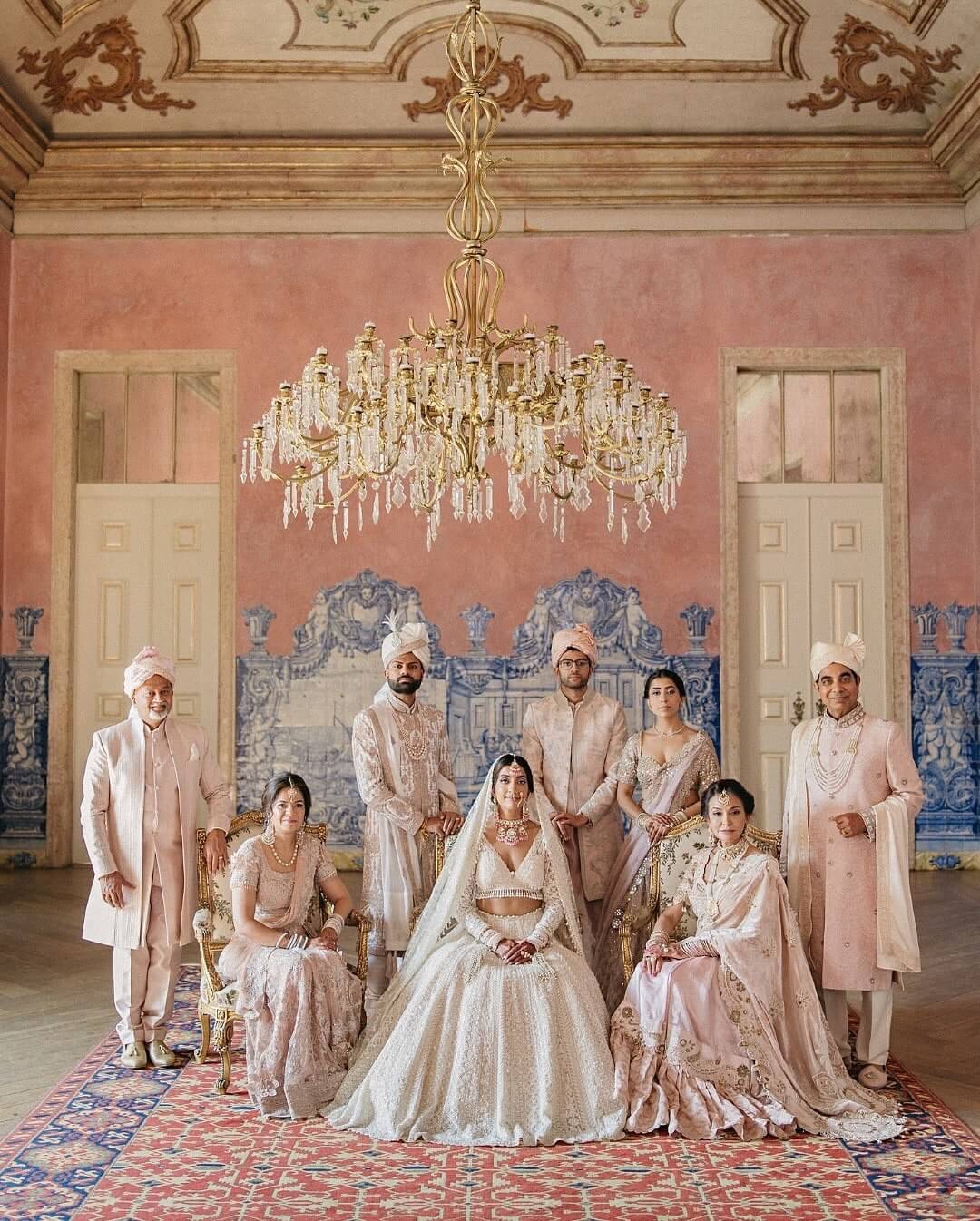
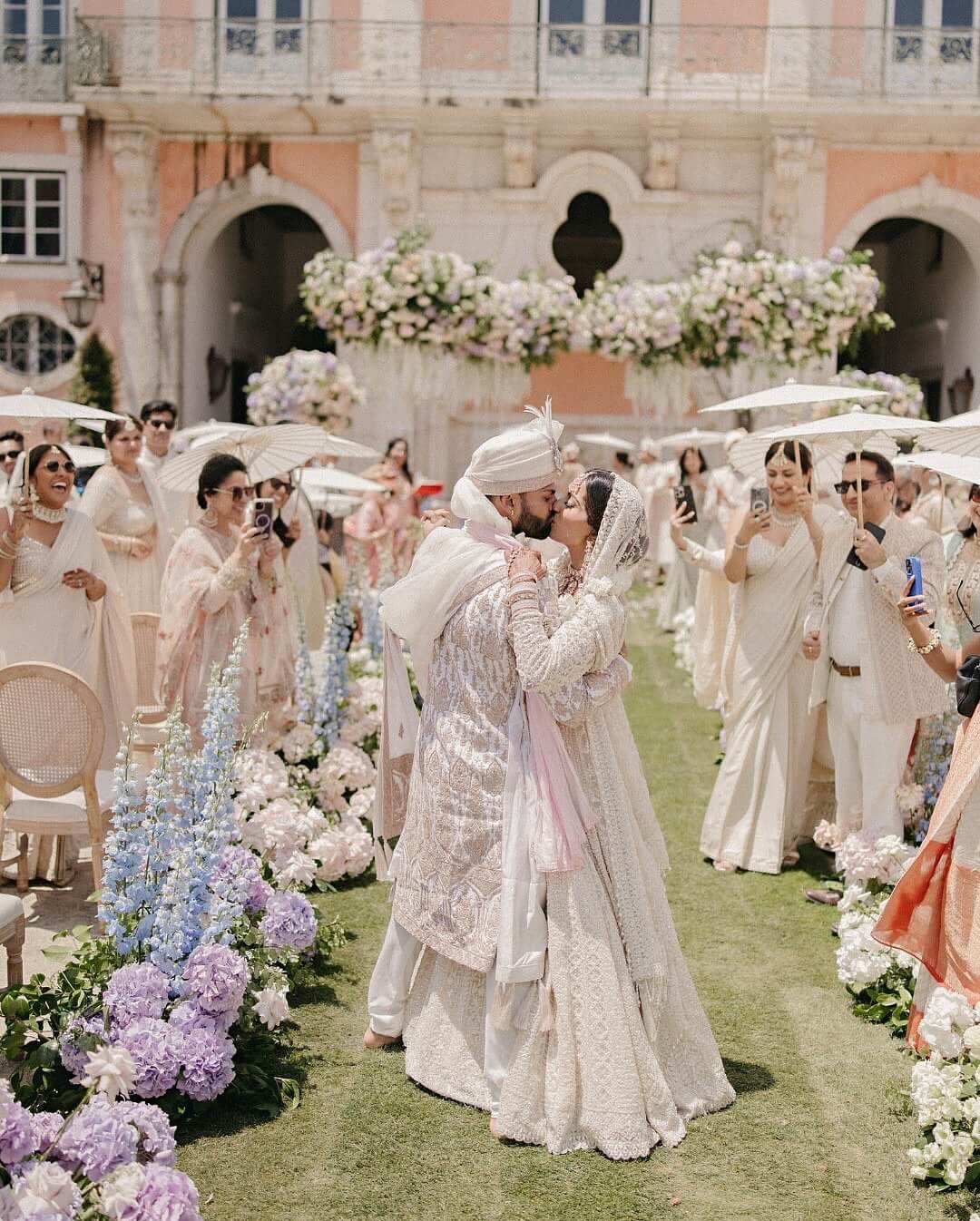
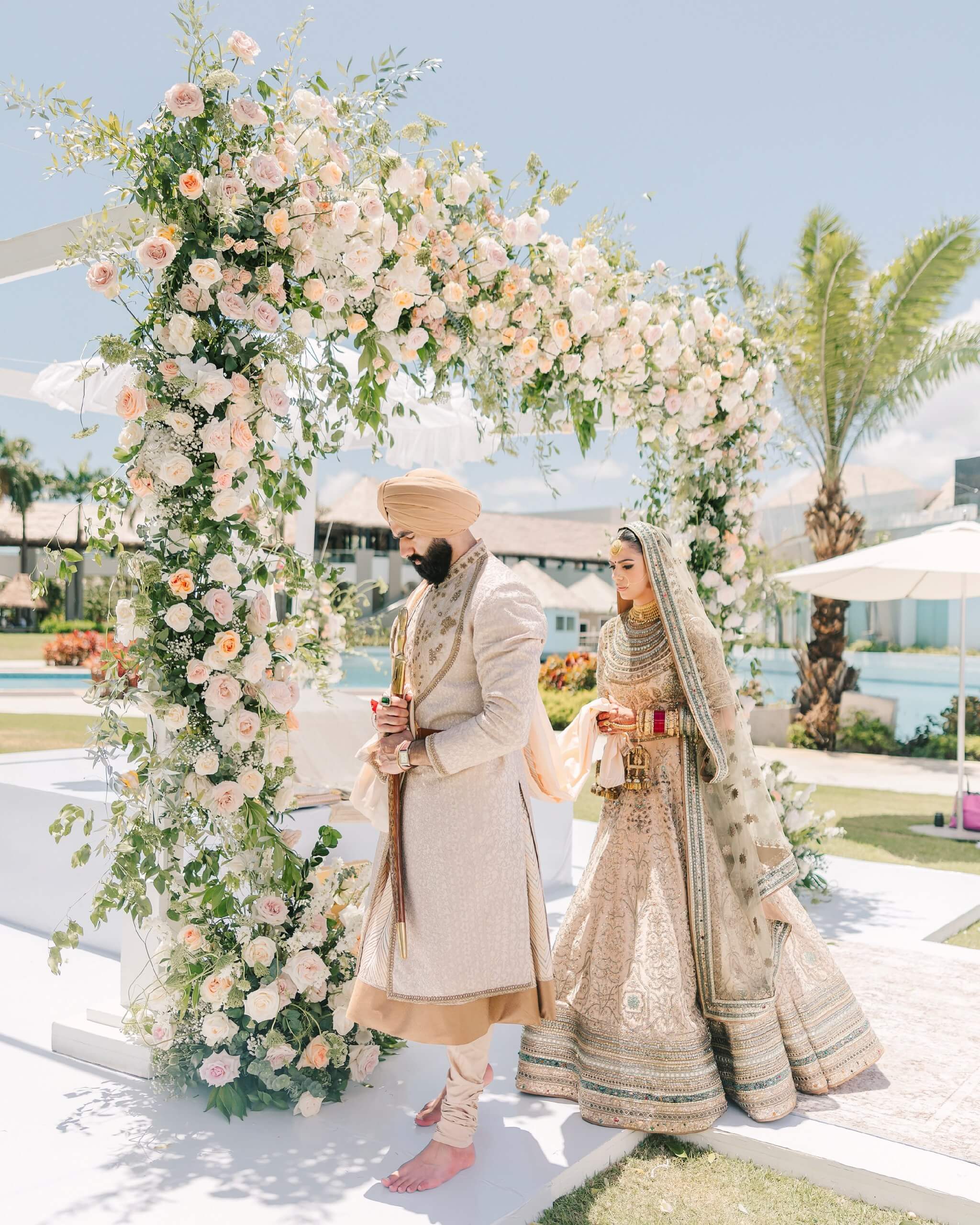
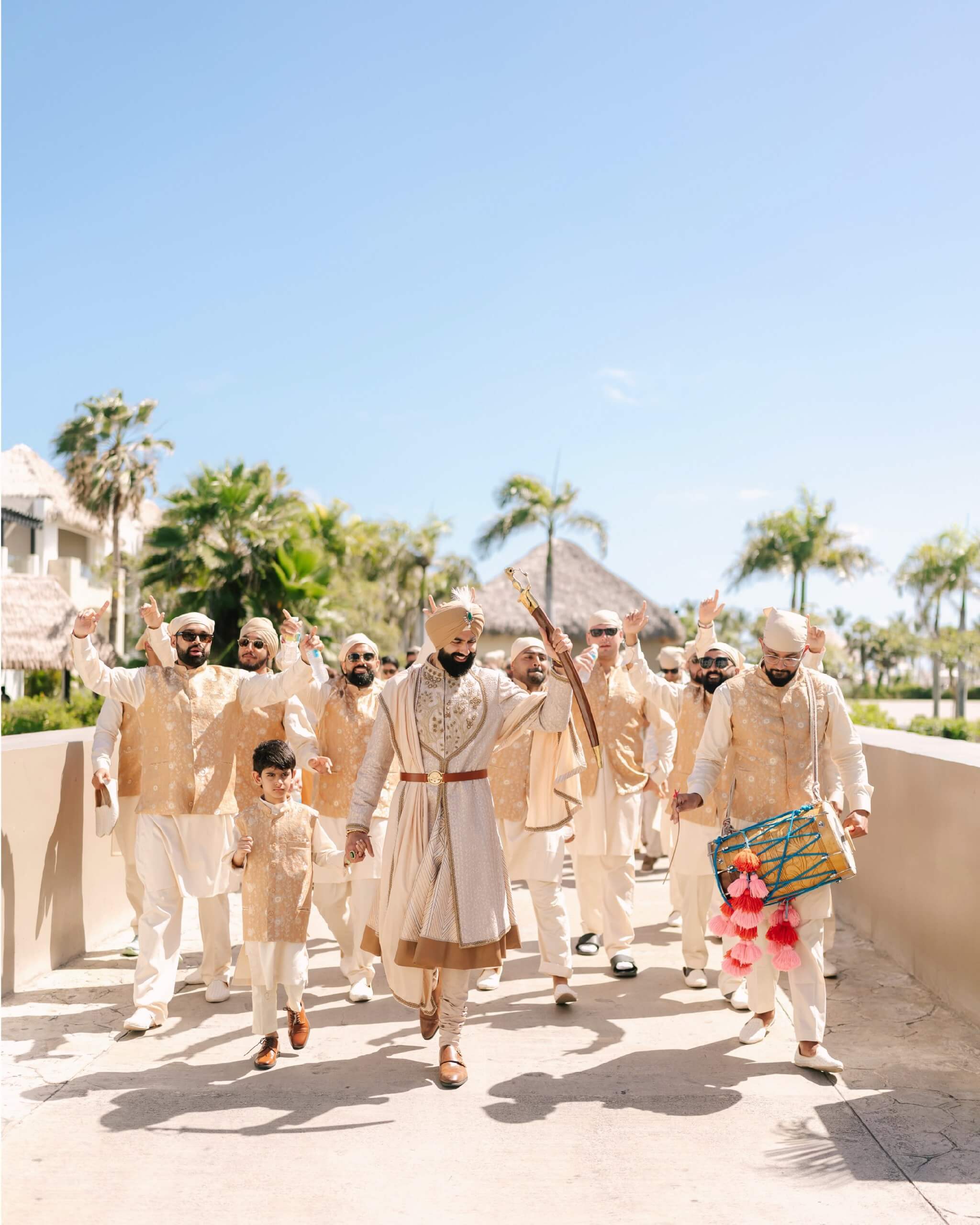
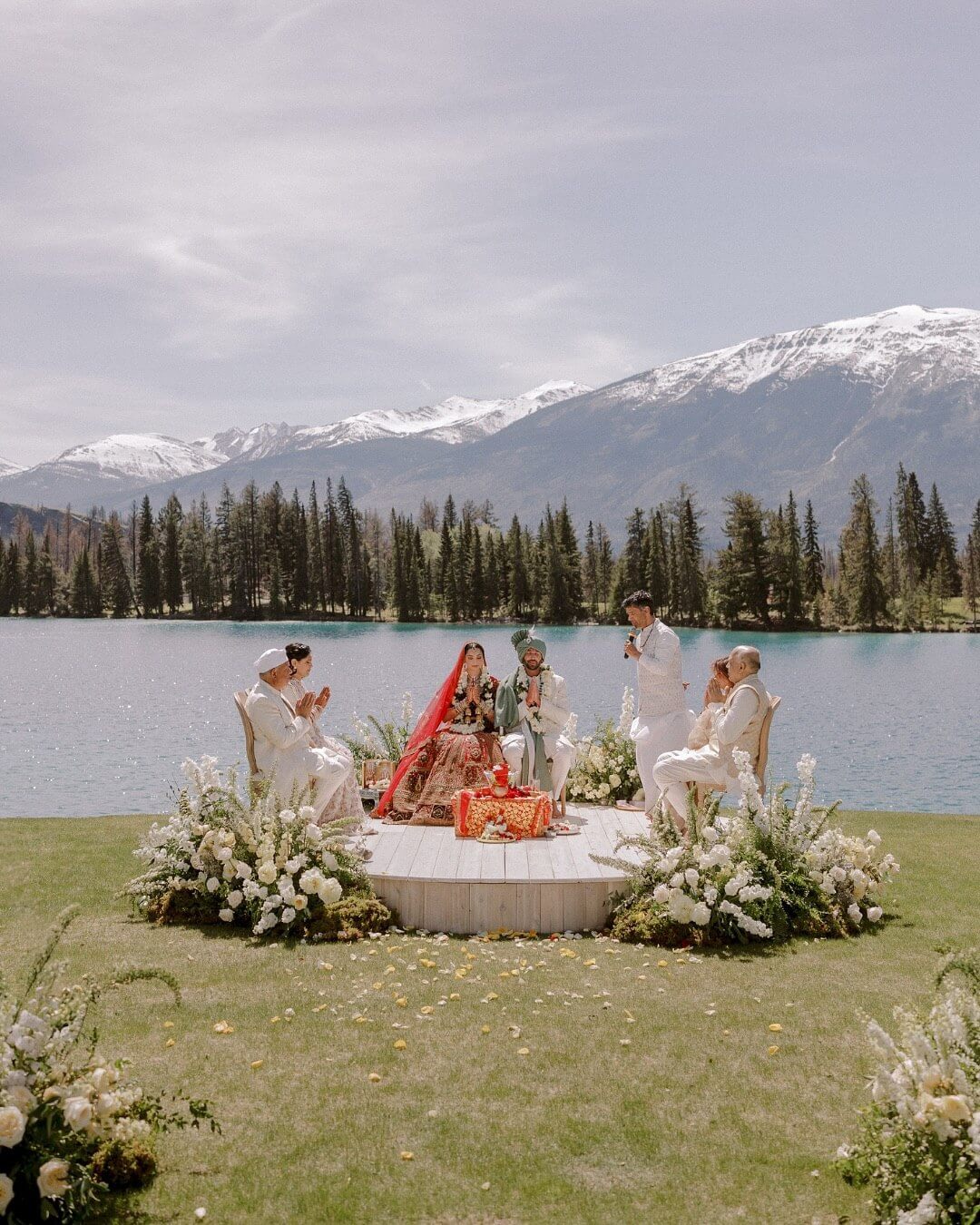
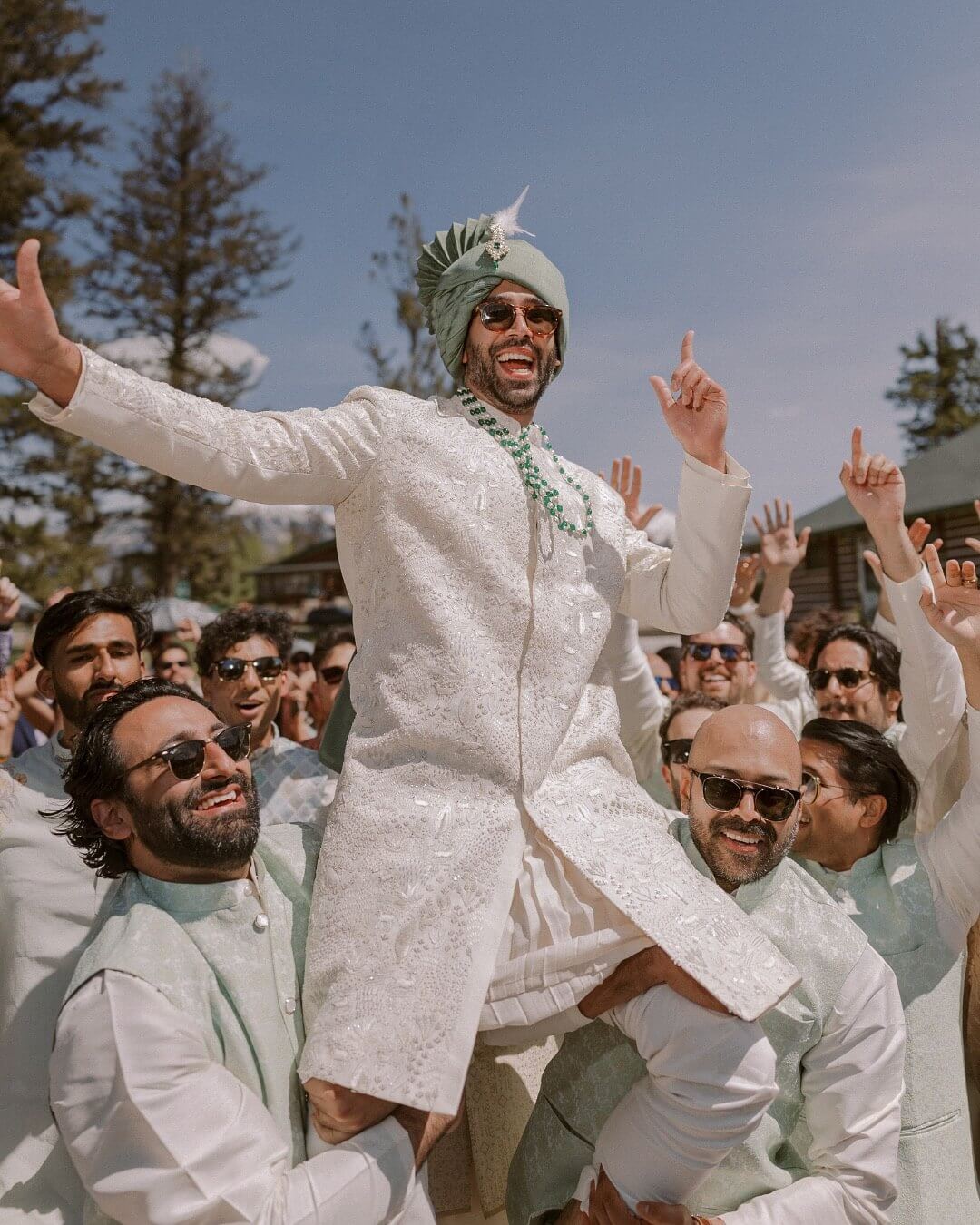
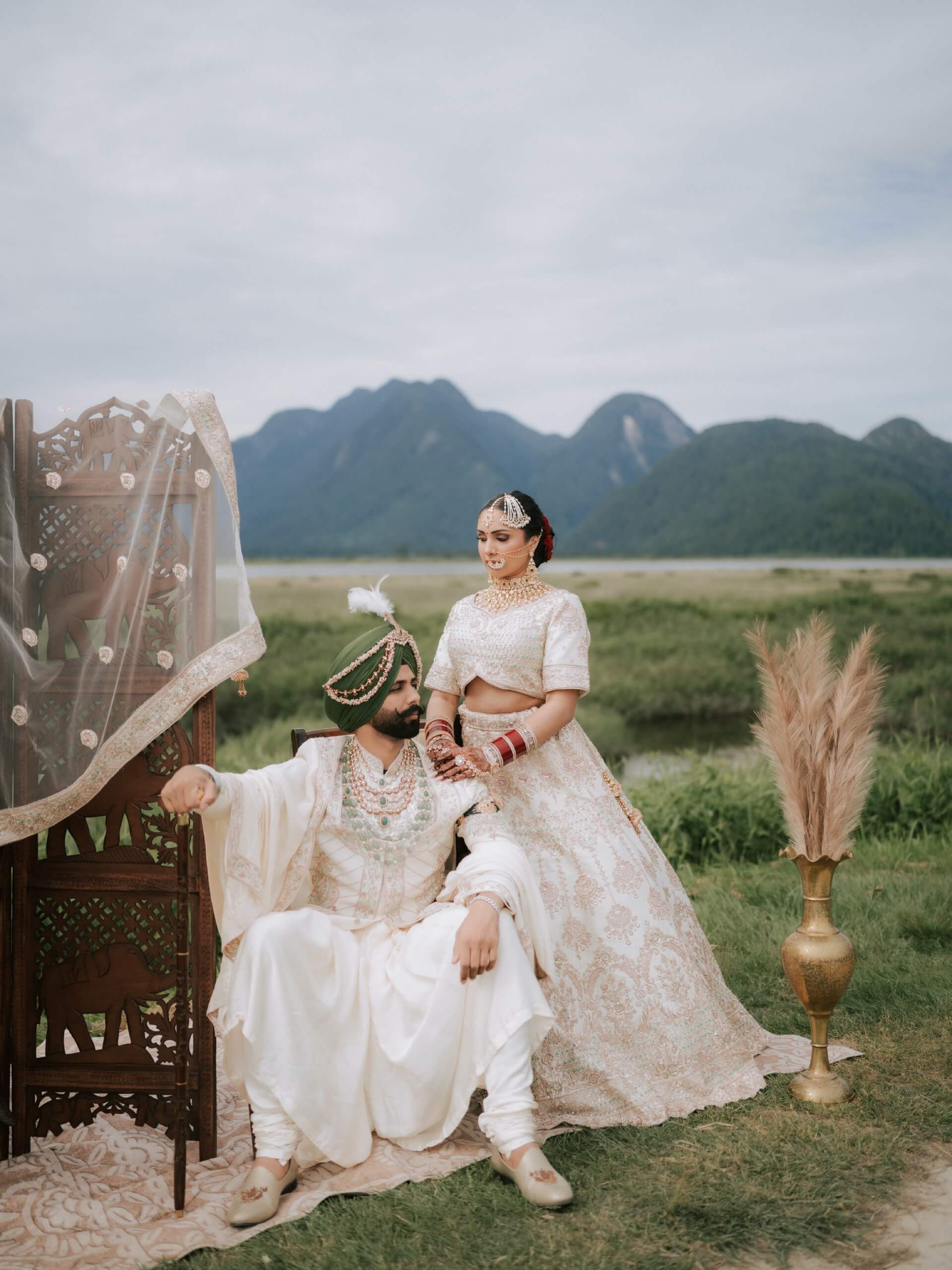
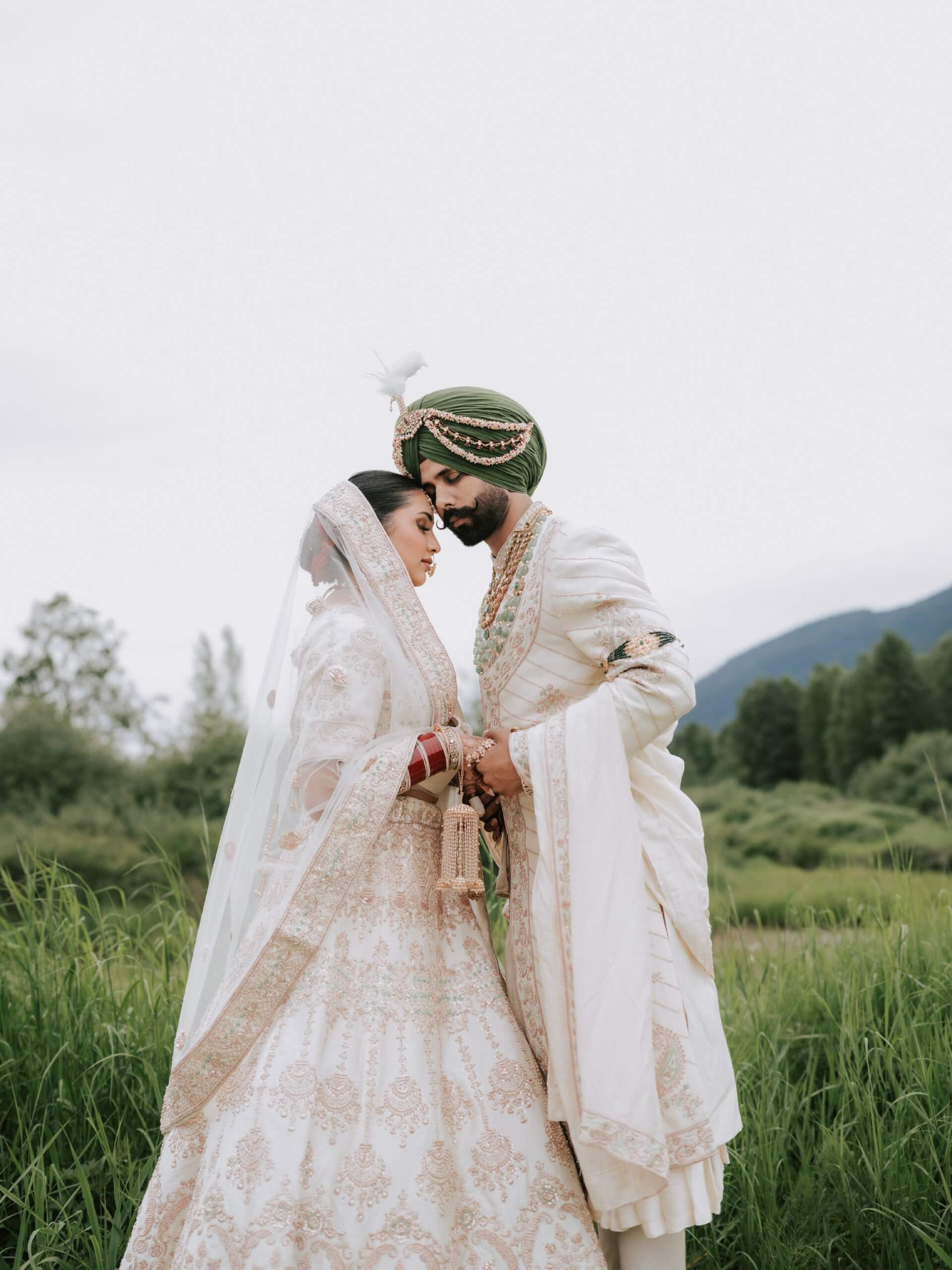
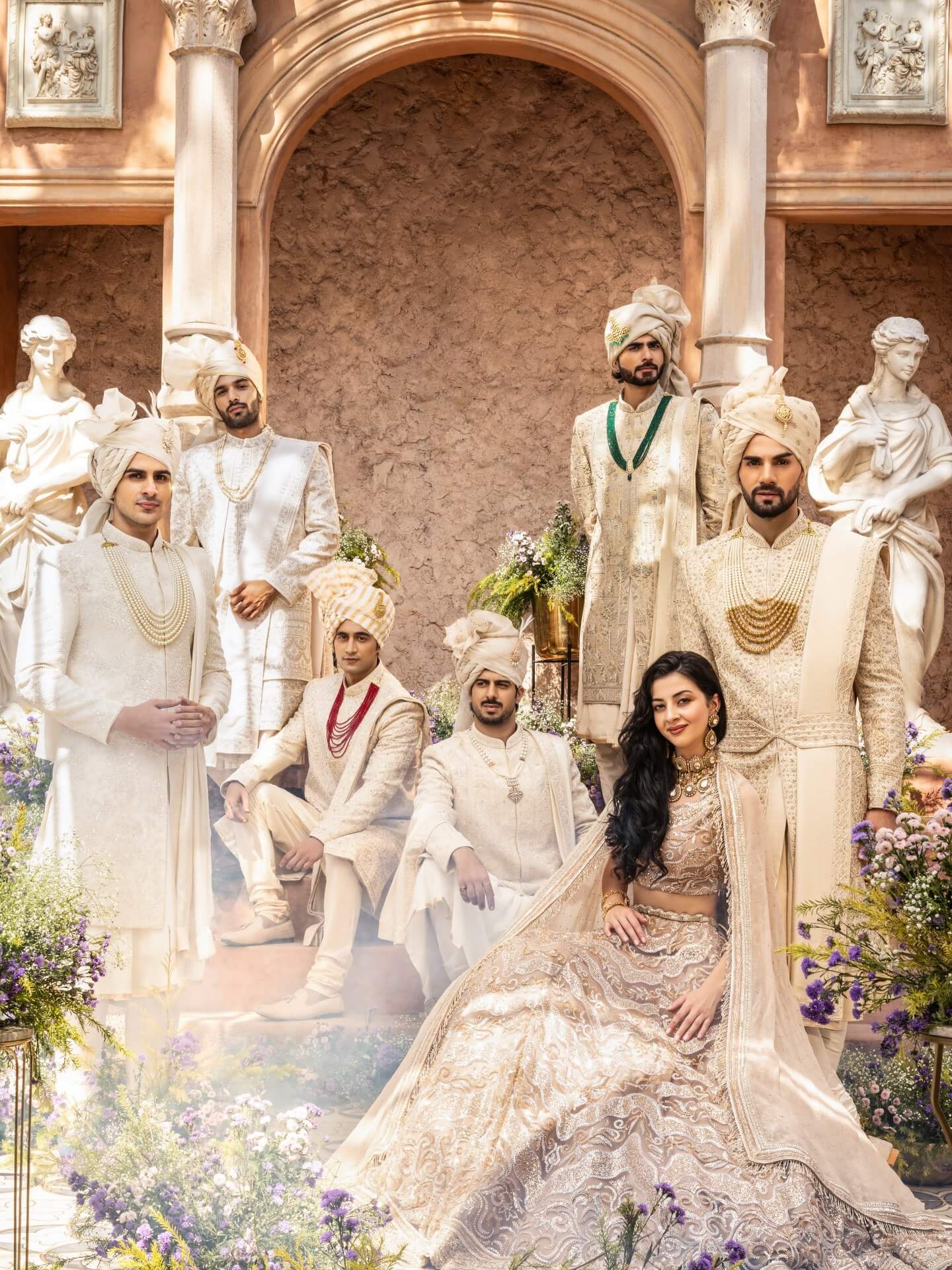
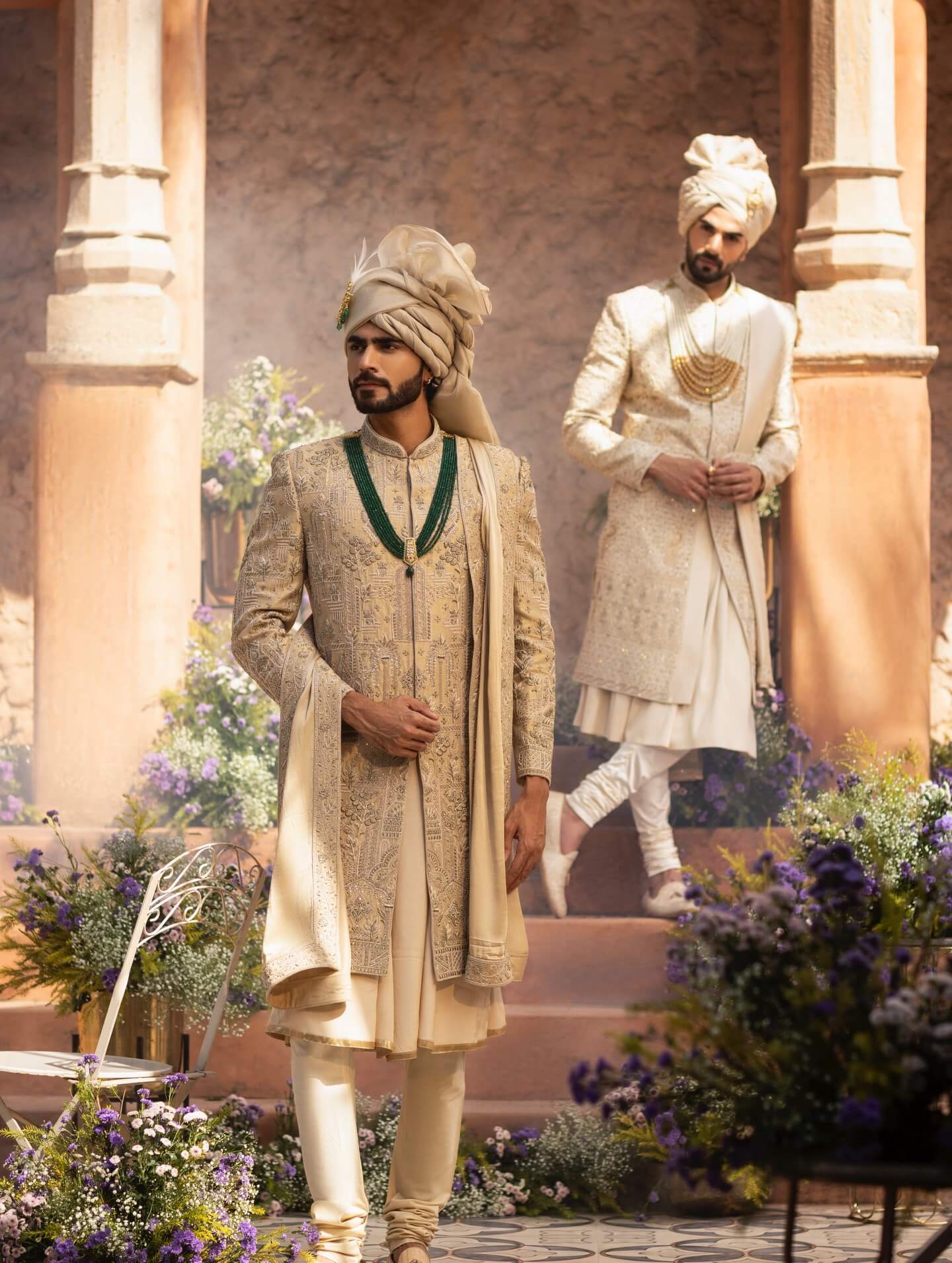
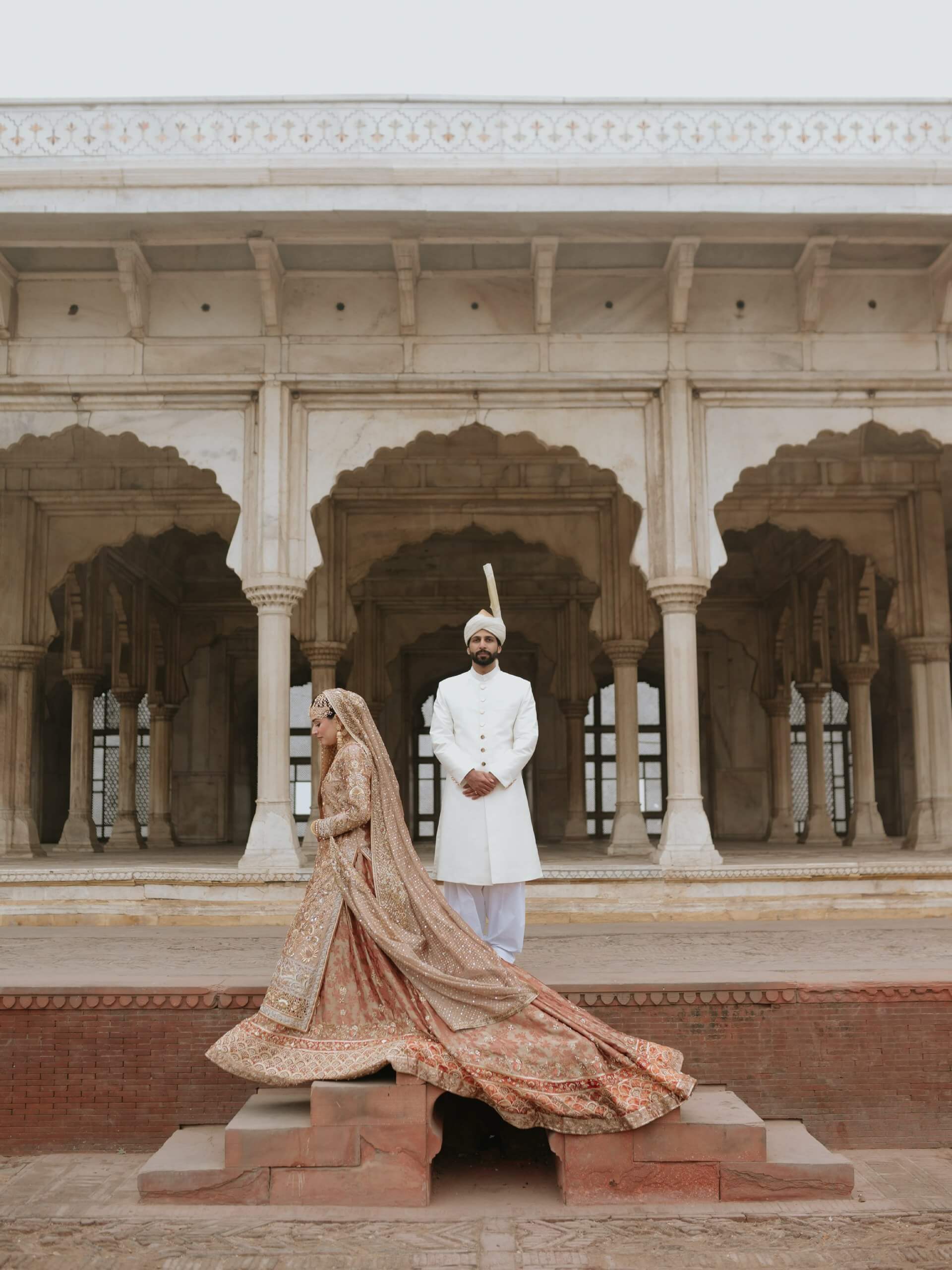
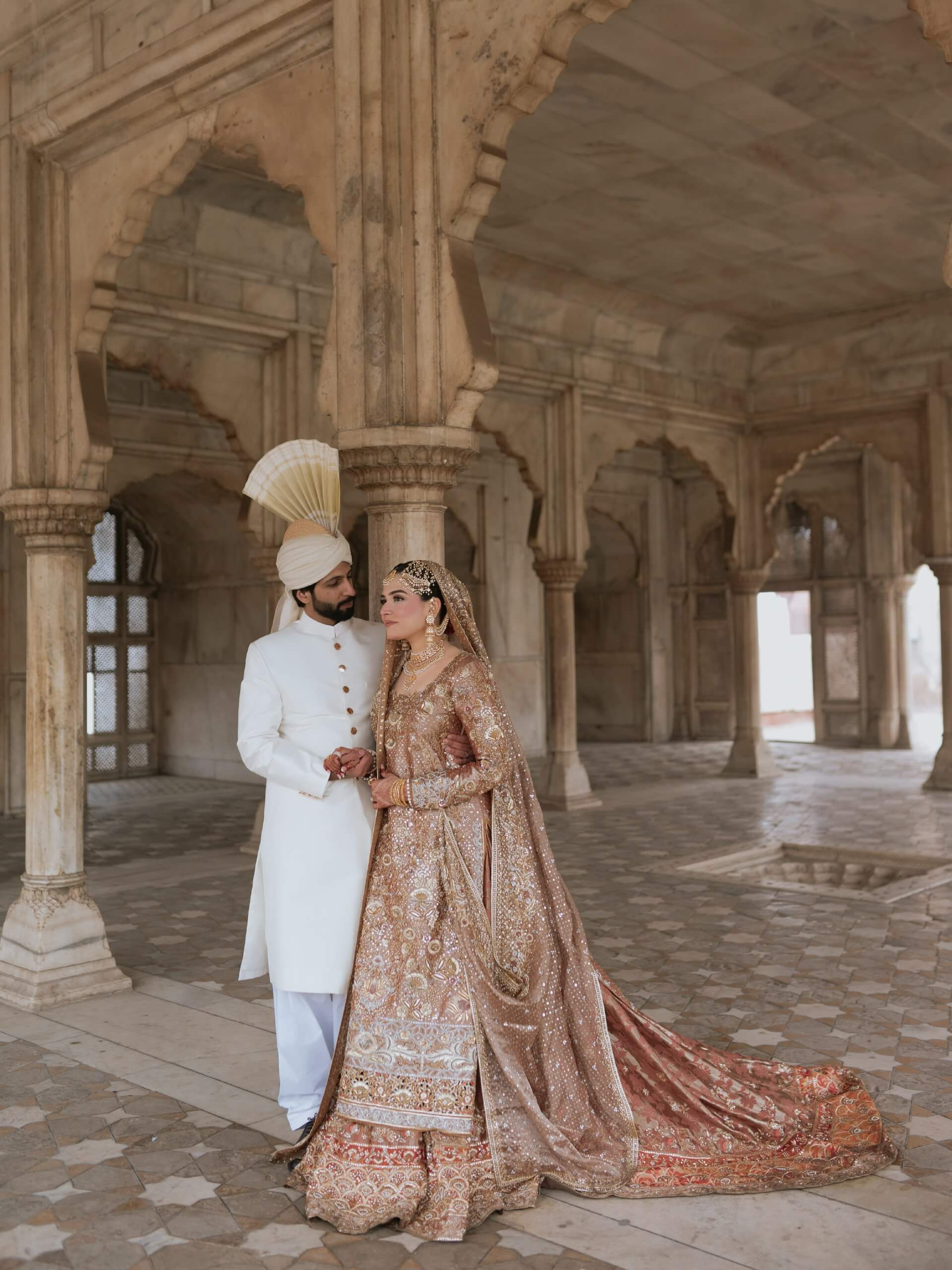
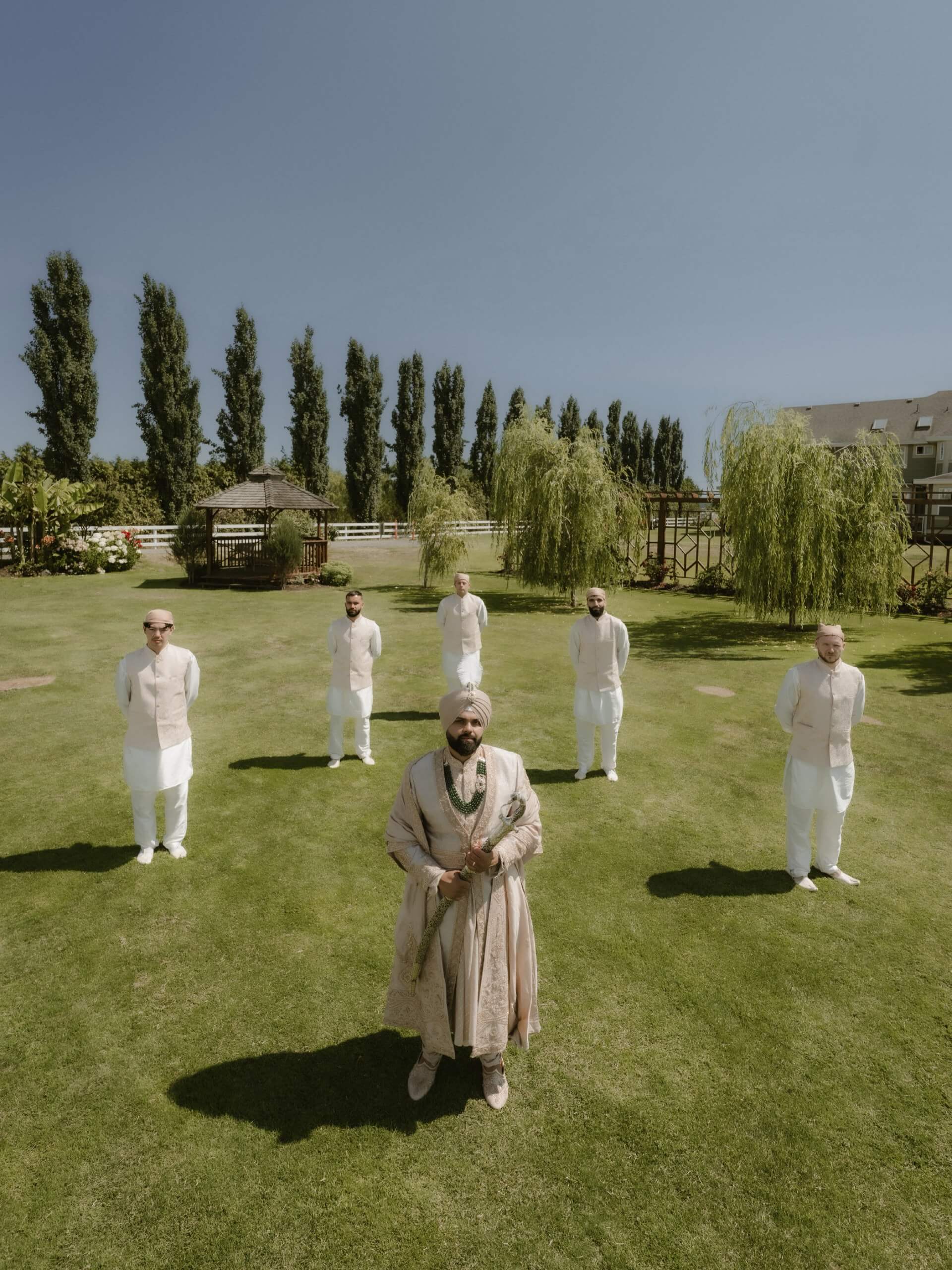
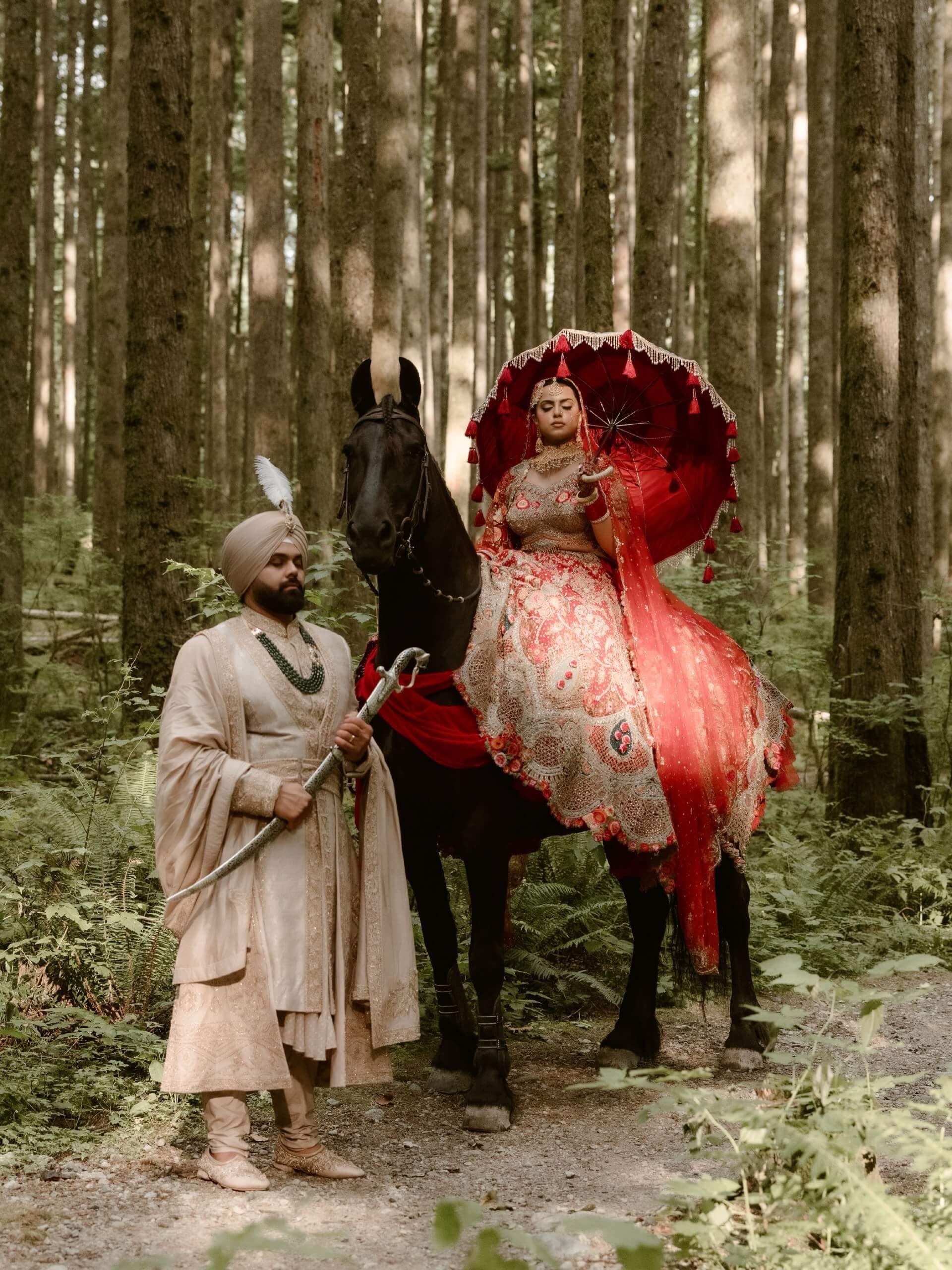
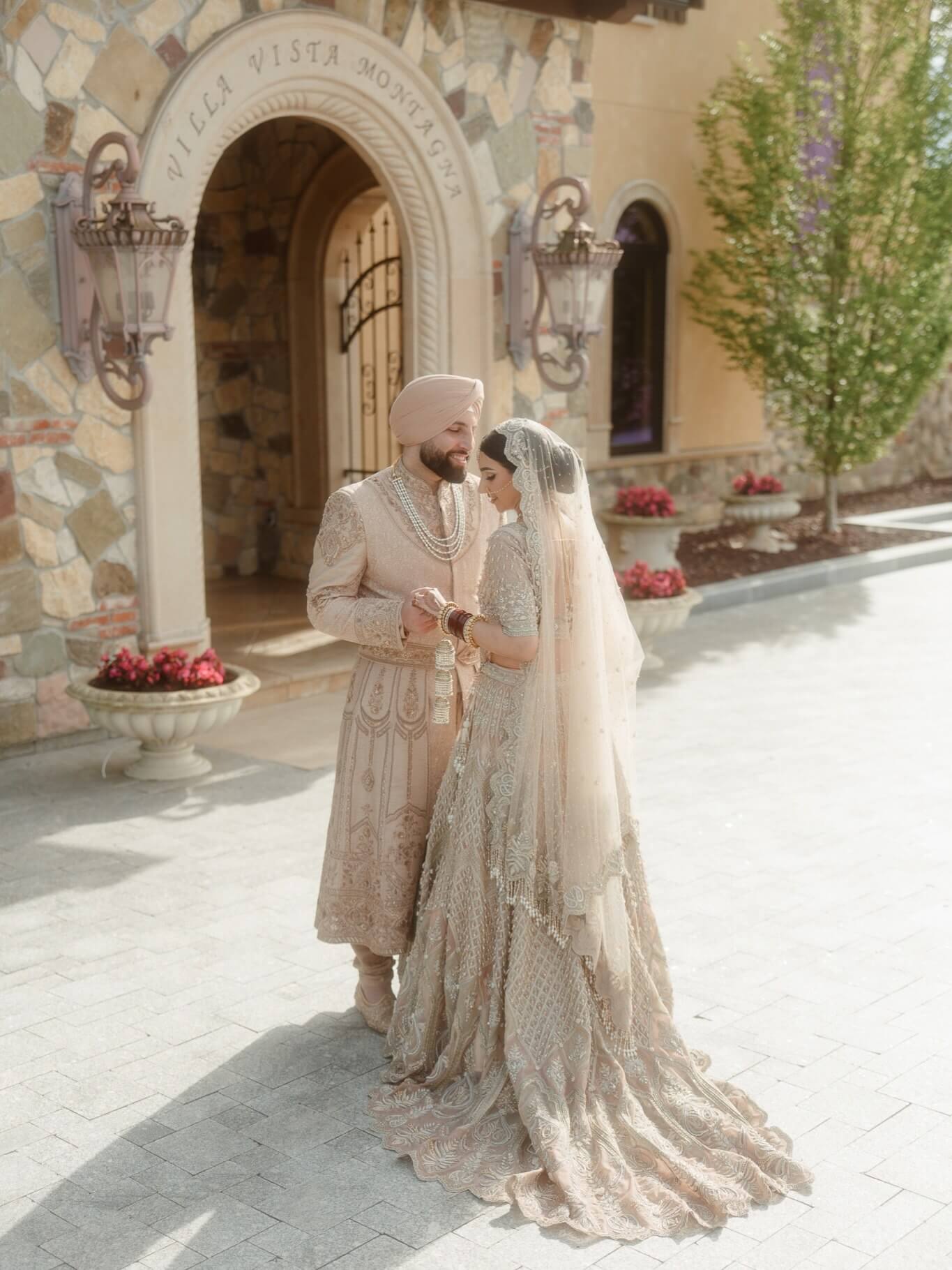
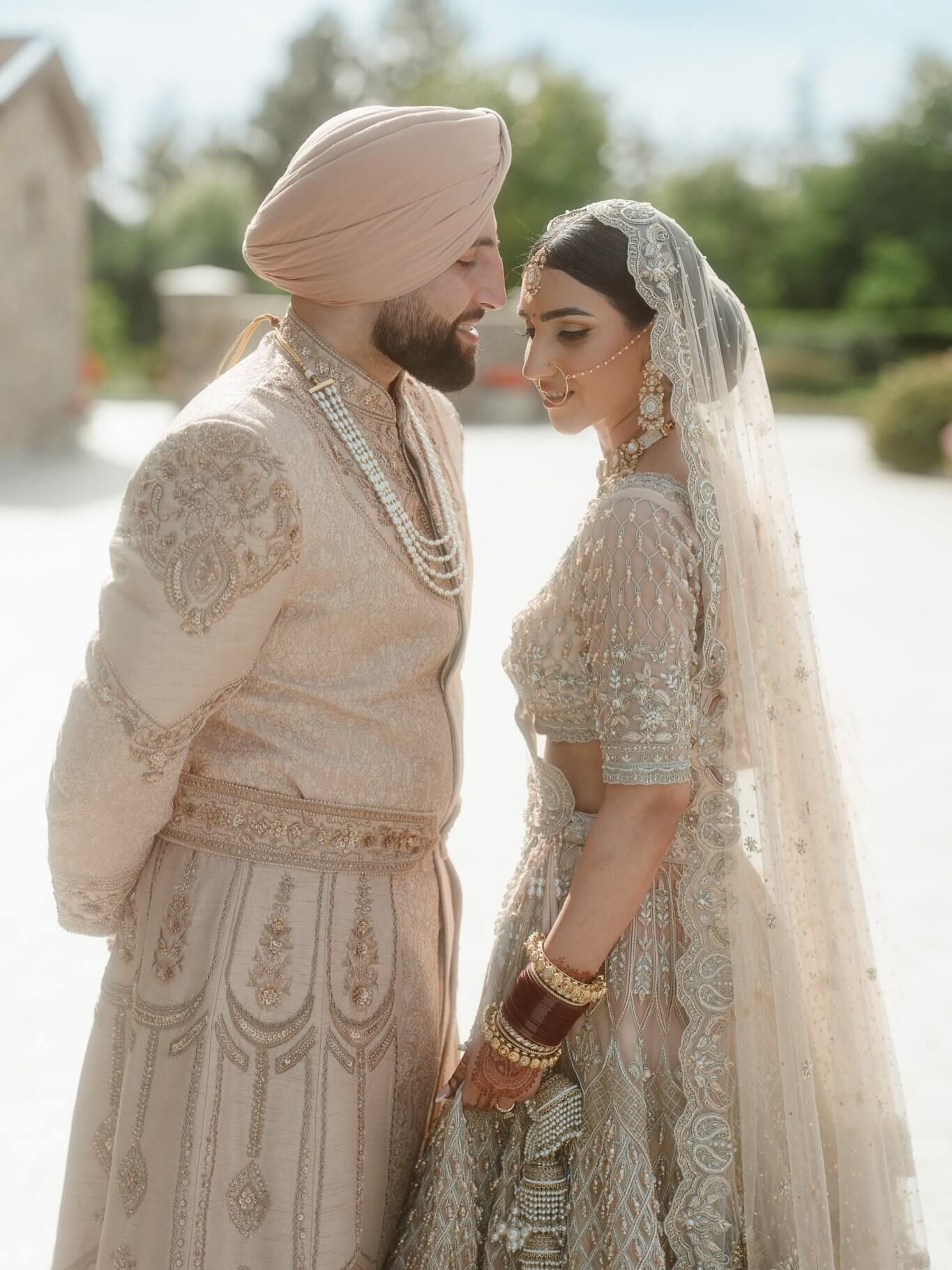
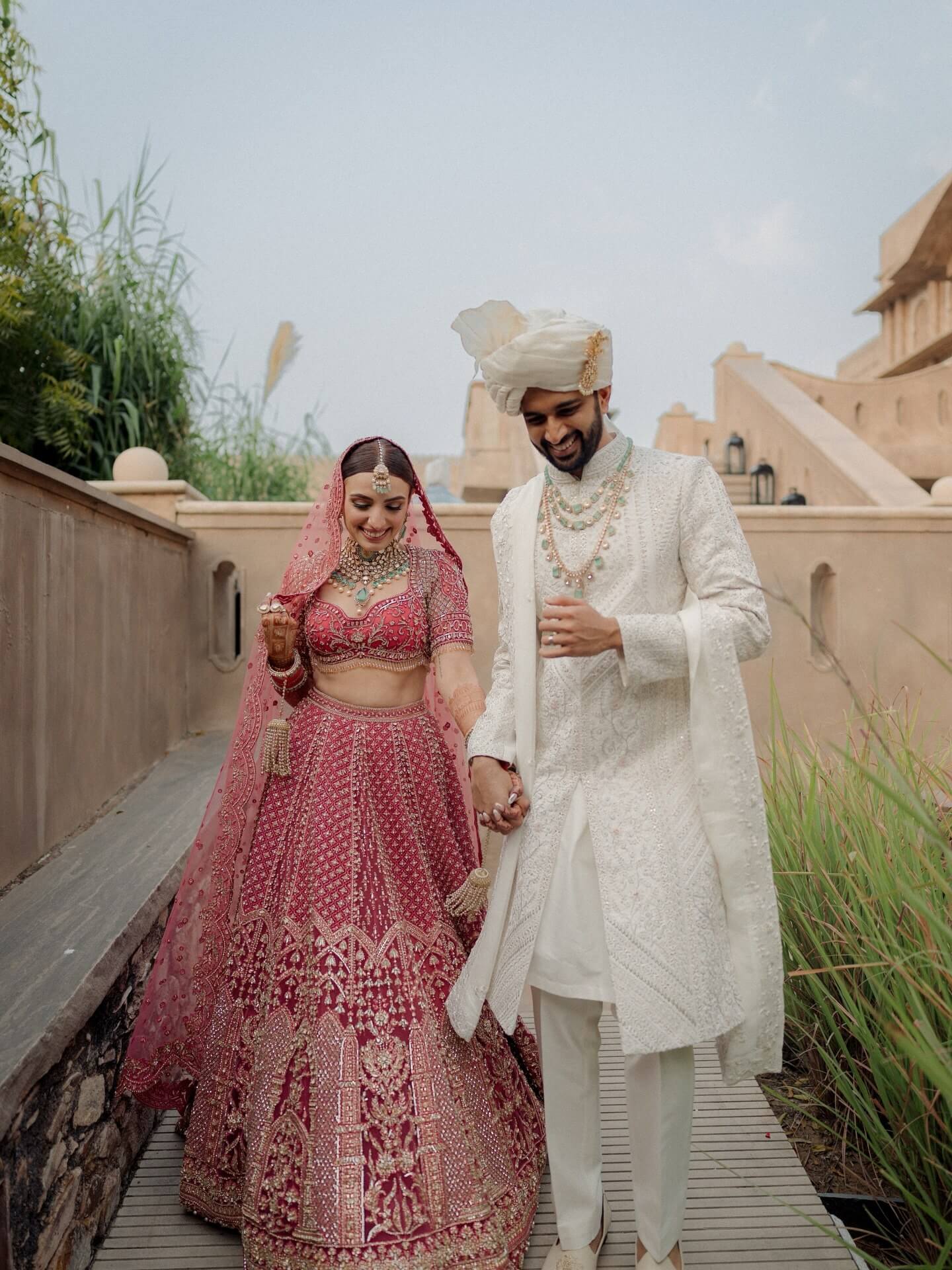
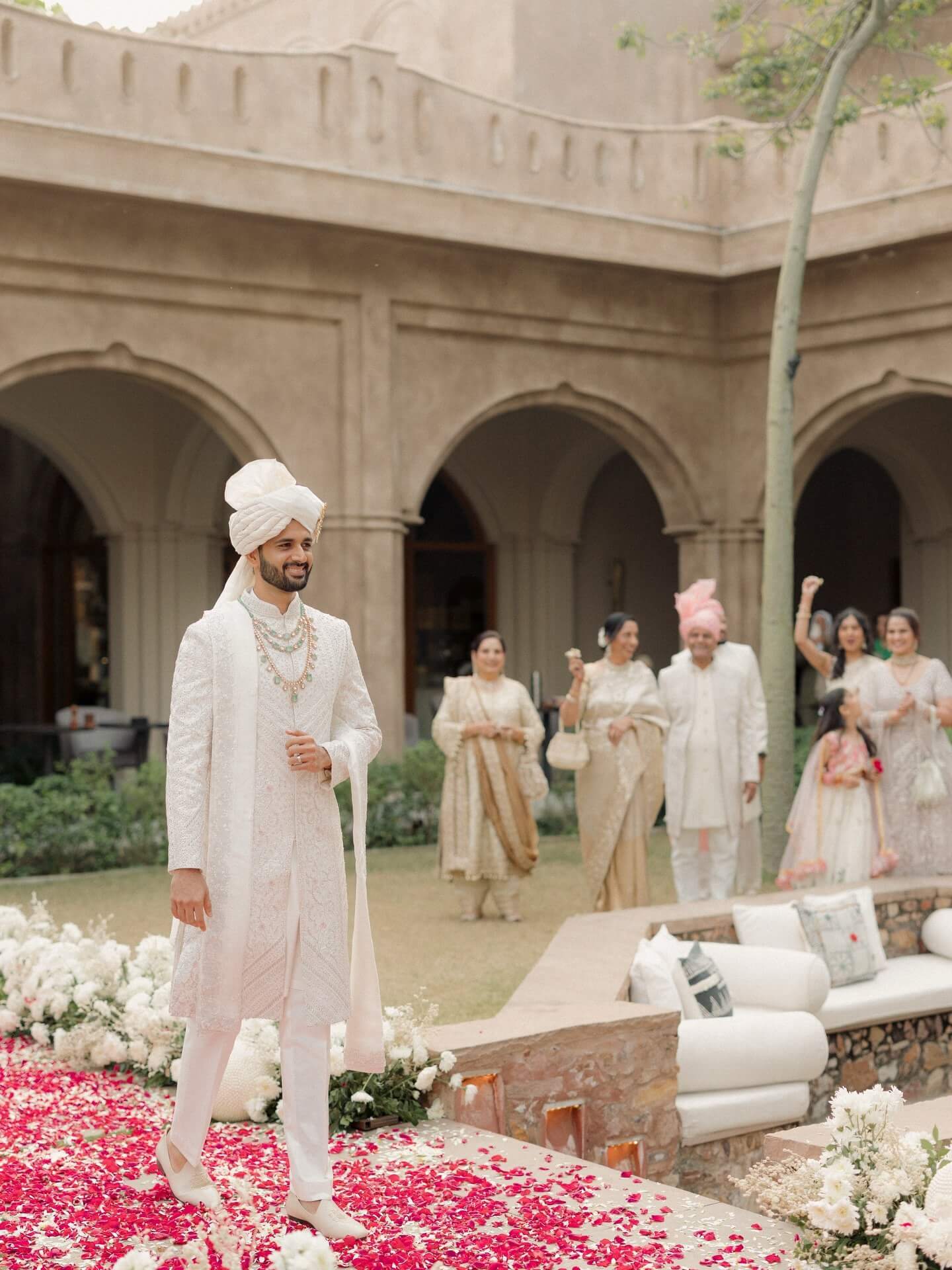
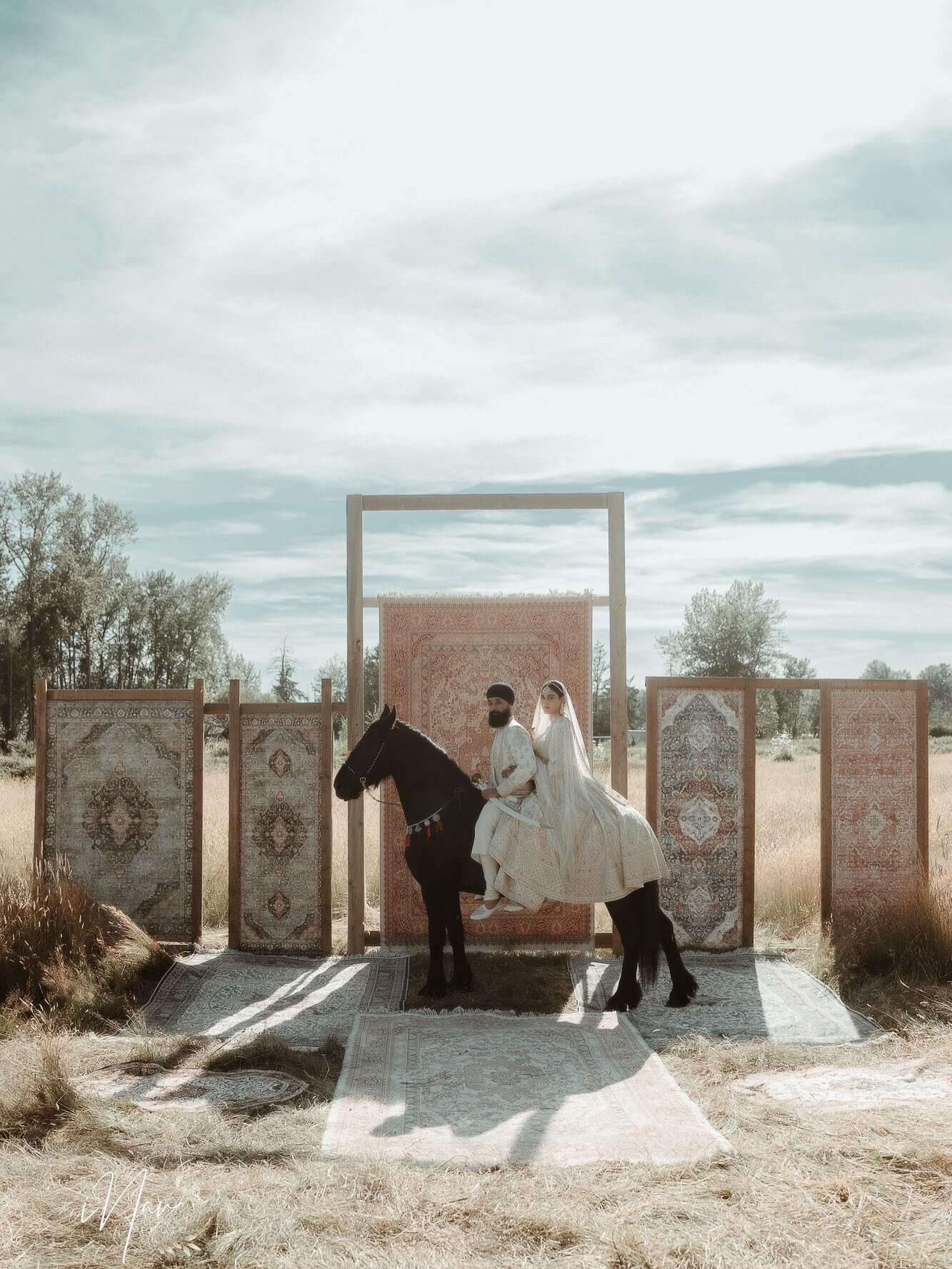
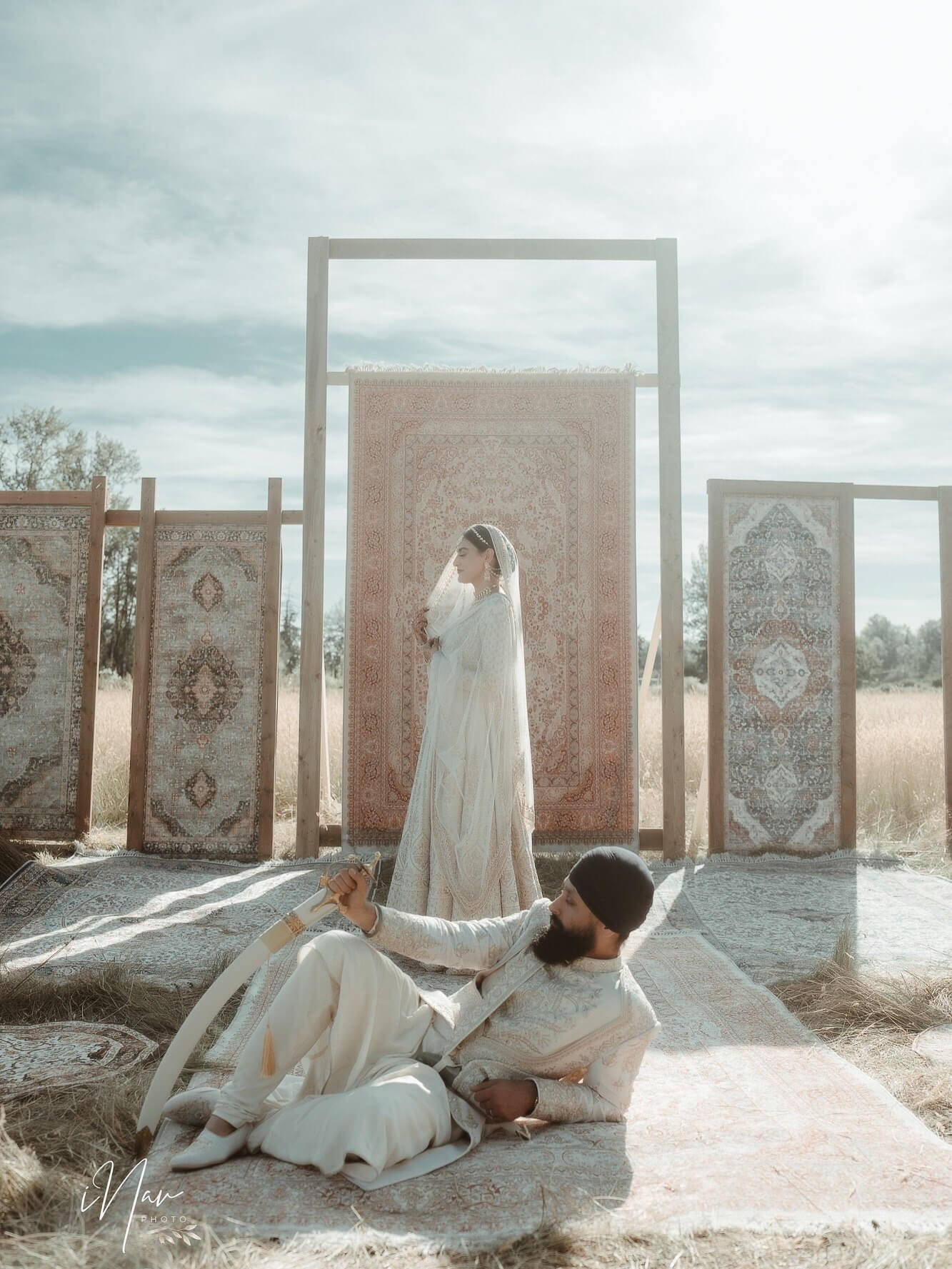
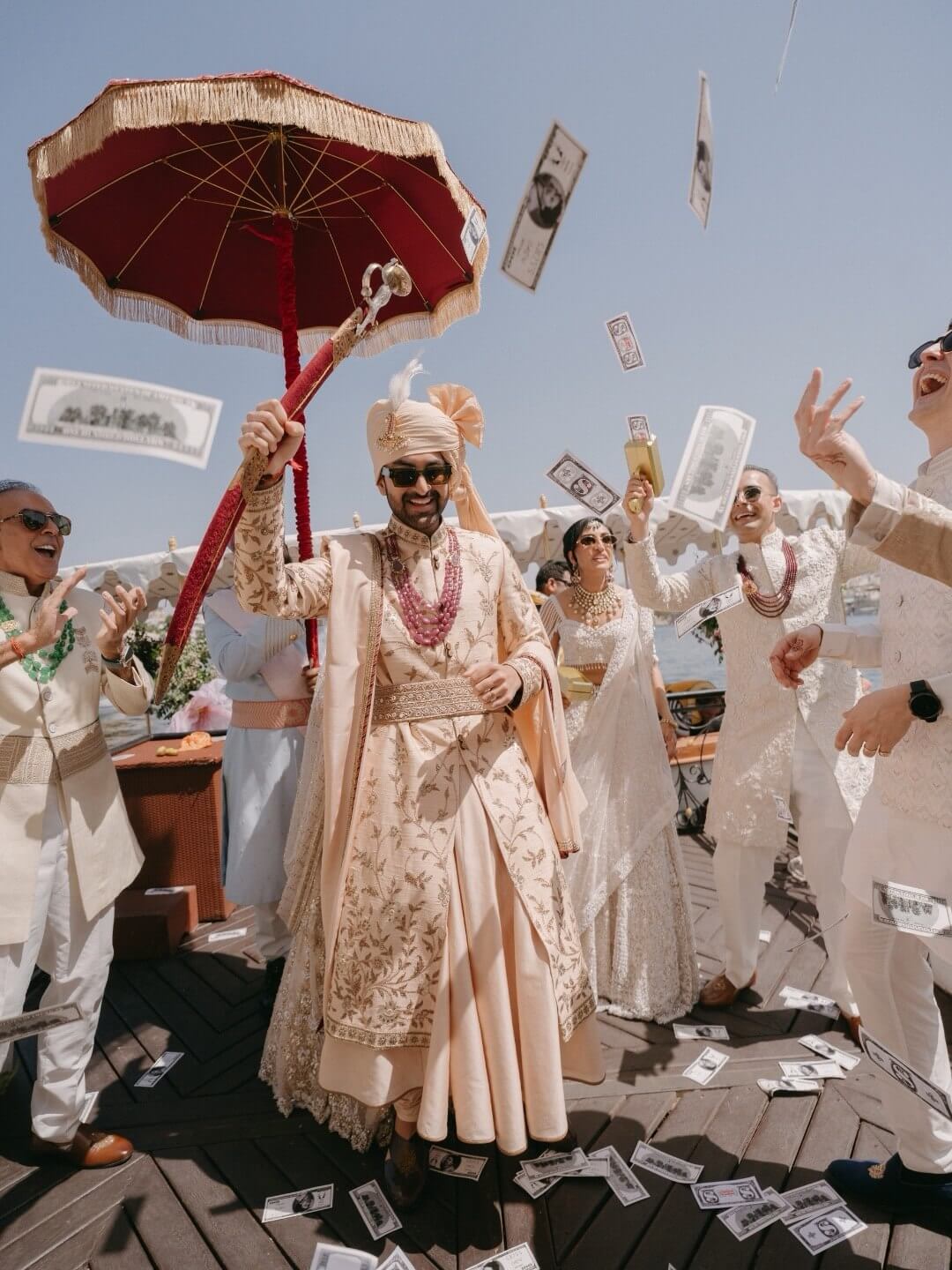
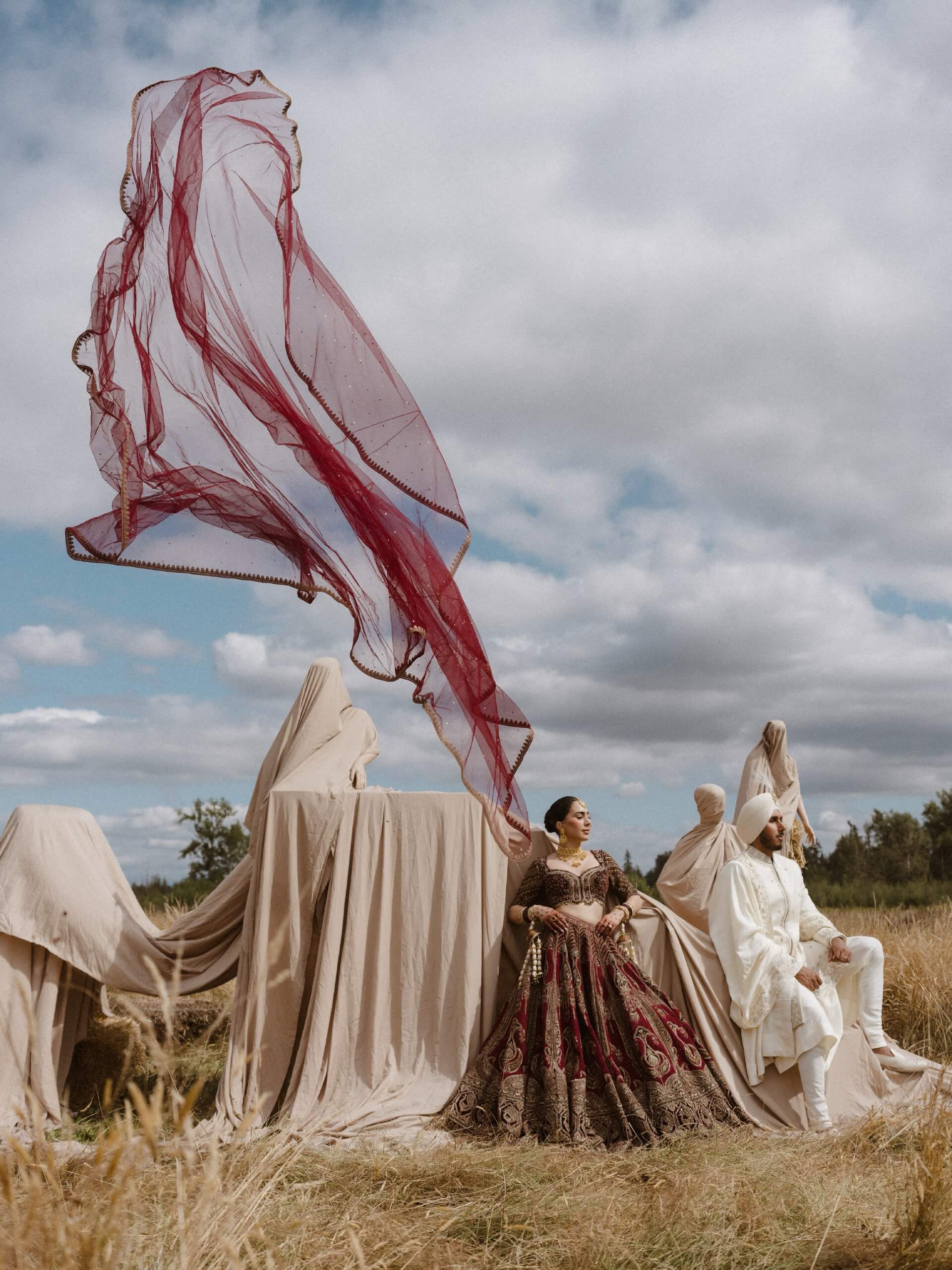
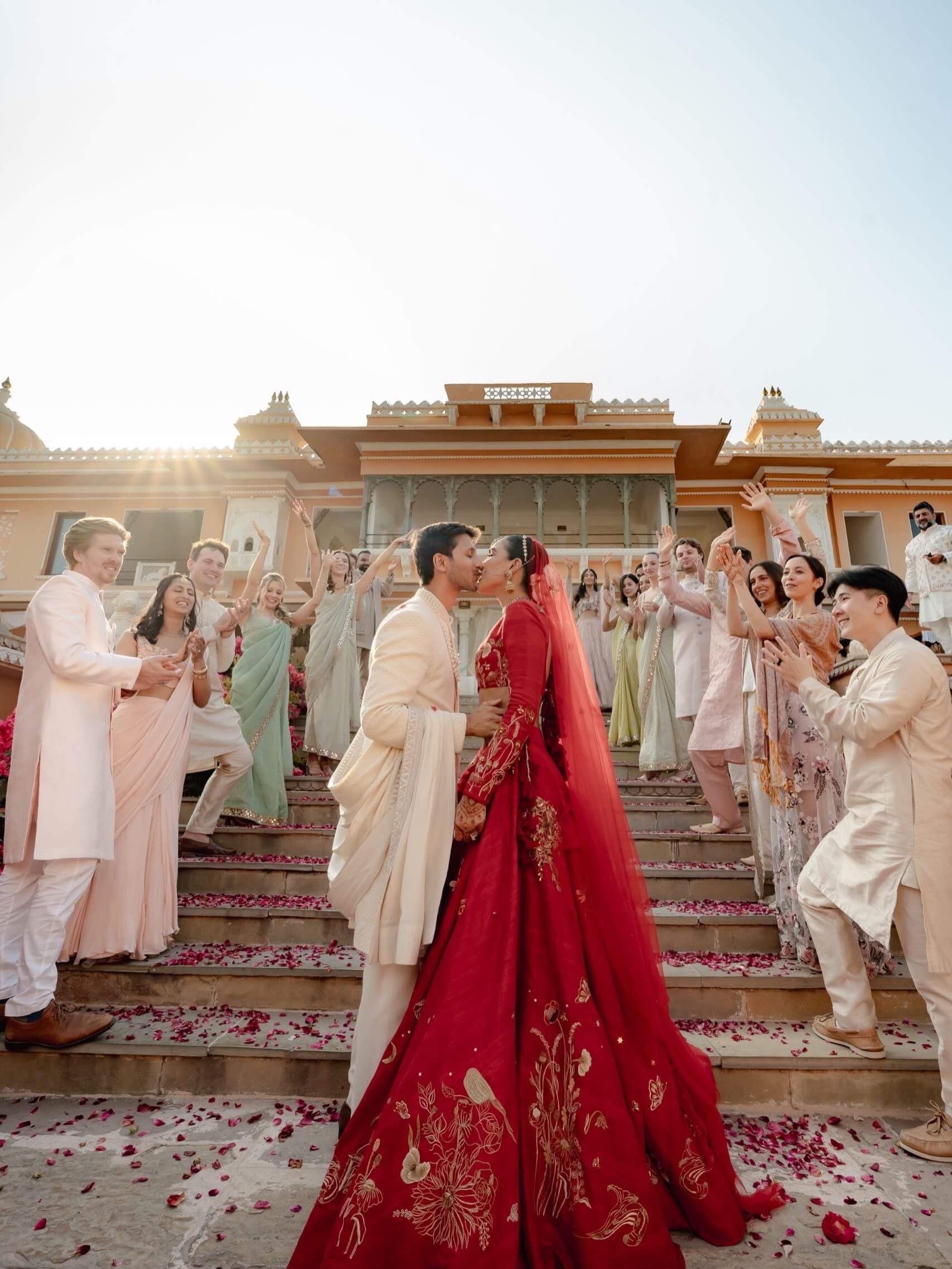
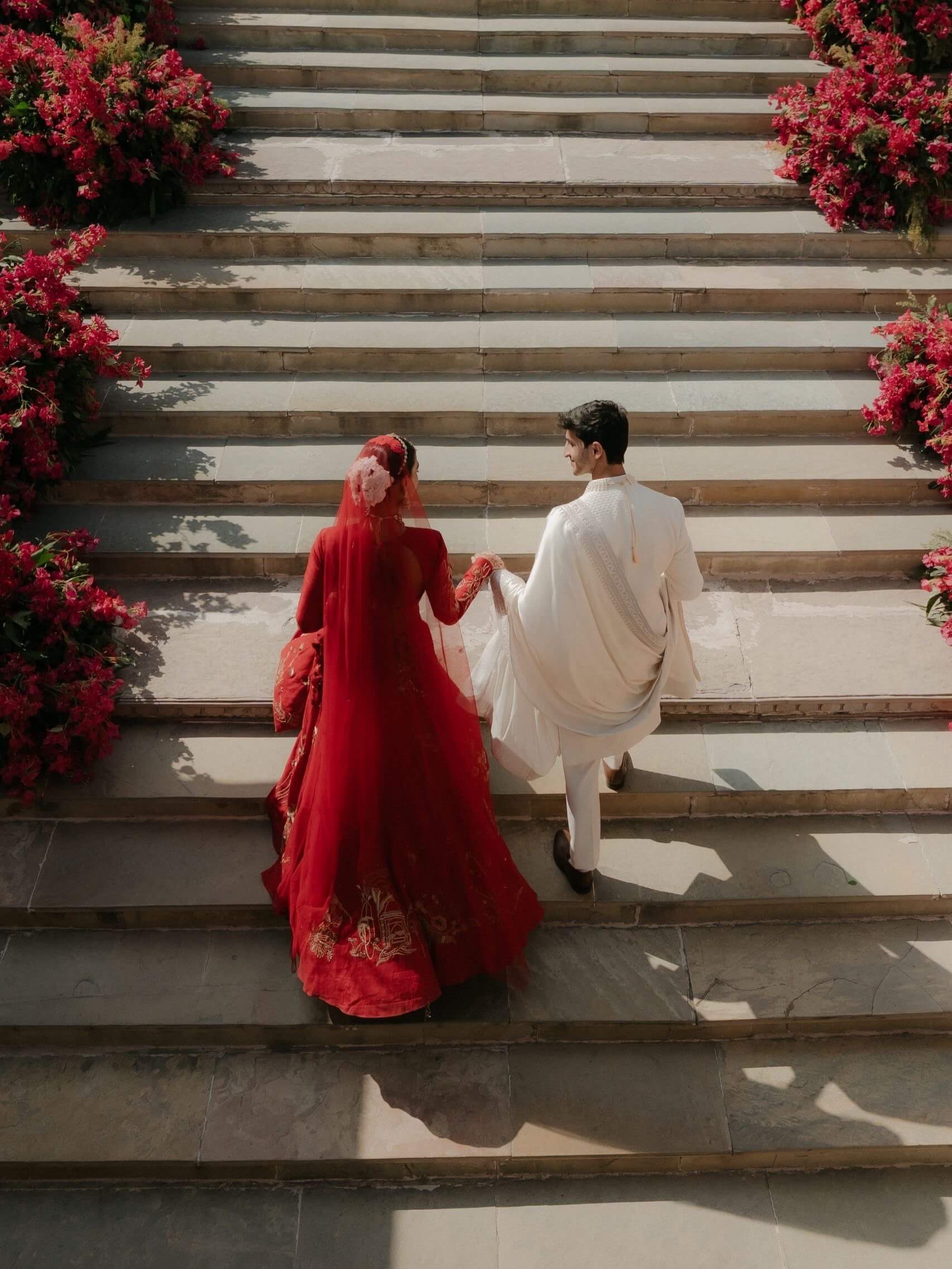
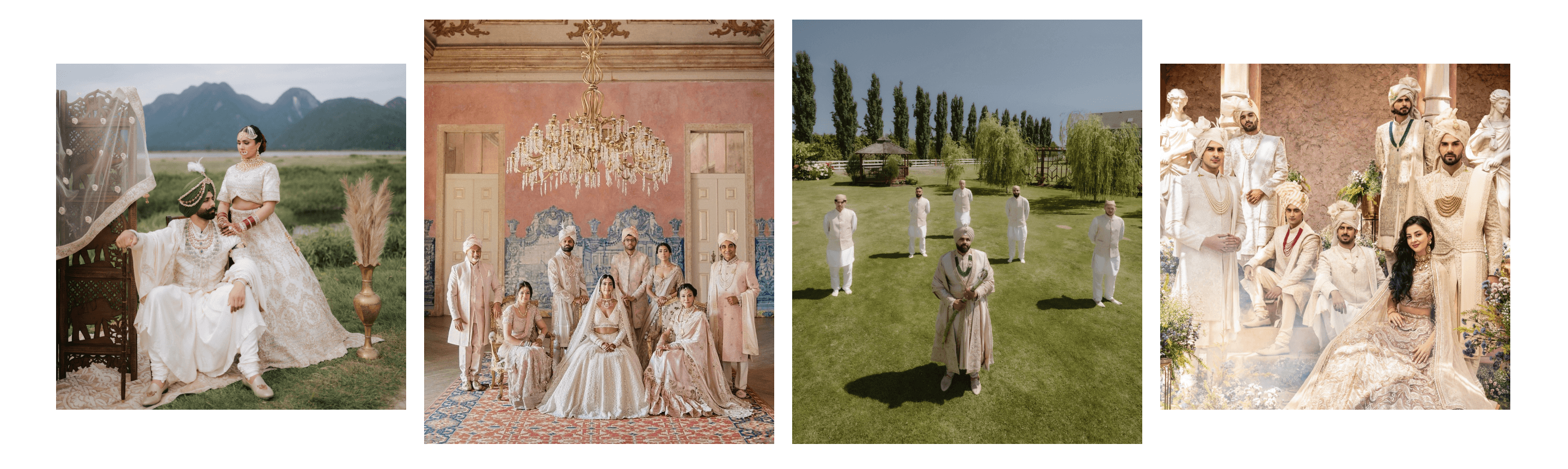
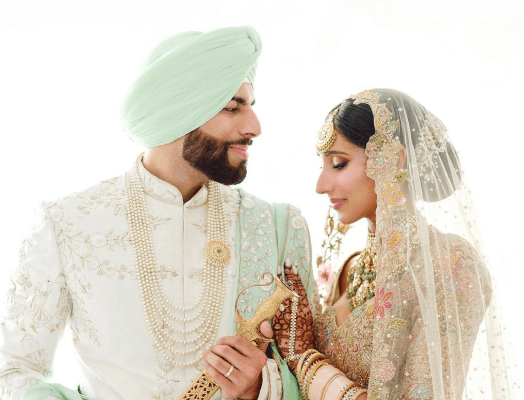
The sherwani originated in the Mughal courts of 19th-century British India, where it developed as a blend of the British frock coat and the traditional Indian tunic, tailored as formal clothing for noblemen navigating a colonial society that required both. Although it originally served as attire for members of the royal family, it later became part of the wedding scene as designers used heavier fabrics, denser embroidery, and more elaborate silhouettes designed for celebrations rather than diplomatic purposes. Today, it remains the most identifiable piece of a traditional Indian groom's outfit: a long, coat-like garment that signals the groom is getting ready for the main event, not just a preliminary one.
The fabric choice does the main work in determining how a sherwani actually appears. Silk provides the traditional, well-formed elegance most grooms have in mind; its natural sheen reflects light in a way synthetic fabrics can't match. Velvet embraces drama and warmth, making it the best choice for winter events and evening functions where a certain weight and richness are suitable rather than excessive. Brocade adds texture through woven floral or geometric patterns, giving the garment a physical richness that looks wonderful in both natural and artificial light; for weddings in a truly hot climate, lighter cotton or linen mixes are used, giving up some drama for comfort.
| Style | Description | Best For |
|---|---|---|
| lassic Long Sherwani | Knee or calf-length silhouette, structured collar | The main ceremony, the most formal option |
| Dhoti Sherwani | Structured top with a draped dhoti bottom | South Indian and Bengali weddings, tailored-meets-flowing contrast |
| Angrakha Sherwani | Overlap-front closure with a tie detail | Grooms wanting a visibly artistic, Mughal-inspired silhouette |
| Peshwai Sherwani | Longer, ornate, Maratha-royal influence | Grooms leaning into specific regional heritage |
| Indo-Western Sherwani | Modern cuts, asymmetry, fusion tailoring | Grooms wanting the silhouette without full traditional weight |
Georgette and chanderi handle summer weddings without trapping heat like velvet or heavy brocade do; they are the superior base for an Indian groom's sherwani wedding outfit for an outdoor ceremony. When marrying outdoors during the warmer months, a groom benefits from avoiding the heaviest fabrics mentioned and saving the grandeur of the traditional Indian groom's outfit, complete with heavy embroidery, a structured pagdi, and deep maroon or gold, for times when the weather can handle it.
Kurta
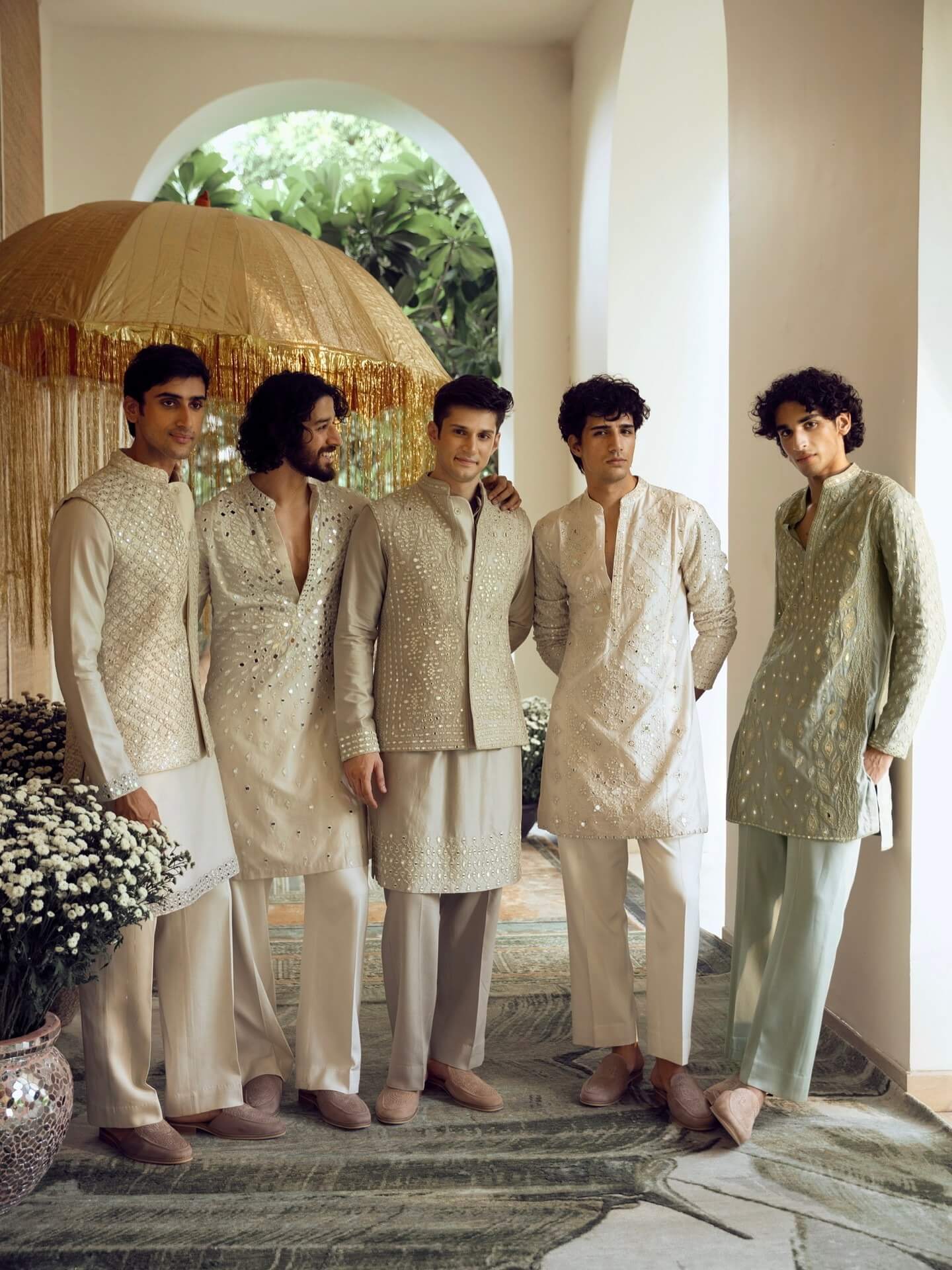
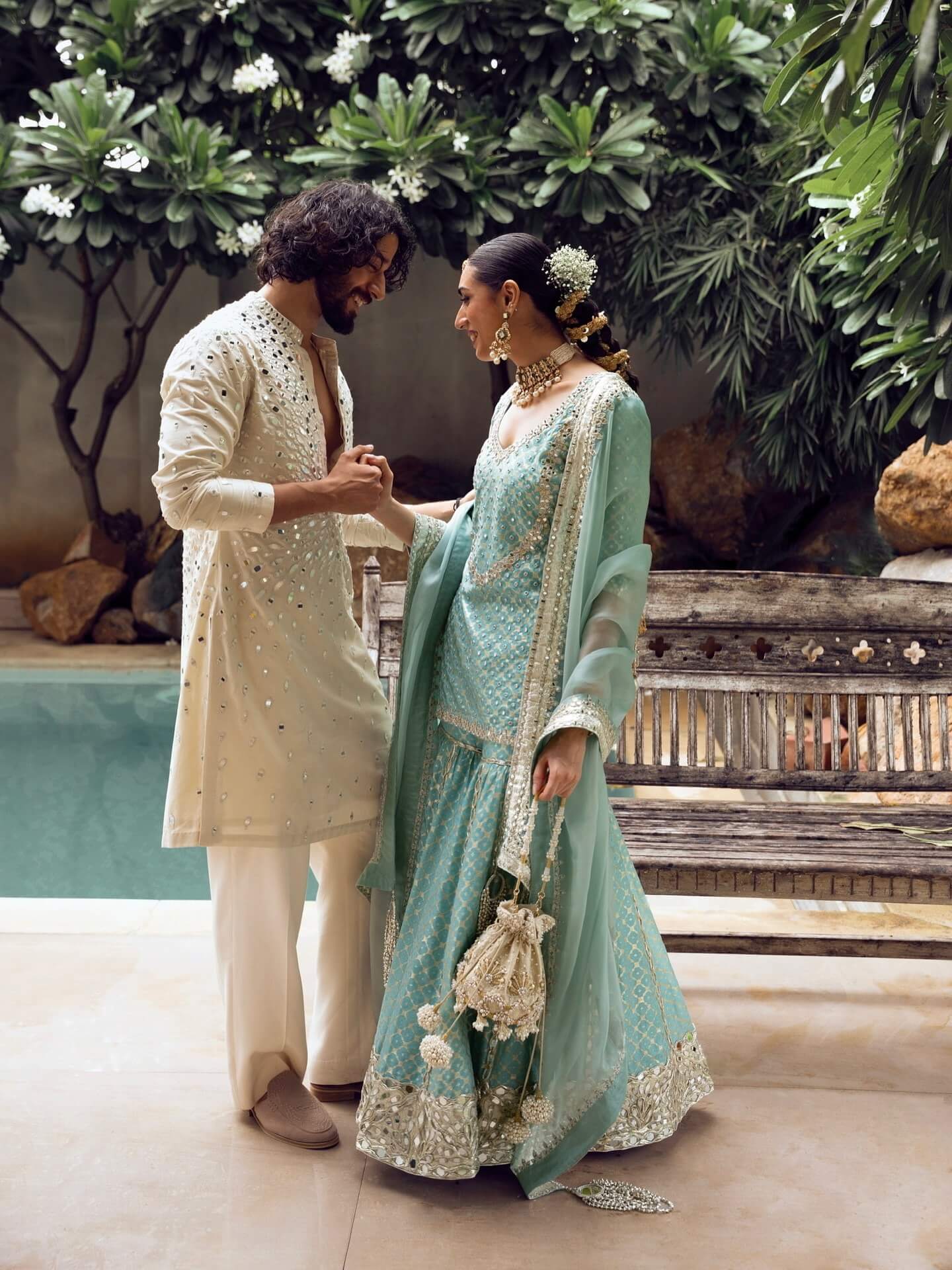
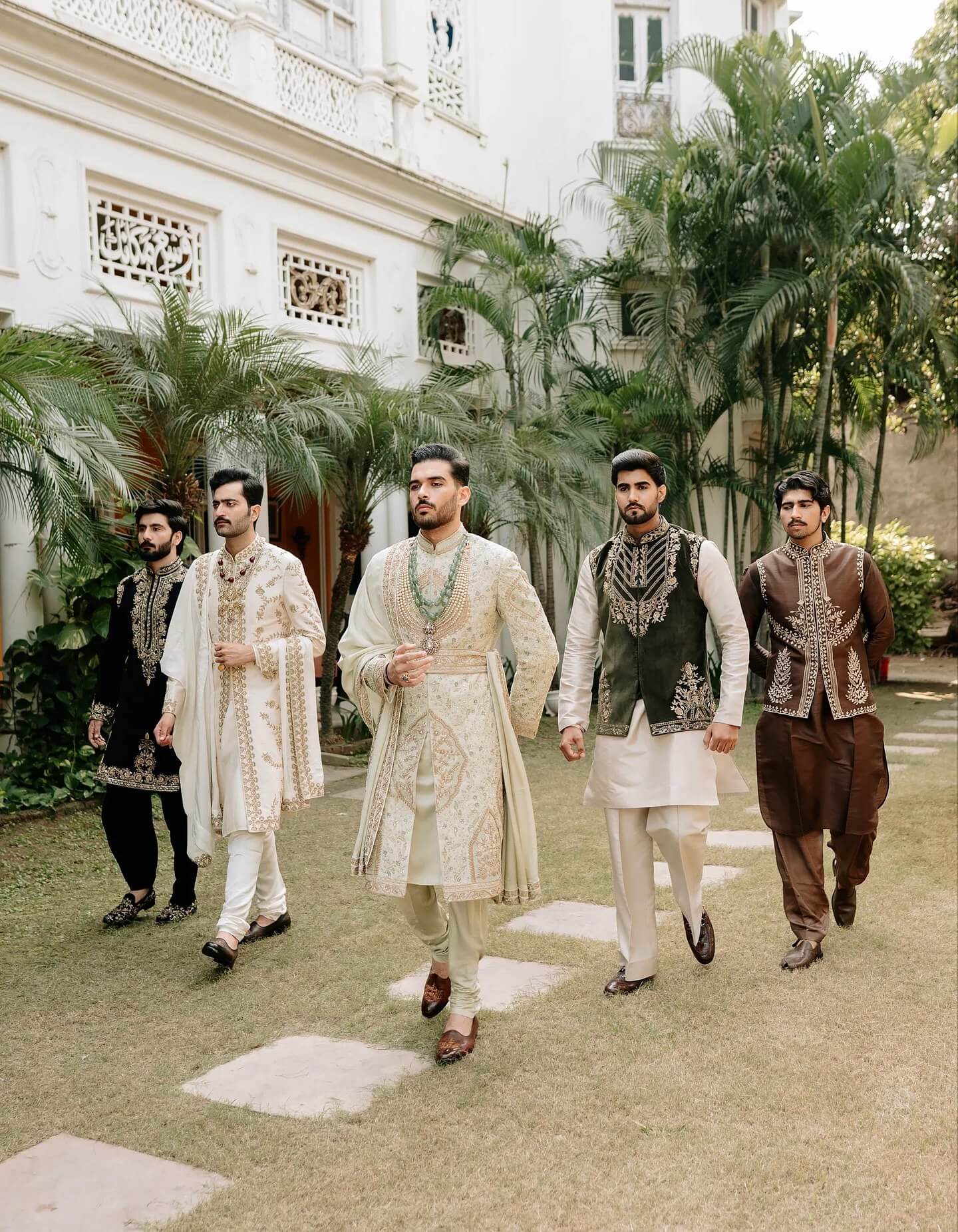
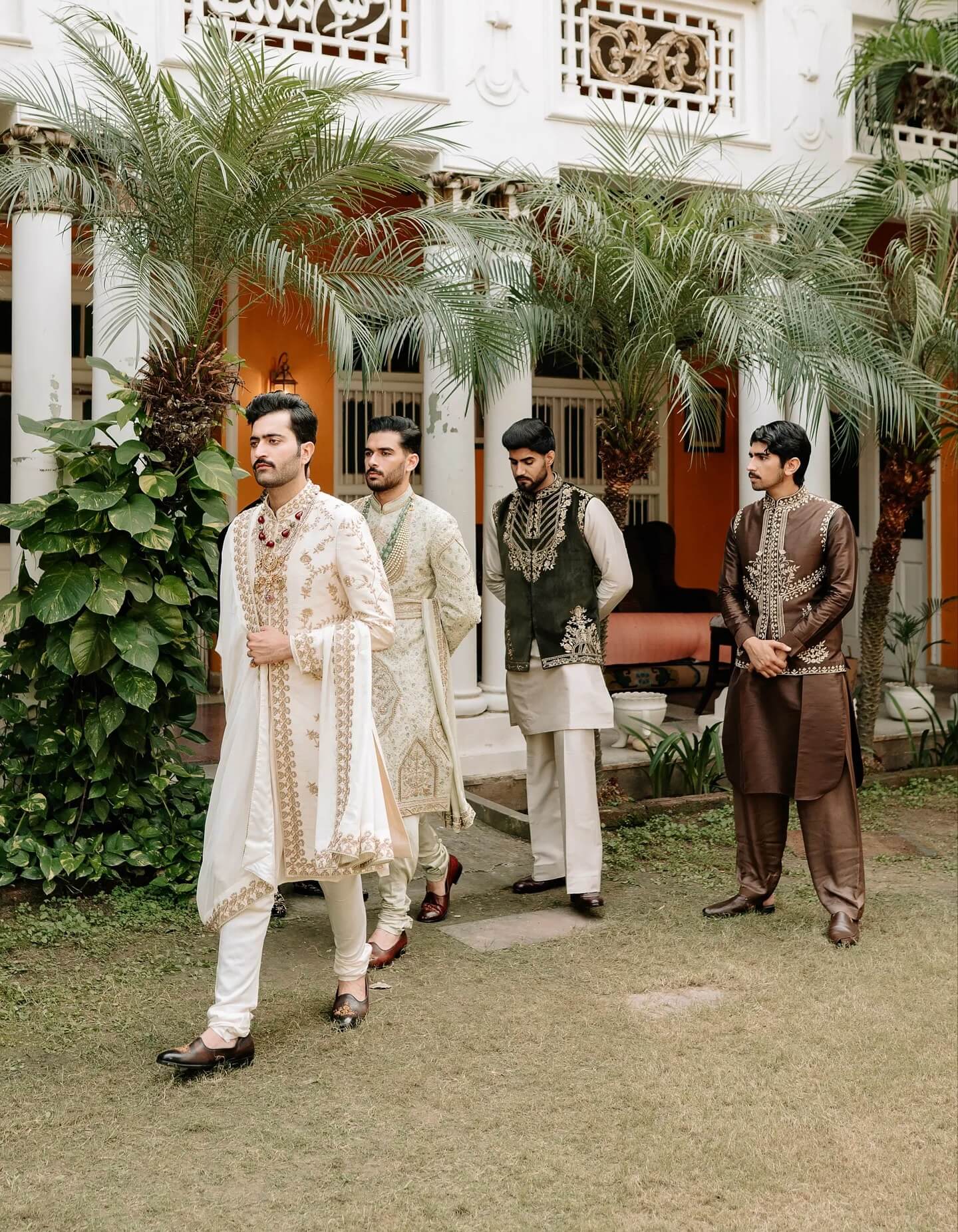
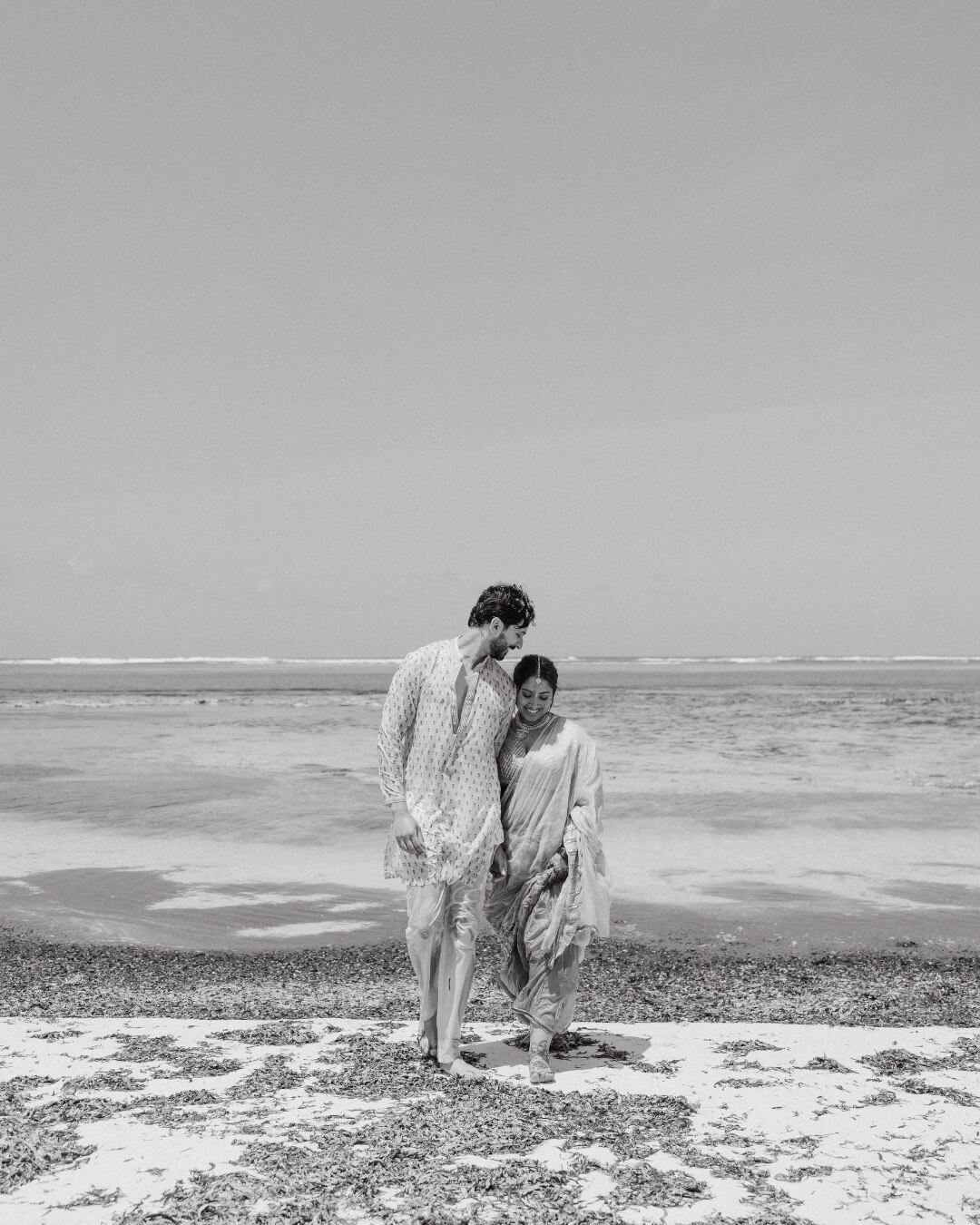
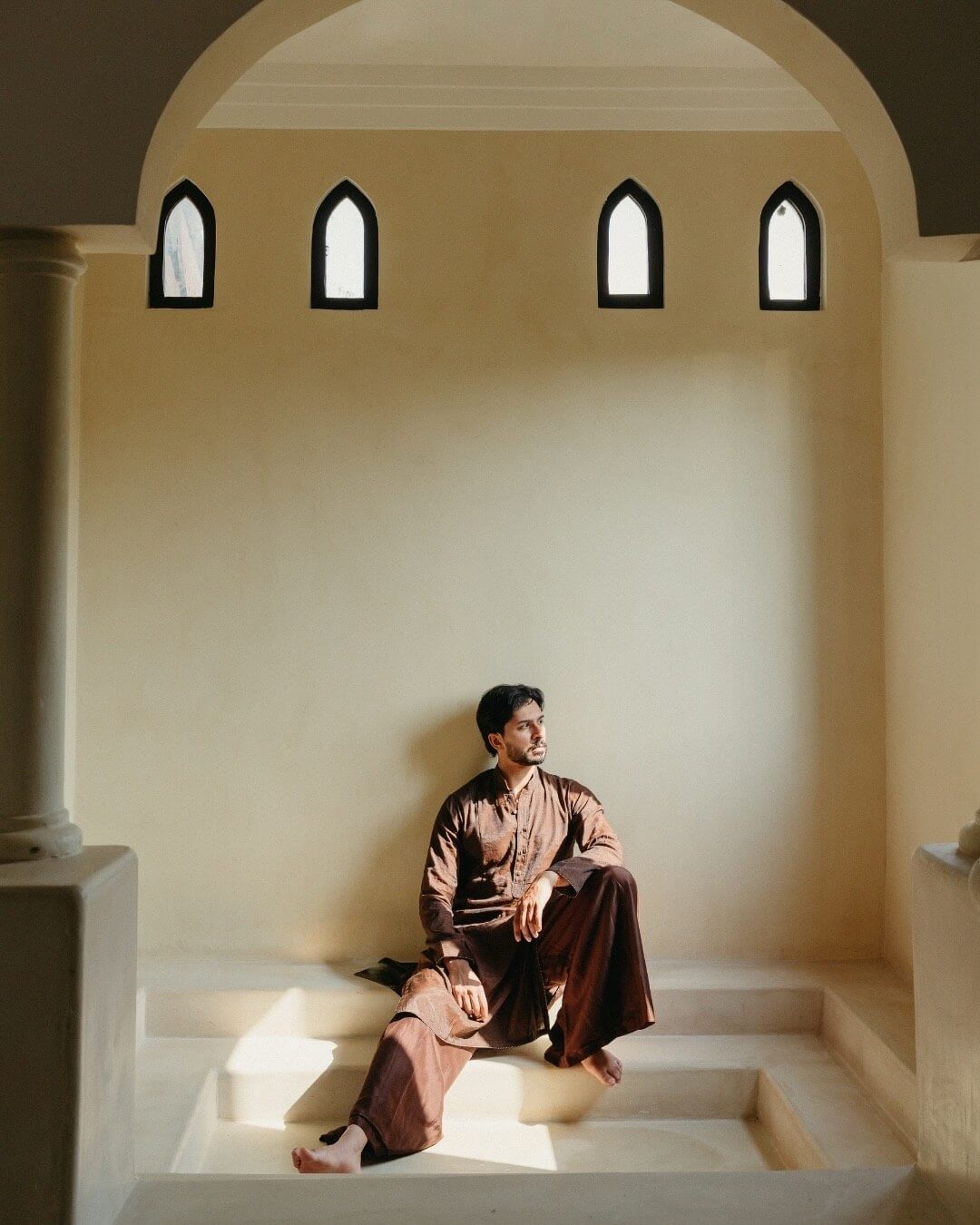
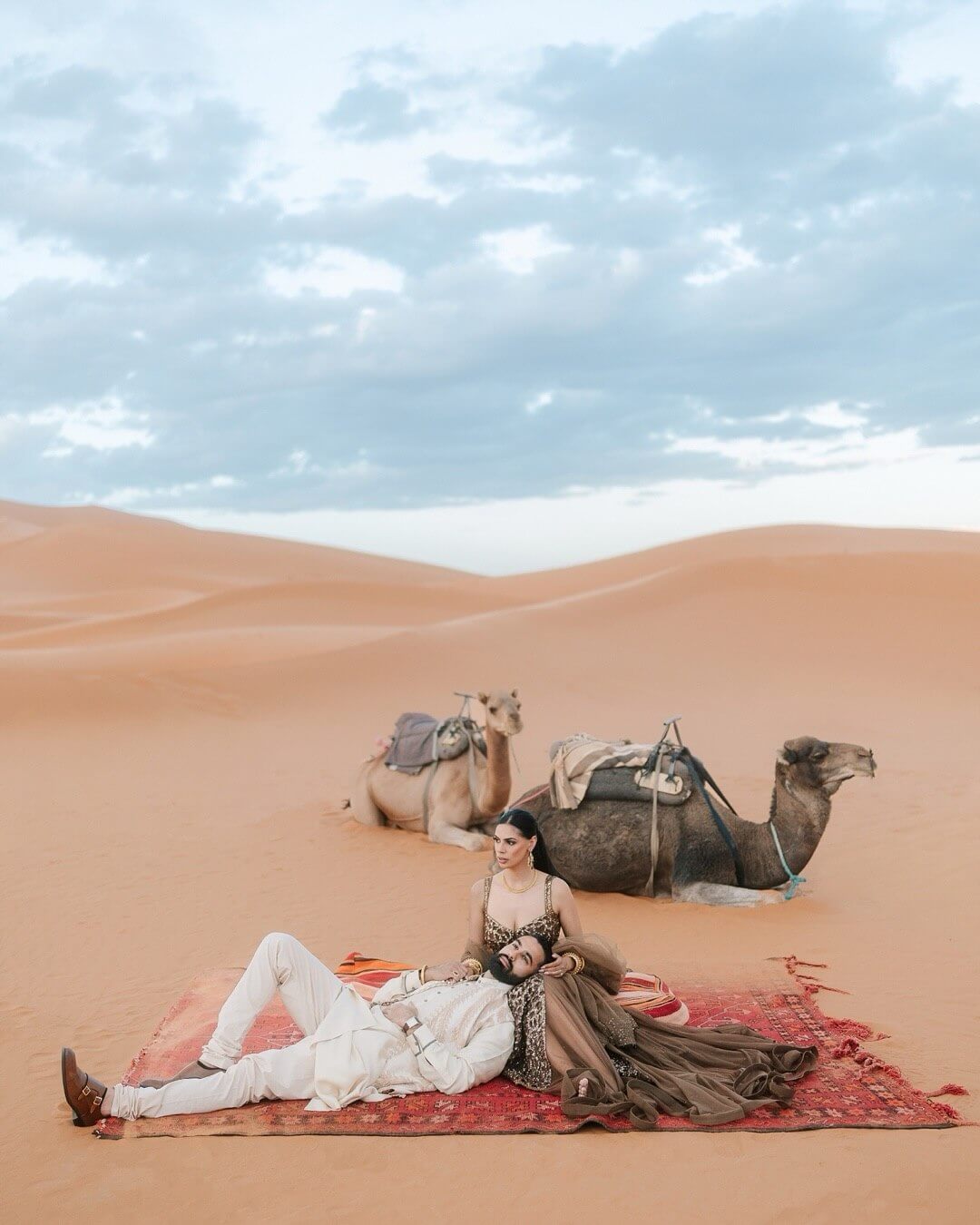
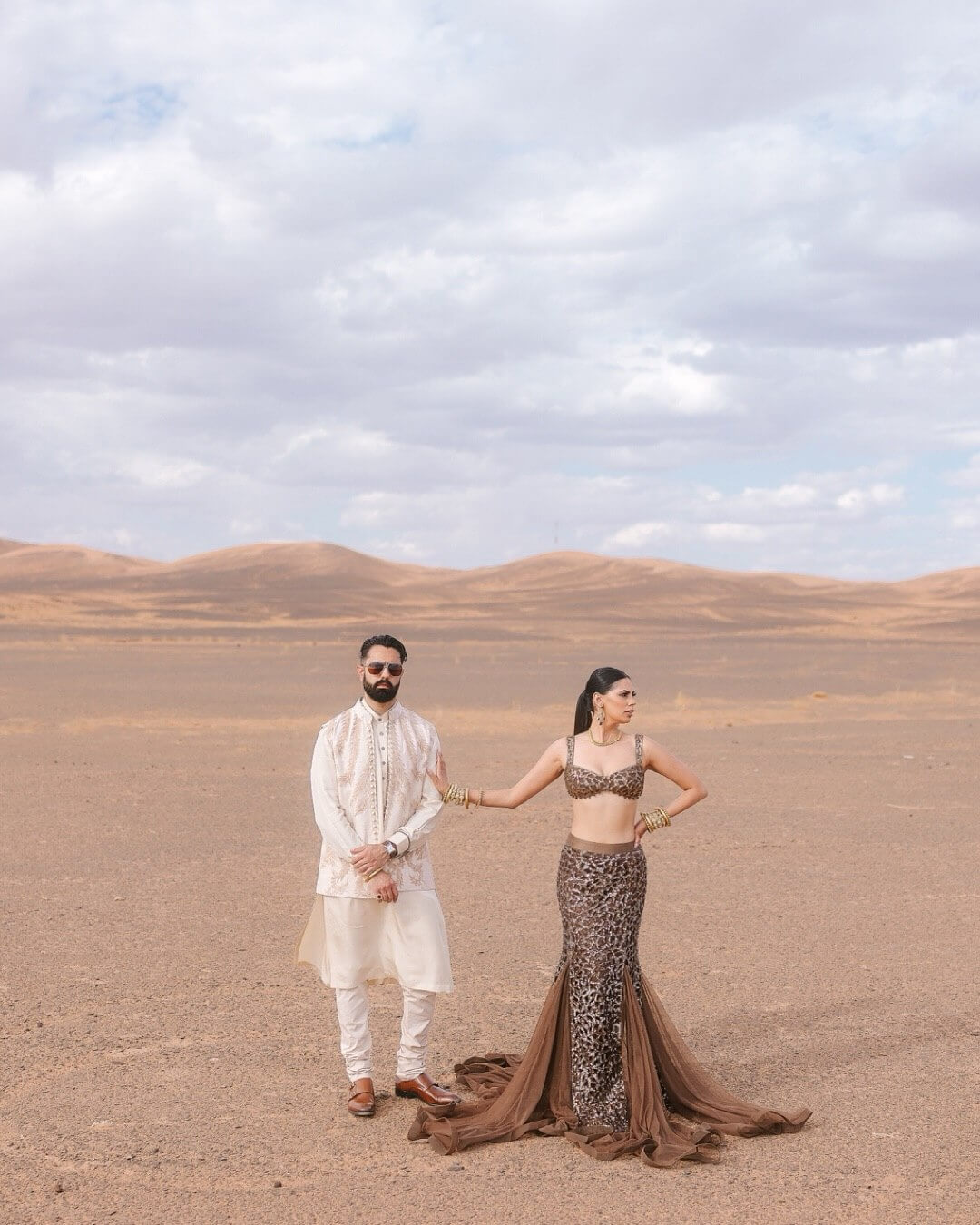
The sherwani is the highlight, whereas the kurta pajama is the reliable choice, being the most versatile item in a complete Indian wedding wardrobe and the one a groom is most likely to wear throughout the entire event calendar. In theory, it's a simple arrangement - a long tunic worn with matching loose trousers - but the choice of fabric and the amount of embroidery extend that simple formula over a very wide range of formality, from a plain cotton kurta suitable for a messy haldi ceremony saturated with turmeric right through to a heavily decorated silk version that can be worn at an evening event. Because of this flexibility, the kurta pajama functions as the basic item in a groom's Indian wedding outfit rotation, rather than a single striking element.
Here, the choice of fabric and color is more determined by the occasion than almost anywhere else in Indian men's clothing. For a haldi ceremony, an inexpensive, unremarkable option is needed since turmeric paste causes permanent stains and no one wants their fine silk kurta damaged before the main event; therefore, a simple cotton kurta in yellow or marigold shades pays homage to tradition without risking any valuable garments. At a mehndi ceremony, the style becomes a little more relaxed, permitting bolder colors and a bit more embroidery while still staying comfortable enough to sit for hours during the henna application. At a sangeet, the level of formality increases again, with a silk or georgette kurta in a true jewel tone, such as navy, emerald, or burgundy, appearing festive and suitable for the dance floor without clashing with the full ceremonial look of the next day.
- Lucknowi chikankari - delicate white-on-white shadow embroidery, one of India’s most refined hand-embroidery traditions and a favorite for understated luxury
- Floral and printed kurta - bold prints in cotton or georgette, especially popular for sangeet and other festive pre-wedding functions
- Pathani kurta - a longer, flared silhouette with a distinctly dramatic drape, well suited to mehndi night energy
- Kurta with a Nehru jacket - a layered look for haldi, mehendi, or sangeet that adds a touch more structure without tipping into full formal territory
Two or three versatile kurtas in different weights and colors, layered with a waistcoat or Nehru jacket as needed, cover most of the pre-wedding calendar without the expense or logistics of buying a completely new outfit for each event. That’s the logic behind treating the kurta as a core element of the Indian groom's wedding outfit rather than an afterthought placed between larger garments.

Bandhgala
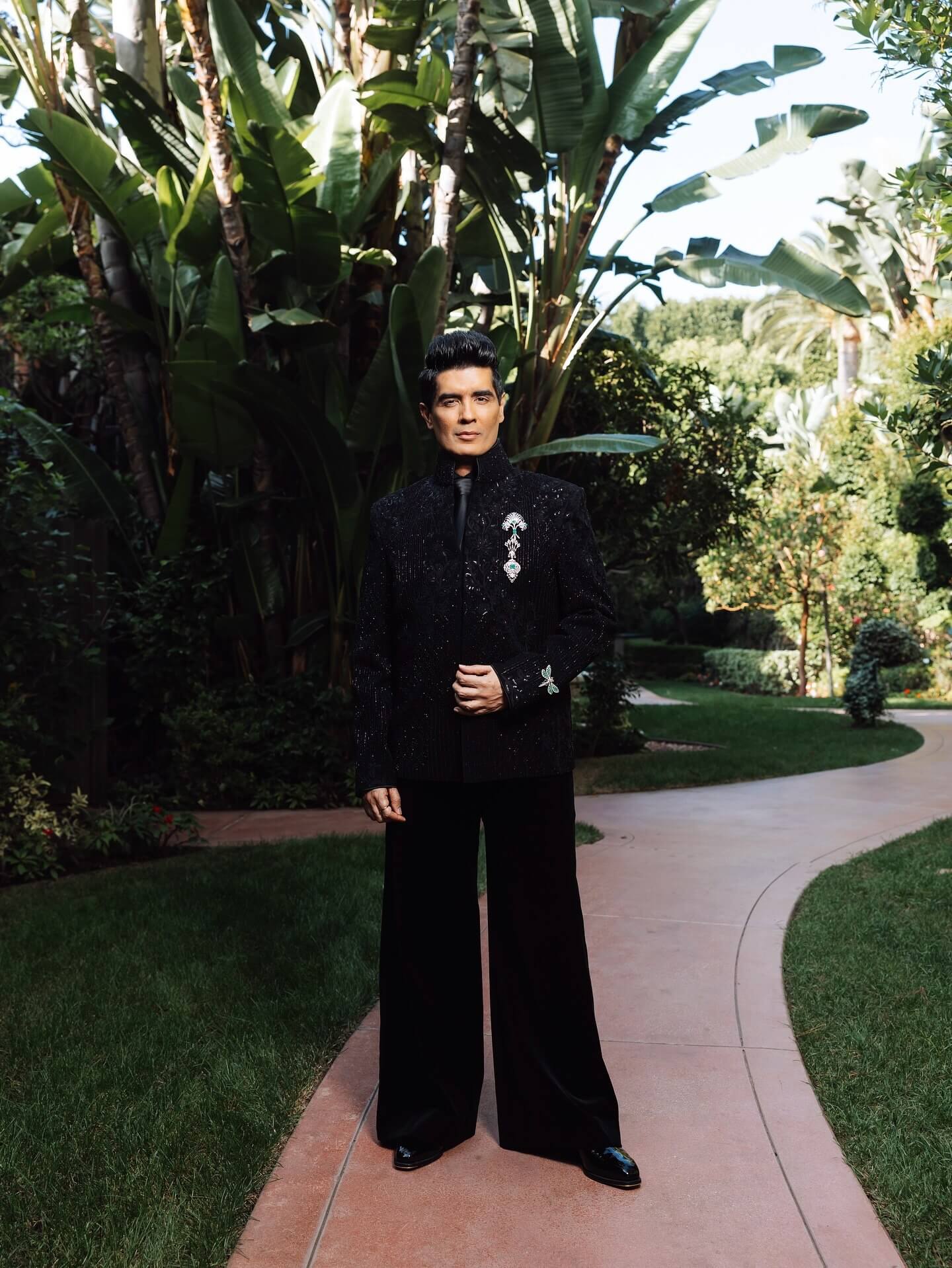
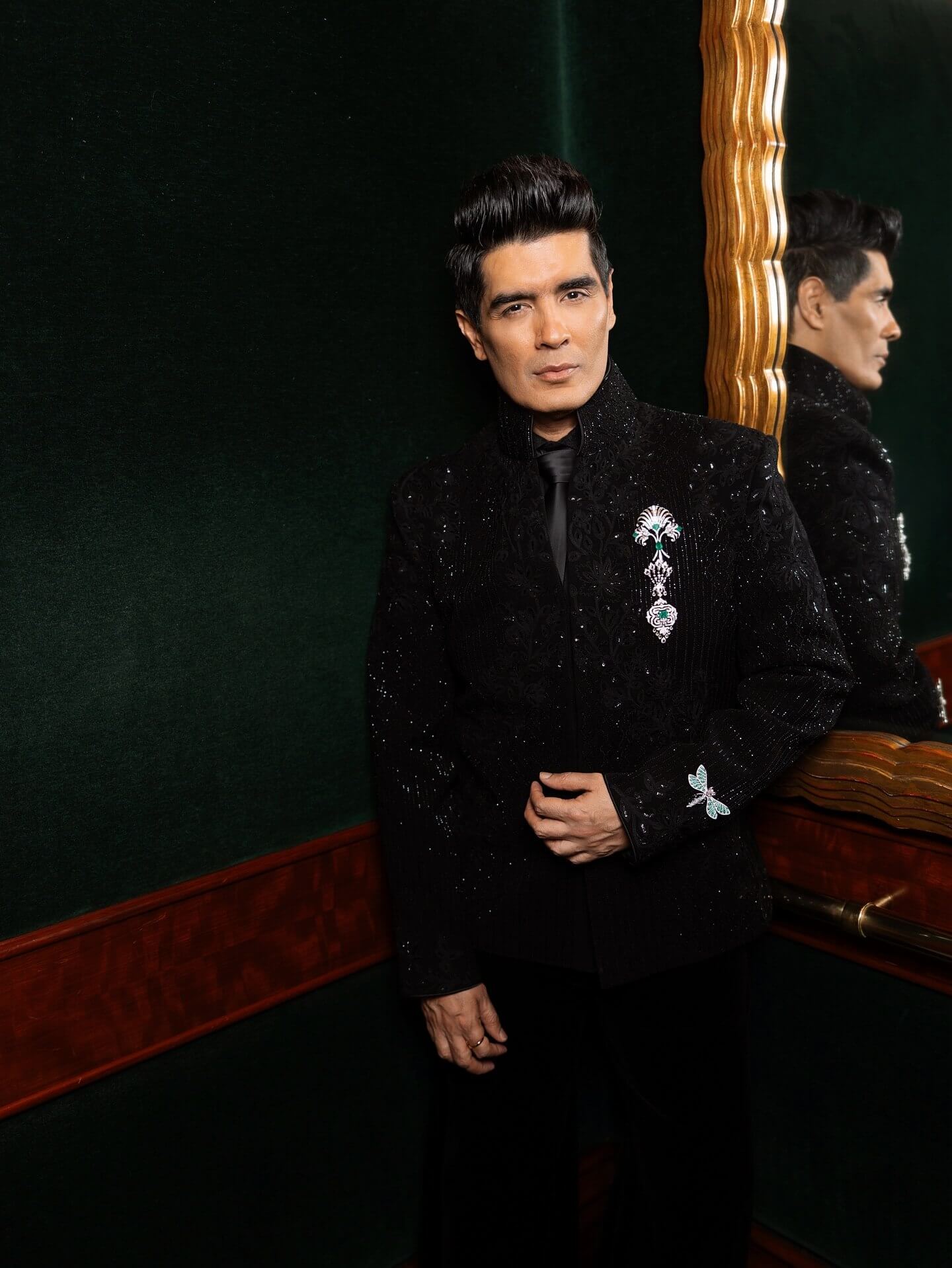
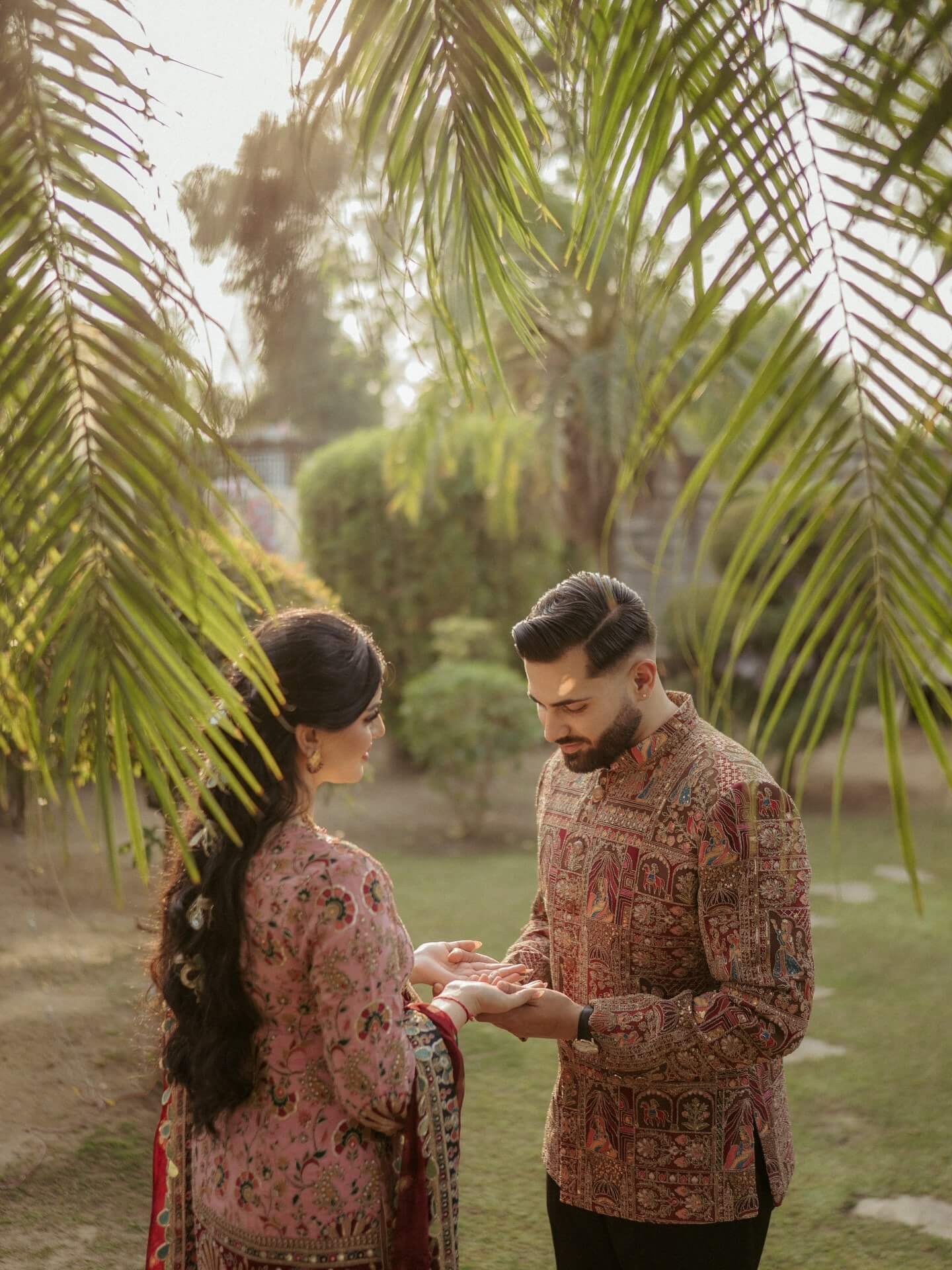
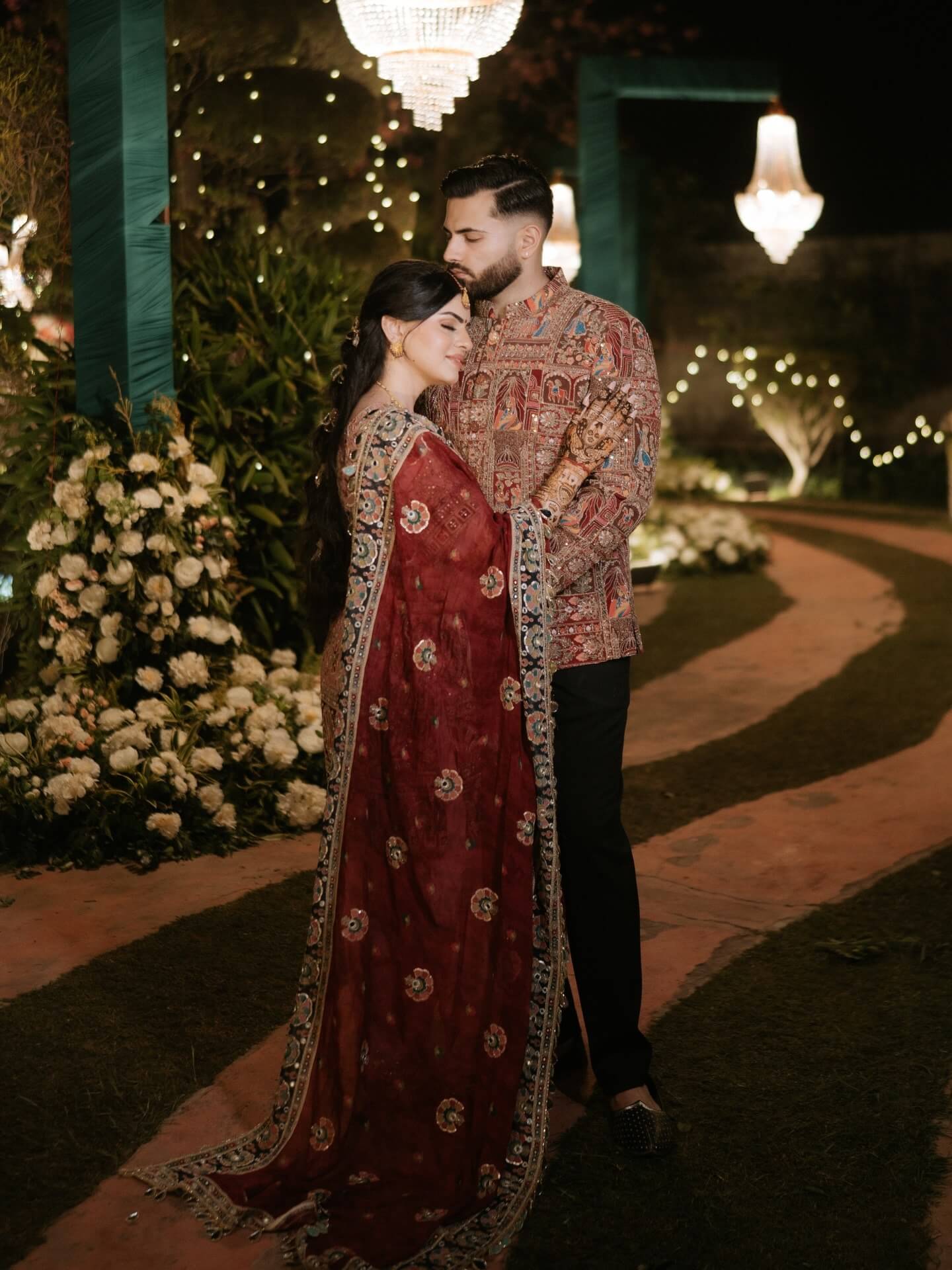
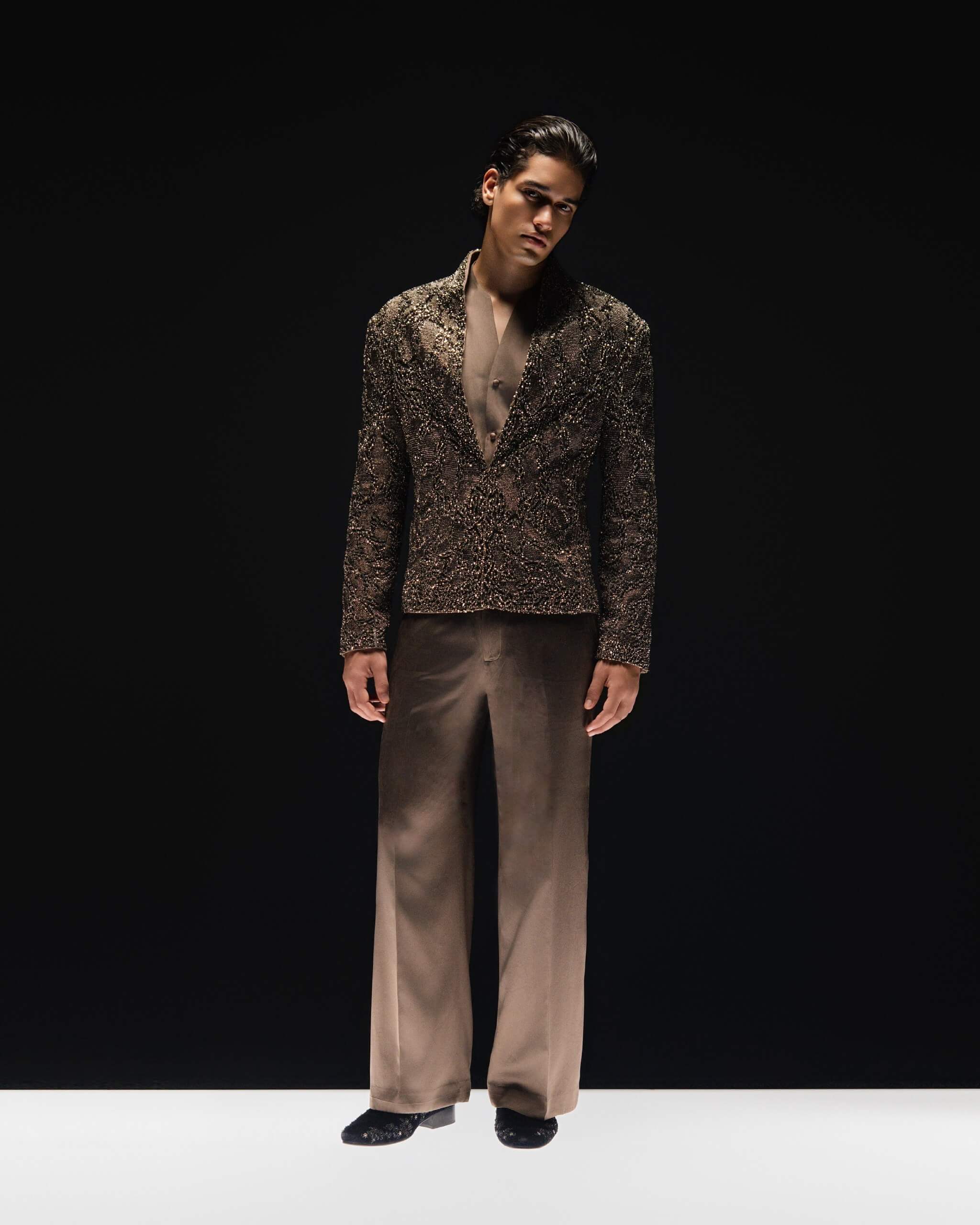
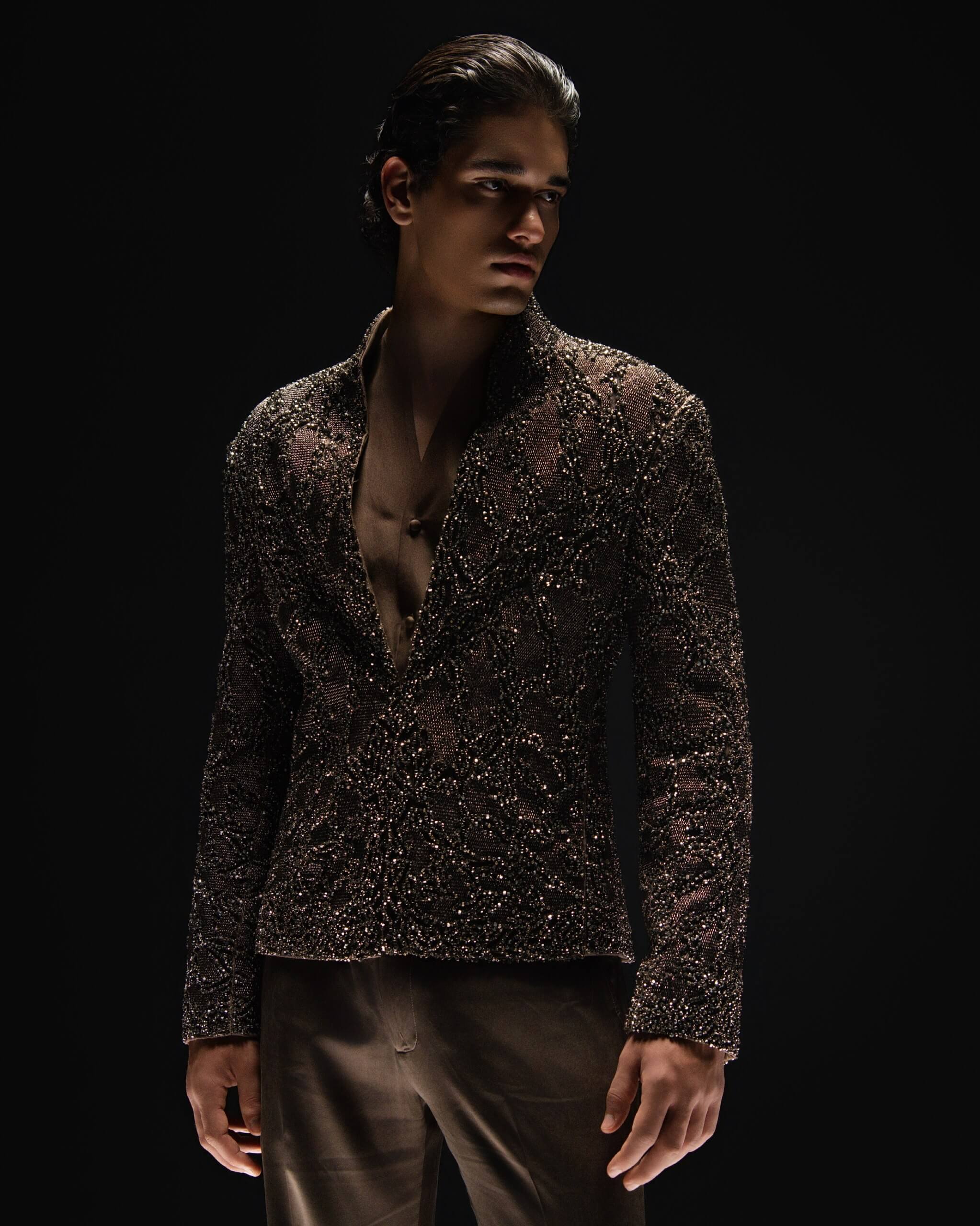
The bandhgala’s origin story is one of the better-documented pieces of Indian menswear history and stems from a case of lost luggage. In 1897, Maharaja Pratap Singh of Jodhpur went to England for Queen Victoria's Diamond Jubilee and found that his traditional clothing had disappeared en route, so instead of wearing ordinary Western formal clothes, he went into a tailor's shop on London's Savile Row and asked for a type of garment that would respect his Indian background while also being suitable for the British court. The result of that fitting was the structured, high-collared jacket now known as either the bandhgala or the Jodhpuri suit, a fusion garment born of necessity rather than design intention. In fact, the term "bandhgala" refers precisely to the jacket with the closed neck, while "Jodhpuri suit" describes the complete outfit, that is, the jacket together with the matching tailored trousers, although nowadays most people use both terms without making much distinction.
The reason why the bandhgala is so useful in a modern groom's wardrobe is that it occupies a middle ground between the sherwani and a Western suit - being formal enough to wear to a sangeet or reception, well-structured enough to look intentional when photographed, and at the same time lighter and less ornate than a full sherwani, which is required for a formal ceremony. The distinctive mandarin collar takes on the role a tie normally would, giving the entire look a neat, tieless formality that feels both regal and modern. Silk, velvet, and brocade are commonly used fabrics, usually featuring restrained embroidery, decorative buttons, or velvet trim rather than the heavy ornamentation found on a full sherwani. The trousers are slim and tapered, giving grooms a sleek alternative when a sherwani feels like too much for the occasion but a simple kurta seems underdressed.
Its versatility comes from how well it fits into a groom's schedule. It is particularly well suited to sangeet nights, engagement parties, and reception evenings, offering grooms a formal choice for destination weddings where a full sherwani might seem too heavy for the occasion. The fabric also changes with the event, with silk and velvet used for evening functions while lighter wool or blended fabrics suit daytime events and warmer climates without compromising the structure that lets the jacket function properly. Styling remains flexible too, since the same bandhgala goes well with either churidar pants or straight trousers for a more traditional look, or with modern tailored pants to create a clearly Western style.
The identical structured jacket fits well at a formal reception, at a hotel sangeet, or at another event that is similar to a business one long after the wedding itself is over, which is the reason why so many grooms treat a modern Indian groom's outfit as an investment item rather than something to wear once and then put away.
Accessories
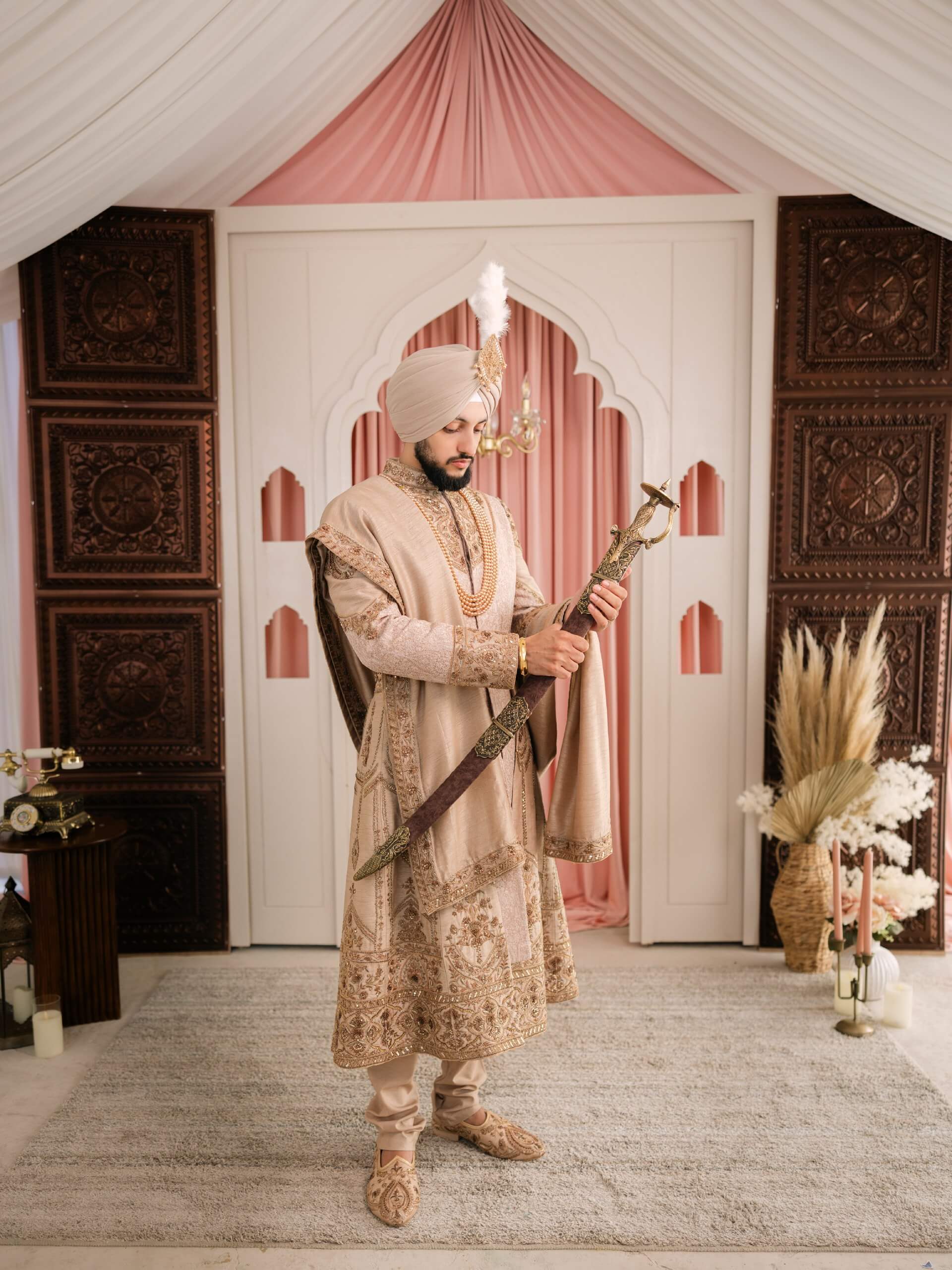
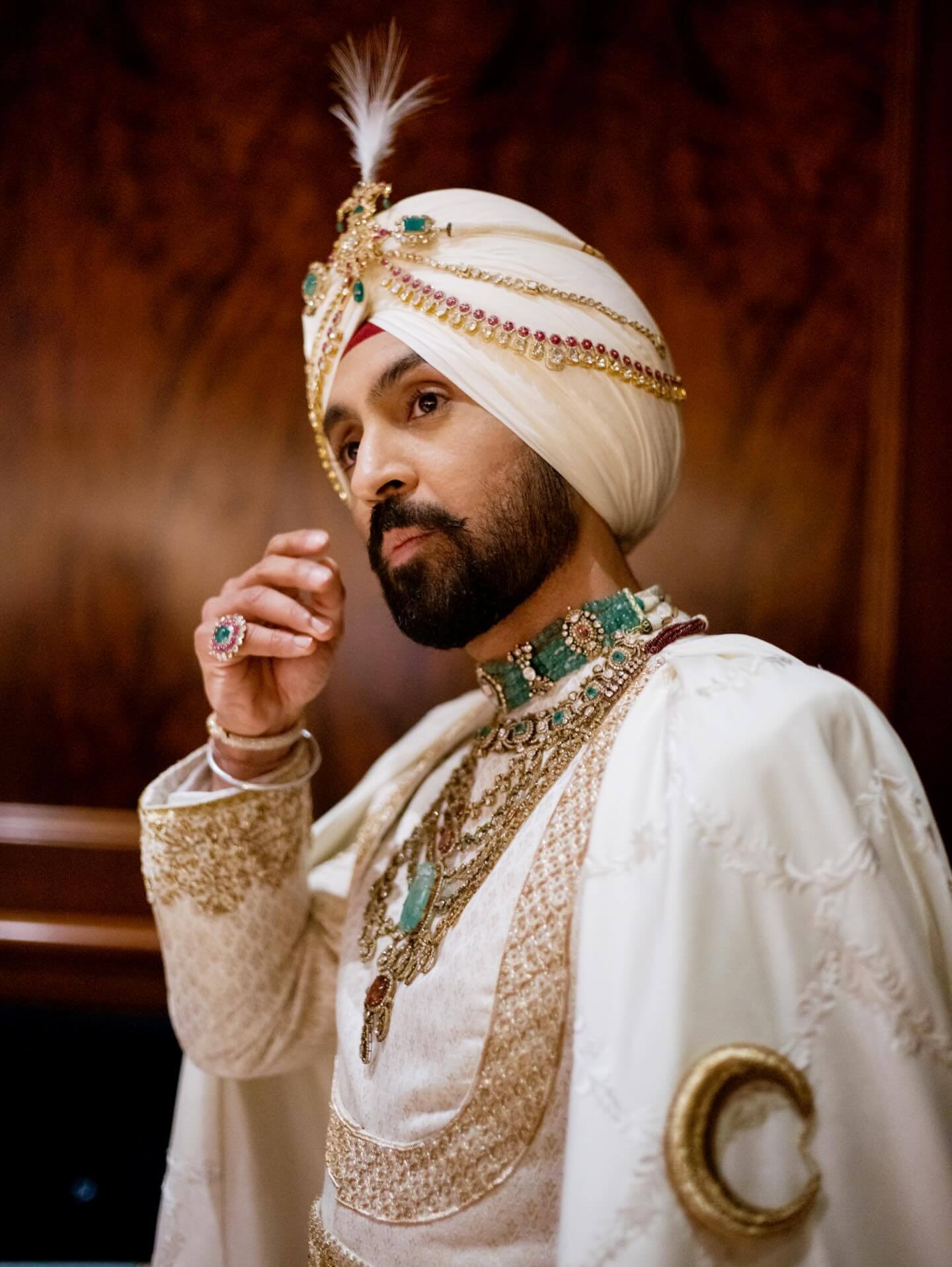
Strip away the sherwani, the kurta, and the bandhgala, and what’s left is arguably the element that appears in every single photograph of a groom, no matter what main wedding outfit or ceremonial garment he is wearing: the accessories that frame his face, his hands, and his feet. The pagdi, or safa, is by a large margin the item highest on that list, since it serves a function that goes well beyond that of a simple decorative headpiece; it is the particular detail which turns a man wearing a sherwani into a dulha, a groom who is actually leading his own baraat, and it has real cultural significance in relation to honor and dignity, not merely acting as a purely aesthetic final touch.
The kalgi, sometimes called a sarpech, pins onto that turban as its own small statement piece, consisting of a jeweled ornament that draws the eye toward the groom in ceremonial photographs. Regional tradition shapes exactly how a groom layers his jewellery beyond that: North Indian Hindu grooms commonly add a haar necklace and kadas bracelets together with the kalgi, Rajasthani grooms tend to go for elaborate arm bands and make the pagri the main visual feature, while South Indian Hindu grooms generally keep their jewellery to a minimum, with just a ring and possibly a simple gold chain, the specific way in which the dhoti is draped taking on the ceremonial role instead.
The traditional accessory kit is finished with a few more items, all of which are small but appear in almost every photograph. Mojari or juttis, embroidered footwear worn without socks, suit both a sherwani and a bandhgala, and are generally selected in a color that matches the outfit rather than chosen at random. Either a dupatta or a stole can be draped over one shoulder or on top of the turban to give a more royal appearance, while the kamarbandh, a decorative waistband worn over the sherwani, provides structure and a bit of old-world formality that most grooms don't think to plan for until they see it on somebody else. In a number of North Indian traditions, a sehra, which is a veil made up of flowers or beads, still covers the groom's face during the baraat procession itself, one of the more visually impressive customs that is still maintained in modern ceremonies.
The sherwani, with its heavy embroidery, has a substantial visual impact on its own, and adding a great deal of jewelry usually competes with rather than enhances the overall look. When suggesting Indian groom outfit ideas, most stylists advise coordinating the colors of the turban and stole with the couple's overall color scheme rather than the bride's dress, ensuring the two looks feel linked yet distinct in the day's photographs.
What to Wear for Each Wedding Event
Indian weddings usually do not take place over just one day, and one of the quickest ways for the groom to end up wearing too much at his own mehndi or not enough at his sangeet is to treat each function as if it were the main ceremony. If you are to put together a genuine groom's outfit plan for an Indian wedding, you have to consider each function separately since every event has its own unwritten dress code, which is influenced by all sorts of factors such as practical considerations, the risk of turmeric stains at the haldi, dancing at the sangeet, and the actual level of formality required at the reception.
- Engagement: A kurta set or a bandhgala works well here, semi-formal enough to photograph nicely without overshadowing the couple’s first official public moment together
- Haldi: The most casual event by design, calling for an inexpensive, simple kurta that can survive turmeric paste without any real loss
- Mehndi: A colorful, lightly embroidered kurta in cotton or georgette, bright enough to photograph well against the henna decor while staying comfortable for hours of sitting
- Sangeet: A bandhgala or a heavily embellished kurta set, dressy enough for the party atmosphere and built for actual movement on the dance floor
- Wedding Ceremony: The full groom outfit for the Indian wedding moment, meaning a complete sherwani at minimum, paired with a proper pagdi and the full accessory set
- Reception: A bandhgala or a somewhat lighter reception-specific sherwani, formal but slightly less ornate than the ceremony look, since this is typically the last major event of the week
In southern India, the tradition regarding the groom's outfit varies from one of these events to another, preferring a silk veshti and angavastram instead of a sherwani for the wedding ceremony itself, with gold-thread borders being used in place of the heavier embroidery usually found at North Indian functions. However, no matter the region, the basic idea remains unchanged: dress for the particular function you're attending, not for a single outfit that has to cover all the requirements.
This isn't really about becoming an expert in four different types of clothes. Instead, it's about realizing that an Indian wedding rarely asks one man to be a single version of himself for an entire week: he can be casual during the haldi ceremony, festive when dancing, regal at the vows, and polished for the send-off, choosing his clothing accordingly rather than simply taking whatever is already in his closet. The Wezoree Inspiration section goes much further than this article by offering styling ideas, cultural lookbooks, and actual celebrations from around the world to help couples who are still unsure about how the rest of the week should look.

FAQ
What is the difference between a sherwani and a bandhgala?
A sherwani is a long garment that reaches down to the knee or calf, designed for a highly formal appearance and usually reserved for major ceremonies. The bandhgala, on the other hand, is shorter and more structured, resembling a Western jacket with a particular closed collar, and is therefore more appropriate for events such as sangeet nights, receptions, or engagement functions where a somewhat more modern formal style is suitable.
What should a groom wear for a South Indian wedding?
Traditionally, a South Indian groom’s wedding suit is a silk veshti and shirt, paired with an angavastram over the shoulder, and the outfit is usually finished with a gold-thread border rather than the heavy embroidery found on North Indian sherwanis. Some grooms now blend in elements from that other tradition, for example by wearing a bandhgala at the reception, while still using the veshti for the main ceremony.
What should the groom’s father wear to an Indian wedding?
In accordance with Indian wedding customs, the groom's father usually wears something less ornate than the groom's outfit, such as a refined bandhgala or a simpler sherwani in a complementary color that doesn't clash with the groom's outfit. When the father's color scheme is only roughly coordinated with the groom's, without copying it exactly, it looks deliberate rather than accidental in family photographs.
What is the ideal Indian groom engagement outfit?
For the engagement, most grooms choose a kurta set or a bandhgala, as these are semi-formal and signal an important occasion without the full formality of a sherwani. To keep the outfit appropriate for the event, lighter fabrics are used with more modest accessories, leaving out the full pagdi and kalgi, which are usually saved for the wedding day itself.
What’s a good Indian groom sangeet outfit?
For a sangeet, a bandhgala or a kurta with heavy decorations works best, as it's dressy enough to look good in photos against a festive background without compromising the ability to dance. When preparing a men's Indian groom's outfittailored to the party atmosphere, a slightly shorter kurta with a Nehru jacket worn over it offers a good balance of formality and comfort.
Can a groom wear the same sherwani for both the ceremony and reception?
It is technically possible, but in most cases grooms opt for a different reception style, usually choosing a bandhgala or a simpler, less elaborate sherwani, as it is more comfortable after a long day and gives the reception its own visual identity in the photographs. There is nothing wrong with reusing the same ceremony suit; in fact, many grooms do so without giving it any thought. A second look often helps signify the transition from the ceremony to the celebration, particularly when the two events take place one after the other.
What accessories are essential for a traditional Indian groom look?
The bare minimum for most traditional outfits is a pagdi or safa, held in place with a kalgi and finished with mojari or juttis, since these three items appear in almost every ceremony photograph, no matter the region. For grooms who want a full, layered traditional look rather than a simplified one, a dupatta or stole, along with a kamarbandh, can be added.
How many outfits does a groom typically need for an Indian wedding?
Most grooms find that they need three to five different styles over the course of a full wedding week: a casual kurta for the haldi, a festive kurta or waistcoat combination for the mehndi, a bandhgala or an embellished kurta for the sangeet, a full sherwani for the main ceremony, and a bandhgala or a lighter sherwani for the reception. It is generally more affordable and less stressful to build this wardrobe bit by bit than to buy everything in one shopping trip. Usually, a small number of genuinely versatile pieces that can be worn and layered together for various events are better than a wardrobe full of items worn only once.