Hawaiian Wedding Traditions and Their Meaning



Hawaiian wedding traditions have deep cultural significance. This is evident from the moment the ceremony begins with the sound of the pū to when the couple places lei around each other's shoulders. For many couples, getting married in Hawaii offers the opportunity to celebrate on land with its own history, language, and values. Incorporating these traditions is most effective when couples understand their origins and invite the right people to guide them. This guide explains the most meaningful customs, how they fit into the ceremony and reception, and how to honor them respectfully. It also features advice from wedding professionals who work on the islands every week.
Many Hawaiian customs stem from values that still shape daily life on the islands, such as aloha, which conveys love and compassion, and hoʻokipa, which is the practice of generous hospitality. Understanding these values helps couples to see the traditions as living practices rather than just decorative extras. It also makes planning easier since each ritual has a clear purpose and a natural place in the day. Whether you are planning an intimate beach elopement or a larger celebration with family flying in from far and wide, the sections below will help you decide which traditions are right for your wedding and how to prepare your guests for them.
Find Your Perfect Wedding Vendors

What Makes a Traditional Hawaiian Wedding?
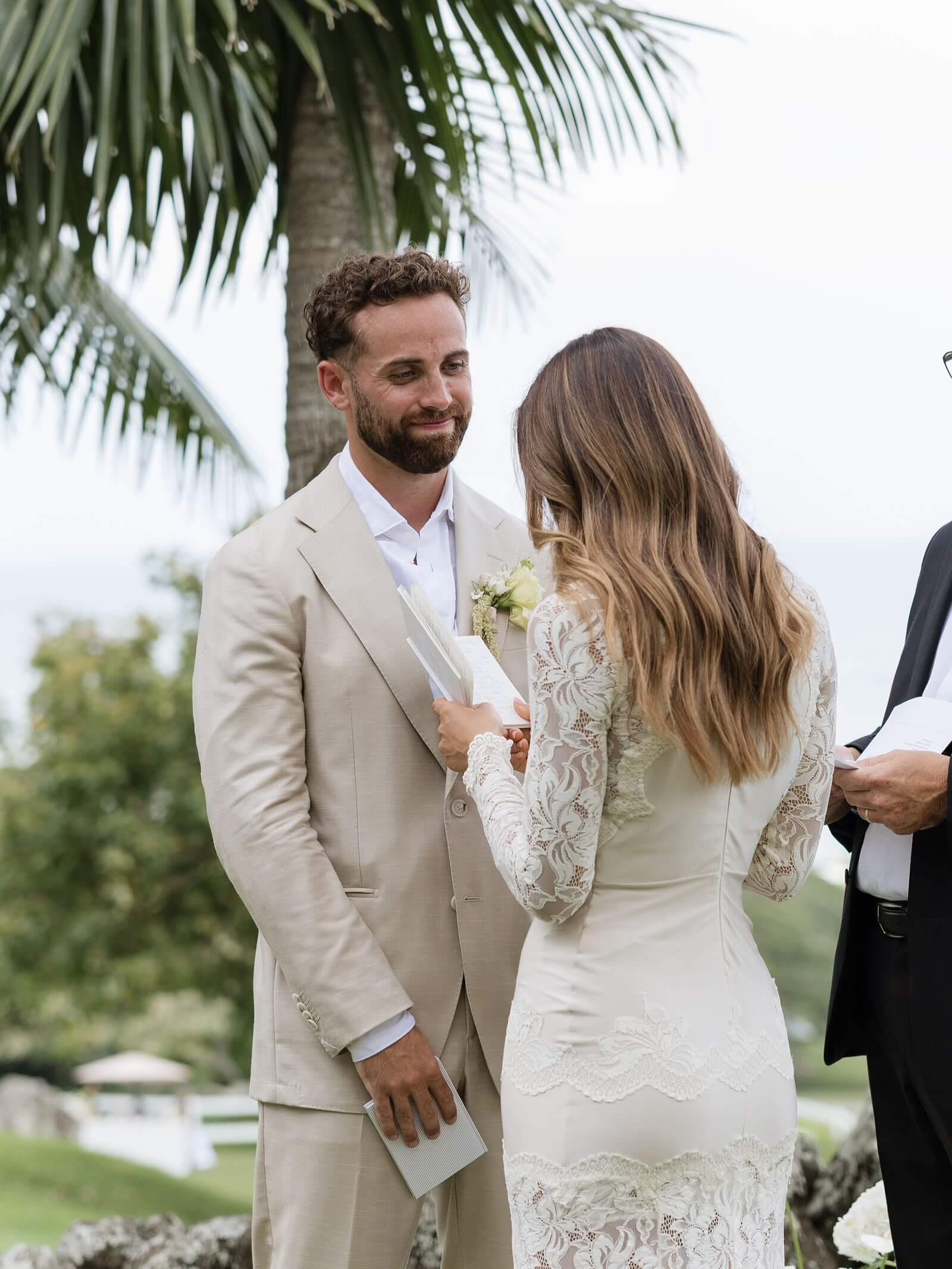
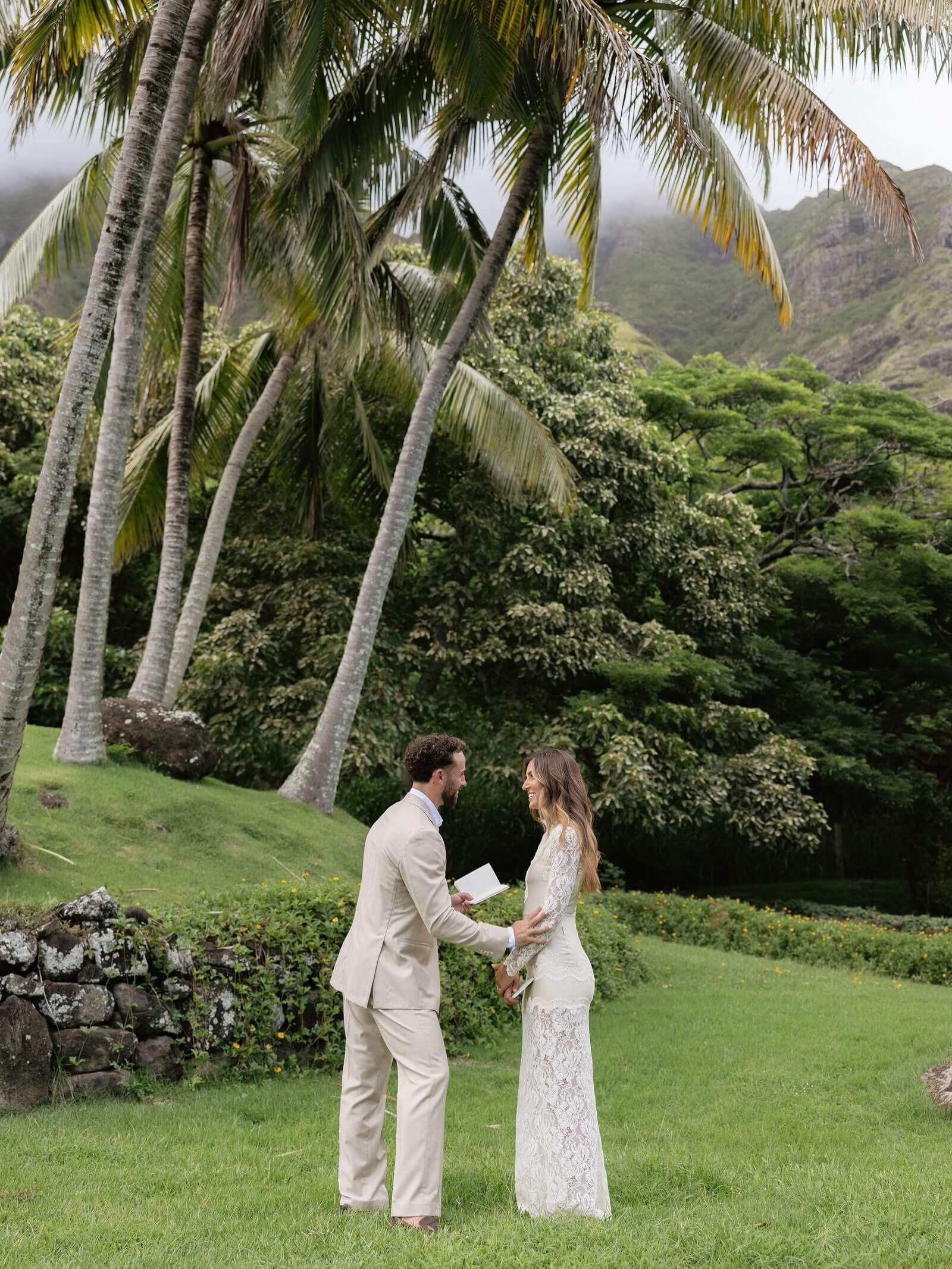
Ideally, a traditional Hawaiian wedding includes Native Hawaiian cultural practices and is led by a Hawaiian officiant or cultural practitioner. It is not just about having a tropical setting. Photographer Emily Choy explains the difference:
 A common misconception is that a wedding taking place in Hawaiʻi is automatically a Hawaiian wedding, or that adding tropical details makes it culturally Hawaiian. Hawaiʻi is home to many cultures, while Hawaiian traditions have their own history and meaning and are not simply an aesthetic or theme.
Couples of any background can marry in Hawaii and decide how much of the culture to incorporate.
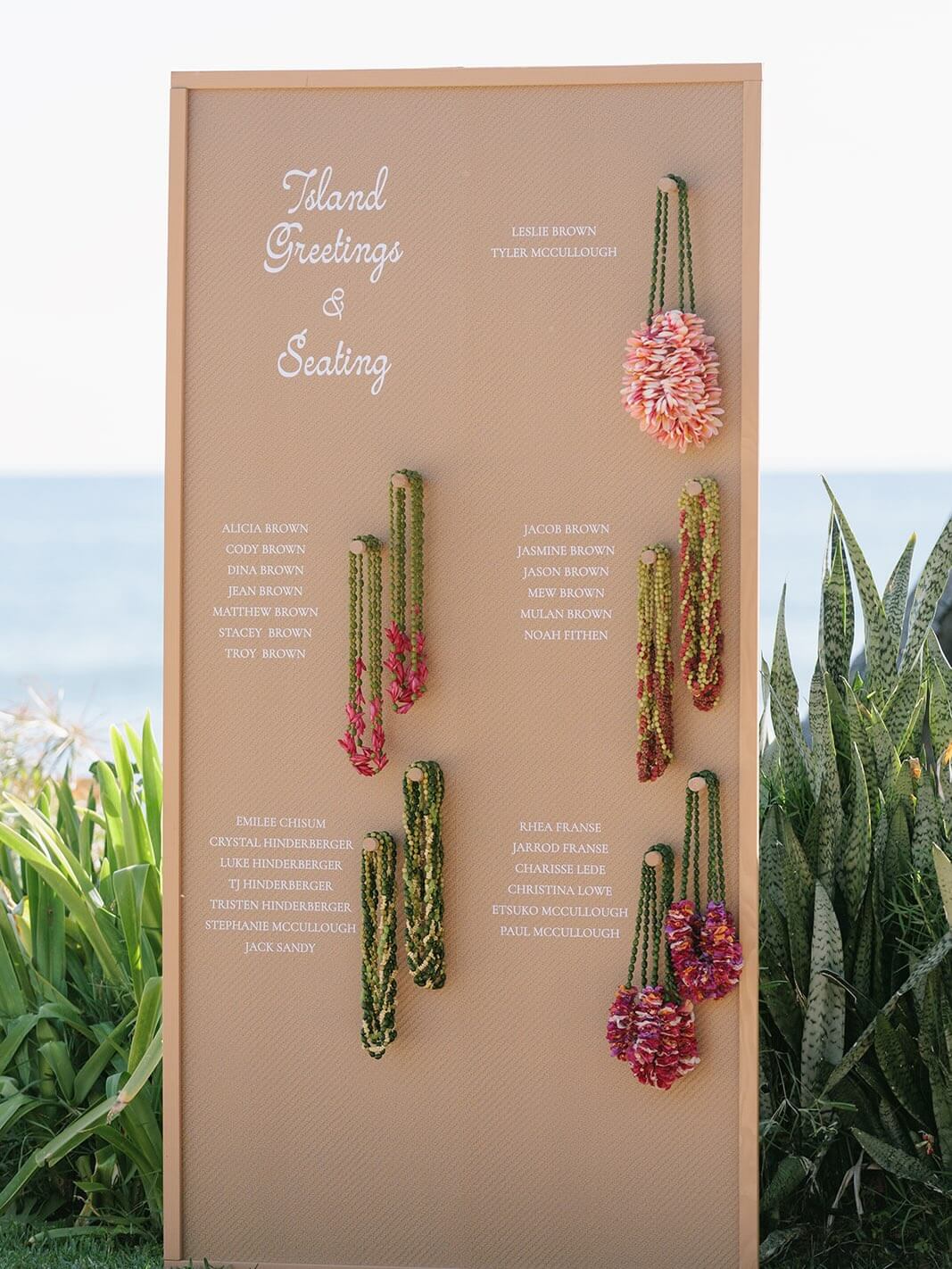
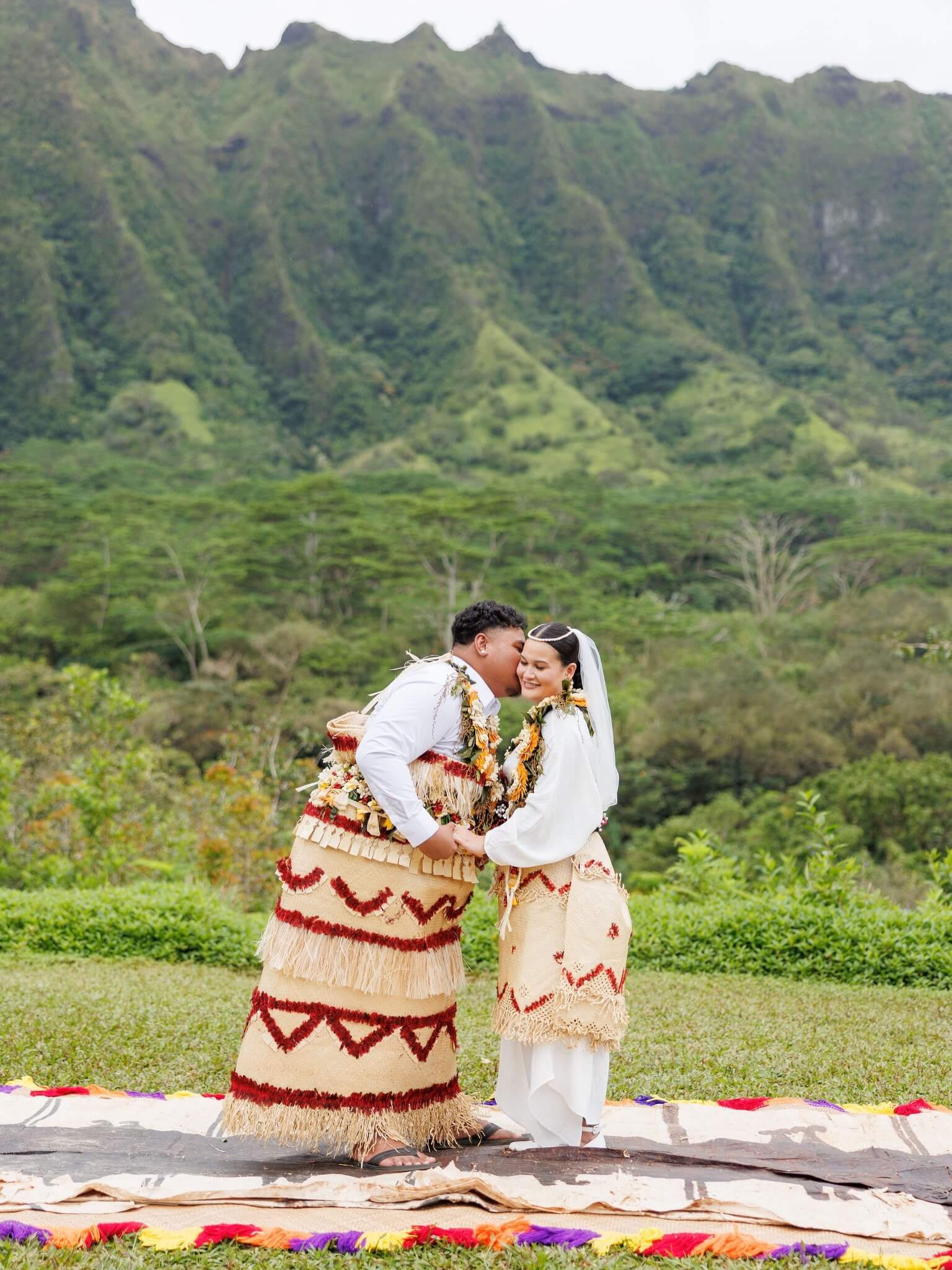
Local context also matters. Theel Wedding Productions notes that
Each island and community has its own history, character, and connection to place, which is part of what makes getting married in Hawaiʻi so special.
Ceremonies on Oʻahu, Maui, Kauaʻi, or the Big Island may feel different, and local practitioners can advise on what is appropriate for each location. The team also offers a simple starting point: "Hiring locals is a wonderful place to start." Working with island-based vendors can also help couples to understand the practicalities of each venue.
Hawaiian Wedding Ceremony Traditions

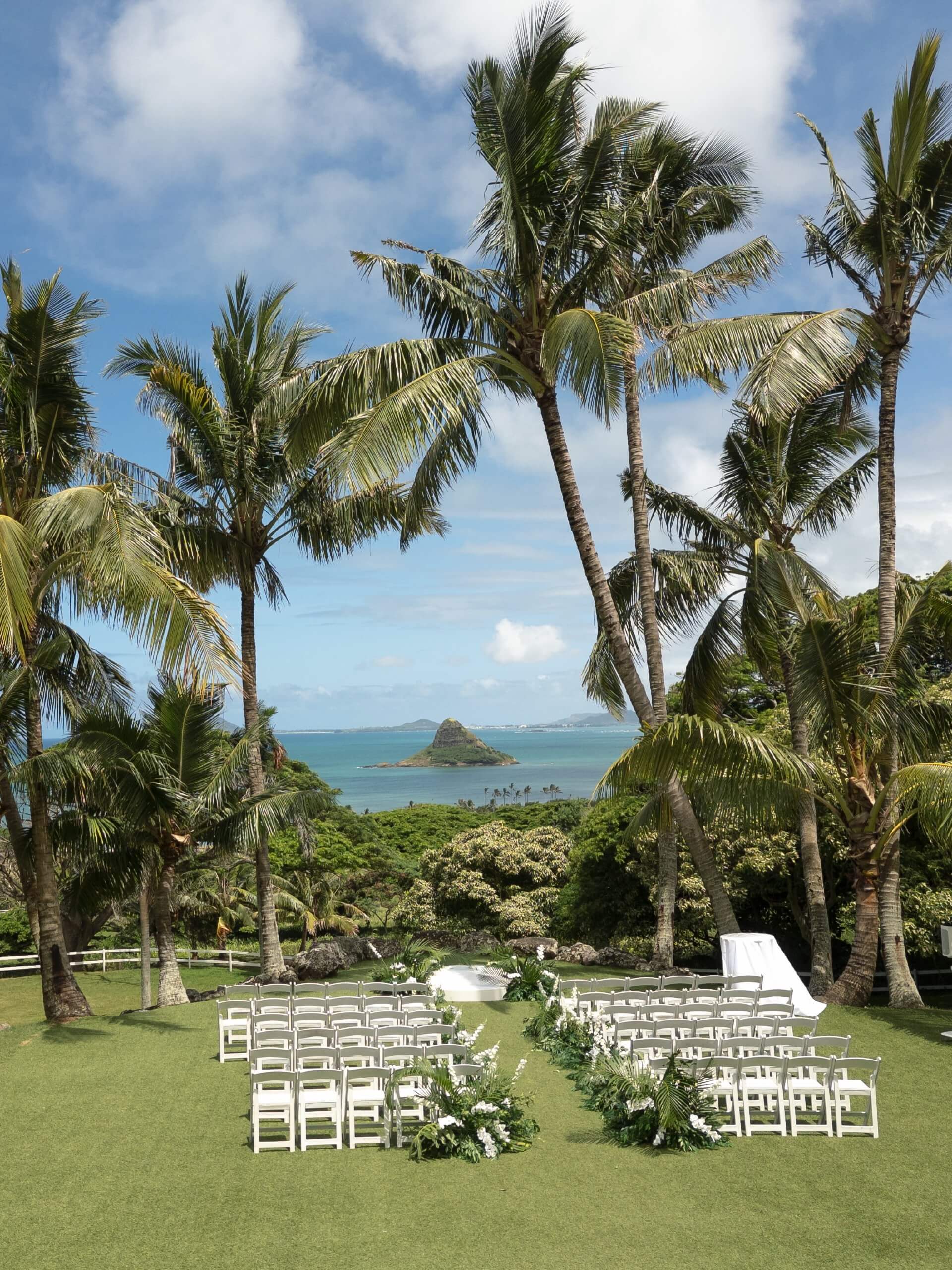
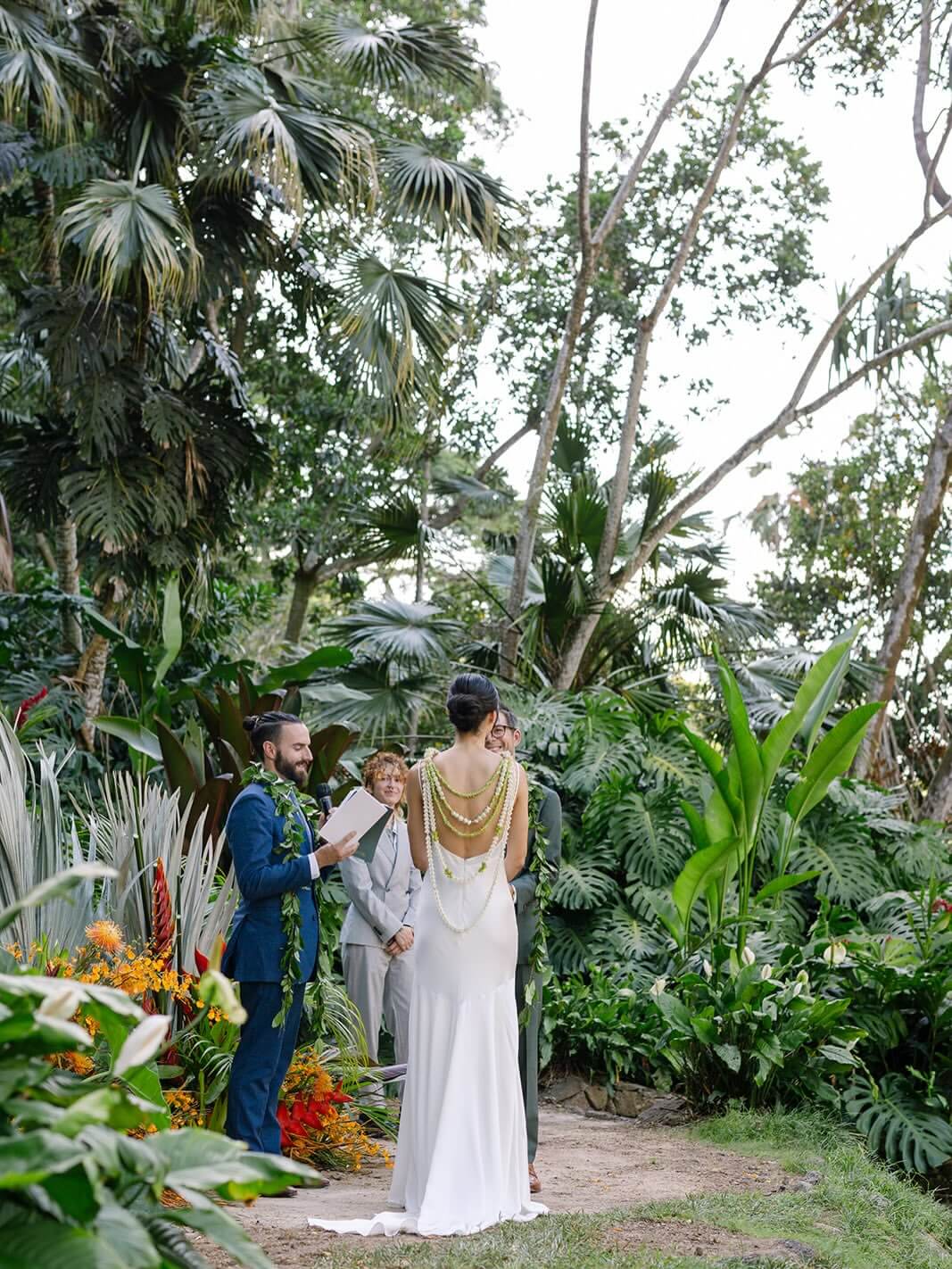
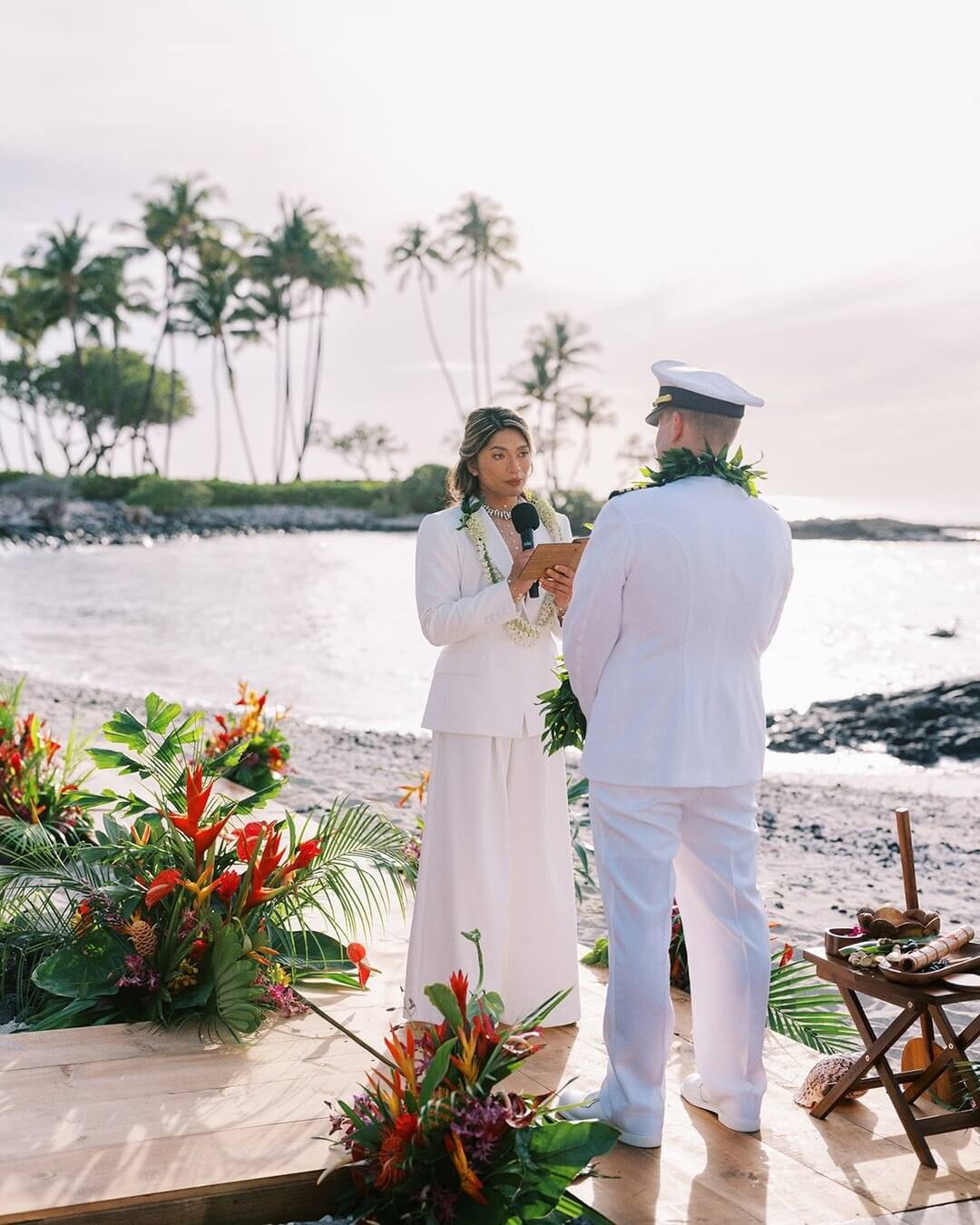
The most common traditions in a Hawaiian wedding ceremony are the pū (conch shell), the oli (chant), the lei exchange and the honi, which are often led by a kahu (Hawaiian minister). Each element has a clear meaning and natural place in the ceremony, enabling couples to incorporate one or more without altering the structure. Some ceremonies also feature a maile lei tied around the couple's hands or a blessing of the rings with water. The table below summarizes the main rituals and when they usually occur.
| Tradition | What it is | Meaning | When it happens |
|---|---|---|---|
| Pū | Conch shell blown by the officiant | Calling on ancestors to bless the ceremony | Opening or the first kiss |
| Oli | Traditional chant | Blessing the couple and the place | Opening of the ceremony |
| Lei exchange | Couple exchanges maile, ti leaf or floral lei | Love and commitment | After the vows |
| Honi | Foreheads pressed together to share breath | Sharing life with one another | Near the end of the ceremony |
| Maile lei tying | Officiant wraps the couple's hands with maile | Joining two lives | During the vows |
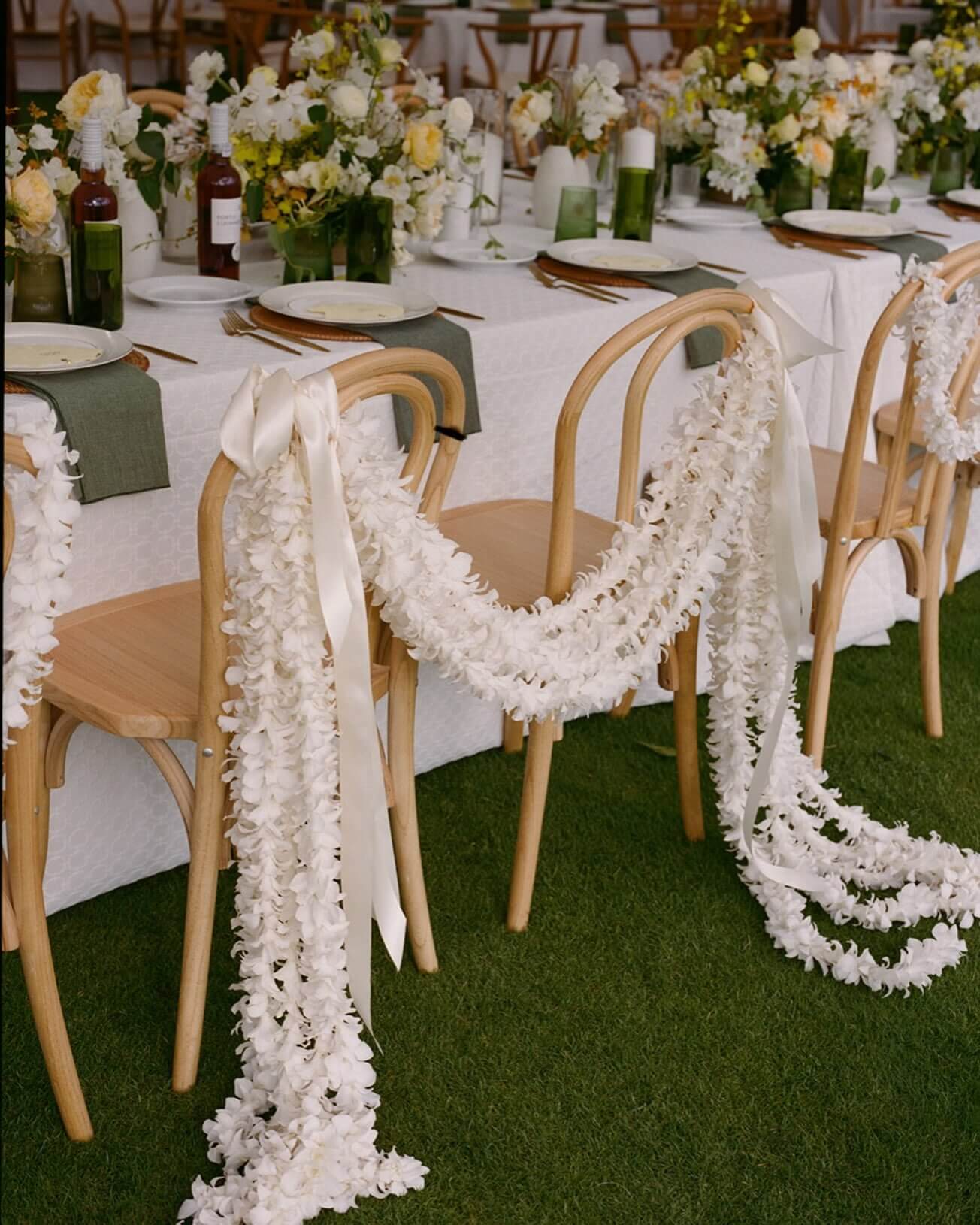
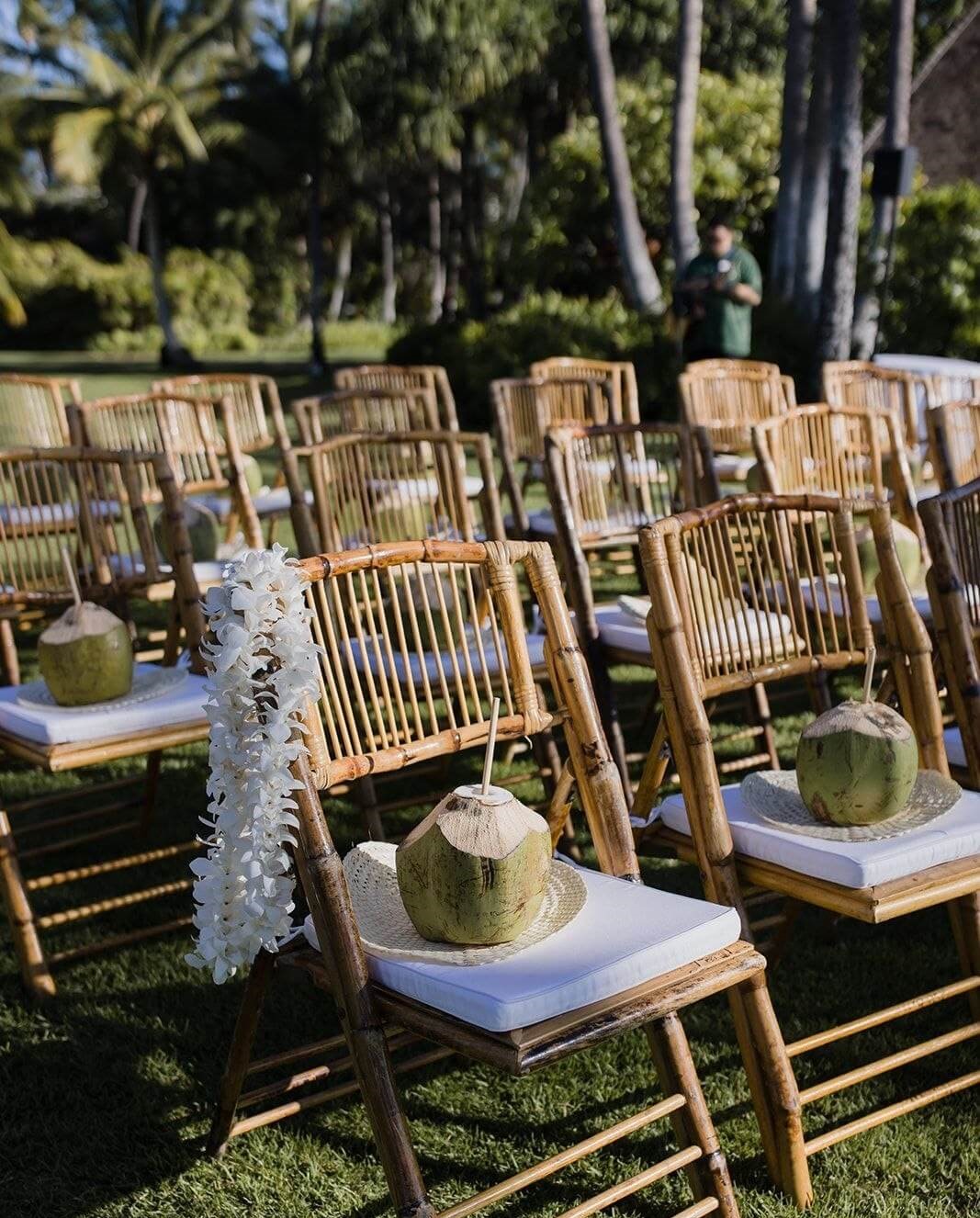
The Pū and the Oli
The pū and the oli typically open the ceremony, setting a respectful and sacred tone. New Wave photographers describe it as follows:
The officiant or minister will usually blow the conch shell to begin the ceremony or to end the ceremony during the kiss. It signifies calling on the ancestors as a way of blessing the ceremony.
An oli, or chant, may follow or replace the pū as a blessing. Forever Amour Events notes that
an oli can be especially meaningful when opening or blessing the ceremony.
Both should be performed by someone with the necessary knowledge and authority.
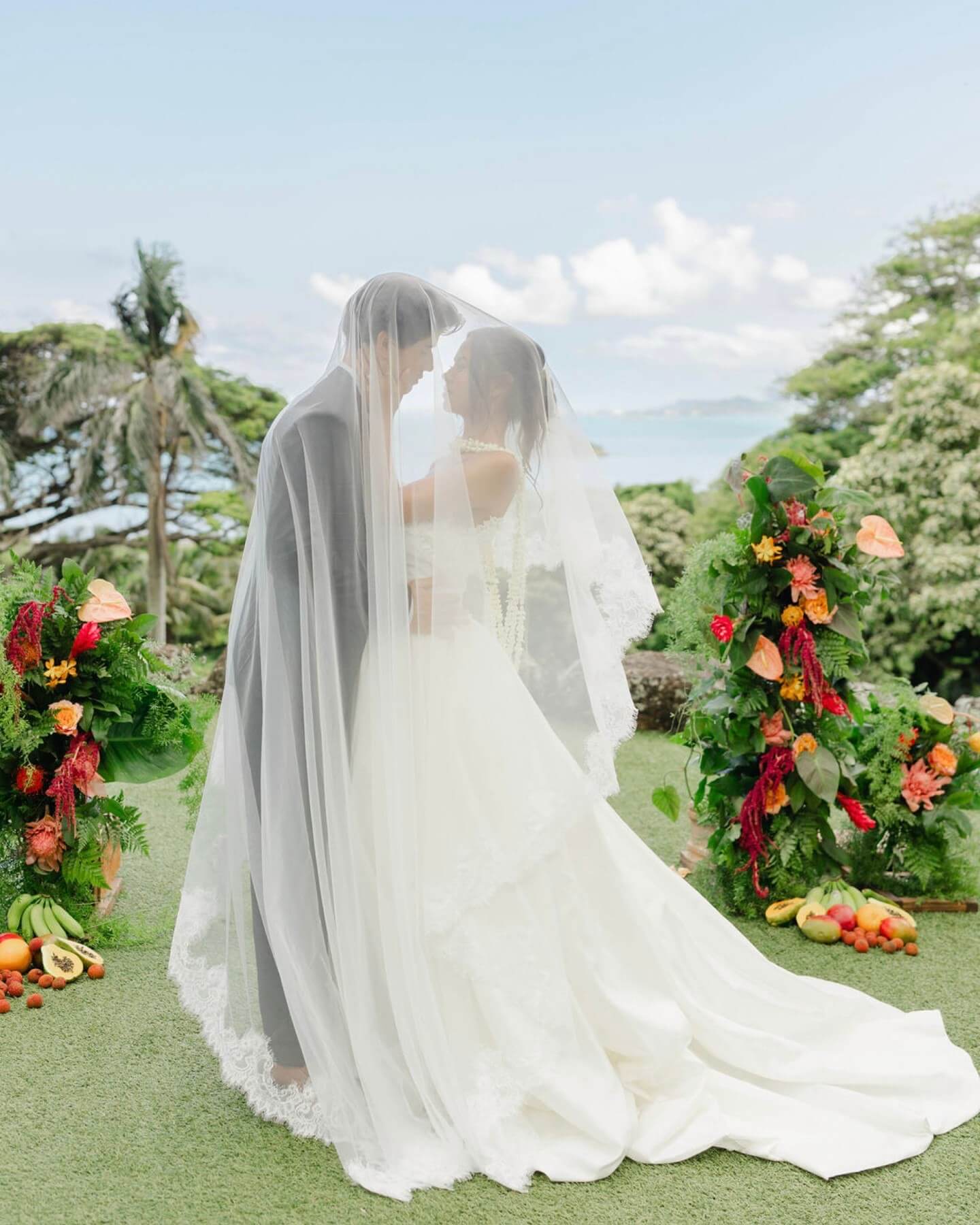
The Lei Exchange
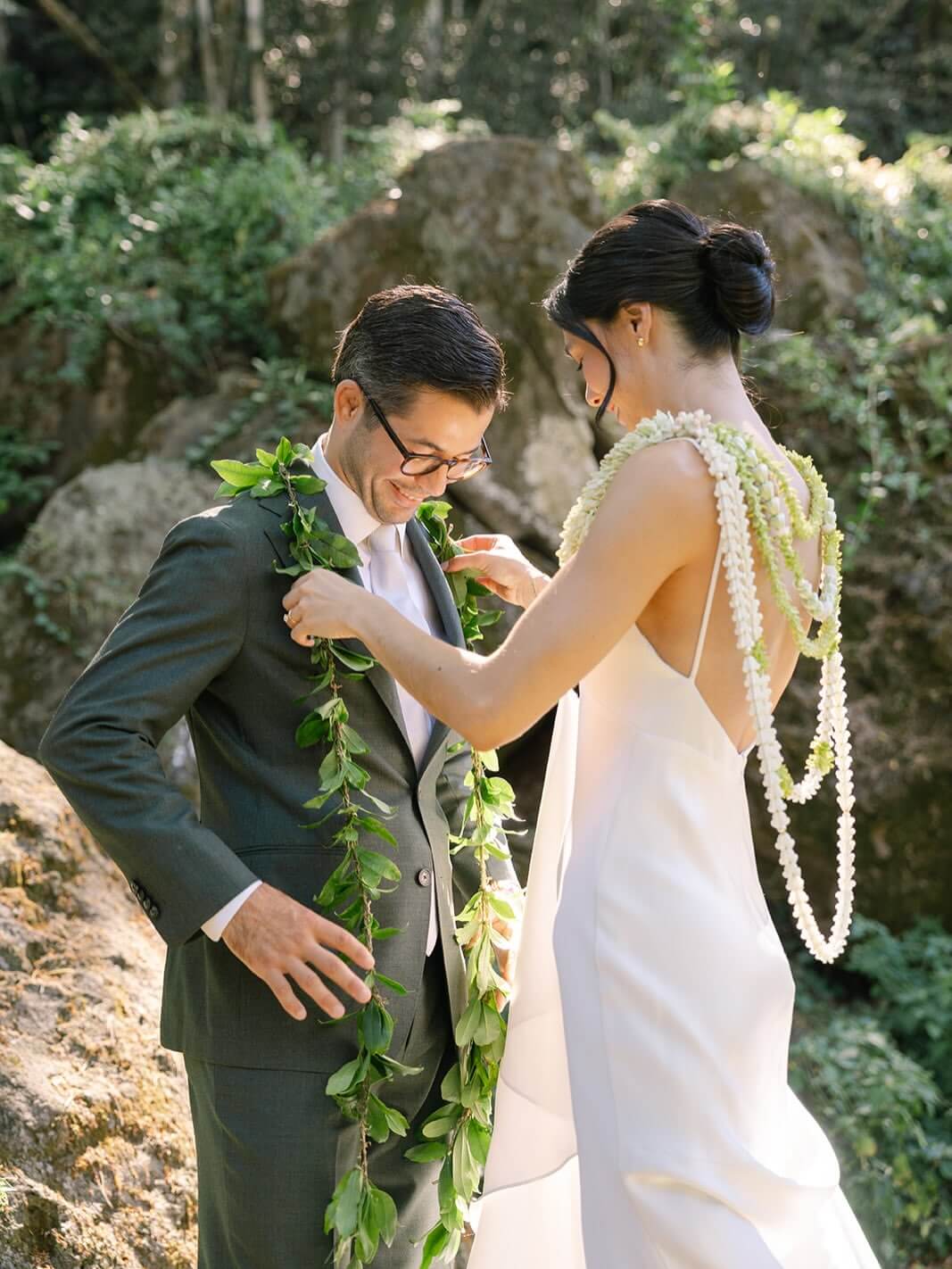
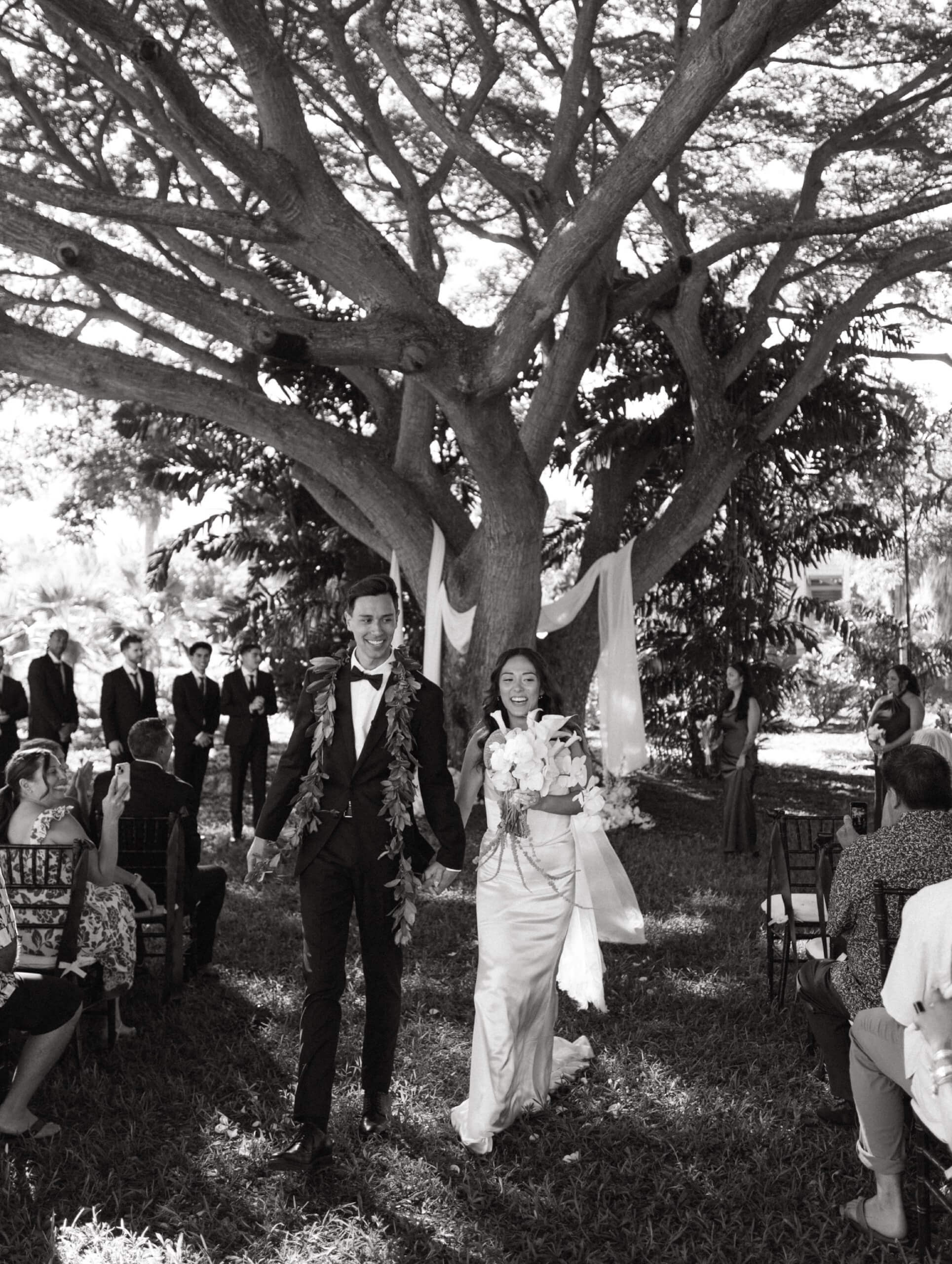
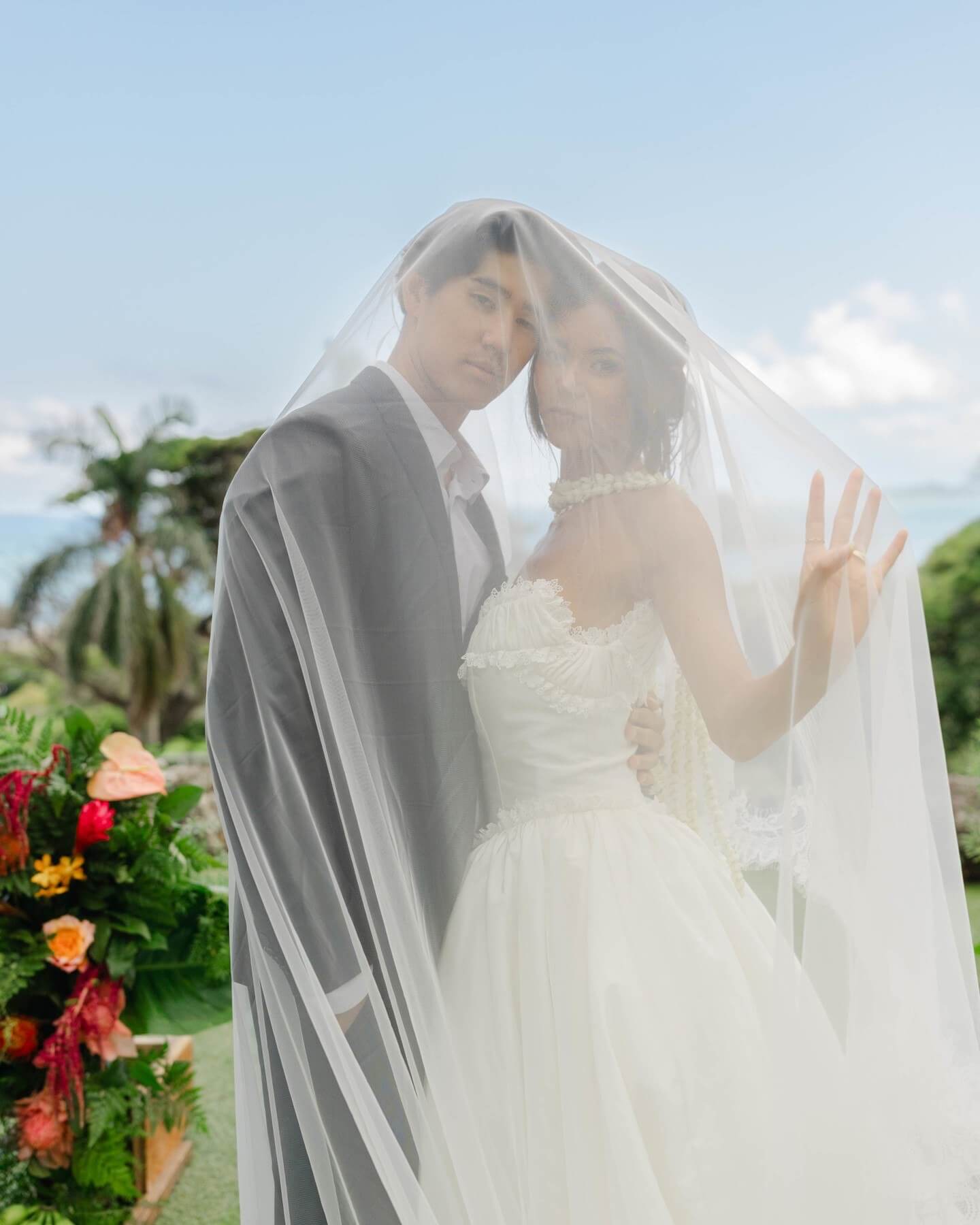
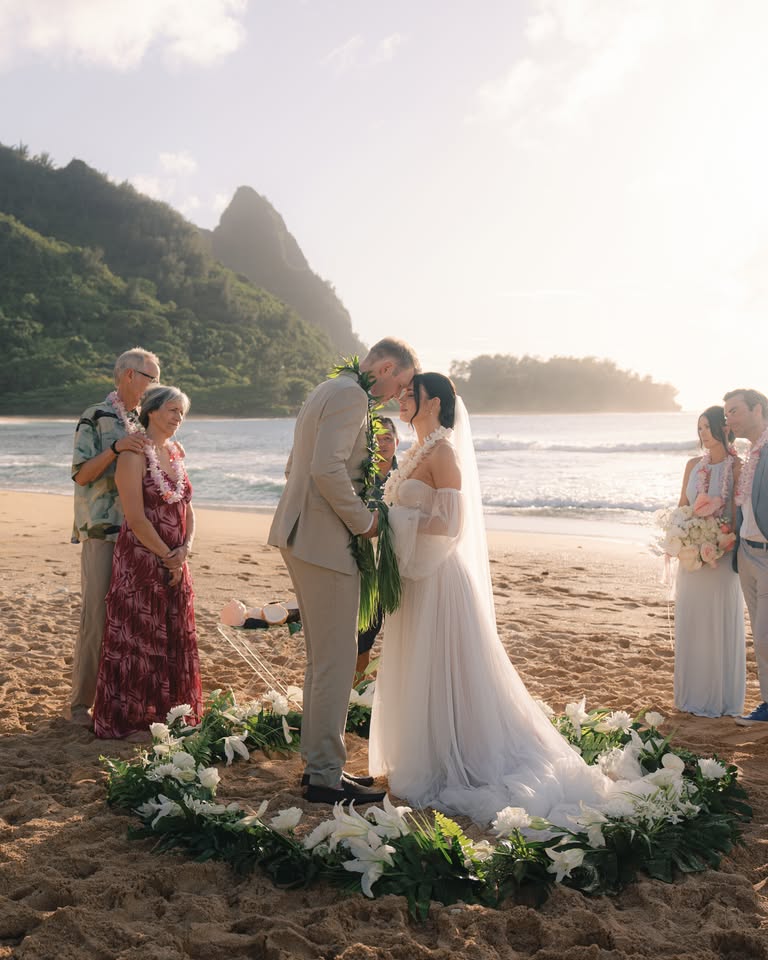
The lei exchange is one of the best-known Hawaiian wedding traditions, symbolizing love and lasting commitment. New Wave explains the tradition:
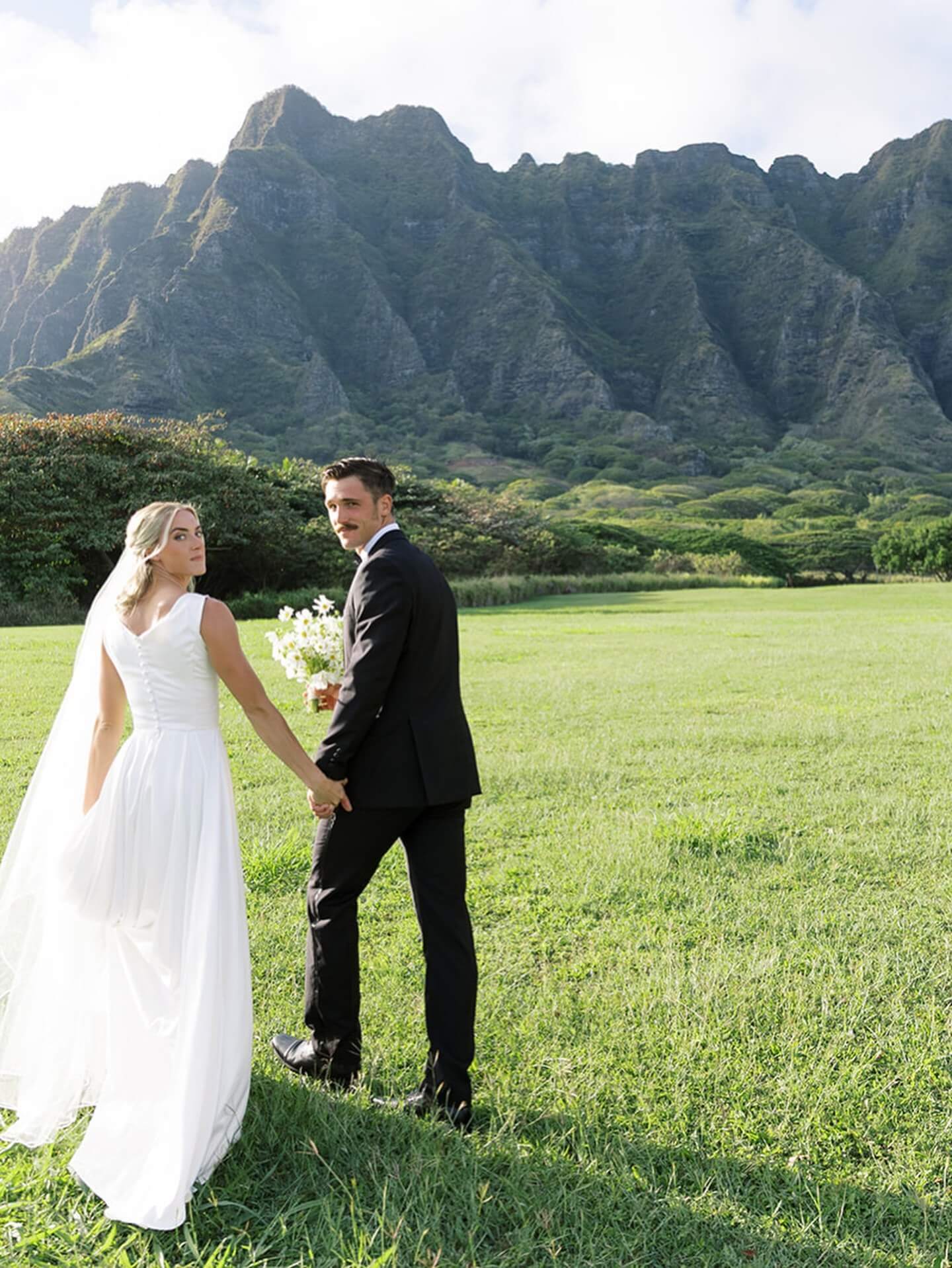
Couples will exchange ti leaf leis or floral leis as a symbol of eternal love and commitment. Side note: this isn't a rule, but typically ti leaf leis are worn by men and puakenikeni floral leis are worn by women.
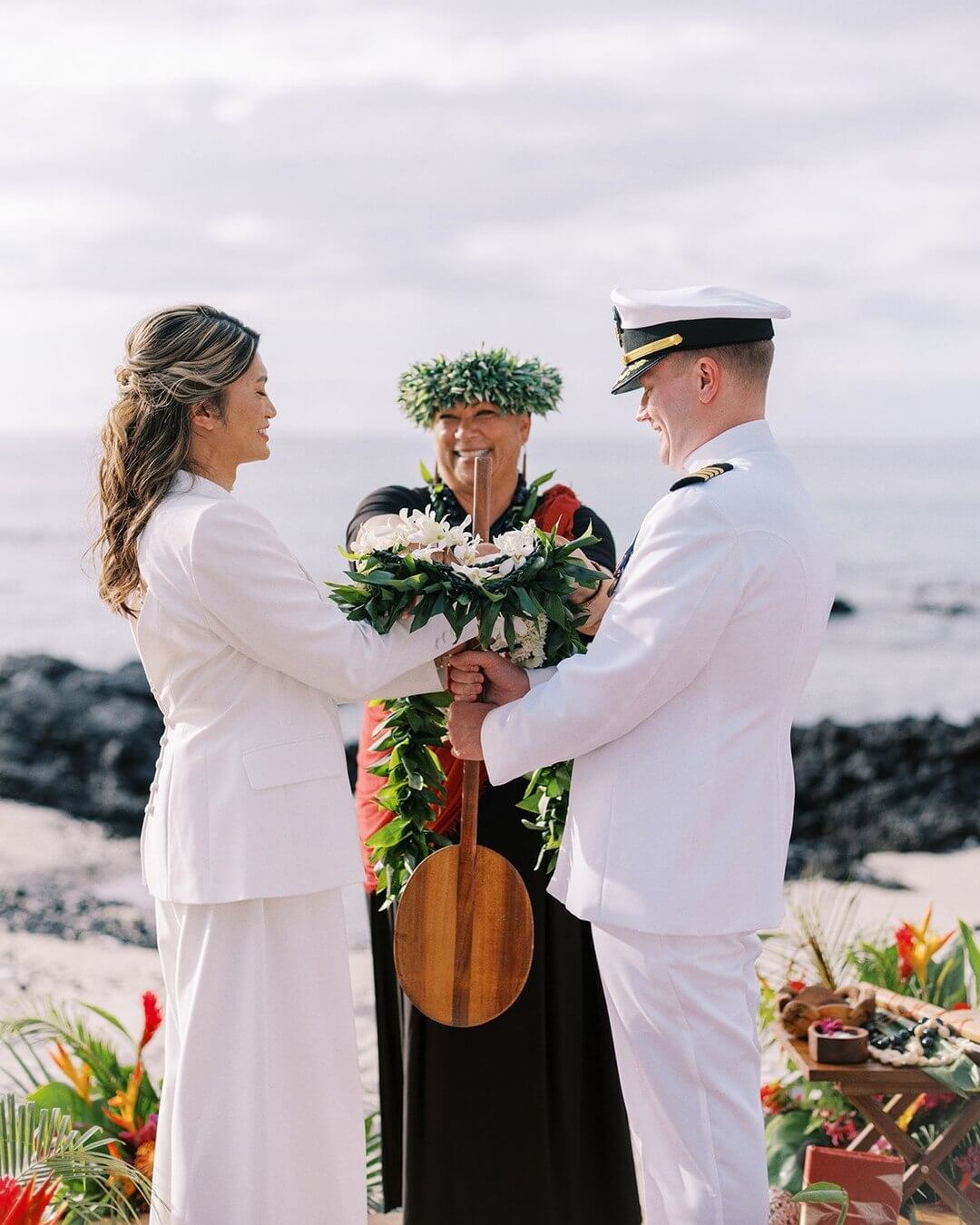
The maile lei, an open lei made from a fragrant vine, is often chosen for the groom and is traditionally worn to honor special occasions. Many couples also give lei to their parents, grandparents, or wedding party as a sign of gratitude. Ordering lei from a local lei maker a day or two ahead of time ensures they are fresh. It is also important to observe lei etiquette: it is considered impolite to refuse a lei or to take it off in front of the person who gave it to you. Many families also follow the custom of giving an open lei, such as a maile lei, to an expectant mother rather than a closed one.
Honi, the Sharing of Breath
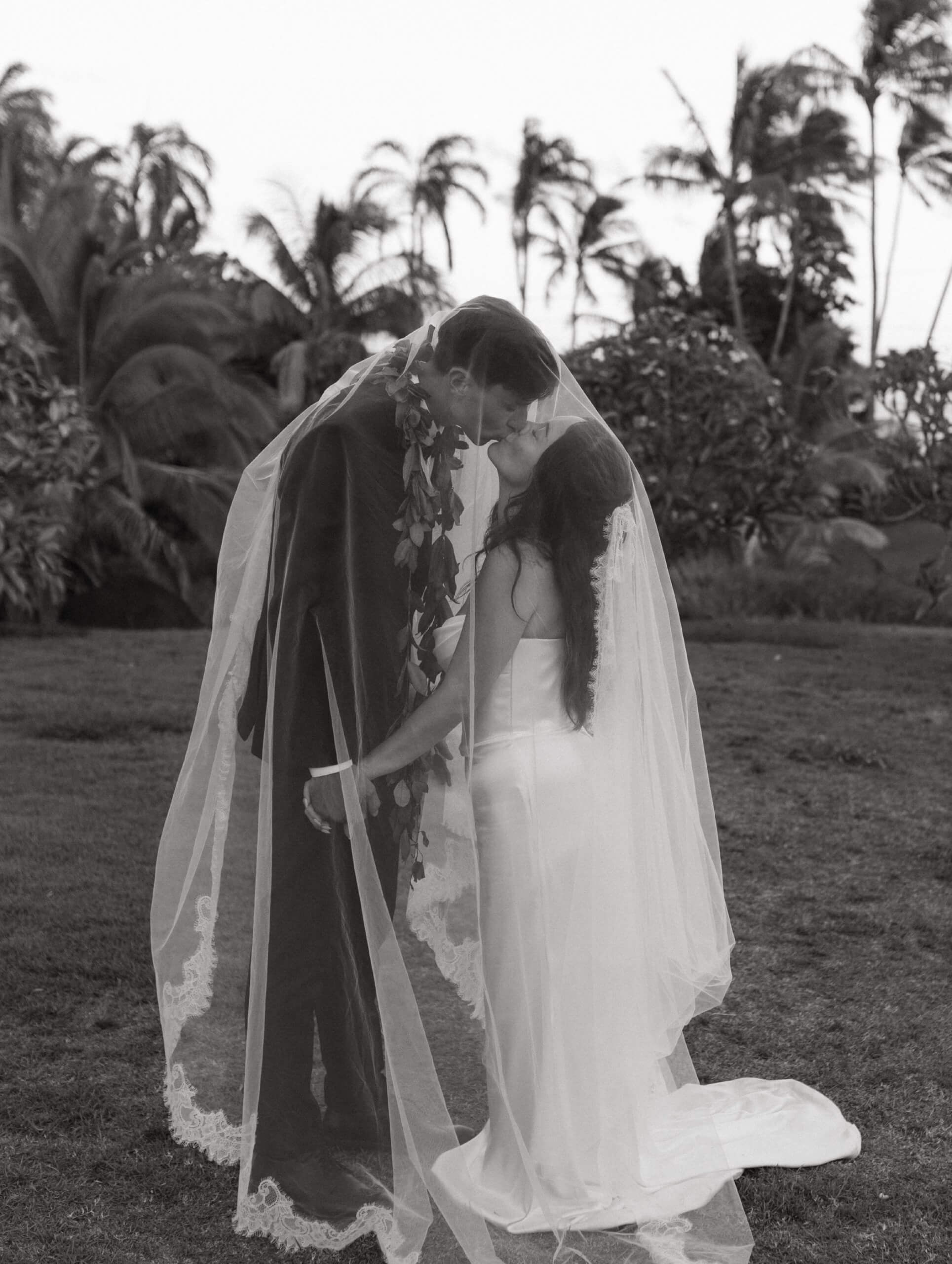
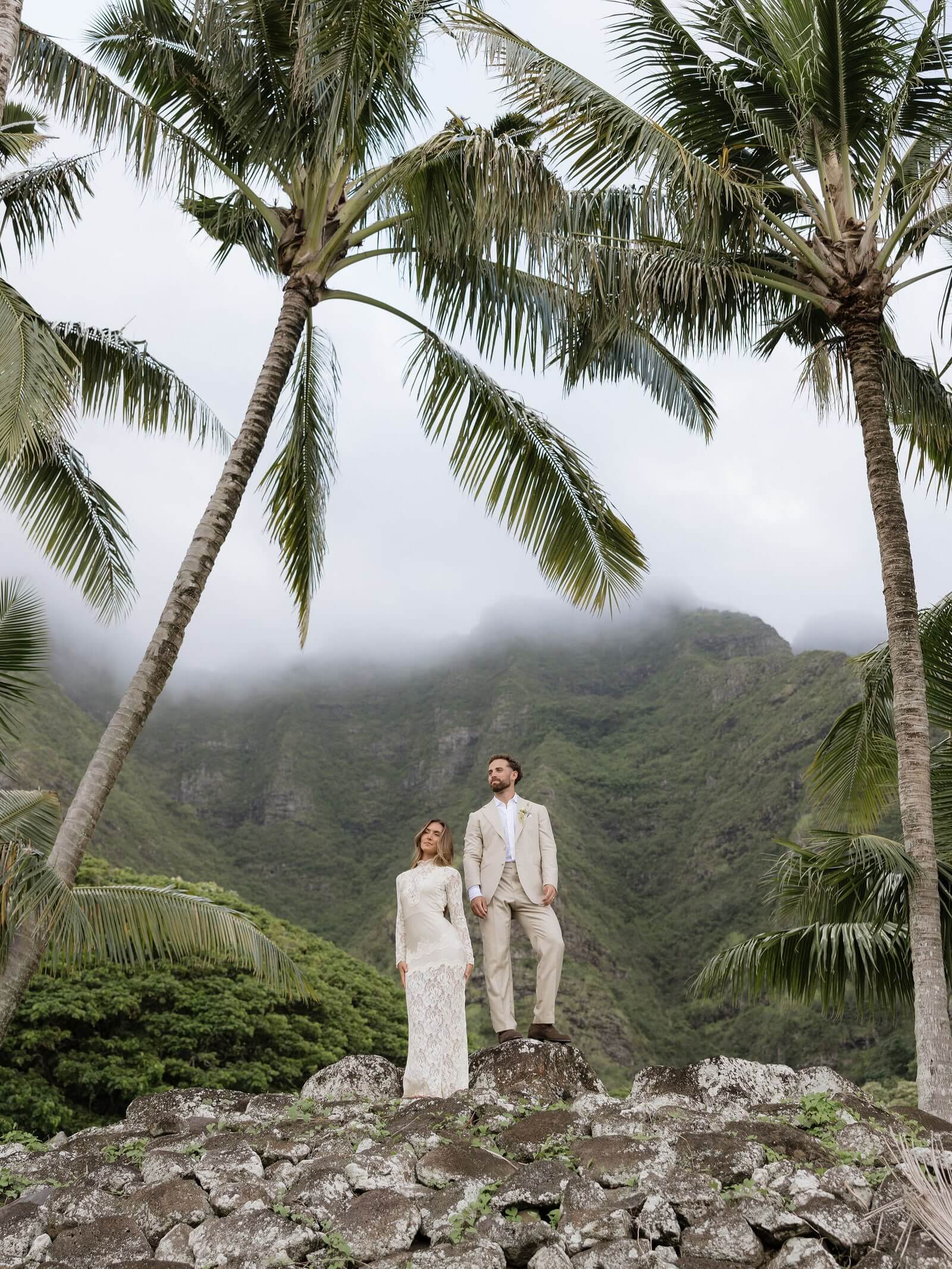
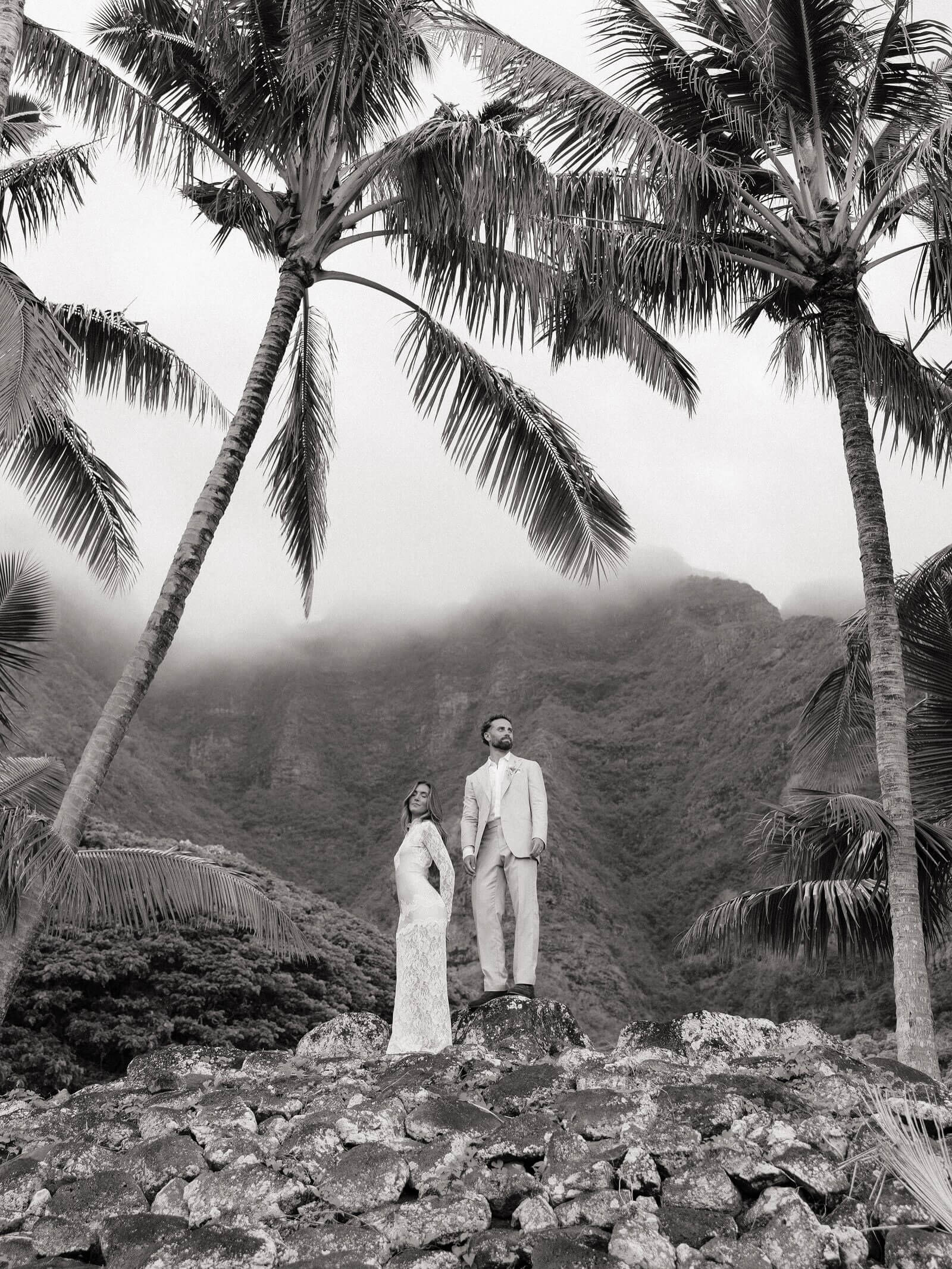
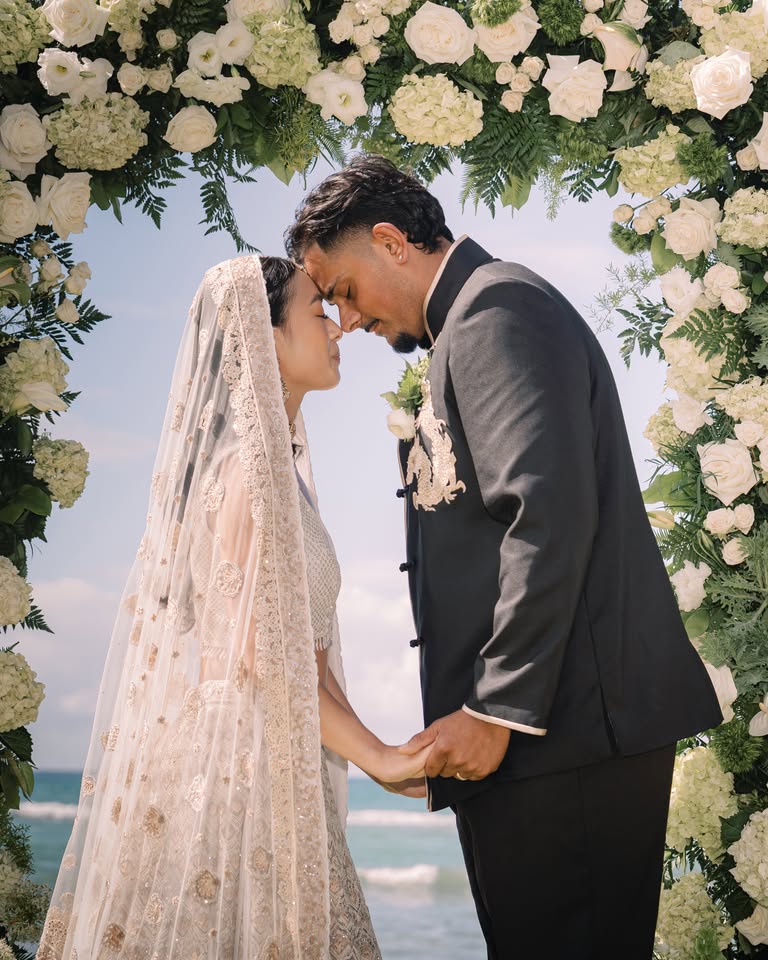
The honi is a quiet ritual in which the couple presses their foreheads together and breathes in at the same time, sharing the breath of life. Photographer Masha Sakhno describes it as one of the most meaningful moments she has witnessed:
In Hawaiian culture, the breath - or hā - is considered the essence of life, and sharing it is a deeply intimate act of connection and trust. When couples incorporate it into their ceremony, it tends to be one of the most quietly powerful moments of the day.
Because it is so simple, the honi can be incorporated into almost any ceremony, including very small elopements.
Maile Lei and Ring Blessings
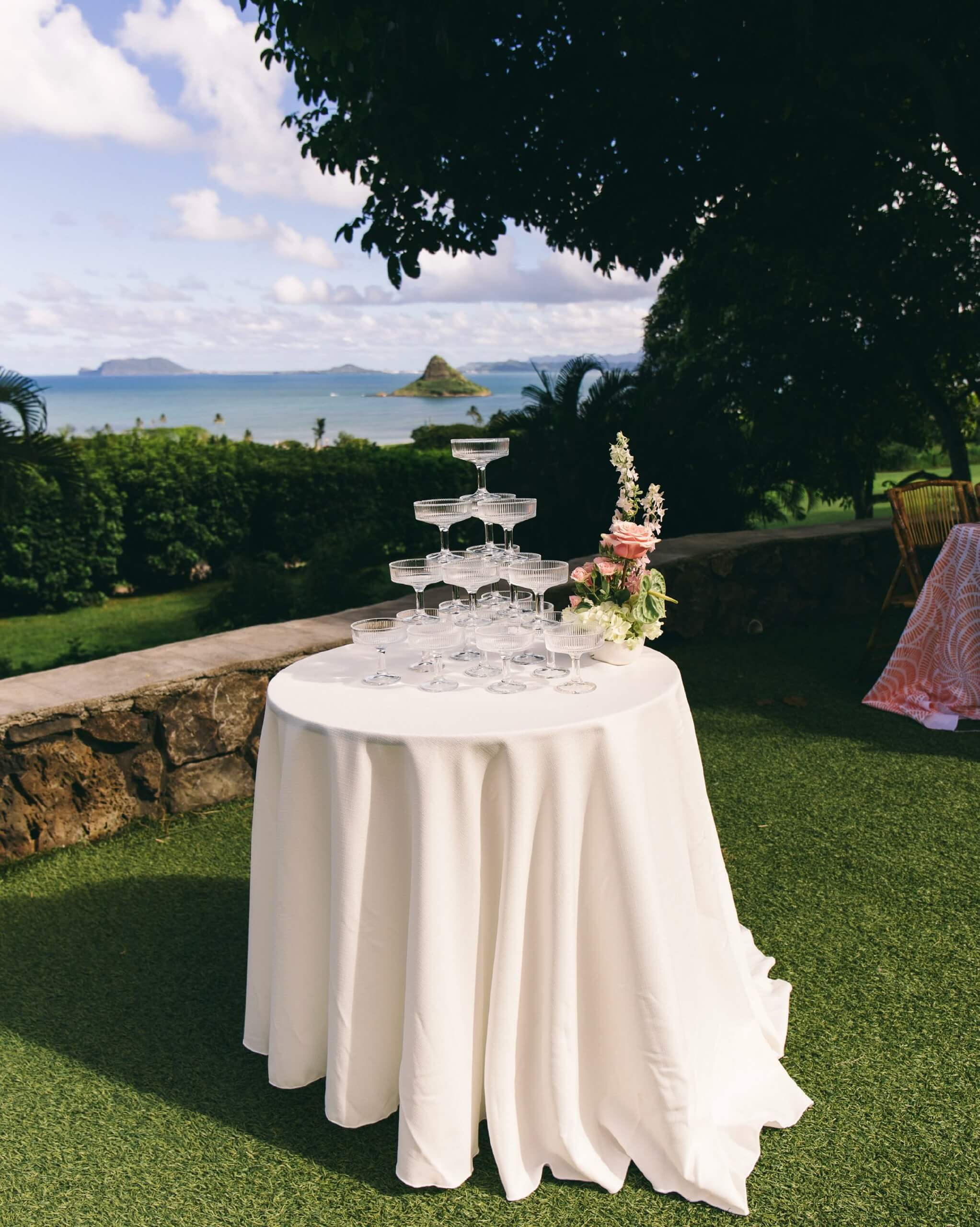
Some ceremonies also include tying a maile lei around the couple's joined hands and blessing the rings. During the vows, the kahu wraps the maile around the couple's hands to symbolize two lives coming together. The rings may be blessed with water, sometimes from the ocean, as a symbol of protection and purity. It is best to discuss these elements with your officiant in advance, since practices can vary between practitioners and families. Asking what each step means will also help you to explain it to guests, for example in the ceremony program.

Hawaiian Wedding Traditions and Customs at the Reception
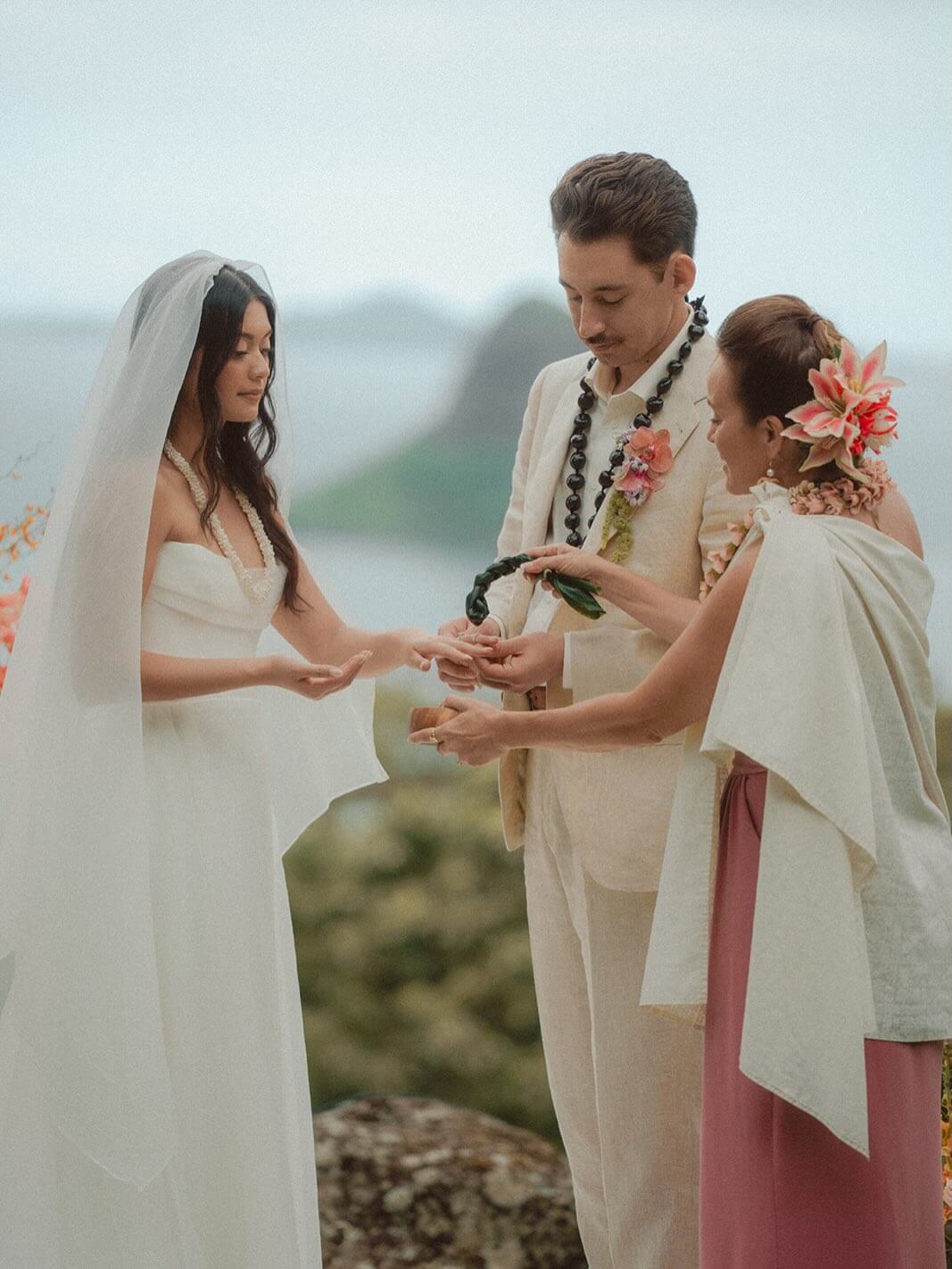
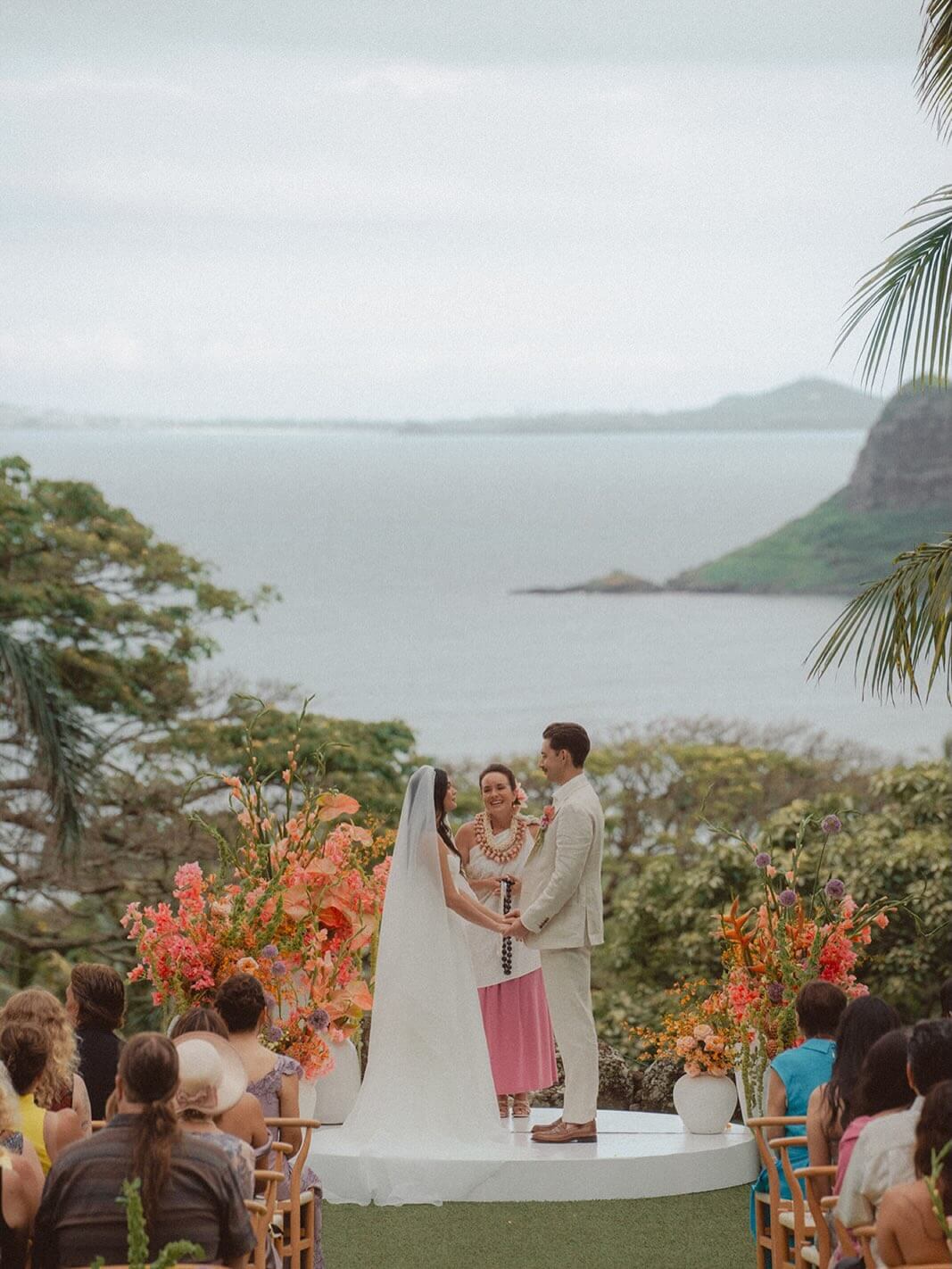
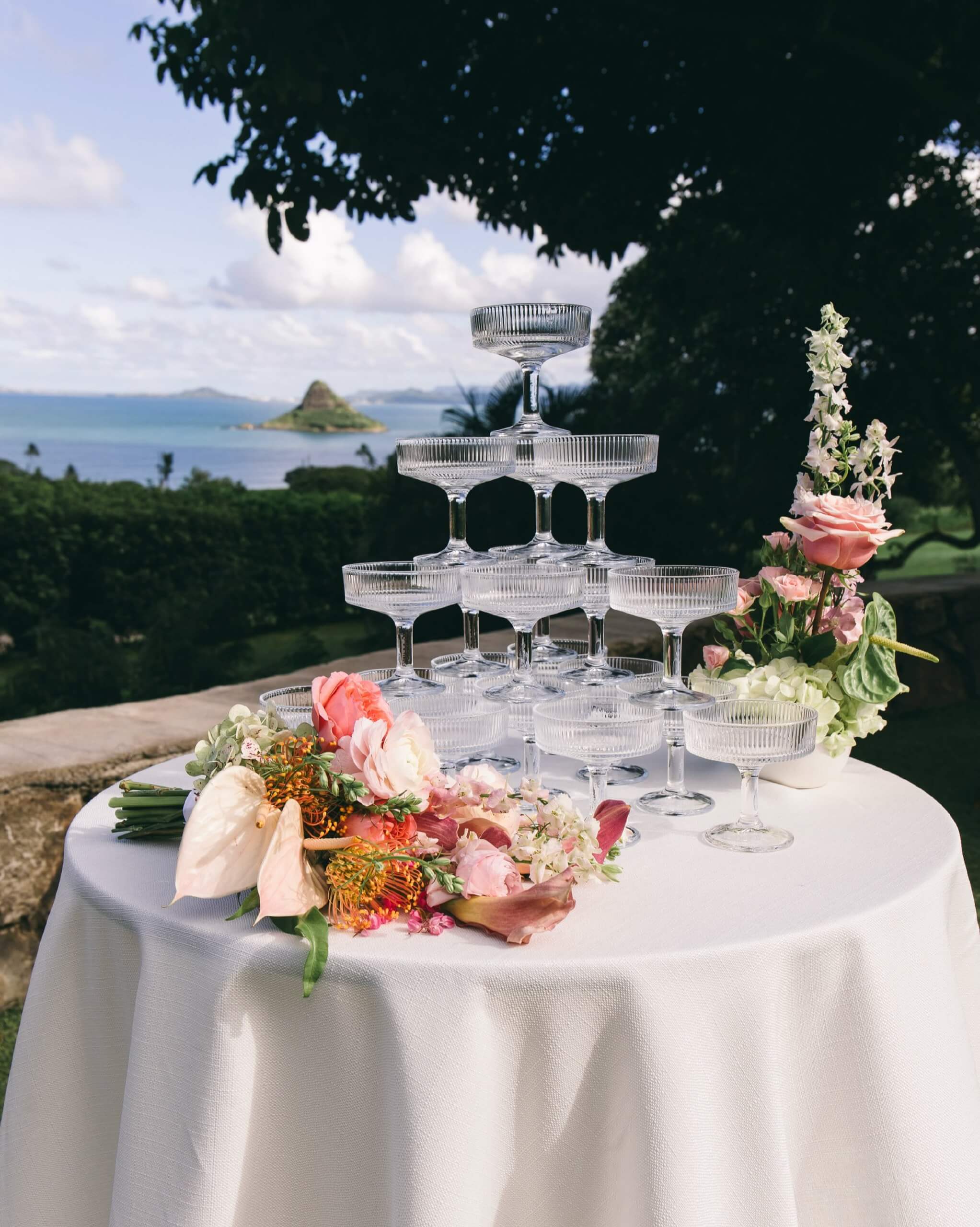
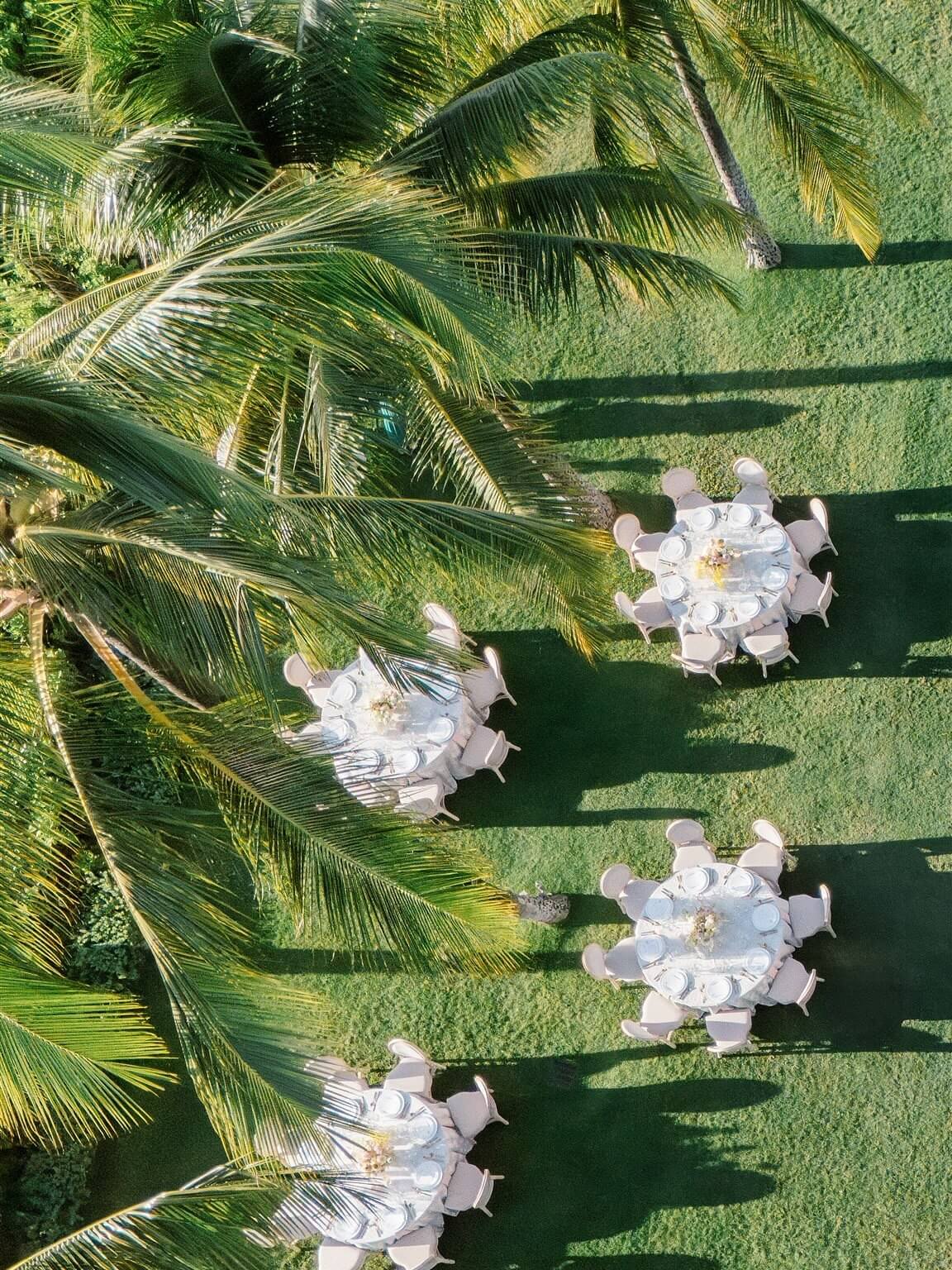
The reception is where many Hawaiian wedding traditions and customs come together through food, music, hula and flowers. Couples often opt for a luau-style menu and live Hawaiian music during dinner, as well as lei for close family members. Rather than simply watching from their seats, guests can also take part. The two sections below cover the main elements and how local vendors recommend incorporating them.
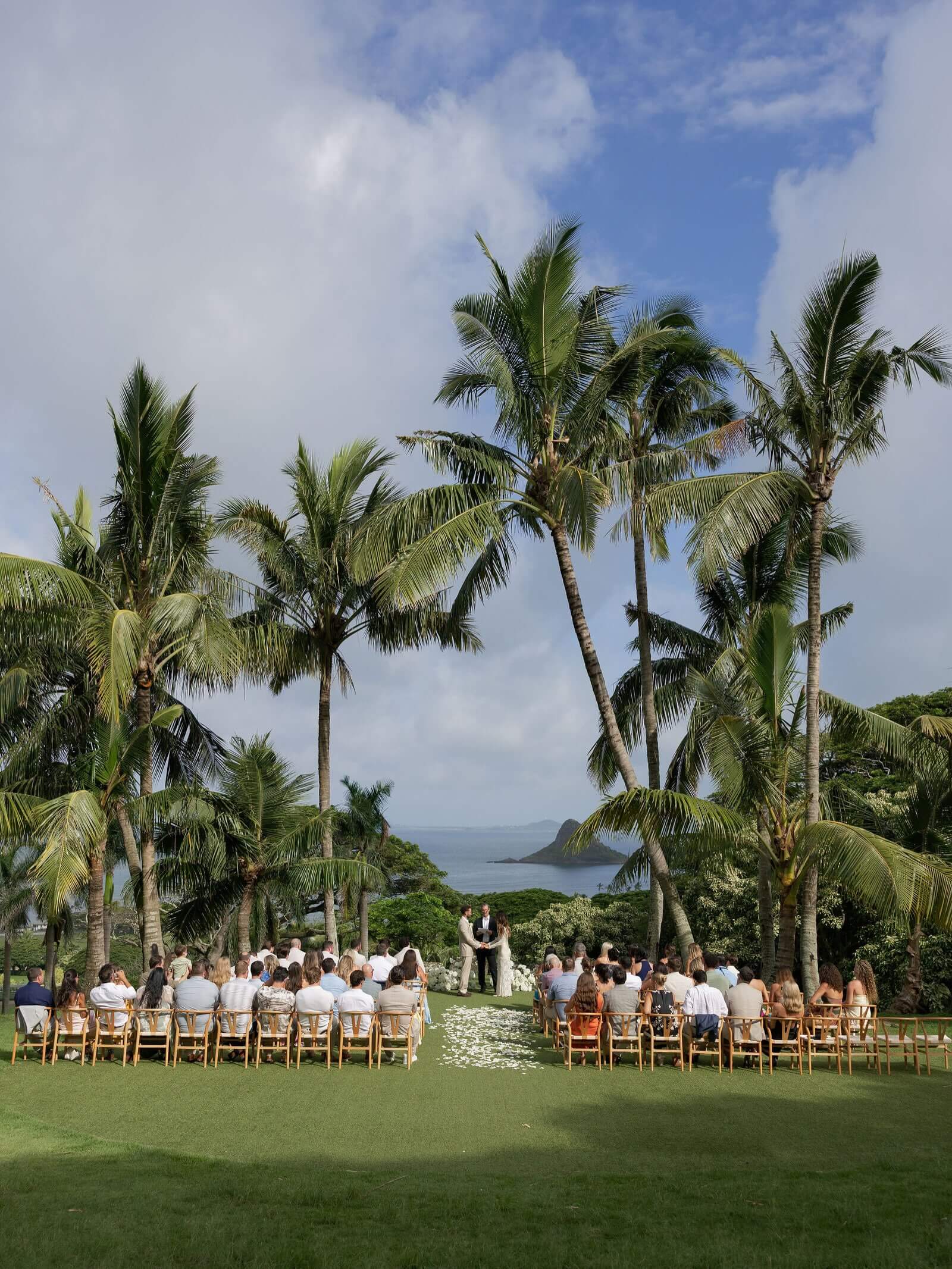
Luau Food, Music and Hula
A luau-style menu is a fitting choice for a Hawaiian reception. Dishes such as kalua pig, which is cooked in an imu (underground oven), laulau, lomi lomi salmon, poi and haupia (coconut pudding) bring local flavors to the table. Live music featuring the ukulele or slack-key guitar creates a relaxed atmosphere, while hula can mark a special moment. Forever Amour Events suggests that
live Hawaiian music and hula can naturally complement cocktail hour, dinner, or another intentional moment during the reception.
Many couples also request "Ke Kali Nei Au," a song written by Charles E. King, which is known in English as "The Hawaiian Wedding Song" and was popularized by Elvis Presley in the film Blue Hawaii. For extra energy later in the evening, you could also opt for fire knife dancing, a Samoan tradition often seen at Polynesian events.
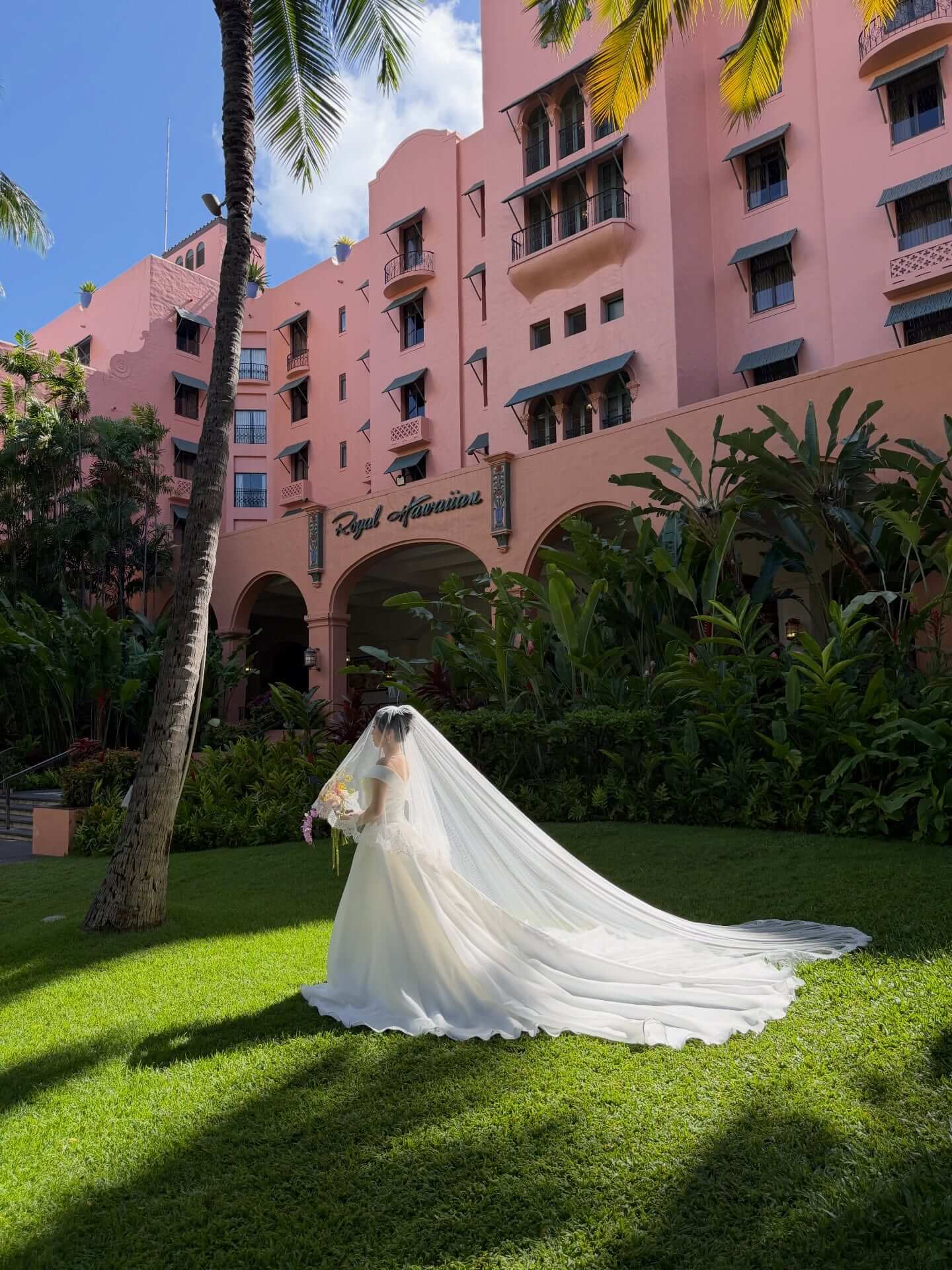
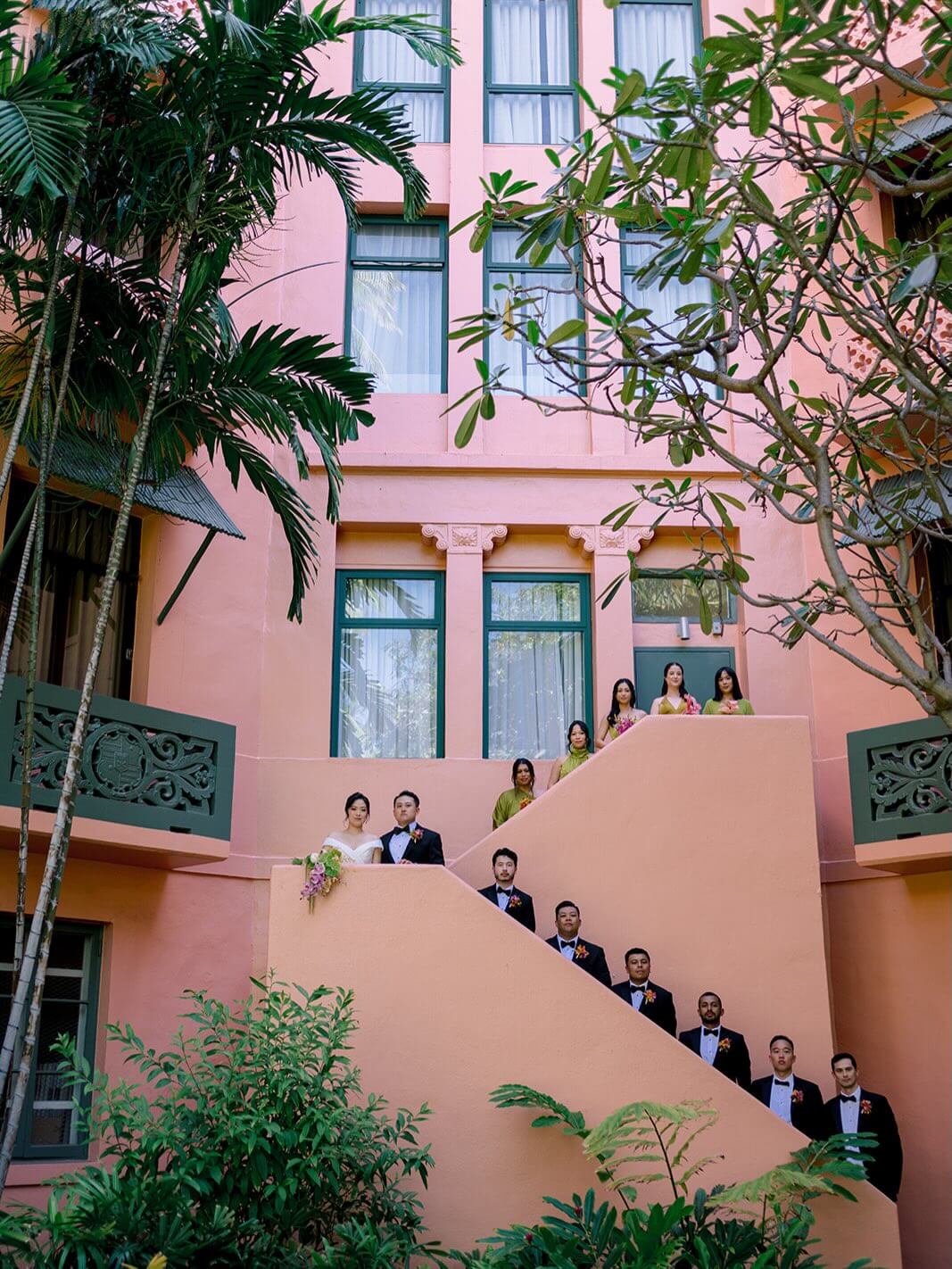
Flowers, Lei and Guest Traditions
Flowers and greenery can have great significance for couples who understand what they represent. Forever Amour Events advises:
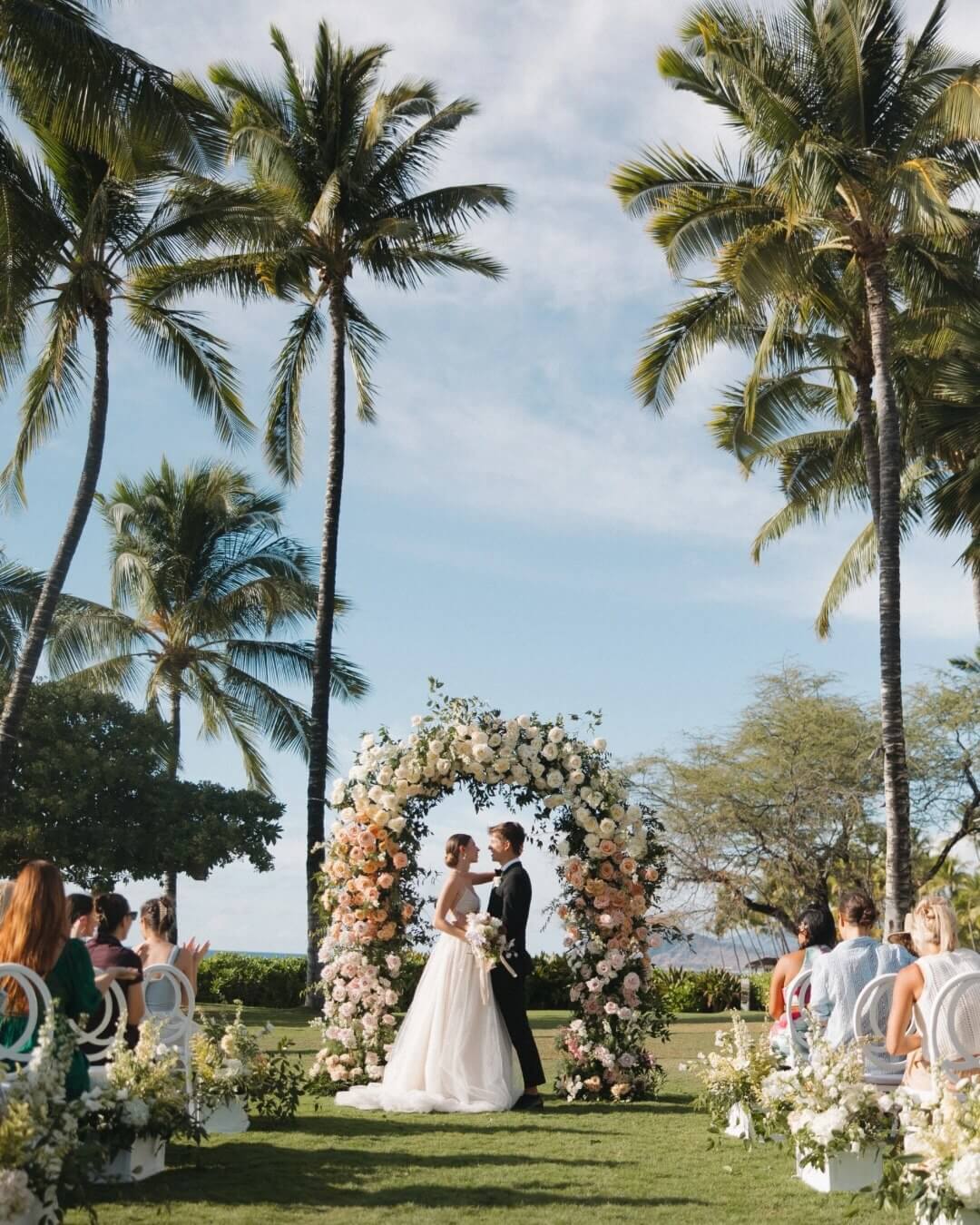
Couples can be intentional by learning the meaning and significance behind the flowers and greenery they choose. Incorporating elements such as maile, ti leaf, or locally grown tropical flowers through lei, ceremony details, or floral design - and working with local Hawaiian florists and cultural practitioners - can create a deeper connection to place rather than using them solely for their aesthetic.
Guests can join in too. As New Wave suggests,
One way to include guests would be doing a lei exchange with guests of honor!
Traditional Hawaiian Wedding Attire
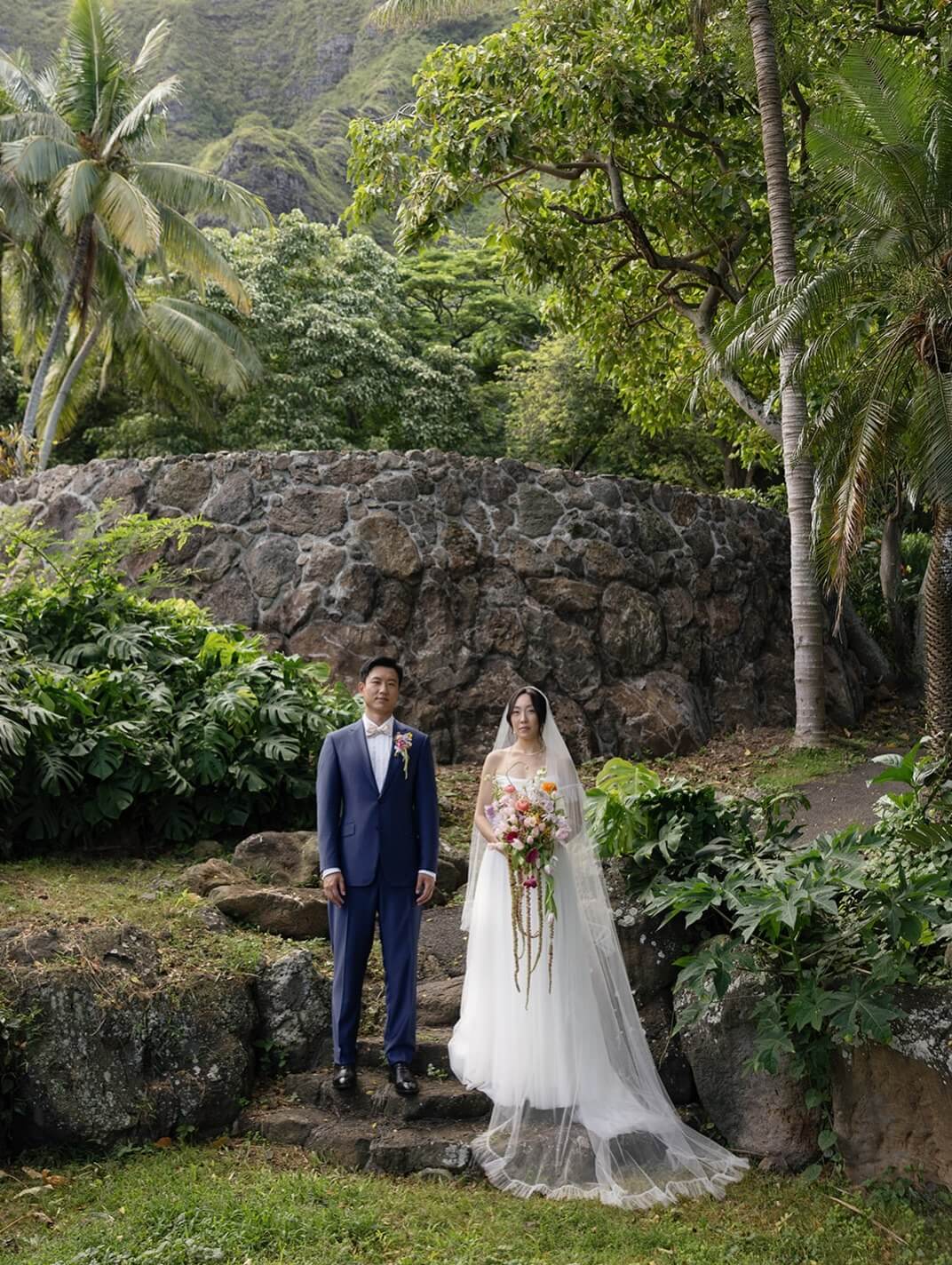
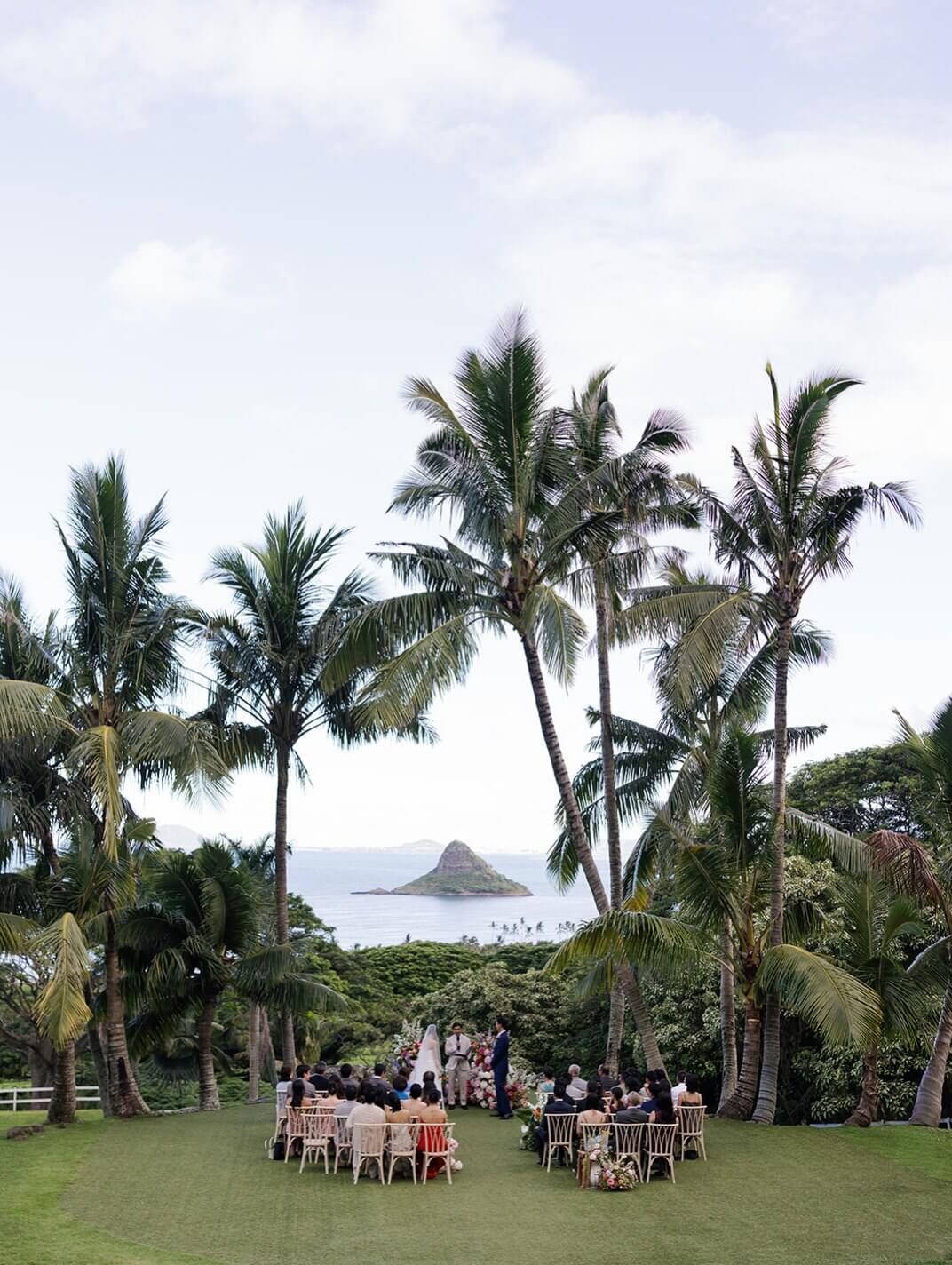
Traditional Hawaiian wedding attire combines elegance with comfort in warm weather. The holoku, a long, fitted gown with a train and often long sleeves, is the most traditional choice for the bride. However, many modern brides opt for a lighter gown adorned with Hawaiian motifs. Popular accessories for the bride include a haku lei, a woven flower crown, while the groom often wears a white shirt with a maile lei. Guests usually wear aloha attire, such as floral dresses and aloha shirts, and comfortable shoes are recommended for outdoor venues. New Wave shares a sweet custom to keep in mind:
One of my favorite Hawaiian cultural traditions is that when you are in a relationship, you wear a flower in your hair behind your left ear, on the side of your ring finger.
How to Honor Native Hawaiian Wedding Traditions Respectfully
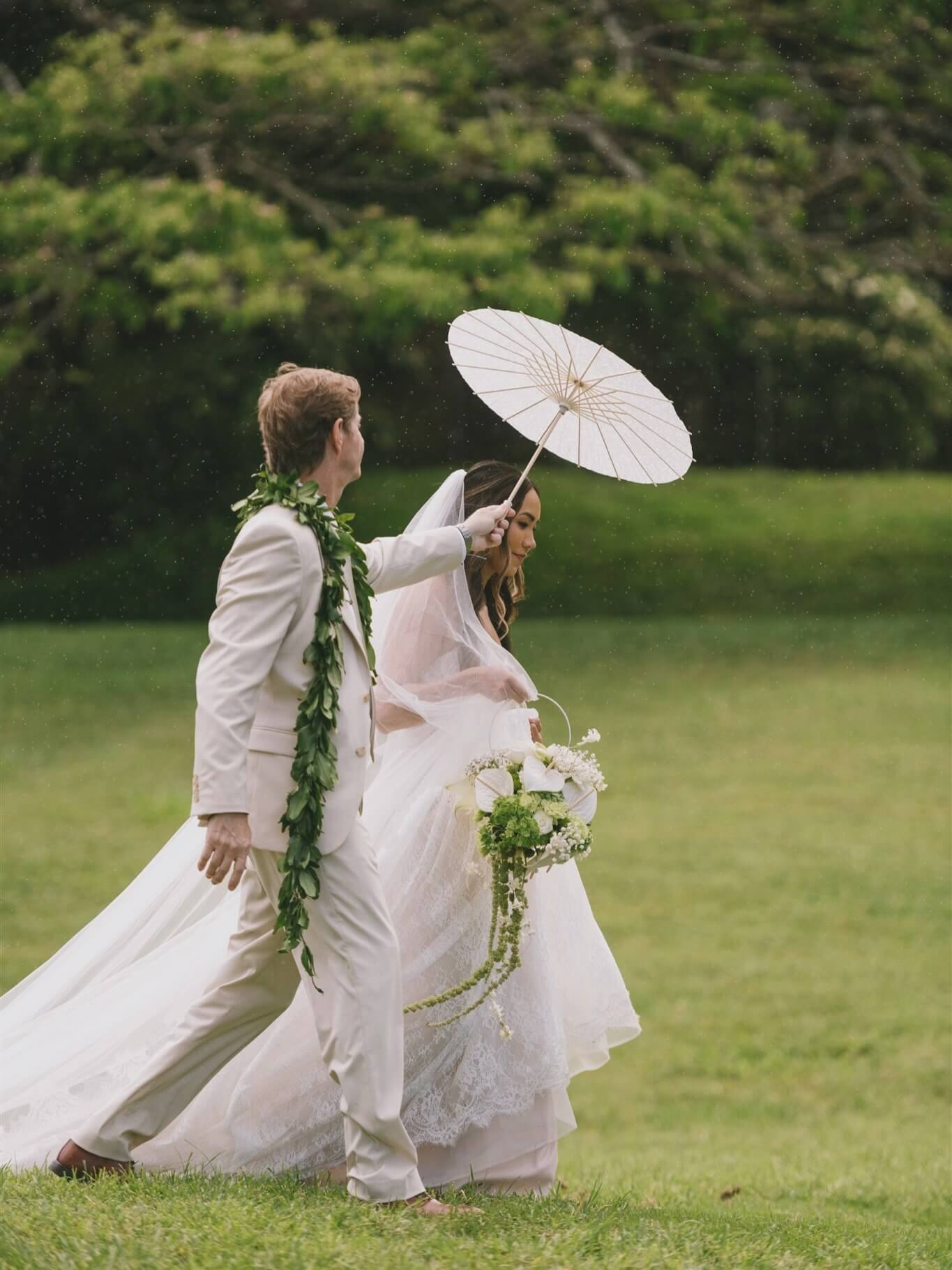
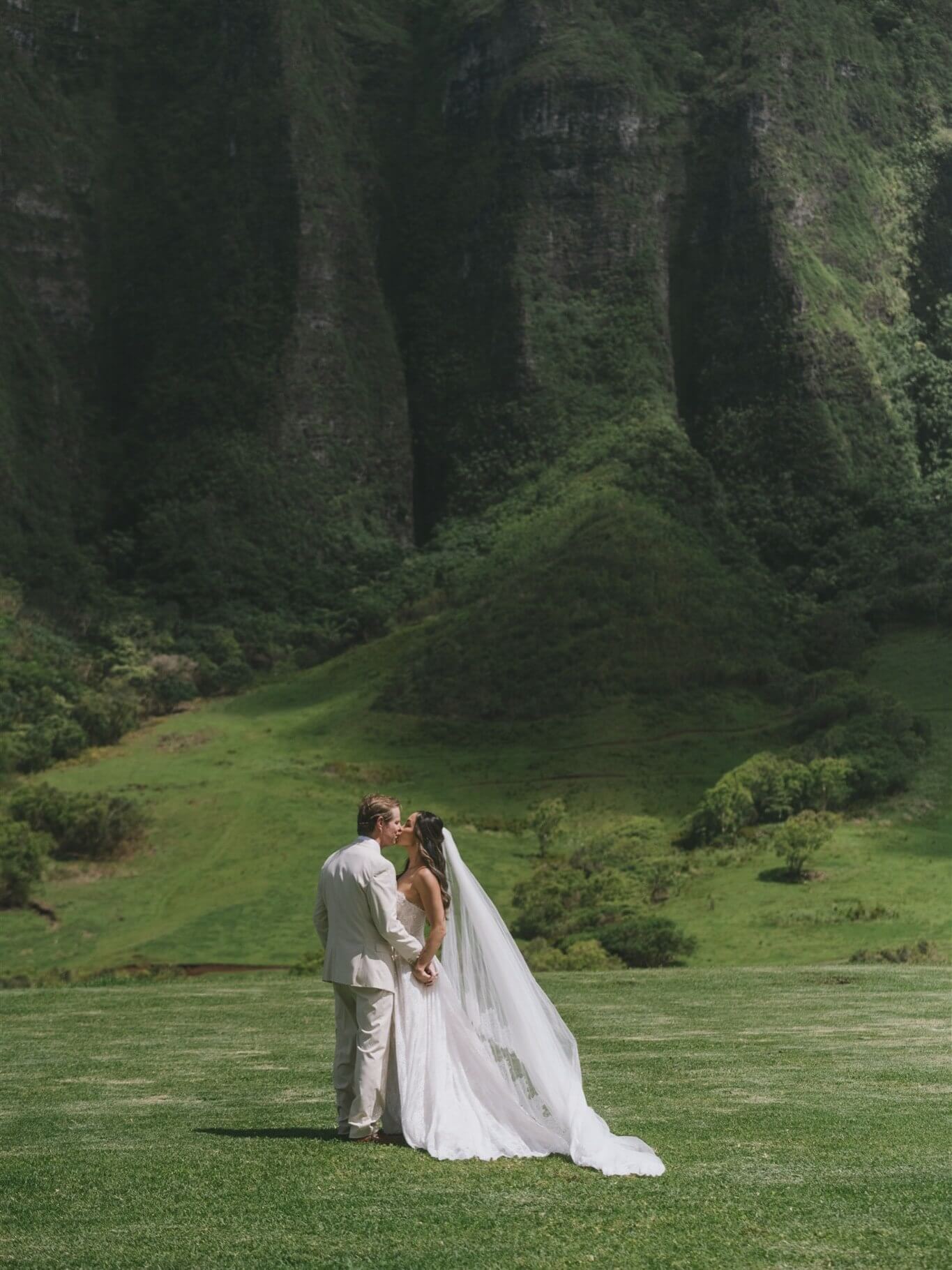
To honor Native Hawaiian wedding traditions respectfully, it is important to understand their meaning, work with Native Hawaiian practitioners, and support local businesses. Emily Choy reminds couples that they can show respect for the islands without incorporating cultural rituals:
Couples can honor Hawaiʻi without feeling they need to incorporate Hawaiian traditions into their ceremony.
For those who do wish to incorporate such traditions, Masha Sakhno adds:
The key is approaching it with intention and respect, ideally guided by a Hawaiian officiant or cultural practitioner who can speak to the meaning behind each element.
A few practical steps can help:
- Ask a Native Hawaiian practitioner or kahu to guide any cultural elements.
- Learn the meaning of each ritual and share it with guests in your program.
- Use Hawaiian words correctly, including place names.
- Choose local florists, lei makers, musicians, and caterers.
- Treat beaches, gardens and sacred sites with care and follow venue rules.
- If you are planning a ceremony on a public beach, make sure that your planner or officiant holds the necessary state permit.
Theel Wedding Productions recommends several local resources:
Great resources include the Native Hawaiian Hospitality Association (NaHHA), the Hawaiʻi Tourism Authority's Maʻemaʻe Toolkit, the Oʻahu Wedding Association, and the Maui Wedding & Event Association.
Ready to plan your celebration on the islands? Find Hawaii-based wedding planners, photographers and other vendors on Wezoree to build a team that knows the area and its traditions.

FAQ
What are the most common Hawaiian wedding traditions?
The most popular Hawaiian wedding traditions are the lei exchange, the blowing of the pū, an oli (chant), the honi (sharing of breath) and the tying of the maile lei. At the reception, couples often include a luau-style menu, live Hawaiian music and hula. Each of these elements works best when it is led or explained by someone who understands its meaning.

Can non-Hawaiians have a traditional Hawaiian wedding?
Yes, couples from any background can incorporate Hawaiian traditions into their wedding if they approach them with respect and guidance. Working with a Native Hawaiian officiant or cultural practitioner can help couples to understand each ritual and incorporate it appropriately. Alternatively, couples can simply celebrate in Hawaii without incorporating cultural elements.

What does the lei exchange symbolize at a Hawaiian wedding?
It symbolizes the couple's love, respect, and commitment to each other. Grooms often wear a maile or ti leaf lei, while brides usually choose a floral lei. Many couples also give lei to their parents or other close guests as a sign of gratitude.
What should guests wear to a wedding in Hawaii?
They usually wear aloha attire, such as light floral dresses, aloha shirts, and linen pants. Comfortable sandals or flat shoes are best for beach and garden venues. Couples should specify the dress code on the invitation, particularly for formal events.
Is a kahu required for a Hawaiian wedding ceremony?
No, but a Hawaiian minister is the best choice if you want to include cultural rituals. Anyone performing a marriage in Hawaii must be licensed by the state Department of Health. Couples also need a Hawaii marriage license, which is issued by a Department of Health agent once both partners have appeared in person together. There is no waiting period, and the license is valid for 30 days. Many licensed officiants on the islands can also lead or coordinate Hawaiian blessings.