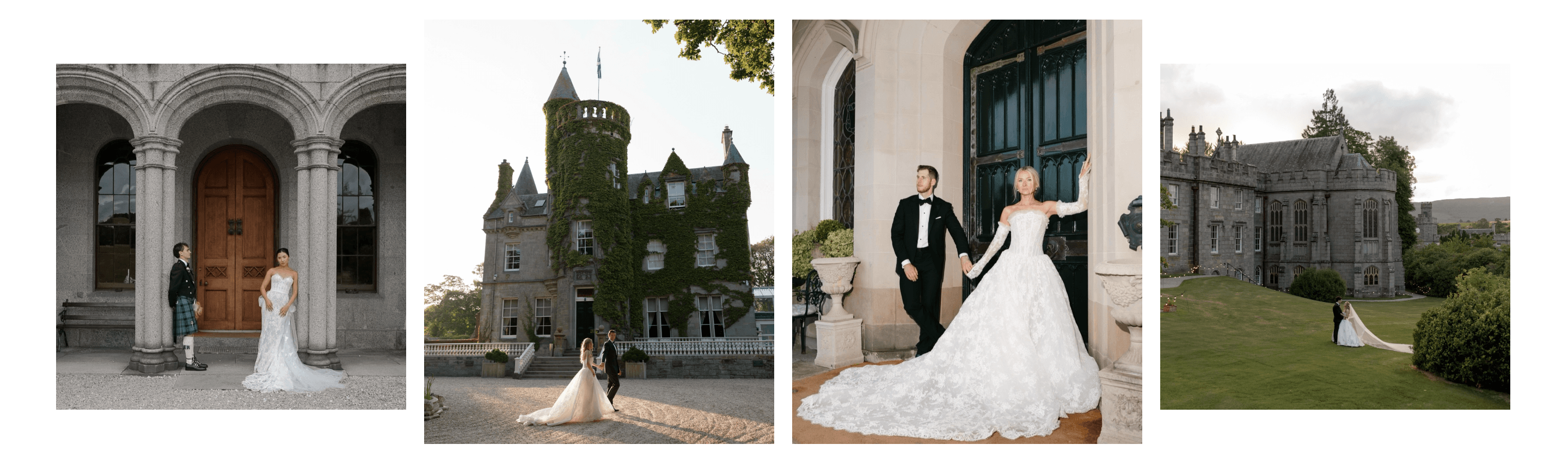
Majestic Castle Wedding Venues in Scotland


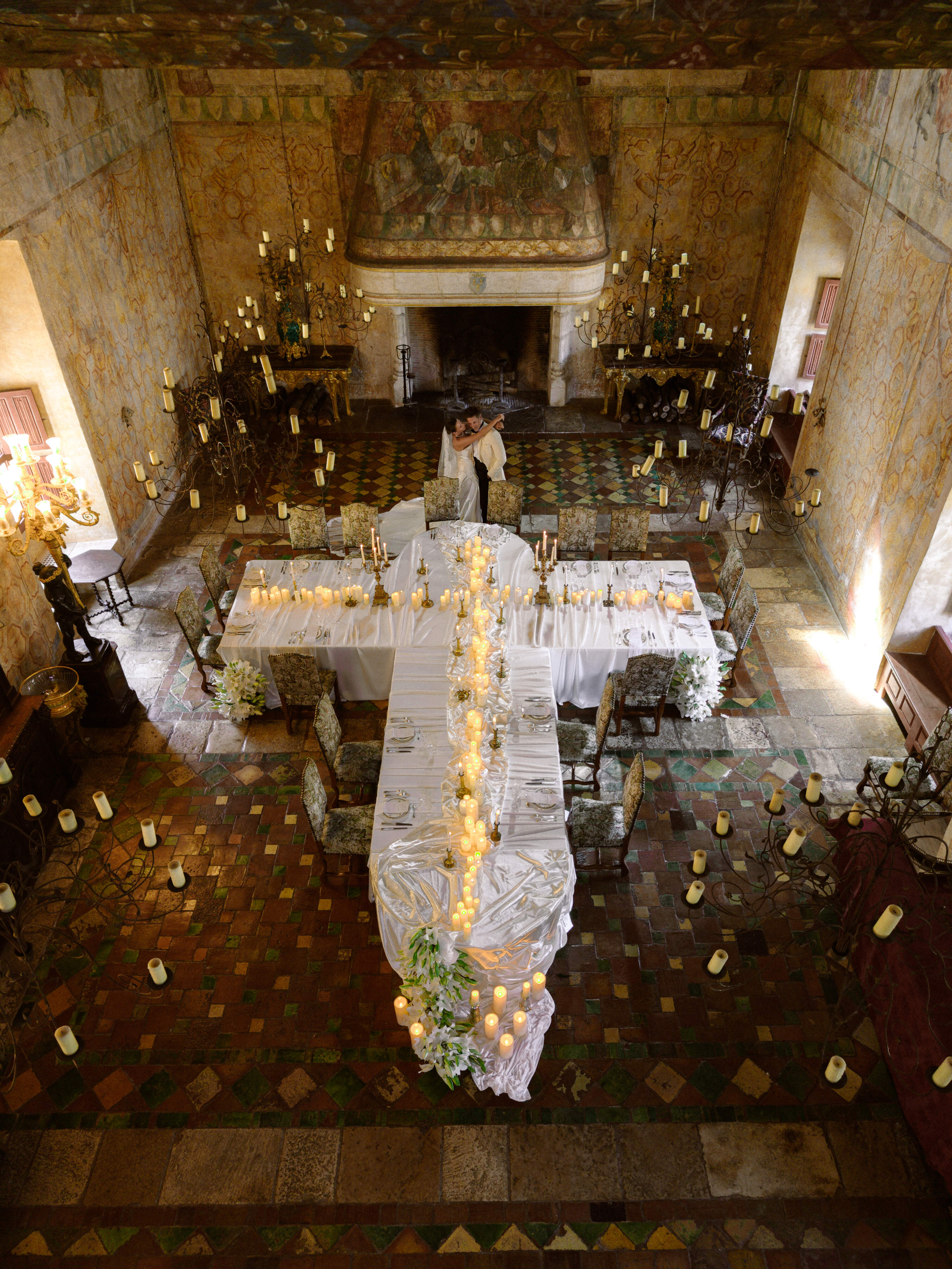
A Scottish castle wedding is far more than just a dramatic setting. Each building is steeped in history: centuries of family feuds, royal visits, wartime stories, and local folklore. That history is part of your day from the moment you walk through the door. The castle wedding venues in Scotland we've included in this guide range from exclusive-use estates where you can have the whole place to yourself for a weekend, to more famous landmarks where you can exchange your vows in a room that has seen everything from sieges to celebrations.
This guide brings together six castles of very different stripes: a Victorian country house where an Arctic explorer was brought up, a clifftop castle with its own wedding ghost, an island fortress rebuilt from its own ruins, and three castles in Aberdeenshire and near Edinburgh, each with its own stories. For each one, you'll get the atmosphere, the history, and what it offers couples today. There's a comparison table at the end to help you see at a glance which one is right for your plans.
Find Your Perfect Wedding Vendors

Why Choose a Castle Wedding in Scotland?
Scotland offers something few destinations can match: genuine historic castles in settings as different as a Highland loch, a clifftop above the Firth of Clyde, a forested glen, and the edge of a capital city. That variety means a Scottish castle wedding can feel windswept and dramatic or polished and urban, depending on where you choose. Many castles are also run as exclusive-use venues, so instead of sharing a hotel with other guests, you and your guests can have the house, the gardens, and the bedrooms to yourselves for a whole weekend.
Scottish marriage law adds to the appeal. Humanist marriages have been legally recognized in Scotland since 2005, and couples can choose between civil, religious, and belief ceremonies, giving them more freedom over who leads the ceremony and how it feels. Many couples also weave in local traditions, such as a piper greeting guests, a handfasting ritual, or a toast from a quaich, the traditional two-handled cup of friendship. In a castle, these customs feel less like a theme and more like a natural part of the setting.
The landscape plays its part too. Long summer evenings in the north give photographers soft light late into the night, while autumn and winter bring fireside dinners, candlelit halls, and a cozy atmosphere that suits castle interiors especially well. The trade-off is weather that can change quickly, so the best venues plan every outdoor moment with an indoor alternative close at hand. If you plan to marry outdoors, ask each venue how quickly a ceremony can move inside and whether the indoor space holds your full guest list.
Carlowrie Castle
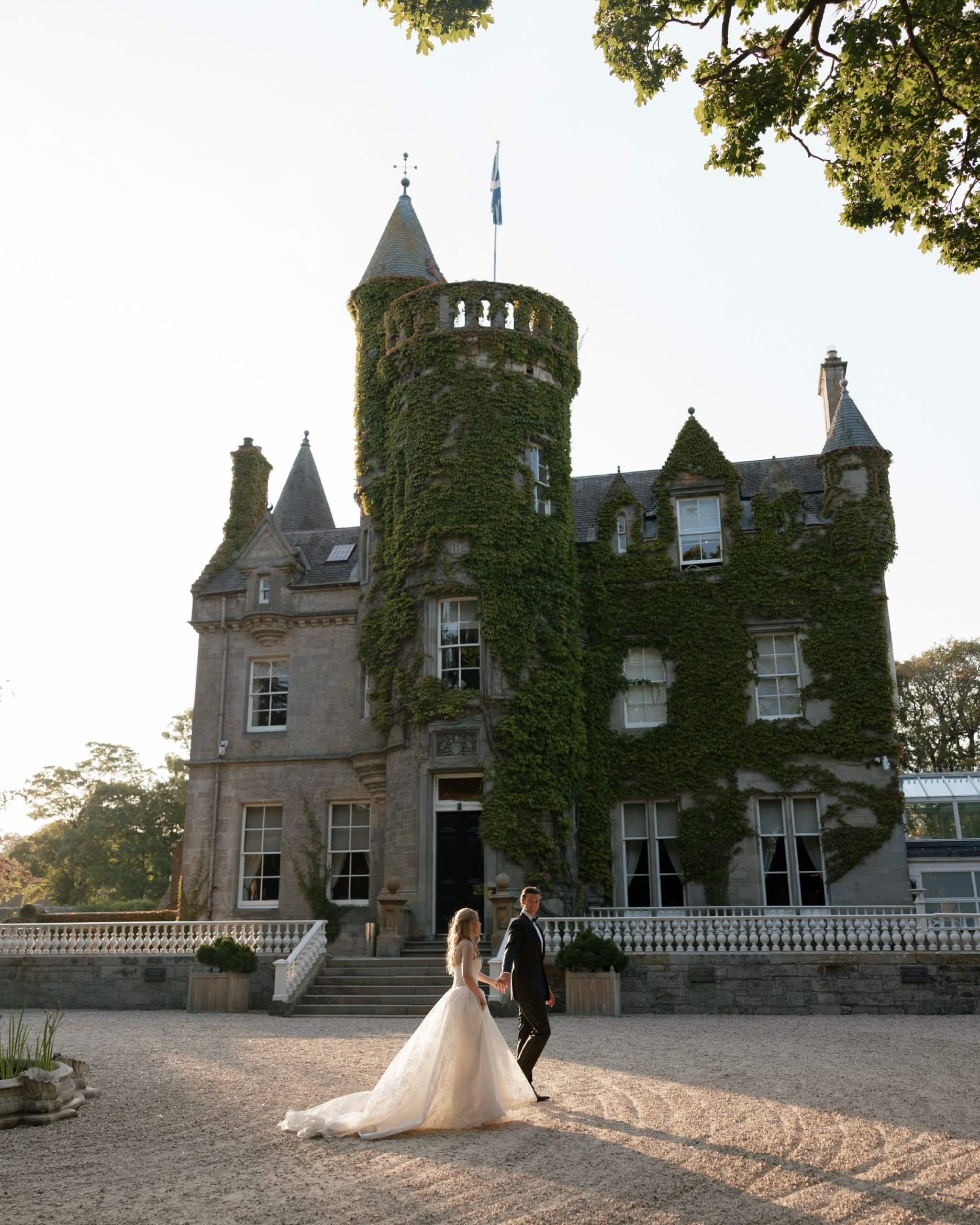
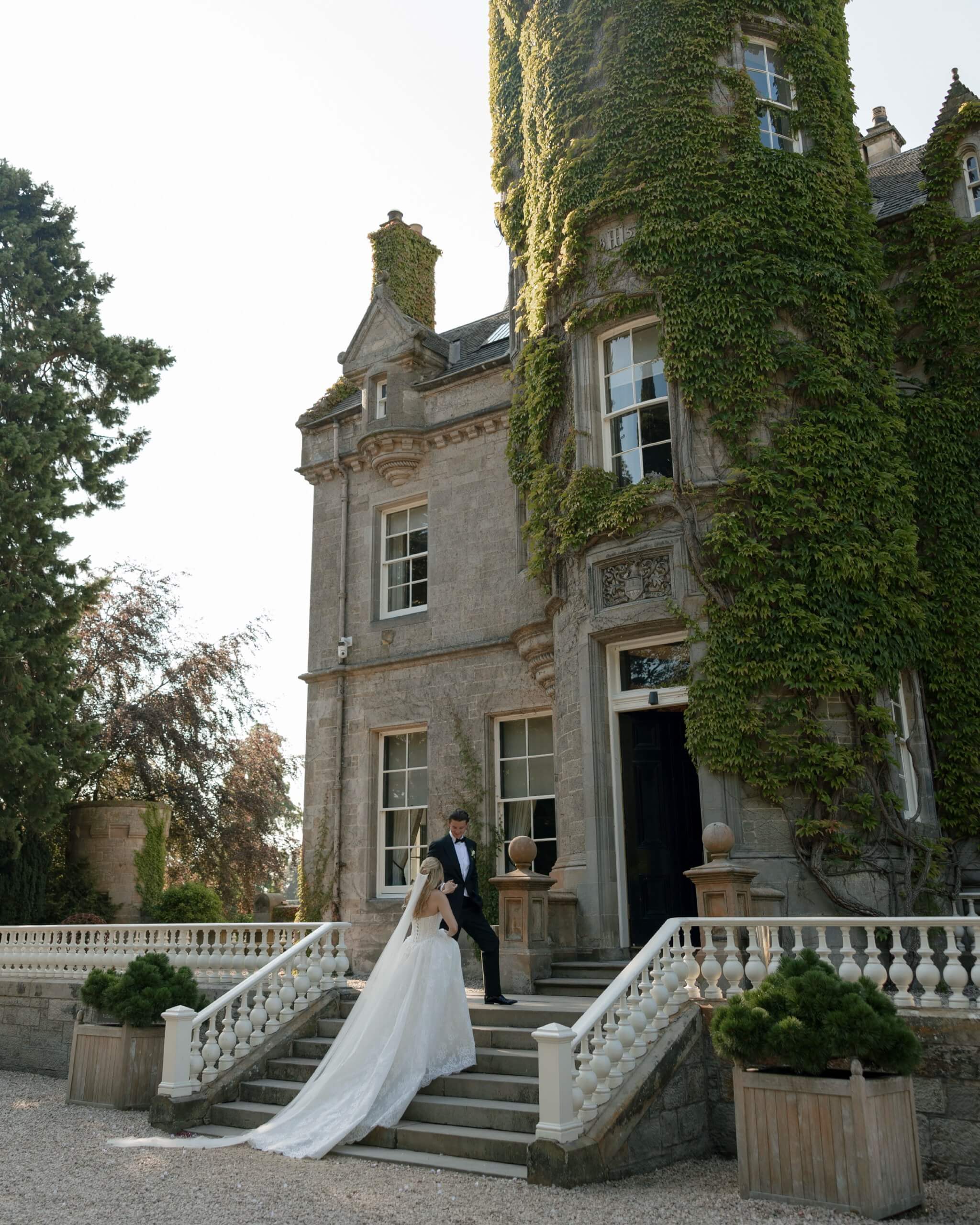
Carlowrie Castle has the ease of a private country house and the silhouette of a fortress, turrets included. It's situated on 32 acres of grounds in Kirkliston, West Lothian, very close to Edinburgh and its airport. The walled garden with its striped lawns and fountains feels far removed from the city. The land has a long history: a deed on goatskin parchment dated August 19, 1591, records the transfer of part of the estate long before the present building was constructed, and it is still on display at the castle.
The castle itself was built in 1852 for Thomas Hutchison, a wine merchant and Provost of Leith, to the designs of David Rhind, and the family coat of arms is still there above the front door. The most notable person to live there was Isobel Wylie Hutchison, an Arctic explorer, botanist, author, and poet, who made solo trips to Iceland and Greenland at a time when very few women did so. The Hutchisons lived at Carlowrie until 1982, and the castle opened as a wedding and events venue in 2014 following a complete refurbishment.
For couples, it's particularly good for larger celebrations. Summer ceremonies are often held in the walled garden, while a bespoke marquee with crystal chandeliers can accommodate up to 275 for dinner, and the venue can take up to 450 for the evening reception. The Orangery is a light and relaxed space and can accommodate up to 110 for a smaller meal. There are nine bedrooms that can sleep up to 18 guests, so most of your guests will be staying nearby, which is very easy given the location.
Culzean Castle and Country Park
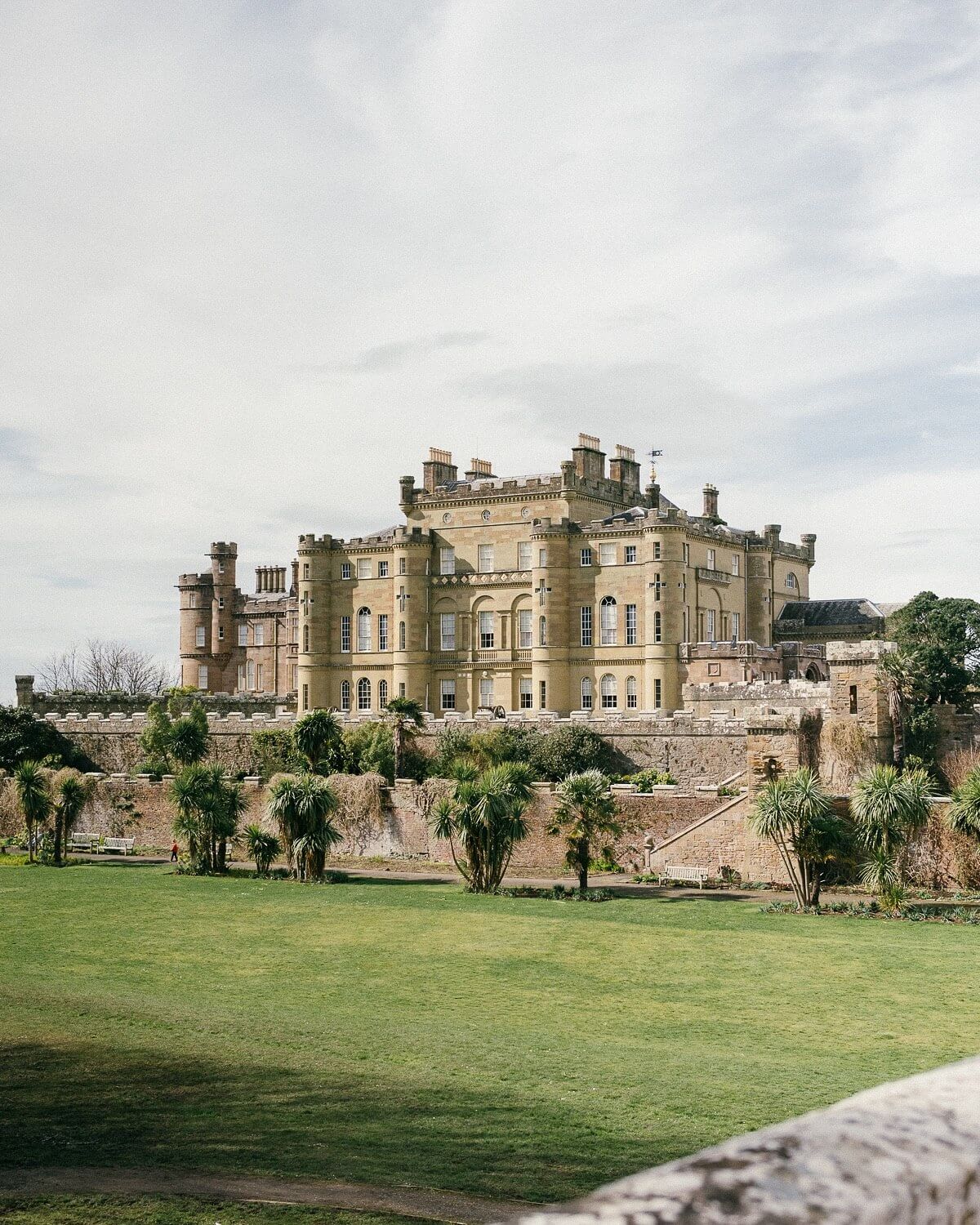
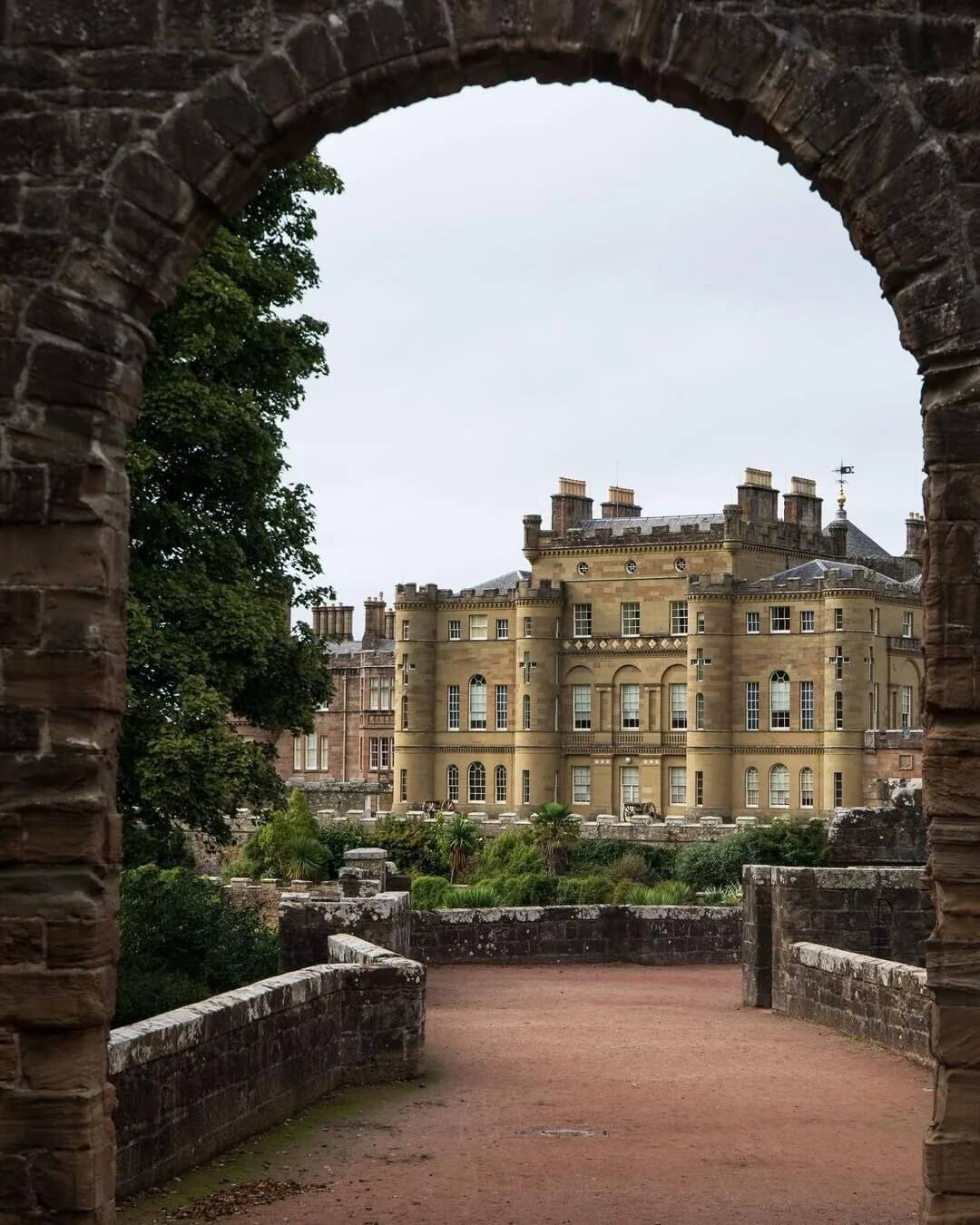
Culzean Castle is perched on the edge of a cliff overlooking the Firth of Clyde and is one of Scotland's more dramatic castles in terms of first impressions. The castle itself probably dates back to a tower house in the late 1300s, but Robert Adam's work really defines the building. He was commissioned in 1776 to carry out a complete renovation of the castle for the 10th Earl of Cassilis, and his famous Oval Staircase, which runs through the heart of the building, remains one of its most celebrated features and a popular setting for wedding portraits.
Culzean's most famous chapter belongs to the Second World War. When it passed to the National Trust for Scotland in 1945, the handover was conditional: the top floor was to be a flat for General Eisenhower as a token of thanks for his role in the war. Below the castle lie sea caves once used by smugglers, and that is where Culzean's best-known legend begins. A piper and his dog are said to have gone into the caves to prove they weren't haunted and never came out again. Local legend says that on the eve of a Kennedy wedding, a lone figure will appear on Piper's Brae.
A National Trust for Scotland castle wedding at Culzean can be held inside the castle for up to 50 guests, in the Orangery for up to 50, or in the Camellia House for up to 30. Larger weddings can be held in a marquee on the West Green lawn (up to 250). The estate has eight self-catering cottages that can accommodate up to 30 guests in total, and the country park has gardens, follies, and beaches to explore over the course of the day.
Eilean Donan Castle
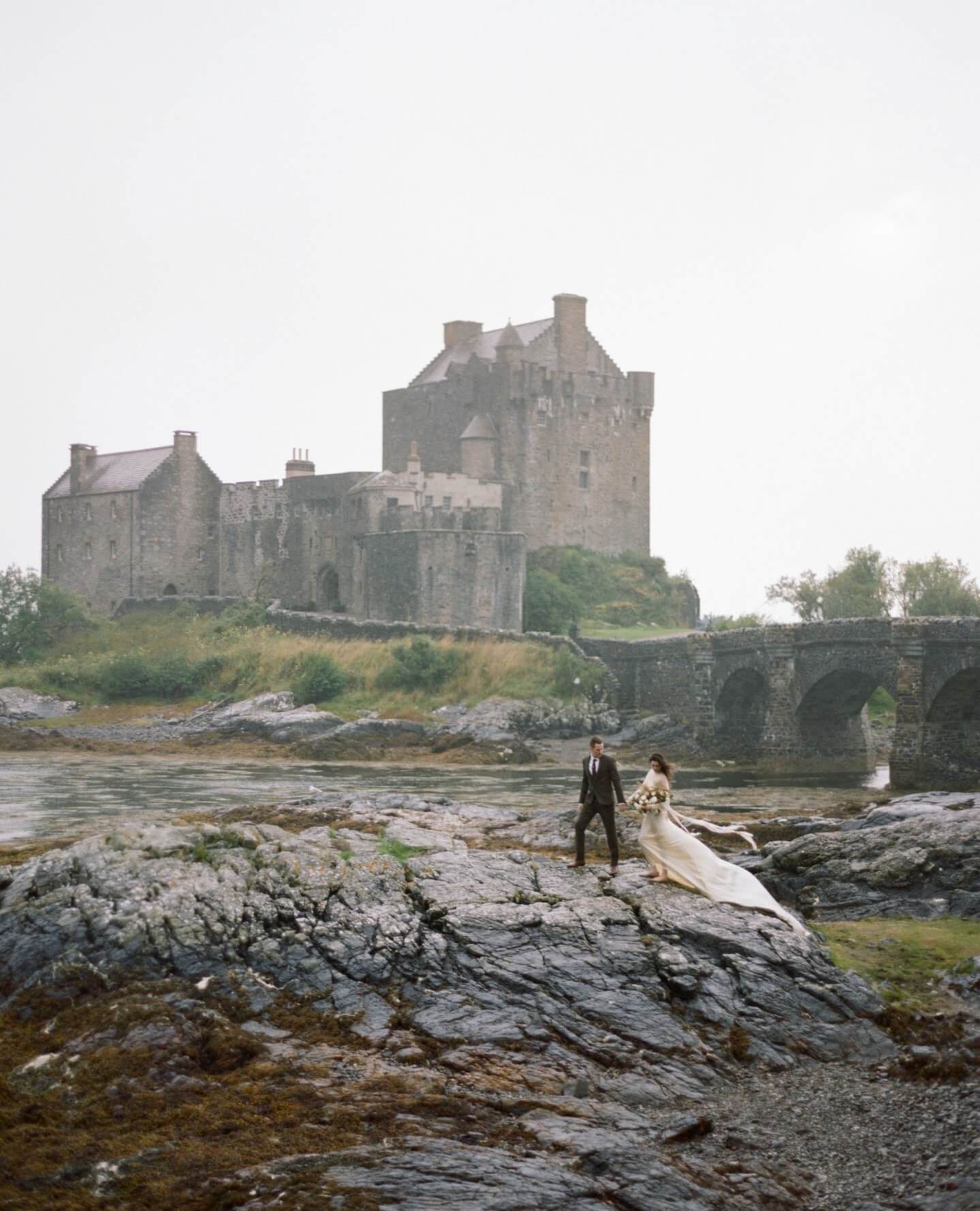
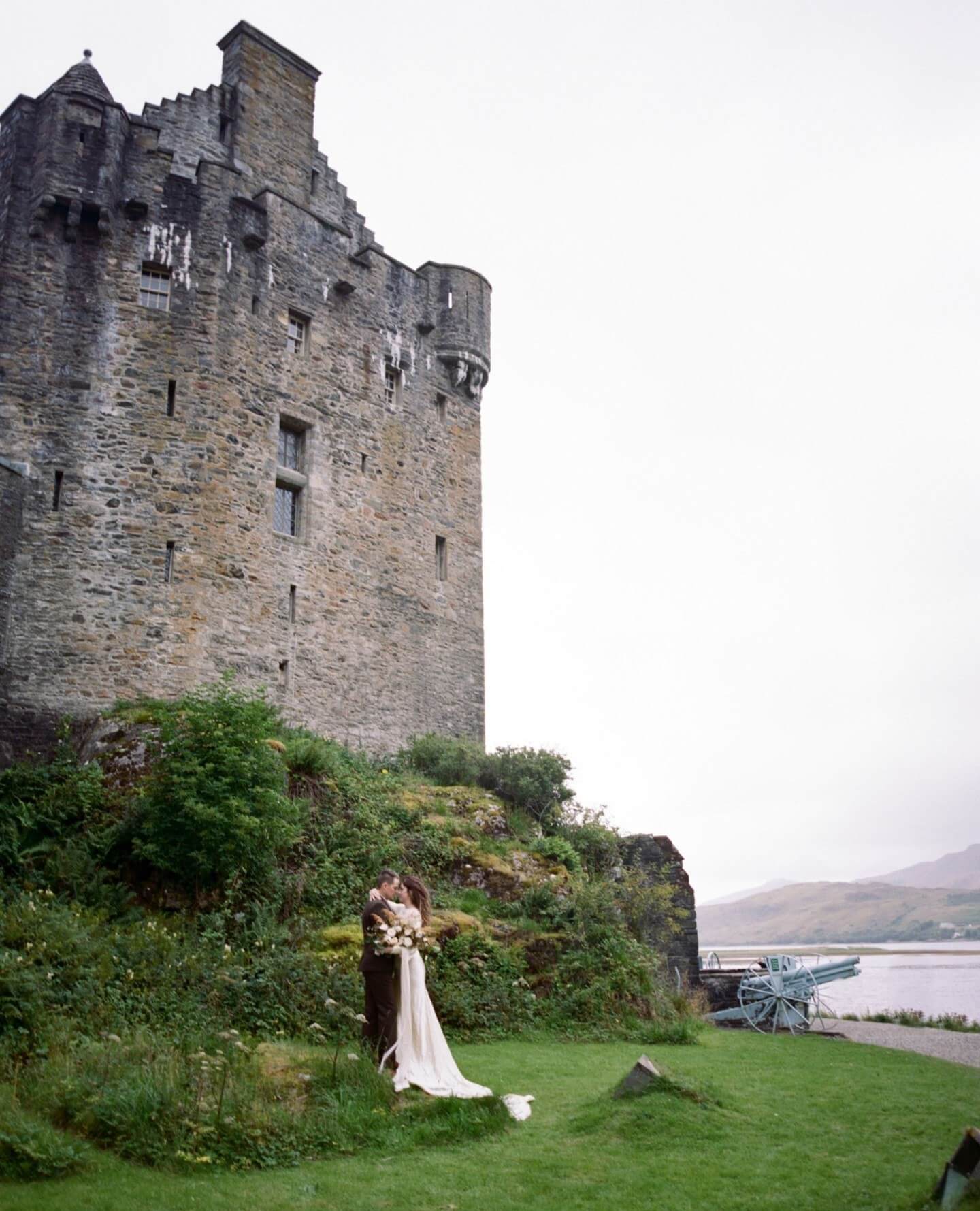
Eilean Donan is the castle most people picture when they think of the Highlands. It's perched on a small island where Loch Duich, Loch Alsh, and Loch Long meet, connected to the mainland by an arched stone bridge, with mountains on all sides. The island is said to be named after Saint Donnán, the 6th-century Irish priest thought to have established a Christian settlement here long before the first castle was built in the 13th century.
The castle's story takes a dramatic turn in 1719, when Spanish troops supporting the Jacobite cause took it over. The Royal Navy shelled the place, and the remaining gunpowder was used to blow the castle up, leaving it in ruins for nearly 200 years. Lieutenant Colonel John MacRae-Gilstrap rebuilt it between 1913 and 1932, adding the bridge that now features in so many wedding photographs. Above the entrance is an inscription that is absolutely perfect for a wedding day: “As long as a MacRae is within, a Fraser shall not be without” (a promise of friendship between the two clans).
Couples typically marry in the Banqueting Hall or, on occasion, in the inner courtyard, with its view over the lochs and mountains. Eilean Donan has also featured in films such as Highlander and The World Is Not Enough. It's a major tourist attraction, so the ceremony will be scheduled around the castle's opening times. You'll need to check with the castle team on timings and guest numbers, and you'll of course need to plan your reception and accommodation accordingly, as the setting is such that you really do want the ceremony to be the focal point of the day.
Drumtochty Castle
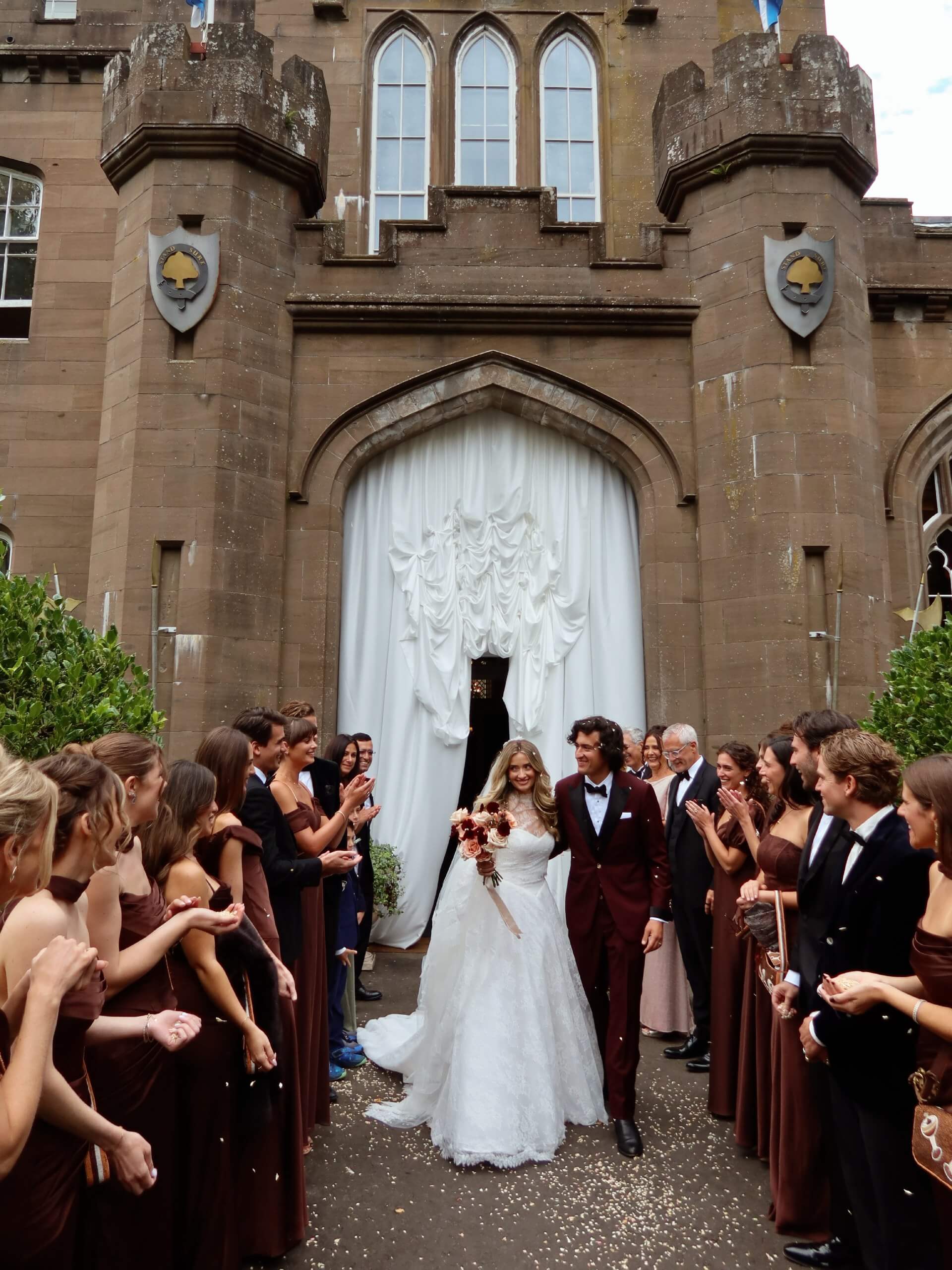
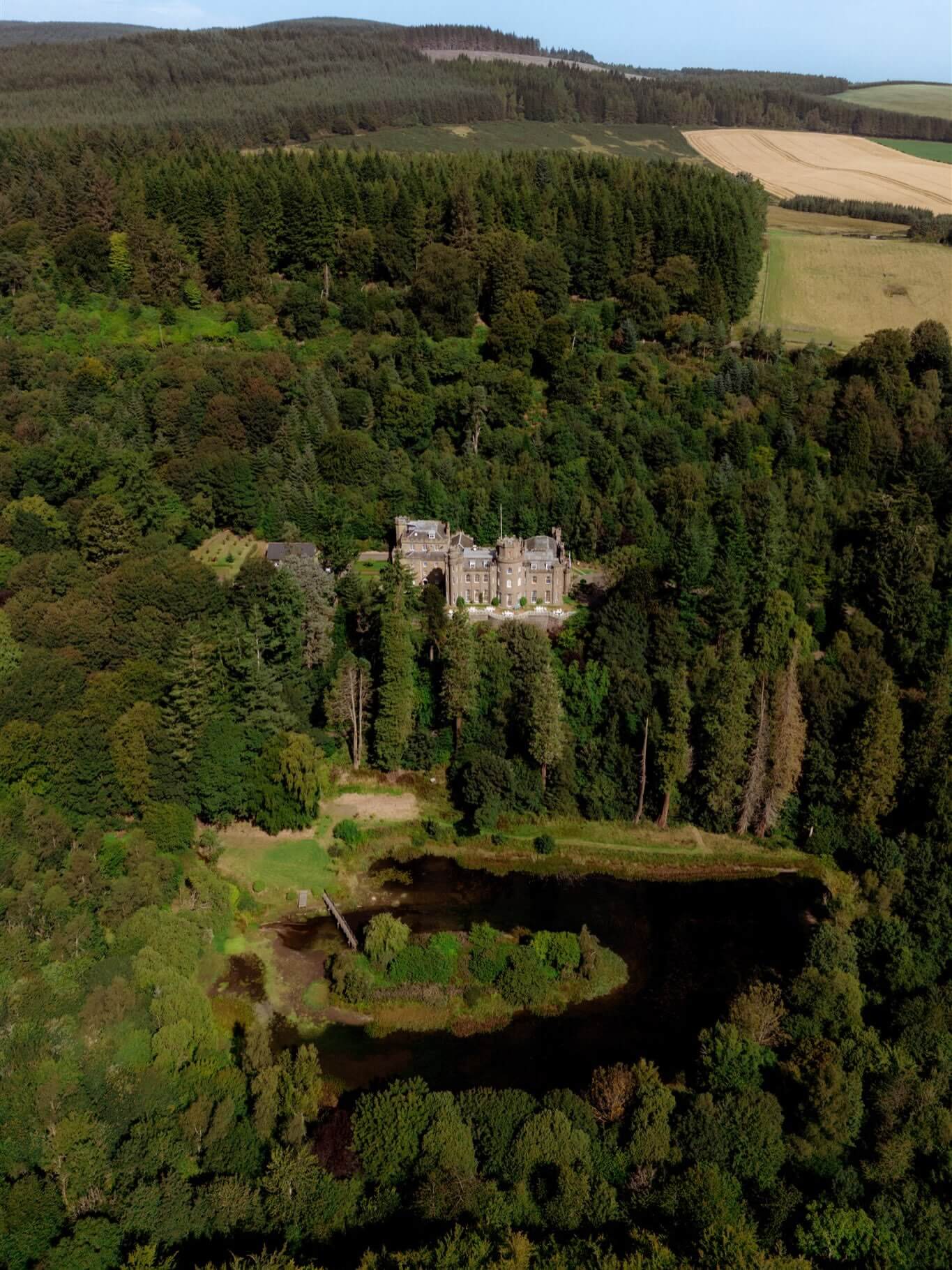
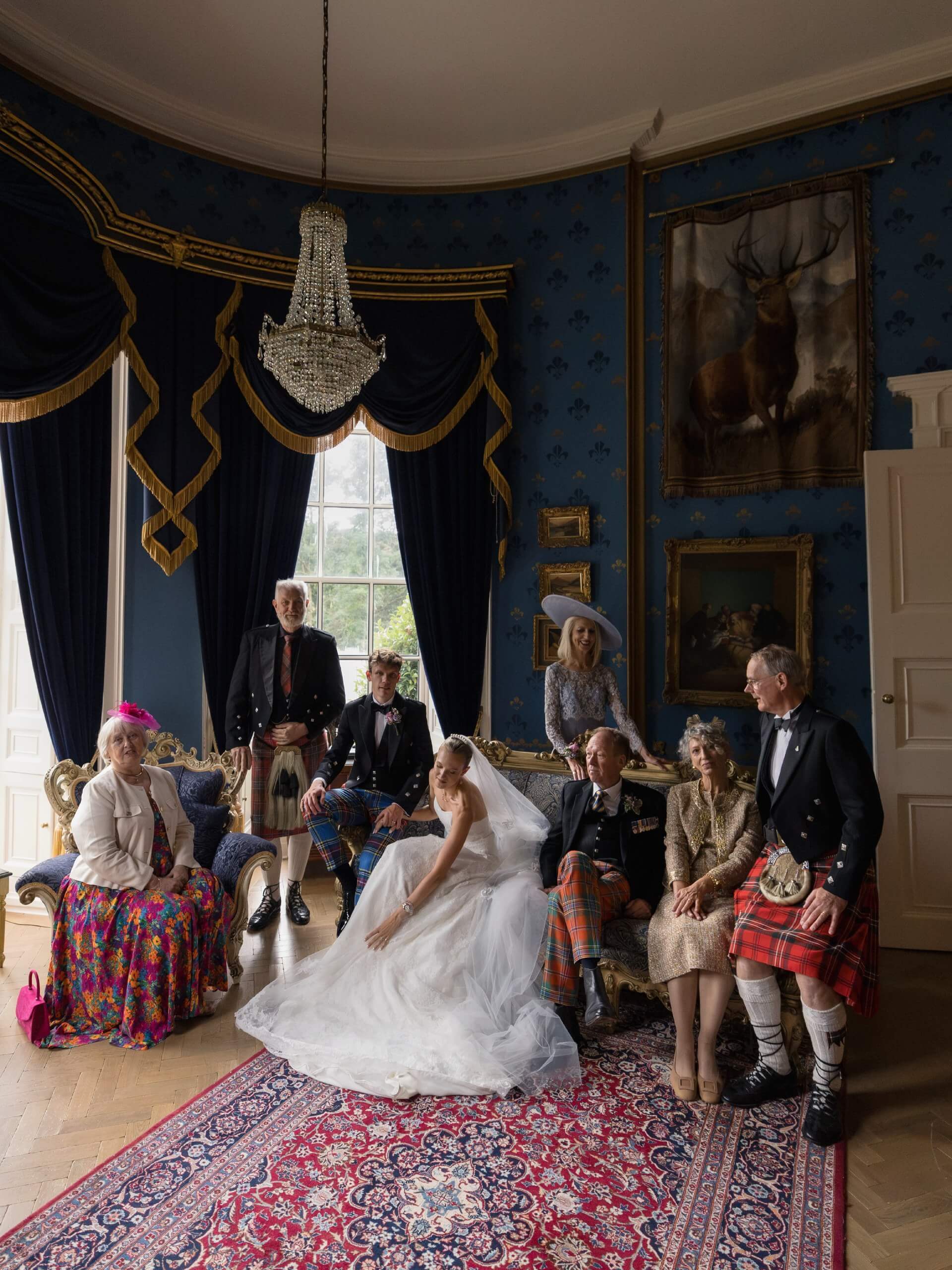
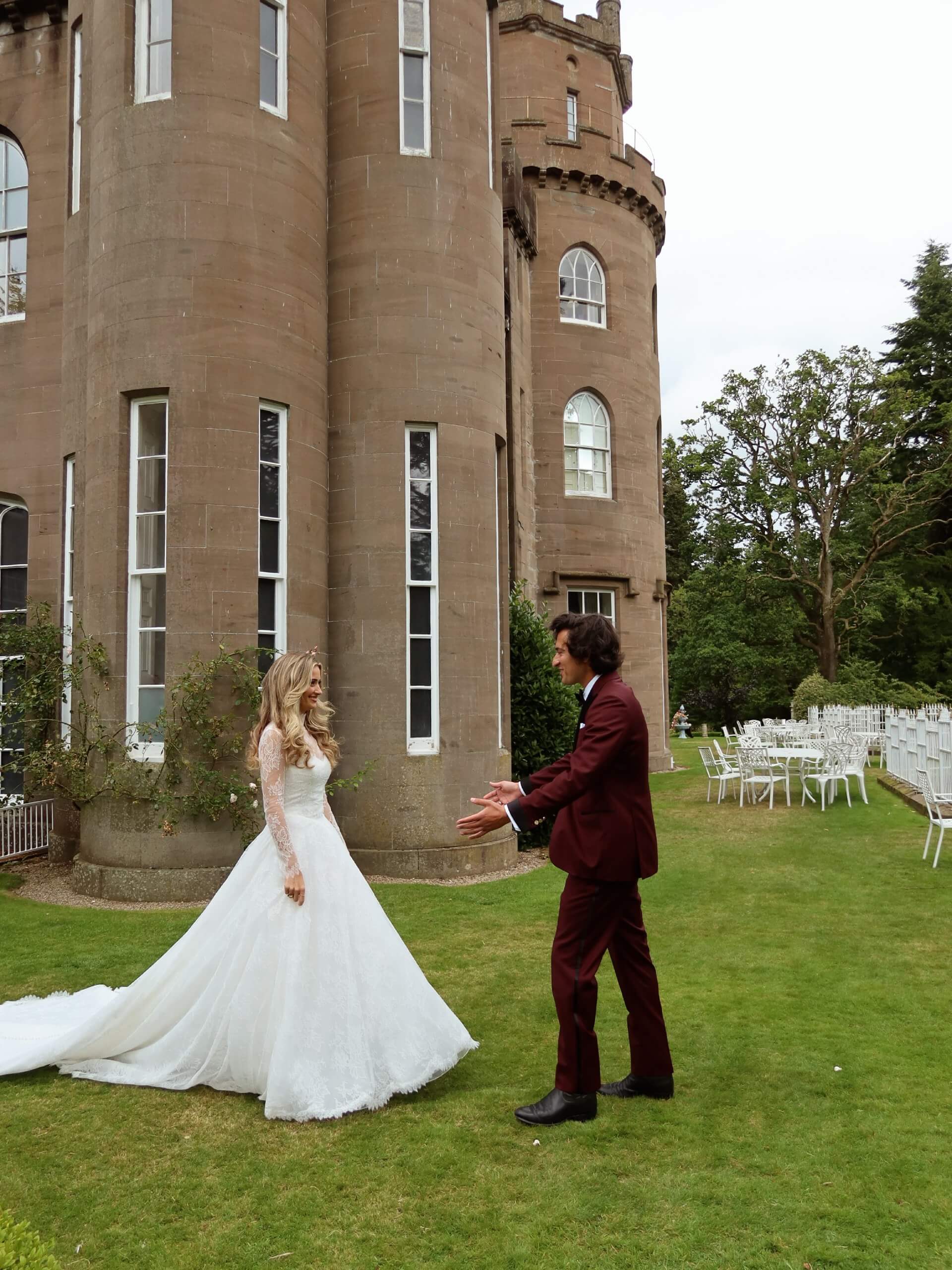
Drumtochty Castle appears out of the woodland of Drumtochty Glen in Aberdeenshire with a stone lion at the entrance and turrets rising above the trees. Built in 1812 for the Drummond family as a castellated Neo-Gothic mansion, designed by Edinburgh architect James Gillespie Graham, it still lies within a 350-acre estate of forest and glen. The effect is a castle straight out of a fairy tale, hidden in the woods and reached only by quiet roads, with nothing but birdsong to break the silence.
Drumtochty's most poignant chapter came during the Second World War, when the castle became a boarding school for Norwegian children who had escaped the Nazi occupation of their country. That period adds a quiet, very human dimension to a building that is otherwise all about celebration. The small church, often described as a fairy-tale chapel, is where the ceremonies are held, with guests congregating in the Ballroom before the service.
Drumtochty is set up for a wedding weekend, not just a single evening. The castle, wings, lodges, and stable apartments can accommodate up to 110 guests, so the whole party can be on site. The kitchen follows an “Estate to Plate” approach, with a resident Head Chef putting on seasonal banquets using local Scottish produce. As it's a remote glen, it's definitely worth arranging organized transport for the guests from the outset.
Dundas Castle
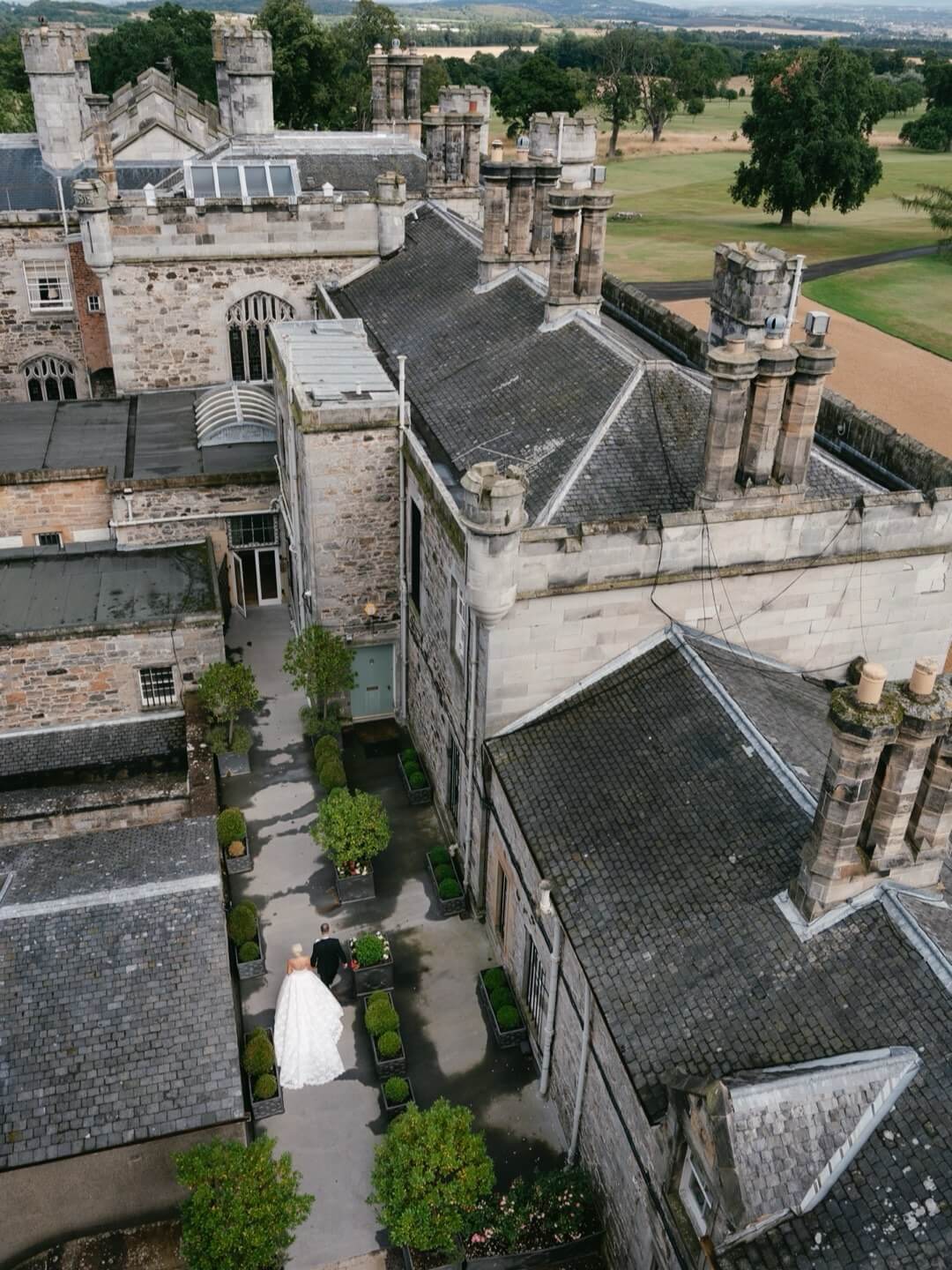
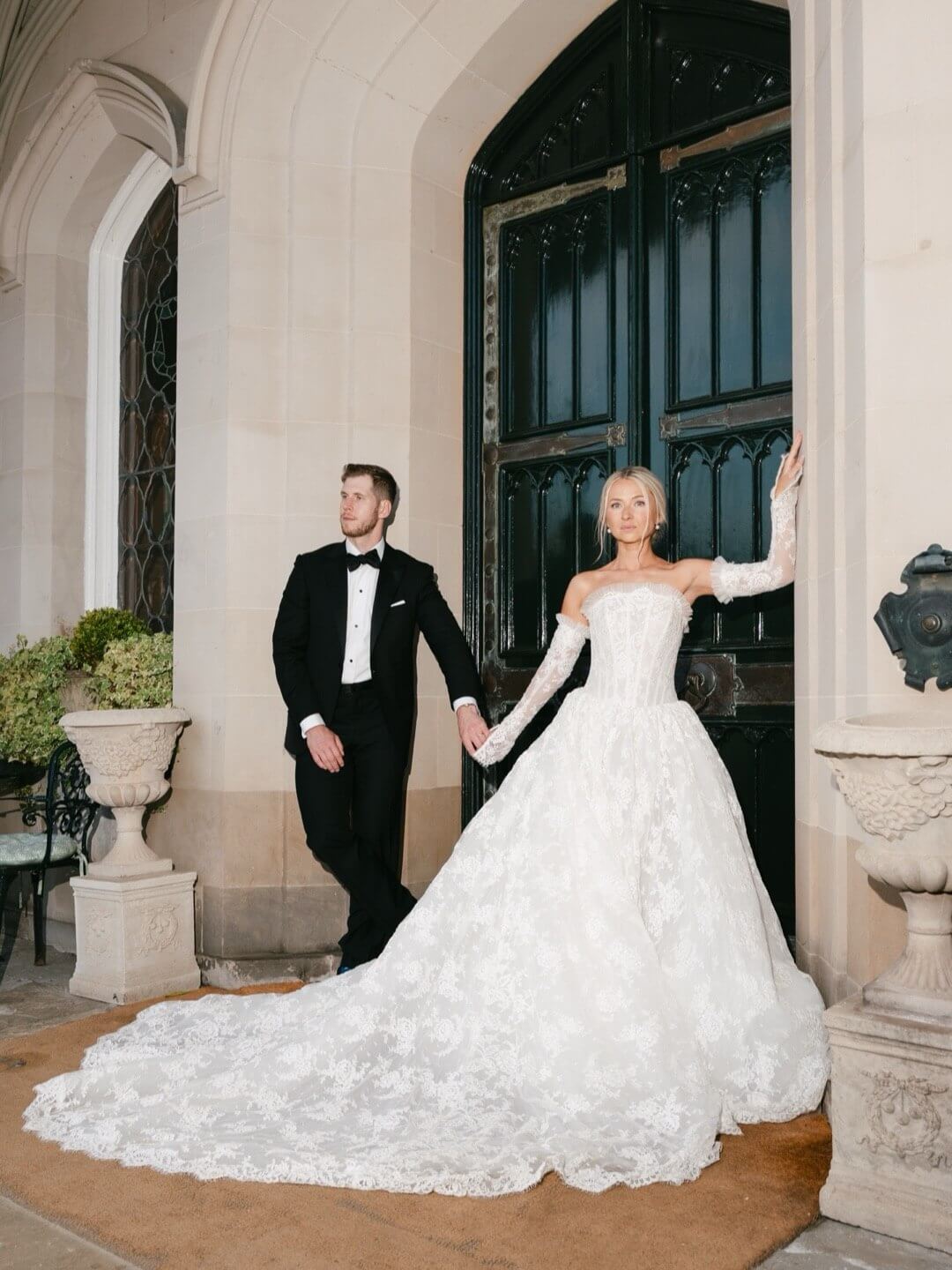
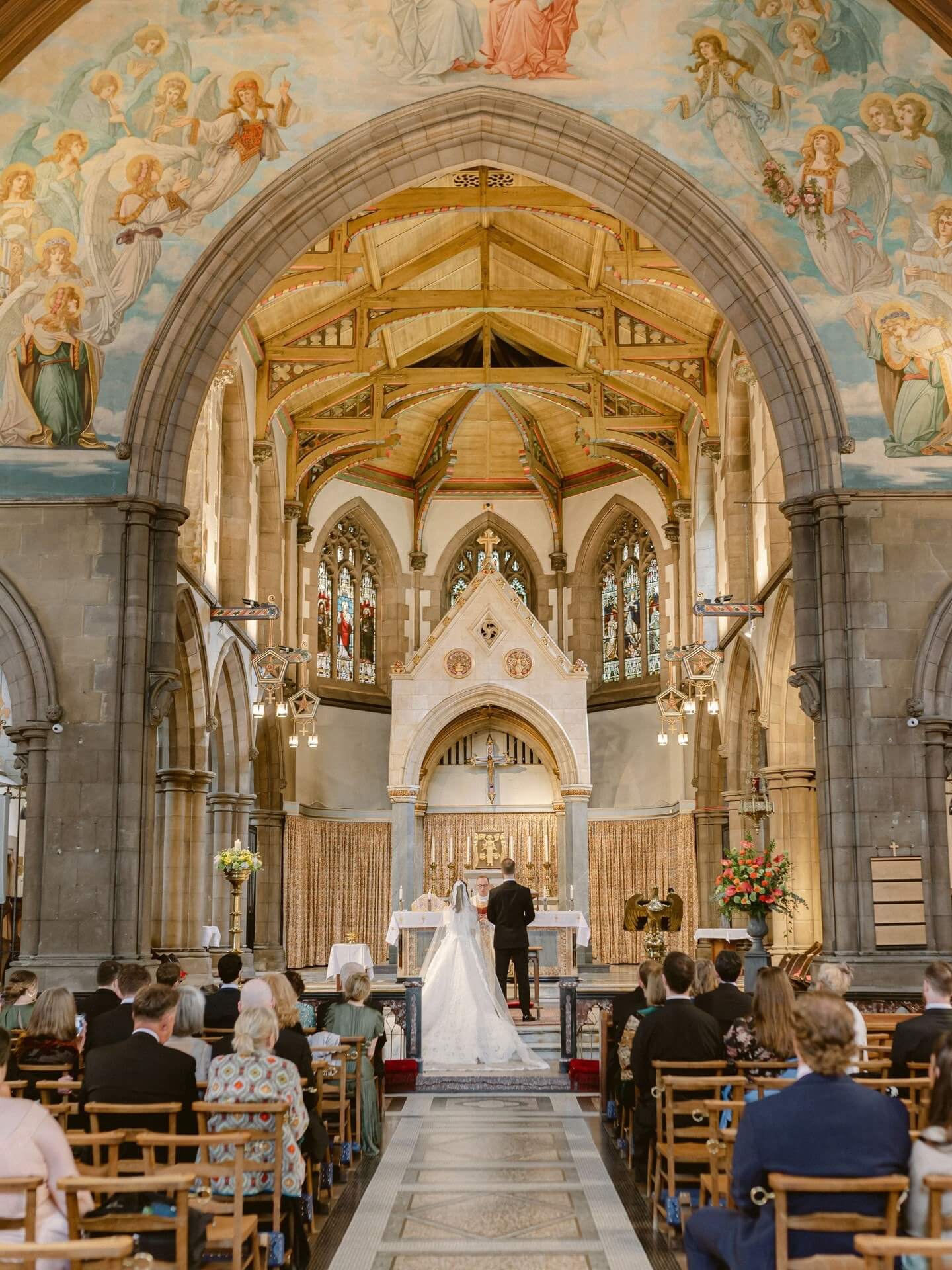
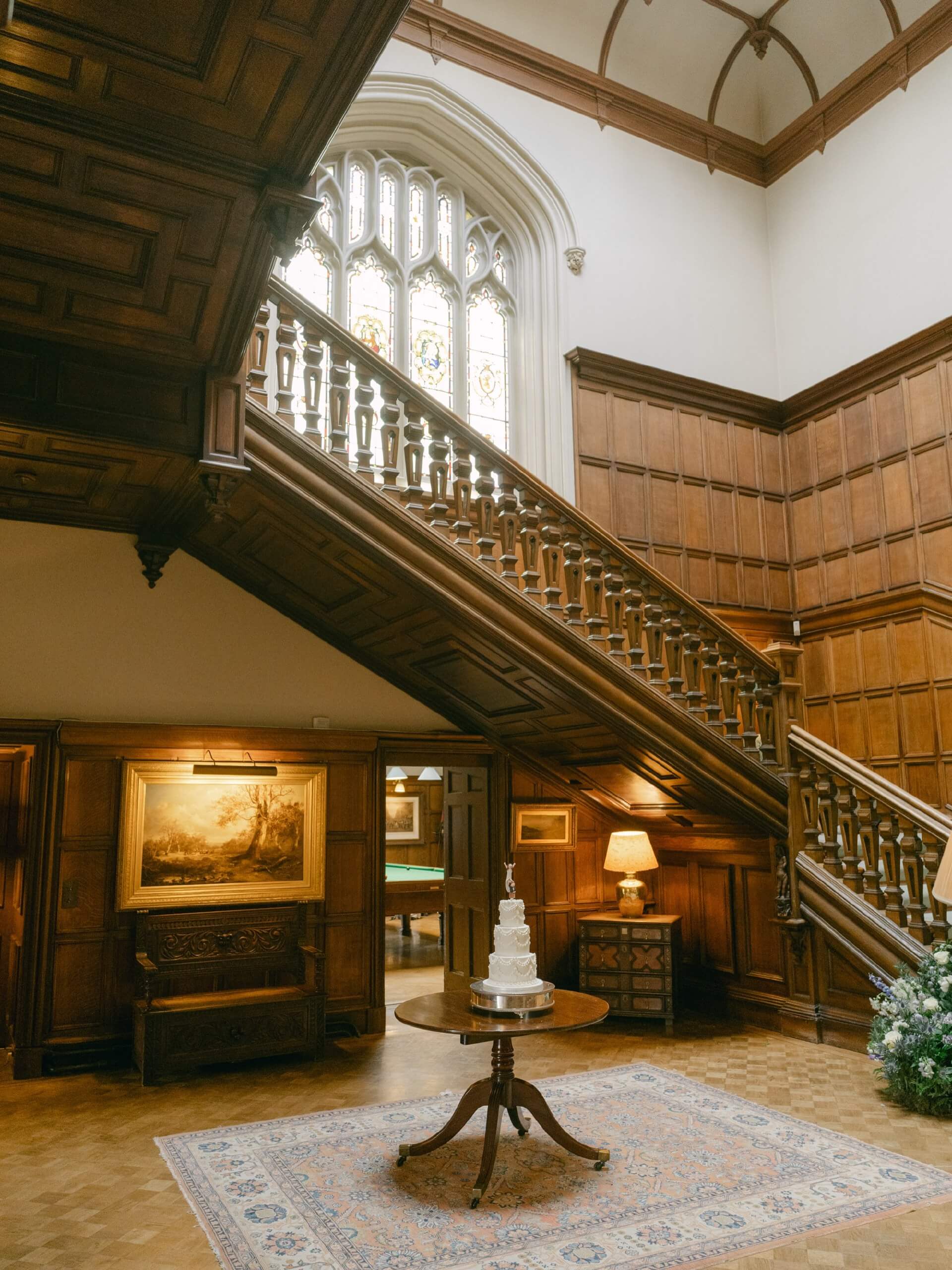
At Dundas Castle, two eras of Scottish architecture stand side by side. The Auld Keep, a tower house, was originally built after James Dundas was granted a license to build it in 1416. It stands alongside a grand main house, designed in 1818 by William Burn in the Tudor-Gothic style. The estate sits on 500 acres just outside South Queensferry, on the edge of Edinburgh, and commands views over parkland and a small loch. The grounds also include a historic fountain and sundial.
The castle has a long history of famous visitors. Cromwell is known to have visited during his Scottish campaign in the 1650s, and a statue of him still stands outside the Keep. It served as a headquarters during the Second World War to protect the Forth Bridge and has since appeared in a number of films and TV shows. The Dundas family held the property for many generations, and the Stewart-Clark family has owned it since the late 1800s.
Dundas is a 5-star exclusive-use venue with 17 bedrooms under one roof, so the people you're closest to can be there throughout. Ceremonies take place in the Great Hall (with its organ) or on the lawn, and the evening party is in the Pavilion. The venue provides chairs for 180 guests, a dedicated planner, and an operations manager. It's the ideal venue for a classic Scottish castle wedding if you don't want to have your guests traveling too far from the city.
Cluny Castle
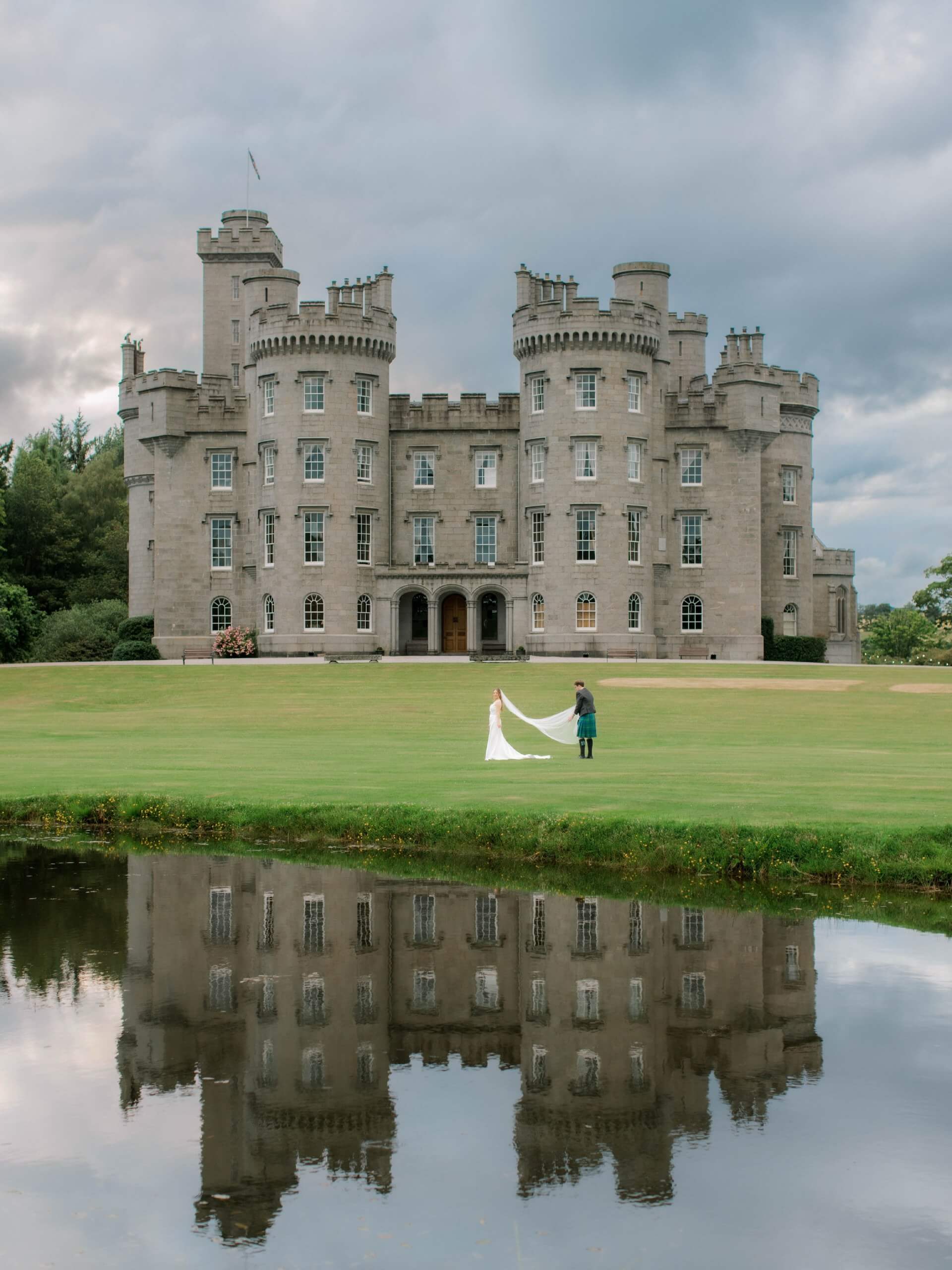
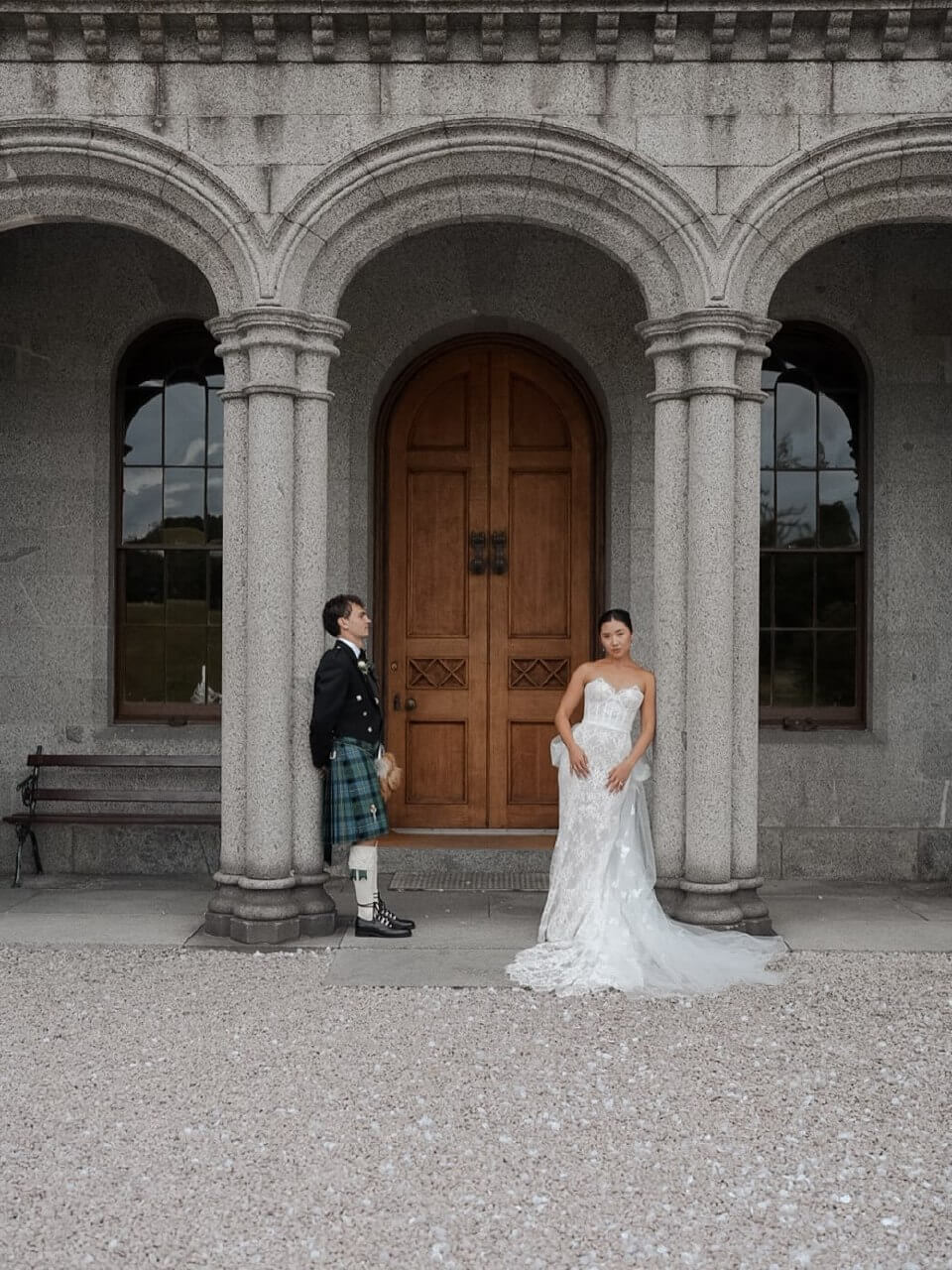
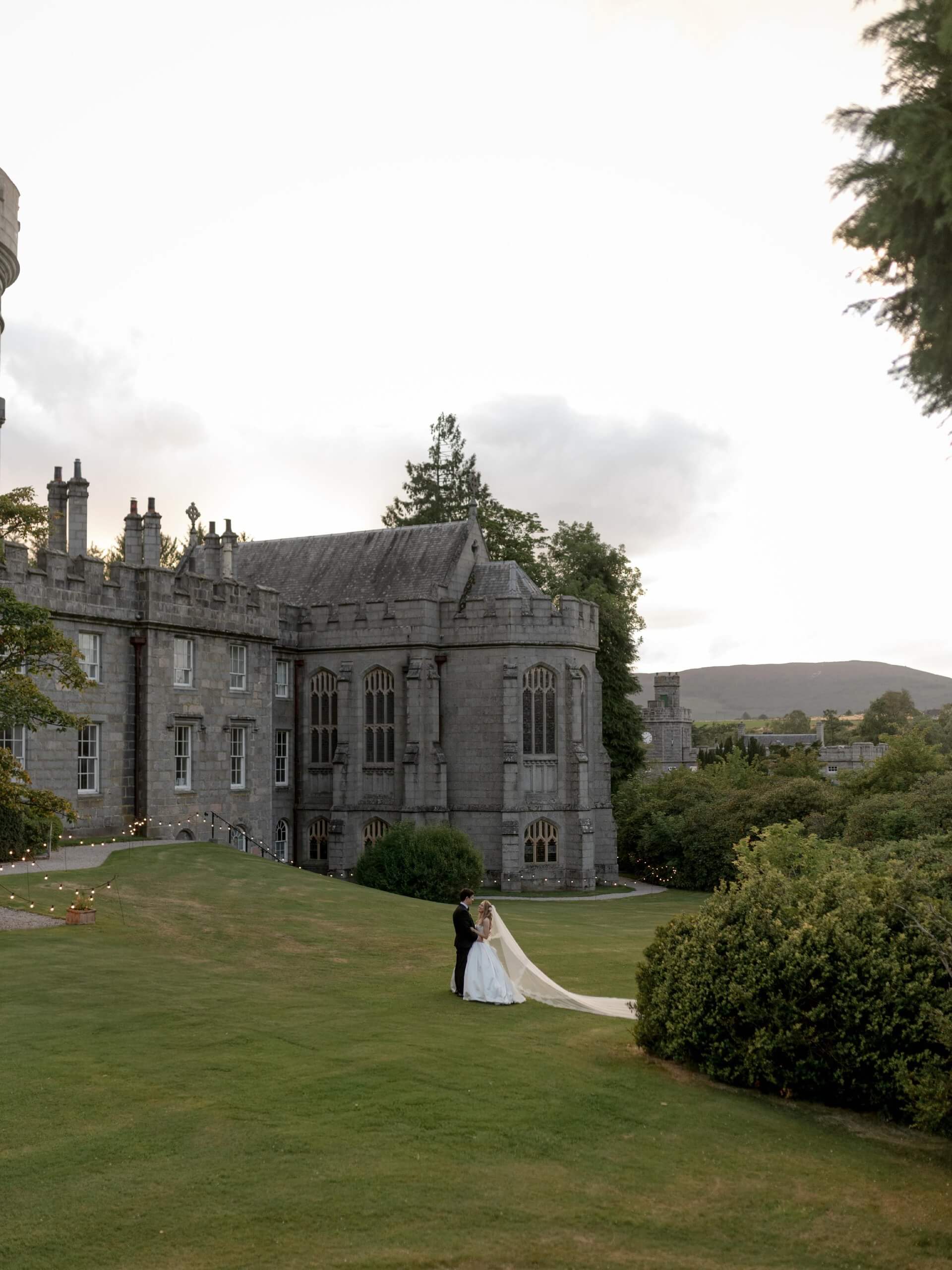
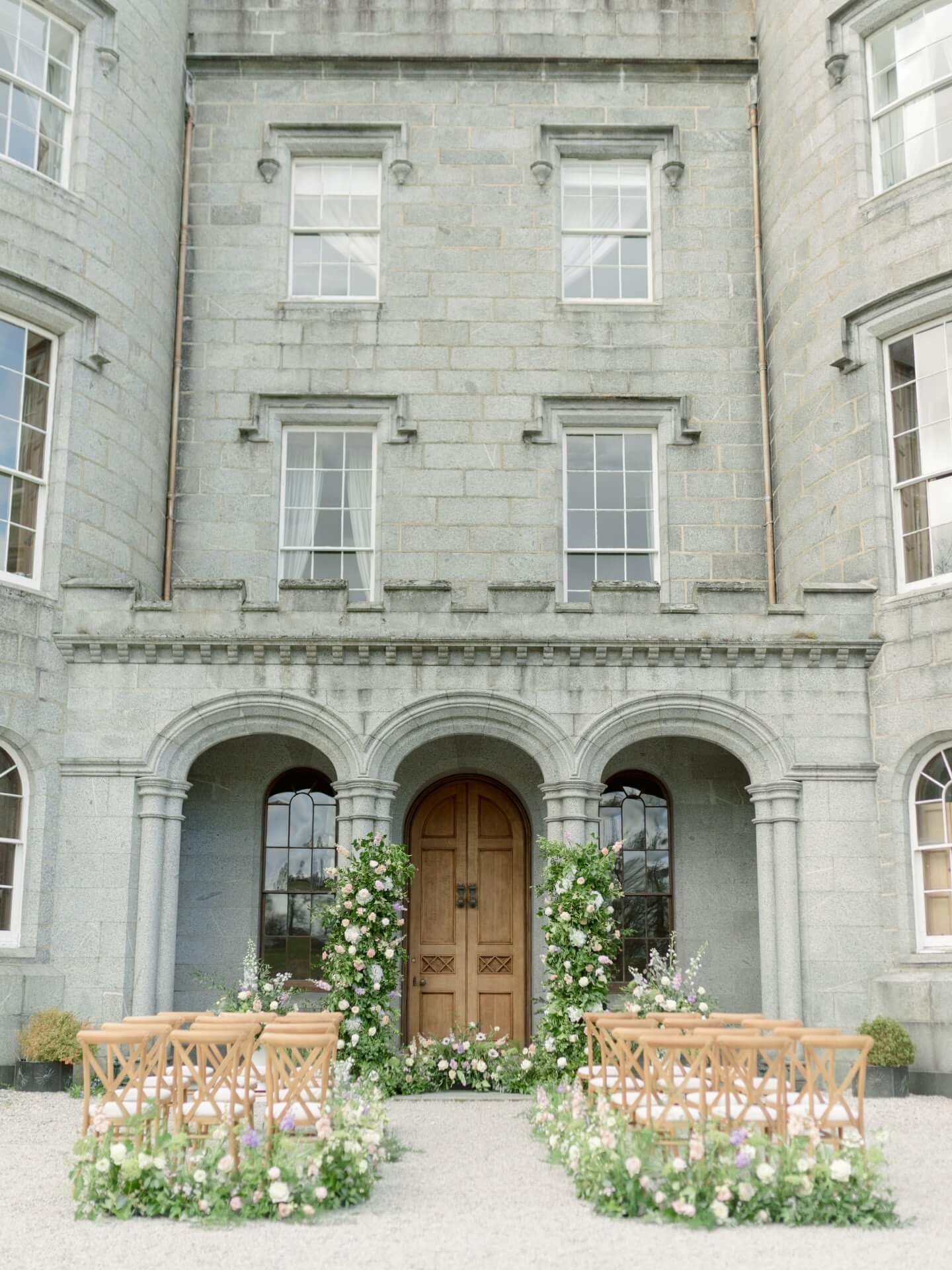
Cluny Castle near Sauchen in Aberdeenshire is not a hotel but a family home. The Gordons have owned it since the 16th century, and the original tower dates to 1604. Robert Adam drew up plans for an expansion in 1790, but he died in 1792 before any work could begin; around 1820, Aberdeen architect John Smith rebuilt the castle in locally quarried granite with four principal towers.
Colonel John Gordon, who oversaw all that rebuilding, was described in his obituary as “the richest commoner in the northern part of the Kingdom.” The castle is very much the product of that ambition. One of the circular boudoirs is still hung in its original pleated silk, and the Gothic Revival chapel, begun in 1870 to designs by William Smith, was lauded at the time for its interior, which was “fitted up inside in a gorgeous style of church architecture.” The chapel was damaged by fire in 1926, was subsequently restored, and is now the castle's main ceremony space.
Cluny offers exclusive use of the castle and grounds for a two- or three-day wedding weekend. It accommodates up to 30 guests and offers only a very limited number of wedding dates each year. The reception and candlelit dinner are held in the Tenants Hall, and the couple can either select a caterer from a pre-approved list or bring their own. Among small castle wedding venues in Scotland, it is one of the most personal and is ideal for a couple who want a very private wedding with a family welcome rather than a big guest list.

Comparing Scotland’s Castle Wedding Venues
Each castle suits a different type of celebration, depending on your guest list, how many people you'd like on site, and how far your guests are prepared to travel. The table below sets out the key details. The capacity and accommodation figures are taken from the venues' own information (which can of course change), so it's essential you check these directly when you get around to inquiring.
| Castle | Region | Type of venue | Stay on site | Best for |
|---|---|---|---|---|
| Carlowrie Castle | West Lothian, near Edinburgh | Exclusive use | 9 bedrooms, up to 18 guests | Large weddings with a marquee |
| Culzean Castle | Ayrshire coast | National Trust for Scotland | Estate cottages for up to 30 | Coastal weddings with heritage interiors |
| Eilean Donan Castle | Highlands, near Kyle of Lochalsh | Historic landmark | No | Ceremonies in an iconic setting |
| Drumtochty Castle | Aberdeenshire | Exclusive use | Up to 110 guests on the estate | Wedding weekends with everyone staying |
| Dundas Castle | South Queensferry, Edinburgh | Exclusive use | 17 bedrooms | Classic weddings close to the city |
| Cluny Castle | Aberdeenshire | Family home, exclusive weekend | Up to 30 guests | Small, intimate weddings |
The right castle is the one that fits the kind of day you're envisaging. A weekend with guests under one roof would point you toward Drumtochty, Dundas, or Cluny. A wedding in one of the world's most famous castles might well be worth the extra effort in the case of Eilean Donan or Culzean. Whatever you decide, do always have a wet-weather plan, as the Scottish weather can turn on a dime in any season.
When you're ready, browse the range of wedding photographers and planners in Scotland on Wezoree to find the vendors who will bring your castle wedding to life.

FAQ
Can you rent a castle in Scotland for a wedding?
Yes, several castles in Scotland offer exclusive use for weddings, including Carlowrie, Dundas, Drumtochty, and Cluny. Exclusive use means you have the castle and the grounds to yourselves for the duration of the agreed period. Cluny, for instance, can host a couple for the whole wedding weekend.
Which castle wedding venues in Scotland are near Edinburgh?
Carlowrie Castle in Kirkliston and Dundas Castle in South Queensferry are both on the fringes of Edinburgh. Carlowrie is very close to Edinburgh Airport, which is of course a big advantage for international visitors. Both of them offer exclusive use and on-site accommodation.
Are there any small castle wedding venues in Scotland?
Yes, some castles are absolutely ideal for small weddings. Cluny Castle hosts only a very small number of weddings each year and has accommodation for up to 30 guests. Culzean has the Camellia House, which accommodates up to 30 guests.
Can you have a National Trust for Scotland castle wedding?
Yes, the National Trust for Scotland hosts weddings at a number of its properties, including Culzean Castle in Ayrshire. You can have your wedding in the castle itself, in the Orangery or Camellia House, or in a marquee in the grounds. There's accommodation available in the cottages on the estate.
Can you get married at Eilean Donan Castle?
Yes, Eilean Donan Castle holds weddings (usually in the Banqueting Hall and occasionally in the inner courtyard). As it's such a popular visitor attraction, the timing will obviously follow the castle's schedule. You'll need to coordinate your reception and accommodation with the castle team when you get in touch.