Wedding Seating Chart Ideas Guests Will Remember


- How to Make a Wedding Seating Chart
- Interactive Seating Charts for Wedding With Welcome Drinks
- Elegant Escort Envelopes With Wax Seals
- Floral Seating Chart Ideas for the Wedding Reception
- Creative Seating Chart Ideas With Keepsakes
- Statement Wedding Seating Chart Displays
- Wedding Seating Chart Tips for the Reception Day
- FAQ
A wedding seating chart serves two purposes: it tells every guest where to sit and provides their first glimpse of the reception design. A clear display ensures that the cocktail hour runs smoothly, while a thoughtful one provides a place where guests can linger, take photos and talk about the couple. This guide brings together the most memorable wedding seating chart ideas, from champagne walls and wax-sealed envelopes to fresh flowers and keepsake favors. Each section explains how the format works in practice, what type of wedding it suits, and where extra planning is needed.
Find Your Perfect Wedding Vendors

How to Make a Wedding Seating Chart
To create a wedding seating plan, start by referring to the final guest list and the venue floor plan. Then, assign tables before deciding how to display them. Couples usually start this process once the RSVPs have closed, around four weeks before the wedding, and finalize the layout one week before the big day. It only makes sense to order signage, envelopes or props once every table has been allocated. Working in this order saves reprinting costs when a late RSVP or family request necessitates changes to the plan.
Most couples create the plan using a spreadsheet or a free seating app, as both of these options allow you to drag guests between tables in seconds. Color-coding groups such as family, friends and colleagues makes gaps and crowded tables easy to spot. Add columns for dietary requirements, accessibility and additional guests, so that the same file can be sent directly to the caterer and venue coordinator. Once you are happy with the draft, share it with both families for a quick check before anything goes to print. A second pair of eyes will often spot a forgotten cousin or two relatives who should not share a table.
Wedding Seating Arrangement Ideas and Table Layouts
The best wedding seating plans start with who the guests already know. Group people according to their connection to you, such as family members, school friends or colleagues. Then, balance each table so that nobody sits among strangers. A few simple rules can speed up the process:
- Seat parents, grandparents and the officiant closest to the head table.
- Ensure that every guest has at least one familiar face at their table.
- Place older guests away from the speakers and closer to the restrooms and exits.
- Keep a flexible table for late plus-ones and last-minute changes.
- Share dietary requirements with the caterer by table number.
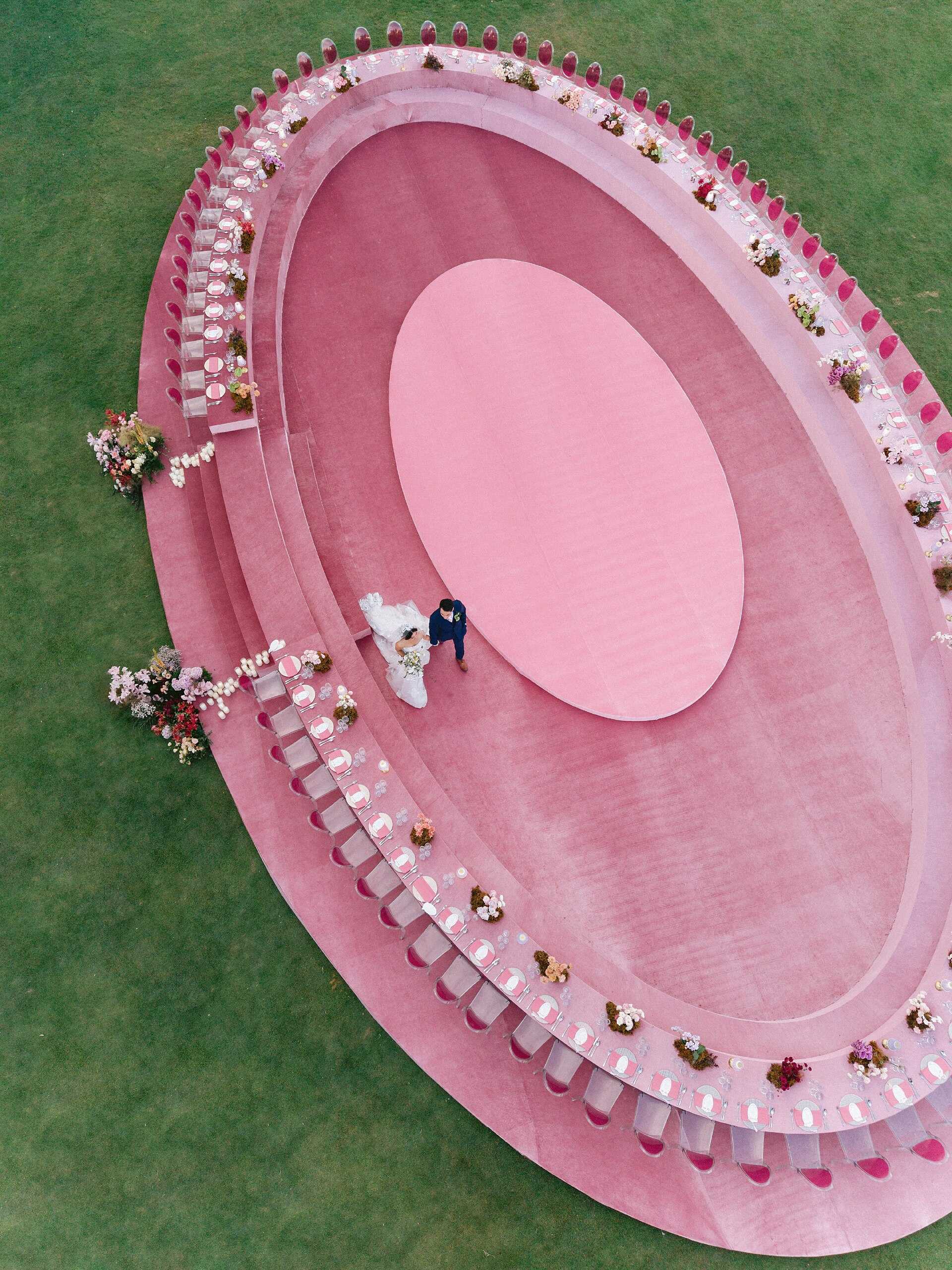
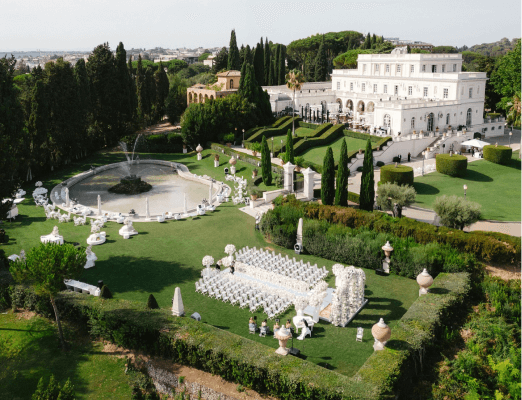
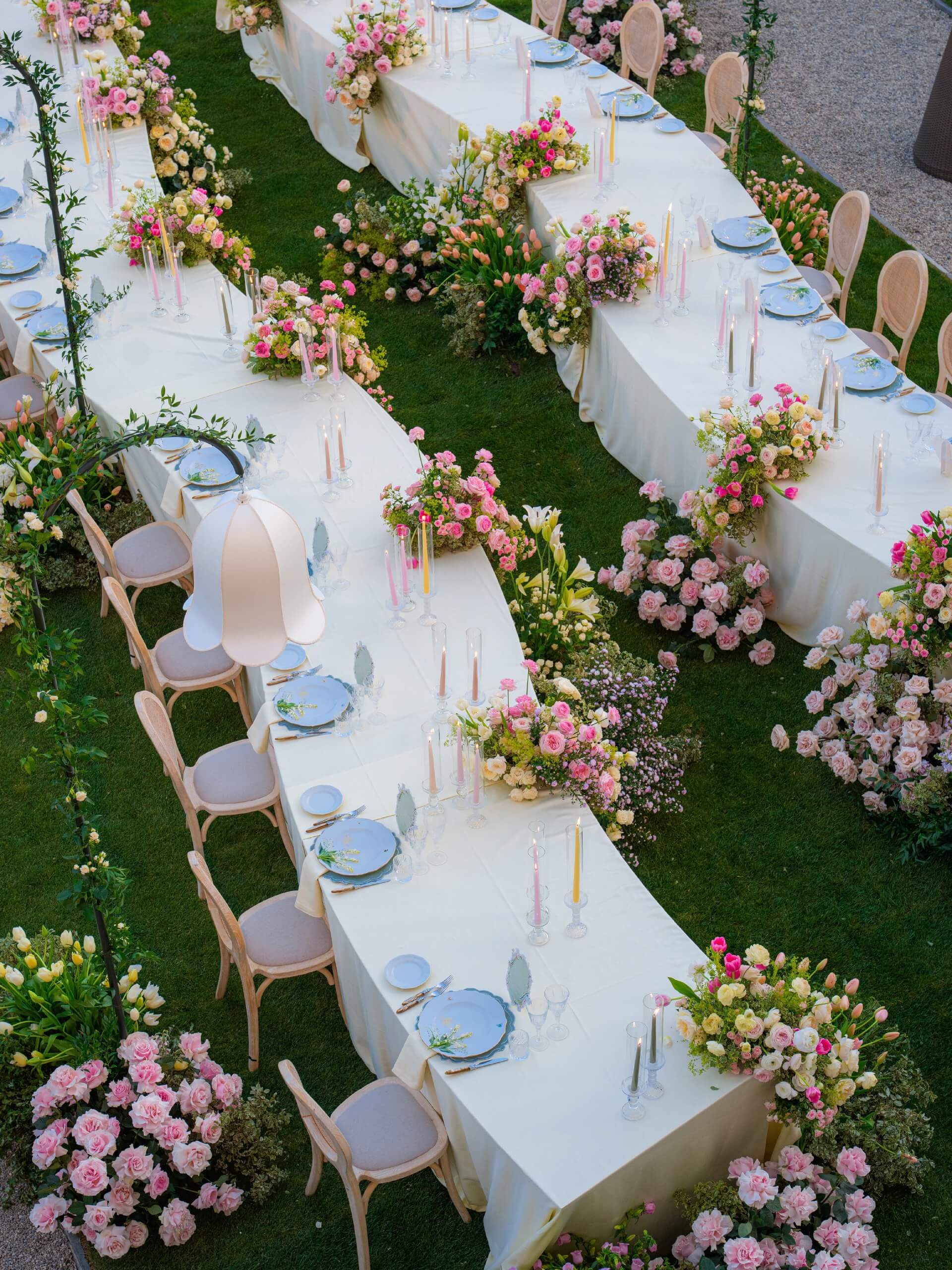
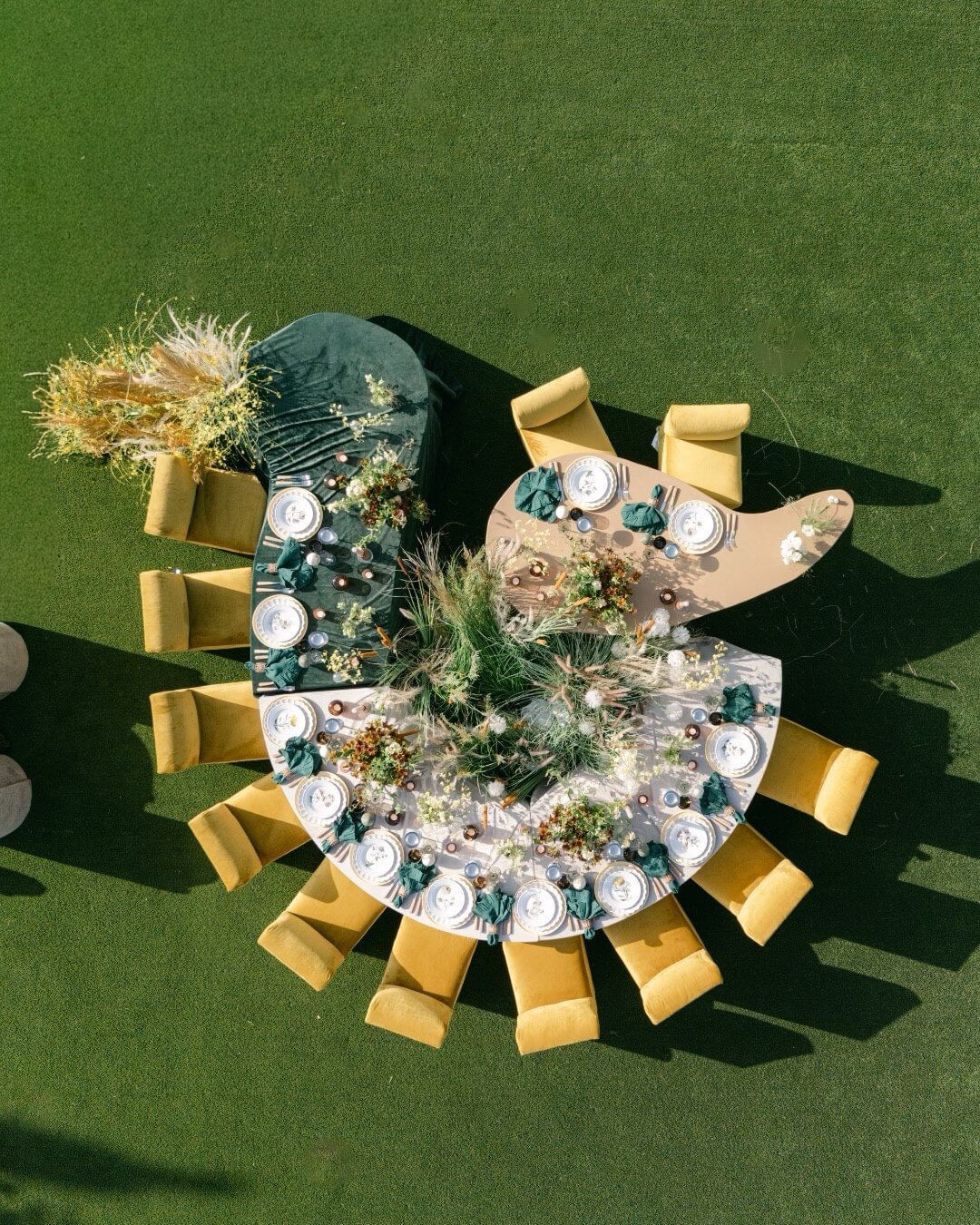
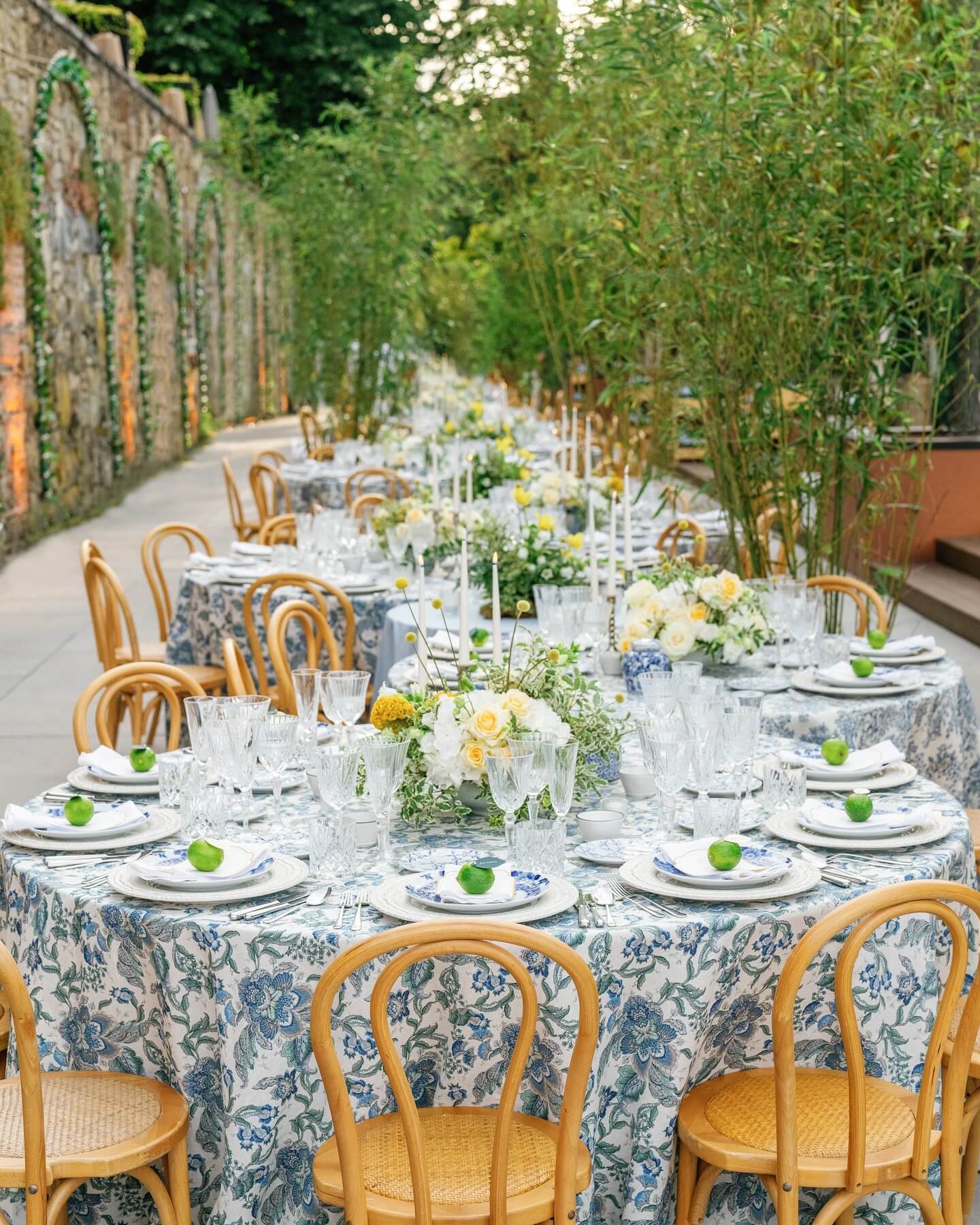
The table layout shapes the atmosphere as much as the guest mix. Round tables seating eight to ten people encourage conversation within small groups and work well in ballrooms and for larger guest lists. Long banquet rows create a family-style atmosphere, particularly outdoors, and look best with a single central display. While serpentine tables curving across a lawn look striking in aerial photos, they require careful planning to ensure that guests can find their seats quickly. The most flexible choice remains a long head table combined with rounds for everyone else.
Choosing a Wedding Seating Chart Design
When choosing a wedding seating chart design, consider the guest count, budget, and the amount of time the venue allows for setup. A printed board is the quickest to produce, while drink walls and keepsake favors make the occasion more memorable but require staff to prepare them on the day. Weather is a factor too: paper escort cards can blow away outdoors and glass or acrylic displays can catch the glare of the sun. The table below compares the most popular formats.
| Format | Best for | Approximate cost | Setup effort |
|---|---|---|---|
| Printed board or sign | Any size, especially 100+ guests | $80-300 | Low |
| Acrylic or mirror chart | Modern and evening receptions | $150-500 | Low |
| Escort cards or envelopes | Up to about 150 guests | $2-6 per guest | Medium |
| Champagne or drink wall | Cocktail hours with 50-200 guests | $300-1,500 plus drinks | High |
| Keepsake favors | Up to about 120 guests | $5-20 per guest | High |
Interactive Seating Charts for Wedding With Welcome Drinks
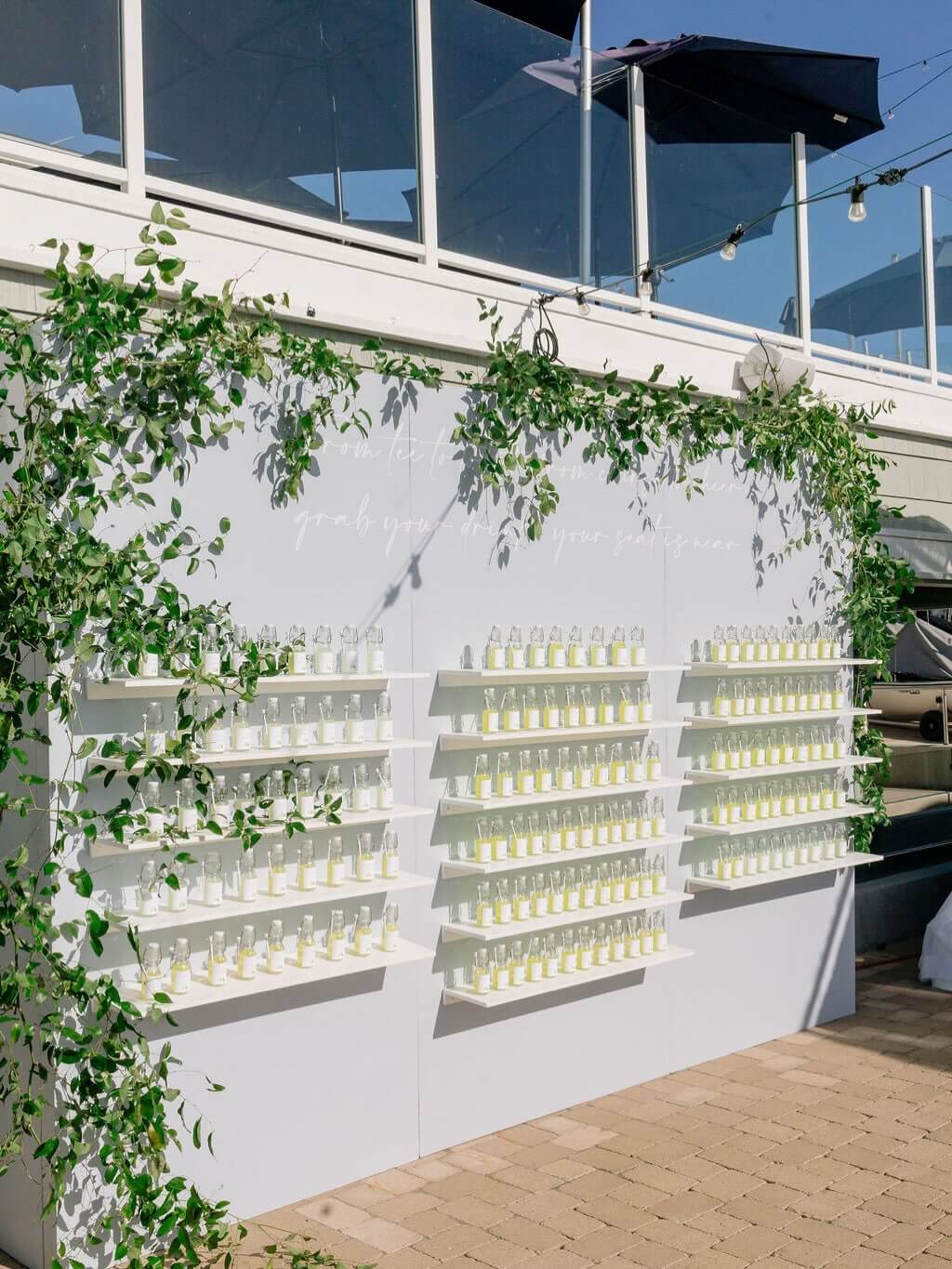
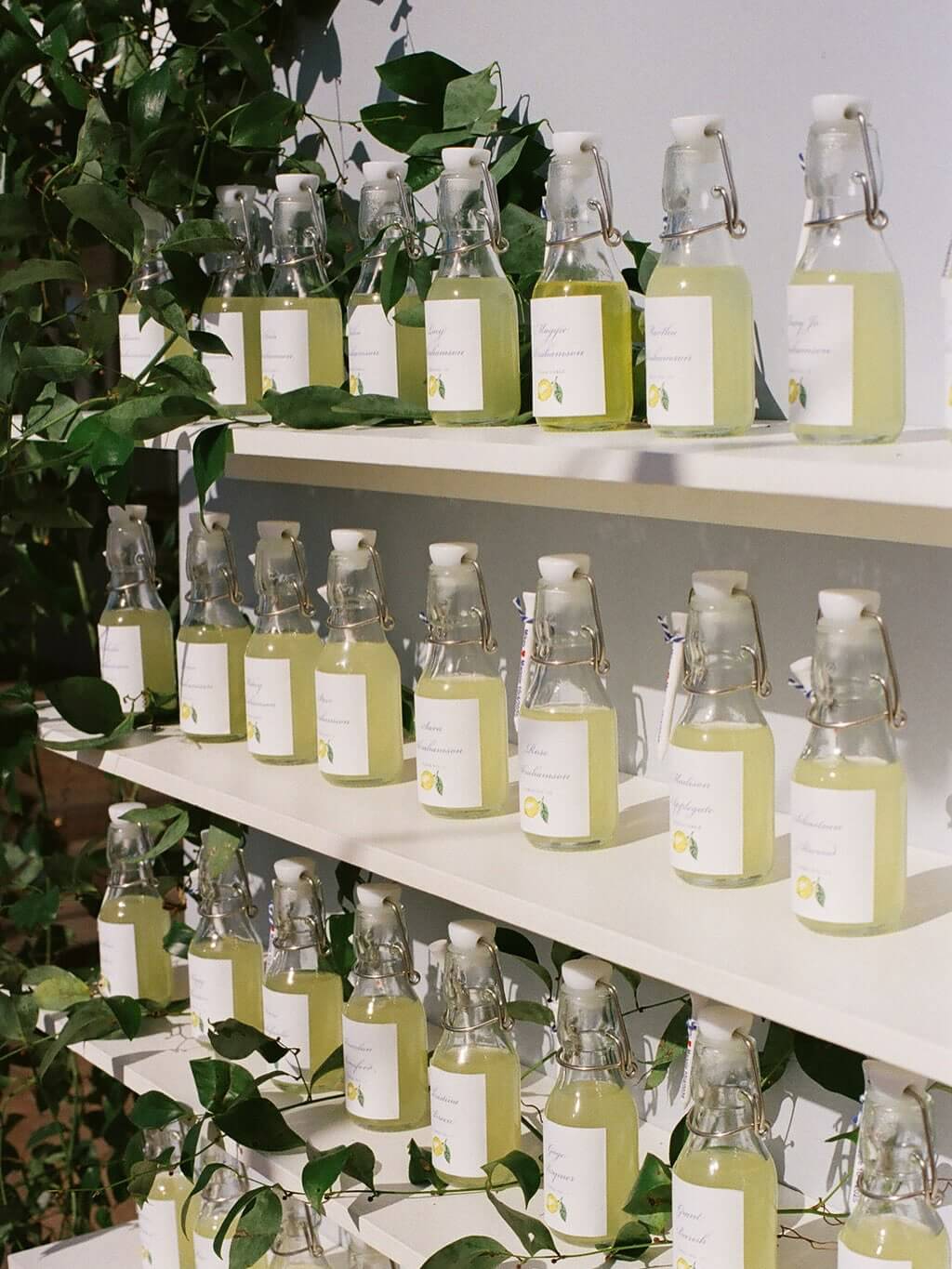
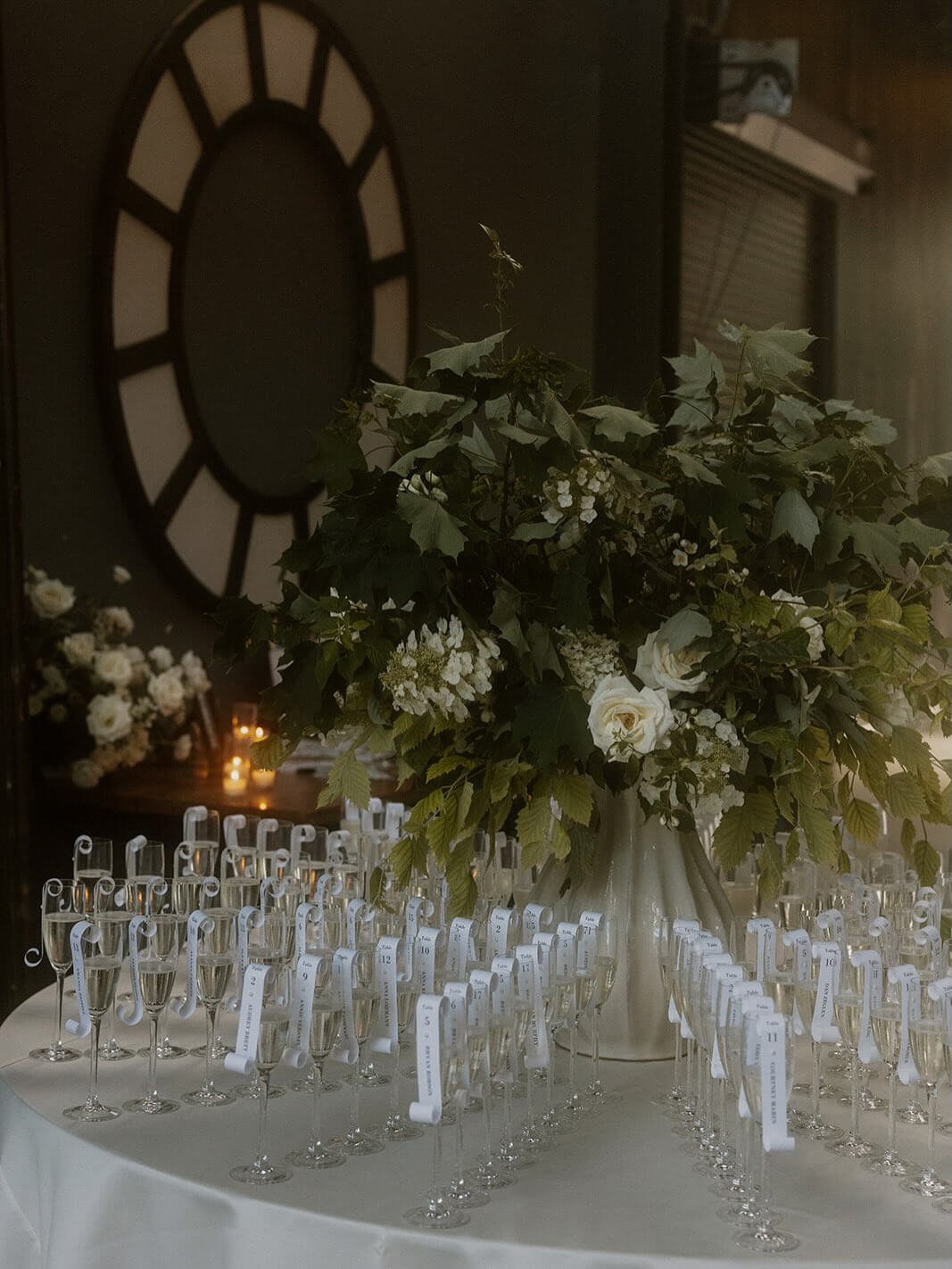
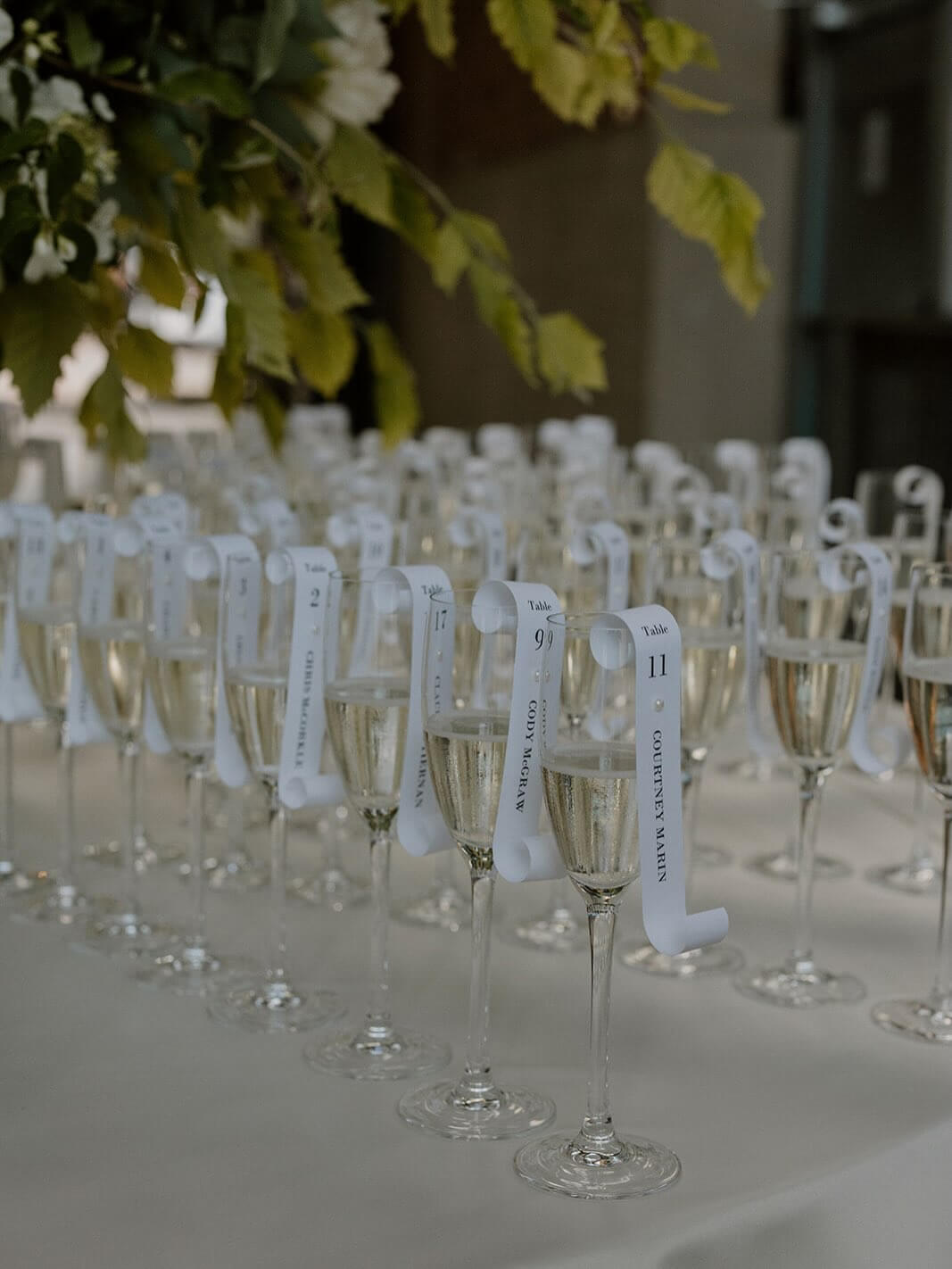
An interactive display with welcome drinks combines the escort card and the first toast. Each guest picks up a glass, bottle or small vessel labeled with their name and table, so the chart gradually disappears as the cocktail hour goes on. This format works best when there is a clear moment of arrival, such as when guests walk from the ceremony to the reception terrace. Catering staff are needed to pour and set out the drinks shortly before the guests arrive, so make sure you confirm the timing with your venue in advance.
Champagne Wall Seating Charts
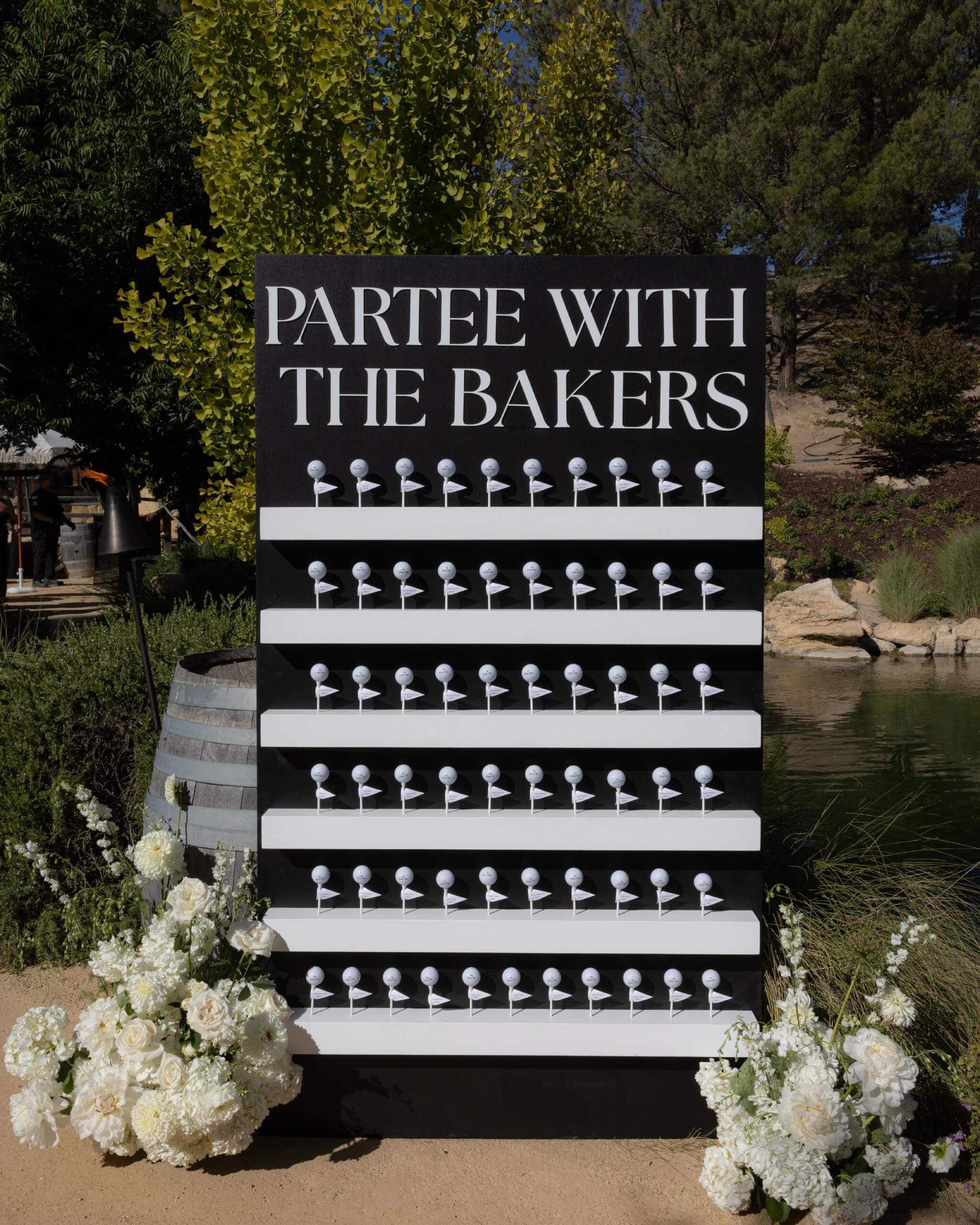
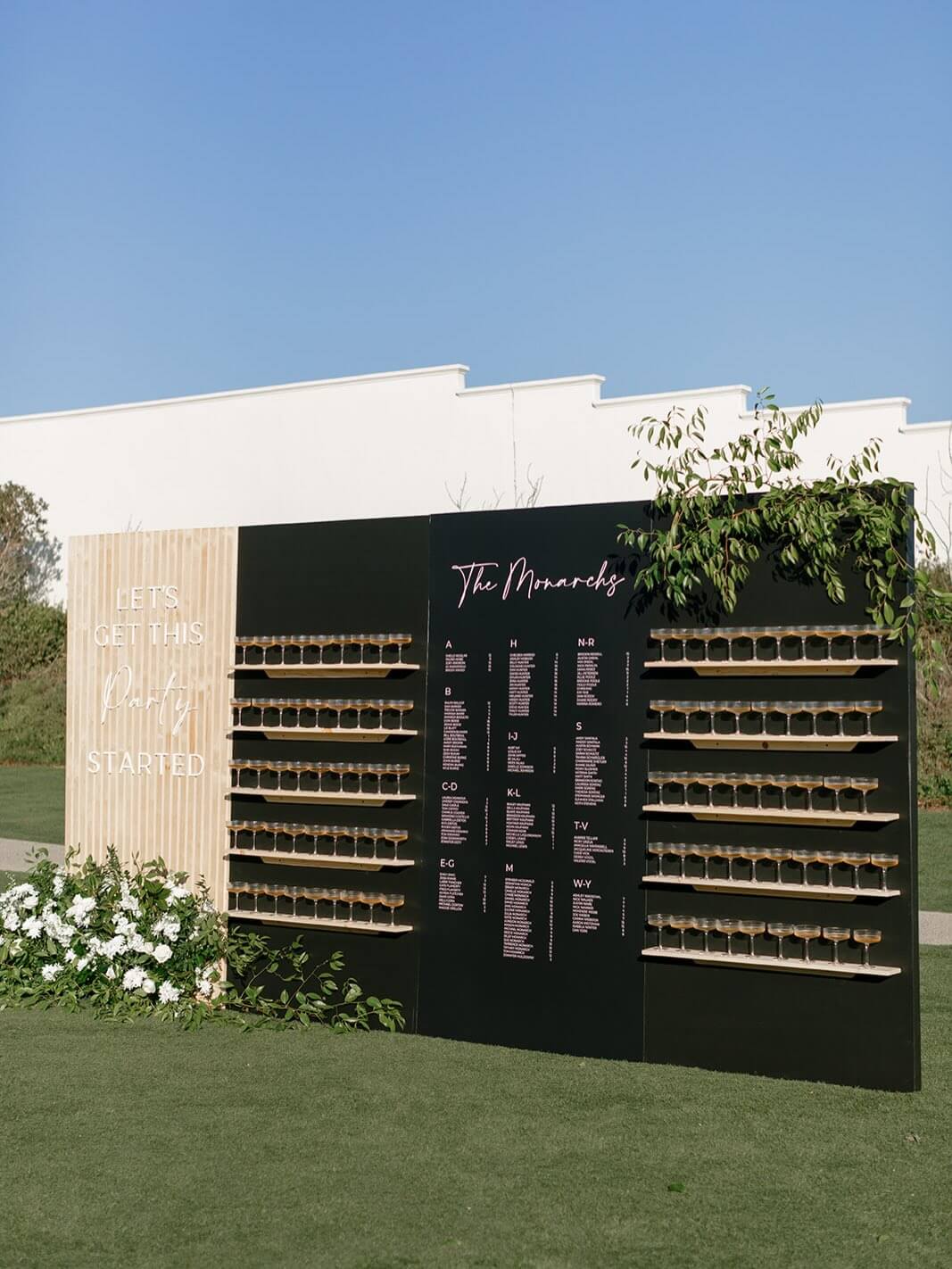
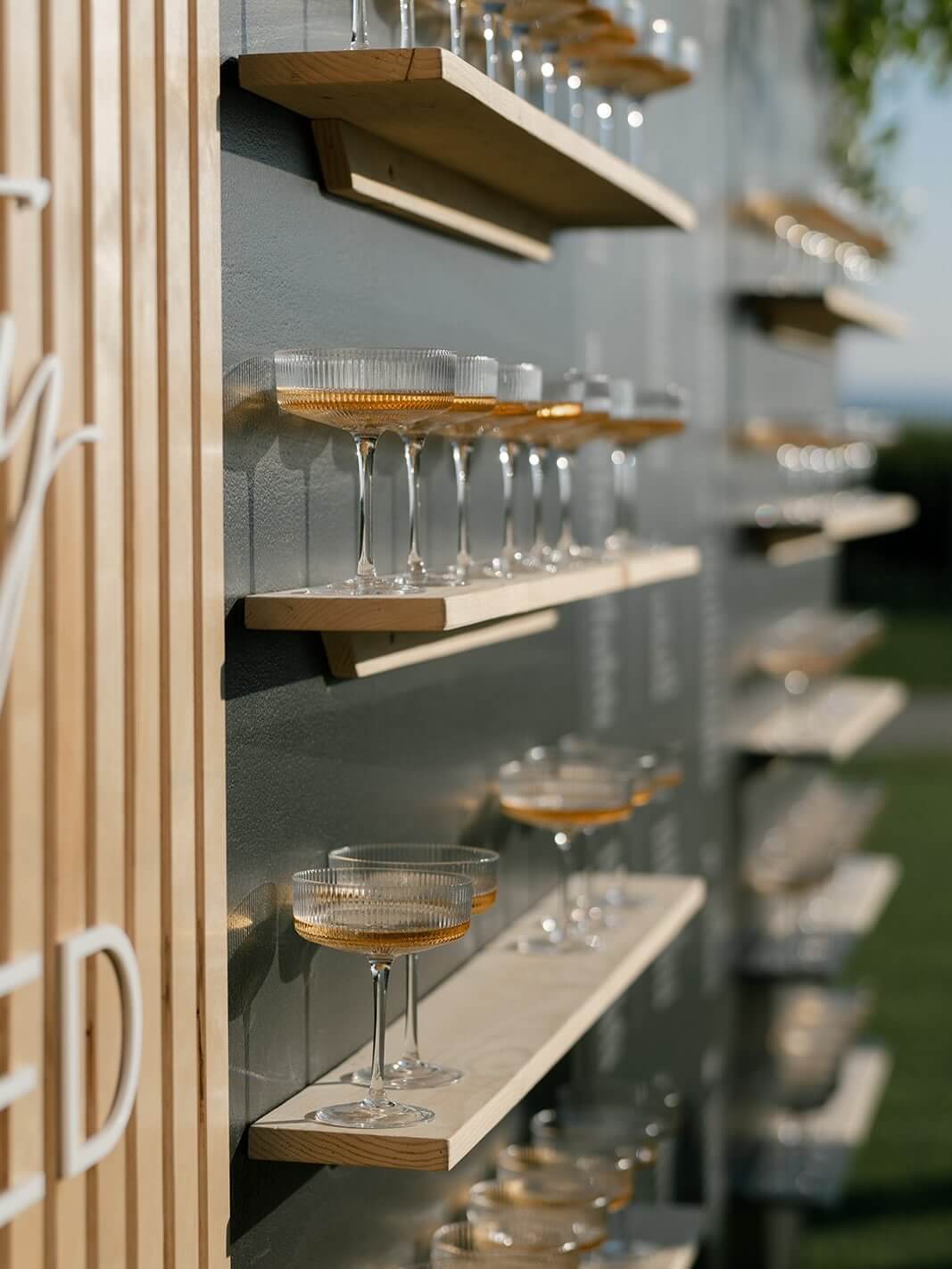
A champagne wall is a panel with narrow shelves that hold filled coupes or flutes next to printed names and table numbers. A black wall with white script bearing the couple's family name creates a dramatic effect at an evening reception, while a wall made of warm wooden slats gives the same idea a relaxed, modern look. The concept also works with a playful twist: a golf-themed board with rows of tees and a pun in the title suits a couple who love the course. In hot weather, fill the glasses no more than 15 minutes before the guests arrive, and make sure the wall is kept in the shade.
Escort Glasses, Bottles and Bud Vases
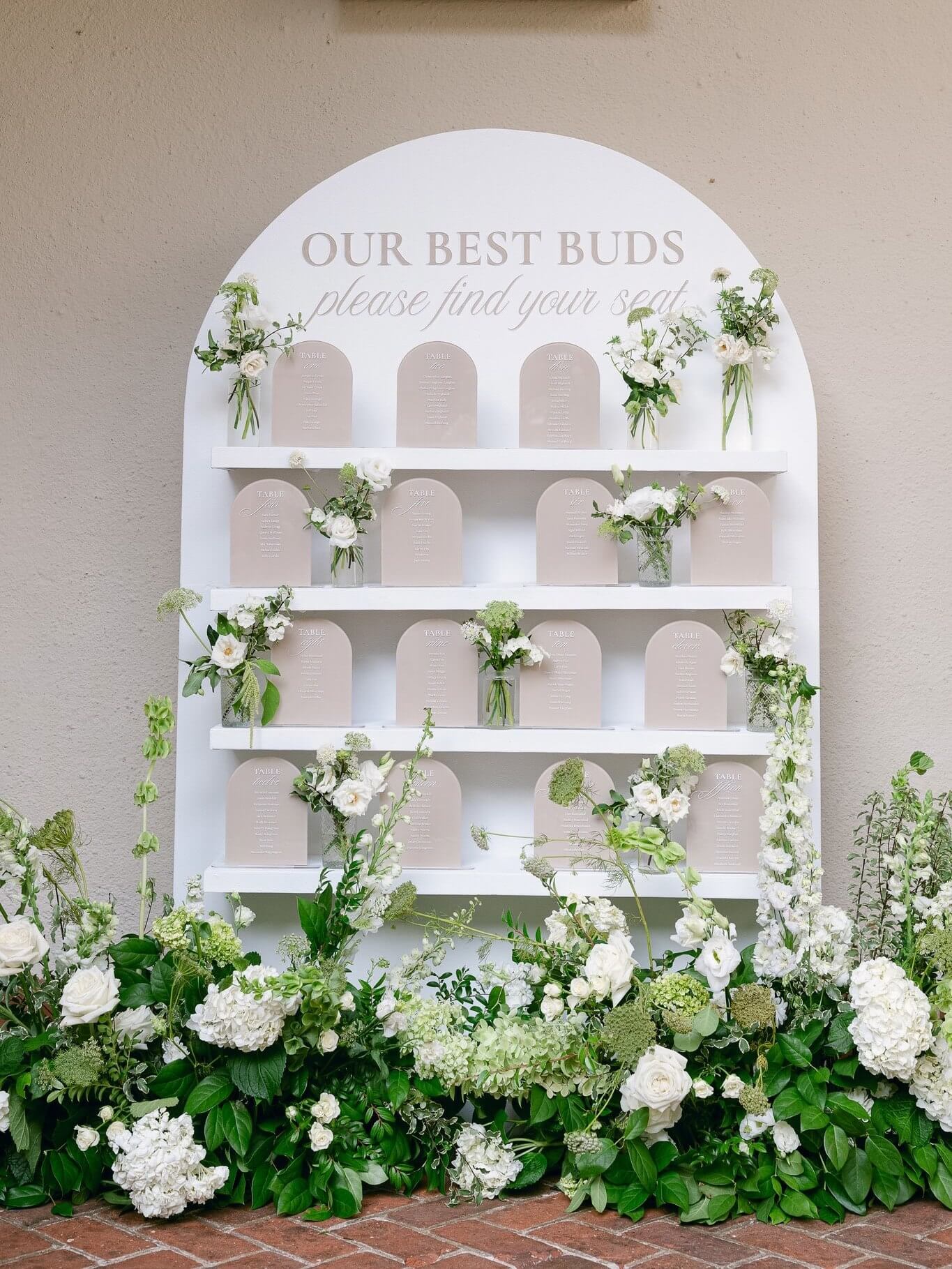
Individual glasses, bottles and bud vases suit couples who prefer a softer, less formal look for their drink display. Swing-top bottles of homemade lemonade lined up on white shelves and framed with climbing greenery look fresh at a daytime or garden wedding. Champagne flutes with hanging name tags arranged around a central floral arrangement suit a more classic reception. An arched board containing small niches, each holding a bud vase and a name card, can double as a floral installation and a take-home gift. Non-alcoholic options should look just as polished so that every guest feels included.

Elegant Escort Envelopes With Wax Seals
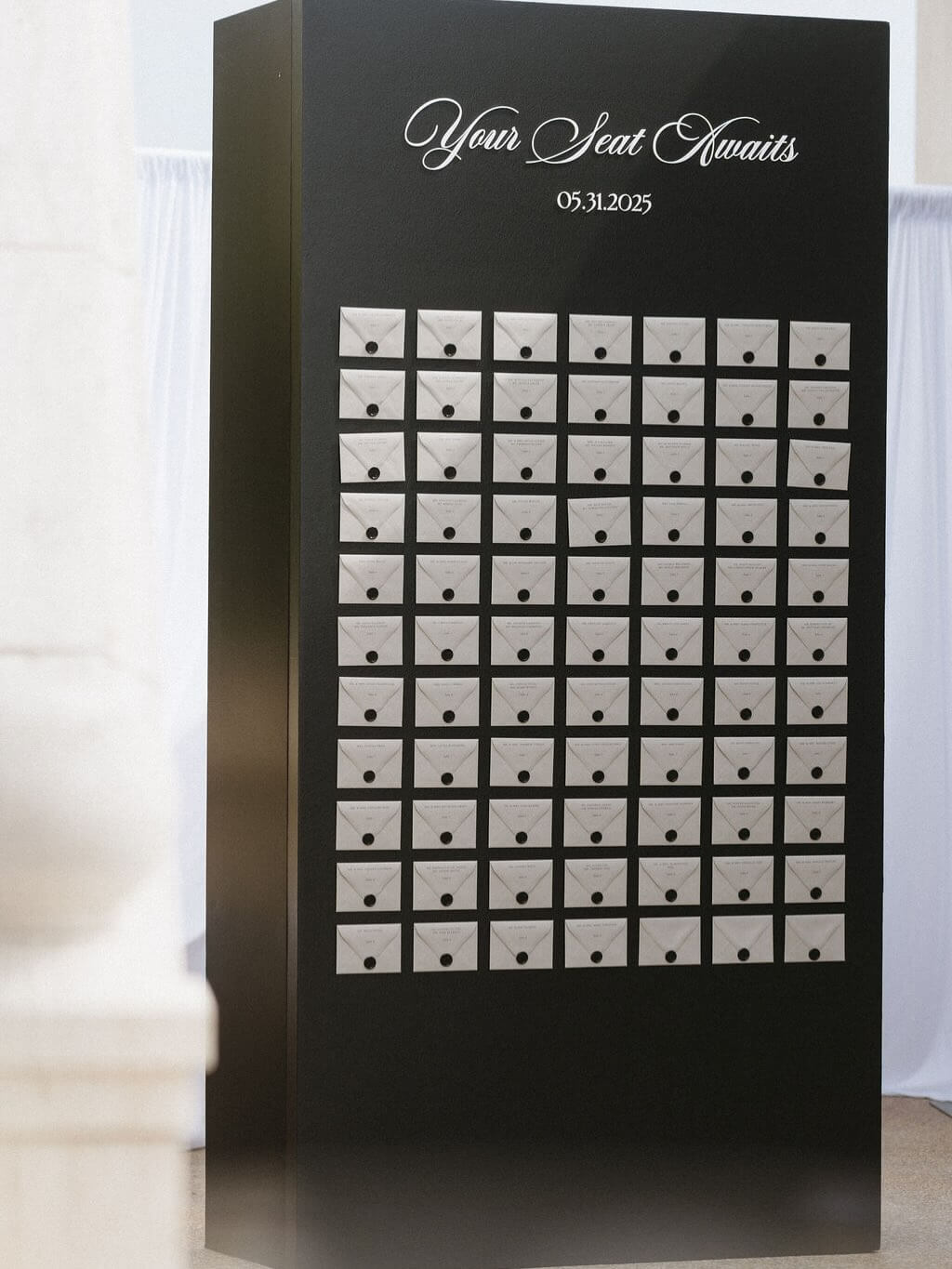
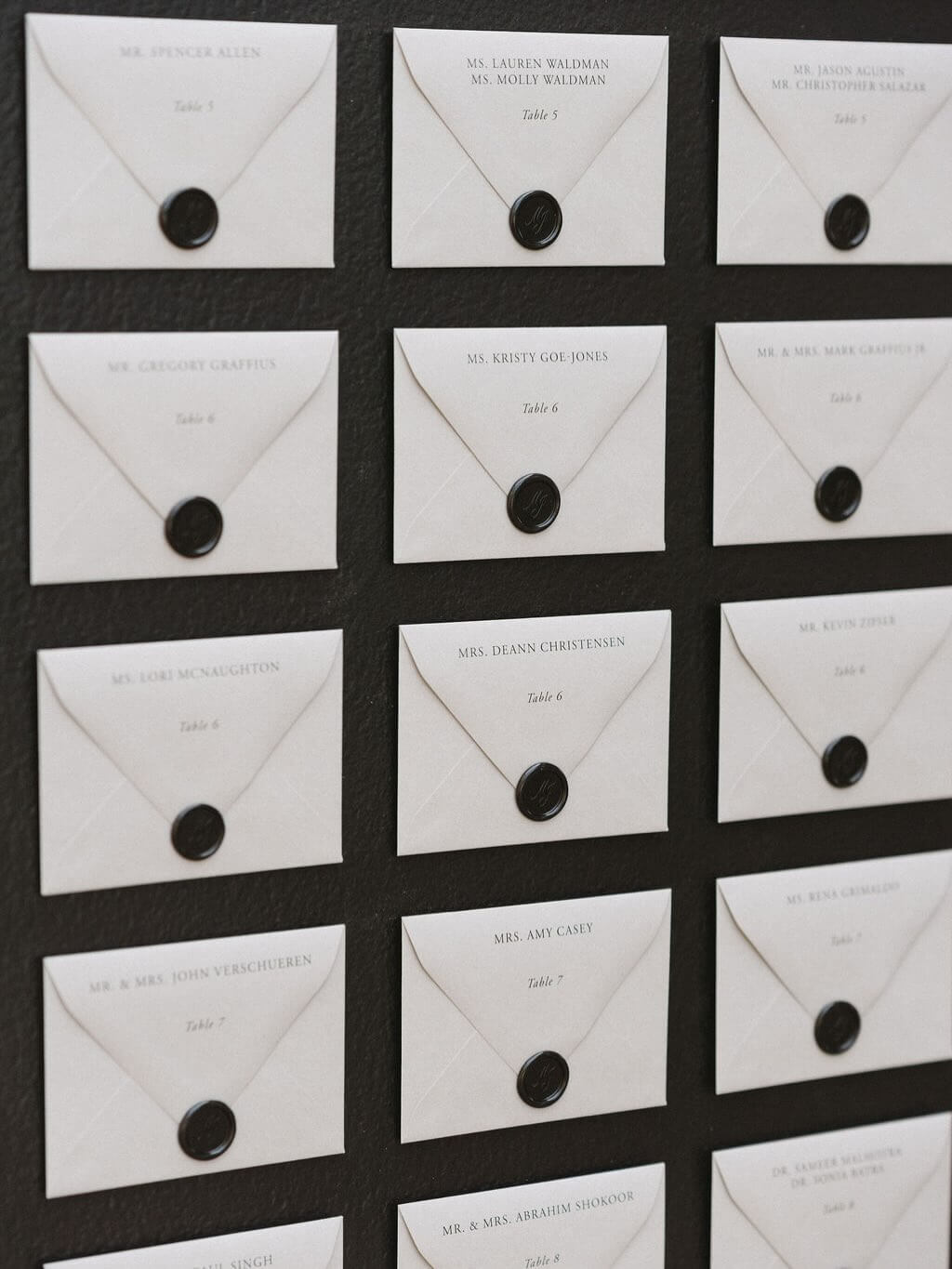
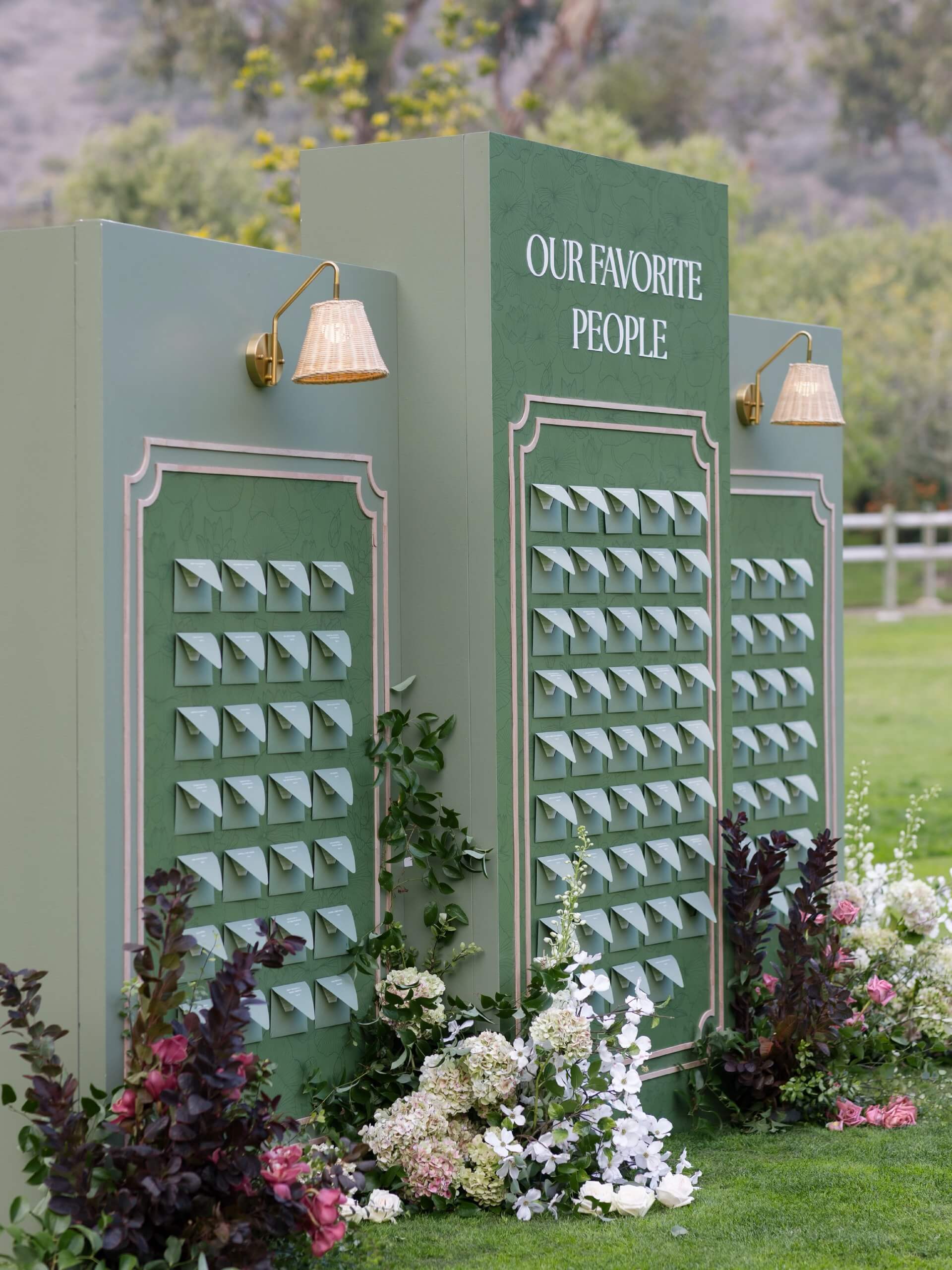
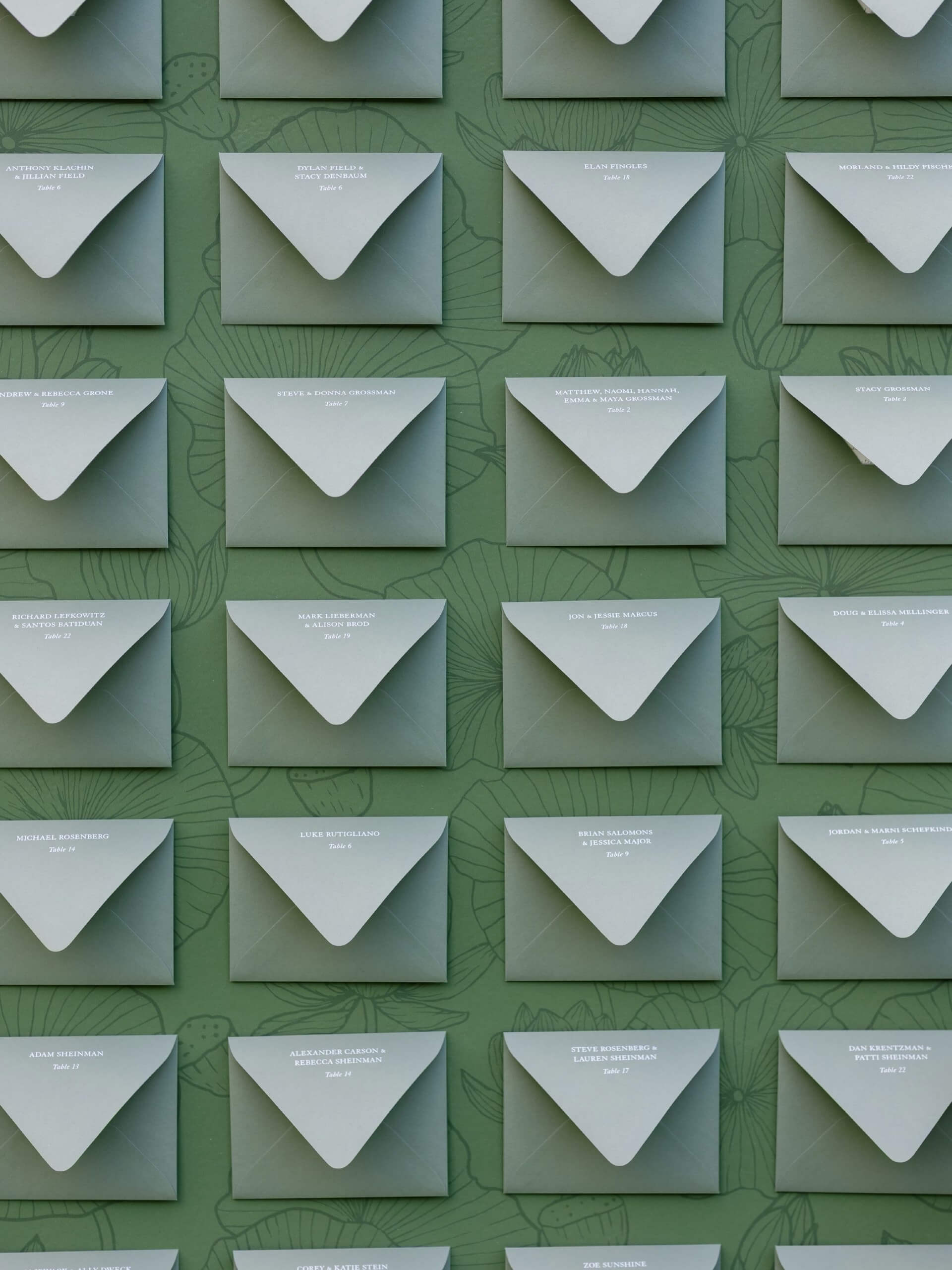
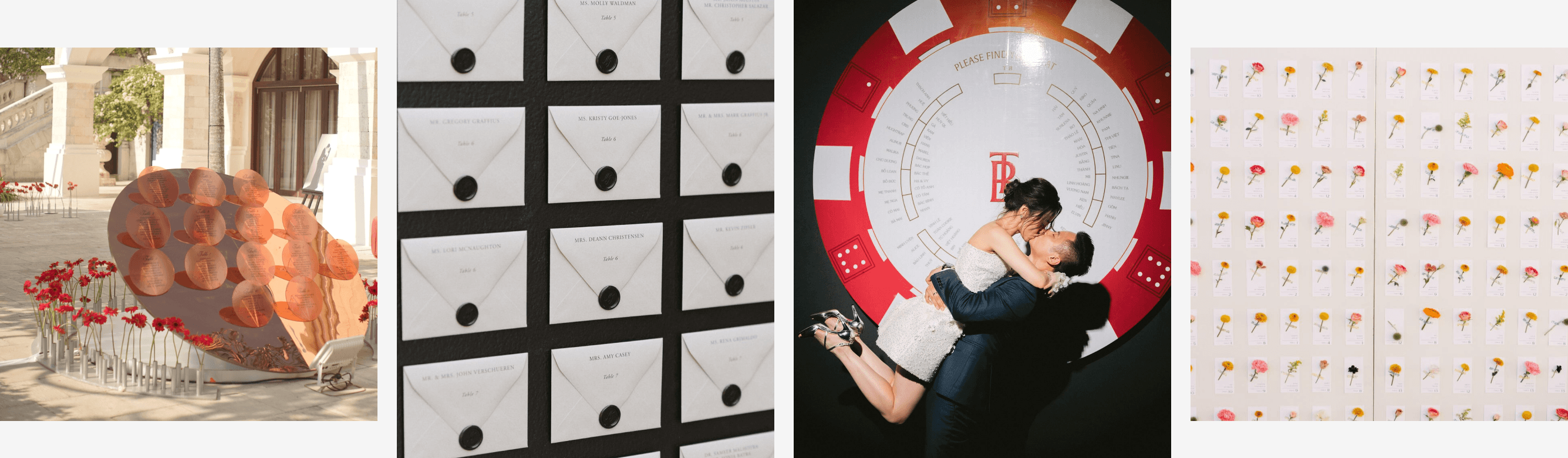
Wax-sealed envelopes are an elegant way to allocate seats, as each guest receives a personal note instead of scanning a long list. The envelopes can be arranged in neat grids on a board, with the table number printed or handwritten on the card inside. A tall black tower containing white envelopes with black wax seals has a formal and graphic appearance, making it a strong fit for a black-tie ballroom or city venue. A similar design in sage green, set into framed panels with brass sconces under a sign dedicated to the couple's favorite people, would suit a garden reception. Stationers typically charge $3-6 per sealed envelope, and this format stays easy to search for up to around 150 guests.
Floral Seating Chart Ideas for the Wedding Reception
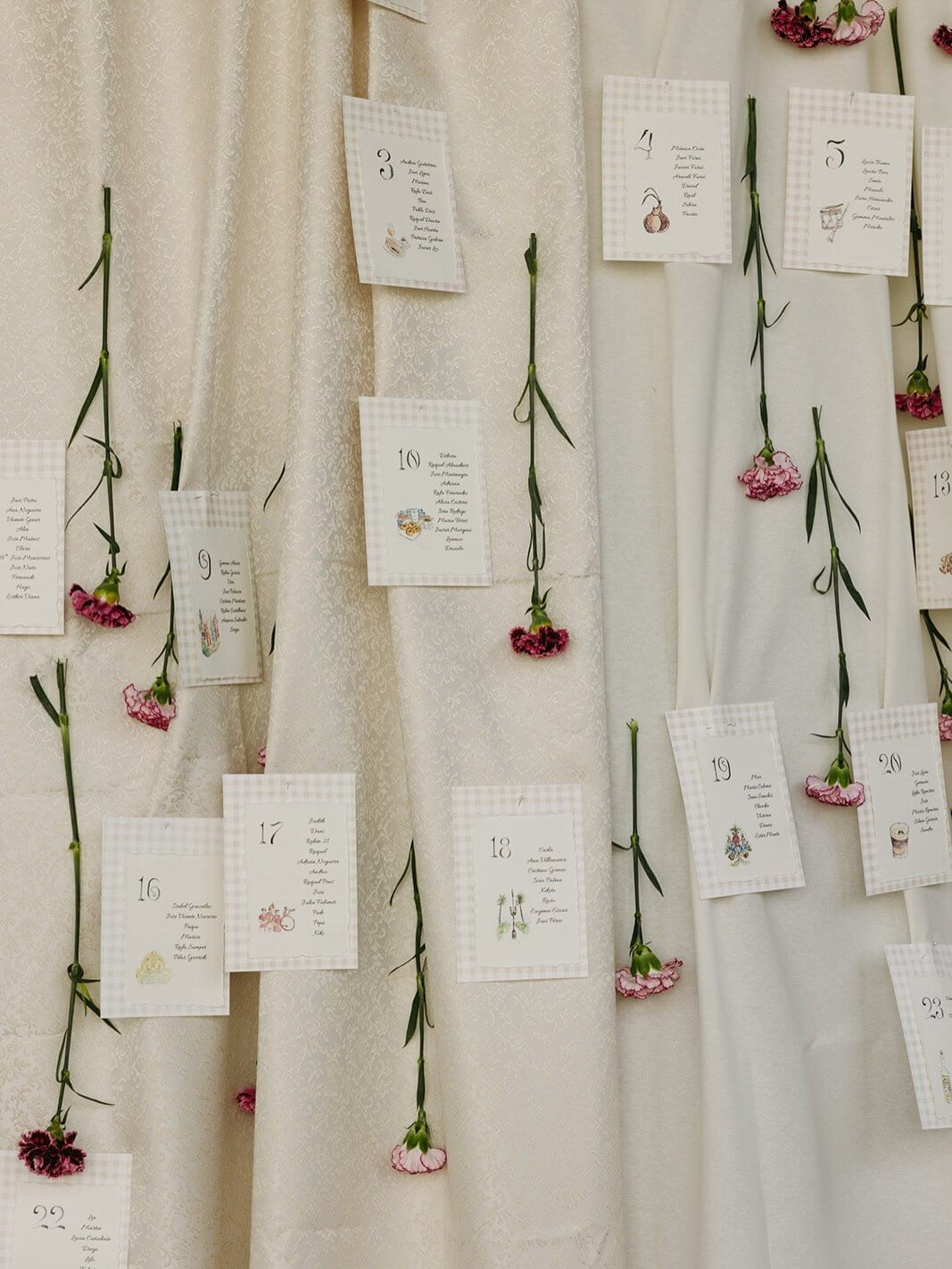
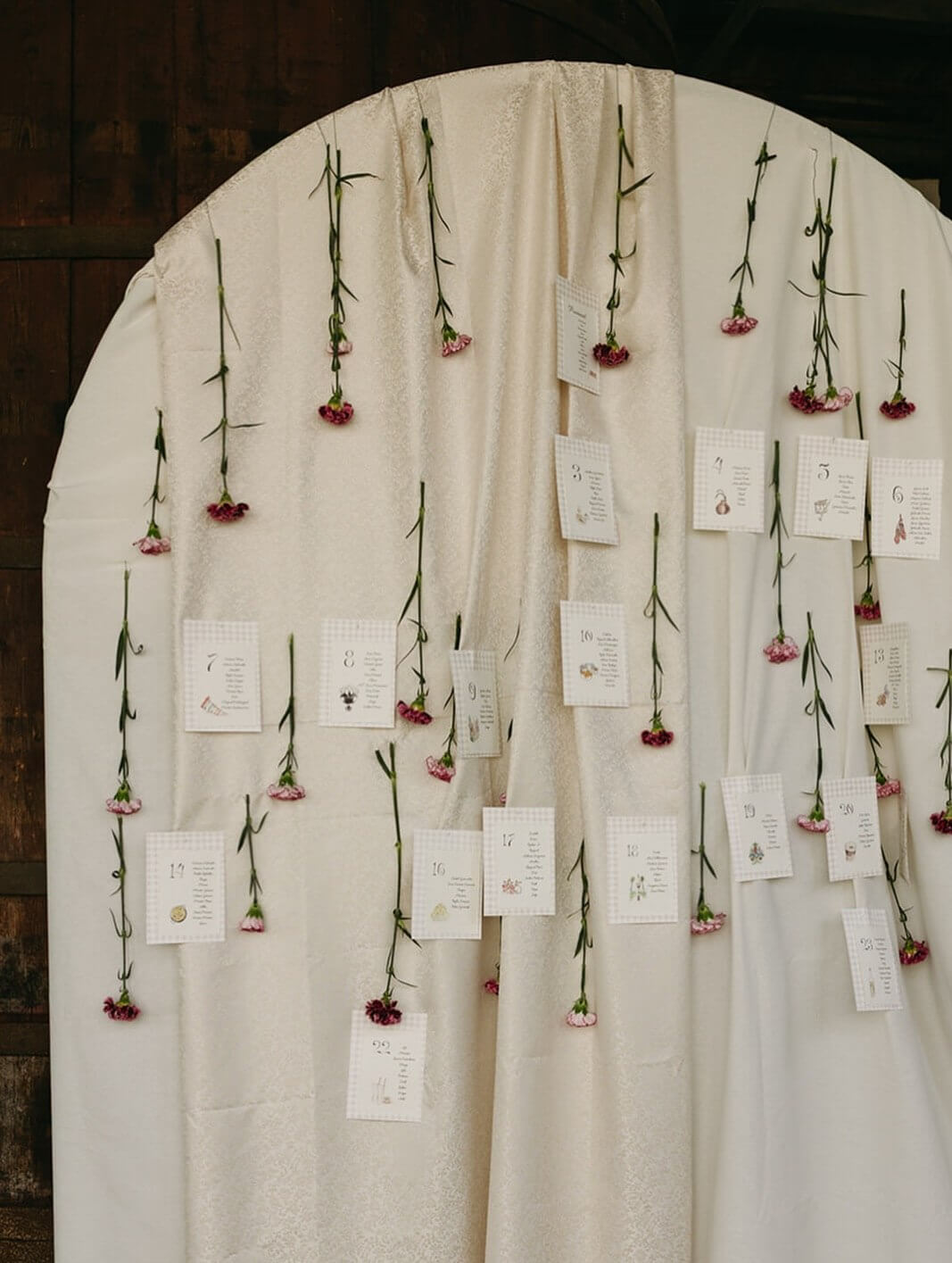
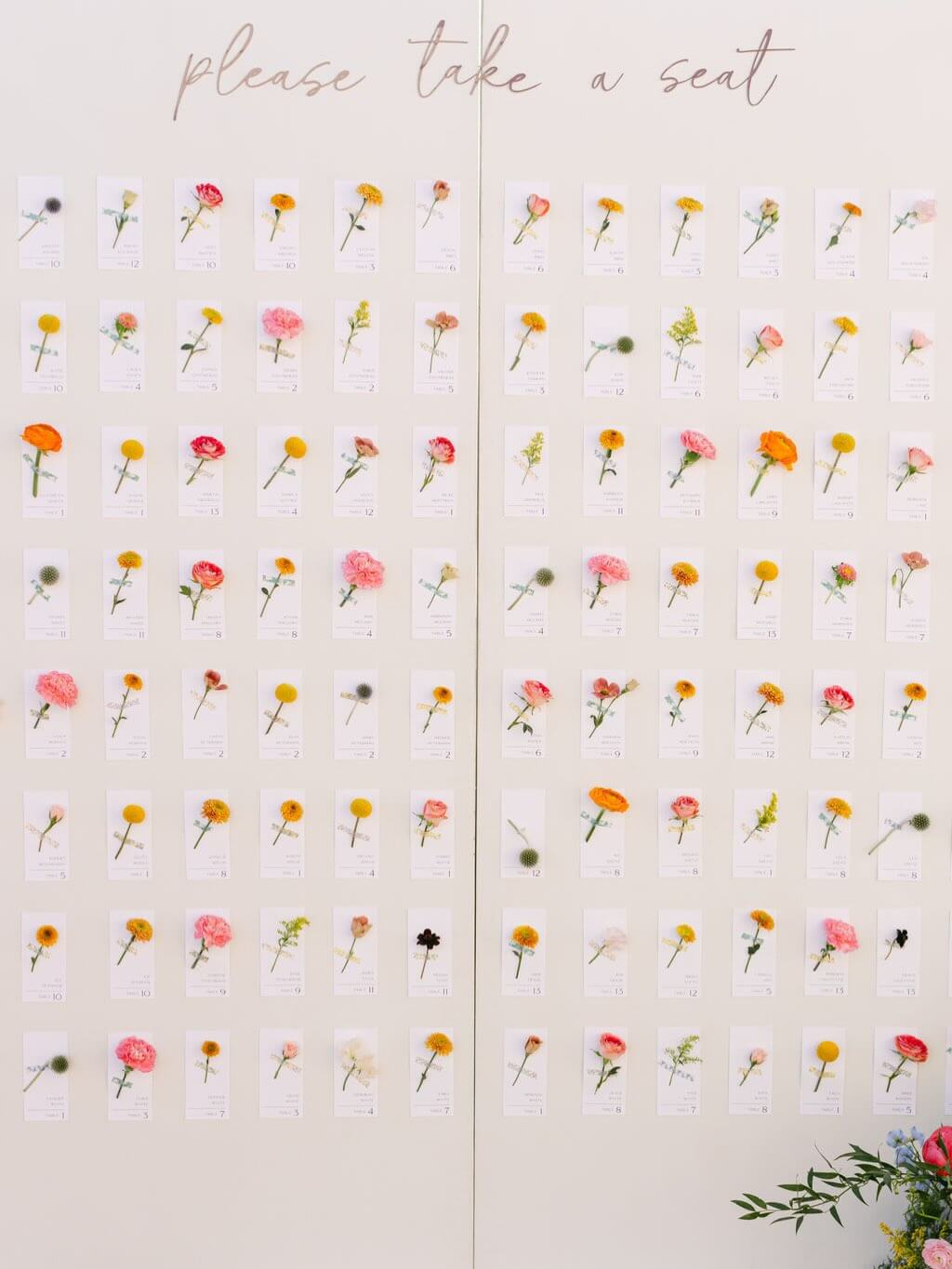
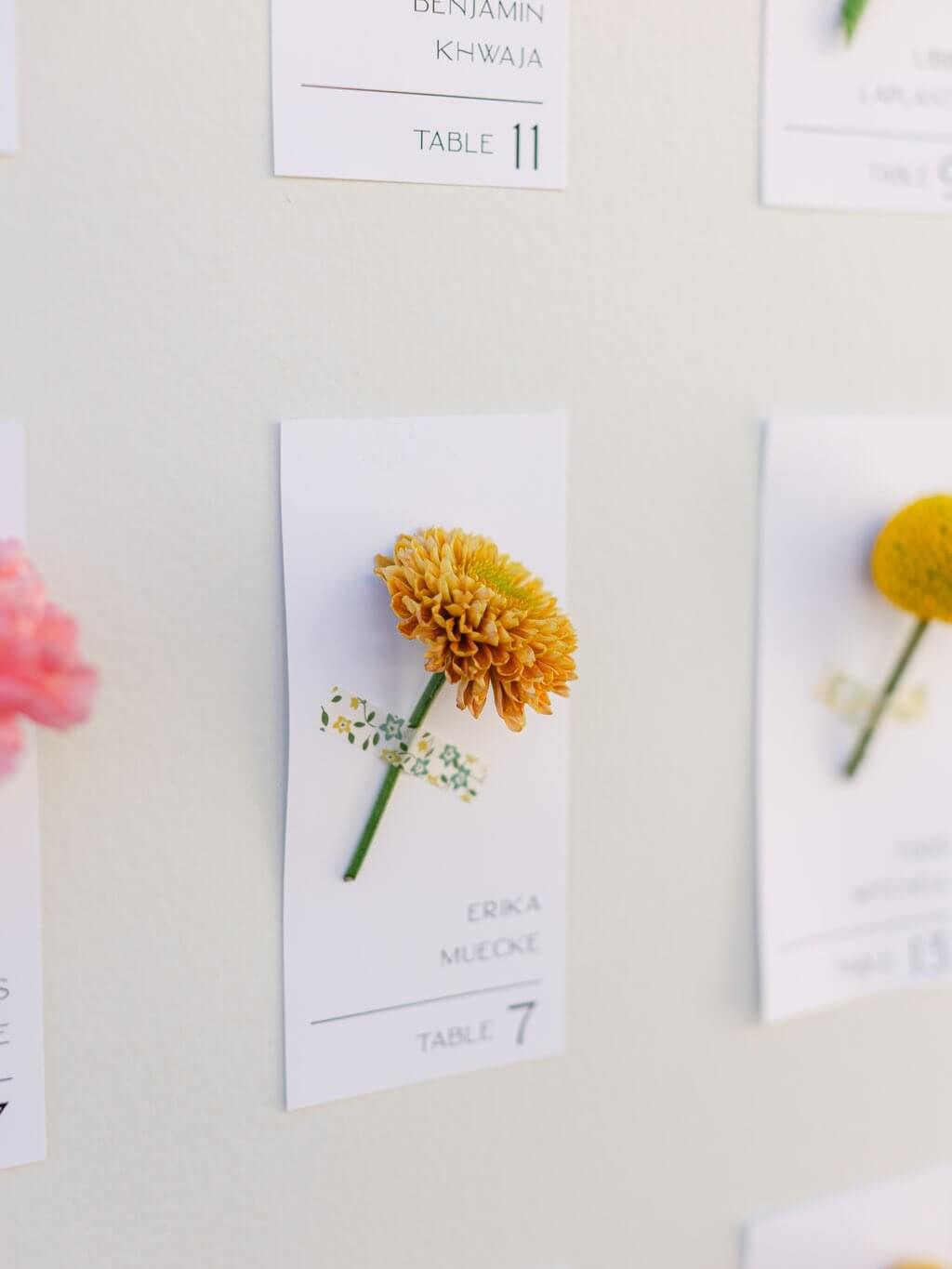
A floral seating display brings the reception flowers straight to the entrance, with fresh stems ensuring that each name feels unique. One simple version involves hanging single carnations upside down from an ivory drape and pinning table cards between the stems. Another approach is to tape one fresh bloom to each escort card and arrange the cards on a pale board so that guests can pick up their flower along with their table number. Mixing colors row by row creates a gradient that looks planned from a distance. Choose hardy flowers such as carnations or chrysanthemums, which can last for hours without water, and budget around $3-8 per guest.
Creative Seating Chart Ideas With Keepsakes
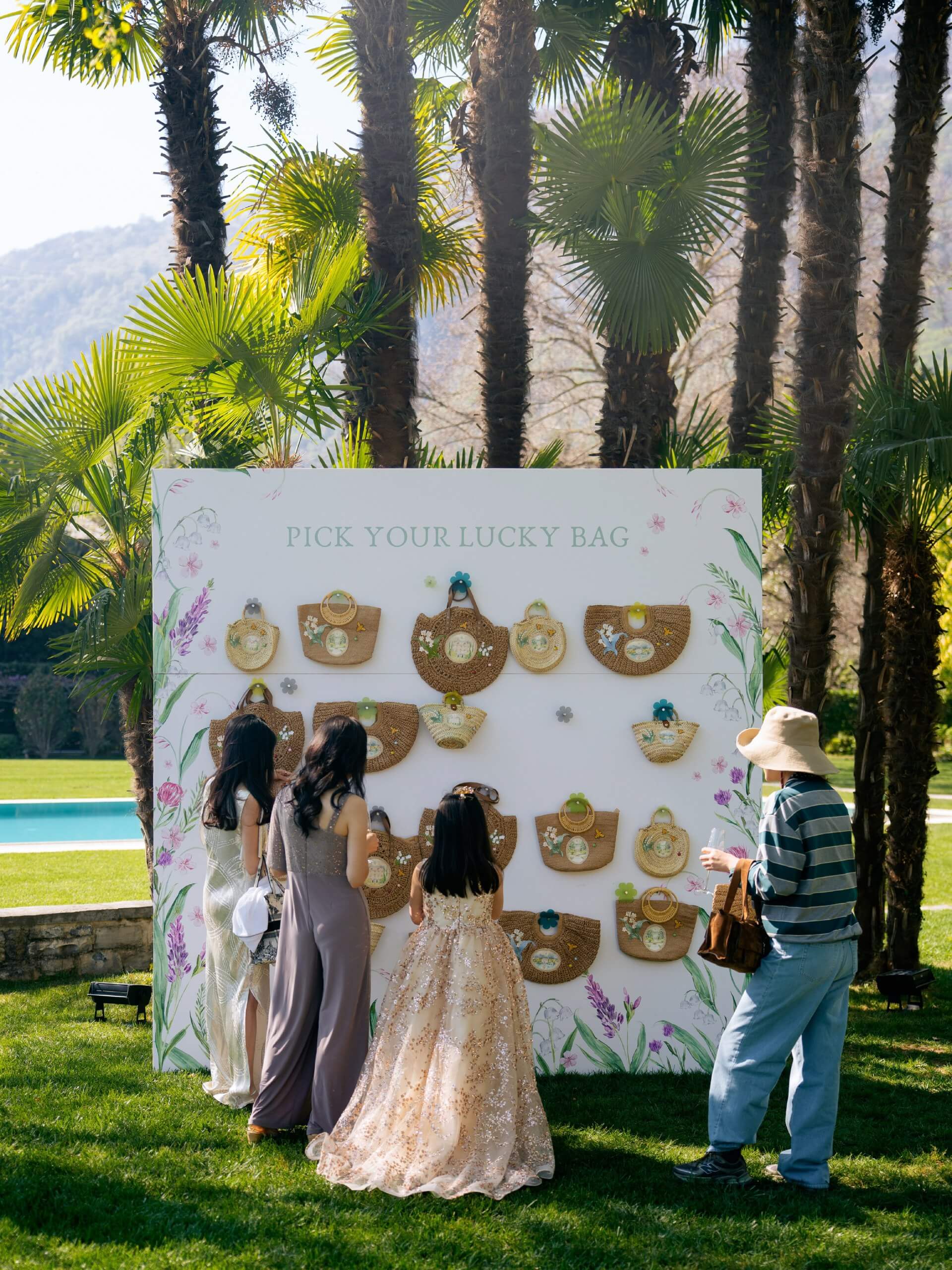
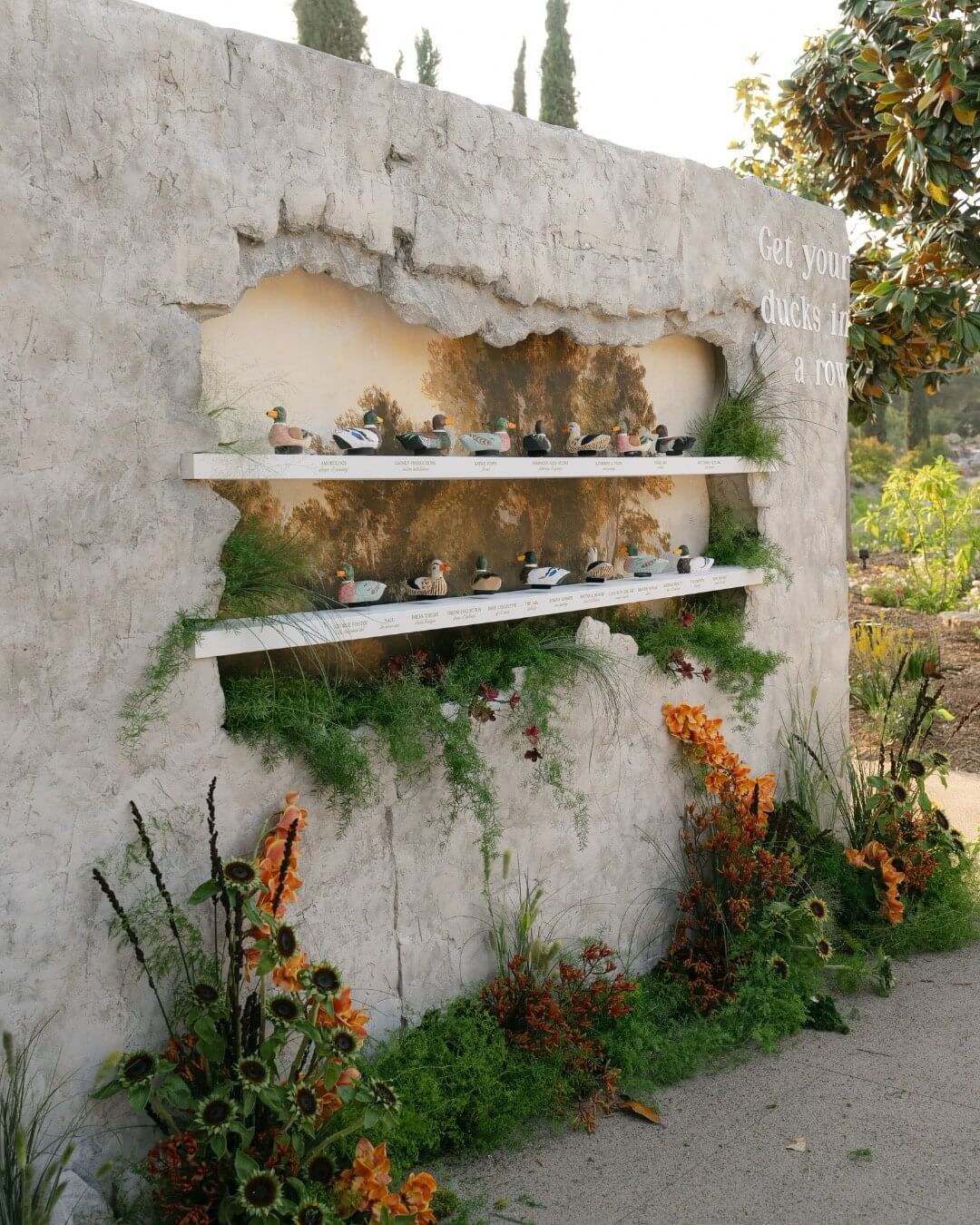
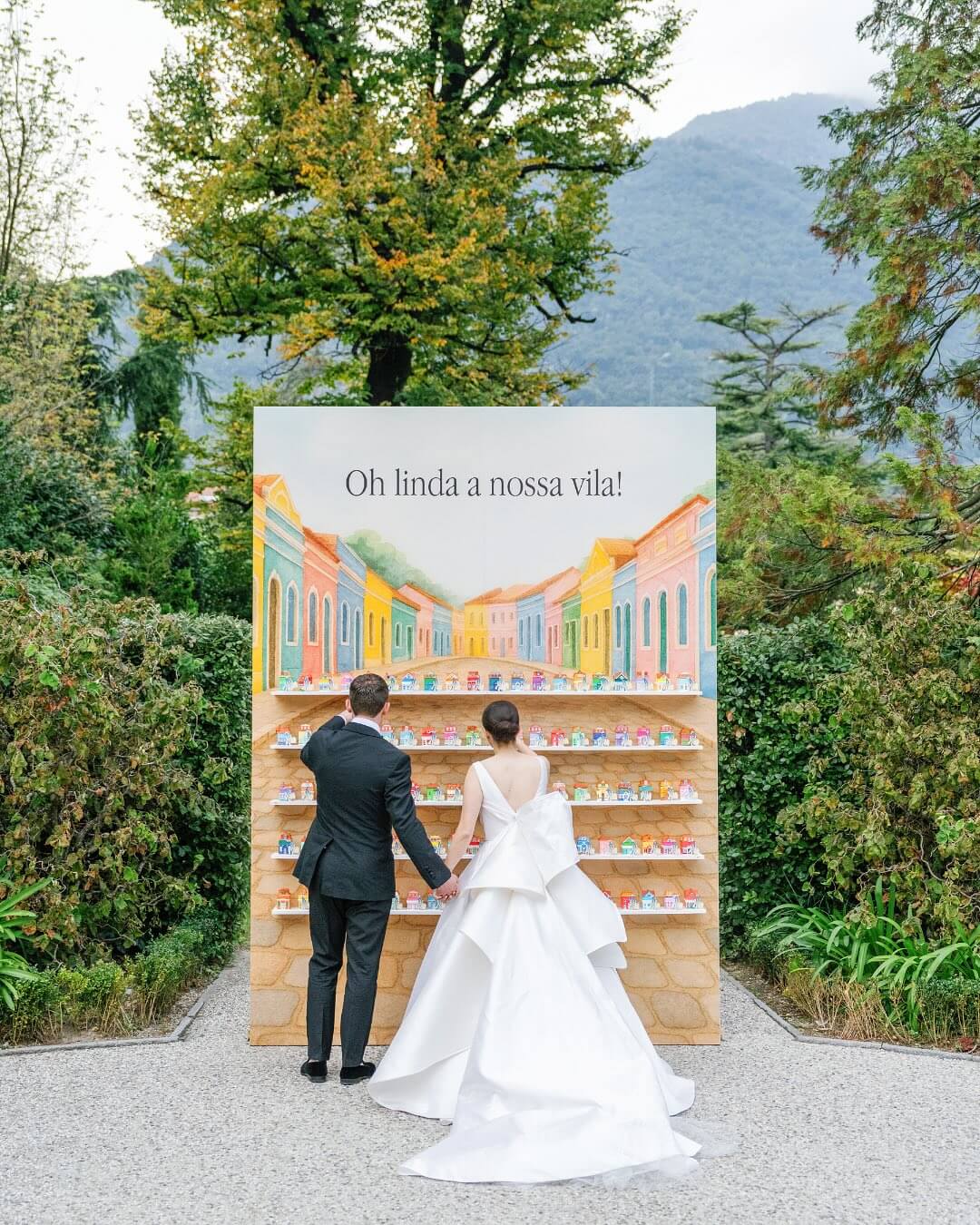
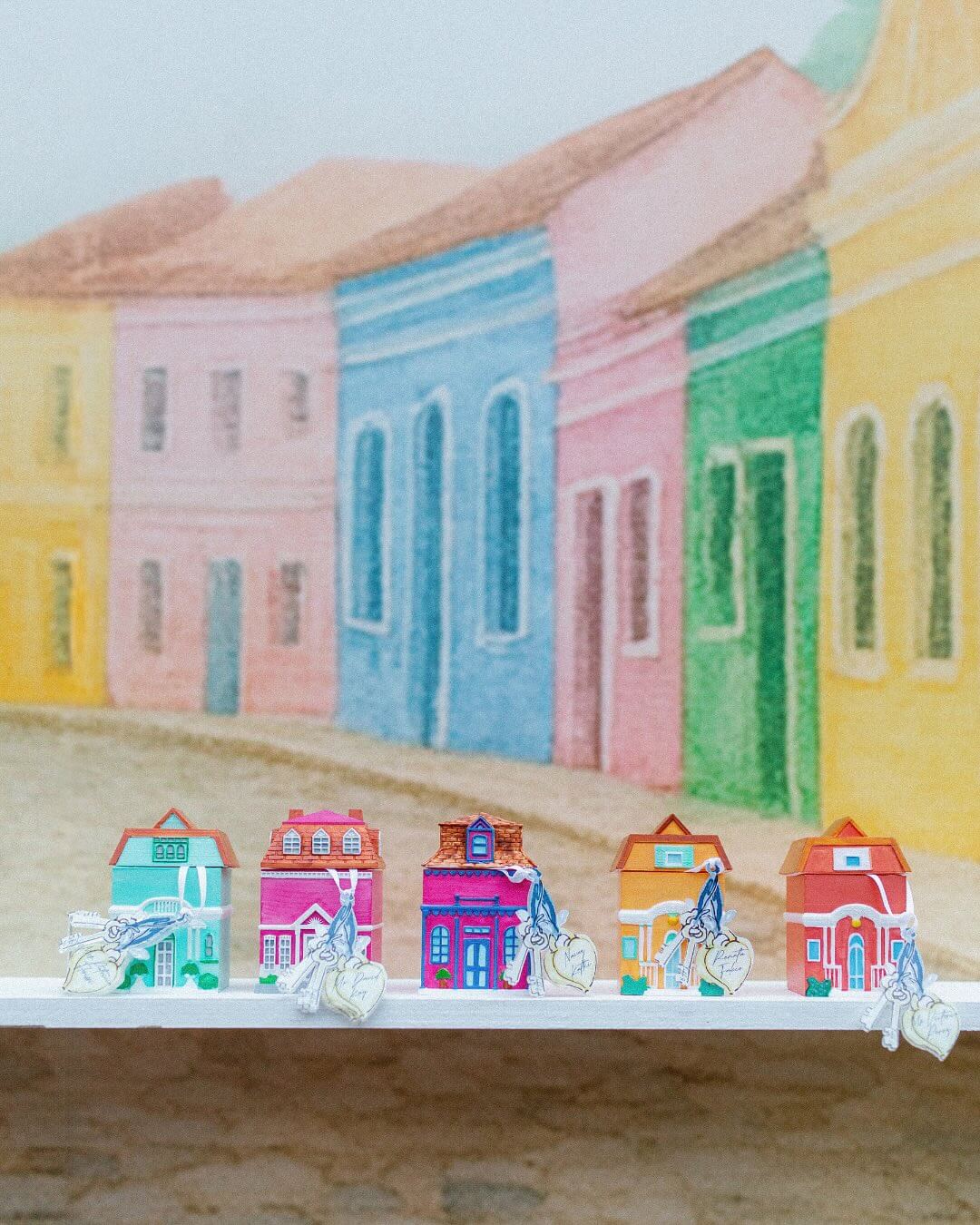
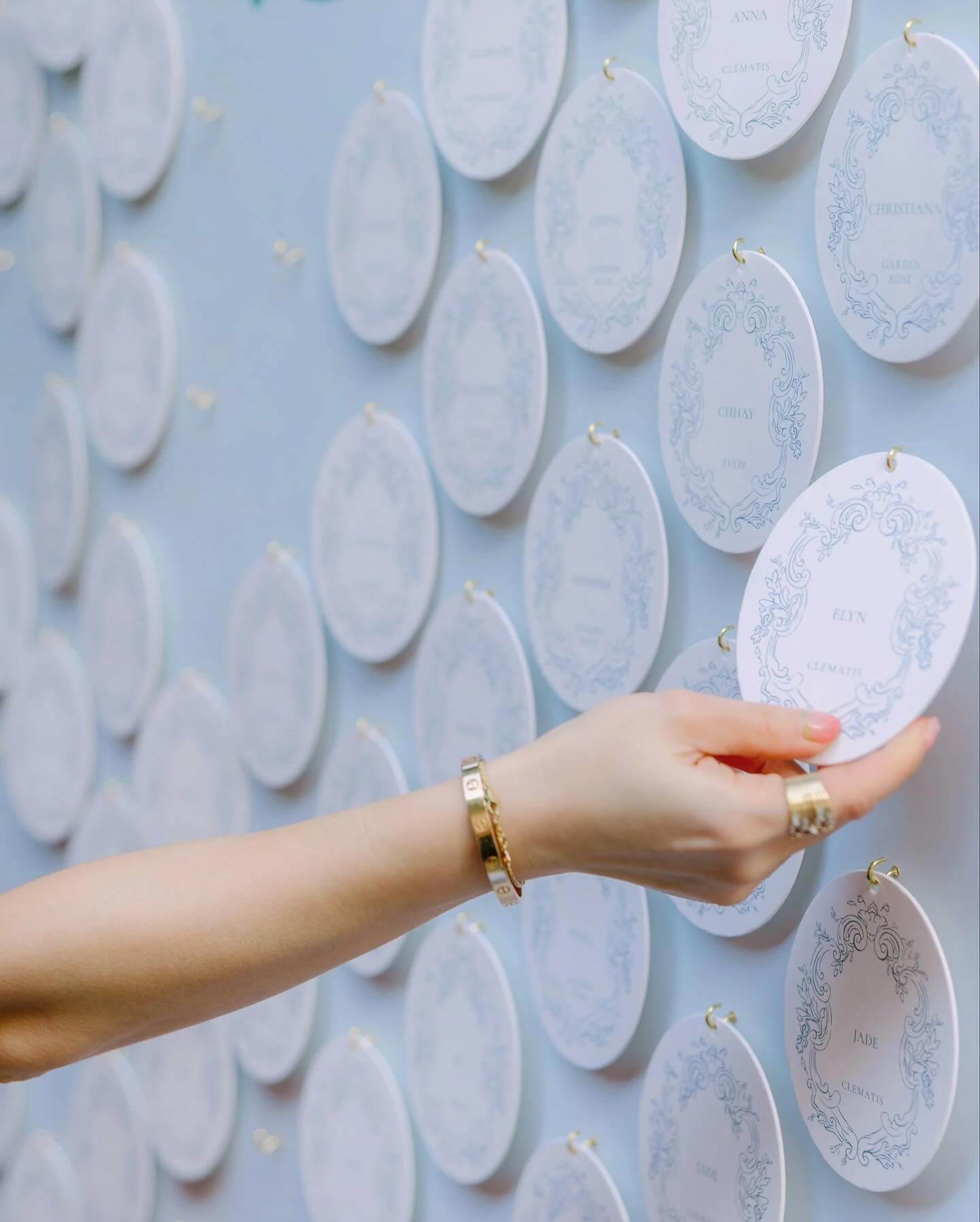
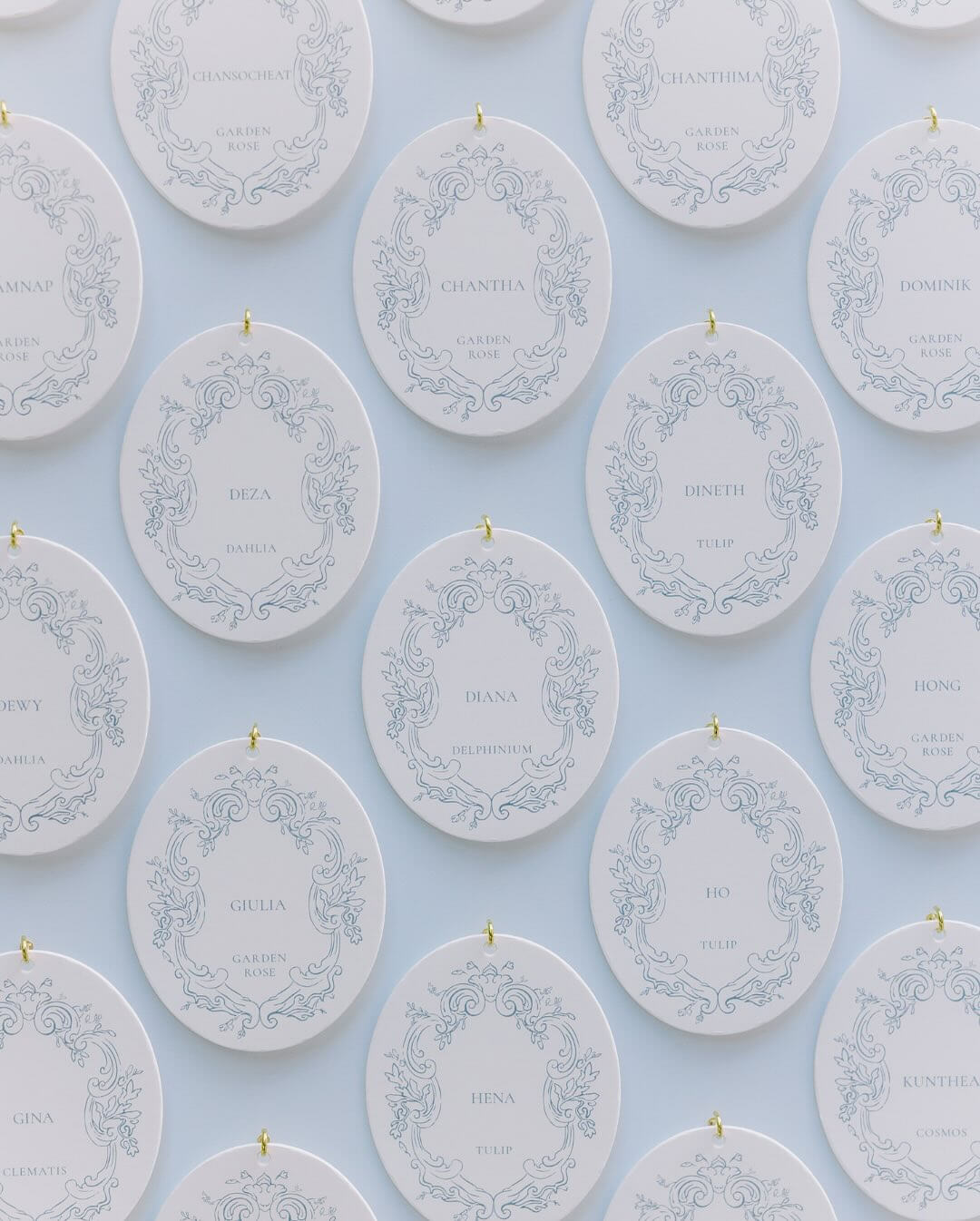
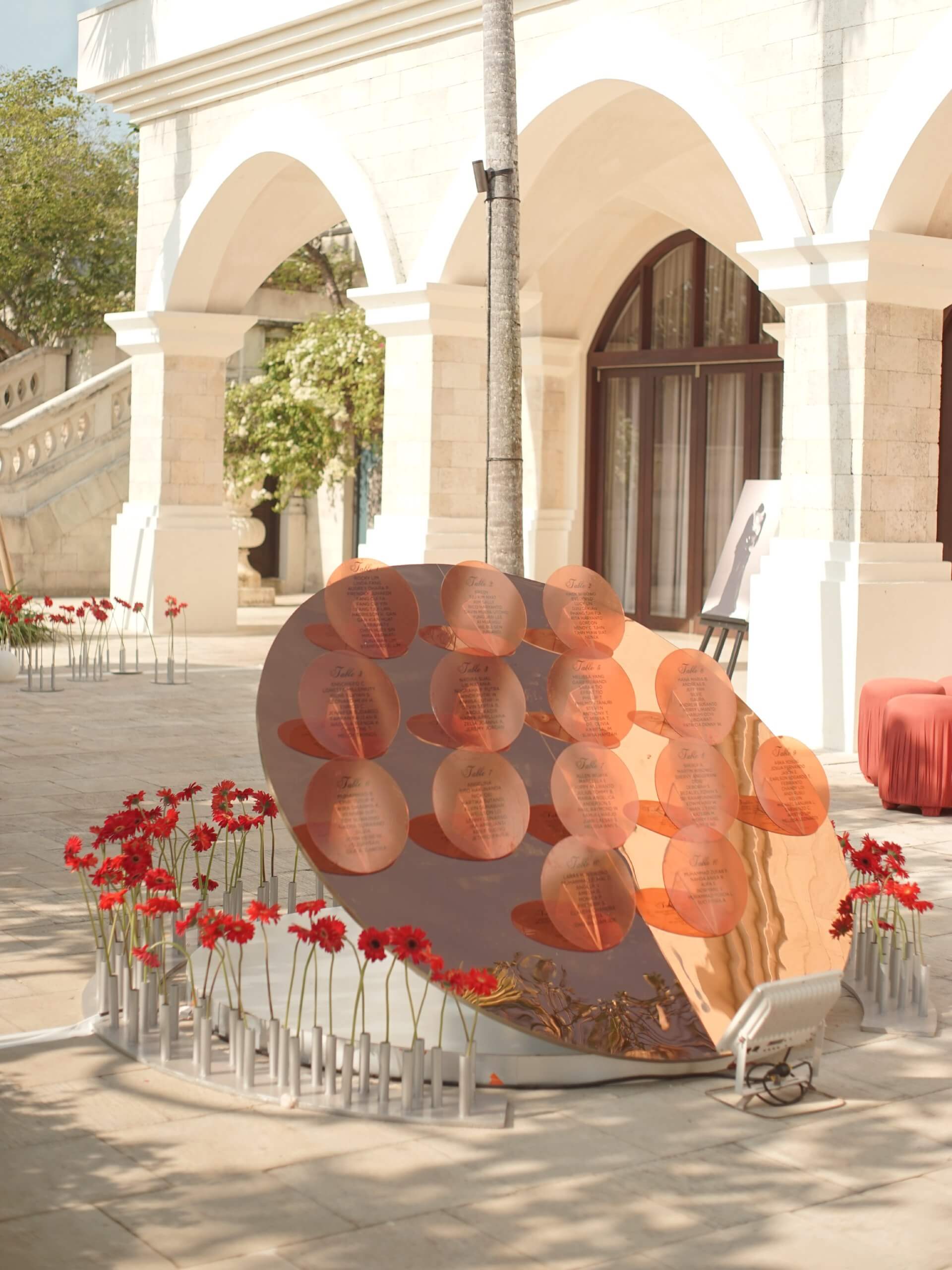
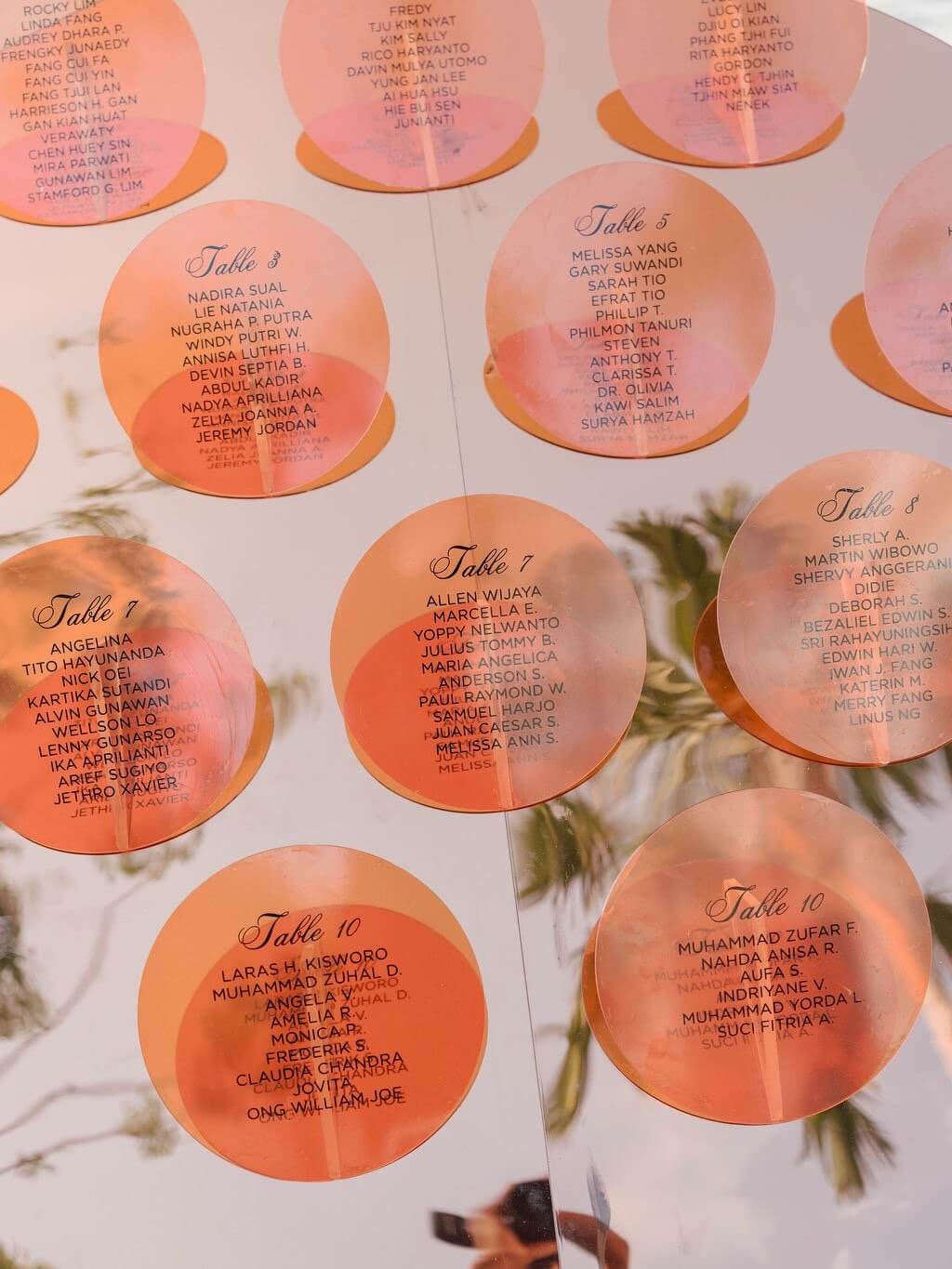
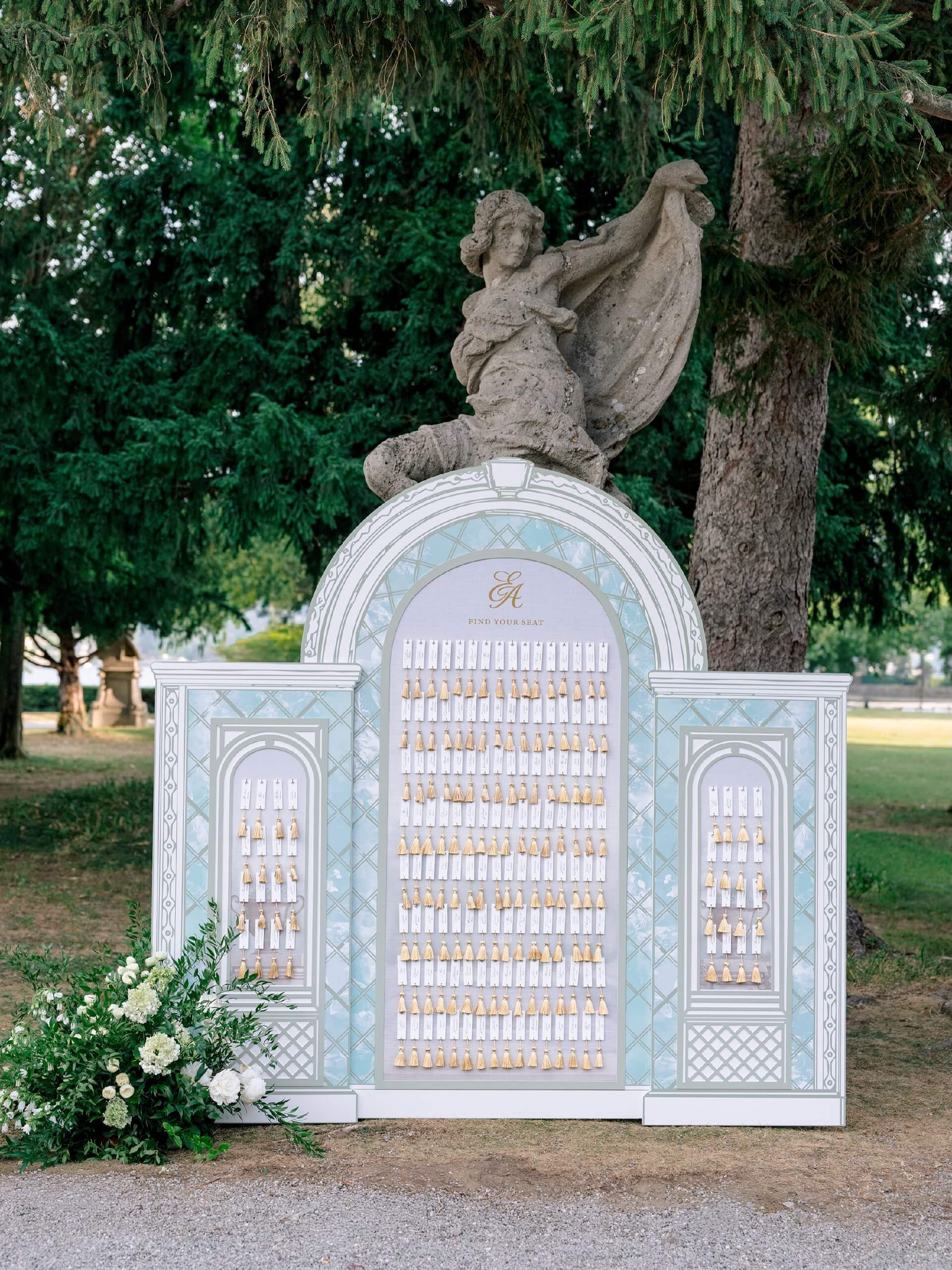
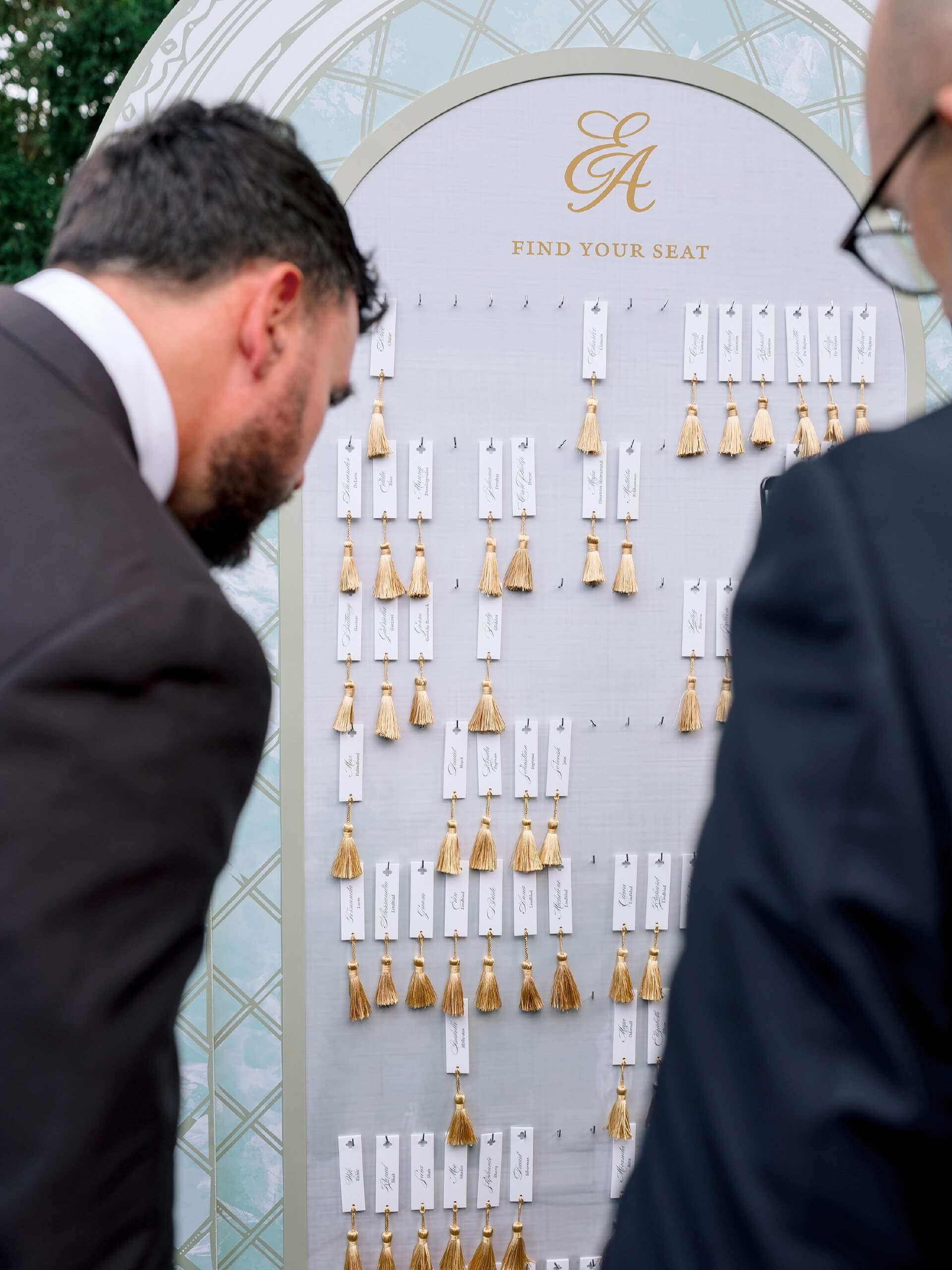
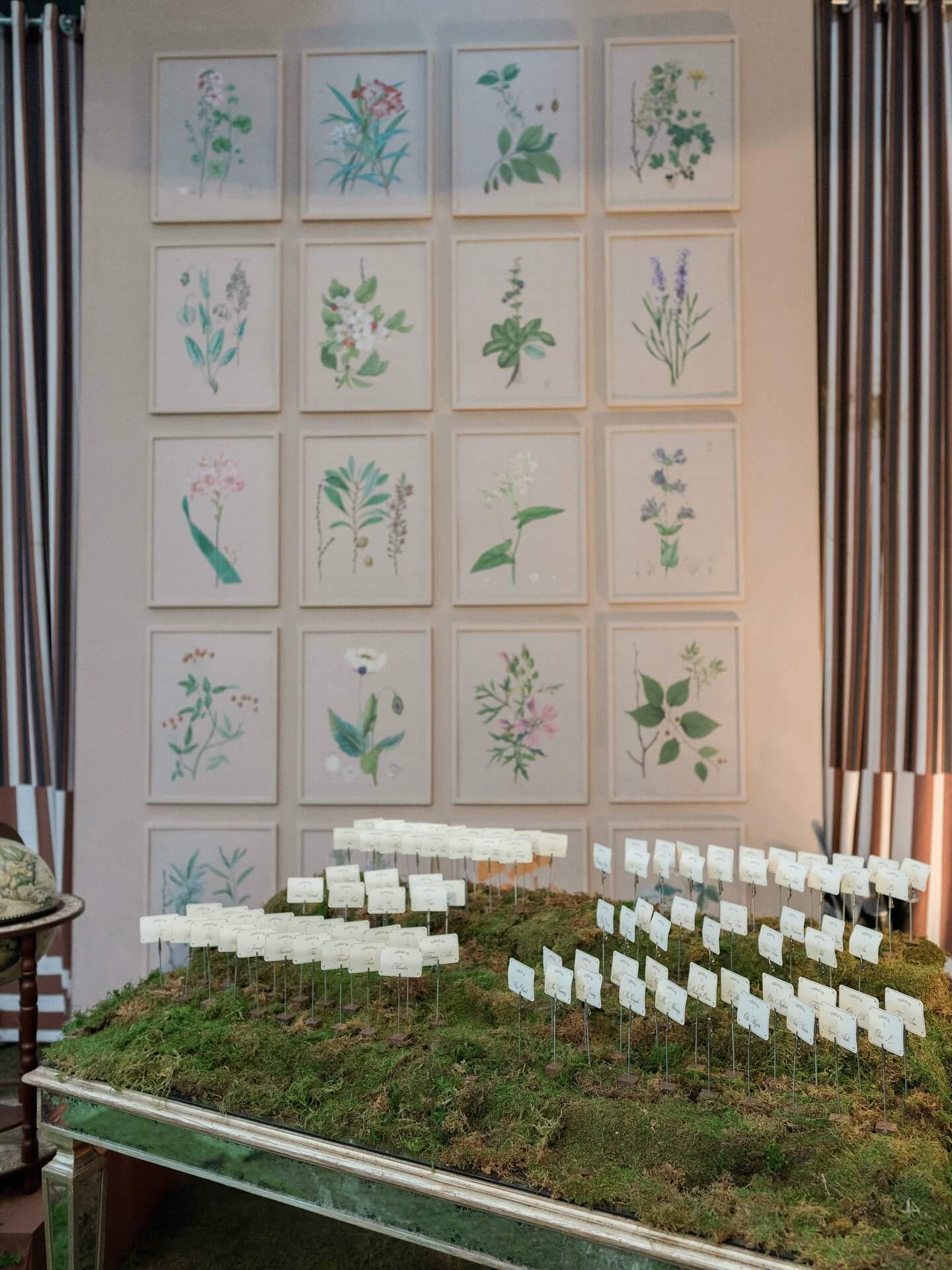
Keepsake displays are a highly original choice because the escort card and favor are combined into one item that guests can take home with them. Each item features a name and table number, and together they create an arrangement that resembles a small gallery or market stall. This format suits smaller weddings of up to 120 guests, where handmade or personalized pieces remain affordable. It also rewards couples who build the choice around a story, whether that is the destination, their heritage or a shared hobby.
Favors That Double as Escort Cards
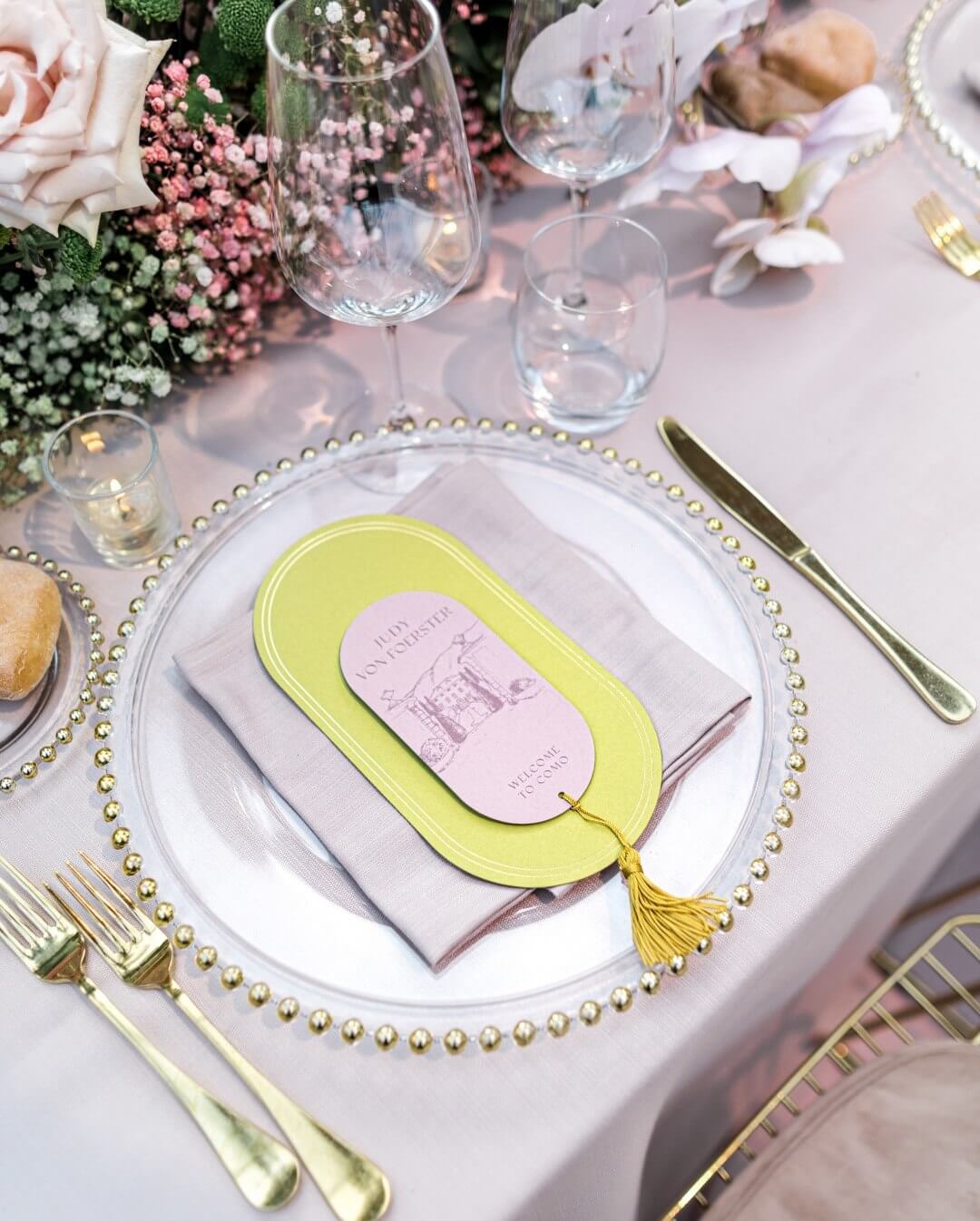
Favors that double as escort cards work best when the object is small, useful and tied to the setting. At a garden wedding framed by palms and mountains, for example, a board of tiny woven straw bags invites guests to pick their lucky bag, each one tagged with a name and table number. Handmade ceramic cups lined up on shelves set into a stone wall have an artisanal feel and suit a venue in the Mediterranean countryside. A wall of pastel miniature houses, each carrying a name and table number, is perfect for a couple celebrating a colorful hometown. Ask the maker for 5-10 spares in case of breakage or late additions.
Acrylic and Ceramic Name Tags
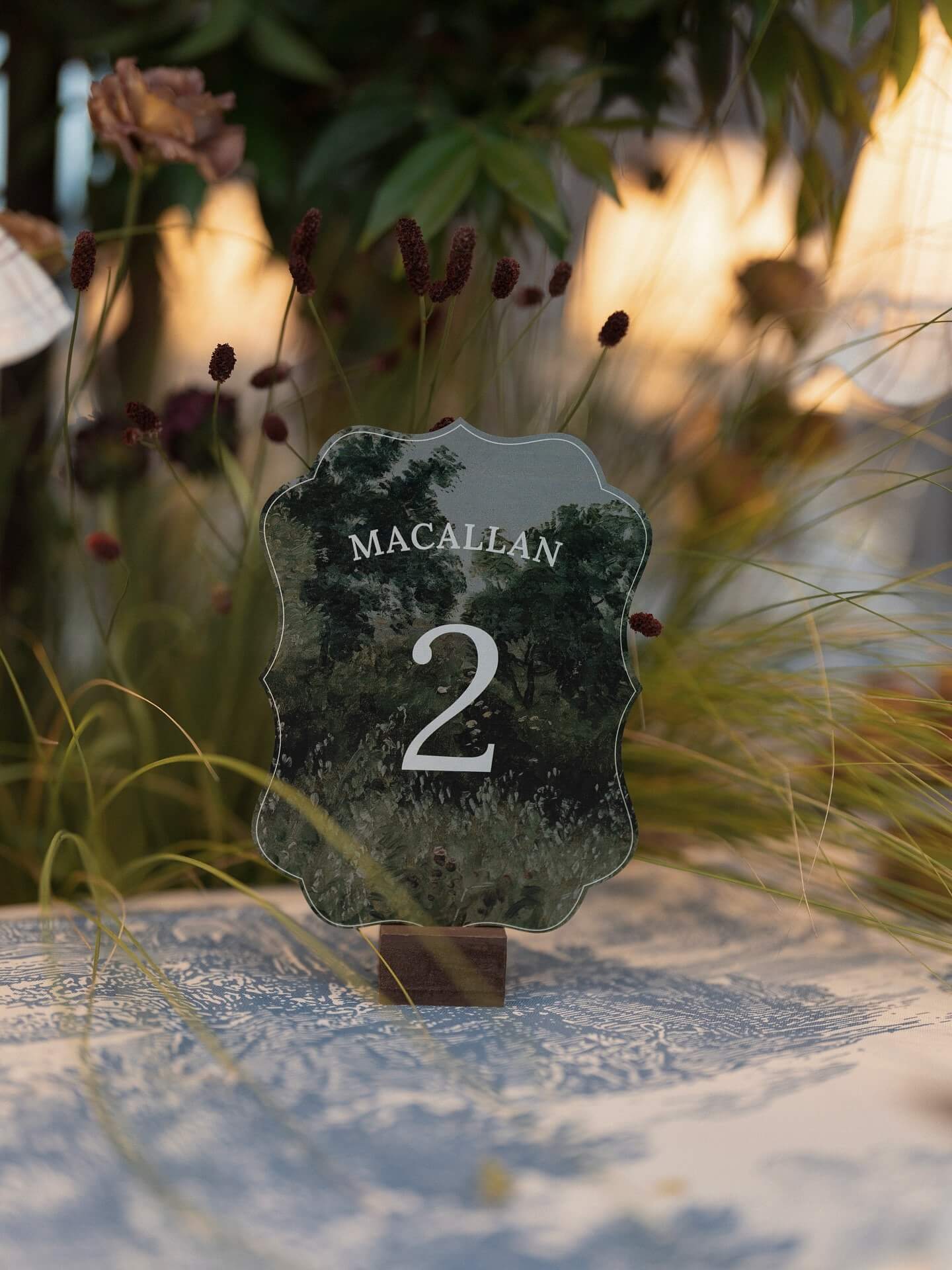
Acrylic and ceramic tags provide a cleaner, more graphic finish to keepsake displays. Round ceramic discs bearing a delicate blue wreath around each name and hung on a pale blue wall resemble a collection of tiny plates and are ideal for a coastal or Mediterranean theme. Translucent orange acrylic circles listing each table's guests catch the sunlight and create a bold, contemporary look against white arches and red flowers. Engraved acrylic usually costs $4-10 per piece, and matte finishes look better in photographs than glossy ones in bright light.
Statement Wedding Seating Chart Displays
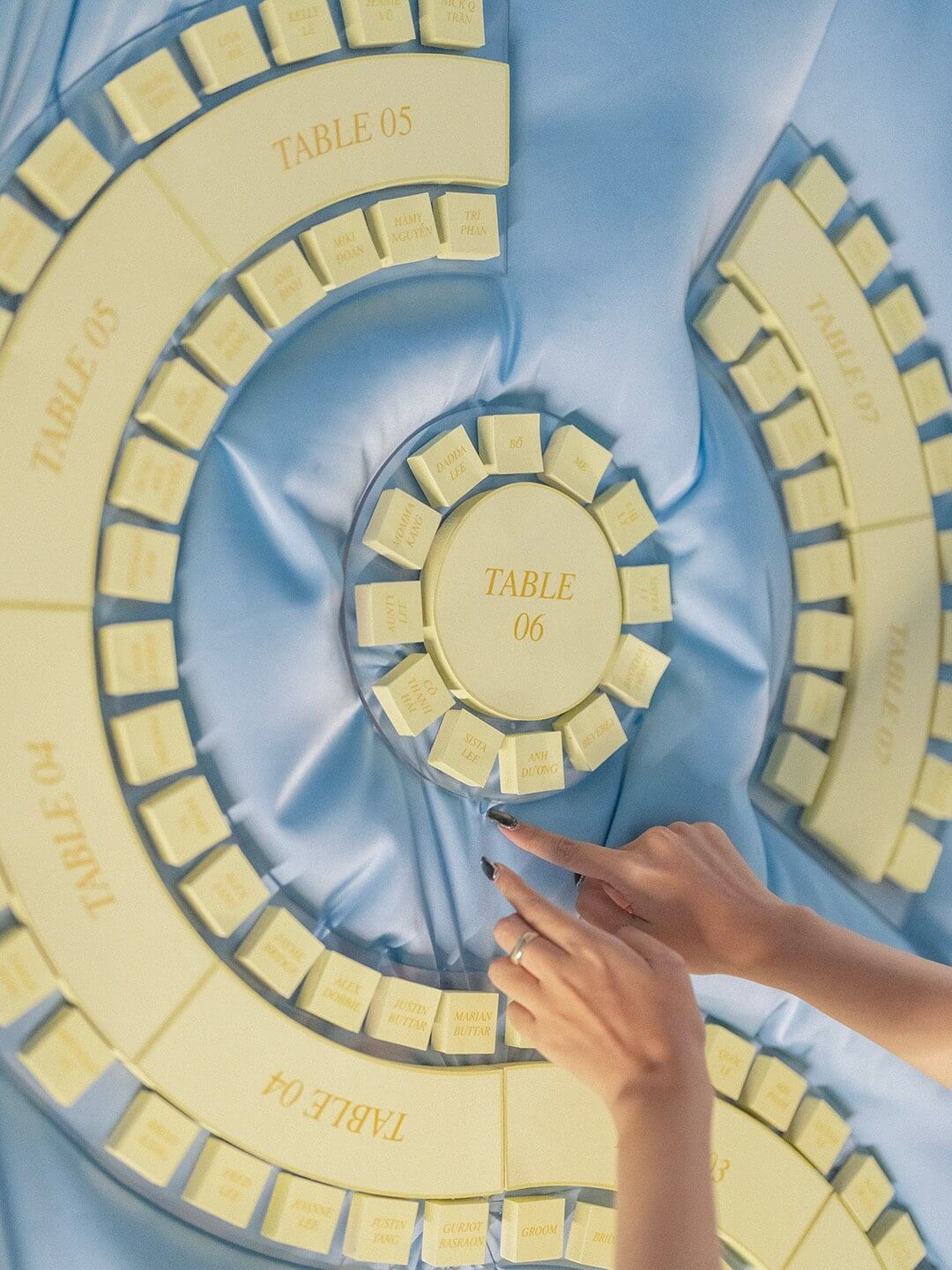
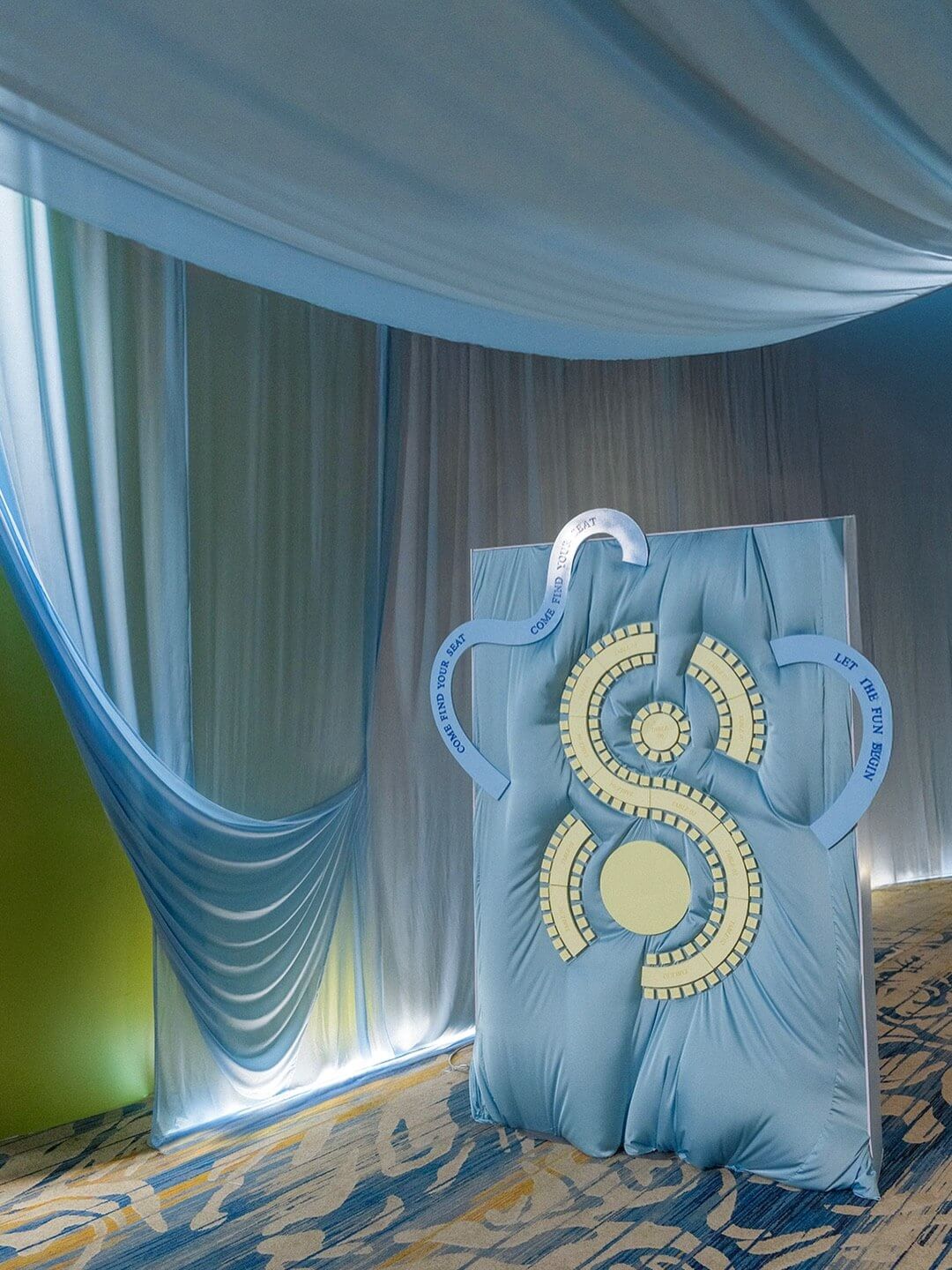
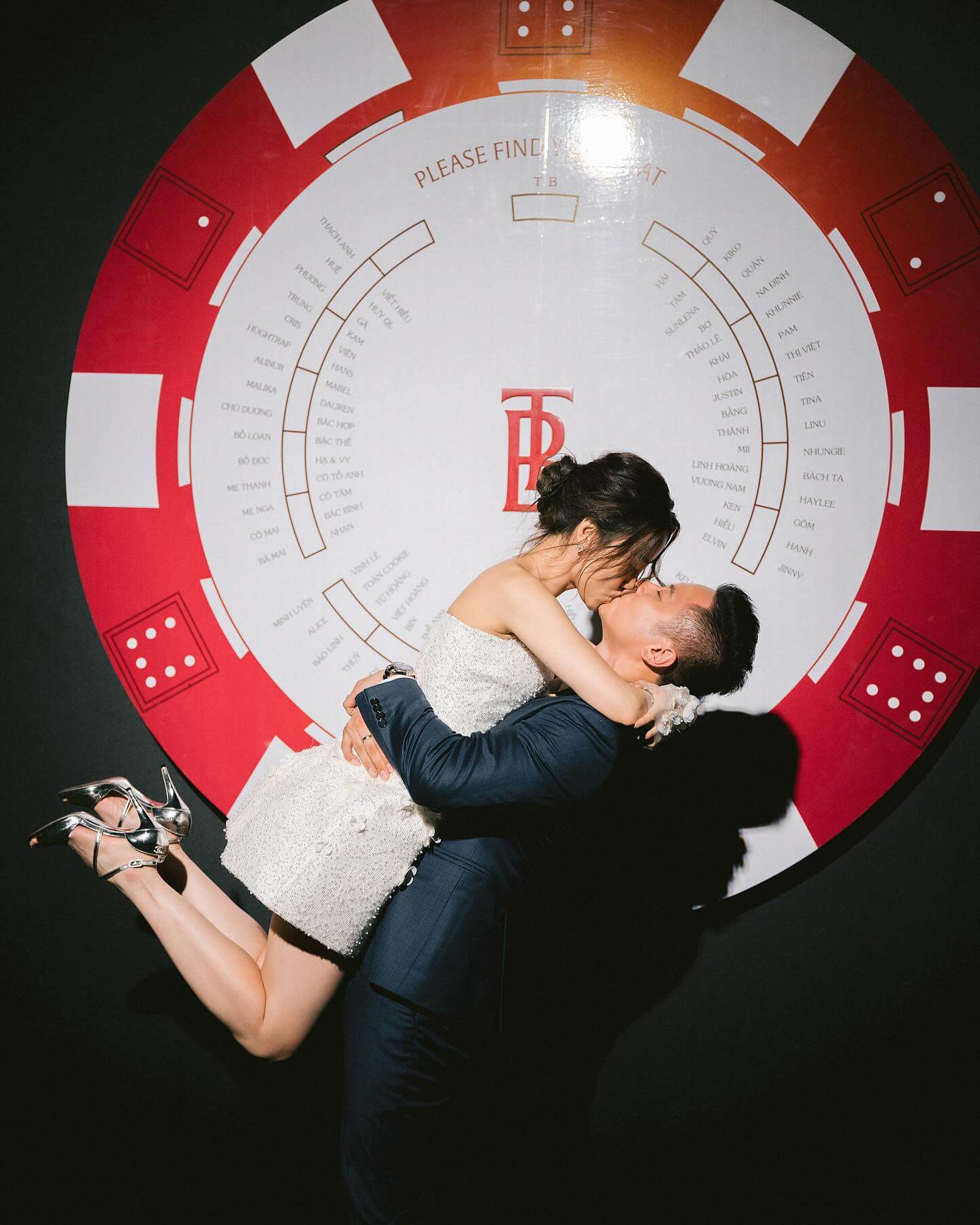

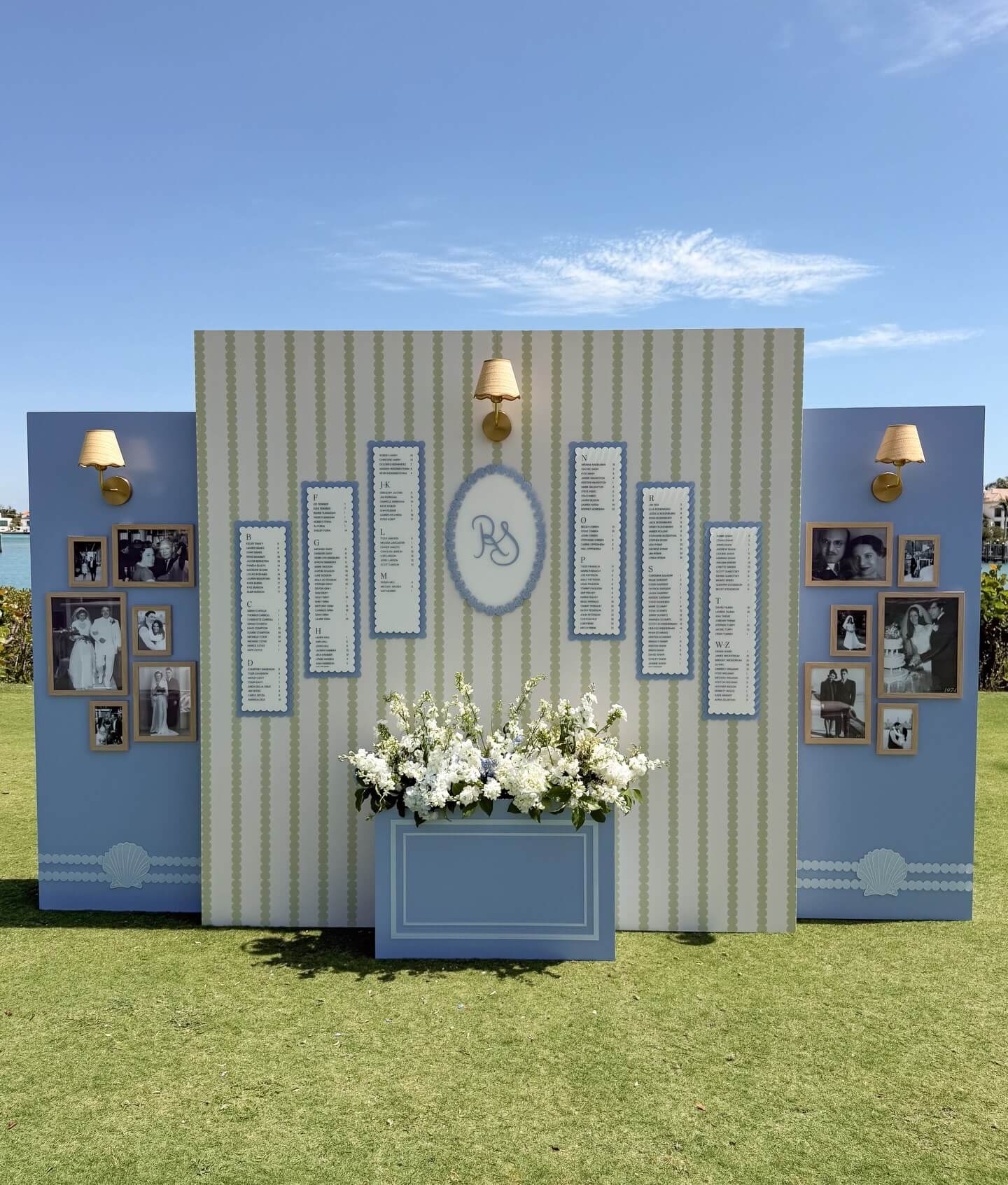
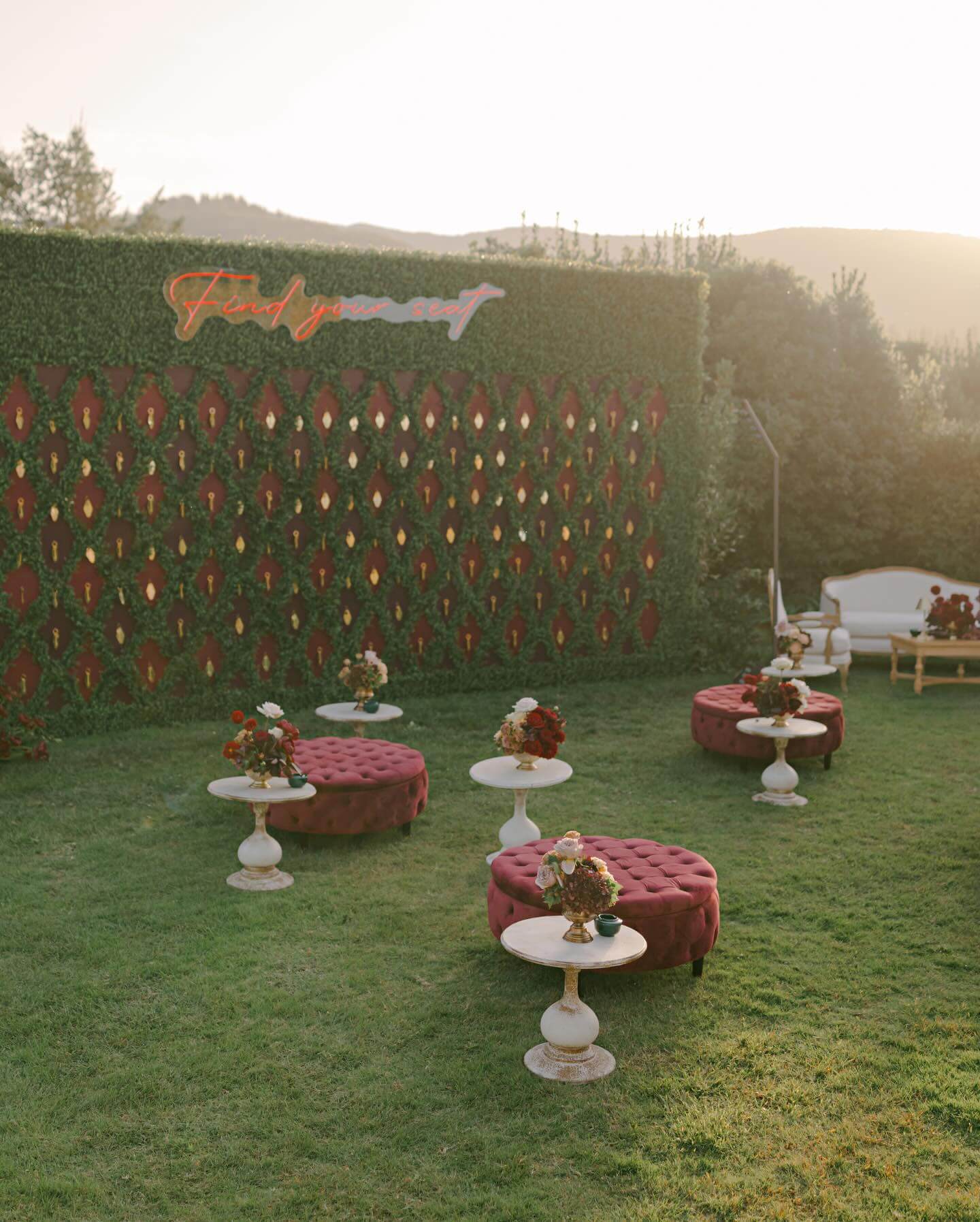
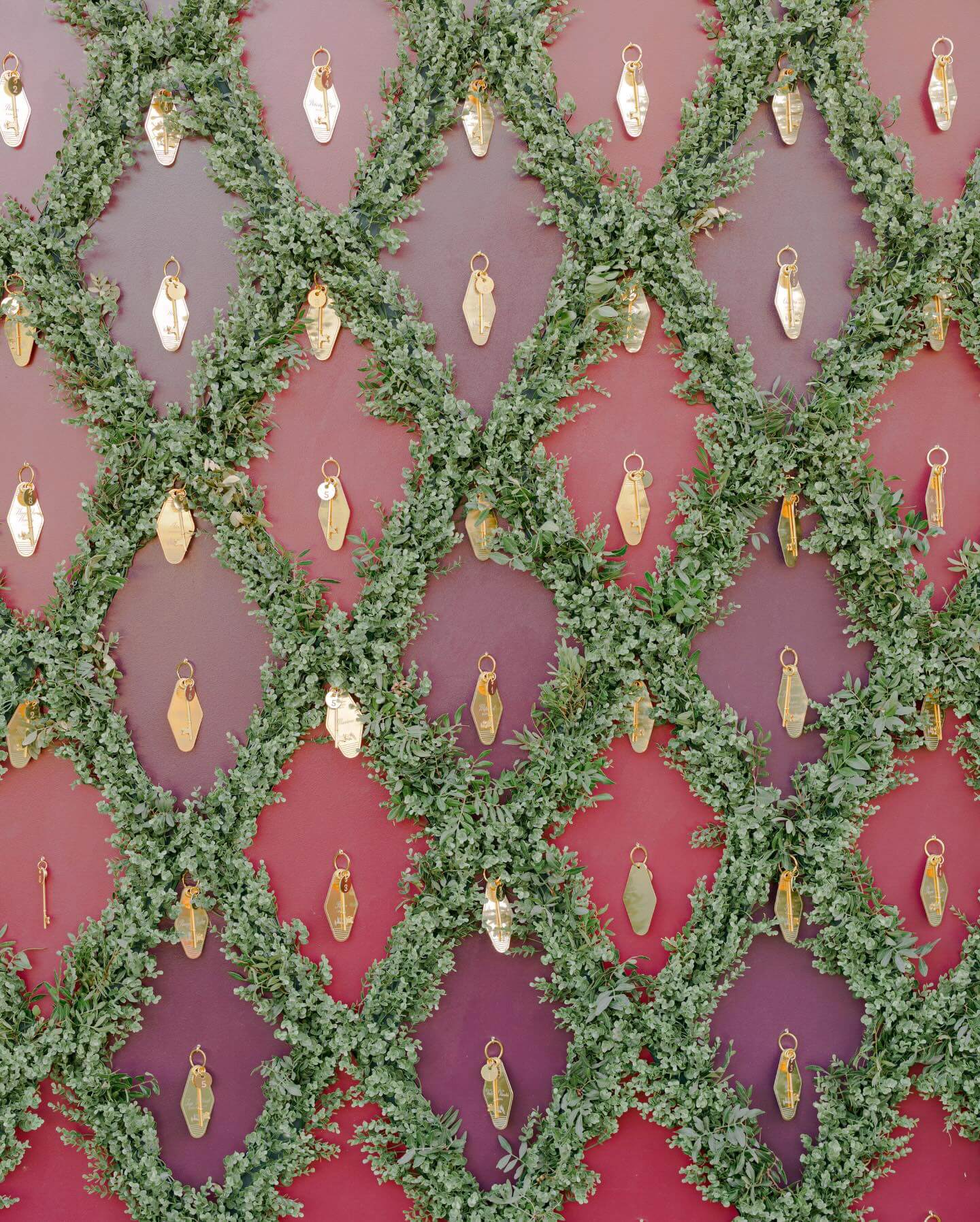
Statement displays transform the seating chart into a focal point of the reception design and are often the largest decorative element that guests see before dinner. They suit venues with ample space near the entrance and couples who prefer one striking visual moment to many smaller ones. These designs usually combine a custom backdrop, clear lettering and lighting, so they need a stationer or event designer and a few weeks of lead time. Budget roughly $500-3,000, depending on size, materials, and whether the structure is rented or built from scratch.
Modern Wedding Seating Charts Ideas With Graphic Prints
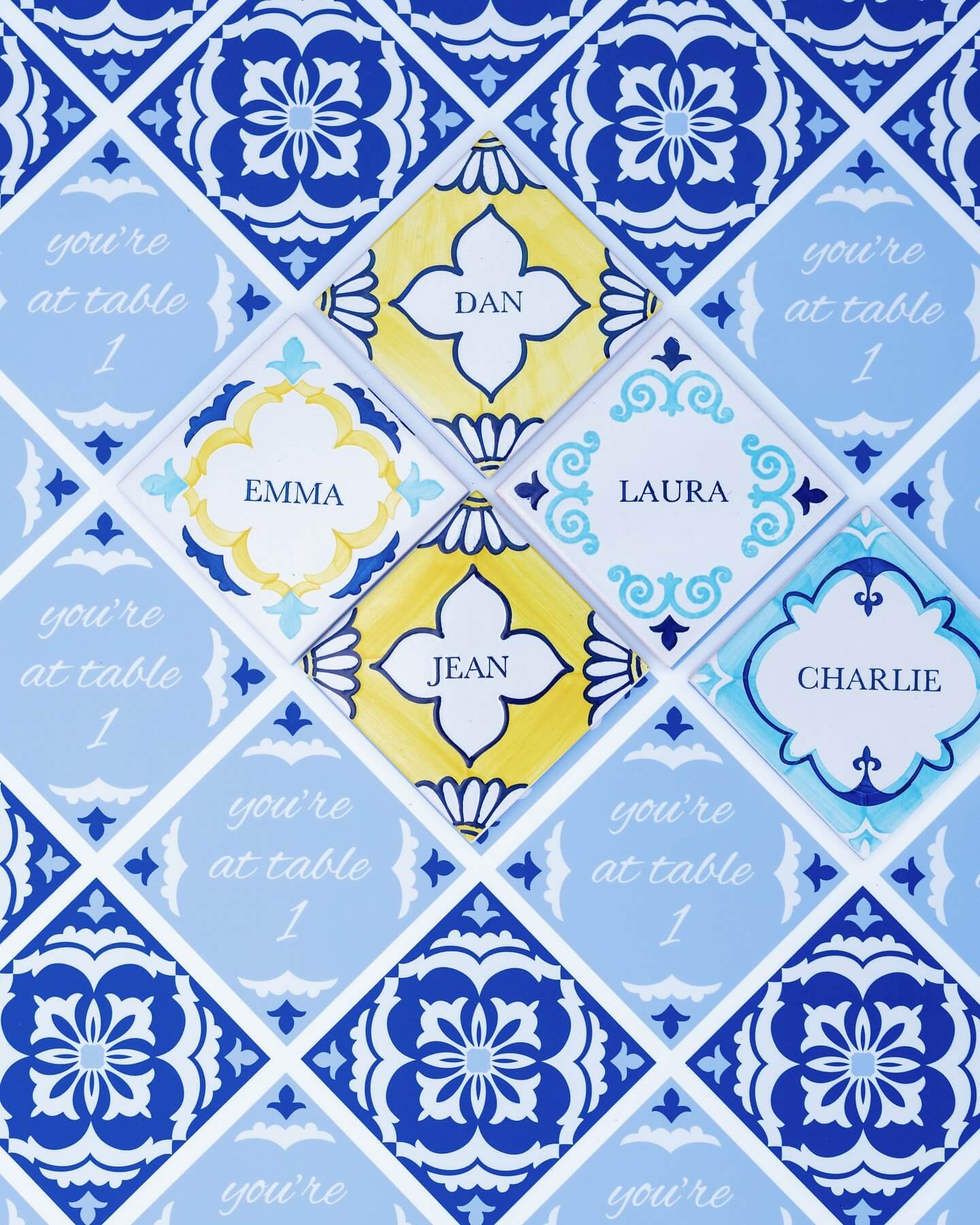
Modern seating charts rely on bold graphics that echo the rest of the event. For example, a wall of blue and yellow tiles inspired by Portuguese azulejos, with names framed inside decorative motifs, ties in neatly with printed tablecloths and a Mediterranean menu. A giant red and white casino chip with names arranged in curved rows is perfect for a fun evening event, while a spade-shaped panel on red satin could feature a quote about saving the best until last. A spiral of blue satin with names on yellow tabs winding toward a central table reads like a modern art piece.
Personalized Wedding Seating Charts With Photos
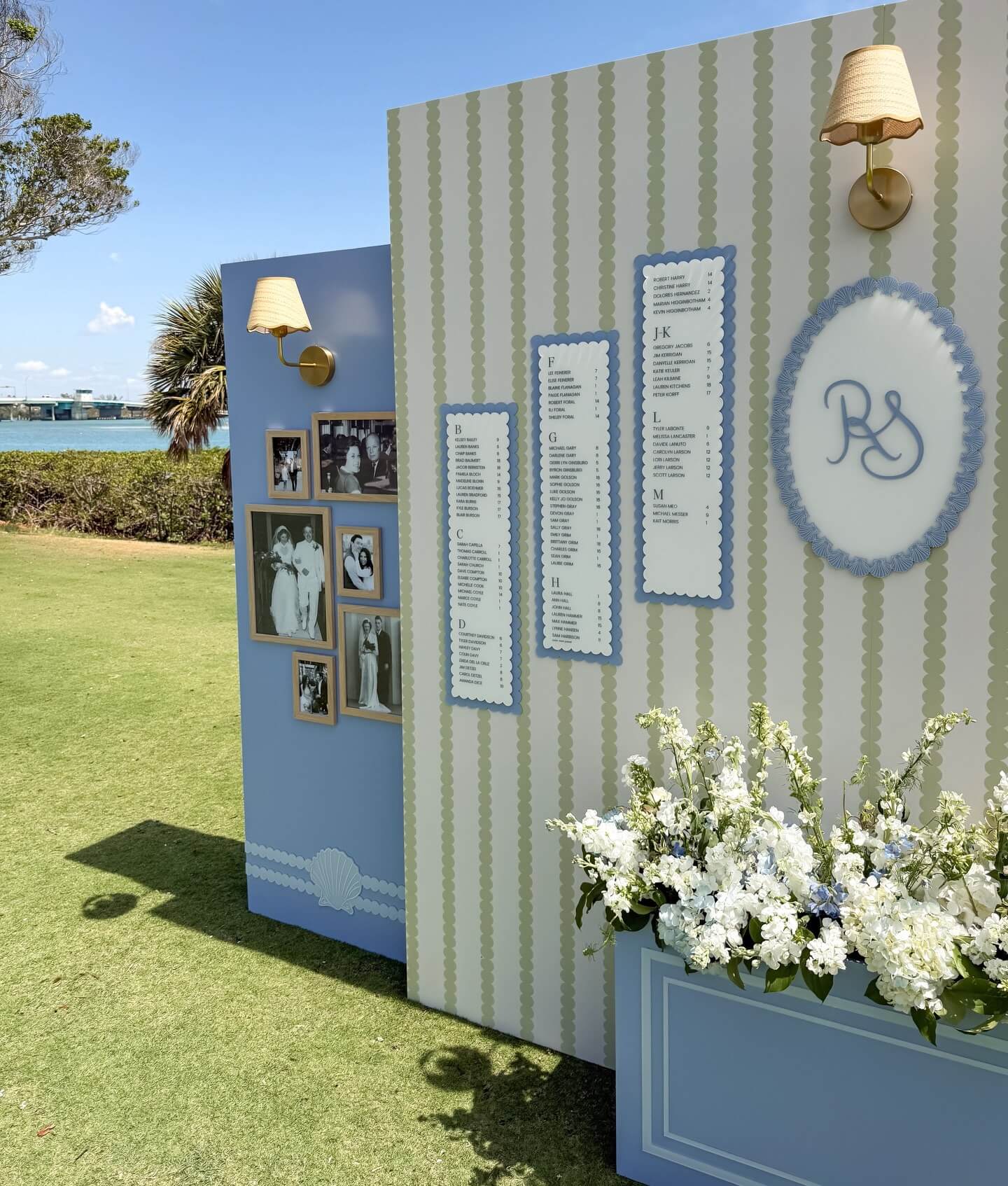
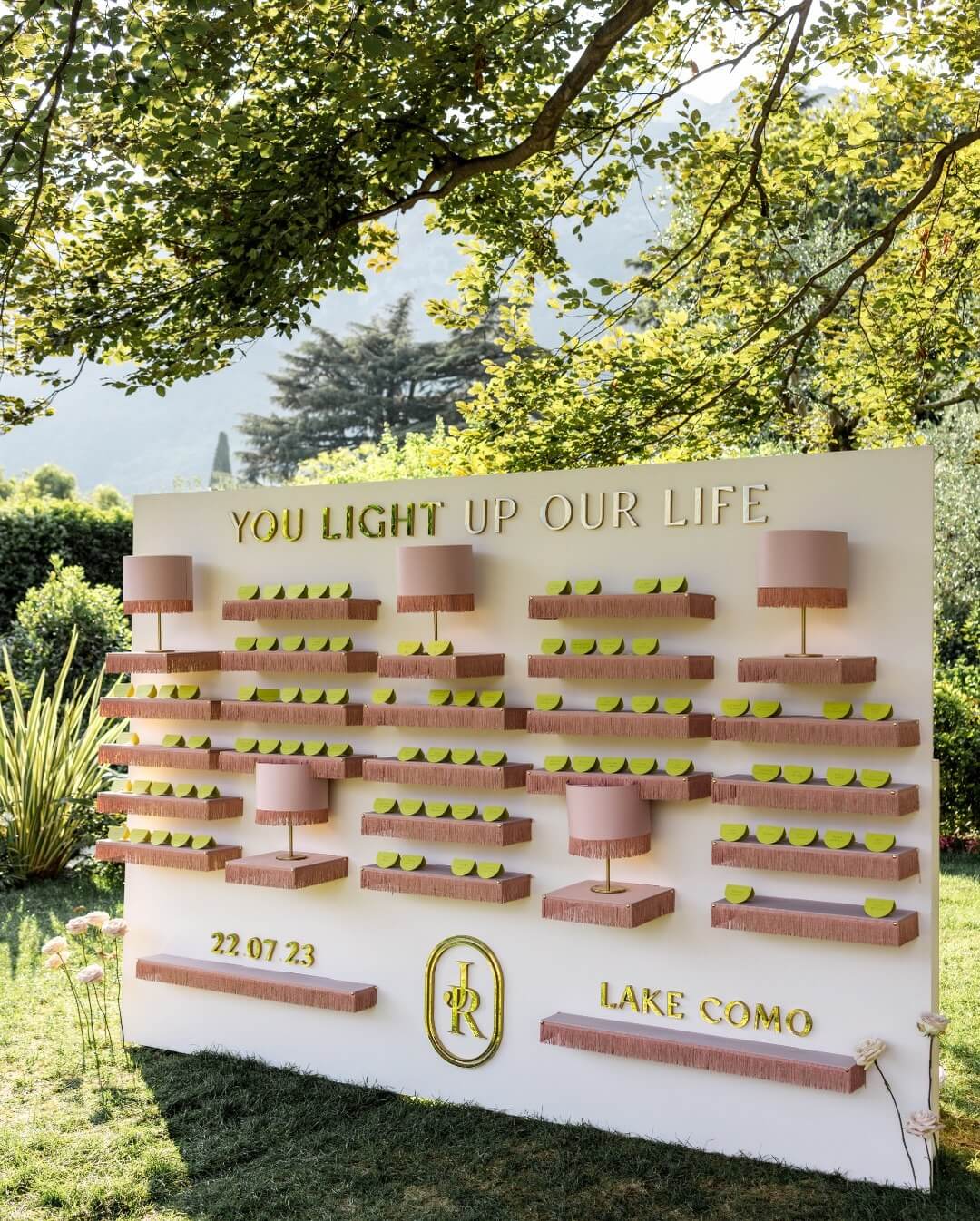
Personalized wedding seating charts with photos feel warm because they include the couple's own history. One memorable setup uses striped panels, brass sconces, and a monogram at the center, with framed family photos on the side walls and table lists in scalloped frames. It works like a small exhibition of the two families coming together. At a lakeside reception in Italy, a wall of shelves with miniature lamps and bright green place markers echoes the couple's sentiment that their guests have lit up their lives. Matching menus, table numbers and the monogram complete the story.
Fabric Banners and Drapery Signs
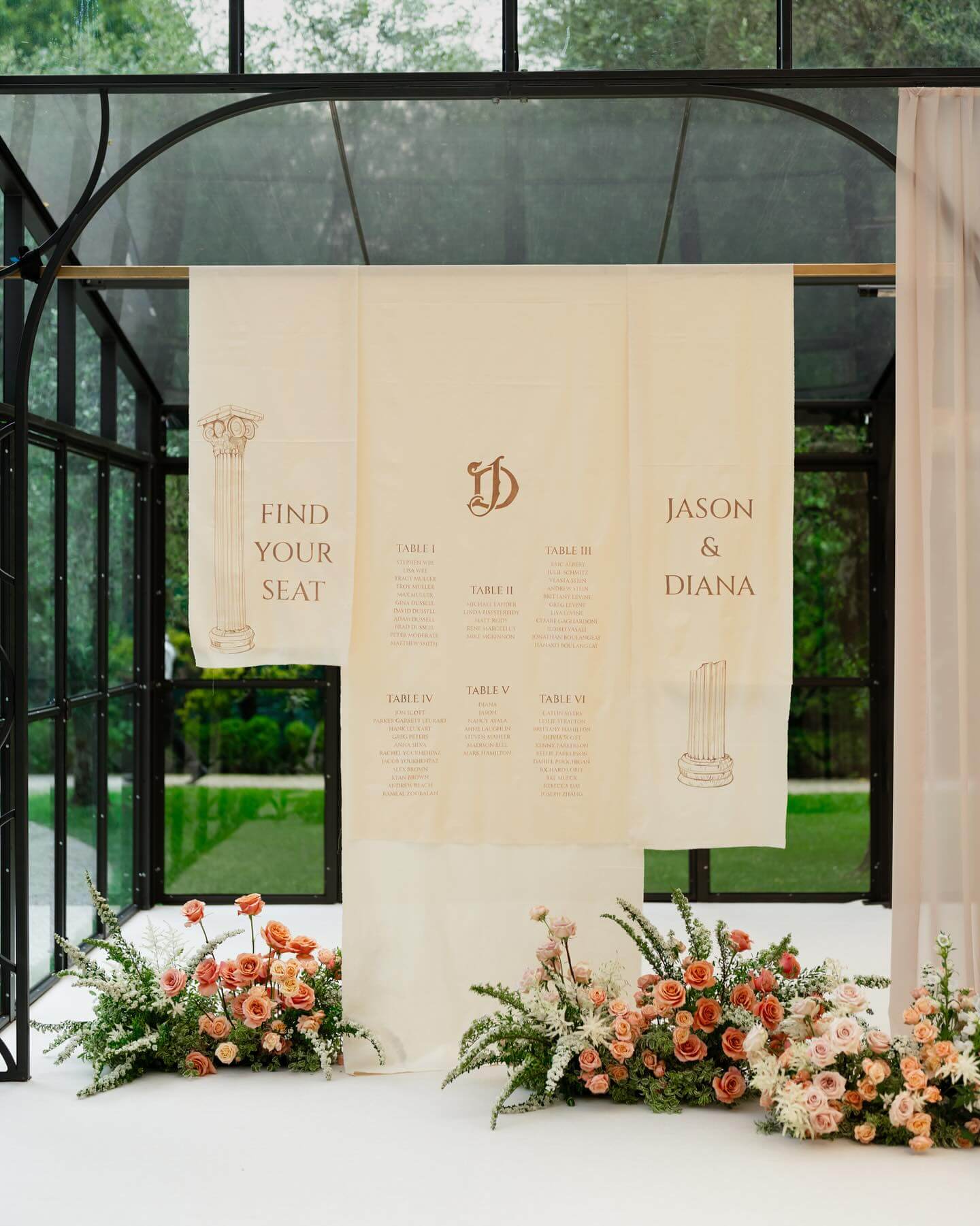
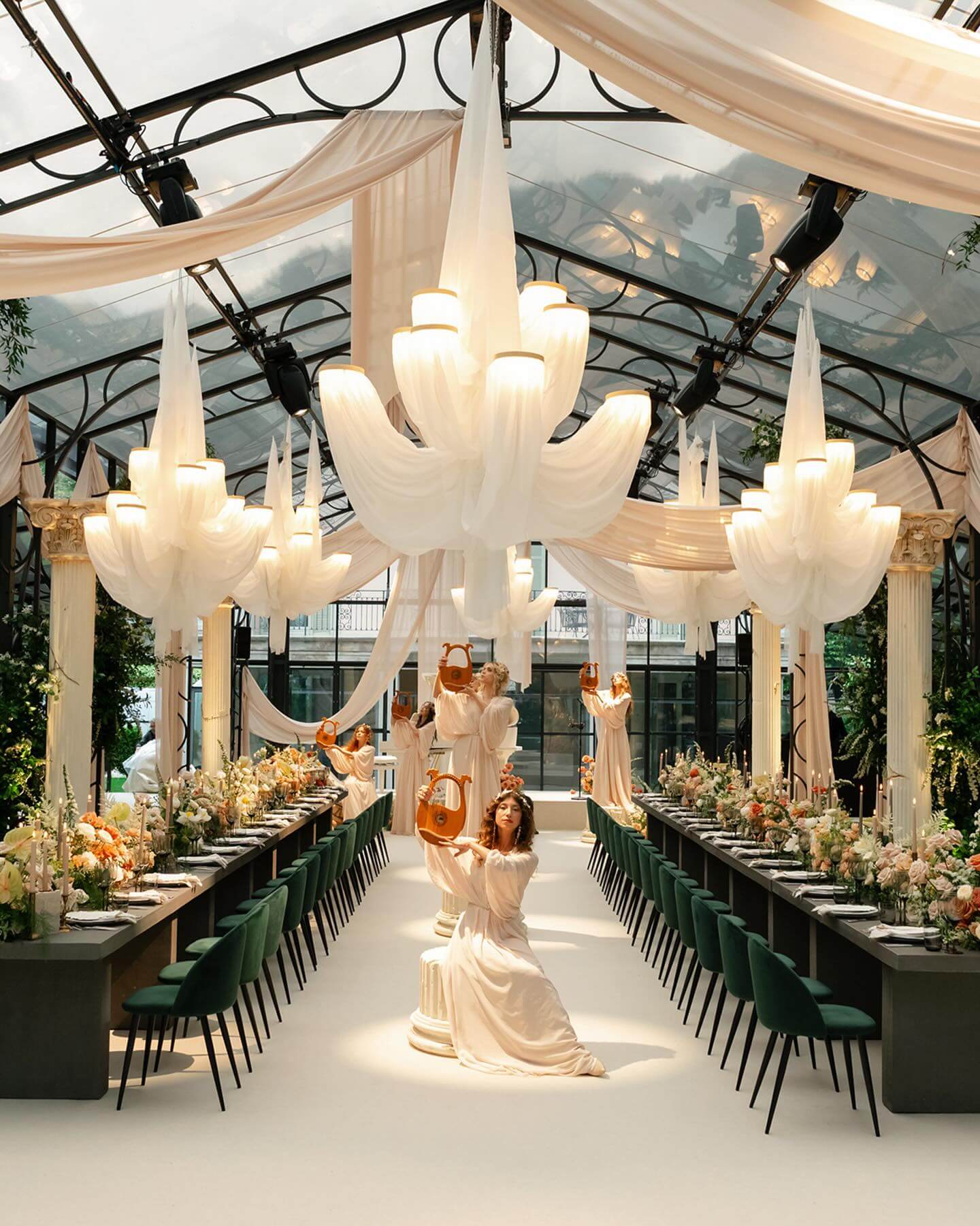
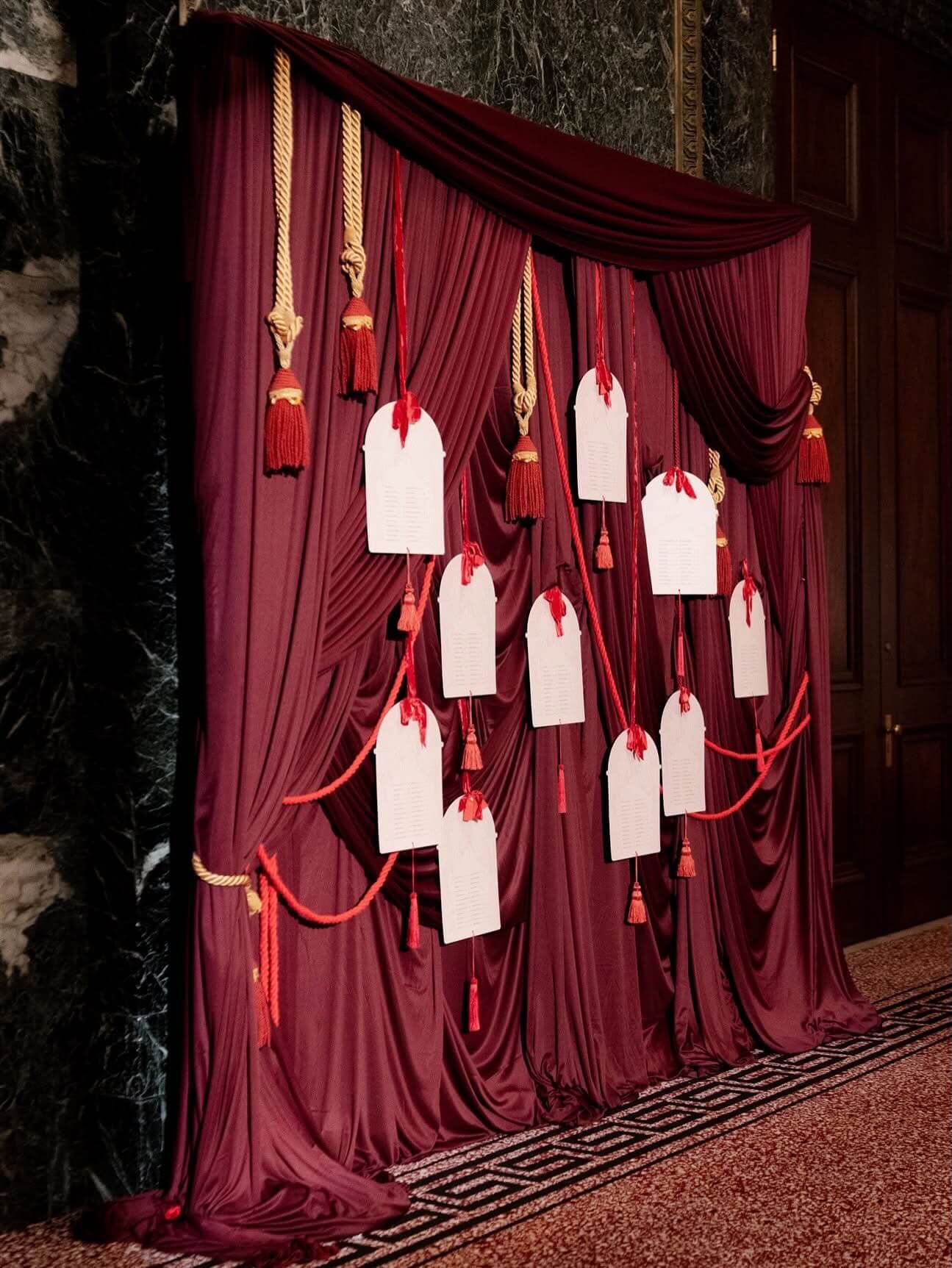
Fabric lends seating signage a softness and sense of movement that rigid boards lack. A tall linen banner bearing printed table lists and a monogram looks airy and editorial when hung inside a glass greenhouse and grounded by low floral arrangements. For an evening reception with a darker color scheme, deep burgundy curtains tied back with gold tasseled ropes could hold paper name tags, like at a theater entrance. Fabric signs are easy to transport and store, which is helpful for destination weddings. Steam them on site and weigh down the bottom edge to prevent the lettering from twisting in the wind.
Wedding Seating Chart Tips for the Reception Day
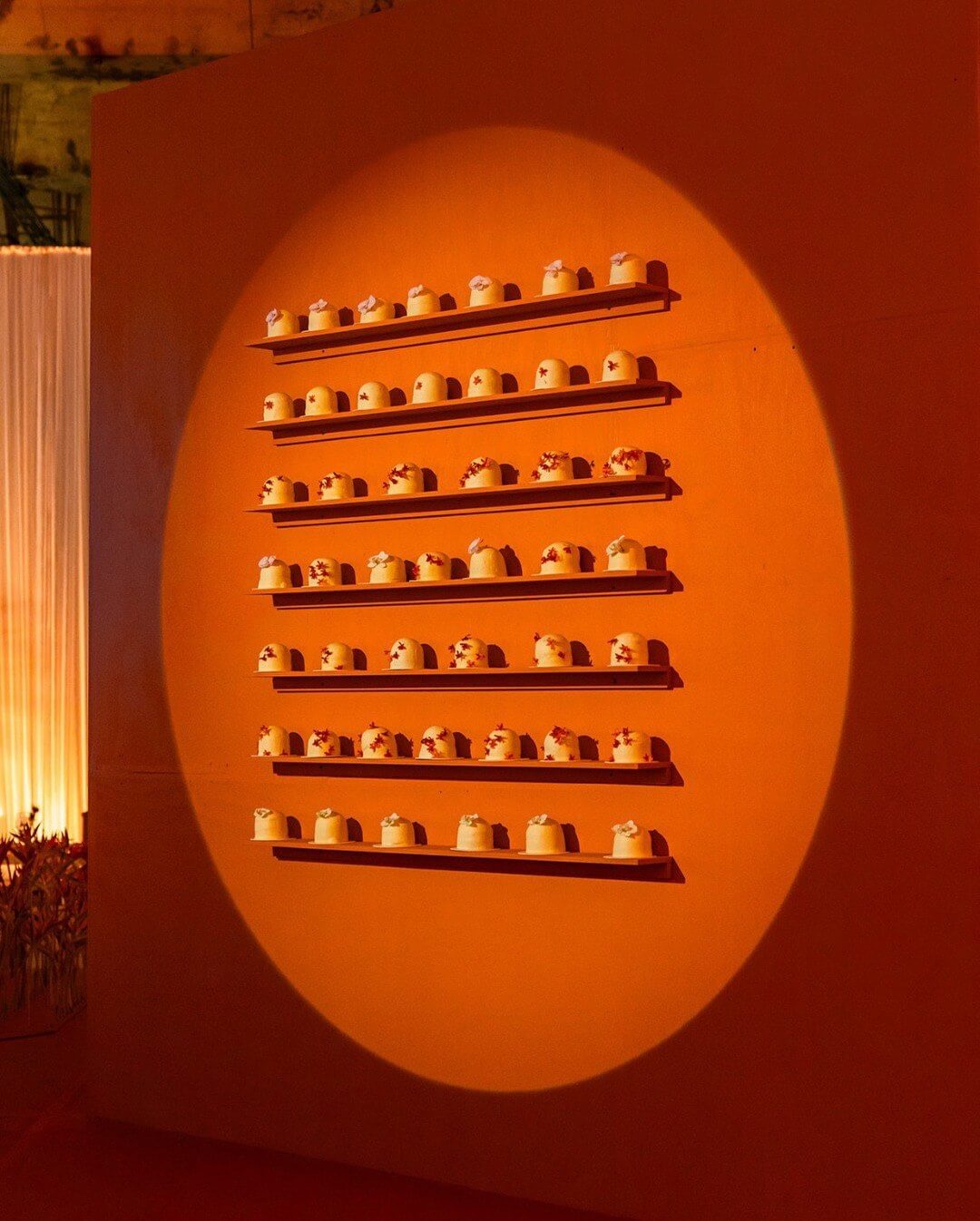
On the day itself, a seating chart is effective if guests can find their names in seconds and the planner can make last-minute changes discreetly. A few practical details help:
- Print a backup list for the planner or venue coordinator, sorted by surname.
- Place the display at eye level and ensure it is well lit for evening arrivals.
- Have 2-3 blank cards and a matching pen ready for late changes.
- Secure or weigh down any paper-based items outdoors.
- Ask someone to watch the display during the first 20 minutes of the cocktail hour.
- Check the spelling of every name twice, paying particular attention to hyphenated surnames and nicknames.
- Leave about 6 feet (2 meters) of free space in front of the display to ensure that guests do not block the entrance.
- If the reception has more than 15 tables, add a small table map near the display.
- Mark tables with dietary or accessibility requirements on the catering copy, not the public display.
- Set up the display at least an hour before the guests arrive and take a photo of it for the planner.
Ready to bring your seating plan to life? Find stationers, florists, and event designers on Wezoree, and select a team to transform your guest list into a memorable display.

FAQ
When should you start making a wedding seating chart?
Ideally, you should start creating your seating plan as soon as the RSVP deadline has passed, which is usually four to five weeks before the wedding. Creating a draft at this stage allows time to balance tables, confirm dietary requirements with the caterer, and order signage. Most stationers require the final list 10-14 days before the event to allow time for printing.
Do you need a seating chart for a small wedding?
While a seating chart is optional for weddings with fewer than 40 guests, it is still helpful if dinner is served at more than one table. Without one, the couple's closest relatives may end up separated, and older guests may be left standing while others choose their seats. Simple options include placing handwritten place cards at each seat or using a single mirror sign with all the names on it.
How much does a wedding seating chart cost?
A printed board usually costs $80-300, while a custom installation such as a drink wall or backdrop costs $300-1,500 or more. Escort cards and envelopes cost an additional $2-6 per guest, while keepsake favors range from $5-20 per guest. Renting large structures from a stationer or event designer can reduce costs.
Should a wedding seating chart be arranged alphabetically or by table?
An alphabetical seating chart works best for guest lists of over 100 people, as guests can search for their own name easily. Listing by table is better suited to smaller weddings and allows guests to see who they will sit with. Some couples combine both options, providing an alphabetical board at the entrance and a list of names at each table.
What is the difference between a seating chart and escort cards?
A seating chart shows all the guests and their tables on one display, whereas escort cards give each guest an individual card or object with their table number on it. Charts are faster to produce and easier to update, making them ideal for large receptions. Escort cards feel more personal and can be kept as mementos, but they take longer to set up. Place cards differ from both in that they indicate a specific seat at the table.