2027 Trendy Wedding Ceremony Ideas


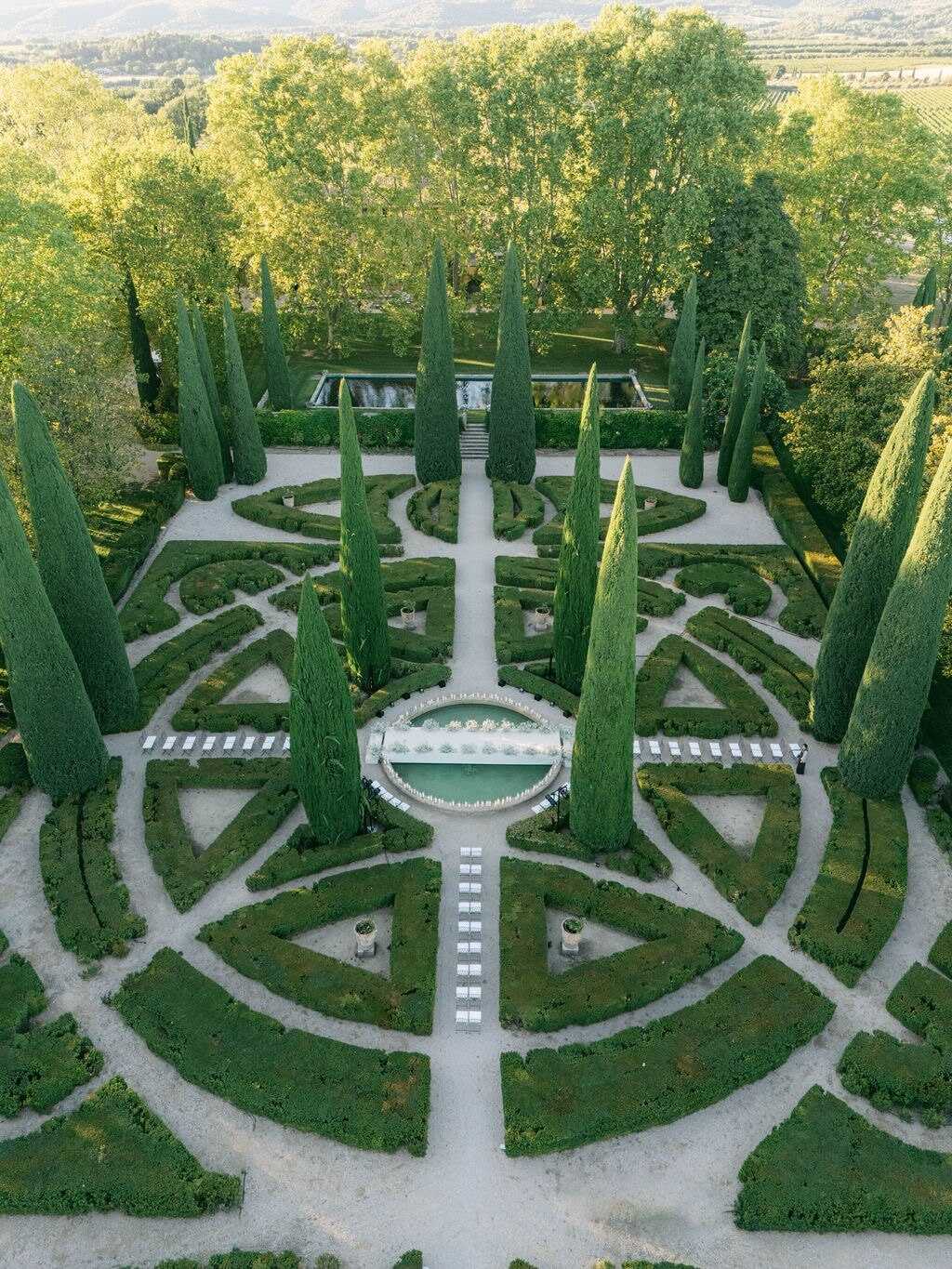
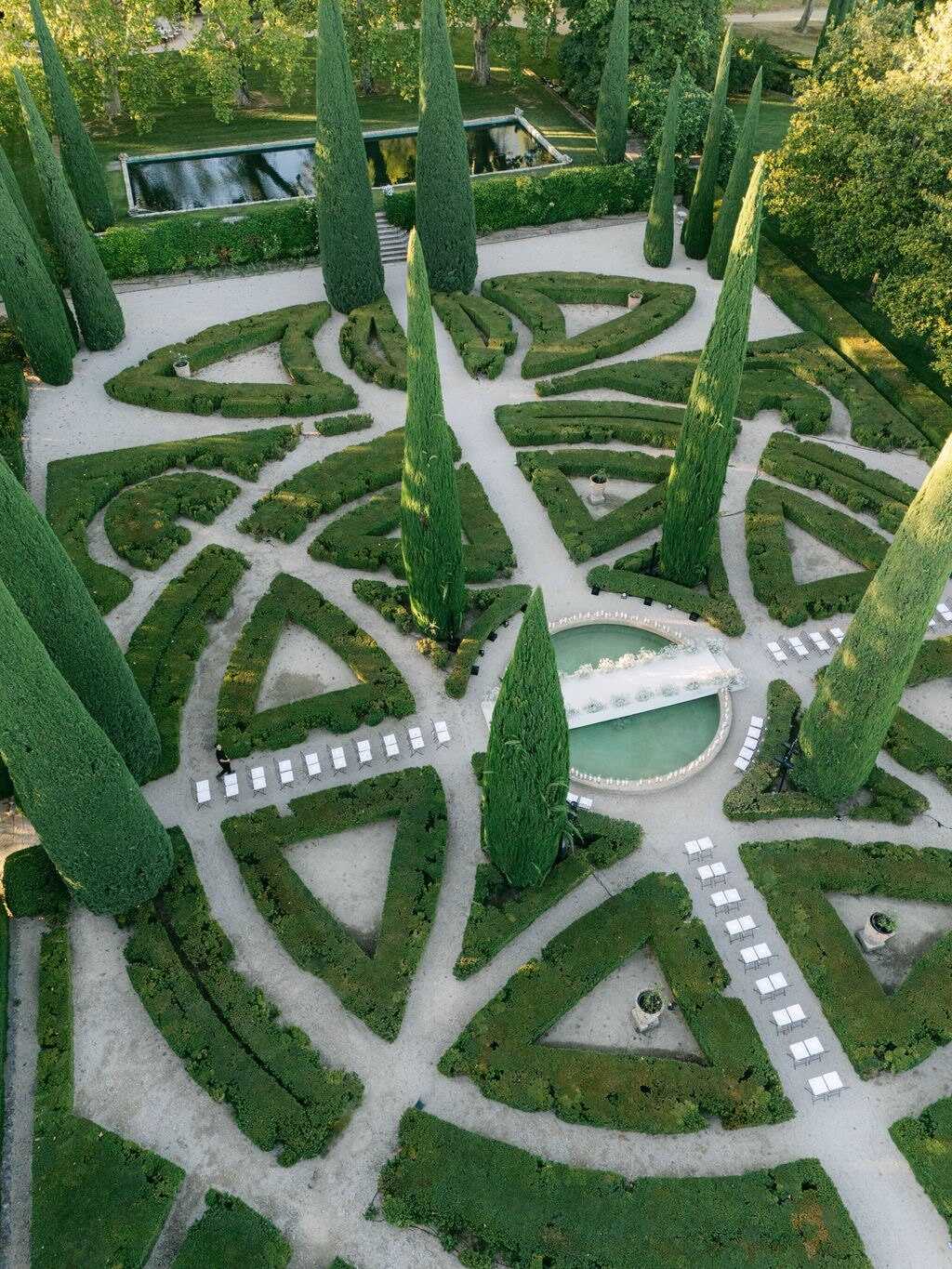
The straight aisle and the matching white chairs are gradually giving way to alternatives, and this shift reveals a great deal about couples' priorities as they approach 2027. This year's most popular wedding ceremony ideas treat the ceremony space itself as the highlight - one that guests photograph and remember on its own, not just as a preliminary event before the reception. The change is because weddings are now much more visible; aerial photography and short-form video mean a layout now has to be effective when viewed from above as well as at eye level, which is precisely why so many of this year's trends look so different in a drone shot than they would have a decade ago.
A more subtle change is also happening behind the scenes. Fewer couples are defaulting to whatever their venue already owns, and more are treating the ceremony as its own design project - one that receives the same level of intention as the reception. At present, the six-directional style is once again appearing frequently at weddings, along with a few practical extras worth considering regardless of the style the couple chooses.
Find Your Perfect Wedding Vendors

Glass Decor
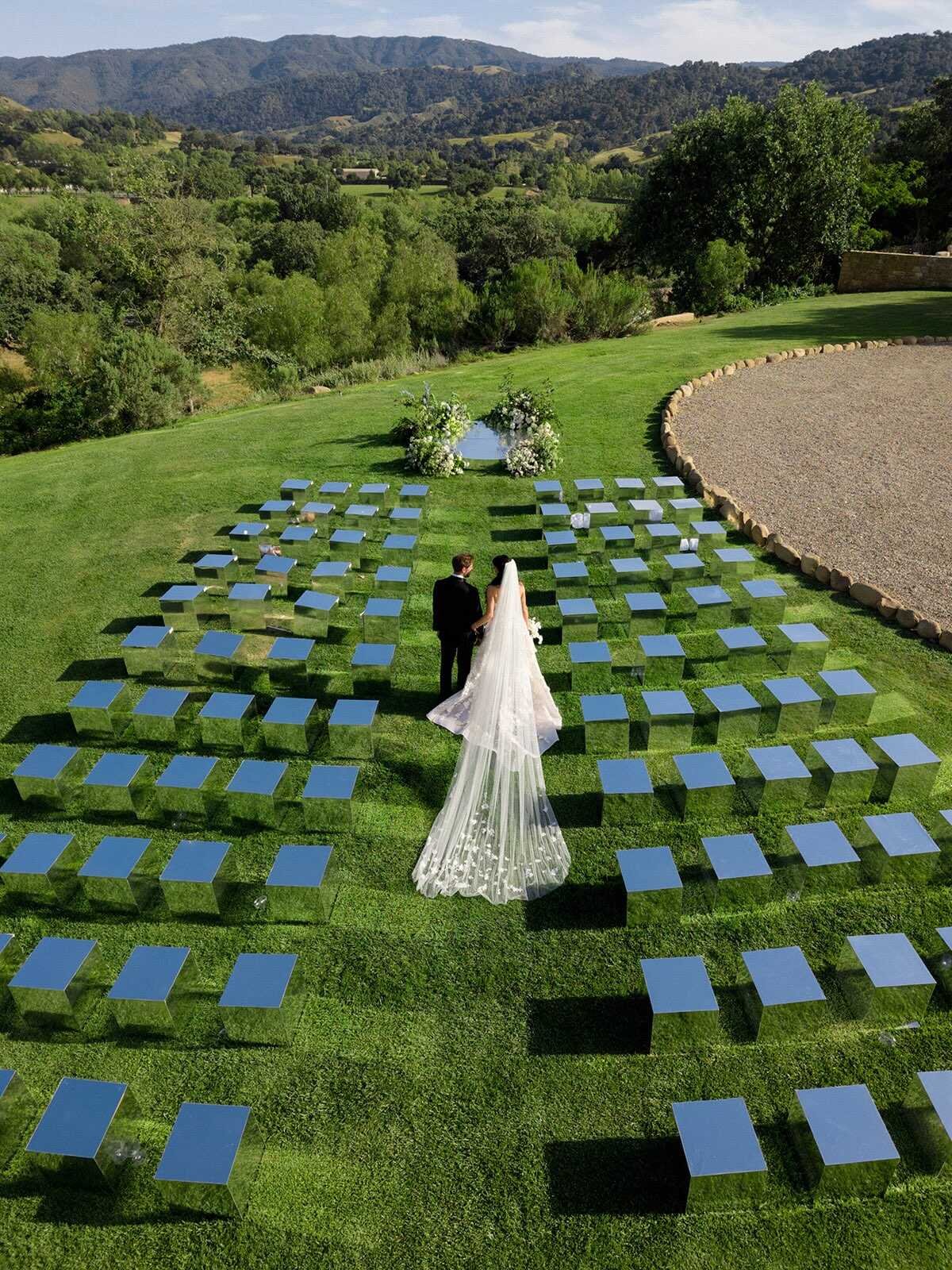
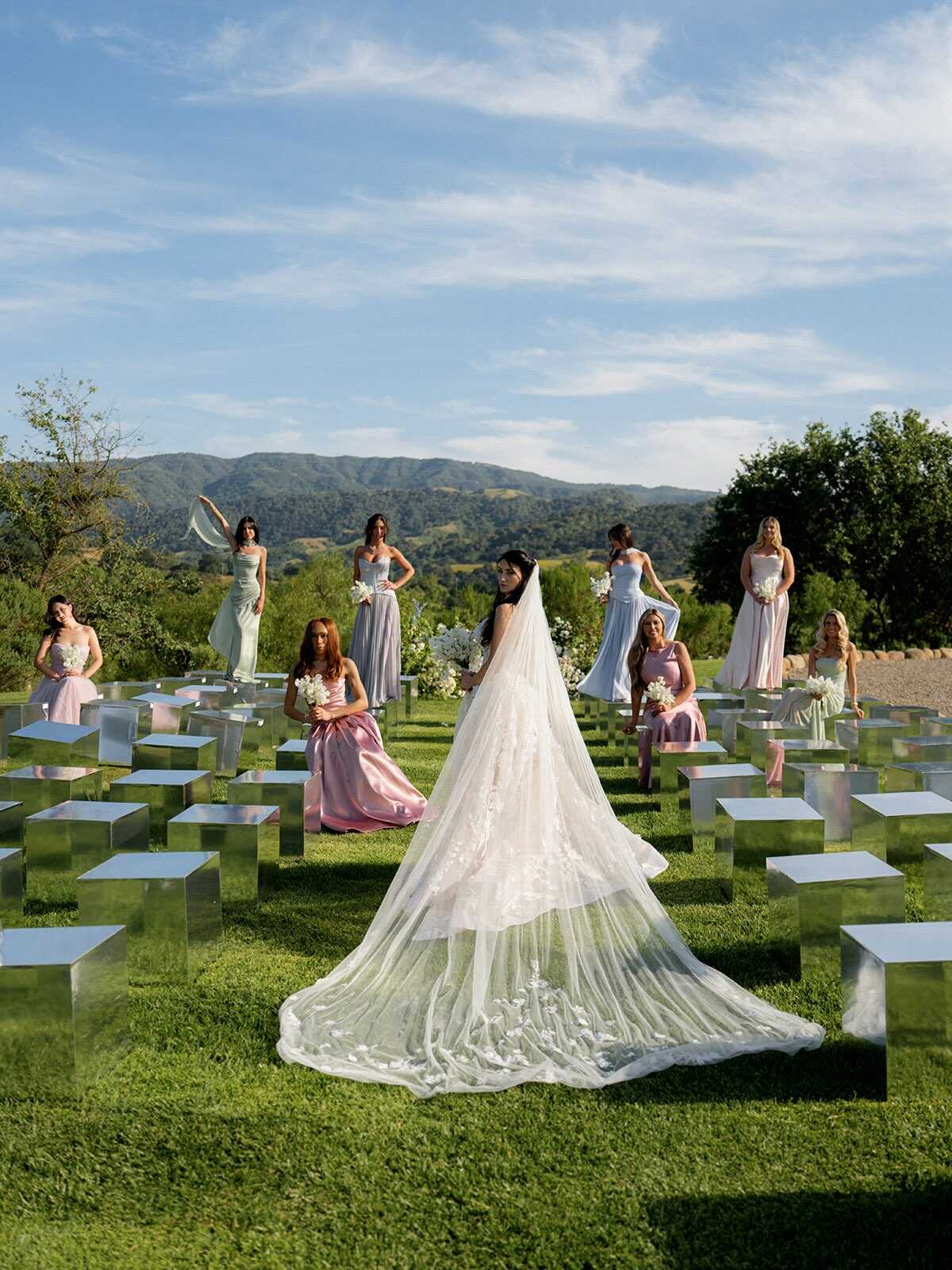
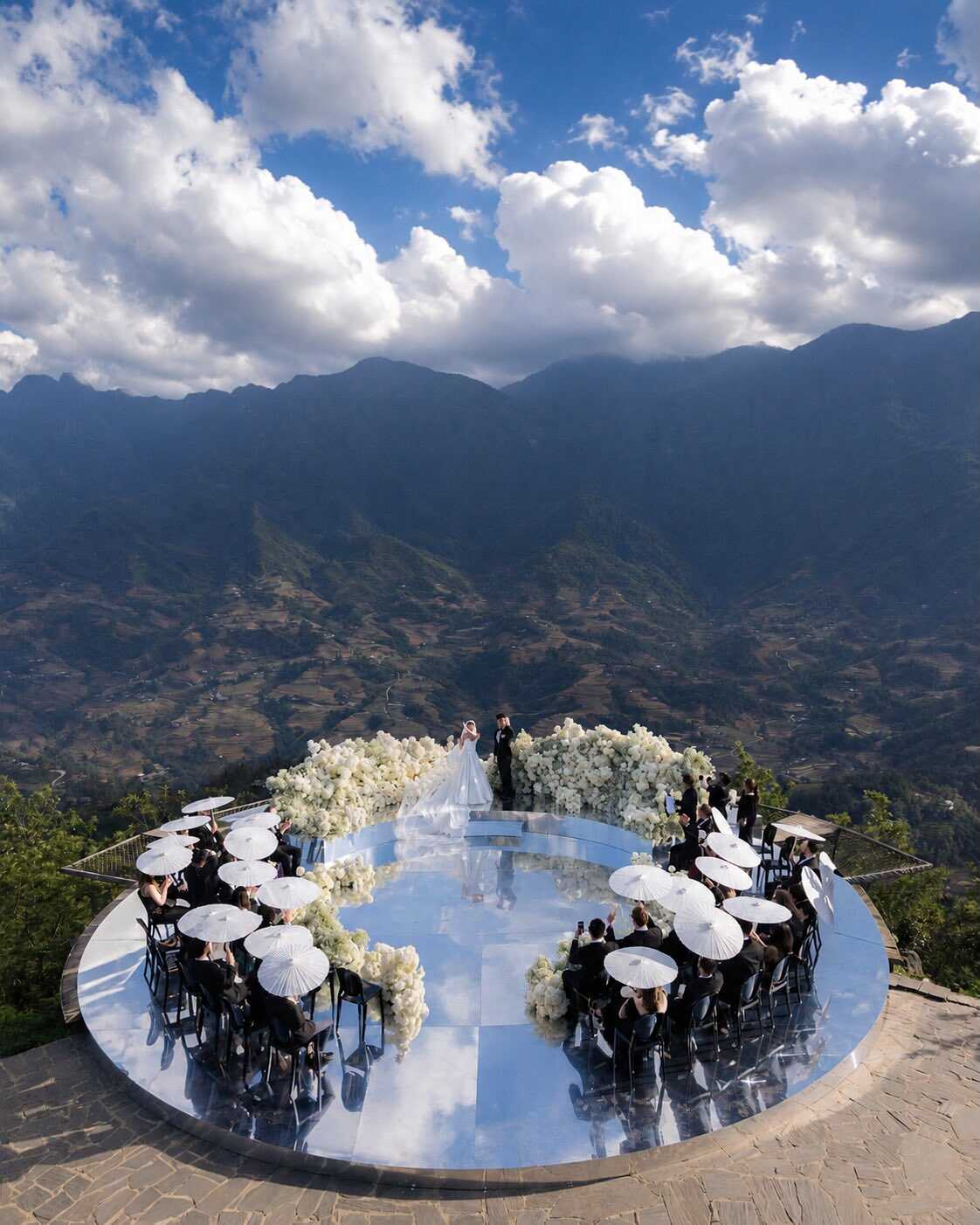
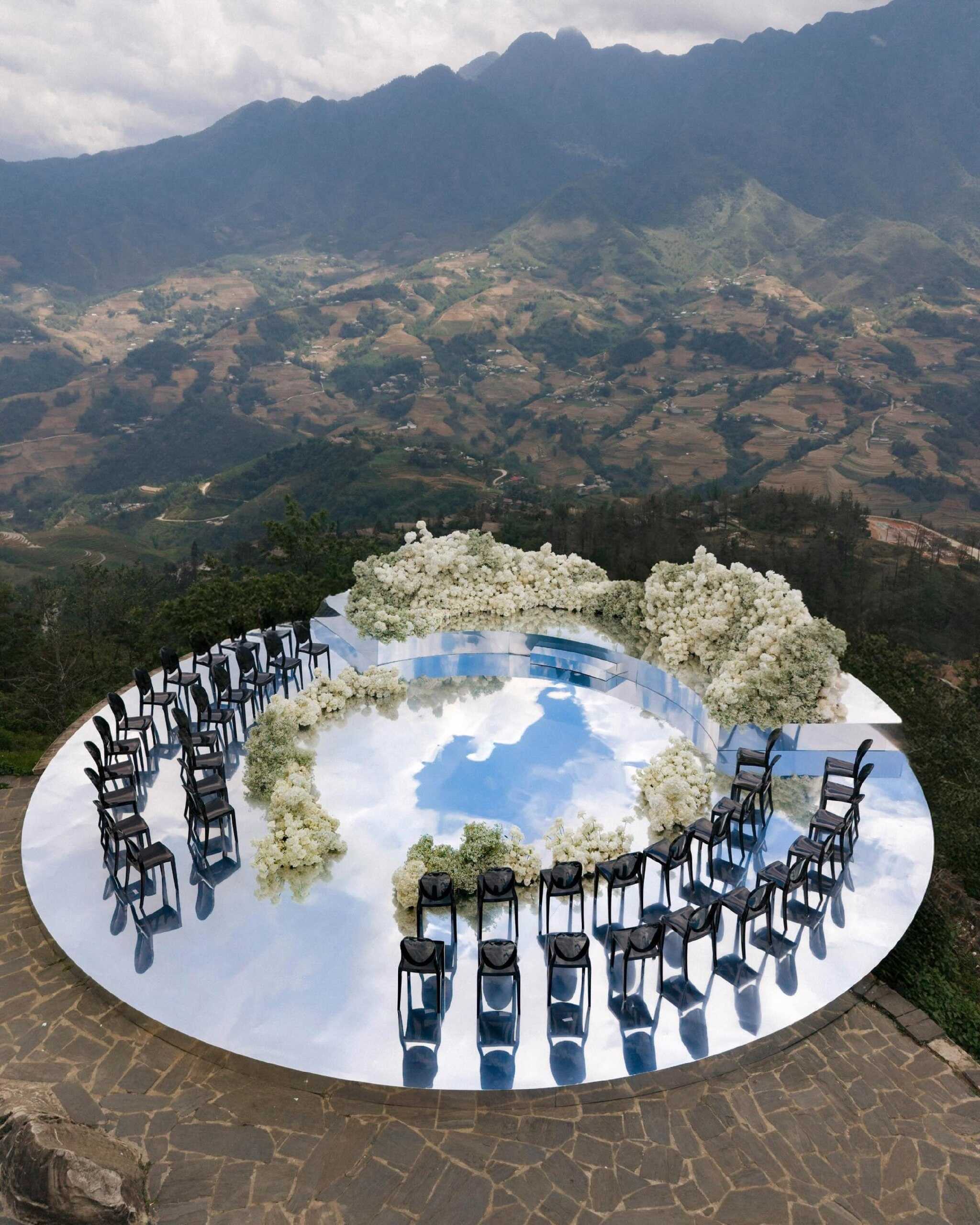
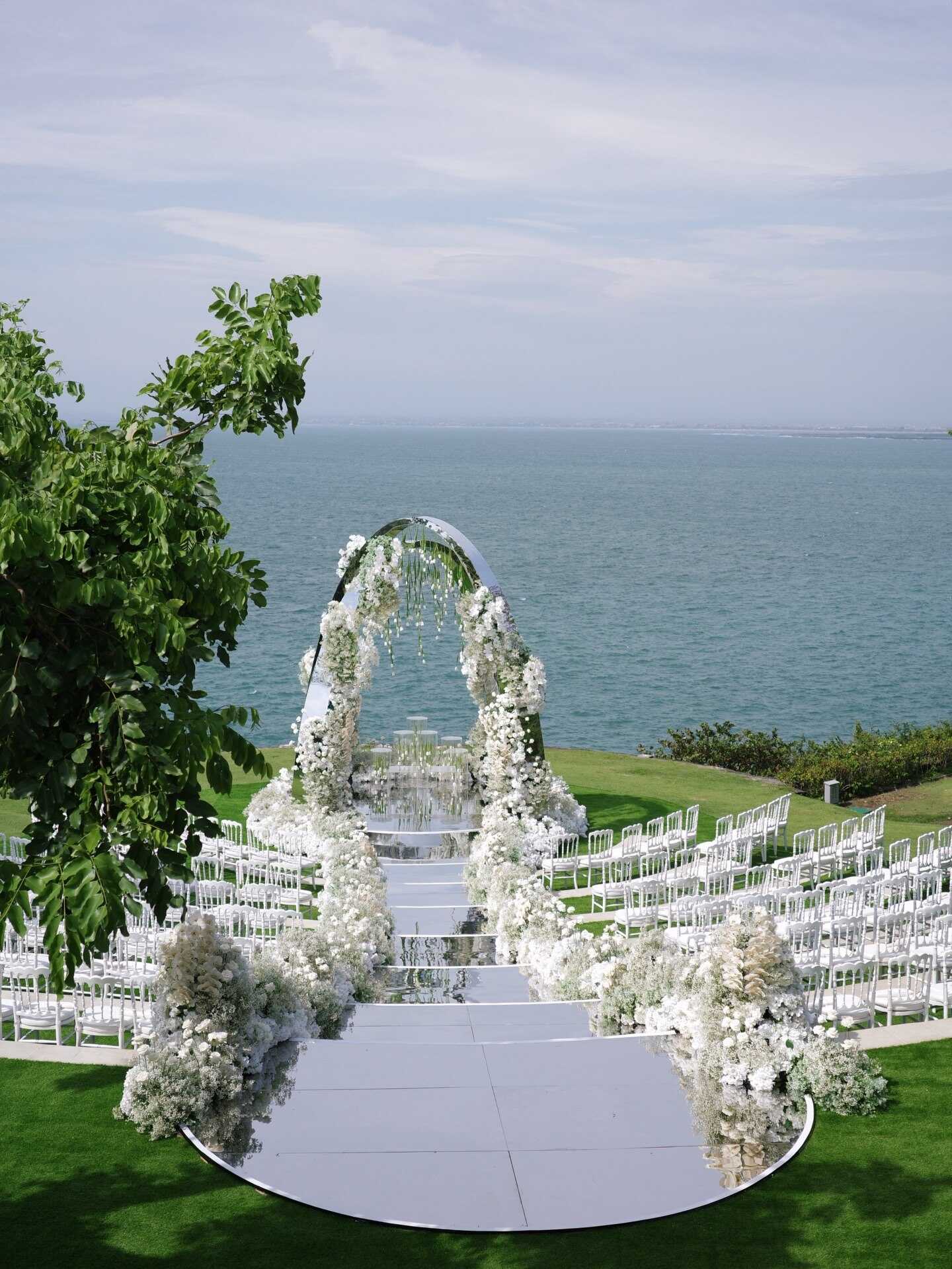
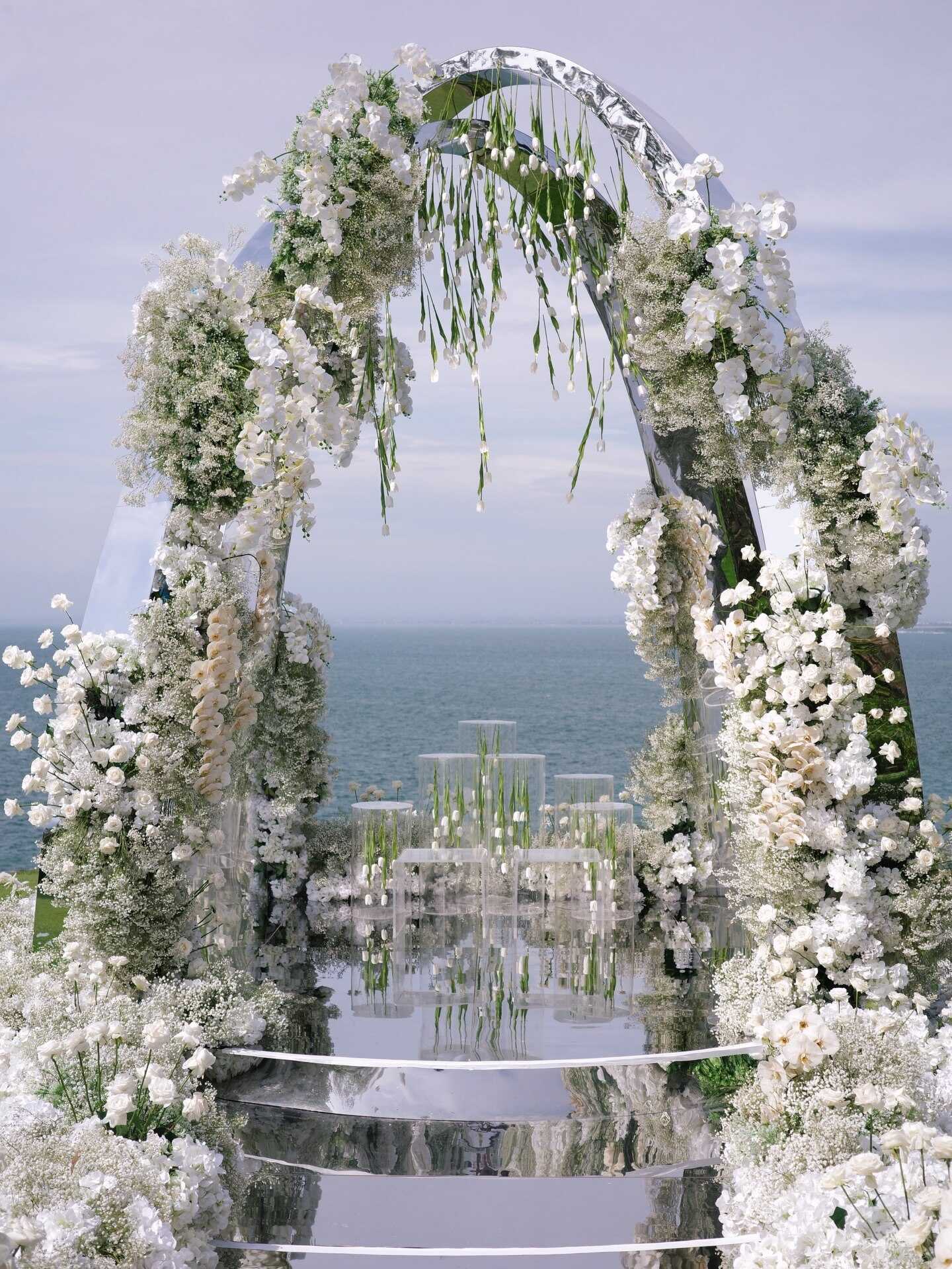
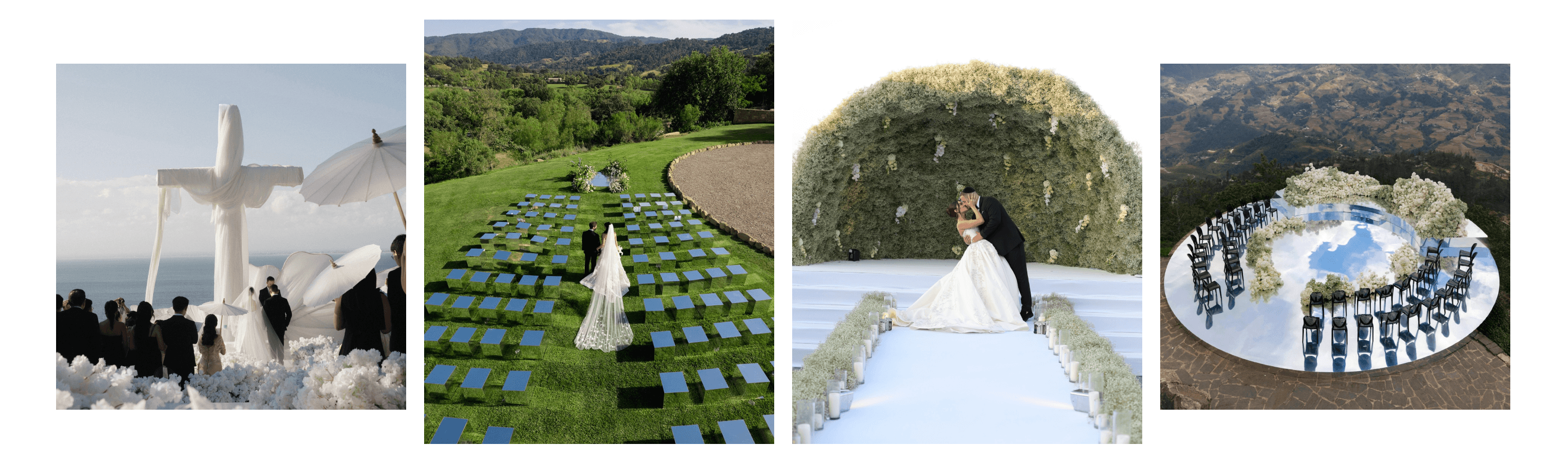
Mirrors have long gone far beyond being just a decorative item and have now become an integral part of the design. Today, fully mirrored aisle runners reflect the sky above as the bride walks toward the altar, mirrored platforms have replaced conventional flooring entirely, and reflective seating transforms a normal lawn into one that appears twice as large. The effect works because it isn't simply decoration added to a space; rather, the space itself has been redesigned to reflect light and the surrounding landscape back to those present.
The effect depends on the setting. When the ceremony takes place on a cliff edge or mountainside, a circular mirrored platform brings the sky and surrounding landscape directly down into the ground plane, making the site seem even more dramatic than it currently is. In a garden setting, individual mirrored blocks used as seating capture dappled light and greenery and scatter it back over the lawn in a way ordinary furniture never could. Mirrored arches work in the same way at the altar, increasing the candlelight and the color of the flowers so the overall effect appears considerably more elaborate than the materials actually used.
Unique wedding ceremony ideas built around glass and mirrors work best when all other elements are kept simple - a fully mirrored platform paired with a similarly elaborate floral arrangement tends to clash with itself. The most effective ones make the reflective surface the main visual focus, leaving everything else intentionally unobtrusive.
A Ceremony With Ritual Elements - or Simply a Natural One
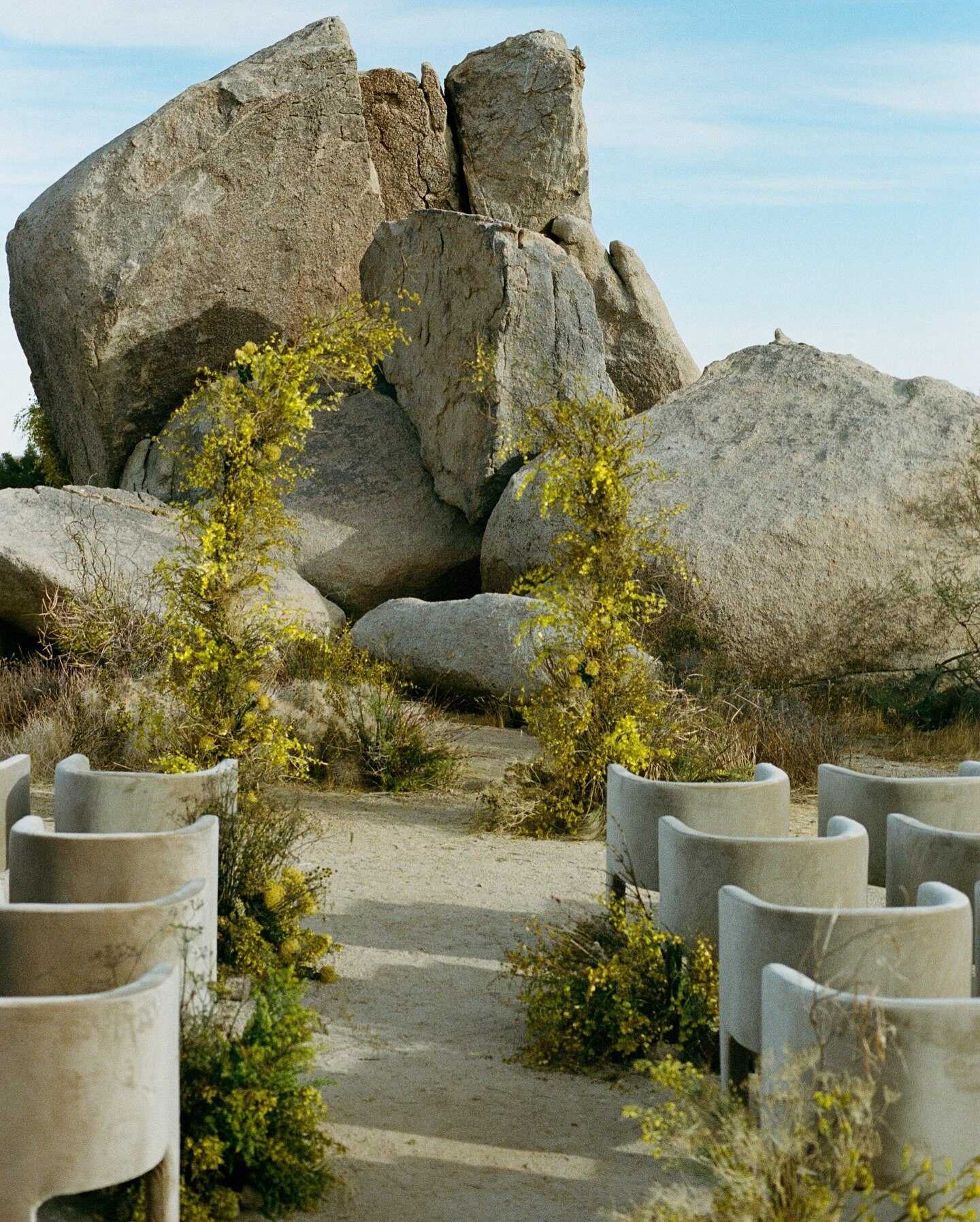
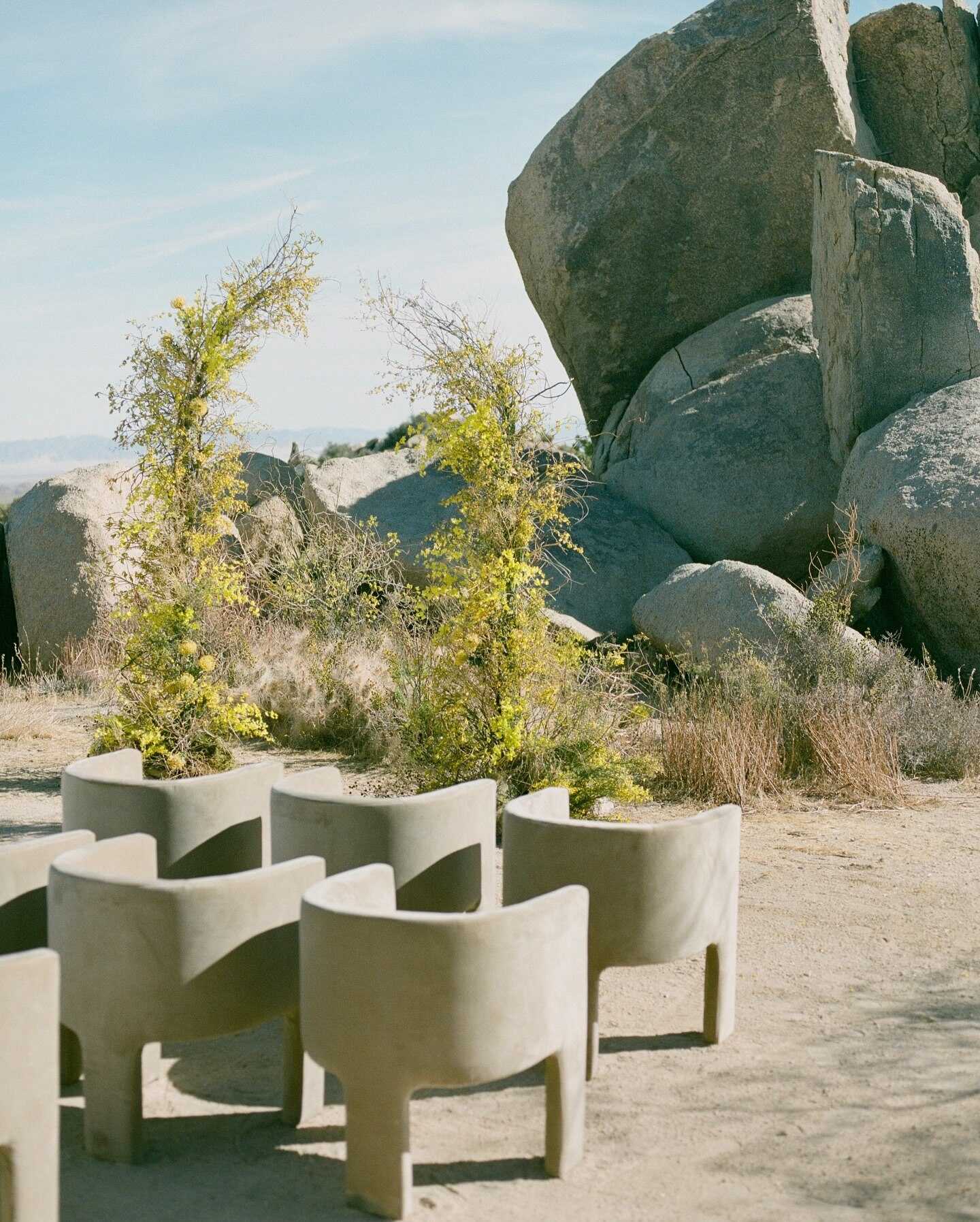
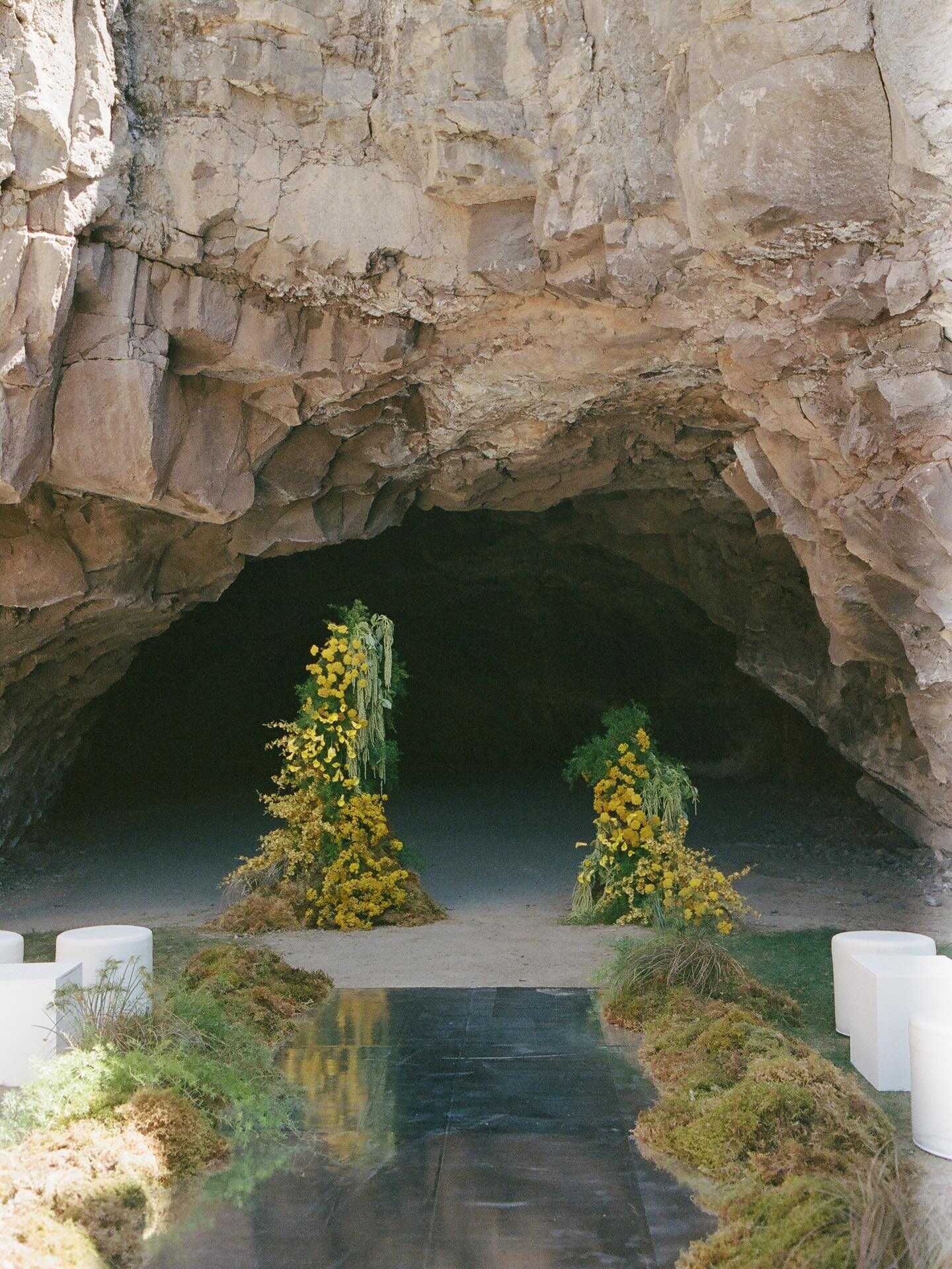
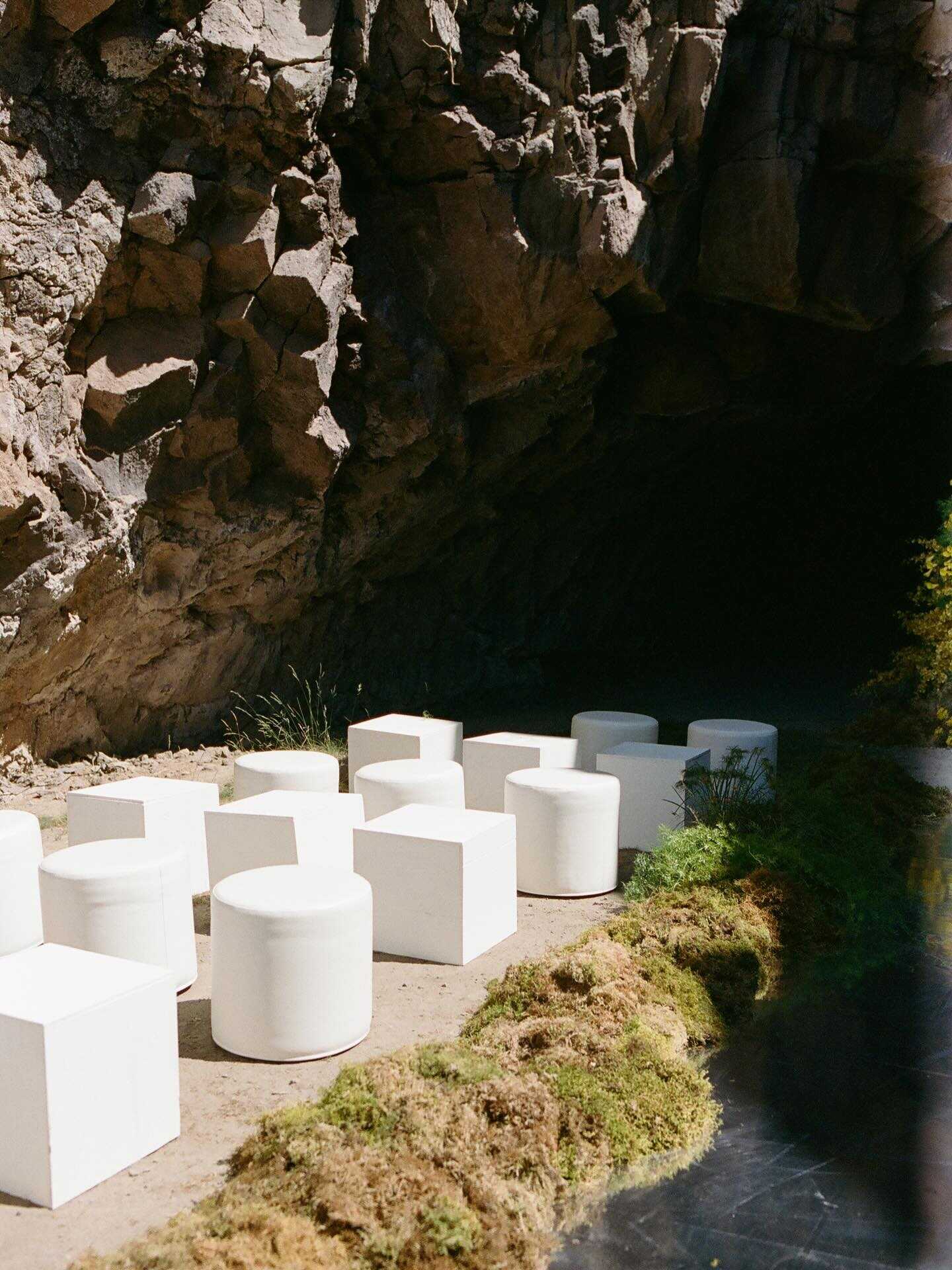
Among the most impressive ceremonies of 2027, there is almost no decoration at all. It is becoming more and more common for couples to get married in real caves and stone quarries, situated between huge natural boulders in the desert, or under vaulted stone structures in landscapes never intended for weddings. The media has already identified large, naturally dug spaces as one of the key trends in wedding venues for this season, and it's simple to understand why after a couple has actually stood inside one - the atmosphere created by the scale and texture of the natural rock does more than almost any kind of installation could.
- Cave and quarry ceremonies - stone walls and natural acoustics standing in for a built backdrop entirely
- Boulder-framed altars - a handful of chairs set among genuine rock formations, with minimal additional structure
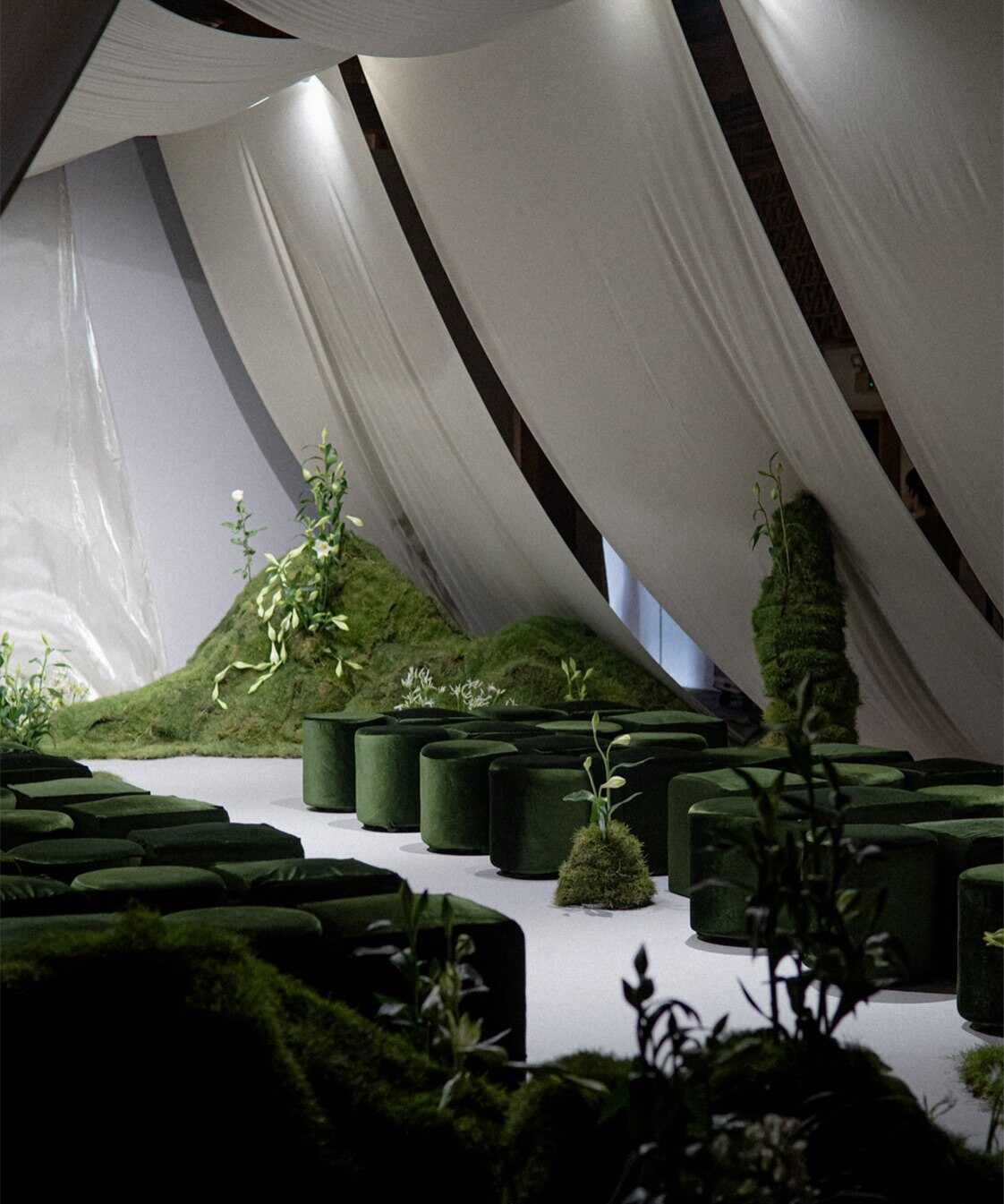
- Moss and living-ground installations - greenery laid directly into the earth rather than arranged in vases, reading as an extension of the landscape rather than decoration placed on top of it
- Water-adjacent natural altars - a stream, pond, or coastline used as the literal backdrop, with décor kept deliberately minimal
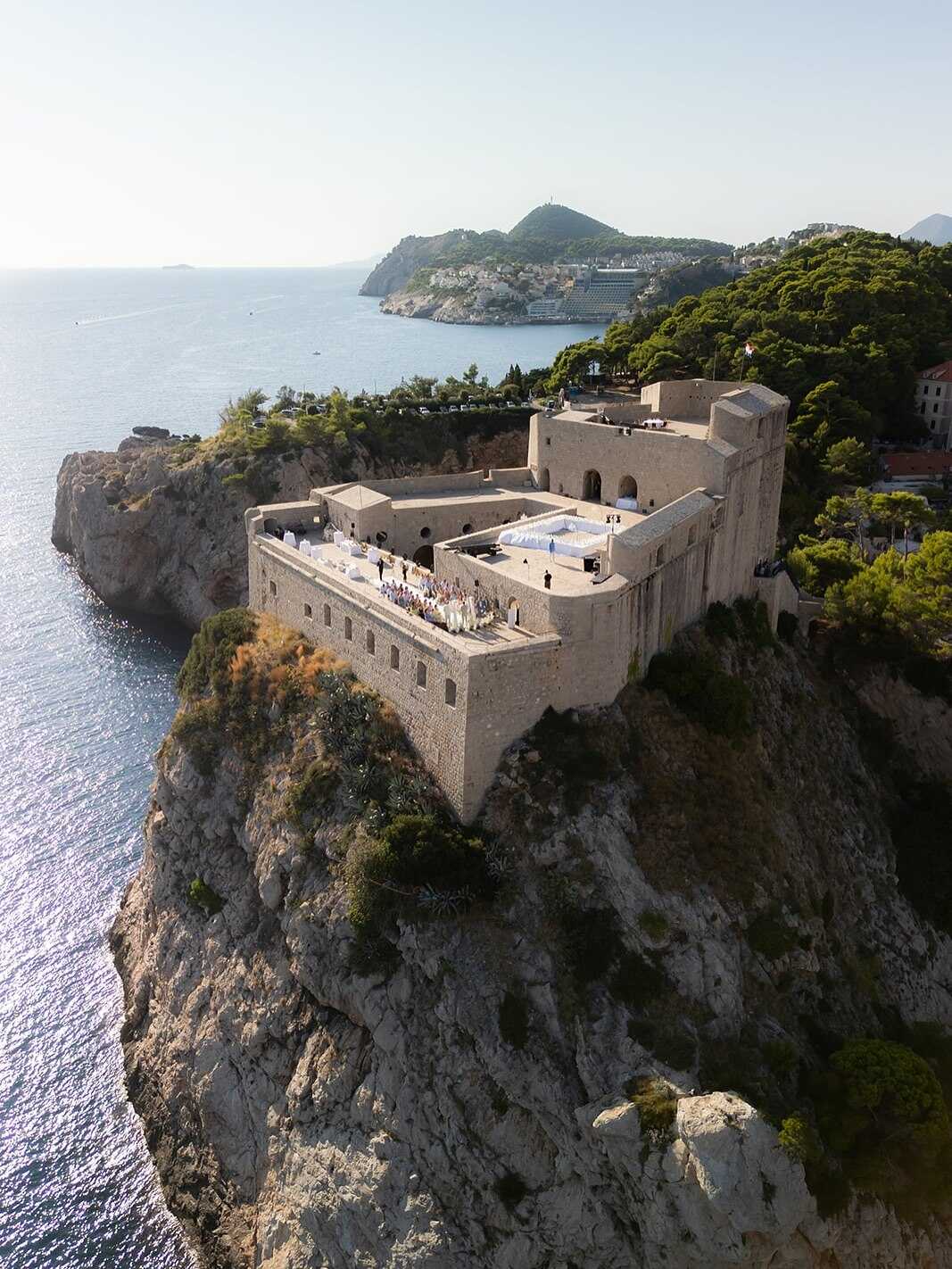
That instinct is showing up well beyond deserts and quarries, too. "The ceremony trend that will break the internet in 2027 will be immersive, landscape-led ceremonies, where the setting becomes part of the design rather than simply the backdrop," says Santorini My Wedding, describing designs that "appear to emerge naturally from the sea, cliffs, olive groves, or historic architecture." The principle stays the same whether the backdrop is volcanic rock in the Aegean or sandstone in the desert - the location does the work a built installation usually would.
The common thread across all of these is restraint. Instead of trying to match a truly dramatic natural environment, most designers nowadays aim to bring out what is already present rather than overwhelm it with a theme unrelated to the surroundings. Individual sculptural chair designs or simple floral decorations tend to succeed better in a cave or amongst boulders than a complete traditional ceremony setup ever could.
Serpentine Aisle
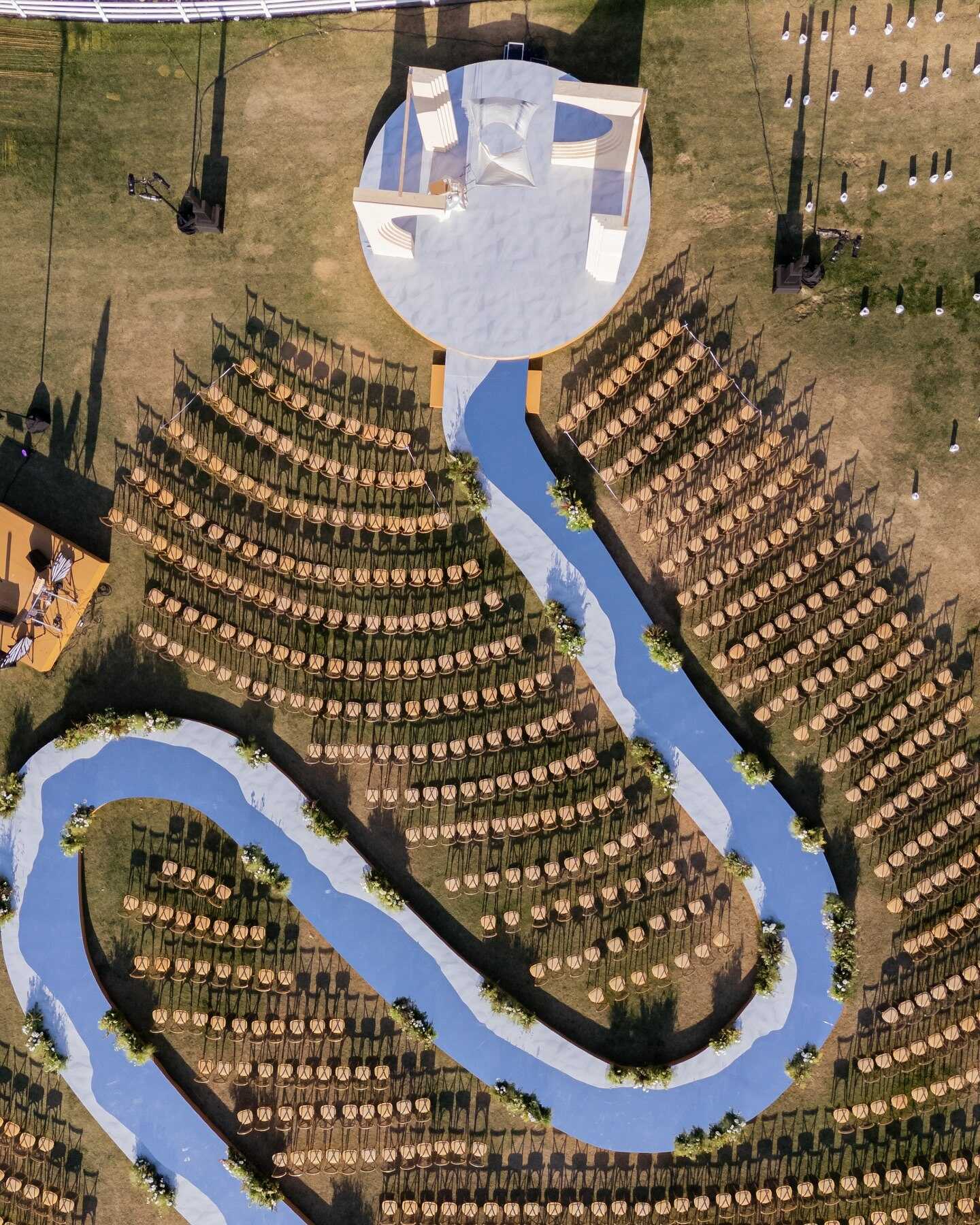
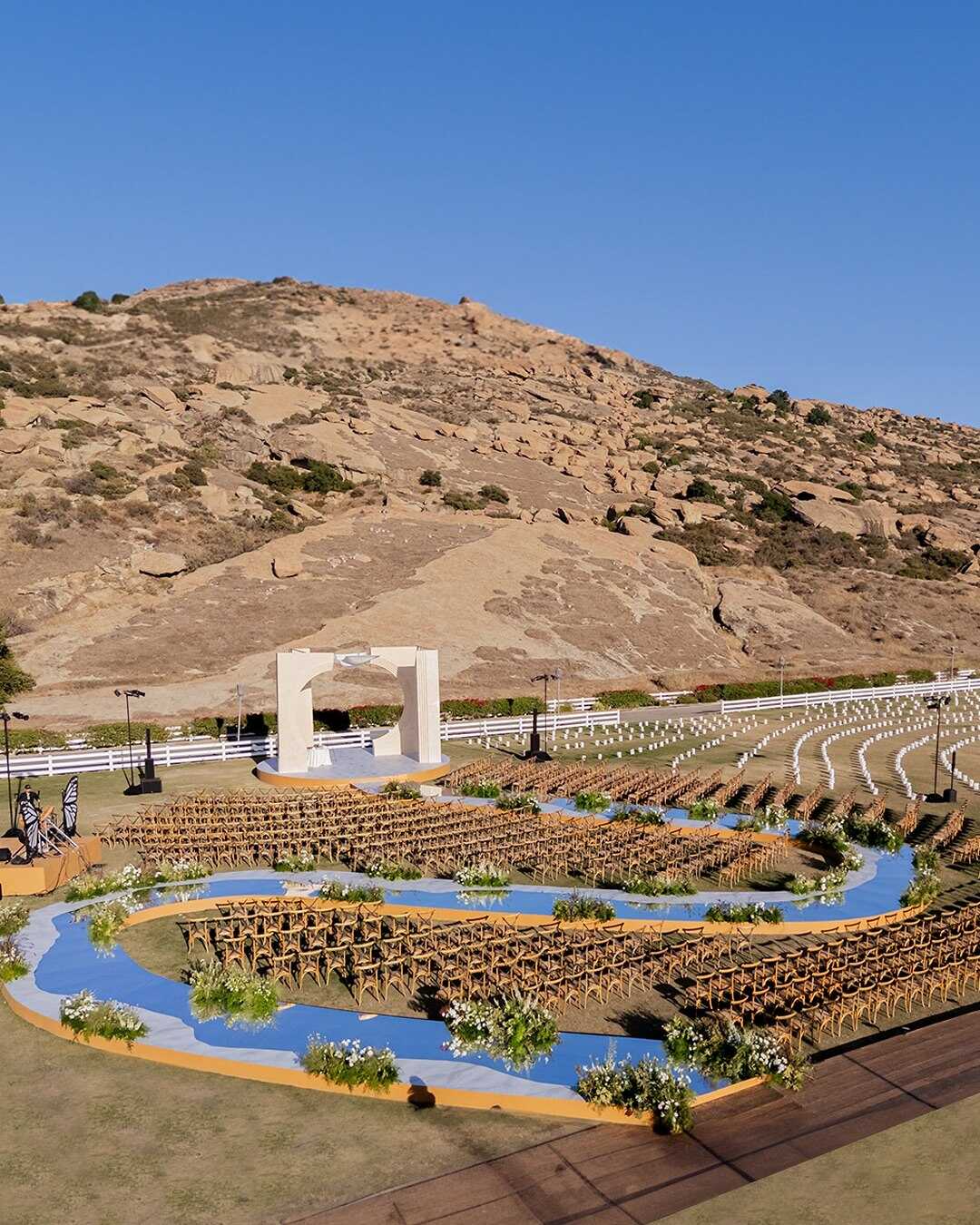
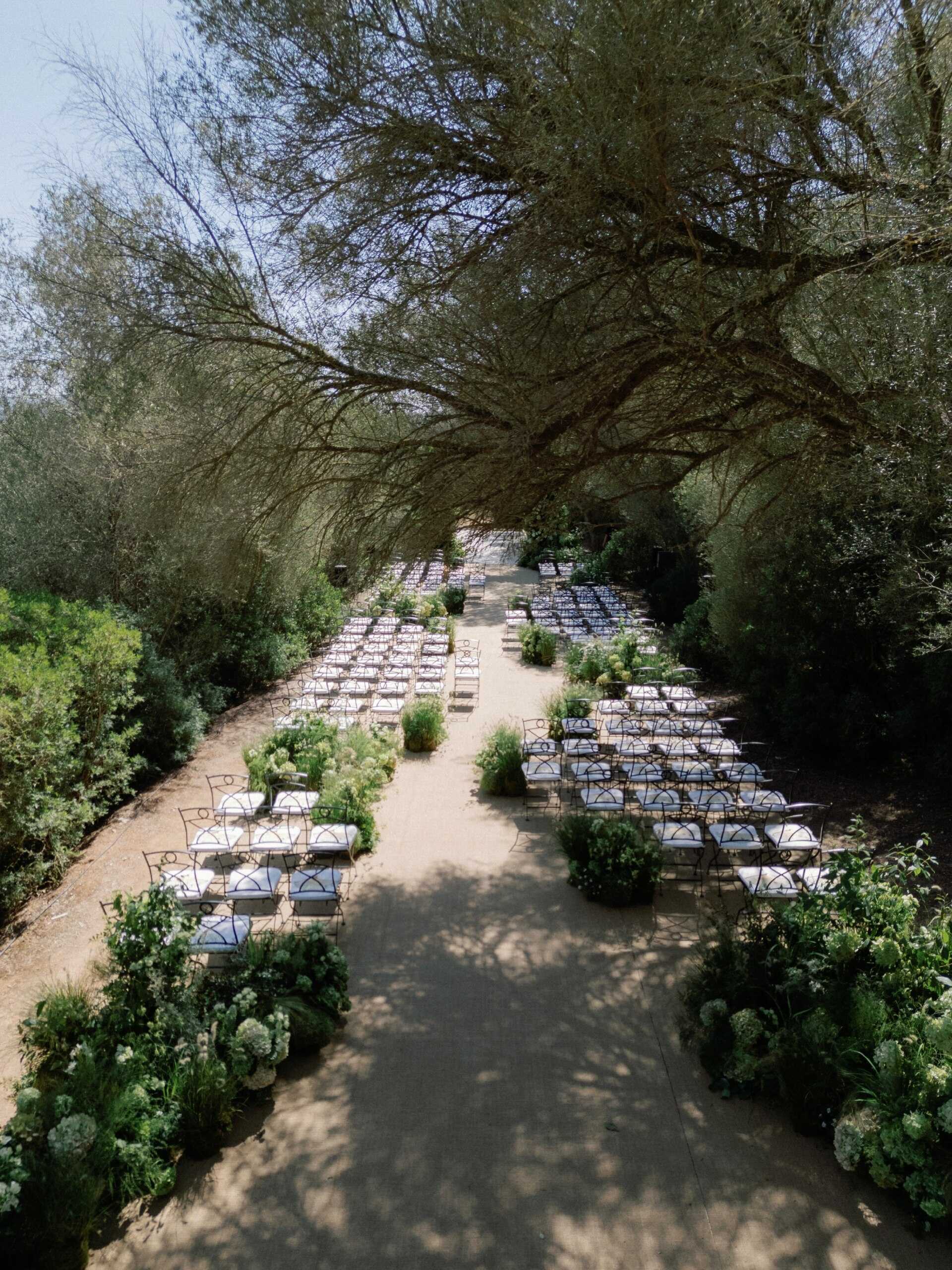
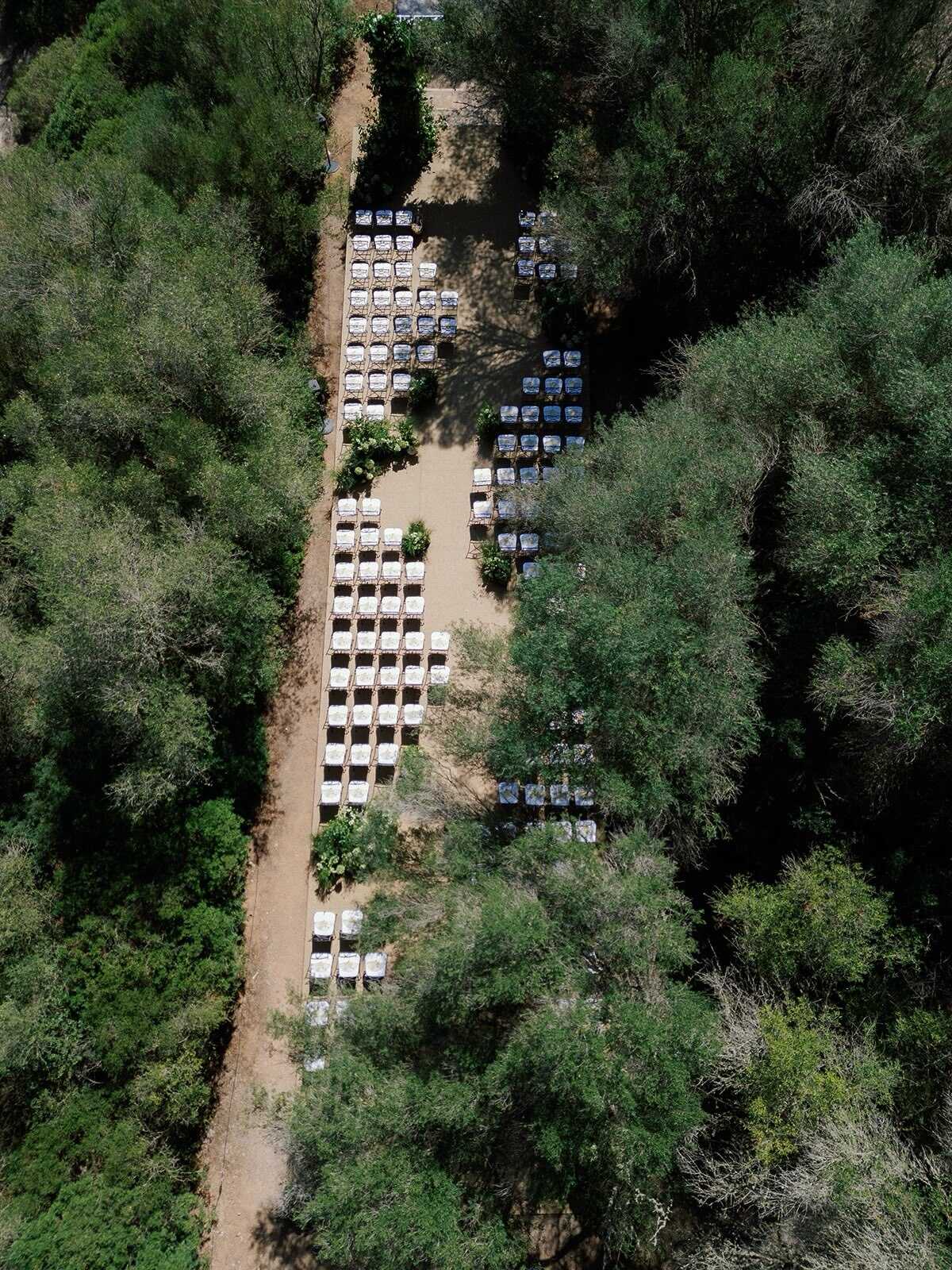
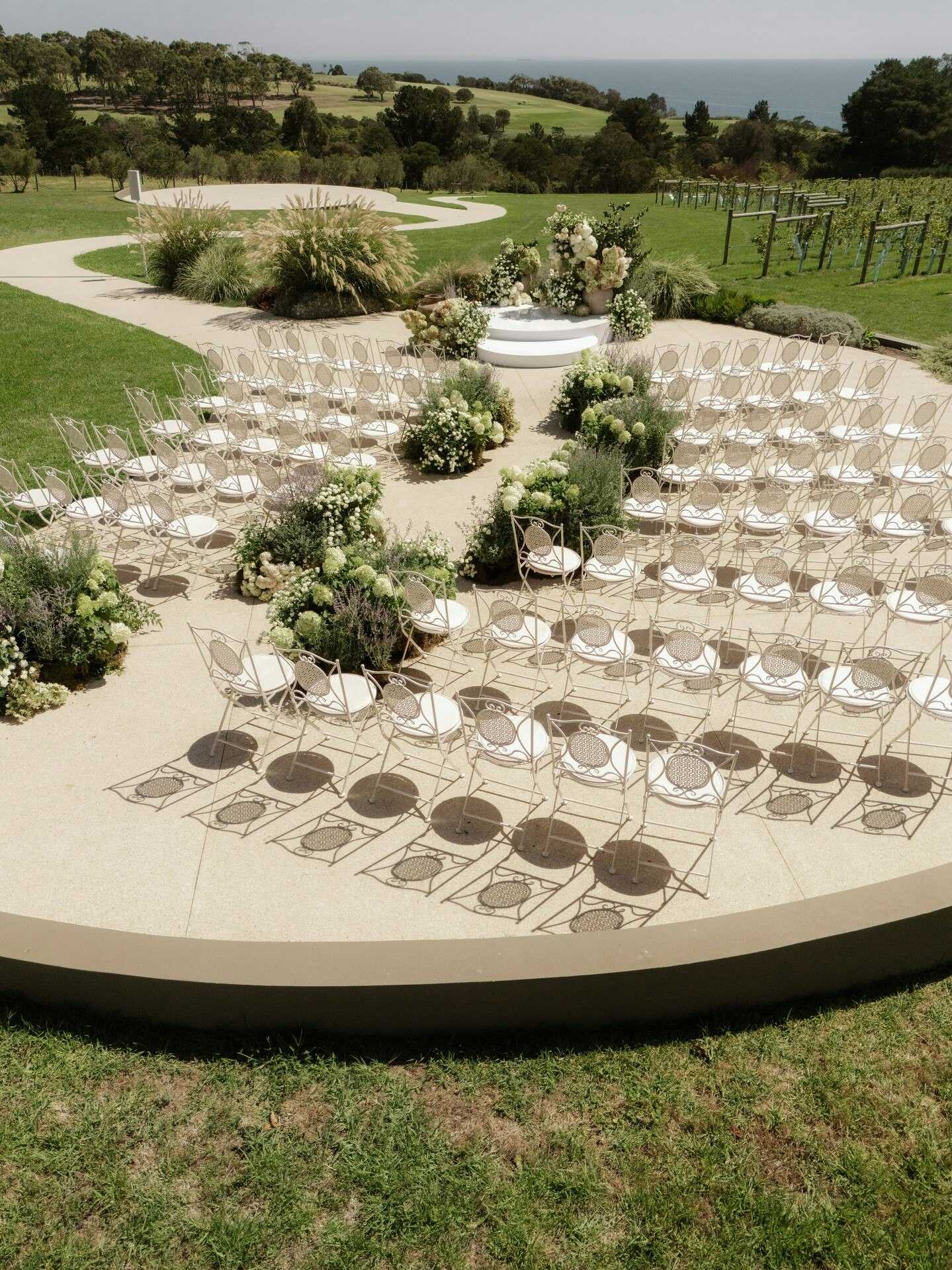
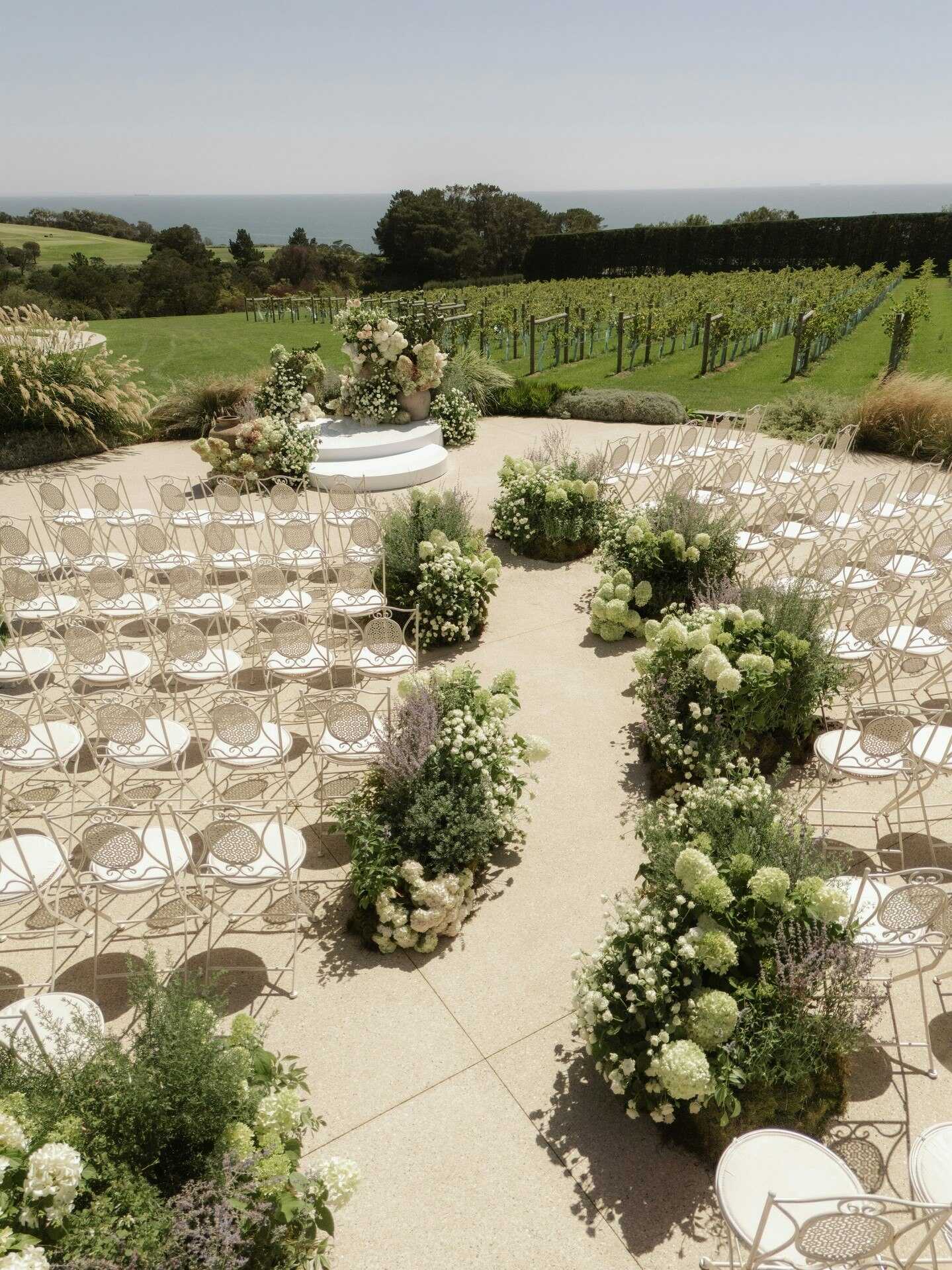
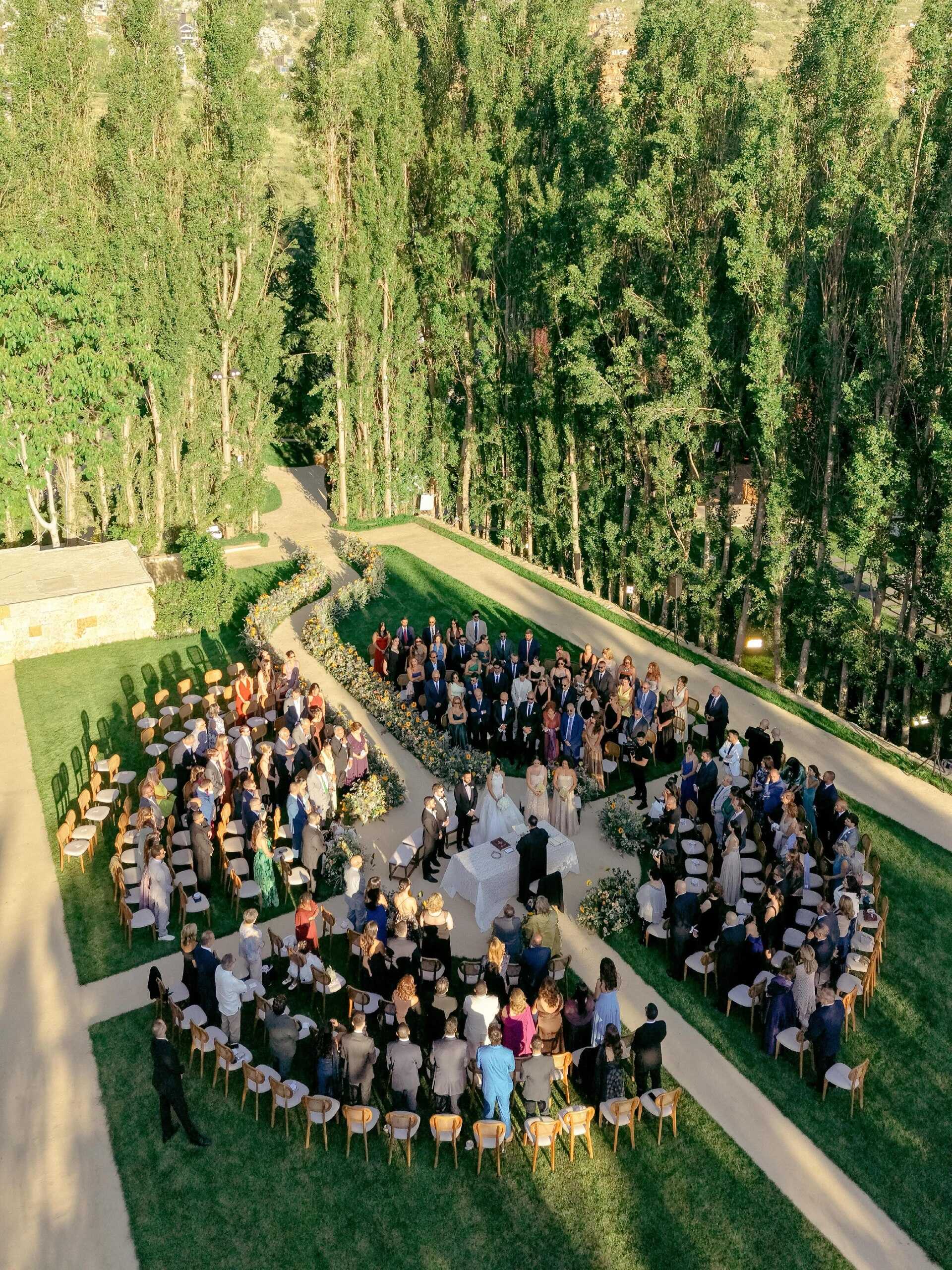
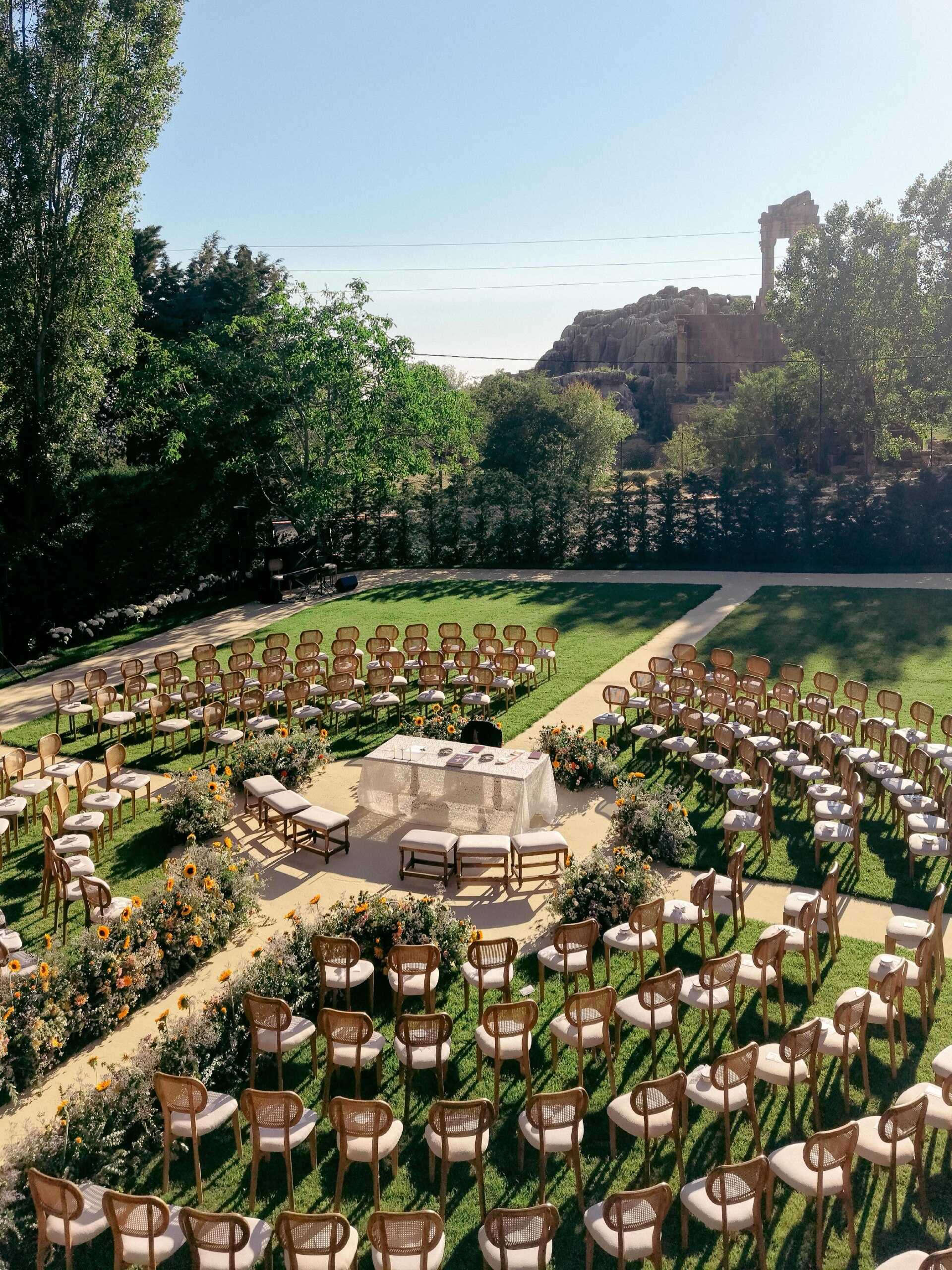
The direct path leading to the altar is being replaced by one that meanders. Instead of going in a straight line, the aisles bend gently throughout the ceremony area, with designers saying this creates a more romantic, slow-paced way to reach the vows - and this arrangement is becoming one of the more discussed changes in how ceremonies are laid out as we approach 2027. The visual effect is most noticeable from above, which is one reason so many venues photograph these layouts with drones - a curved blue or floral passage spreading through the rows of seats looks quite different from a straight aisle, even before the first guest has taken their seat.
On the ground, the effect changes the pacing of the walk itself, resulting in a slower and more careful progression towards the altar than is possible with a direct route. In some cases, couples combine this arrangement with circular or theatre-style seating that encircles the entire ceremony area, so the descent down the aisle becomes something guests can see from all sides instead of just from the fixed rows. Some are pushing that instinct even further, into something closer to a spiral than a curve. Bruce Russell Events has been staging ceremonies where guests sit in concentric arcs that draw inward rather than facing forward - "the smartest couples are asking their guests to surround them, not watch them," as the studio puts it, adding that the format removes the sense of an audience entirely: "there is a room holding its breath together." The same instinct shows up from a different angle at Santorini My Wedding, where couples are increasingly placed "within their guests rather than in front of them" - a small structural change that turns every seat into a good one.
In practice, a serpentine layout requires more planning than a simple grid, since the positioning of the chairs, the width of the aisles, and the lines of sight all have to be adjusted once the path is no longer a straight line, and therefore most designers advise checking as early as possible with the venue or rental company whether the format can be carried out at the location. Not every lawn or ballroom floor plan can include a true curve without losing seating capacity at some point along the way.
Ideas With a Creative Concept
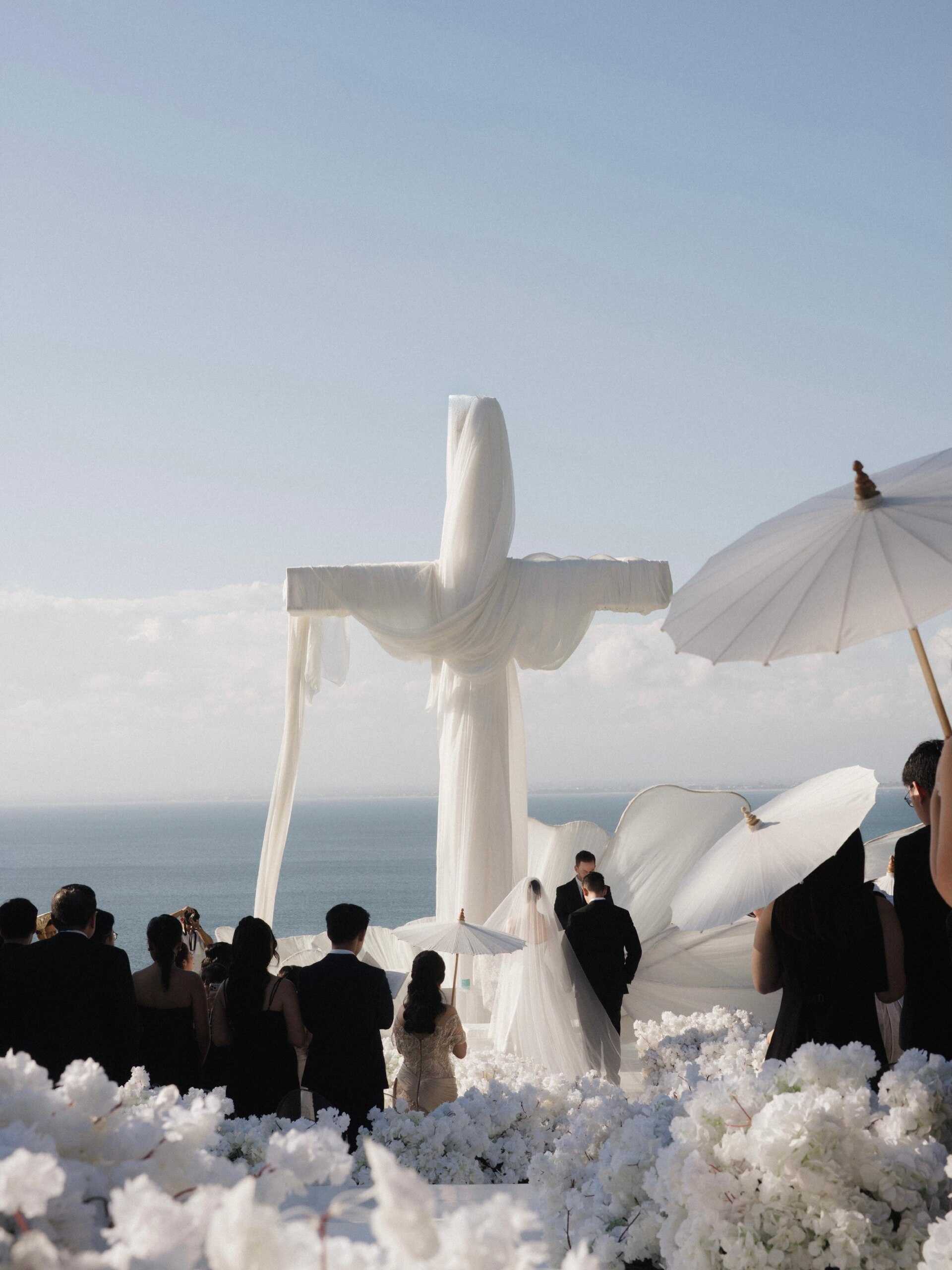
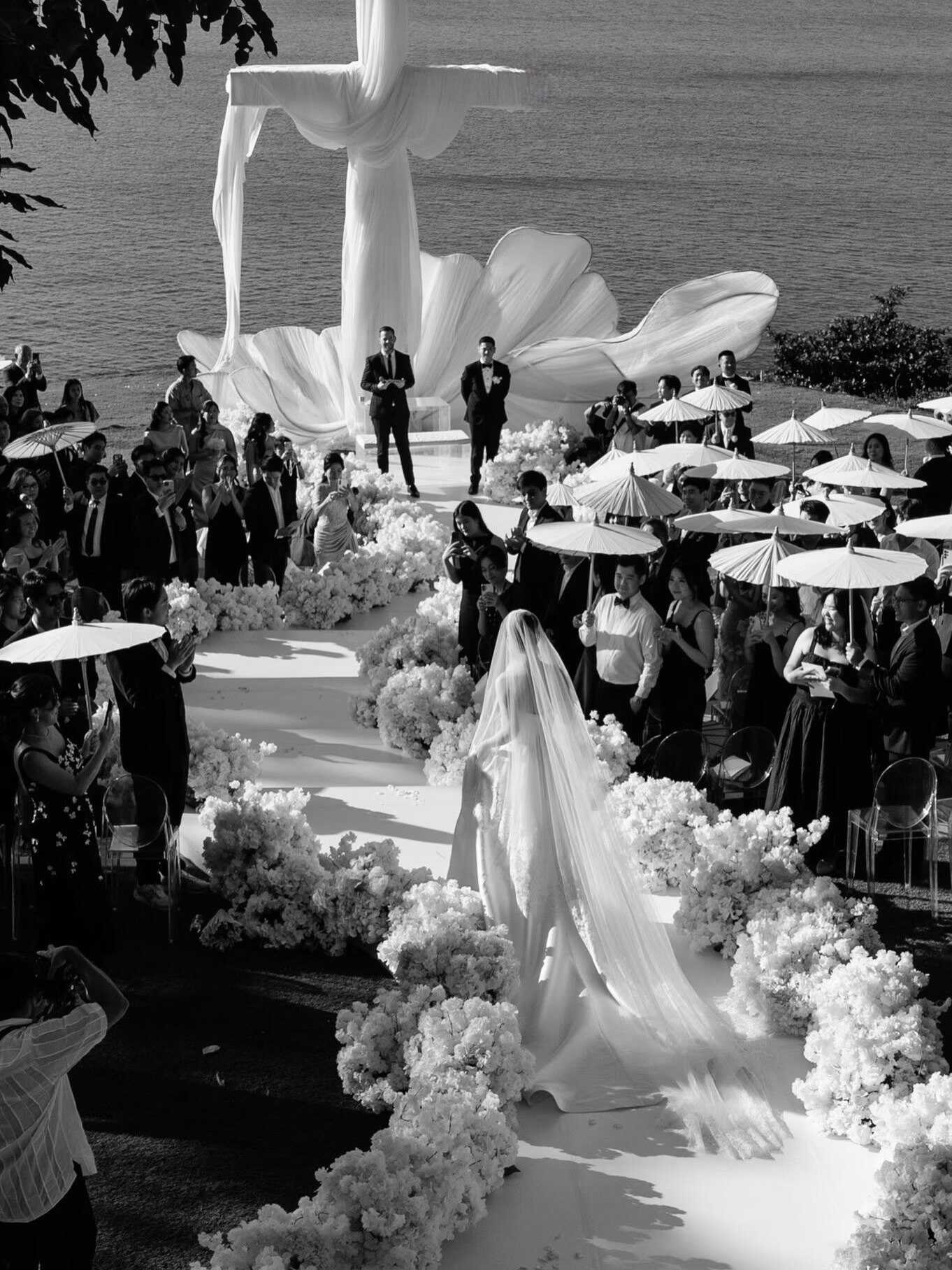
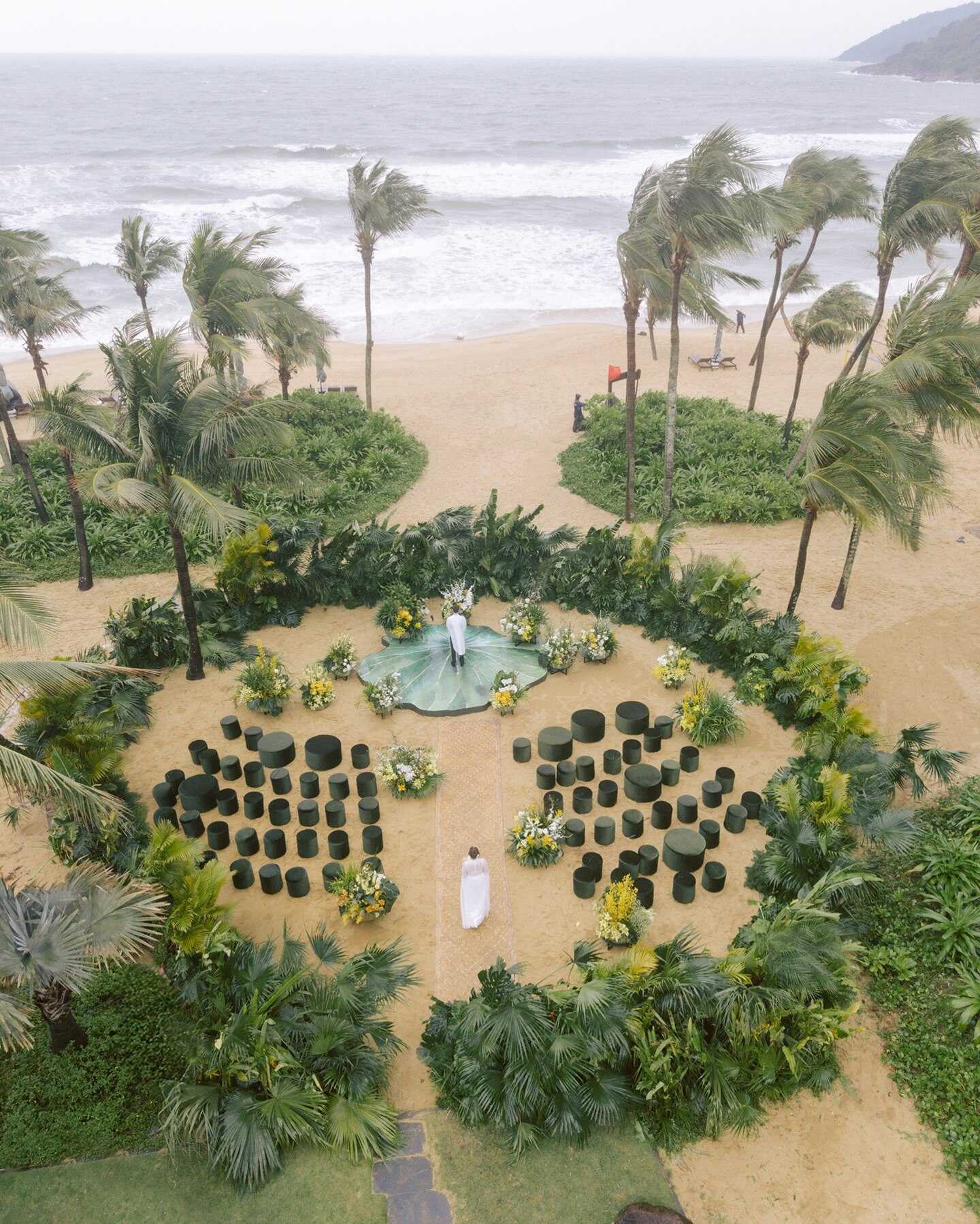
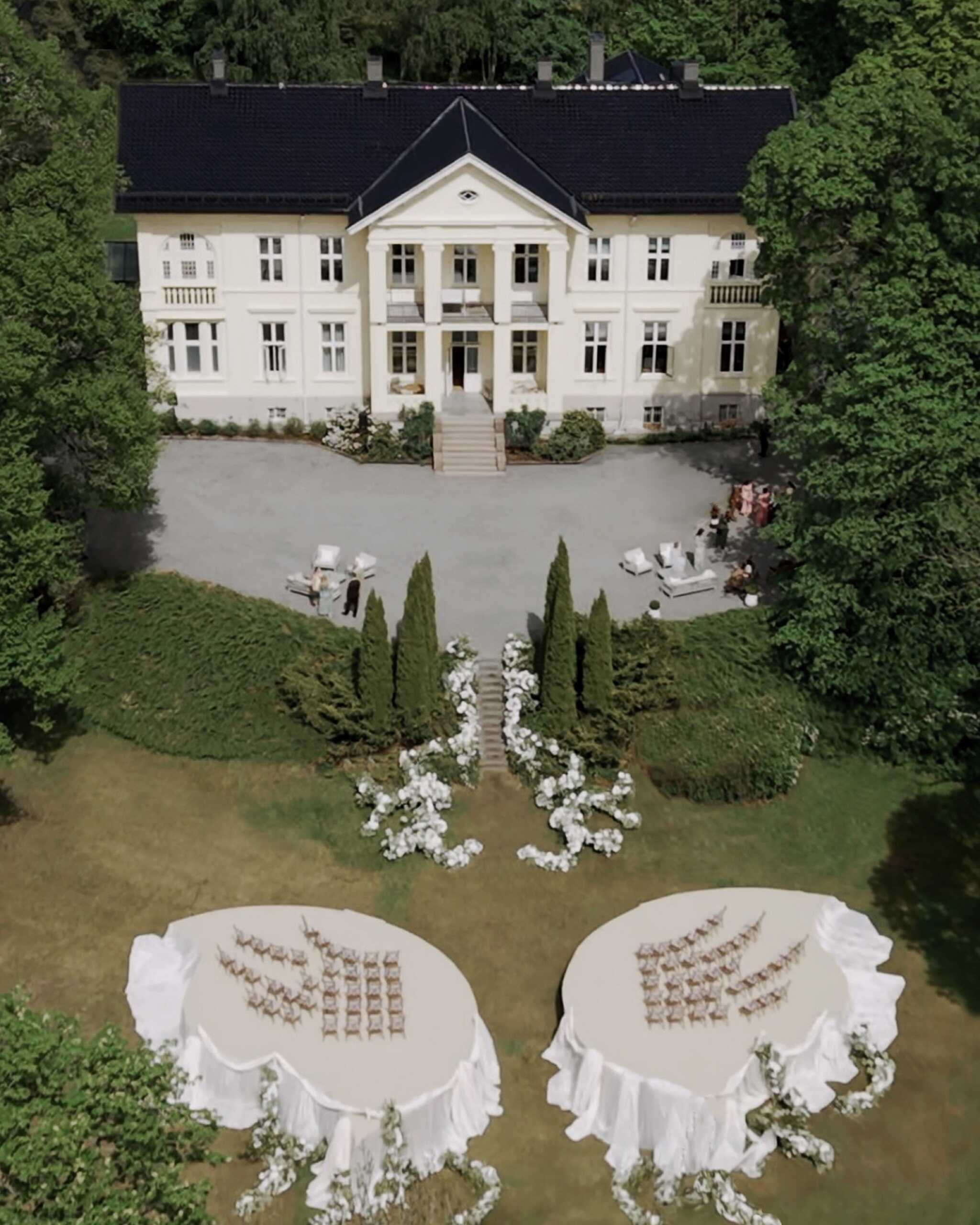
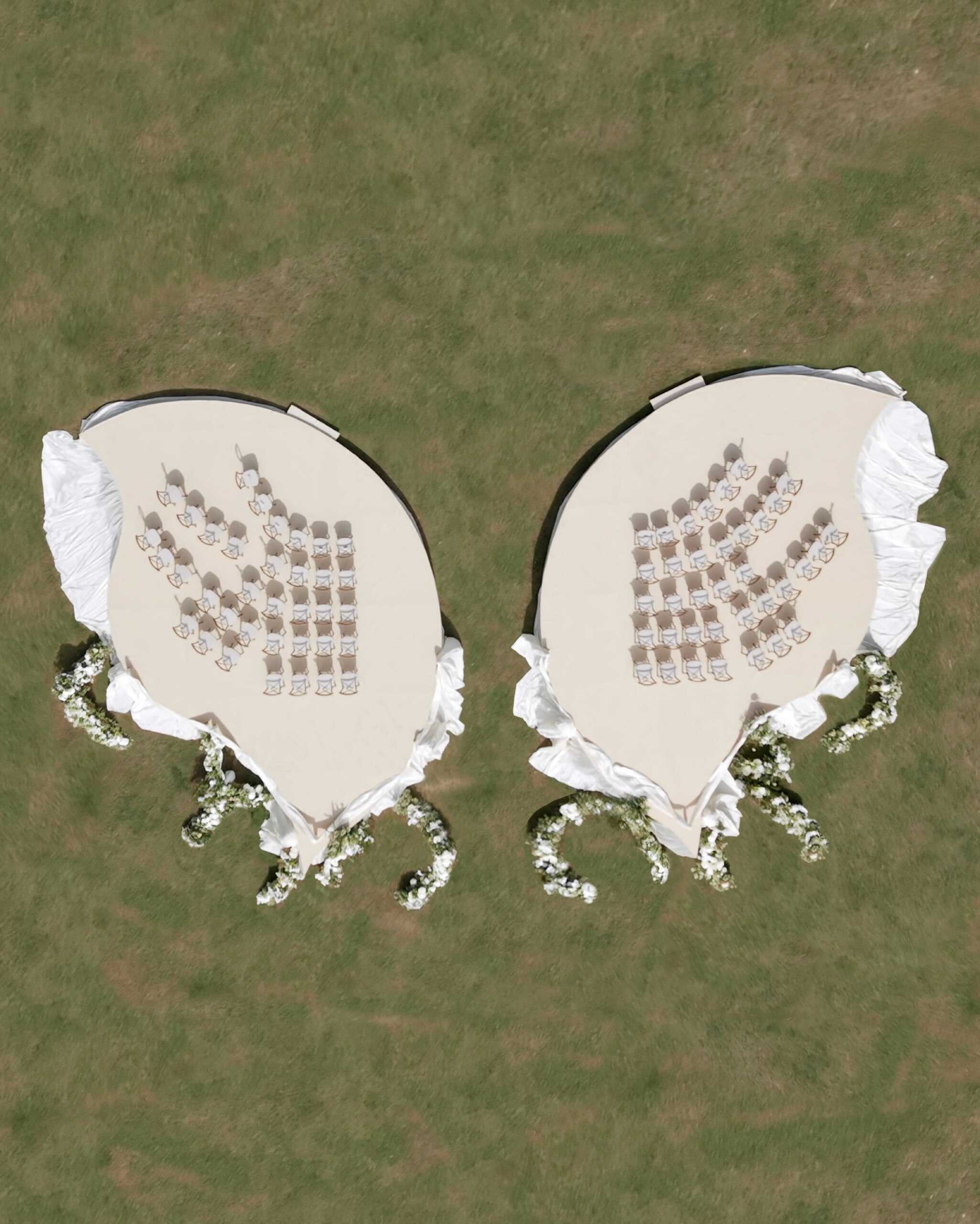
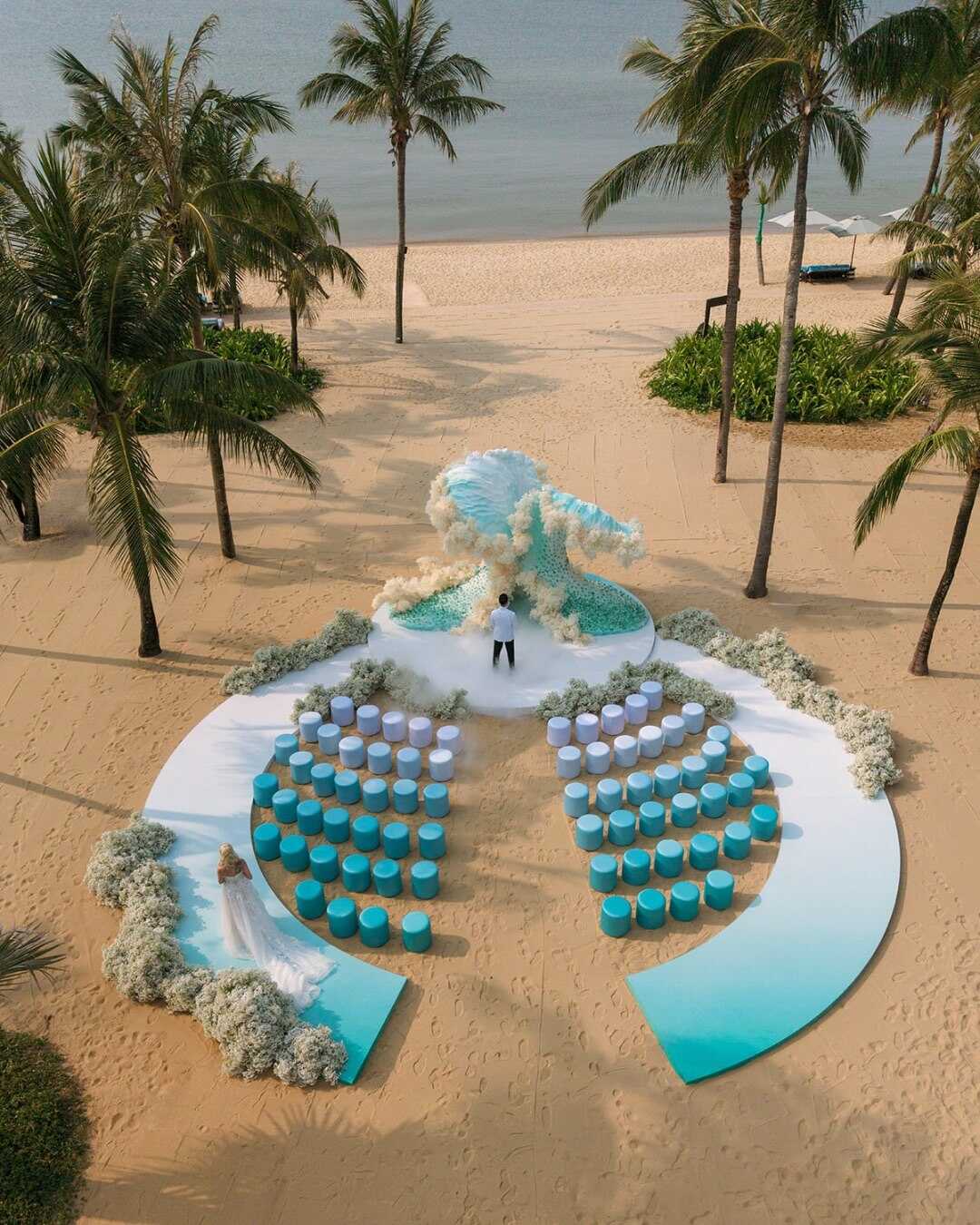
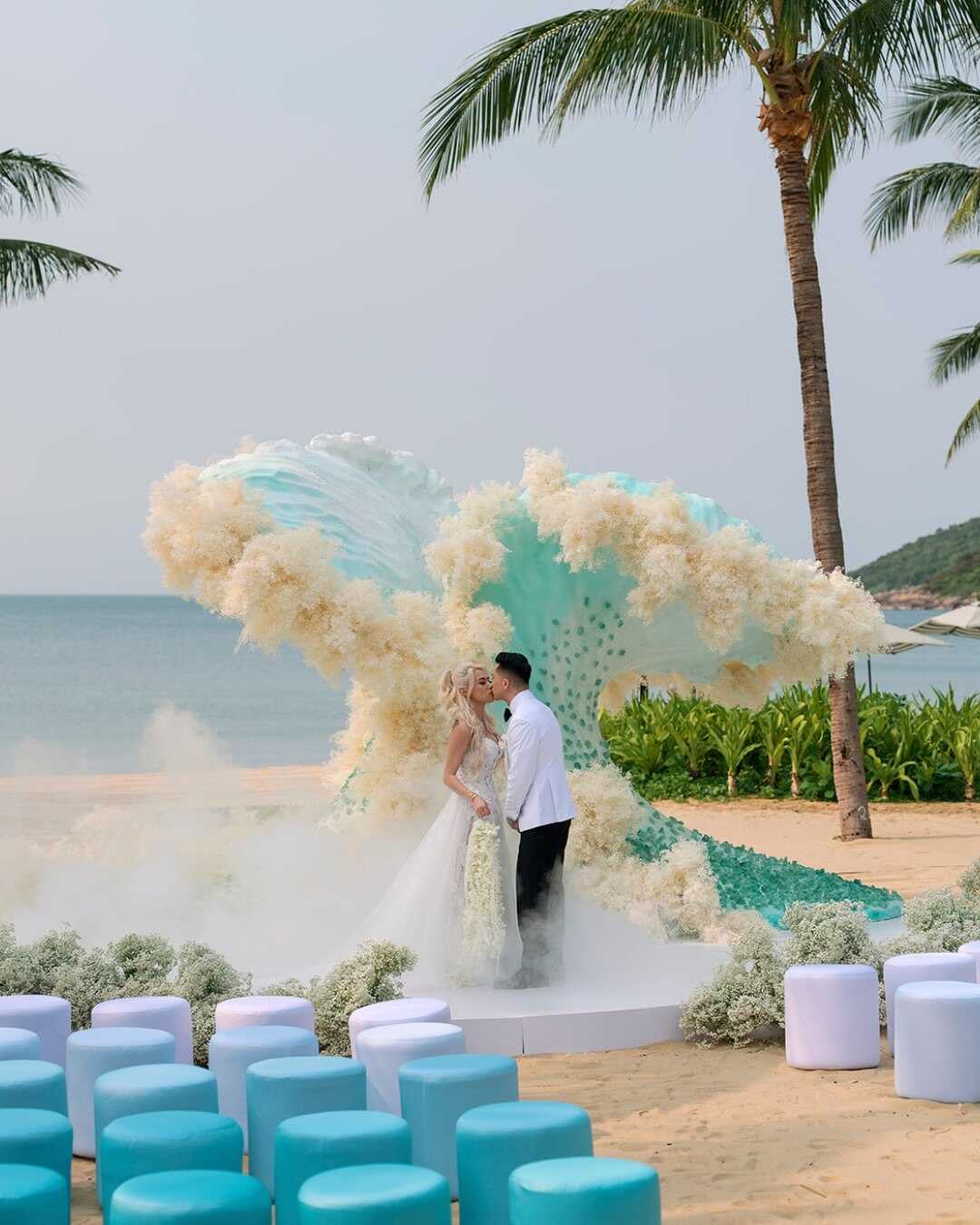
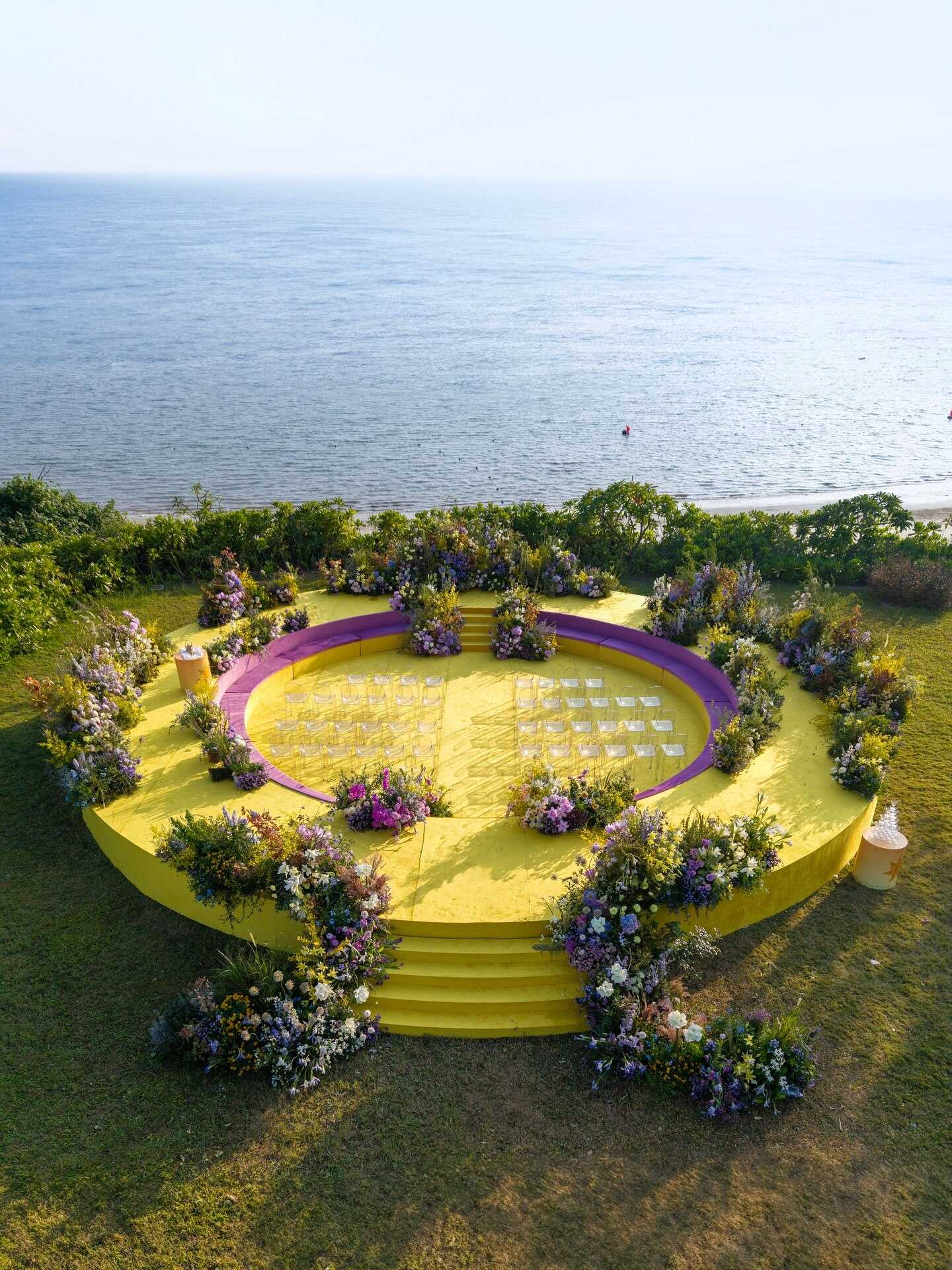
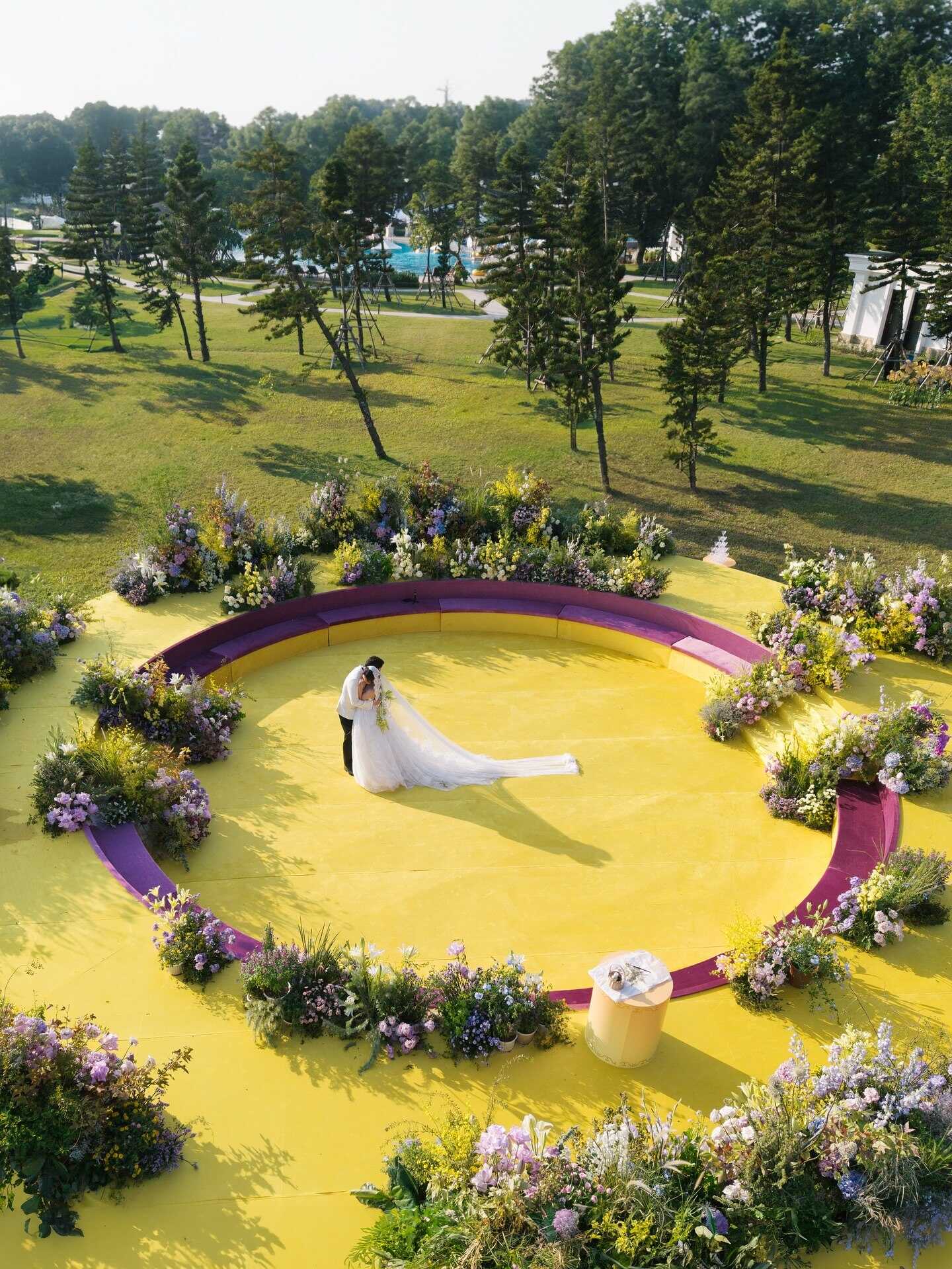
A handful of the ceremonies in 2027 are not primarily concerned with a particular decoration style but are based on a complete concept - an installation centered on one particular image or narrative, carried out with such dedication that it appears to be about the idea rather than just being attractive. There is a massive structure in the shape of a wave made almost entirely of fabric and flowers on a beach. Another example is a circular platform painted in vivid, unexpected colors instead of using neutral ones. There is also a sculptural archway in the form of a shell or a wing, greatly enlarged so that it is much larger than a couple standing underneath it.
That instinct is showing up across the industry under different names. "More couples are shaping ceremonies around a distinct mood or narrative instead of a traditional structure," says Distinctive Italy Weddings. "They want an intentional, personal experience with an emotional arc that reflects their story." It's the same idea driving the wave-shaped beach installation or the oversized sculptural arch - the concept comes first, and the decor exists to serve it.
The difference between these and a typical themed wedding lies in their scale and how specific they are. Rather than applying a theme to just a few minor details, a ceremony based on a creative concept sticks entirely to one main structure or idea and keeps all the other elements so simple that the concept remains the clear highlight. It is this focused approach that causes these ceremonies to come across as art installations before they are seen as wedding decoration, a perspective which is more and more what couples are looking for when they want guests to see something they haven't seen at any other wedding.
Getting this style right usually involves close cooperation between the couple and their designer well in advance of the wedding, since a truly bold idea, such as an oversized sculptural structure or a color scheme using fully saturated colors, requires a good deal of production time and a team who are comfortable building something that isn't available in a standard rental catalog. It is uncommon for such a setup to yield the same outcome when rushed and put in place in the last few weeks as it does when planned from the beginning.
Amphitheater Ceremony
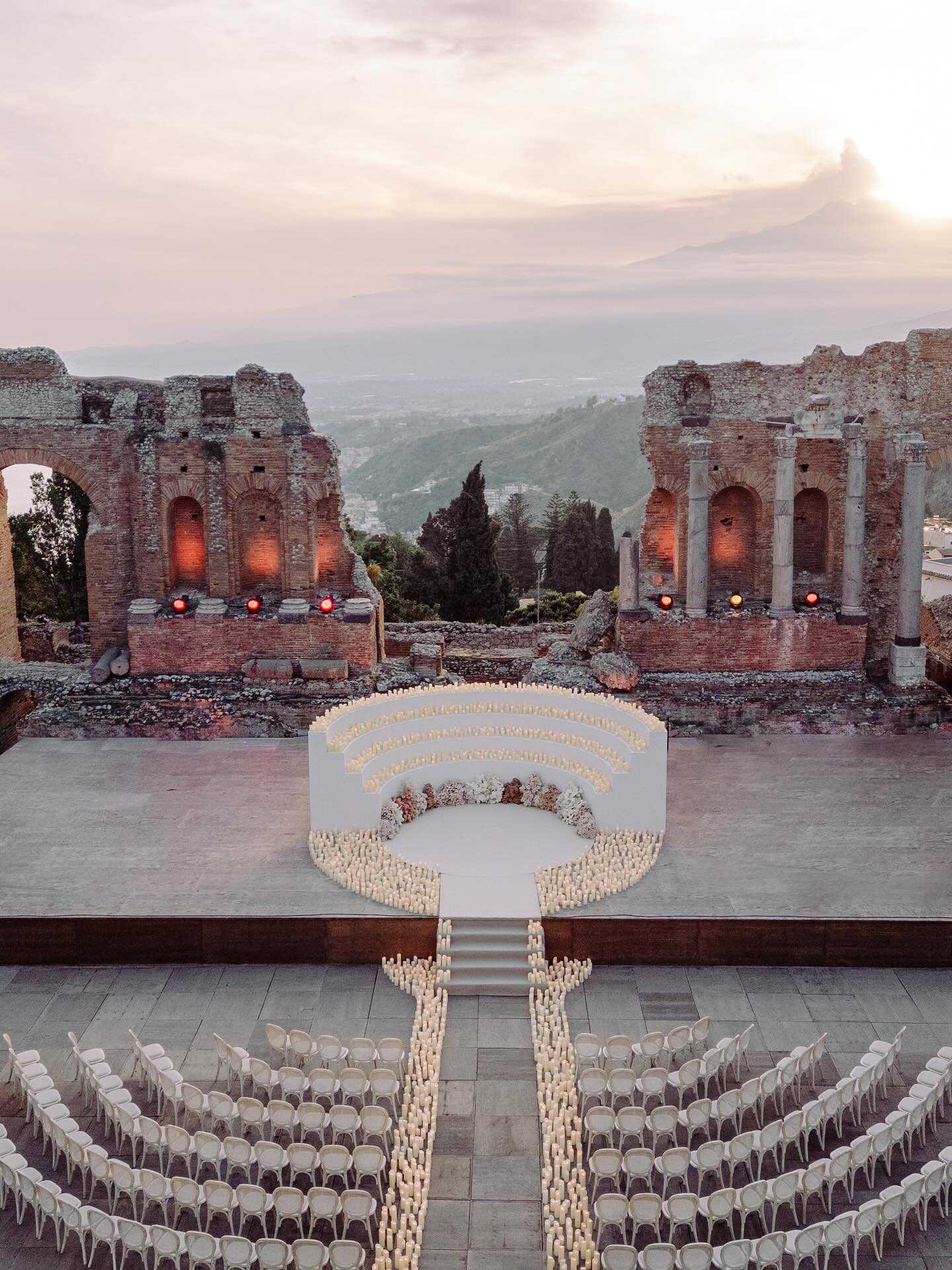
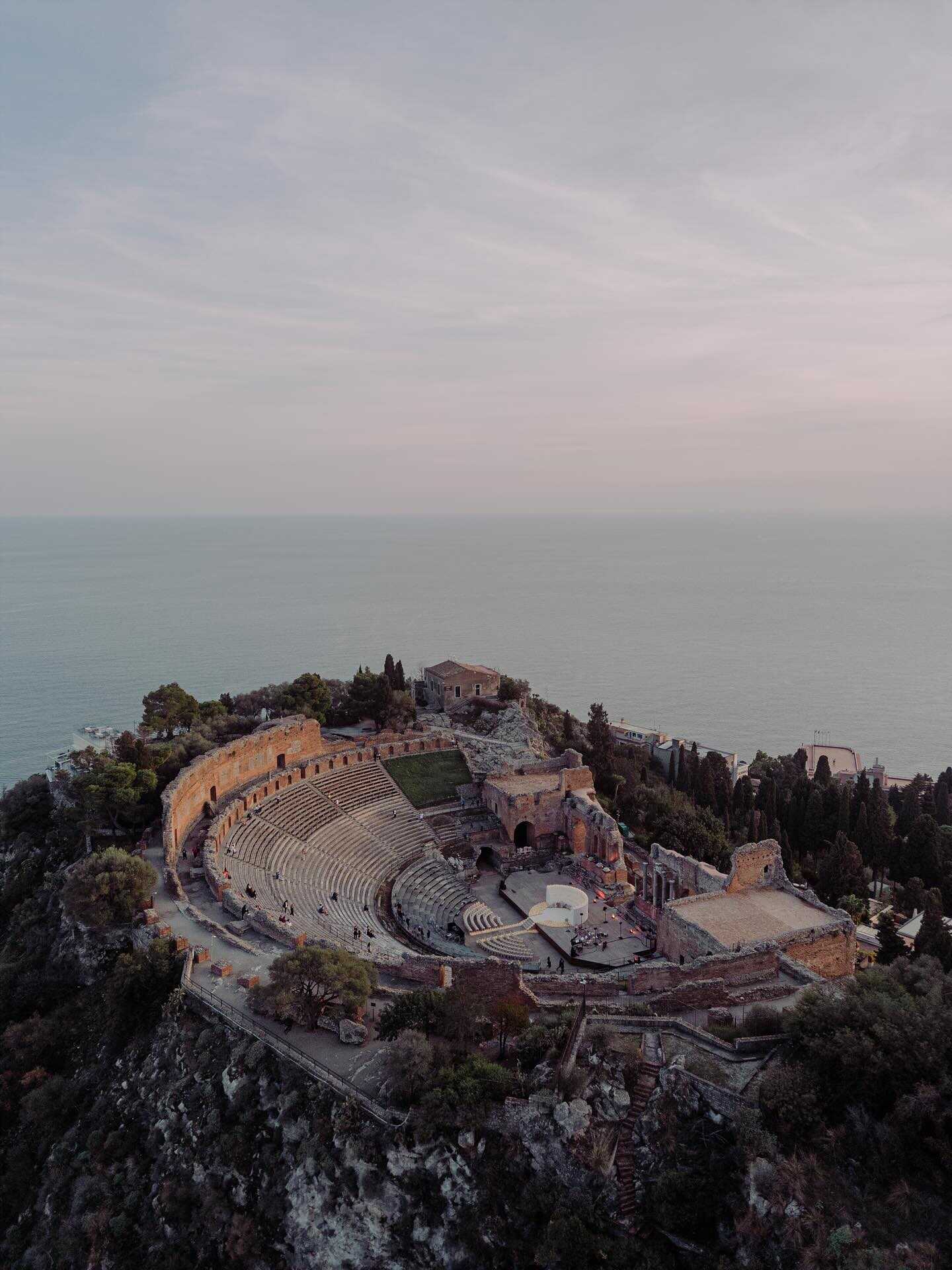
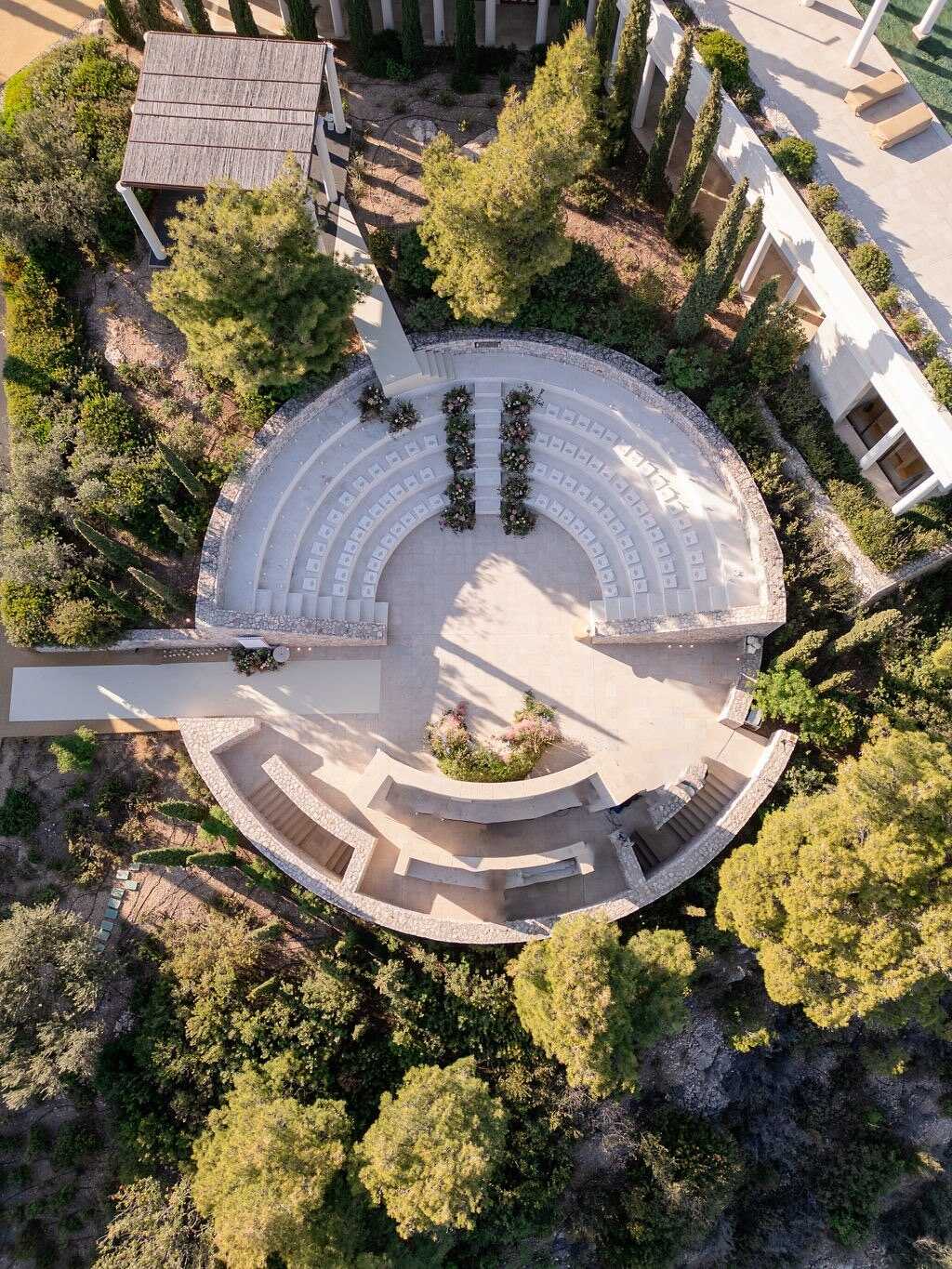
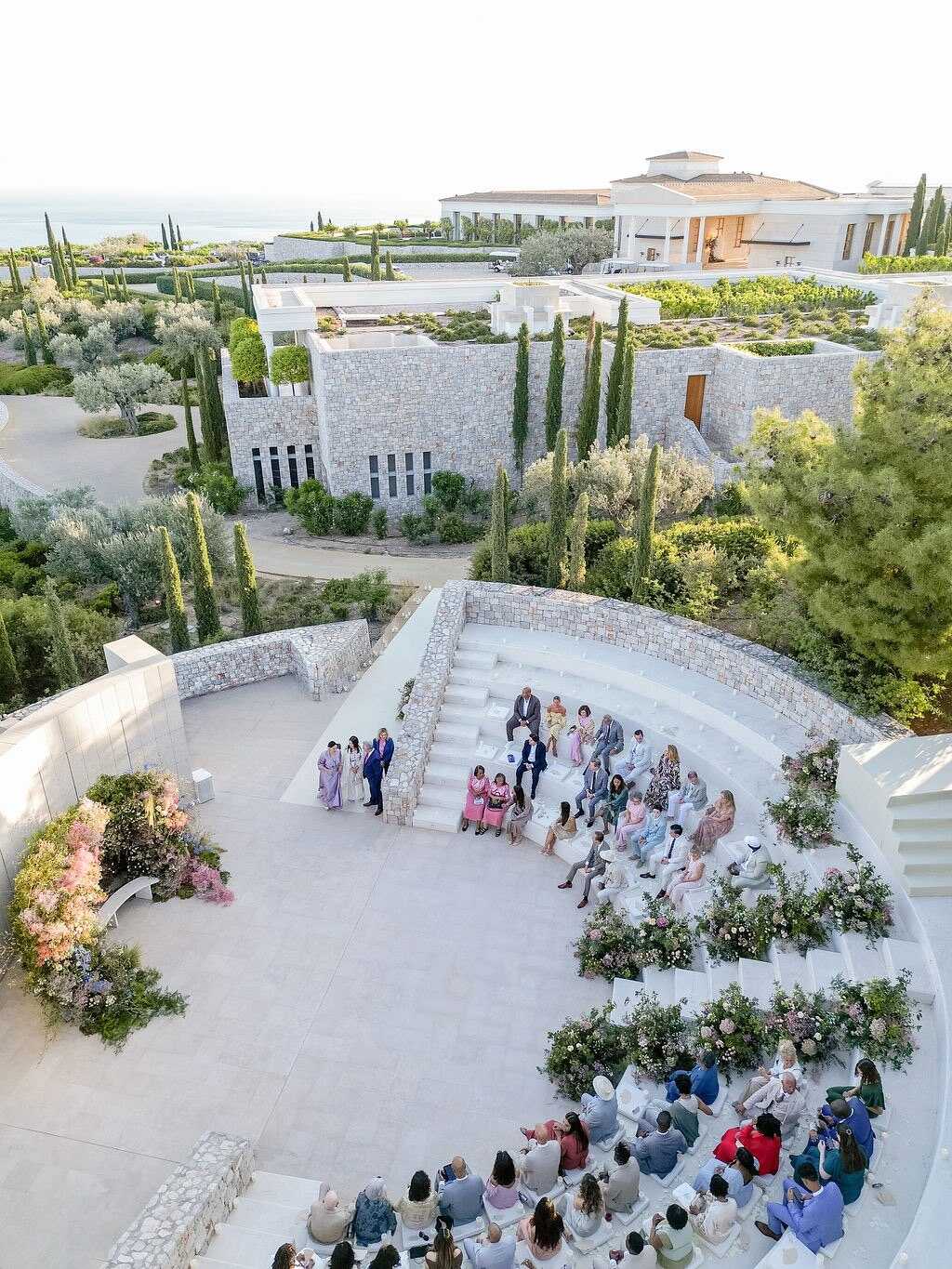
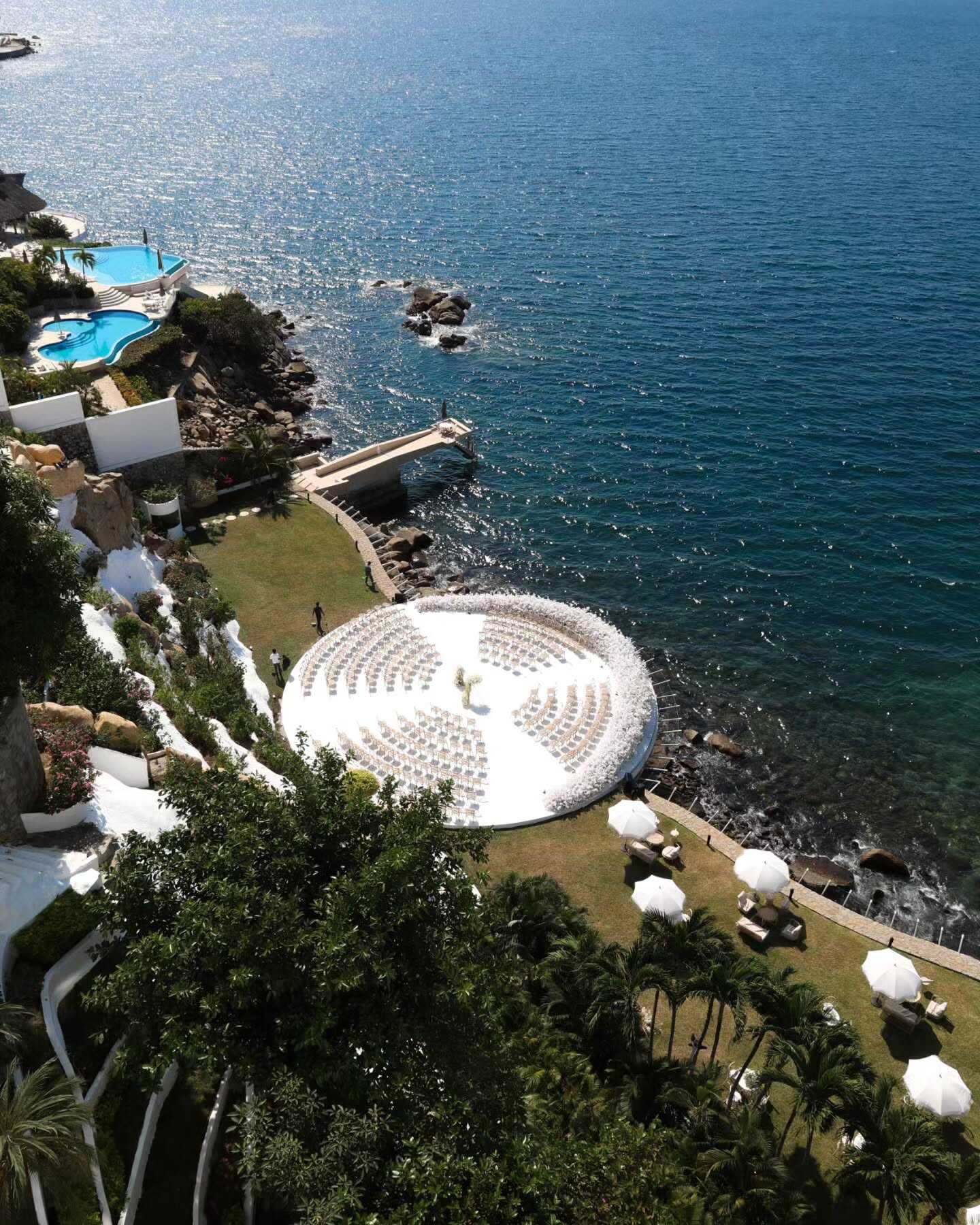
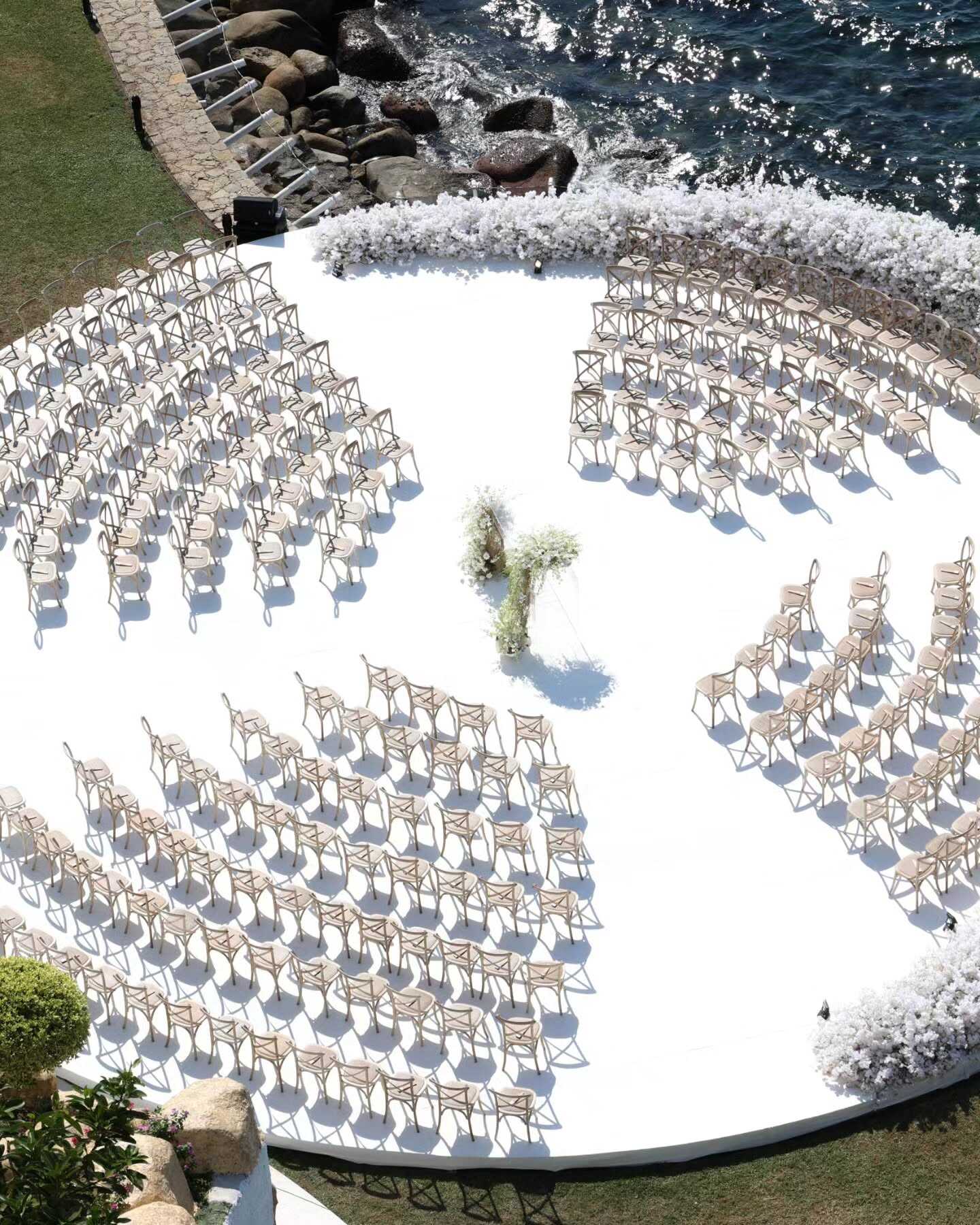
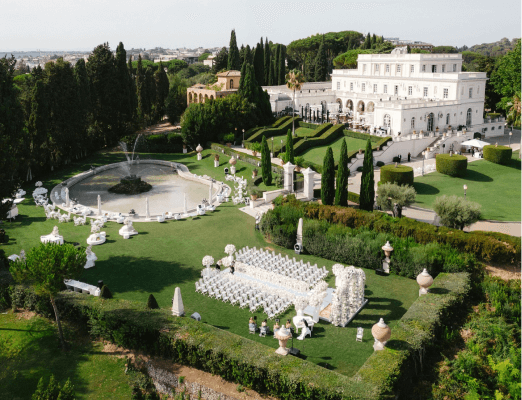
Tiered, curved seating has quietly become one of the most requested ceremony formats for couples who want every guest to feel like they have a genuinely good seat. Whether it’s an actual ancient amphitheater carved into stone or a modern architectural version built into a hillside or coastline, the format solves a problem straight-row seating never fully does - sightlines. Every row sits slightly higher and closer to the center than the one behind it, so distance from the altar stops determining how well a guest can actually see.
Natural or historic amphitheaters carry an obvious advantage: built-in seating means skipping chair rental entirely, and centuries-old stone architecture does most of the atmospheric work without needing additional decor layered on top. Modern architectural versions, often built directly into a coastal or hillside venue, achieve a similar effect through fresh construction - sweeping curved rows that face the same central point, usually with a dramatic natural backdrop like the sea or mountains completing the scene.
Circular and semicircular seating more broadly creates what designers call a natural amphitheater effect even without literal tiered stone, wrapping guests around the couple rather than lining them up in front. The format works particularly well for smaller, more intimate guest counts, where the sense of everyone being equally close to the ceremony matters more than accommodating a very large crowd.
Cylindrical and Square Chairs
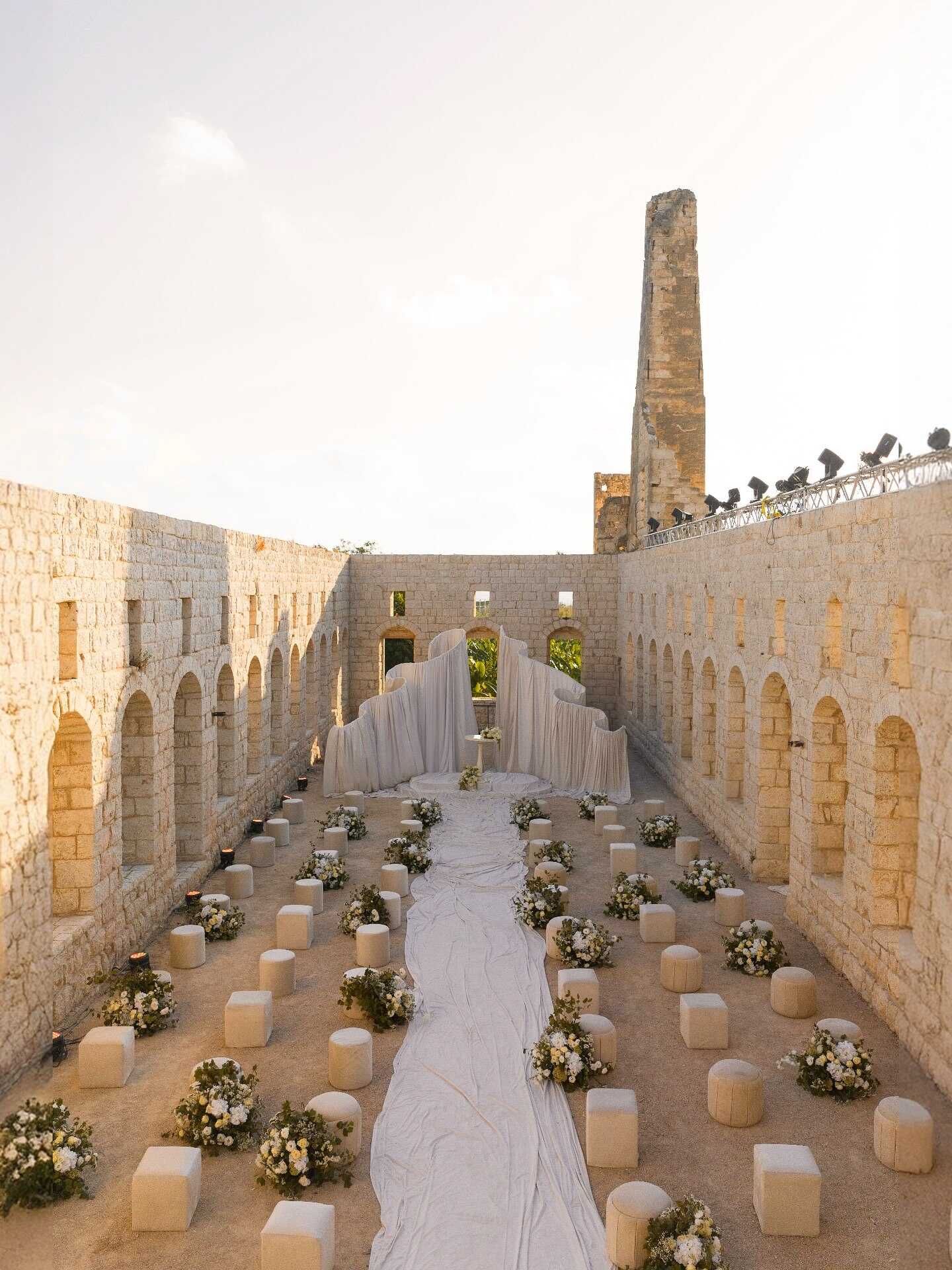
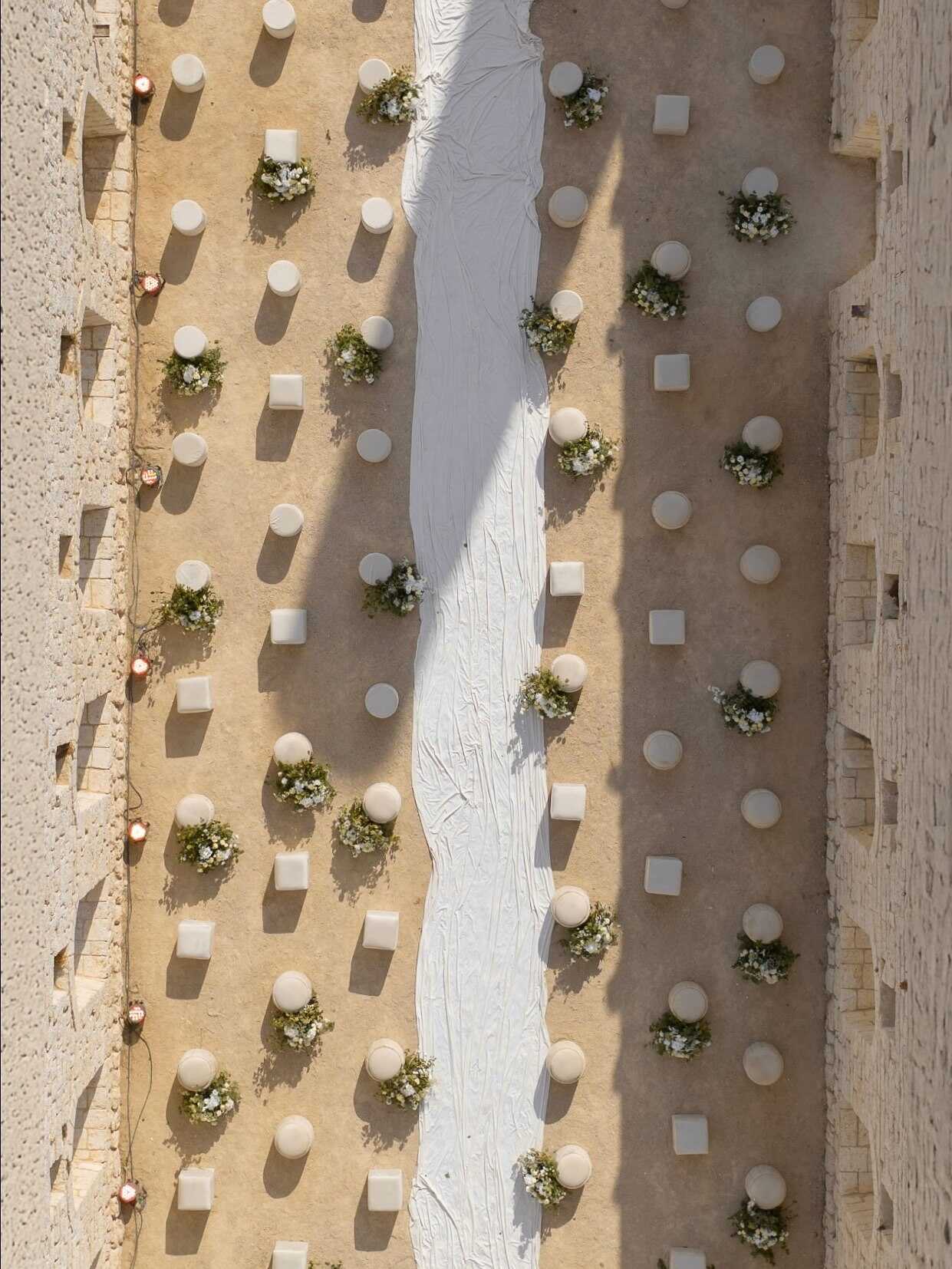
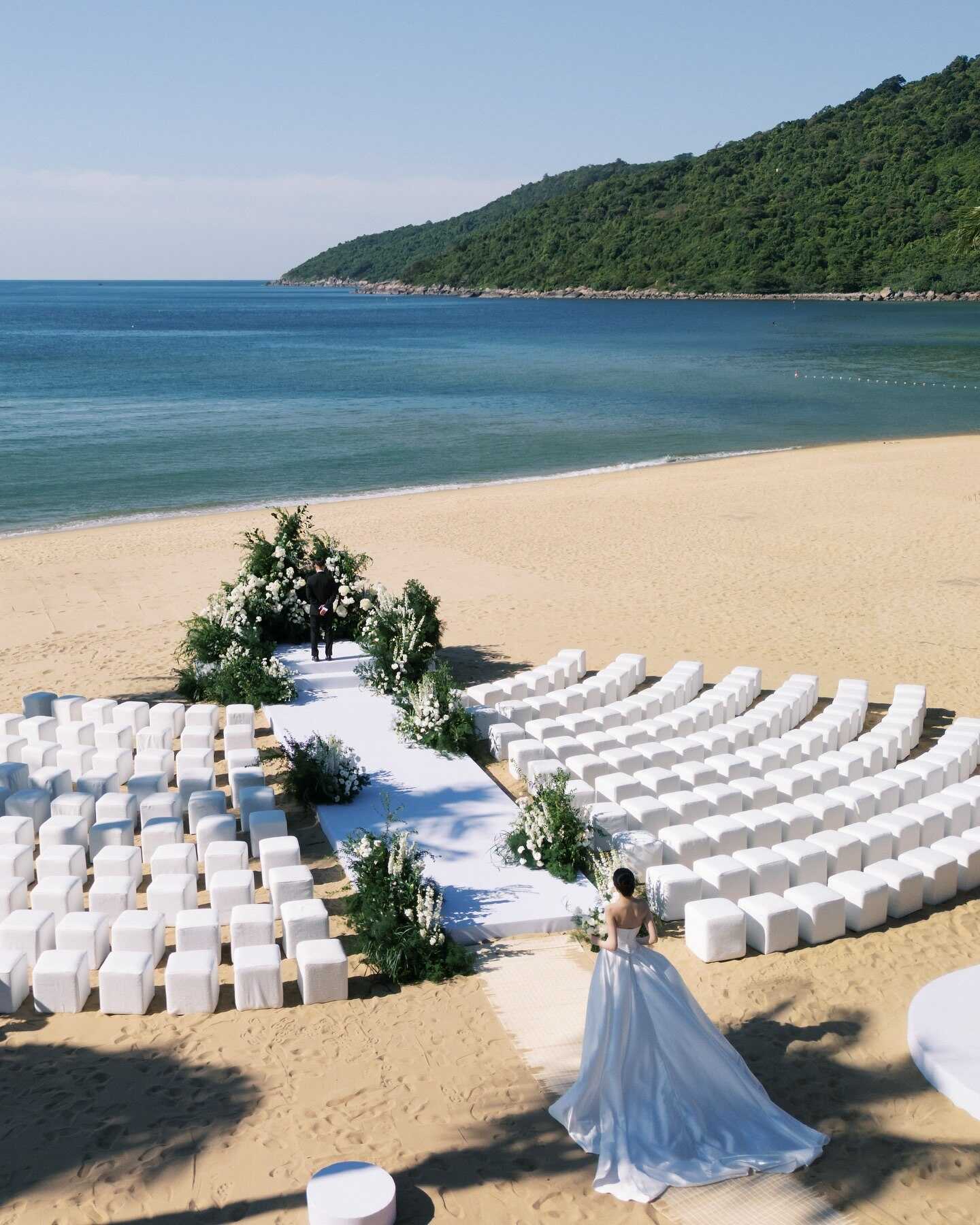
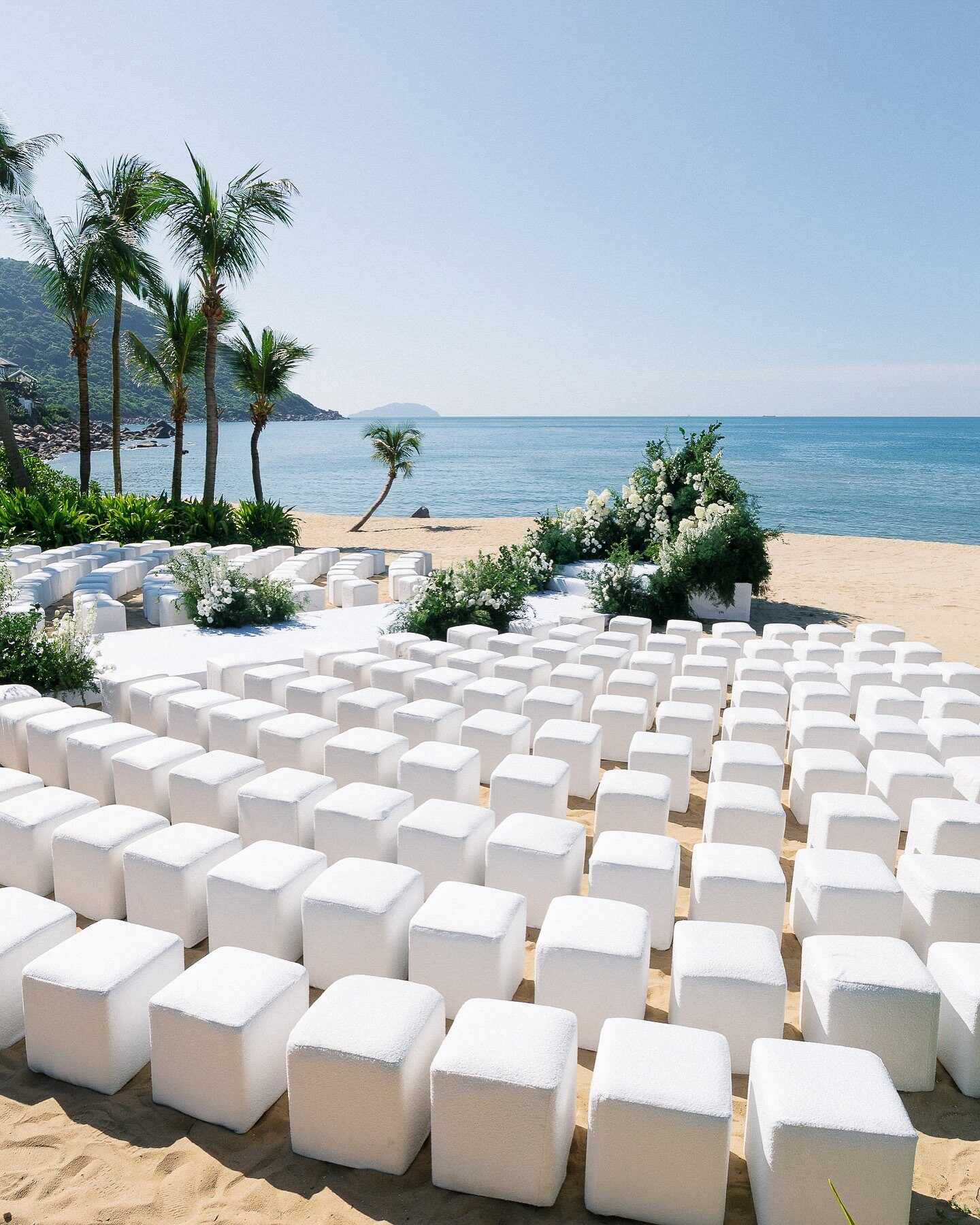
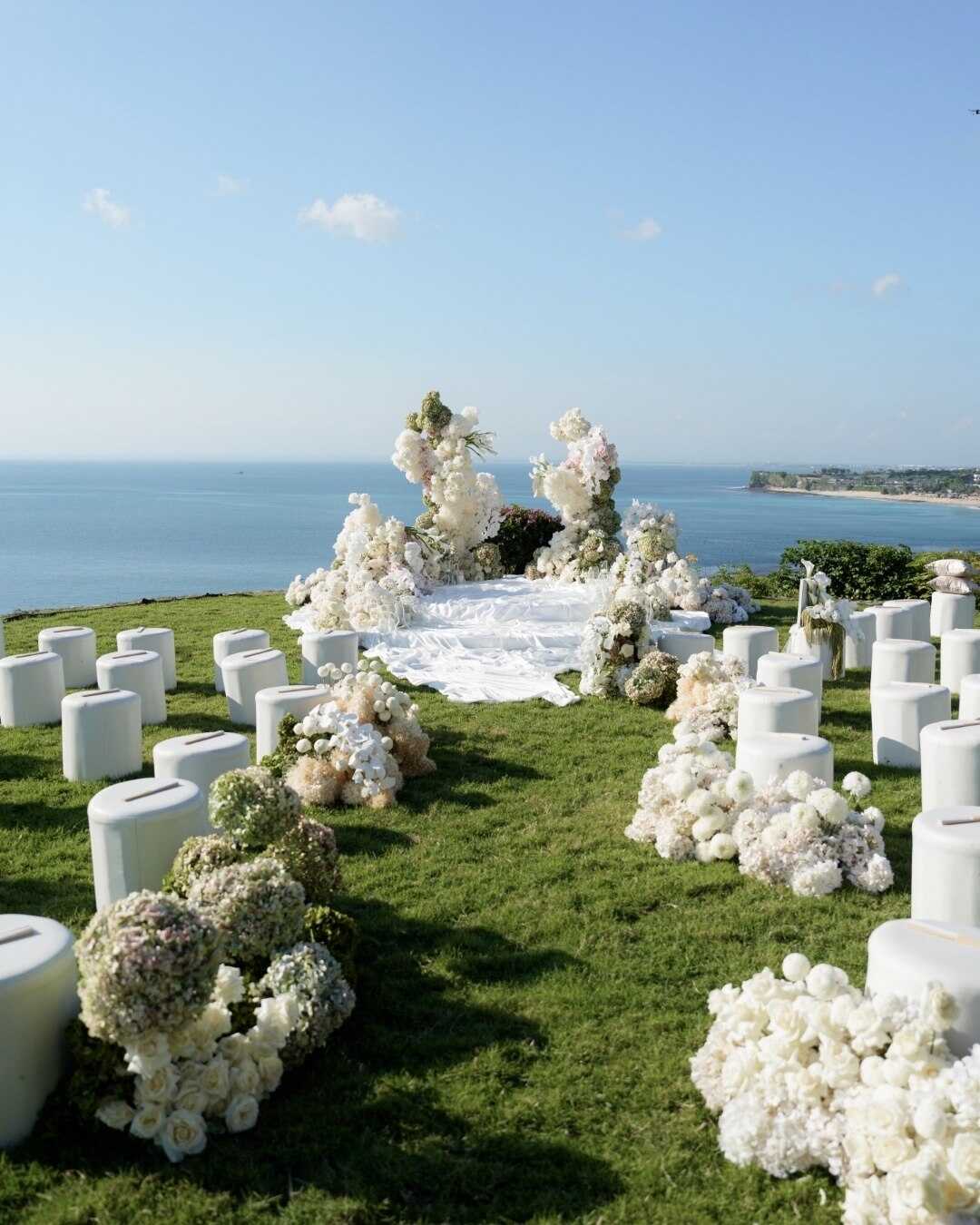
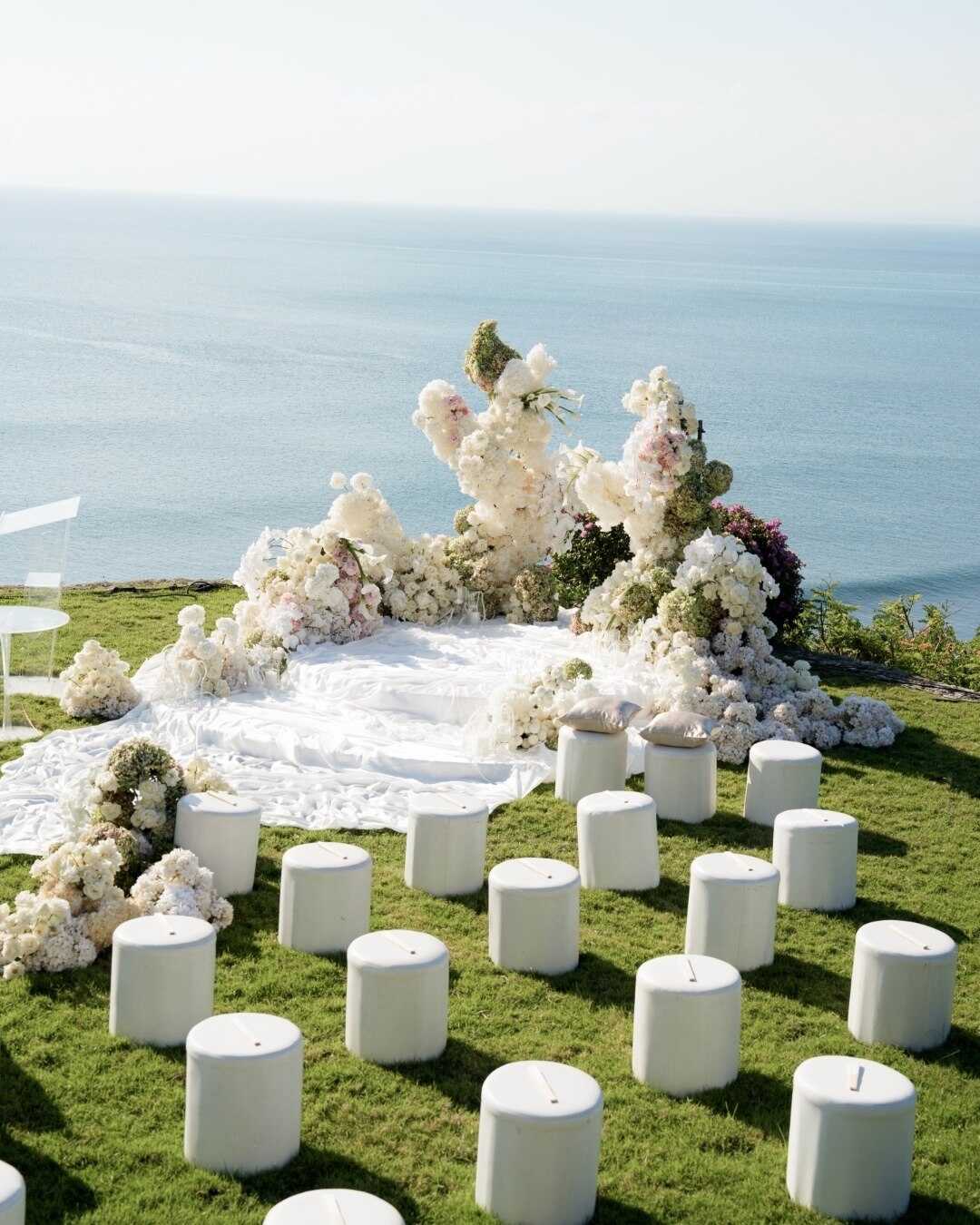
Traditional folding chairs are being replaced with pieces that have genuine sculptural presence - oversized cylindrical stools, cubed seating with clean geometric edges, and curved, capsule-shaped chairs that look more like gallery furniture than standard event rentals. Instead of disappearing into rows like a folding chair, this seating becomes part of the ceremony’s visual identity.
- Cylindrical stools - rounded, sculptural seating that reads as soft and modern, particularly striking in white or neutral tones against sand or grass
- Cube seating - sharp, clean-edged blocks that pair naturally with minimalist or architectural ceremony concepts
- Capsule and curved-back chairs - organic, almost furniture-showroom shapes that stand out especially well against a stark or desert-like backdrop
- Mixed-height seating - combining two shapes or heights to add visual rhythm to rows that would otherwise read as flat
This kind of seating tends to work best when a couple already has a strong overall concept in mind, since the chairs themselves become a visible part of the ceremony’s aesthetic rather than a neutral background element. It also photographs unusually well from above, given how differently these shapes read in an aerial shot compared to a standard row of white folding chairs.

Ceremony Ideas by Guest Count: Micro, Small, and Intimate
When considering these six trends, assess which ones actually work, and consider your guest count before getting attached to a particular style. A micro wedding ceremony idea based on an amphitheater or a serpentine aisle designed for hundreds of guests can look rather empty if only twenty people are present, whereas a fully developed creative-concept installation built for a small group can be very impressive precisely because nothing else is drawing attention.
| Guest Count | Best-Fit Trends | Why It Works |
|---|---|---|
| Very small (under 20) | Cave or boulder-framed altars, small circular seating, unity rituals | Intimate formats let atmosphere and meaning lead without solving for large-scale logistics |
| Small (20–80) | Serpentine aisle, modest amphitheater, creative-concept installations | The most flexible range — big enough to fill a layout, small enough to stay personal |
| Intimate to mid-size (80–150) | Amphitheater seating, theater-style circular layouts | Tiered or curved seating keeps sightlines strong as the guest list grows |
| Large (150+) | Amphitheater or theater-style seating specifically | Sightlines become a genuine logistical concern past this point, favoring formats built for scale |
Very small wedding ceremony ideas tend to fit the more intimate arrangements listed here best, as a group that size can fully use the atmosphere and significance without dealing with large-scale logistical issues. Small wedding ceremony ideas in the 20-to-80 range offer the most flexibility across the list, as they can comfortably accommodate a serpentine aisle, a modest amphitheater arrangement, or a creative-concept installation without appearing underfilled or overwhelming the space. This group size also generally represents the ideal point for unity rituals, since people can meaningfully take part in or observe them up close without the ceremony having to be too long.
None of this works as a formula, and that’s really the point. As Andreja Vukovic Weddings & Events puts it, "the 'timeless' ceremony - the vows, the readings, the presence of loved ones - is the only thing that truly anchors a wedding." The couples who created the most impressive ceremonies in 2027 aren't adhering to a checklist; instead, they select one idea that is genuinely meaningful to them and allow it to develop, whether that involves a single mirrored arch, a small number of chairs placed in a cave, or simply two minutes spent pouring sand into one common glass With six trends, one ceremony, and a whole range of ways to make it uniquely your own, Wezoree's Inspiration section continues, offering trends, vendor advice, and practical planning tips for whatever step comes next in putting the rest of the day together.

FAQ
What are the most creative 2027 wedding ceremony ideas?
Right now, the most popular trends include mirrored and glass decorations, weddings in natural locations such as caves or among rocks, serpentine aisles, bold and creative installations, seating arranged in the form of an amphitheater, and sculptural chairs that are either cylindrical or square. Among current memorable wedding ceremony ideas, couples are increasingly inclined to turn the ceremony site itself into something guests will remember.
What are good non-religious wedding ceremony ideas?
Most of the six trends go hand in hand with secular ceremonies, as they do not require a particular religious background to function; natural and landscape-based settings as well as creatively conceived installations are especially appropriate for non-religious wedding ceremony ideas since either the setting or the story itself can take on the emotional impact that a traditional service structure generally would.
How do I involve guests in my wedding ceremony?
Circular or amphitheater-style seating naturally makes guests feel more involved than a straight aisle does, since no matter which row they are in, everyone ends up closer to the couple. With spiral or concentric-arc arrangements, the idea is taken a step further by removing the notion of a fixed 'audience' - these wedding ceremony ideas achieve their effect through the physical arrangement rather than by including anything in the script.
What songs work well for a serpentine or amphitheater ceremony walk?
Since serpentine or circular routes usually take longer than couples expect, it is a good idea to time the walk while practicing. Because these arrangements generally involve a longer walk than a normal straight aisle, many couples choose a slightly longer instrumental piece to match the slower pace rather than a short traditional processional.
What are simple wedding ceremony ideas for a small budget?
In natural settings, such as a landscape with rock formations, mature trees, or water features, the scenery itself does most of the decorating, providing the visual effect without any installations. Likewise, a small amphitheater with pre-existing tiered seating eliminates the need to rent chairs, which makes both strong examples of simple wedding ceremony ideas for couples on a tighter budget.
Is a mirrored aisle practical for an outdoor wedding?
Certainly, although this depends on the surface and the weather -mirrored platforms and runners work best on flat, stable ground and can be affected by wind or uneven surfaces - it is a good idea to consult a rental company experienced in outdoor setups about the specific installation details. Many couples choose to combine a shorter mirrored section near the altar with a more traditional runner for the rest of the aisle, achieving the desired visual impact without the full logistical challenge.
What's the difference between an amphitheater ceremony and theater-style seating?
An amphitheater ceremony typically refers to genuinely tiered, stepped seating - either a natural or historical stone construction or a more modern architectural one - with each row positioned higher than the one directly in front of it. Instead of using changes in elevation, theater-style or circular seating creates a similar feeling of intimacy and shared lines of sight on level ground by arranging the chairs in curved or concentric rows around the couple.
What should I consider when choosing a wedding ceremony arch or backdrop?
The background should fit the scale of the setting rather than try to outdo it - a mirrored arch suits a fairly simple landscape, while a striking sculptural structure needs plenty of open space around it to read as a coherent concept. Among wedding ceremony backdrop ideas, the most effective ones have one thing in common, no matter what their style is: they are designed so that they can be seen from both the aisle and from directly above, since a large proportion of this year's ceremony designs end up being captured in an aerial photograph.