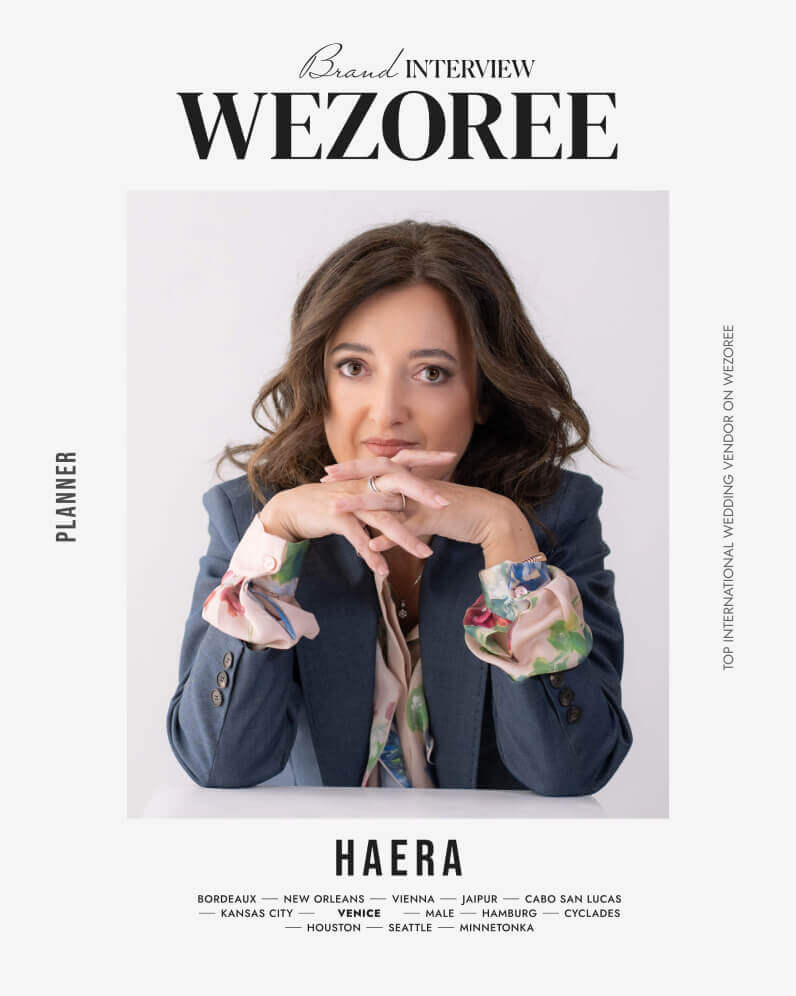
HAERA: Where Architecture and Wedding Planning Become One
AUTHOR: Natali Grace Levine
READING TIME: 9m 9s
PUBLICATION DATE: 08/07/2026
UPDATED: 08/07/2026
AUTHOR: Natali Grace Levine
READING TIME: 9m 9s
PUBLICATION DATE: 08/07/2026
UPDATED: 08/07/2026
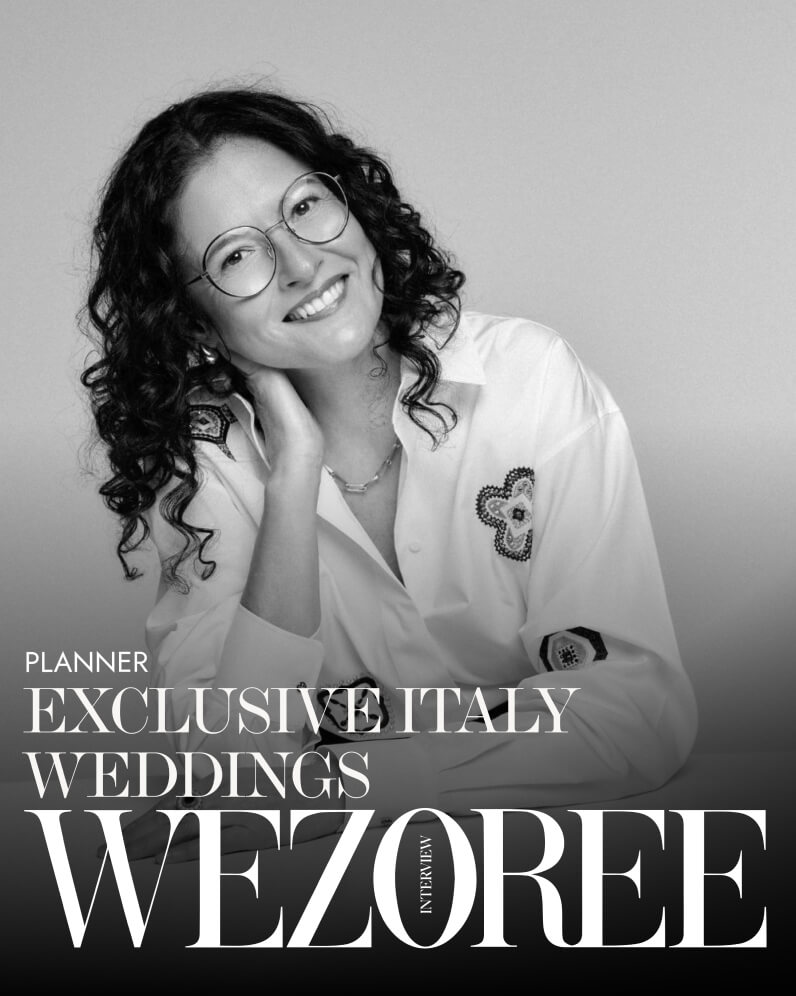
Before HAERA existed, there was nearly a decade spent designing buildings that had nothing to do with weddings at all. Katiuscia Minozzi, founder of the Italian-based brand, started in architecture and design back in 2001, moved into event planning for international couples in 2010, and launched HAERA itself in 2015 - and the two disciplines never really separated.
Based between Venice and Lake Garda, with newer work now reaching Lake Como and the Dolomites, Katiuscia takes on a deliberately small number of weddings a year, built around a belief that the venue itself should say something true about the couple getting married in it, not just look impressive in photos.
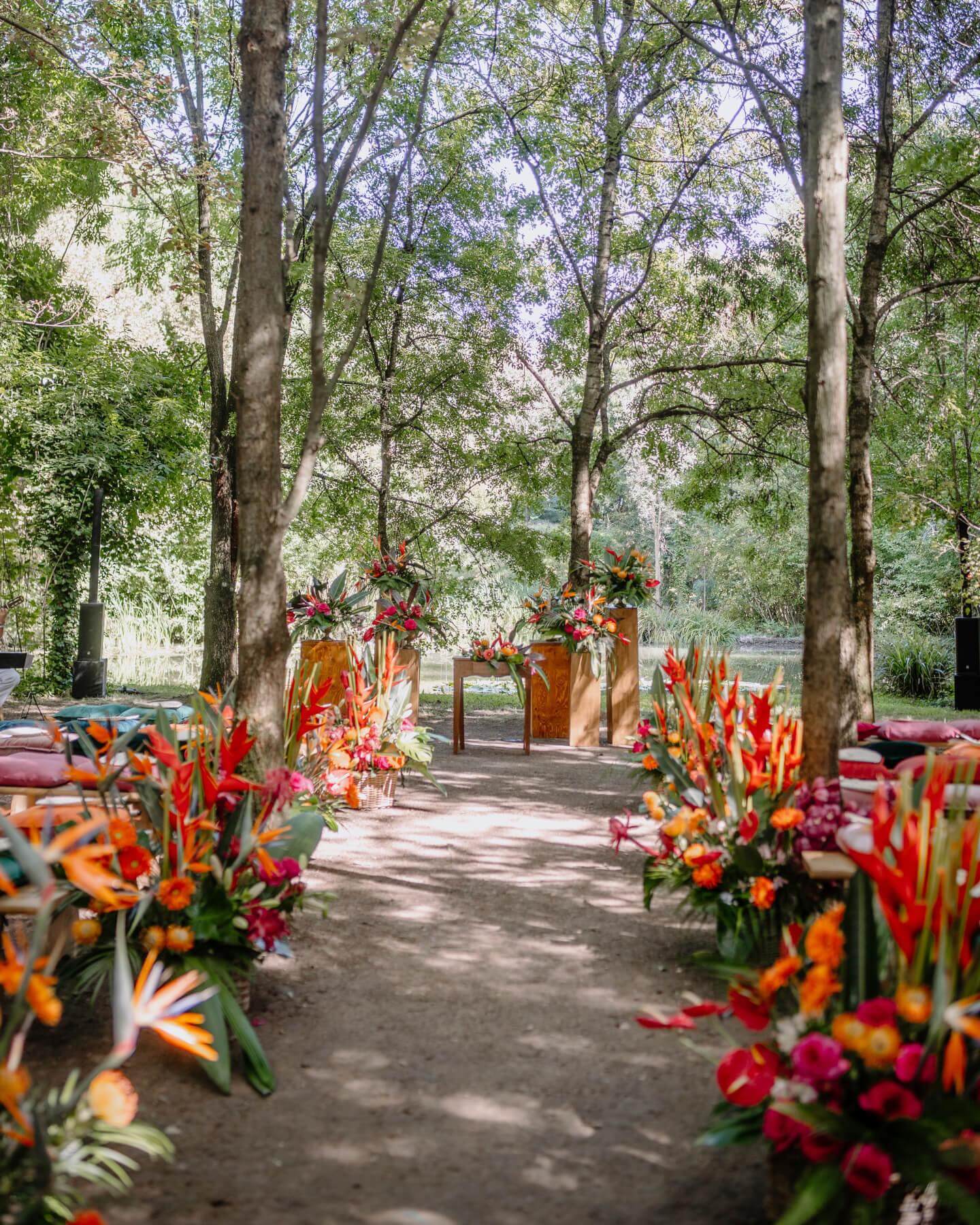
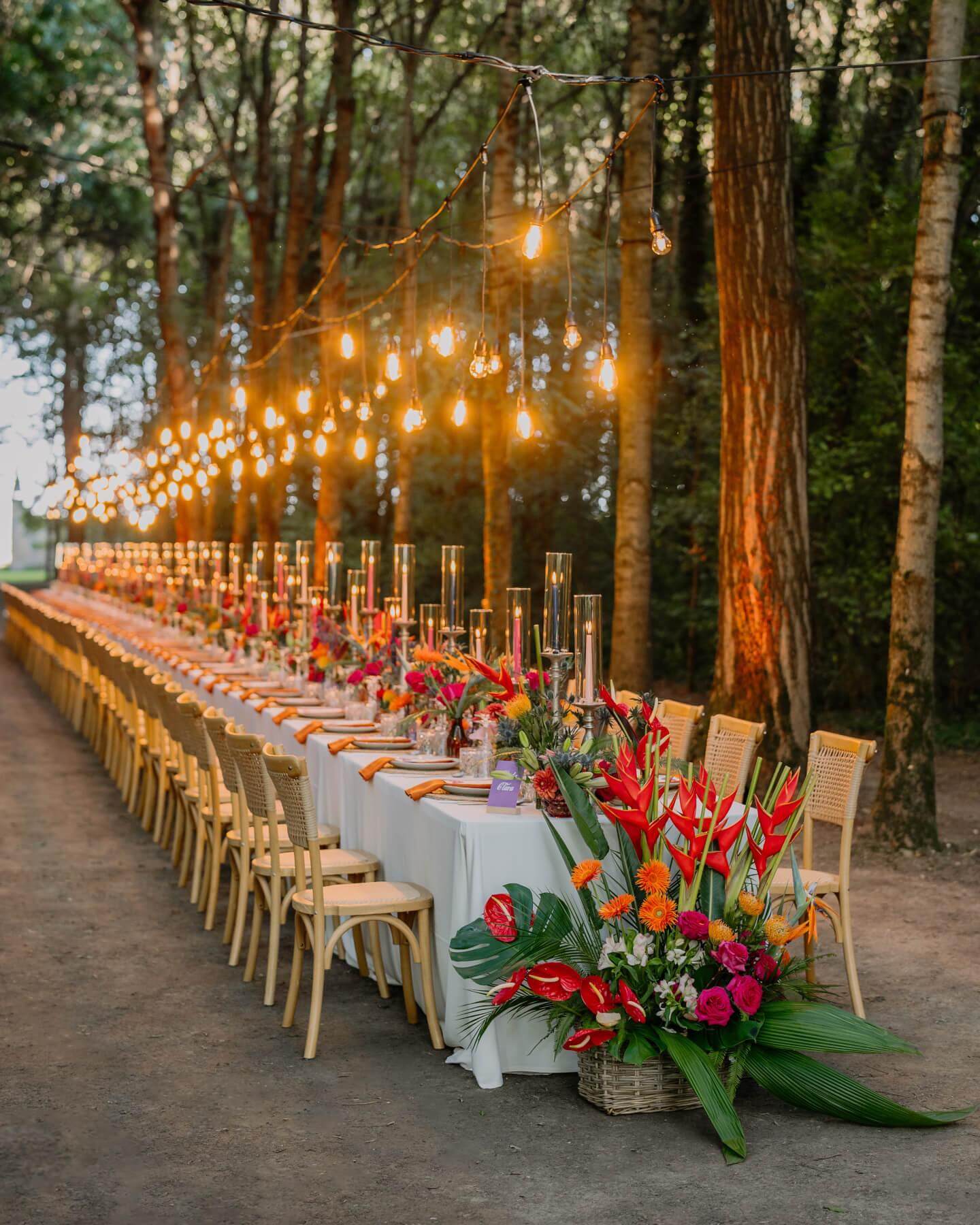
The move from architecture to weddings wasn't a rejection of the first career - it was an extension of it.
"In 2001, I started working in the architecture and design, which is a creative area, I had several experiences in great projects in Italy," Katiuscia explains. "In 2010 I felt it was time to make a change and have a new experience. So I was ready to jump! I started working in the event organization for foreign couples coming from all over the world."
Working across cultures reshaped more than a career path. "At the beginning, the idea to work with different cultures made me so excited, it was a chance to know more about the other countries and their different visions," she recalls. "This experience changed a lot my approach in life, for example it made me more flexible to consider different points of view and open my mind to new borders."
The two backgrounds still work together today, ten years after HAERA became its own brand. "After my background in the Italian architecture and design and after the experience in the event planning for foreign couples, I can say that their combination is a nice union, one affects the other, making them even better and stronger," she notes.
 My work in the architecture is more creative and my event planning is more structured and more orientated in the design.
Two challenges from early in Katiuscia's career still stand out clearly. The first came from stepping into an unfamiliar culture. "I think the biggest challenge was at the beginning of my career, when I had my first Jewish rite - a new world opened in front of me. It was a new culture, and it fascinated me a lot," she recalls.
"It was a great adventure to guide them across this process, rich in rites, and understand how their faith was so close to their ordinary lifestyle. I think it was a great chance to learn a lot about world cultures and how it's important to understand the meaning before doing anything, because everything you plan needs to reflect their concept."
The second came from a city she actually knew well, which turned out to matter enormously. "Another memorable challenge was my first big wedding in Venice, it was so difficult to coordinate the logistics in such a complex city," she recalls.
"Four days of hard work to organize the set-up, bringing all the equipment, thinking that I could not make any mistake, as when you are in the middle of the lagoon you can't take a car and move quickly everywhere to sort a problem. The point is that in Venice, any mistake is a problem within a problem!"
What got her through it was having grown up there. "I know Venice, as I was born and grew up in this area, so I know how to move around - this was really a great help to organize that wedding," she adds.
"This experience confirmed how important it is to know the place where you work. I can't imagine how the event would have gone if I hadn't known the city thoroughly."
Ask Katiuscia about taking on weddings outside Italy, and the answer isn't really about geography at all.
"I'm more than happy about the idea to work worldwide, but I know how difficult the event planning is in an unknown location where you never lived before," she explains.
"The success of an event depends on several factors, one of them is knowing the location, which is essential. For example, Venice is a very complex city, you have to know it and how to move around." That said, geography isn't the real filter for taking on a wedding somewhere new. "The choice of the venue for a couple is not left to chance, maybe based only on the beauty of the venue, but the choice of the venue needs to have a deeper meaning," she says.
"In other words, the venue needs to tell about the couple itself, and this is one of the reasons that makes me excited to work worldwide! So, I'm more than happy to work outside Italy if the dream venue of a couple is abroad."
That philosophy took years to arrive at. Early on, the focus was different. "At that time my main focus was only the aesthetic aspect of the event, and it was the part of the job that mostly fascinated me," she admits.
"But after years of work I developed a new vision. I yearned to give life to experiences with a deeper meaning - not only a trendy event, but I wanted to tell the stories that could imprint memorable emotions." As Katiuscia puts it now, "The wedding planning is 'communication,' an expression of two lives at the beginning of their path, and it's always an honor to tell about them."
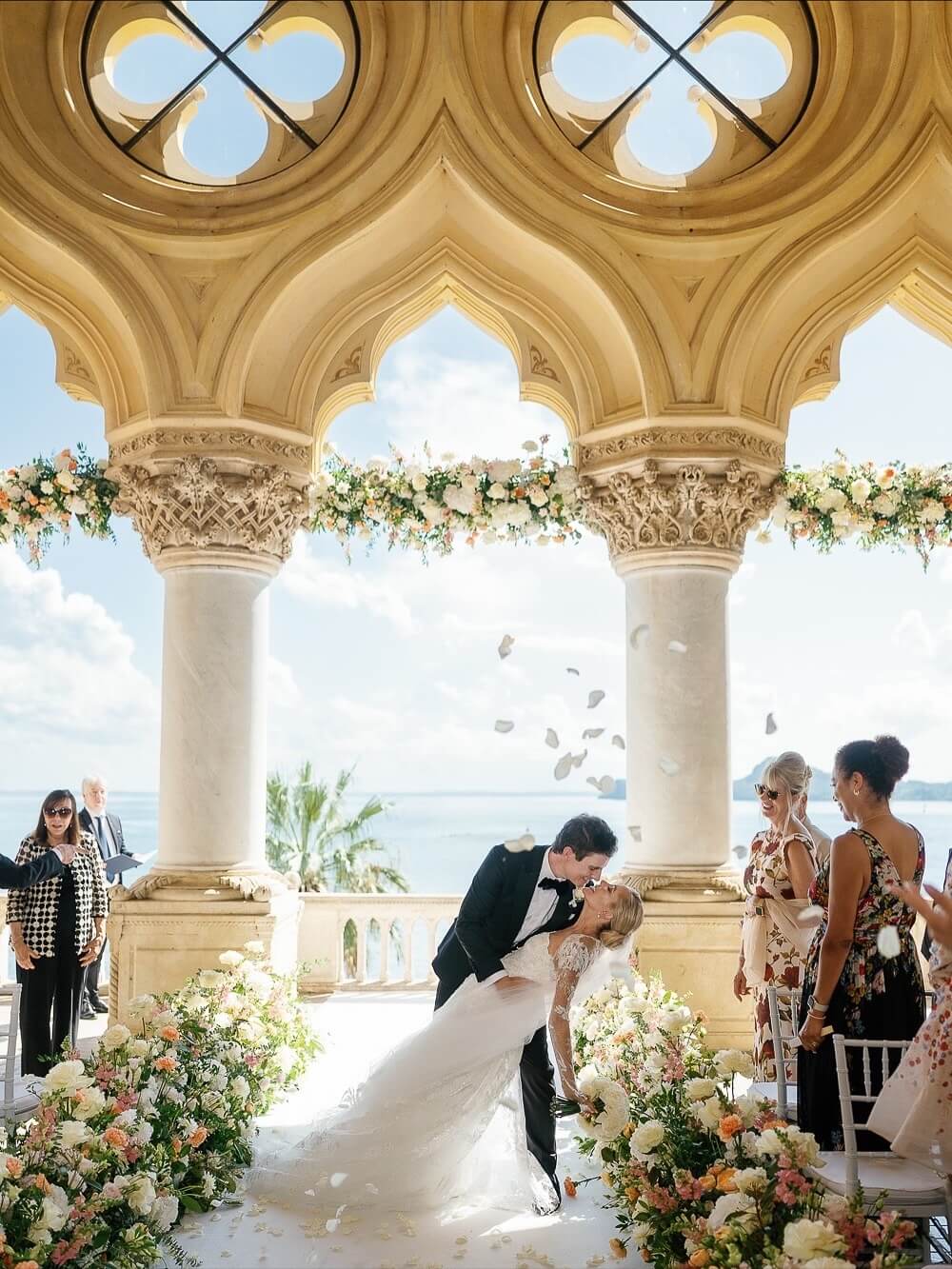
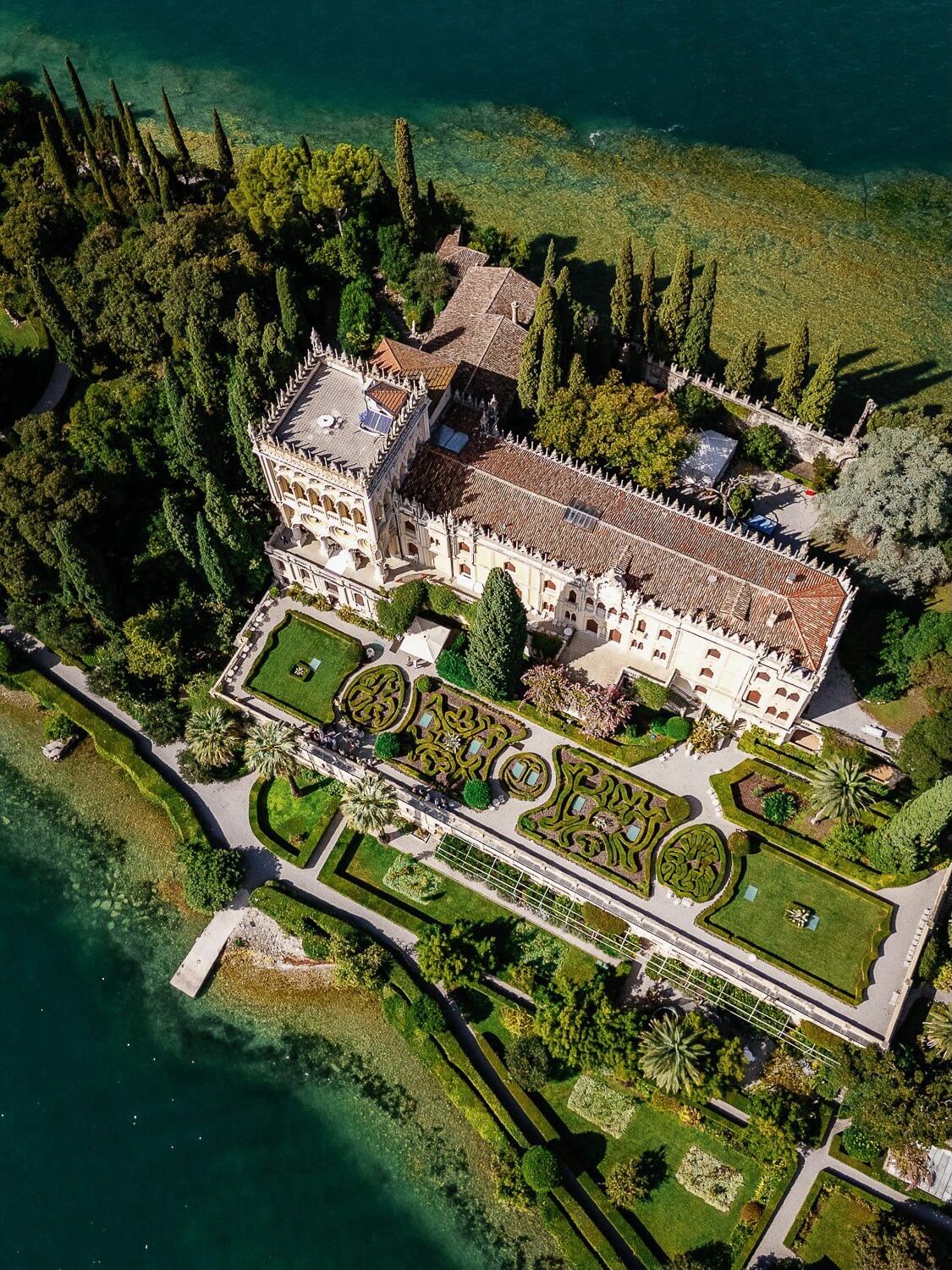
Isola del Garda has been part of Katiuscia's work since the very beginning. "Isola del Garda is the main location I work with, I started working there in 2010, so I perfectly know the venue and its difficult logistics," she says.
Since it's an island, each time it's essential to perfectly coordinate the vendors involved and organize a detailed timeline that allows each vendor to work easily. I also mainly work at Torre San Marco at Lake Garda, it offers an amazing view over the lake and a beautiful ancient tower that makes the venue so special.
"I think it's even more interesting to develop the event in two different venues: maybe the ceremony at Isola del Garda and then the reception dinner at Torre San Marco. I think it's a fantastic combination, two different vibes for the big day." For couples looking for something quieter, the lake has smaller options, too. "There are some interesting venues in Sirmione village and Salò village," Katiuscia notes. "They are not very popular, but they are even more interesting thanks to their history that makes them unique."
Valpolicella, the wine region east of the lake, holds one venue in particular. "One of the best venues in the heart of Valpolicella is Villa della Torre in Fumane village," she says. "It's a Renaissance villa surrounded by the vineyards in a timeless atmosphere - it's a paradise."
People often talk about Venice in ways that surprise most visitors. "Most people think that the most popular areas are the best, but the fact of the matter is that there exist several unknown areas that best express the essence of the Venetian vibe," she explains. "The heart of the city is full of palaces and houses, and the calle, the typical local streets, are so narrow. It's perfect for small celebrations with a soft vibe, nothing too noisy, but something that gets you close to the local culture."
Beyond the calle, the lagoon opens up entirely. "Venice also has a vast lagoon with lots of islands, it's a paradise rich in history," reflects Katiuscia.
"Murano, Burano, San Clemente, Santa Cristina, Torcello are the main islands in the lagoon. I love their silent atmosphere - this is really a great chance to know the authentic essence of Venice, far from the contemporary hectic lifestyle." Lake Como, by contrast, is described as unfinished territory. "I think today, more than ever, Lake Como needs new visions, a new imprint to really make the events unique, a new gloss to stand out from the most popular trends," she says. "I'm working on it now, it's my new challenge."
Katiuscia's calendar stays deliberately small. "Because this is not a commercial agency but the main focus is the creation of events with a deeper meaning, I don't think it's possible to work on a large quantity of events," she explains.
"Each wedding is unique and needs dedication and a great effort to understand the soul of the couple and plan an event that fully represents them. I believe the number of weddings possible in a year also depends on the kind of events themselves - however, they could be in a range of 5 to 10 maximum."
Getting there follows a set process: understanding the couple's expectations and priorities before anything else, building a realistic budget early so nothing derails the plan later, choosing a venue that fits both the couple's style and their finances, working through vendors and design once the practical groundwork is settled, and closing everything out with a rehearsal a month before the wedding - a step Katiuscia considers essential for how comfortable a couple feels on the actual day.
A wedding-day timeline, in Katiuscia's approach, isn't built to be followed exactly.
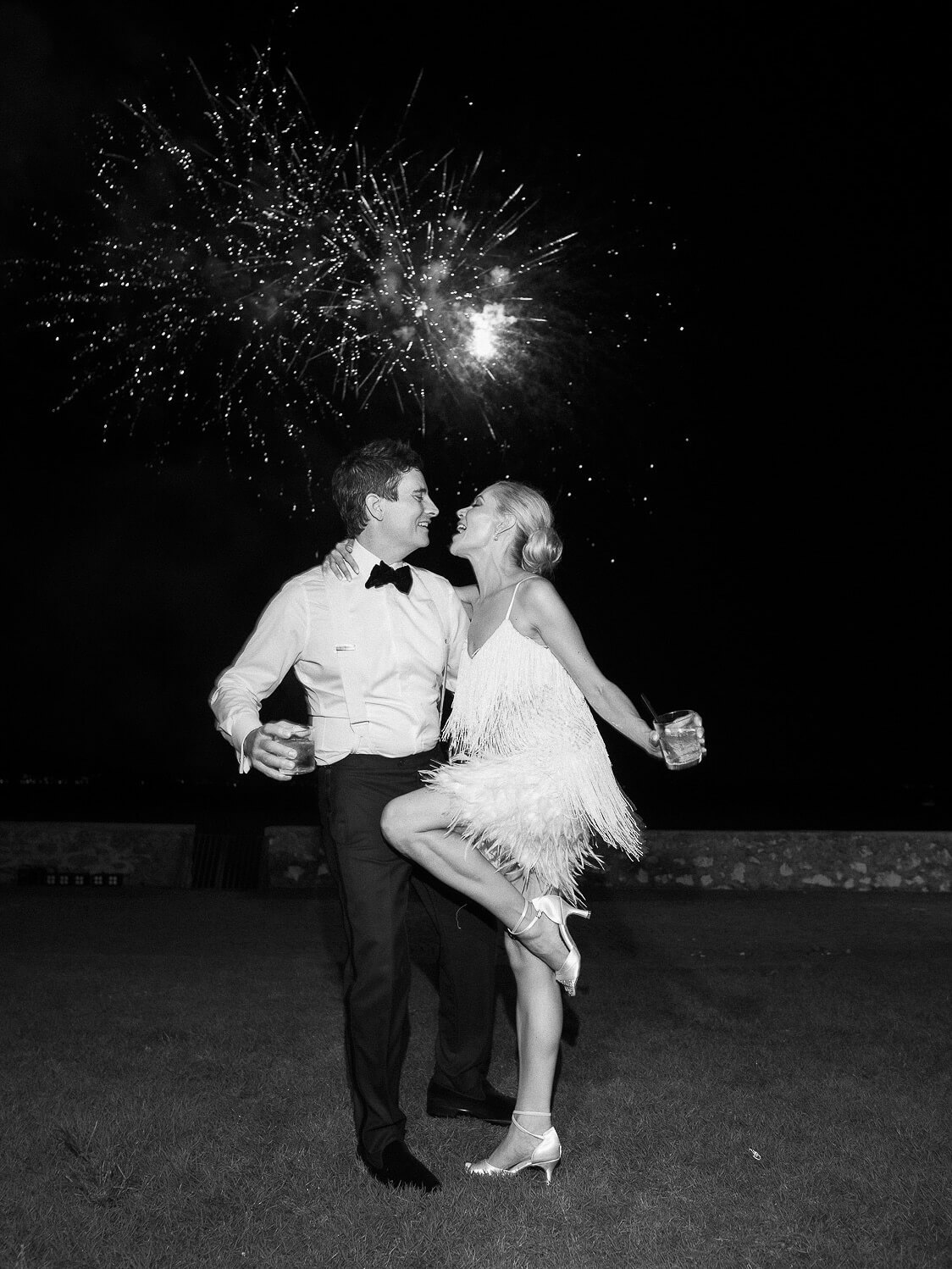
"The wedding day always holds big emotions for everyone. It requires attention to detail, coordination, and constant observation of timing," she explains. "Sometimes the day is so full of moments that it is impossible to do every single thing that has been planned. That is why it is useful to have a programme, a timeline that marks the sequence of all the important moments." The plan has to leave space for what it can't predict. "The timeline can't be too tight, but it needs to consider possible unpredictable events that can affect the plan for the day," she notes.
"For example, on the wedding day maybe a funny moment happens where the guests enjoy the time - at that point it makes sense to grant some more time for that moment, as it will become a memorable part of the day. Or maybe the weather changes and we need to readapt the plan."
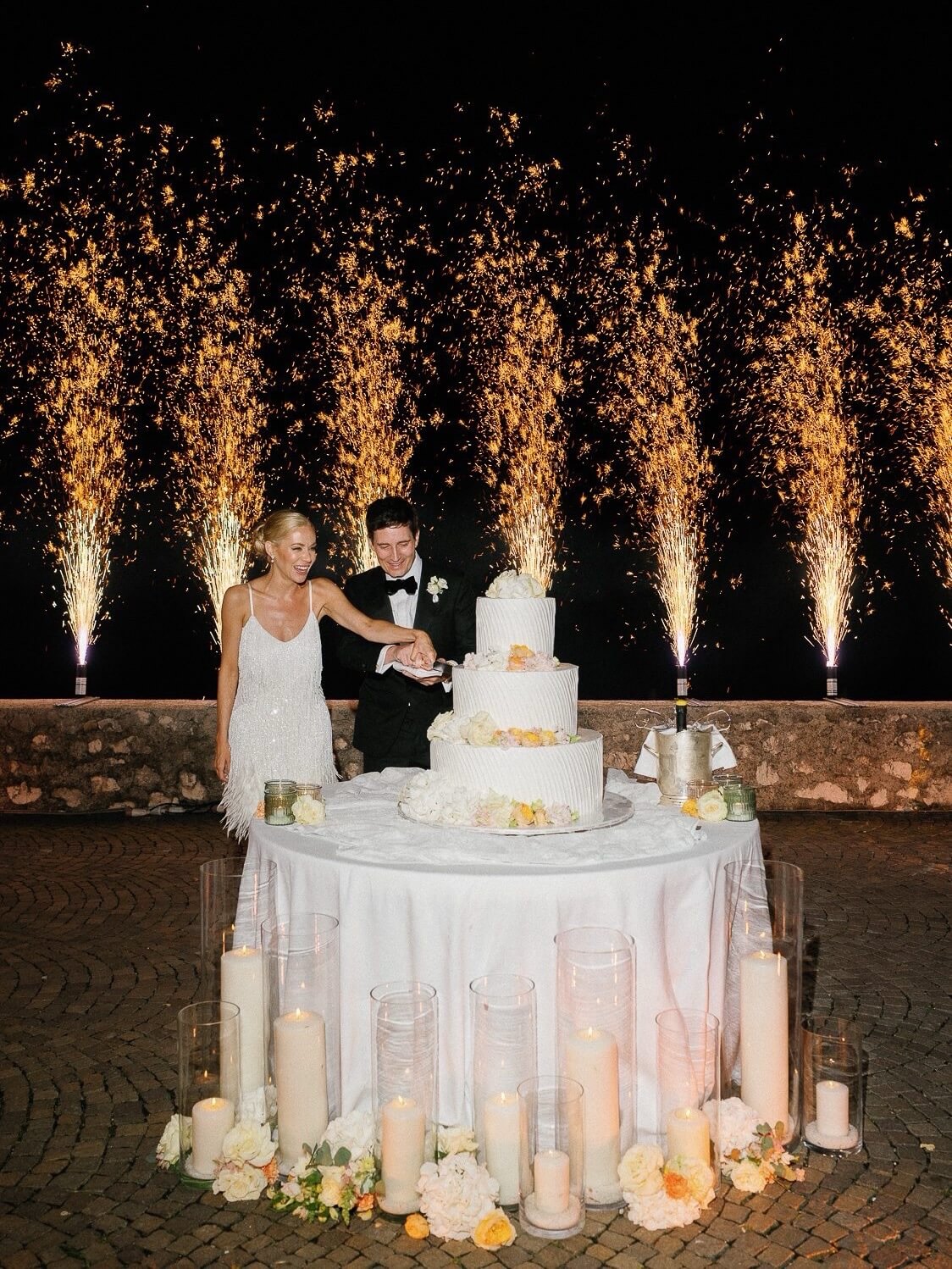
Katiuscia's advice to couples starts with sequencing, not inspiration. "At the very beginning of a wedding planning, my suggestion is to start off on the right foot to make the planning a pleasant experience and free of stress," she says.
"It's important to choose a suitable venue in line with your style, that can host your number of guests both in case of nice and poor weather. Then it's necessary to create a preliminary plan for the big day with an approximate realistic timeline. But before booking any venue or vendor, it's essential to define an overall breakdown of costs in line with your financial parameters."
Beyond the practical steps, there's a more personal note about why the venue matters in the first place.
"Your big day must reflect an important moment in your relationship, which is the starting point, and you need nothing more than the setting that reflects the roots of your union," she reflects. "It is normal for you to want to surprise your guests with excellent scenery, but it is you, with your own story to tell, who will surprise them in the setting that best represents you."
Vendors, in Katiuscia's view, are as important to a wedding's success as any design choice.
"The team of vendors is one of the most important elements in getting a successful event. Each of them needs to be very qualified and able to collaborate with the others in a synergetic way," she says.
For this reason, I selected a range of vendors that, in 16 years of experience, have proved to be reliable and collaborative. It doesn't mean I never work with new vendors - it's always important to know new professionals and evolve, professionally and personally.
Venues get a similarly considered answer, shaped by a specific design philosophy. "Who doesn't love Isola del Garda, the famous Villa del Balbianello, or perhaps the prestigious Papadopoli Palace in Venice?" she says.
"These locations are true icons of beauty, and precisely because of their importance and richness, they place significant limits on floral decorations and arrangements. They are already important architectural structures, rich in precious ornamentation, and it makes no sense to overwhelm and hide their beauty with excessive decorations." Lesser-known venues, by contrast, offer something icons can't. "I love all iconic venues, but sometimes I think it's even more interesting to work in lesser-known locations that have simpler architecture and greater freedom in designing the arrangements," Katiuscia explains.
"The challenge of creating a design becomes interesting, and the planning becomes much more creative."
One location in particular sits right in between. "The Antichi Granai della Repubblica in Venice, now managed by Hotel Cipriani Belmond, is truly the quintessential icon of Venice, preserving an important part of the city's history," she reflects. "Within it, an empty space enclosed by exposed brick can truly become an incredible backdrop."
Asked which couple's wedding has stayed with her most, Katiuscia doesn't single one out. "I have wonderful memories of all the weddings I've planned and the couples I've met," she says. "What I've most appreciated about all my couples is the great trust and respect they've placed in my work."