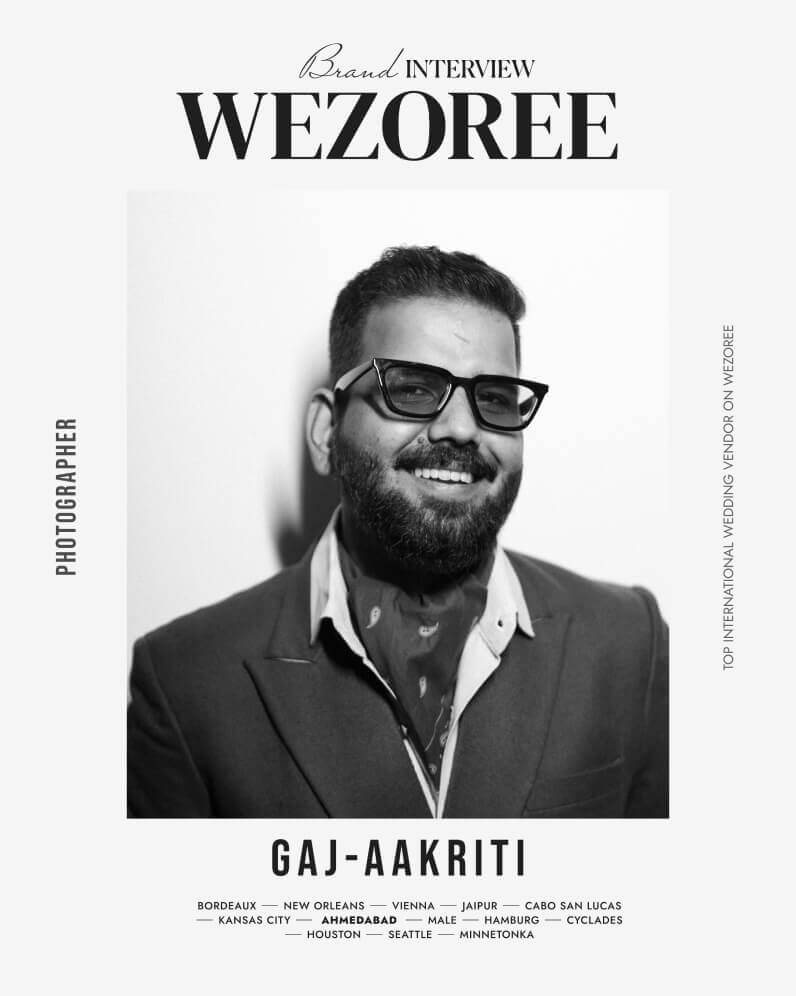
Gajendra Kumavat: When a Fraction of a Second Becomes History
AUTHOR: Natali Grace Levine
READING TIME: 4m 0s
PUBLICATION DATE: 10/01/2026
UPDATED: 10/01/2026
AUTHOR: Natali Grace Levine
READING TIME: 4m 0s
PUBLICATION DATE: 10/01/2026
UPDATED: 10/01/2026
The quiet breath before a bride walks down the aisle. The way a father looks at his daughter when he thinks no one else is watching. The silence between two people that somehow says everything without a word. These are the moments Gajendra Kumavat says he's really being hired to catch - not the posed portraits, not the wide shots of the venue, but the fraction-of-a-second things that vanish the instant they happen.
Founder of Gaj-Aakriti, a luxury wedding storytelling studio headquartered in Ahmedabad, Gajendra has spent 10+ years building a team around that instinct, now shooting 50 to 60 weddings a year across India and increasingly abroad.
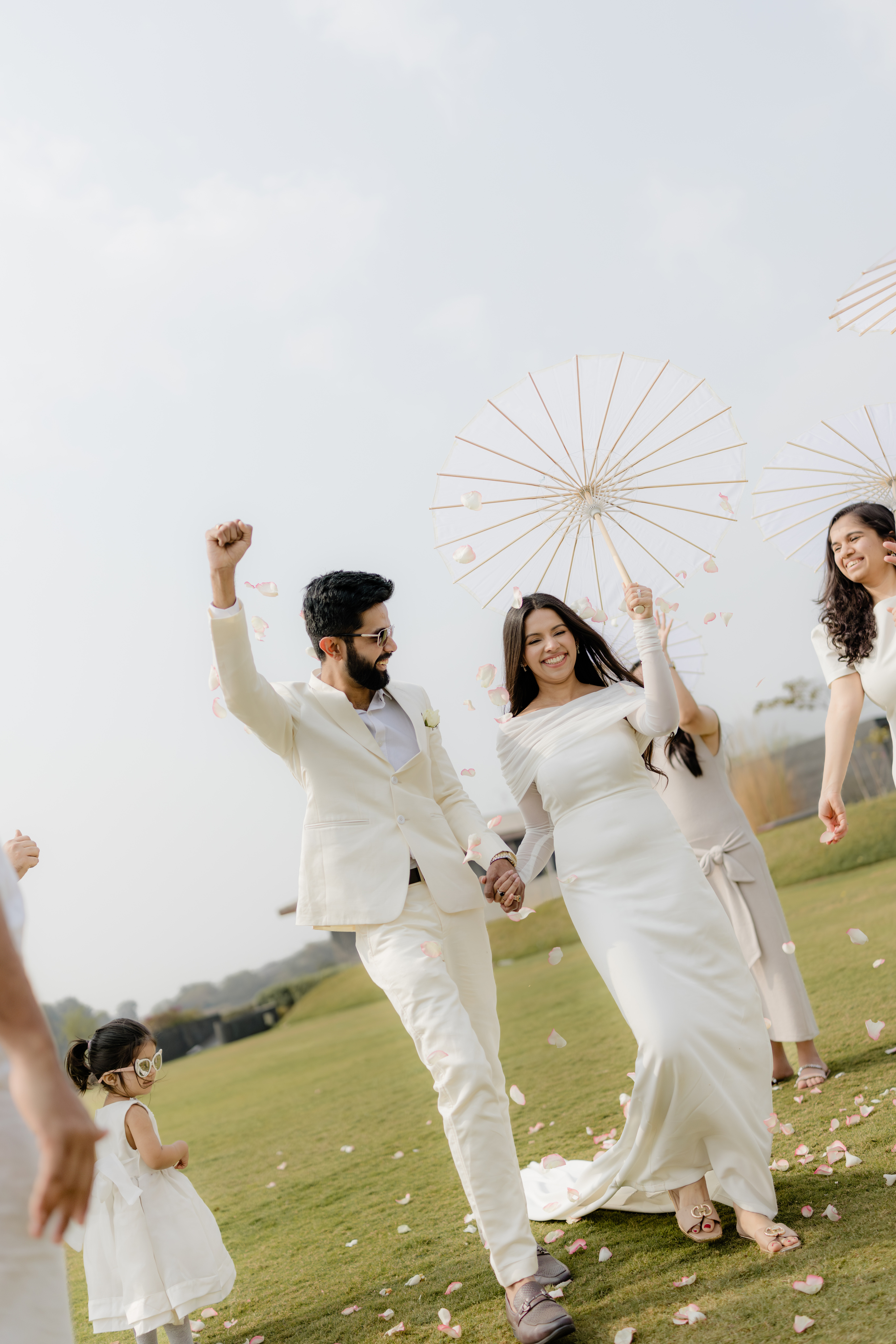
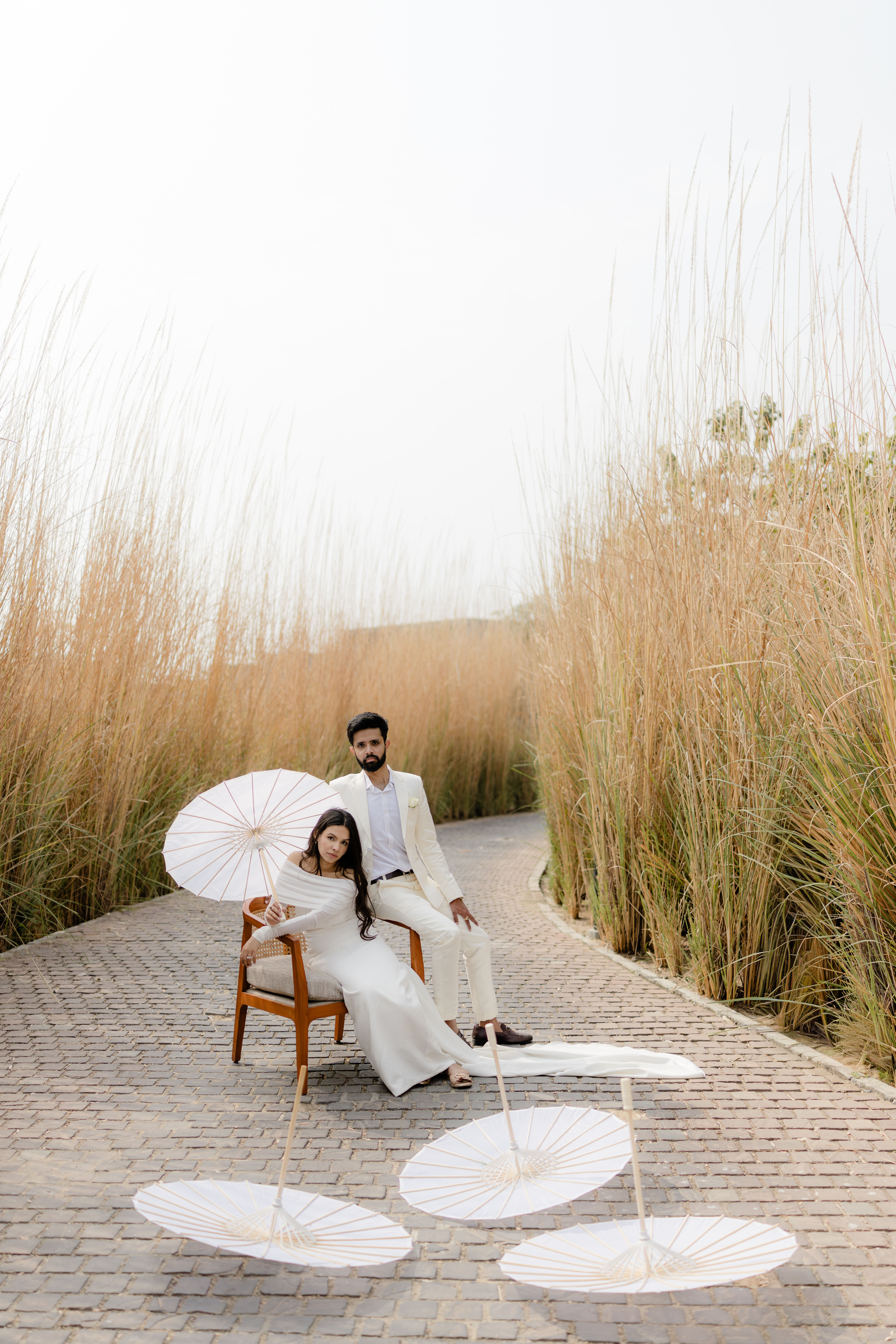
Ask Gajendra what draws him to this work, and cameras barely come up. "Photography has never been about cameras for me. It's always been about people," he says.
"The greatest privilege of this profession is being invited into moments that cannot be recreated - the quiet breath before a bride walks down the aisle, the way a father looks at his daughter when no one else is watching, the silence between two people that somehow says everything. Those moments exist for only a fraction of a second, yet they often become the memories a family treasures forever."
What he considers success has little to do with technical polish. "What I enjoy most is the responsibility of preserving emotion with honesty and elegance. Beautiful photographs are expected; what truly matters is whether an image can make someone feel something years later."
That distinction shapes how the whole studio describes its own work. "At Gaj-Aakriti, we often say that we're not in the business of photography - we're in the business of memory," he notes.
 Every celebration has its own rhythm, its own personality, its own soul. Our role is simply to observe with sensitivity and translate those fleeting emotions into something timeless.
Asked which wedding has stayed with him the most, Gajendra doesn't name one. He describes a handful of moments instead.
One of the greatest lessons this profession has taught me is that the weddings you remember aren't always the grandest - they're the ones that make you feel something long after you've left,
he reflects.
"Rather than a single wedding, it's the deeply personal moments that stay with me. A father quietly stepping away to compose himself before his daughter's farewell. A grandmother blessing the couple with trembling hands. Two people exchanging a glance amidst the chaos, finding a moment of stillness that belongs only to them. Those are the memories that remain with me."
Scale, in his account, has surprisingly little to do with what actually lasts. "There have been celebrations that were visually spectacular, and others that were beautifully intimate, but what connects them all is emotion," he says. "That's what lingers. Not the décor, not the destination, not the scale, but the people." Pressed to land on a single answer, he settles on something closer to a principle than a memory.
"If I had to choose what has stayed with me the most, it would simply be this: the quiet reminder, at every wedding, that love is never expressed in exactly the same way twice. And that is what keeps every story unforgettable."
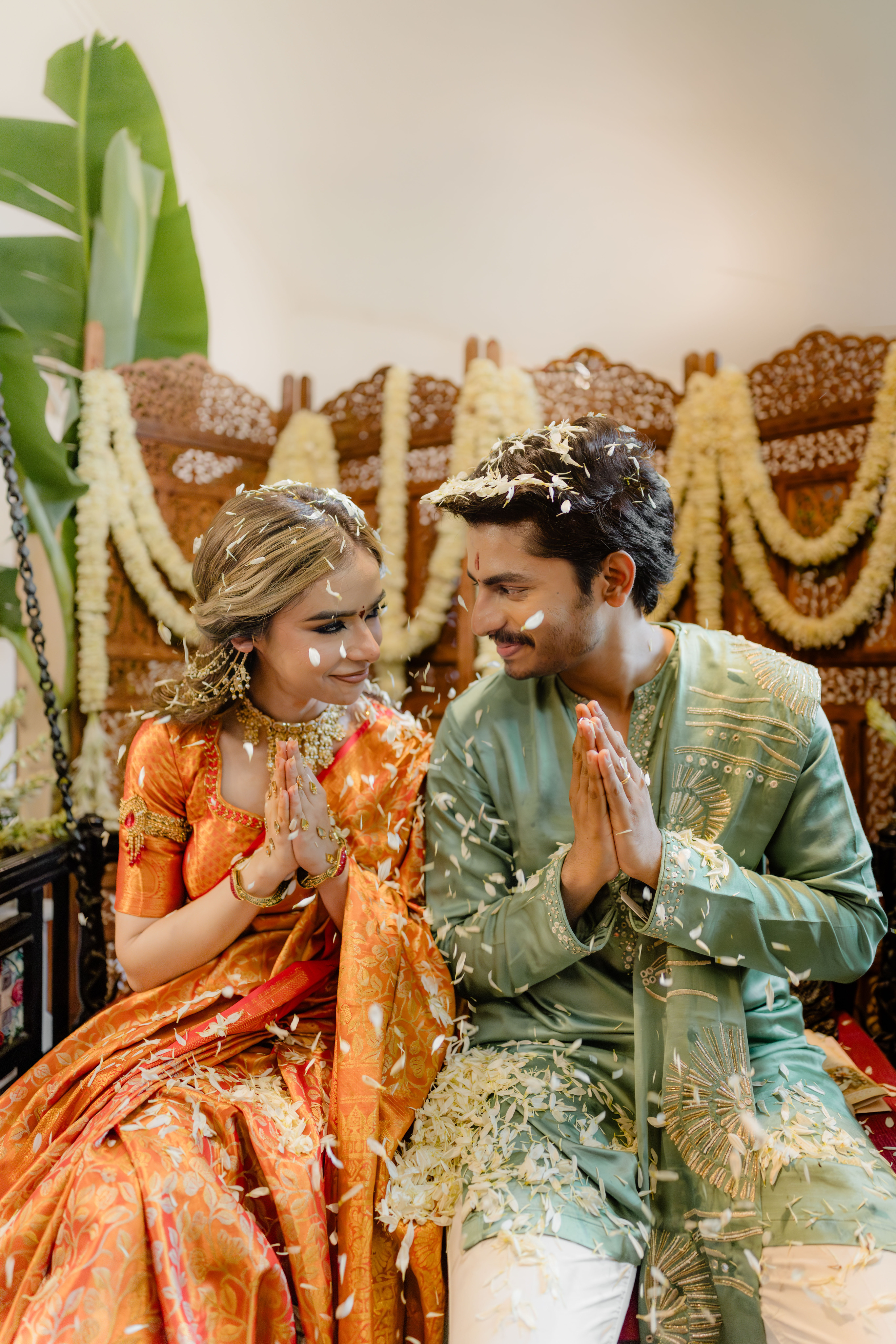
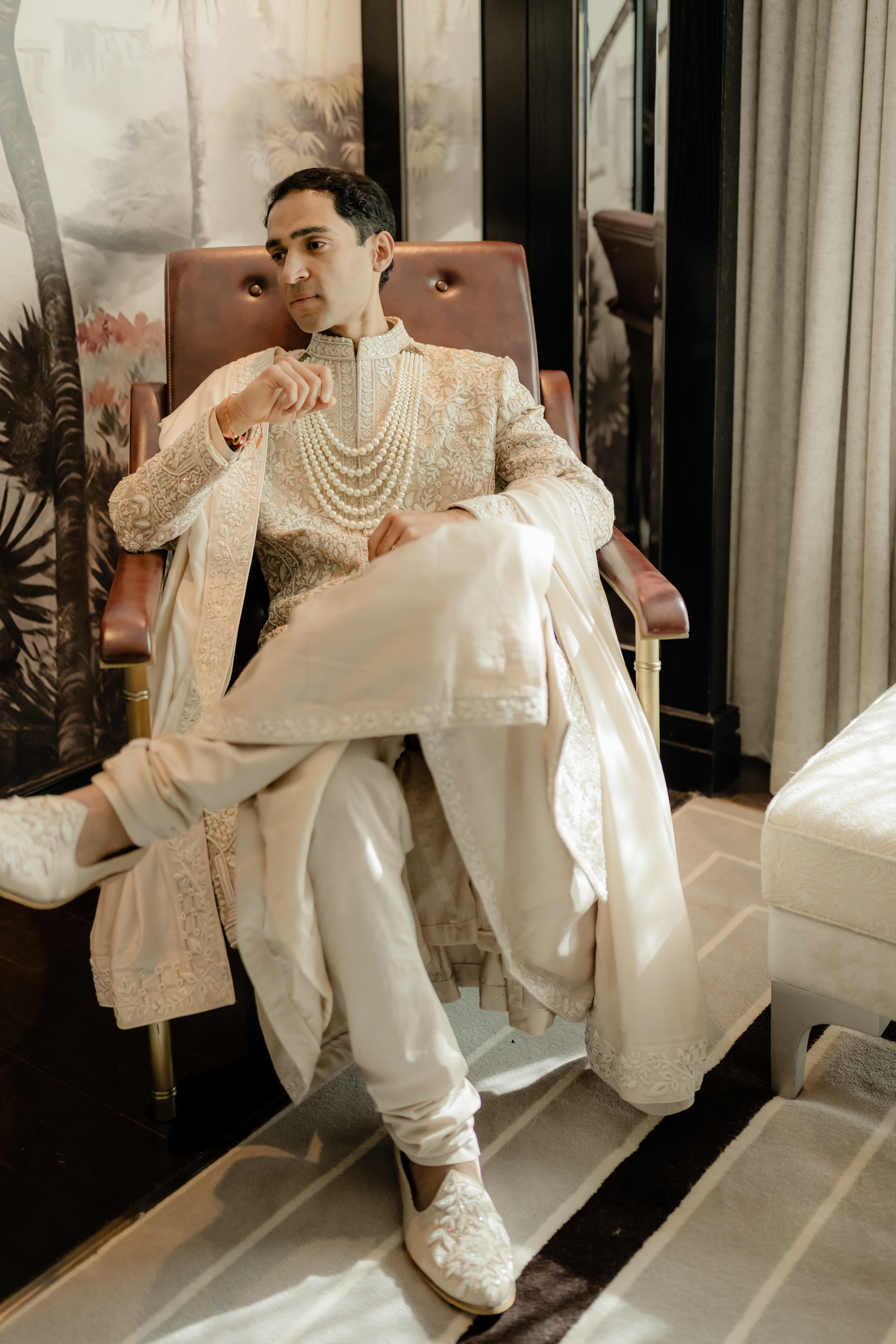
Gaj-Aakriti is headquartered in Ahmedabad, working across India and, in recent years, increasingly beyond it - including weddings in Dubai, Mauritius, Bangkok, Sri Lanka, and the United States. Within India, the studio returns often to Udaipur, Goa, Jaipur, Jaisalmer, Ranthambhore, Rishikesh, and Kedarnath, a spread that runs from desert cities to Himalayan foothill towns.
Asked for the wedding location that's stayed with him most, Gajendra doesn't hesitate. "There are many, but our all-time favorite would be a wedding at Triyuginarayan temple, Uttarakhand," he says - a site in the Himalayas long associated in Hindu tradition with the marriage of Shiva and Parvati, and not the kind of venue that shows up on a typical checklist of luxury wedding locations.
After hundreds of weddings, Gajendra says the opposite of what most people expect has happened. "People often assume that after photographing hundreds of weddings, the moments begin to feel familiar. For me, it's been exactly the opposite," he explains.
No two love stories have ever felt the same. Every couple brings a different energy, every family has its own traditions, and every celebration carries emotions that have never existed in quite the same way before. The rituals may be similar, but the meaning behind them is always deeply personal.
What keeps that feeling alive, he says, is treating every wedding as a chance to see differently rather than to repeat a formula. "At Gaj-Aakriti, we don't chase repetition - we chase perspective. The day I feel like I've seen everything is probably the day I'll stop growing as an artist. Thankfully, love has an extraordinary way of reminding me that there's always another story waiting to be told."
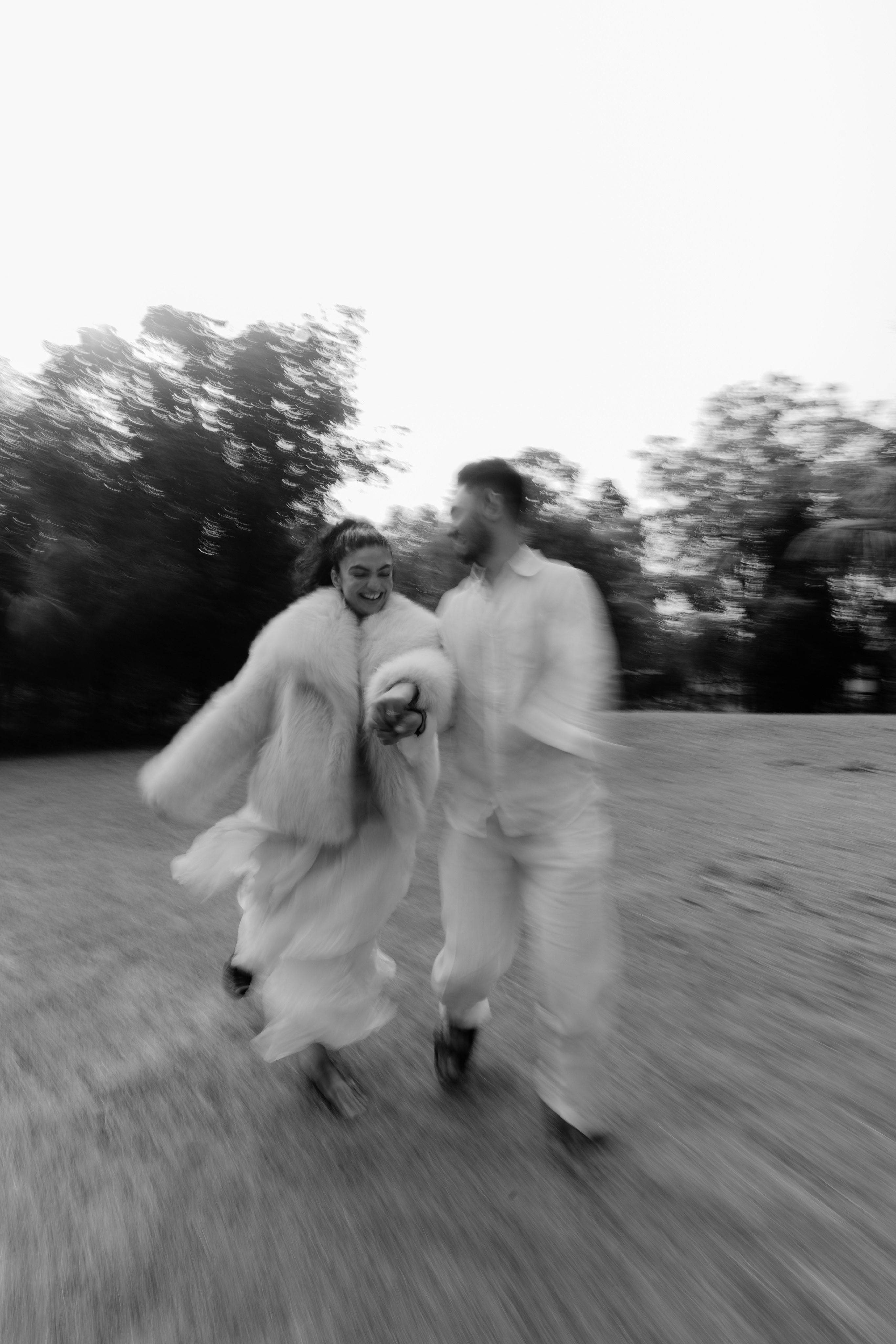
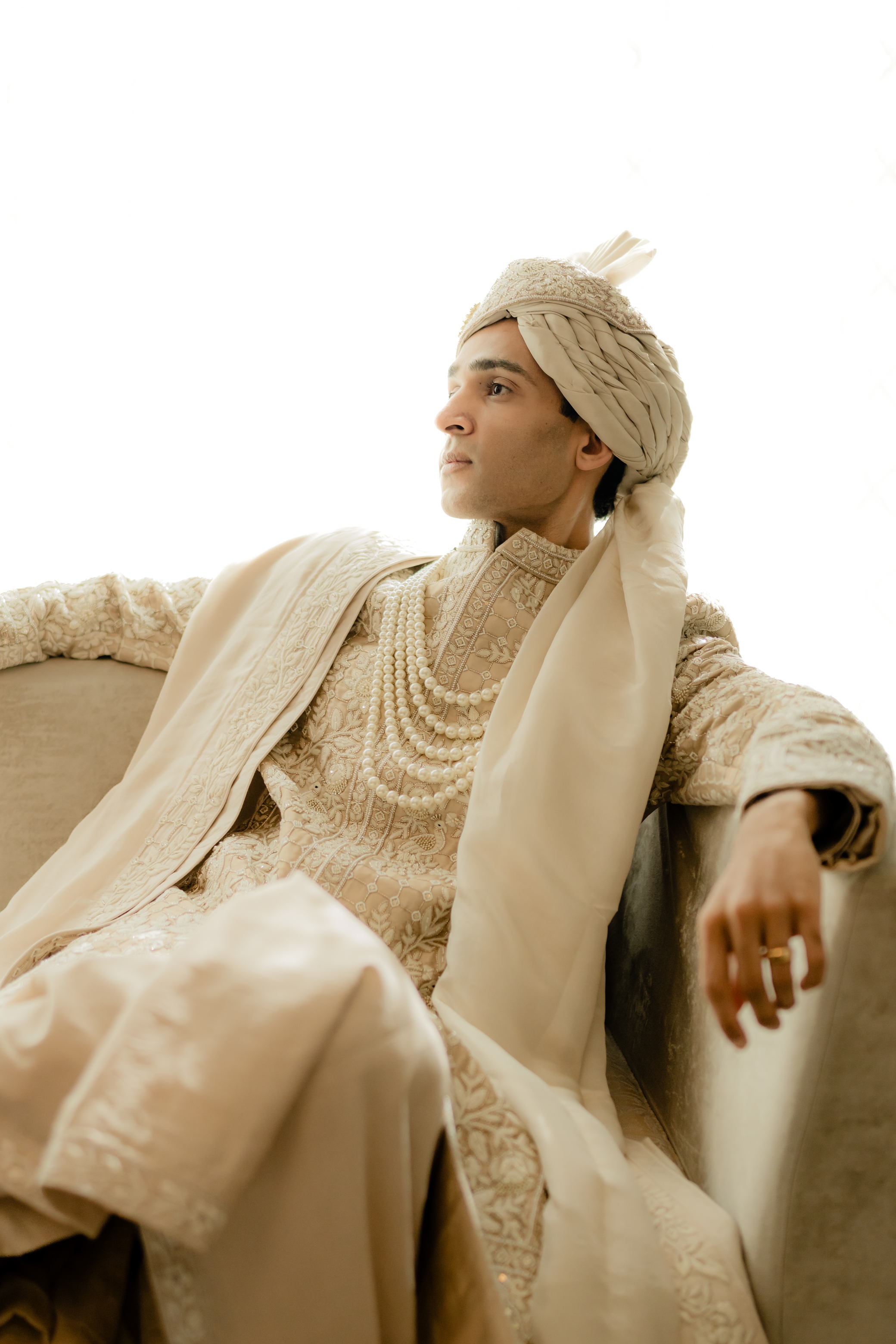
That same philosophy extends to how he thinks about luxury itself. "The true luxury of a wedding isn't found in its scale - it's found in how deeply it is felt and how thoughtfully it is remembered," he says. "The most beautiful photograph is never the one with the perfect composition; it's the one that carries genuine emotion."
For Gajendra, the work carries weight well beyond the wedding day itself. "We are preserving family history," he adds.
The images and films we create today will one day introduce future generations to the people they never had the chance to meet - their laughter, their traditions, their love. That's an incredible responsibility, and one we carry with immense respect.
As he puts it, closing the thought: "Our goal has never been to create photographs that simply impress people today. It's to create memories that still move them twenty, thirty, or even fifty years from now."