Top 10 Tuscany Wedding Venues
- Author: Natali Grace Levine
- Reading time: 11 min 18 sec
- Publication date: 06/27/2026
- Updated: 07/09/2026


Mick Jagger signed the guest book at one of these events. So did Princess Margaret. Tuscany's wedding venues have attracted this caliber of guests for centuries. This says more about the properties themselves than about celebrity: cypress-lined drives, frescoed ballrooms predating most countries, and views so stunning they look retouched until you realize they aren't. Choosing the right wedding venue in Tuscany isn't about finding the prettiest photo on Instagram. It's about finding a property built for this that matches your scale, season, and mood.
Find Your Perfect Wedding Vendors

Villa Cetinale
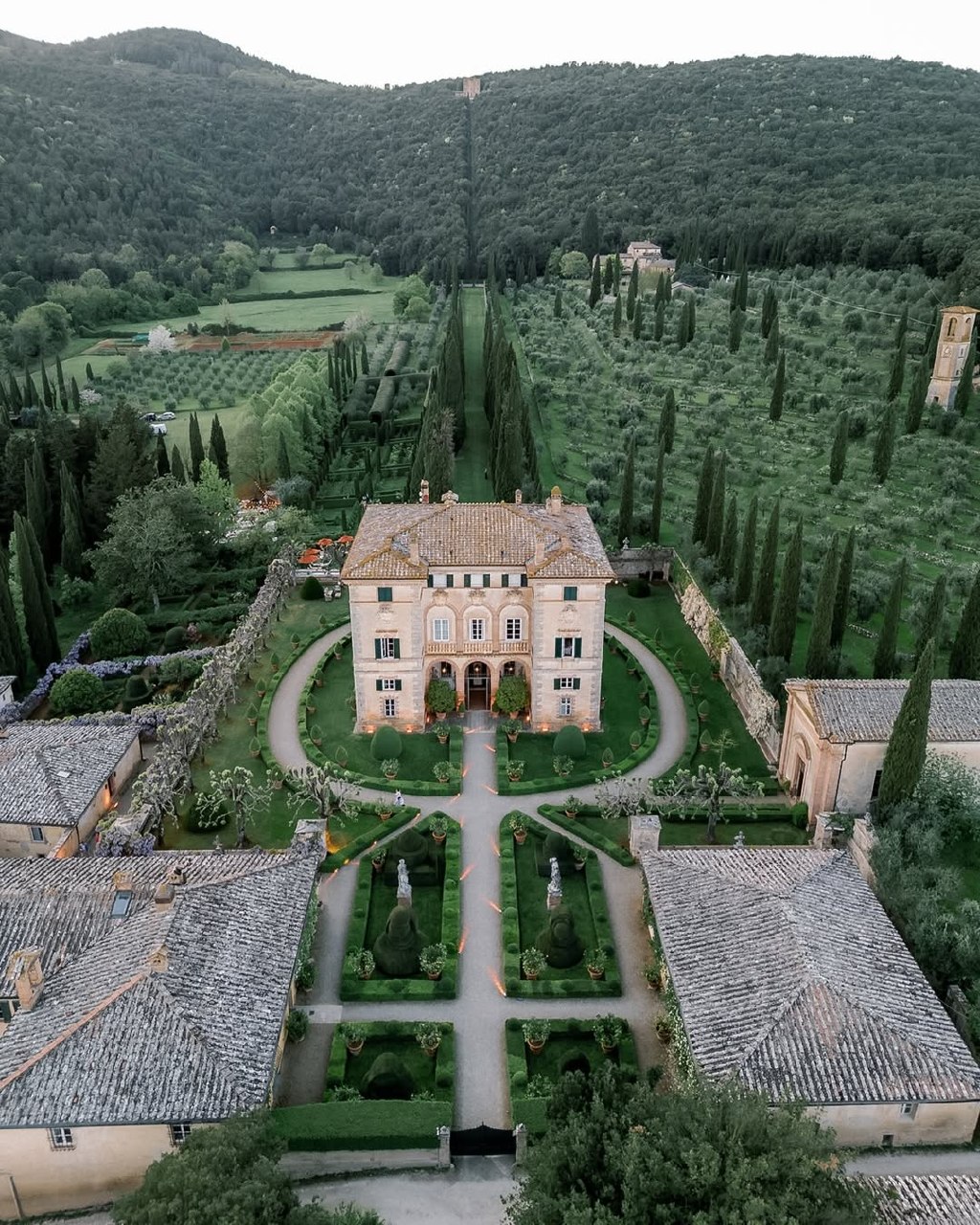
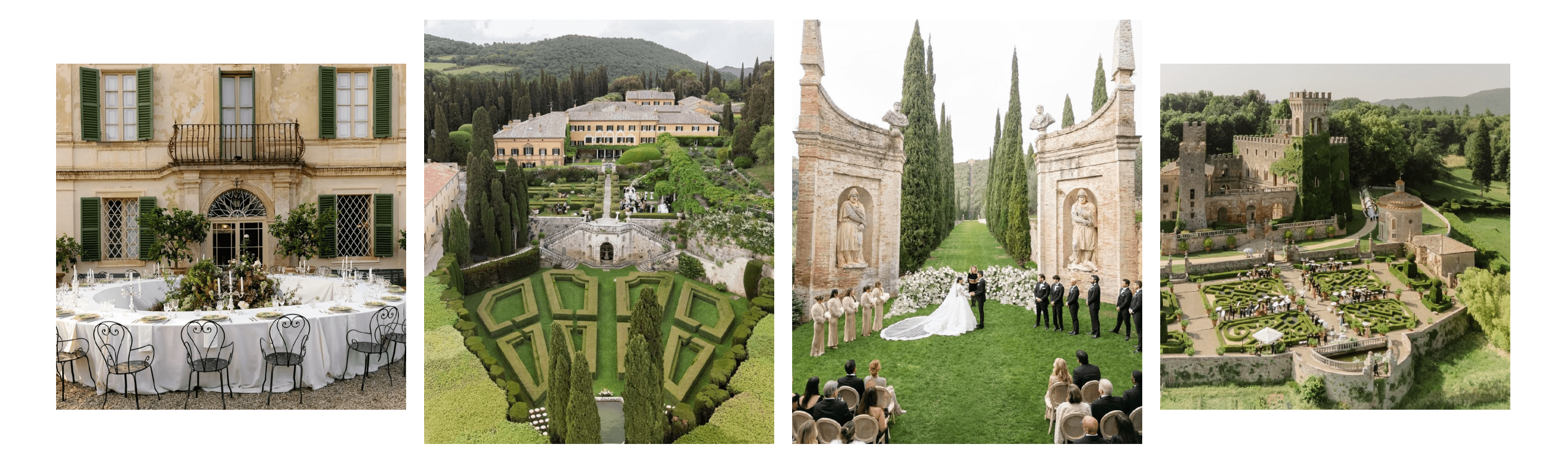
A 300-step climb up a hilltop leads to a tiny monastery built for cardinals who needed a private place to confess their sins. Villa Cetinale is full of details like this: history layered on history, none of it sanitized for tourists. The Baroque estate is located twenty minutes outside of Siena and is framed by gardens that Edith Wharton once praised. Statues are tucked into hedgerows that have been shaped for over three centuries.
Over the years, the guest list has included Mick Jagger and Kate Moss, as well as actual popes. This gives the place a slightly surreal, lived-in grandeur that newer properties simply can't fake. Designed in the Roman Baroque style by Carlo Fontana for Pope Alexander VII in 1680, Villa Cetinale carries the weight of having hosted significant historical events while never quite losing its sense of playfulness; the gardens were built as much for pleasure as for prayer.
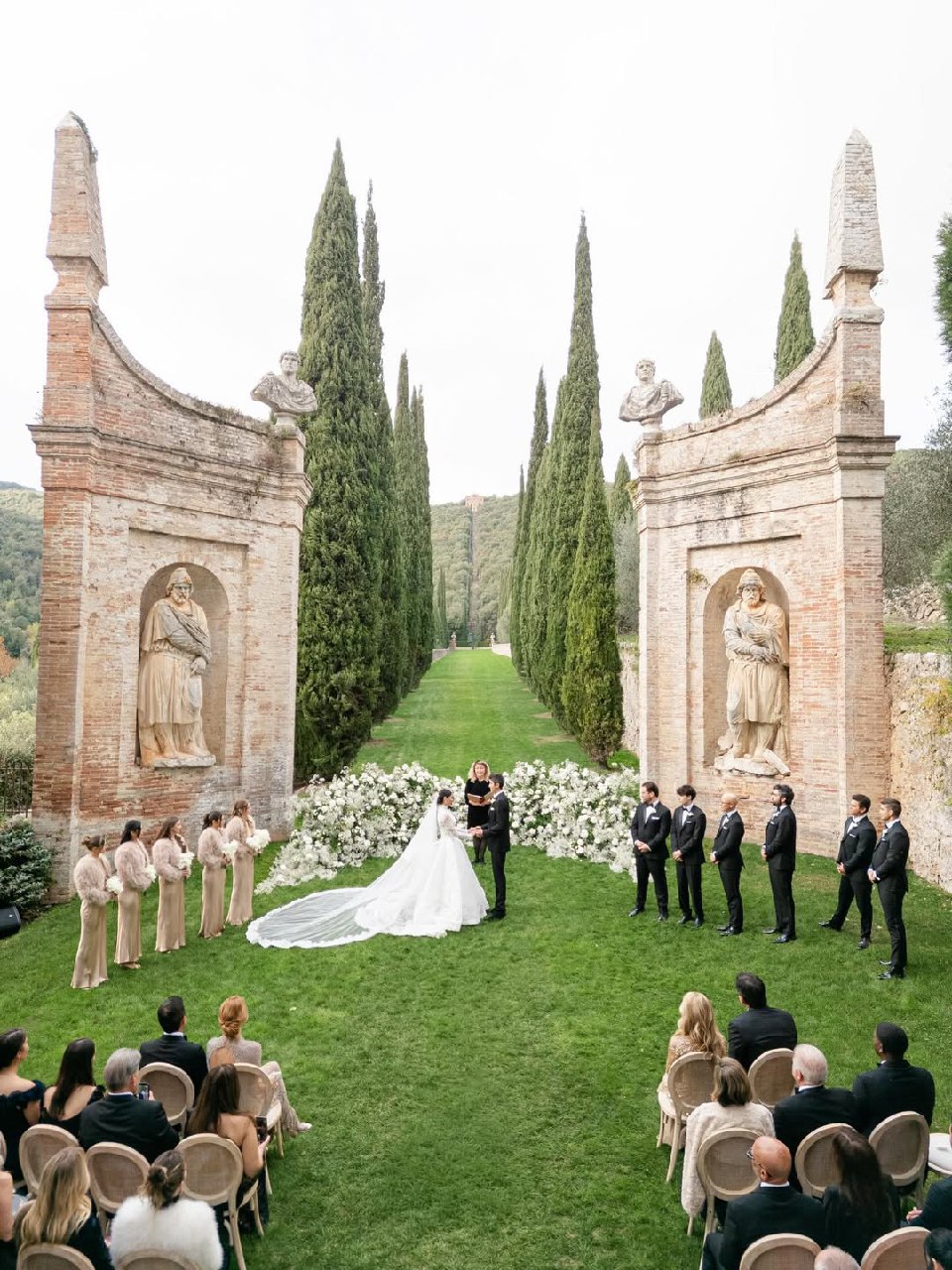
Ceremonies typically take place in the gardens and can accommodate 100 to 120 guests, depending on the configuration. A 17th-century chapel can accommodate smaller blessings for groups of fewer than 30 people. A converted lemon house with soaring glass windows serves as an elegant backup plan in case of rain and can accommodate up to 80 guests. The four properties across the estate can sleep around 48 guests total, which is enough to accommodate most of the wedding party. They can wake up on-site the next morning and walk down ancient stone corridors to get coffee and whatever's left of last night's wine.
Villa La Foce
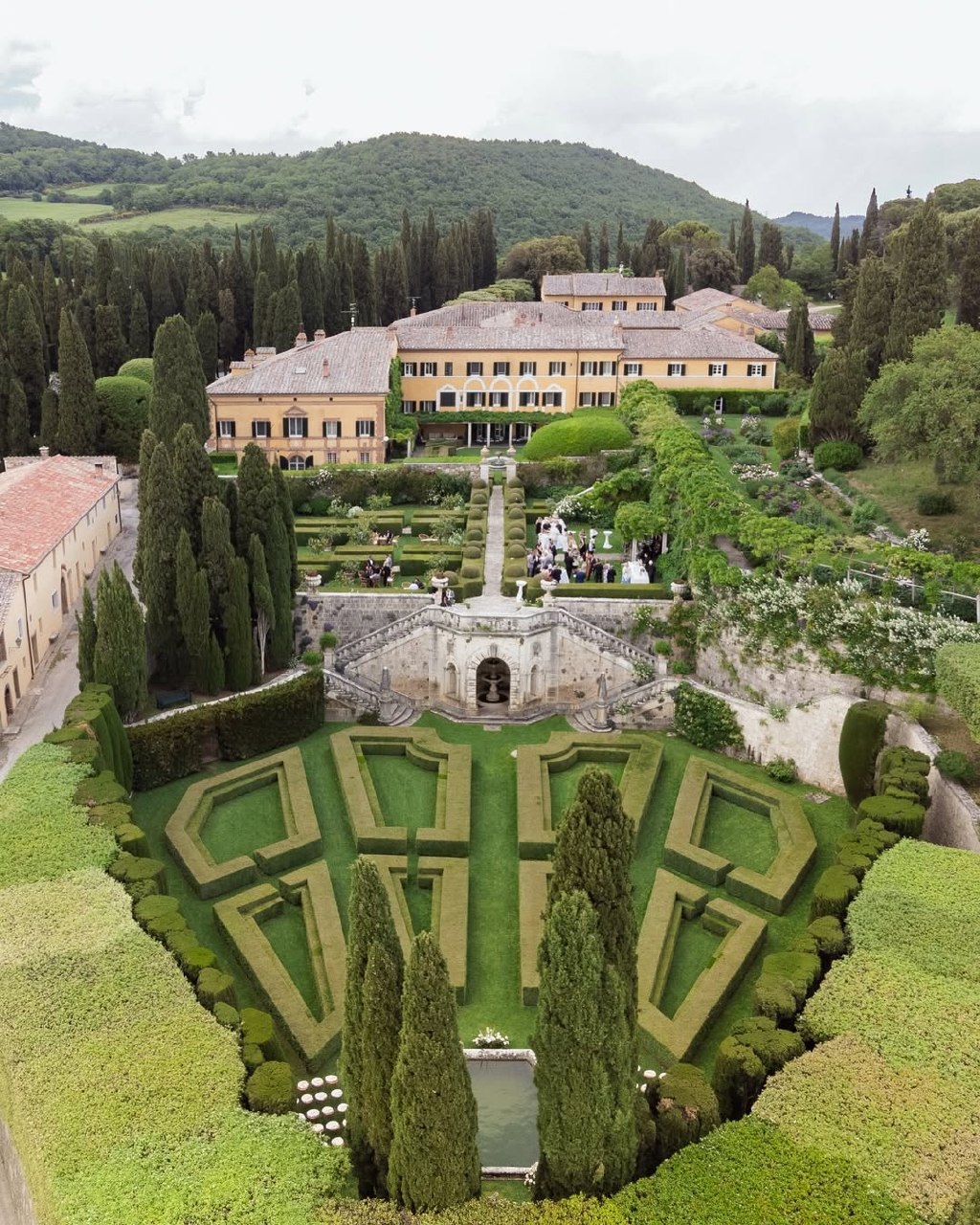
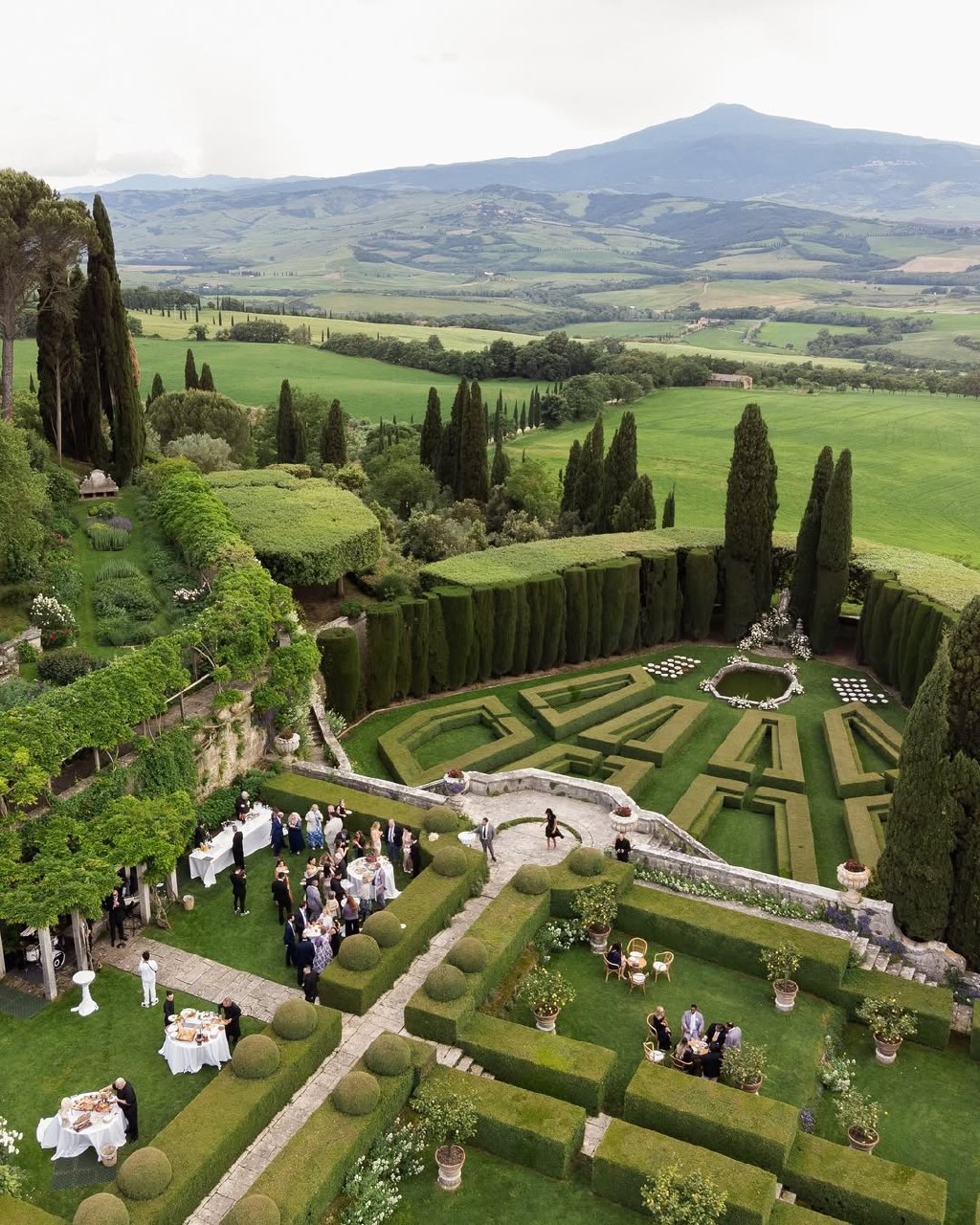
Villa La Foce is located in the Val d'Orcia, a UNESCO-protected valley south of Siena that has been painted and photographed so many times that it almost feels mythological, even when standing within it. Decades ago, Cecil Pinsent designed the gardens here, which are still studied by landscape architects today. Two enormous holm oak trees anchor the main gravel area and are protected by strict preservation rules that planners learn to navigate carefully.
What sets La Foce apart structurally:
- The Grand Gallery can seat up to 220 people, which is a genuinely rare indoor capacity for a historic Tuscany villa wedding venue, where most interiors can accommodate far fewer people
- The botanical gardens can host very large outdoor receptions, though most weddings here are intentionally smaller
- Two enchanting nearby hill towns, Montepulciano and Pienza, both of which are within a thirty-minute drive and are ideal for a welcome dinner the night before
- There is on-site accommodation across the main villa for 24 guests and in additional farmhouses, which brings the total closer to 48
The frescoed walls of the main villa are the main visual feature indoors. That's why couples planning a luxury wedding in Tuscany often end up here before looking anywhere else.
Villa Gamberaia
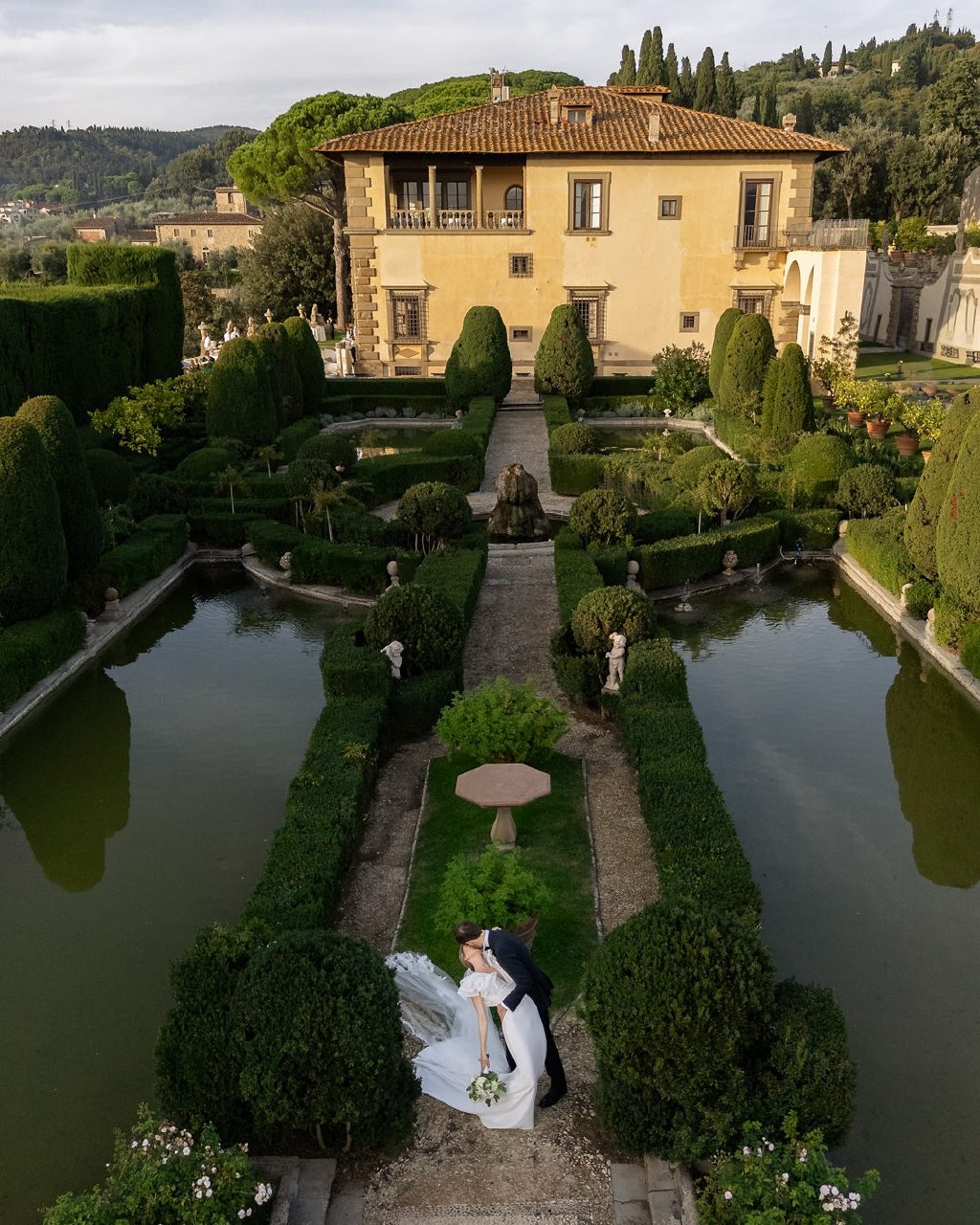
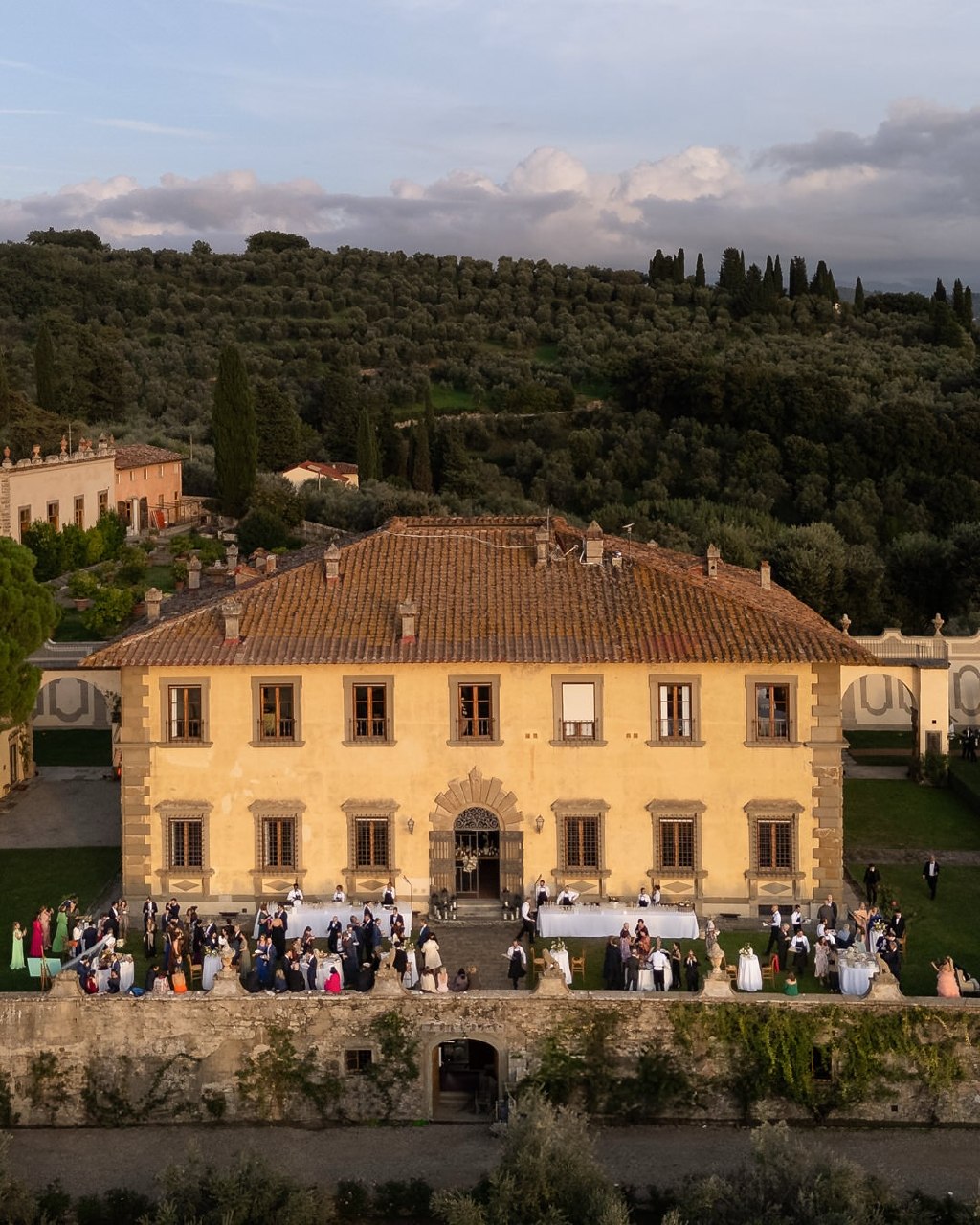
The Duomo is visible from the terrace, and Florence is just fifteen minutes away. This makes Villa Gamberaia an unusual venue - it feels properly rural yet is genuinely urban in proximity. Neither quality undercuts the other.
The 17th-century gardens, designed by Zanobi Lapi, have barely changed since their inception. Garden historians regard them as a small miracle because much of Tuscany's landscape history has been altered or lost over the centuries. There are many spaces for ceremonies: terraced lawns, two stone grottos with ornate fountains, and an olive grove lawn that becomes a dance floor after sunset. The indoor halls each hold up to 200 people, and the cypress lawn can accommodate considerably more.
Sound restrictions in Settignano are real and should be planned for early on. The events team is familiar with these restrictions, demonstrating the popularity of this hillside with couples and neighbors who have grown accustomed to the occasional string quartet drifting up from the gardens. Fifteen suites and cottages can accommodate about 34 guests on site. Each is decorated with genuine antiques rather than reproductions.
Villa Corsini a Mezzomonte
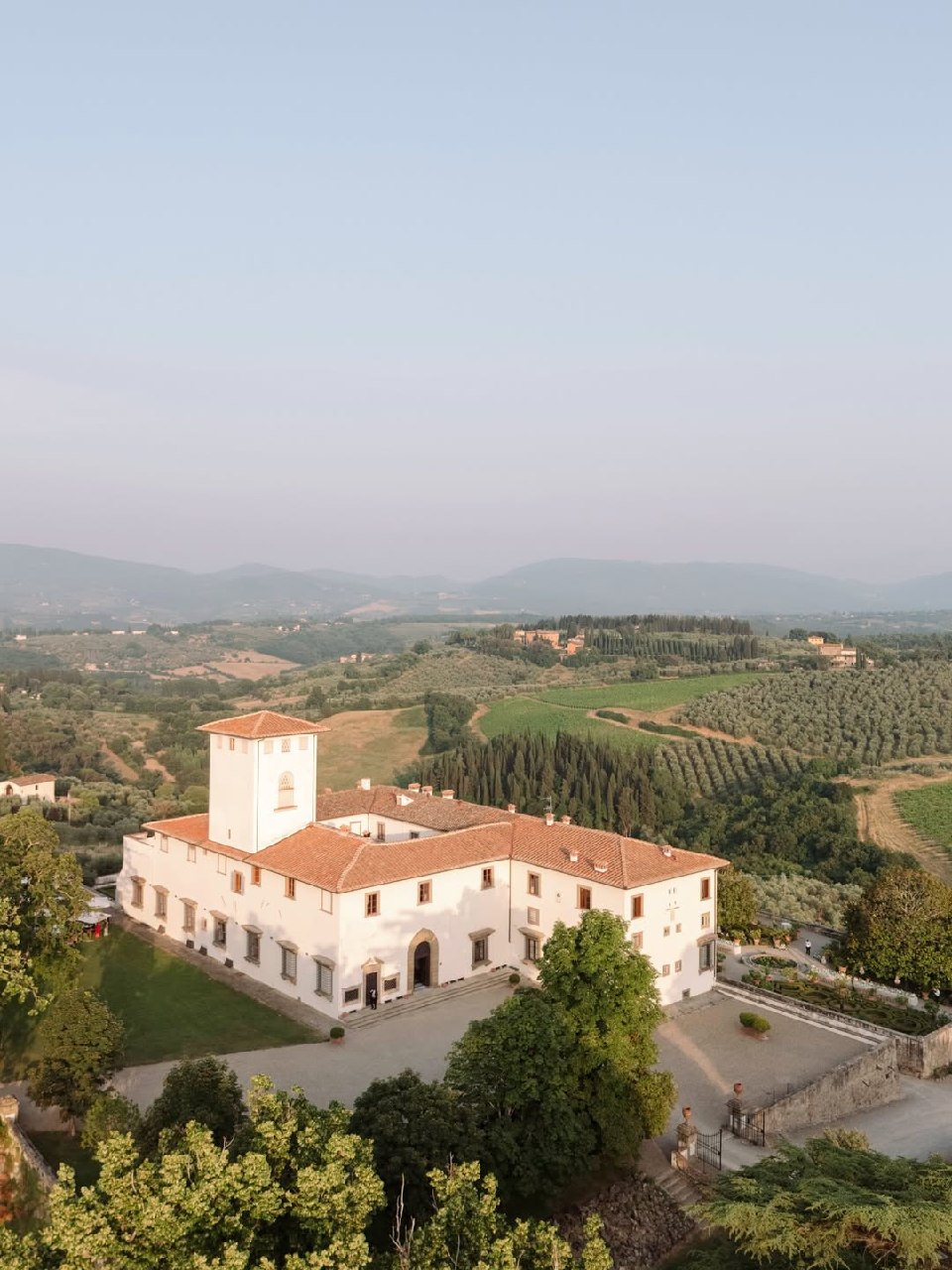
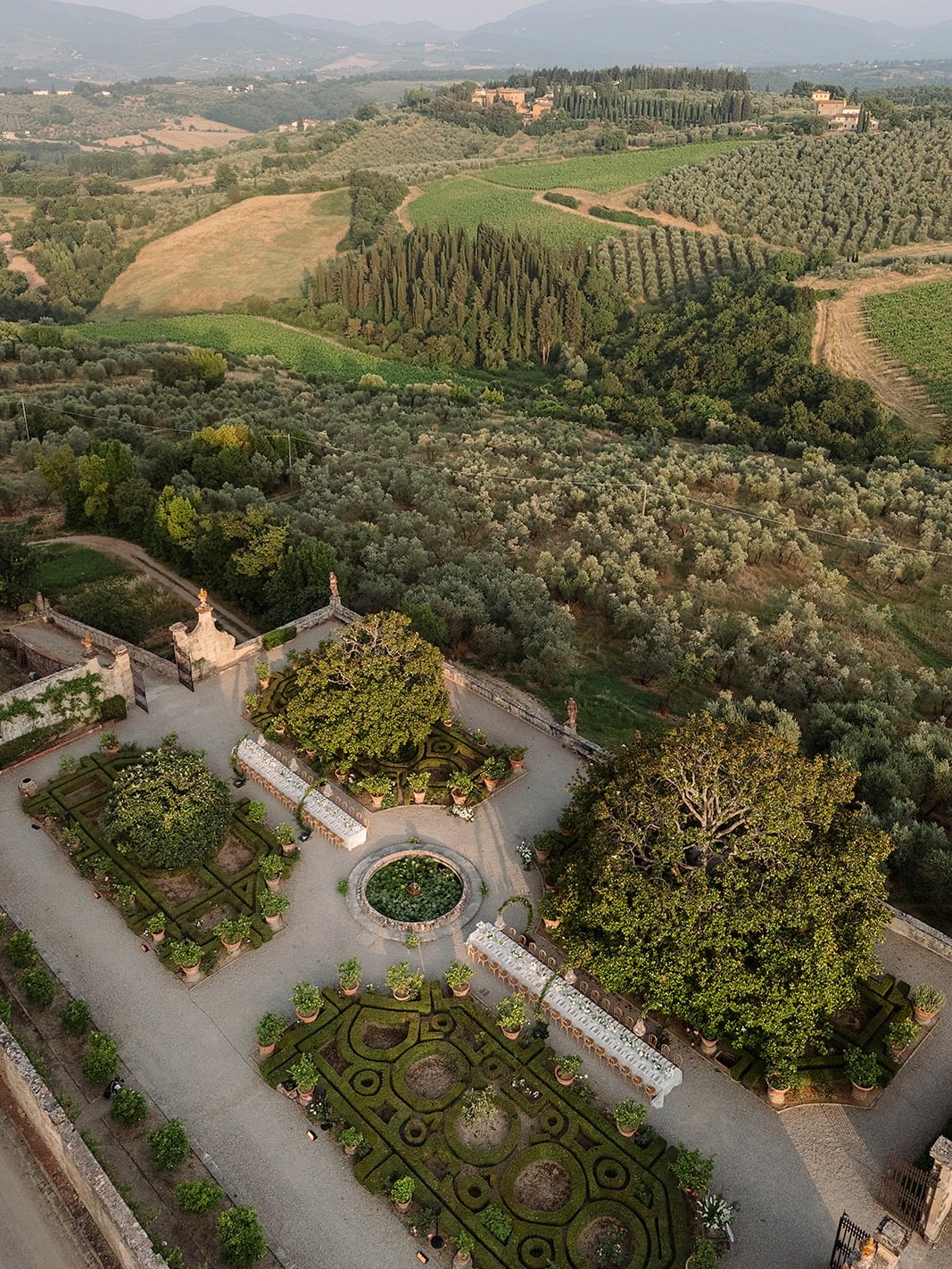
Lorenzo the Magnificent owned the Mezzomonte Villa Corsini in 1480.
Let that sink in for a moment. A Medici purchased this villa before most European nations existed in their current form. Completed between 1630 and 1634 under Prince Giovan Carlo de' Medici, the frescoes inside depict rural deities and heroic women. The walls, which have survived four centuries largely intact, are adorned with these frescoes. These frescoes were painted by some of the most significant Florentine artists of their era, including Angelo Michele Colonna.
The Grand Gallery can seat 220 people for indoor receptions, which is an unusually generous capacity for such an historic property, since most old villas were not built with rooms this large. Outdoor gardens increase that number to about 300 for larger celebrations across the cypress-lined grounds. The main tradeoff to plan for is the lack of on-site accommodation. Guests stay at partner hotels within about eight kilometers. The villa is reserved purely for the celebration, not for sleeping, which some couples prefer because it keeps the wedding day feeling like an event rather than an extended house party.
Villa Medicea di Lilliano
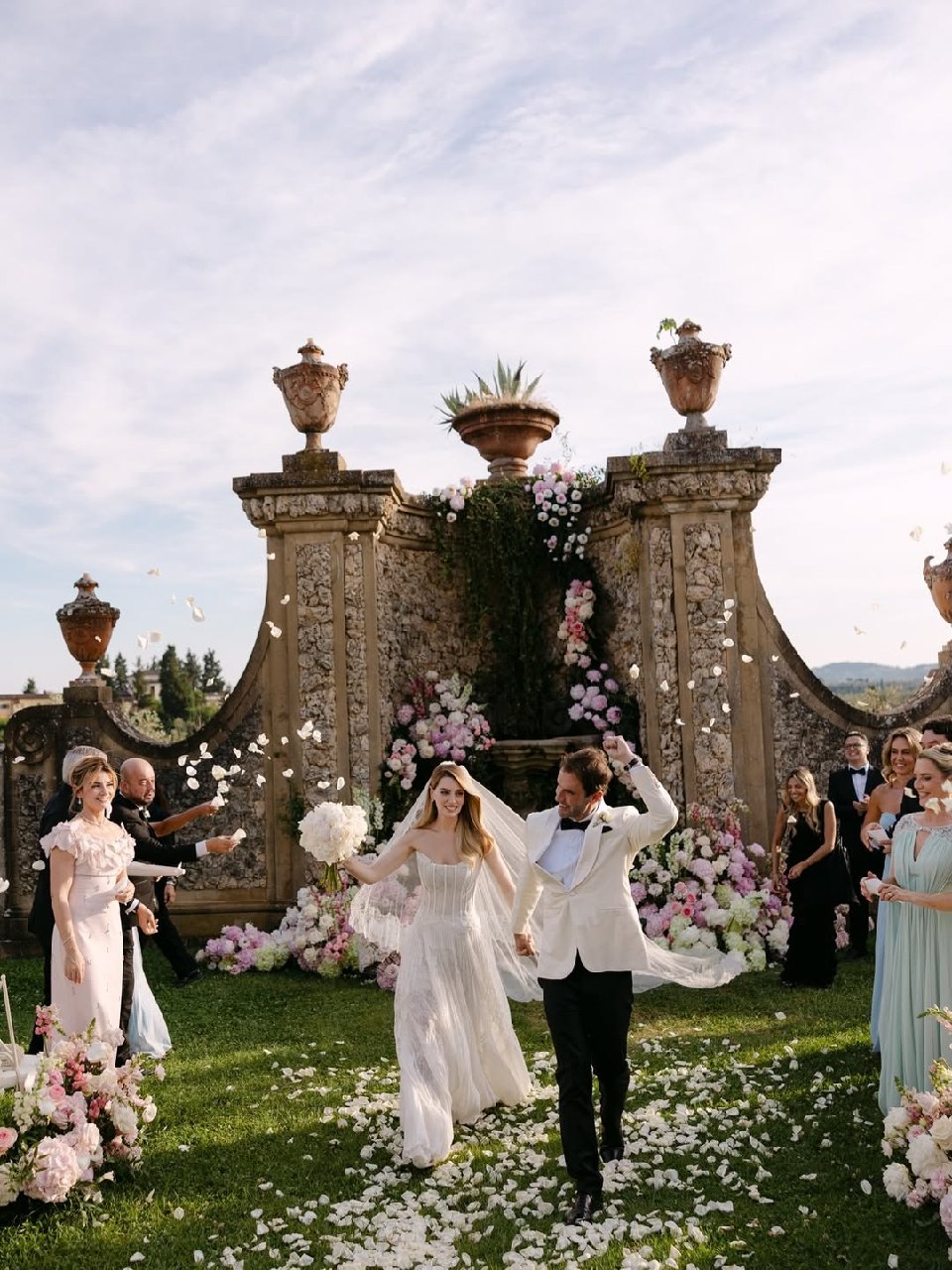
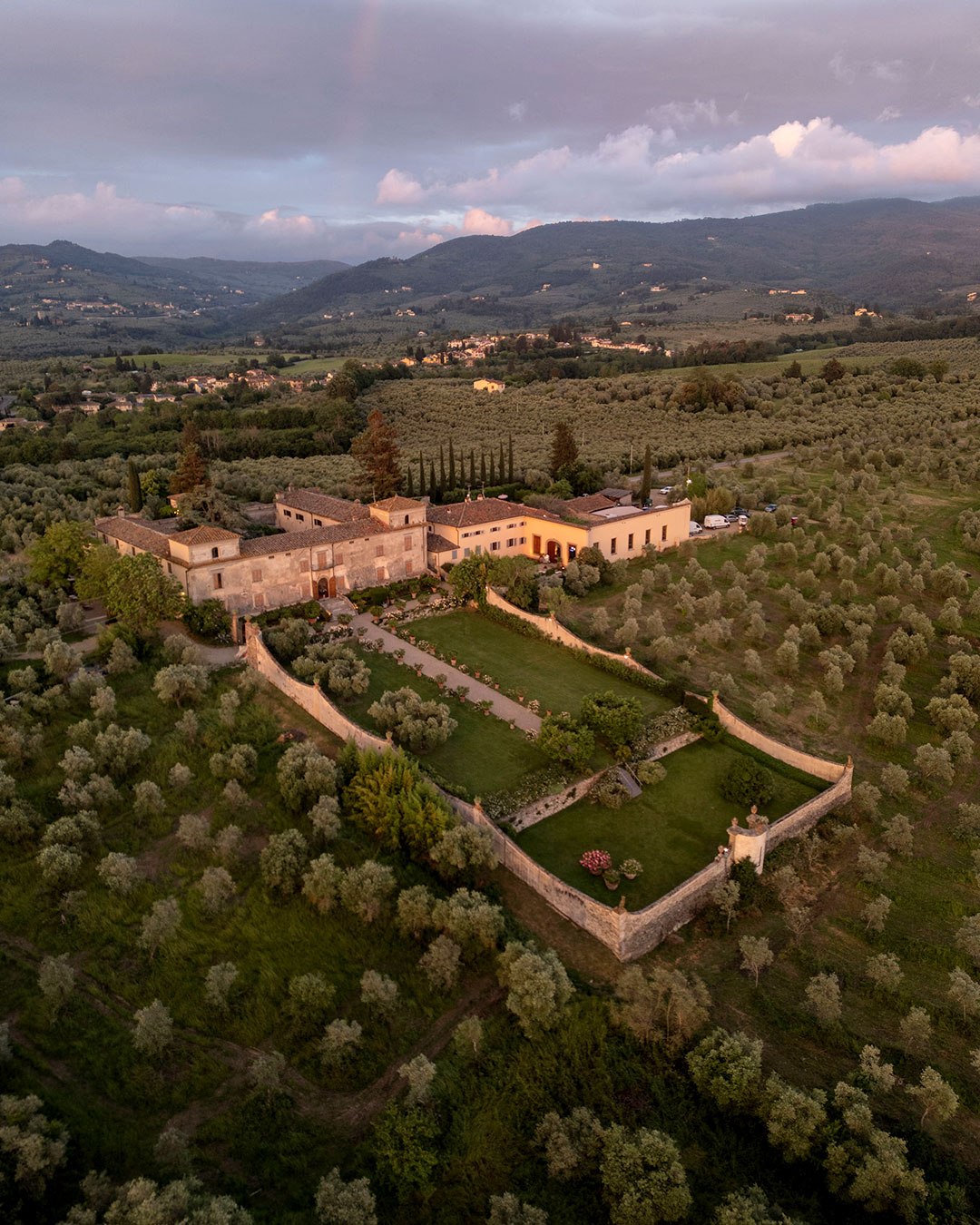
Villa Medicea di Lilliano is another Medici property, another set of frescode ceilings by Rinaldo Botti, with trompe l'oeil details so convincing guests walk into walls trying to touch painted architecture that isn't there. The estate has belonged to the Malenchini family since 1830. They now run it as a working organic winery and wedding venue, with the two operations feeding into each other rather than competing for attention.
What sets Lilliano apart from other luxury wedding venues in Tuscany is its terrace view: The Duomo and Florence's skyline are visible in the distance from ceremonies on the Medici Terrace. The city glows gold as the sun sets behind the hills. The reception capacity is flexible and can accommodate gatherings of up to 250 guests, depending on which spaces are booked. For very large events that use the grounds, the capacity can occasionally stretch beyond that. The 70-hectare estate is filled with vineyards and olive groves. Couples can include wine tastings or casual pizza nights as part of the wedding weekend and use the same fruit bottled under the estate's own label.
On-site accommodations sleep around 44 people in several private residences, with overflow accommodations for up to 92 people at a nearby partner village. Restored cellars and lemon gardens complete a property that genuinely earns its reputation as one of the most complete wedding venues in Tuscany.
Tenuta Corbinaia
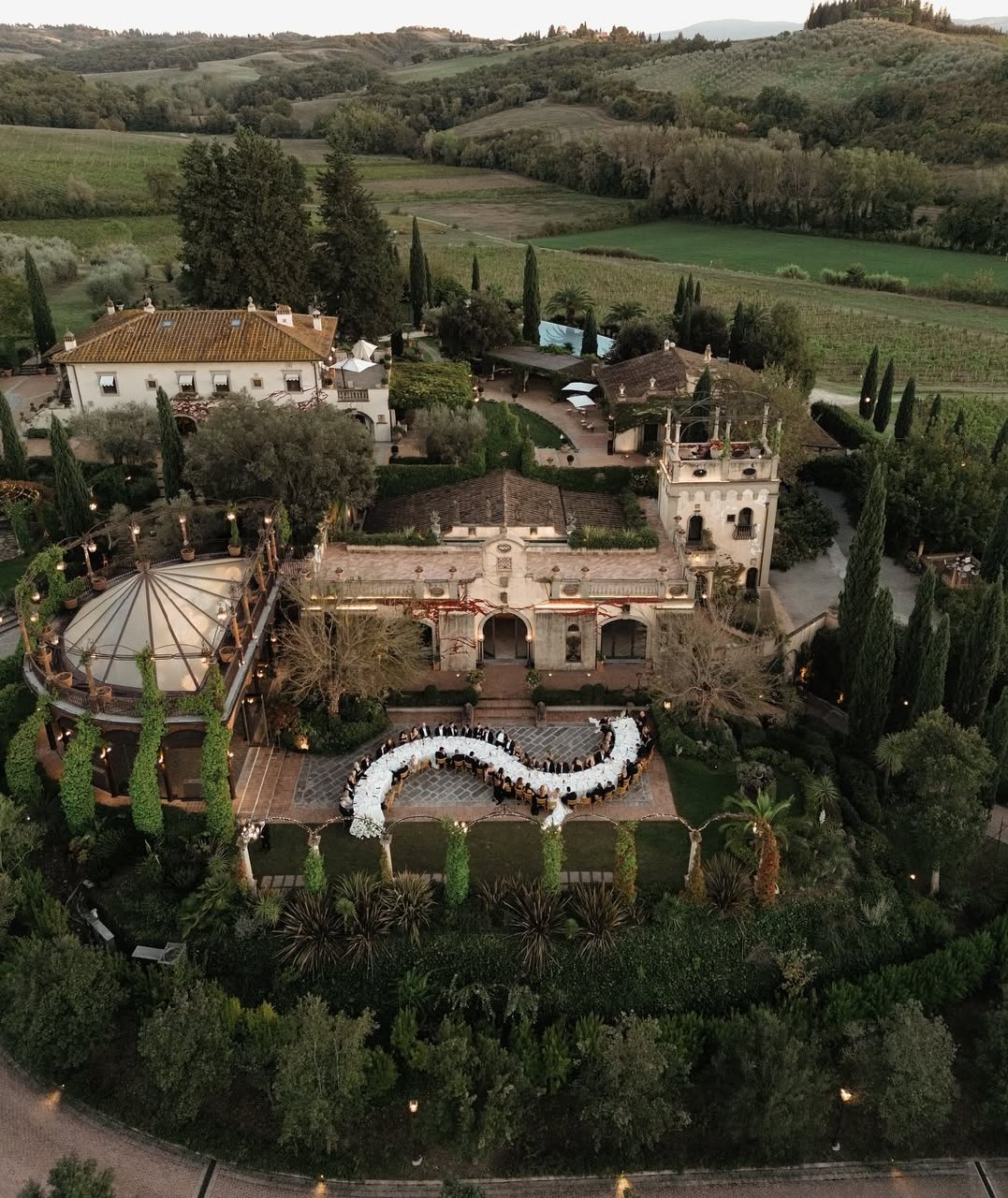
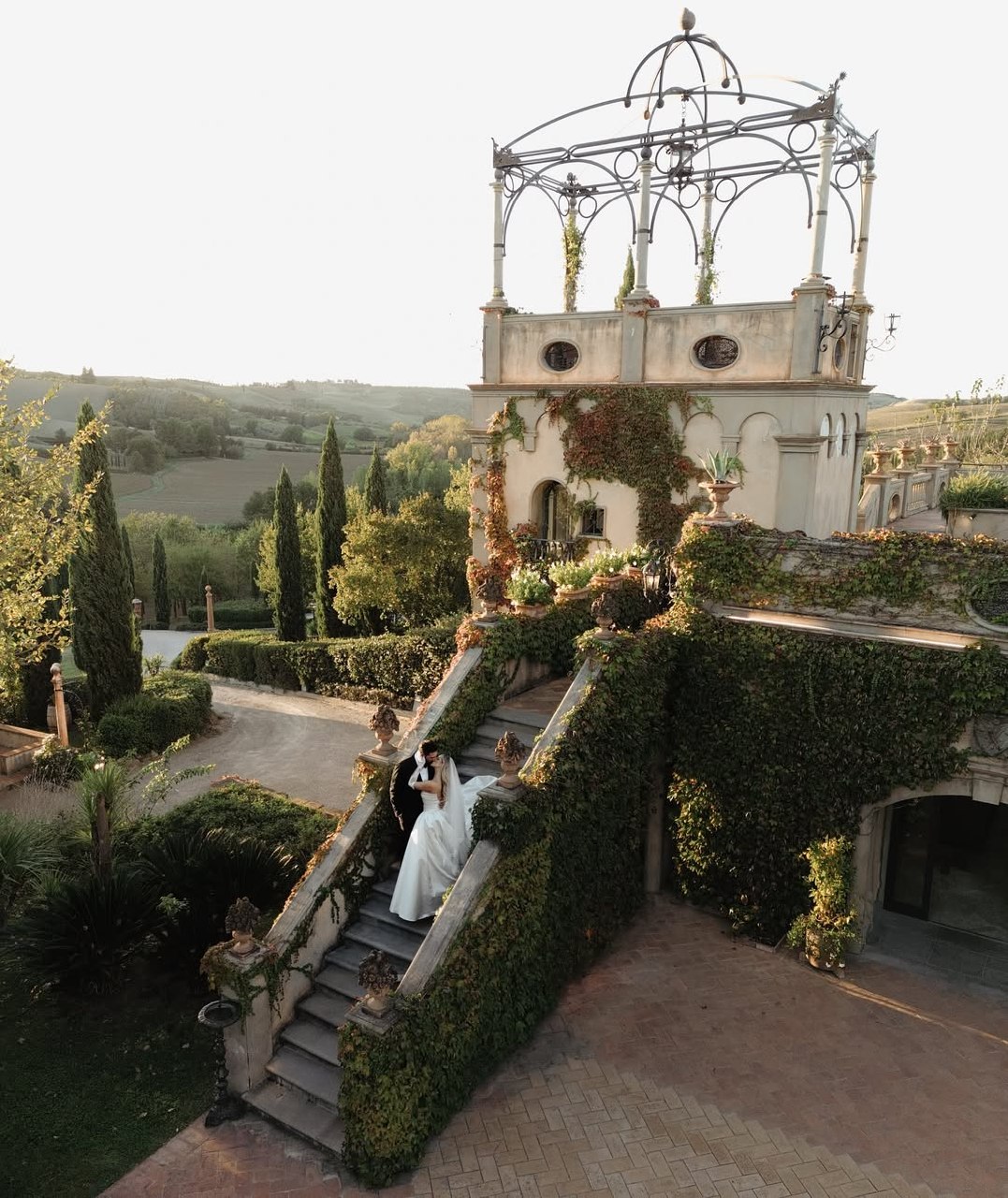
Tenuta Corbinaia used to be a farmhouse. Built in the 1800s, it was run as a working organic vineyard for generations. The Rindi family transformed it into something more polished, yet it still has the working-estate feel that sets it apart from the grander Medici villas nearby. Andrea Bocelli has stayed here. The staff mention this fact once, then move on, which feels more authentic than making it the main selling point.
The infinity pool overlooking the vineyards has become a popular spot where every couple takes at least one photograph, regardless of the shot list. Sunset ceremonies are held in the Piazza of the Sphinxes, with vineyard rows stretching behind the couple and a historic arch framing the view as if it were built for this purpose.
The indoor capacity tops out at around 100–130 people, depending on the hall. The outdoor capacity is closer to 180–200 people for larger celebrations across the grounds. The property has eight suites that sleep 16 guests and is surrounded by 40 hectares of vines that produce the estate's own organic wine and olive oil. This detail is more apparent at dinner than at most venues since the wine on the table was likely grown within walking distance.
Villa Barberino
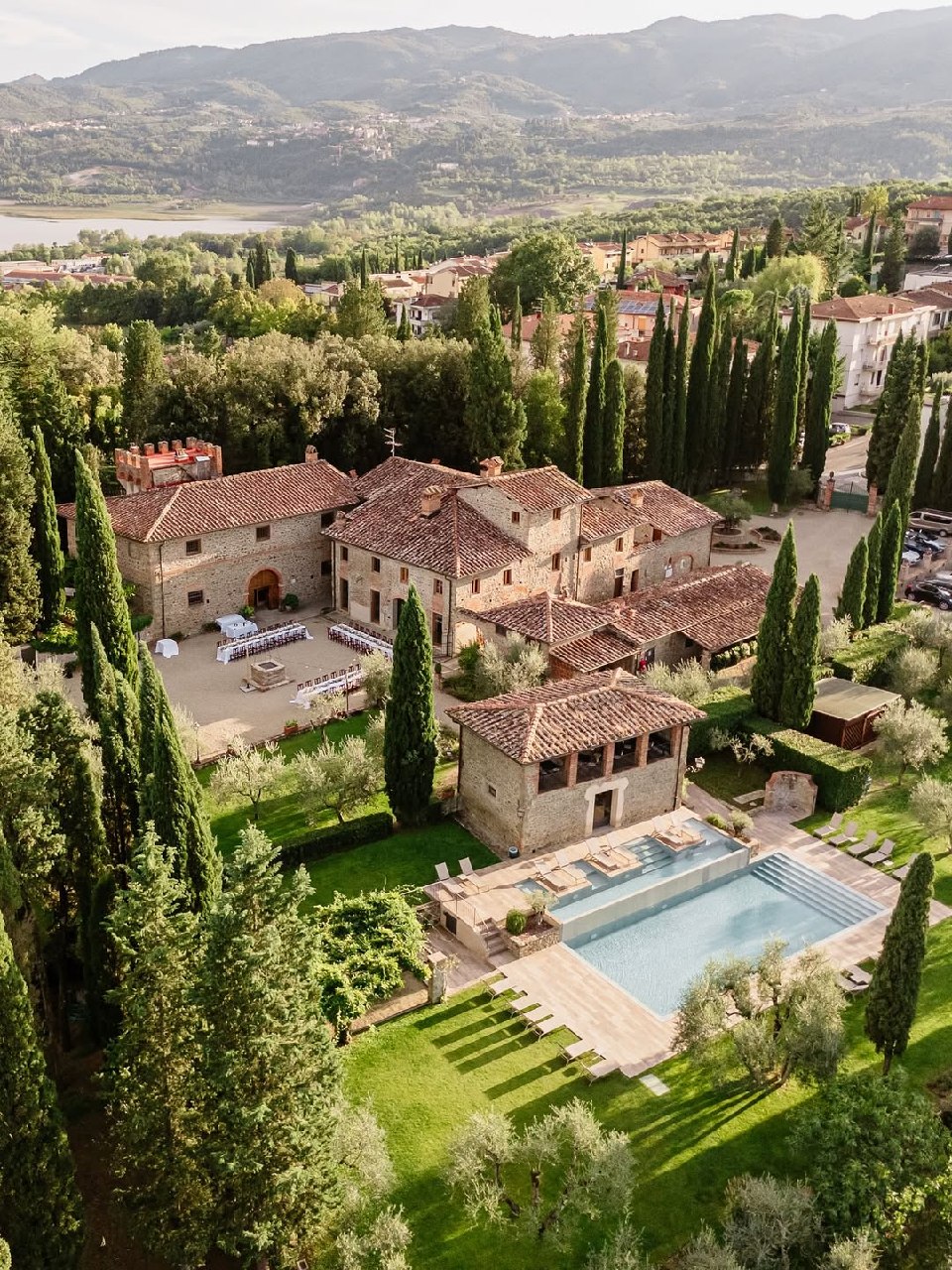
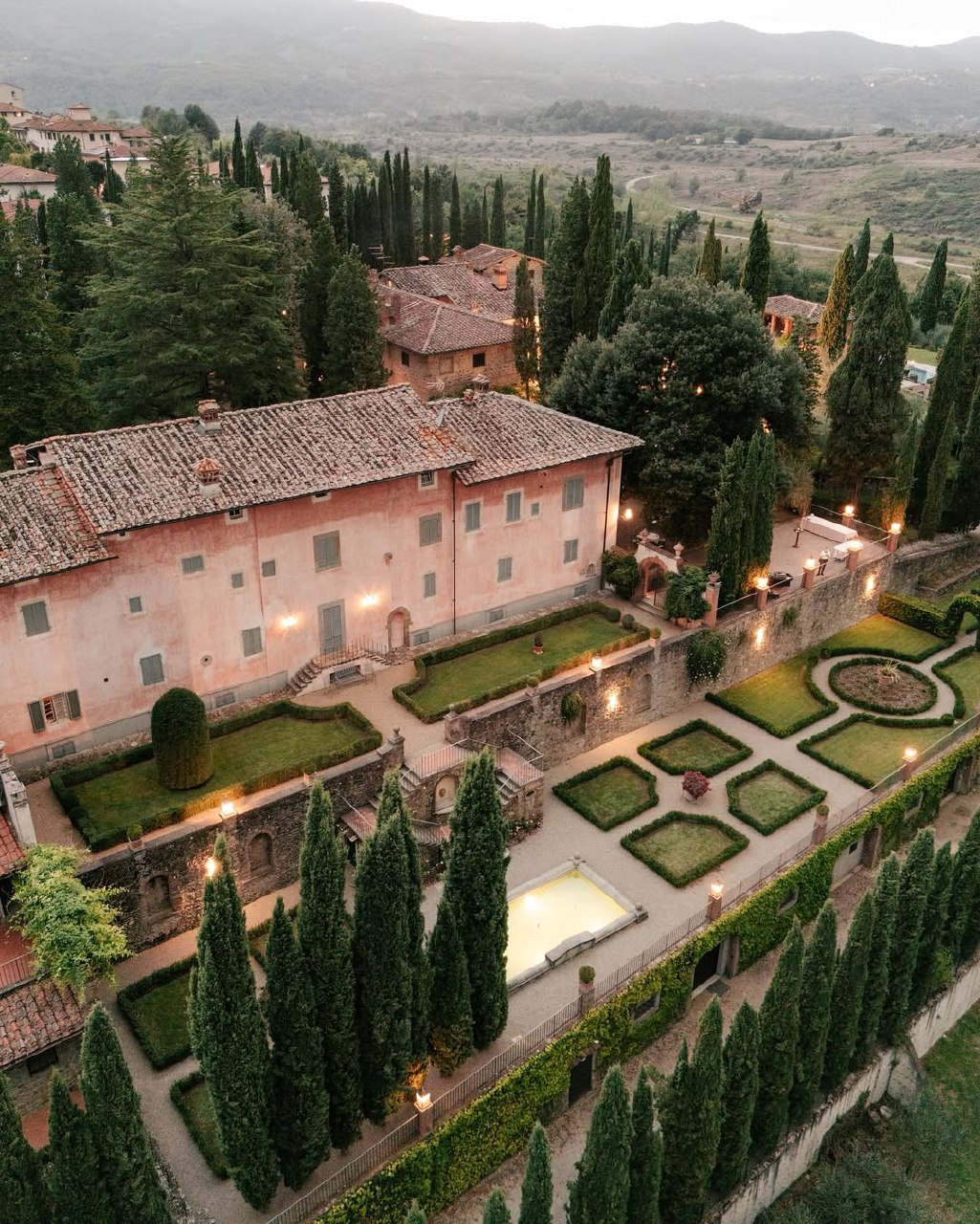
The history here goes back further than that of most other Tuscany wedding venues: It was under Lombard rule, then it became a monastery. After centuries of decay, the Boni family restored the property in 1988, saving it from ruin.
Now, it is a functioning resort with its own restaurant and in-house chef. One rule shapes all wedding planning here: no outside catering. Most couples appreciate this restriction once they realize how many decisions it eliminates from an overwhelming process. The historic hall can host up to 150 guests, though many weddings are smaller and use the outdoor ceremony spaces, particularly the area in front of the pink-toned main façade of the villa.
The property can accommodate up to 72 guests in its rooms, making it one of the more accessible Tuscany wedding venues with accommodation, especially for couples who want their guests to stay together without having to book an entire region's hotel inventory. An on-site museum filled with old rural tools and farming equipment offers guests something to explore between events.
Castello di Celsa
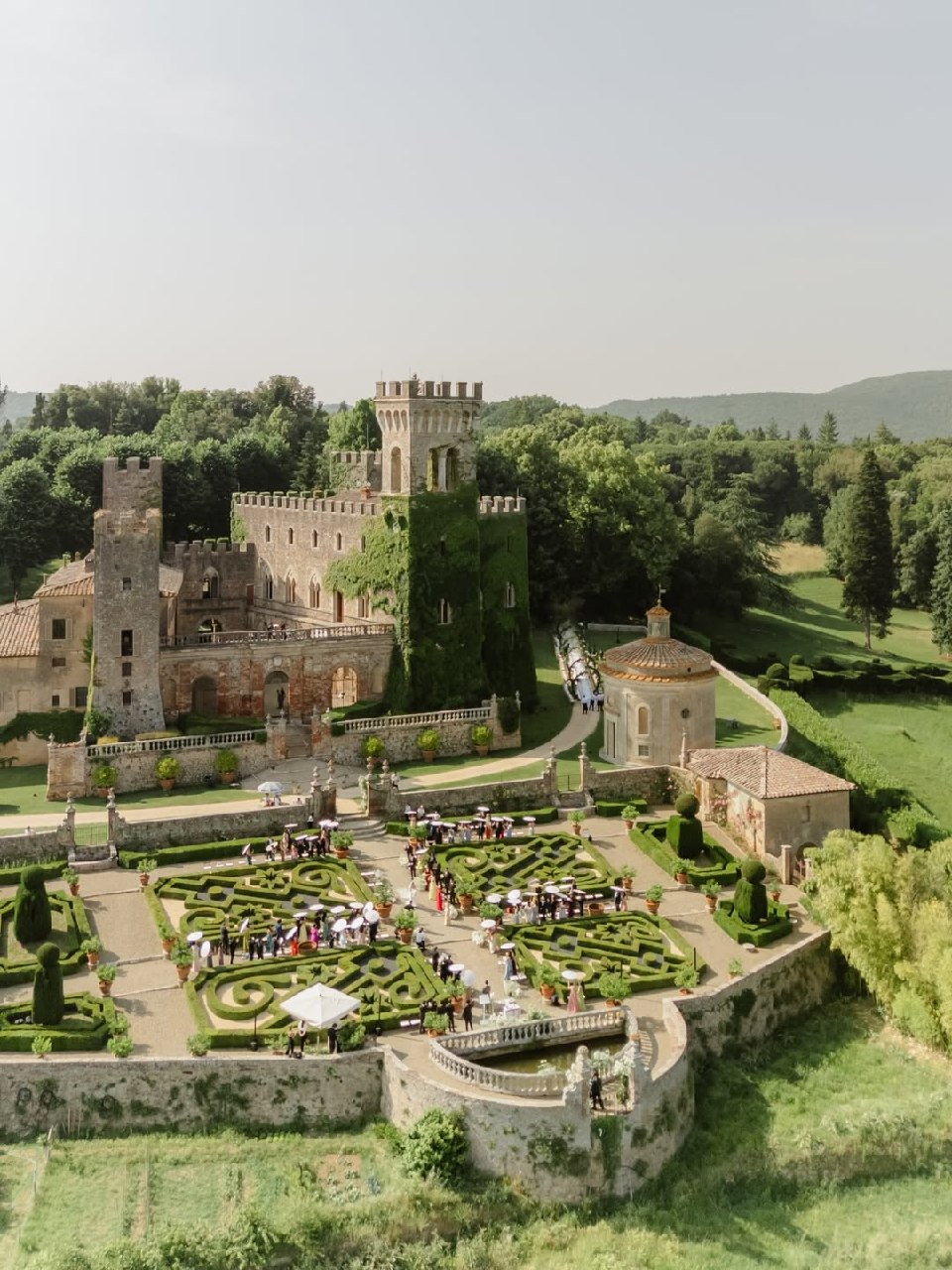
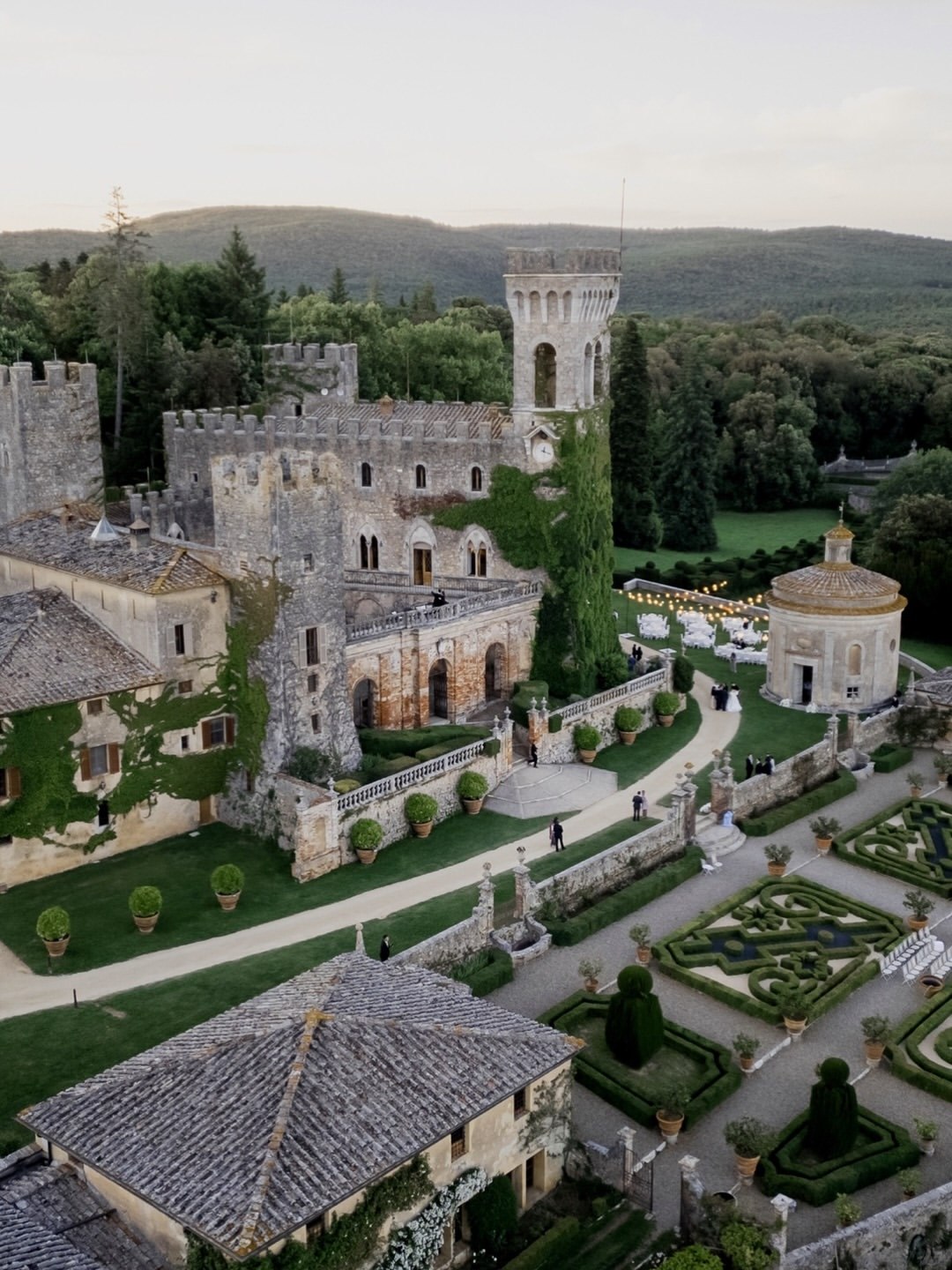
There is a 13th-century tower wrapped in ivy. A private chapel designed by Baldassarre Peruzzi is tucked beside the lawn. A granary that can be converted into a reception space for 180 guests in case of bad weather. Castello di Celsa offers total exclusivity - your wedding gets the whole property. There is no shared calendar and no second event in another wing while your ceremony unfolds on the grounds.
The layout guides guests across the weekend: an evening welcome by the pool with wood-fired pizza, a ceremony in the Italian gardens the next day, dinner with the illuminated castle as a backdrop, and an after-party spilling into the courtyard once the dancing begins. This works because nobody else shares the space - that's exactly why it's one of the most requested Tuscany castle wedding venues. The estate's roots go back to the 13th century along the Via Francigena, an old pilgrimage route connecting Colle Val d'Elsa and Siena. The towers feel as if they have absorbed centuries of foot traffic without losing their character.
The castle and the Villa Limonaia provide on-site accommodations for about 22 guests, and the outdoor ceremony space can accommodate up to 200 people across the chapel lawn and courtyard. The medieval towers remain visible from nearly every angle on the property.

Villa di Geggiano Winery
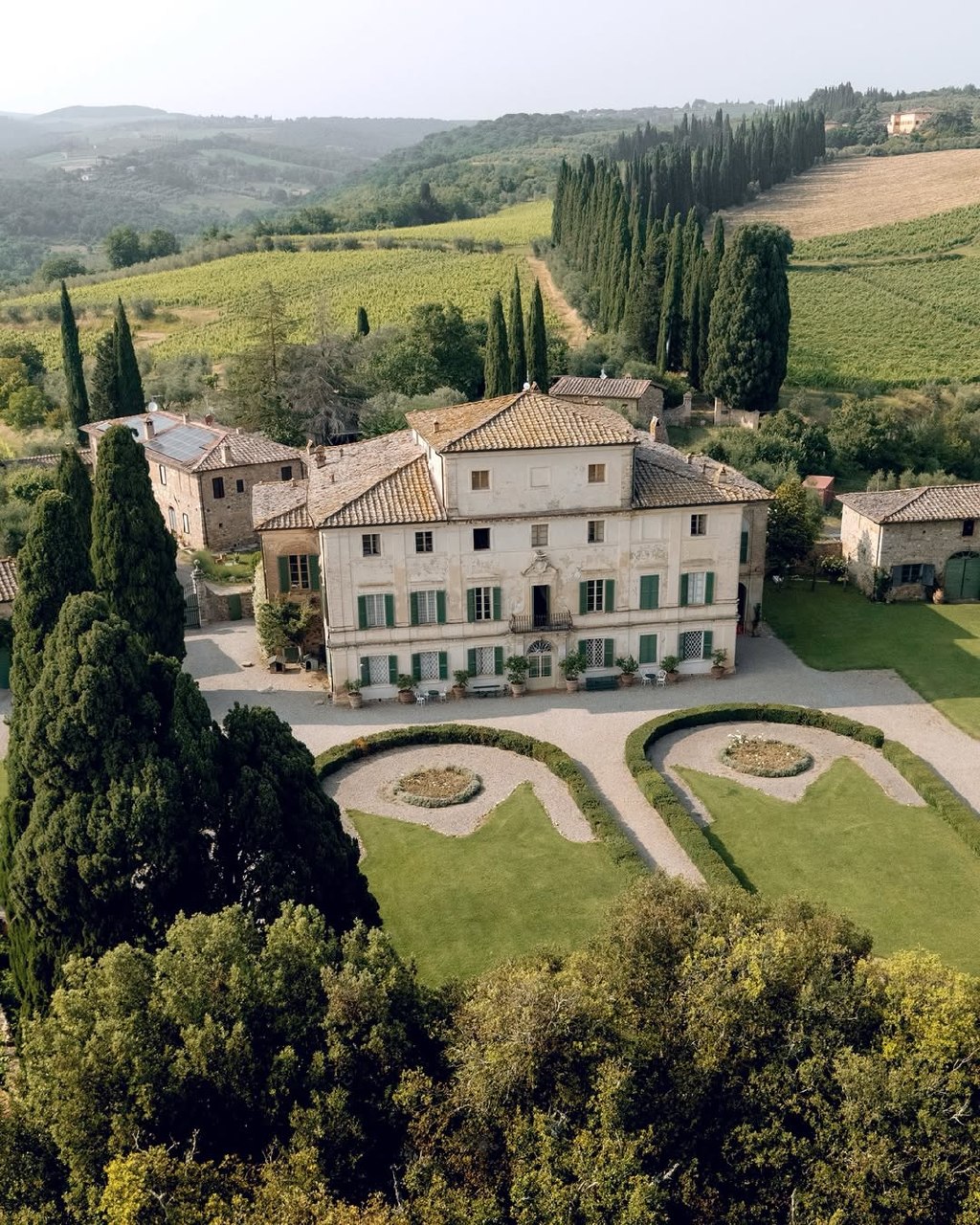
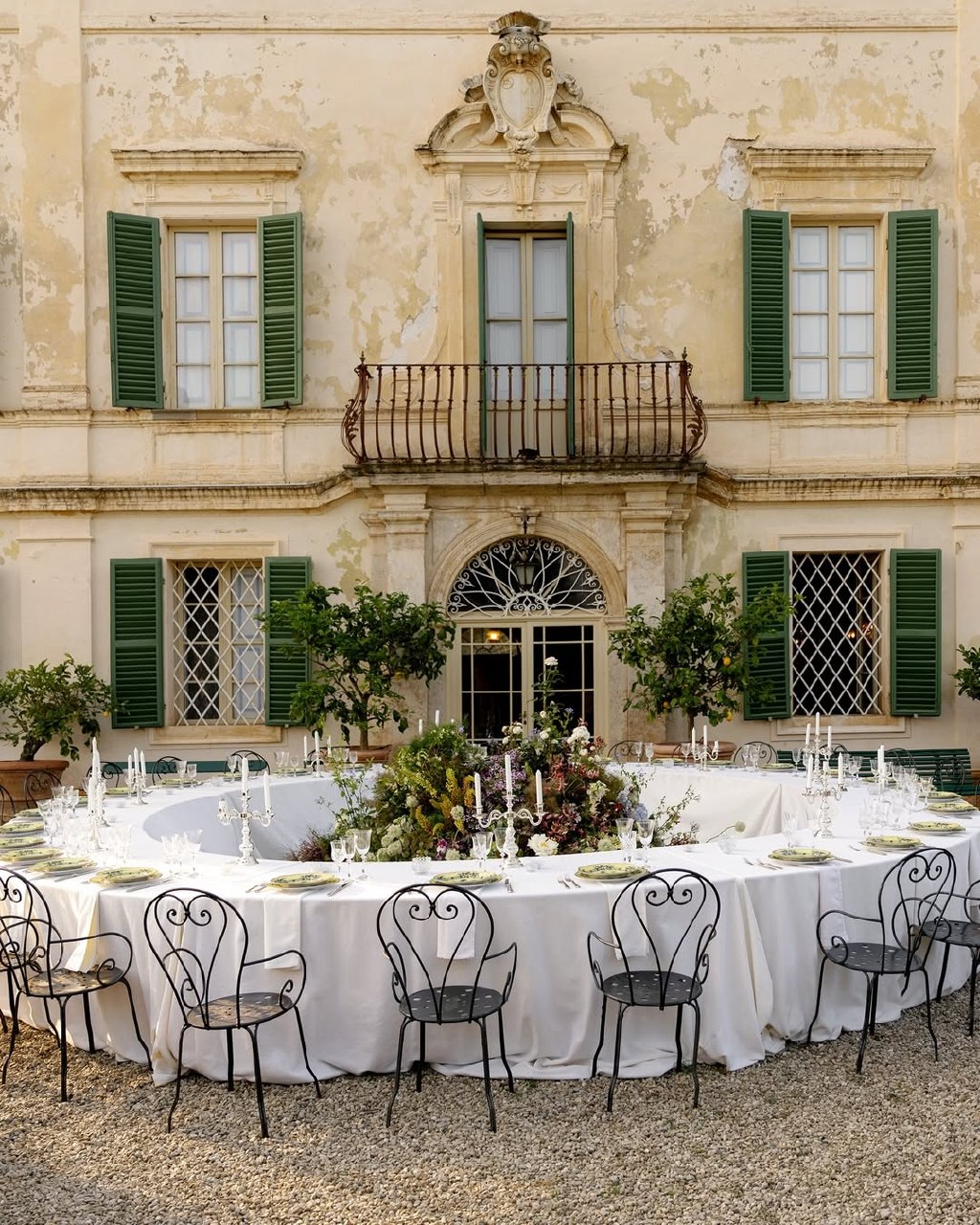
The same family has owned the same vineyard since 1527. Nearly five centuries of continuous ownership give Villa di Geggiano a unique character compared to most other historic venues on this list. It's not a restored relic brought back from neglect, but rather a home that also happens to be one of Tuscany's most photographed vineyard wedding venues. The estate's own Chianti Classico has been pressed from these vines for generations, so the wine served at weddings here comes directly from the land on which guests stand.
What makes it distinct from its neighbors?
- A Baroque open-air theater built in 1790 and framed entirely by clipped cypresses that doubles as a concert venue when there isn't a wedding
- A private chapel built in 1768 for a family wedding that still hosts ceremonies for up to 30 guests nearly 260 years later
- Outdoor capacity reaching 180, with the historic ballroom holding 60 for intimate dinners under original 18^(th)-century frescoes
- A portrait gallery inside the villa lined with family paintings spanning three centuries that doubles as one of the property's most striking photo locations
The on-site accommodations are deliberately small, with just ten guests across five suites, ensuring a private experience even when the celebration is larger.
Castello di Vicarello
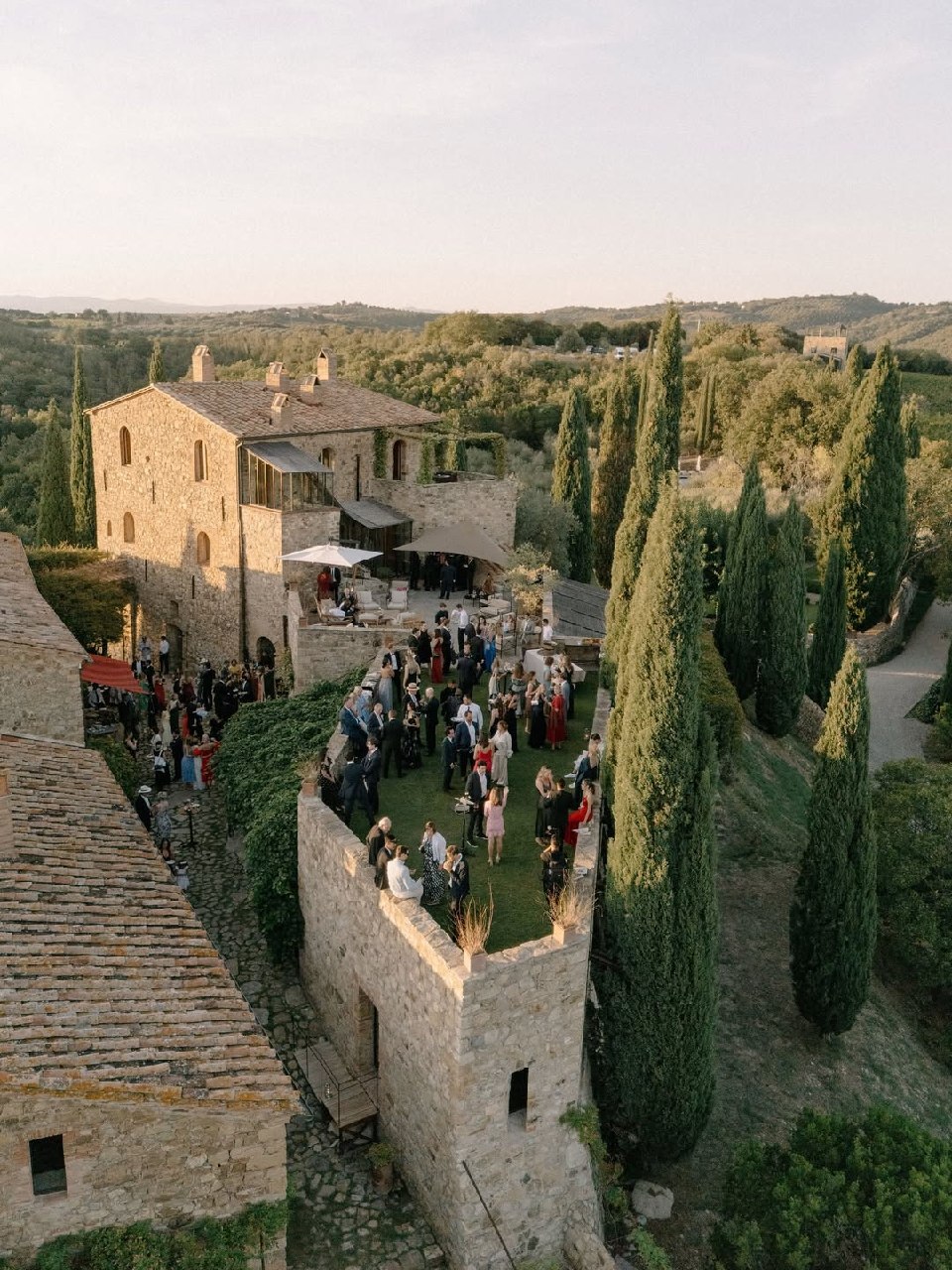
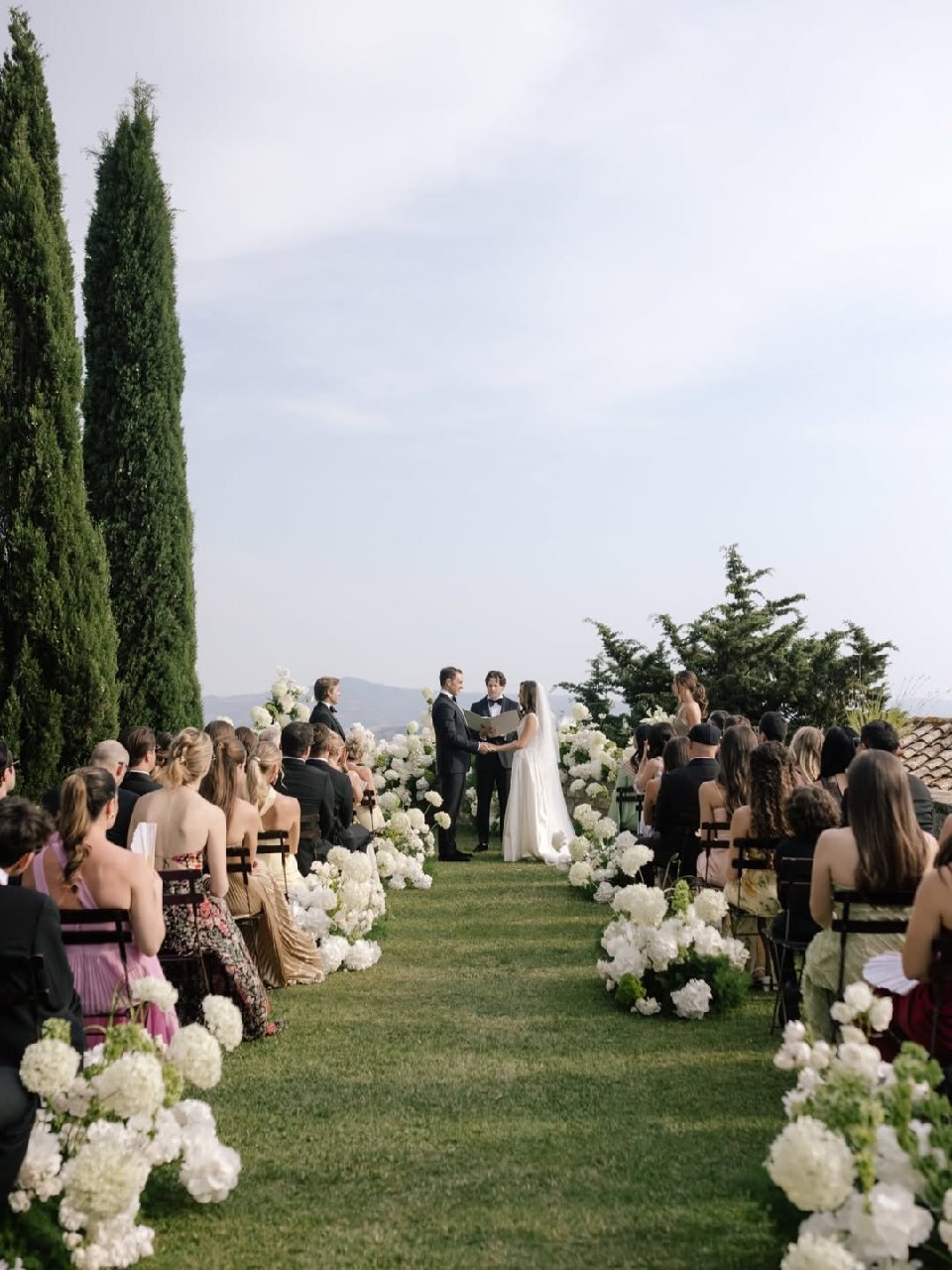
Deep in the Maremma, the wilder southern edge of Tuscany, sits a 12th-century castle that takes exclusivity seriously. Each room, infinity pool, and stone pathway is reserved for one wedding party at a time, with no exceptions. The kitchen operates at a level that some reviewers compare to Michelin-starred restaurants. It is built around produce grown on the estate's 40 hectares of organic farmland.
This farm-to-table philosophy is more than just marketing; it's the actual operating model. The same kitchen gardens that supply the ingredients for dinner also host cooking classes for guests who want to learn the techniques behind their meal. The indoor capacity is modest at around 30 for seated dinners in the stone-arched restaurant and salons. Outdoors, the lawns can accommodate up to 180 guests, and there is a backup marquee since the weather in the Maremma hills can change quickly.
The ten boutique suites sleep about 22 people on site. They are intimate by design, not limitation, and the two heated infinity pools overlooking the valley make that seclusion feel like a luxury rather than a sacrifice.
Tuscany's Top Wedding Venues at a Glance
| Venue | Style & Vibe | Best For |
|---|---|---|
| Villa Cetinale, Villa La Foce | Baroque grandeur, royal history, manicured gardens | Couples wanting old-world drama with strong garden ceremony spaces |
| Villa Gamberaia, Villa di Geggiano | Historic gardens, working vineyards, multigenerational ownership | Couples drawn to romance rooted in centuries of continuous family history |
| Tenuta Corbinaia, Castello di Vicarello | Rustic-luxury, working organic estates, total seclusion | Couples who want privacy, farm-to-table dining, and a slower weekend pace |
| Villa Barberino | All-inclusive, in-house catering, restored monastery | Couples who want one team handling everything, with accommodation on-site |
| Castello di Celsa | Fairytale medieval castle, full exclusive-use buyout | Couples envisioning a true castle wedding with no shared calendar |
| Villa Corsini a Mezzomonte, Villa Medicea di Lilliano | Grand Medici architecture, large-scale capacity, Florence views | Couples planning a large guest list with genuine Renaissance grandeur |
There are ten venues, each with a completely different relationship to history, scale, and seclusion. Each one has that Tuscan quality of making centuries-old stone feel romantic rather than just old. Before reaching out, be honest with yourself about the number of guests, how much control you want over the weekend versus what you want to delegate to the venue's kitchen and team, and whether on-site accommodations are important or if guests are happy commuting from nearby towns. That clarity will narrow down the ten options to two or three quickly.
Looking for more than just these ten? Browse Wezoree's full collection of wedding venues in Tuscany, Italy. Compare the style, capacity, and pricing of venues across the region, ranging from working vineyards to fortified medieval castles.

FAQ
What are the best wedding venues in Tuscany for a large guest list?
Both Villa Corsini a Mezzomonte and Villa Medicea di Lilliano comfortably accommodate more than 200 guests, with Villa Corsini's gardens accommodating up to 300 guests for very large celebrations. Villa di Geggiano and Castello di Celsa are better suited to mid-sized weddings of 150 to 180 guests.
Are there Tuscany wedding venues on a budget?
Villa Barberino is more affordable than the grand Medici villas, especially since it has its own catering service, eliminating the need to hire outside vendors. Smaller estates and farmhouses in the area generally offer prices significantly lower than those of the most popular castles and villas, making affordable Tuscany wedding venues more accessible than their reputations suggest.
Which venues offer accommodation for the whole wedding party?
Villa Cetinale, Villa Barberino, and Villa Medicea di Lilliano can accommodate a significant number of guests on-site - between 44 and 72, depending on the property - which is important for multi-day celebrations where you want everyone to stay together rather than be scattered across nearby towns.
Is a Tuscany castle wedding more expensive than a villa wedding?
Not necessarily. Castello di Vicarello and Castello di Celsa are two of the most requested Tuscany castle wedding venues. Once accommodation and exclusivity are factored in, they price comparably to mid-tier villas. Across nearly every property here, the biggest cost drivers are guest count and season, not whether the building technically qualifies as a castle.
Do these venues require full exclusive use of the property?
Most do, particularly the castles. Both the Castello di Celsa and the Castello di Vicarello operate on a strict one-wedding-at-a-time model. Depending on the season and day of the week, larger villas like Villa Corsini and Villa Medicea di Lilliano sometimes allow partial bookings.
Which Tuscany vineyard wedding venues are also working wine estates?
Villa di Geggiano, Tenuta Corbinaia, and Villa Medicea di Lilliano all produce their own wine on-site. Several of these venues offer guests the chance to taste estate-grown vintages during the wedding weekend, not just at the bar. This is a genuine highlight among Tuscany vineyard wedding venues.
How far in advance should we book a Tuscany wedding venue?
Properties on this list that are premium or ultra-luxury typically book 12 to 18 months ahead for peak season, particularly on Saturdays from May through September. Mid-range venues, such as Villa Barberino and Tenuta Corbinale, generally offer more flexibility and sometimes confirm dates within nine to 12 months.