How to Make Groom Stand Out From Groomsmen


- The Difference Isn't Always More - It's Specific
- Start With the Suit Itself, Not the Accessories
- The Accessories Layer: Now We Talk About Them
- The Group Photo Problem, Solved
- The Getting-Ready Story Is a Styling Chapter
- Ways to Make the Groom Stand Out From Groomsmen, By Setting
- How to Make the Groom Stand Out From Groomsmen Without Overthinking It
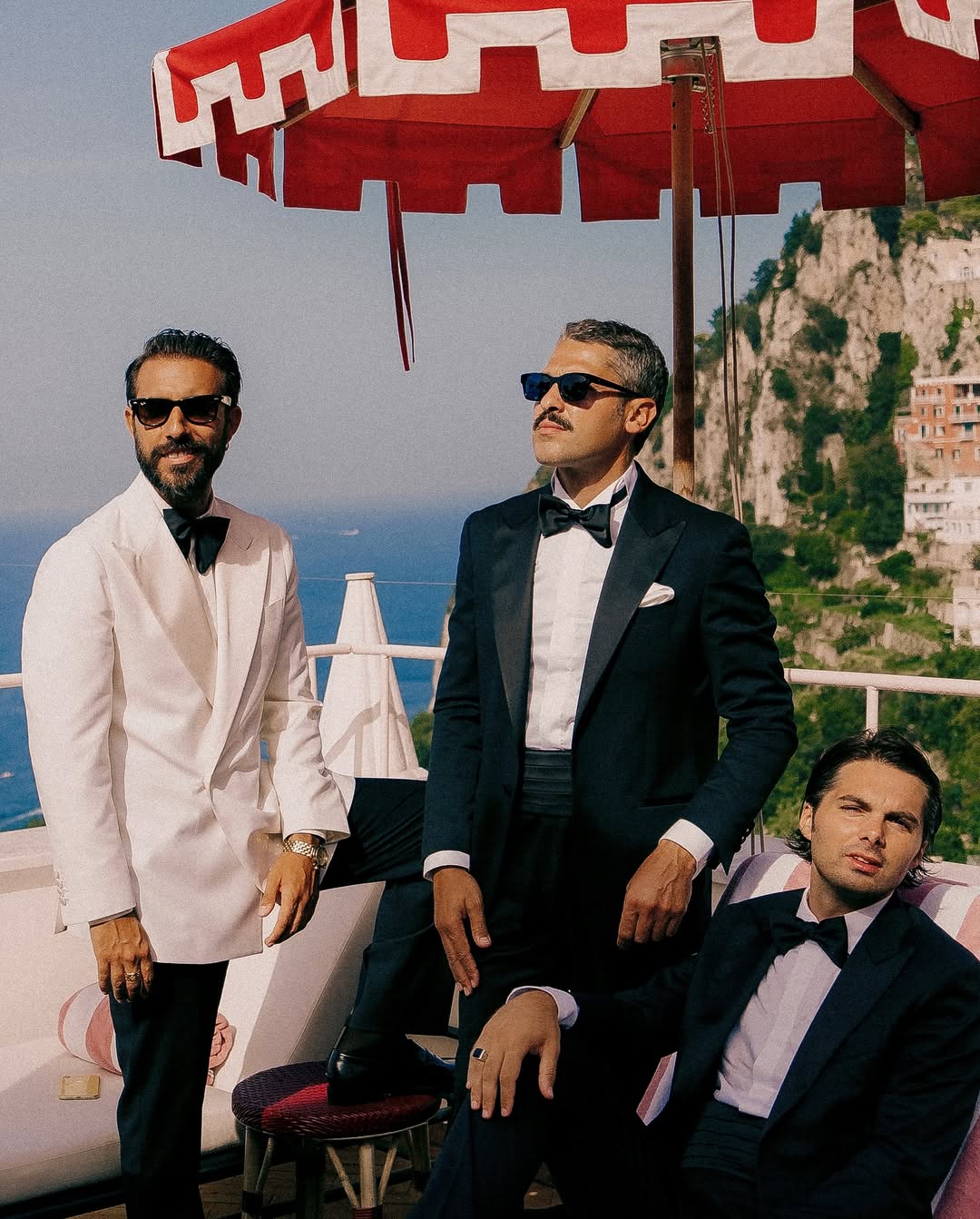
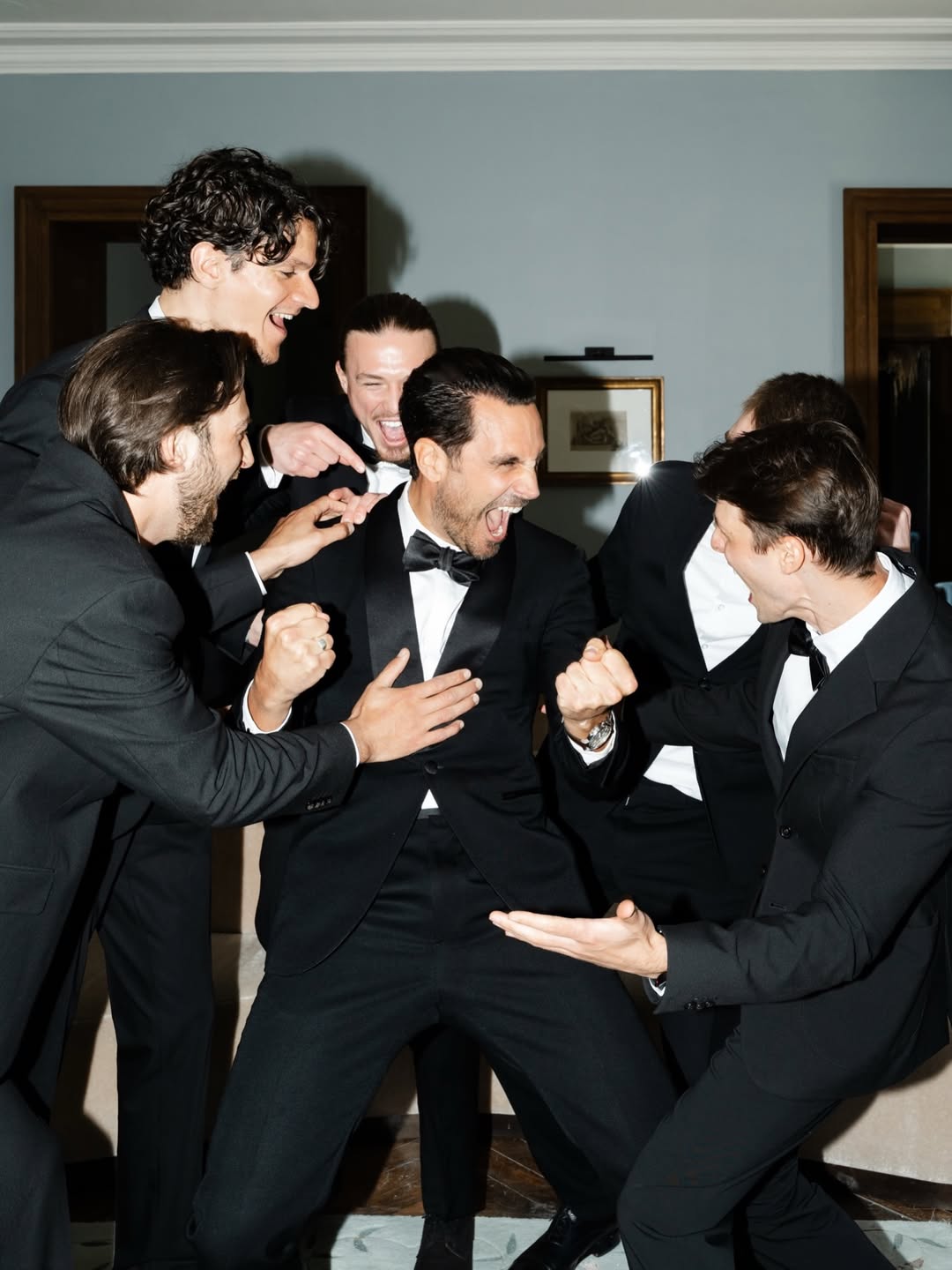
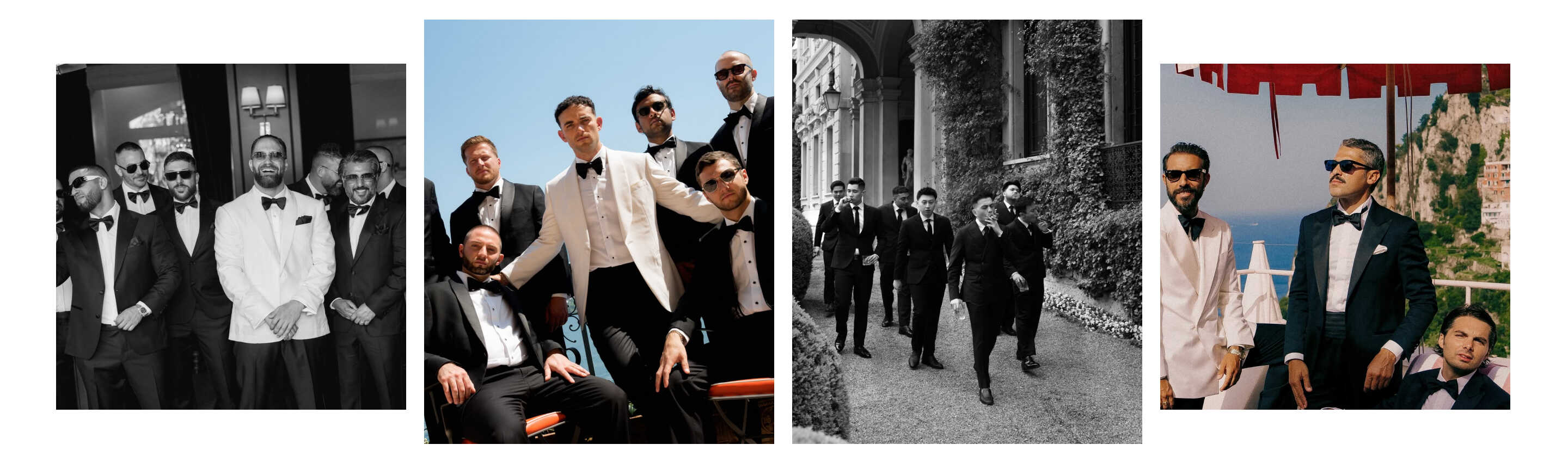
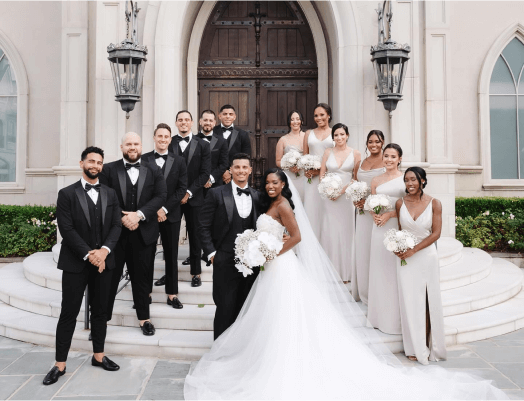
Almost every wedding gallery has that moment where you hover over a group photo, squinting slightly as you try to figure out which one is the groom. That moment should never have happened. However, for many couples, this is true. The difference in style between the groom and his team got lost somewhere between the suit rental and the boutonniere conversation.
Let's fix that. Here’s how to make the groom stand out from the groomsmen.
Find Your Perfect Wedding Vendors

The Difference Isn't Always More - It's Specific
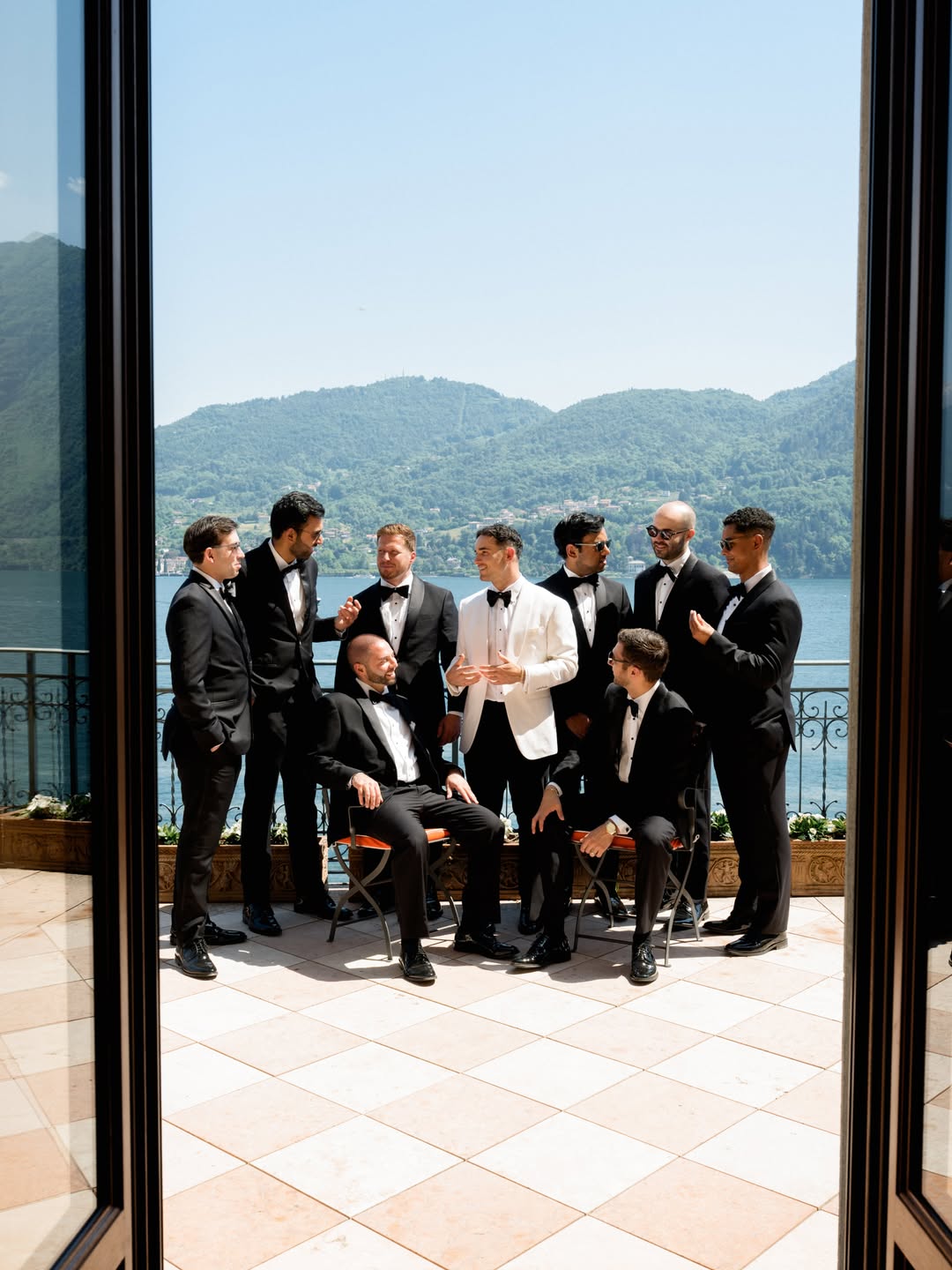
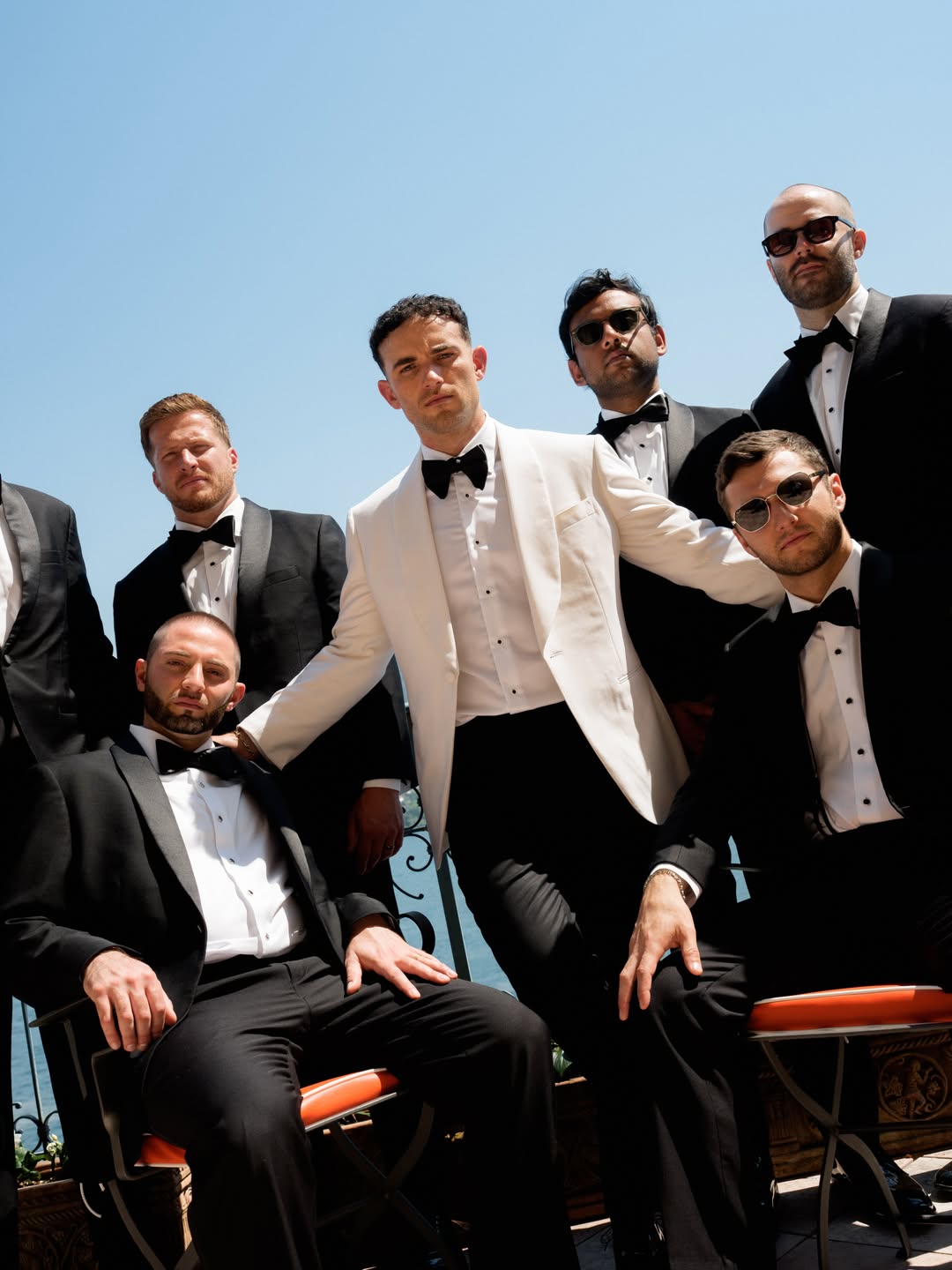
Here's what we see happen all the time: the couple decides to make the groom stand out by adding something louder. A bolder tie, for example. A brighter pocket square. A contrasting waistcoat. The result is that the groom ends up looking like a groomsman who got dressed in the dark.
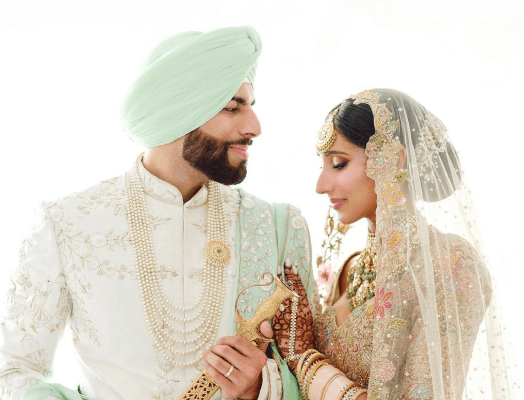
The key to standing out is not about volume. It's about specificity. The groom's look should feel like it was created especially for him, not based on the groomsmen's look and then made slightly more stylish.
Here at Wezoree, our editorial stance is clear: the groom's attire should be a standalone choice, independent of what the groomsmen are wearing. It should work as a solo look. If it only looks different in the context of the group, that's not styling - it's contrast, and contrast fades in photos.
Start With the Suit Itself, Not the Accessories
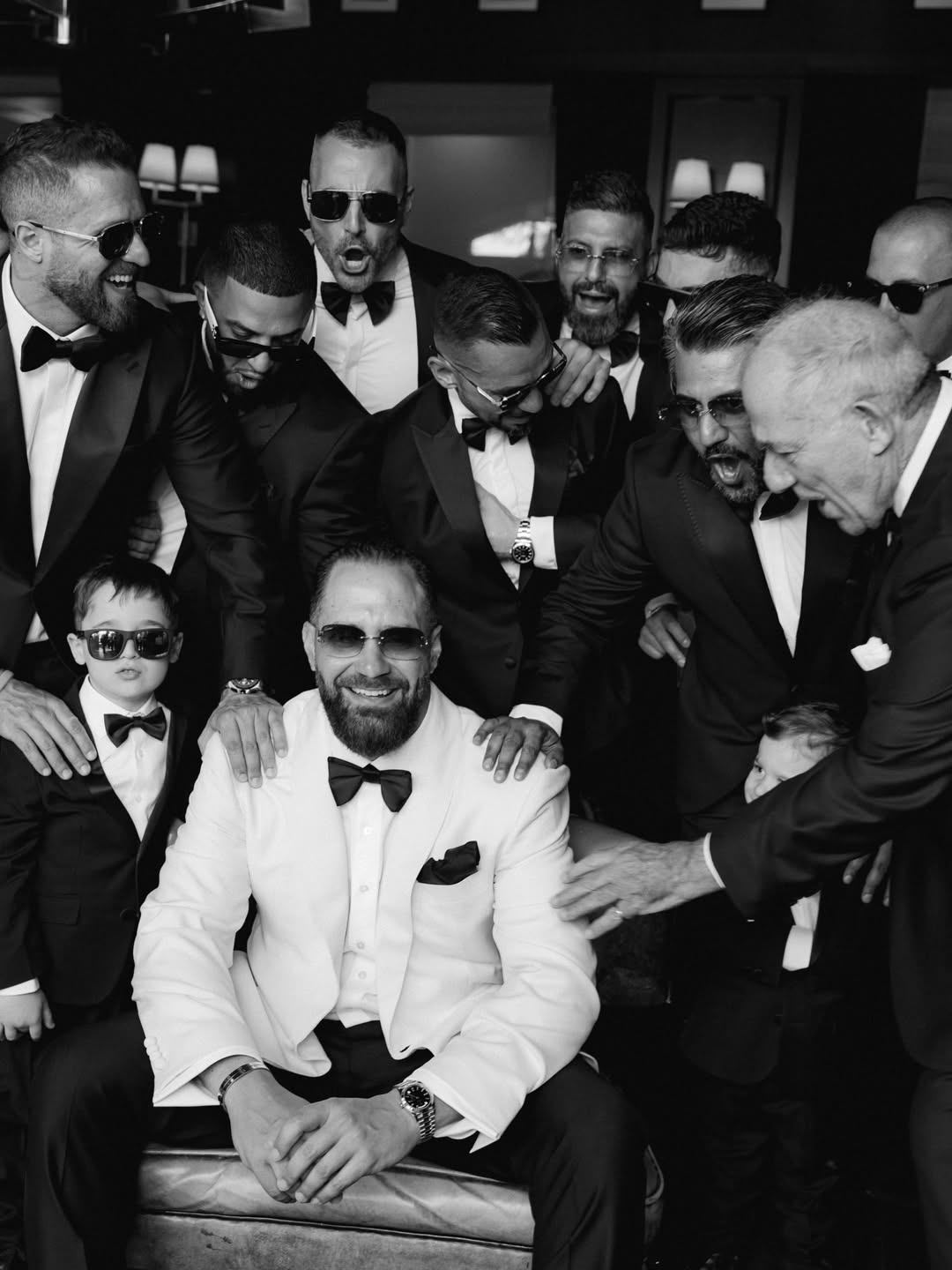
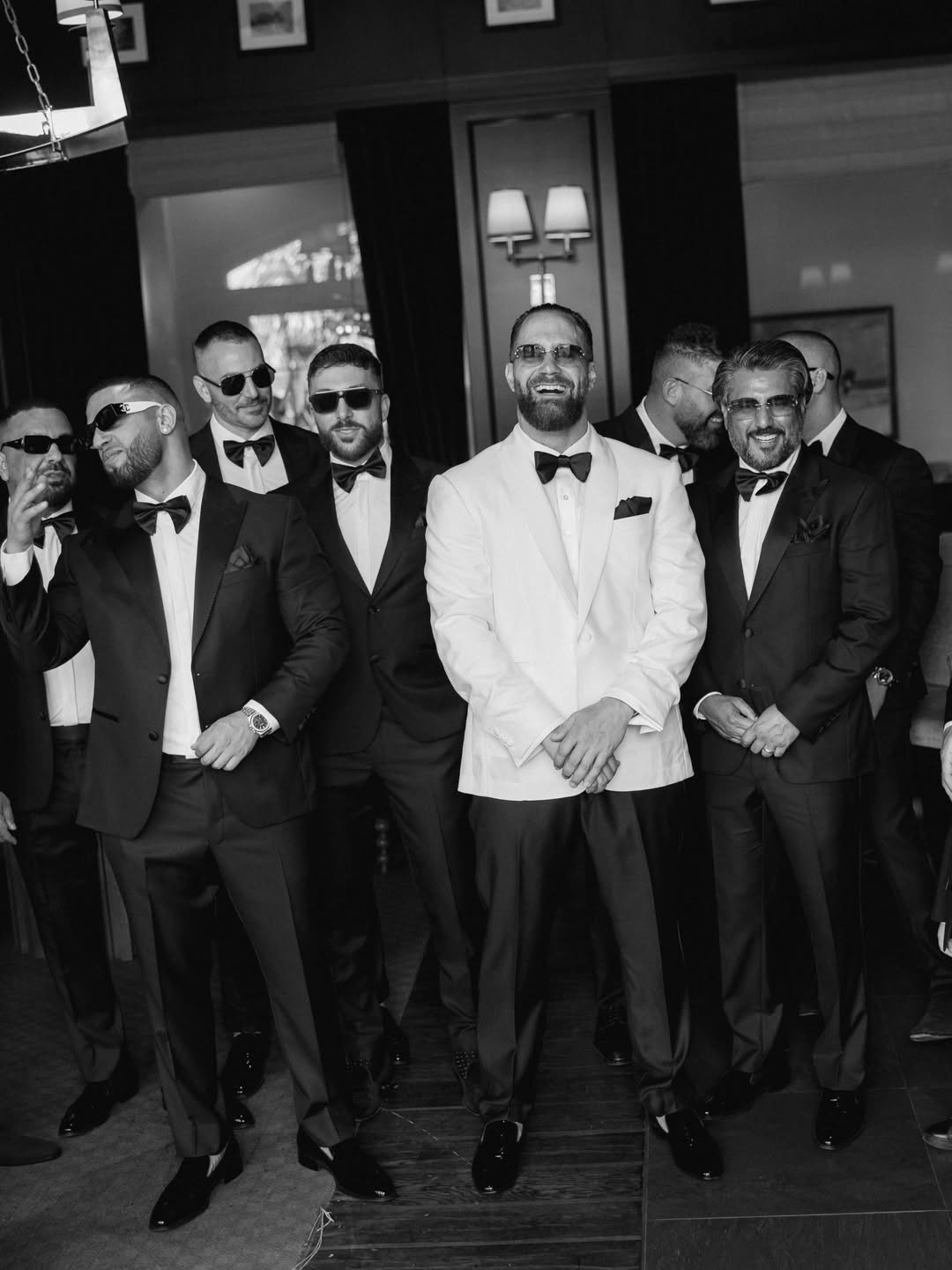
This is where most couples get it wrong. They finalise the suits for the groomsmen, and then try to find a place for the groom within that colour scheme and style. By the time the real decisions have been made, the groom is simply reacting instead of leading. Flip the order. The groom's suit is the anchor. Everything else coordinates around it.
The Color Conversation No One is Having Honestly Enough
The groomsmen are in navy? The groom does not need to wear a darker shade of navy. He should wear something in a completely different tonal territory, such as a rich charcoal, warm caramel brown, slate grey with blue undertones or deep forest green, which photographs as almost black and jewel-toned. The colours can be similar, but they shouldn't compete.
If the palette conversation starts with "what's similar but slightly different," you're already on the wrong path.
Fabric Weight and Texture Do What Color Alone Can't
This is something we wish more grooms knew. Groomsmen in matte wool suits and the groom in fine-woven crepe or subtle jacquard can wear virtually the same colour and still look completely different. The texture creates hierarchy in photographs that cannot be replicated by layering accessories.
Velvet, satin-finish wool, brushed tweed, hopsack and silk blends all catch the light differently. This means the camera automatically separates them. Your photographer will thank you for it, as will every guest trying to find you in a group shot.
Jacket Architecture: Where the Real Work Happens
If the groomsmen are in two-button notch lapel suits (which they very likely are, because that's the default), you have structural options that immediately signal something elevated:
- Peak lapel - creates a sharp upward line that draws the eye to the face; reads as more formal and more editorial than a notch lapel in the same fabric
- Double-breasted jacket - a completely different silhouette; more structure, more presence, more occasion; not right for every groom, but when it's right, it's unmistakably right
- Contrast stitching or pick stitch detail on the lapel - a visual signature that reads in close-up photos and in video even when it doesn't register across a room
- Waistcoat - adds a layering dimension the groomsmen simply don't have; works especially well in outdoor and destination settings where the jacket may come off
None of these are loud. All of them are specific.

The Accessories Layer: Now We Talk About Them
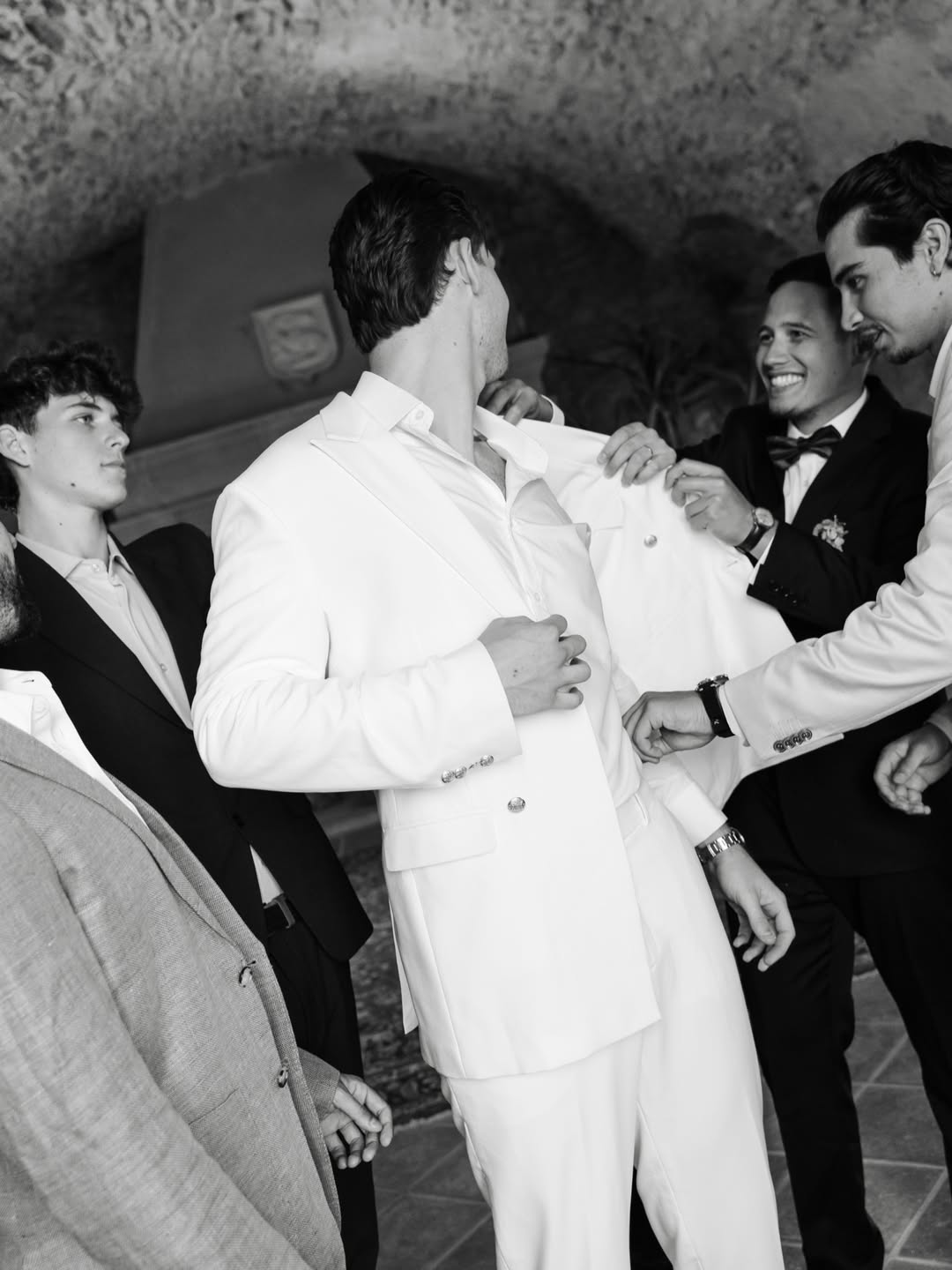
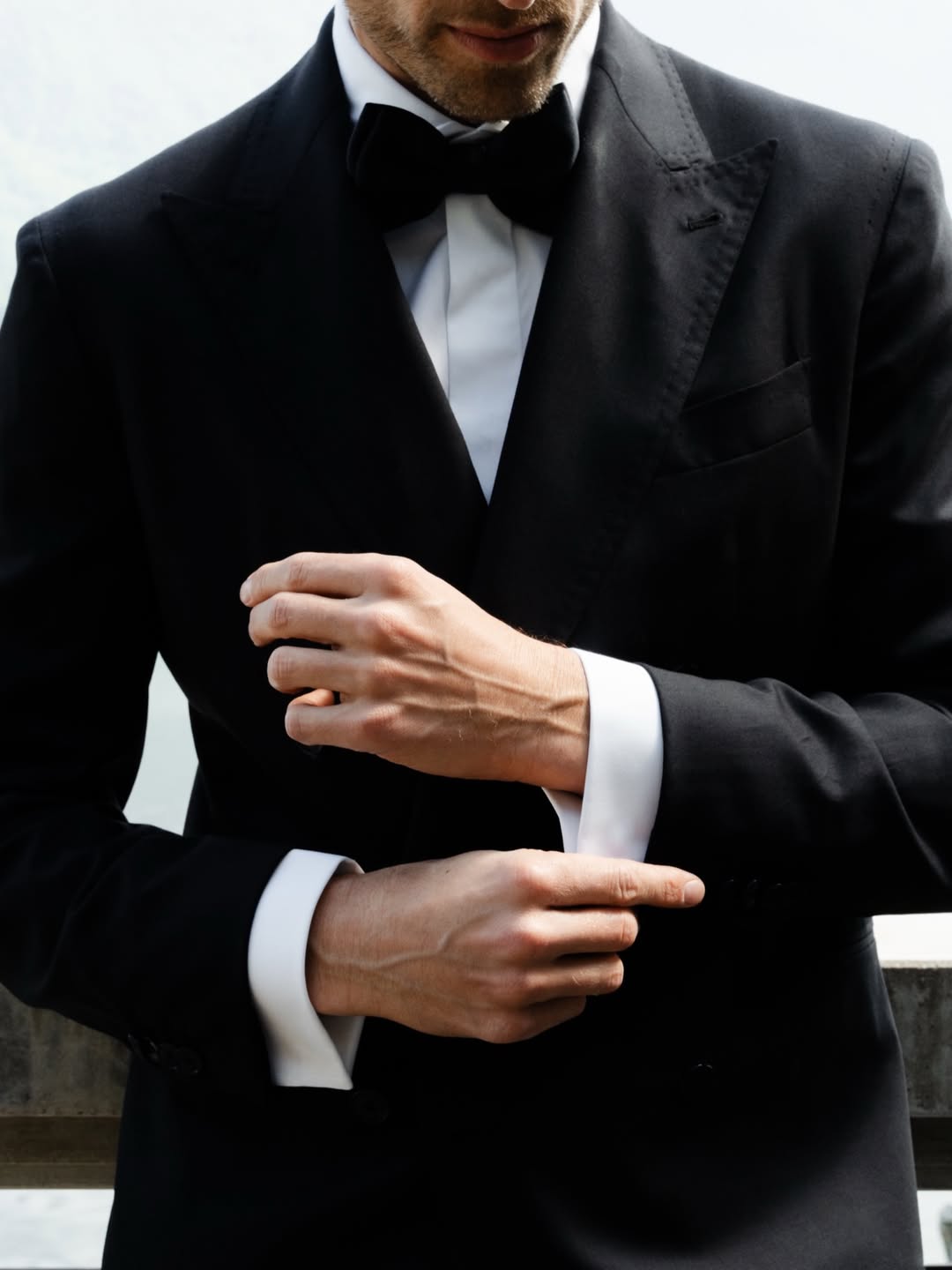
Once the suit is settled, accessories do the fine-tuning - not the heavy lifting. The logic here is simpler than most people realise: the groom's accessories should complement the bride's look first and the groomsmen's look second. Not the other way around.
Here's how the key pieces break down and what each one should be used for:
| Accessory | What most grooms do | What actually works |
|---|---|---|
| Tie / bow tie | Match or slightly contrast groomsmen | Echo a tone from the bridal bouquet or dress |
| Pocket square | Same fold, different color | Different fold and different fabric (silk vs linen) |
| Boutonniere | Same bloom, maybe larger | Architecturally different — different species, structure, or number of stems |
| Shoes | Classic black Oxford, same as the crew | A personal choice: monk strap, velvet loafer, patinated cap-toe |
| Watch | Whatever they own | Something with personal significance — a family piece, an engraved date |
| Cufflinks | Engraved initials | One deeply meaningful object over three generic upgrades |
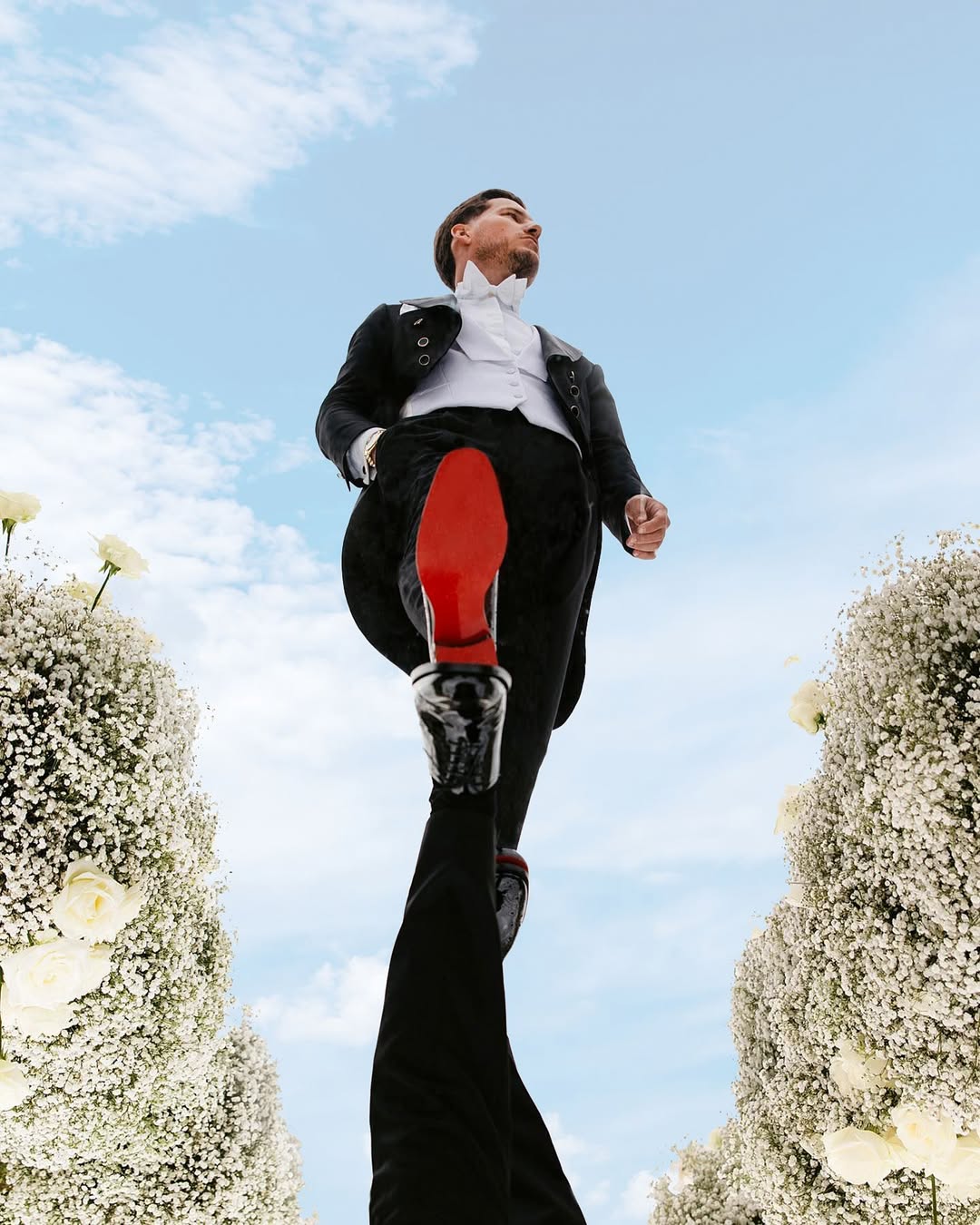
The shoes deserve a specific note. Groomsmen's shoes tend to be practical. The groom's shoes can be the most personal element of the entire outfit - and they're in every dancing photo. Don't underspend on shoes and overspend on cufflinks.
The Group Photo Problem, Solved
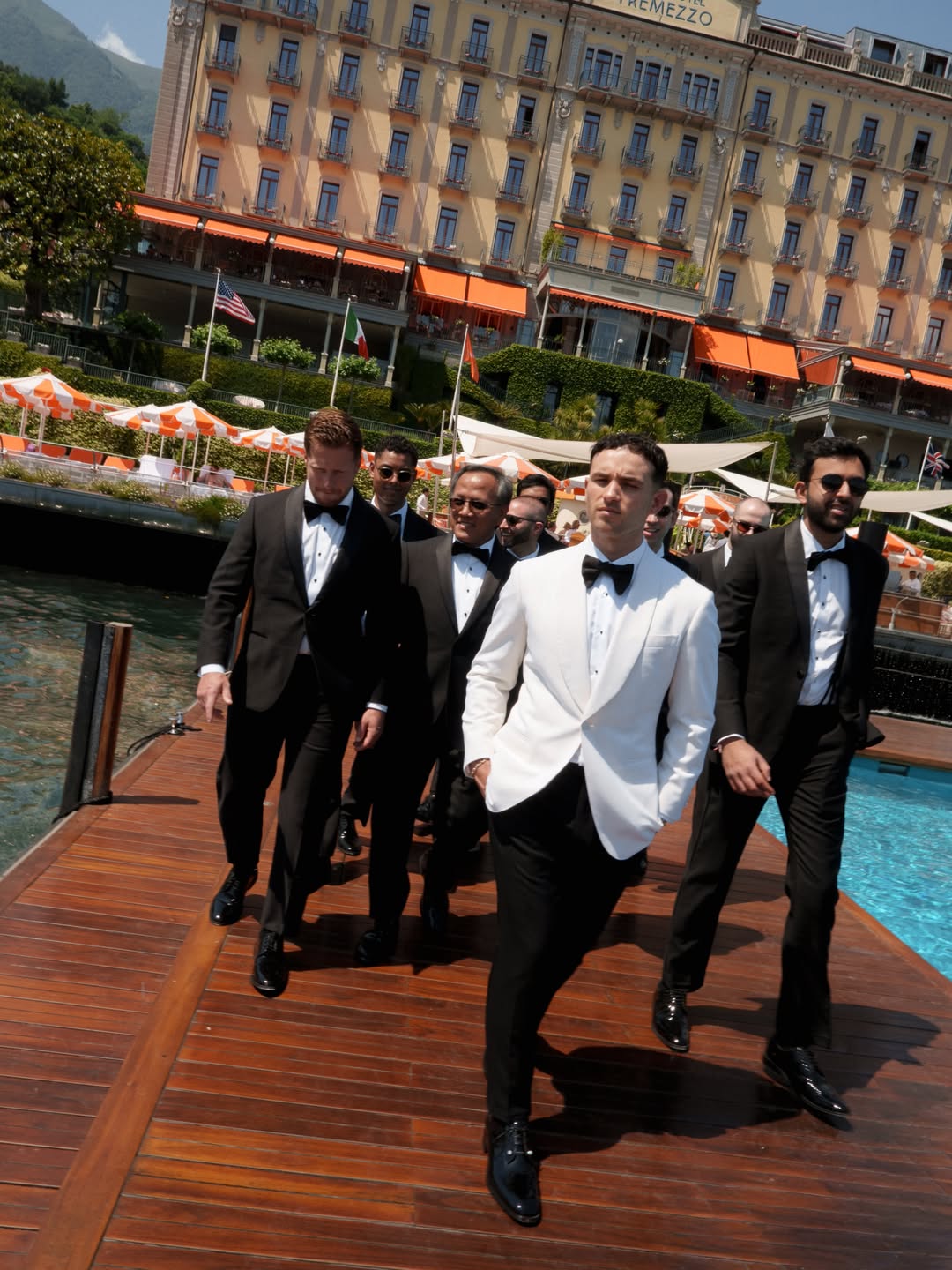
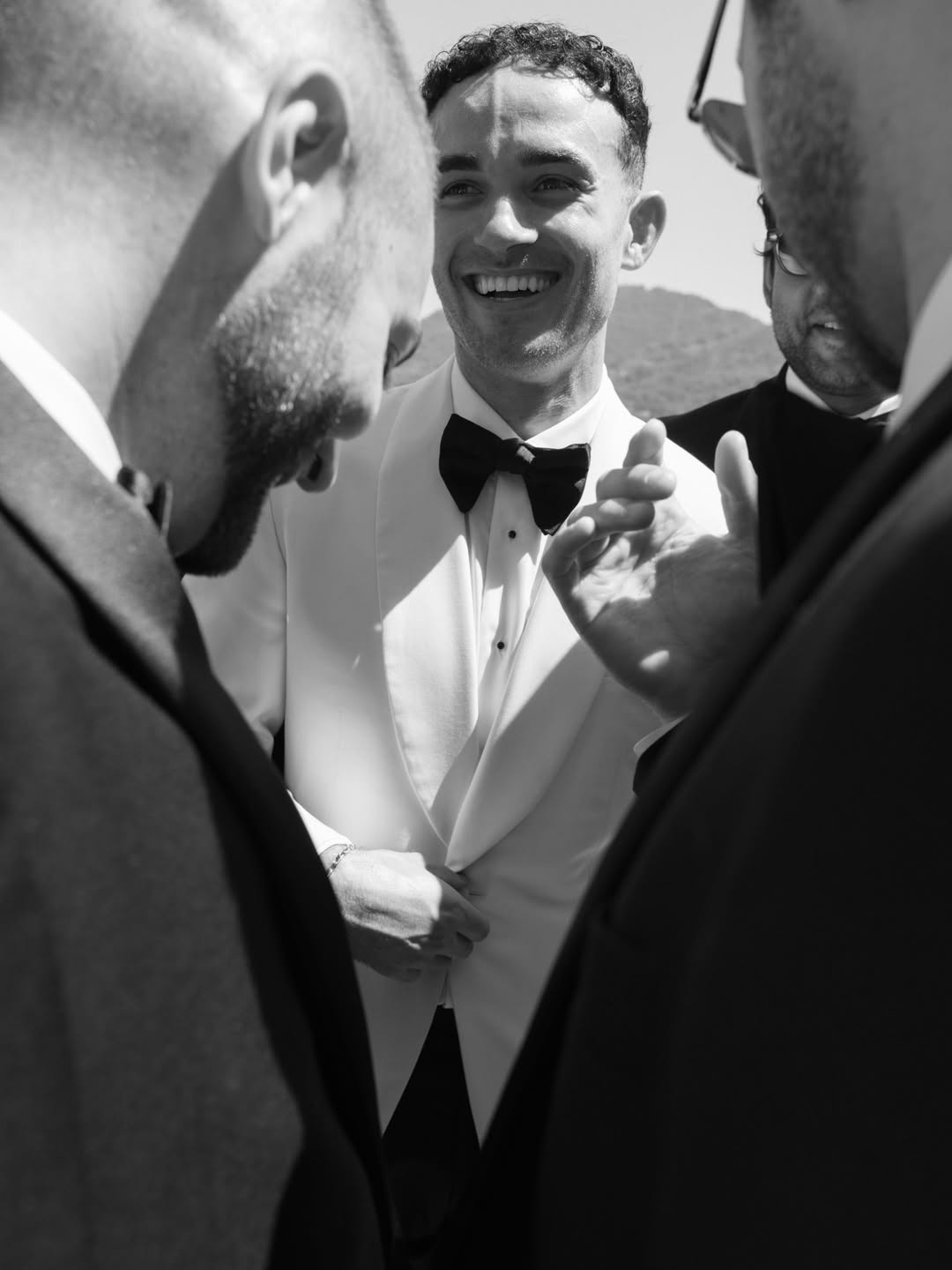
The group photo presents both styling and spatial problems. The styling aspect is the most important. The rest comes down to position and posture, as well as having a quick chat with your photographer before the day.
What to Ask Your Photographer in Advance
Most photographers have a system for positioning the groom. Ask what it is. "How do you typically anchor the groom in a group shot?" is a question most photographers love being asked because almost no one asks it. A groom centered in the frame, positioned a half step forward, with hands in jacket pocket rather than at sides - these are postural decisions that register as natural visual hierarchy rather than staging.
What Styling Cannot Fix
Styling cannot fix a groom who looks uncomfortable in his clothes. If you don't feel like yourself in the suit, it will show - not subtly, and not only to people who know you. The camera catches it directly.
Try the suit on at least twice before the wedding. Move in it. Sit in it. Have a conversation in it. The groomsmen are wearing suits. You are inhabiting one. That requires more rehearsal than most grooms give it.
The Getting-Ready Story Is a Styling Chapter
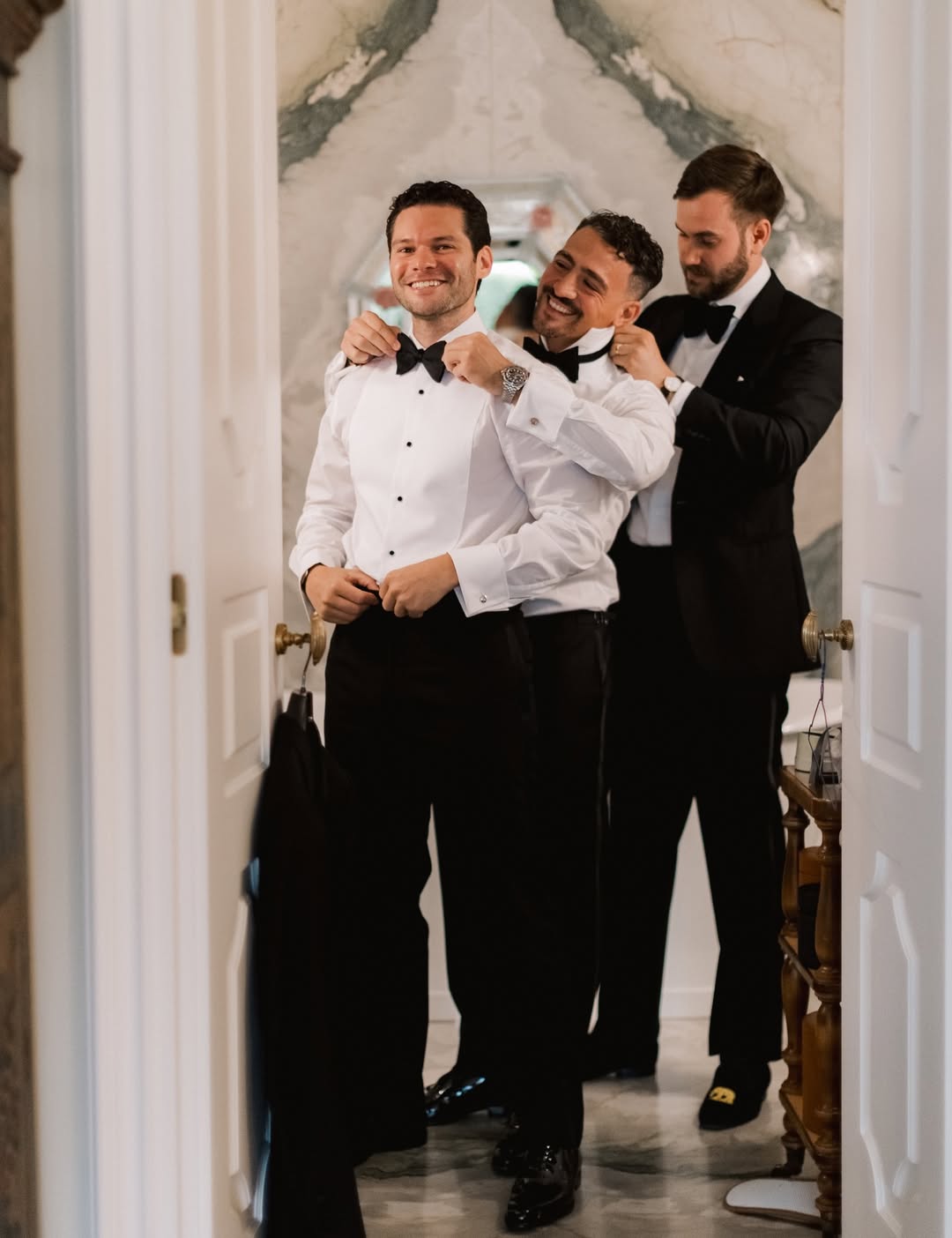
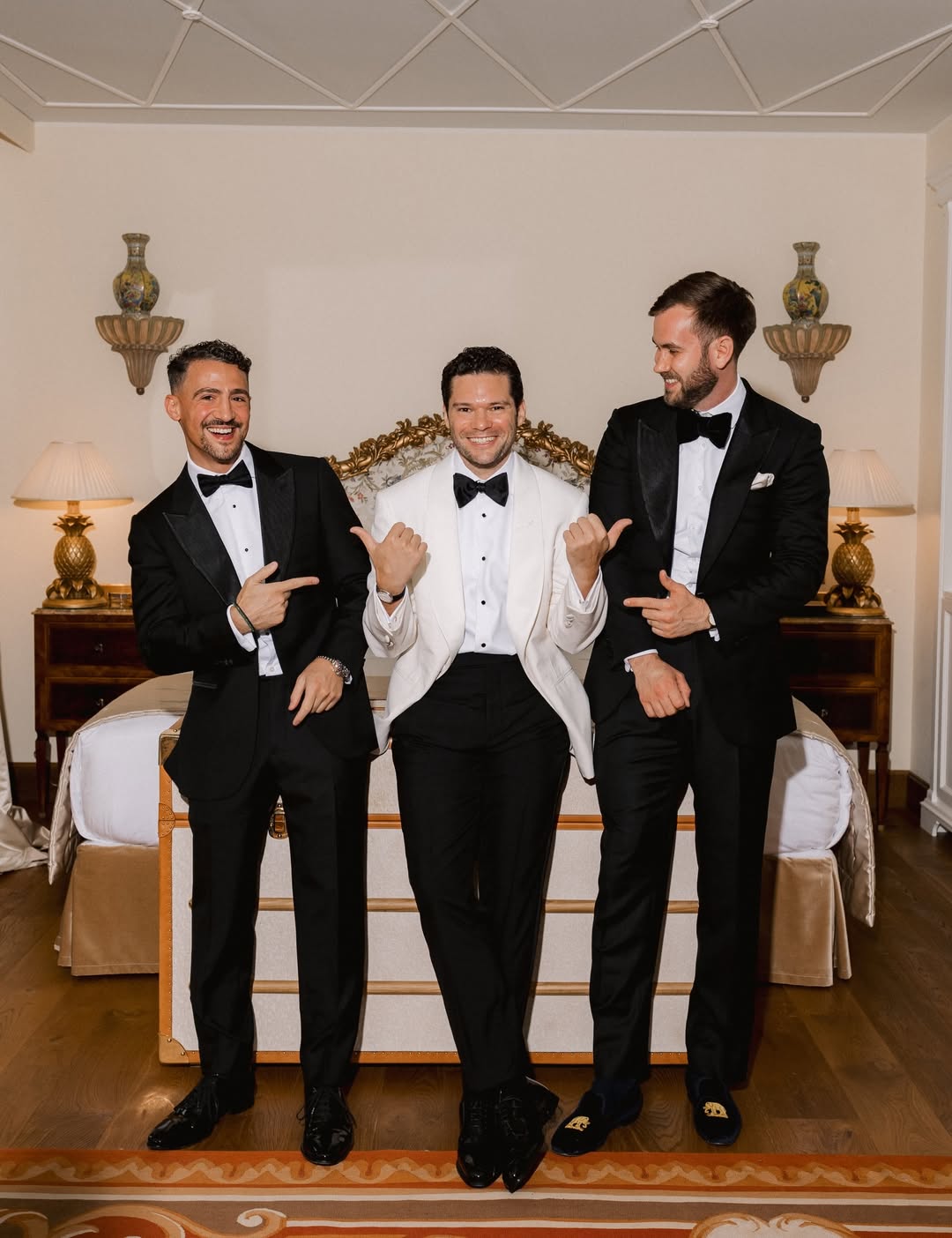
Your flat lay is more important than you think. The items you lay out before getting dressed — the shoes, the tie, the watch, the cufflinks and the boutonnière — tell a visual story that your photographer will capture before the ceremony. This is where your personal details are captured most fully, and these images often end up in the album opener.
Most groomsmen don't have a flat lay that tells a story. Yours should. Choose what goes in it carefully. Ask your photographer how they prefer to shoot it. Show up with meaningful items – a note from your partner, the watch your father wore, or the cufflinks you had made for the occasion. It's these close-ups that make a gallery feel like a film rather than just a record of the event.
Ways to Make the Groom Stand Out From Groomsmen, By Setting
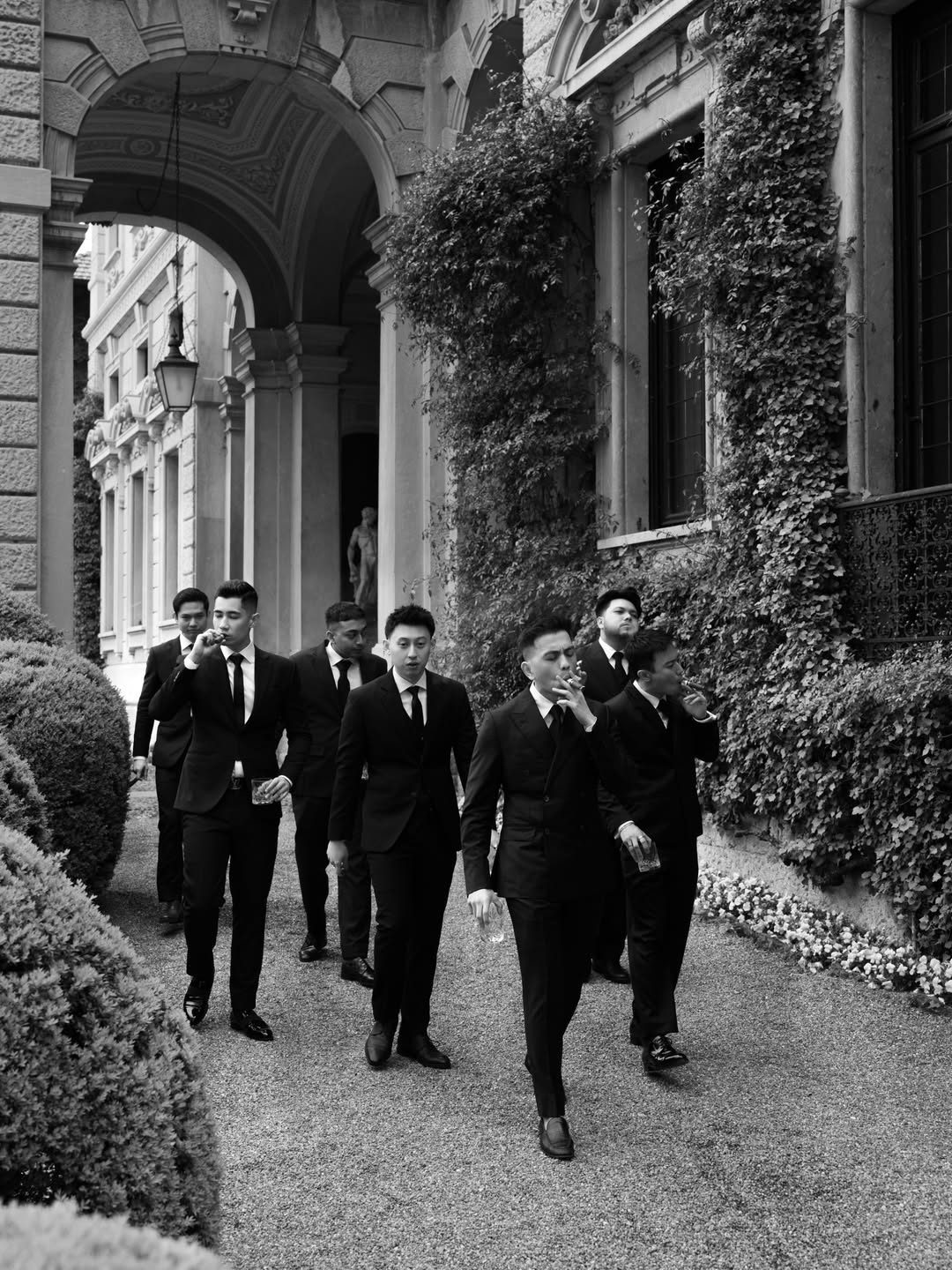
You don't need a mood board handed to you, but you do need concrete starting points. Not every approach works for every wedding - the venue, the season, the formality level, and the overall aesthetic all shape which direction makes the most sense. Here's how we think about groom differentiation across the most common settings.
Black Tie or Black Tie Optional
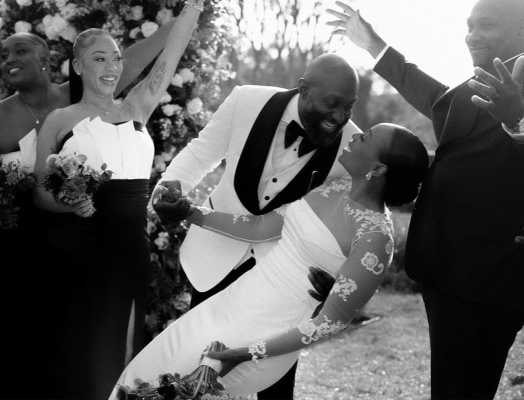
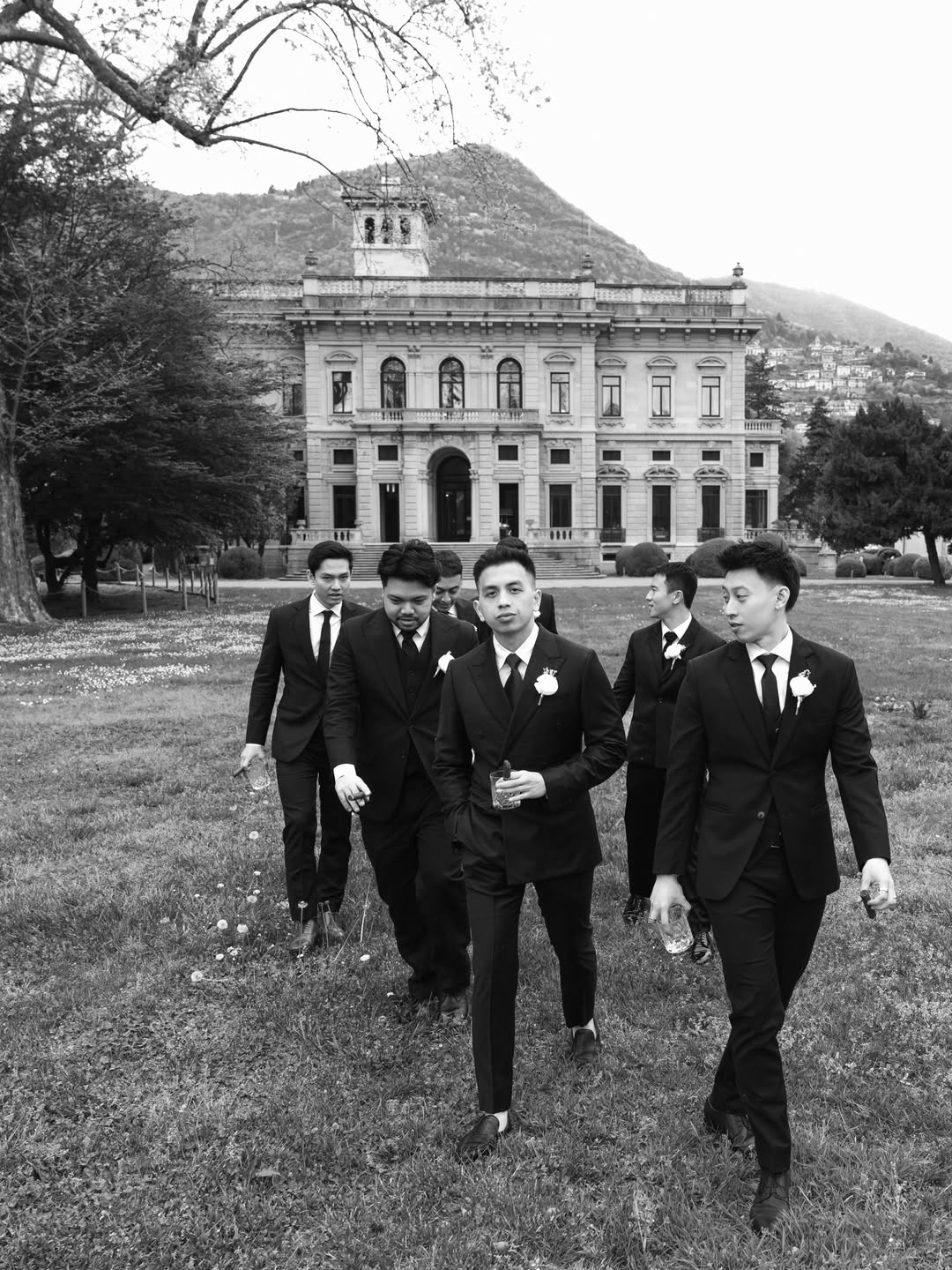
Groom in a black or midnight blue tuxedo with grosgrain lapels; groomsmen in dark navy or black suits. The tuxedo jacket's lapel fabric is the differentiator. Add a waistcoat for extra architecture. The separation here is quiet and extremely effective.
Garden or Outdoor Ceremony
Groom in a warm linen or wool blend in stone, ecru, or caramel; groomsmen in lighter grey or classic navy. The tonal separation is soft but reads clearly in daylight photography, especially in late-afternoon light.
Destination or Beach
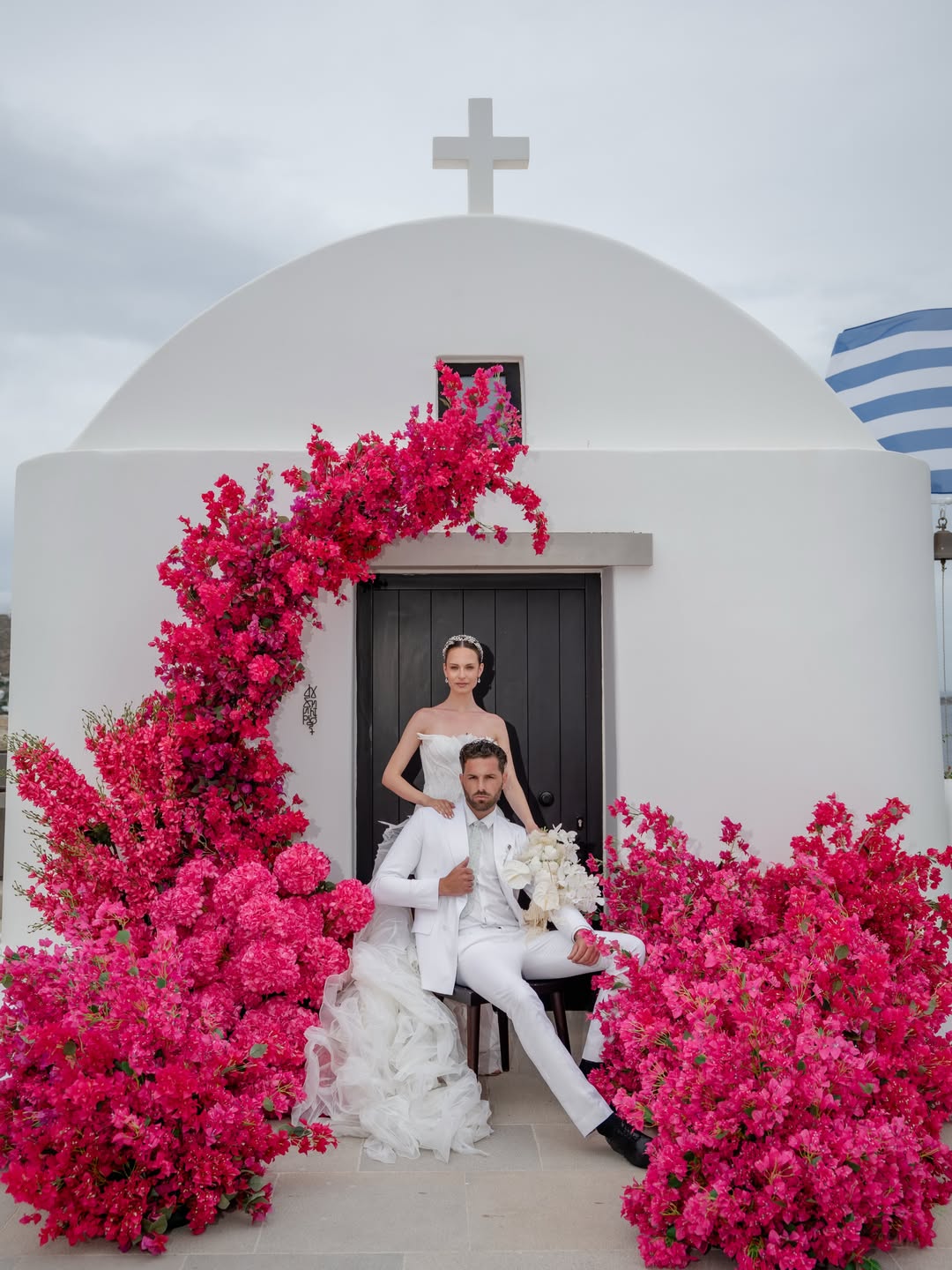
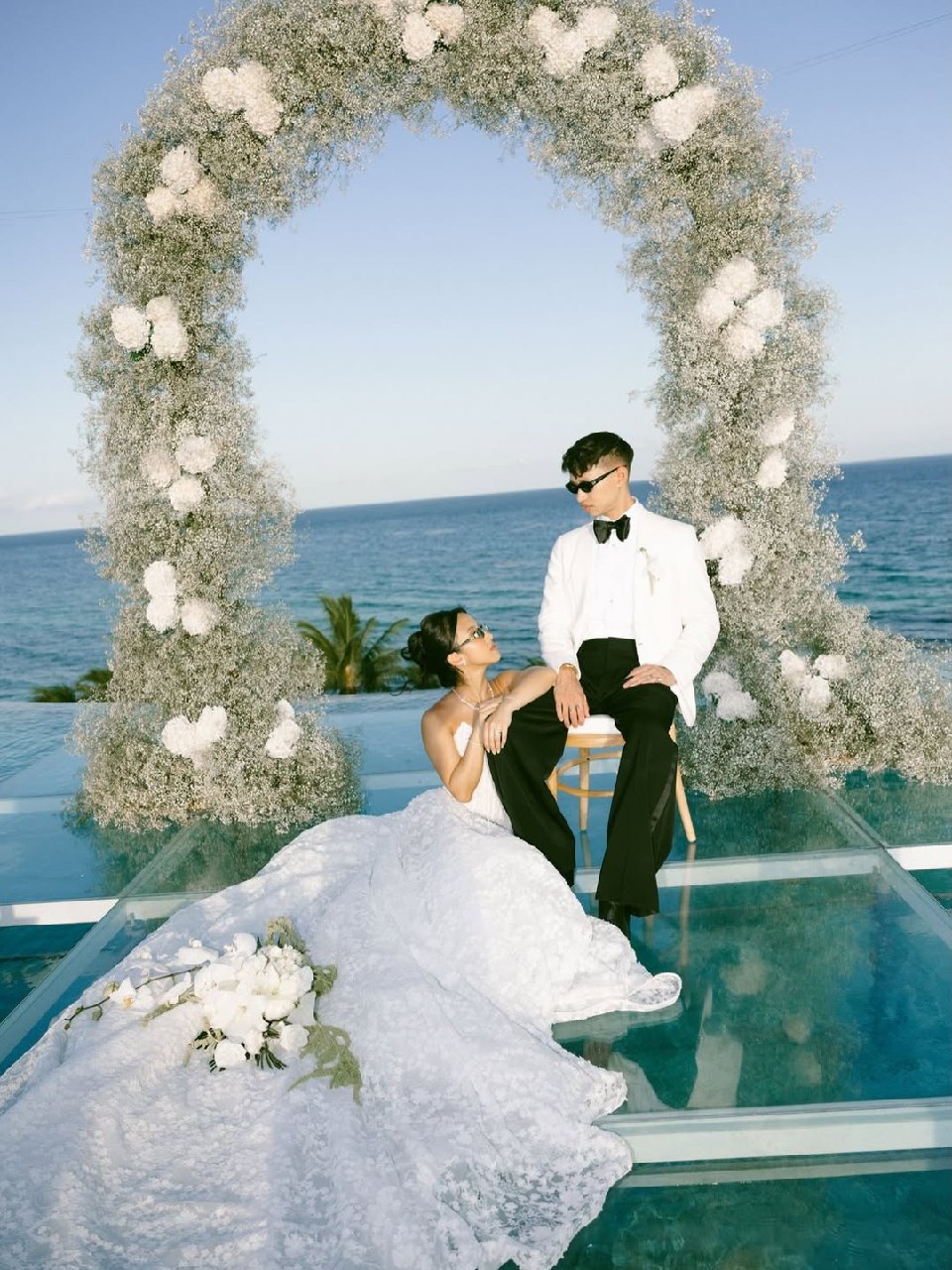
Groom in white or ivory, groomsmen in a coordinating light shade. The contrast is almost built in - but the groom's look needs more tailoring precision here than anywhere else to avoid reading as "we all went to the same store."
Dark Romantic or Moody
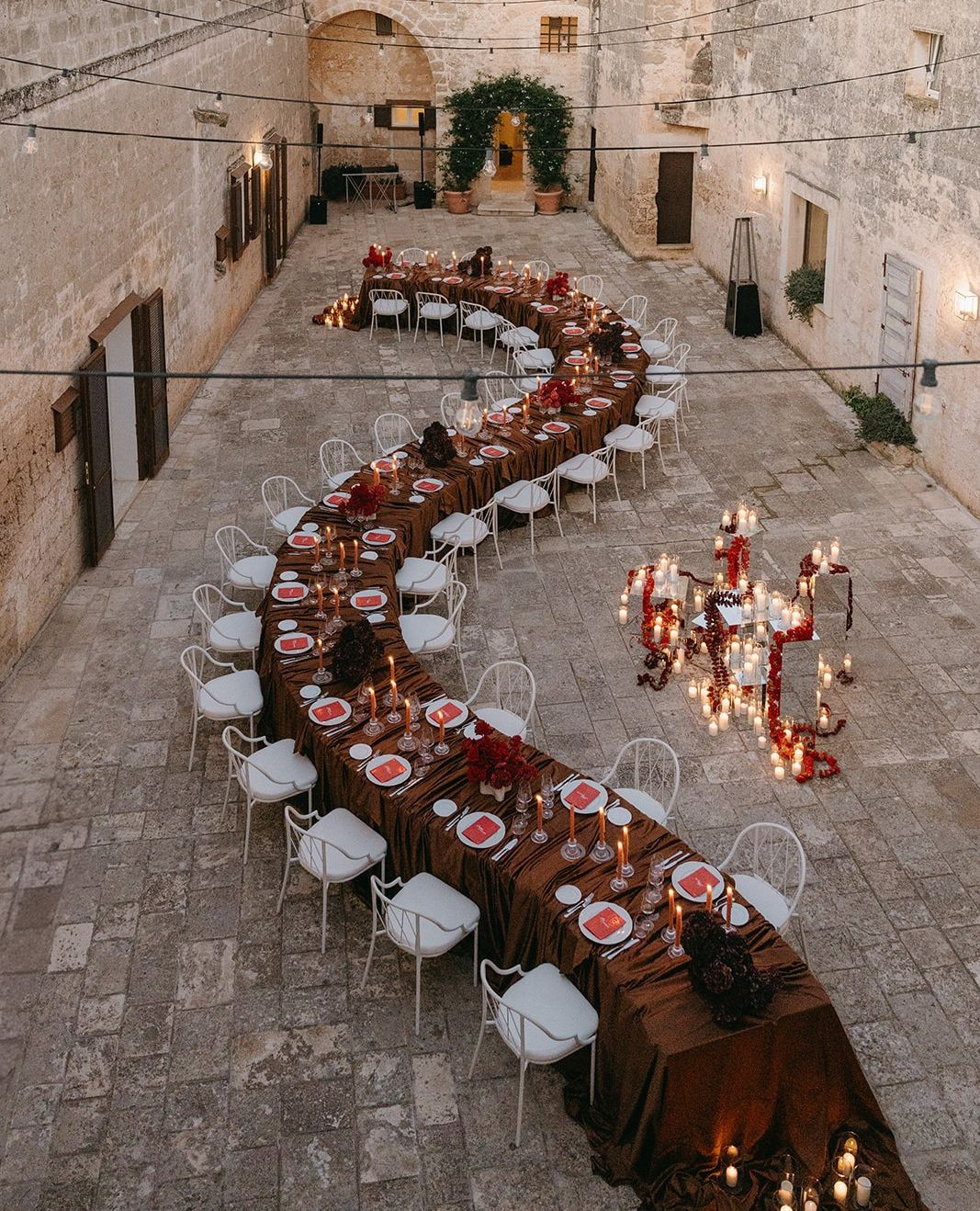
Groom in forest green velvet or deep burgundy; groomsmen in charcoal or black. This is where texture and color do the most combined work, and the photographs tend to be the strongest of any setting. If you're drawn to this aesthetic, lean into it fully.

How to Make the Groom Stand Out From Groomsmen Without Overthinking It
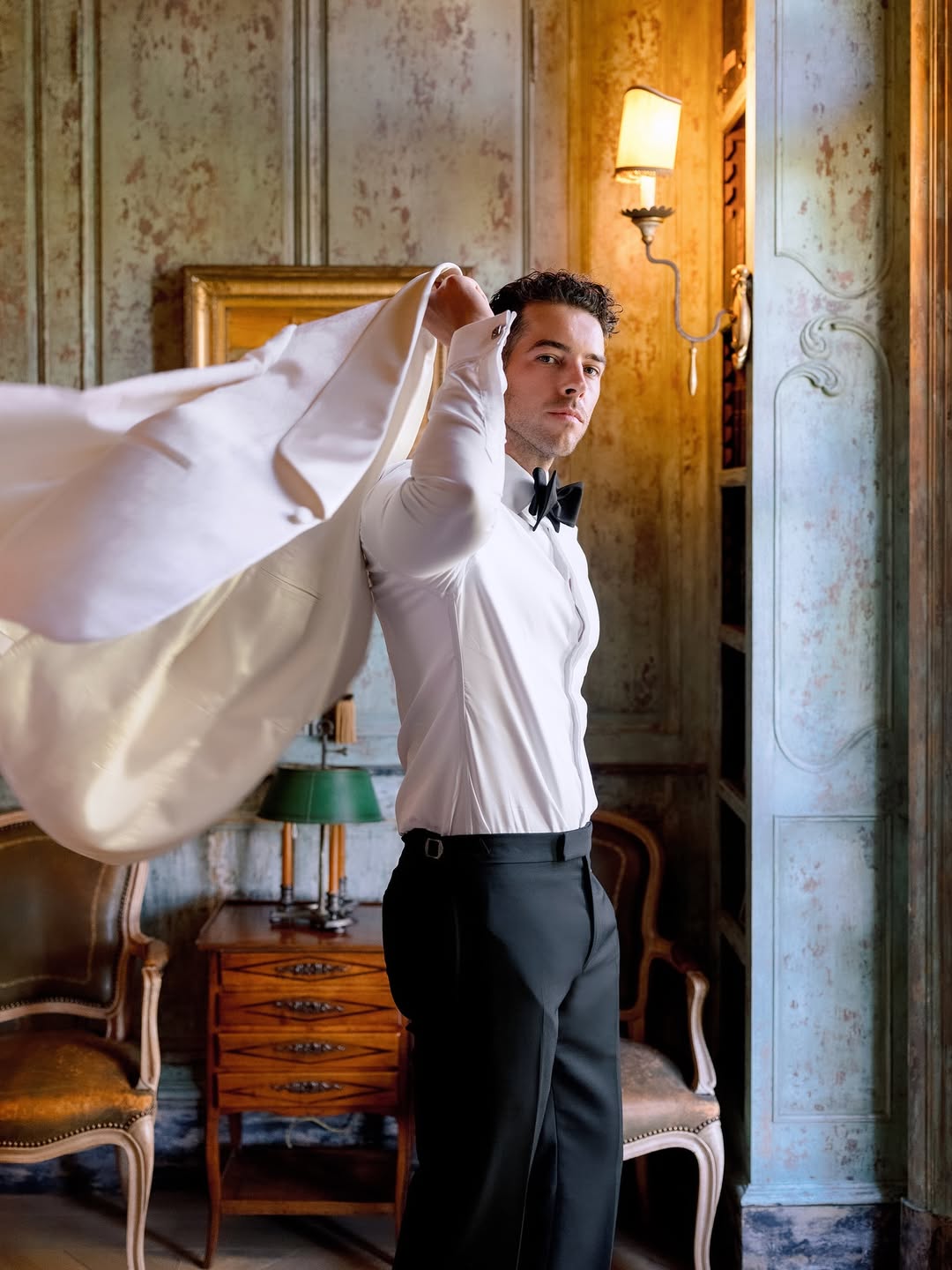
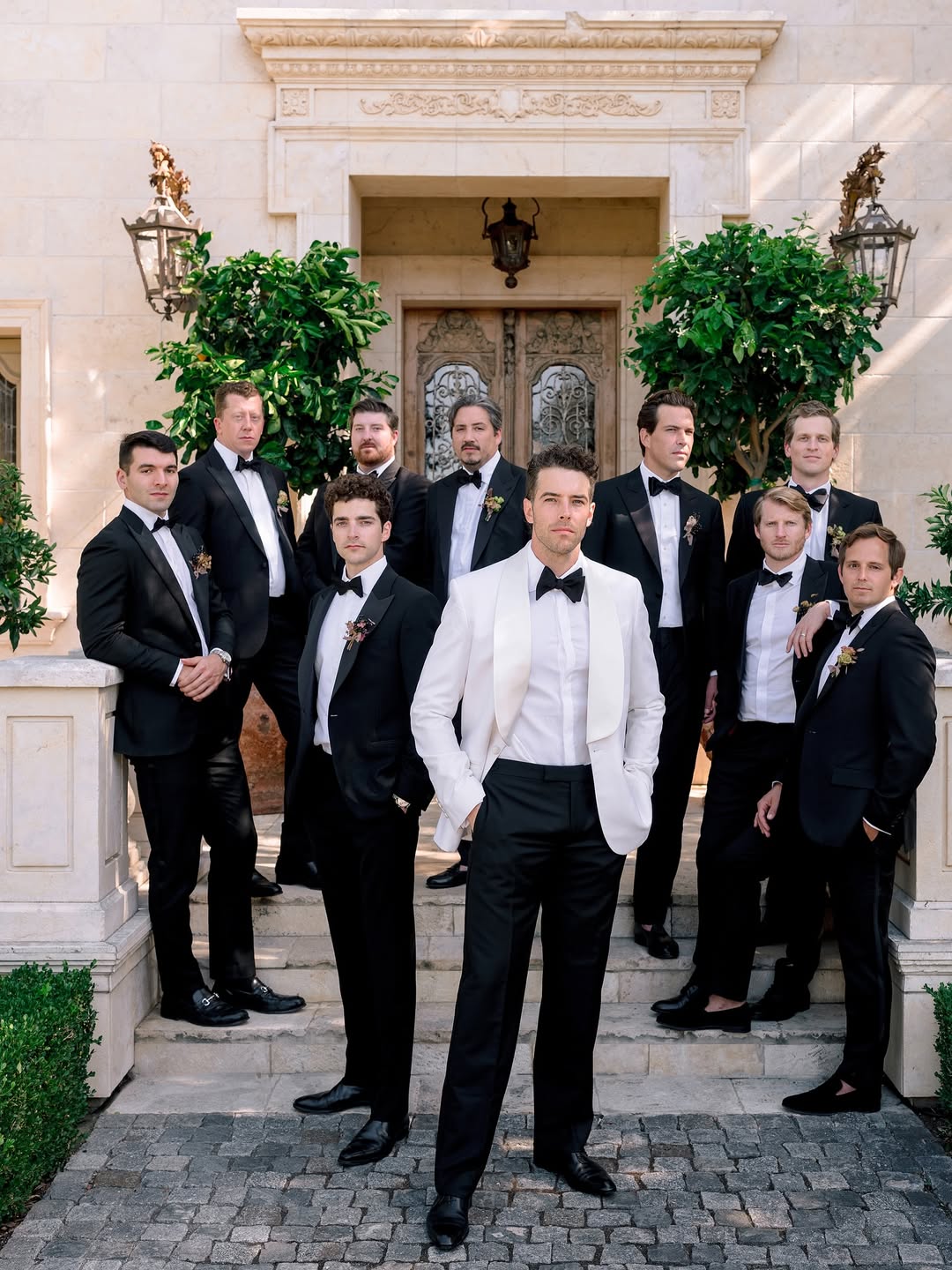
All of this can feel like a lot. So here's the version you screenshot and come back to: one strong suit choice, one personal accessory with meaning, one structural difference in the jacket, and shoes that earn their close-up. That's it. You don't need to execute every idea in this article - you need to execute four of them well.
Standing out from your groomsmen isn't about being louder, more formal, or more expensive. It's about being more intentional at every layer - starting with the suit and ending with the shoe sole. When you build a look that could only be yours, the camera finds you automatically. You won't have to compete for the frame. You'll own it.
From groom style to full wedding aesthetics, florals, venues, and everything in between - Wezoree is where couples come to get ideas, discover vendors, and actually plan the wedding they had in their head. Whatever you're figuring out next, start here.