The Ultimate Father-Daughter Photo Ideas Wedding Guide


- The Emotional Arc of Father–Daughter Wedding Photos
- Getting Ready — Where the Story Begins
- The Walk to the Aisle — Strength and Vulnerability
- After the Ceremony — Relationship Beyond Tradition
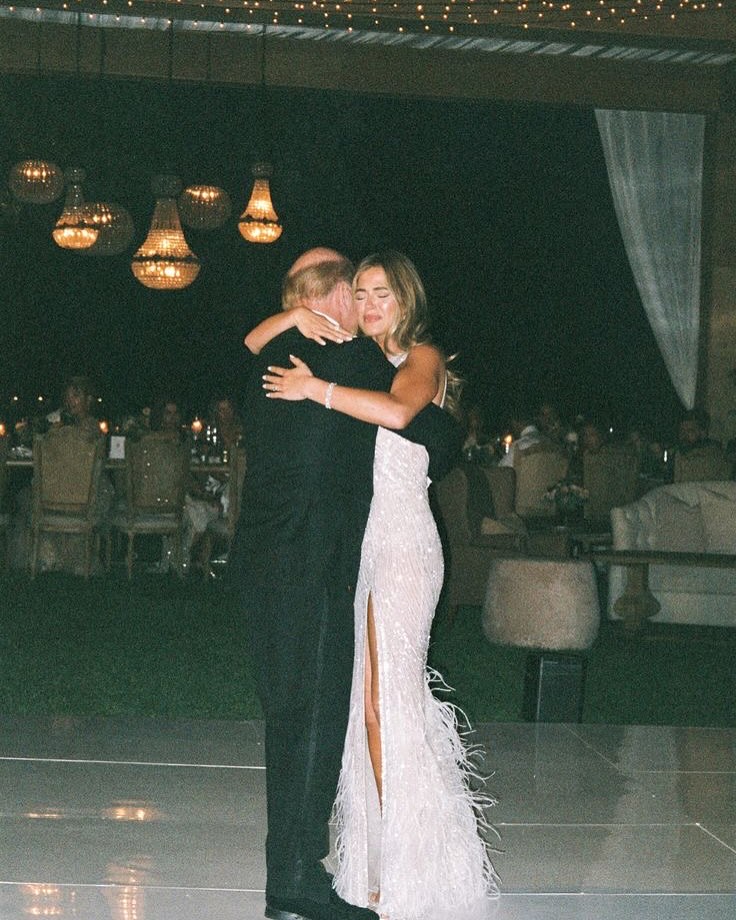
- The Father–Daughter Dance — Emotion in Motion
- Modern Family Dynamics — Updating the Tradition
- What Makes These Photos Timeless
- What to Communicate to Your Photographer
The relationship between a father and daughter changes on the wedding day, not in terms of sentiment, but in terms of form. What starts as protection becomes partnership, and what was once guidance becomes trust. Father-daughter wedding photos aren't just a record of tradition; they provide visual proof of a transition years in the making. These images carry weight because they capture a particular kind of love — one that doesn't require words, existing instead in glances and gestures, in the way a hand is steadied, or a grip is loosened. When executed well, father-daughter portraitsbecome the images that couples return to most often, not because they are perfect, but because they are honest. This guide explains how to capture that honesty, from the quiet moments of getting ready to the excitement of the dance floor, with intention, restraint, and respect for what is actually unfolding.
Find Your Perfect Wedding Vendors


The Emotional Arc of Father–Daughter Wedding Photos
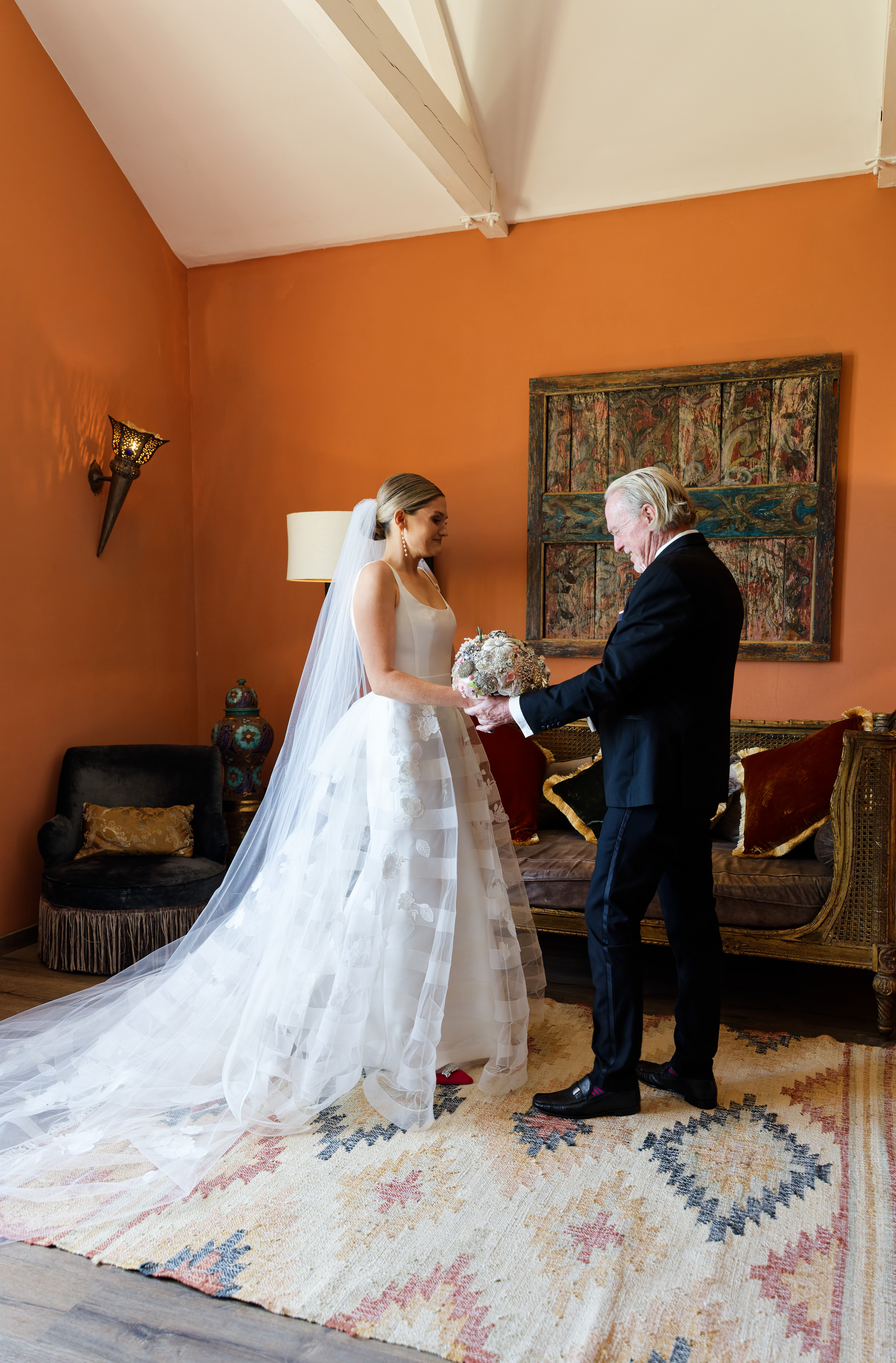
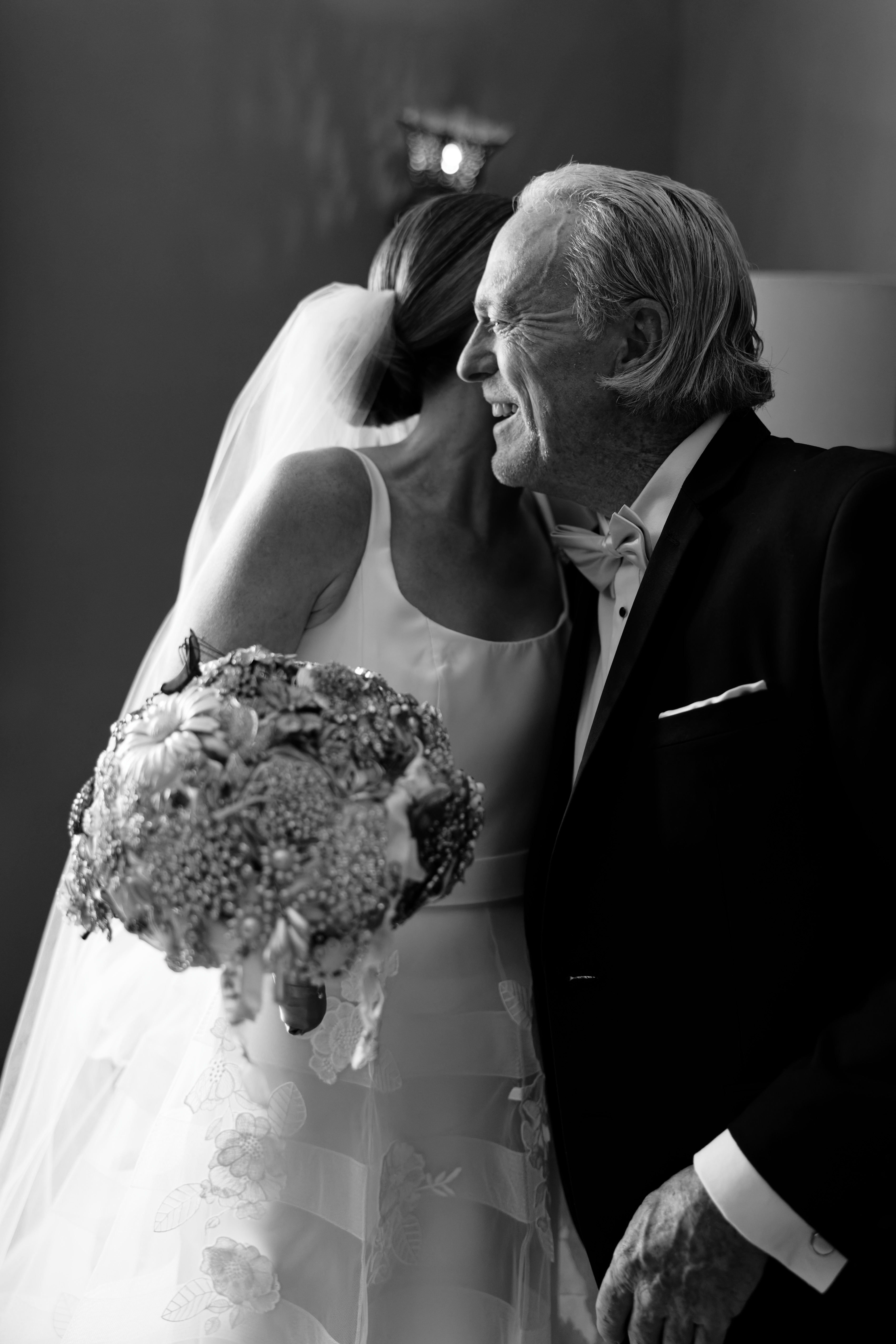
These photos aren't just a checklist. They tell a story with weight, momentum, and a sense of resolution. The story begins with anticipation: the father seeing his daughter in her dress for the first time or watching her adjust her veil in a doorway he has walked through countless times. Next is the transition: as they walk down the aisle together, he is both anchor and guide—present but preparing to step back. The moment of letting go comes at the altar: a hand is released, a nod is exchanged, and a silent acknowledgement marks that this is the moment. The next transition is celebration during the reception, where roles relax, and they can simply exist as father and daughter—no ceremony required. The father-daughter dance then provides closure, bookending the day with intimacy and intention.
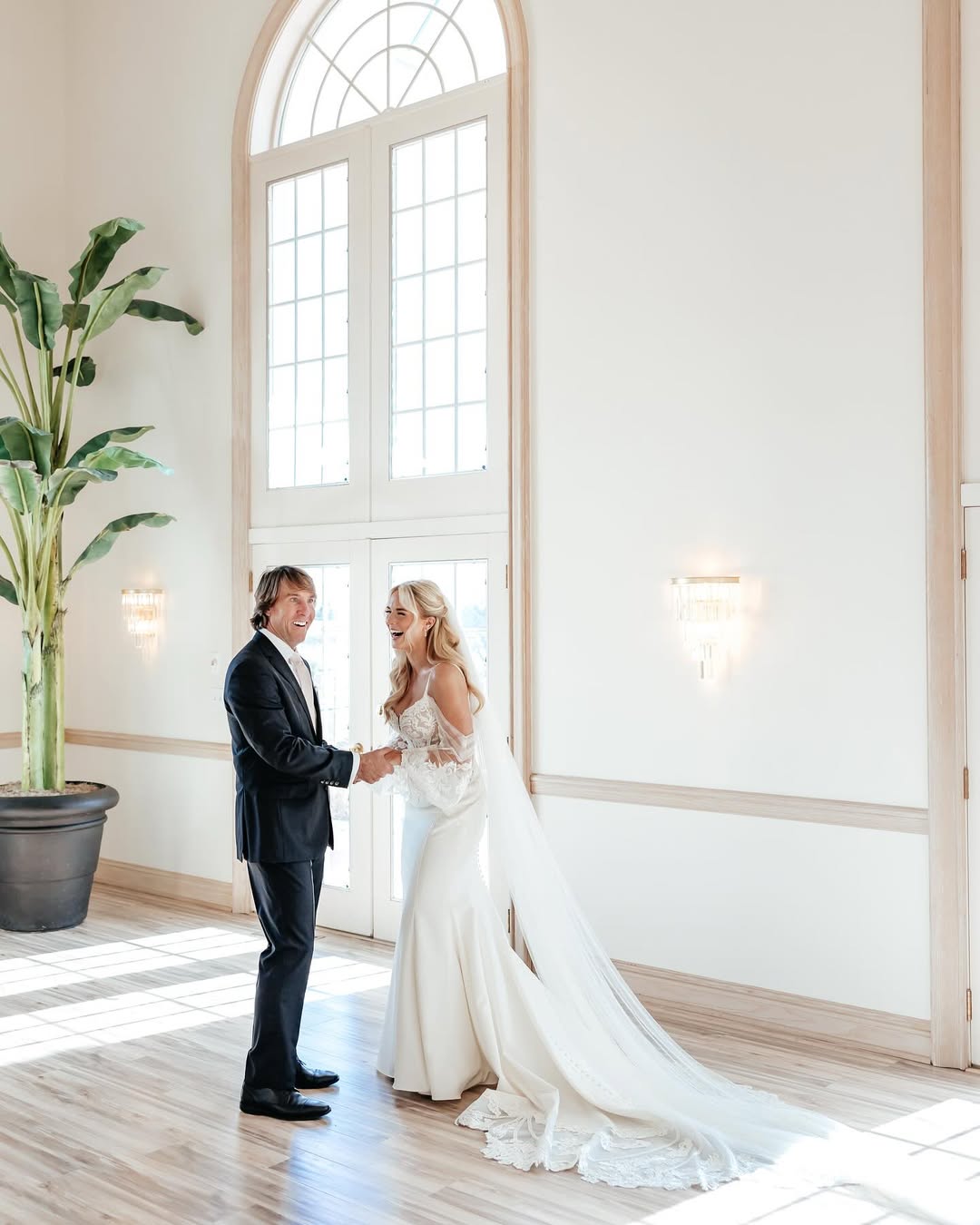
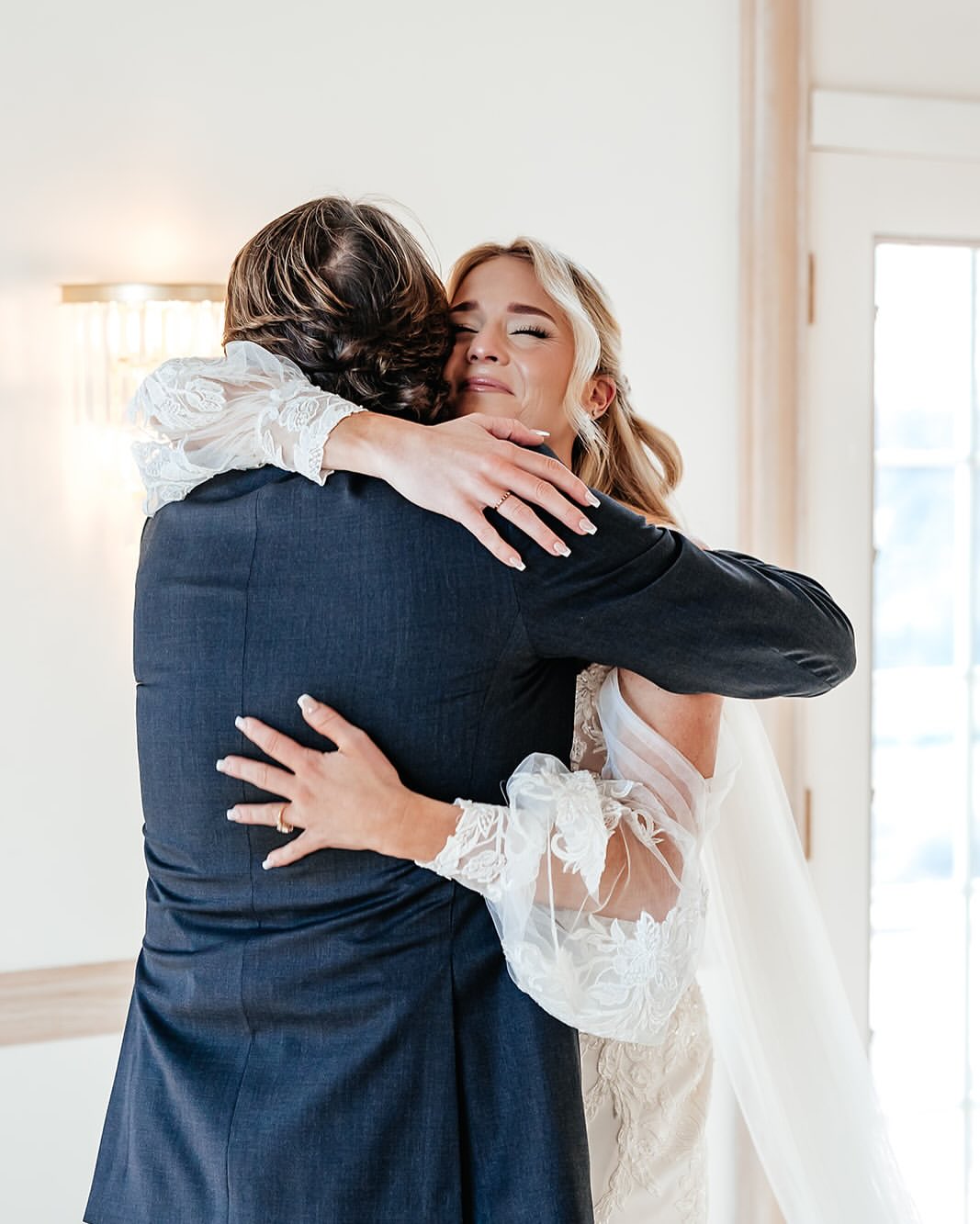
These moments are photographically powerful because they're candid, not staged. A father fixing his daughter's veil isn't about the veil; it's about forty years of care. The father-daughter dance photos that resonate aren't the ones where they smile for the camera, but the ones where he whispers something only she hears, or where her hand rests on his shoulder, as it did when she was seven. These images work because they show transformation, not tradition. They reveal a daughter becoming a wife while still being a daughter. And they do this without asking anyone to perform.
"What makes a father–daughter moment powerful isn't the tradition itself — it's the relationship that quietly reveals itself in that moment," wedding photographer Sincerely Studio reflects. "The years of small, ordinary memories suddenly held in a few minutes: a walk down the aisle, a dance, a glance that says more than words ever could. Sometimes it's the way a father looks at his daughter with so much pride and tenderness. Sometimes it's the way she leans into him, like she always has. Those moments feel powerful because they give us a glimpse into a lifetime of love that's always been there."
Getting Ready — Where the Story Begins
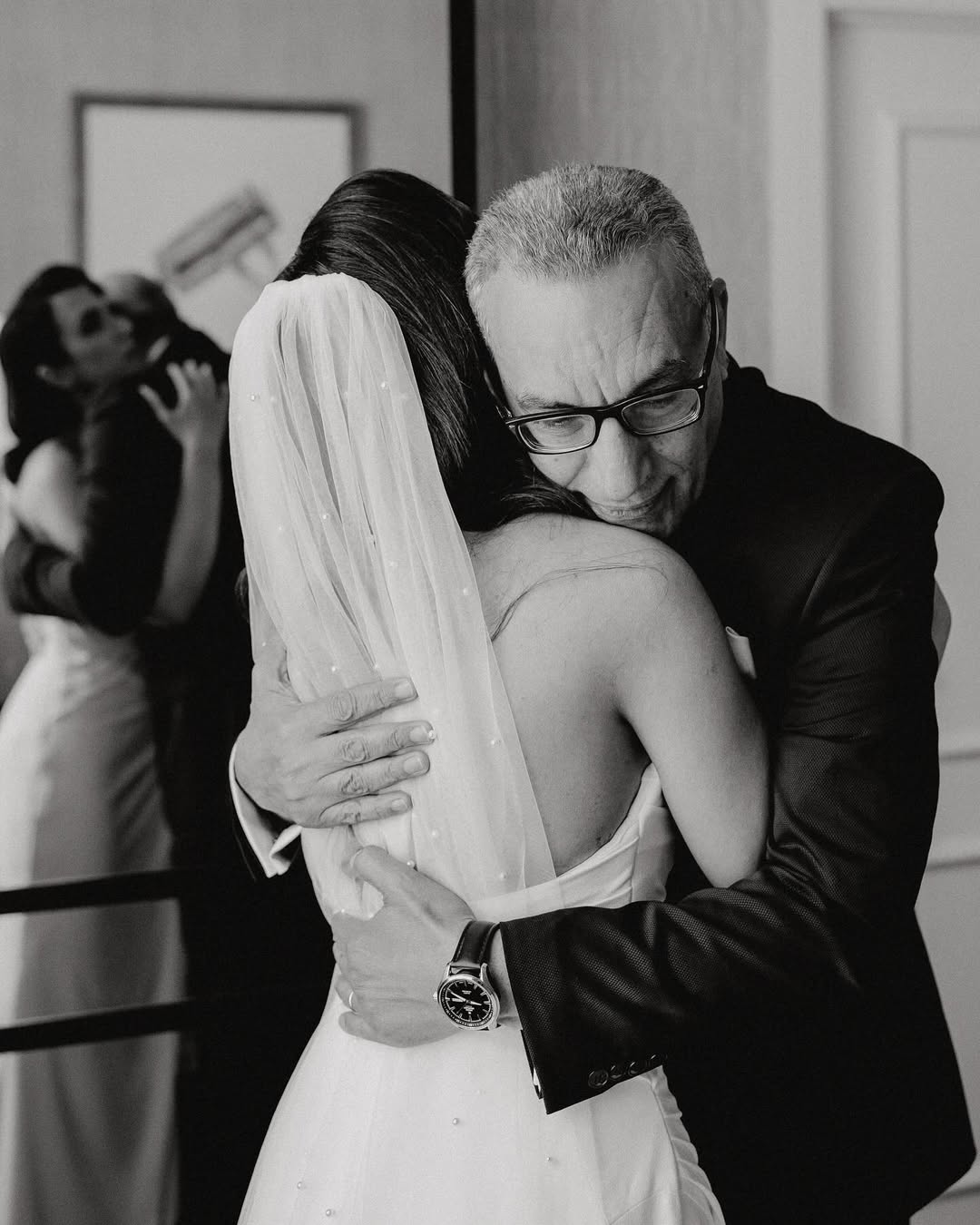
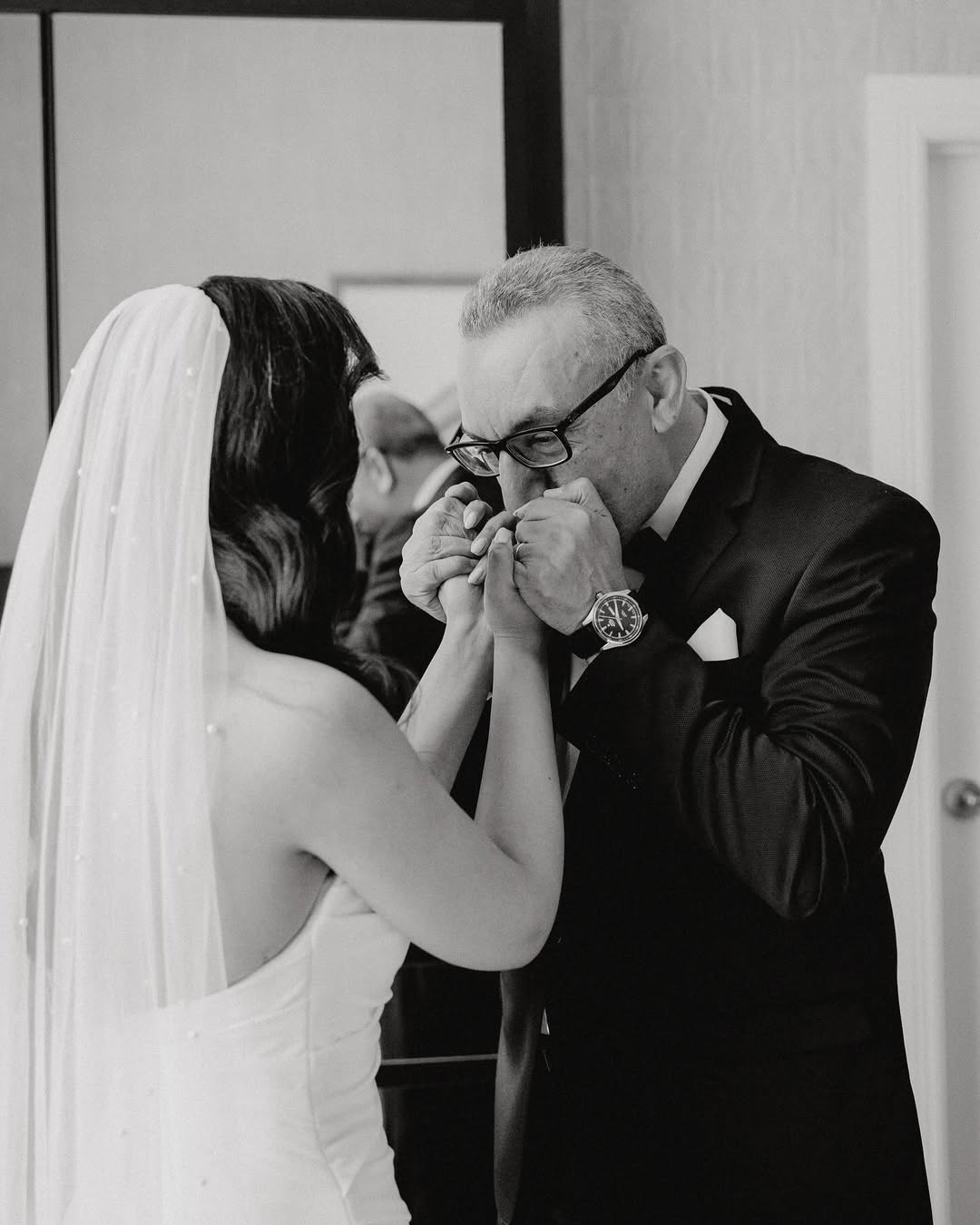
The best dad-and-daughter photoshoots aren’t staged—they require attention. Quiet presence matters. Picture a father in a doorway, observing his daughter's reflection as she puts on earrings, or seated across the room as she laughs with her bridesmaids. These aren’t action shots, but portraits of proximity—being close without intervening. A wide frame with him in the background, slightly out of focus, while she adjusts her dress in the foreground, holds more emotional weight than any posed portrait.
Hands tell the story when words don't. A father fastening a necklace that his own mother wore. His hands were smoothing a veil into place. Her fingers pinning his boutonniere while he stands perfectly still, pretending he's not nervous. Generational hands – grandmother, father, daughter – resting on a table beside wedding rings or a framed photo. These images don't need faces to convey a sense of legacy. The ritual itself is the subject, and the hands perform it with a care that needs no explanation.
The first look between father and daughter often conveys more emotion than the walk down the aisle. It's private, unhurried, and unscripted. A wide shot sets the context: their location, the light, the space between them before they close it. Then comes the reaction: her turning, his face softening. This doesn't require ten angles. Two frames suffice — the moment before and the moment during. Anything more risks turning feeling into performance.
When Kat Lui photographs these first look moments, she watches for something specific:
 The breath before the words — the moment when time seems to pause. I watch his eyes. They hold everything: pride, disbelief, the ache of letting go, and the quiet realization that his little girl is stepping into a new chapter.
She continues, "I look for the way his hand instinctively reaches for hers, or how she searches his face the way she did as a child. It's never about the dress in that moment. It's about the history between them — years of love, protection, and growing up — all rising to the surface at once."
The Walk to the Aisle — Strength and Vulnerability
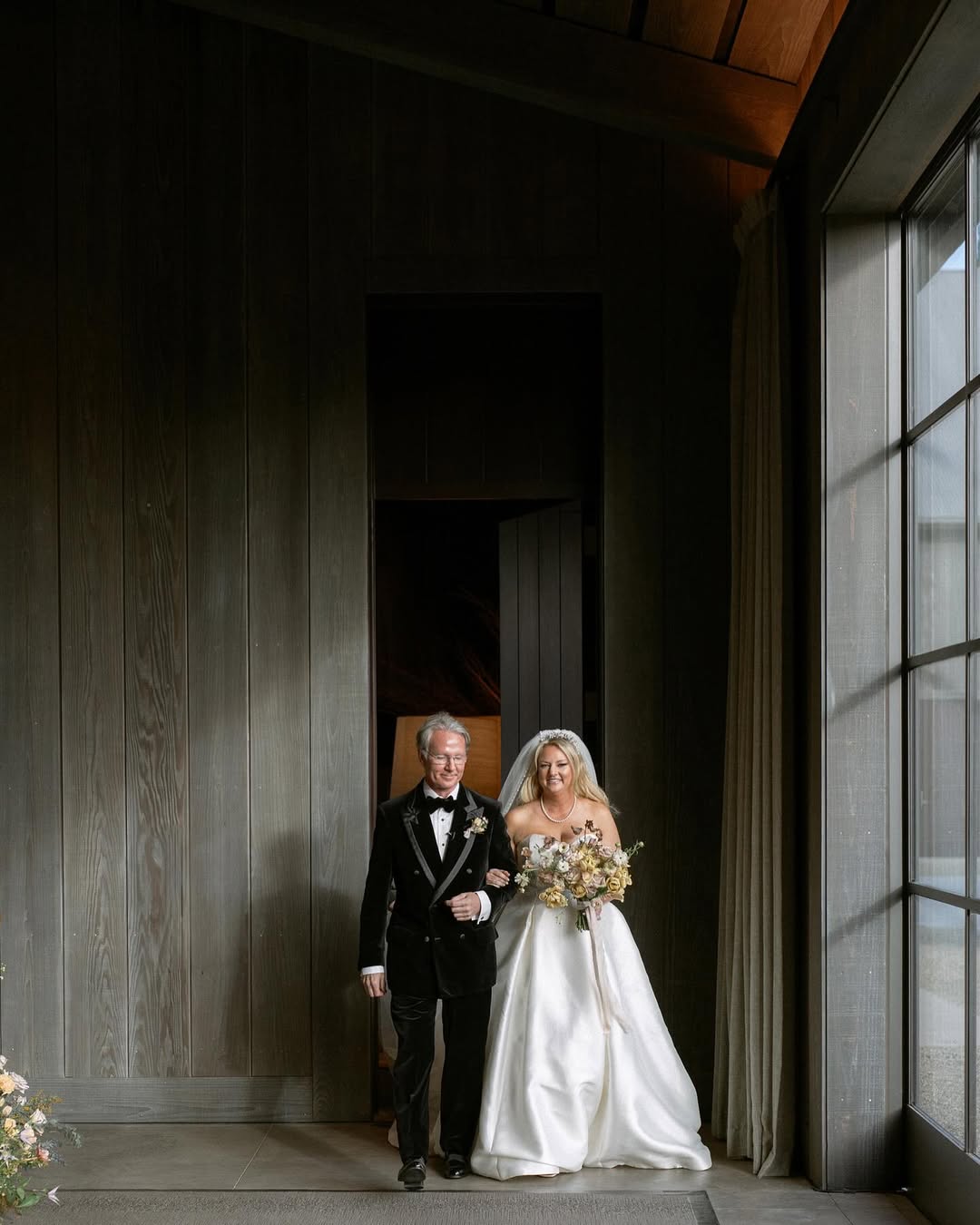
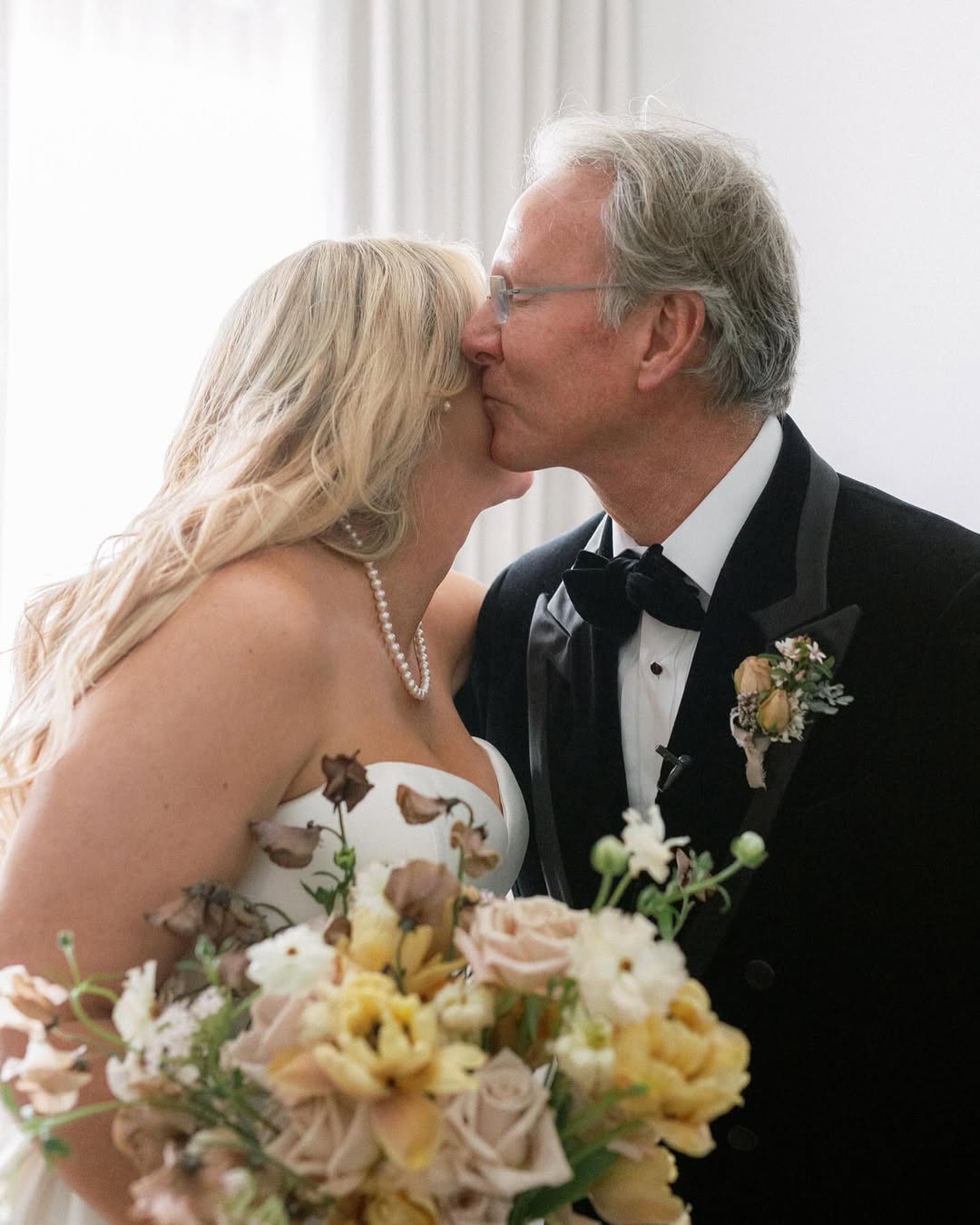
The walk down the aisle is iconic but rarely photographed with nuance. It’s not about the dress or the flowers. It’s about a quiet negotiation: one leading for the last time, the other accepting it once more.
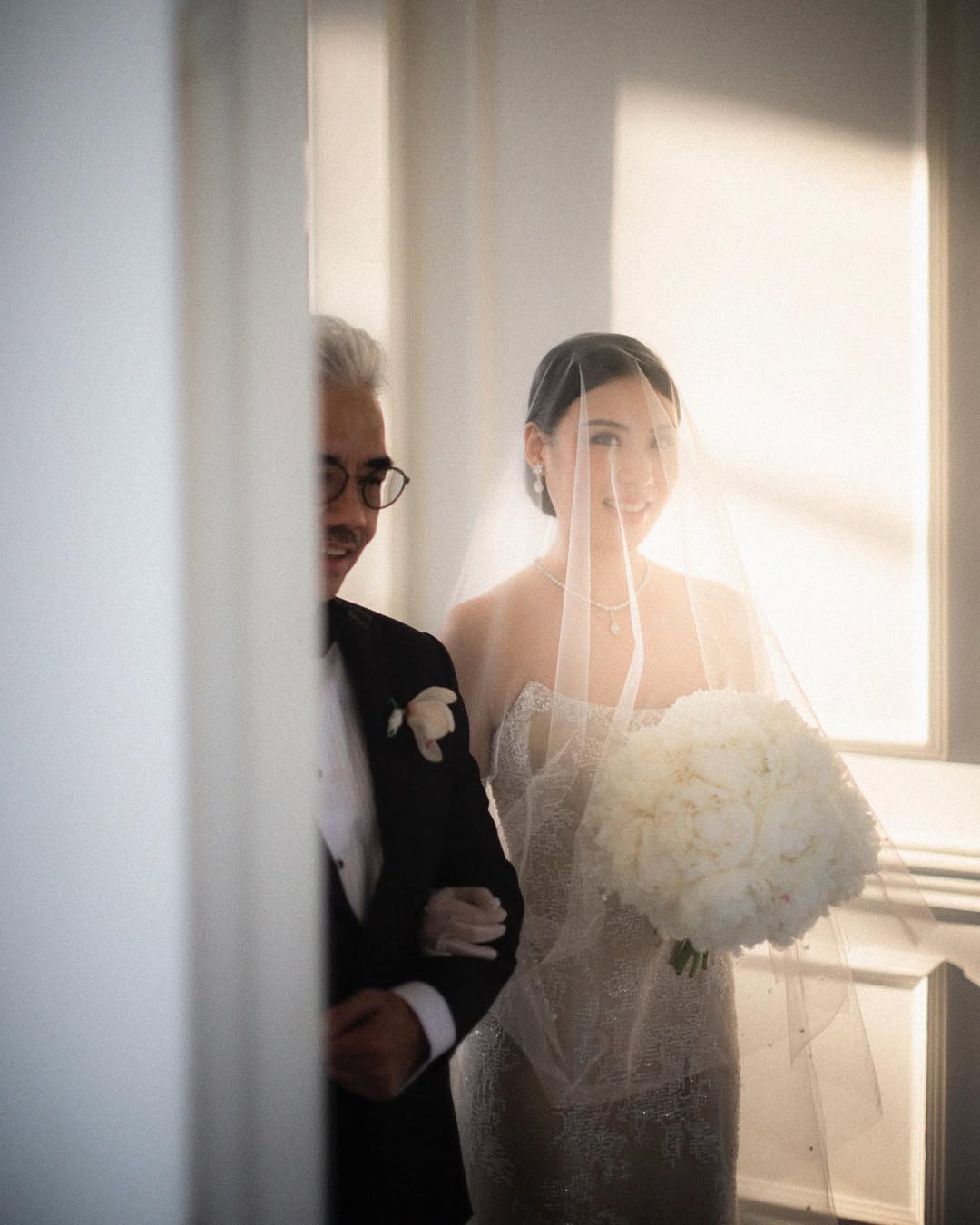
Before the doors open, there's a breath. Sometimes visible—a pause, a hand-squeeze, a posture shift. This is the moment to capture: the transition from preparation to action; the second before everything changes. It need not be perfect, just real. From behind, their linked arms tell the story without showing faces. His hand on hers, her fingers gripping his sleeve; their steps sync, or don't. The angle matters: shoot from behind, slightly to the side, to show the connection without interruption.
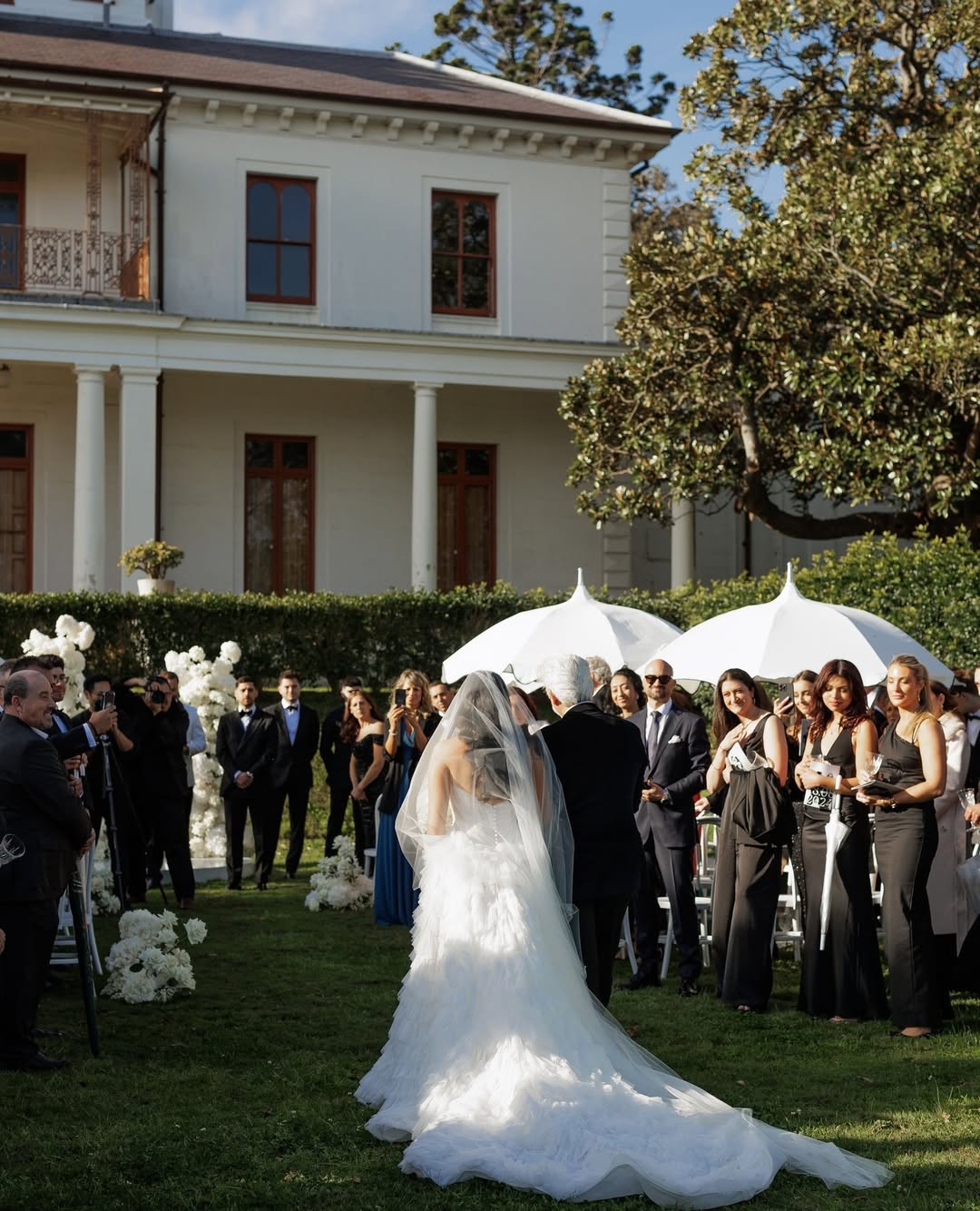
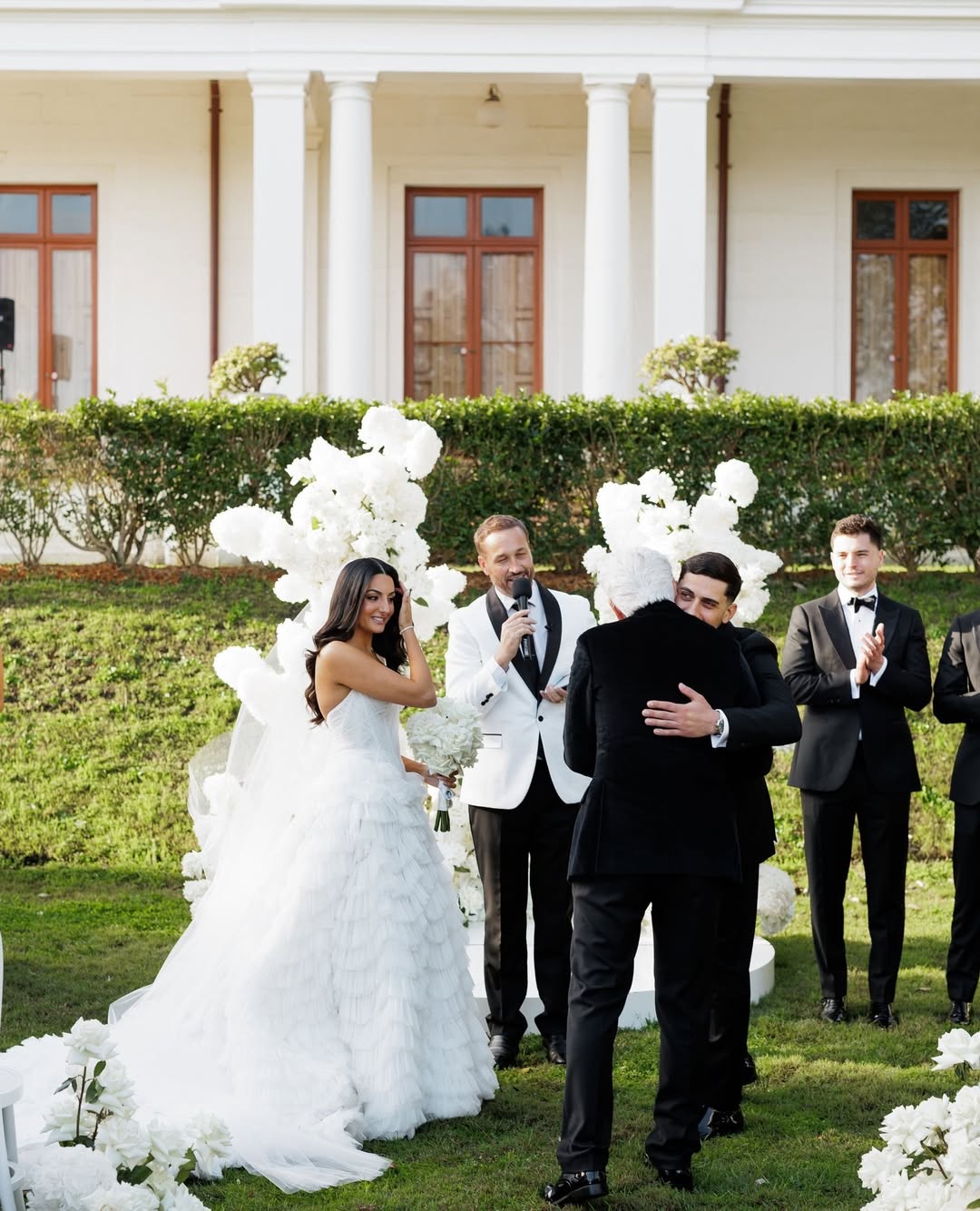
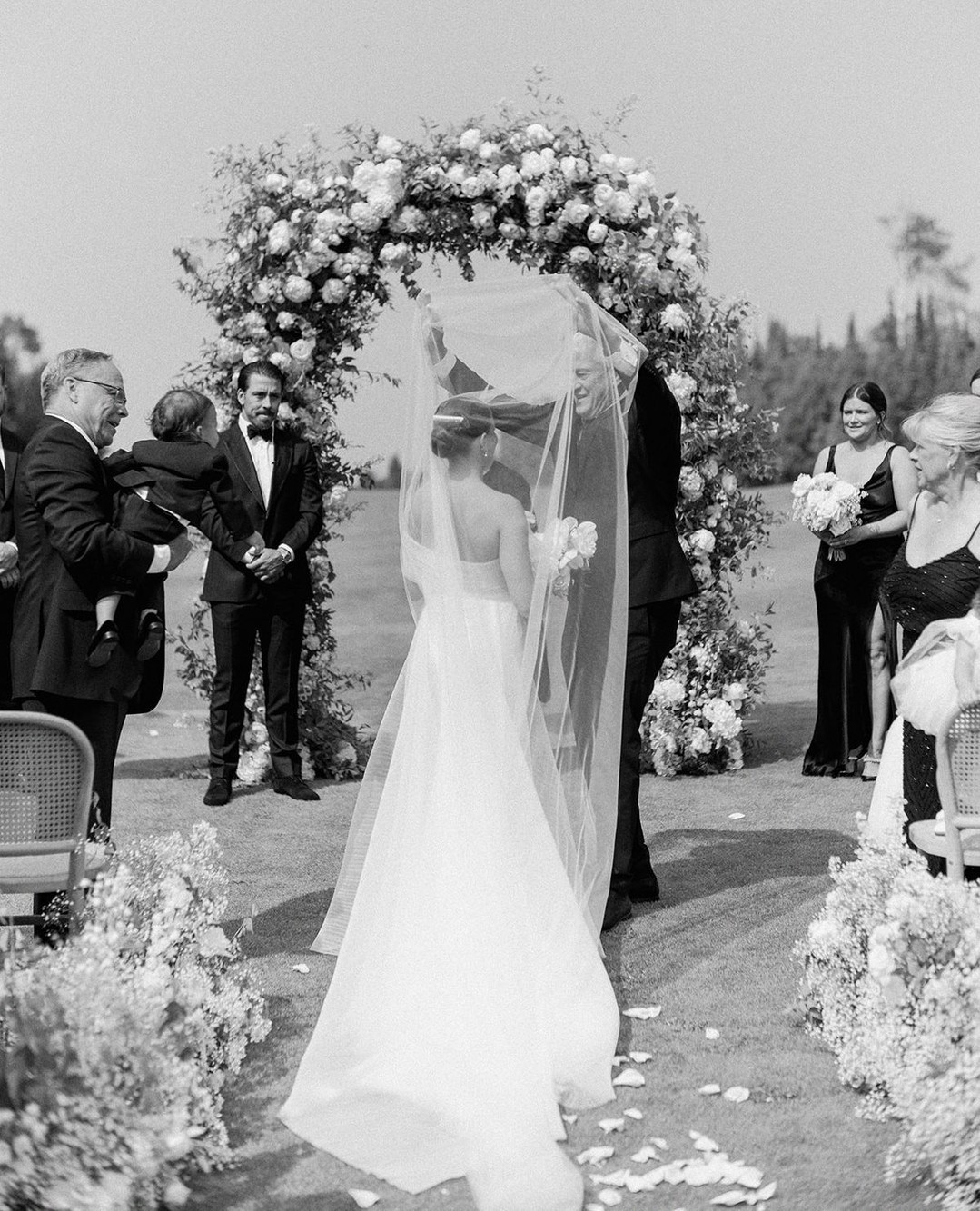
The handover is delicate. It happens quickly, but it's not about speed. It's about transferring responsibility and recognizing that protection now comes from someone else. A father's hand releases. A groom's hand receives. The daughter stands between them, a fulcrum. This moment fails when staged. It succeeds when the photographer anticipates, stays close, and doesn't interfere. The best father-daughter wedding photos aren't wide or cinematic; they're tight and focused on hands, faces, and the small gestures that signal trust.
After the Ceremony — Relationship Beyond Tradition
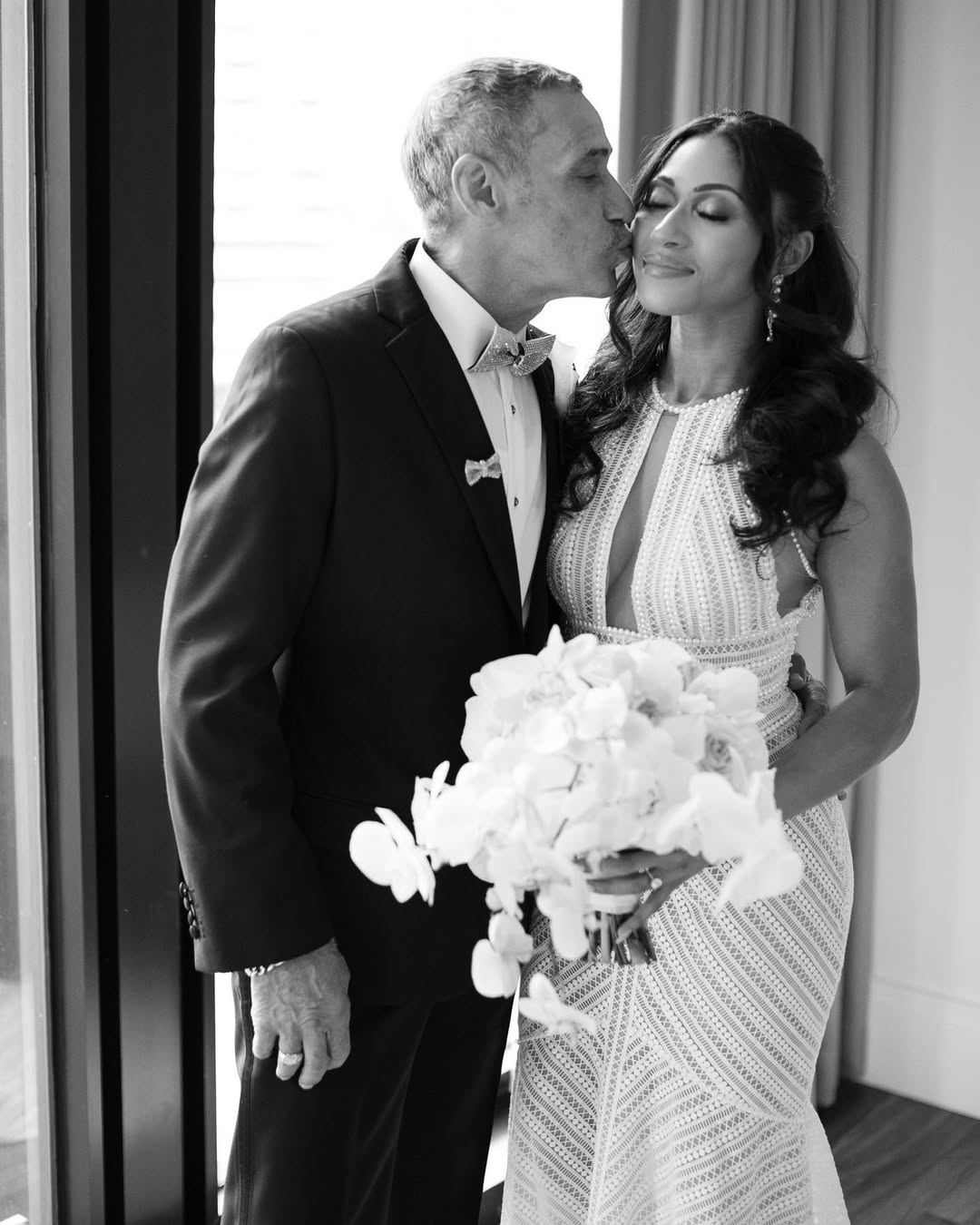
Once the ceremony ends, pressure lifts, and the relationship remains unfiltered by ritual. Now, father-daughter photos shift from documentation to portraiture. A classic keepsake portrait still matters—formal, composed, and well-lit—but shouldn't dominate. One or two where they're both looking at the camera and standing together are enough. These are the photos that get framed and placed on mantelpieces. They're important, but they're not the whole story.
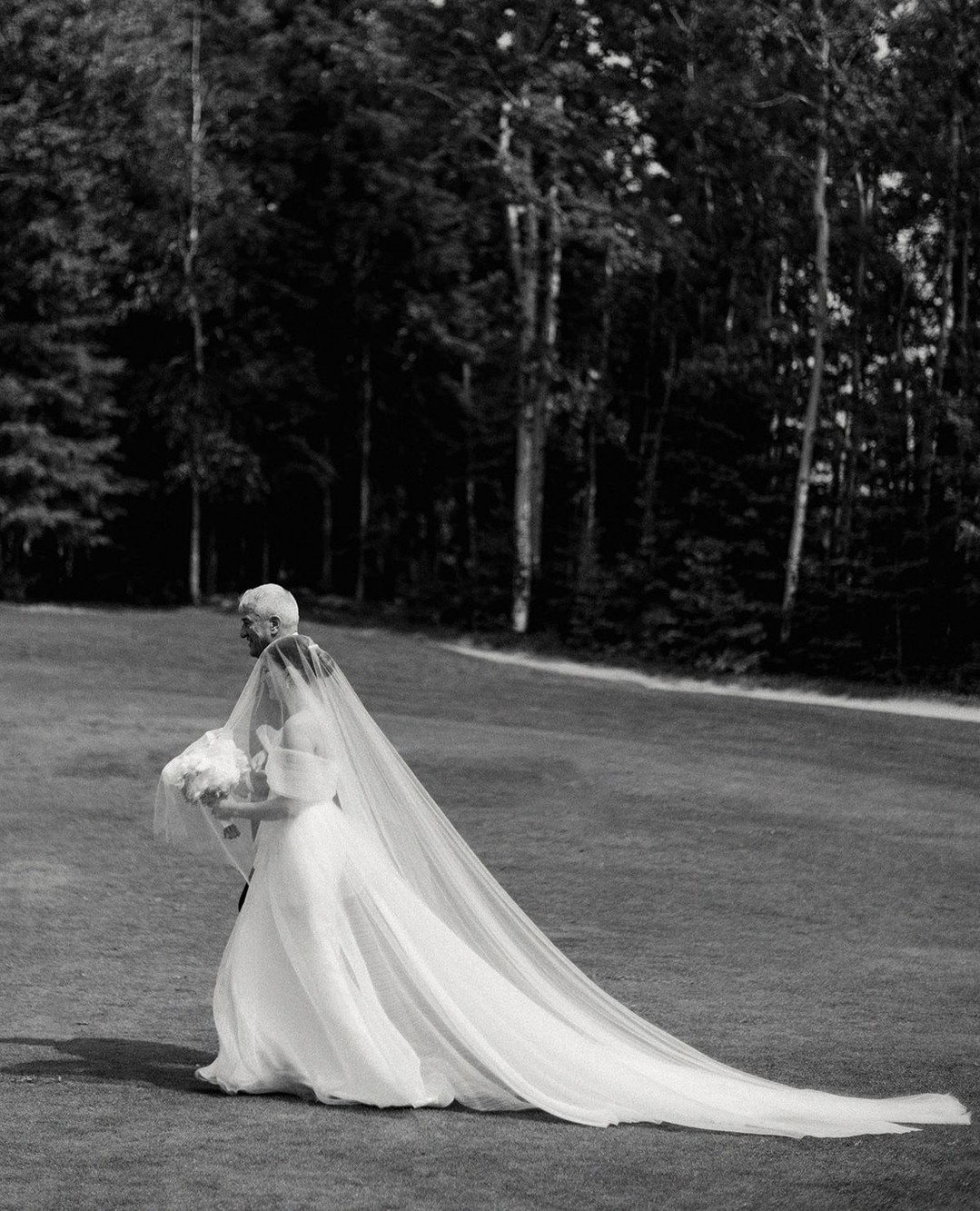
Movement brings life back into the frame. Imagine a father and daughter walking together across a lawn, her dress trailing behind her and his hand on her elbow. Laughter breaks through the formality as they tilt their heads towards each other, and the distance between them closes. These images age better than rigid portraits because they feel like memories, not performances. Candid photos often outlast posed ones. Intimate seated compositions work well, too — both sitting on a bench, her leaning into him with his arm around her shoulders, for example. There is no eye contact with the camera. Just presence. A father-daughter portrait doesn't need to announce itself. It just needs to exist with clarity and restraint.

The Father–Daughter Dance — Emotion in Motion
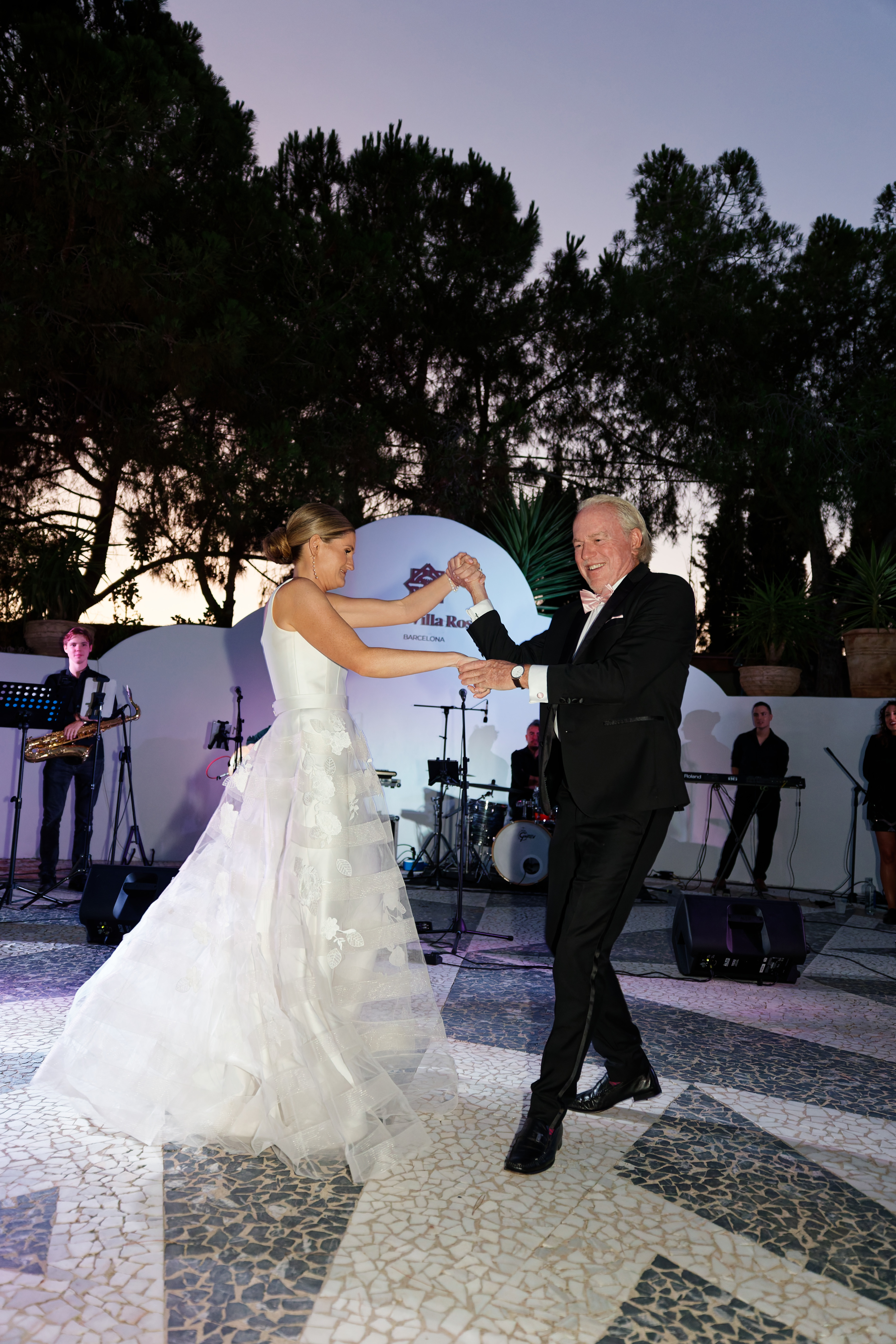
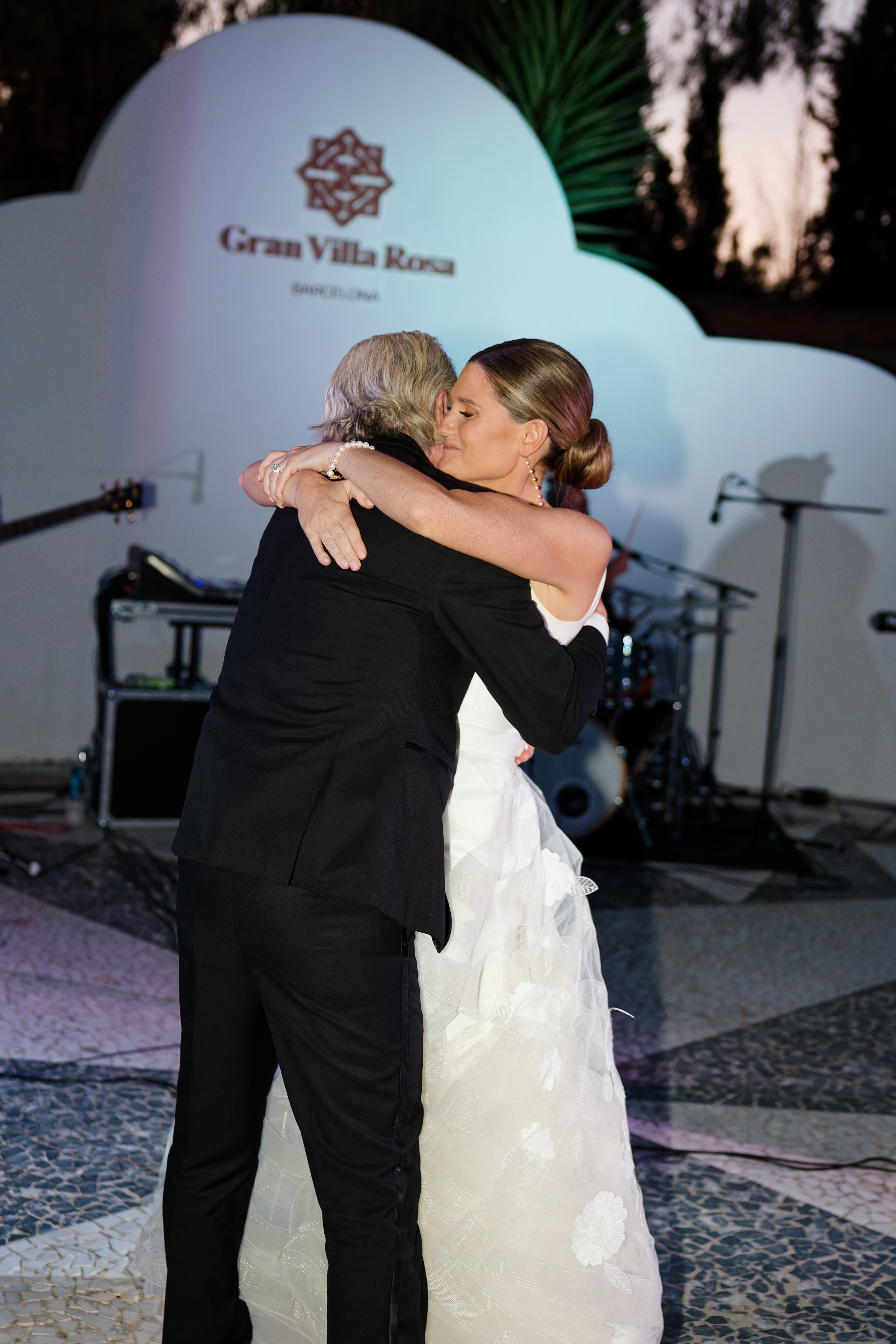
The father-daughter dance feels different—it's the day's final ritual, entirely theirs. No officiant witnesses it, no aisle frames it. Though surrounded, it becomes the celebration's most private moment.
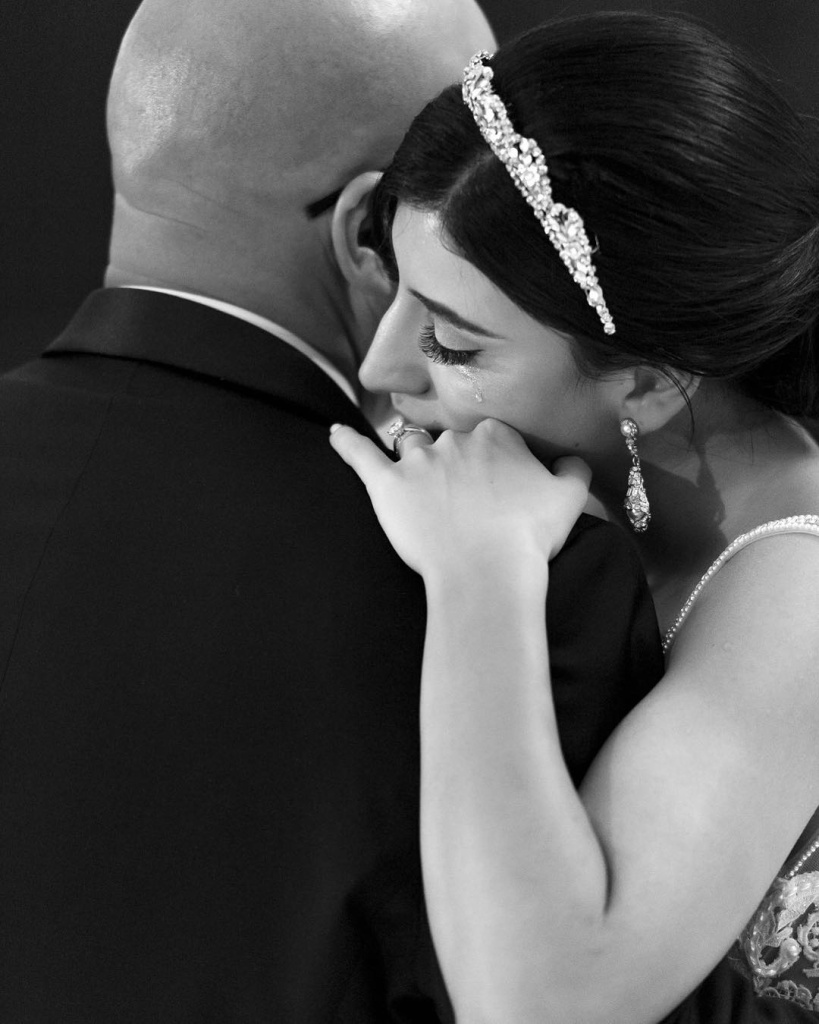
Understanding why this moment feels different is important. By the time the dance happens, both have already played their parts — walked the aisle, stood at the altar, and smiled through the toasts. This is a release. The formality drops away. Movement matters more than stillness here. It's in the spin, the dip, the way her hand rests on his shoulder, and the way he holds her at arm's length to look at her. These gestures aren't choreographed; they're instinctive. Black and white often works better for father-daughter dance images because it removes distractions and isolates emotion. Colour can compete. Monochrome clarifies.
A mid-dance whisper reveals more than any camera-ready smile. The photographer stays close, capturing moments without intruding. Wide shots set the scene—room, guests, context. Close-ups catch intimate details: his lips by her ear, her eyes closing, the brief pause before the music swells. The dance isn't one moment but a sequence. The best father-daughter dance photos capture progression, not just peak emotion.
Modern Family Dynamics — Updating the Tradition
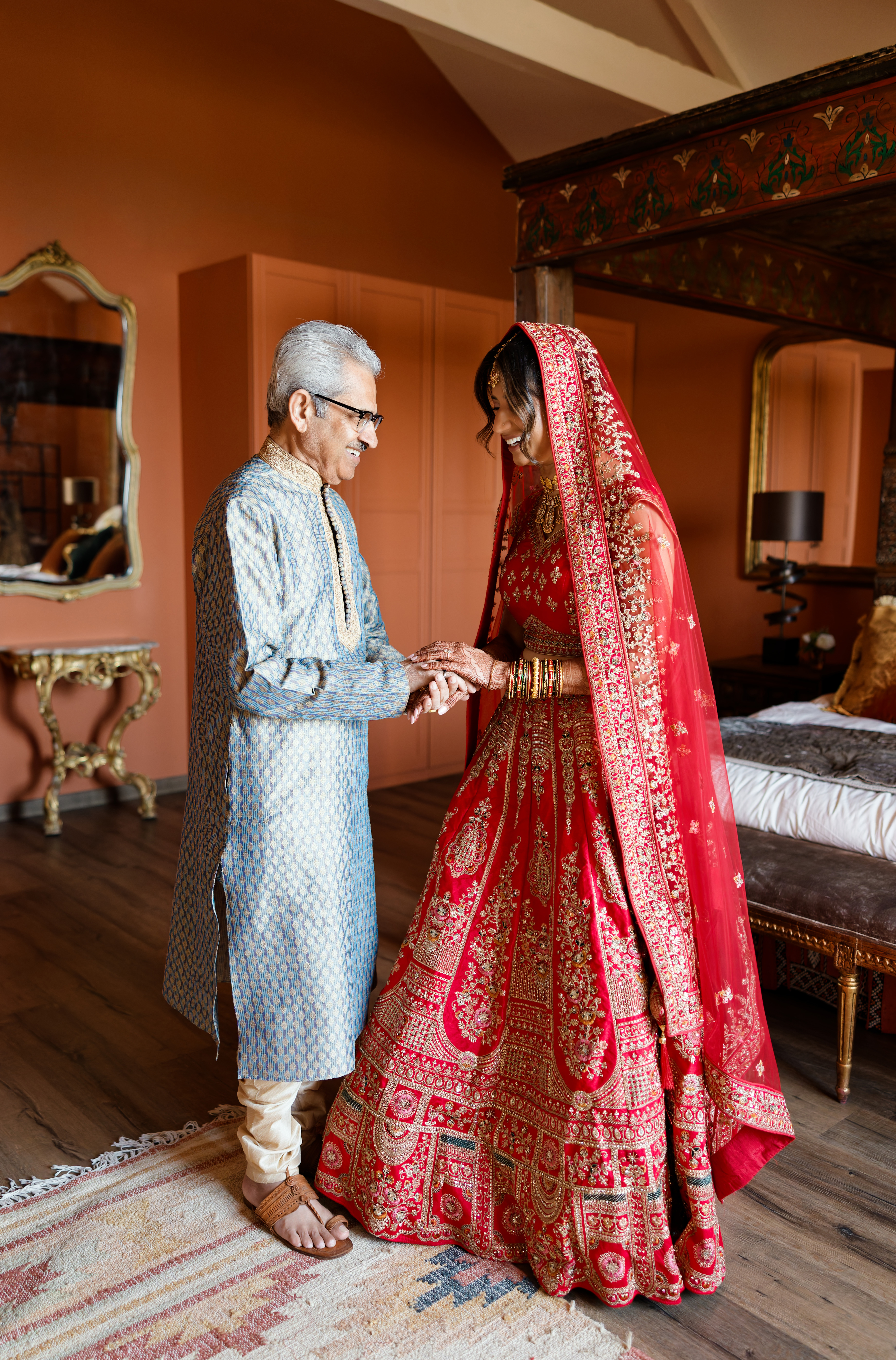
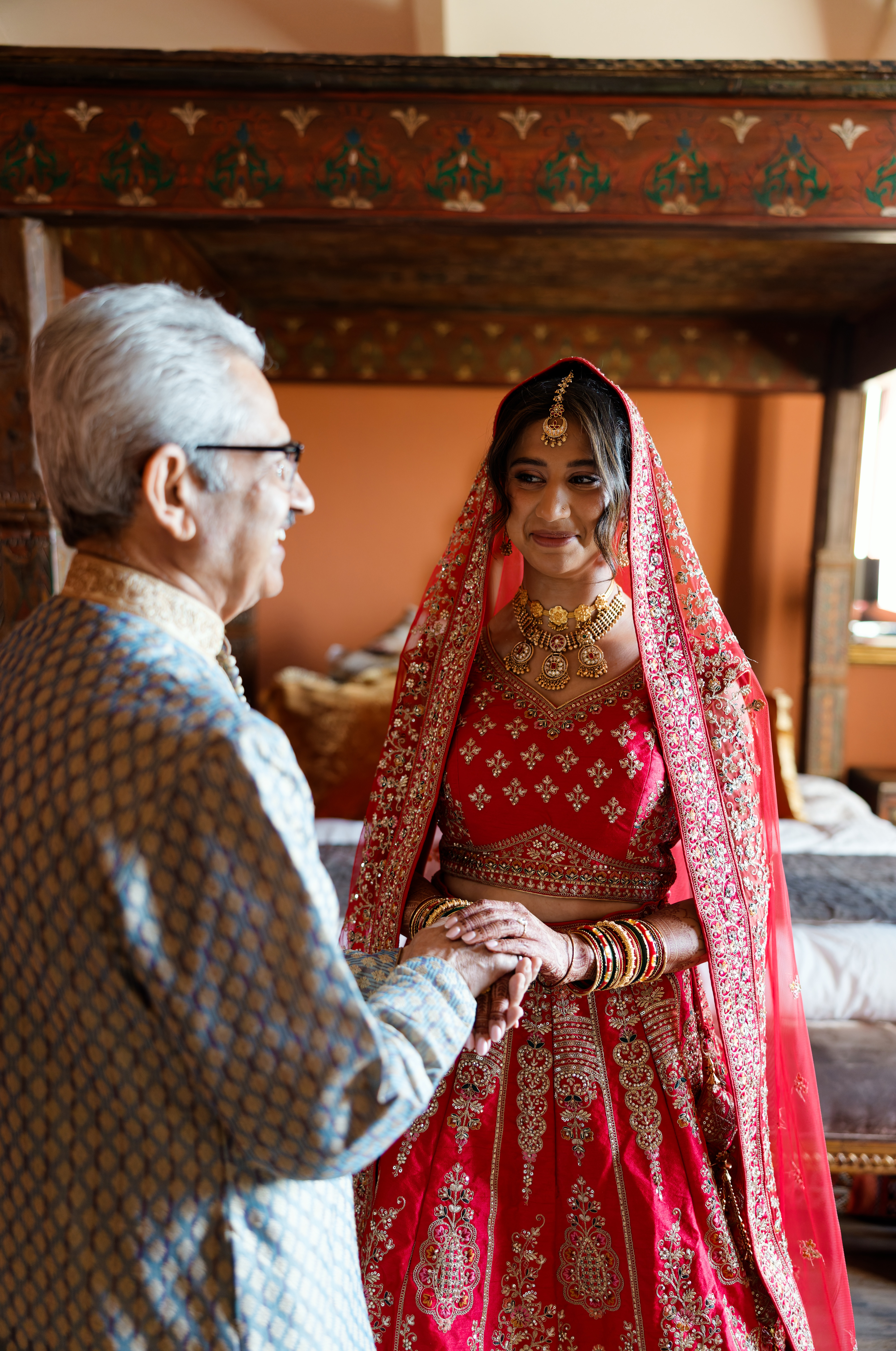
Not all father-daughter relationships are the same, and wedding photography should reflect this. Stepdads who have raised daughters alongside their biological fathers should be recognised for their efforts. Two dads sharing parenting duties should be included in the visual narrative. Single parents who have fulfilled both roles shouldn't be sidelined by traditions designed for nuclear families. Daughters honouring late fathers through empty chairs, memorial portraits, or dances with other father figures deserve images that capture both grief and gratitude.
One moment in particular stayed with Andrea Gallucci long after the wedding day. "It was a family where the parents were divorced, and at first, the bride didn't want to do a first look with her father. There were emotions, history, and things left unsaid. But it was actually her mother who gently reminded her that this was one of the most beautiful and unforgettable moments of a wedding day — and that her father deserved to be celebrated in that way."
The bride chose to do it. "When her father turned around and saw her, everything else disappeared. There was no divorce, no past tension — just a father looking at his daughter with overwhelming love and pride. It was raw, real, and deeply human." Gallucci, herself a child of divorced parents, understood the weight of that reconciliation on a personal level: "It reminded me that love between a parent and a child can go beyond circumstances, beyond separation, beyond the past. And witnessing that kind of reconciliation — even if only for a moment — is something I will never forget."
When both a stepfather and a biological father are present, the question isn't who gets priority, but how to honour both. Sometimes that means two separate dances. Other times, it's a shared walk down the aisle, with one on each side. Sometimes it's simply ensuring that both are present during the preparations and family portraits, without any sense of hierarchy. The key is to ask beforehand and then take photographs with intention rather than assumption. The same principles apply to same-sex parents. If there are two dads, photograph them both in their respective roles, whether that's getting ready together, walking the bride down the aisle side by side, or sharing a dance.
Single parents have a lot on their plates on wedding days, and this deserves to be reflected in the photographs. A mother who fulfills fatherly roles or a father who does both should be photographed with this duality in mind. These aren't "substitute" images — they depict whole, complete relationships that don't require another person for validation. When honouring a late father, the goal isn't to make sadness invisible. It's to let it exist. A daughter holding a photo of her father as she gets ready. A reserved seat at the ceremony. A dance with a grandfather, uncle, or mentor who took his place. These father-daughter wedding photos matter because they acknowledge the complexity of real families.
What Makes These Photos Timeless
| Trend-Driven Frame | Timeless Father–Daughter Image |
|---|---|
| Overly staged poses | Natural posture with subtle guidance |
| Busy backgrounds | Clean, distraction-free compositions |
| Forced expressions | Real emotion, even imperfect |
| Symmetry for the sake of it | Gentle asymmetry and depth |
| Viral moment | Personal moment |
Timeless images have two key qualities: emotional honesty and visual restraint. They don't chase trends or rely on gimmicks. They don't announce themselves through heavy editing or forced symmetry. Instead, they trust the moment to speak for itself. A lasting father-daughter portrait isn't the one with the most dramatic lighting or the widest landscape. It's the one where the daughter's hand rests on her father's arm as it did when she was five, or where his expression shifts from composure to something more spontaneous because he forgot the camera was there.
Wedding photographer Nikita Burtsev believes that this kind of authenticity is exactly what allows certain images to remain meaningful long after the wedding day.
“What makes these photos timeless is honesty. You can’t pose a father’s pride or fake the way his voice cracks during a toast, or the way he looks into his daughter’s eyes while trying to hold back tears. It’s the memory of him holding your hand as he walked you down the aisle, or that quiet moment during your first dance when you felt the weight of his love and his wishes for your future.”
For Burtsev, the most powerful wedding photographs eventually become something more than just images.
It happens when a frame stops being just a photo and becomes an emotional anchor. Years later, that single shot of your father’s face — full of love, a bit of sadness, and immense hope — can still make your heart ache in the best way possible.
Restraint doesn’t mean boring. It means choosing clarity over clutter, emotion over performance, and connection over composition. Backgrounds should recede, not compete. Expressions should feel genuine, not contrived. The relationship — the actual, lived-in, imperfect relationship — should command attention, not the photographer’s skill in arranging bodies in space. That’s what makes these images endure for decades. They’re not about the wedding. They’re about the people.

What to Communicate to Your Photographer
Good ideas for photos of fathers and daughters start with clear communication before the wedding day. Photographers can't read minds, so assumptions about what's important can result in missed moments. If you would prefer real reactions to posed smiles, make this clear. If you want hands, micro-gestures, and in-between moments to be prioritised, make this clear. If you'd rather the photographer didn't interrupt genuine emotion to reposition or re-stage, make that boundary clear.
Key Points to Discuss Before the Wedding:
- Prioritize genuine emotion over posed perfection — let moments unfold naturally rather than directing every frame
- Capture hands and micro-gestures — the small details (a squeeze, a steadying hand, fingers adjusting a veil) tell the deeper story
- Don't interrupt real moments — if emotion is happening, document it rather than pause it for better lighting or angles
- Keep backgrounds clean and intentional — distraction-free compositions age better and keep focus where it belongs
- Stay close during key transitions — getting ready, the aisle walk, and the dance require proximity without intrusion
- Understand family dynamics beforehand — stepdads, late parents, two dads, or other complexities need thoughtful handling, not assumptions
"I use zoom lenses, so I can photograph from different distances without interfering," explains Arturs Lacis.
This allows the father and the bride to fully experience their emotions, whether they laugh, cry, or simply stay in the moment. I can capture everything without disturbing them." This technical choice—staying close in spirit but physically distant enough—ensures genuine emotion remains uninterrupted and preserved exactly as it unfolds.
Ask for clean backgrounds and intentional framing. Ask them to stay close during key moments, such as getting ready, walking down the aisle, and dancing, without intruding on the experience. If there are any specific family dynamics that need to be handled with care, explain these in advance. The more context a photographer has, the better they can capture the story. Father-daughter wedding photos don't just happen by accident. They require presence, anticipation, and respect for what is unfolding. Make sure your photographer understands this before they arrive.
Father-daughter wedding photos are important because they capture a relationship at a pivotal moment — not the end, but a change. These images are most effective when they're authentic, capturing moments such as hands touching, glances exchanged, and pauses that aren't performed for anyone else. The walk down the aisle, the dance, and the quiet moments in between are rituals that hold meaning because of what came before: years of care and showing up, even when it wasn't easy. The best daughter-father pics aren't the ones that look like magazine spreads — they're the ones that feel like memories: imperfect and undeniably true. They're the images a daughter returns to, not because they're beautiful, but because they remind her of what it felt like to belong to her father, even as she became someone else's. They're also the photos a father keeps close because they prove, in a way that words never could, that he did his job. He guided her towards the next chapter of her life and then let go.