Efren Prieto: A Ceremony Has No Second Take
AUTHOR: Natali Grace Levine
READING TIME: 5m 36s
PUBLICATION DATE: 10/09/2026
UPDATED: 10/09/2026
AUTHOR: Natali Grace Levine
READING TIME: 5m 36s
PUBLICATION DATE: 10/09/2026
UPDATED: 10/09/2026
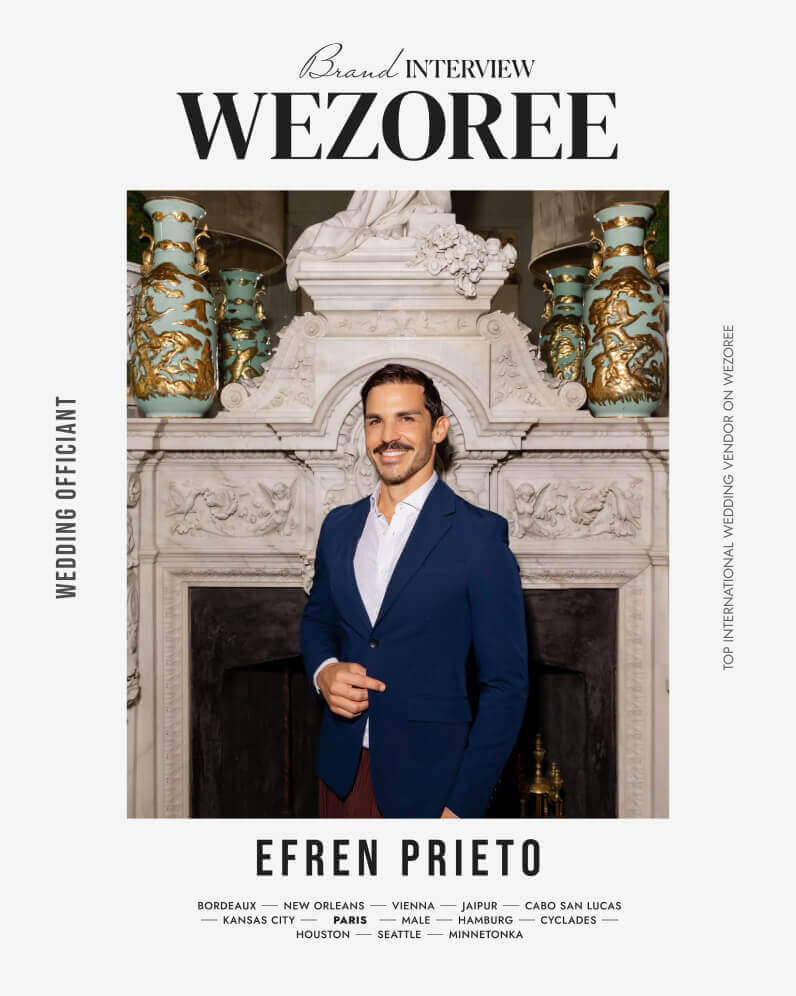
Journalism. A Master's in Media and Audiovisual Arts. Years in television and live performance. A chapter as a professional aerial performer. Yoga and meditation. None of it looks like a wedding officiant's résumé - until Efren Prieto explains the thread running through all of it. Born in Venezuela, also British and Spanish, and based in Europe, he now officiates ceremonies in English and Spanish, predominantly across France, for international and destination couples who want something built entirely around them rather than pulled from a template.
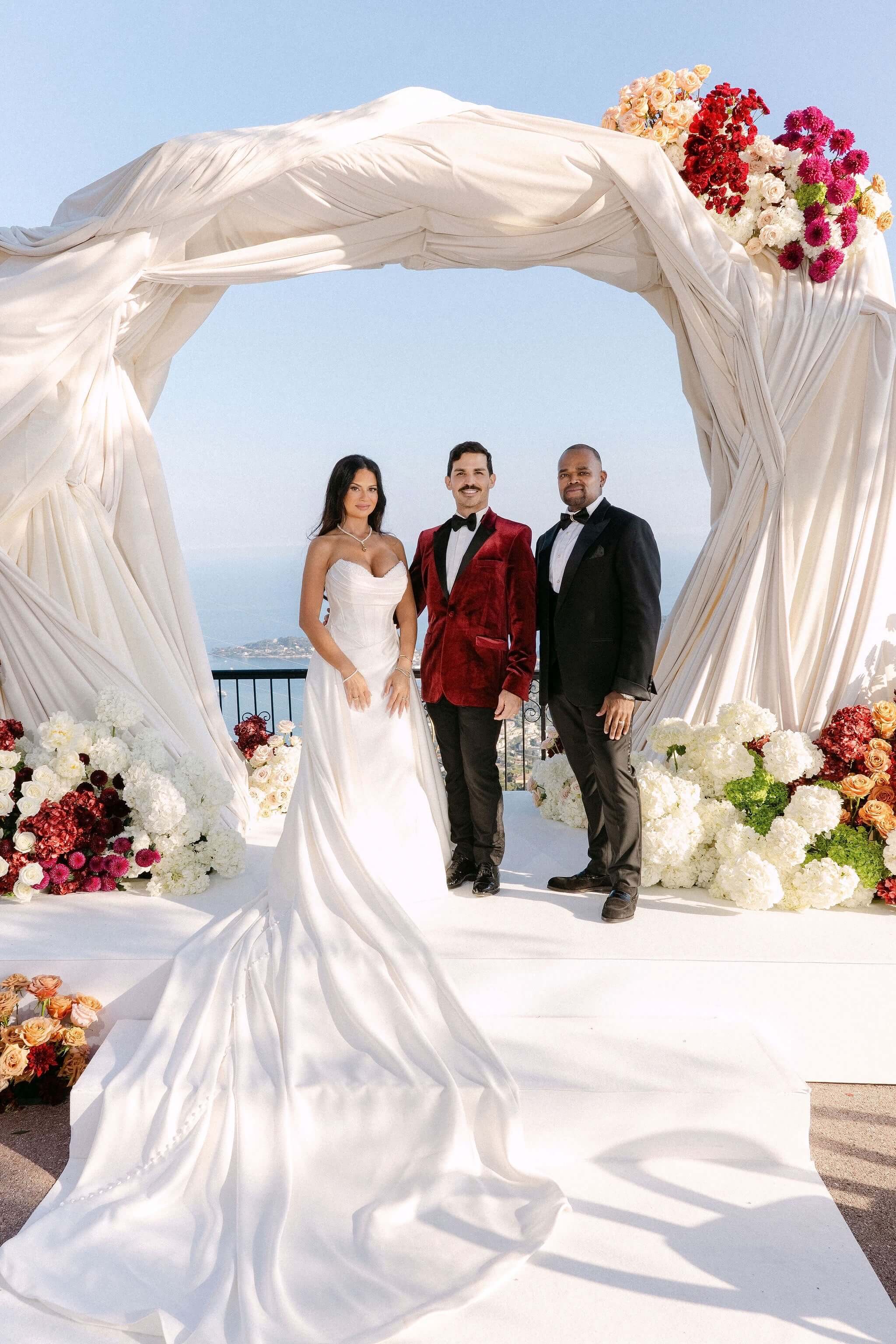
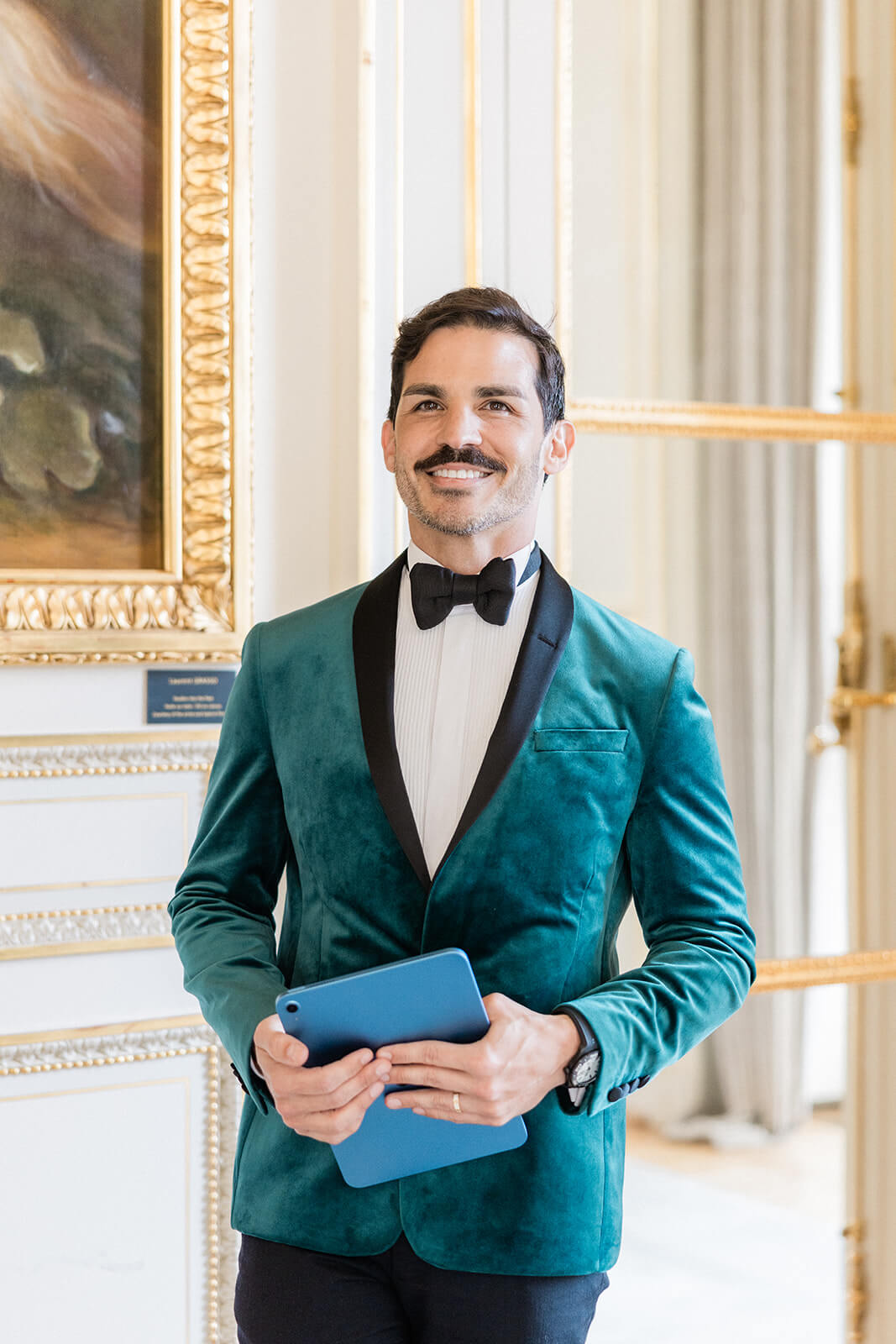
 My path to becoming a wedding officiant was not a conventional one, but looking back, almost everything I had done before was quietly preparing me for it,
Efren explains. Each chapter, in his account, left behind a specific skill.
"Journalism taught me how to ask questions, listen carefully and find the story behind what someone is saying. Television and live performance taught me communication, presence, timing and how to remain composed when something unexpected happens. Yoga taught me something equally important: sometimes presence and silence communicate as much as words."
That range of experience adds up to roughly two decades in communication and live performance, with the wedding work developing later. "What began as officiating ceremonies gradually became a much deeper involvement in the wedding world," he reflects.
"The more ceremonies I create, the more fascinated I become by the profession. There is always another story to understand, another family dynamic, another culture and another room to read."
"I was born in Venezuela and I am also British and Spanish, so my own life has always been shaped by different cultures, languages and ways of seeing the world. I have built my professional and personal life across Europe, and perhaps that is one reason I feel so naturally at ease with international couples and multicultural celebrations. I officiate in English and Spanish, predominantly across France and Europe, and I find it fascinating when two families, sometimes from completely different parts of the world, come together through one couple and one story."
Efren doesn't start writing a ceremony with a format already in mind. "I specialise in highly personalised symbolic ceremonies in English and Spanish, particularly for international and destination weddings," he explains.
Rather than beginning with a predetermined format, I begin with the couple. Some ceremonies are elegant and romantic, others are joyful and full of humour, others are intimate and deeply emotional.
Tradition gets included only when it earns its place.
"I don't believe in adding rituals simply because they are expected. Every element should have a reason for being there and should feel authentic to the people at the centre of it."
Getting to that point starts long before any writing happens. "Personalisation begins long before I start writing. I spend time listening to the couple together, but I also give each partner space to share things privately. Often the most revealing details are not the obvious milestones. They are small memories, habits, private jokes, moments of vulnerability or the way one person describes the other when they are not in the room."
From there, the real design work begins.
"I begin shaping the emotional architecture of the ceremony. Where should we laugh? Where should we allow emotion to build? Where should the couple's own voices take over? How do the vows, readings, music and family participation belong within the story rather than simply appearing as separate elements? A ceremony should never feel as though it could belong to another couple with the names changed. If it does, I haven't done my job."
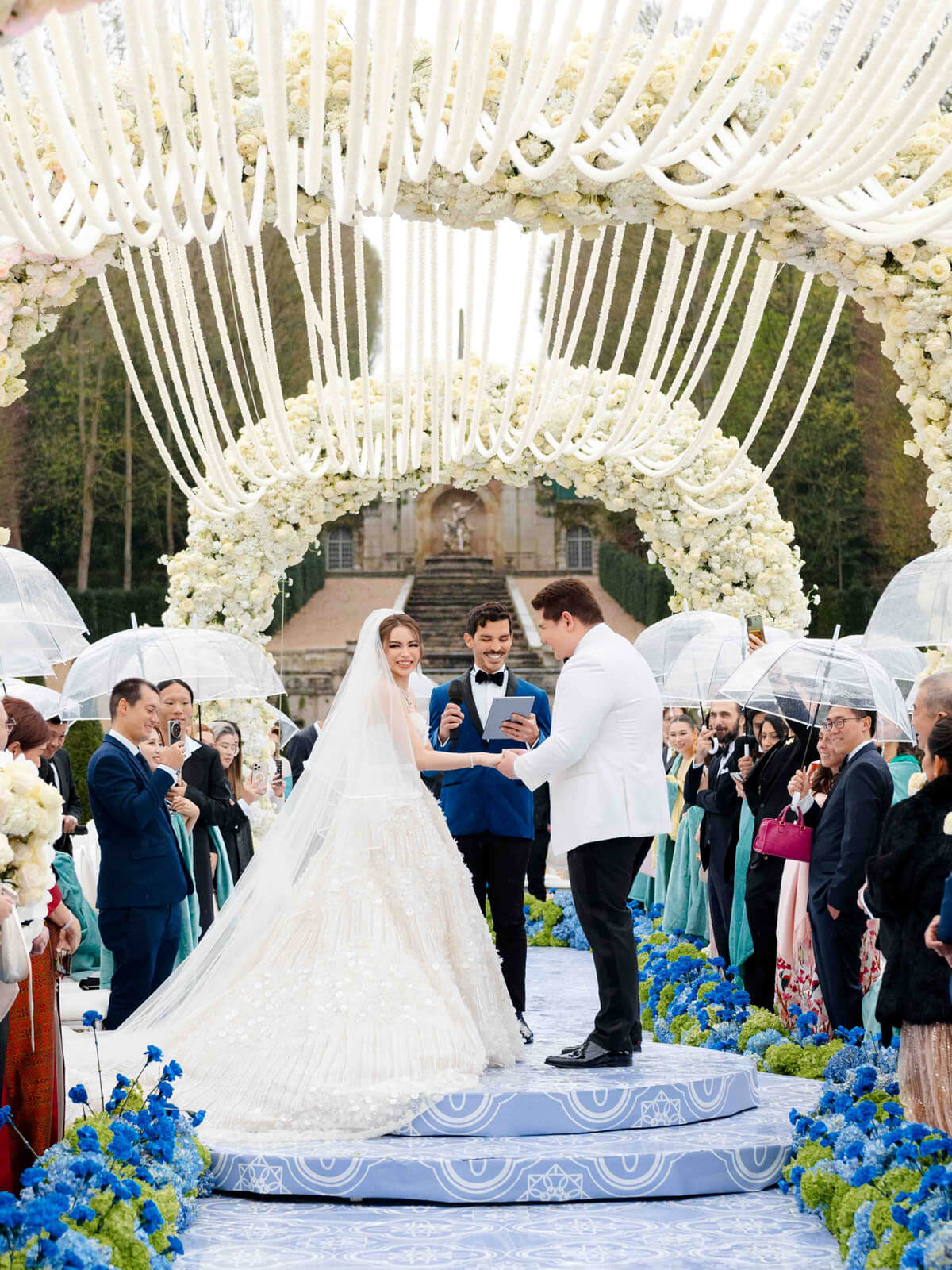
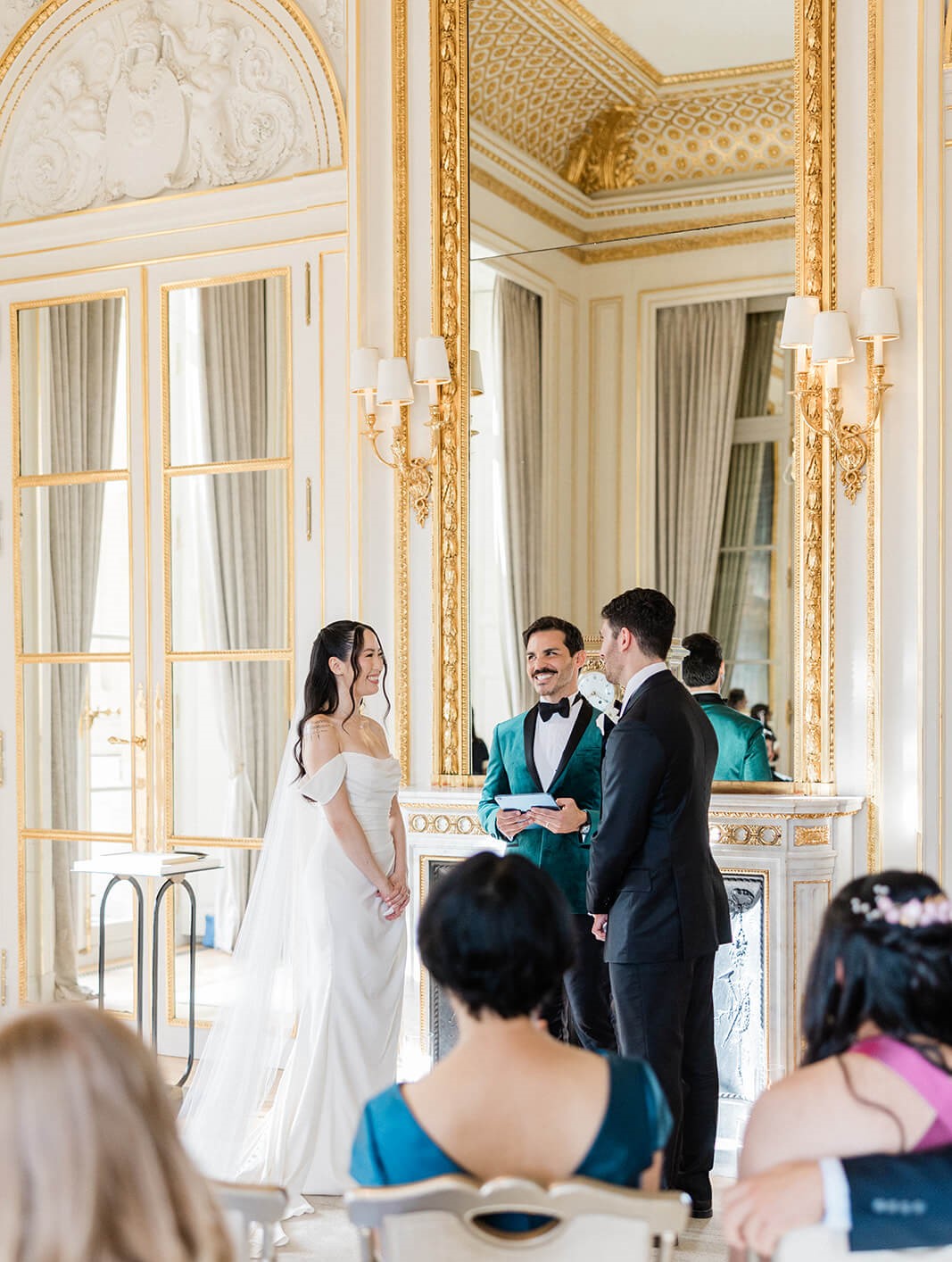
Ask Efren about the hardest part of the work, and the answer has nothing to do with writing. "One of the greatest challenges is that a ceremony is live. There is no second take. A microphone can fail. Someone can become overwhelmed with emotion. A child can decide that the carefully planned ceremony is suddenly their stage. The weather can change. A processional can arrive differently from rehearsal. Preparation is what gives you the freedom to respond naturally," he reflects.
I know the ceremony extremely well before I stand in front of the guests, but I never want to become so attached to a script that I stop being present. For me, professionalism in a live ceremony is not about controlling everything,
he says. "It is about creating enough preparation and calm that the couple never has to worry about what is happening around them."
Asked for a ceremony that has stayed with him, Efren points to something recent rather than something grand.
"It is difficult for me to choose one because what stays with me is rarely the scale of a wedding or the venue. It is usually a human moment. Very recently, after a destination ceremony in Montenegro, the bride told me that she would never, ever forget that moment. Guests also came to speak to me afterwards about the atmosphere we had created together."
What struck him was what people were actually responding to. "That meant a great deal to me because they weren't simply commenting on the words. They were describing a feeling," he reflects.
For me, that is luxury in its most meaningful form: having the time, trust and freedom to create a moment that feels completely personal and cannot be reproduced.
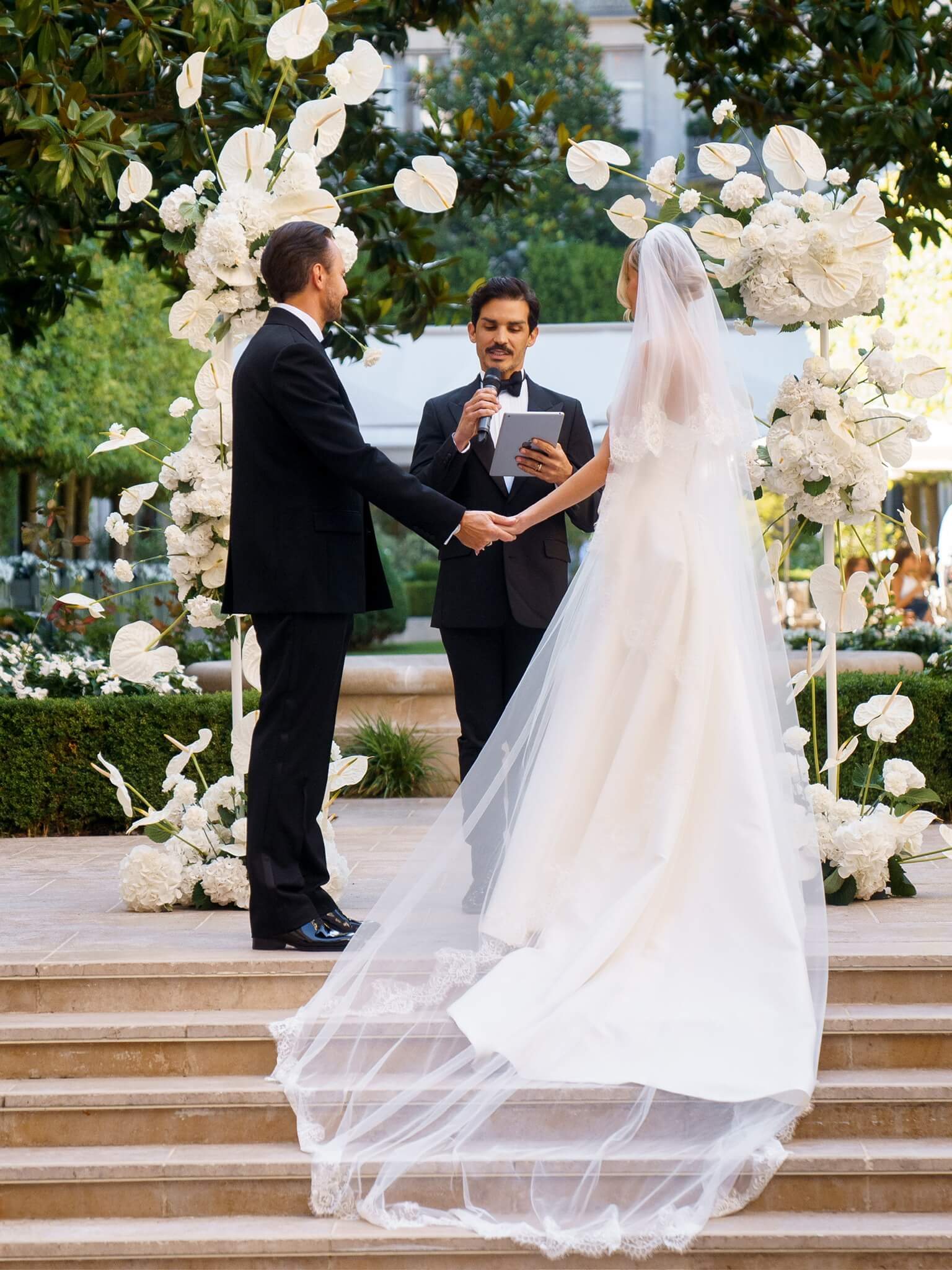
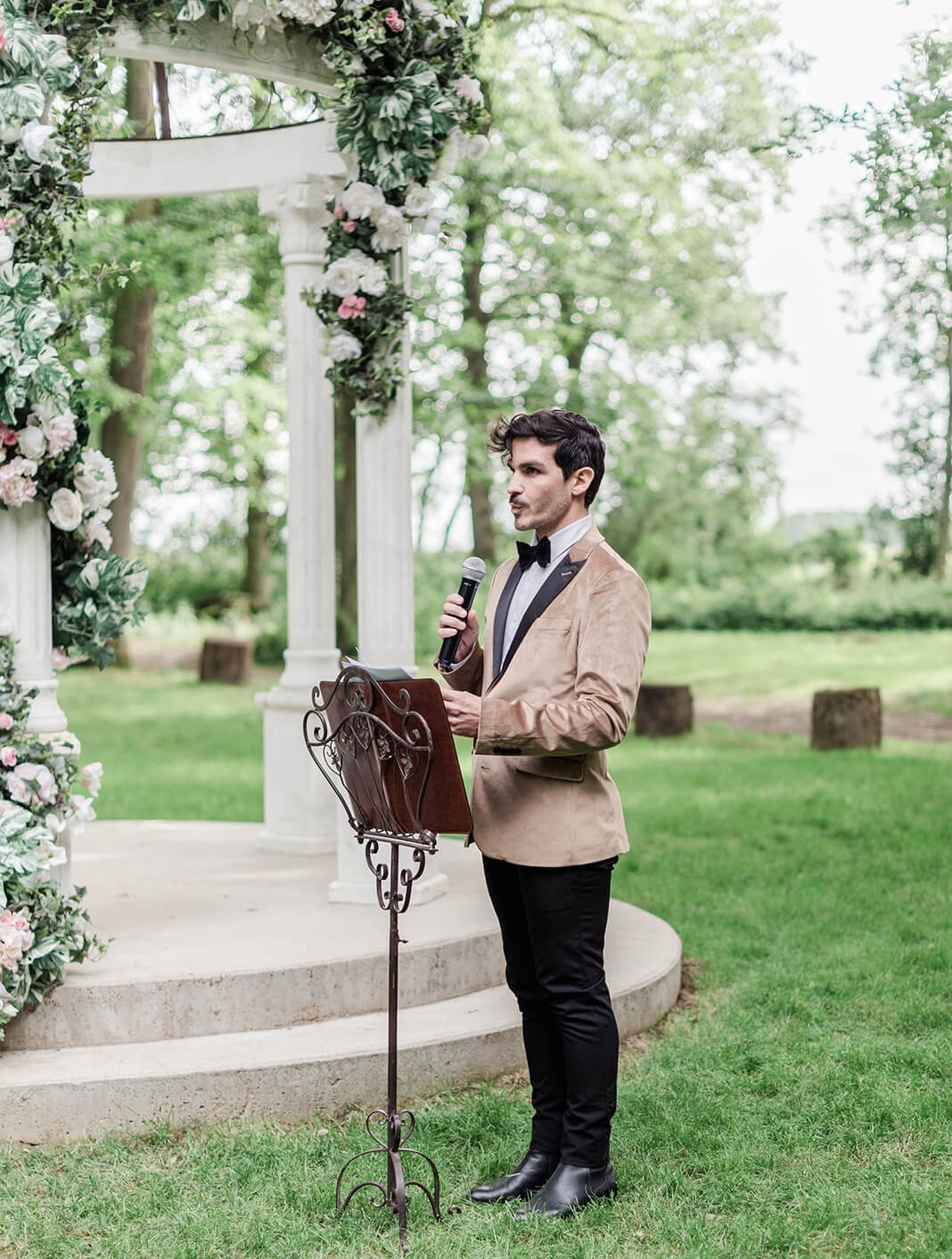
Efren is direct about the biggest misunderstanding of his profession. "Perhaps the greatest misconception is that the officiant arrives on the wedding day, delivers a beautiful speech and leaves. The thirty minutes everyone sees are the visible result of a largely invisible process. Behind them can be months of conversations, listening, research, writing, editing, vow guidance, pronunciation work, coordination with planners and musicians, understanding family dynamics, preparing transitions and thinking carefully about the emotional rhythm of the ceremony."
Vow guidance, in particular, carries a specific weight. "I am often one of the only people who has read both sets of vows before the wedding, which is a position of enormous trust," he notes. "My role is never to replace the couple's voice. I help them find it."
He describes the job increasingly in broader terms than the ceremony itself.
I increasingly think of my work as ceremony experience design rather than simply the thirty minutes I spend officiating. I don't provide premarital counselling. My expertise is storytelling, communication and ceremony, and I believe strongly in knowing where one's professional role begins and ends.
His advice to couples choosing an officiant follows from just how much trust the role actually requires.
Choose someone you trust enough to be vulnerable with. Your officiant will ask you questions about your relationship that perhaps nobody else involved in the wedding will ask. You may share your vows with them before you share them with the person you are marrying.
He recommends a real conversation before deciding. "Ask yourself: Do I feel comfortable with this person? Are they genuinely listening? Do they understand us?"
Asked what he enjoys most about the work, Efren doesn't point to the venues or the travel. "The trust," he says.
There is a moment in this process when a couple stops speaking to you as a wedding supplier and simply speaks to you as two people in love. That is when the real ceremony begins to reveal itself.
Some of those relationships continue well past the wedding day.
"Sometimes couples remain in my life afterwards. I receive anniversary messages, photographs, news of babies and glimpses of the life that continued after everyone went home. It is a beautiful reminder that I may have been present for only one chapter, but it was a very important one."
That same attention to what can't be captured in a photograph shapes how he thinks about his craft overall. "During the ceremony, I am equally interested in something that cannot be photographed: what will everyone feel?" he says.
I sometimes think the most sophisticated ceremonies are the ones in which nobody notices the technique behind them. They simply feel effortless. If, years later, they cannot remember every sentence I said but can still remember exactly how they felt standing there together, I believe the ceremony has done what it was meant to do.