Top 10 Best Wedding Venues in French Riviera


Scott Fitzgerald wrote Tender Is the Night while living in a villa on this coastline, and he wasn't exaggerating when he described the light. Between Antibes and Saint-Tropez, the water takes on a hue which doesn't come across accurately in photographs, being too saturated to rely on and too consistent to be merely coincidental, and each of the villas, fortresses and Belle Époque palaces on this list was constructed by someone who first observed that phenomenon and then went on to build the rest of the property around it. Grace Kelly married a man from this coastline. Picasso died a few kilometers from one of these gardens. Winston Churchill drank in a dining room still used for weddings today. The French Riviera wedding venue you select is no longer just a background at this stage; it is an entrance into a tradition most couples spend their entire engagement half-convincing themselves they are permitted to join.
The following ten estates each illustrate a completely different interpretation of that coastline: medieval stone contrasted with Belle Époque glass, a private cove versus a mountaintop helipad, four centuries of ownership by one family versus two eccentric American artists who simply decided a ruin deserved better. None of them asks a couple to compromise on drama, and none of them resembles anything else on Earth when the light actually reaches them.
Find Your Perfect Wedding Vendors


Villa et Jardins Ephrussi de Rothschild
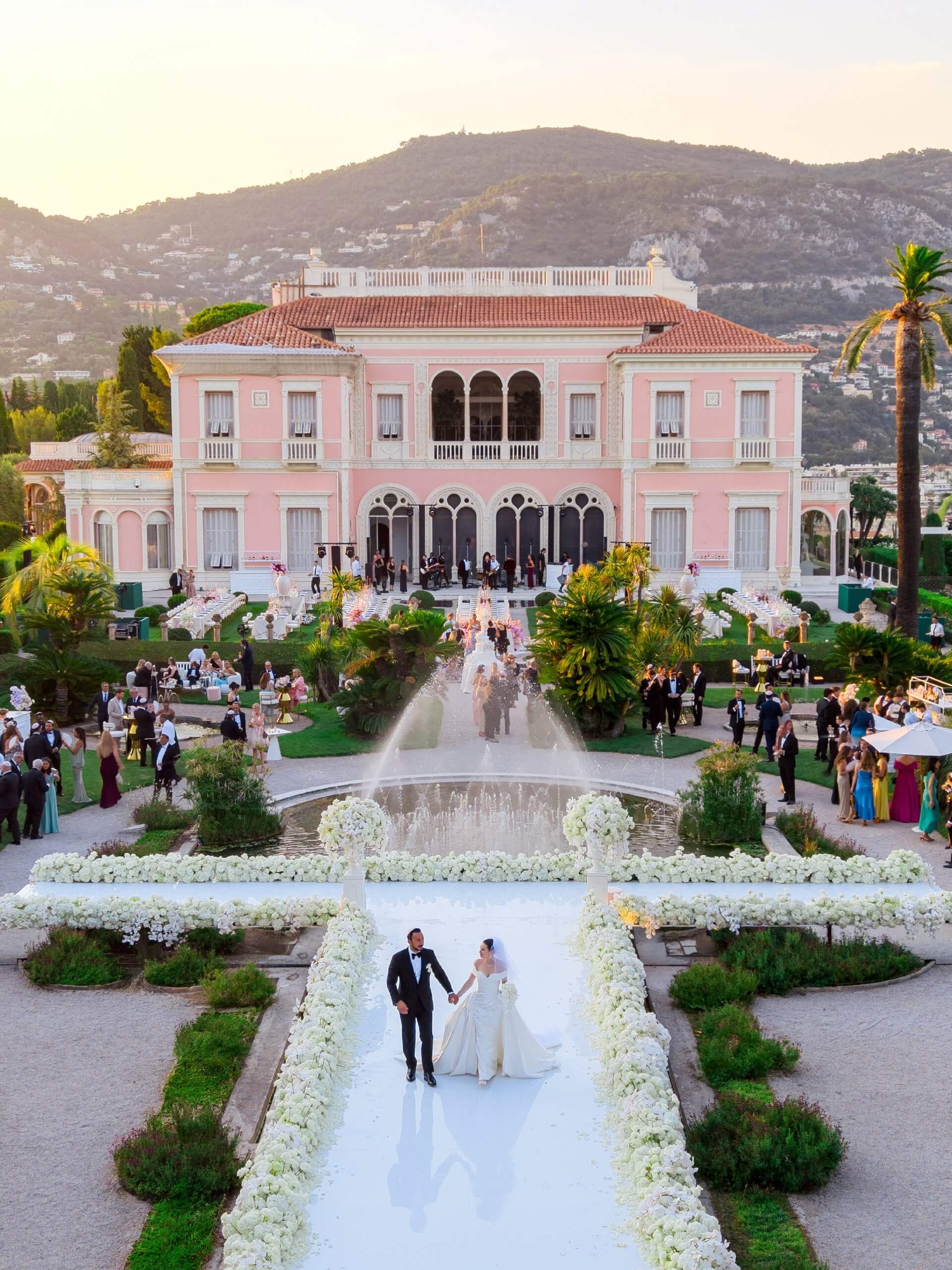
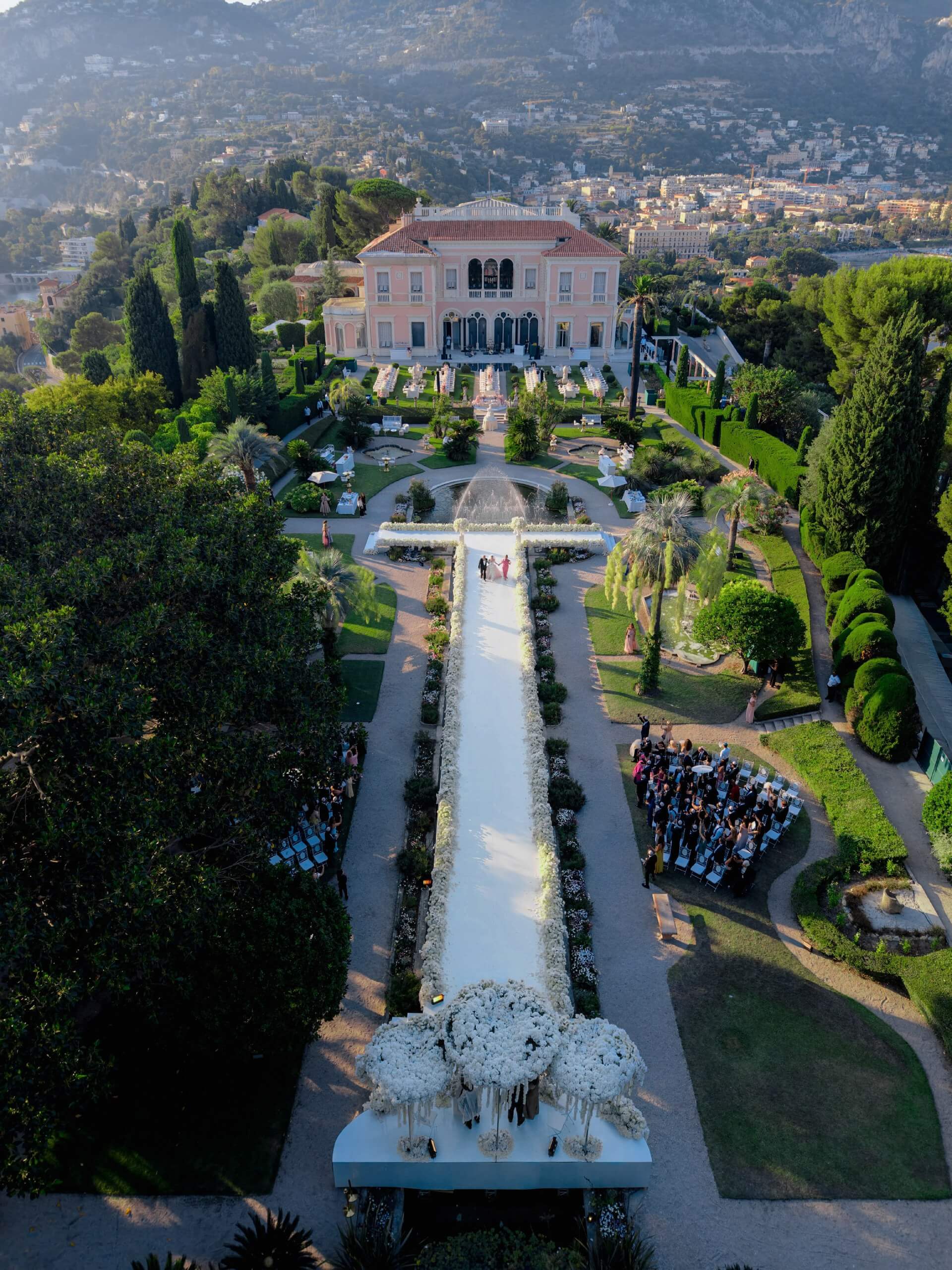
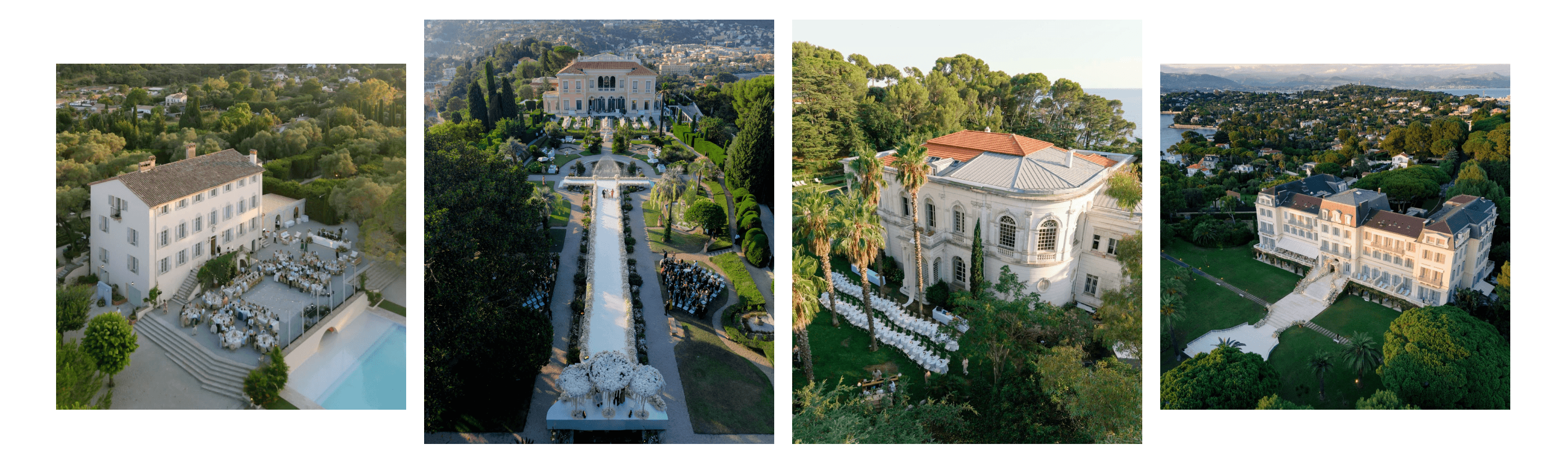
Béatrice Ephrussi de Rothschild built Villa Ephrussi de Rothschild between 1907 and 1912 on a promontory projecting into the sea at Saint-Jean-Cap-Ferrat, and she filled the pink-colored house with so much art and enthusiasm that it is still referred to as «the French favorite villa» more than a hundred years later. Surrounding the villa are nine gardens, themed French, Spanish, Florentine, Japanese, and others, each one distinct enough to appear as though it were a different country, and at the far end of the French Garden stands the Temple of Love, a copy of the one at Versailles, with the Mediterranean lying behind it. Ceremonies are usually held here, with sea views on both sides of the aisle and an entrance that few other places along this coast can match in spectacle.
Outdoor weddings can be as large as you like, and if the weather changes, you can move indoors to the Patio Room for up to 130 guests or the more intimate Oriental Salon for 60. The villa functions as a bare venue, so the couple has to provide everything themselves, such as lighting, furniture, and catering; this seems quite demanding at first, but once you realize it also means they have complete creative control over a setting which already does a great deal of the emotional work on its own. Likewise, guests staying nearby will not lack access to luxury hotels along the coast, so the villa's grandeur doesn't come at the expense of a comfortable place to stay afterward.
Hôtel du Cap-Eden-Roc
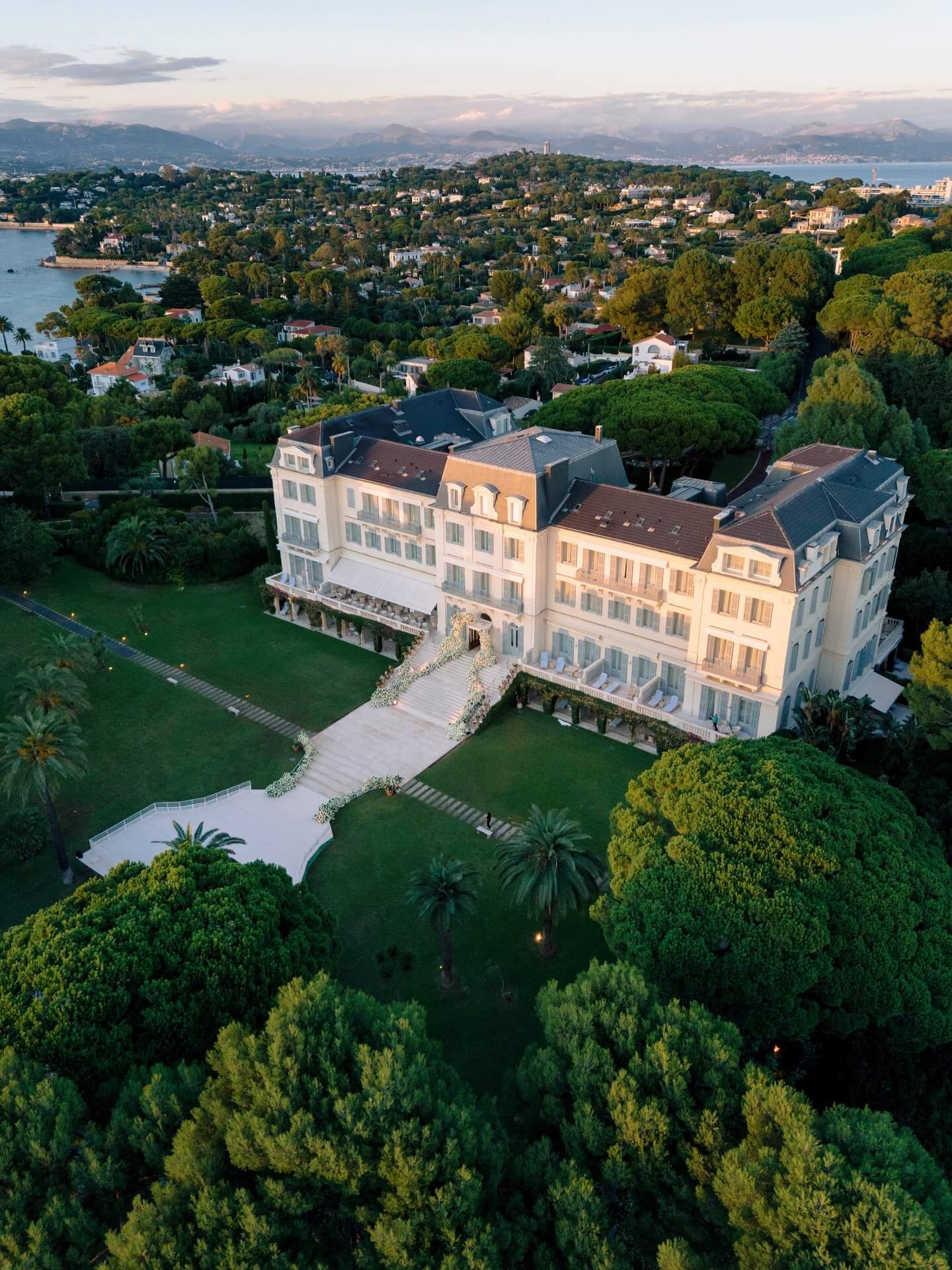
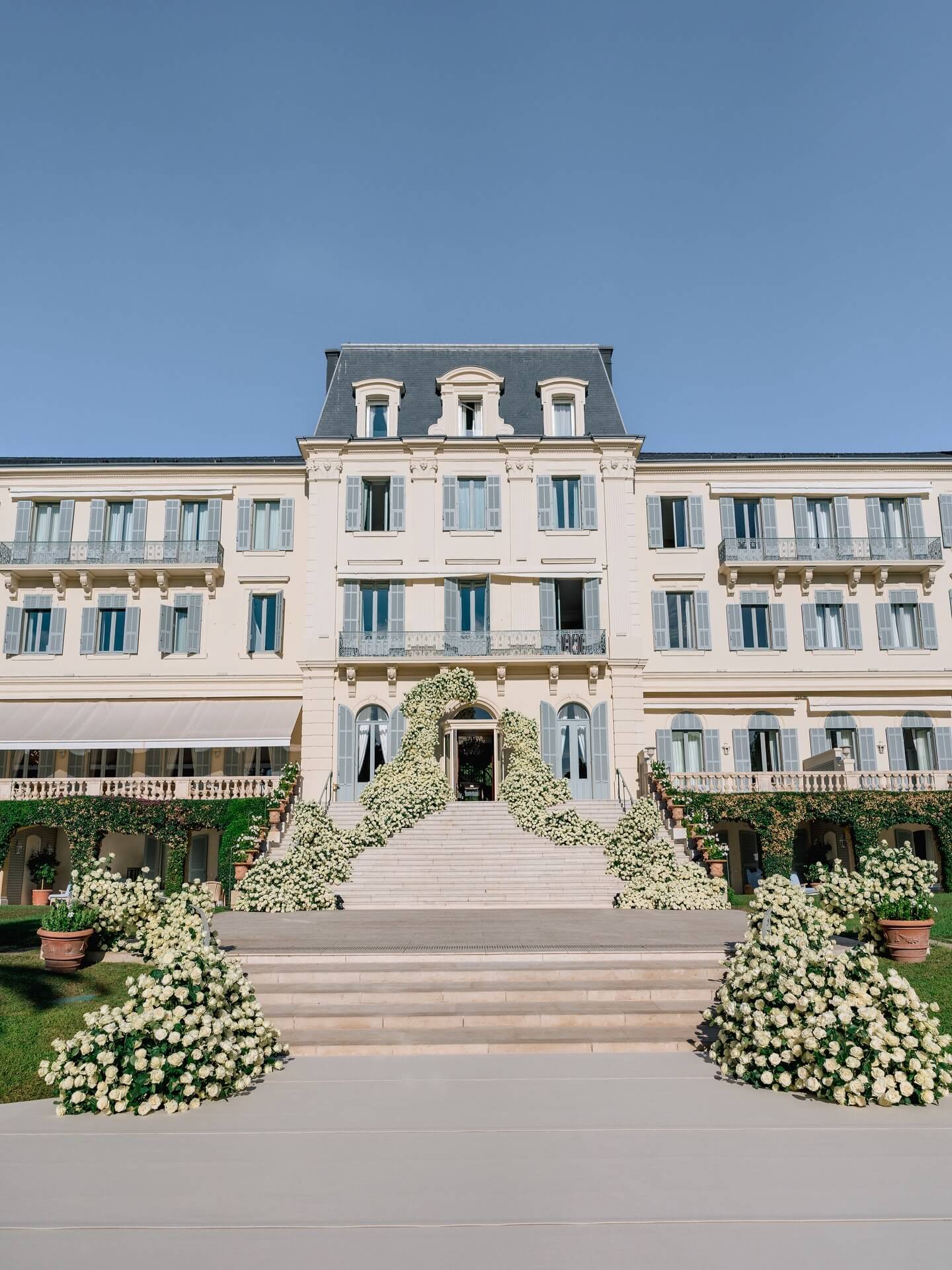
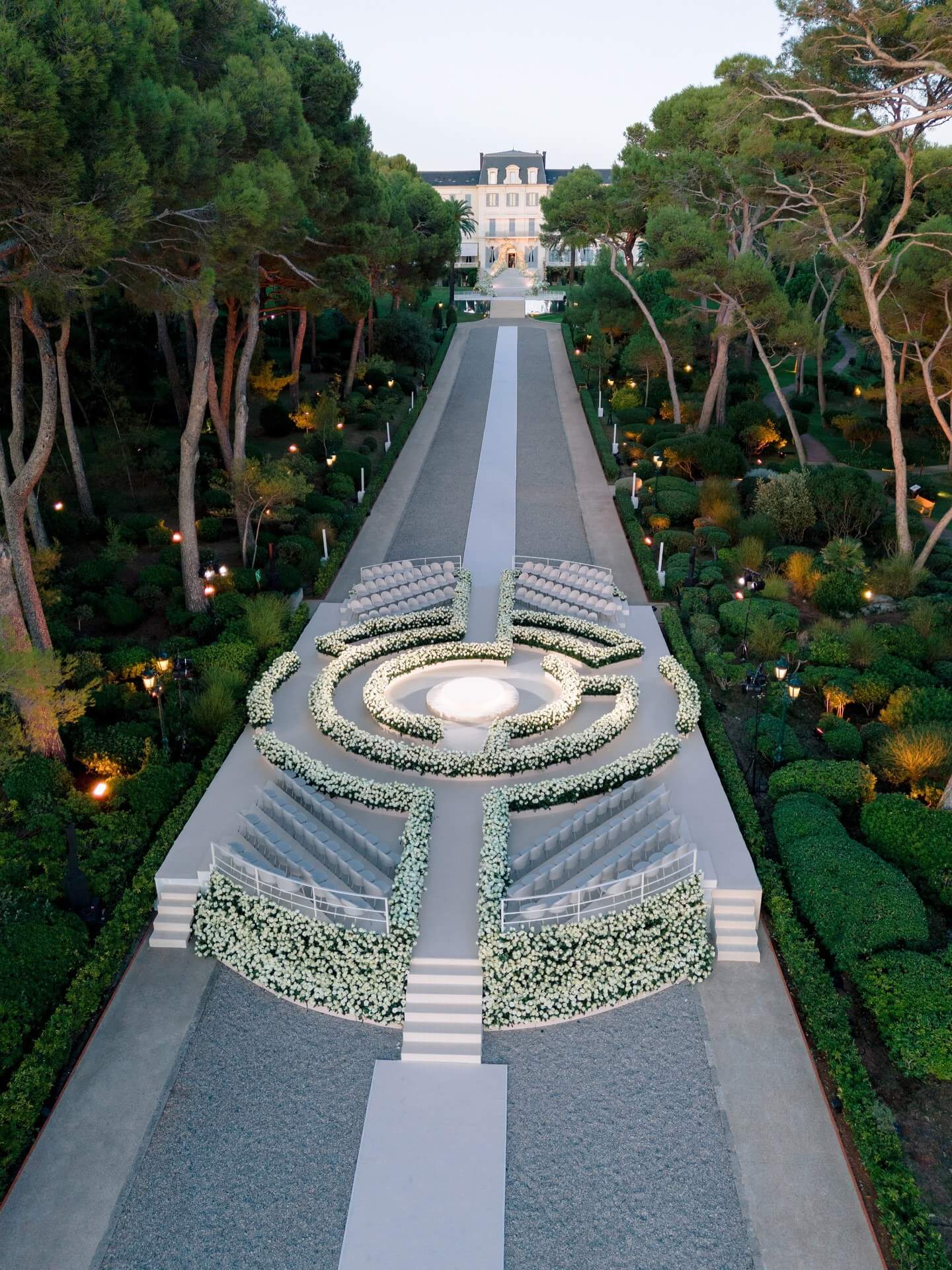
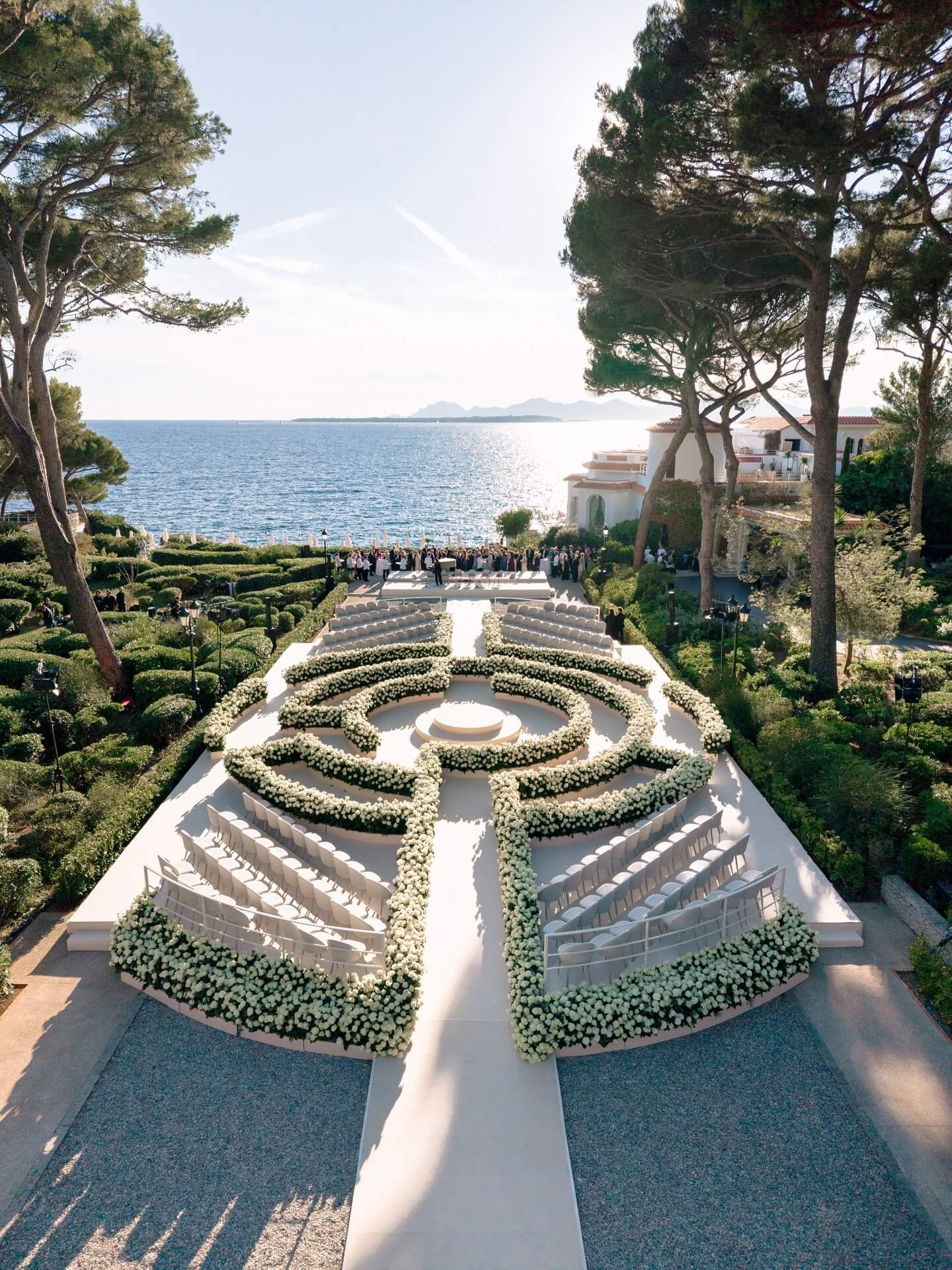
Hotel du Cap-Eden-Roc, situated on a headland at the very end of Cap d’Antibes and featuring a saltwater pool that has been blasted directly from the rock, has a reputation dating back to the 1870s as the most desirable address along this entire coastline and is therefore entitled to be called the "grand dame", unlike other establishments which only claim that title. The Grande Allée, a 200-meter-long walkway bordered by ancient pine trees, extends from the historic hotel to the Eden-Roc Pavilion and can accommodate up to 450 guests for a ceremony with the open water in front of them, while the more intimate Champagne Lounge located on top of the pavilion holds up to 100 people with the sea visible on three sides. When the whole hotel is booked, all 115 rooms and the three villas are included, so a couple’s entire guest list can sleep exactly where they celebrated.
The property also doesn't push people to decide, as it accepts only a limited number of private events each season, and the most popular dates in June and September book up well in advance. Instead, smaller weddings generally book the Ballroom and Terrace of the Îles de Lérins rather than the entire estate, which can still accommodate up to 200 people for a climate-controlled dinner should the weather prove unsuitable for an outdoor ceremony. Yachts moor just off the coast all summer, so arriving guests can see them from the terrace, yet no one ever feels part of a spectacle.
This mix of history, privacy, and physical grandeur is rare, which is reflected in prices that start well above those of the other venues on the list. For couples looking for truly iconic status - one that guests know about before they even arrive - this venue is usually the first choice when considering wedding venues on the French Riviera at this level. It is, in fact, a rare case where the setting itself is enough to make people believe, long before any talk of menus or flowers.
Domaine Rocabella
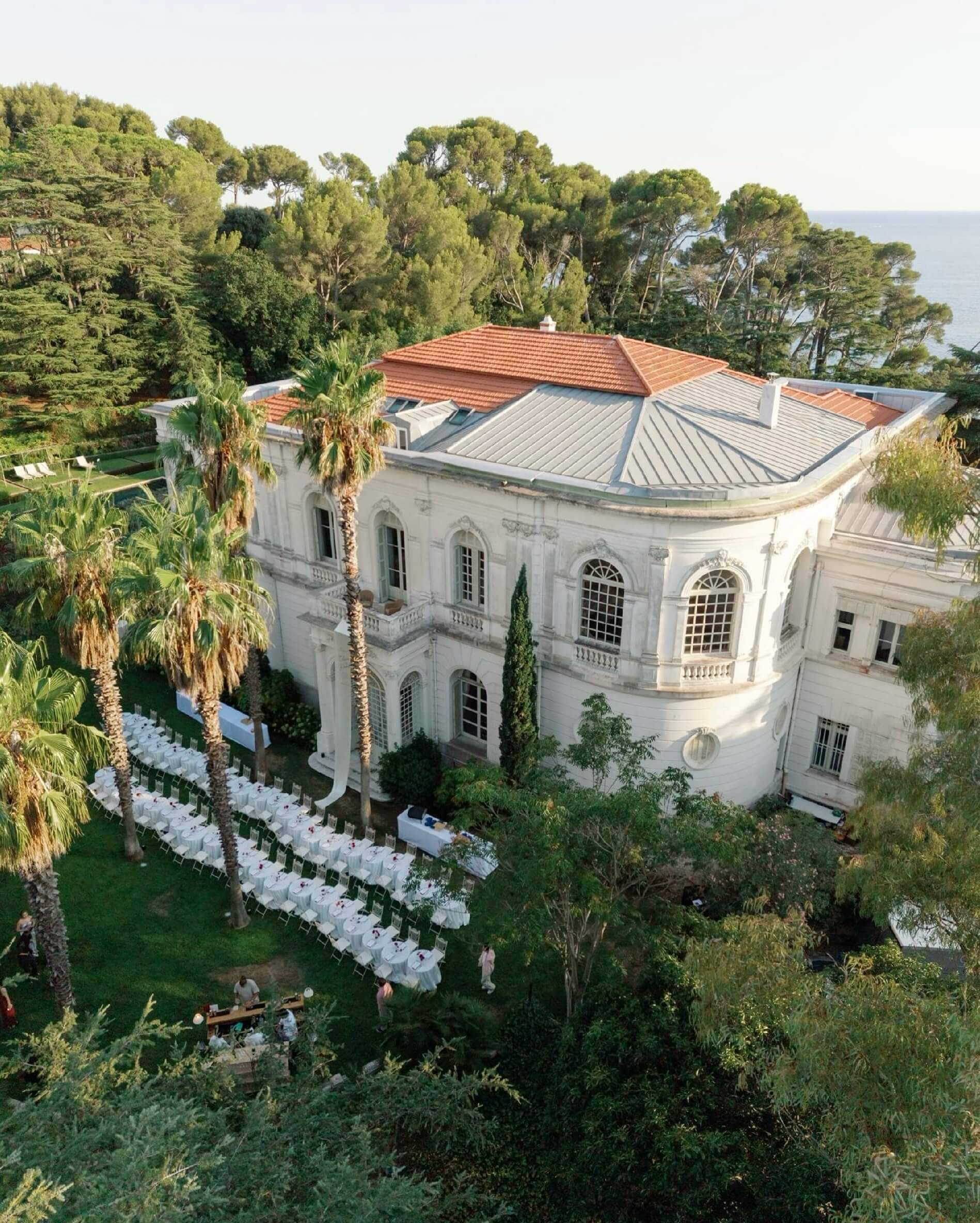
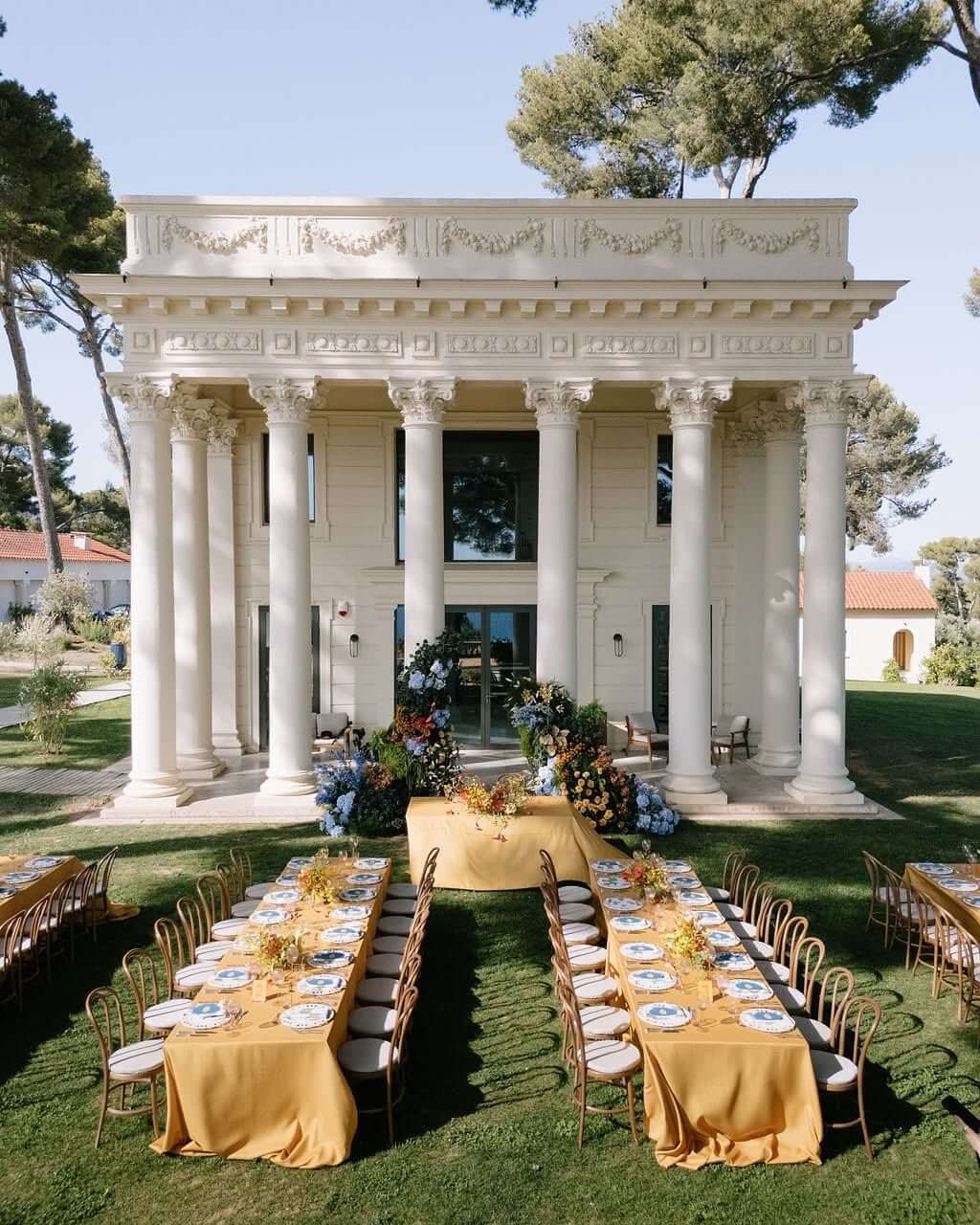
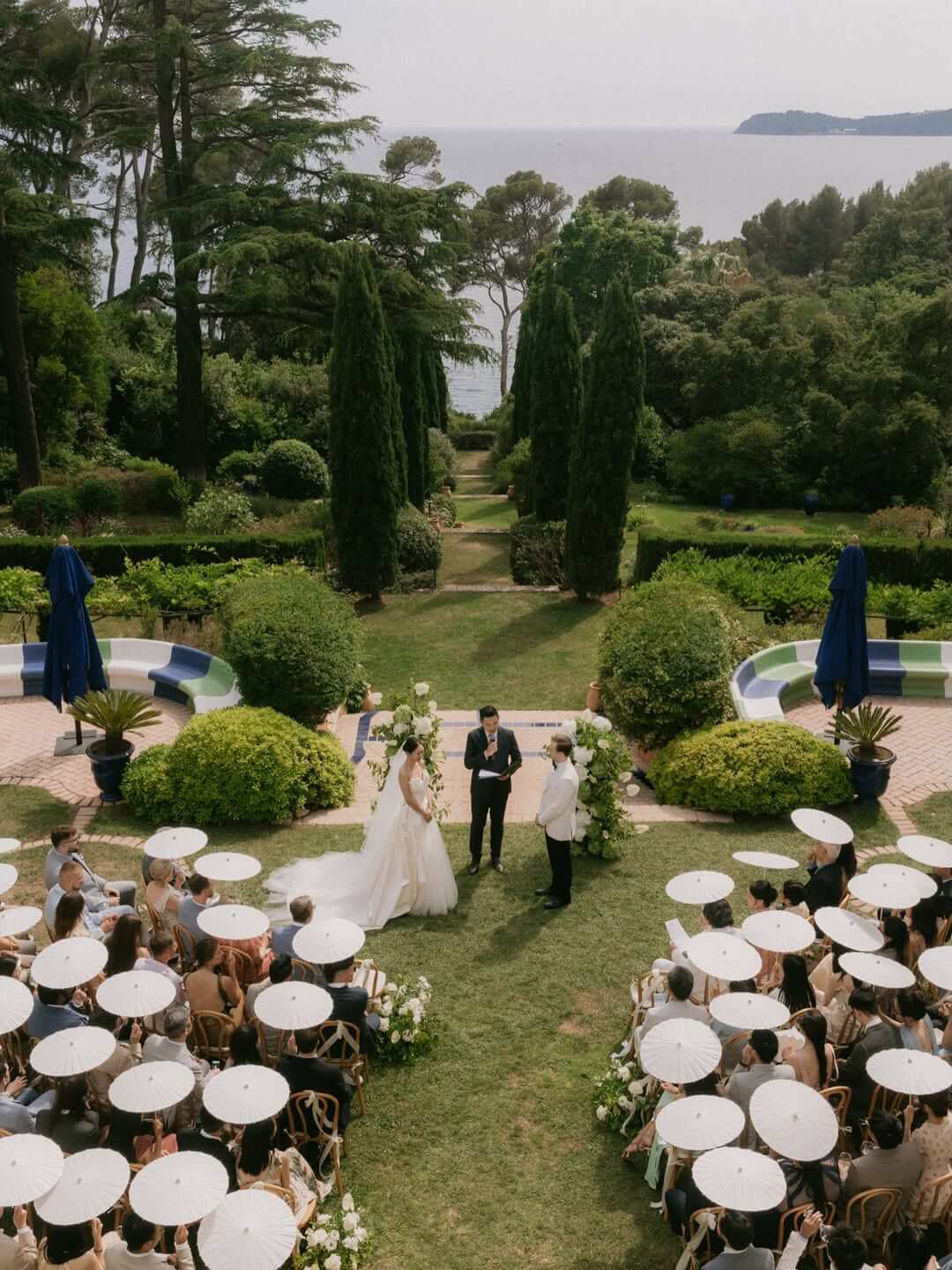
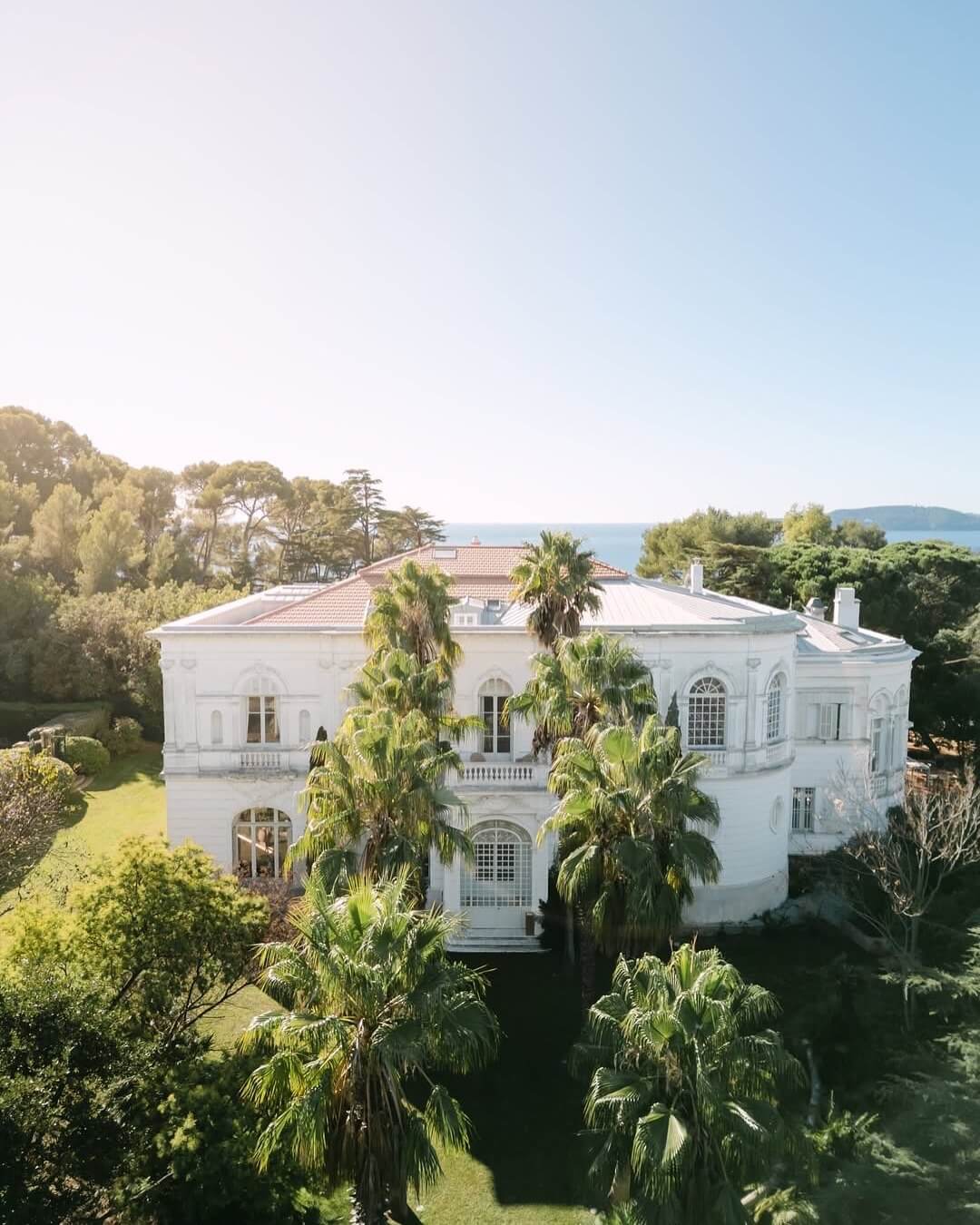
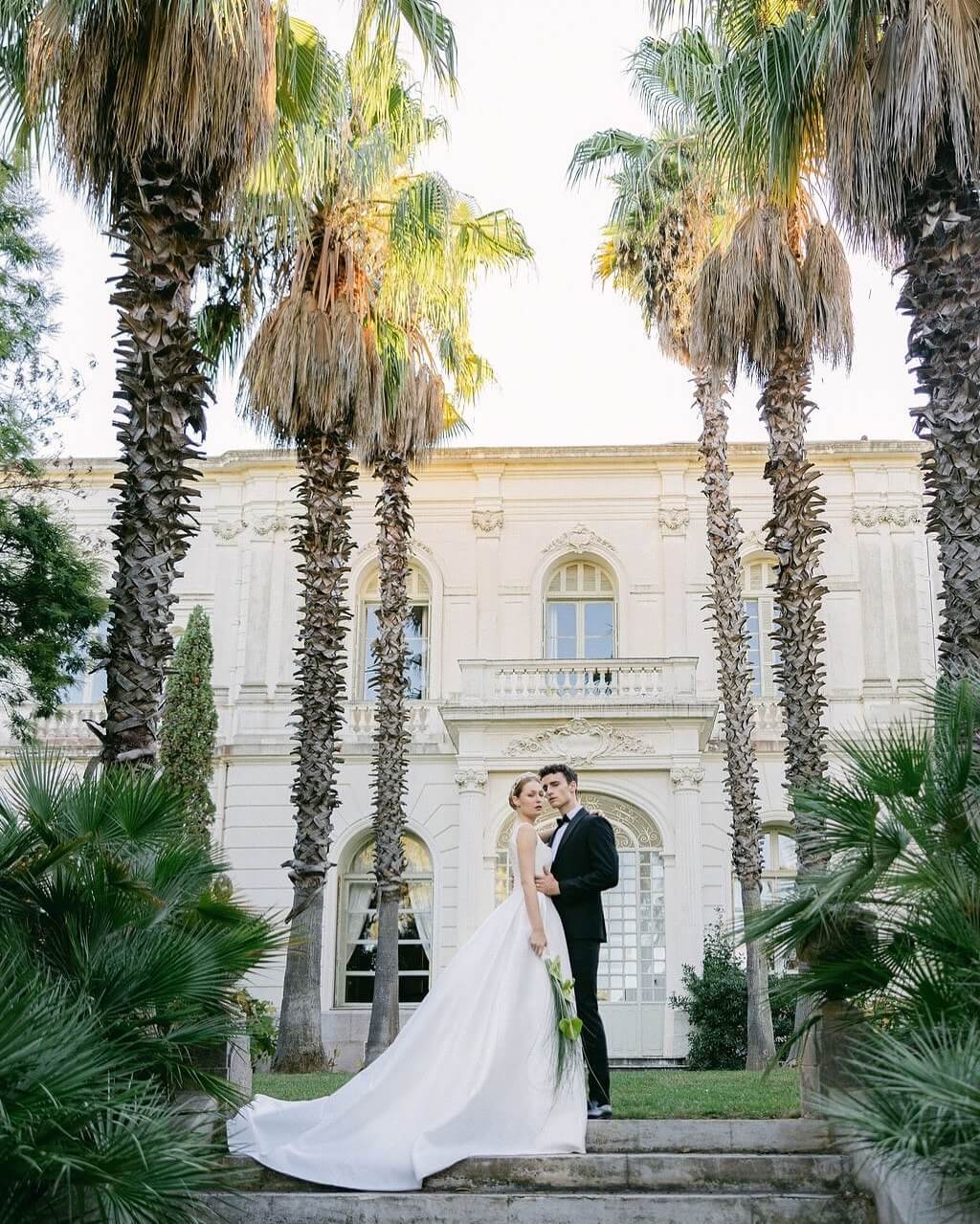
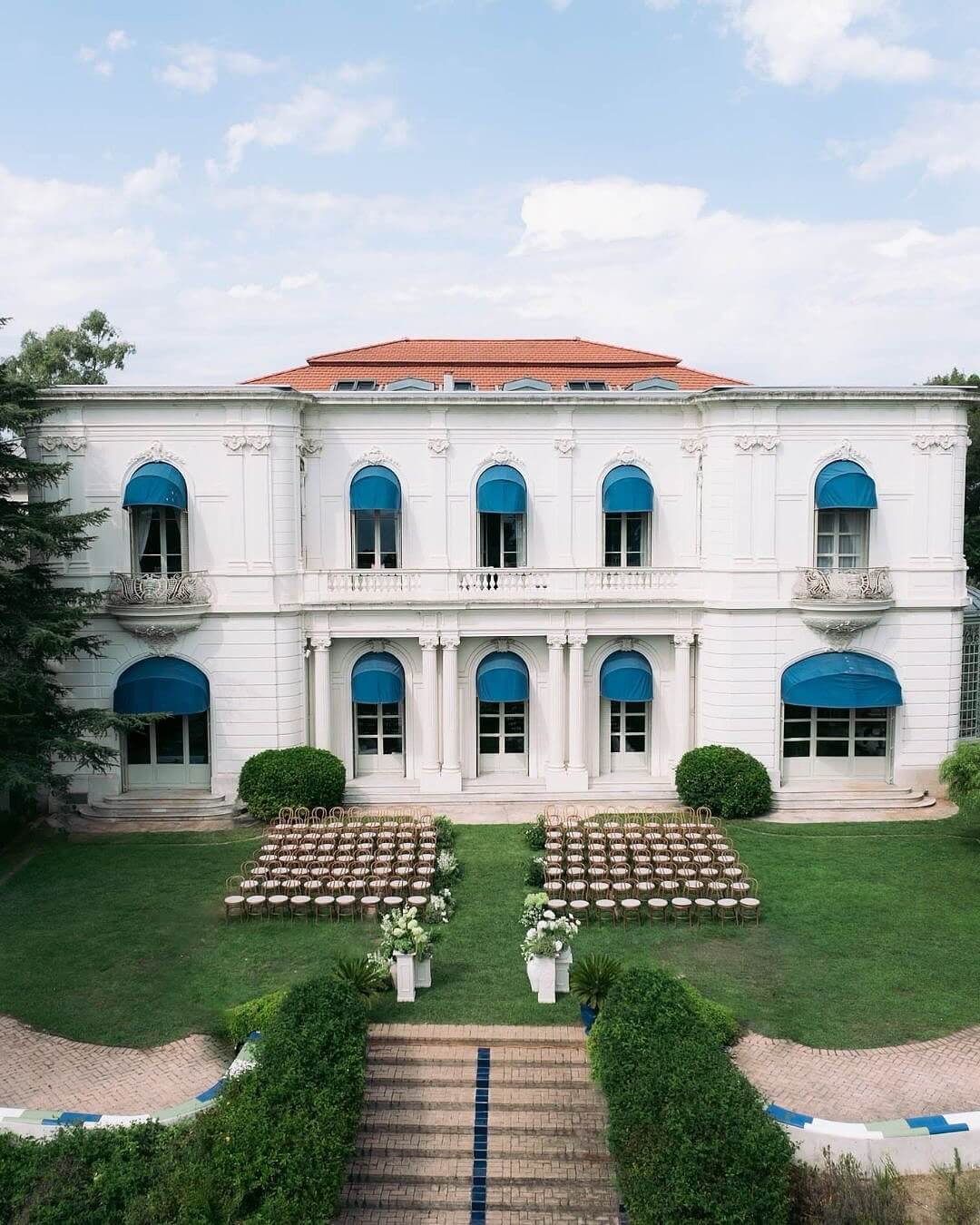
Situated on cliffs overlooking a remote Mediterranean cove close to Toulon, Domaine Rocabella is a Belle Époque manor which has gradually established one of the most respected names on the Riviera, a reputation so well known that it has recently been used as a filming location for Downton Abbey: A New Era. The Napoléon III villa forms part of a group of individual houses, namely the Grand Villa, La Bastide and Le Cottage, linked together by three hectares of private parkland, and its reception rooms feature a lounge with a fireplace and an authentic Victorian winter garden. With full privatization, the venue can accommodate up to 150 guests for dinner, while on-site accommodation can reach 80 or 86 people, depending on the package.
What sets Rocabella apart from the other properties on the cliffside is the cove, with a private path that goes straight down to the water, offering guests an experience more like an island retreat than one on the mainland. Couples who come here usually prefer a multi-day stay rather than just one evening, as the property's minimum-stay rules, along with the spa, the padel court, and the infinity pool, encourage guests to settle in rather than pass through. In fact, the villas each have their own name, such as the Corniche, the Folie, the Bastide and the Cottage, each one being distinct enough that returning guests actually remember which one they stayed in.

Bastide du Roy
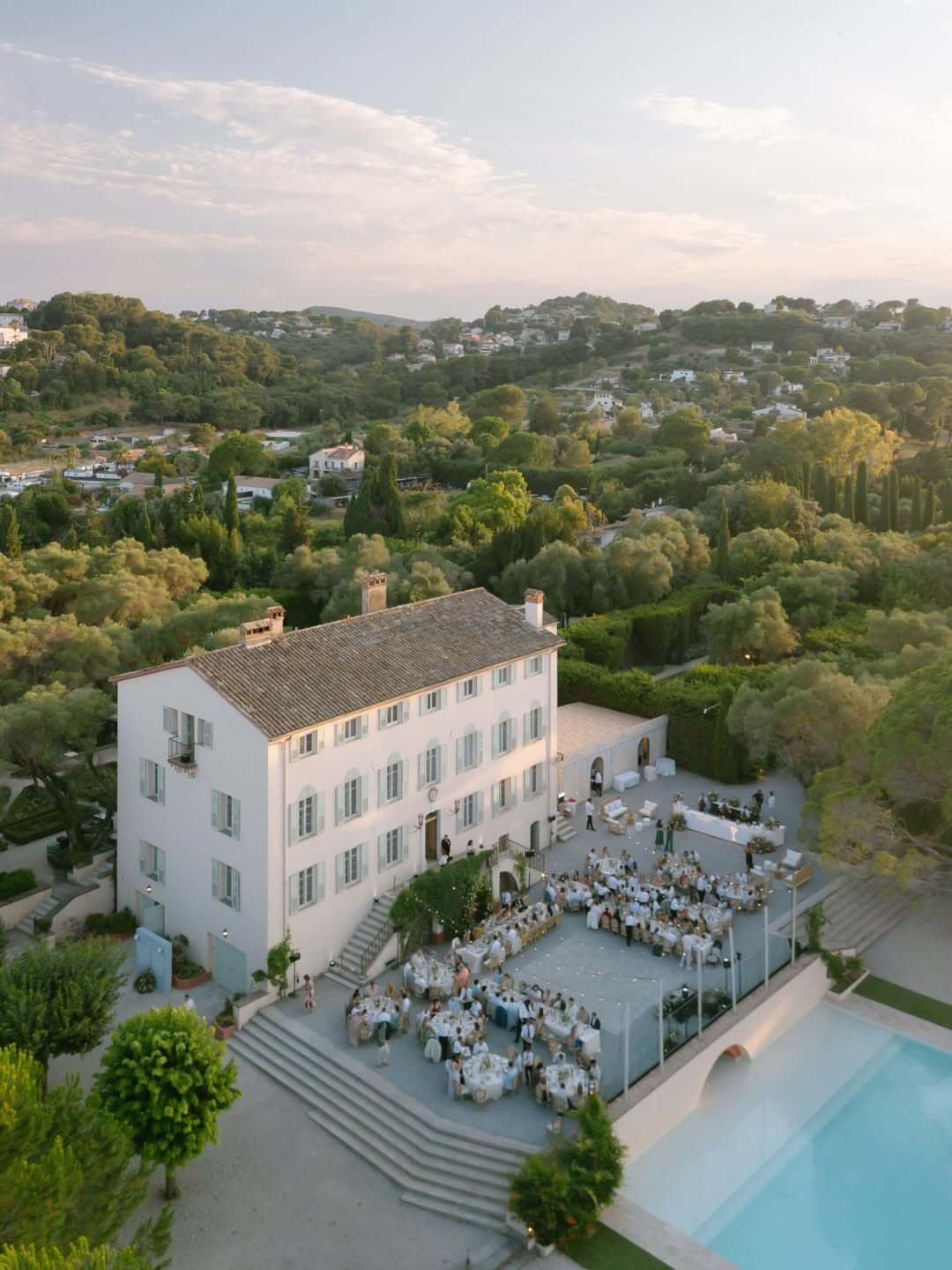
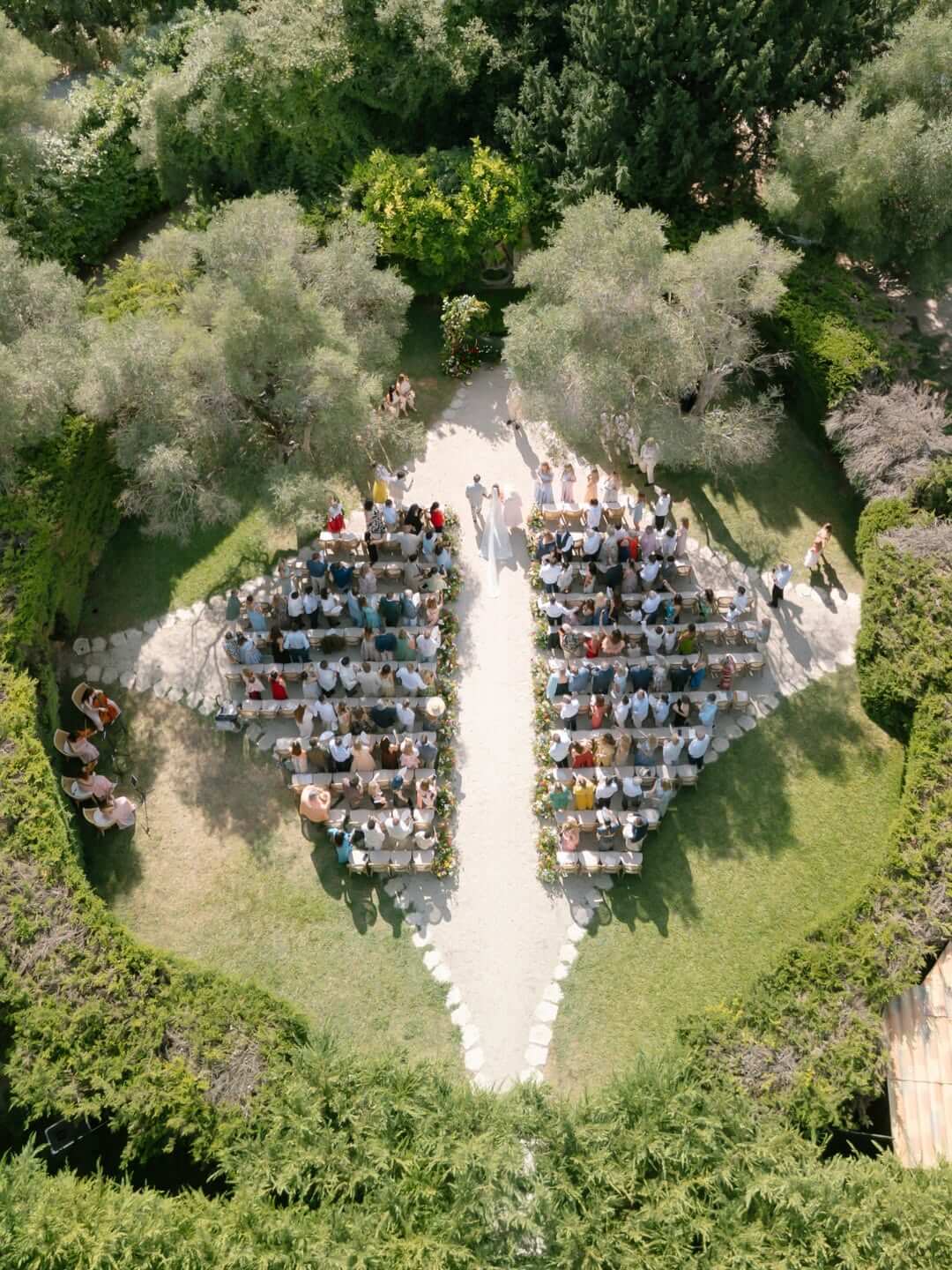
Henri IV received the seven-hectare estate as a wedding present in 1608, which means the Bastide du Roy is now about four centuries into a tradition it still actively carries on. Surrounded by exactly 365 olive trees - one for each day of the year - the property sits in the hills above Antibes and has housed notable figures, including Jeanne Lanvin and Mick Jagger, since the Gismondi family acquired it as antique dealers with an appreciation for art. Across the same seven hectares, couples have several settings to choose from, including the Jardin à l’Espagnole, the Jardin Français, and a real garden labyrinth; and instead of having dinner and dancing inside the château, they can use a fully stylable outdoor tented area.
A few practical details shift the experience meaningfully once a couple actually starts planning a wedding here, and they’re worth weighing before falling for the olive groves alone:
- Capacity reaches up to 280 guests for a seated reception across multiple garden spaces
- Accommodation covers five air-conditioned bedrooms on-site, enough for the couple and close family rather than the full guest list
- Historic protection as a Bâtiment de France since 1990 means the estate’s original stonework and layout stay untouched by modern renovation
- Catering runs through a recommended supplier list rather than fully in-house, worth confirming early in the planning process
The semi-Olympic pool set among the olive trees and a real garden labyrinth give the estate a sense of play that its royal origins never fully let go of. Kings, counts, and Jeanne Lanvin herself walked those same paths long before any wedding planner set foot on the premises, and that history is gently present in each photograph taken at the site. The place doesn't appear to be putting on a show, which is precisely how four hundred years of continuous ownership looks when it is genuine.
Château de la Napoule
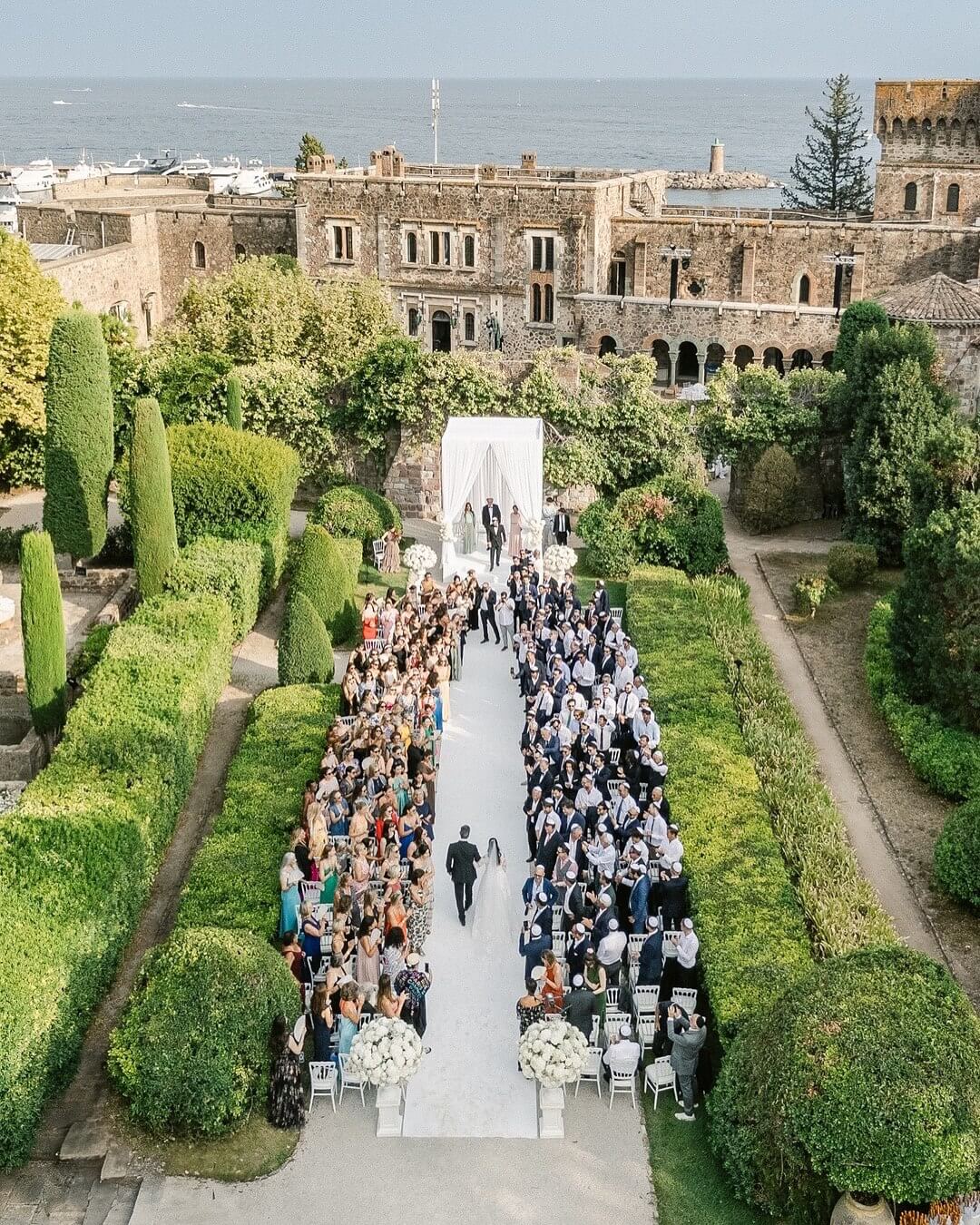
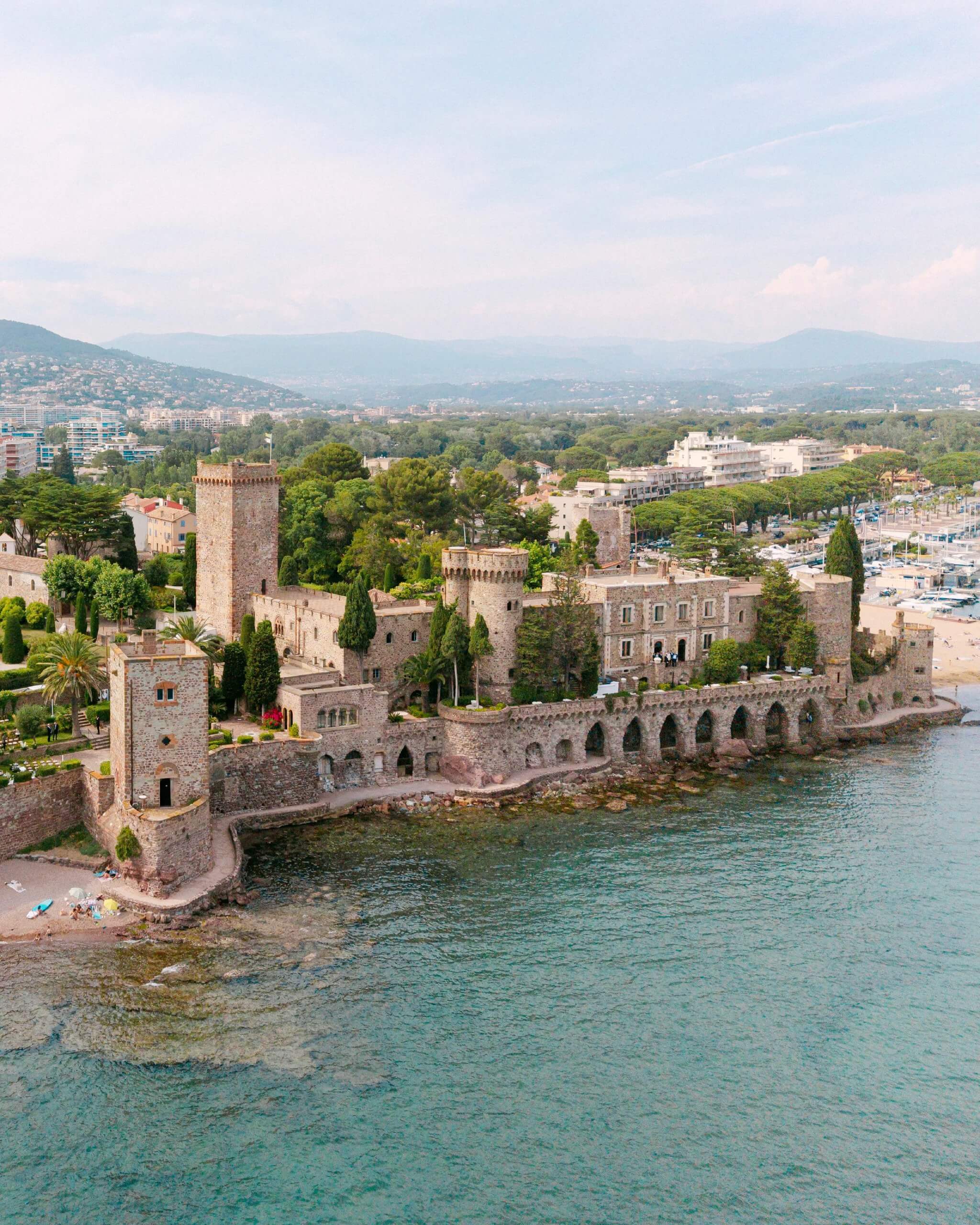
In 1918, American artists Henry and Marie Clews purchased the Château de la Napoule, a seaside fortress dating from the 14th century, and for many years transformed it more in the way of a personal fantasy than through a traditional restoration, incorporating sculpted capitals, neo-medieval towers and gardens which the French Ministry of Culture currently regards as some of the most remarkable. The ramparts surround the whole property and keep out the noise of the outside world while opening directly onto the Bay of Cannes; furthermore, the foundation of the estate, which is managed by Marie Clews following her husband's death, still runs it as a cultural center today. Both Winston Churchill and the composer Delius visited these rooms at one time, a quirky fact which only reinforces the impression that the château is more the product of art than of any particular period.
| Space | Capacity | Setting |
|---|---|---|
| Grand Walkway | Up to 350 (ceremony) | Outdoor |
| Cour d’Honneur | Up to 800 (with tent) | Outdoor courtyard |
| Spencer Gallery | Up to 150 (seated) | Indoor, former ballroom |
| Gothic Dining Room | Up to 95 (seated) | Indoor, stained-glass windows |
| Lovers’ Garden | Up to 200 (ceremony) | Outdoor |
Weddings here scale from as few as 20 guests to as many as 800 under a tent in the Cour d'Honneur, and the château has a music curfew of 3 a.m. indoors and midnight outdoors, allowing couples to have a proper late night without facing the sudden end times some seaside venues impose. Among theFrench Riviera wedding venues that couples interested in medieval-style architecture tend to choose, this one is special because its entire history has been shaped by two individuals rather than centuries of institutional ownership. In fact, the stone sculptures scattered around the property still show Henry Clews' own work, so visitors are quite literally walking through a love letter he wrote over decades to this coast.
Domaine du Mont Leuze
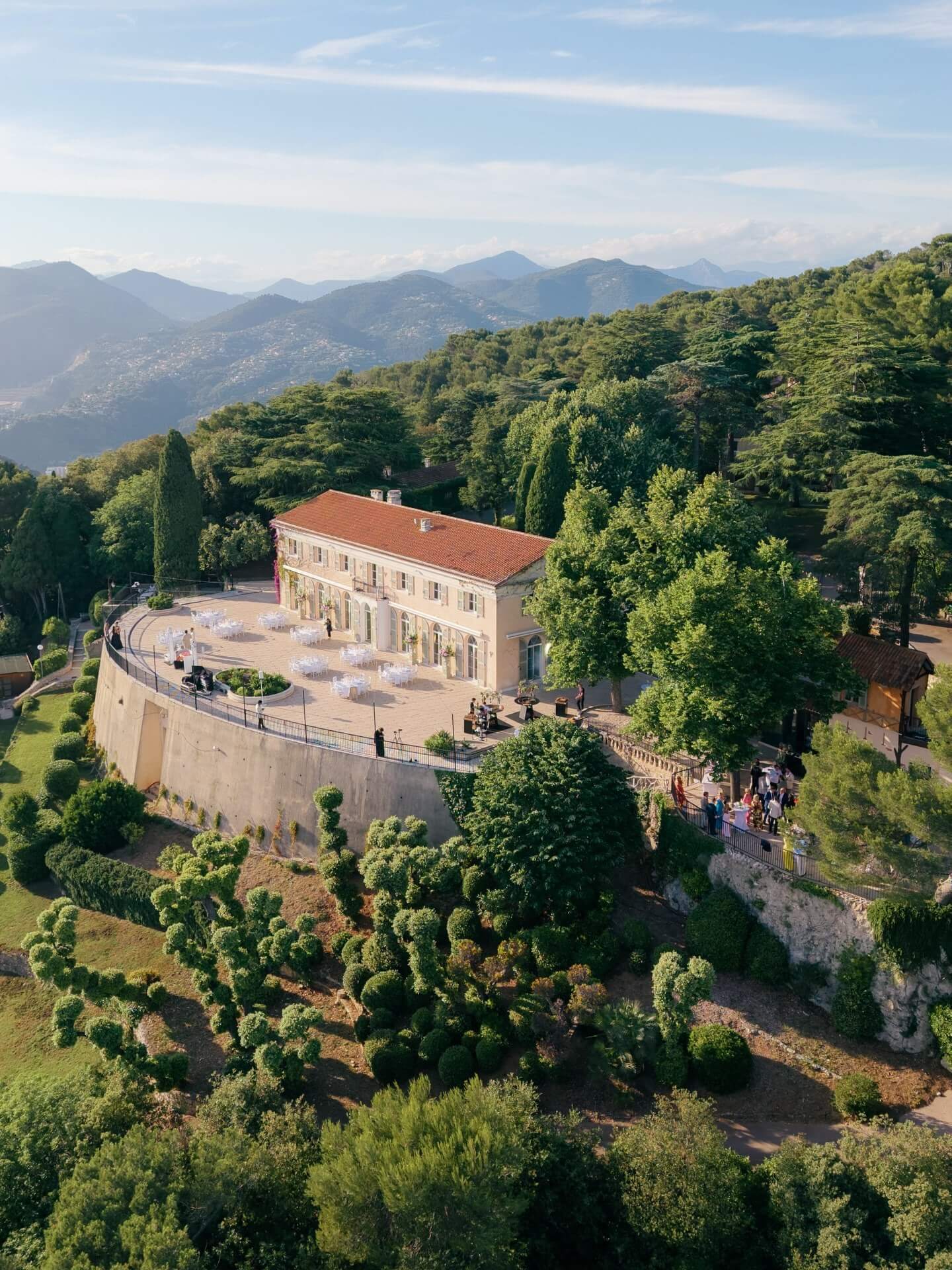
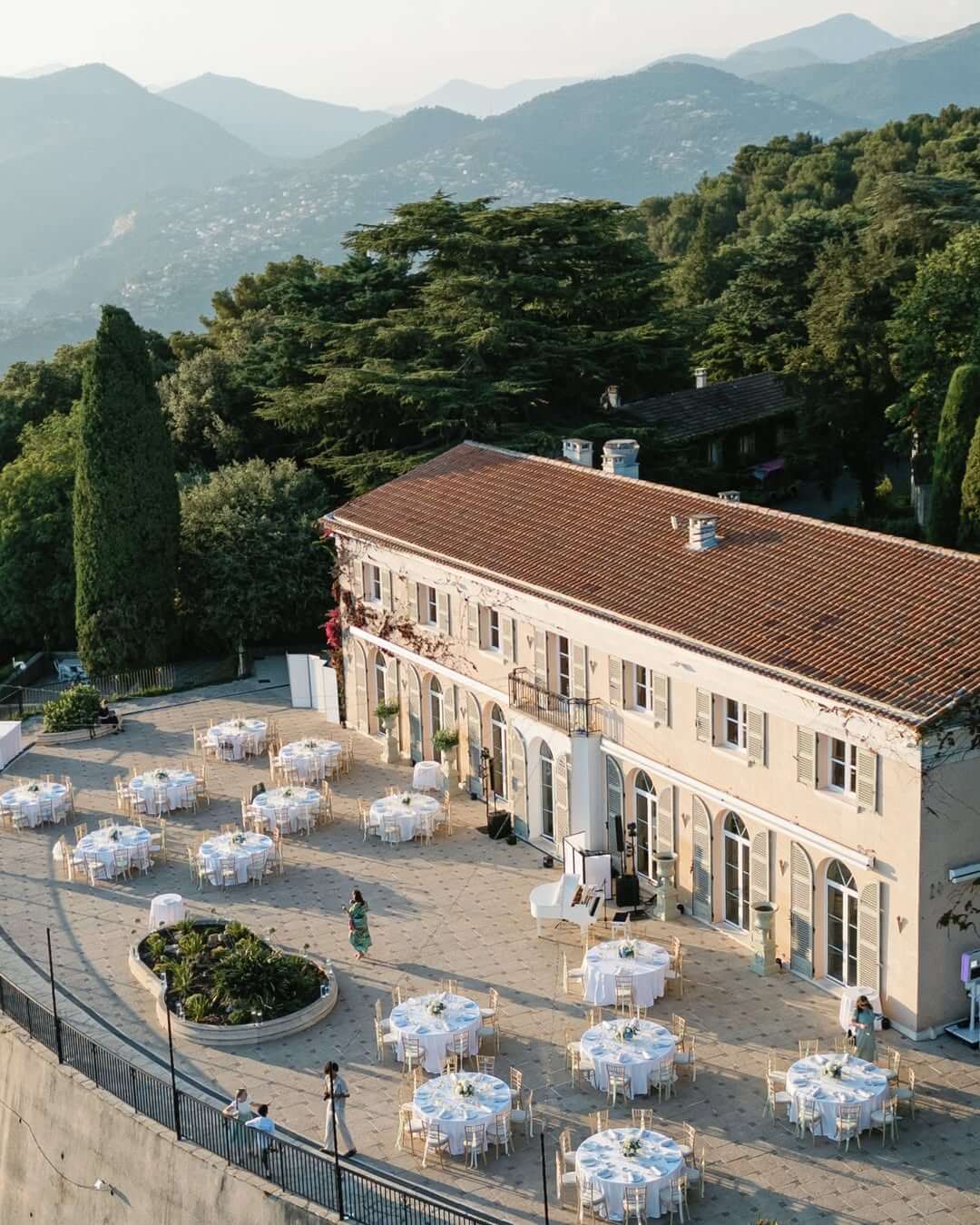
From six hundred meters above Villefranche-sur-Mer, Domaine du Mont Leuze offers a view superior to any other property on this list, with Nice on one side and Cap-Ferrat on the other, the Mediterranean stretching between them. The estate's Provençal-style buildings sit across thirteen protected hectares, and the 600-square-meter terrace, known as Le Toit du Monde, can host up to 280 people for dinner or 500 for a standing reception. The property has a helipad, a feature that may seem excessive until a couple needs to get guests up the mountain efficiently for an evening event.
Within the château, the ground floor and the first floor function as two completely separate event venues, the ground floor being able to accommodate up to 250 guests for a cocktail reception or 160 for a seated dinner, while the first floor goes down to a more intimate capacity of 150 for a cocktail reception or 80 for a seated event. This layered arrangement provides couples with real flexibility so that they can spread their wedding weekend over several areas, have an engagement dinner on the first floor and hold the main reception on the terrace, all without having to leave the property. The Provençal architecture also links all the rooms together visually, so whatever combination of rooms the couple chooses, nothing looks added on or out of place.
The property can accommodate 501 guests, an unusually high ceiling for a hillside estate this size, with three villas and 38 additional suites available on-site. Couples looking for real altitude, a view that makes their ceremony feel like it is taking place above the rest of the coastline rather than on it, often rate this as one of the Riviera's most impressive locations. At sunset, the area achieves something the coastline itself seldom does: turning both the sky and the sea the same color of gold at the same time, with nothing below to break up the view.
Castel Bay
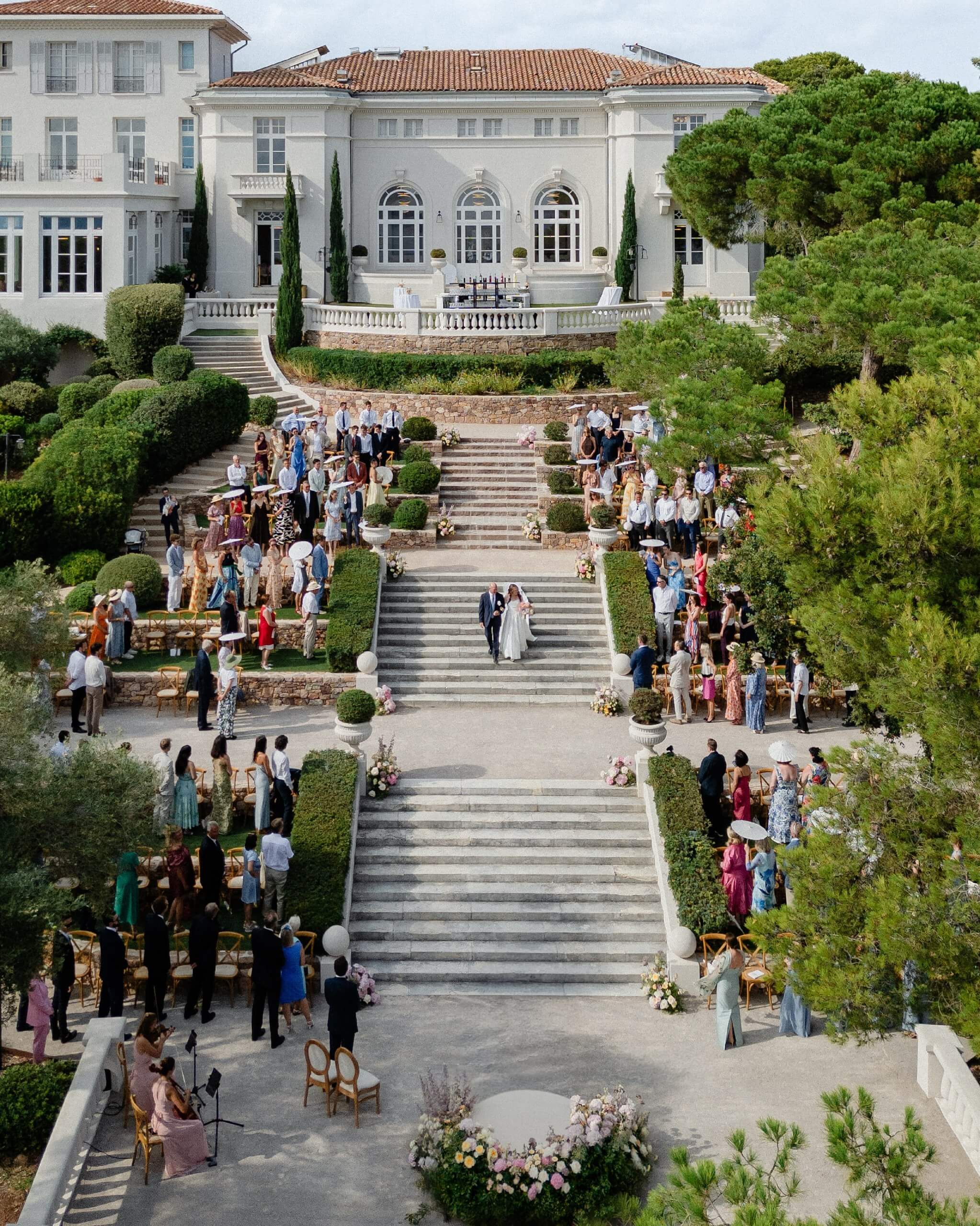
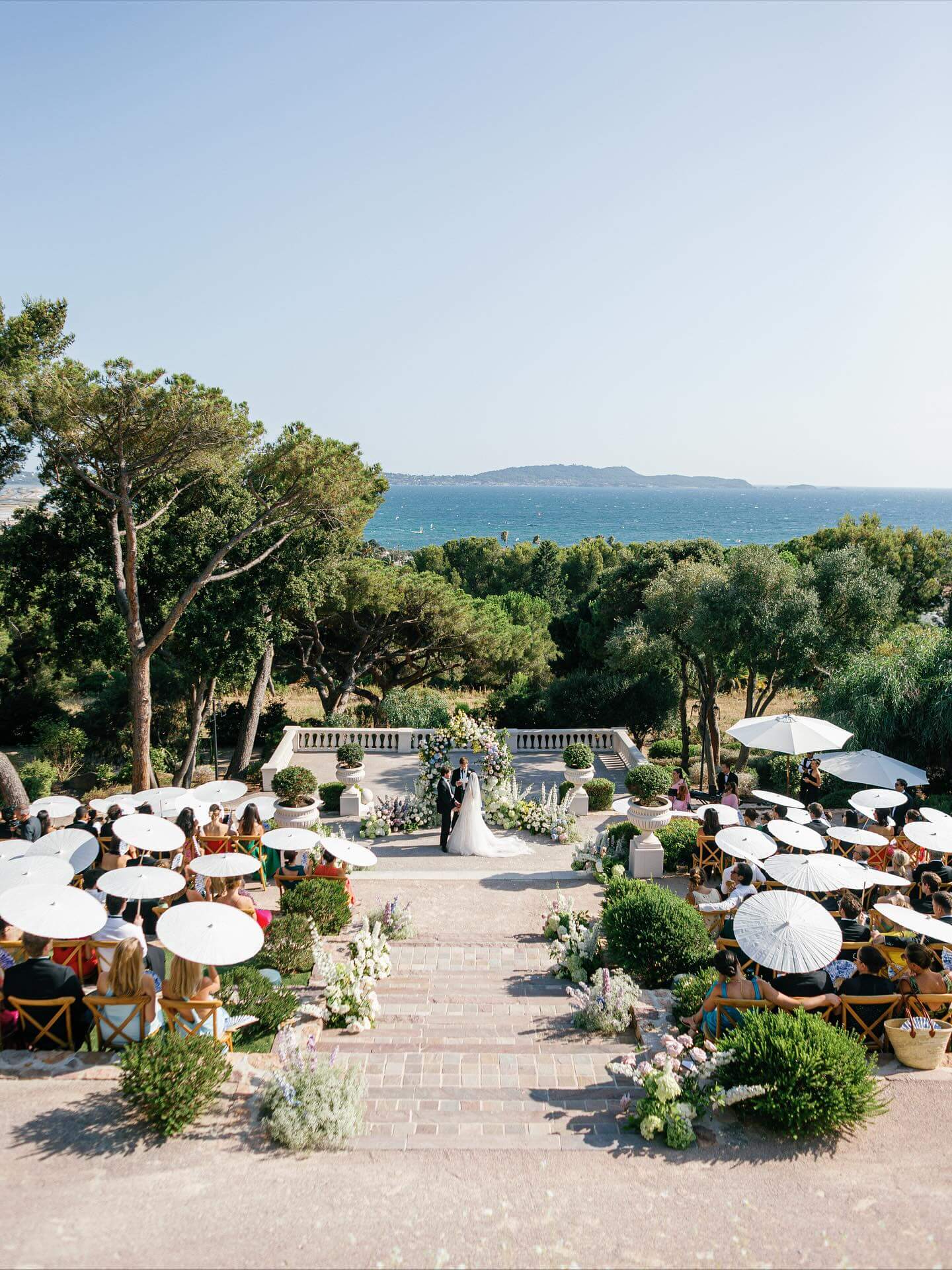
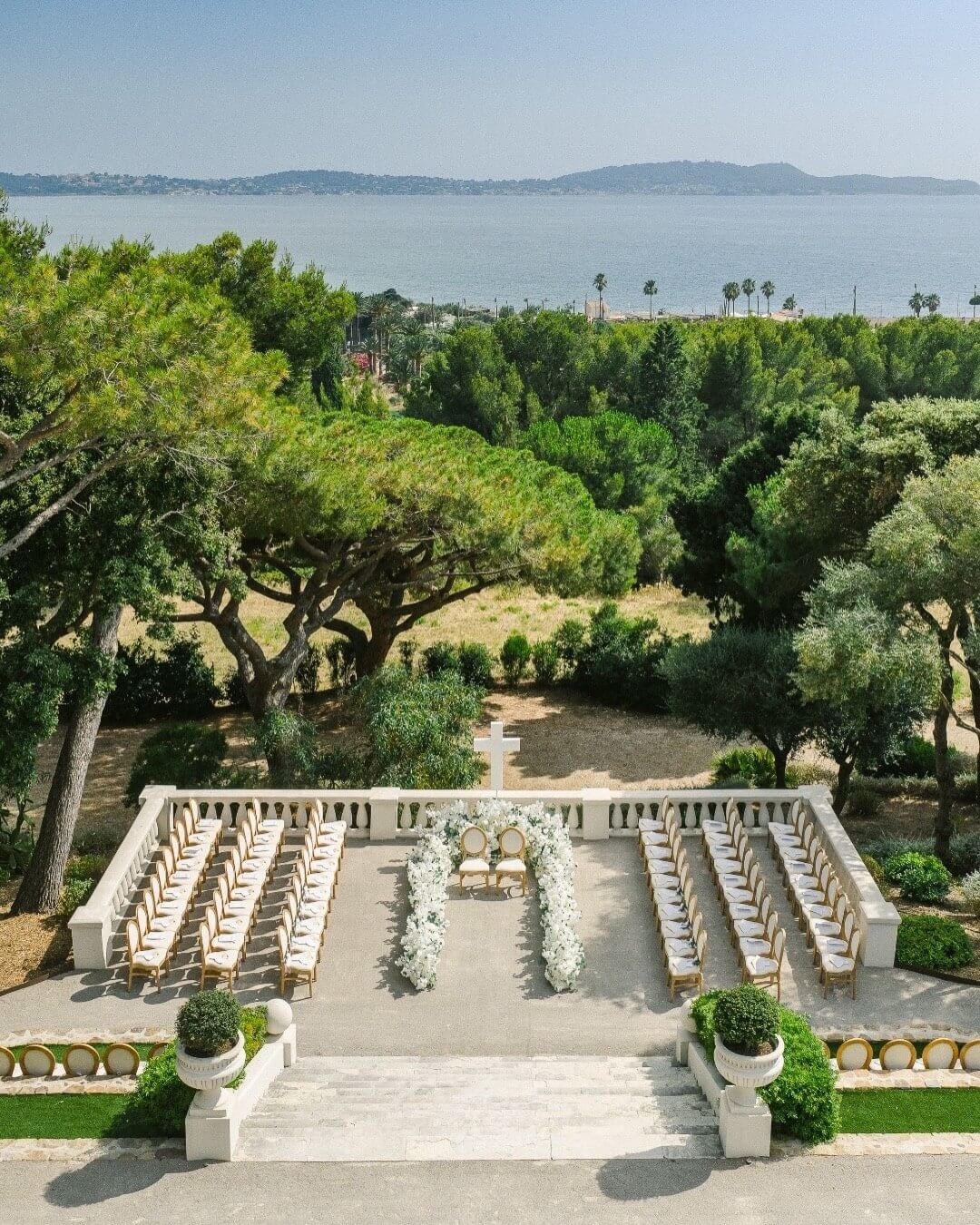
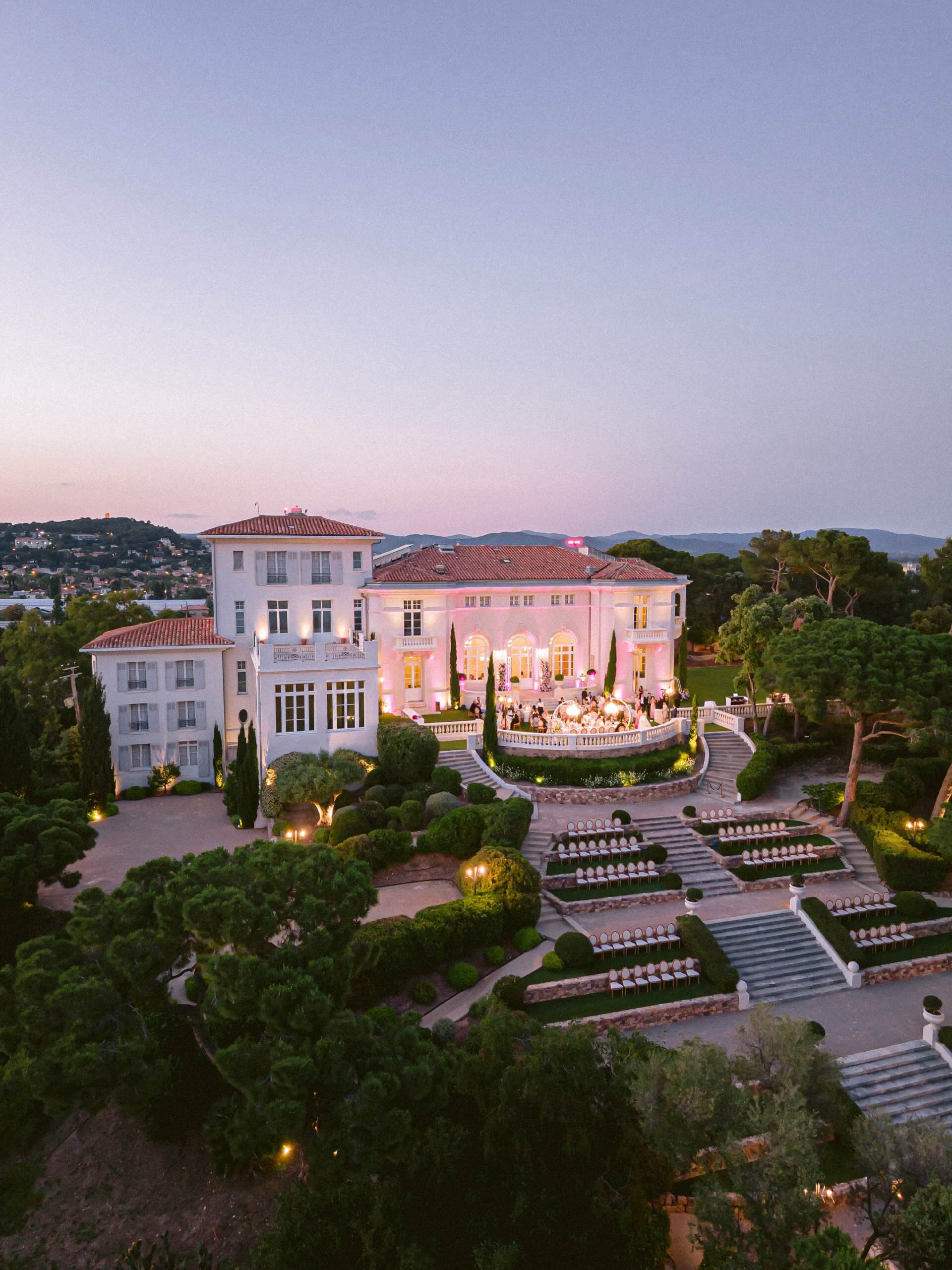
In the early 1900s, an Austrian baron built Castel Bay as a Belle Époque summer house; later, the high-end fashion house Paquin bought it and added the Art Deco staircase, which remains the property's standout interior feature today. Located in a three-hectare park in Hyères with unobstructed views of the Baie de l’Almanarre and the Giens peninsula, Castel Bay closed in 2009 and remained empty for about ten years before a complete renovation enabled it to function again as a reception venue in June 2021. This period of inactivity is rare among Riviera mansions, as the property has facilities that have been fully modernized while retaining a century's worth of historical character.
Ceremonies usually take place in a natural, open-air amphitheater with sea views, which can accommodate up to 300 guests, while the interior salons can hold 212 people for a seated dinner with a dance floor if the weather is bad. The entire estate is booked from 9 a.m. to 3 a.m., and with a private parking area providing 82 spaces, one of the more frequent problems at coastal venues, guest parking, is eliminated, since at such venues parking often requires a shuttle to some point down the road. The Art Deco staircase left over from Haute Couture Paquin is still a feature of the interior, a surprising touch for a venue so near the water.
Grand-Hôtel du Cap-Ferrat, A Four Seasons Hotel
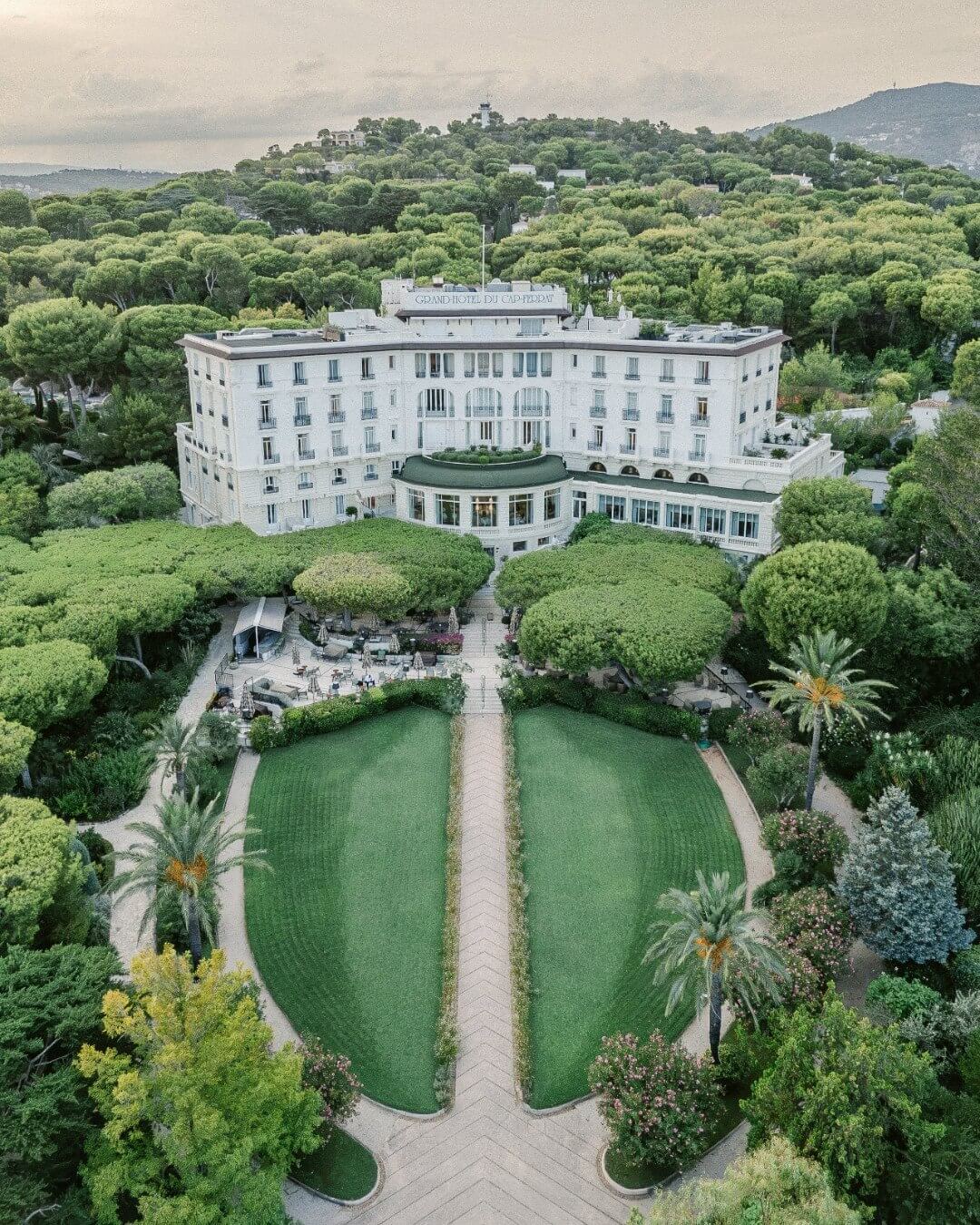
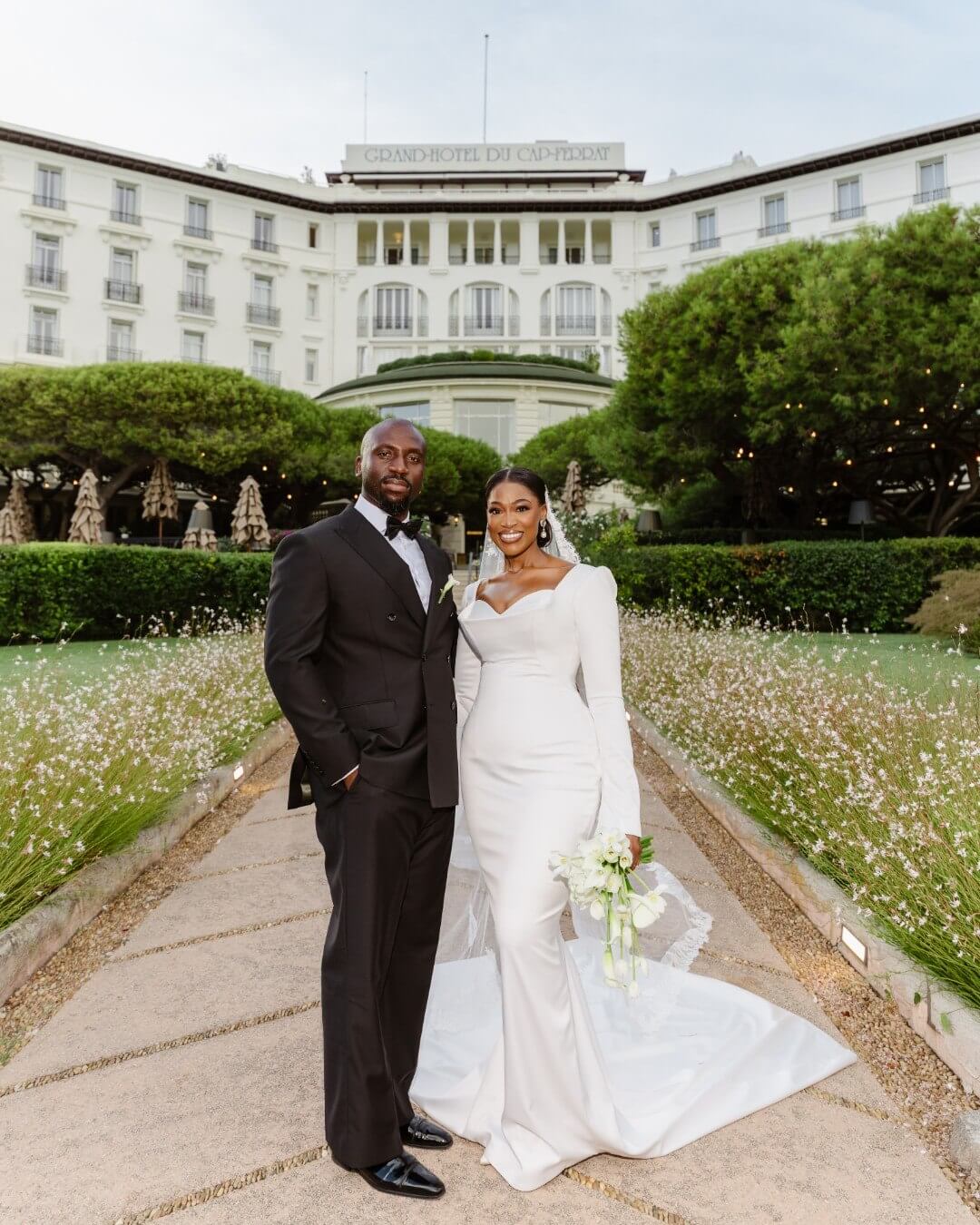
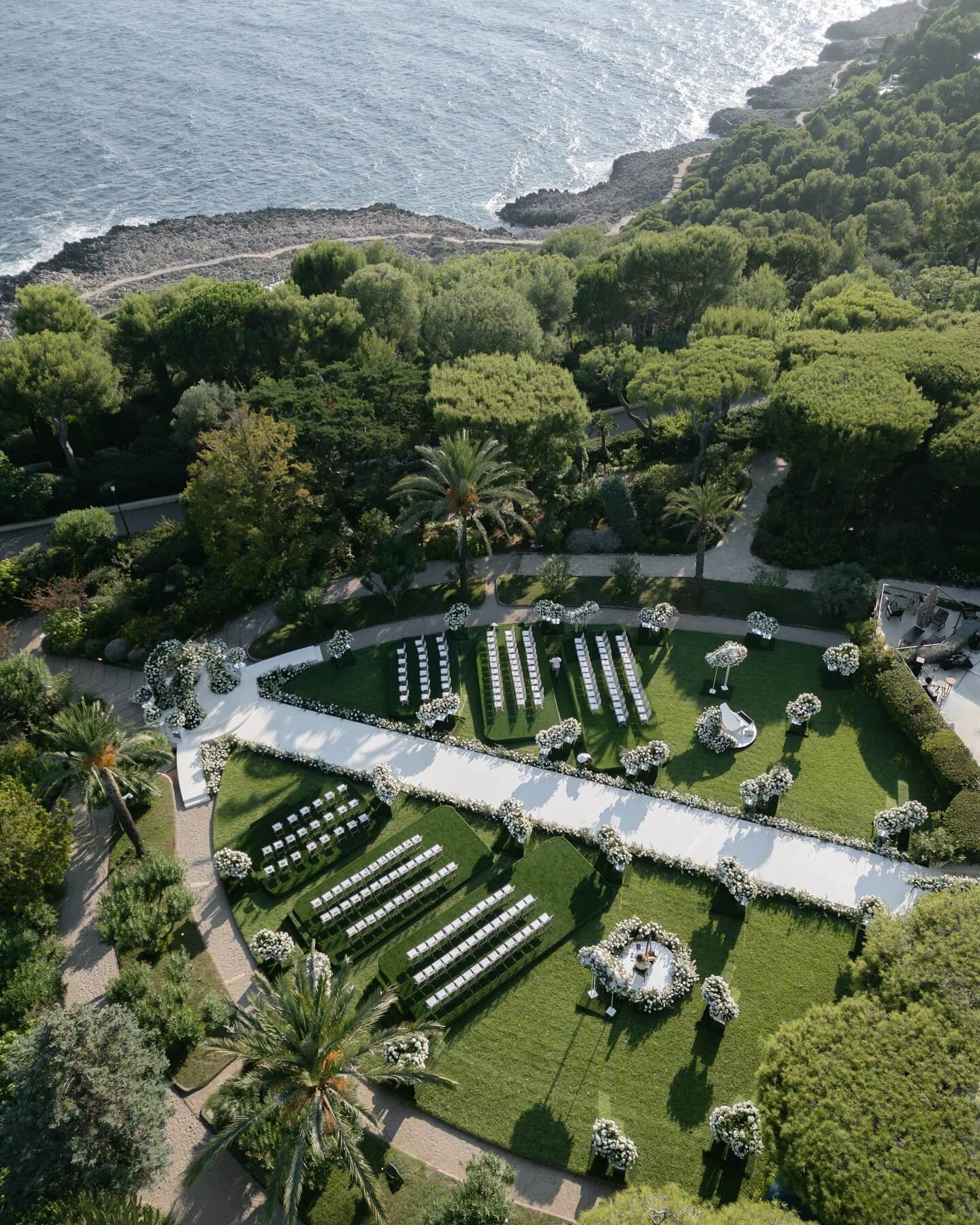
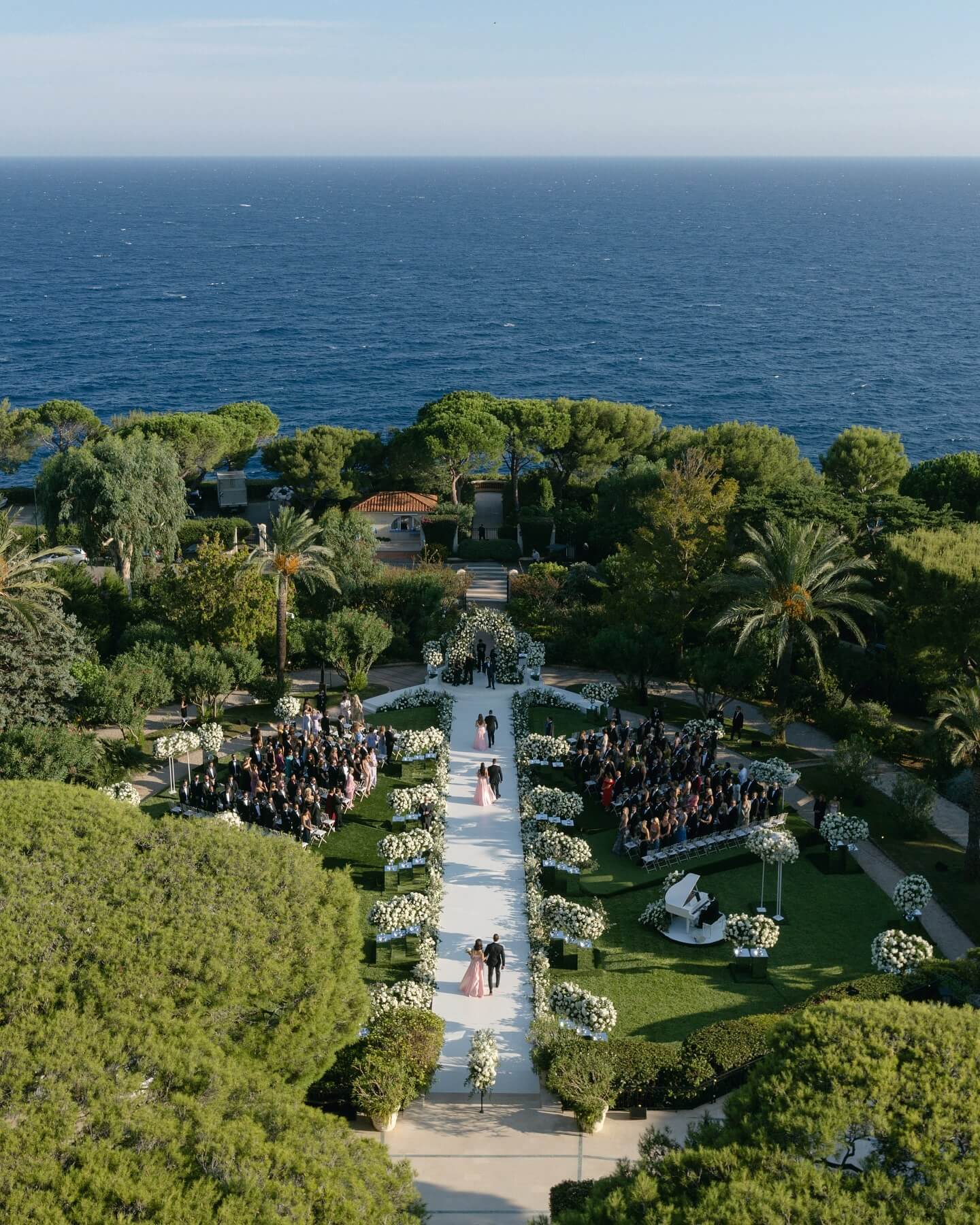
The Grand-Hôtel du Cap-Ferrat, a hotel belonging to Four Seasons, was opened in 1908 at the end of the Cap-Ferrat peninsula and has, over the course of a century, become one of the most elegantly styled hotels on the Riviera, with seventeen acres of well-tended gardens and pine woods surrounding a Belle Époque palace which has been a favorite with royalty and celebrities for many generations. The Club Dauphin, the hotel's covered poolside setting, can accommodate up to 100 guests for a formal seated dinner before its infinity-pool terrace turns into an open-air dance floor with views over the sea, and the hotel as a whole can cater for anywhere from about 30 to 200 guests depending on the combination of spaces employed. Somerset Maugham once described this particular section of coastline as a sunny place for shady people, and the hotel has continued to embrace that same glamorous atmosphere since then.
The hotel has 74 rooms and suites, plus a private four-bedroom villa with its own pool and tennis court, so it can host an intimate group of guests on the premises while also accommodating additional families in the villa on their own. Michelin-starred dining is available for the whole event, and since it is only a thirty-minute drive from both Nice and Monaco, the property remains surprisingly central despite its secluded atmosphere. It suits couples who want to experience traditional Riviera glamour with all the facilities of a hotel behind it, since the rooms, kitchen, and serving staff are set up for large-scale use rather than assembled for a single night.
Château de la Messardière
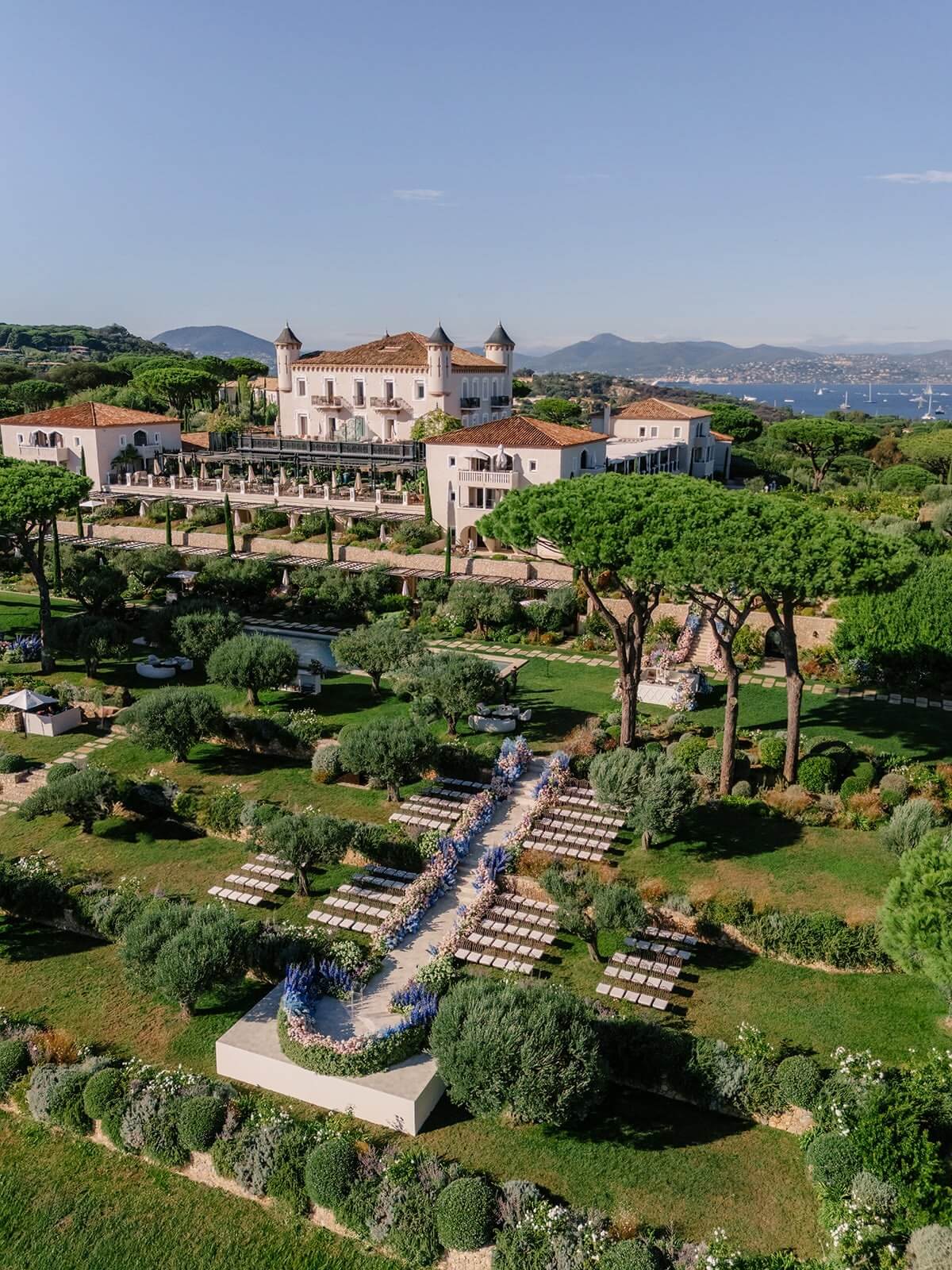
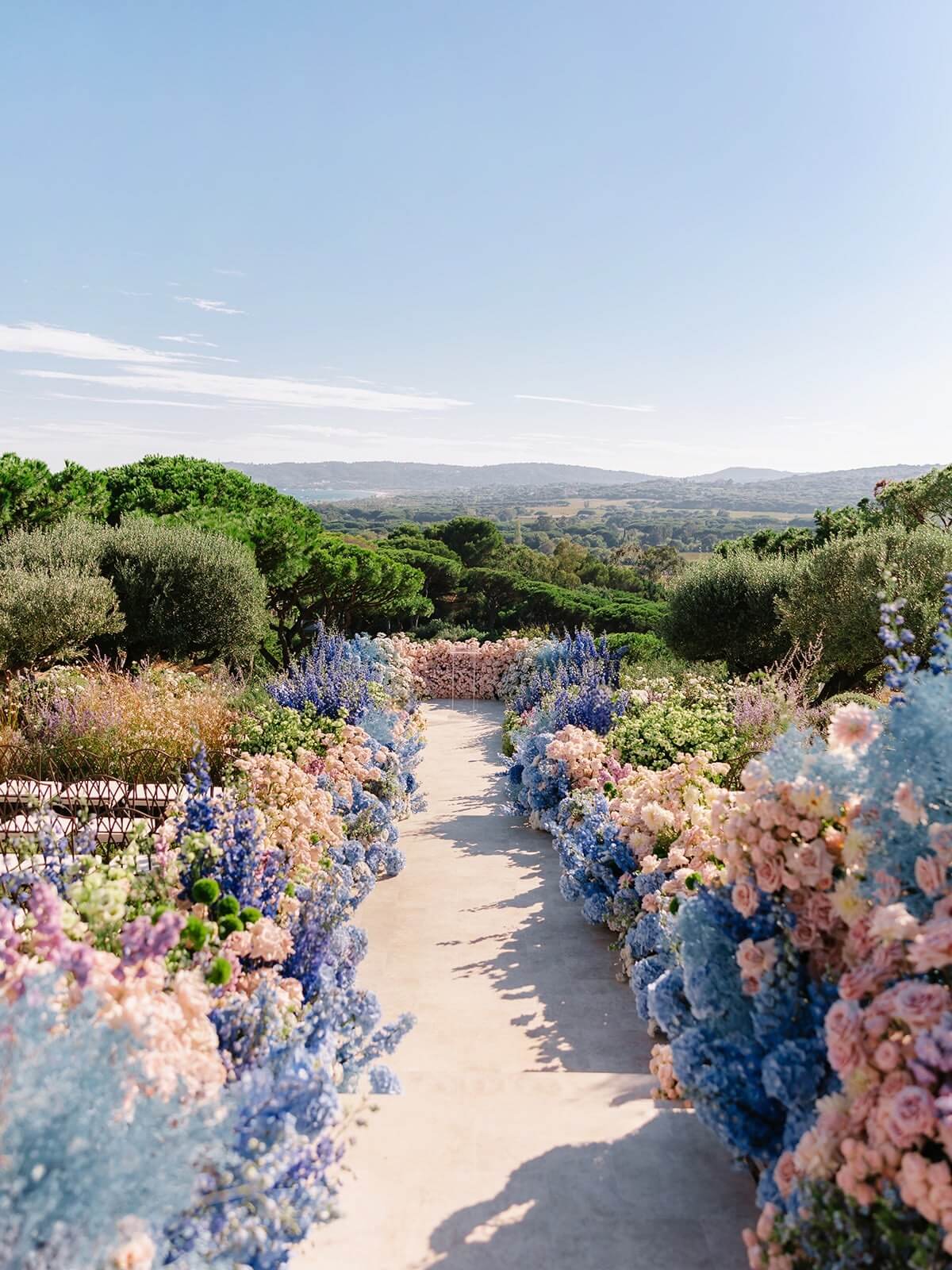
In the 19th century, a cavalry officer built Château de la Messardière above Saint-Tropez as a wedding present for his wife, and, for more than a hundred years, continuous hospitality has preserved that romantic backstory. The château is now run as an Airelles hotel and offers extensive views over the Mediterranean and the vineyards of Ramatuelle, along with twelve event spaces spread across its private beach club, several restaurants, and grounds, shaded by tall pines and olive groves. It remains the largest hotel in Saint-Tropez, with capacity estimated at about 150 to 250 guests, depending on the source and setup; seated dinner parties generally fall at the lower end of that range, while standing cocktail receptions are closer to the higher end.
Since the only venue on this list is located within Saint-Tropez itself, the Messardière gives couples direct access to the town's reputation, restaurants, nightlife, and beach clubs, eliminating the need for a separate transfer to experience any of these. This closeness completely alters the character of a wedding weekend, because guests can go into the town between events rather than being confined to a single estate for three consecutive days, and they can walk over to Place des Lices for coffee the morning after. However, a few points are worth considering before booking a wedding at this venue:
- Location advantage puts guests within easy reach of Saint-Tropez’s town center, unlike most estates on this list that sit deliberately isolated
- Room count across 117 guest rooms and suites means a large guest list can stay on-site without needing outside accommodation
- Beach access through the property’s private beach club adds a fully separate event space beyond the château grounds themselves
- Seasonality runs heaviest May through August, and Saint-Tropez’s broader tourist season can affect availability beyond the venue itself
Among small wedding venues in the French Riviera, couples researching Saint-Tropez specifically tend to overlook this option in favor of villas outside town, but the château’s scale and full hotel infrastructure make it a legitimately strong anchor for a multi-day celebration that wants the town’s energy within easy reach. It’s a rare combination on this coastline, real town energy paired with the kind of hotel infrastructure that makes a large wedding actually manageable. Most estates ask guests to choose between seclusion and nightlife, and this is one of the few places on the whole Riviera that never forces that decision.
Le Park Mougins
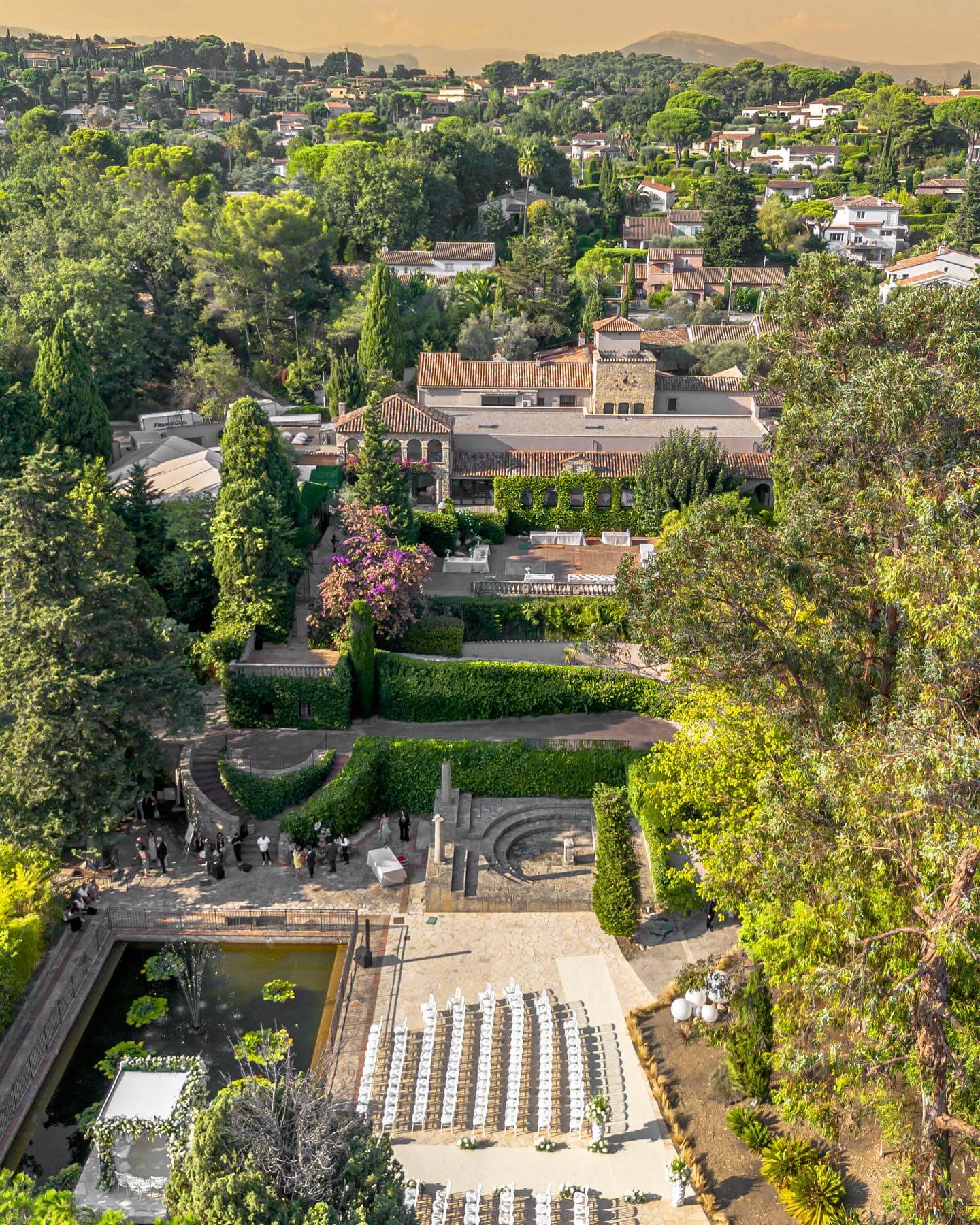
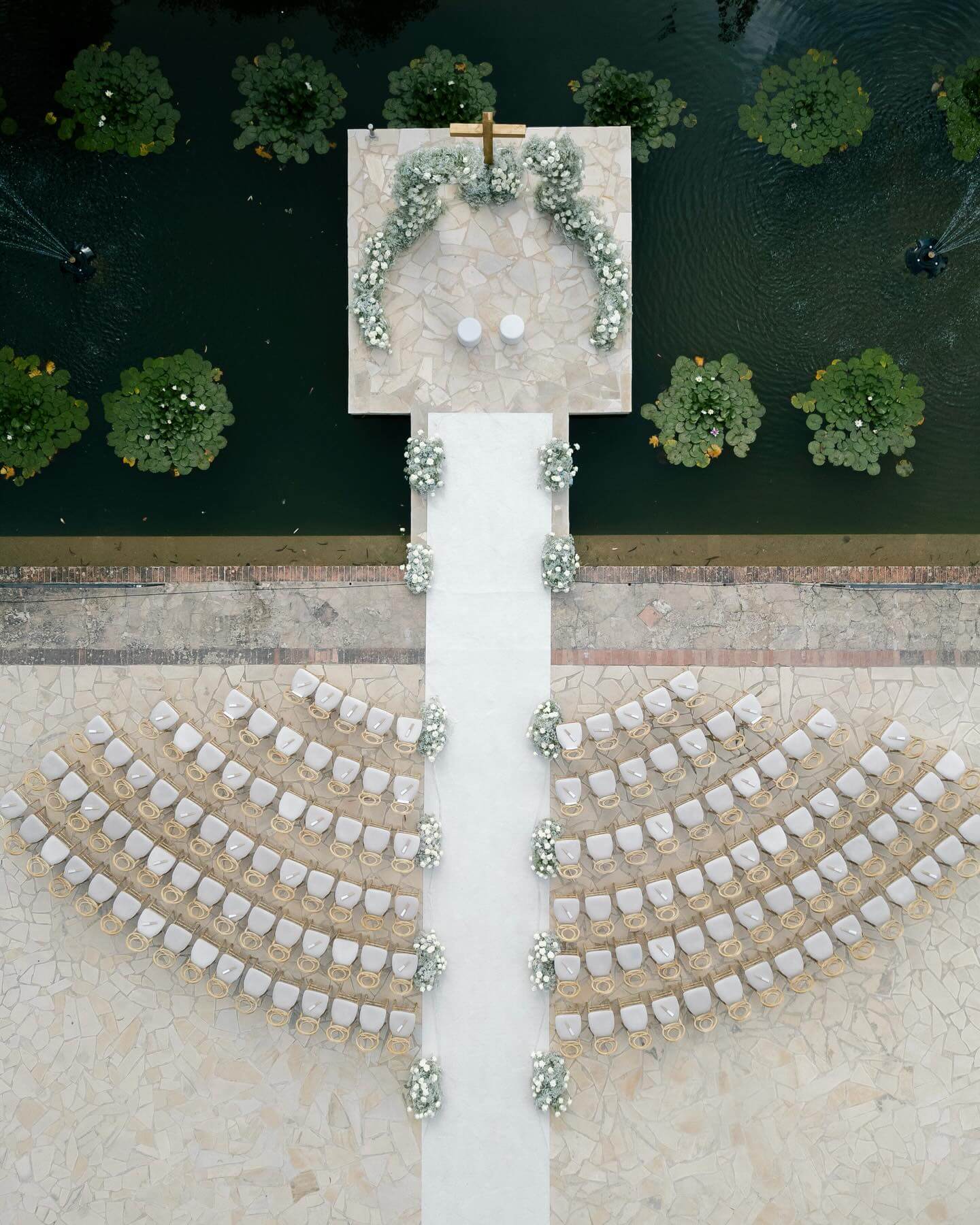
Le Park Mougins, which was constructed in 1815 in the hilltop village of Mougins, a place that is now more famous for its association with Picasso and its high-quality French cuisine, has had an unusually diverse range of guests over the course of its two centuries, having been linked with friends of Charlie Chaplin in the 1920s, owned by the football star Patrick Vieira, and currently run by the catering company Maison Lenôtre. The Salon Riviera has a capacity of 250 people indoors over 320 square meters, and the surrounding 18,000 square meters of landscaped gardens, terraces, and reflecting pool can accommodate up to 1,200 for an outdoor cocktail reception. Exclusive full hire means only one event can take place at a time, with no exceptions, and the music ends at 2 a.m., later than at many similar estates in the area.
The property is only a ten-minute drive from Nice Airport and a short distance from Cannes too, so that couples can enjoy genuine village character without giving up convenient access for international visitors. Among the wedding venues in the French Riviera area where gardens are more notable than architecture, this one particularly makes use of its reflecting pool and candle-lit terraces shaded by century-old olive trees, a setting that is more focused on the atmosphere in the evening than on daytime splendor. Since Picasso spent his last years in this village just down the road, a touch of that calm, sun-warmed creative spirit still lingers in the property's gardens.
Ten venues, ten completely different arguments for what a Riviera wedding should actually feel like: a fortress built by two eccentric American artists, a mountaintop estate with a helipad, and a 1608 royal gift still standing among 365 olive trees. The factor that brings nearly all of these venues together is flexibility with regard to scale, since a ceremony intended for 40 guests one season can be expanded to 800 the following season, and the decision between the venues usually turns on whether the couple wishes the coastline itself to be the main feature or alternatively has a village, a peninsula, or a private cove take on that role. Nevertheless, none of this flexibility addresses the harder problem beneath it: organizing a wedding on the coast, where the most desirable venues book up a year in advance, the top caterers speak French first, and half the important logistical arrangements never appear on websites.
Wezoree’s directory of wedding planners in France spans professionals who are familiar with this particular stretch of coastline, knowing which estates offer what and which ones take better photographs than they do in terms of performance – this kind of practical knowledge is what transforms a shortlist such as this into a perfectly carried out wedding day. Having already guided dozens of couples through these same gardens, they know which terrace gets the light at seven in the evening and which one doesn't, and that is exactly what sets booking a beautiful venue apart from actually having a wedding that lives up to the promise it made.

FAQ
What are the best wedding venues on the French Riviera?
Venues like Hôtel du Cap-Eden-Roc in Antibes and Villa Ephrussi de Rothschild in Saint-Jean-Cap-Ferrat consistently rank among the French Riviera wedding venues couples research most, each offering a genuinely distinct setting, clifftop, garden estate, or historic fortress, rather than a generic ballroom experience. What separates the strongest properties from the rest is how directly the landscape becomes part of the ceremony, not simply a backdrop for photos taken afterward.
Are French Riviera south of France wedding venues more expensive than elsewhere in the country?
Generally yes, particularly for properties directly on the coast or with iconic status like Hôtel du Cap-Eden-Roc, where full-weekend costs can run well into six figures. That said, this wedding venue's list spans a wide range, from Château de la Napoule starting around €11,500 to premium coastal estates starting well above €60,000, so budget flexibility does exist across the region.
How far in advance should couples book a wedding venue in the French Riviera?
For the most in-demand properties, particularly for June and September dates, booking twelve to eighteen months ahead is realistic, and some venues on this list, like Hôtel du Cap-Eden-Roc, accept only a limited number of private events each season. Flexibility on exact dates, even shifting by a week or two, can open up options that otherwise look fully booked for peak season.
Are there small wedding venues on the French Riviera for intimate ceremonies?
Yes, several properties on this list scale down comfortably without feeling underused; Château de la Messardière and the Champagne Lounge at Hôtel du Cap-Eden-Roc both suit guest counts well under 100. Larger estates like Château de la Napoule and Domaine du Mont Leuze also offer smaller interior spaces that work for an intimate gathering just as their full-scale outdoor capacity suggests.
What’s the difference between a French Riviera wedding venue and a general Provence venue?
French Riviera wedding venue properties tend to sit directly on or very near the coastline, built around sea views, cliffside settings, or peninsula locations, while broader Provence venues often center on inland vineyards, lavender fields, and countryside estates farther from the water. Neither region is objectively superior; the choice usually comes down to whether a couple wants the Mediterranean itself as a visible, constant presence throughout the day.
Do French Riviera wedding venues typically require a minimum guest count or multi-night stay?
It varies considerably by property; some venues, particularly full-estate buyouts like Domaine Rocabella or Hôtel du Cap-Eden-Roc, require minimum-night accommodation commitments, while others operate as single-day, single-event hires with no such requirement. Confirming these terms early in the planning process is worth doing, since a minimum-stay requirement can meaningfully affect the total budget beyond the venue fee itself.