The Ultimate Guide to Planning a Tulum Wedding


- Tulum Wedding: Why is This a Great Destination?
- When to Plan a Wedding in Tulum?
- Legal Requirements for Getting Married in Tulum
- Tulum Wedding Venue Types
- Find Your Vendor Team for a Wedding in Tulum
- Realistic Budget Breakdown for Wedding in Tulum
- Dress Code and Colour Palette for Your Tulum Wedding
- The Wedding Menu
- A Simple Guest Guide
- Local Destination Details About Tulum Wedding
- FAQ: Wedding in Tulum
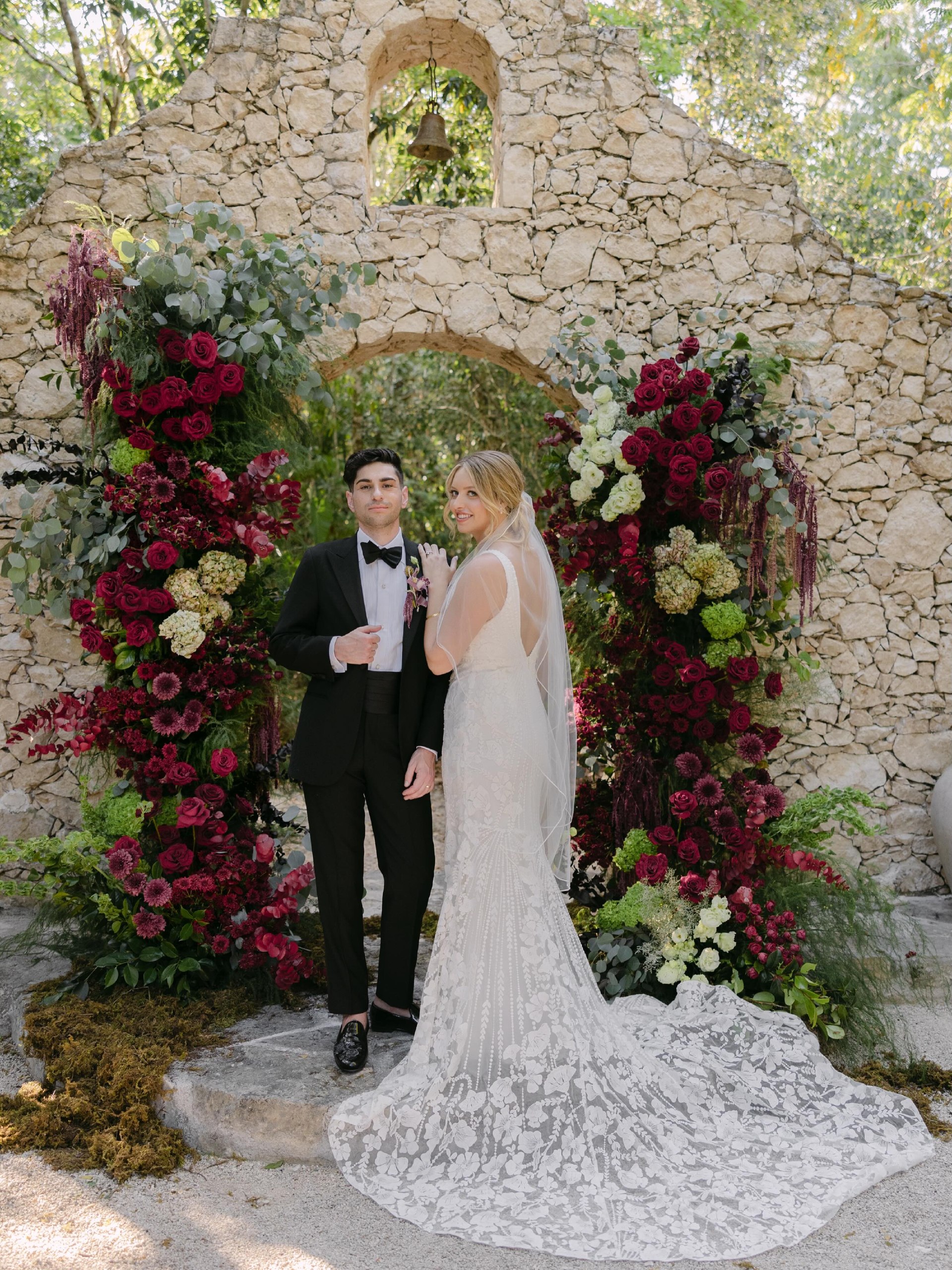
A Tulum wedding occupies a unique position in the destination wedding landscape, one that no other Mexican location can quite match. The combination of Mayan ruins on a Caribbean clifftop, jungle swimming holes known as cenotes, a design culture that has produced some of the world's most photographed boutique properties, and a food scene to rival any major city - all within two hours of one of the hemisphere's best-connected airports - makes Tulum a genuinely compelling choice.
This guide is intended to help couples understand what a Tulum destination wedding actually involves, including the real budget, logistical specifics, vendor ecosystem and decisions that determine whether the event will feel uniquely Tulum-esque or like an aesthetically generic bohemian wedding that happened to take place in the jungle.
Find Your Perfect Wedding Vendors


Tulum Wedding: Why is This a Great Destination?
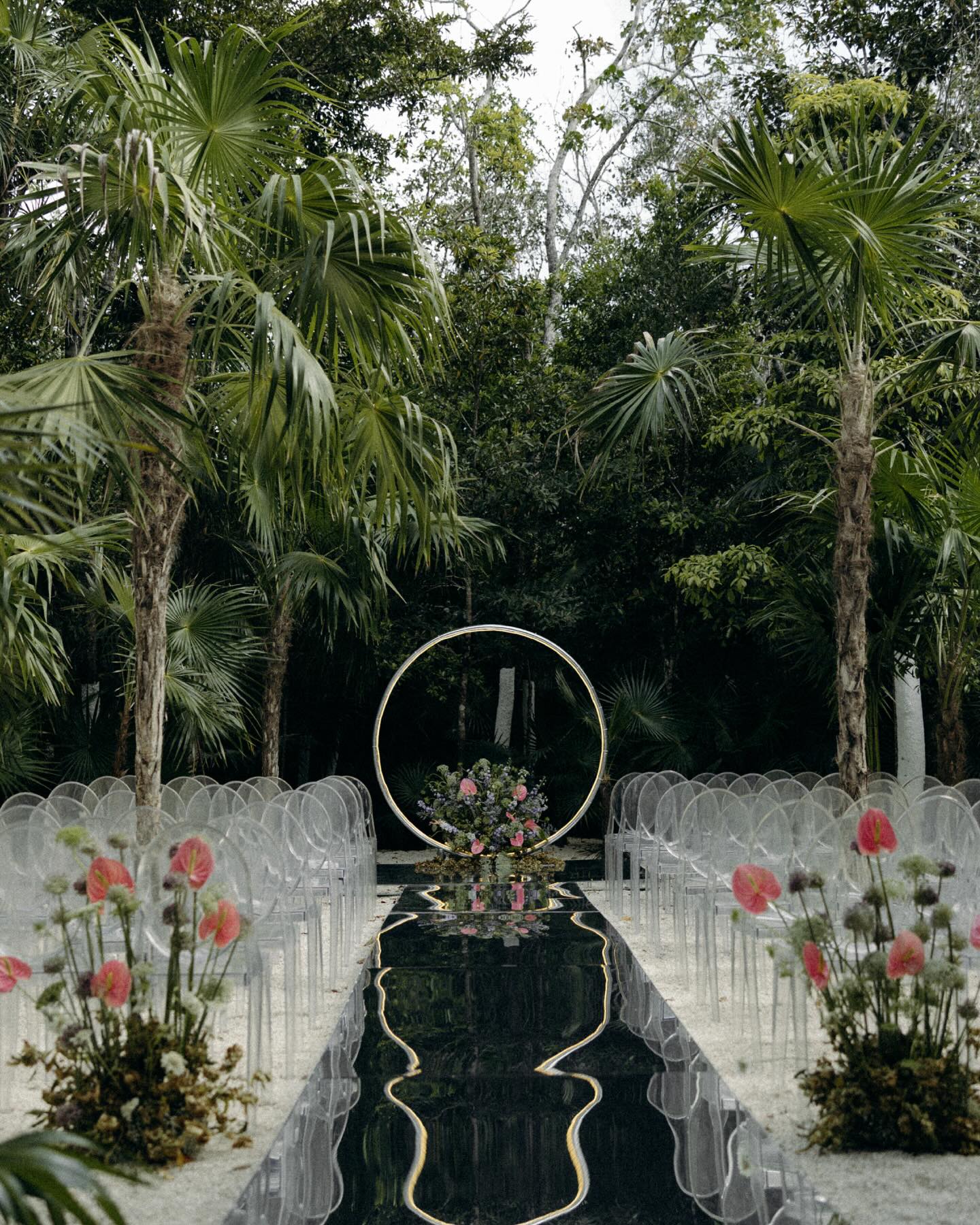
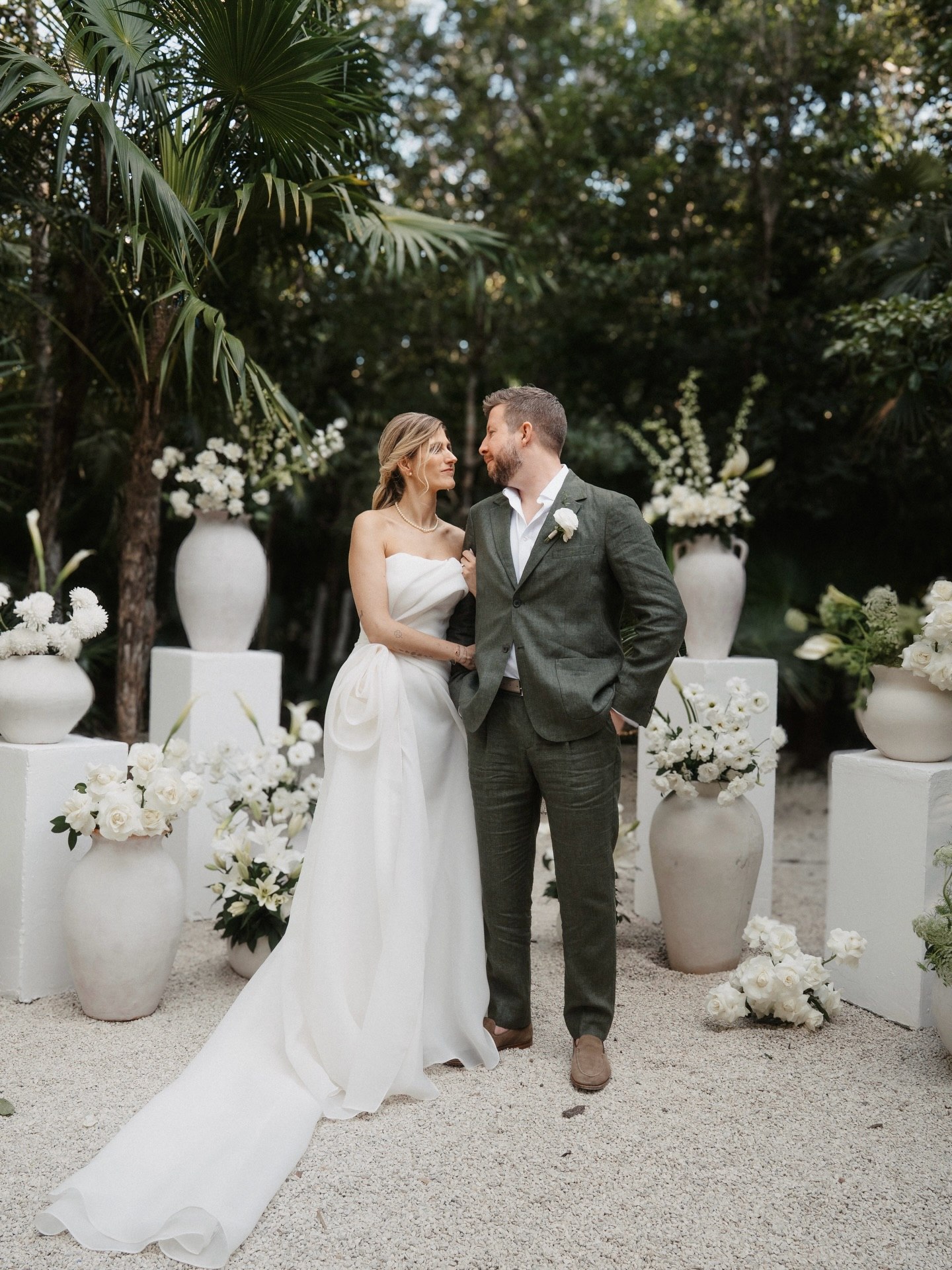
Tulum's visual language is unique, setting it apart from most other destinations for wedding photography. The combination of Mayan archaeological sites, turquoise Caribbean waters, cenote geology and a design culture with a coherent aesthetic - raw concrete, organic materials, cenote-fed pools, the jungle canopy and candlelight - creates an instantly recognisable and highly photogenic setting. While the problem of Tulum being overexposed as a lifestyle destination on Instagram is real, for couples who engage with the place itself rather than its social media version, the material to work with is extraordinary.
The food culture here has matured significantly over the past decade. Tulum now boasts a vibrant restaurant scene, blending Yucatecan and broader Mexican culinary traditions with international techniques. Visitors can enjoy fresh Yucatecan seafood, slow-cooked cochinita pibil, artisanal mezcal from Oaxaca and freshly made tortillas crafted by women with sixty years of experience. This is not resort food. It is one of the most interesting dining scenes in Mexico, and a well-designed Tulum wedding menu reflects this.
When to Plan a Wedding in Tulum?
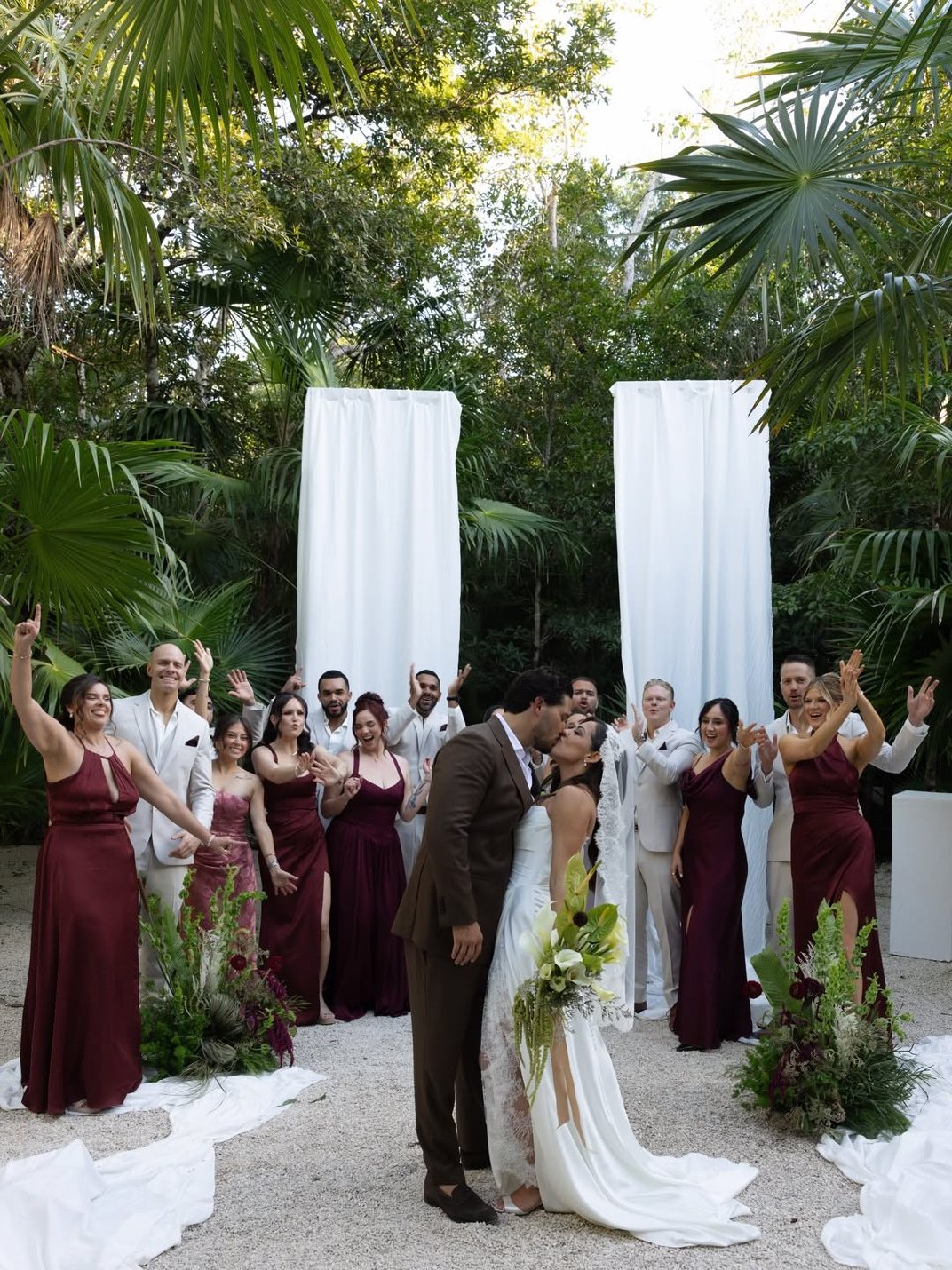
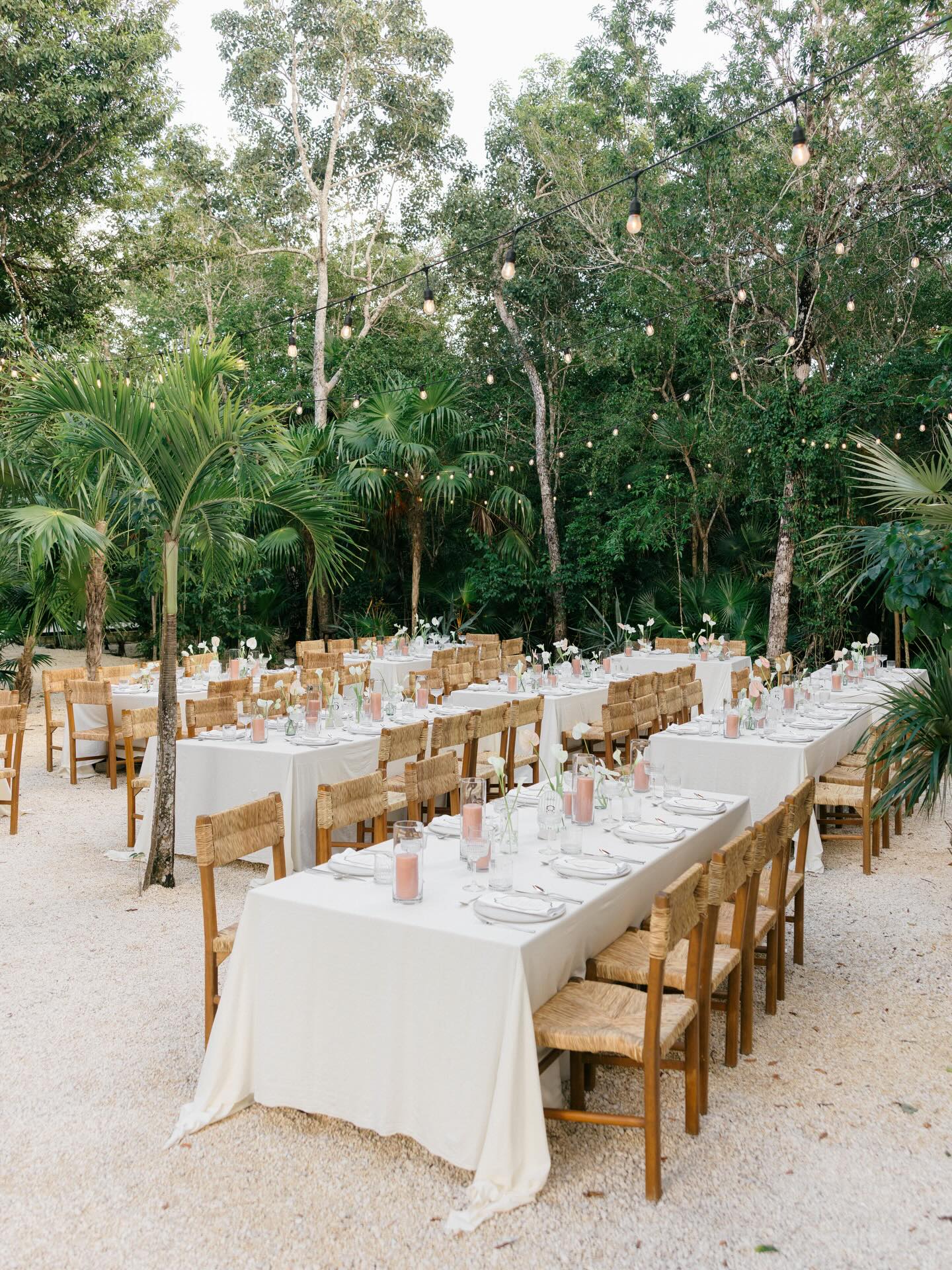
The calendar of weddings in Tulum is shaped by two competing priorities: avoiding the rainy season and the peak tourist season. These two periods overlap in such a way that a considered approach is required.
The dry season runs from November to April. Temperatures range from 24°C to 30°C, with low humidity and plenty of sunshine. This is peak season for both tourism and destination weddings. Demand is highest in December and January, so expect the best properties to be unavailable within 12 months of these dates unless booked well in advance. Properties are slightly more available and slightly less expensive from February through April.
The wet season runs from May to October. June to August can be beautiful, with warm water and lush jungle vegetation at their most intense, and prices 15-25% lower than during the peak season. The trade-off is afternoon rain, which in Tulum tends to be brief and dramatic rather than all-day. However, it does require a genuine contingency plan for outdoor events. September and October fall within the peak of hurricane season and are generally not recommended without comprehensive indoor alternatives.
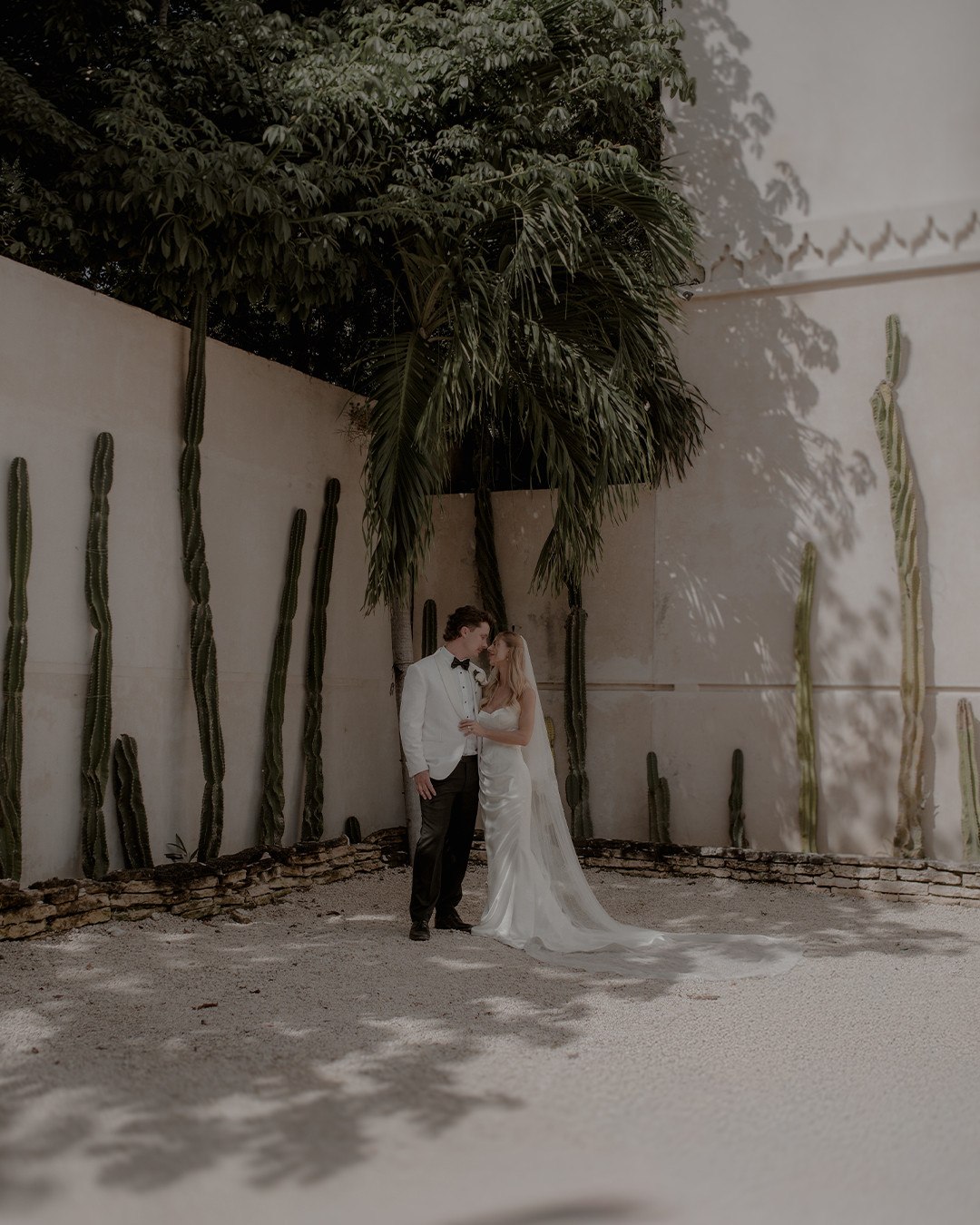
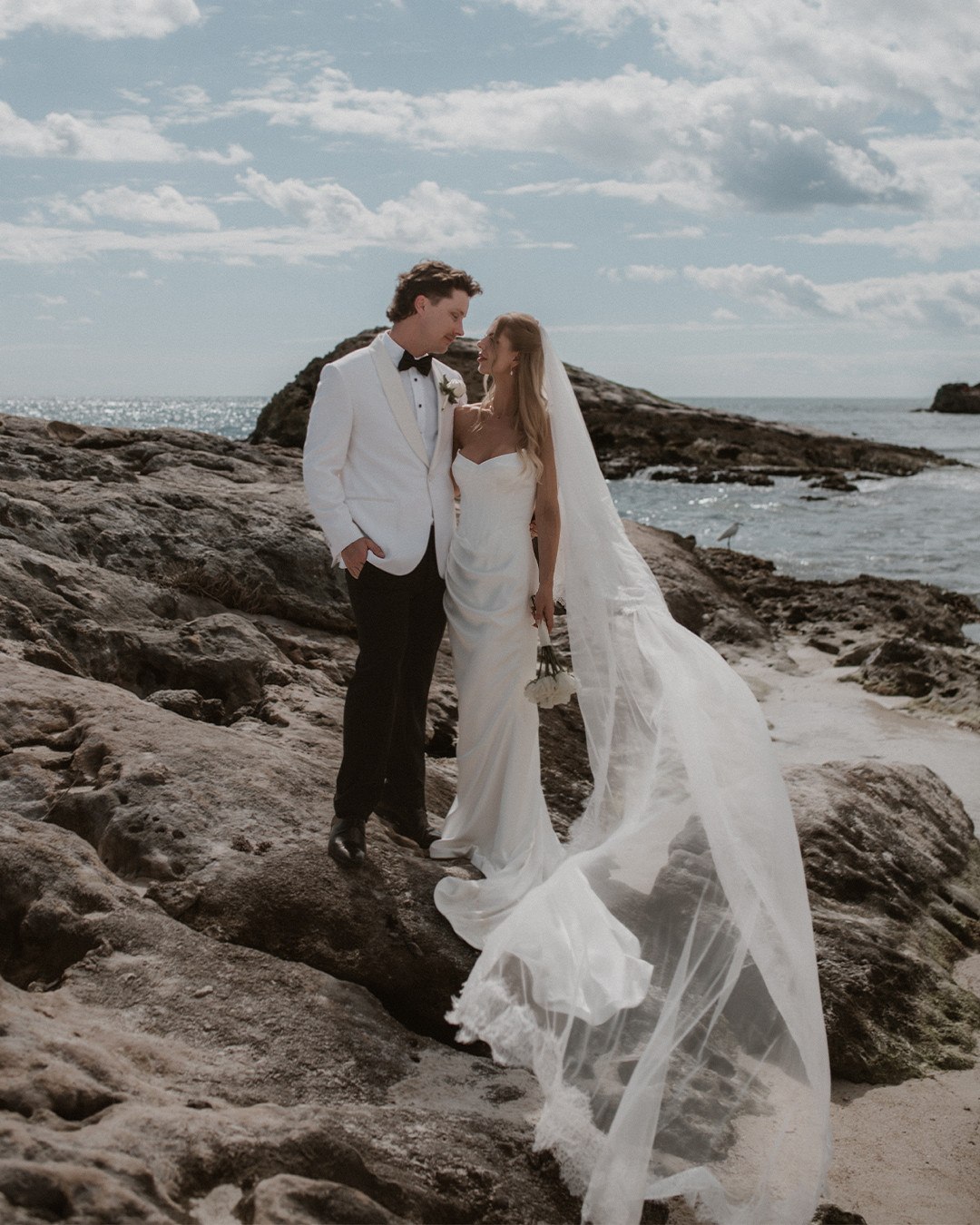
November is the sweet spot recommended by experienced Tulum planners: the rainy season has ended, the landscape is still green from summer rainfall, temperatures are comfortable, tourist numbers have not yet reached their Christmas peak and prices are lower across venues and vendors.
The Día de los Muertos period (late October/early November) adds a cultural dimension that guests from outside Mexico often describe as life-changing. One of the most distinctly Mexican things a Tulum couple can offer their guests is to incorporate a cemetery visit or a Día de los Muertos altar installation into the wedding weekend itinerary.
Legal Requirements for Getting Married in Tulum
Couples planning a wedding in a more remote location should be aware of the additional local municipal complexity involved in Tulum.
The documents required for a legal Mexican civil ceremony are:
- Both partners must have valid passports and birth certificates with apostille certification from their home country.
- Blood tests must be conducted at a certified Mexican clinic within 15 days of the ceremony (the nearest certified clinic to most Tulum venues is in Playa del Carmen).
- A certificate of legal capacity to marry must be obtained from the home country.
- If either partner was previously married, divorce or death certificates must be provided.
- Four witnesses must be present for the civil ceremony.
- The ceremony must be filed with the Tulum municipality's Registro Civil at least three business days before the ceremony.
Most international couples are surprised by the blood test requirement. It is a legal requirement and must be conducted in Mexico, not at home. The clinic appointment and receiving the results takes approximately one working day. In Tulum, where the nearest certified clinic is 30-45 minutes' drive from most hotels, specific scheduling is required.
As with all Mexican destinations, the honest recommendation is to marry legally at home and hold a symbolic ceremony in Tulum. This can take place at a cenote, on the beach, in a jungle clearing or in a boutique hotel garden, for example, with any officiant and in any language or with any vows. It is both photographically and emotionally identical to the legal ceremony. The paperwork happens in a different country. Most Tulum wedding packages at well-established venues are structured around the symbolic format.
Tulum Wedding Venue Types
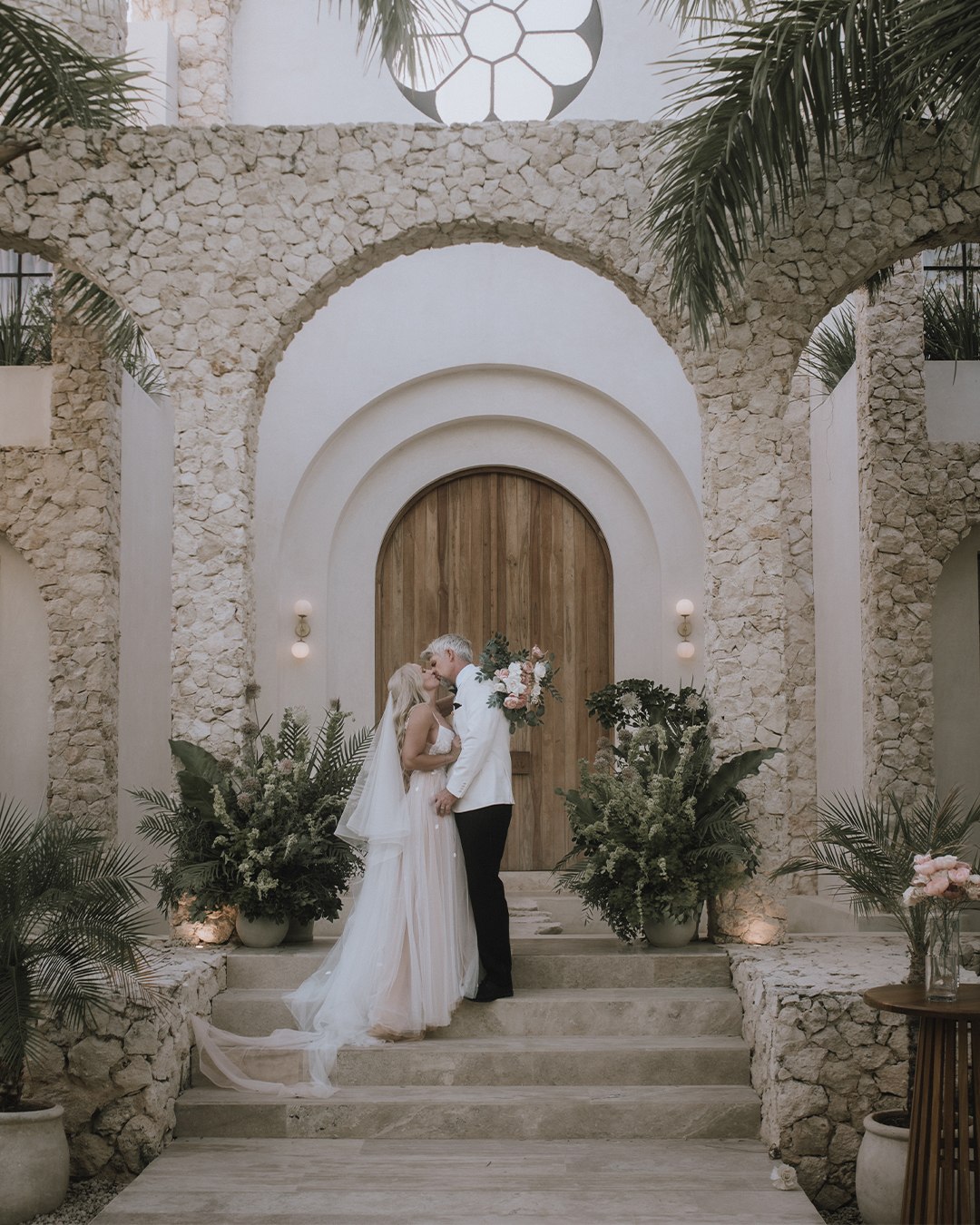
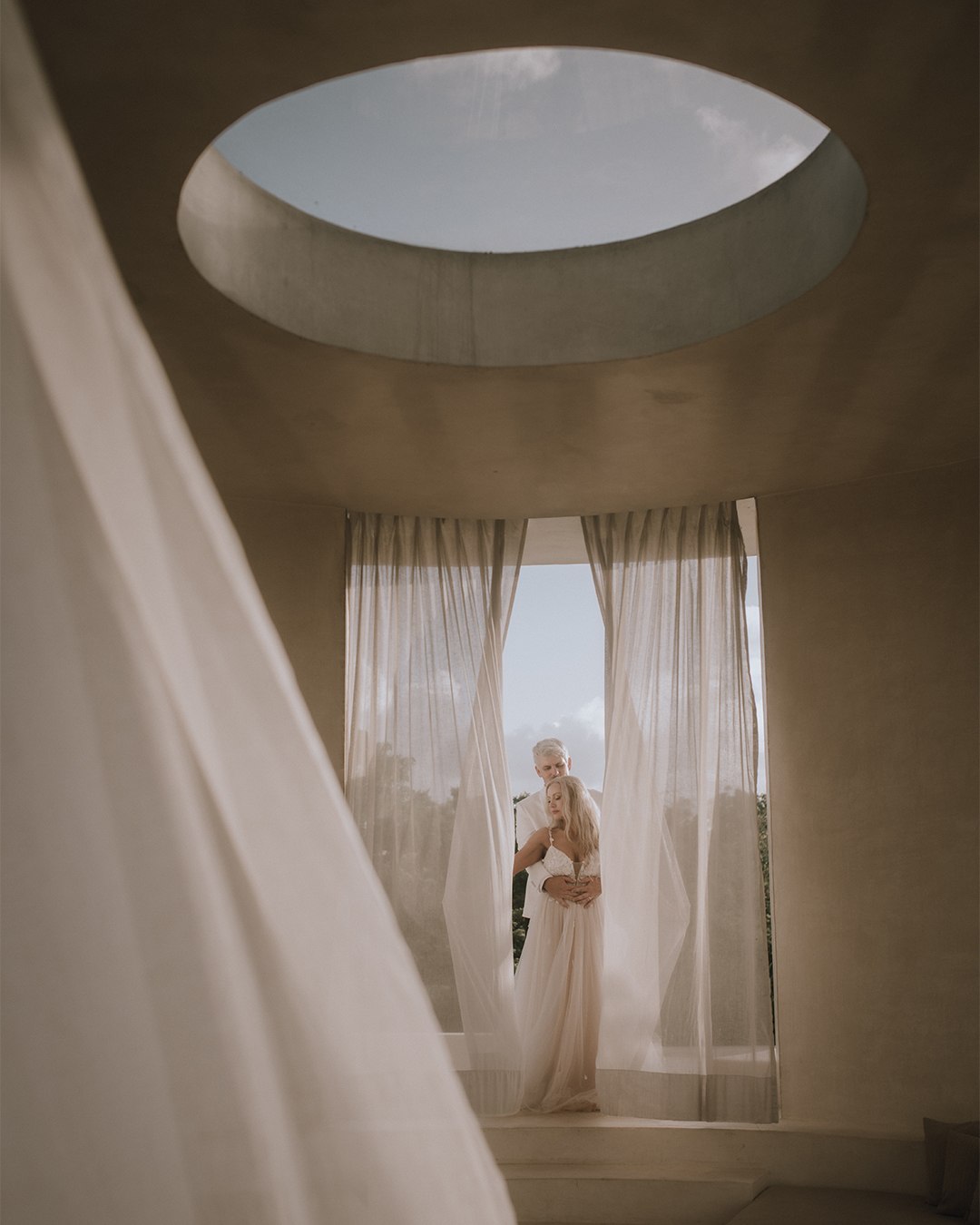
Tulum has the most varied venue landscape of any destination in Mexico for wedding planning, and it is also the most logistically demanding. Understanding the different categories beforehand helps to avoid the frustration of falling in love with a setting that is not actually suitable for the event you want to plan.
Historic and Archaeological Settings
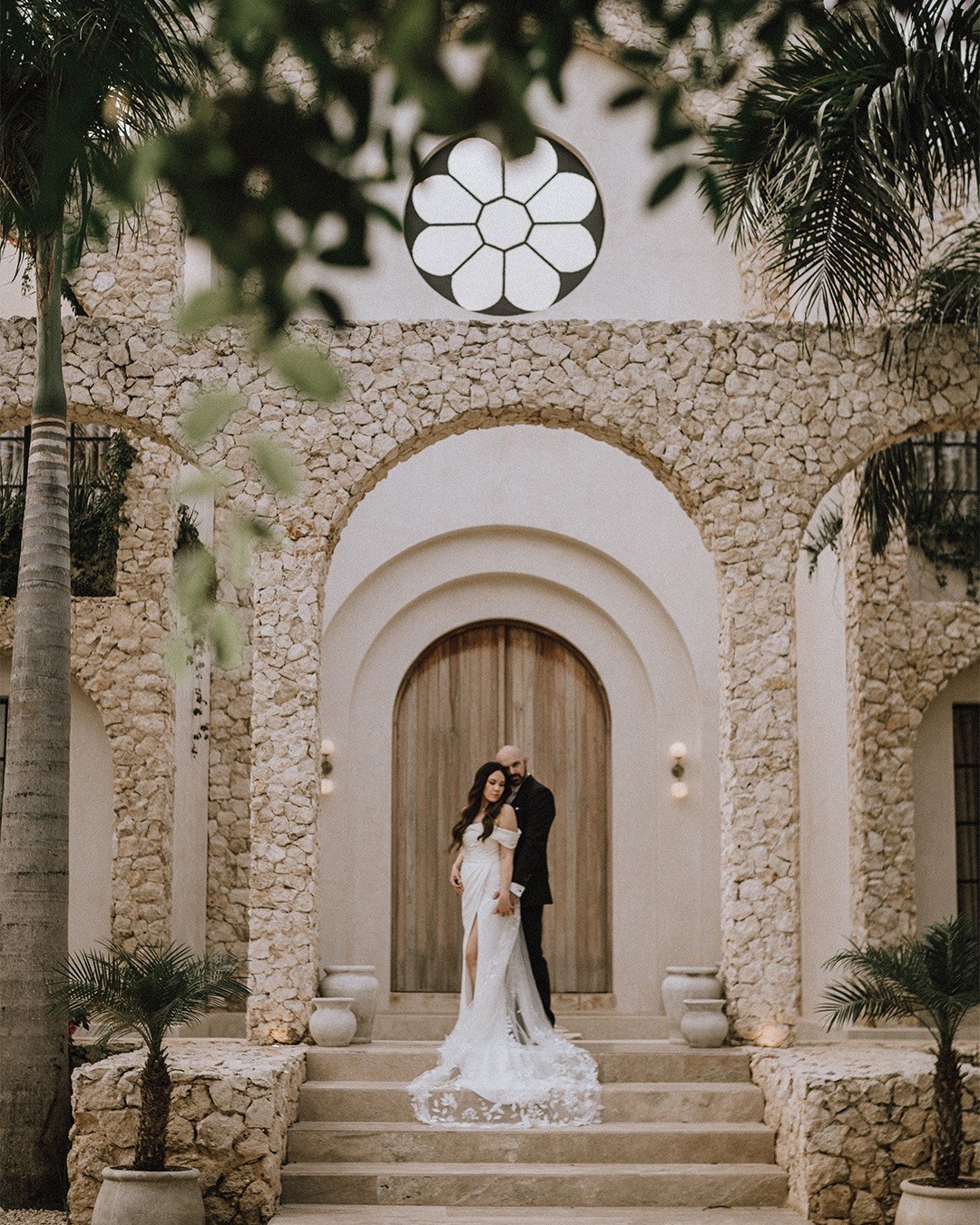
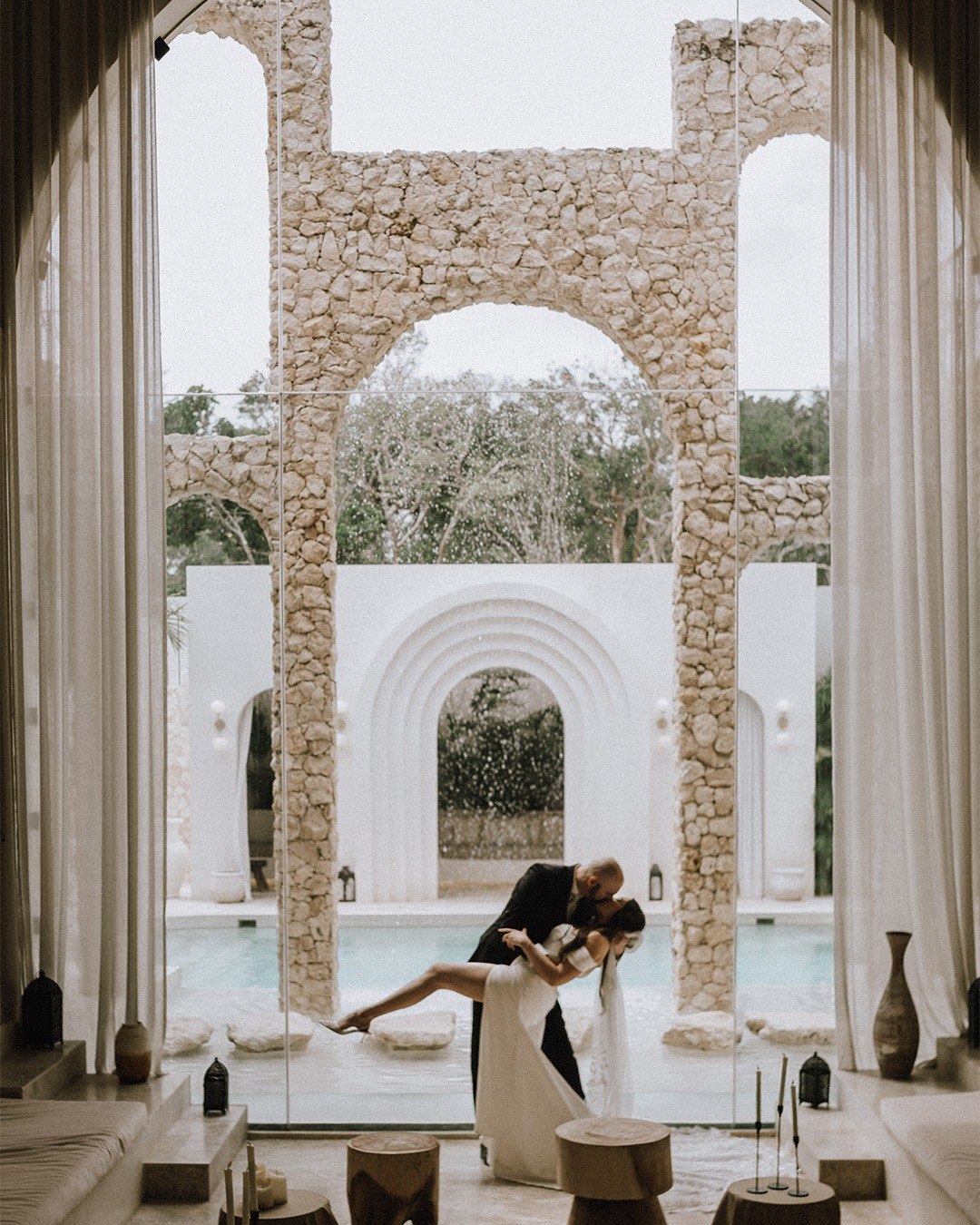
The Tulum archaeological zone, a Mayan walled city located on a cliff above the Caribbean, is technically a public heritage site and is not available to hire for private events. However, the presence of the ruins in the immediate vicinity of certain properties creates a unique event setting. Several boutique hotels and villa properties in the Tulum beach hotel zone have views of the ruins from their event terraces and ceremony spaces. These views are well worth seeking out as they produce images that are unmistakably Tulum, unlike photographs of jungle cenotes.
Cenote Venues
Cenotes are the geological and visual signature of the Yucatán Peninsula - freshwater sinkholes connected to an underground river system. The water is of extraordinary clarity, ranging in colour from deep turquoise to milky white, depending on the depth and mineral content. Several cenote properties in the Tulum area have developed event infrastructure that allows for ceremonies and small receptions. Cenote ceremonies require specific lighting expertise, as the combination of the dappled jungle canopy, cave formations and open sky creates conditions that present significant challenges for photographers encountering them for the first time, but which reward those who know the locations. Sound behaves differently in enclosed cenote spaces than in open-air settings and requires acoustic planning. These venues are best suited to couples who prioritise the most visually striking and distinctive ceremony setting available.
Boutique Hotels and Eco-Resorts
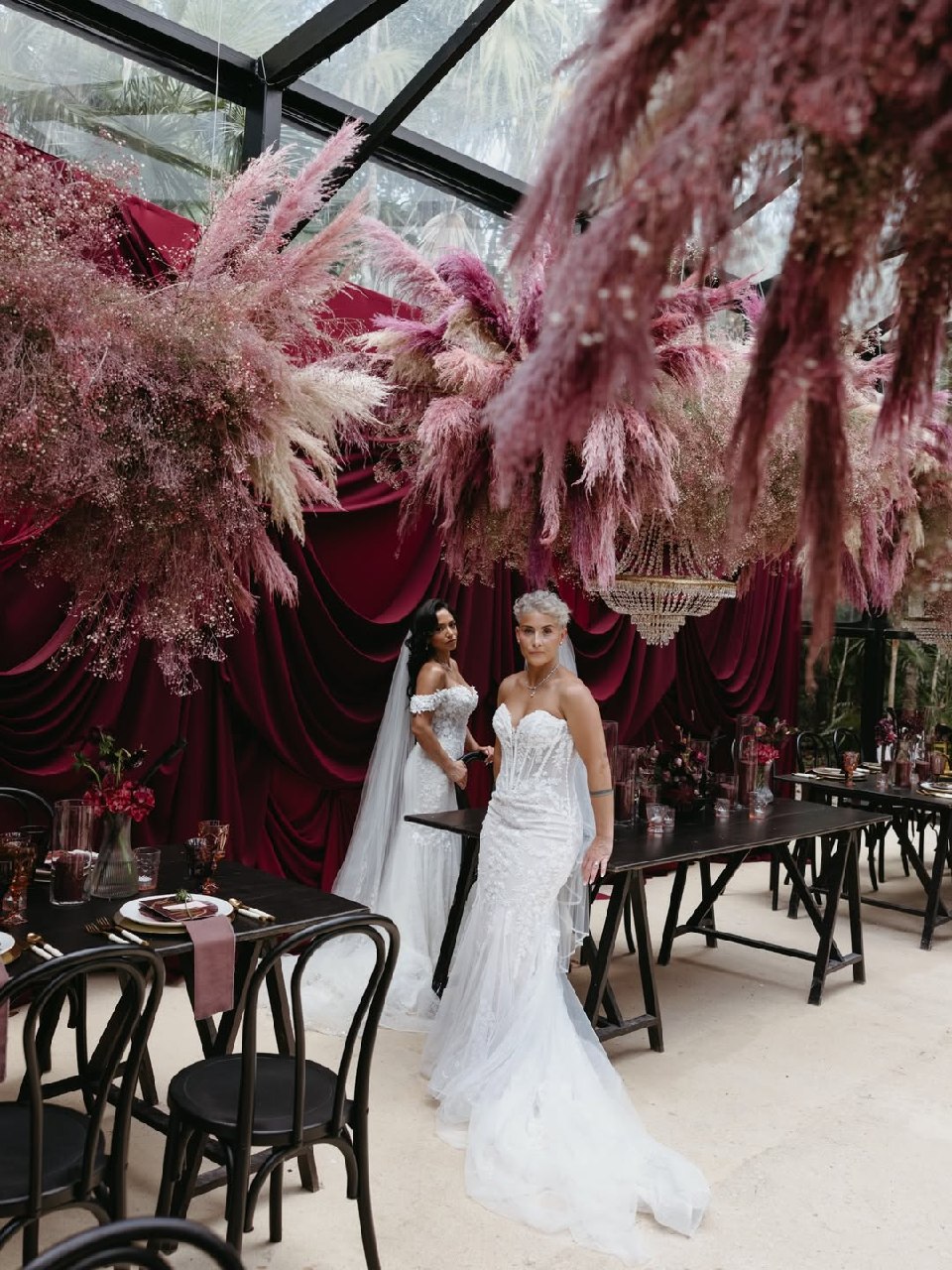
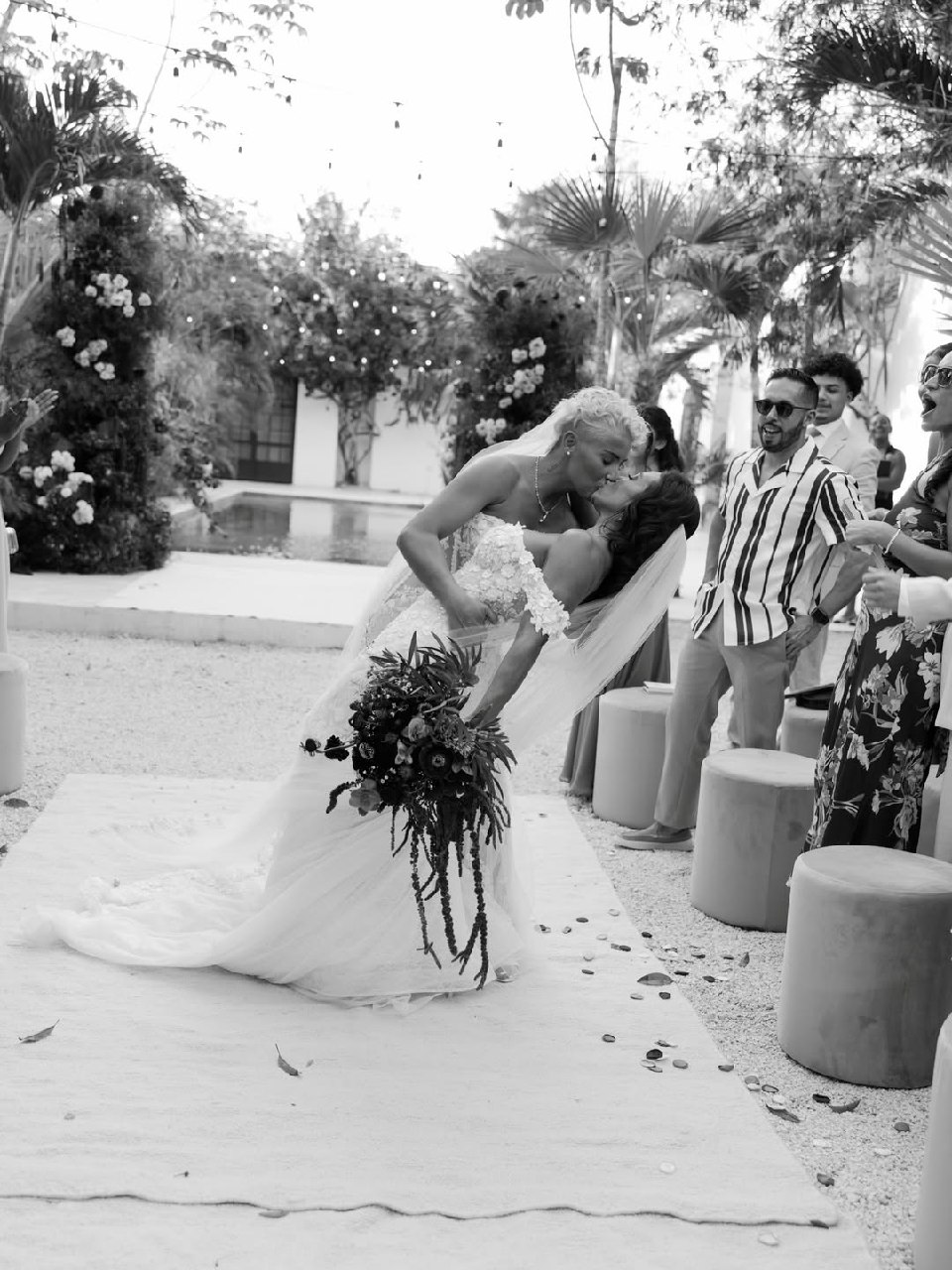
The Tulum beach hotel zone, the strip of boutique properties between the Tulum ruins and the Sian Ka'an biosphere reserve, is home to some of the most photographed properties in the area. These small, intimate hotels, which typically have 10-30 rooms, rely heavily on wedding business for their revenue. Generator dependence, limited kitchen infrastructure and access roads all require logistical planning. The aesthetic payoff is genuine, but so is the operational complexity.
Private Villa and Jungle Estate Properties
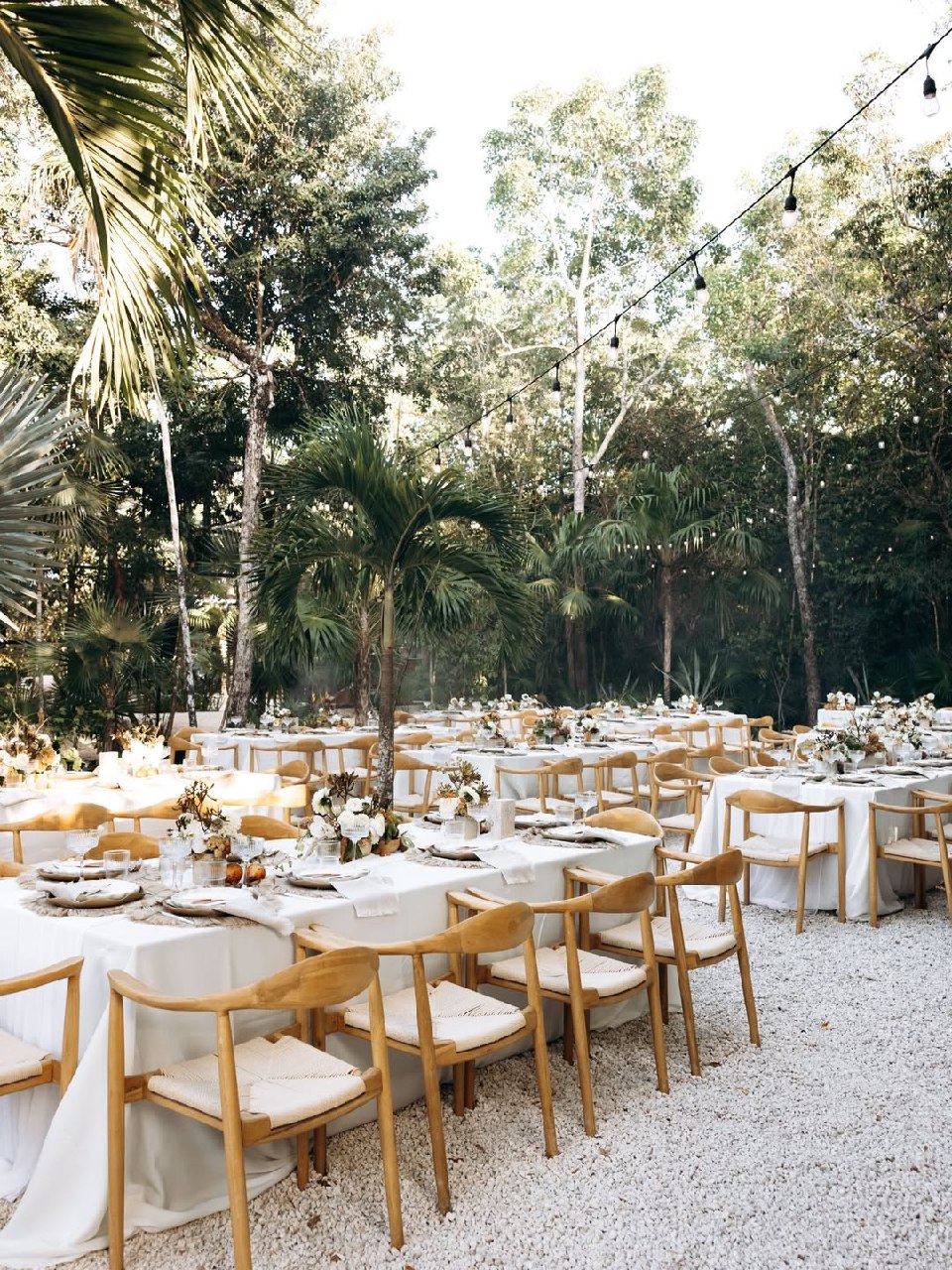
The residential areas around Tulum, particularly the Aldea Zama development and properties in the jungle to the west of the main road, offer private villa estates with exclusive buyout options, full kitchen facilities and event capacity for 40-80 guests. These properties are often more operationally functional than boutique hotels in the beach hotel zone. They offer better road access, more reliable power and the flexibility to source vendors independently. They sacrifice immediate proximity to the Caribbean Sea for operational reliability - a clear trade-off.
Cenote and Jungle Clearing Ceremonies with Separate Reception Venues
A popular wedding format in Tulum is to hold the ceremony at a cenote or in a natural jungle clearing, followed by the reception at a boutique hotel or villa. This format requires transport for guests to be organised between the two locations, timings to be managed at both venues, and production set-ups to be arranged at each location. While this format provides guests with a unique experience - a ceremony in an extraordinary natural setting followed by a reception in a designed space - it also adds logistical complexity and requires the services of an experienced local coordinator.

Find Your Vendor Team for a Wedding in Tulum
Most Tulum weddings are assembled from independent vendors rather than purchased as a resort package. While this offers more creative freedom, it also requires more planning and coordination.
Wedding Planners
For this destination, a local Tulum coordinator is not a luxury - it is the operational foundation without which events fall apart. The specific challenges of this destination - remote venues, cenote permits and multi-vendor logistics - require someone with direct experience of it.Ask specifically:
- How many events have you coordinated at this venue?
- What is your protocol if the generator fails?
- Which catering teams have you worked with at this property?
In practice, there is a significant difference between a planner who knows Tulum and one who has a broader knowledge of Mexico.
Photographers
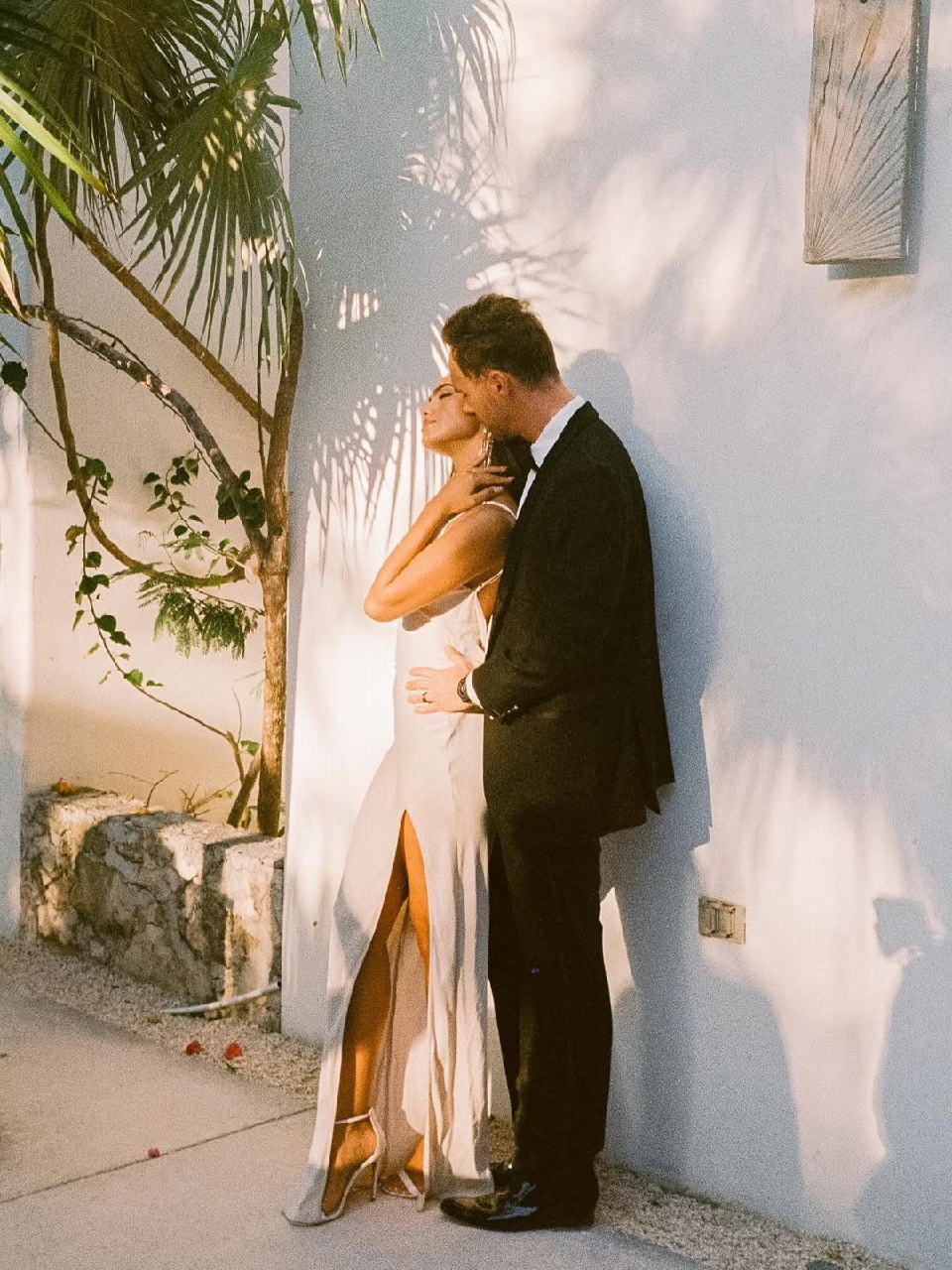
The visual environments of Tulum, such as the lighting in the cenotes, the jungle canopy and the dappled shade on the white architecture, require specific technical experience. A photographer with no prior experience of shooting in a cenote will find the combination of dark cave conditions, a bright open sky and reflective water a significant technical challenge. The best Tulum photographers know exactly which position and time of day produces the strongest images at each cenote, where the light falls on each boutique hotel terrace and how to move efficiently between jungle ceremonies and hotel receptions. Book 14-18 months in advance for peak season. This category is worth the investment.
Videographers
Tulum's visual environments are so cinematic that they make wedding film footage genuinely extraordinary: the light in the cenotes, the sounds of the jungle, and the candlelit paths at night. This is a destination where not prioritising video can be most regrettable in retrospect. Budget between $2,500 and $6,000 for a short film, and make sure that the videographer has experience of filming in cenotes and in the jungle at night, as this work is technically demanding.
Florists
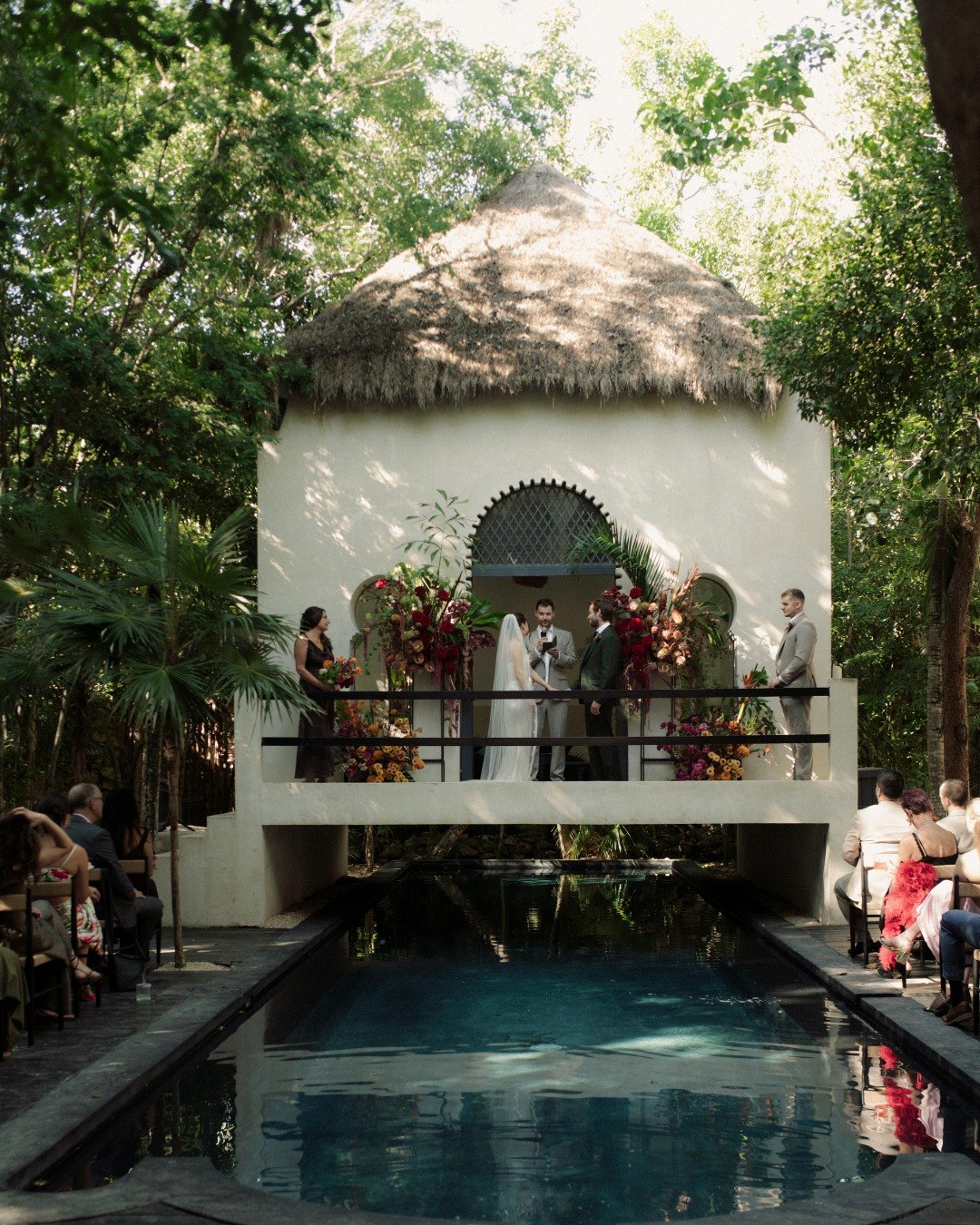
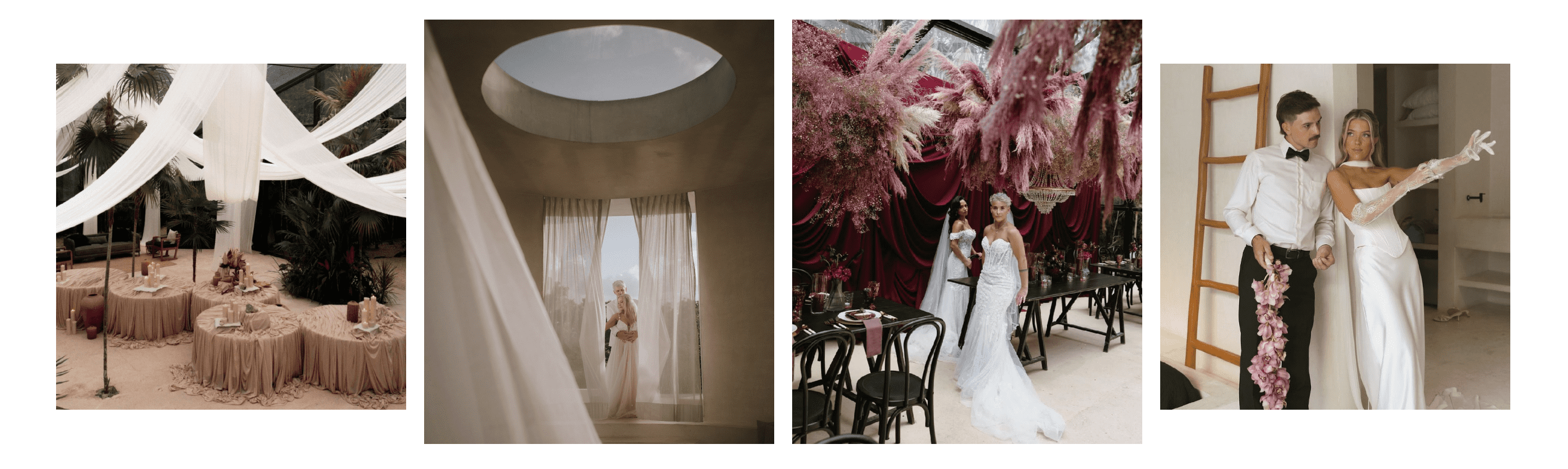
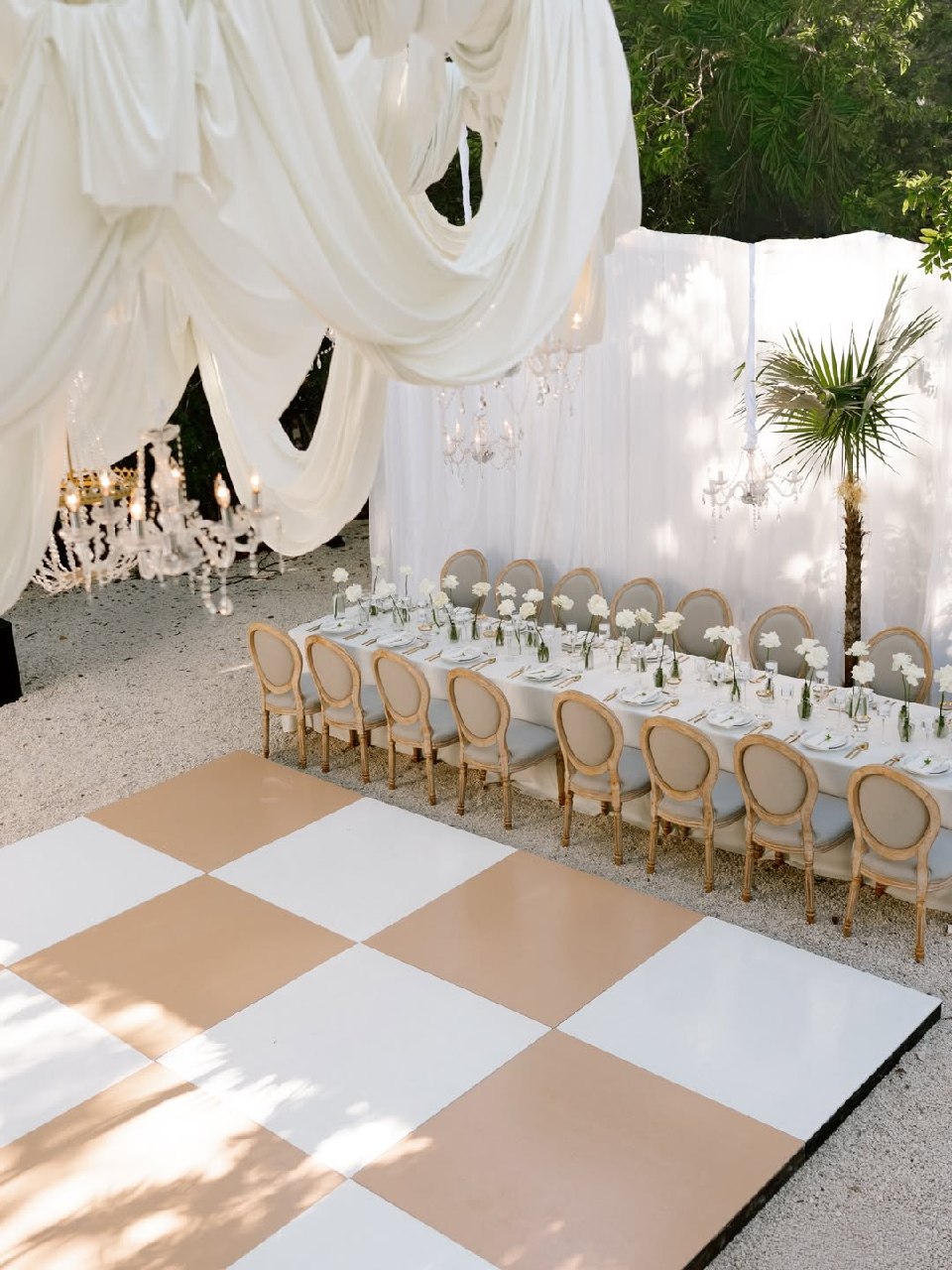
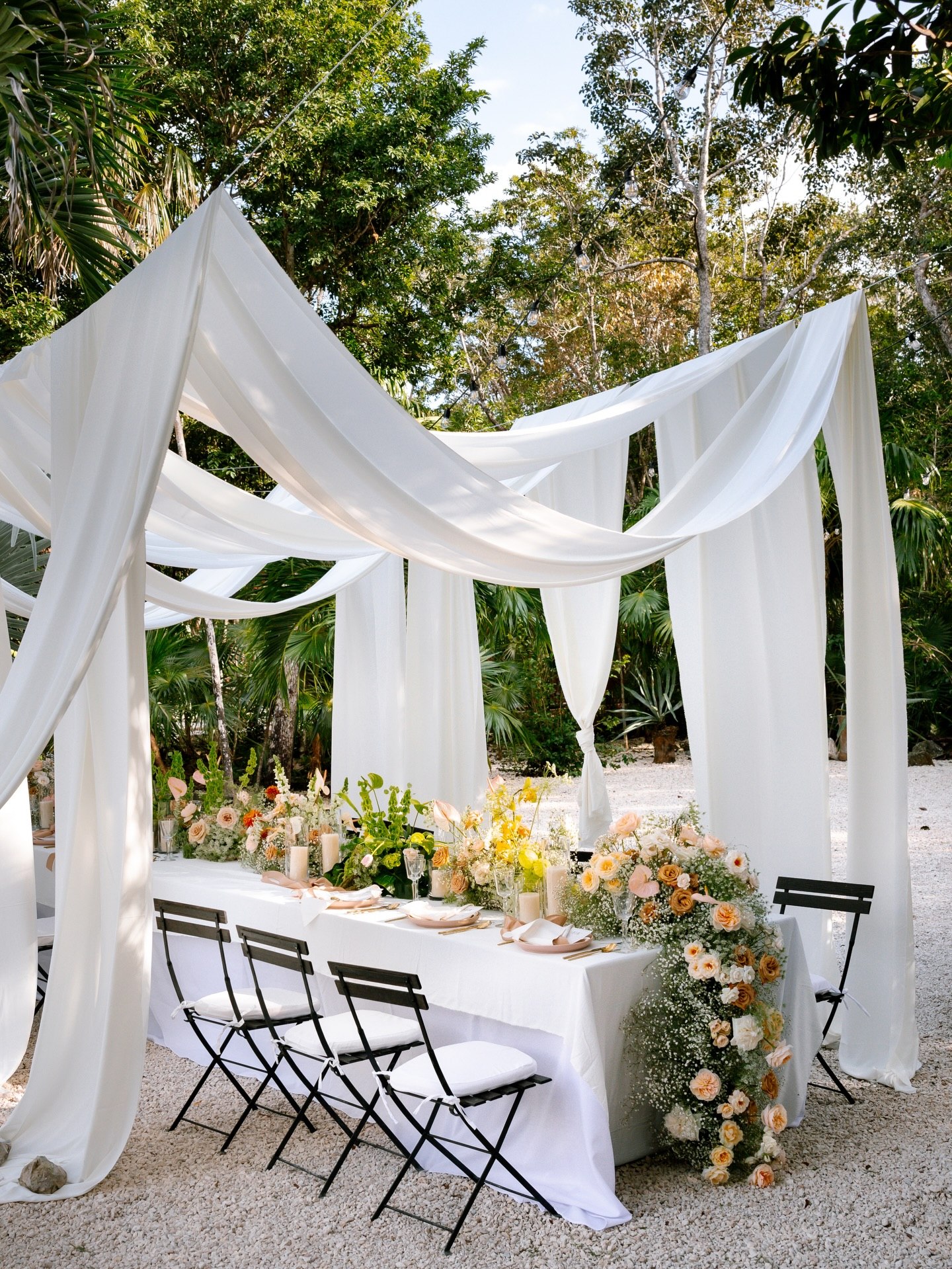
Local Tulum florists who have access to flower suppliers in Mérida and Cancun can source tropical botanicals at costs that make ambitious installations achievable within reasonable budgets. Suspended ceiling installations, ceremonial arches and table arrangements made from heliconias, local orchids, monstera and tropical foliage look better in photographs against Tulum's backdrop than any imported arrangements. Provide a brief with specific visual references and confirm that the florist has experience with the venue's physical constraints - suspended work in particular requires an assessment of the ceiling.
Catering
The kitchen infrastructure at boutique Tulum properties often limits in-house catering. Many of the most visually appealing venues lack the facilities to produce a dinner for 60 people on-site and instead rely on external catering teams who transport food and equipment to the venue. To evaluate catering quality in Tulum, it is necessary to taste food prepared by caterers who work in this way, rather than by resort hotel kitchens. Rather than sourcing independently, ask your planner for referrals - the catering teams who consistently deliver in remote Tulum locations are well known within the local vendor community.
Hair and Makeup
Tulum's humidity is more intense than in Cancun, and the heat at outdoor boutique hotels without air conditioning can be a real issue when preparing for the ceremony. Local artists who work regularly in Tulum are familiar with the products that work well in these conditions, whereas artists from cooler or drier climates often are not. If you are flying in a trusted stylist, make sure they have experience working in tropical humidity and arrange a climate-adjusted trial upon their arrival. Budget for their accommodation at one of the boutique hotels – this is standard practice and helps to keep the morning schedule on track.
Realistic Budget Breakdown for Wedding in Tulum
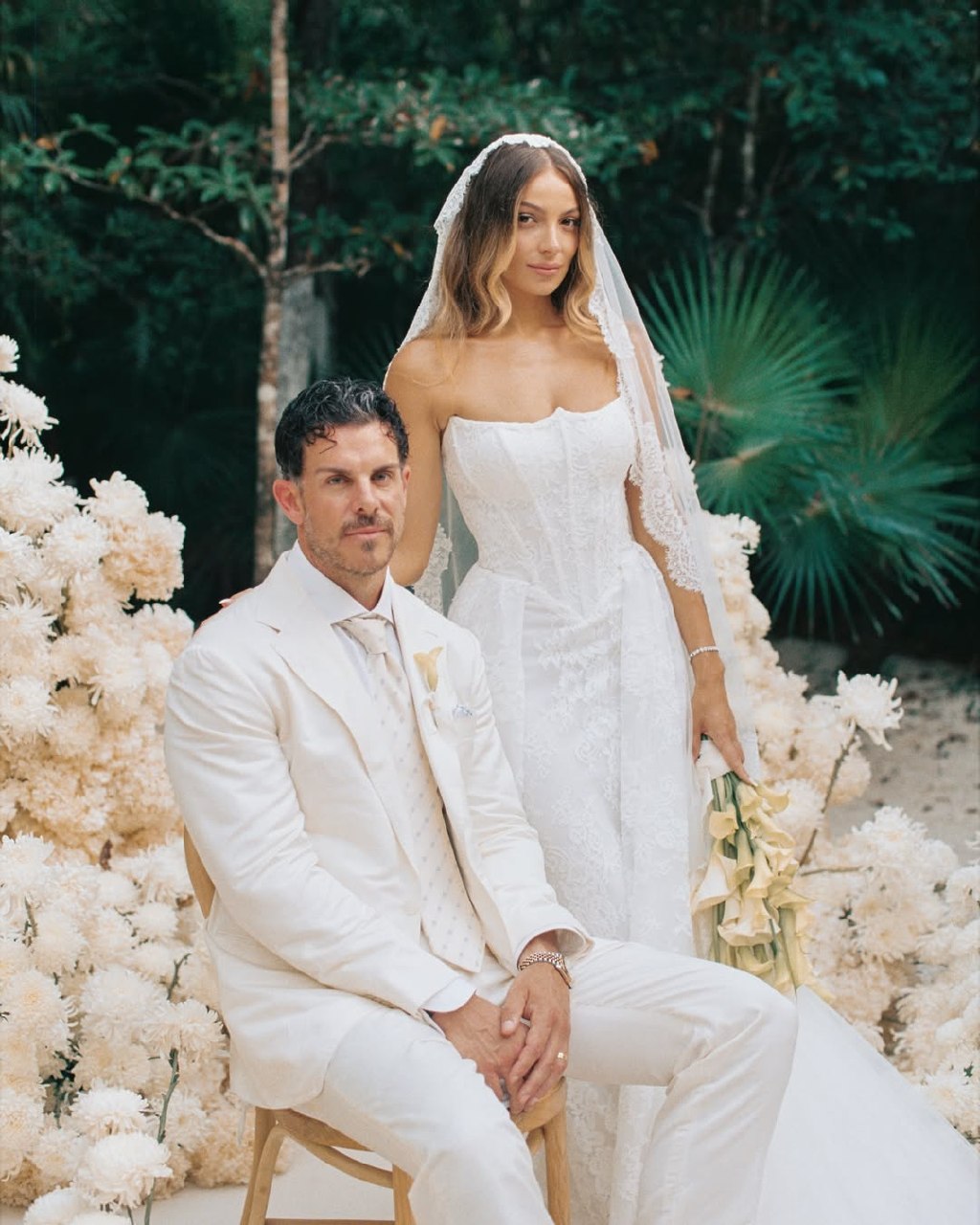
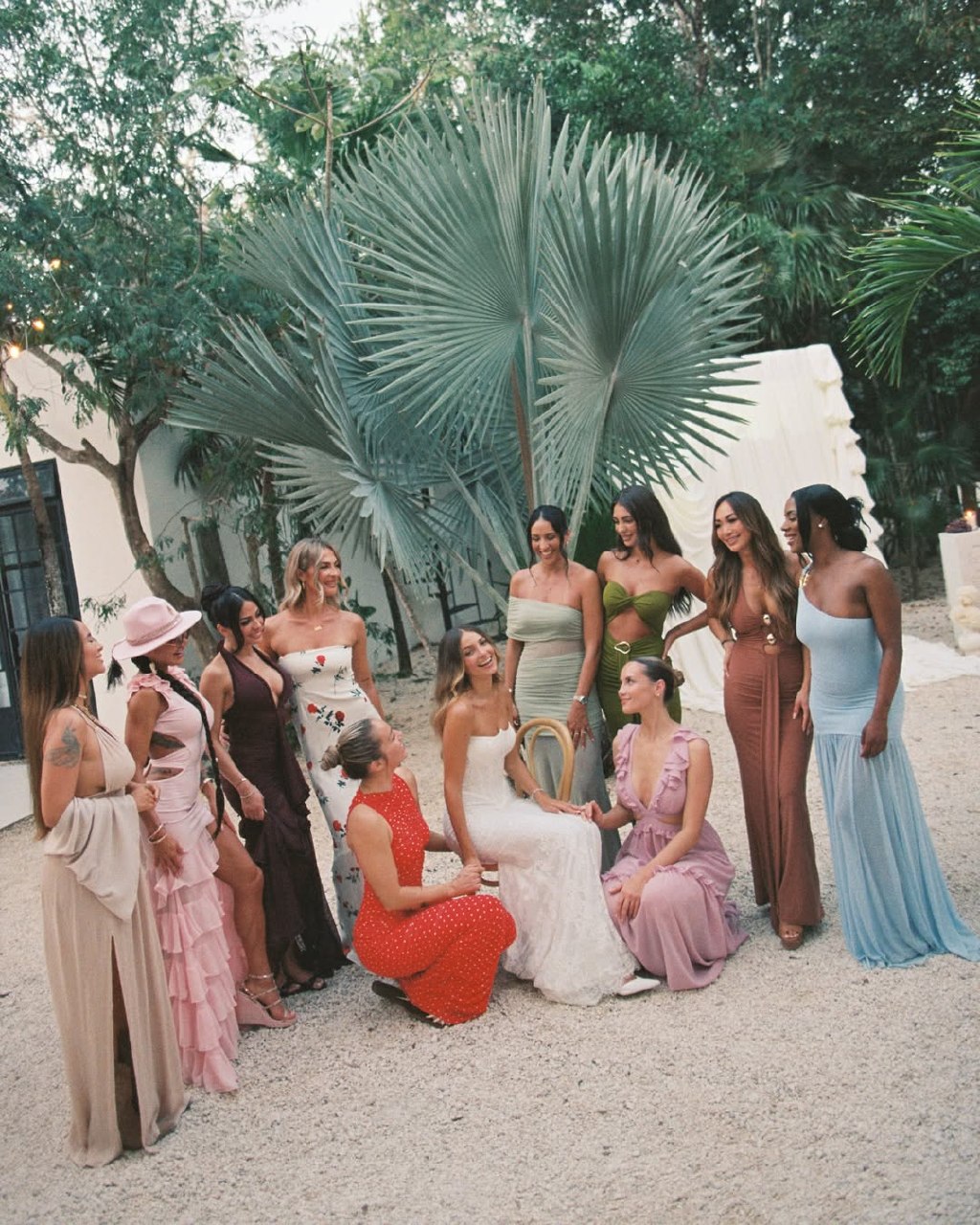
The Tulum wedding packages market is large enough that budgets can vary significantly. The table below shows mid-to-luxury tier pricing. Add 20-30% for events in the peak season (December-January).
| Category | Budget Range | Notes |
|---|---|---|
| Venue hire | $3,500-$18,000 | Boutique hotel buyout or villa; beach permits additional |
| Catering (per person) | $90-$220 | Before 16% IVA and 15-18% service charge |
| Photography | $3,000-$9,000 | Local with cenote/jungle experience vs. international |
| Videography | $2,000-$6,000 | Often bundled, cenote lighting adds complexity |
| Florals | $4,000-$14,000 | Tropical botanicals are cheaper; suspended installations add cost |
| Wedding planner | $4,000-$10,000 | Essential in Tulum; logistics complexity is high |
| Music/entertainment | $2,000-$6,000 | Live DJ to local band; generator/sound planning required |
| Hair and makeup | $400-$1,000 | Humidity-specific product knowledge critical |
| Transportation/logistics | $2,000-$6,000 | Multi-venue transfers, vendor trucking, guest shuttles |
| Accommodation (guest block) | $200-$600/room/night | Boutique properties; limited availability |
| Legal / admin fees | $500-$1,500 | If pursuing a legal Mexican ceremony |
One area where Tulum offers exceptional value is floral arrangements. Locally sourced tropical flowers, such as heliconias, anthuriums, birds of paradise and orchids, are much cheaper than imported European flowers. They also look stunning in photographs against the backdrop of the jungle. A complete floral arrangement for 60 guests using local flowers costs between $4,000 and $7,000, whereas the same arrangement using imported flowers would cost between $8,000 and $14,000.
Tulum also surprises on production and logistics costs. Transporting catering equipment, furniture, sound systems and generators to remote boutique hotels or cenotes can add $3,300-$8,000 to the cost of events, whereas these costs would be avoided at a purpose-built resort venue. IVA at 16% and service charges on catering can add a further 25-30% to initial catering quotes.
Dress Code and Colour Palette for Your Tulum Wedding
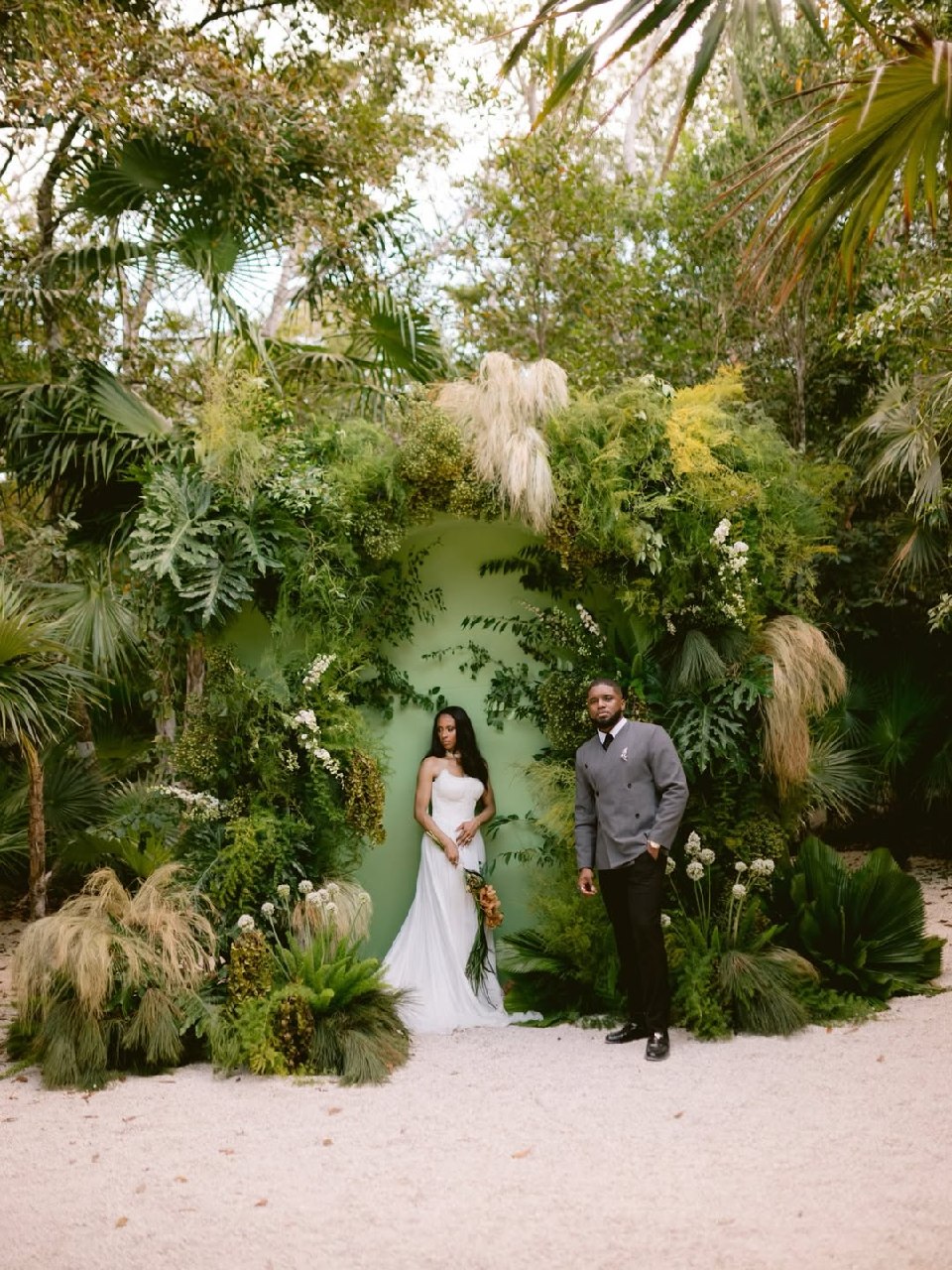
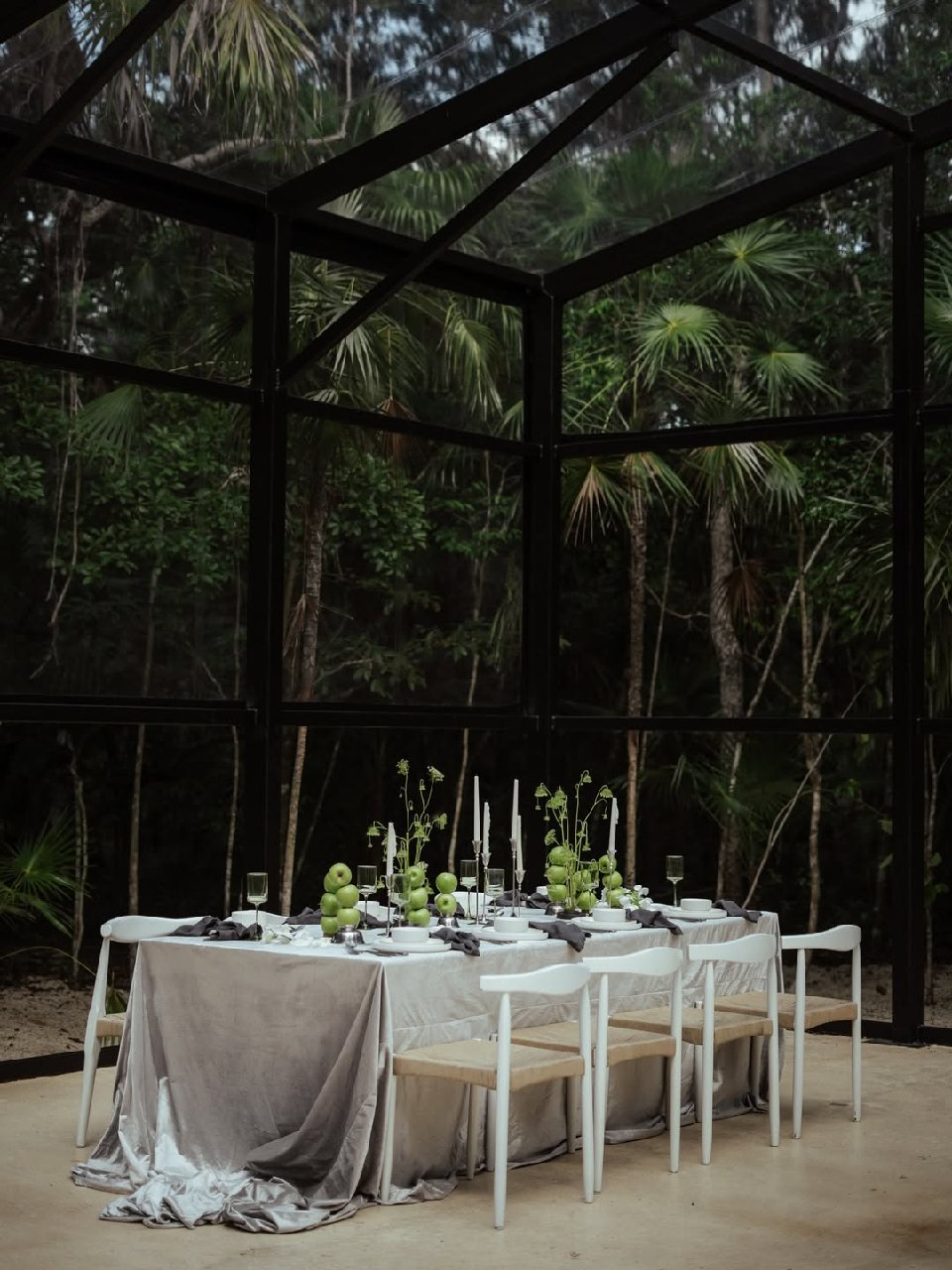
The climate and aesthetic of Tulum require specific guidance for couples and guests. The combination of heat and humidity, coupled with a visual environment built around natural, organic materials, means that traditional formal wear is often not suitable for the setting.
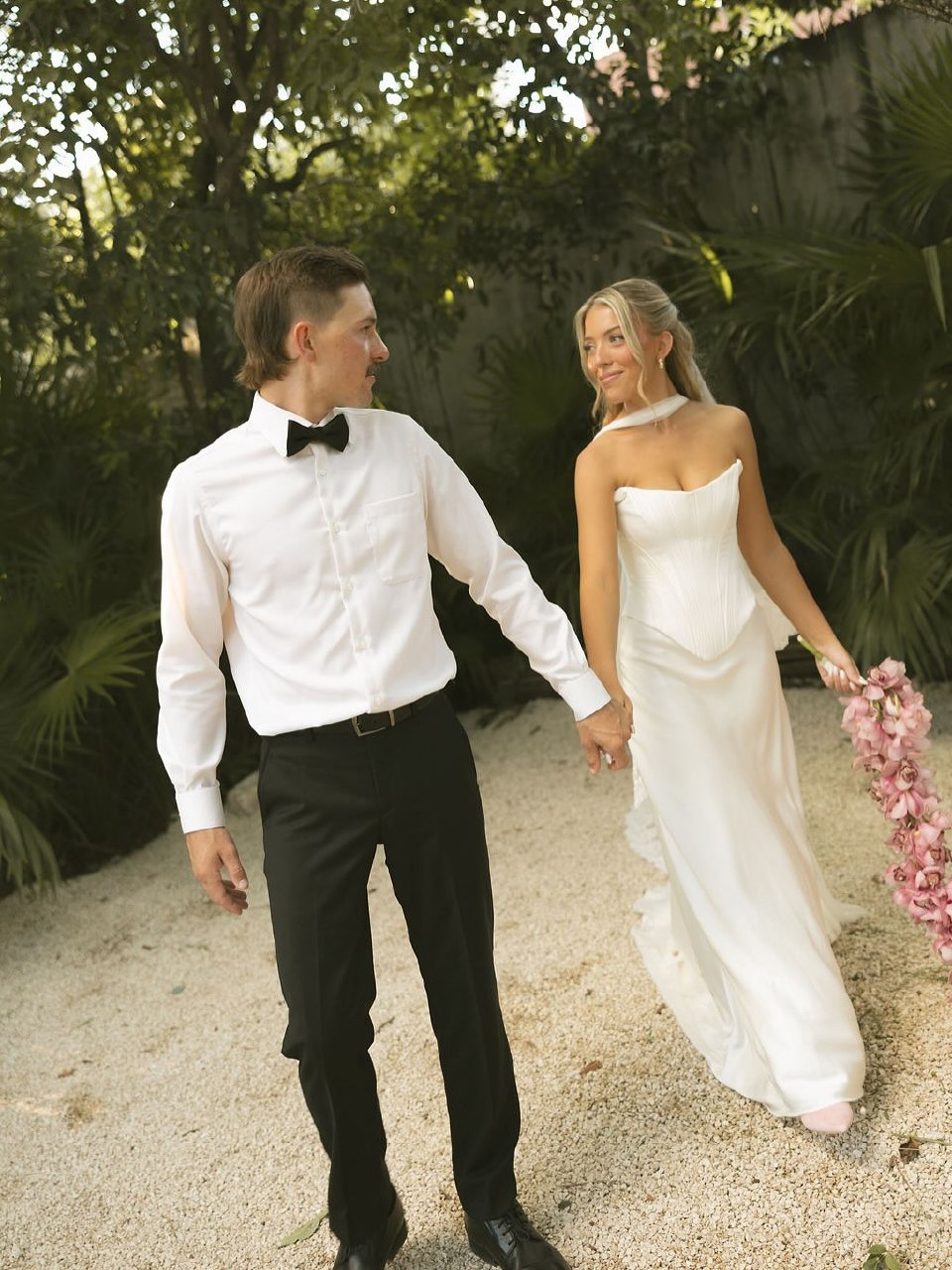
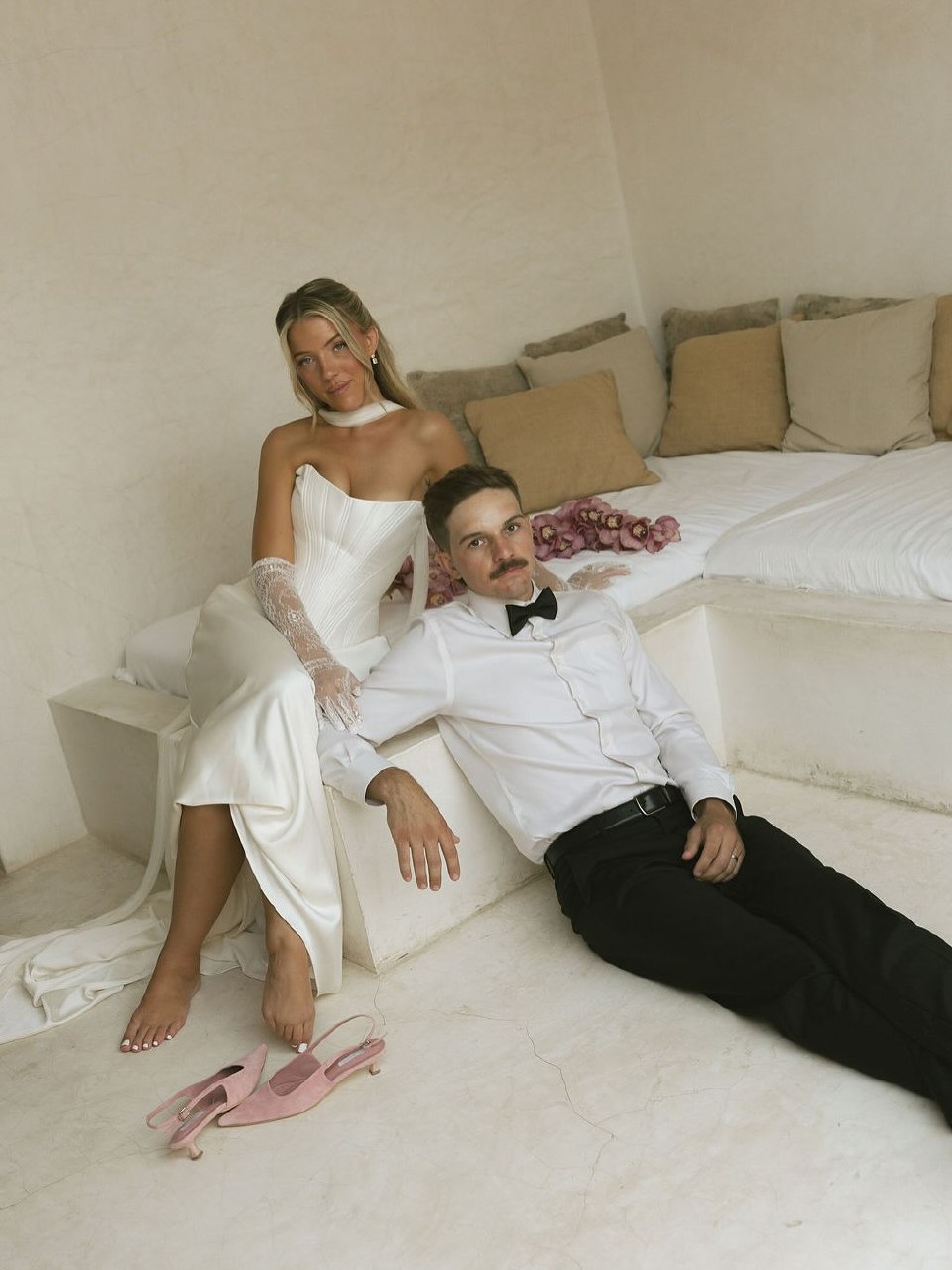
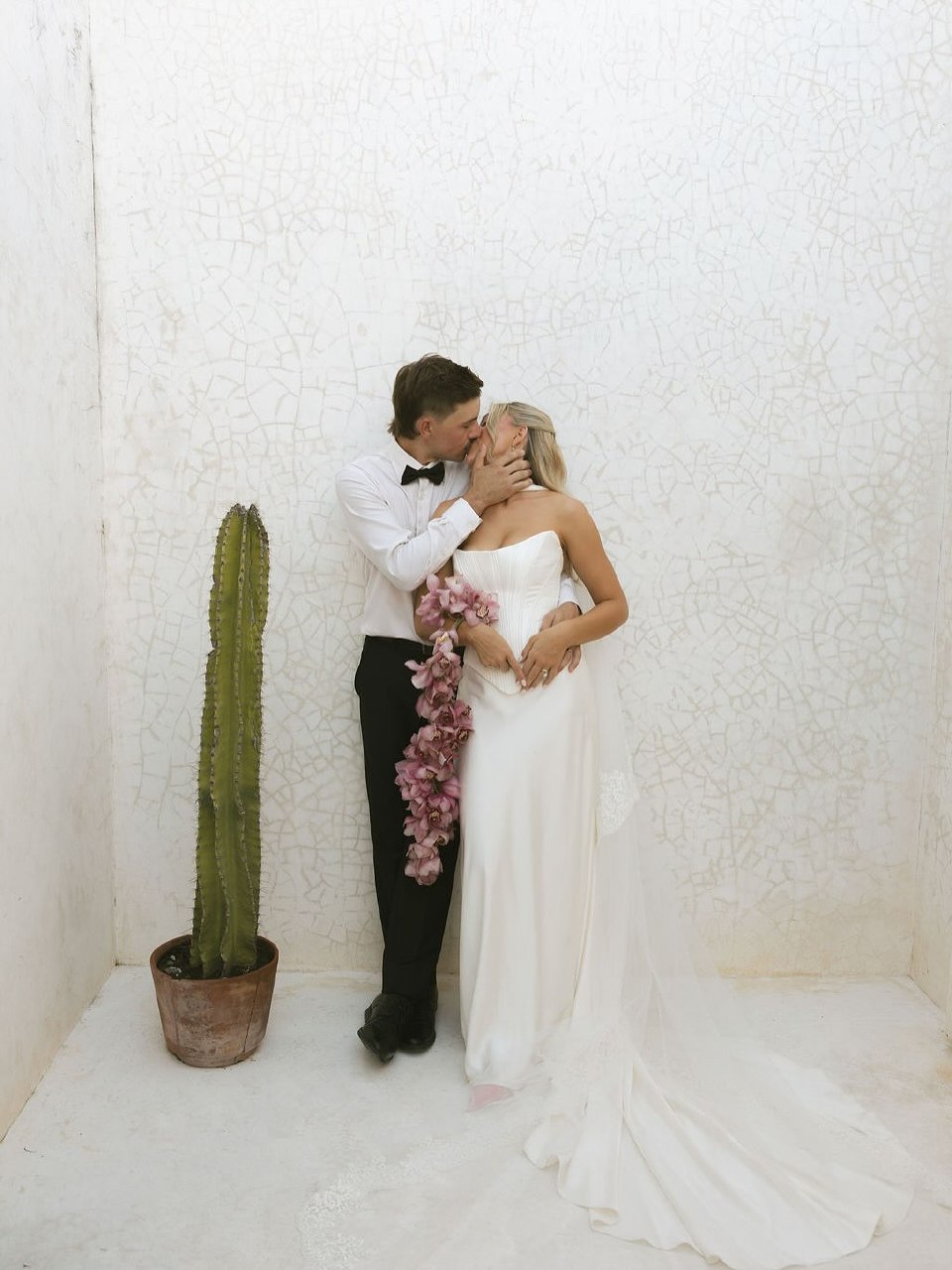
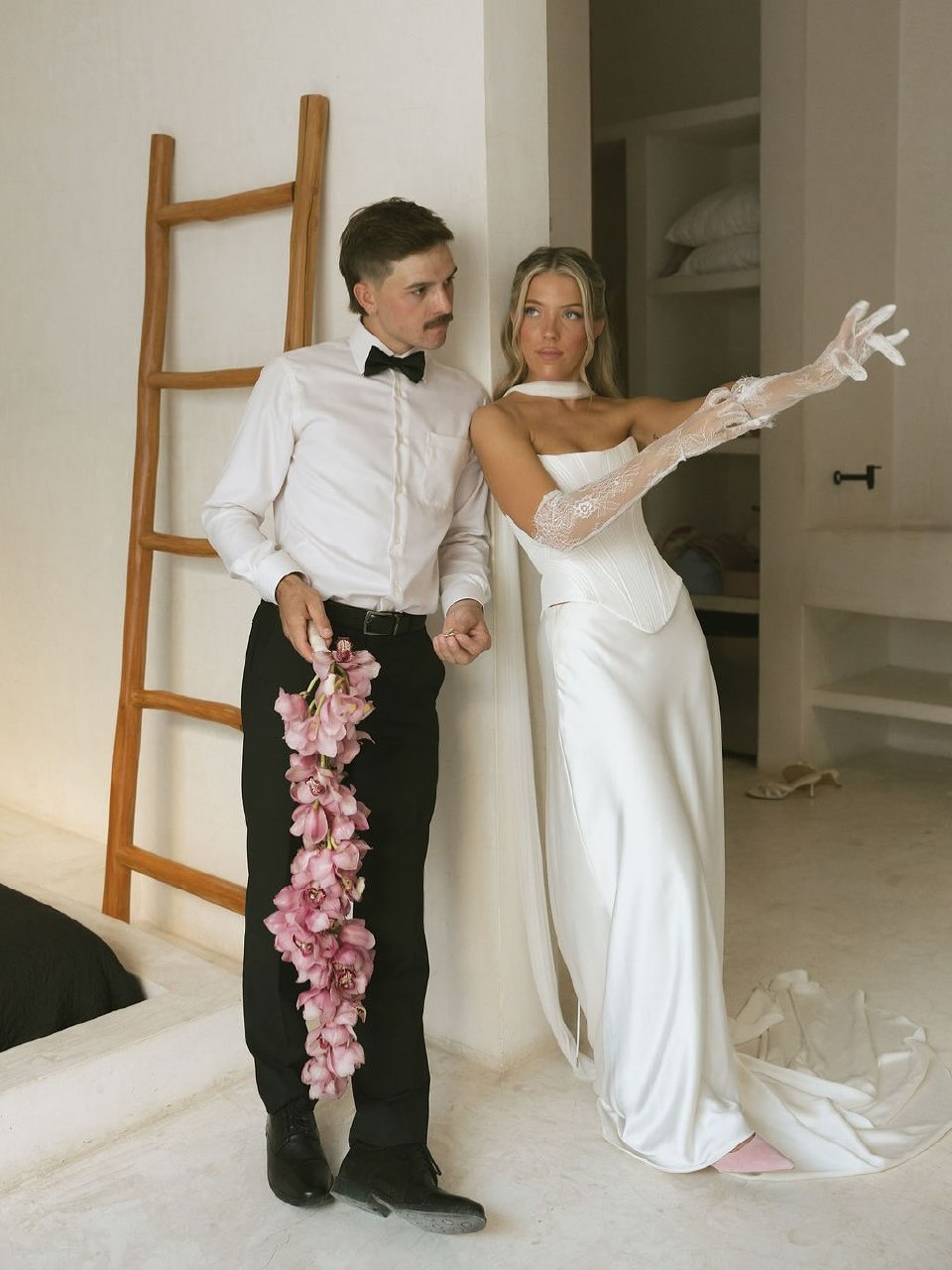
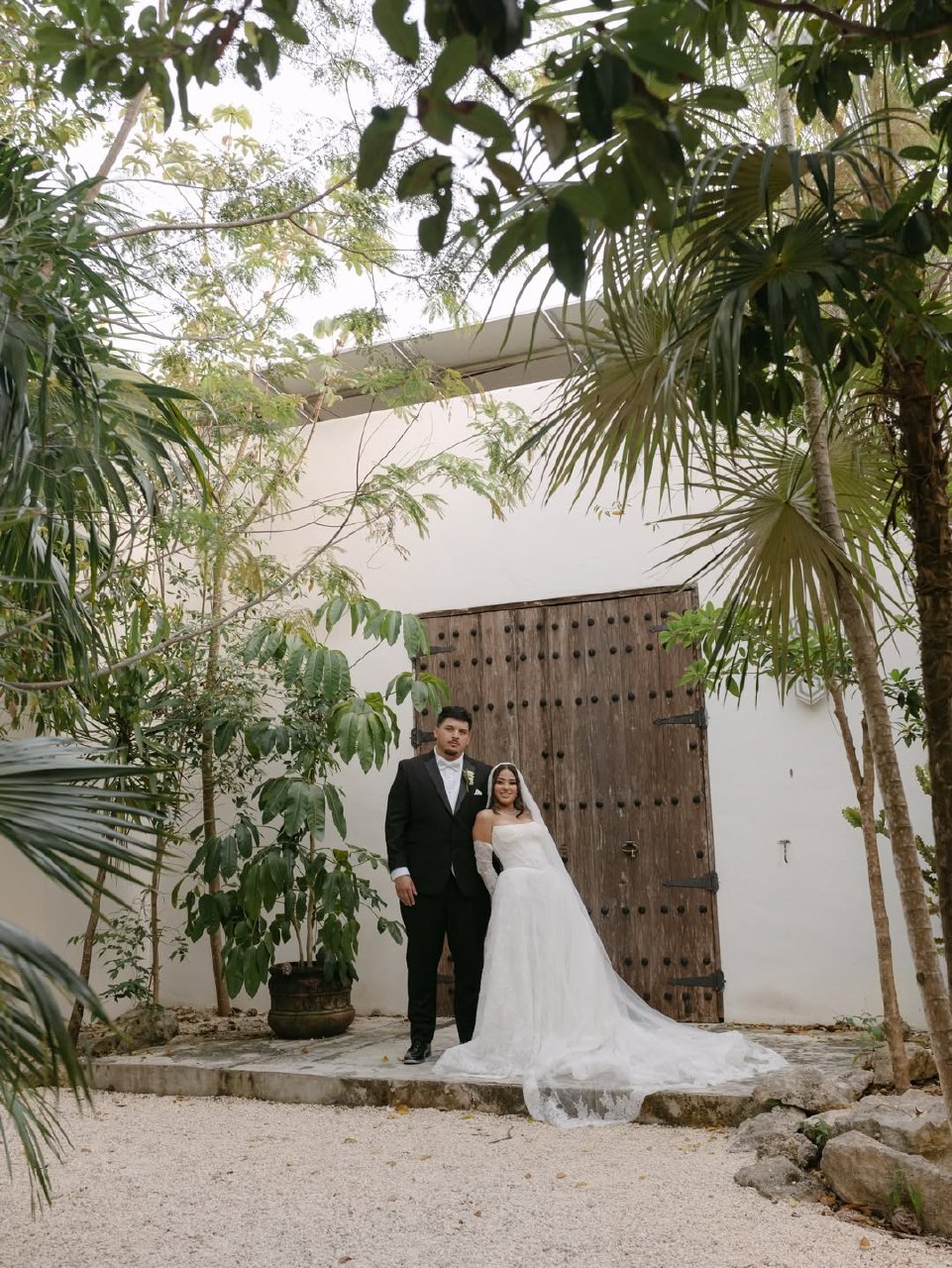
For brides, lightweight, flowing silhouettes are both practical and aesthetically appropriate. Fabrics such as chiffon, silk, organza and linen move beautifully in the sea breeze and jungle air, and will keep you comfortable throughout a long outdoor event. Heavily structured bodices and multiple underskirt layers can become uncomfortable in temperatures above 28°C with humidity. Ivory and warm white look better in photographs against Tulum's palette of natural materials than cold or bright white. Boho silhouettes, which are loosely structured with movement, look intentional in this environment, whereas formal ballgowns look mismatched.
For guests: 'Bohemian chic' or 'resort casual' are appropriate styles. Men should wear linen suits in natural or earth tones, and women should wear midi or maxi dresses in lightweight fabrics. Footwear is a genuine practical consideration – stilettos are not suitable for cenote ceremonies and jungle paths. Flat sandals, block heels or bare feet are all appropriate and significantly more comfortable.
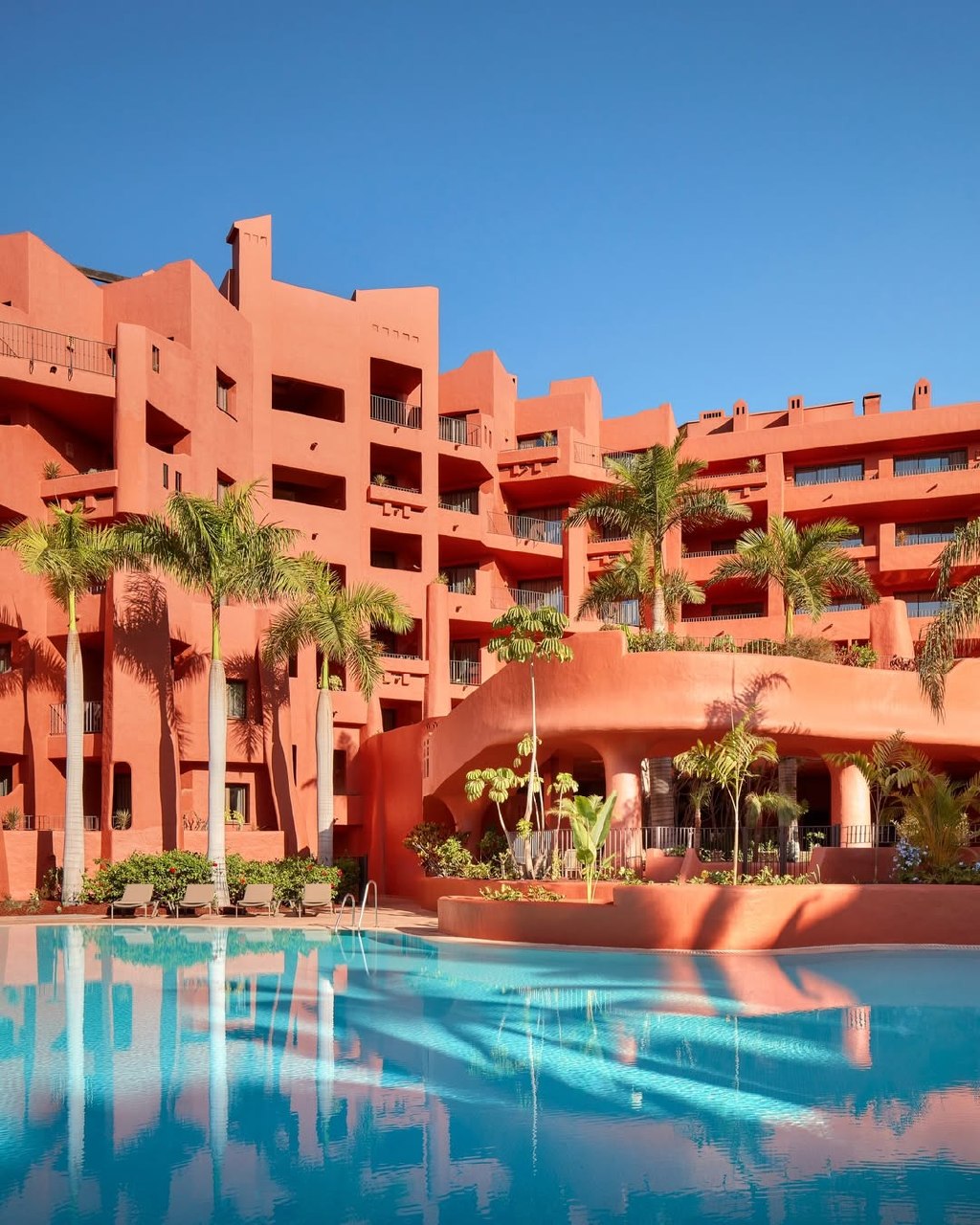
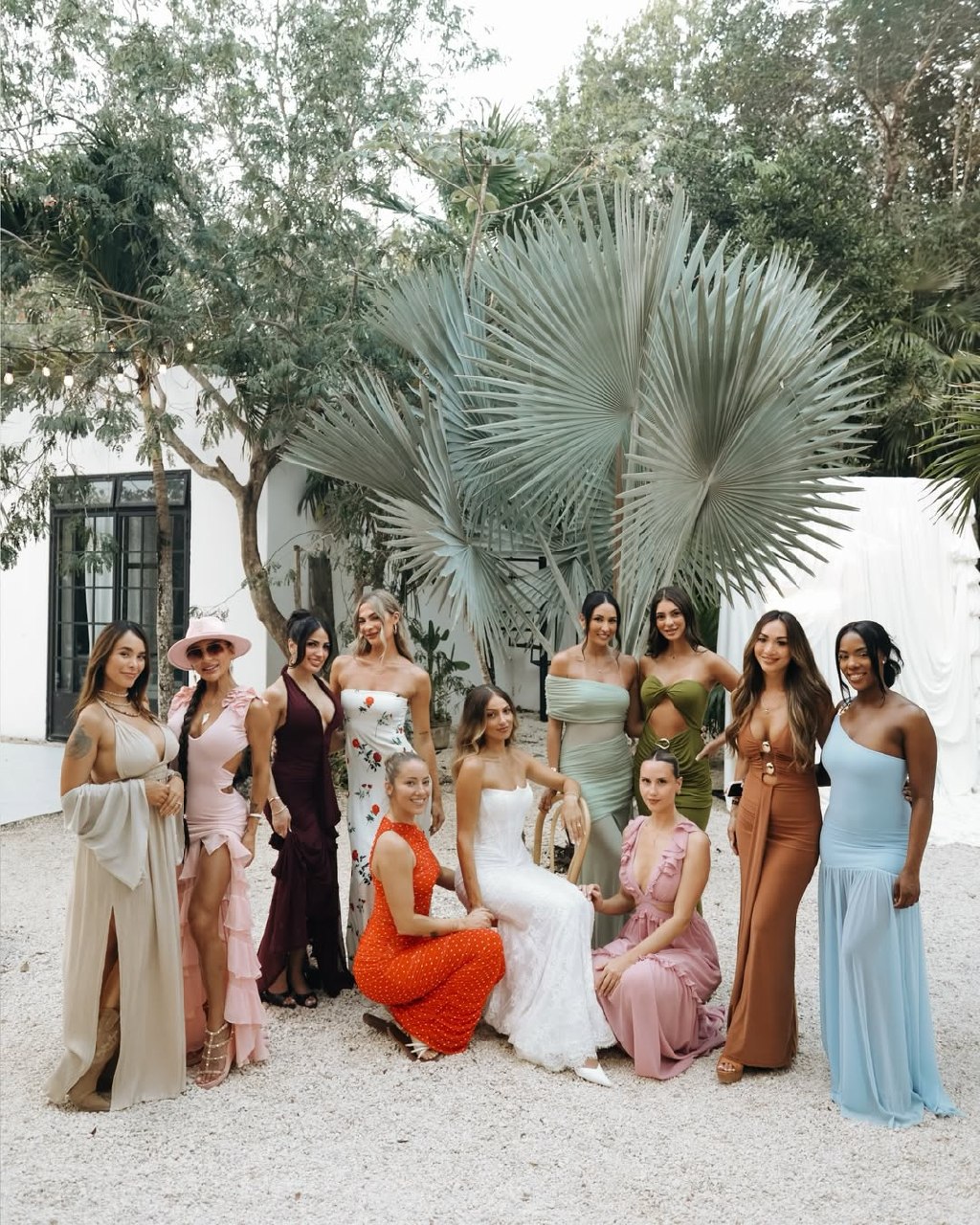
Colour palettes that work in Tulum include warm whites and natural ivories, terracotta, sage green, dusty rose and warm coral. These colours blend in with the architecture and landscape. Neon colours, very saturated colours, and anything that competes with the natural environment look out of place.
The Wedding Menu
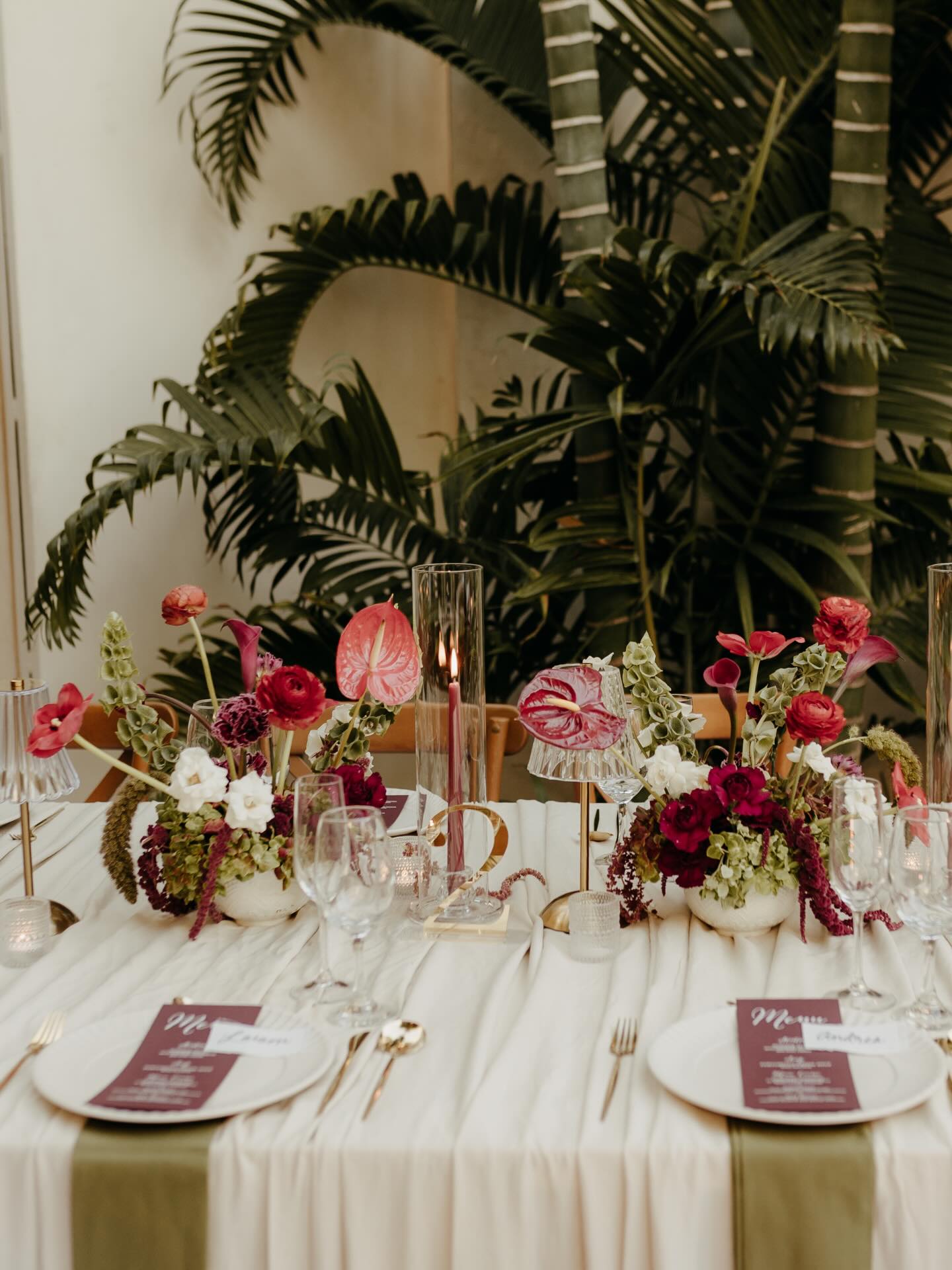
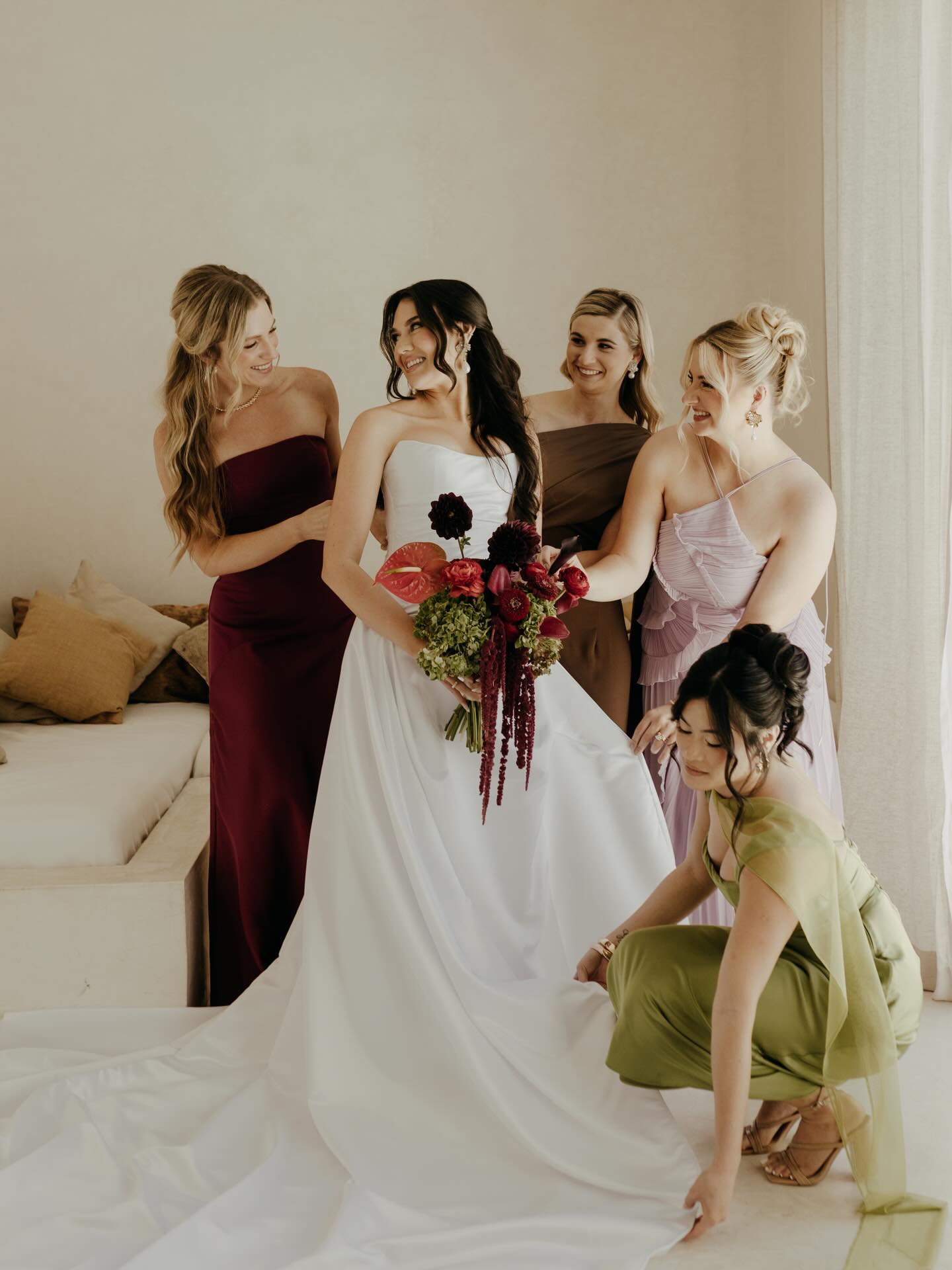
A wedding in Tulum, Mexico, has access to one of the country's most interesting food cultures, and the most memorable events are those that engage with it directly rather than defaulting to an international luxury menu.
The cocktail hour is where Tulum's culinary heritage leaves its first impression. A mezcal station offering three to five artisanal selections from Oaxaca, served with the appropriate accompaniments - orange slices, sal de gusano and dark chocolate - introduces guests to a regionally specific spirit tradition. Fresh ceviche made to order at a station, tacos served from a comal by a tortillera or dispensers of agua fresca filled with fresh hibiscus, tamarind and horchata all communicate that the couple engaged with the place rather than just using it as a backdrop.
For dinner, cochinita pibil - slow-roasted pork wrapped in banana leaves, a Yucatán preparation that takes 12-24 hours - is one of the most memorable dishes a Tulum wedding can serve. Guests who have never encountered it before will be amazed by both the presentation (the banana leaf is unwrapped tableside) and the flavour (citrus-bright, slow-cooked). Interactive moments are created by a whole-roasted fish station, a fresh ceviche and aguachile bar, and a chocolate and chilli dessert station featuring Oaxacan drinking chocolate, which no décor element can replace.
As for drinks, there is artisanal mezcal and tequila, Yucatecan honey spirits, fresh agua de jamaica (hibiscus) as the non-alcoholic centrepiece and cold-pressed seasonal fruit waters. The local wine market in Tulum is growing, and Mexican wines from Valle de Guadalupe in Baja California are genuinely excellent and appropriately place-specific.
A Simple Guest Guide
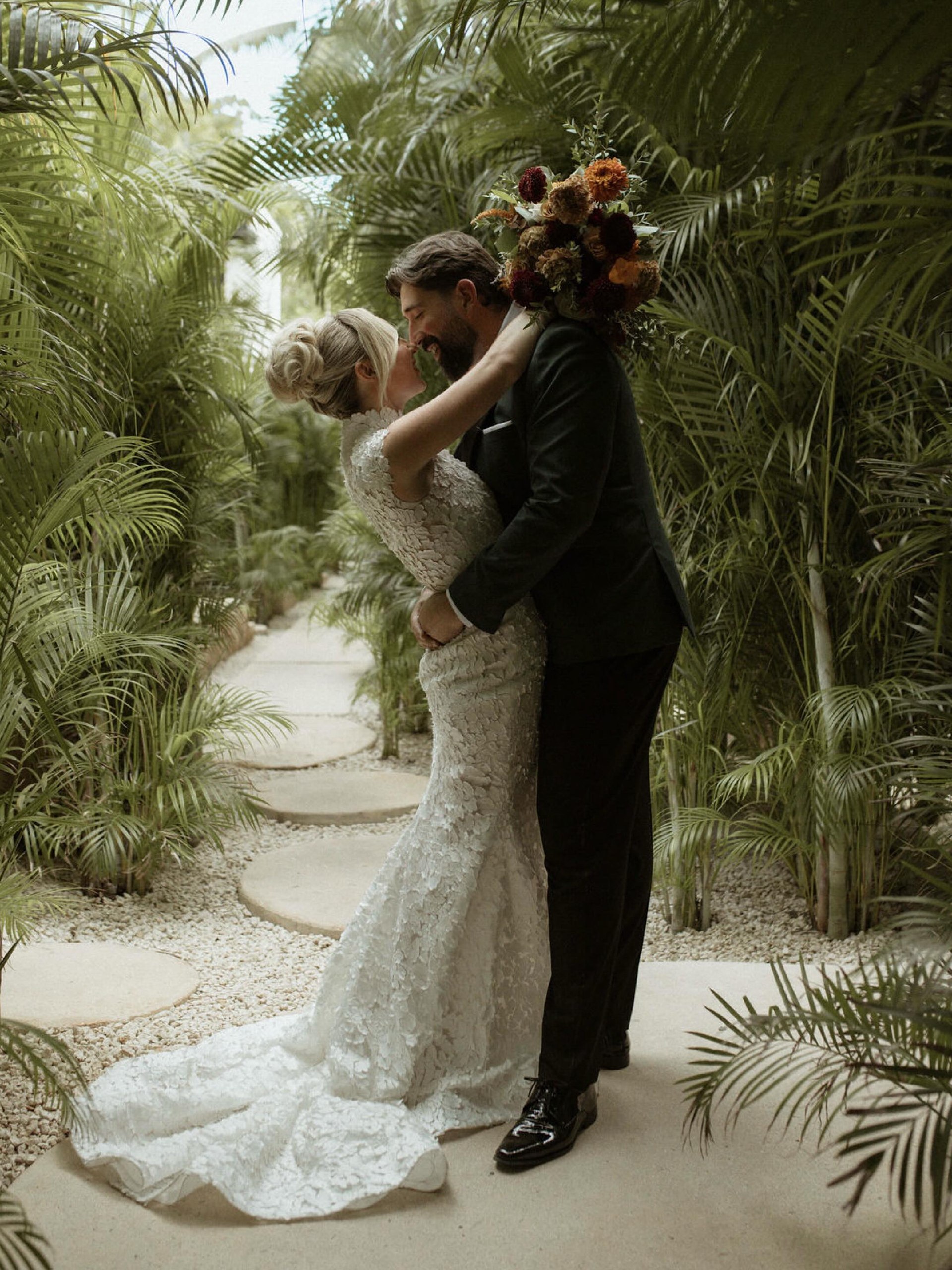
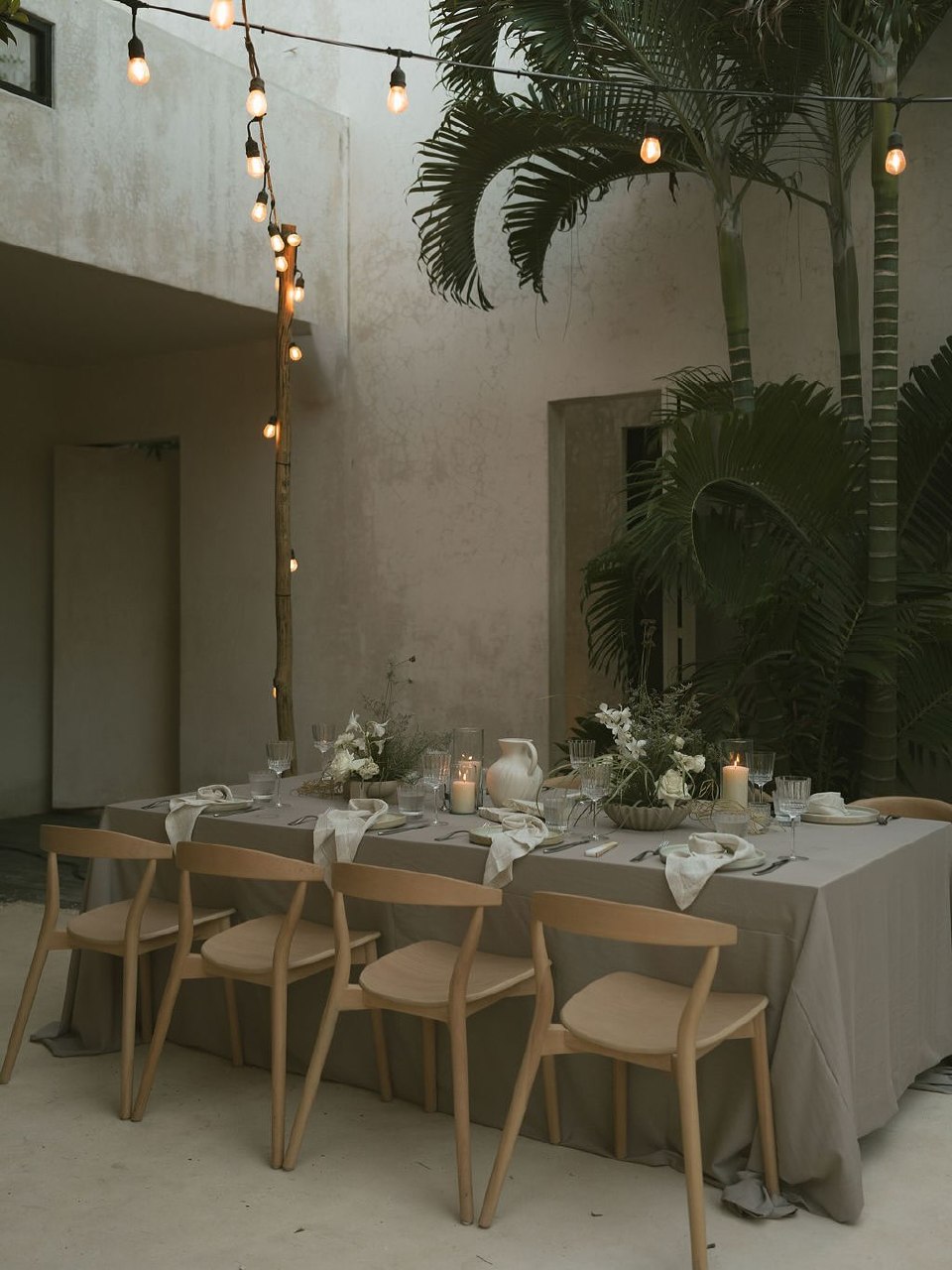
Cancún International Airport is the arrival point for virtually all Tulum wedding guests. It is located 130 kilometres north of Tulum, which equates to a driving time of between 90 minutes and two hours, depending on traffic and the exact location of the venue within the Tulum corridor. This transfer is the first experience that guests have of the destination, so it is important to get it right.
Organised group transfers from the airport show guests that the event is well organised and that they are being cared for from the moment they arrive. Guests who have to negotiate taxis or use app-based services at an unfamiliar airport may feel that their arrival into this extraordinary destination is not as smooth as it should be. Allow for a budget of $30-$50 per person for quality transfers.
Guest accommodation in Tulum requires careful planning. Boutique beach hotels in the hotel zone have limited room numbers - a hotel with 20 rooms cannot accommodate a guest list of 70 people. Most Tulum destination weddings require guests to be spread across multiple properties, which are coordinated by room category and budget. The residential Aldea Zama development offers villa rentals with a higher room count for groups who want to stay together. The town of Tulum (separate from the beach hotel zone) offers accommodation at various price points and is 10-15 minutes from most beach venues.
The guest information document is particularly important for Tulum. It should include transfer pickup arrangements at the airport, the hotel address (specifying beach zone vs. town if relevant) and the venue address with GPS coordinates (standard addresses are unreliable in the hotel zone). It should also include dress codes for each event, including specific footwear guidance, the transfer schedule between venues and one local recommendation each for coffee, mezcal and swimming. Rather than printed materials, distribute this via a group app or link - Tulum's aesthetic is not well served by laminated event packets.
Local Destination Details About Tulum Wedding
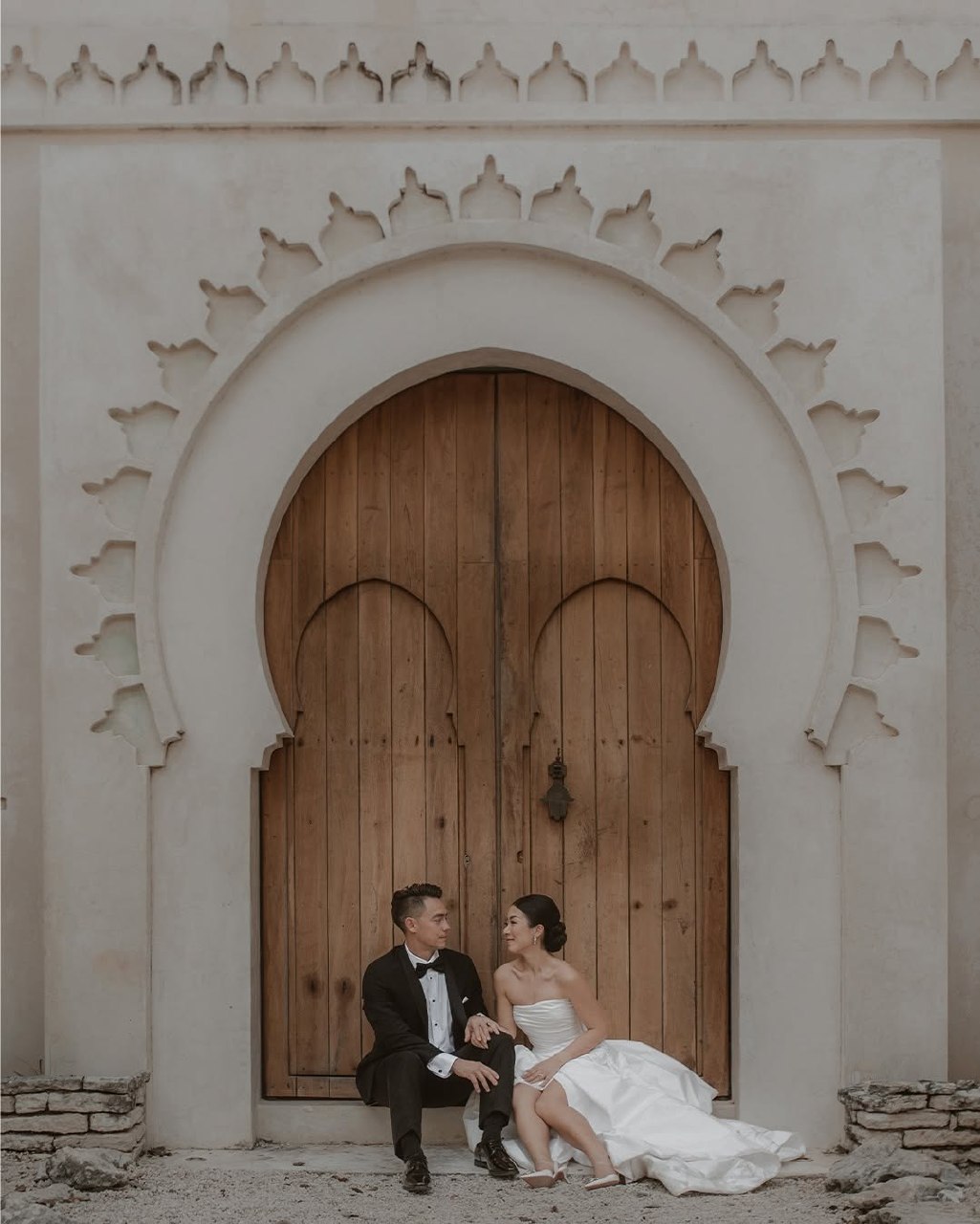
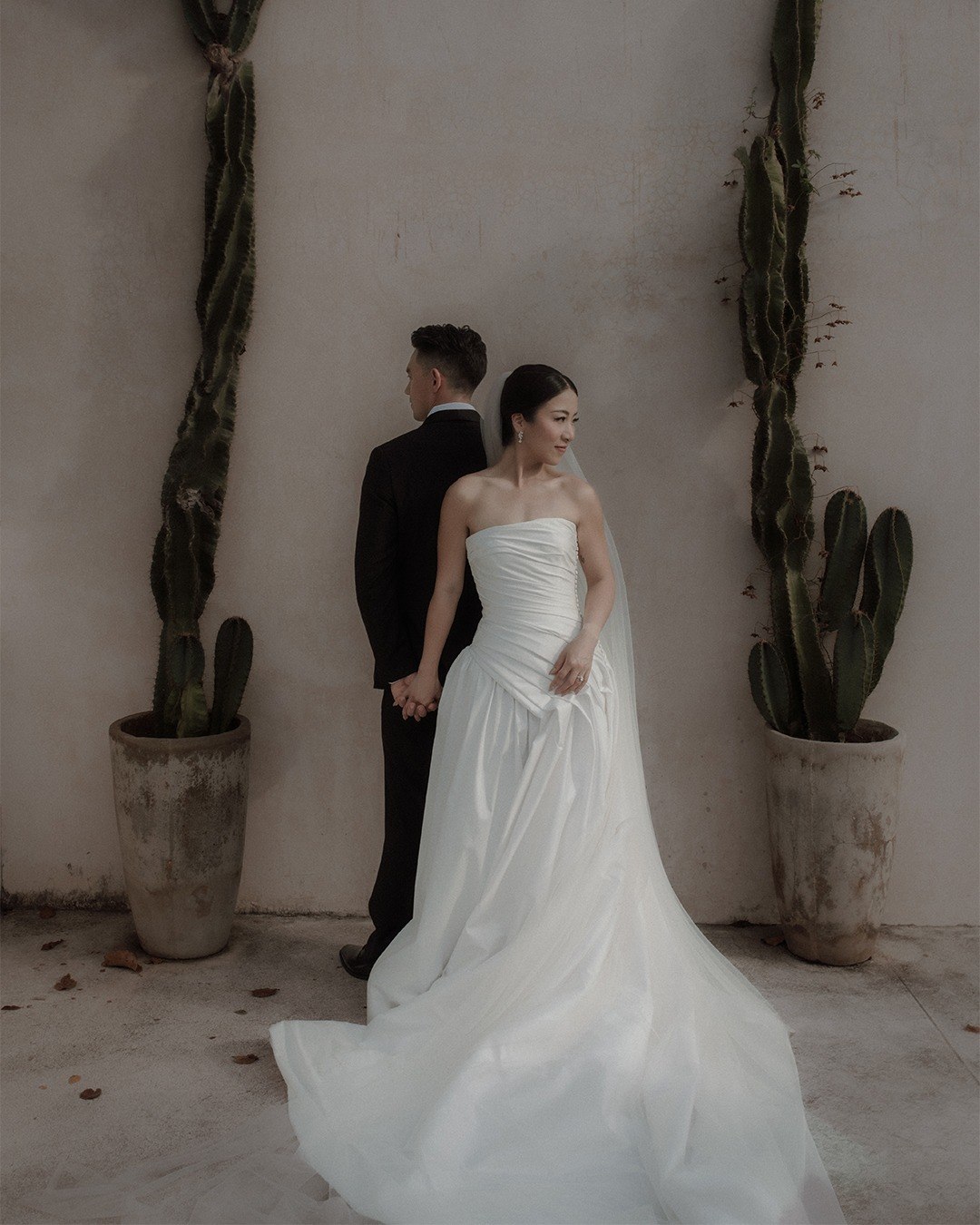
There is a specific and achievable difference between a wedding that happened to be in Tulum and one that could only have been there.
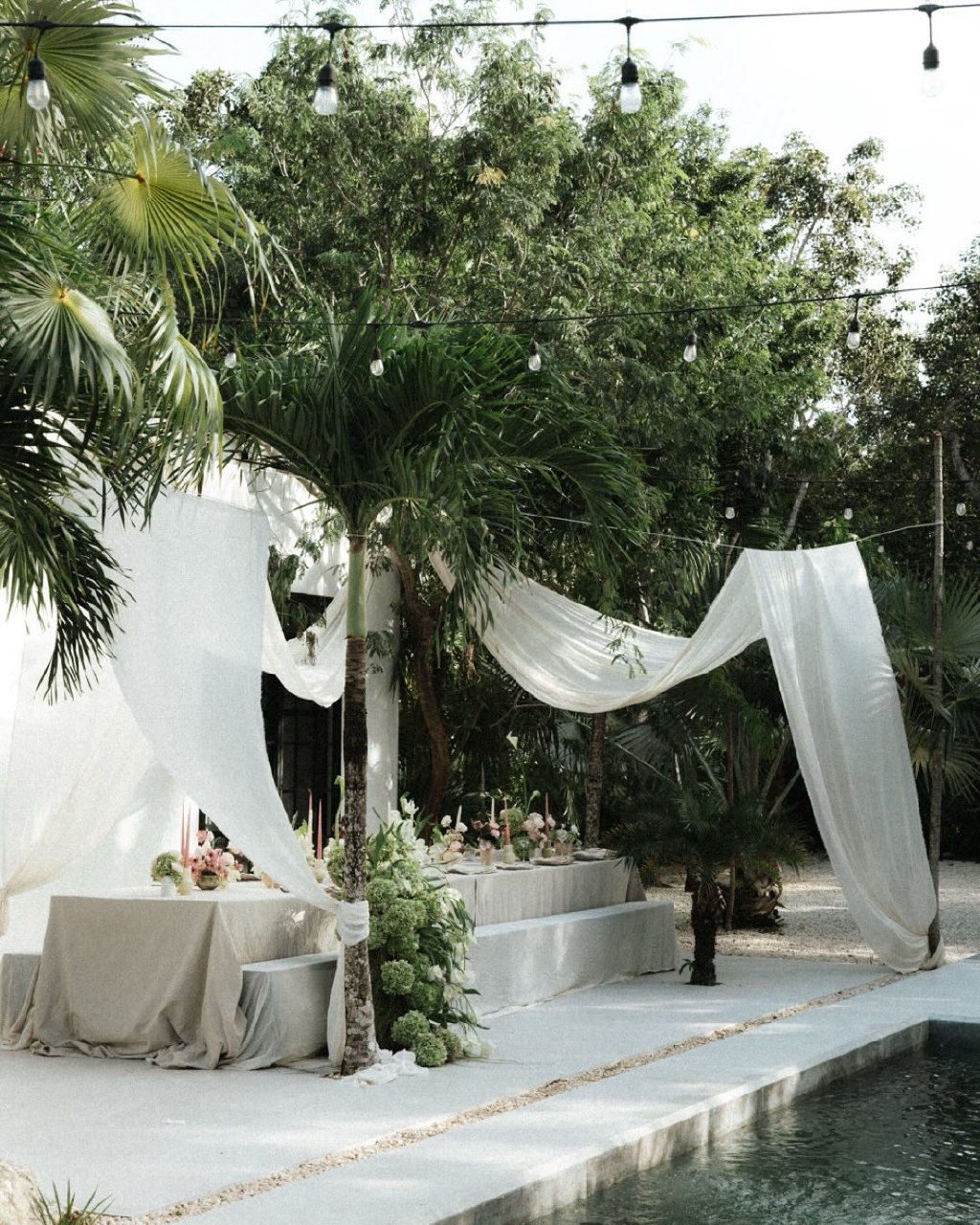
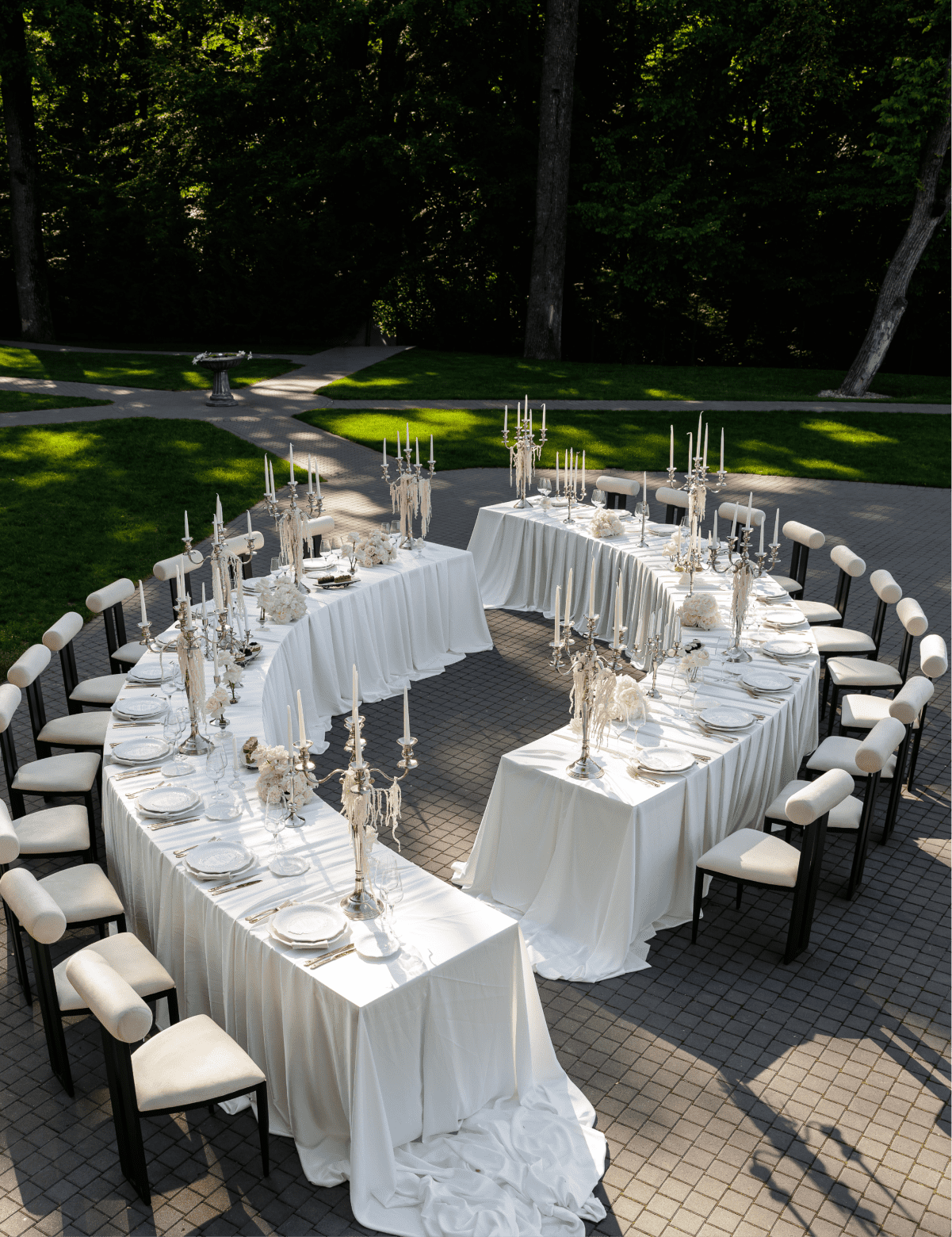
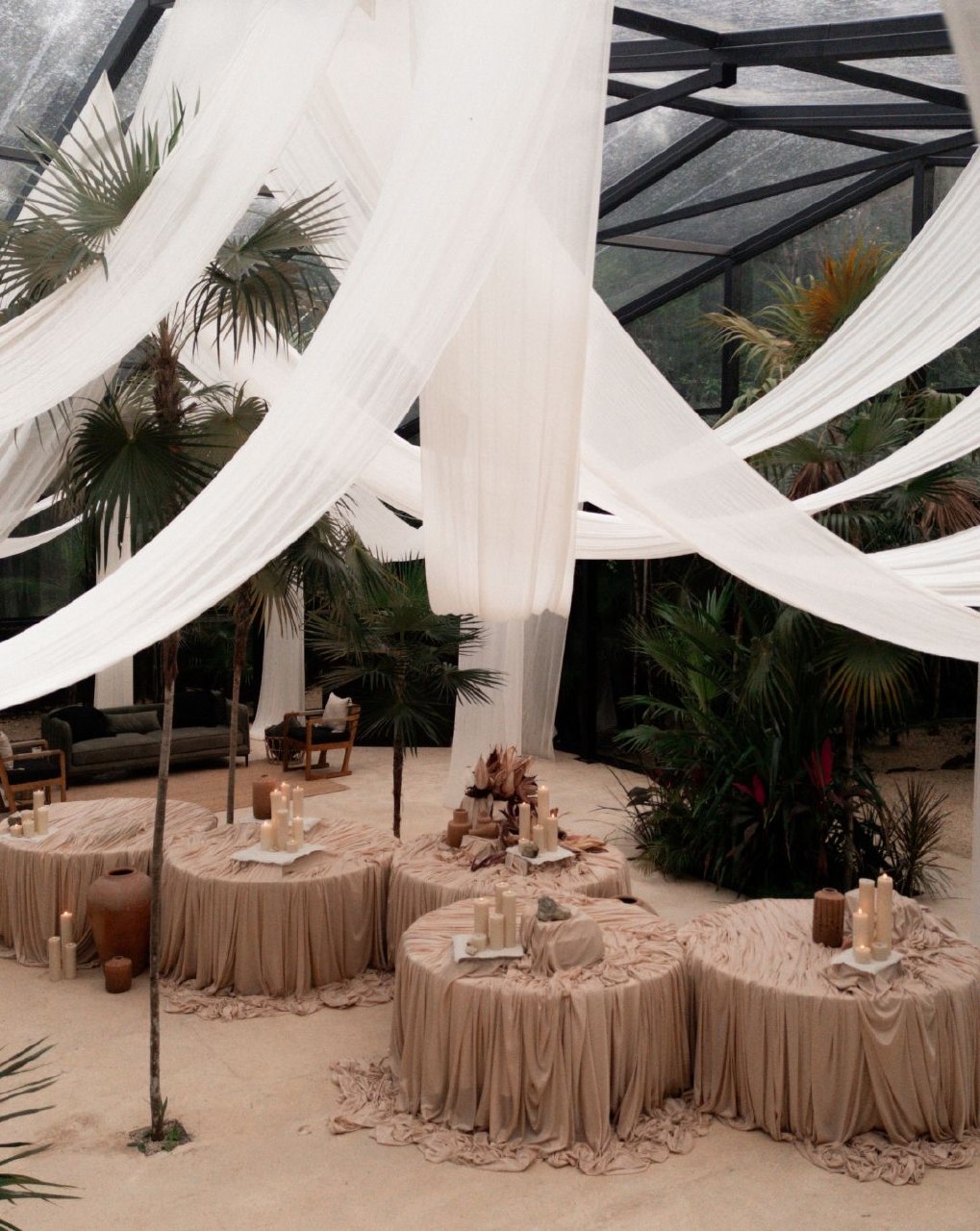
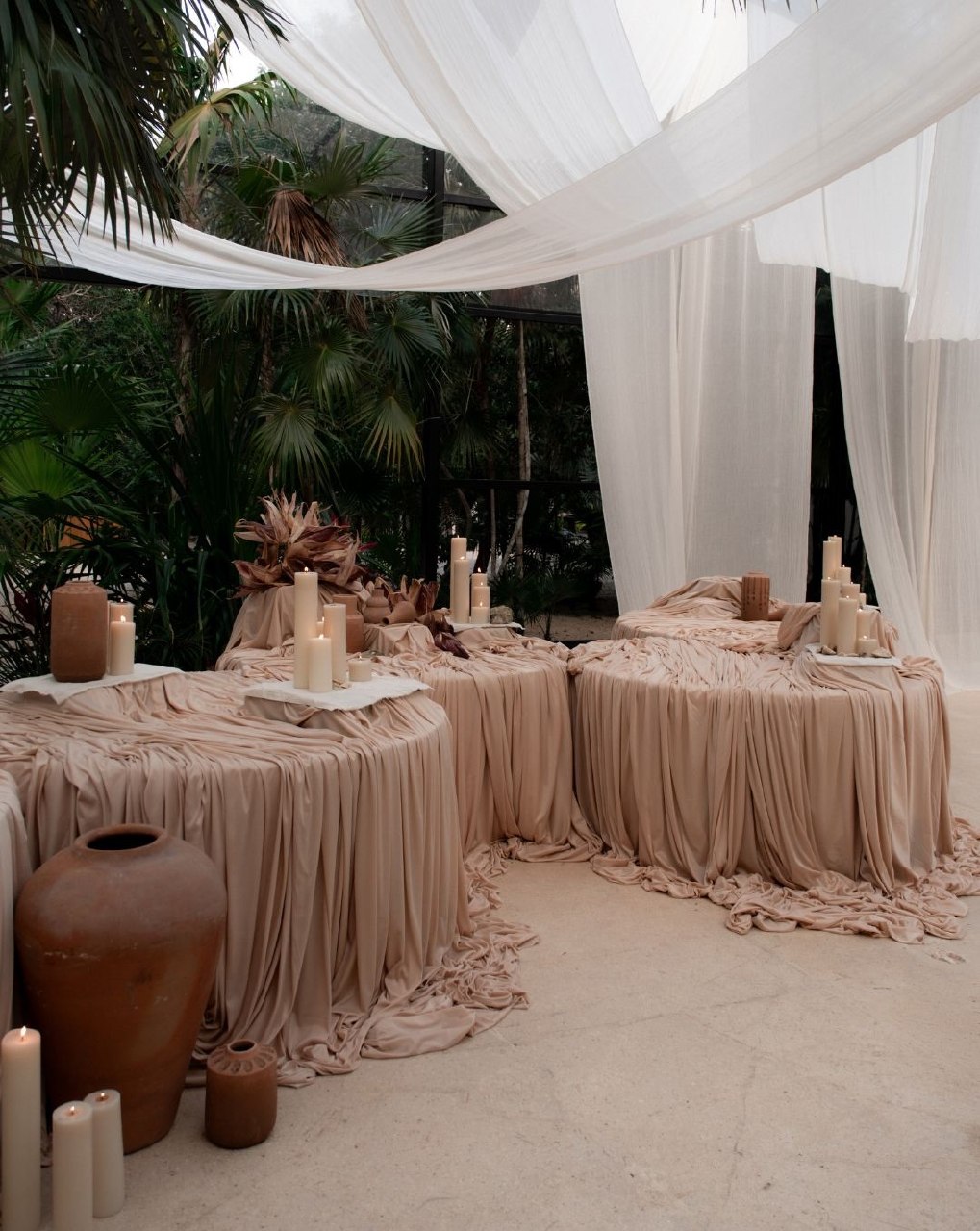
Palapa roofs (thatched palm-frond structures), raw concrete, carved wooden furniture and natural pools fed by cenotes are the visual language of Tulum's hospitality design. Events that incorporate these features, rather than using white-draped furniture and imported floral arrangements that could be found anywhere, feel genuinely rooted in the local culture.
Botanical elements such as copal resin burning as a pre-ceremony ritual, cacao ceremonies conducted by local Maya practitioners and floral installations built from tropical jungle materials rather than imported flowers are all available in Tulum and are all specific to this cultural and natural environment.
The music scene is also unique to Tulum, with a vibrant local DJ culture and a diverse range of electronic music, from ambient to organic house to more upbeat sets, performed by resident and touring artists who understand the specific acoustics of boutique hotel terraces and jungle clearings. Adding layers that a standard wedding playlist does not, options include a live saxophone over an electronic set, a marimba player during dinner, or a traditional Yucatecan trova guitarist during the ceremony.
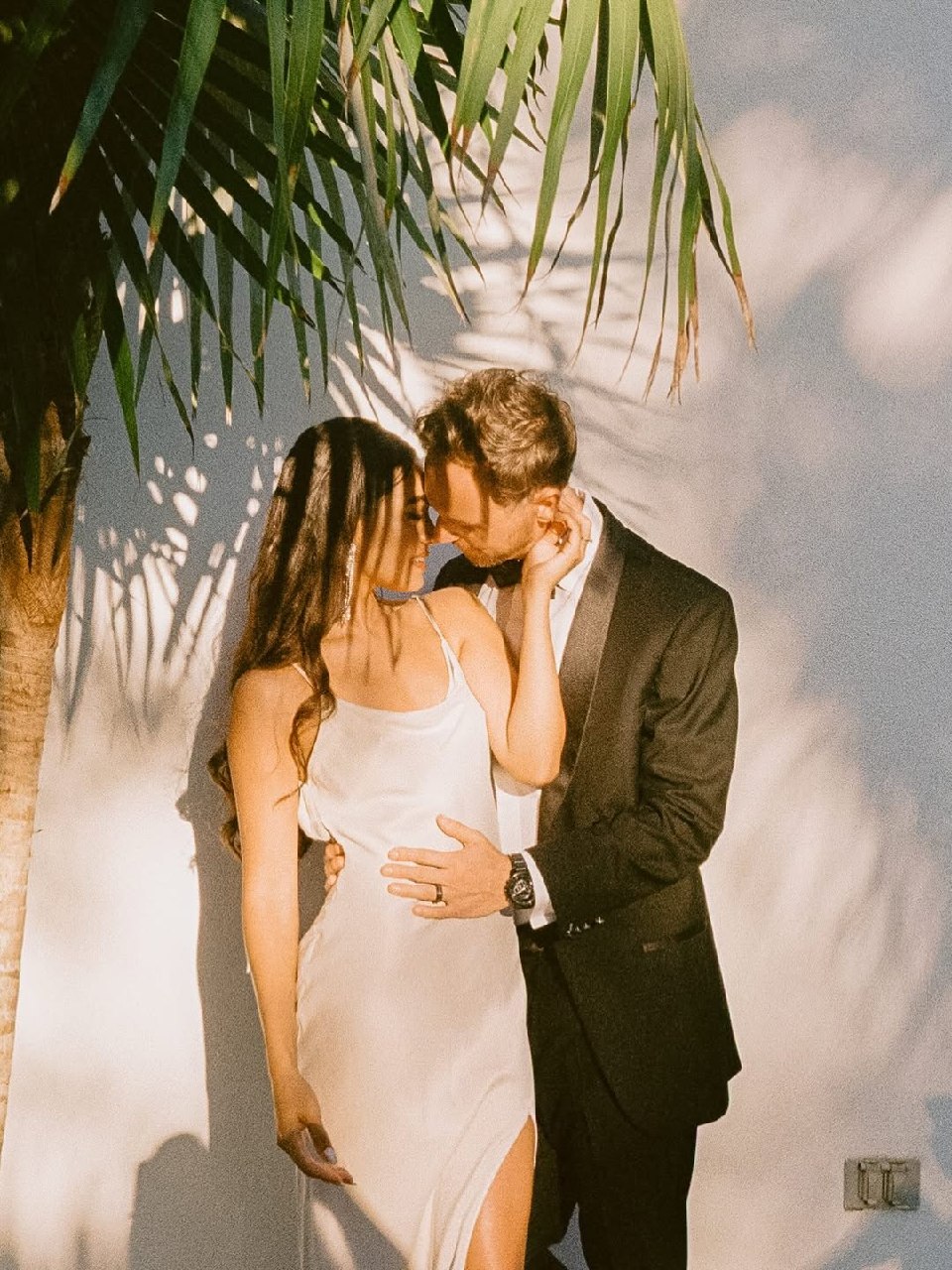
The cenote experience: a pre-wedding morning swim in a cenote for the wedding party or an included cenote session for early-arriving guests grounds the destination in something unique to the area. Underwater photography in the cenotes produces some of the most extraordinary wedding imagery in the world.
Although planning a wedding in Tulum requires a bit of detective work, it doesn't have to be overwhelming. Browse real event galleries and detailed vendor profiles on Wezoree to get the full picture. Once you have a clearer idea of the local area, you’ll be much better prepared to put together a team that matches both your style and your budget.

FAQ: Wedding in Tulum
What is included in Tulum wedding packages?
Tulum wedding packages at boutique hotels usually include venue hire for the ceremony and reception, basic catering with house beverages, a coordinator for the day, and standard furniture. However, custom florals, upgraded lighting, entertainment, photography, videography, generator costs, transportation and personalised décor are almost always excluded, and these extras can increase the base package cost by 50-80%.
How far in advance should I book a destination wedding in Tulum?
For peak season dates (December to February), 18 months' notice is the realistic minimum for securing your preferred boutique hotel venue. The best beach hotels have 10-30 rooms and accept a limited number of wedding bookings per year, so availability fills up faster than most couples expect. The photography and coordination teams fill up at the same pace. For November and late March to May, 12 months' notice is generally sufficient.
Are there any all-inclusive wedding packages available in Tulum?
All-inclusive wedding packages in Tulum are uncommon because most properties in the area are boutique rather than resort-scale. While some boutique hotels offer packages that include accommodation for a minimum number of rooms alongside the event, these differ from the full-service, all-inclusive model.
What is the cost of a wedding in Tulum?
A Tulum wedding package for 40-60 guests at a boutique hotel in the beach area costs between $35,000 and $65,000, excluding peak season premiums, VAT and service charges. With these extras and a full team of independent vendors (coordinator, photographer, videographer, florist, caterer and entertainer), the total cost of an event for 50 guests during peak season is usually between $60,000 and $90,000. Add-ons for cenote ceremonies, multi-venue logistics and production infrastructure for remote properties incur an additional cost.
What is the weather usually like in Tulum?
The reliable dry season runs from November to April, with temperatures ranging from 24 to 30°C, low humidity and minimal rainfall. June to August can be beautiful, with lush green vegetation, but you will need an indoor contingency plan for the afternoon rain. September and October fall within the peak of hurricane season, so careful insurance and contingency planning are required. The best months overall in terms of conditions, availability and pricing are November and late March to early April.