A Serengeti Proposal in a Maasai Village: When the Unexpected Becomes the Story


- The Vision: Editorial, Cinematic, and Deeply Personal
- The Styling — When Fashion Meets the Wild
- When the Plan Changes — and Something Better Begins
- The Maasai Village: A Proposal No One Could Have Planned
- The Serengeti as a Backdrop — Migration, Light, and Scale
- Planning an African Proposal — What This Story Teaches
Some proposals are built on surprise. Others are built on something rarer — a shared vision, a mutual understanding of beauty, and the kind of trust that allows two people to create something intentional together. This one belongs to the second category. It also happens to be one of the most visually extraordinary Serengeti proposals we have ever had the privilege of sharing on this blog — made more remarkable by the fact that the photographer telling the story is the same person who lived it.
Find Your Perfect Wedding Vendors

The Vision: Editorial, Cinematic, and Deeply Personal
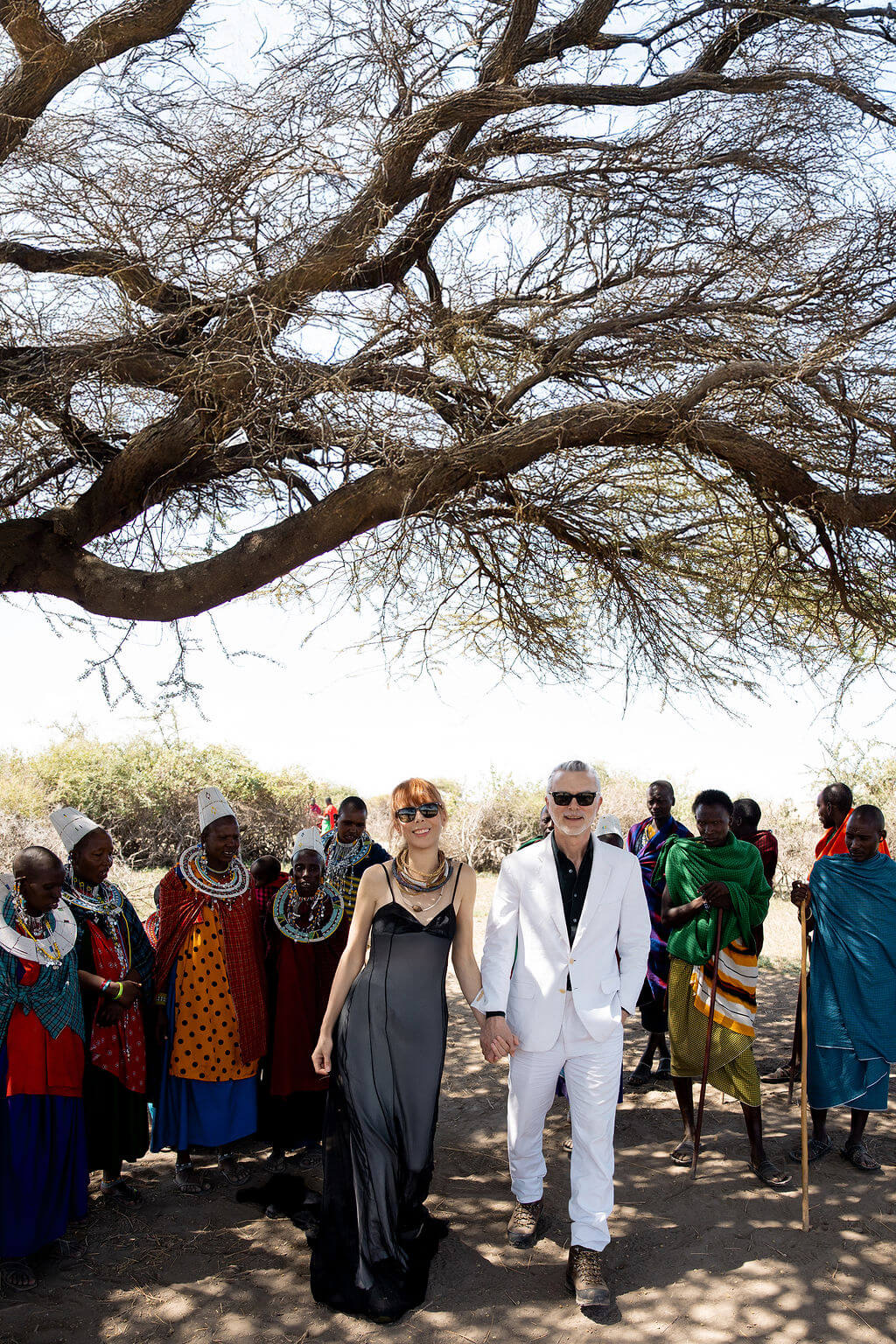
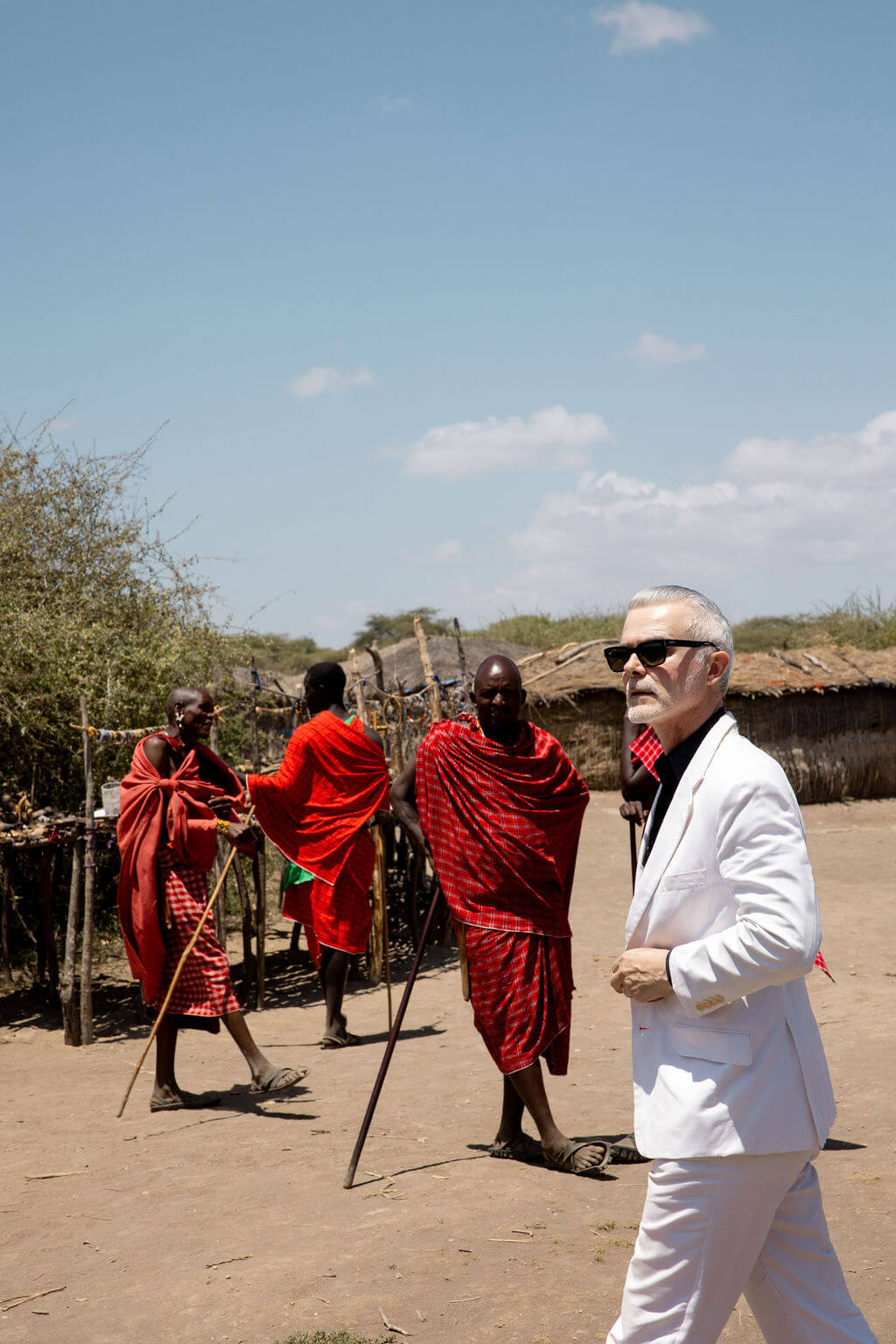
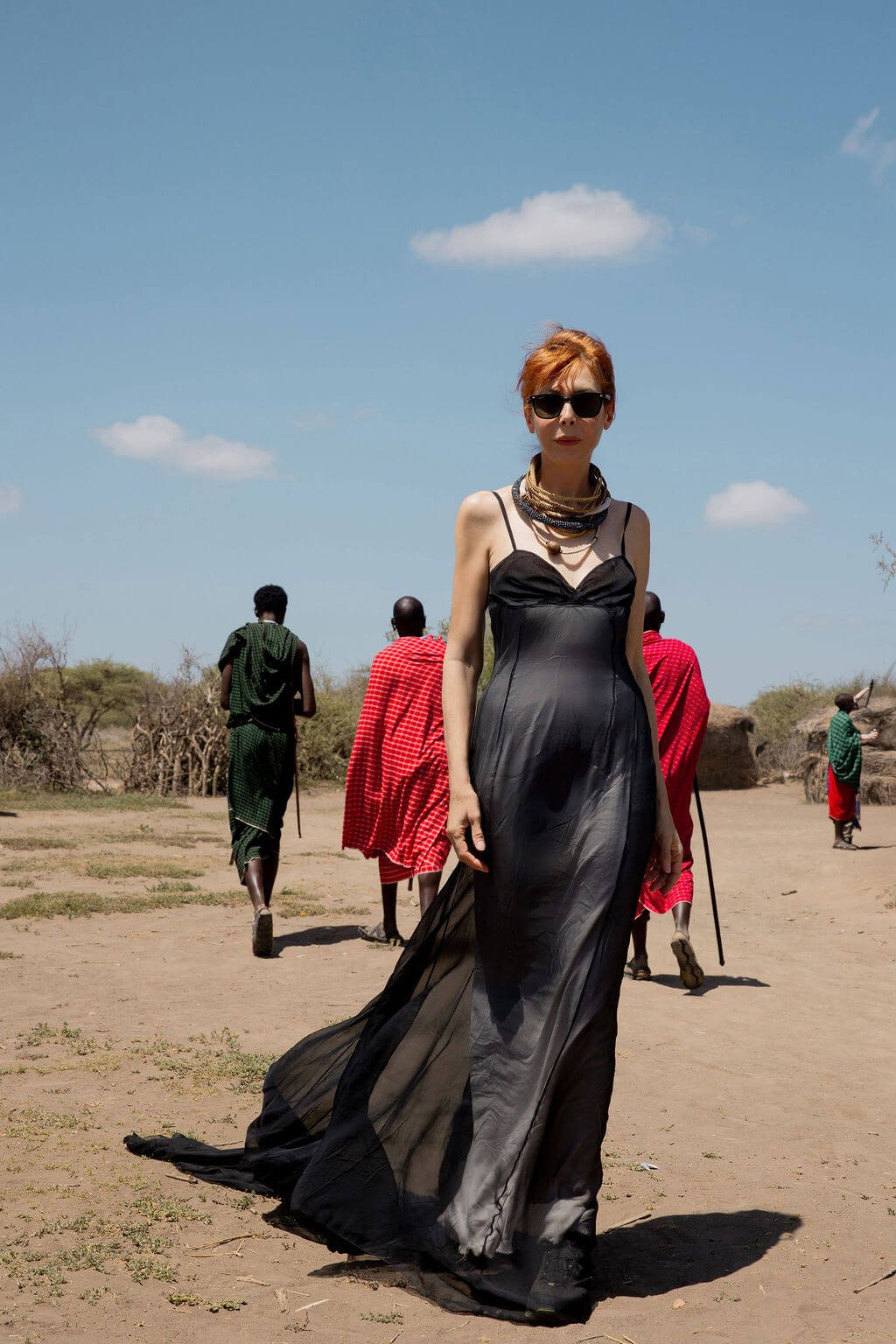
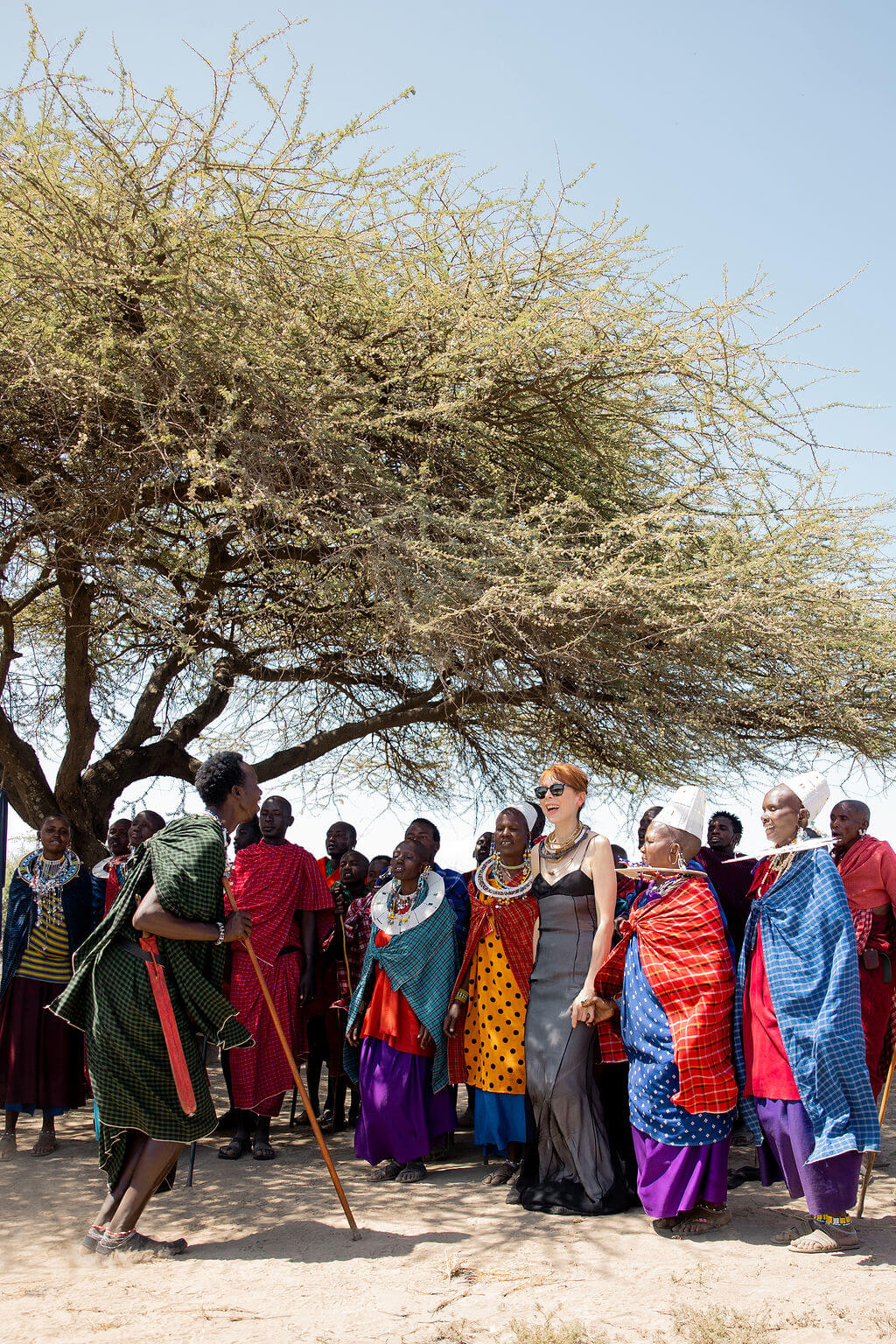
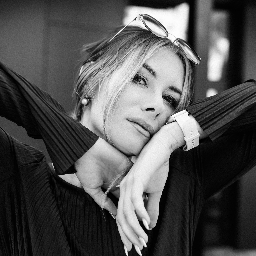
Most couples come to us asking how to plan the perfect proposal. Daniela and Giampaolo approached it differently — not as an event to execute, but as a visual narrative to inhabit. Before leaving for their 12-day journey across Namibia and Tanzania, Giampaolo told her he wanted to propose surrounded by the wild beauty of nature. Knowing how deeply she connects with imagery and storytelling, he chose to involve her in the vision rather than engineer a surprise.
What emerged from that conversation was something genuinely rare.
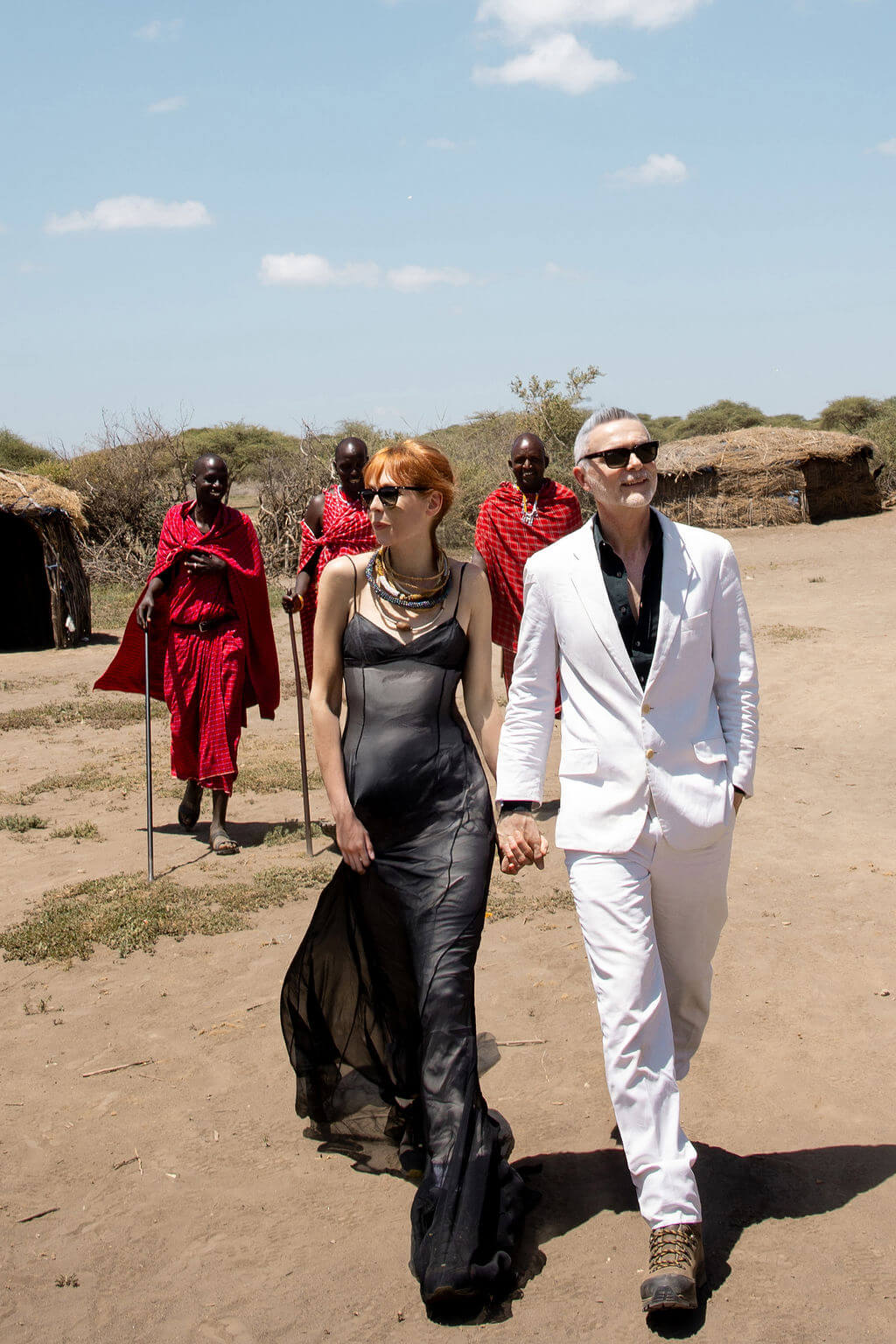
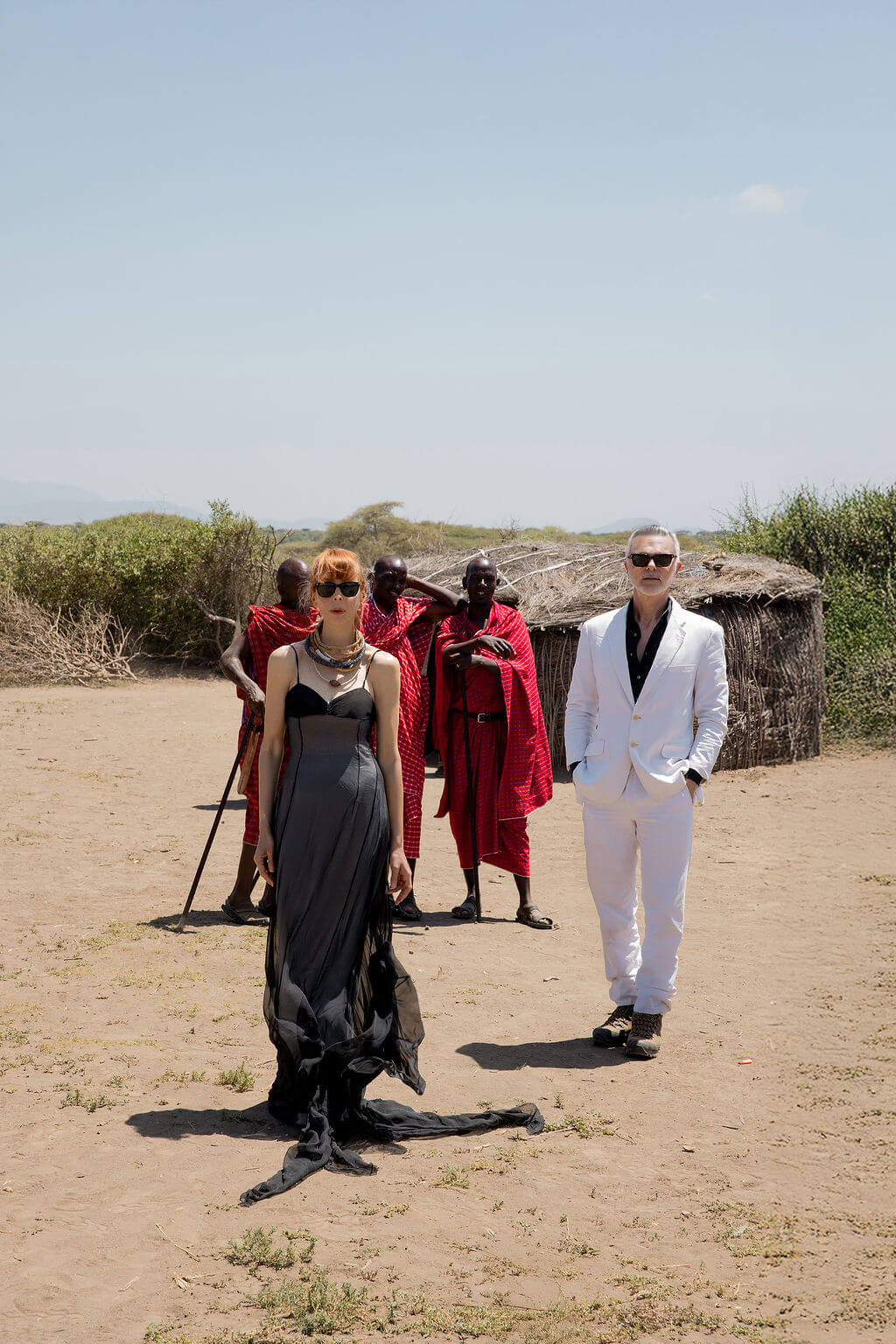
 I envisioned something cinematic, fashion-driven, and editorial — where emotion and aesthetic could coexist in a very pure way.
This is the kind of clarity that produces extraordinary images. Not a checklist of romantic gestures, but a coherent creative direction — one where the landscape, the styling, and the emotion were all part of the same intentional frame. For a photographer who has spent years documenting other people's most intimate moments, being on the other side of the lens required a different kind of surrender. Not to surprise, but to be present.
The Styling — When Fashion Meets the Wild
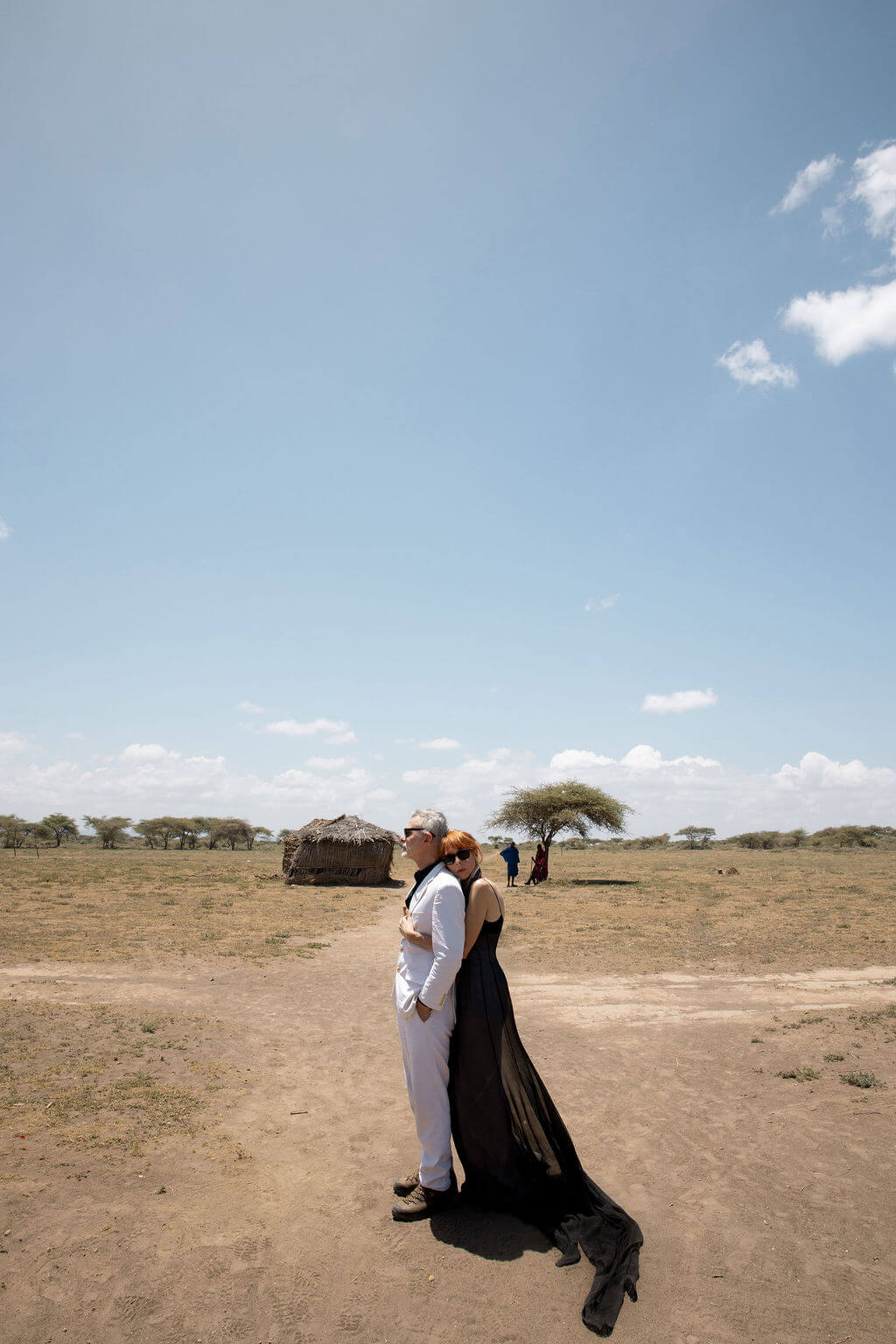
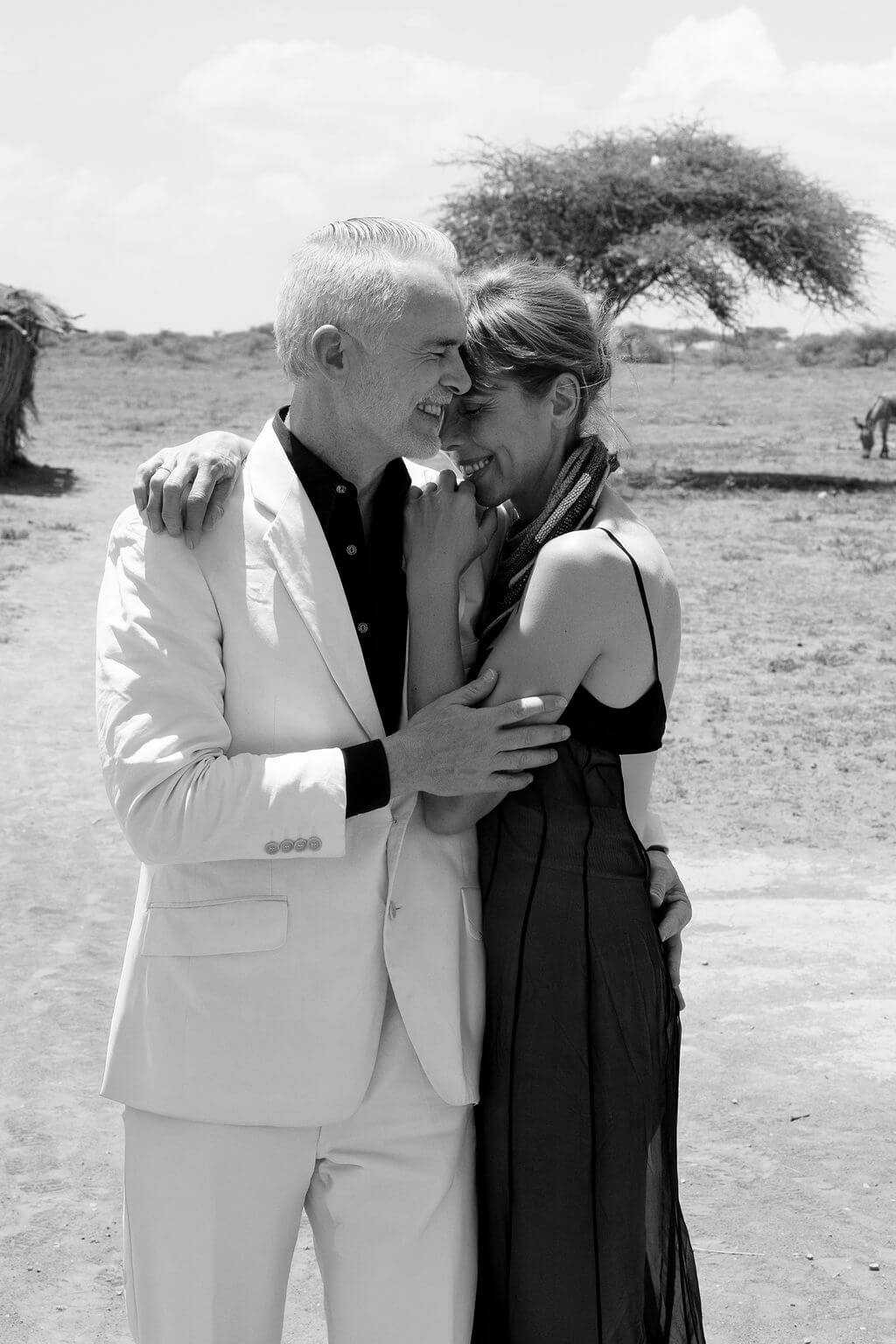
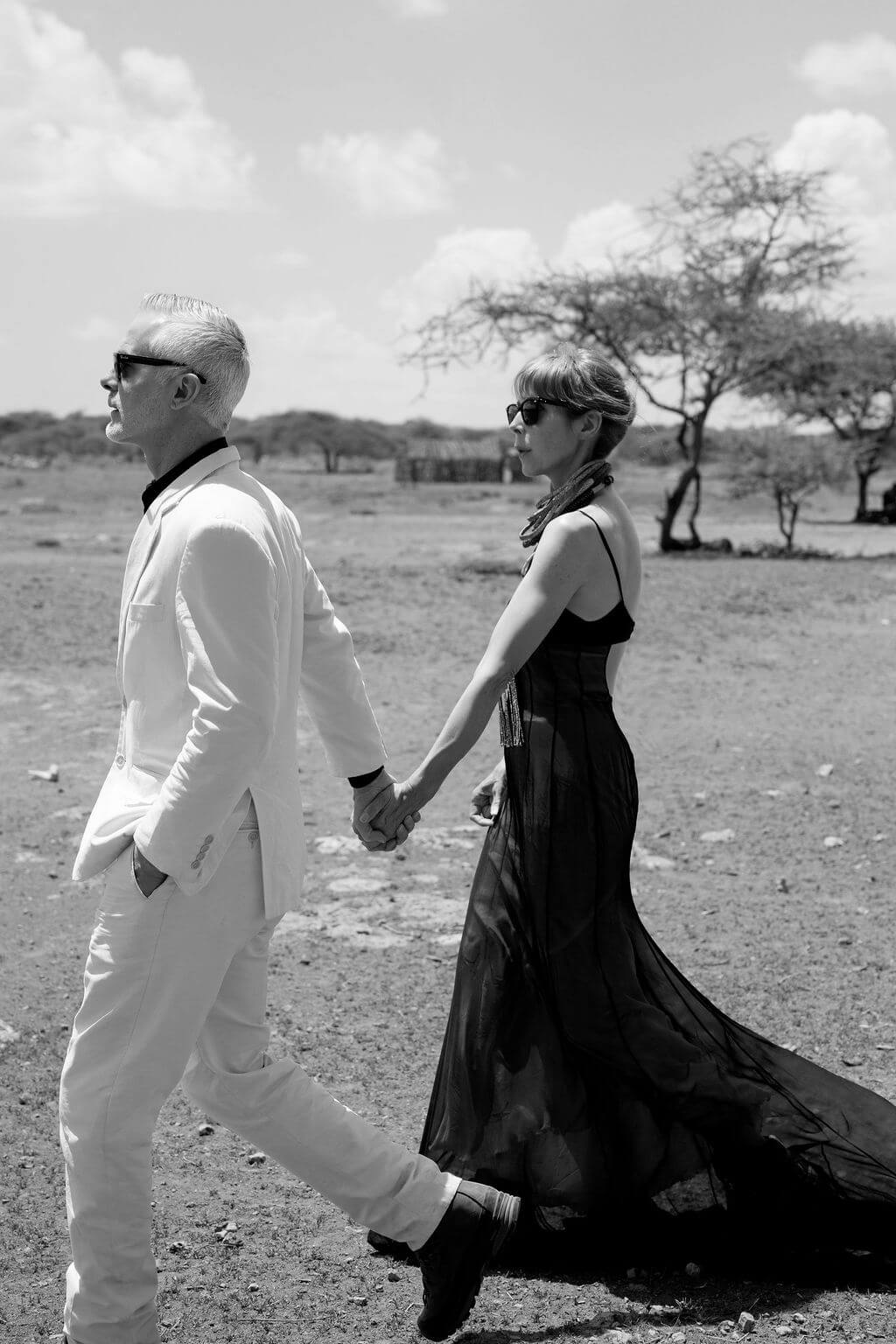
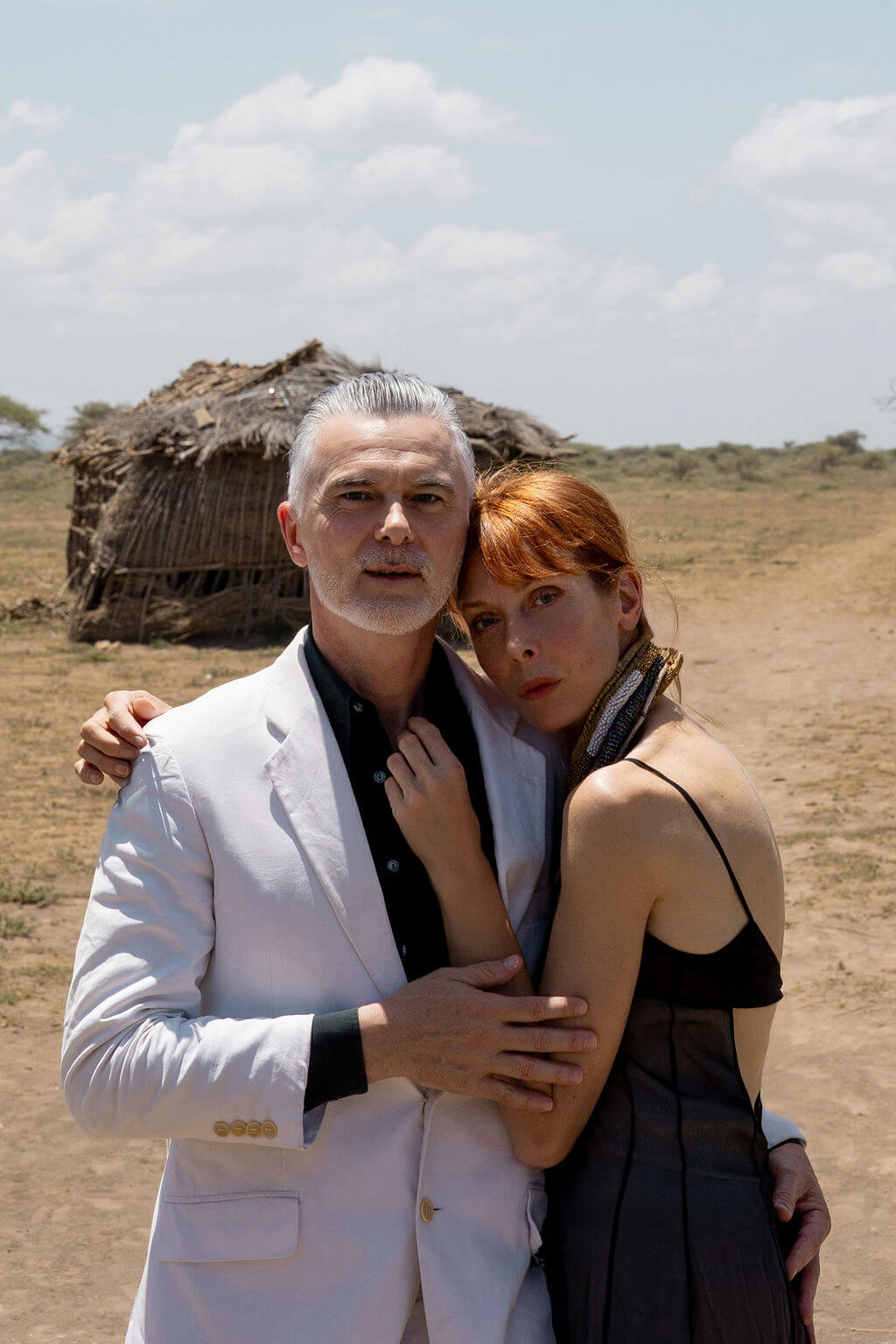
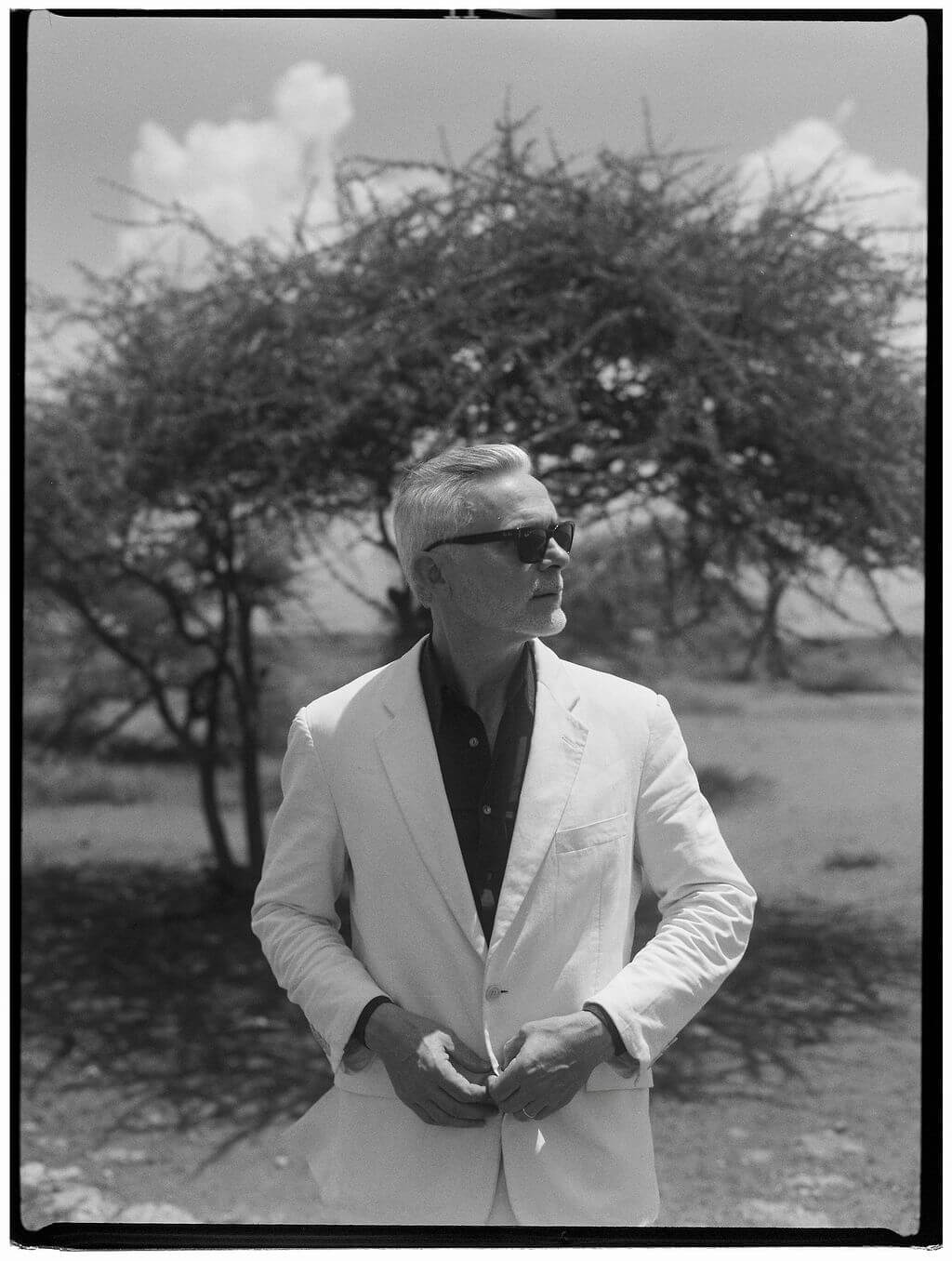
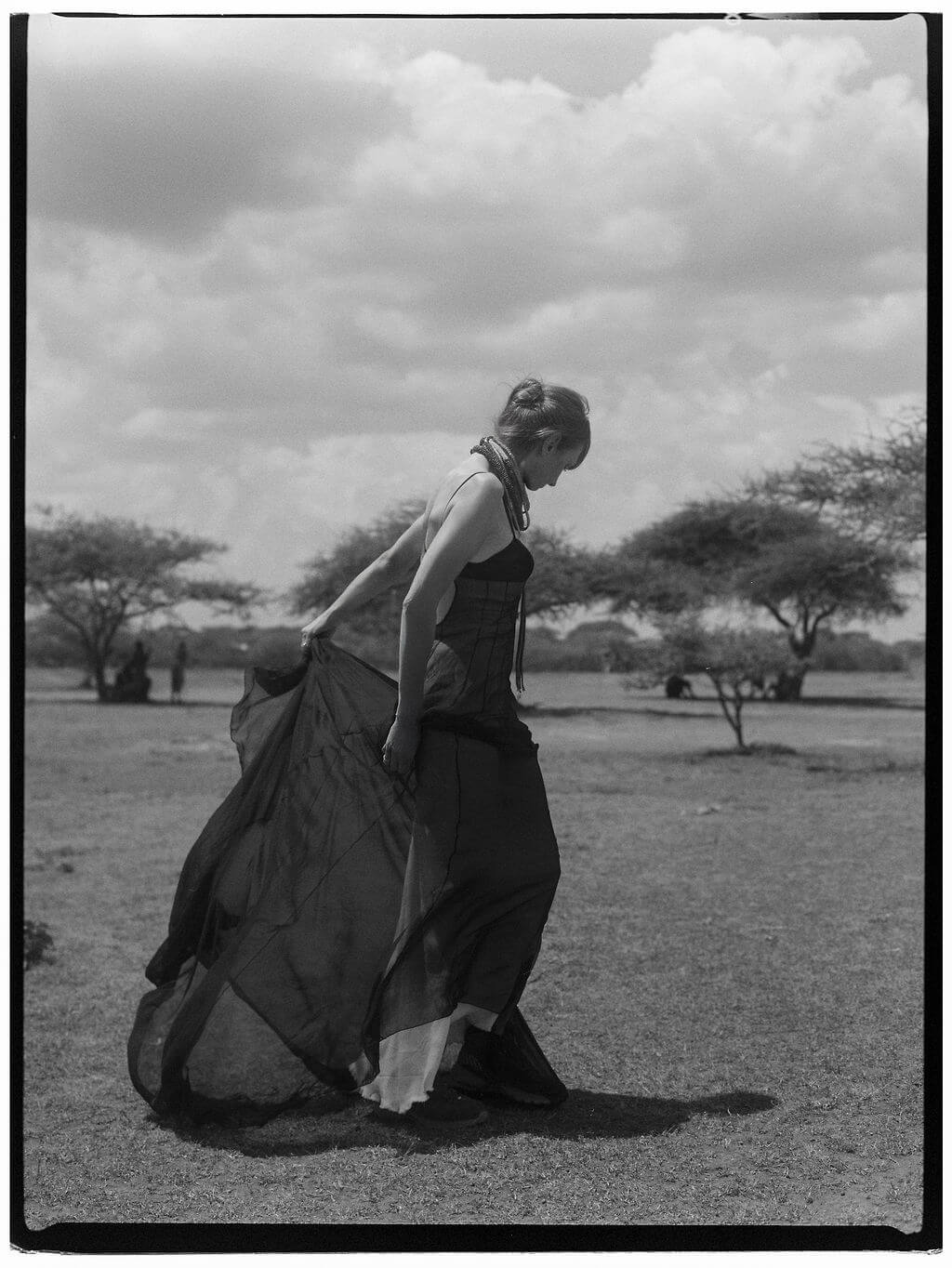
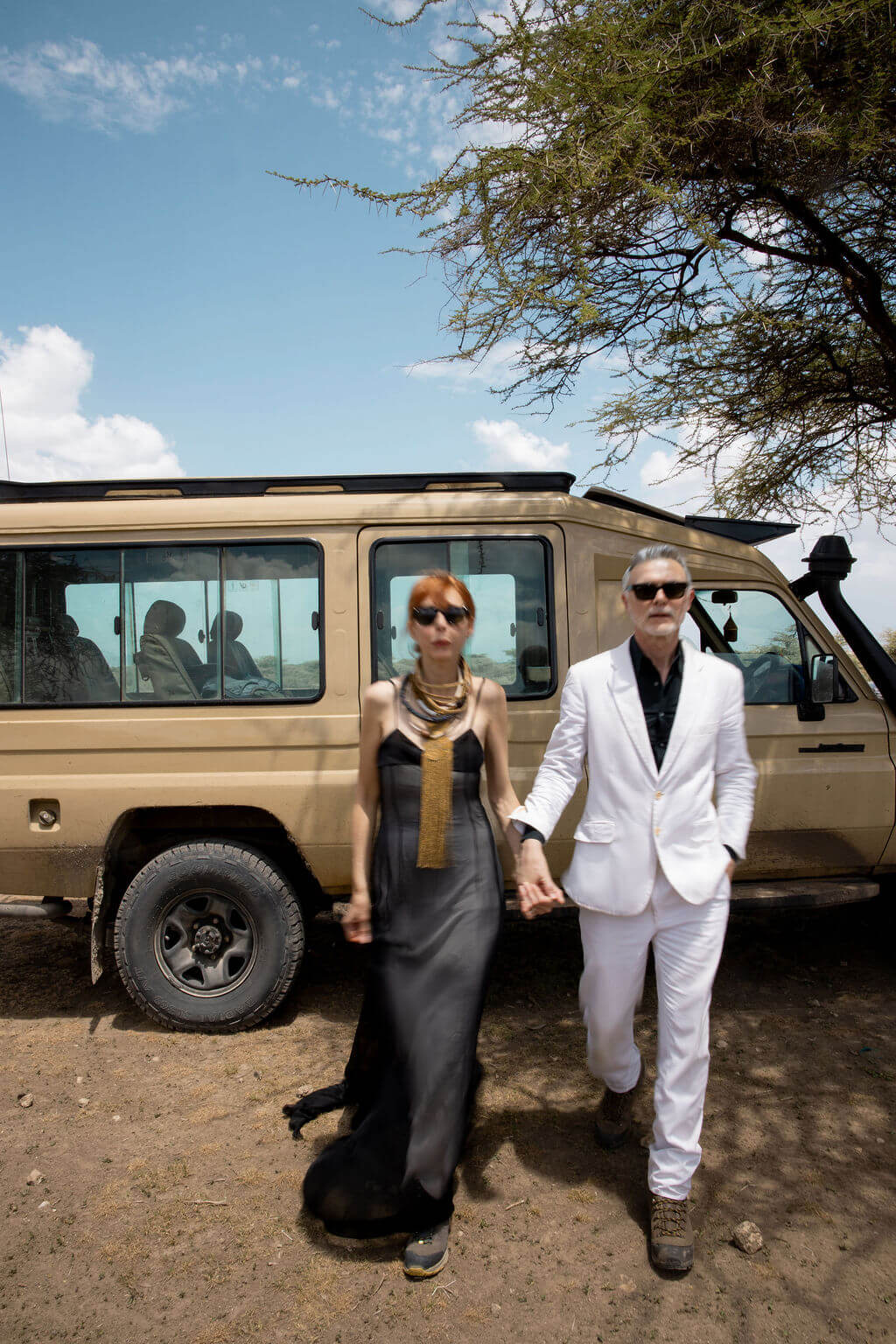
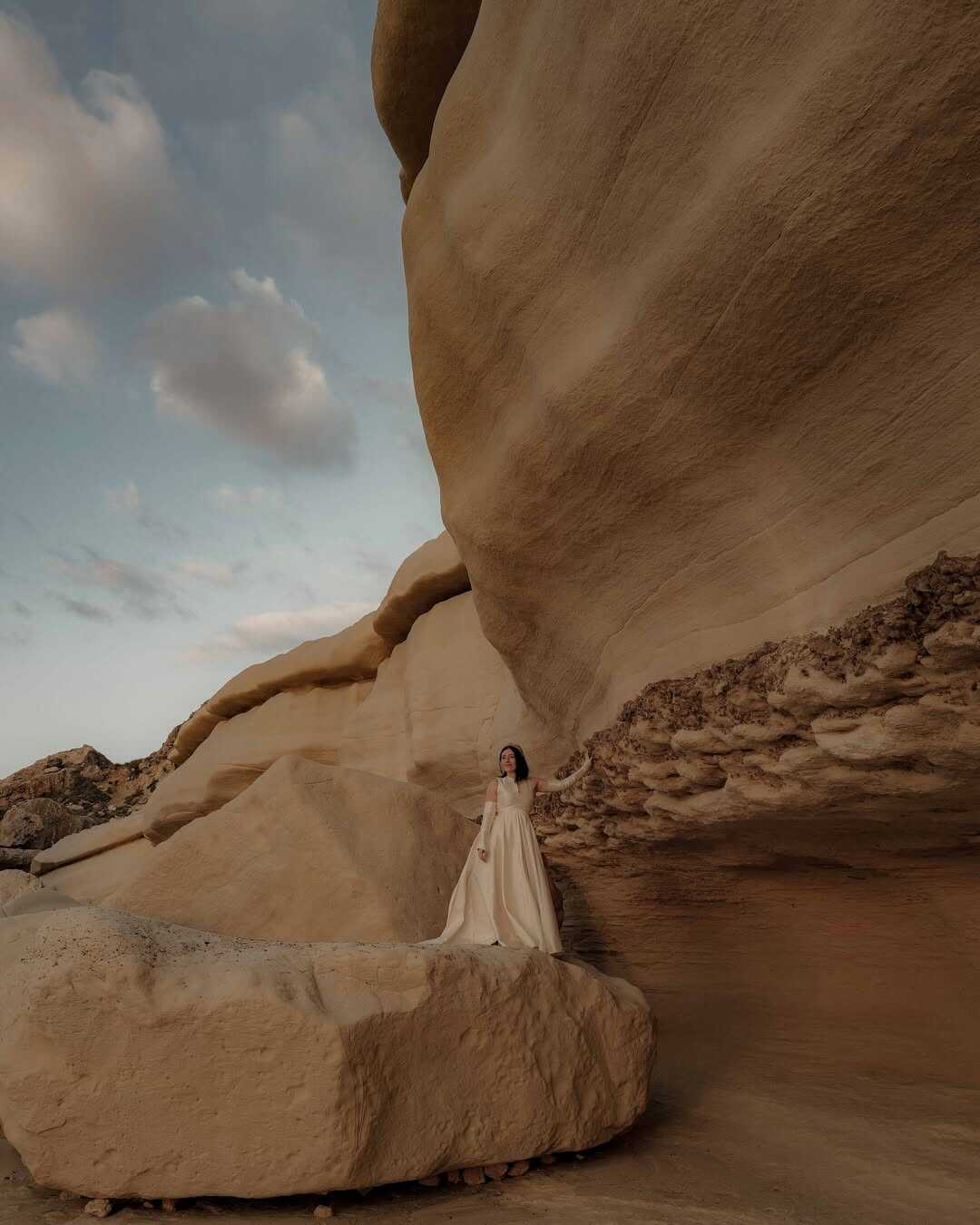
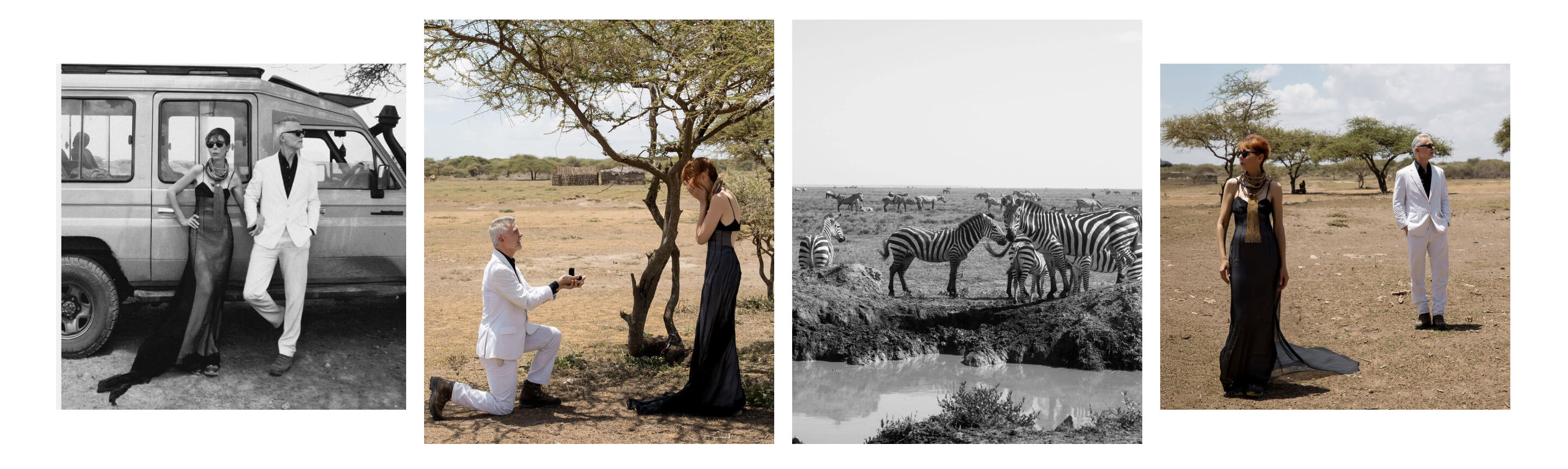
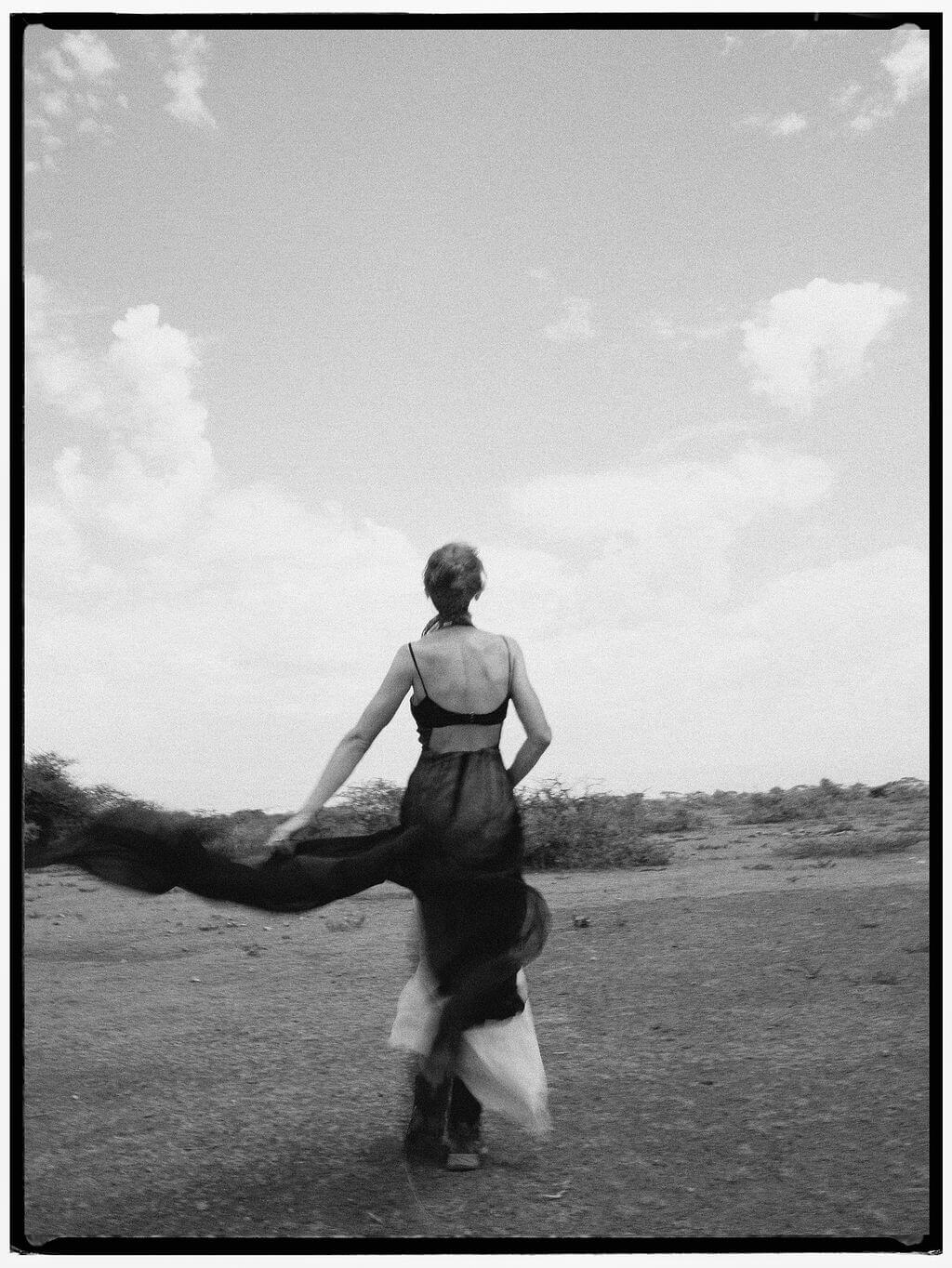
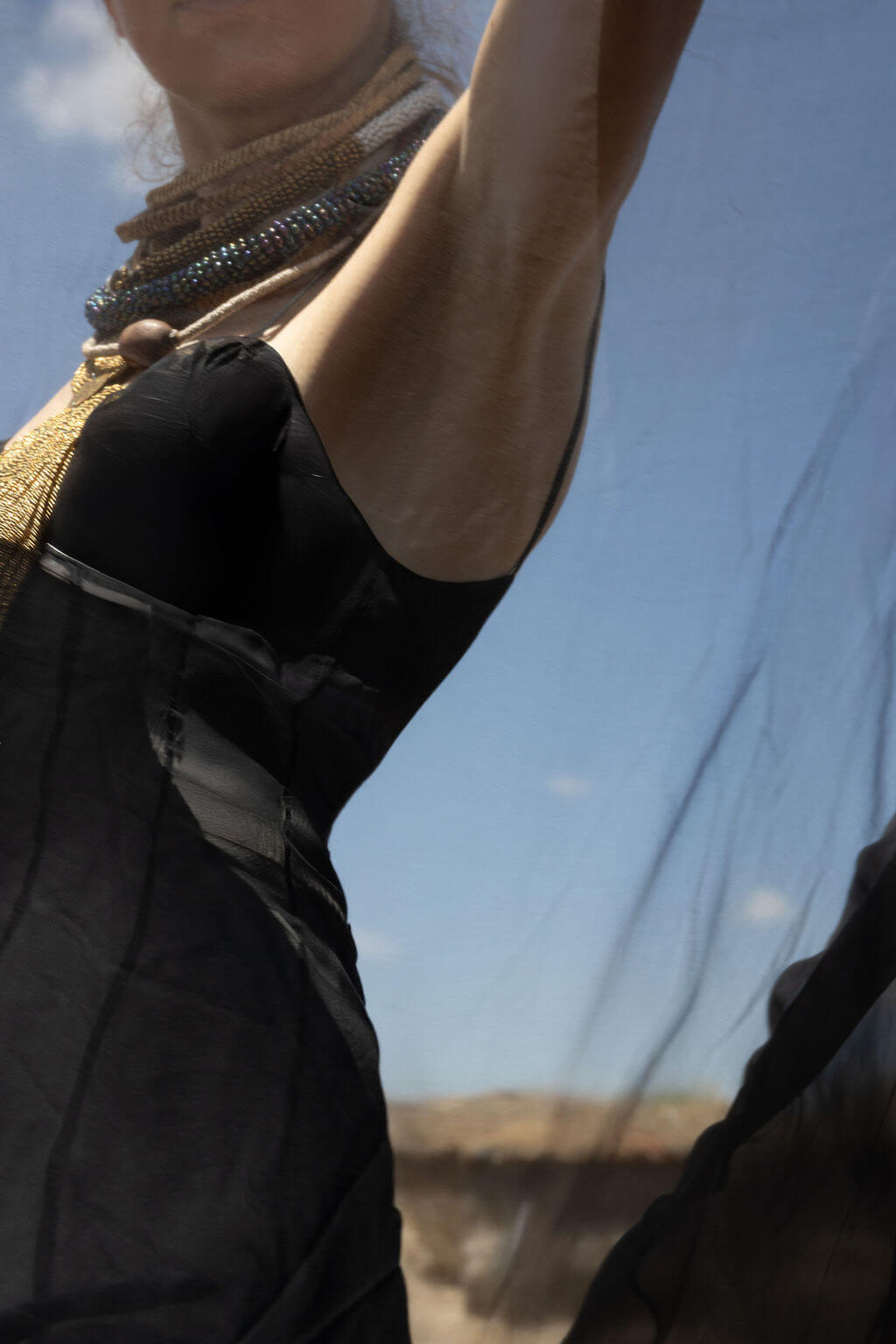
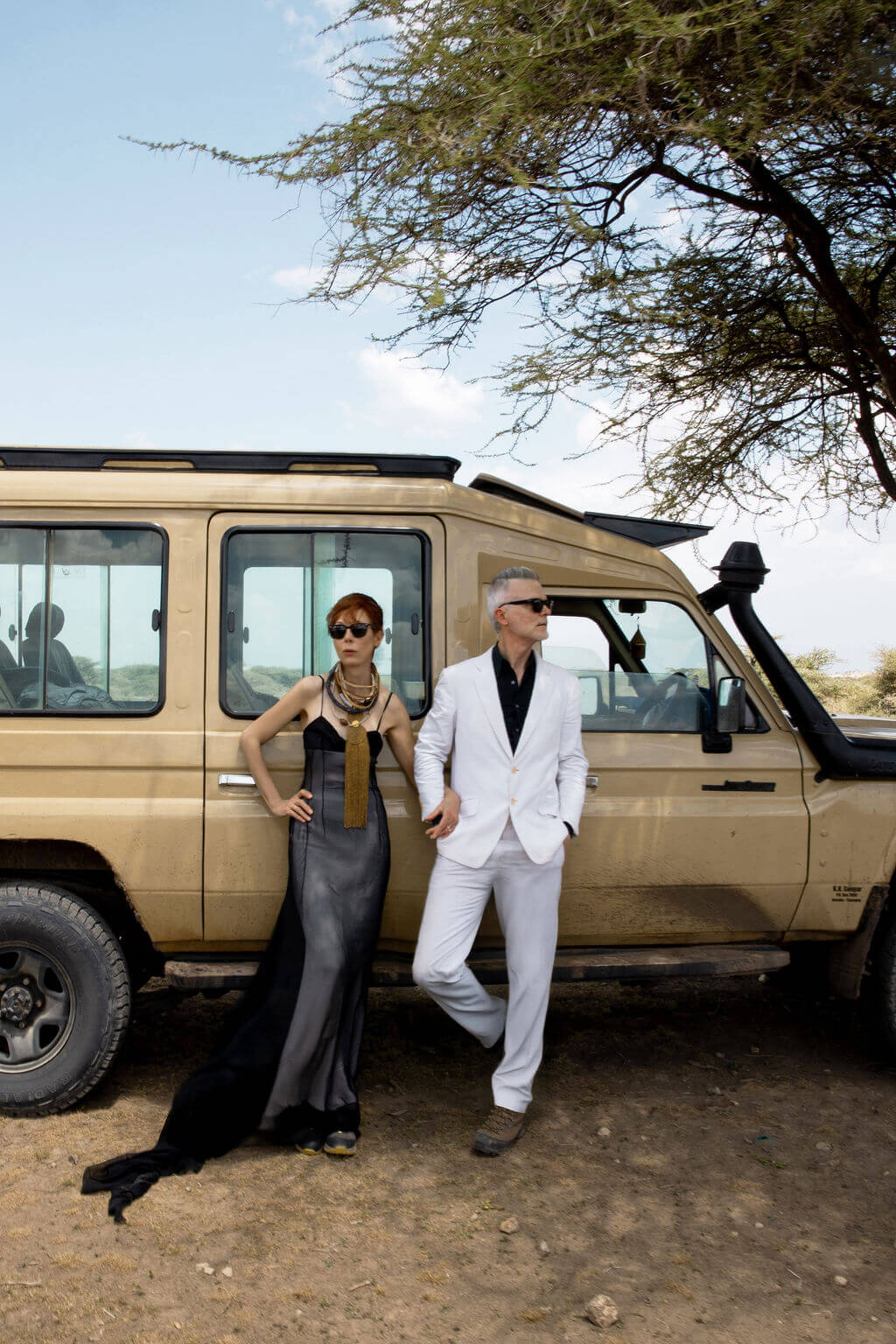
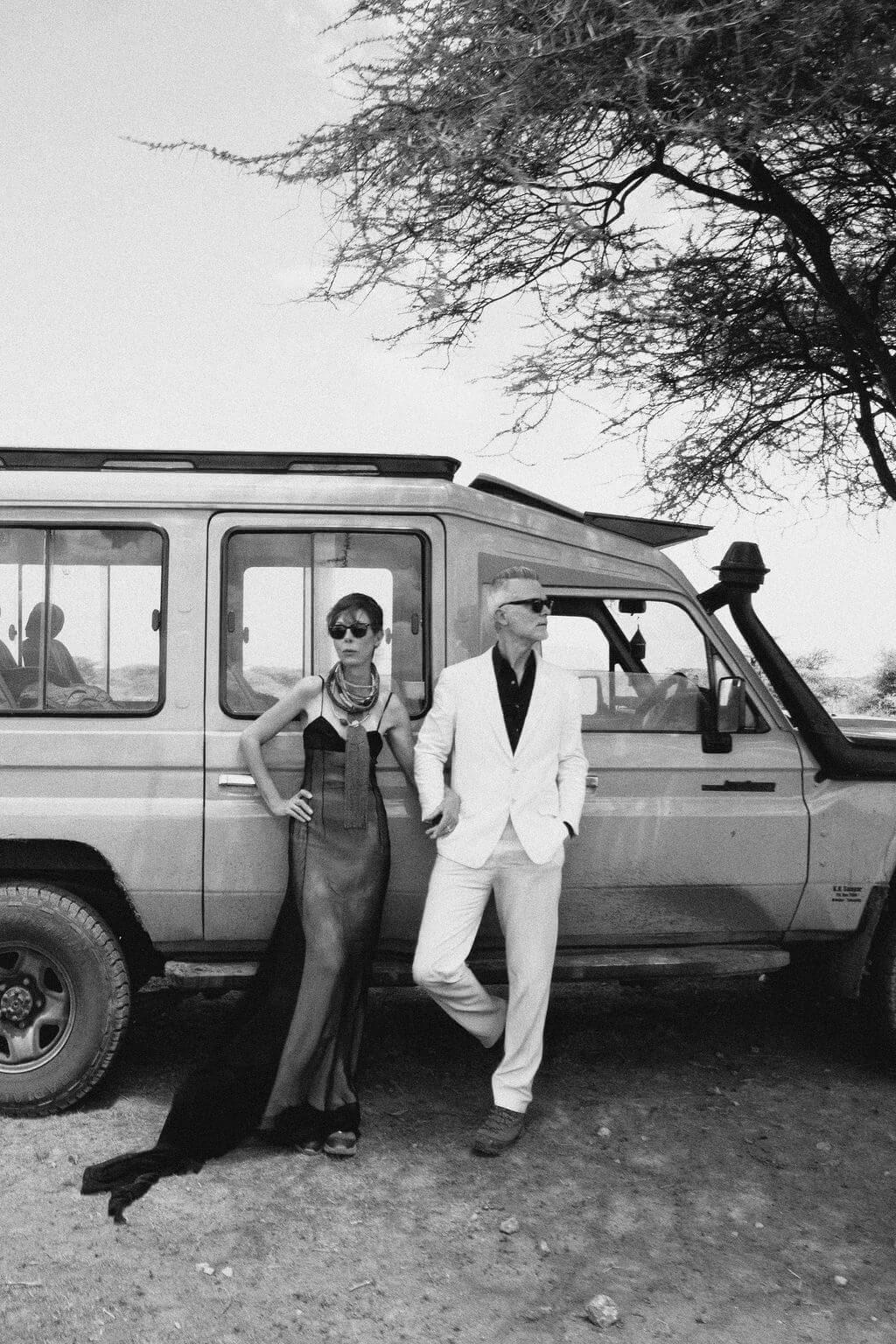
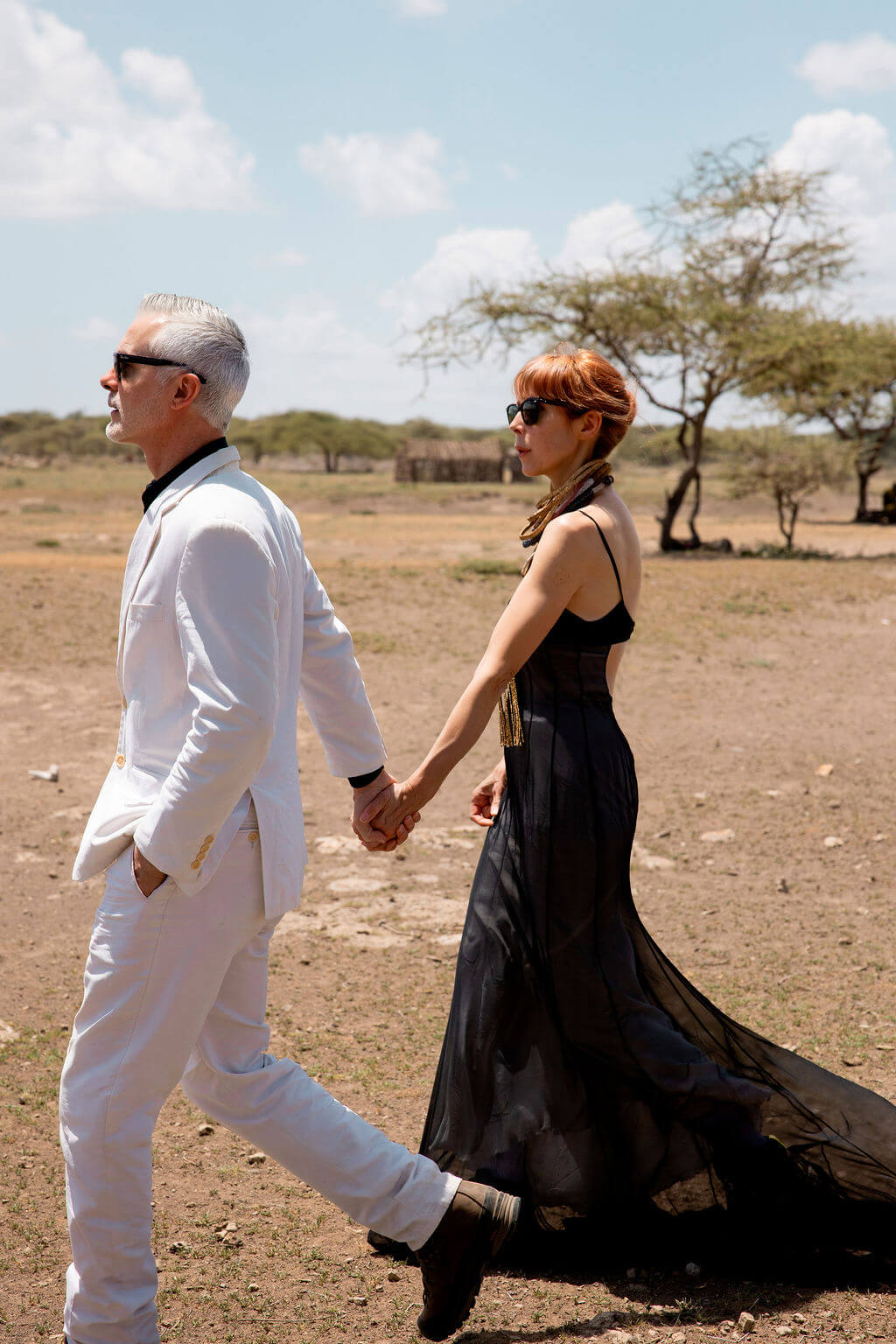
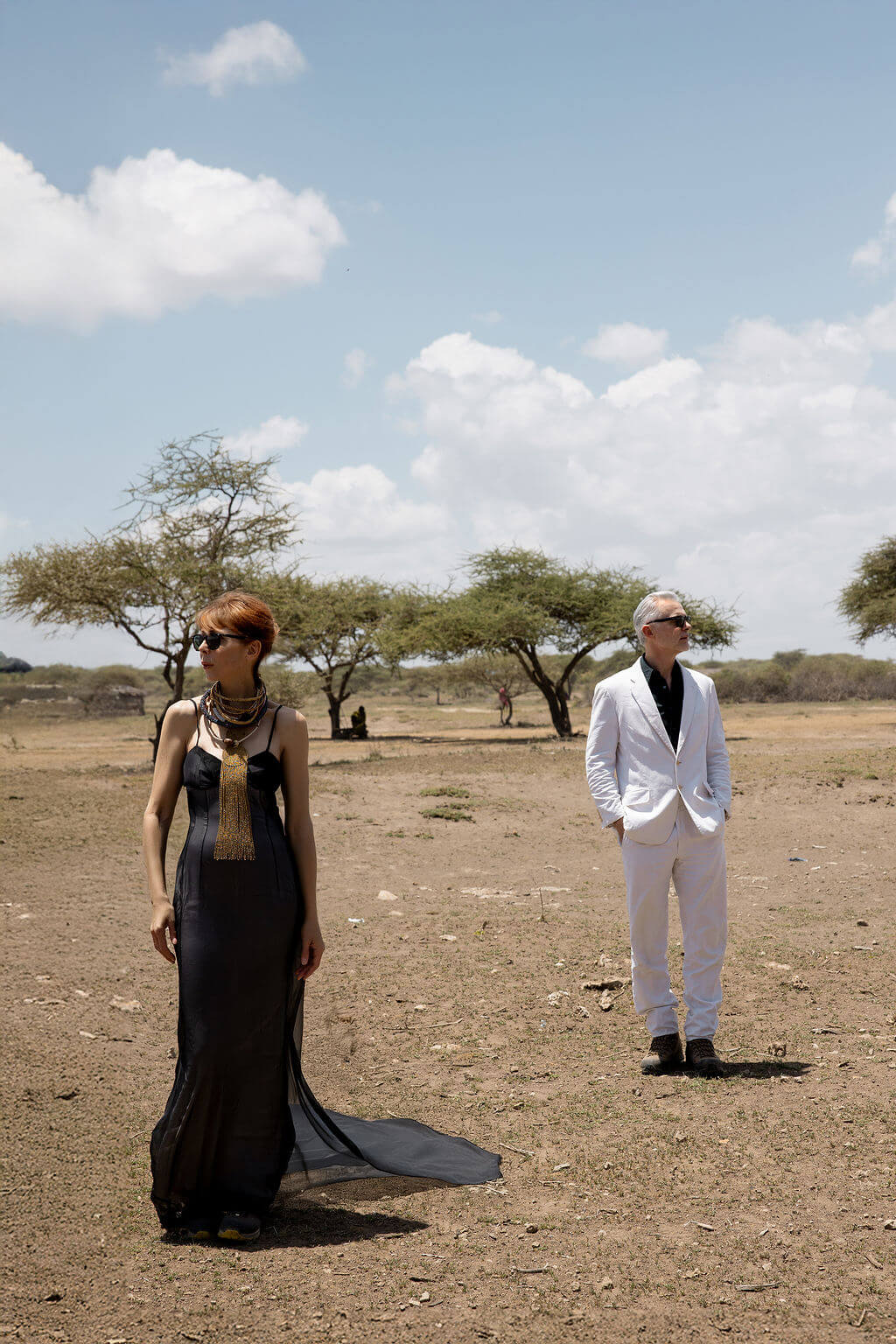
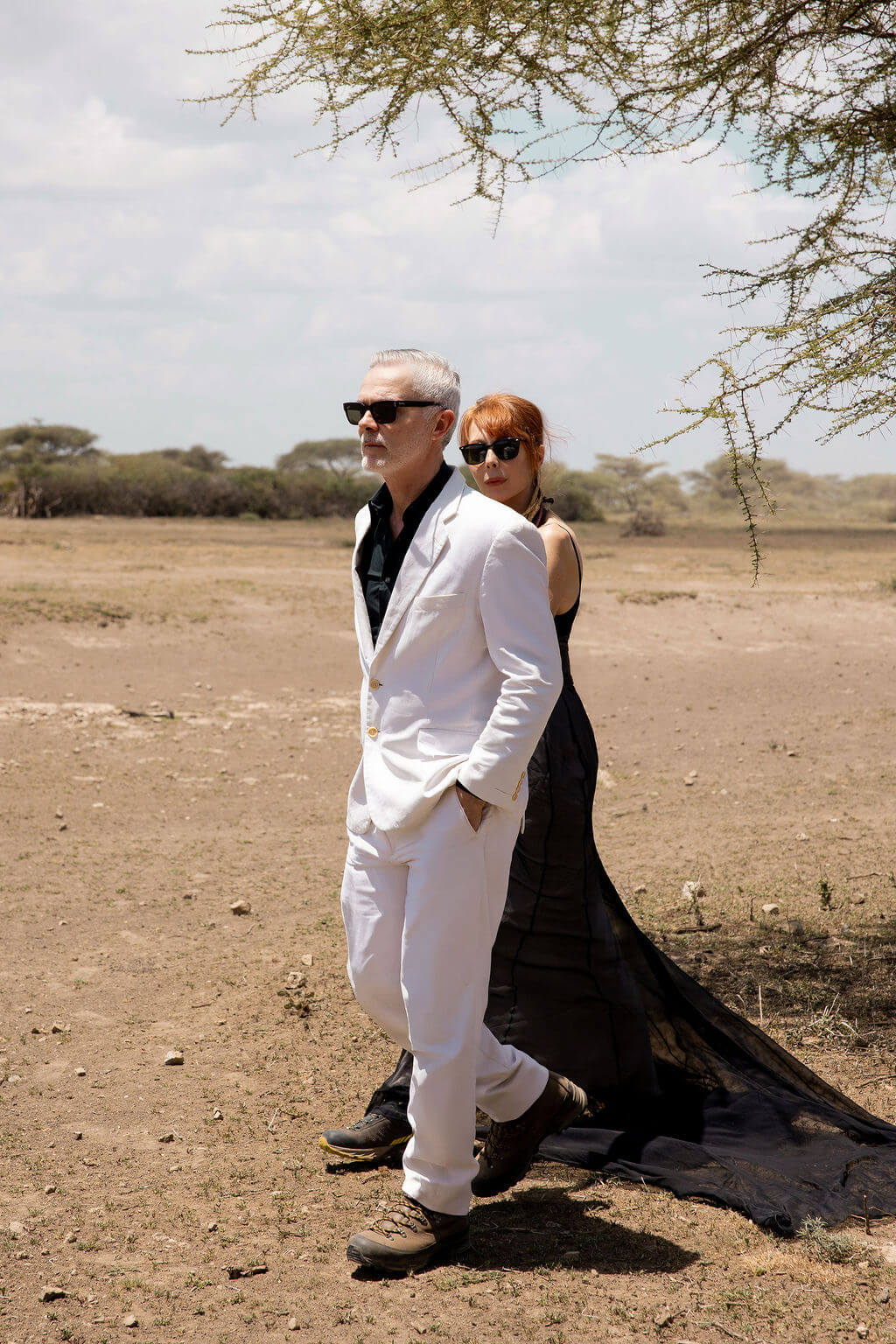
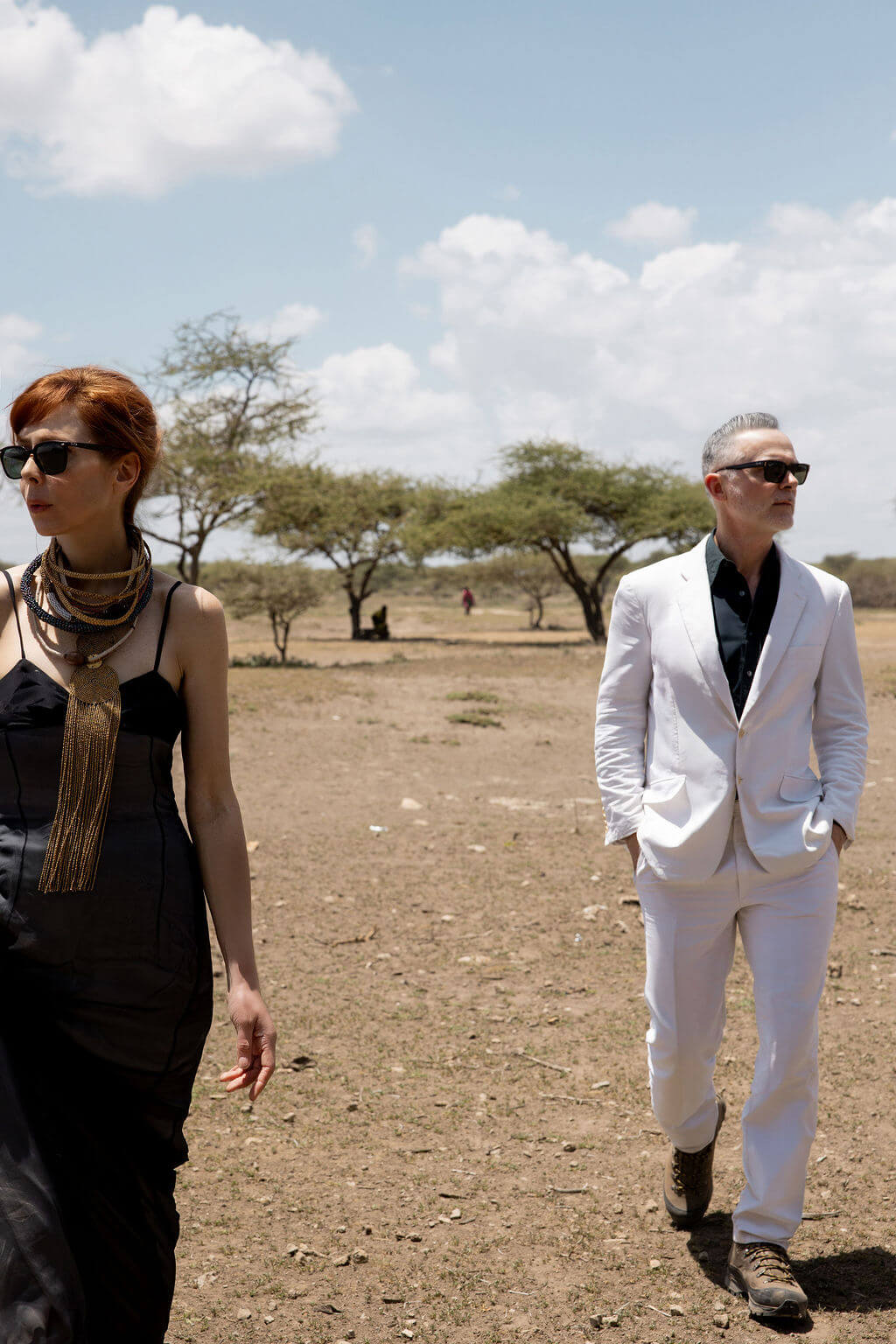
There is a particular challenge in dressing for a destination proposal in an African setting — the environment is so visually dominant that anything costume-like reads immediately as false. Daniela's solution was instinctive and precise: a sculptural white Rick Owens dress, layered with a sheer black chiffon piece. Giampaolo wore a vintage white Gucci suit paired with a black shirt. The contrast — graphic, minimal, architecturally strong — sat against the landscape without competing with it.
The palette felt deliberate without feeling forced. White and black against ochre earth and acacia shadow. Fashion that understood where it was.
Then there were the shoes.
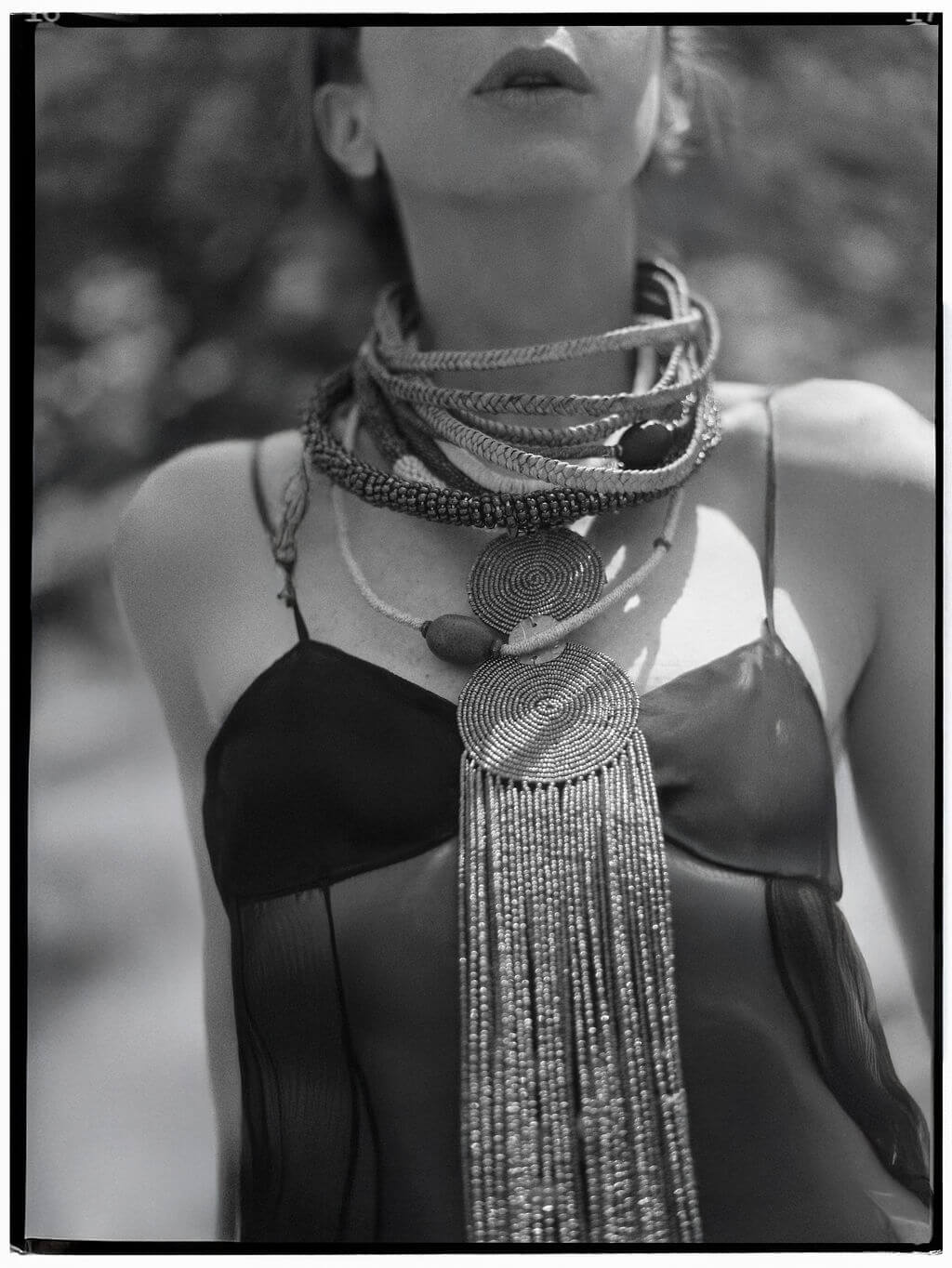
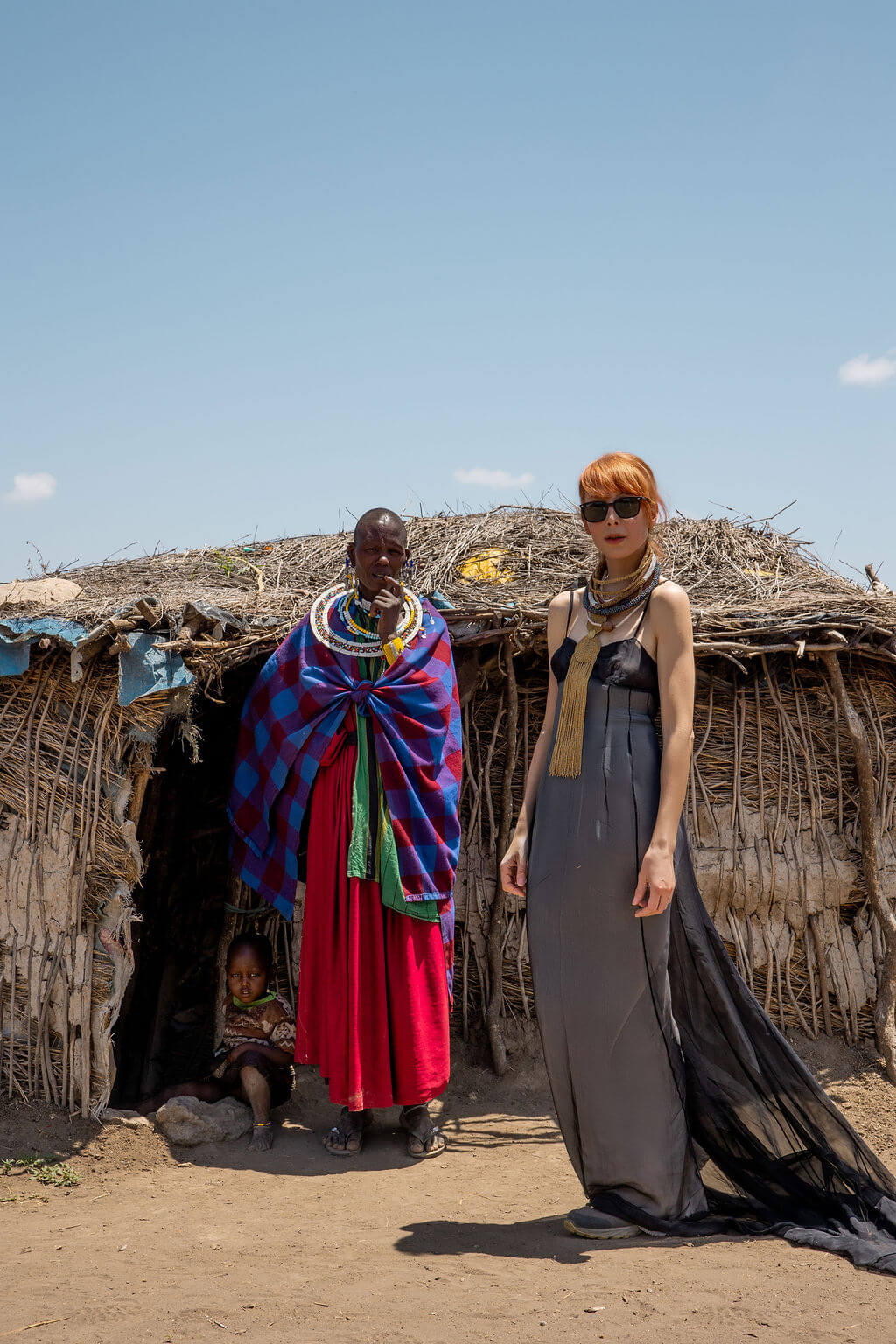
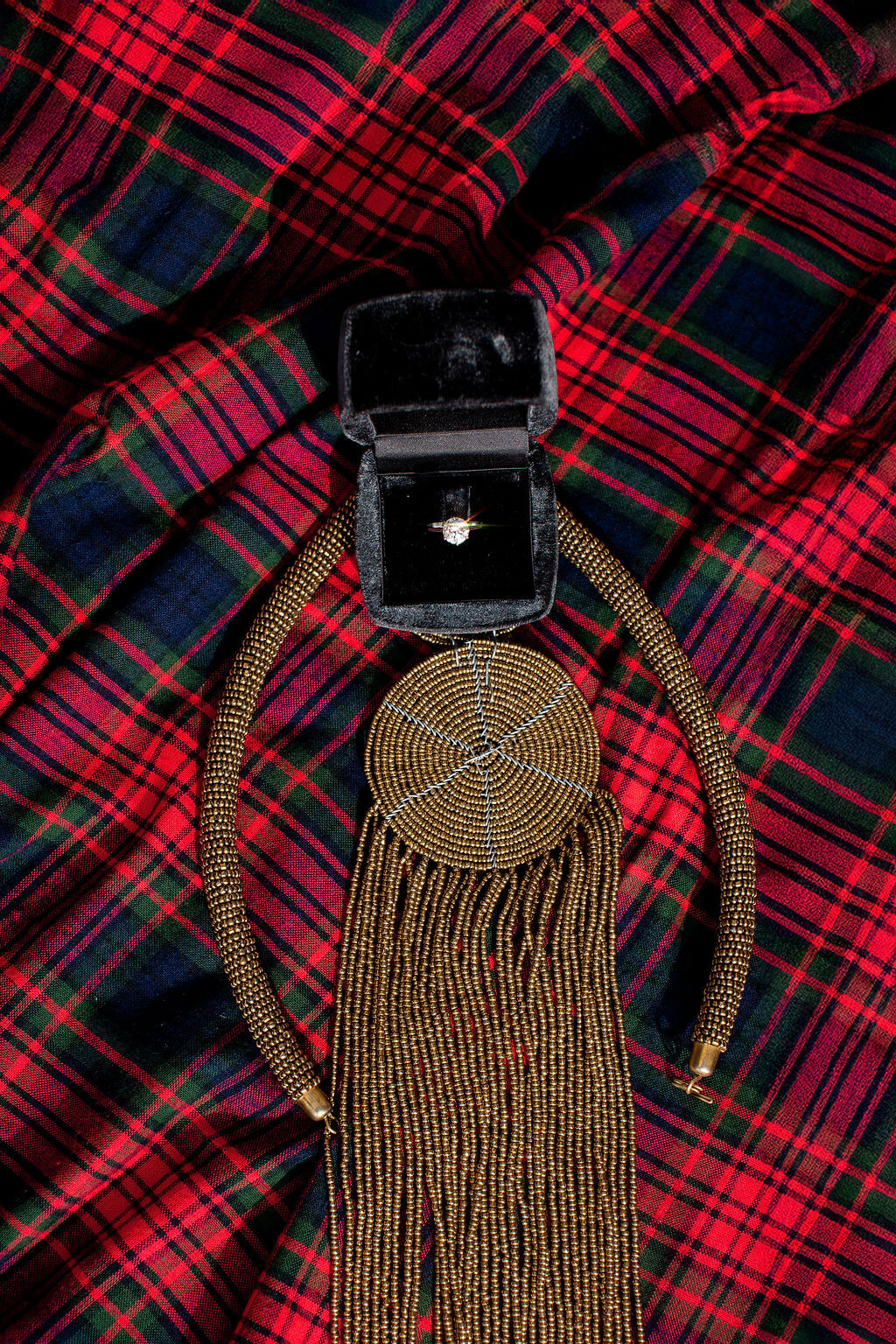
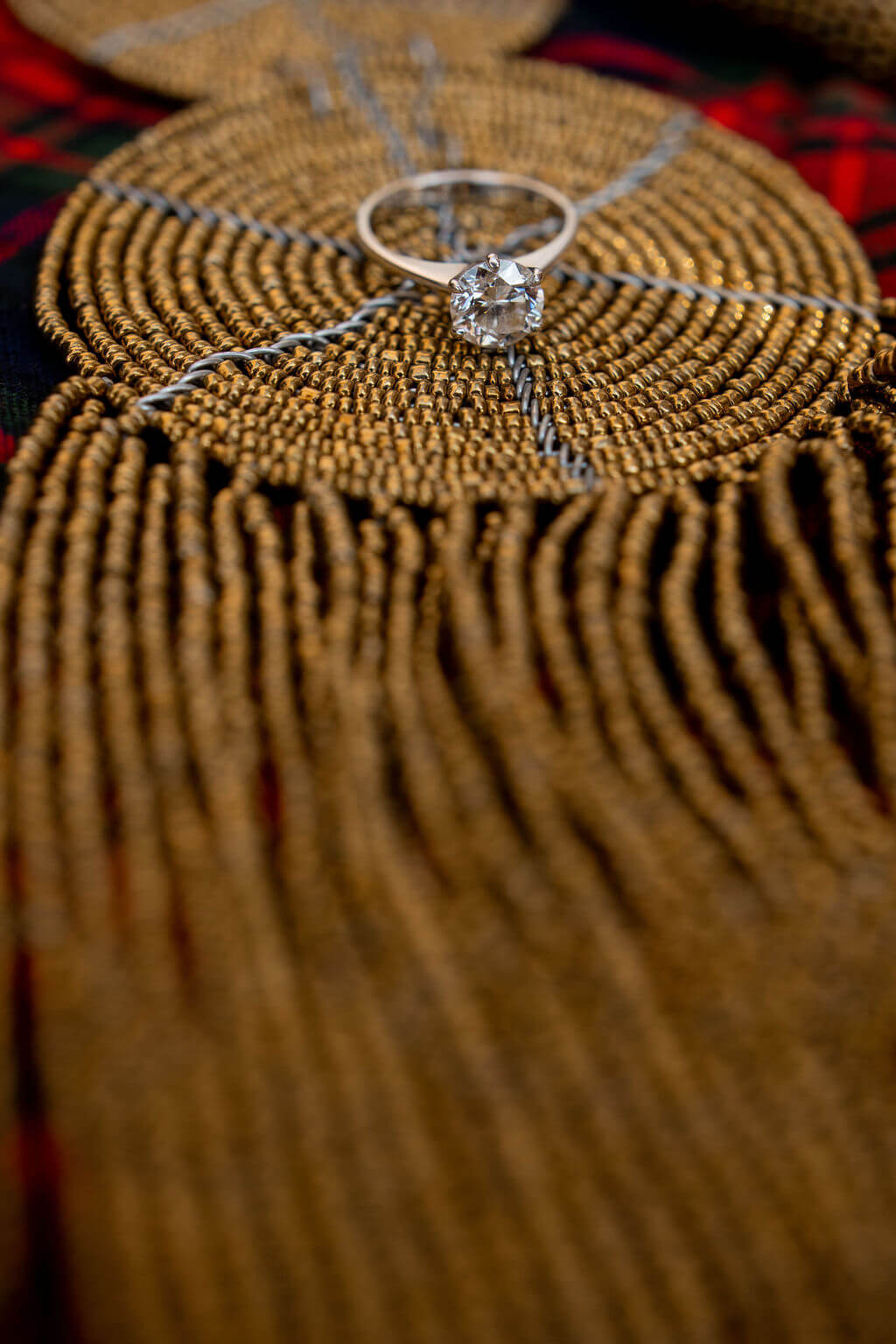
Trekking boots, worn under a Rick Owens dress, because the ground was covered in sharp acacia thorns, and beauty has its limits. It is a small detail, but it is also the detail that makes the whole thing feel honest — a quiet reminder that this was not a studio. This was the actual Serengeti, with everything that entails. Later, Daniela incorporated handmade Maasai necklaces into her look, adding what she described as
a layer of cultural richness and grounding the aesthetic in something real and meaningful
— a decision that transformed the styling from fashion into something with genuine roots in place.

When the Plan Changes — and Something Better Begins
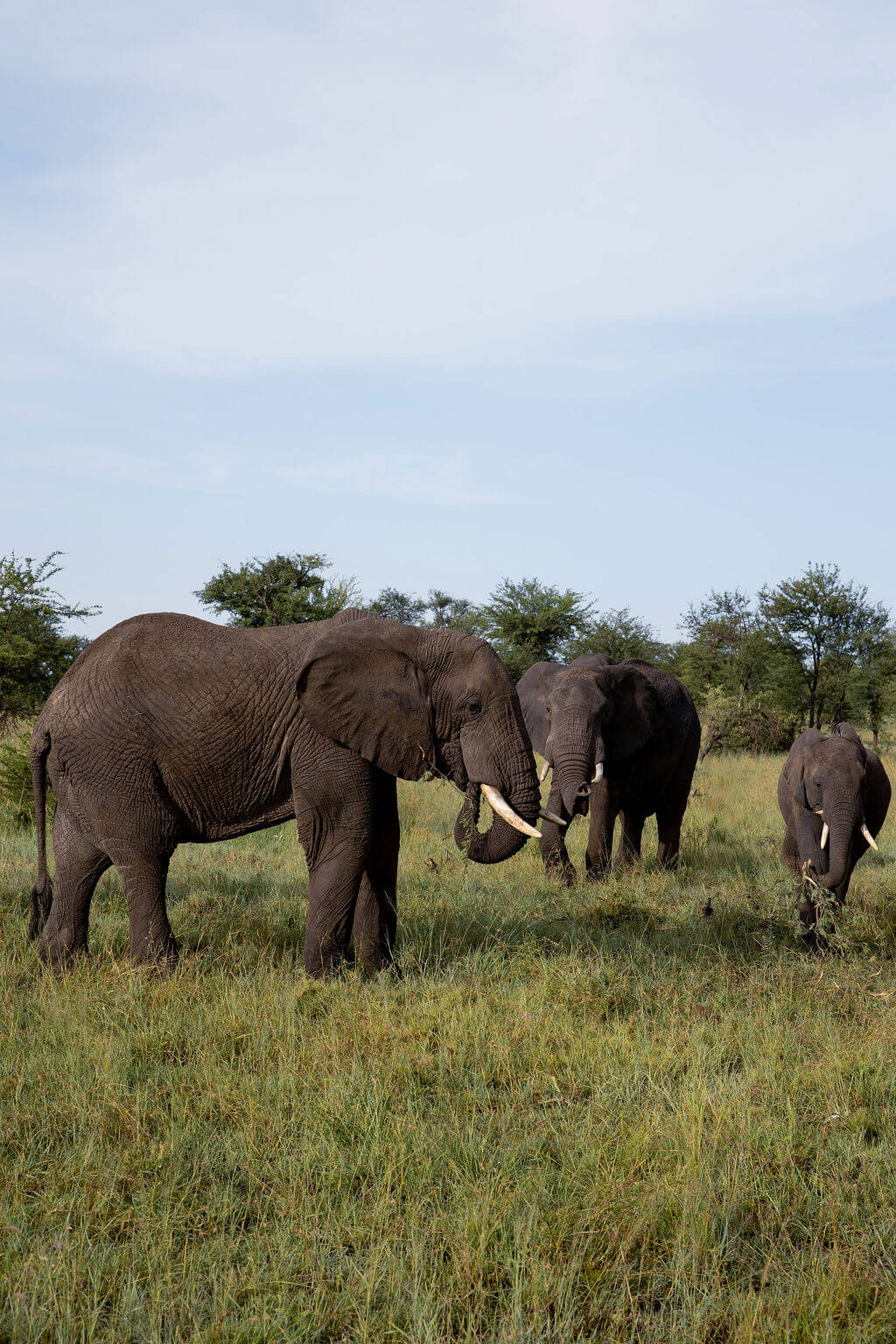
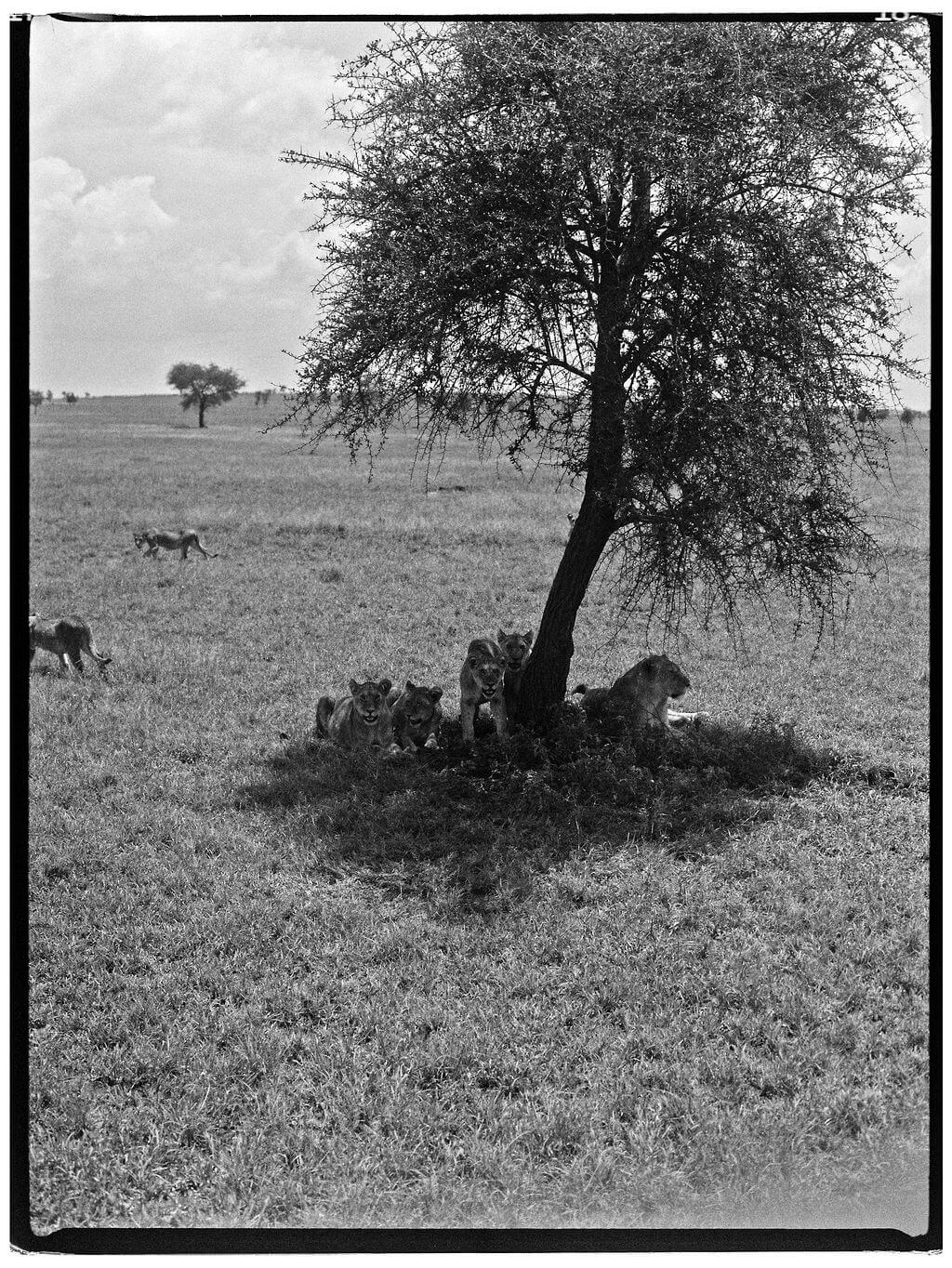
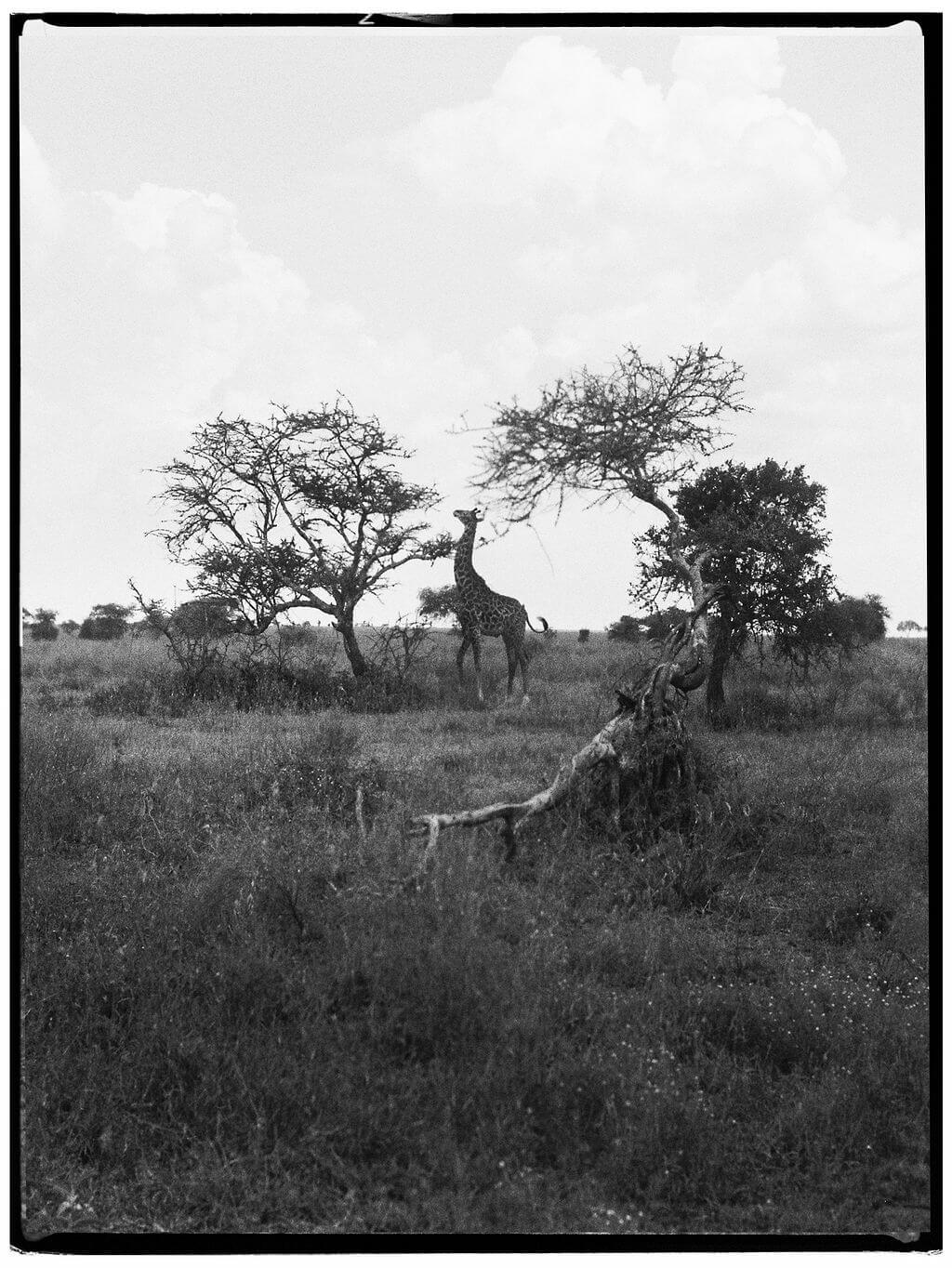
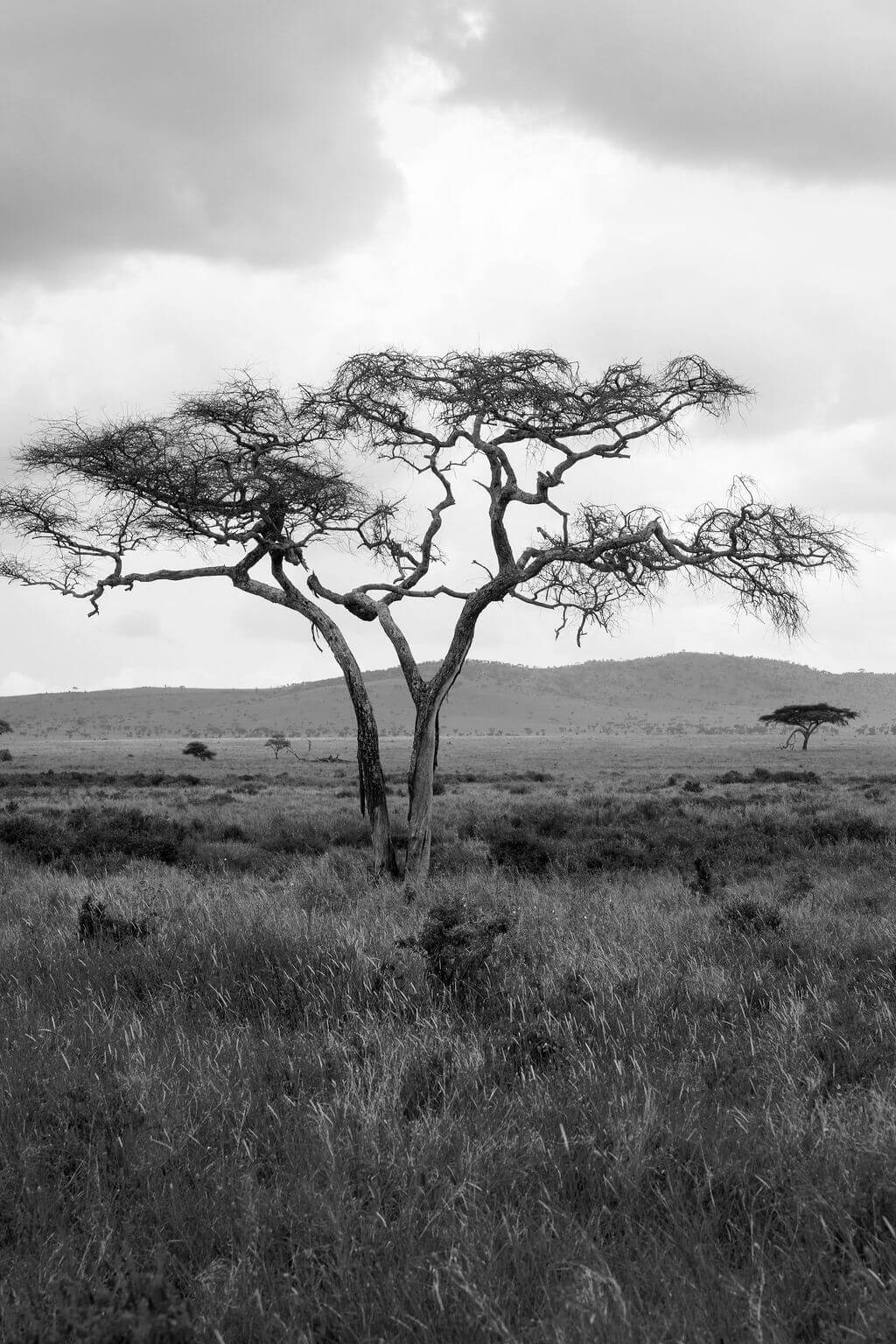
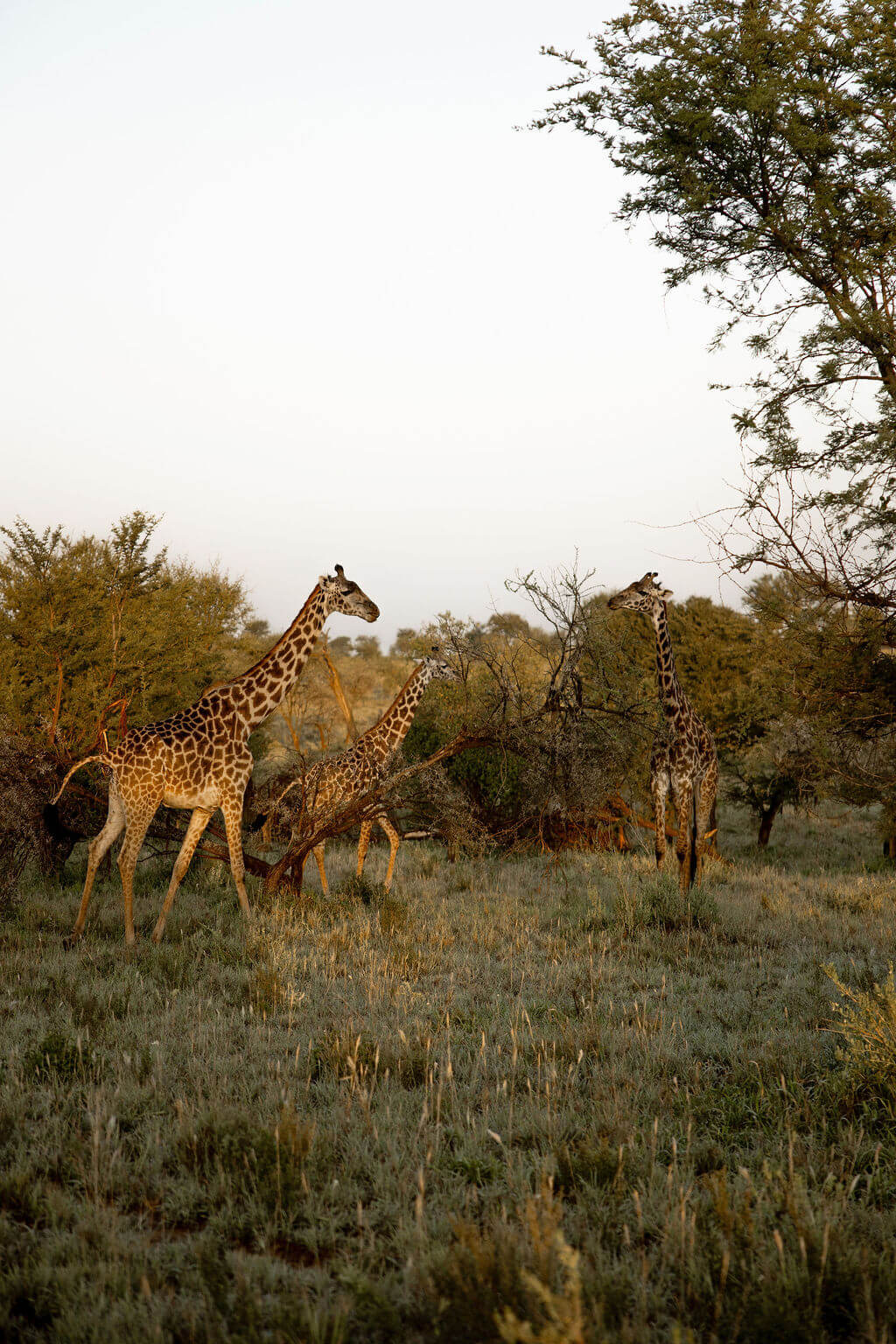
The original vision was clear: open savannah, elephants in the distance, giraffes moving slowly through the frame, the two of them photographing each other with a tripod for the more composed shots. A safari proposal built from the most iconic elements of the landscape they had dreamed about for years.
February, as it turned out, had other ideas.
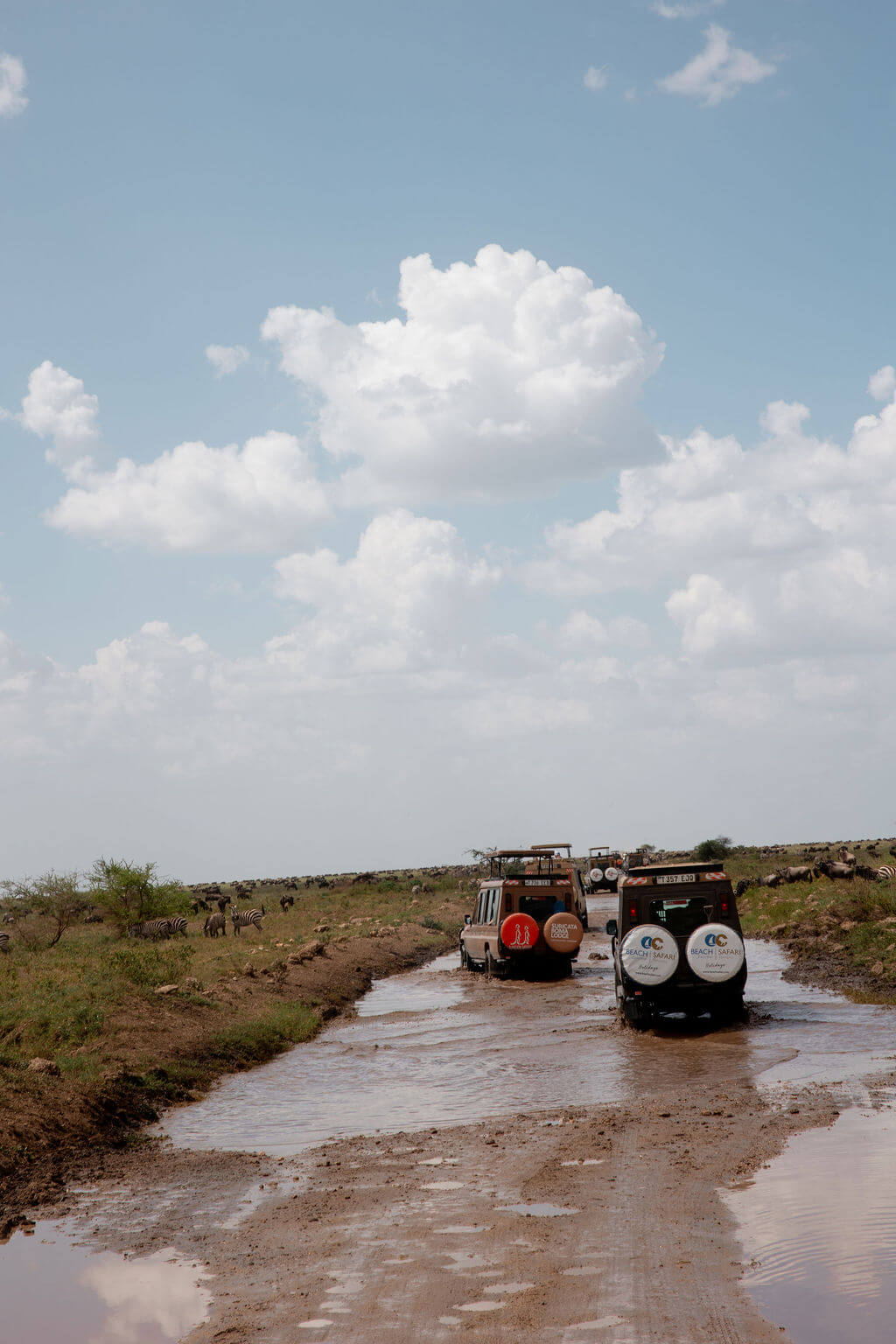
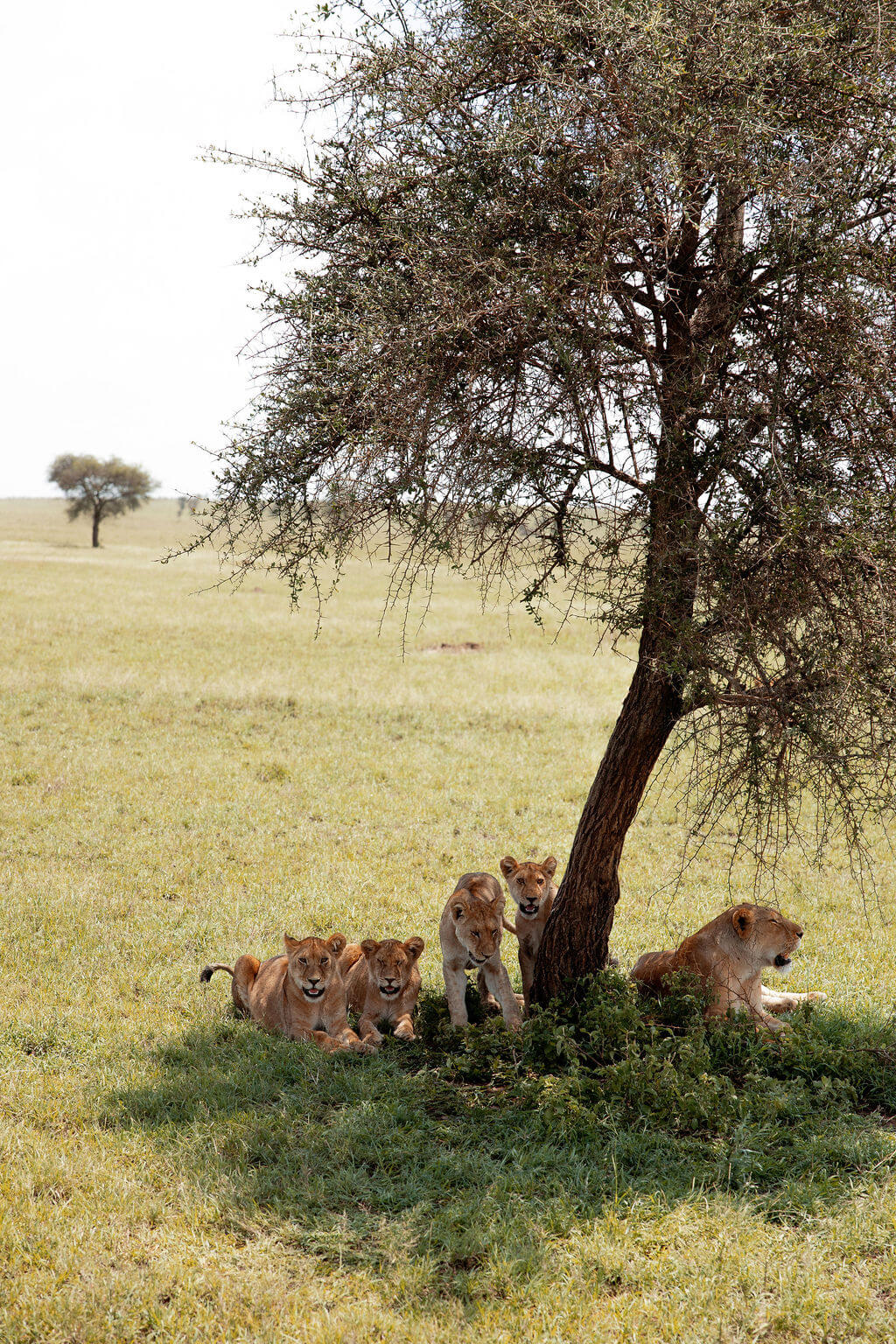
February is the birthing season in the Serengeti. For safety reasons — and for the protection of the animals — guests are not permitted to leave their vehicles during this period. The open-savannah proposal was no longer possible, and that moment, as Daniela describes it, shifted everything.
What happens next in a story like this depends entirely on the people in it. Some couples would have mourned the original plan. These two chose something different: they let the place suggest what came next. With the help of their lodge, they arranged a visit to a Maasai village — a pivot that, in retrospect, felt less like a compromise and more like the story finding its real direction.
The Maasai Village: A Proposal No One Could Have Planned
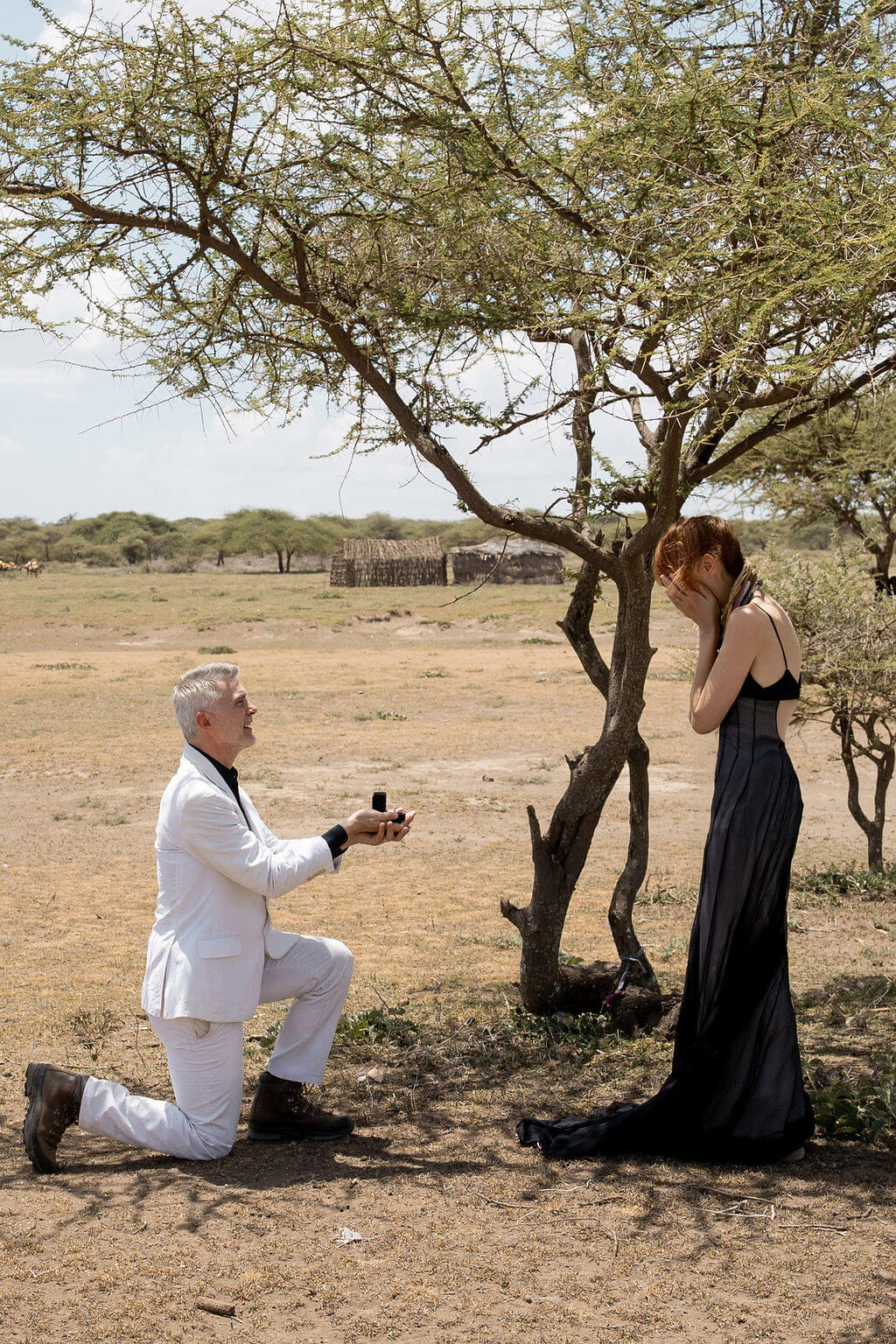

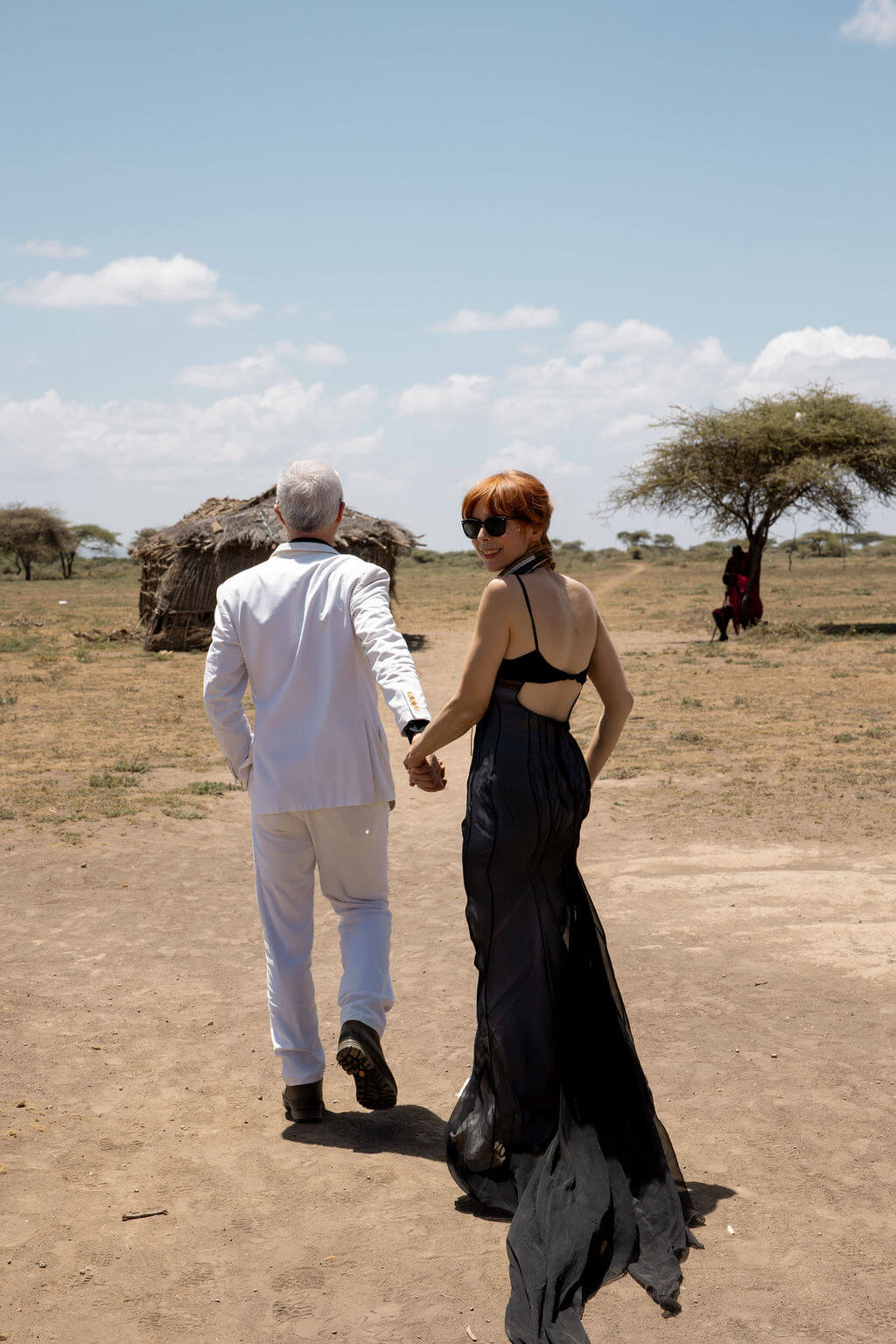
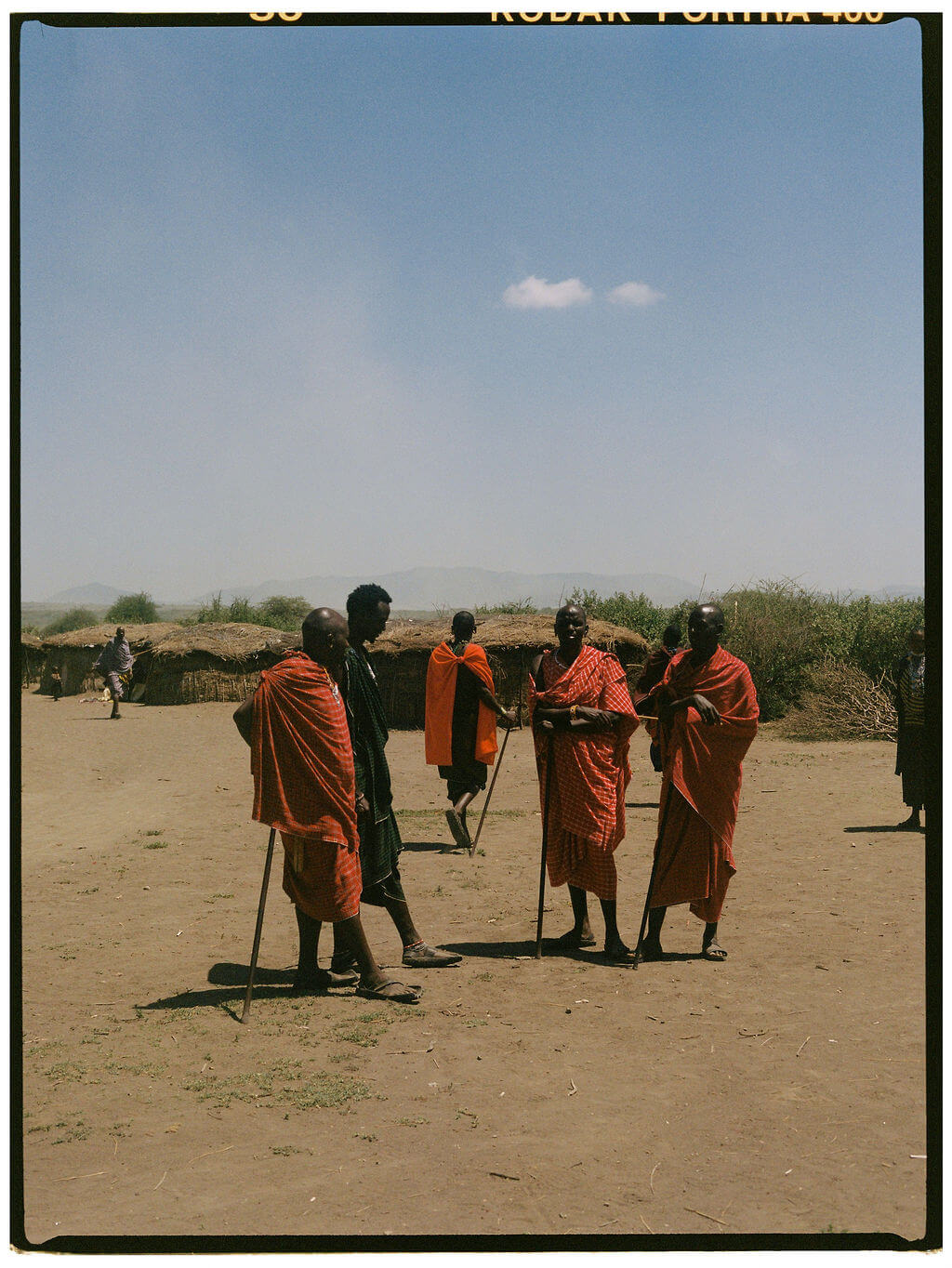
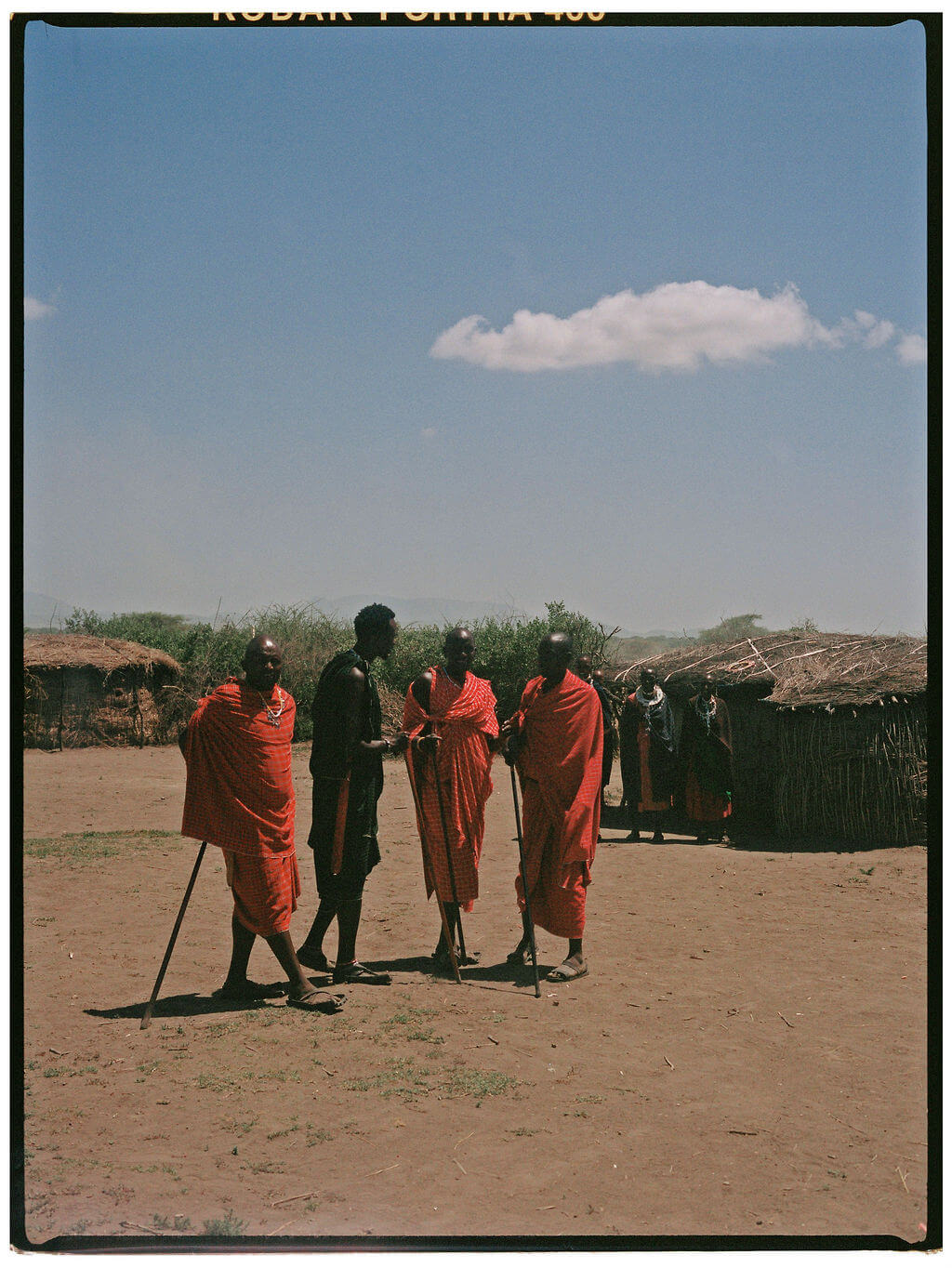
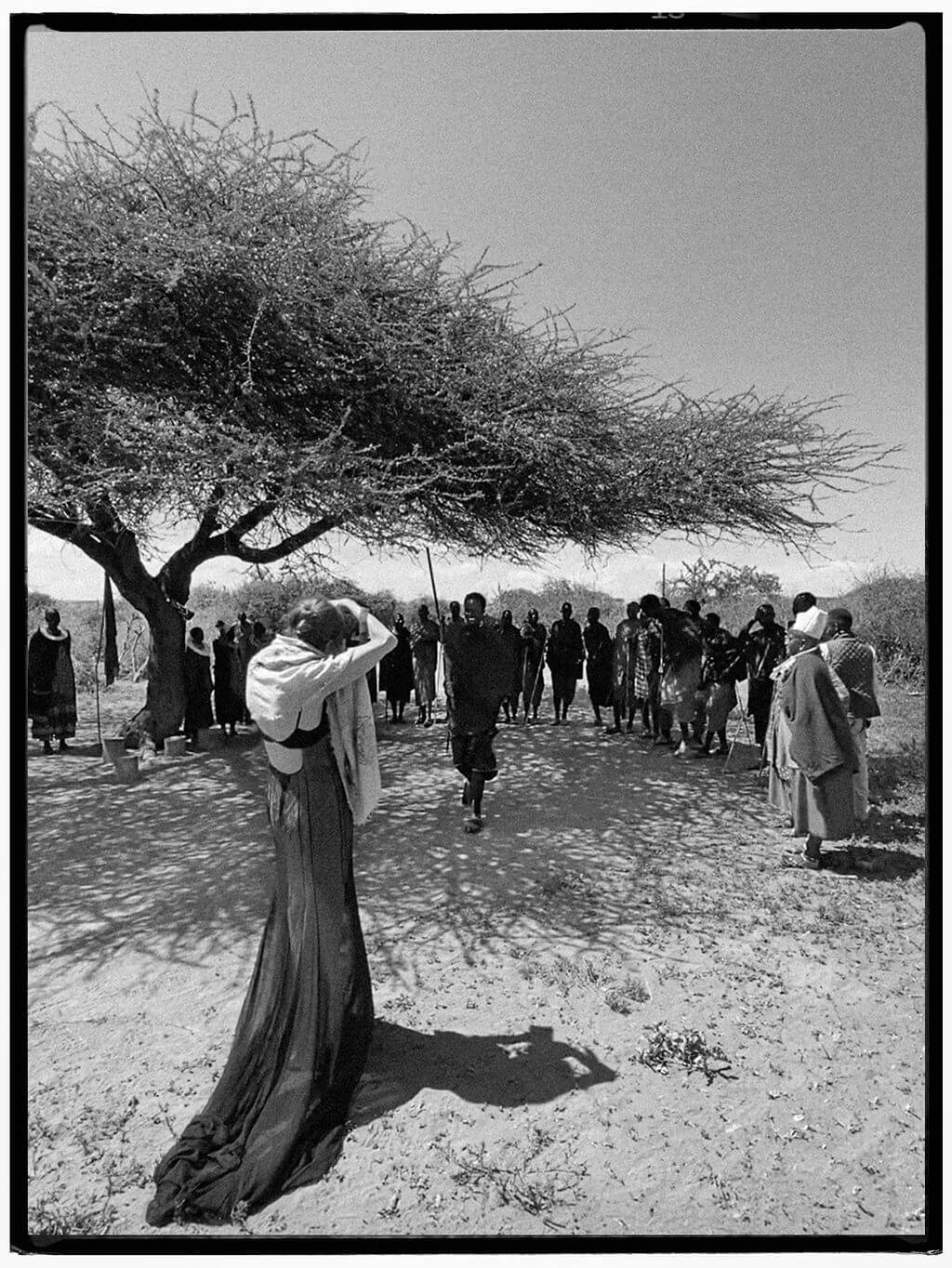
A proposal in a Maasai village isn't something you find on a Pinterest board. There is no template for it, no mood board that prepares you for the reality of being welcomed by an entire community with singing, dancing, and a generosity of spirit that has nothing to do with tourism and everything to do with genuine human connection.
That is what Daniela and Giampaolo walked into.
The welcome was immediate and total — movement, sound, color, energy. A community sharing something real with two strangers who had arrived, quite literally, because their original plan had fallen through. And from that accidental arrival came images that are alive in a way planned shots rarely are.
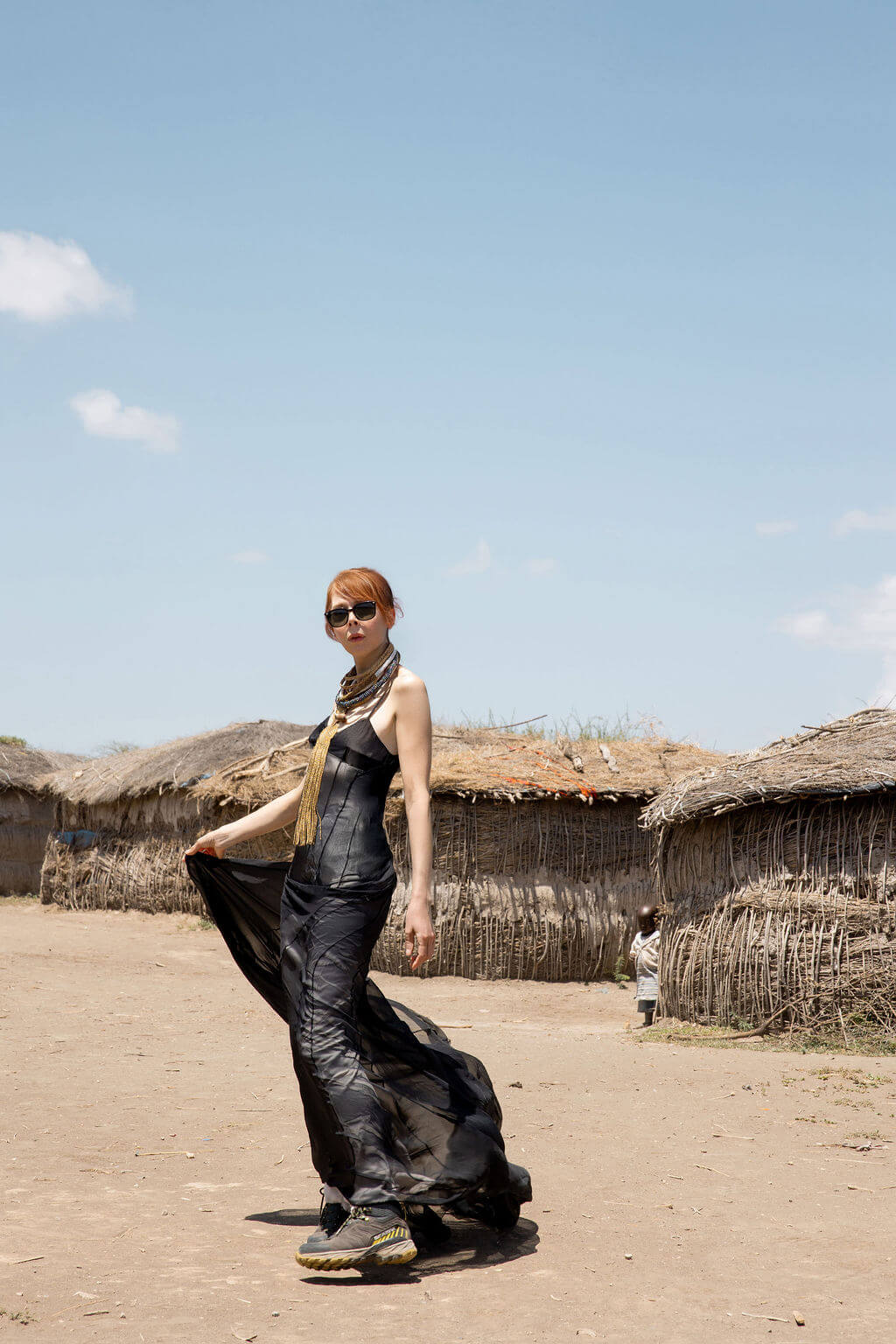
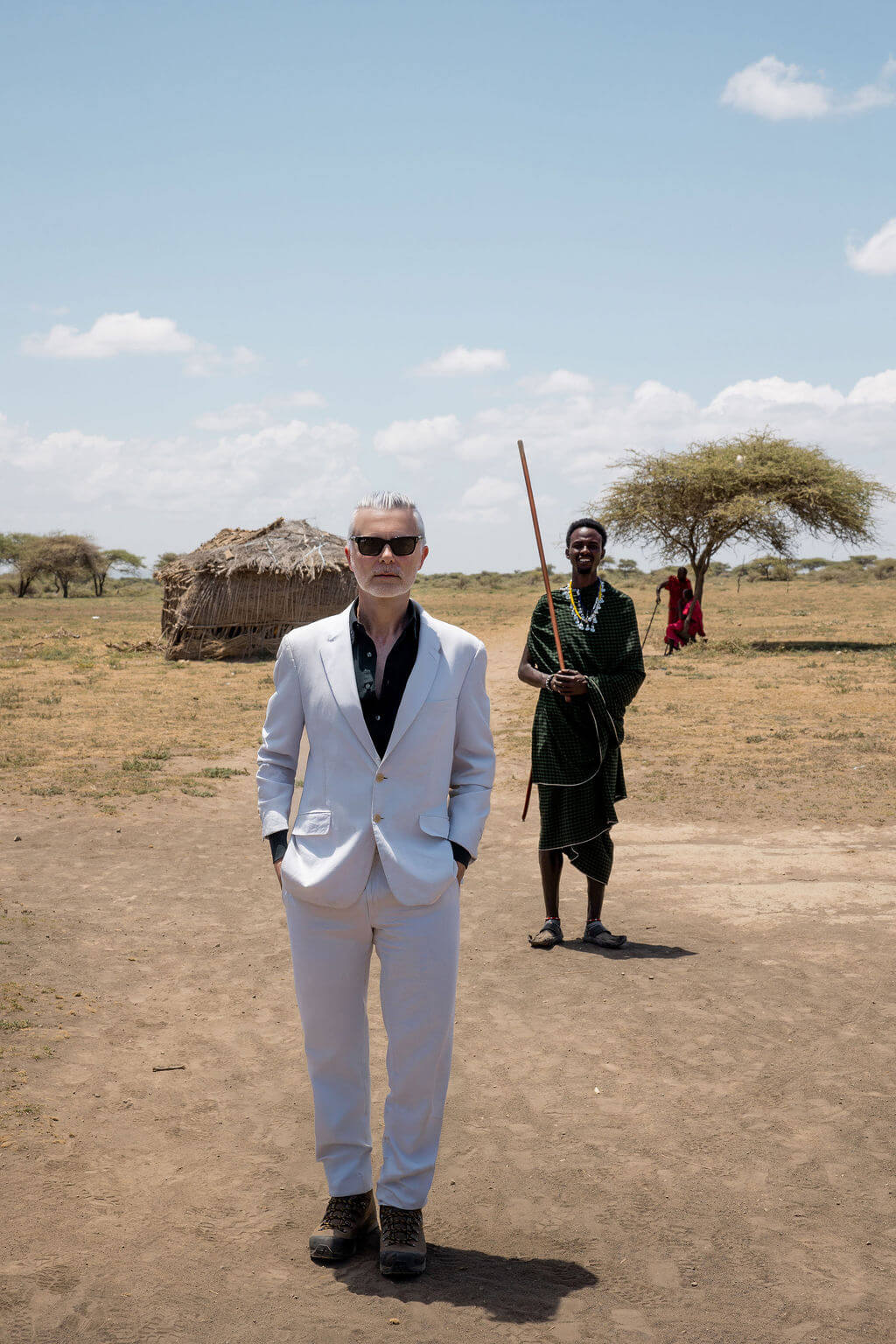
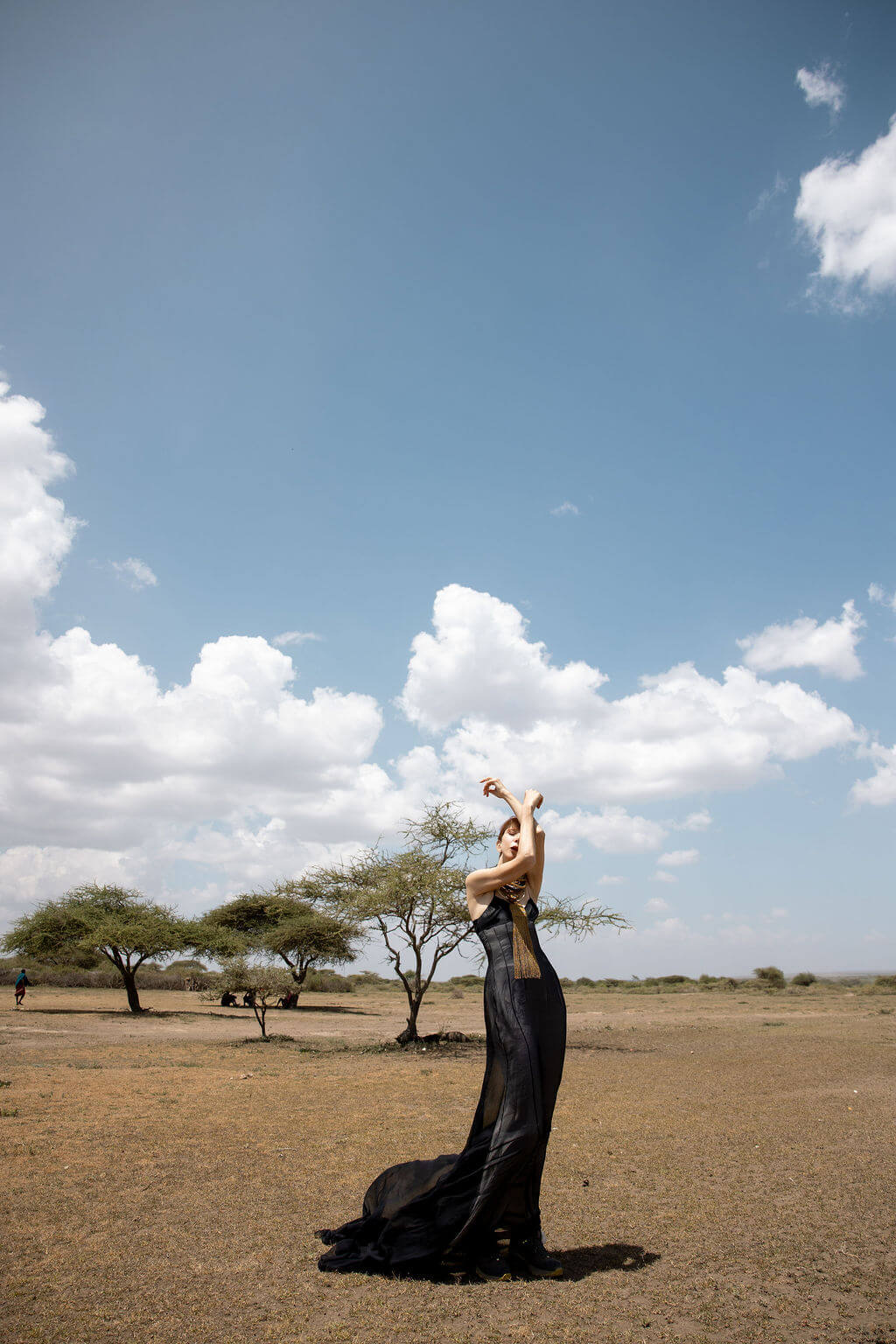 Not constructed, but discovered
— that is how Daniela describes the imagery from that afternoon. Spontaneous and emotional, full of movement, balanced between intimacy and environment. The Maasai necklaces she had incorporated into her look took on new meaning here, connecting the aesthetic to the place in a way that no amount of pre-planning could have engineered.
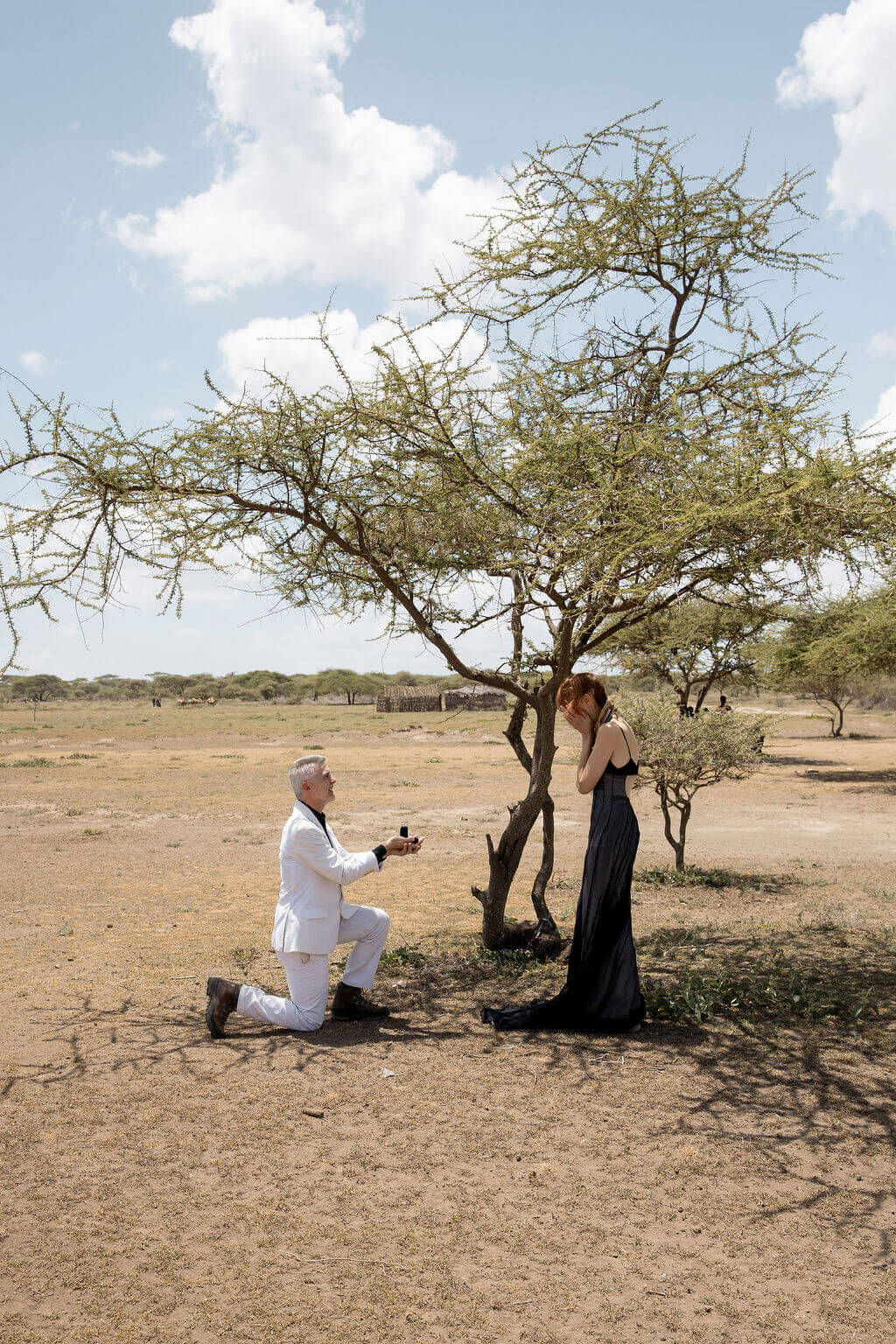
The proposal itself happened inside all of this — not against a backdrop, but within a living moment. Which is, of course, the only way it could have happened.
The Serengeti as a Backdrop — Migration, Light, and Scale
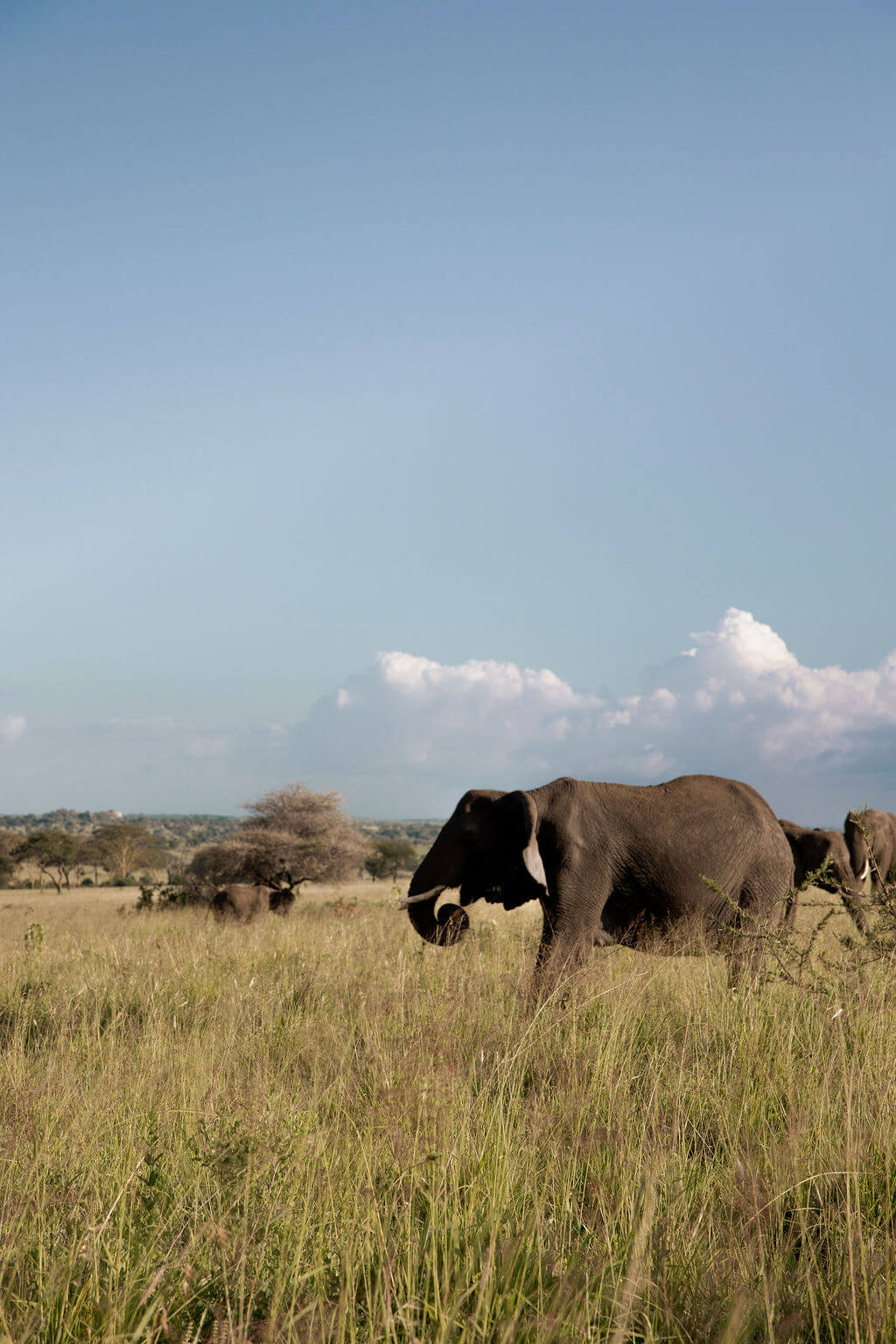
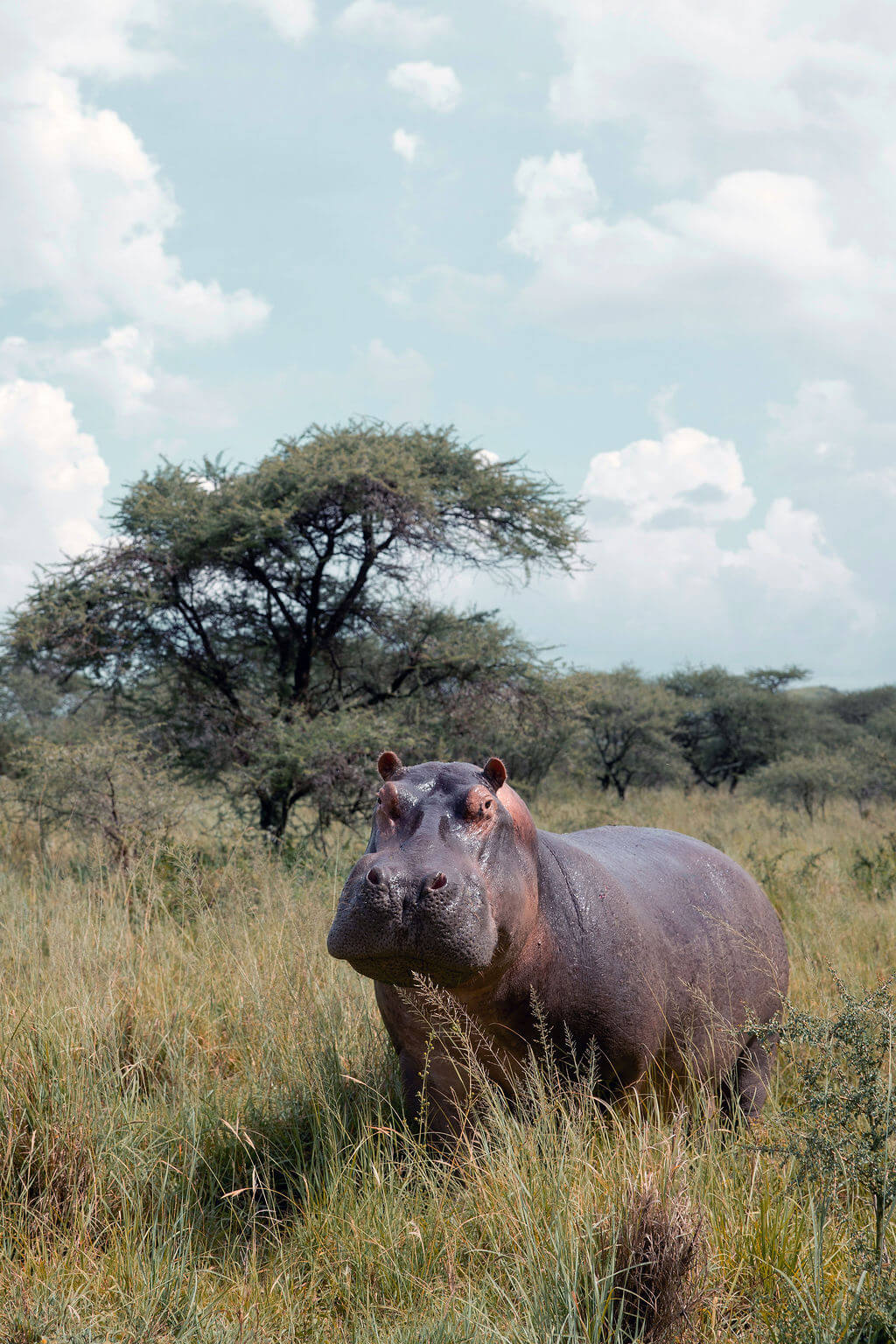
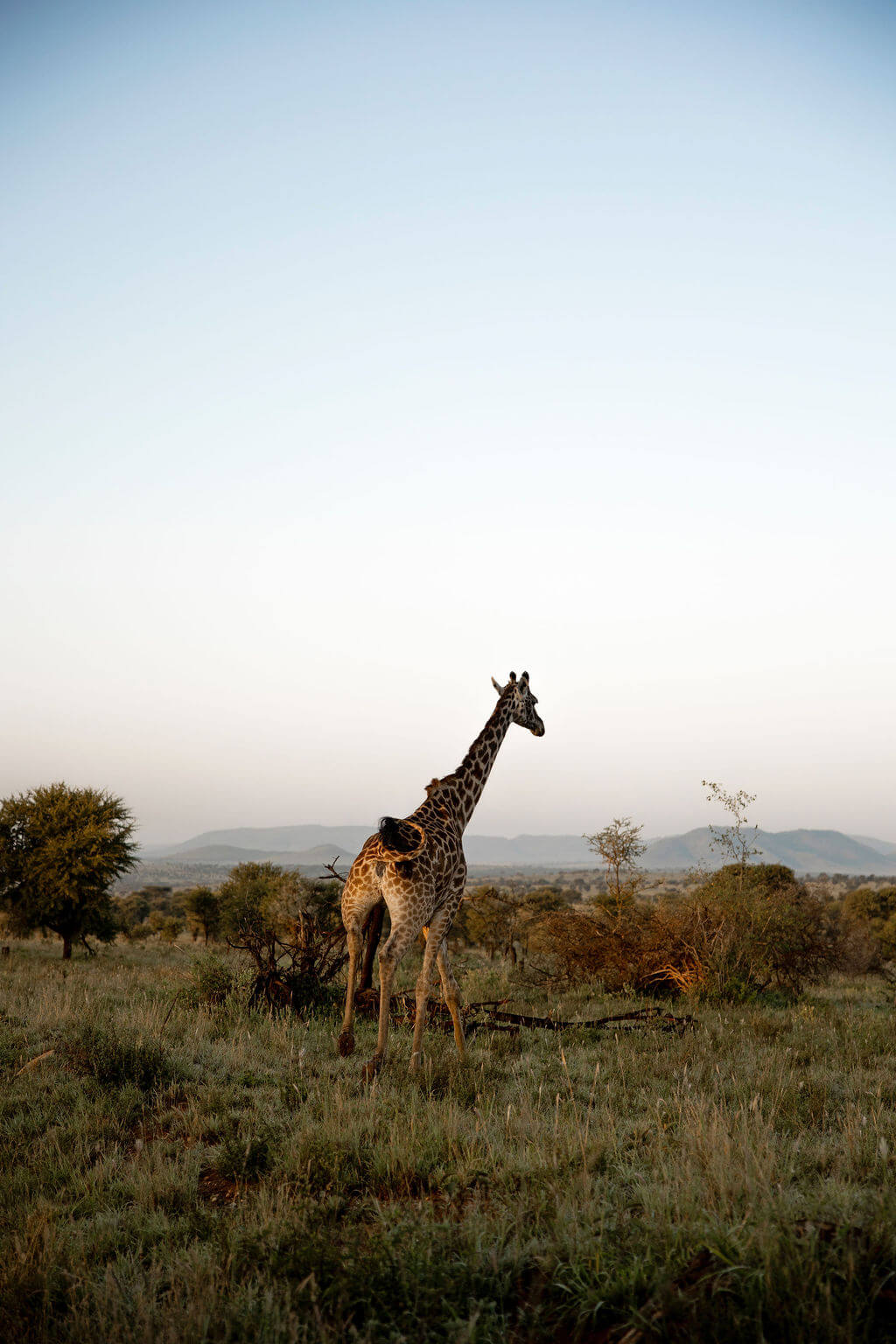
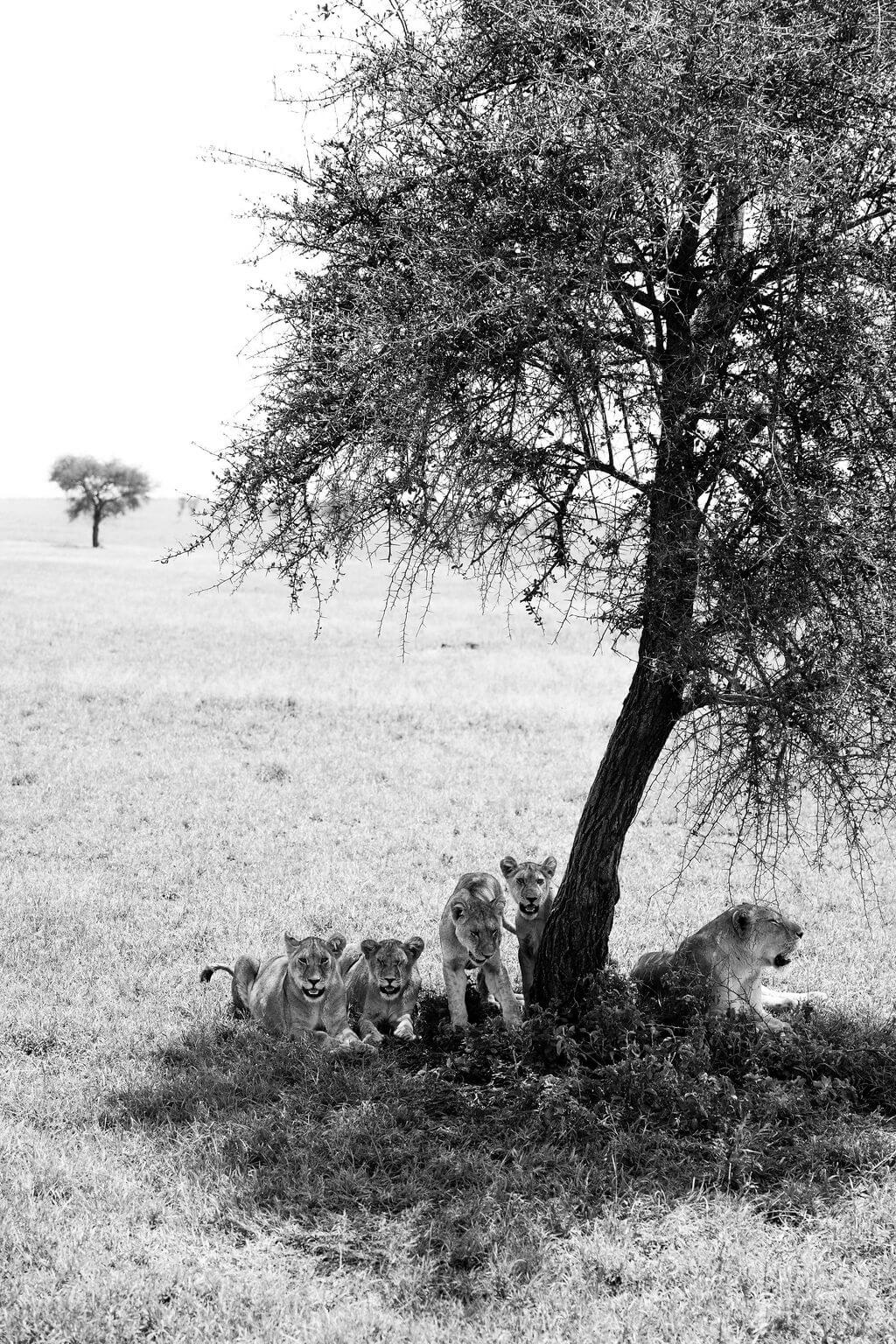
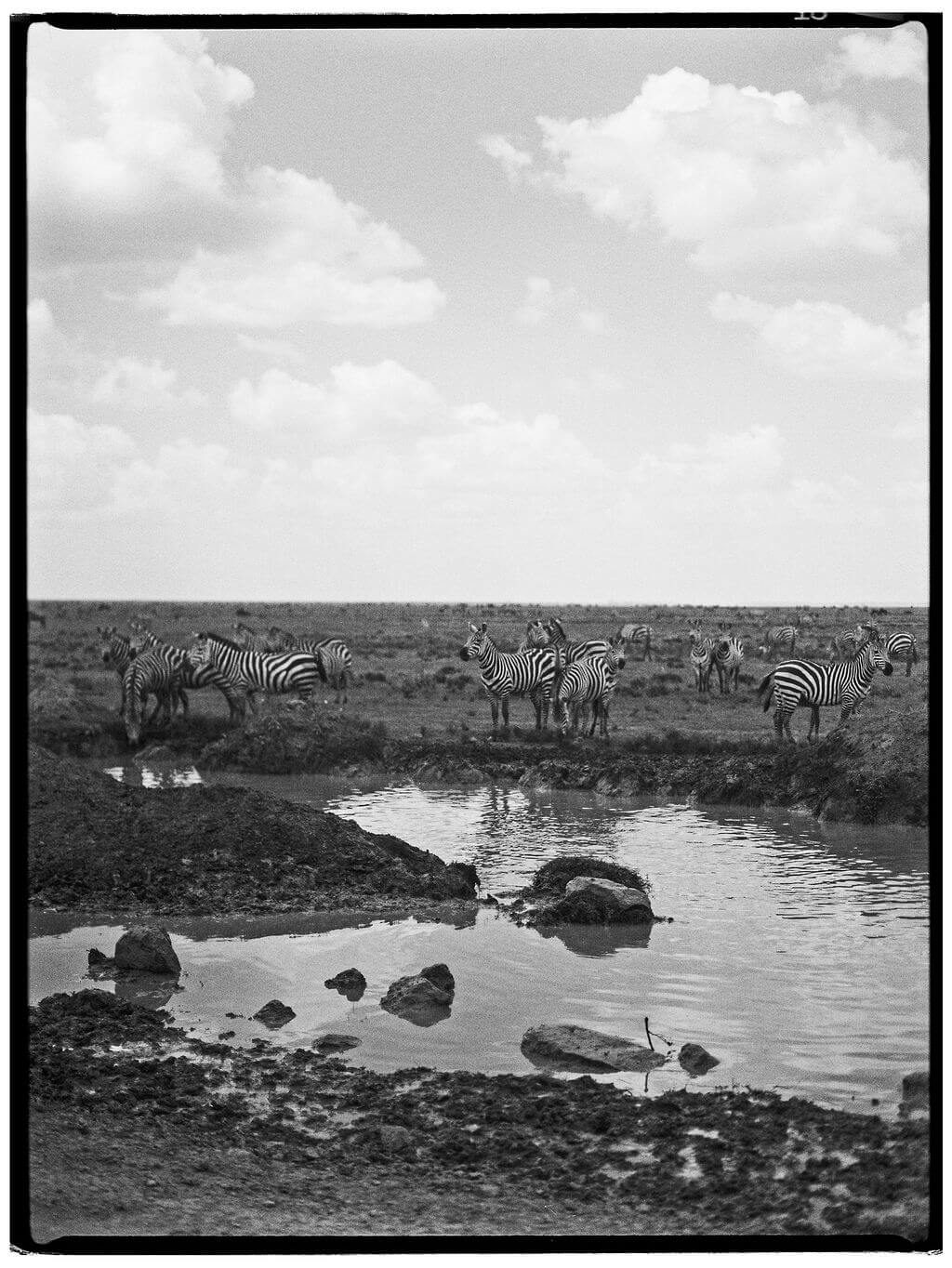
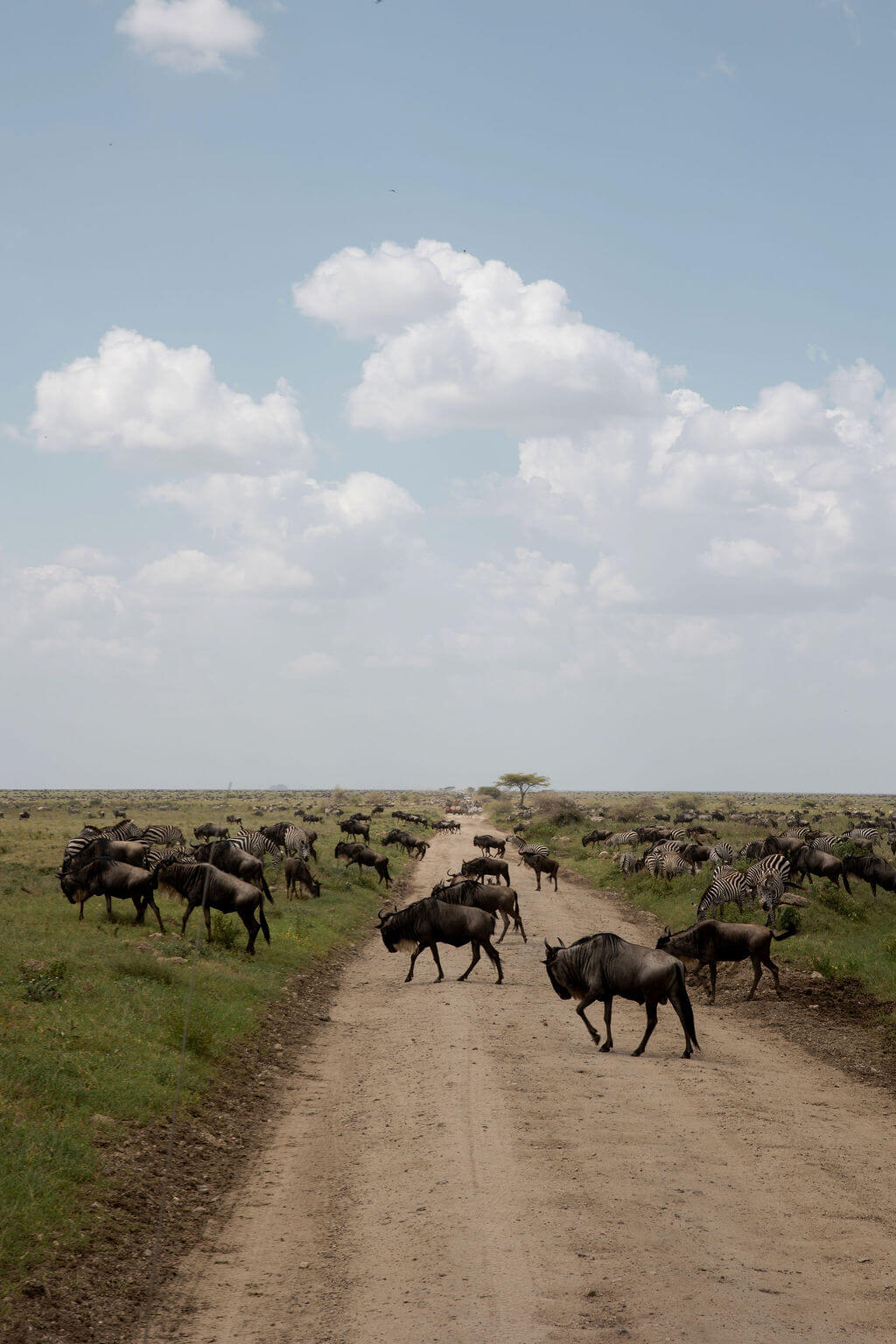
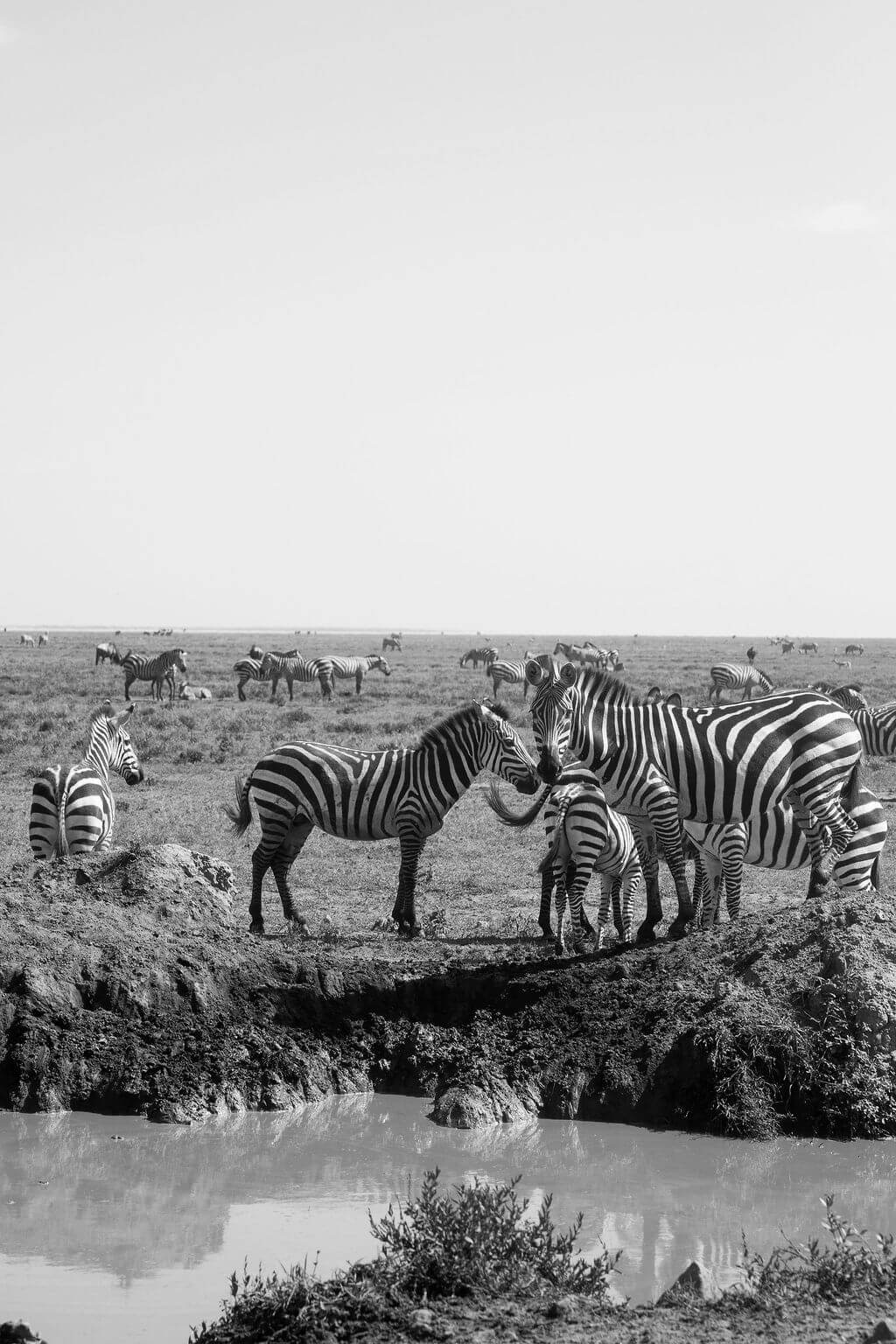
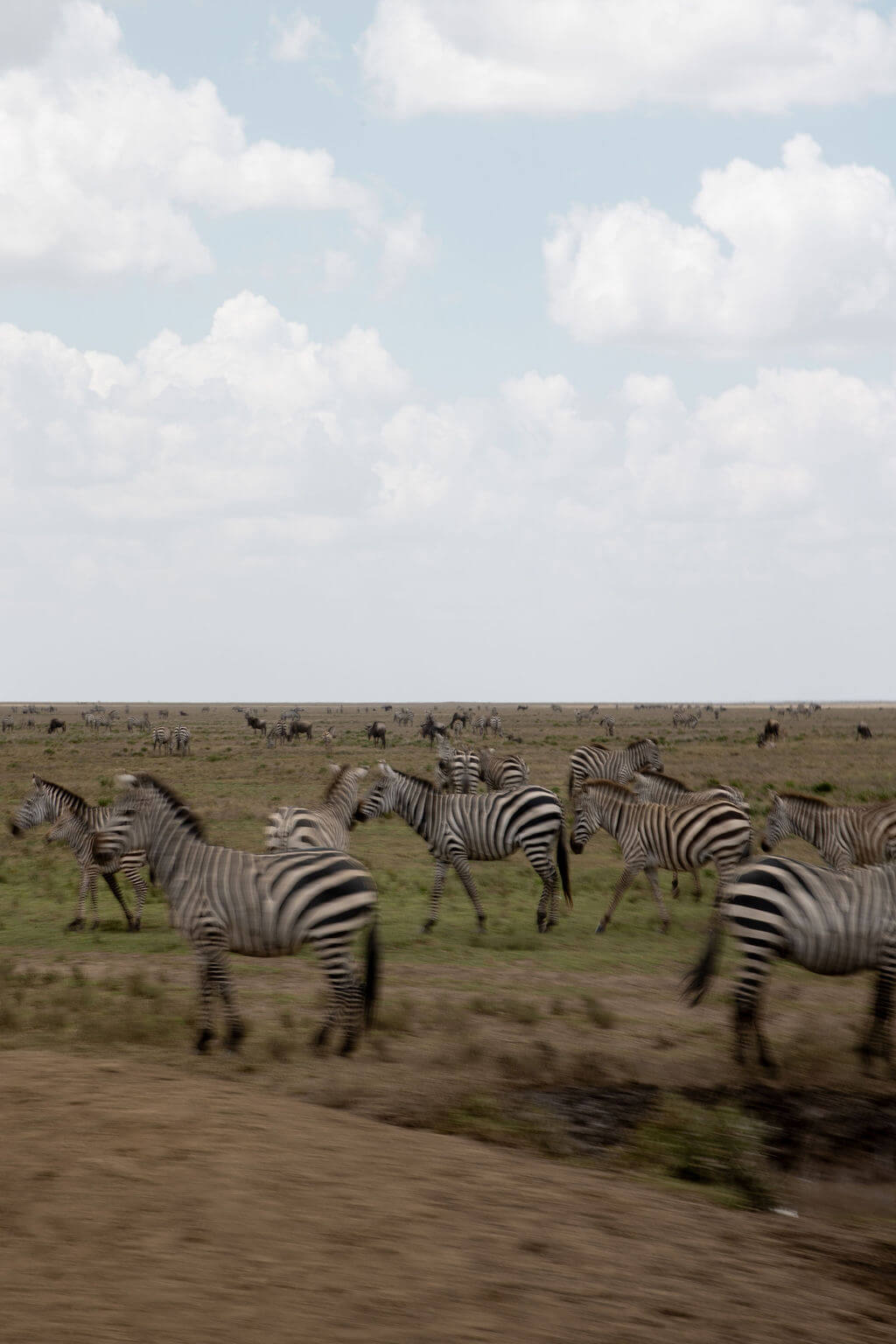
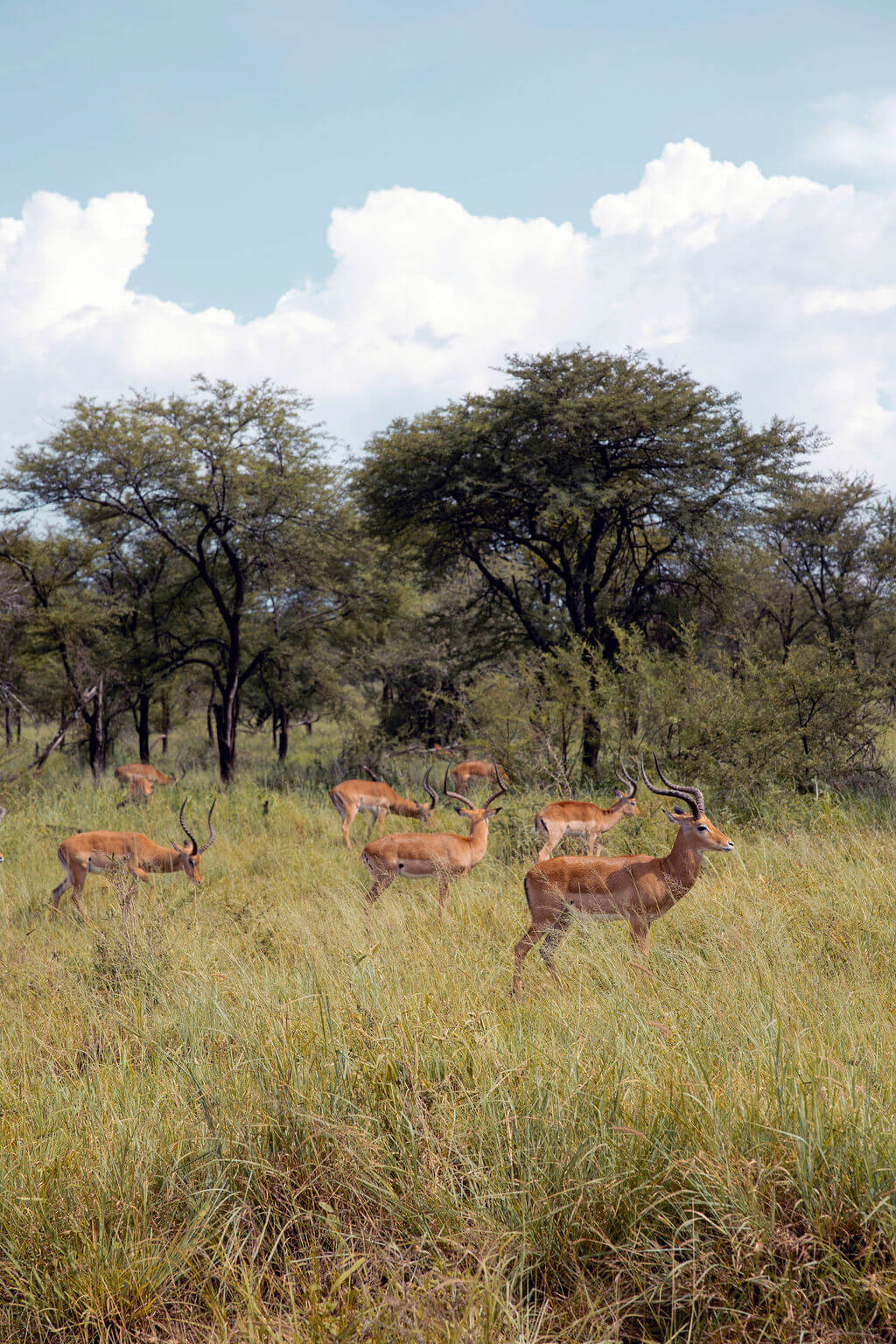
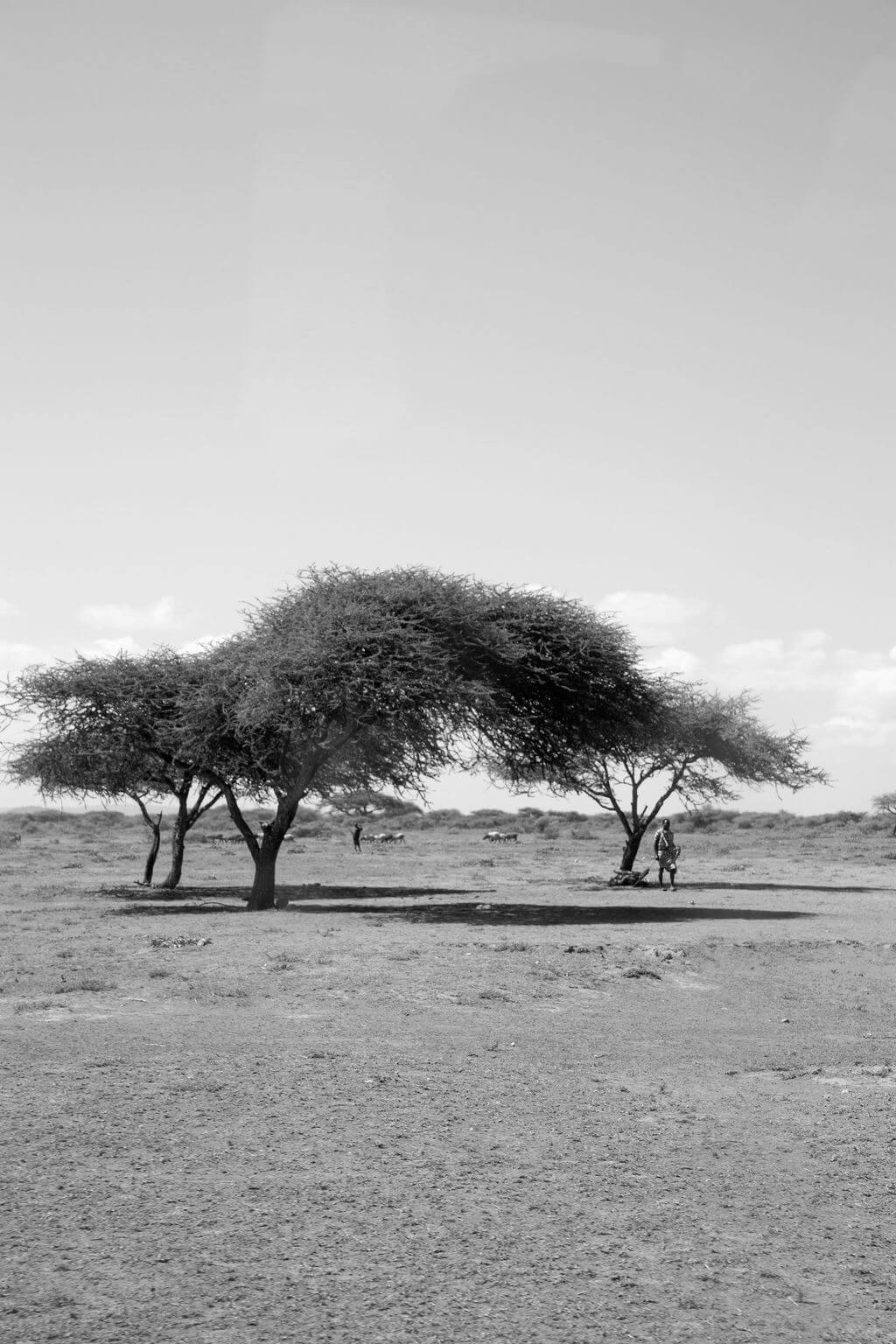
Traveling through the southern Serengeti and the Ngorongoro area during this period means one thing above everything else: the great migration. Zebras, wildebeests, and antelopes move endlessly across the landscape in numbers that the human eye struggles to process. Daniela describes it as surreal, almost cinematic in its scale — and then catches herself, because cinematic implies a director, and this had none.
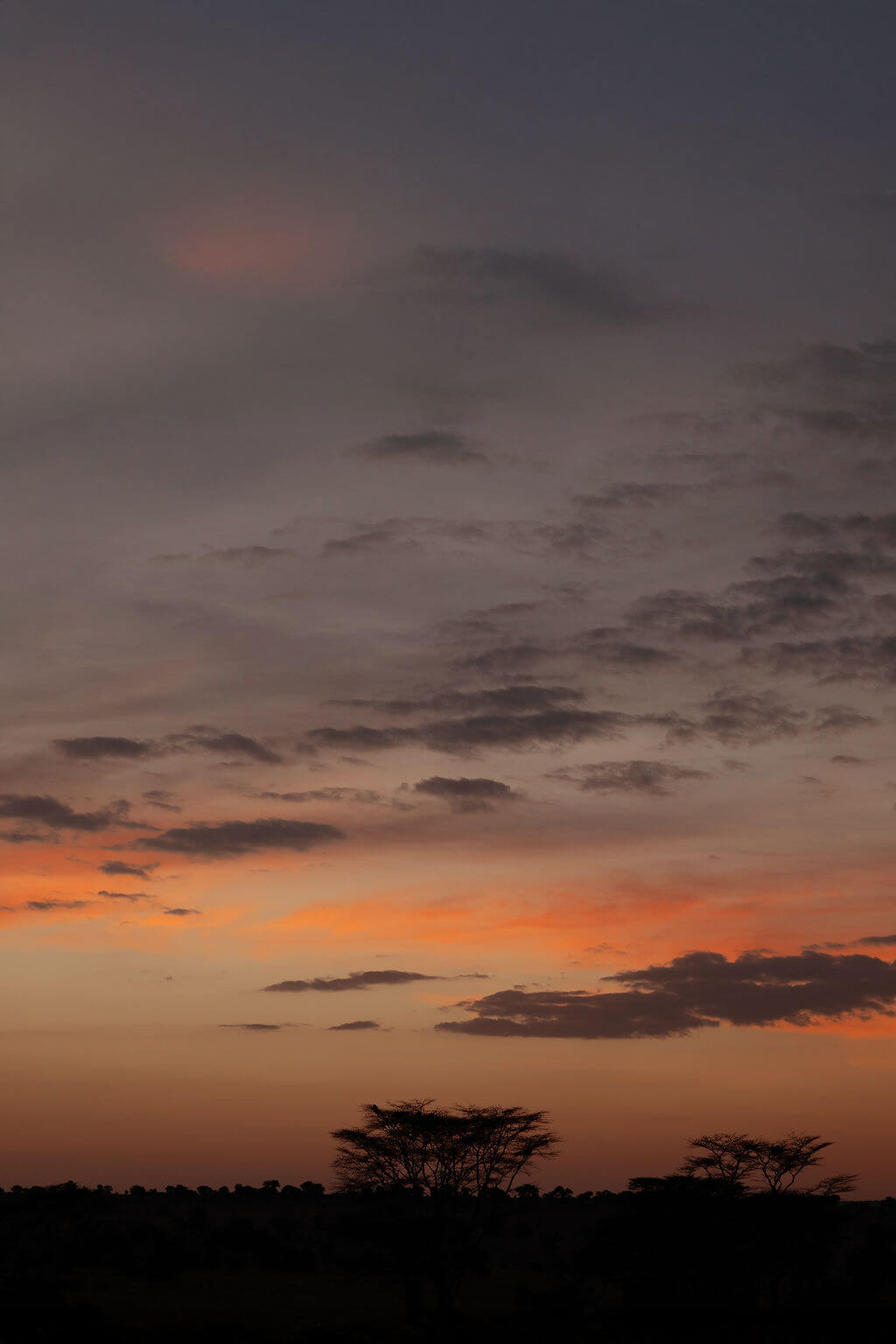
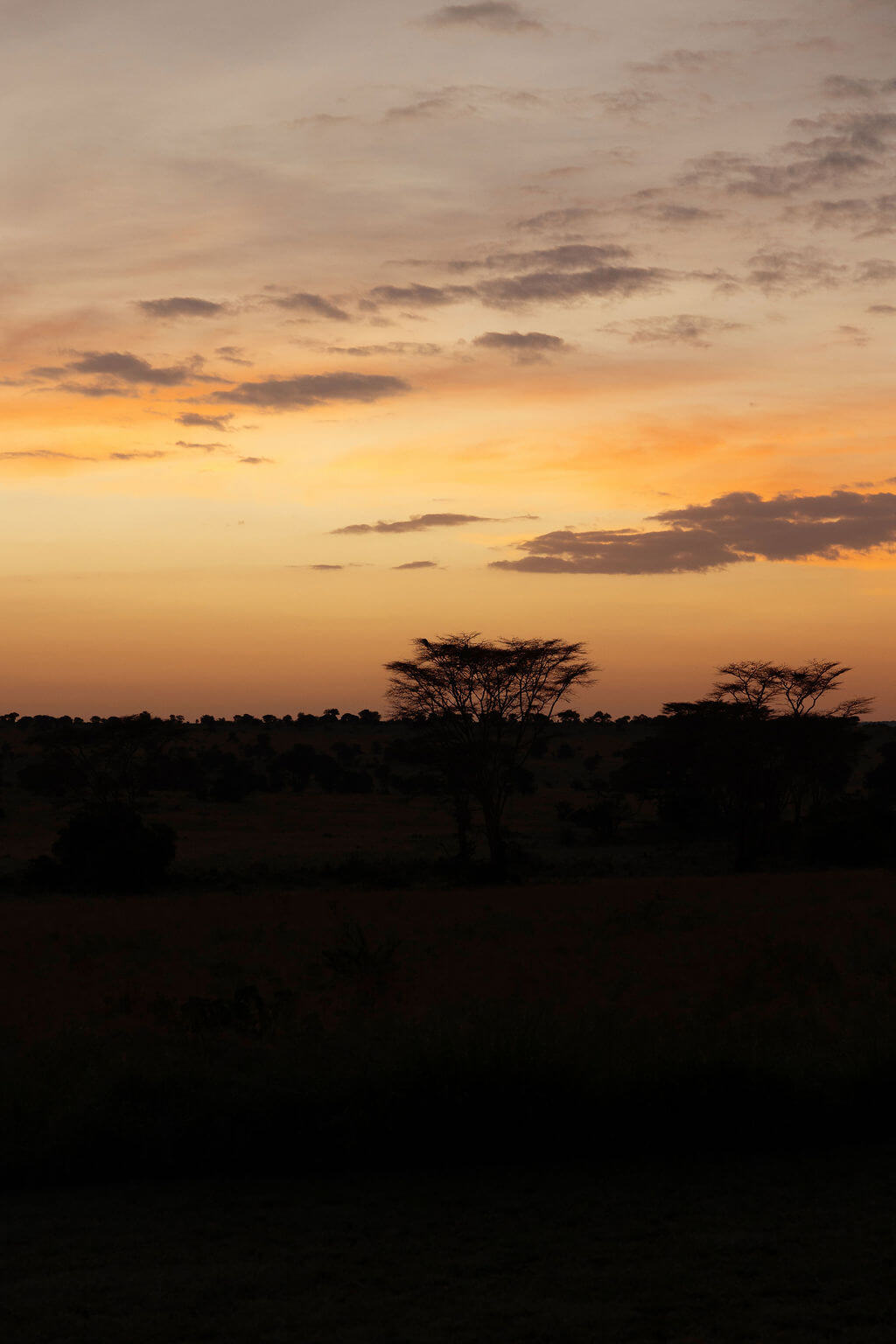
The light did what Serengeti light does. A sunrise that framed the migration in something close to the impossible. A sunset that answered it in the evening with equal force. No décor was needed, no styling intervention, no creative direction. The textures, the atmosphere, the people, the movement of ten thousand animals across ancient ground — the setting was, as she puts it simply, everything.

Planning an African Proposal — What This Story Teaches
If there is a practical lesson threaded through this experience, it is not about logistics — it is about posture. How you hold your plan matters as much as the plan itself. That said, a few concrete considerations make the difference between a safari proposal that works and one that doesn't.
What to keep in mind when planning a proposal in Africa:
- Research the season carefully — birthing periods, migration windows, and weather patterns vary significantly by region and month, and they affect what is and isn't possible on the ground
- Work with your lodge from the beginning — the best experiences here, including Maasai village visits, are arranged through people who have existing relationships with local communities
- Build flexibility into the plan — not as a backup, but as an intentional part of the design. The unexpected is not the enemy of a great proposal; rigidity is
- Let the environment lead the styling — fashion that fights the landscape loses. Fashion that understands where it is becomes part of the story
- Hire a photographer who knows Africa — light here moves differently, distances are vast, and the technical demands of shooting in the wild require specific experience
- Consider the full journey, not just the moment — a 12-day trip across two countries produced a proposal that felt earned, layered, and true. The context is part of the memory
And above all, in Daniela's own words, the clearest advice she could offer any couple planning something like this:
Allow space for the unexpected. Sometimes the most powerful moments come from what was not planned. And above all, stay true to your own vision — that is what makes an experience timeless.