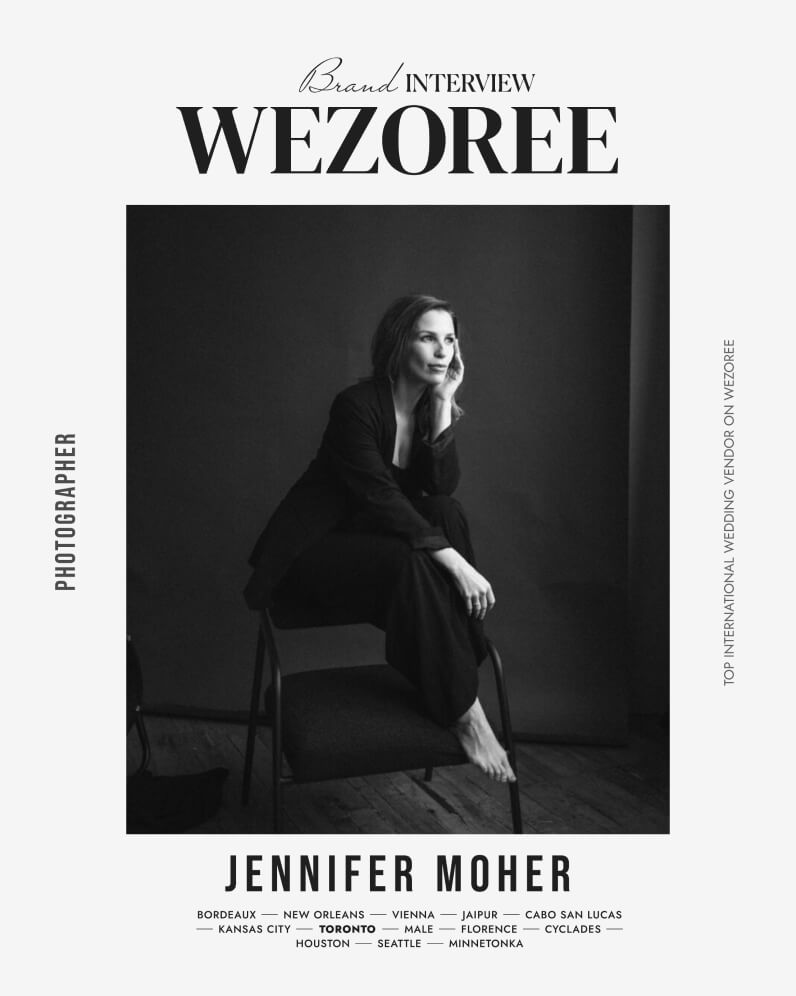
Where Memory Becomes Cinema: The Observational World of Jennifer Moher
AUTHOR: Natali Grace Levine
READING TIME: 3 min 2 sec
PUBLICATION DATE: 04/30/2026
UPDATED: 06/15/2026
AUTHOR: Natali Grace Levine
READING TIME: 3 min 2 sec
PUBLICATION DATE: 04/30/2026
UPDATED: 06/15/2026
Some photographers chase the big moments. Others understand that what stays with people is often something quieter — the glance before the ceremony begins, the shift in energy during dinner, the tenderness that passes between family members when no one thinks they are being watched. That is the kind of seeing that defines Jennifer Moher.
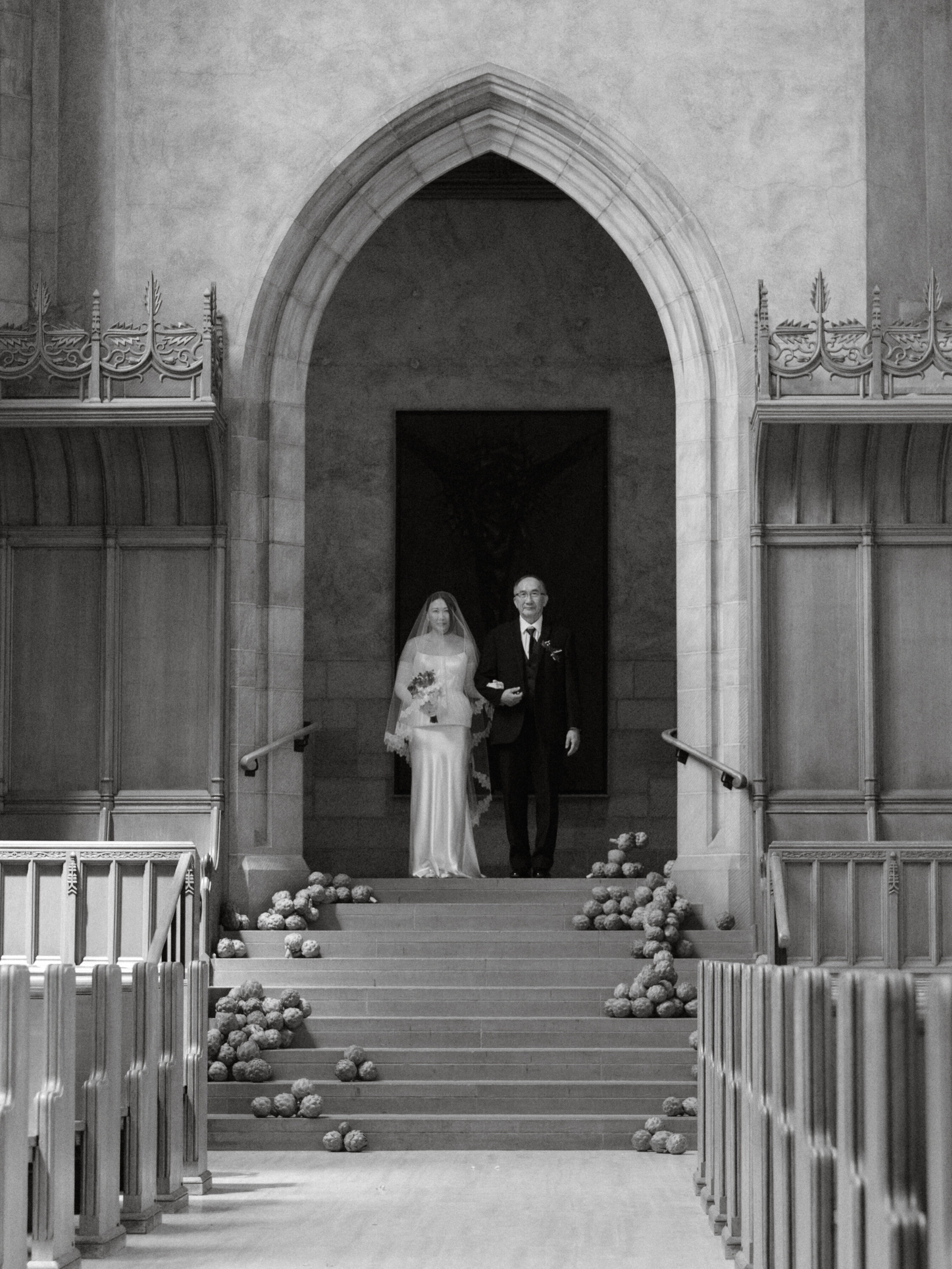
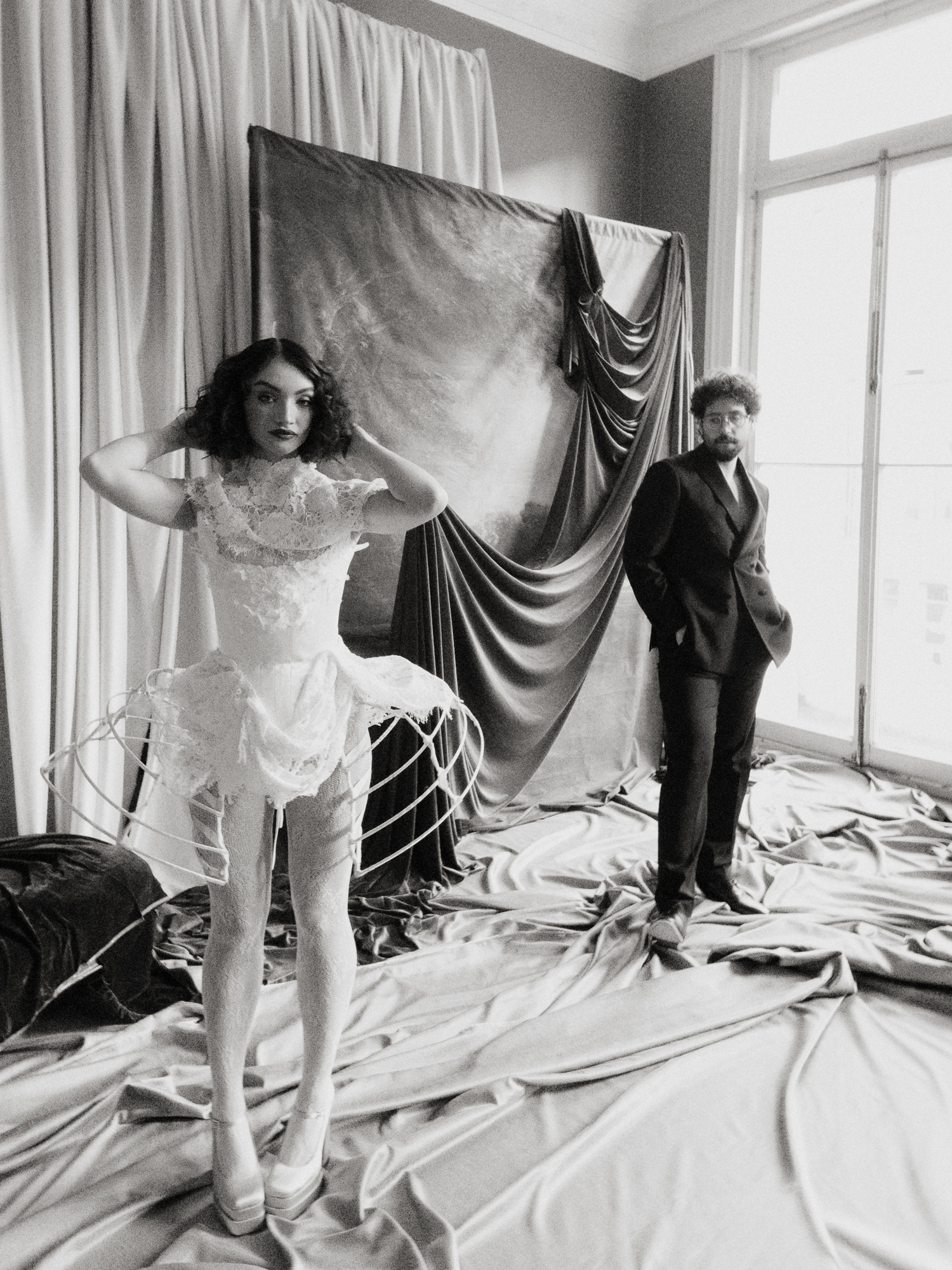
Based in Canada and heading into her nineteenth wedding season, Jennifer approaches weddings with a perspective shaped as much by cinema as by photography itself. She is interested in how scenes are constructed, how emotion unfolds, and how the in-between moments often carry the deepest meaning.
 A lot of my approach is influenced by cinema: how scenes are constructed, how emotion unfolds, and how the in-between moments often say the most.
That cinematic instinct gives her work a particular kind of depth. Her images are thoughtful without feeling heavy, composed without losing spontaneity, and emotionally tuned in without becoming overly sentimental. In this interview, Jennifer shares how storytelling shaped her path, why time matters so much on a wedding day, and what continues to inspire her after nearly two decades behind the camera.
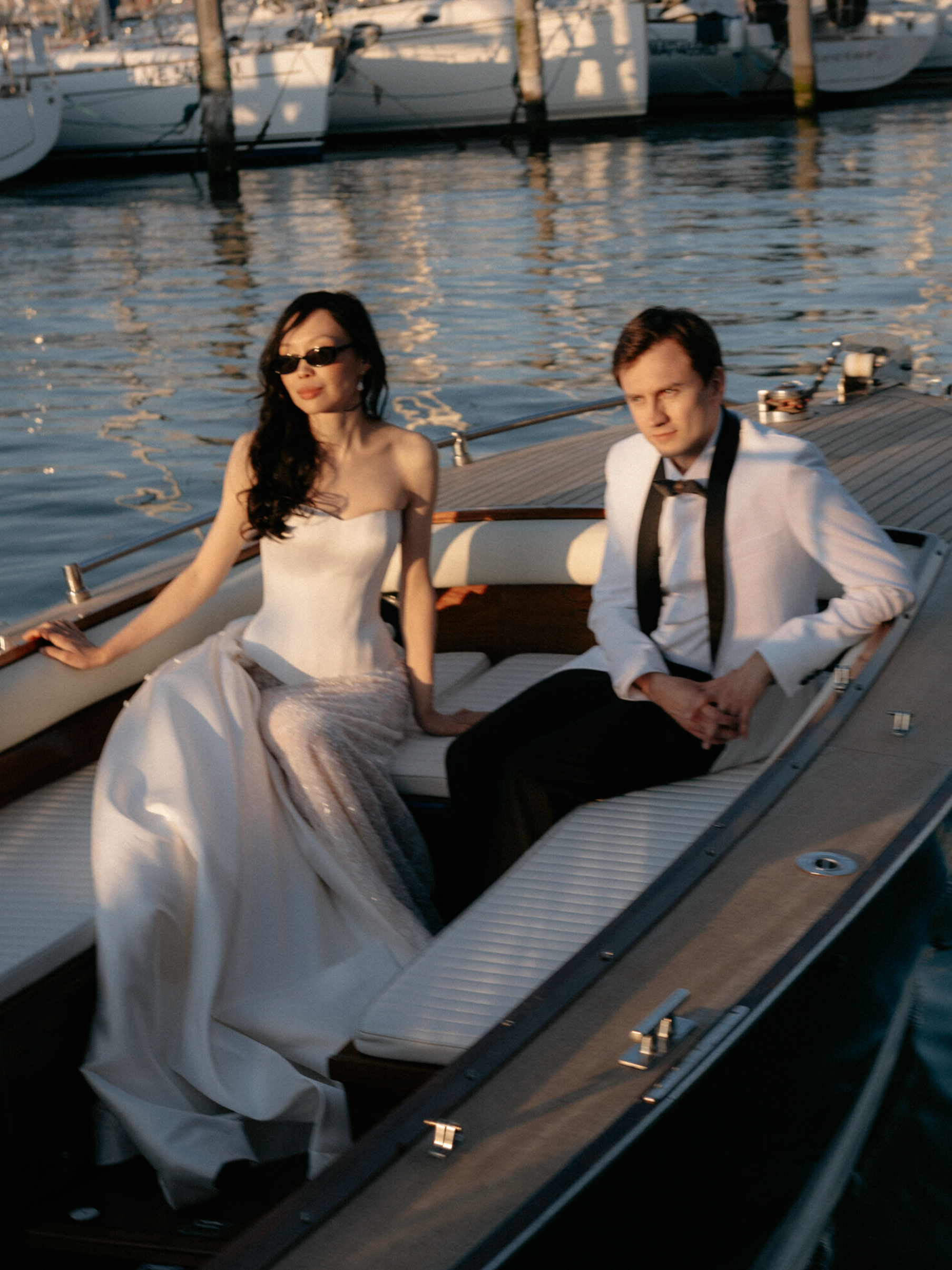
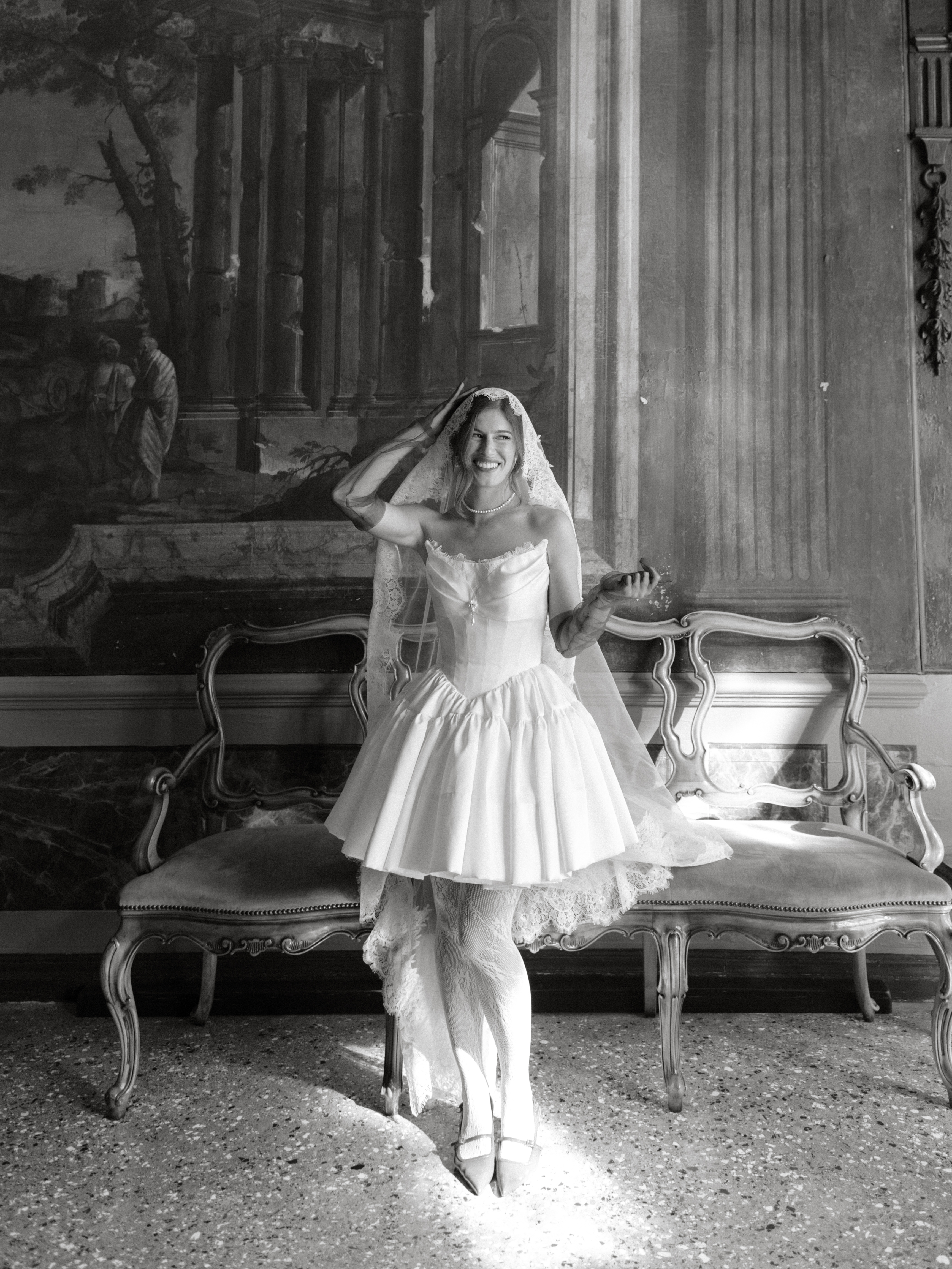
Jennifer did not arrive at wedding photography through a conventional route, but that may be part of what makes her work feel so distinct today. What shaped her most was not simply learning how to photograph, but learning how to read a story as it unfolds.
“I didn’t come into this from a super traditional path, but I’ve spent years studying storytelling, both in photography and cinema, and that’s really shaped how I see a wedding day.” That sentence reveals a great deal about her process. She is not only looking for beautiful frames. She is paying attention to rhythm, emotion, and the subtle structure of a day.
After almost twenty years in the wedding industry, that perspective has only become sharper. Jennifer has spent eighteen years immersed in weddings and is now heading into her nineteenth season. That kind of longevity brings not only experience, but confidence in what truly matters — and in what lasts.
Jennifer describes her style in three words: “Cinematic, observational, and intentional.” It is a concise description, but one that opens up beautifully once you understand how she works.
Her photography is built on a balance between guided moments and real ones. She cares deeply about composition and light, but she is equally attentive to what is actually happening in front of her: how people interact, what unfolds naturally, and what those moments mean to the couple.
It’s a mix of guided moments and real ones. I care a lot about composition and light, but I’m just as focused on what’s actually happening in a moment.
That balance is what gives her work its elegance and its honesty. The photographs feel refined, but never overdirected. The story feels shaped, but never scripted. Jennifer seems to understand that a wedding day needs both — a strong eye and a willingness to let life happen.
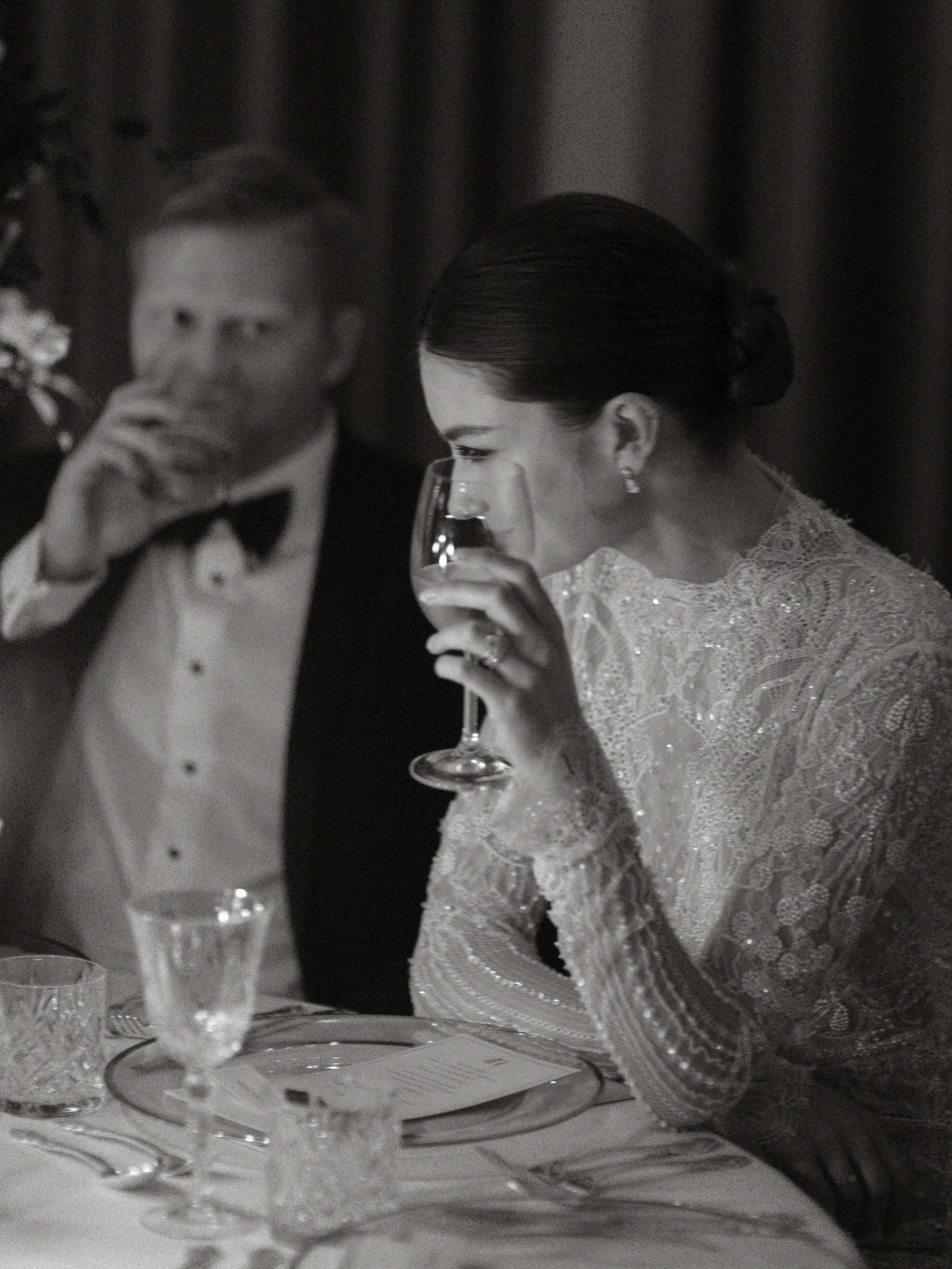
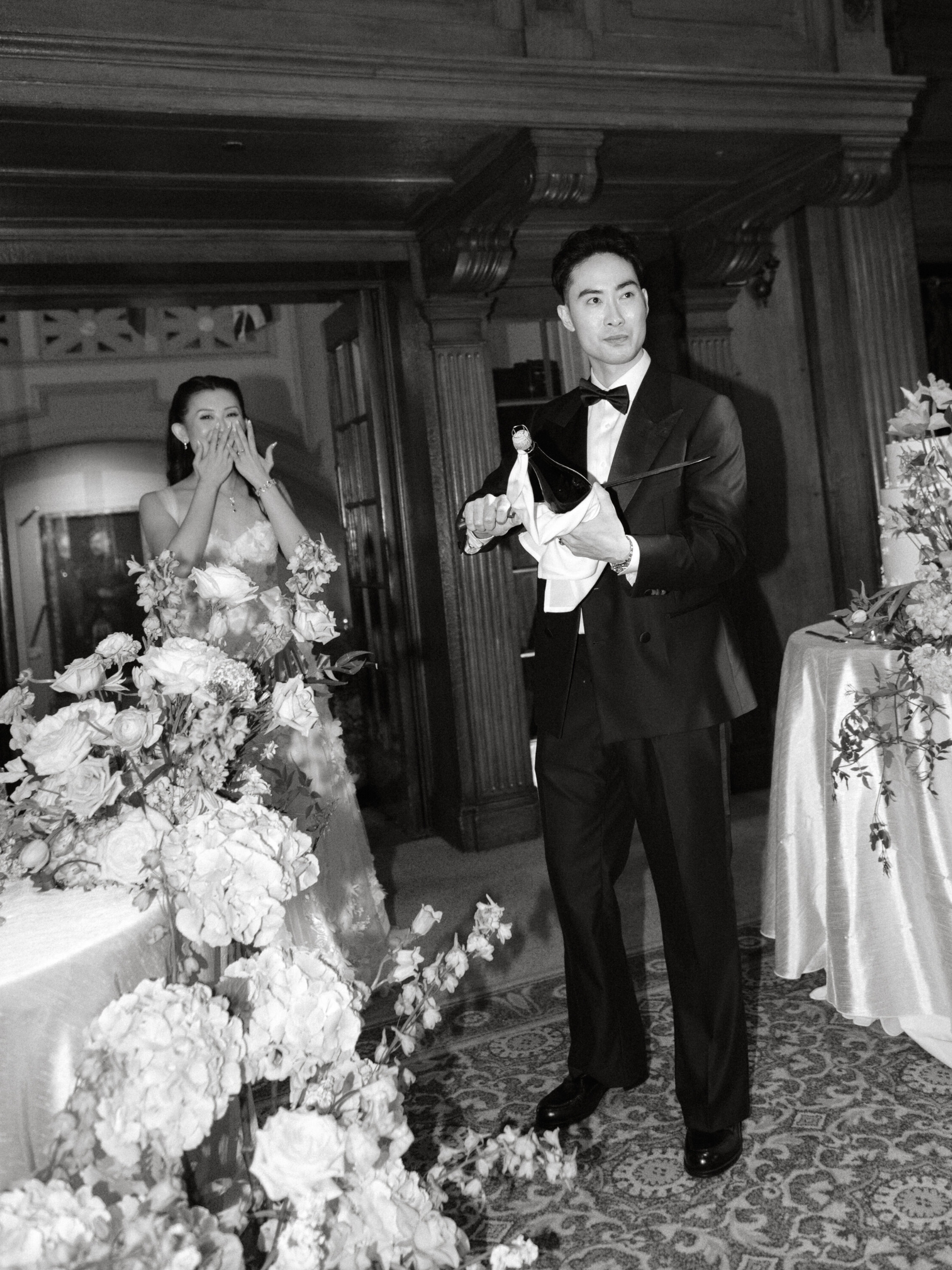
Jennifer works with a mix of digital and film cameras that support the way she sees. Her digital setup centers around the Nikon Z6III, usually paired with a 35mm 1.4 and a 24–70 2.8, while her film cameras include the Nikon F100 and the Contax T2.
That combination makes sense for a photographer whose work lives between intuition and craft. Digital gives her flexibility and responsiveness. Film brings a different texture, one that often deepens the emotional atmosphere of the frame.
Her editing process is similarly thoughtful and restrained. She uses Lightroom for culling and editing, relying on presets that have evolved over the years. That gradual adaptation says something important — her visual language has not been built overnight or pulled from a passing trend. It has been shaped slowly, refined through time and practice.
When Jennifer talks about what she enjoys most about being a photographer, her answer feels especially revealing: “Witnessing human behaviour and watching a day unfold in front of me like its a movie.” That is more than a lovely phrase. It is clearly the lens through which she experiences weddings.
Because she sees a wedding day this way, every celebration stays alive for her. The pace, the relationships, the shifting emotions, the way people move through a space — all of it becomes part of the visual story. “I love that every day is completely different from the last.” Even when the broad structure of a wedding is familiar, the people inside it are never the same.
That ongoing difference is what keeps her inspired. “No two people are the same. Even if the structure of a wedding is familiar, the dynamics, the relationships, the energy, it’s always different. That’s what keeps it interesting.” It is the kind of answer that comes from someone still genuinely curious, even after years of experience.
Jennifer’s approach with clients begins long before the wedding itself. Rather than focusing only on logistics or aesthetics, she wants to understand what the couple values and how they want the day to feel.
A lot of it starts before the wedding day. I spend time understanding what they value, what they’re drawn to, and how they want their day to feel, not just how they want it to look.
That distinction matters. It is one thing to know what a couple wants visually. It is another to understand the emotional texture they hope to carry through the day and later find again in the photographs.
On the wedding day, she balances direction with observation. “I’ll step in when needed, but I’m also paying attention to what’s already happening and letting that lead.” That approach gives couples support without making them feel managed. It also helps the gallery stay connected to what was real, rather than what was overly arranged.
And when it comes to coverage, Jennifer keeps the same flexible mindset. “Yes, every wedding is different, so I’m always open to building something that actually fits the day rather than forcing a template.” That openness feels perfectly aligned with the rest of her philosophy.
One of Jennifer’s strongest pieces of advice to couples is beautifully simple:
Focus less on performing and more on being present.
It is the kind of reminder people often need, especially on a wedding day when it is easy to become aware of cameras, timelines, and expectations.
She believes the best photographs come when people are truly in the moment rather than thinking about how everything looks. She also emphasizes the importance of building space into the timeline, because rushed days rarely photograph well. In fact, when asked what couples often overlook most in wedding photography, her answer is immediate: time.
“Everything comes back to time, how much of it you have, how it’s structured, and whether there’s space to actually experience your day. That directly impacts the photos.” It is practical advice, but also deeply true. The emotional richness of a gallery often begins with whether the day itself had room to breathe.
Jennifer’s way of helping couples relax is especially lovely too. “My favourite is to just pretend that I am your best friend for the day, and relate to the camera in that way.” From her side, she says she immerses herself like one of the guests for exactly that reason. That sense of closeness and ease naturally changes what becomes possible in front of the lens.
Jennifer is open to destination weddings anywhere, but she feels especially drawn to old cities and places with culture and history. “Those environments naturally add depth to the story.” That answer fits her perfectly. She is clearly interested in settings that do more than look beautiful — places that bring atmosphere, context, and emotional texture to the images.
One of her most unforgettable locations was a vow renewal in Scotland, and perhaps it is no surprise that one of the weddings that has stayed with her most was also a vow renewal. She describes it as “honest and tender,” especially because the couple’s children were there to witness their parents speak their vows. That detail alone says so much about what moves her: not spectacle, but sincerity.
Jennifer also leaves couples with an insight that feels especially important.
I think couples underestimate how much photography shapes how they remember their wedding. It’s not just documentation, it becomes the memory over time.
That is a powerful way to understand her work. She is not only recording a day. She is helping shape the way it will live in people’s minds for years to come.
At the heart of Jennifer Moher’s photography is a way of seeing that feels rare and quietly powerful — cinematic, emotionally intelligent, and deeply aware of what matters when the day is over. Her photographs do not simply freeze a wedding in place. They return people to it.