Best Beach Wedding Dresses for a Breezy Ceremony


The sea is doing its bit. A warm breeze lifts the hem of your skirt, and every guest looks up at the late sun. That's the image of a beach wedding, and the dress has to deliver. A beach wedding dress has to look like a dream while also holding up against sand, salt air, humidity, and a constant wind off the water. The good thing is that the very things that make a beach wedding a challenge - the light, the movement, the open air - are also what will make a good dress look absolutely stunning. Here are the fabrics, silhouettes, and trends we'd take to the beach, a few practical notes and pieces that only the beach can teach you, and a bit more on the heat and wind.
Find Your Perfect Wedding Vendors



Lightweight Fabrics That Move With the Breeze


Fabric determines how a dress will behave on the beach long before you even get to the neckline or the sleeve. Chiffon is the classic romantic fabric: soft, floaty, and incredibly forgiving in the wind. Organza is a bit crisper and holds a little more shape. Tulle is very airy and looks like mist around the legs. Silk blends and fine crepe fall somewhere in between, cool and smooth on a hot day. Fine lace in an open pattern adds detail without satin's weight.
That's how you get a flowy beach wedding dress that actually floats. Our go-to is layers: two or three thin sheets of chiffon move far better than one thick sheet, and they won't cling in the humid air. The lining is just as important as the outer fabric, as a synthetic one can end up feeling like a blanket by the second song. When you're looking at wedding dresses for a beach wedding, hold the fabric up to a window, scrunch it in your fist, and see how it springs back. Heavy satin and thick brocade are definitely not fabrics for a beach wedding, as they'll be too heavy.
Color deserves a word. White photos up bright in strong sun; ivory and champagne diffuse the glare better and flatter a wider range of skin tones. A very sheer skirt over a thin slip can go completely transparent in backlight at sunset, so you must test it outside before the final fitting, preferably at the hour you'll actually be marrying.
Bohemian Chic, Updated for the Shore


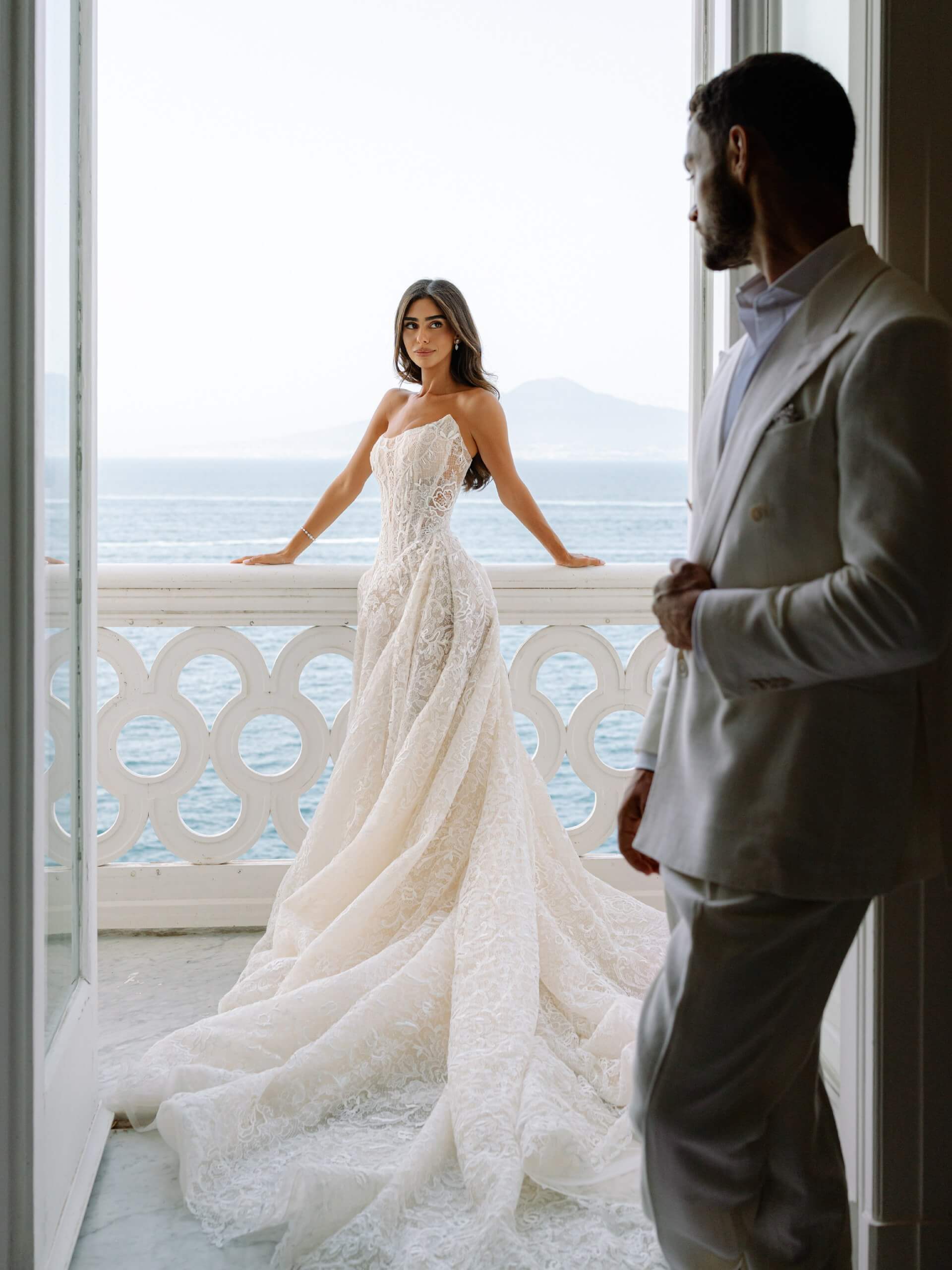
Bohemian is the look most associated with the beach, and it's very easy to see why. It's a laid-back, romantic look which is all about letting go. A boho beach wedding dress typically has soft layers, floating sleeves, an open back, and a V or wide scoop neckline. An off-the-shoulder dress with bell sleeves is a very current option and much easier to wear in the heat than a full bodice. Lace is the key feature. A lace beach wedding dress can be extremely light and airy with scalloped edges and a sheer panel, and the pattern will cast such lovely shadows in the low afternoon sun. Add a little embroidered flower work or tonal thread for interest without adding any weight. Style it as loosely as the dress: loose waves, a braid with a few little flowers, and a delicate chain at the neck.


The new boho look is much less costume and much more editorial. It's got cleaner lines, fewer layers, and a vastly more restrained palette. That's the version we actually prefer. Pick one romantic detail, like the sleeve or the lace, and let everything else go. A dress that's trying to be every kind of boho at once tends to look cluttered, and a beach dress already has quite enough on it.
Short and Tea-Length Dresses Made for Sand


A shorter hem is one of the smartest things you can do at the beach, and it's very much a thing at the moment. A tea-length dress will skim the calf, a mini is a cool contemporary look, and a high-low is dramatic at the back, with the front of the dress completely out of the sand. A short beach wedding dress also solves the wet-hem issue if you're going to walk out to the water. You can dance, climb into a boat, wade in for a photo, and still be absolutely happy.
Shorter lengths are also very much the ticket for a casual beach wedding dress, the sort of thing you'd wear to an informal wedding with just a few guests. You could go with flat sandals or go barefoot, and it would be perfectly relaxed without being sloppy. Some brides wear a short dress for the ceremony and then add a longer skirt or train for the evening, giving them two very different looks in one day. If we had to pick a sweet spot, it would be tea length, absolutely lovely for the vows and very practical for the beach.
Any concerns about a short dress coming across as too casual? Let the fabric do the talking. A short dress in crisp organza, structured lace, or sculpted satin will look perfectly put together, and a long veil or statement earring will add a touch of the ceremonial. A good short dress can, in fact, look more bridal than a dress that's just dragging through the water.
Silhouettes That Move With You

The right shape lets you move, and a beach rewards movement more than any other setting. An A-line is a very accessible choice, flattering on so many frames, easy to walk in, and with a skirt that flares just enough to catch the breeze. Sheath and column dresses are sleek and will look great at a beachside wedding or on a long stretch of sand. A fitted trumpet or mermaid shape is absolutely glamorous, though you do need a skirt with a bit of give to actually walk in it.
An empire waist works brilliantly on a petite frame as it lengthens the line and keeps the fabric in the air. A tulle ball gown can still feel light. Start with proportion, and you'll find a beach wedding dress that works for you: a defined waist, a neckline you like, and a hem that suits your height. Straps and sleeves also affect balance, so try a few and see which one makes you stand a bit taller. There's one rule we'd like you to remember above all else. You should be able to sit down, raise your arms, and step onto the sand without a thought. A beach isn't a place to tug at a bodice, so choose a cut that lets you forget it, and you'll look as effortless as you feel.

Dressing for a Shore: Heat, Wind and Sand


A beach comes with its own set of rules, and the weather writes most of them. The sun is strong, the air can be thick with humidity, and a sea breeze that was barely touching your veil at two o'clock can become a proper gust by half past. The pattern holds from one coastline to the next: heat first, wind second, sand always. A dress that looks flawless in a bridal salon can feel like a different garment at the water's edge, so we plan around the weather like an uninvited guest who stays for the whole ceremony. Expect it, make room for it, and pick the dress that gets along with it.
| Beach reality | What it means for your dress |
|---|---|
| Heat and humidity | Breathable fabrics and a lining that doesn’t trap heat |
| Sea breeze | A skirt with weight at the hem, and a veil you can secure |
| Soft, deep sand | A hem that clears the ground, or one you can lift with one hand |
| Strong sun | Sunscreen before you dress, and sleeves or a wrap if you burn easily |
| Late-afternoon light | A ceremony at golden hour, and a dress that looks good in low sun |
| Summer showers | A fabric that survives a few drops, and a plan for shelter |
| Salt and spray | A hem you won’t mind getting damp |
Weather is a good reason to choose a lighter summer beach wedding dress than you might otherwise. Choose breathable fabrics, avoid heavy beading, and let air flow through the skirt. The beach wedding dress code on your invite will likely be 'relaxed elegance,' which gives you the freedom to go barefoot, wear flats, or wear a couple of very simple sandals. Check the forecast two days out and have a plan B in case of rain. Beach weddings tend to be later in the day, when the light is softer, the heat is off, and the dresses that look wonderful in that light really win. We'd look at the time of day first and the dress second. A dress that's right for golden hour will be a treat; a dress chosen at noon in the showroom is likely to let you down.
How to Choose Your Beach Wedding Dress


Before you commit, though, a few practicalities can turn a good dress into the right one. These are the things we'd tell a friend over coffee, and most of them take five minutes and save you an afternoon.
- Try the dress on in the daylight and walk, sit, and lift your arms
- Pick a hem that clears the sand or learn how to bustle it in seconds
- Wear shoes you can stand in for an hour: flat sandals, barefoot sandals, or low wedges
- Choose a breathable lining and leave the heavy underlayers at home
- Secure the veil with a comb or pins, as the wind is going to try it
- Add a light wrap or shawl for the evening when the breeze cools
- Plan hair that survives humidity, such as a braid, a low bun, or soft waves
- Pack a small kit with tape, safety pins, blotting paper, and a mini fan
A white beach wedding dress is the classic choice, though a soft ivory or blush would look just as good on the sand. Any beach wedding dress should feel like you in it, since you'll be standing on the beach in the most beautiful setting imaginable. Our advice: trust your first instinct in the mirror, then take a few steps and a spin to check it out.
The most memorable beach wedding dresses are the ones that catch the last of the afternoon gold and lift as the tide comes in. Chiffon drifts, lace glows, and the hem skims the sand as you walk toward the water with all your loved ones watching. You don't think about the dress at all once you've got it; all you have is the stillness before the vows, the salt in the air and the sheer feeling that the whole beach has been laid out just for you. That's the image you're after really: luminous, unhurried and absolutely yours. For more ideas and editor tips, plus inspiration from our top vendors, head straight to the Wezoree inspiration section.



FAQ
What's the best fabric for a beach wedding dress?
Chiffon, organza, tulle, and fine crepe handle heat and breeze best. Layering thin fabrics keeps the skirt moving without added weight, and a breathable lining keeps you cool all afternoon. Avoid heavy satins and thick beading, which are both hot and stiff in humid air. If in any doubt, go for chiffon over a light slip.
What are the best beach wedding dresses for summer?
Flowy A-line dresses, light sheaths, and short or tea-length styles are up there because they move easily and look great. A lace overlay or sheer sleeve is the way to go if you want a bit of romance and not too much heat. A short sleeve or a flutter cap would also be on the shortlist as shoulders tend to burn so quickly. You want the one you can walk in, sit in, and dance in with absolutely no second thoughts.
Can I wear a long train on the sand?
You can, a long train, of course, gather in sand and moisture and gets blown about. A short train or a detachable train is far easier to deal with. If you're after the drama, ask your seamstress for a bustle or a wrist loop so you can lift it in a second.
Do I have to wear white to a beach wedding?
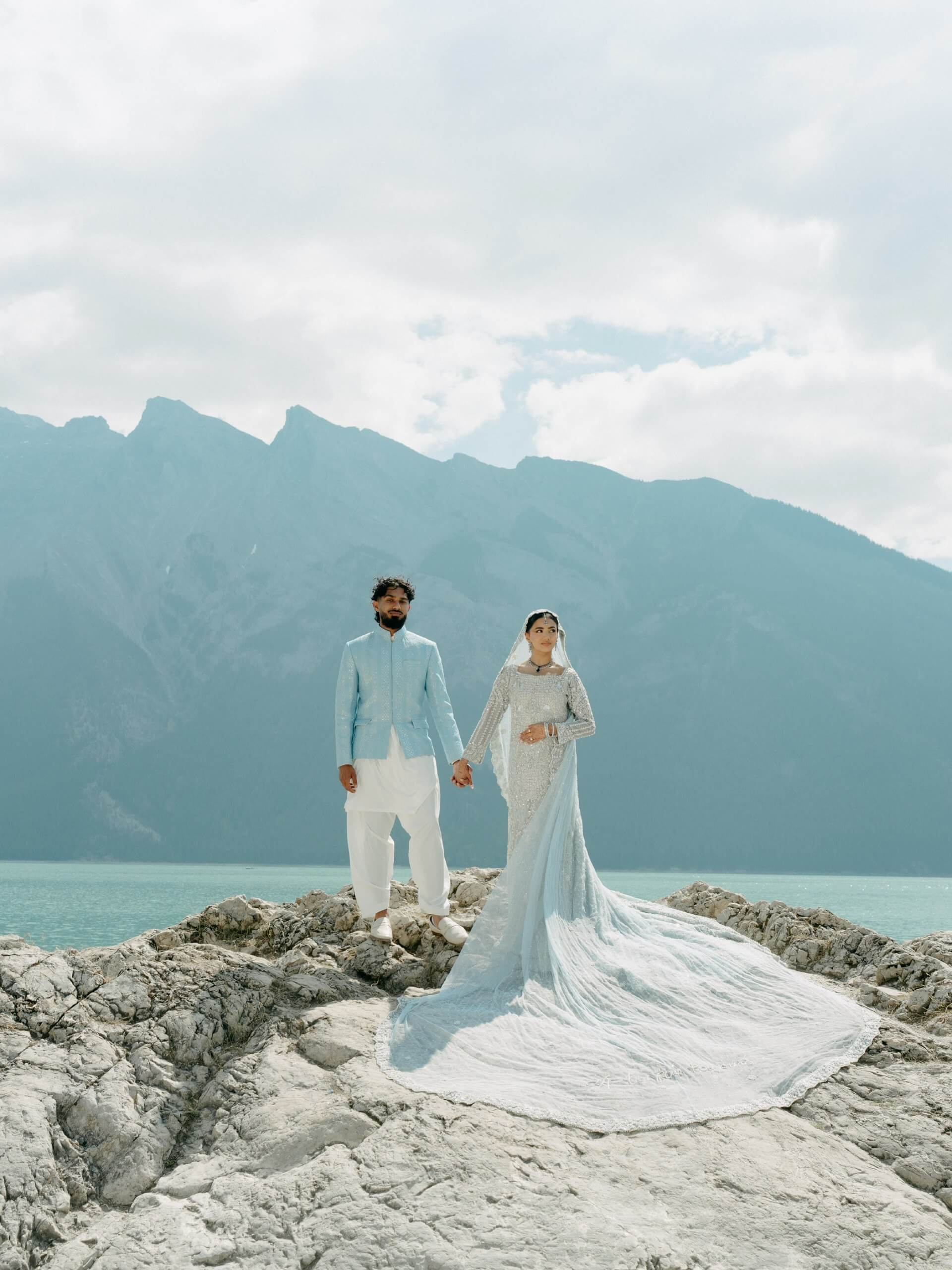
No. Ivory, champagne, blush, and pale blue all look absolutely lovely against sand and sea, so choose the shade that suits your skin in strong daylight and still photograph well at sunset.
What shoes work best on the sand?
Flat sandals, barefoot sandals, and low wedges are the easiest, and many brides will go barefoot for the ceremony. Stilettos will sink, so leave them at home. Bring a second pair in your bag for the reception, when you're on the boardwalk or the dance floor.
How do I keep my dress and hair in the wind?
Add weight to the skirt's hem and secure the veil with a comb or pins. A braid, a low bun, or soft waves are far better than a loose blowout. If you can, ask your hairdresser to do a trial in similar weather, as you're very unlikely to have a gentle breeze at the shoreline.