Wedding Officiants
Select Location
Select Vendor
2 results

 Paris
Paris  $1 200
 5
5
FAQ
Do we need a wedding officiant for our ceremony in France?
How much does a wedding officiant cost in France?
What is the difference between a civil and a symbolic ceremony in France?
Can a wedding officiant in France conduct a bilingual ceremony?
How far in advance should we book a wedding officiant in France?
Does the officiant need to travel to our venue?
Can a wedding officiant lead an interfaith or humanist ceremony in France?
Do we need to complete any legal paperwork before the symbolic ceremony?
Should we include a rehearsal before our French wedding ceremony?
For international couples, getting married in France involves a legal step that surprises many people. The country requires a civil ceremony at the local town hall, or mairie, for the marriage to be legally recognised. This is separate from any symbolic or religious ceremony you might plan to hold at a château or vineyard, for example. One of the most important things to sort out early in your planning is understanding how a wedding officiant in France fits into this picture. Wezoree is an experienced wedding vendor platform that connects couples with top-rated officiants across the country, so you can rely on our recommendations to find the right person to lead your ceremony.
The French Wedding Ceremony: What You Actually Need to Know
It helps to understand the legal landscape before comparing officiants, since France's rules differ from those of many other countries.
| Ceremony Type | What It Is | Legally Binding? |
|---|---|---|
| Civil ceremony (mairie) | A ceremony at the local town hall, conducted by a registrar | Yes, required by French law |
| Symbolic ceremony | A personalised ceremony at your venue, led by an officiant of your choice | No, but emotionally meaningful |
| Religious ceremony | A church, temple, or other religious ceremony | Only if the civil ceremony has already taken place |
For most international couples, the typical approach is to hold a quiet legal civil ceremony at the town hall with just a small group of people, followed by a larger, more personal symbolic ceremony at the main wedding venue. In the context of Wezoree's listings, a wedding officiant generally refers to someone who leads the symbolic ceremony, not the legal civil ceremony, which is always conducted by a state registrar.
What Does a Wedding Officiant in France Actually Do?
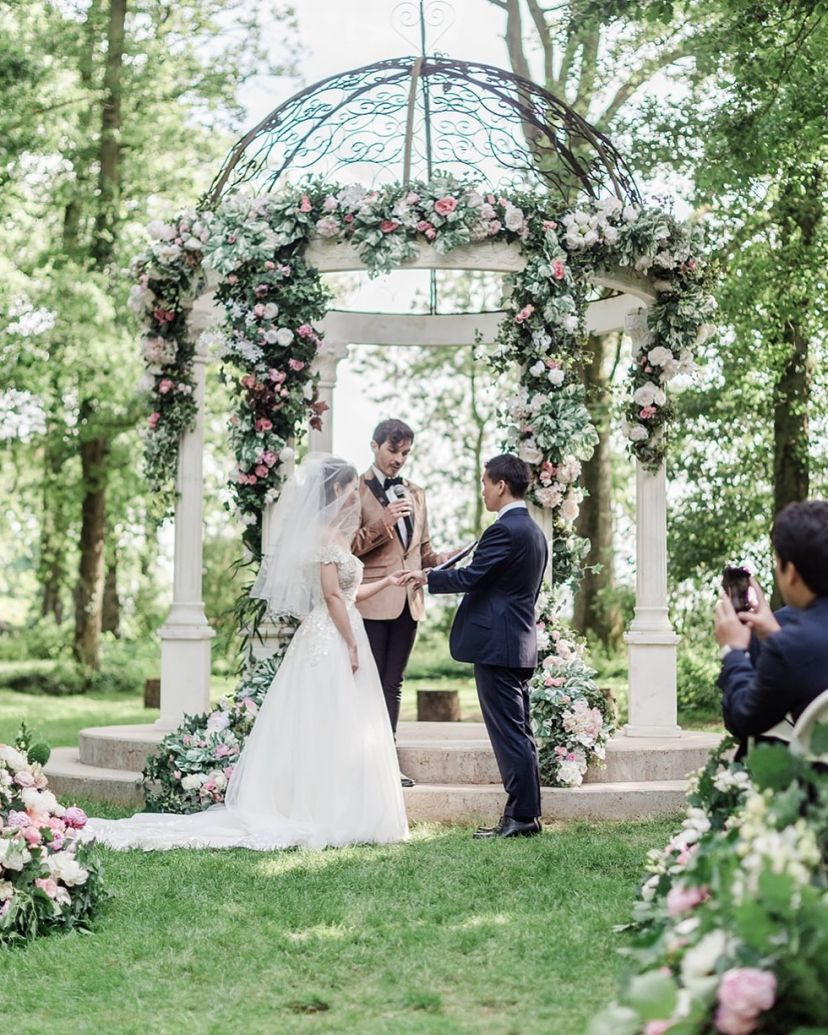
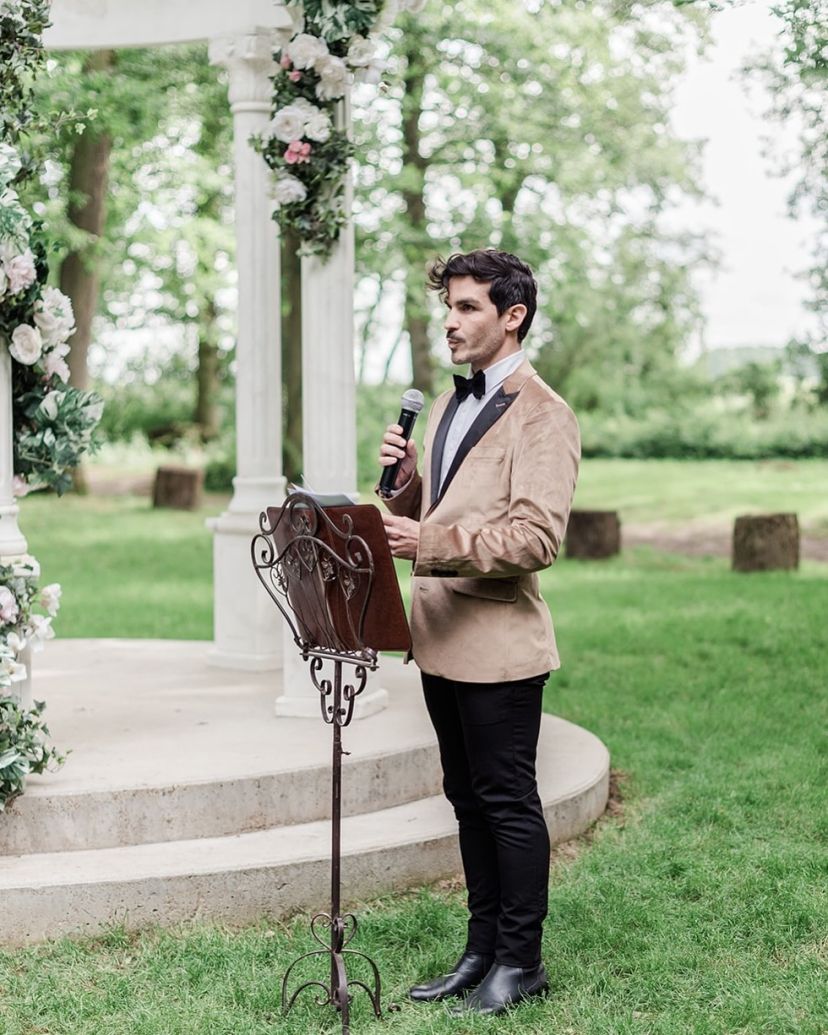
In France, a symbolic ceremony officiant is part celebrant, part storyteller and part master of ceremonies. Their role goes far beyond simply reading a script.
On the day, a good officiant typically handles:
- Writing or co-writing the ceremony script with the couple
- Leading the ceremony itself, including readings, vows, and rituals
- Managing the pace and tone of the ceremony so that it does not overrun or feel rushed
- Coordinating with the venue and other vendors on timing
- Translating or switching between languages for multilingual ceremonies
The difference between an officiant who has done this many times before and one who has not is most evident in how they command the room, particularly at outdoor venues where there are no natural acoustics to rely on, and at multilingual ceremonies where tone and pacing need to resonate with different audiences.
Average Wedding Officiant Prices in France
The Wezoree team has compiled the following price ranges based on the current vendors listed on our platform. Officiants in France, particularly those with experience of international and destination weddings, tend to charge more than those in other markets due to the level of bespoke preparation involved.
| Tier | Typical Price Range (USD) | What's Usually Included |
|---|---|---|
| Entry-level | Under $1,500 | A prepared ceremony script, ceremony only |
| Mid-range | $1,500 - $2,999 | Personalised script, pre-ceremony meetings, ceremony |
| Premium | $3,000 - $5,999 | Fully custom ceremony, rehearsal, travel included |
| Luxury | $6,000+ | Bilingual or multilingual ceremony, multi-day destination support |
A few factors can increase the price within each tier:
- Whether the ceremony is bilingual or multilingual
- Travel costs, particularly for destinations outside Paris
- The number of pre-ceremony meetings or calls
- Whether a rehearsal is included
- The complexity of the ceremony, such as cultural or interfaith elements
Bilingual ceremonies are one of the biggest price drivers, since a well-executed ceremony in two languages requires significantly more preparation than a single-language ceremony, as well as a skilled officiant who can deliver both languages fluently.
Types of Ceremony a Wedding Officiant in France Can Lead
It is worth knowing that symbolic ceremony officiants in France work across a wide range of ceremony styles before you decide what you want. Examples include:
- Romantic and personal - a ceremony built around the couple's story, told by the officiant alongside readings and vows
- Interfaith - a ceremony that weaves together elements from different religious or cultural traditions
- Humanist - a non-religious ceremony centred on shared values and personal meaning
- Bilingual or multilingual - a ceremony conducted in two or more languages for international guest lists
- Micro-wedding or elopement - an intimate ceremony with a small guest count, sometimes at a non-traditional location such as a vineyard or private garden
- Vow renewal - a ceremony for couples marking a milestone, often without the legal formality of a first wedding
The best officiant for your day is usually the one whose natural style and tone matches what you're looking for. Watching video or audio clips from past ceremonies is therefore worth doing before committing.
Finding the Right Officiant for Your French Wedding
As the officiant's voice will be heard by every single guest throughout the ceremony, the personal fit is more important than it might first seem.
Start your search on Wezoree, where you can view real ceremony samples and read verified reviews from couples who have already used the officiant for a French-language ceremony. You could also ask your planner, since experienced destination planners often know which officiants work well at specific venues.
Before booking, check the following:
- A recording or script sample from a real past ceremony, not just testimonials
- Their experience with multilingual or intercultural ceremonies, if relevant
- Whether they have worked at your venue or in your region before
- How they approach the script-writing process with couples
- Their policy on rehearsals and how much preparation time they allow
Questions to Ask a Wedding Officiant in France Before Booking
Couples often say that the ceremony is the part of the day they wish they'd thought more carefully about, so it's important to have a proper conversation before booking:
- Can we see or hear a sample of one of your past ceremonies?
- How do you approach writing the ceremony script with a couple?
- Are you comfortable conducting bilingual ceremonies, and in which languages?
- Do you offer a rehearsal, and is it included in the price?
- Will you travel to our venue, and what are your travel fees?
- How do you handle outdoor or acoustically challenging ceremony spaces?
- What is your backup plan if you are unavailable on the day?
When to Book a Wedding Officiant in France
Officiants with experience of conducting weddings in popular French regions, particularly Paris and the Riviera, tend to be fully booked during the peak season, which runs from late spring to early autumn. Bilingual officiants who are fluent in English are especially in demand for international weddings and often have fewer availability slots than officiants who only speak French.
To secure an in-demand officiant, aim to book 6-9 months ahead. For most other weddings, 3-6 months usually allows enough time to comfortably complete the scriptwriting process. If your timeline is shorter, local officiants tend to be more flexible than those who travel across regions.
If you're working to a tight deadline:
- Ask about availability directly, rather than assuming a popular officiant is fully booked
- Be open to officiants who are newer to the platform, but who have strong, consistent reviews
- Consider the scriptwriting timeline as much as the ceremony date, since a good ceremony requires time for proper development
Most couples don't realise how much the officiant shapes the feel of the entire day until they're standing at the ceremony. Wezoree lets you compare real ceremony samples, verified reviews and prices for French wedding officiants, so you can find someone whose voice and style genuinely match your vision before the big day.